Power Platform Licensing Changes

Taking Effect October 1, 2019

PowerApps Wave 2, 2019


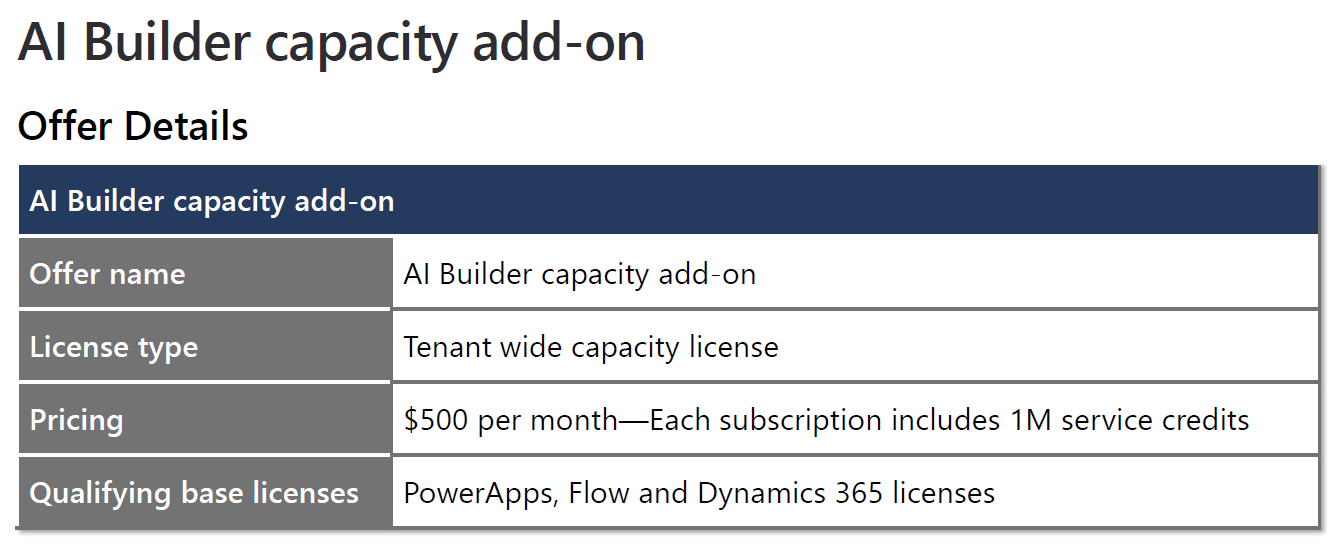
  • General availability of AI Builder
  • General availability of the custom components for model-driven apps
  • Reusable custom components for canvas apps
  • General availability of Power Platform universal admin center
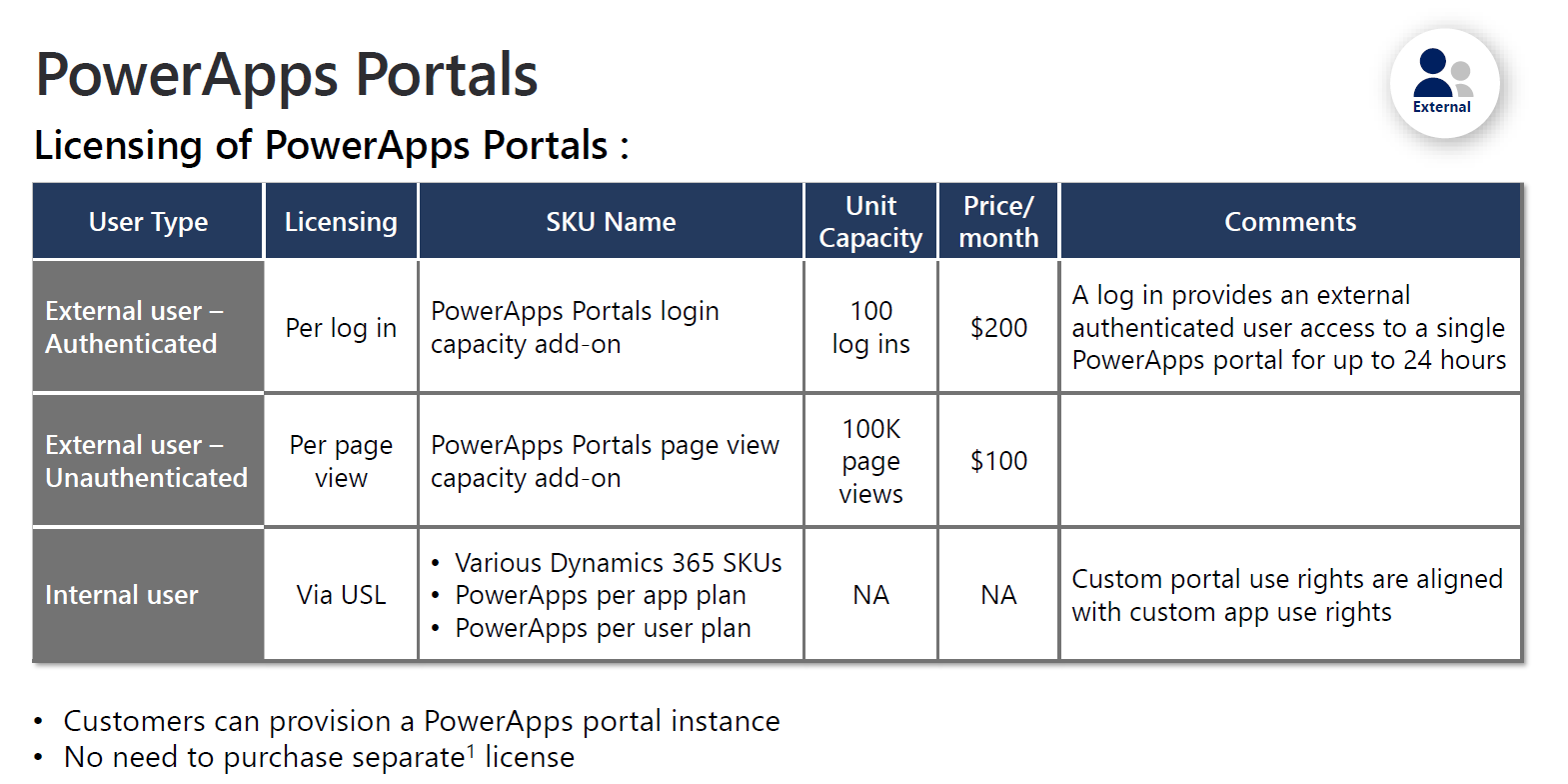
  • General availability of PowerApps portals
  • Ability to share apps with external users
  • General availability of PowerShell cmdlets for admins

Concurrent with Licensing Changes

Dynamics 365 Licensing Changes Overview

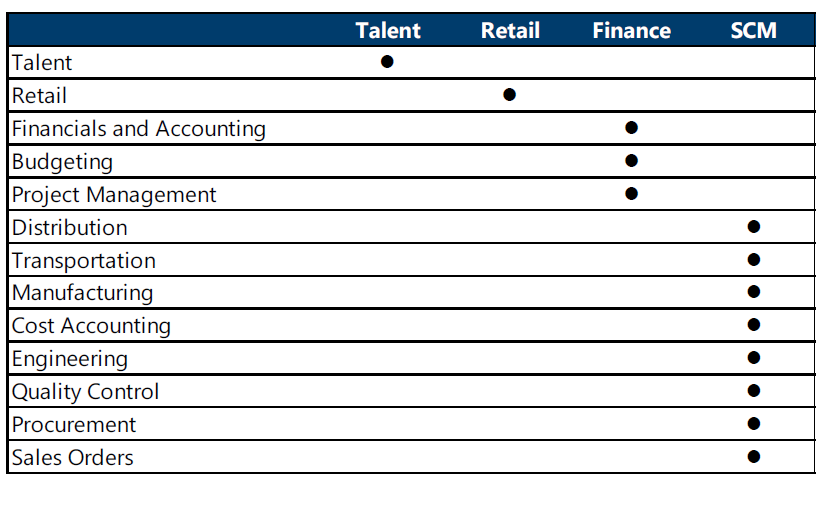
  • F&O license will be separated into Finance and Supply Chain
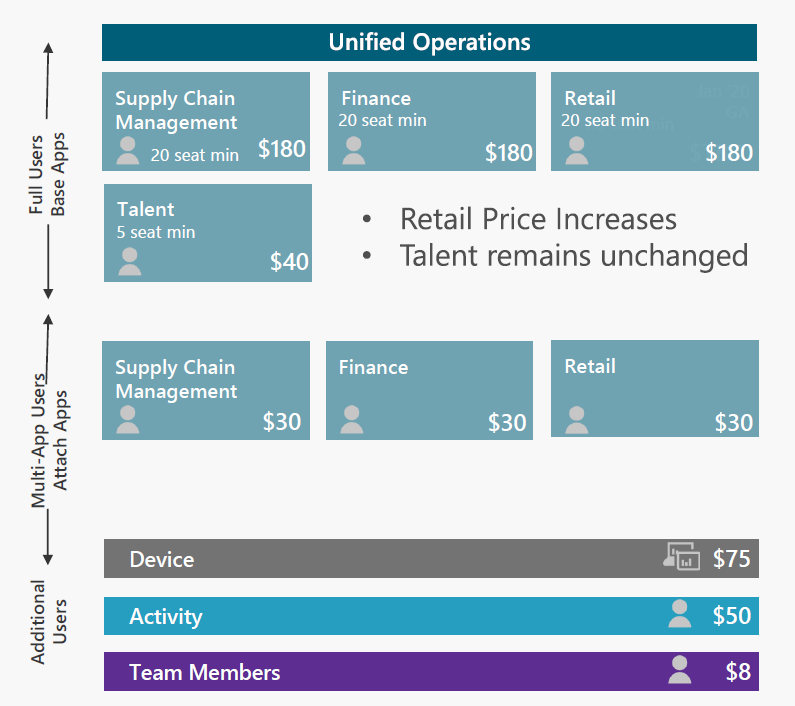
  • Dynamics 365 moving from "plan-based" model to "base+attach" model 
  • Customers must purchase the higher priced business application as the "base" license
  • Attach licenses can only be assigned to users with pre-requisite "base" license
  • Base and attach licenses have the same functionality

Unified Operations Now Looks Like This

UO New Pricing Model

CE New Pricing Model

PowerApps/Flow Licensing Overview


  • P1 and P2 plans are being retired
  • A standalone PowerApps or Flow license is required to access all Premium, on-premises and custom connectors
  • Most Azure services, including Azure SQL, are now Premium
  • New PowerApps per app plan and per user plan
  • New Flow per user and per flow plan
  • Office 365 plans now known as seeded plans
    • much the same except no Azure SQL Server
    • creating environments and other admin activities now allowed

Connectors Reclassified as Premium


  • Azure Application Insights
  • Azure Automation
  • Azure Blob Storage
  • Azure Container
  • Azure Cosmos
  • Azure Data Factory
  • Azure Data Lake
  • Azure DevOps
  • Azure Event Grid
  • Azure Event Grid Publish
  • Azure File Storage
  • Azure IoT Central
  • Azure Kusto
  • Azure Log Analytics
  • Azure Log Analytics Data Collector
  • Azure Queues
  • Azure Resource Manager
  • Azure SQL
  • Azure SQL Data Warehouse
     
  • Azure Table Storage
  • Dynamics 365
  • Dynamics 365 Customer Insights
  • Dynamics 365 for Finance & Operations
  • Dynamics 365 Sales Insights
  • Dynamics 365 Business Central
  • Dynamics 365 Business Central (on-premises)
  • Dynamics NAV
  • Event Hubs
  • Service Bus
  • SQL Server

New PowerApps Standalone Plans

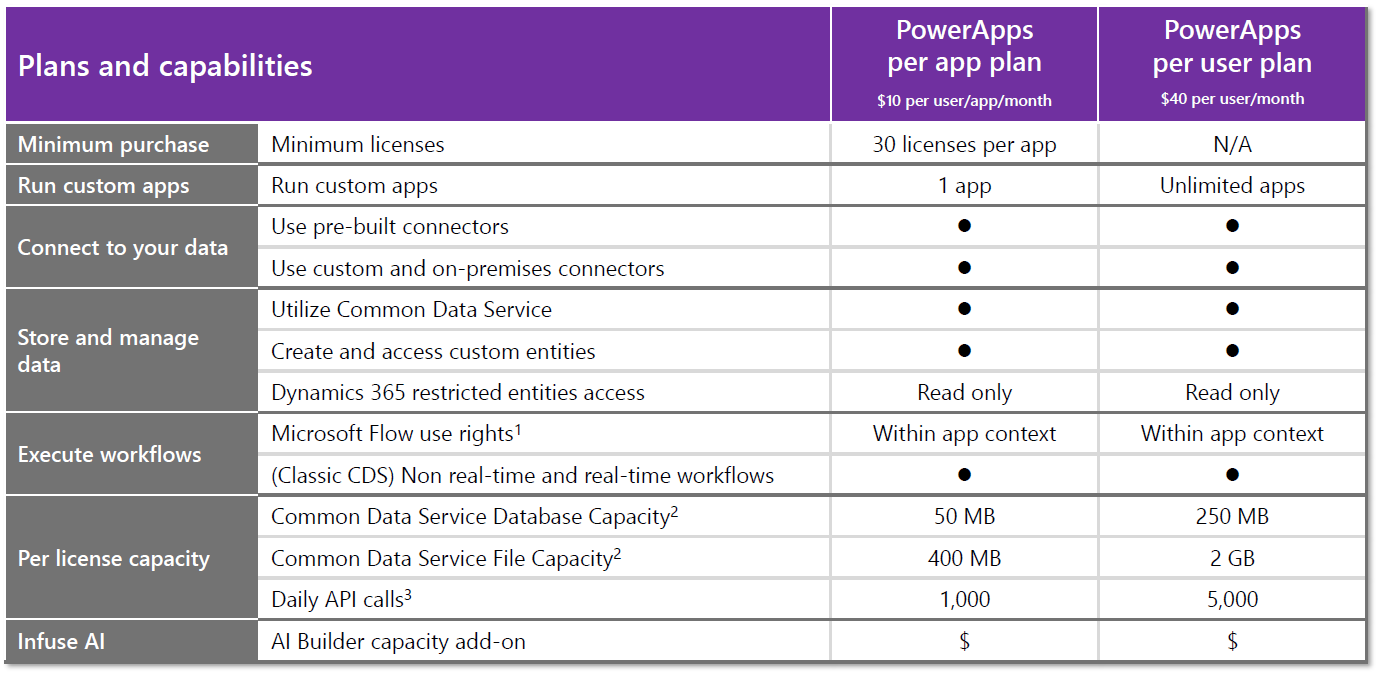
  • PowerApps per app plan 
    • $10/user/app/month - 30 licenses minimum 
    • 2 apps and a single portal: 2 canvas apps, 2 model-driven apps, or 1 of each
    • full capabilities of PowerApps plus Flows triggered by PowerApps or "from the data that app updates"
    • Microsoft states: "This plan provides an easy way for customers to get started with the platform before broader scale adoption"
  • PowerApps per user plan
    • $40/user/month
    • run unlimited applications (within service limits)
    • full capabilities of PowerApps plus Flows triggered by PowerApps or "from the data that app updates"

from Inspire I-BAP215 presentation

Summary of PowerApps standalone plans

From Inspire I-BAP215 Slide Deck

From Inspire I-BAP215 Slide Deck

Note: AI Builder not included in Office 365 licenses

New Flow Standalone Plans

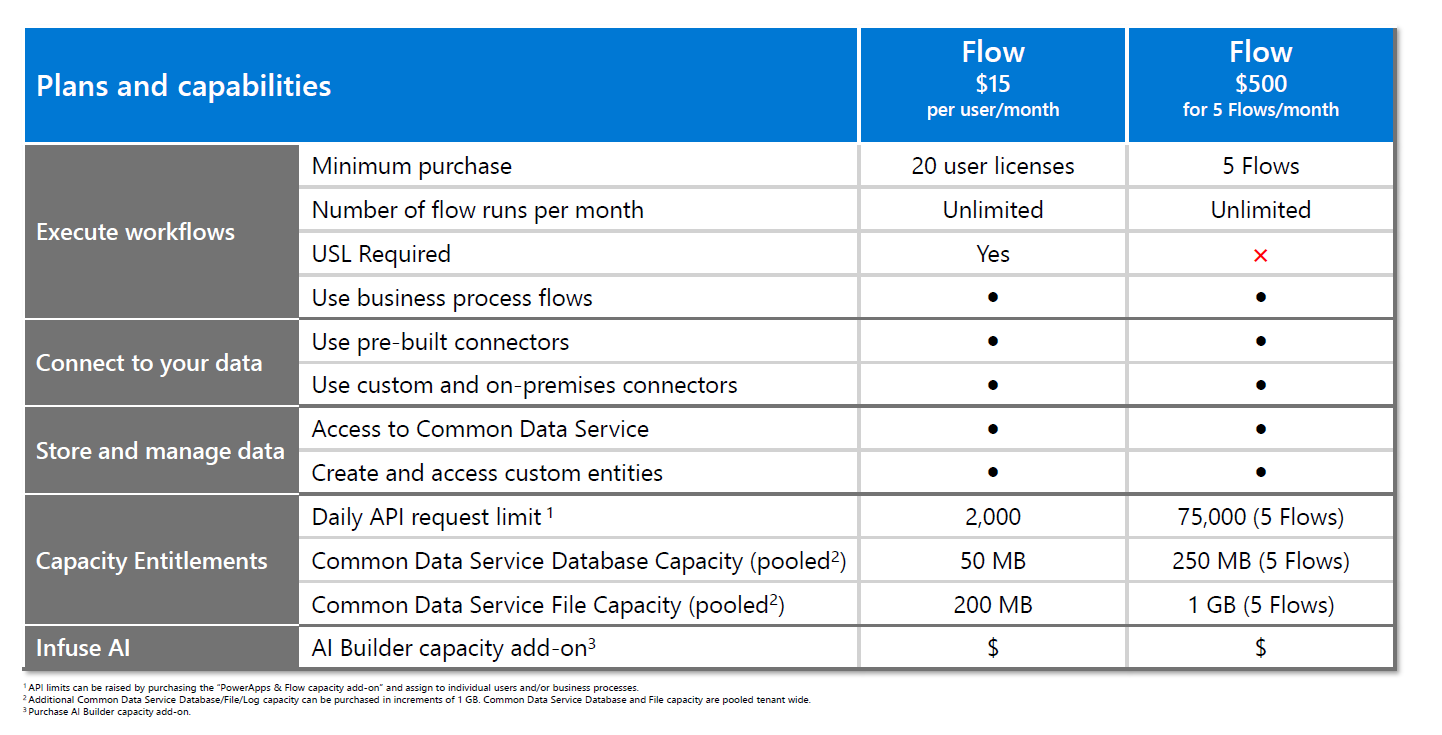
  • Per User Plan
    • $15 per user/month
    • 20 user license minimum
    • unlimited Flow runs (within service limits)
    • 2,000 daily API request limit per user
  • Per Flow Plan
    • $500 per month for 5 enabled workflows
    • Unlimited flow runs
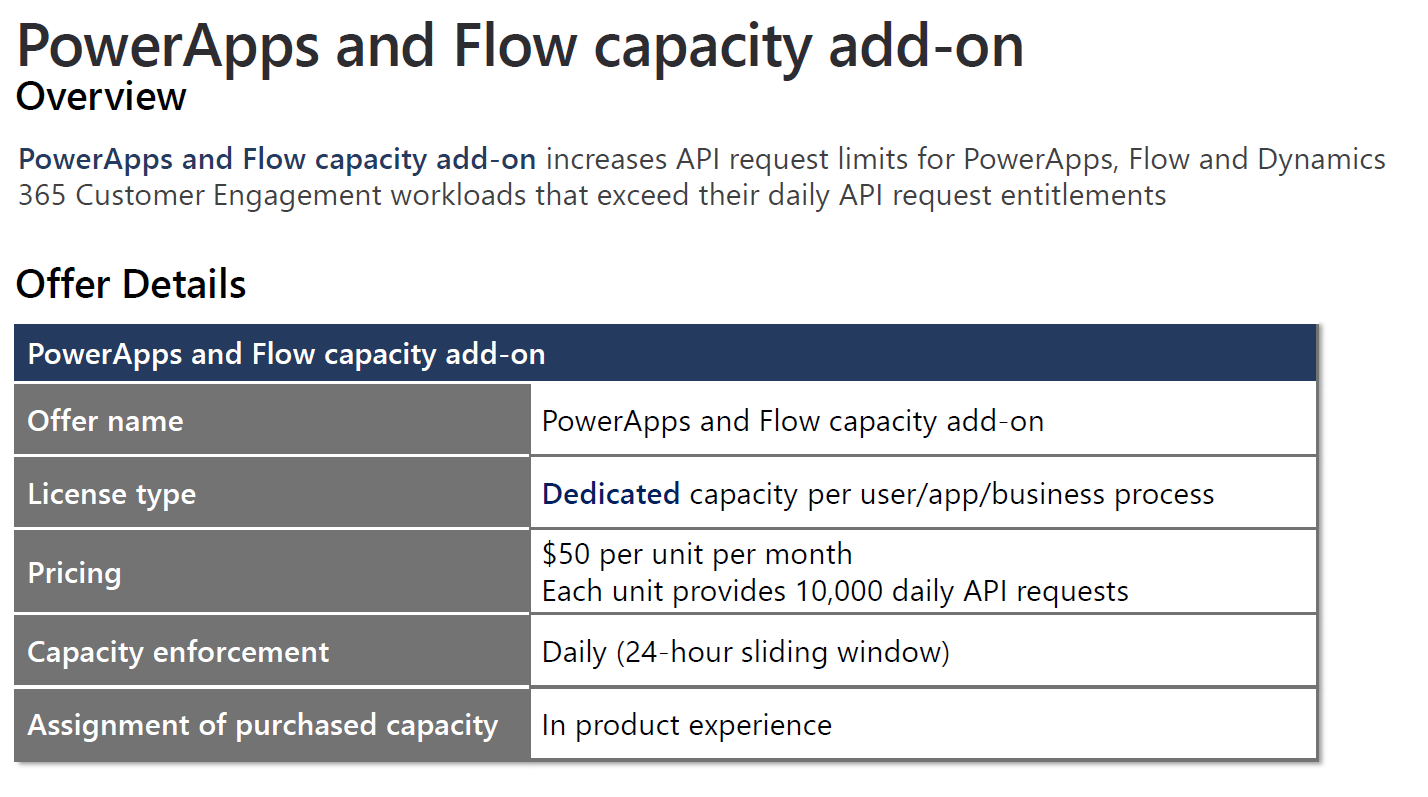
    • 75,000 API requests total (dedicated capacity)
    • $100 per workflow/month for additional workflows
  • Office 365
    • Office 365 Flow plan remains basically the same except for no Azure SQL Server connector

From Inspire I-BAP215 Slide Deck

Note: Flows that are triggered by another flow or are disabled will not count.

What Constitutes an API Call?

  • Connectors - all API requests to connectors from either PowerApps or Flow
  • Flow - all Flow step actions
  • Common Data Service - all CRUD operations, as well as special operations like "share" or "assign". These can be from any client or application and using any endpoint SOAP or REST. These include but are not limited to plug-ins, async workflows, and custom controls making the above mentioned operations

Grandfathered Licensing

  • P1 or P2 licenses can be purchased by existing P1 and P2 customers through March 31, 2020
  • Existing PowerApps that use the Azure SQL Server connector will be able to use it through 2024 
  • P1 and P2 licenses will continue to be honored to the end of the subscription period or the enterprise agreement (usually three year).

Questions and Answers

  • How will Microsoft be auditing the number of custom apps in the "per app" plan? Customers will buy per-app "passes" and then assign them to PowerApps environments.
  • Will the Flow Free license still exist after October 1st?
    Yes, but it can only be used for non-production.
  • What will be the user experience when a flow request limit is reached? There will be a "grace period" but after that throttled, then flows turned off. Owners will receive emails and admins will have analytics.
  • What about Dev and Prod apps? Will they be charged as two apps? Yes.
  • What about volume discounts? They available at above 1,000 licenses and determined on a per client basis.

From Microsoft via email:


"Thanks for the question! The Office 365 plan provides connectors for capabilities that are part of your Office 365 license. For example, Office 365 provides functions for working with email, spreadsheets or calendars, all of which are offered through Office 365 APIs.


The Word Premium connector is actually an DOCX file generator connector. In fact, this is what we originally called it, but people were not sure what that meant so we with with the simpler "Word" connector. Generation of DOCX files is actually not exposed via any Office 365 API - so this is a premium capability that we have built into and offered from the Flow service itself. There is no fundamental tie to an Office 365 subscription to generate DOCX files (although, of course most Office 365 plans also come with Word of course). In the future,  for example, we could offer CSV generation on Dropbox -- that would leverage this same technology that we've built in the Flow service."


Why is new Word Online Connector Premium?

Licensing URLs

Power Platform Licensing

By Kathryn Birstein

Power Platform Licensing

The licensing in this deck is as of September 4, 2019, taking effect October 1, 2019
  • 917