


Nat Connors PRO
Nat is a romantic comedy writer, medical scientist and dance teacher, and creator of the Kindletrends newsletter for genre fiction authors.
Nat 'Nose' Connors
<nat@kindletrends.com>
Book In a Month June 2026
A technical writer
IT project management
Cancer research
...now, mostly, I just write about lurve
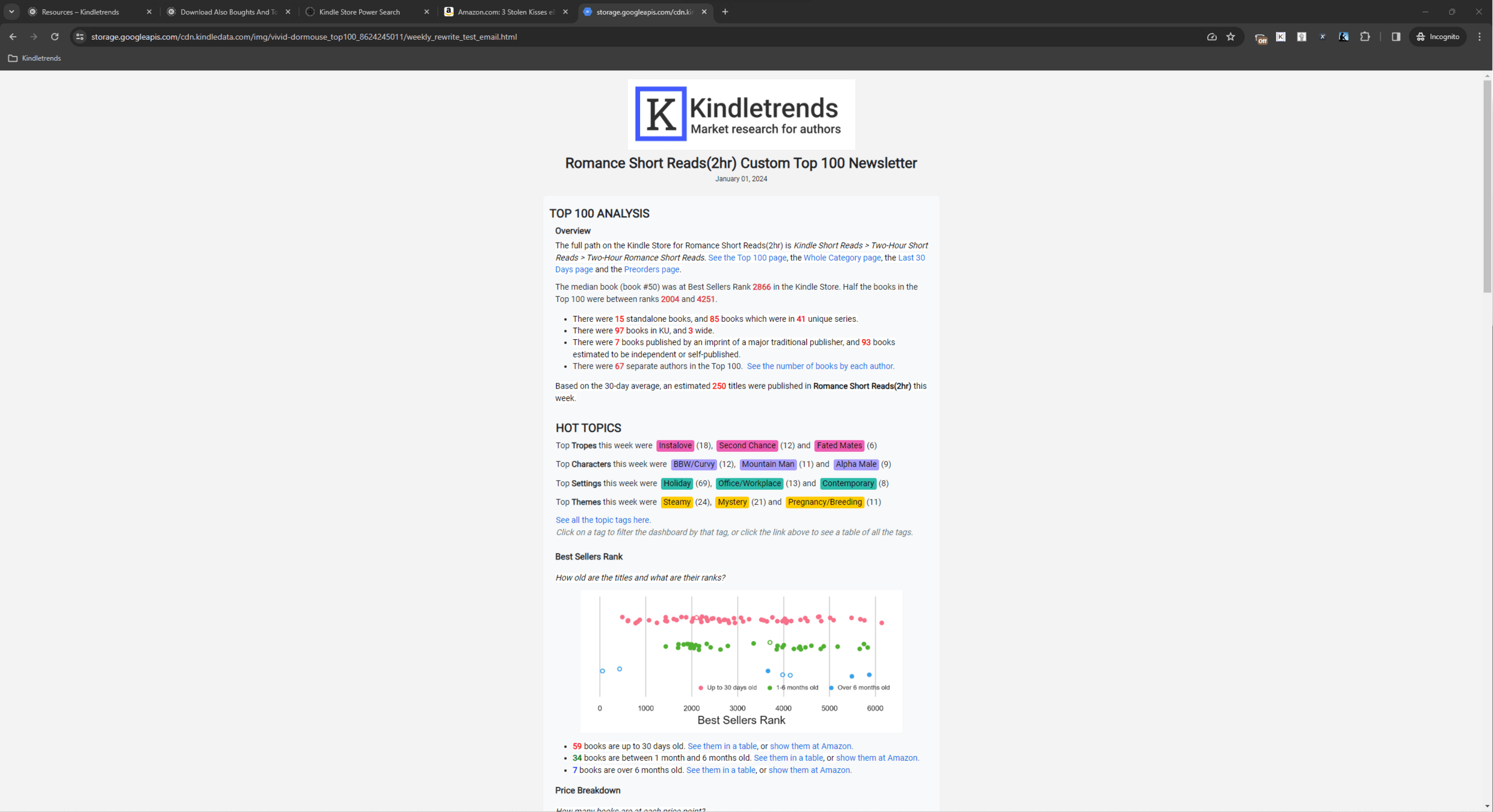
Weekly and monthly information for your genre
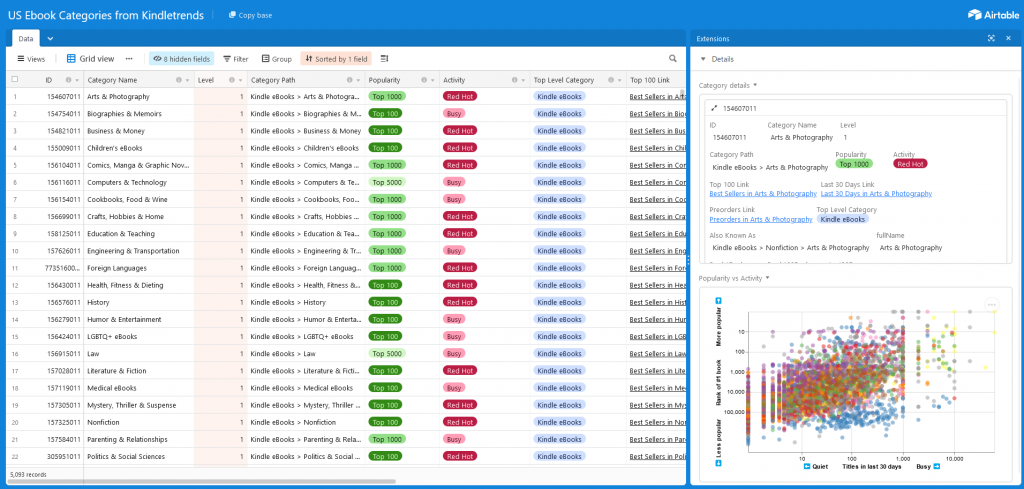
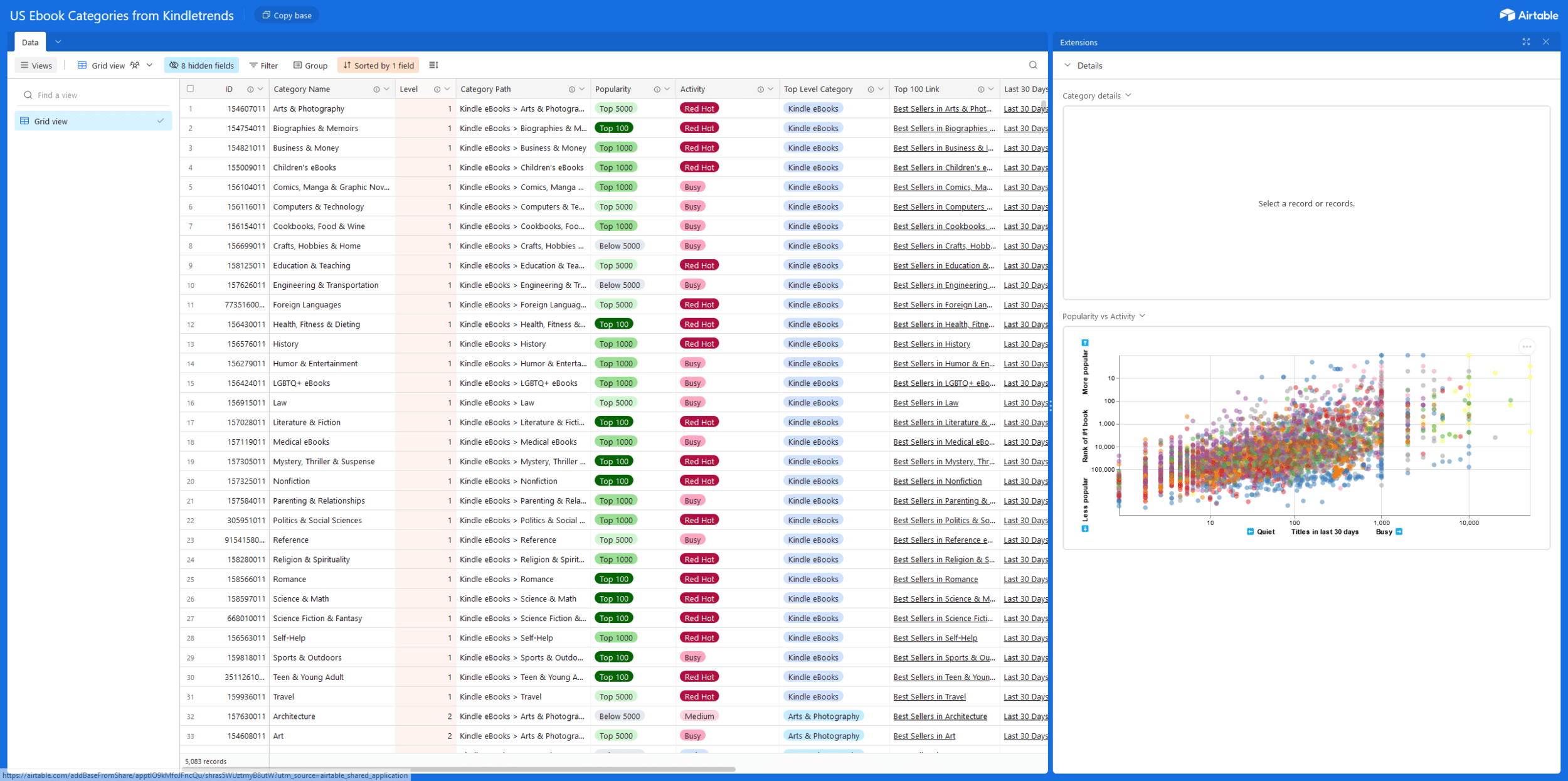
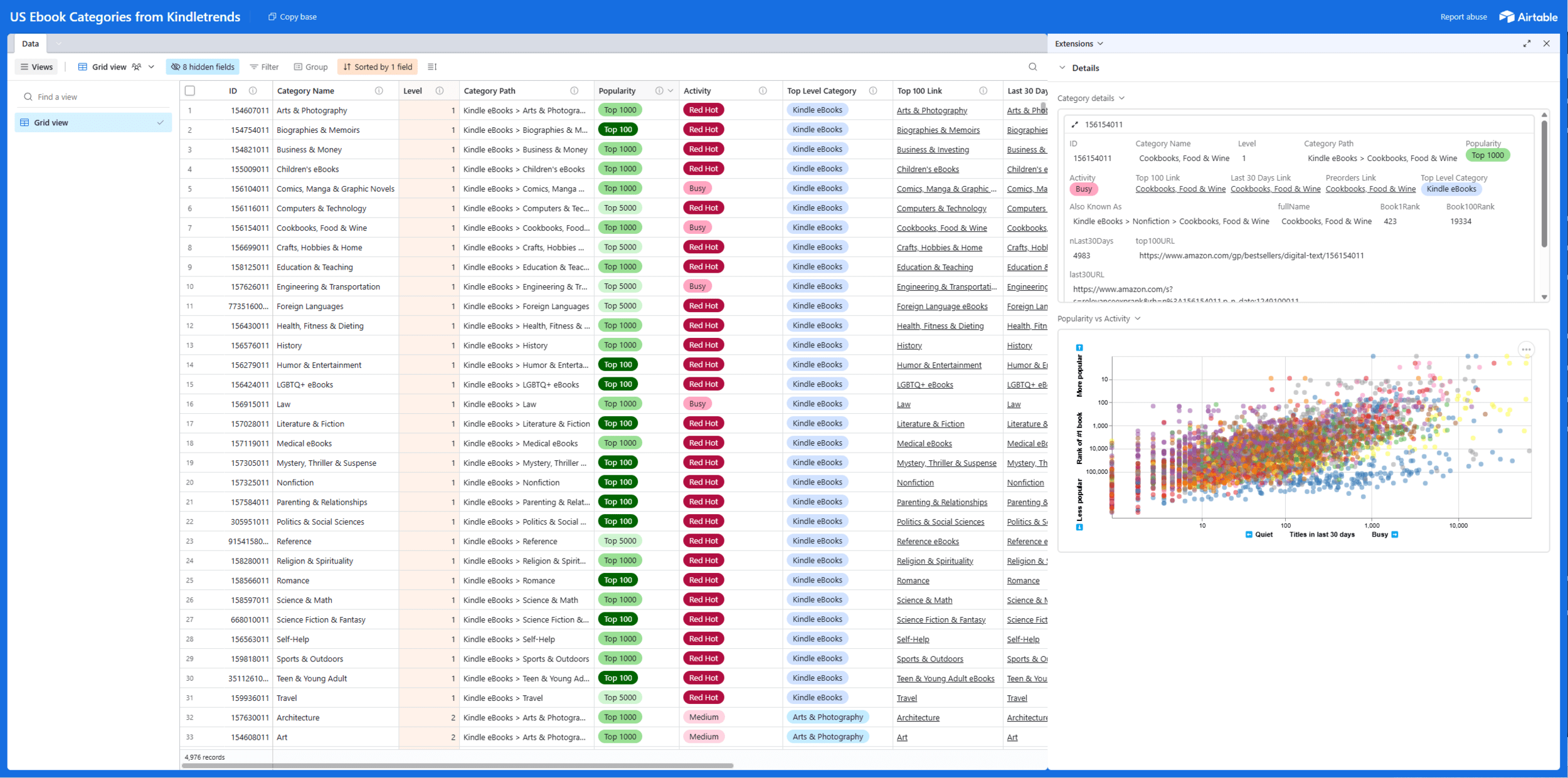
Listing all Kindle Store categories
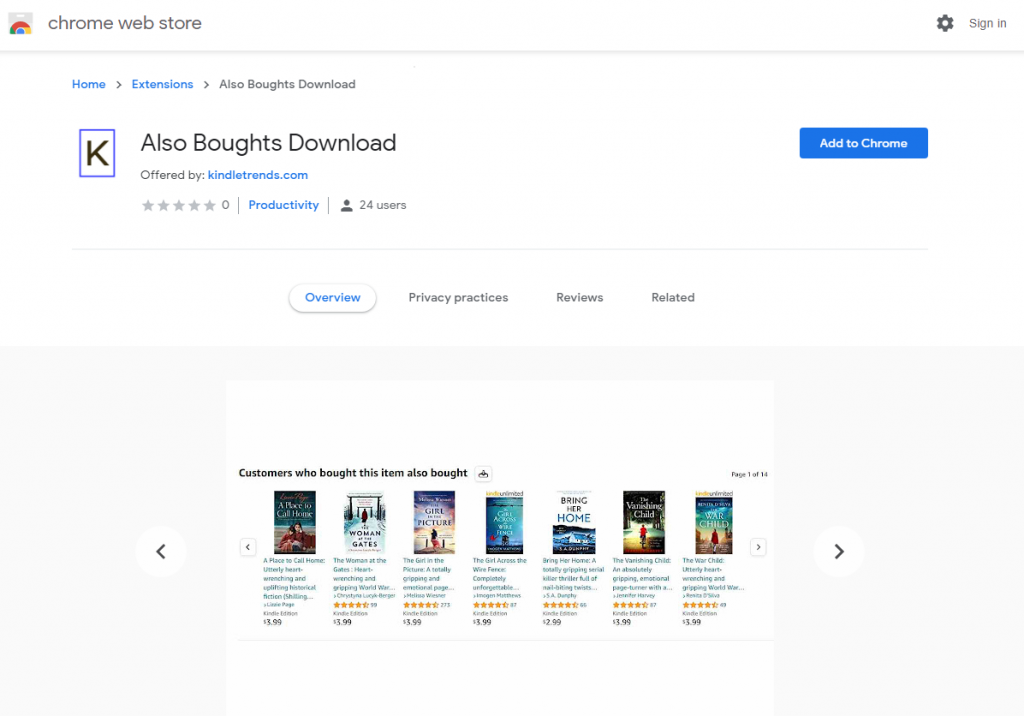
Getting Also Boughts
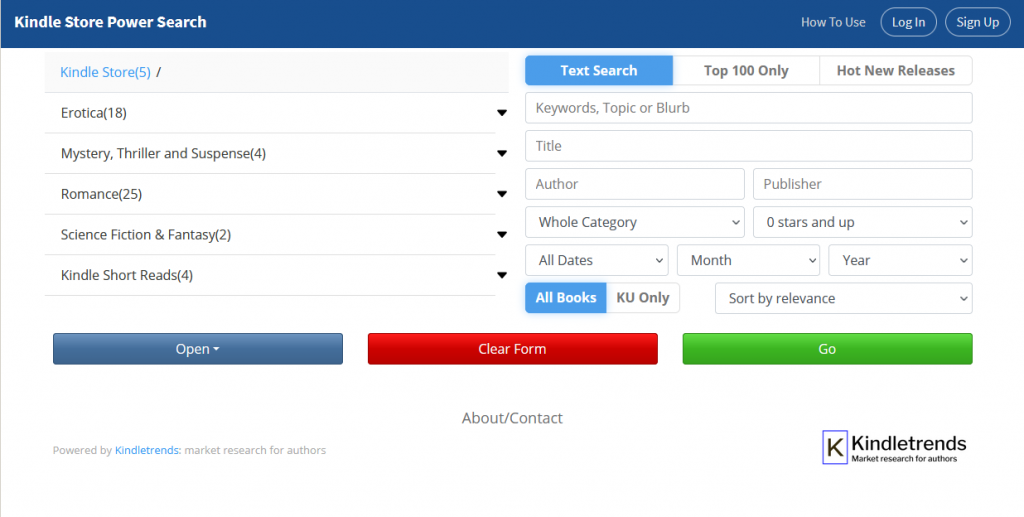
Searching the Kindle Store
This is a web-based slide presentation. To go forward, press the space bar, use the arrow keys, or swipe if you're on a touchscreen. Press 'O' to get a view of all the slides.
There is such a thing as 'unmet demand' for books, and it has a shape.
Customer behaviour has some relationship to this demand. So if a customer somehow indicates that they want <x> in a book, they are more likely to actually buy a book with <x> in it.
The data we can access is enough to make useful models of this demand.
This demand is actually a lot of separate little things which are quite specific to groups of readers, and are constantly changing over time.
As creators we also play a role in shaping this demand with our work, so in truth there's a feedback loop.
There are a bunch of other reasons for understanding the market, to do with creative fulfilment and our own personal situations. Right now we're just focusing on the dispassionate 'find out what readers will buy and then sell it' aspect.
There are a lot of different ways customers can 'indicate' things, and some of them are a lot more useful than others.
Books are not (very) 'fungible'
Books are not (very) exchangeable
Our emotional relationship to our products is complex
Our readers' emotional relationship to our products is complex
Right now we are mostly only getting a picture of supply rather than demand.
We do this by looking at books published on Amazon and other platforms.
There's a lot of it
It's relatively easy to get
It's relatively easy to translate into action
(e.g. if a lot of authors are using illustrated covers in your genre, maybe you should be using an illustrated cover)
Google Trends search volume
Scraping Amazon autocomplete
Whatever MerchantWords does
They aren't very specific
They generally won't help you adjust course on your existing product
They are all 'pull'-oriented: you need to know what you're searching for
FB group discussion
Discord group discussion
Tiktok
Amazon carousel information
Identify unmet demand ahead of time, so we can align our books with it
For a given author/book/brand, profile its relationship to demand
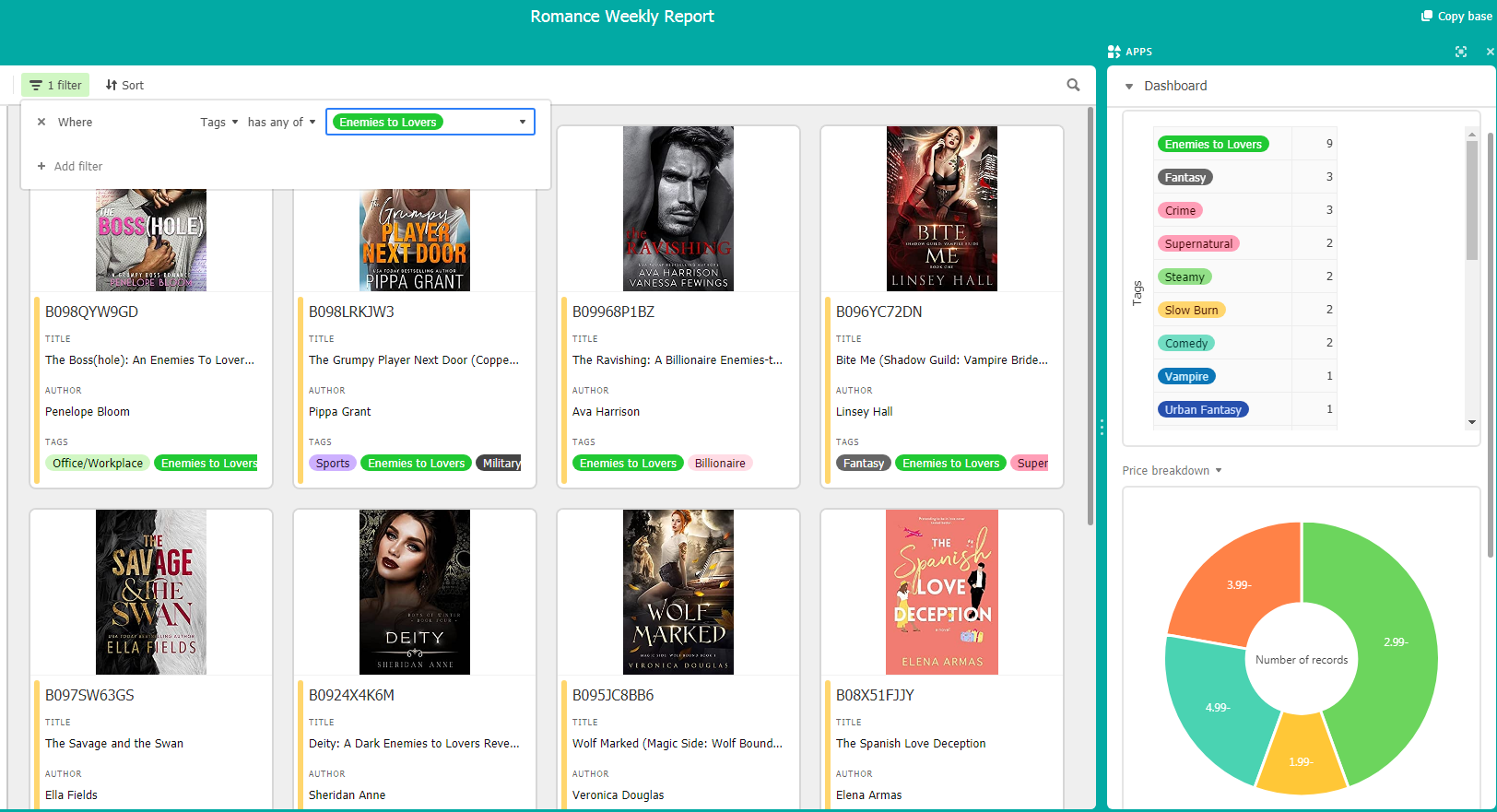
1. Point Claude at this:
2. Prompt it 'identify categories with high rank and low activity'
...
3. Profit!
Lucalia:
We look at data to see what’s selling, but does Kindletrends help us see where the dead zones are? Specifically, can it help us identify categories that have high reader demand but a sudden drop-off in fresh content?

Market awareness is great, but by the time a trend shows up on a newsletter, it’s often already peaking. How can we use Kindletrends data to differentiate between a short-lived micro-trend and a sustained, viable trope that’s worth spending six months writing?

Melody:
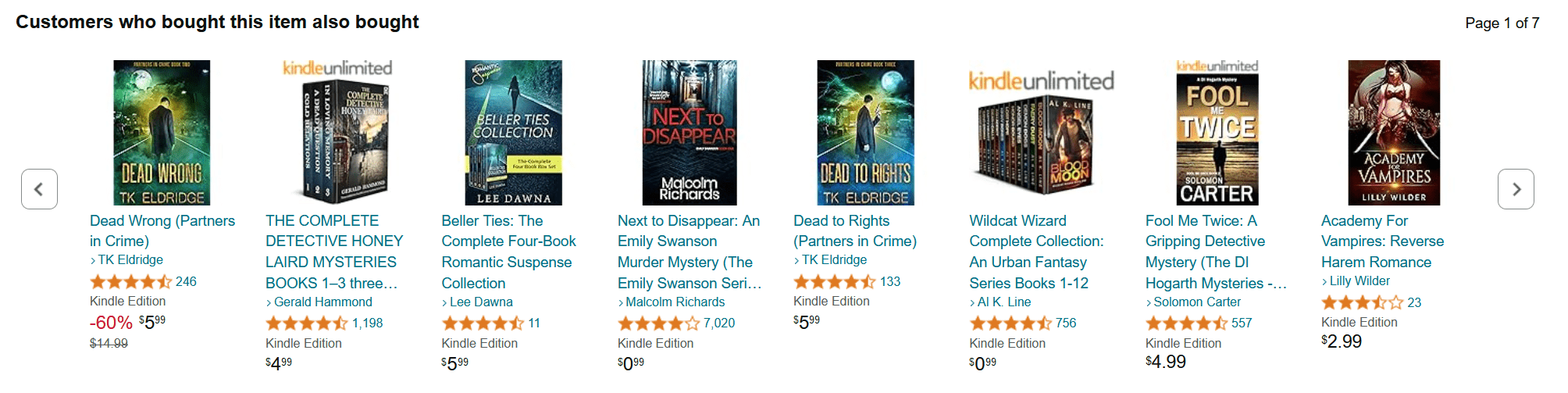
What are some ways we can try to spot trends before they're peaking and oversaturated? Also Boughts/Also Reads represent concrete reader behaviour, giving up money or time
They are a buying signal - so not just about the cover/name
Look for situations where a midlist author has a lot of 'cross-referenced' Also Boughts; they are doing something right
Lucalia:
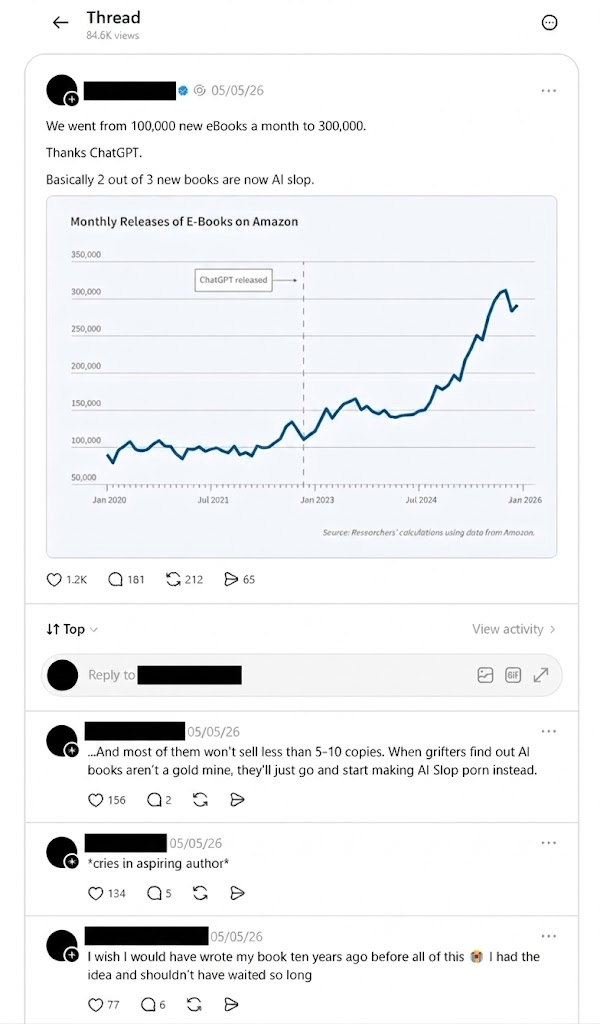
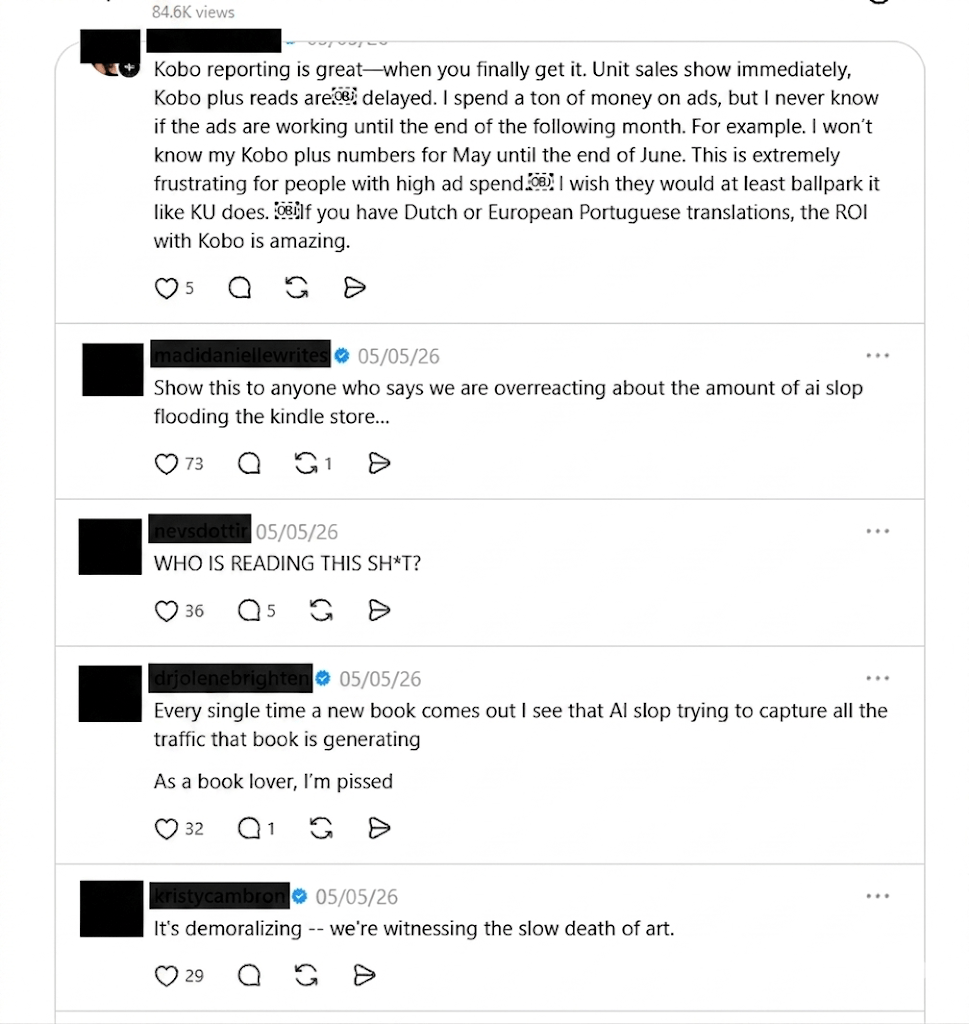
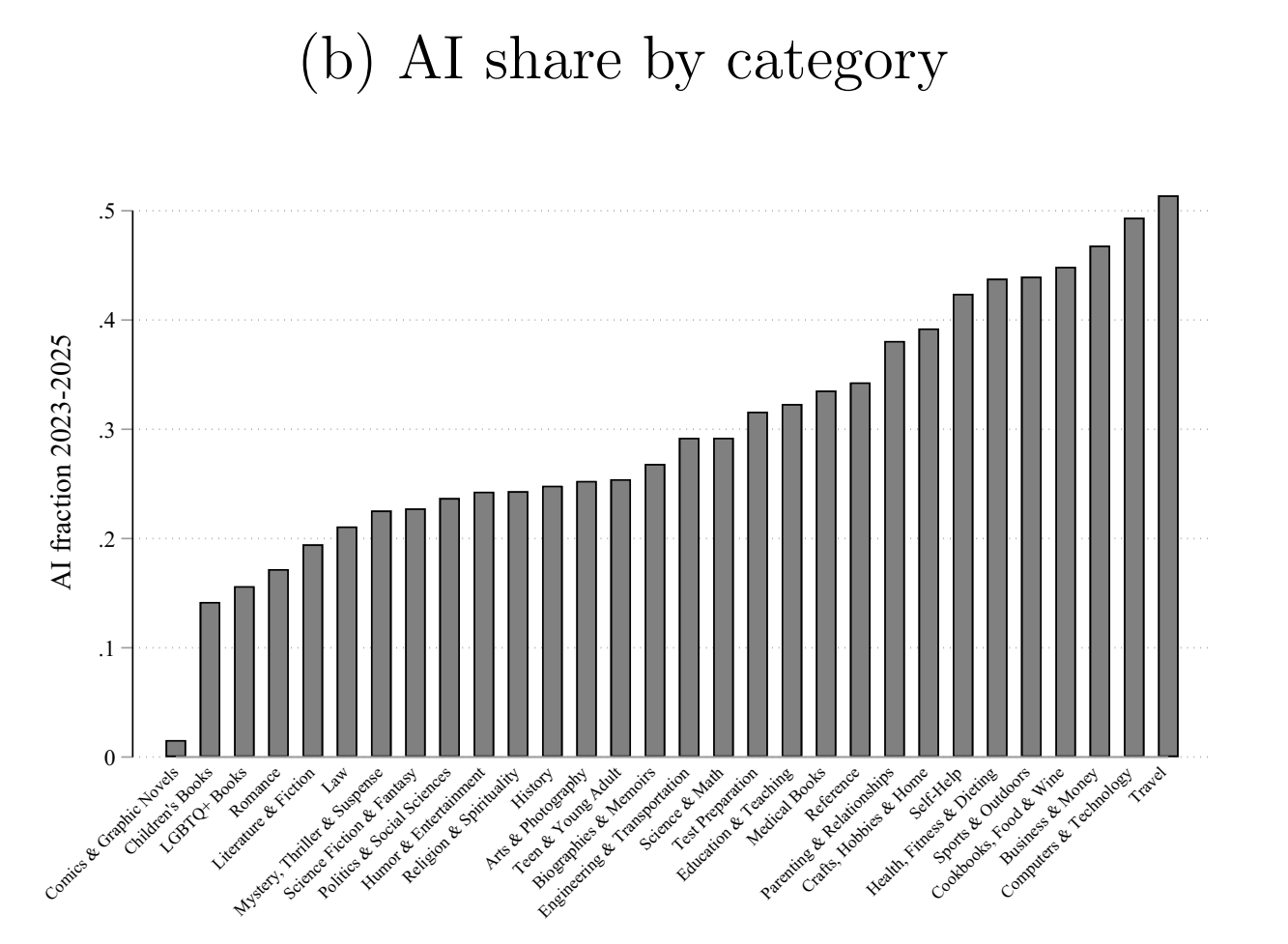
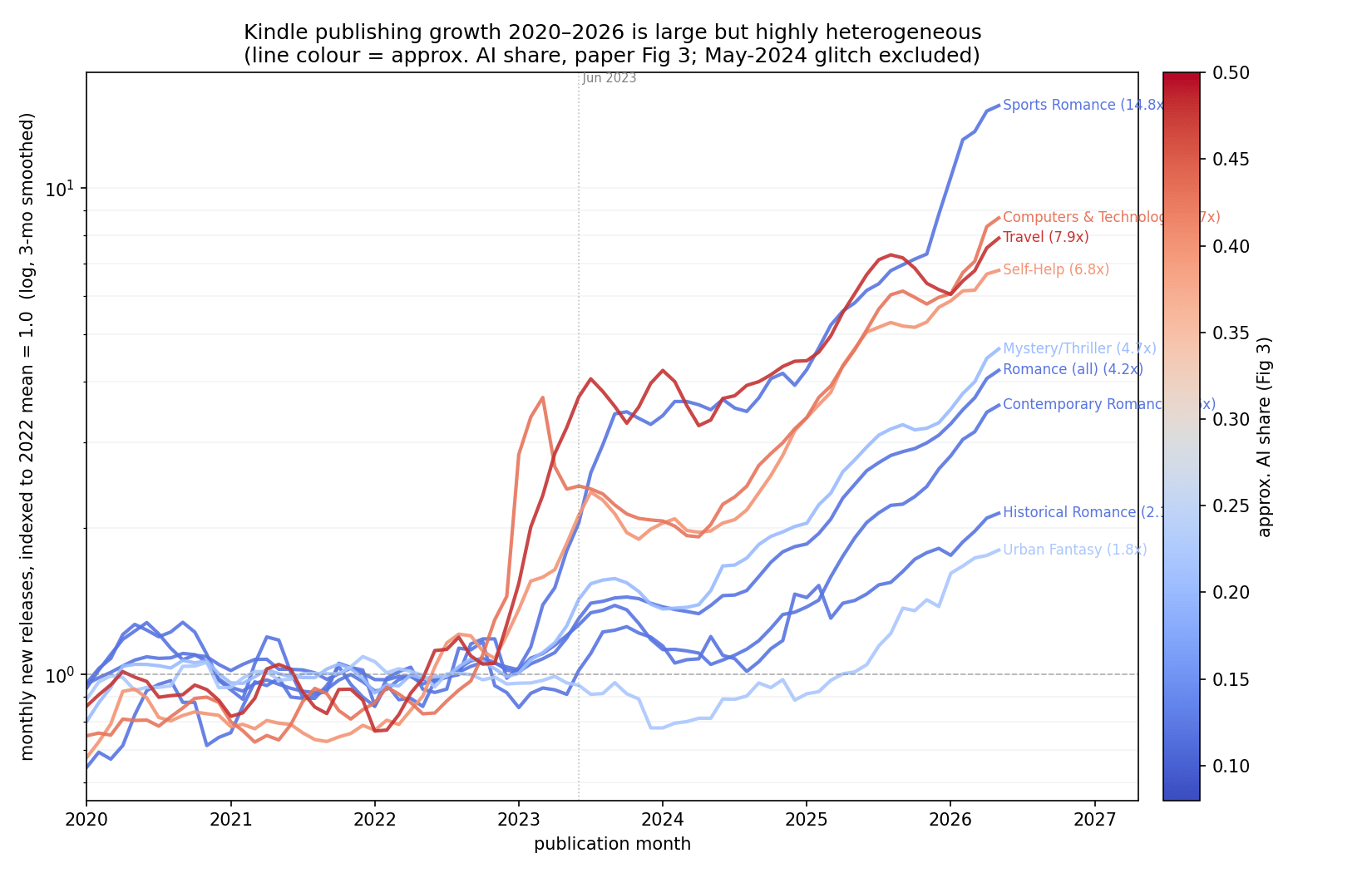
With the influx of high-volume, AI-assisted content flooding specific sub-genres, are you seeing these become artificially crowded? How can human authors use Kindletrends data to spot and avoid niches that are currently being targeted by mass-produced content bots?
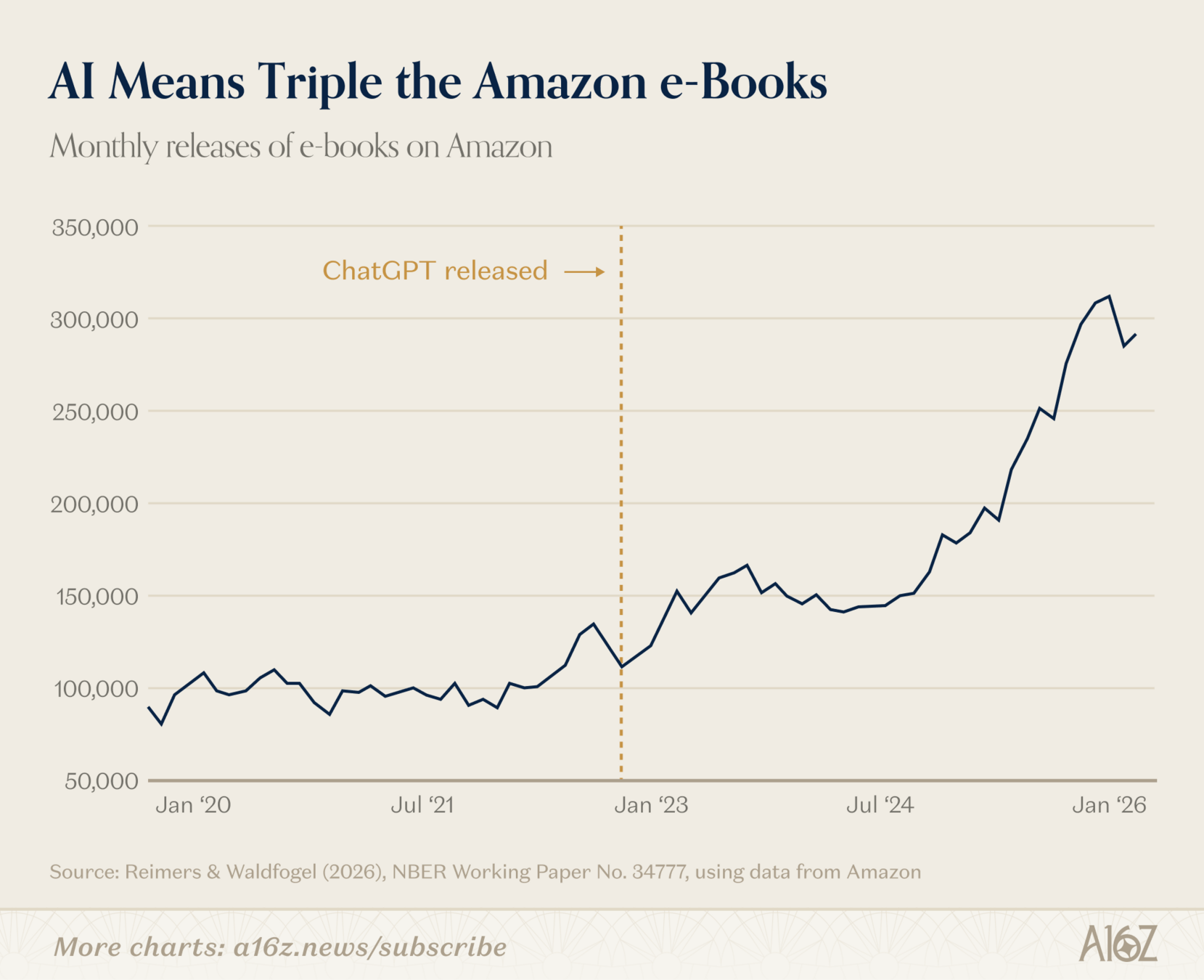
"AI and the Quantity and Quality of Creative Products: Have LLMs Boosted Creation of Valuable Books?"
"We obtain the number of books published… using queries to Amazon's advanced book search function at amazon.com/advanced-search/books. We request new, English-language ebooks, and we specify their publication dates by month and by category for all 30 Amazon categories… A query delivers a list whose first page indicates '1-16 of x results.' When there are fewer than 1,000 results, x is the exact number… Up to 10,000, … nearest thousand. From 10,000 on, … nearest 10,000.""Seven of the 30 categories...become sufficiently large during the sample period that the monthly category totals are reported only to the nearest 10,000. For those categories, we obtain their 148 subcategory totals by month to create the aggregate time series of new books released by category."I think there's evidence publication rates have increased 2-3x since 2022 (across the whole store)
If you are writing nonfiction you may have a problem with low-quality machine-generated content
D2D now has a subject matter expertise requirement
If you are writing fiction, you may occasionally see niches where there is an influx of low-quality machine-generated content
But at the genre level the challenge is mostly the same as it always was: getting people to buy the second book
Melody:
What are some ways that applying market trends works differently for indie authors as opposed to traditional publishing? Are there some strategies that tend to work well for big publishers, but not for indie authors, or vice versa?
Melody:
Since Amazon has changed the limit from 7 to 3 categories, what kinds of changes have you seen in the markets per category? Sometimes it feels like it's no longer worth it for an indie author to try to rank high in a category, as we're no longer playing the game of "try to rank in a lower-performing category so you can get a #1 new release banner and get more visibility upon release." Would you say this is accurate, and that our efforts would be better spent focusing on other strategies such as keywords?

Nicole:
When, why, and how do you update your keywords for older books, if at all? I can't update some of mine due to content and risk of being banned, and I know many authors do this every 6 months. Is there a trend or anything in particular you look for instead to make it worthwhile and have the best chance of impact?Melody:
What kinds of trends do you see with new releases vs older books? Is it possible for a book from the back list to get as much visibility as a new release? Do you see new releases funneling readers into an author's back list enough to make older books trend again?
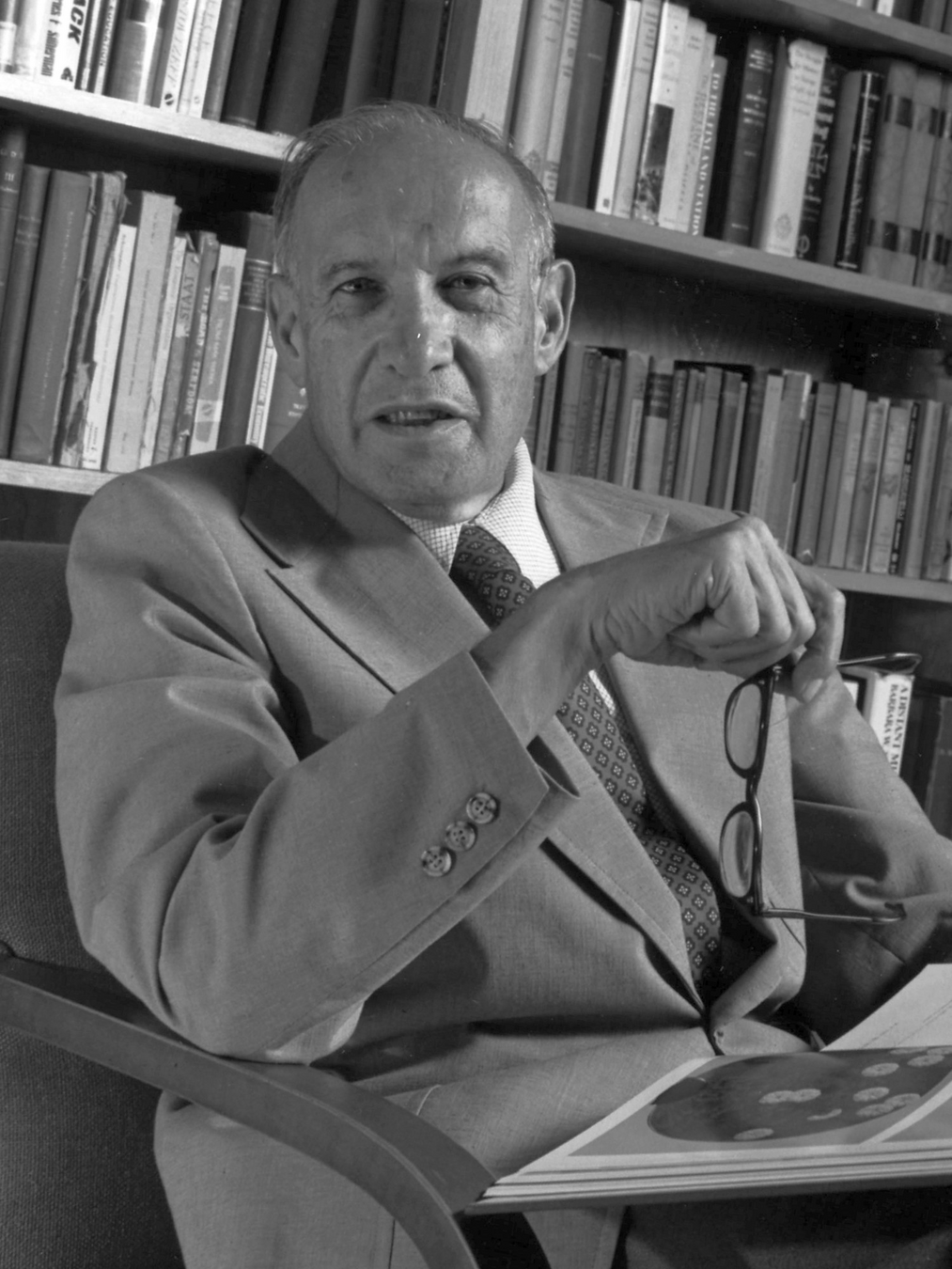
the attempt to replace judgment by formula is always irrational;
all that can be done is to make judgment possible by narrowing its range and the available alternatives, giving it clear focus, a sound foundation in facts
and reliable measurement of the effects and validities of actions and decisions
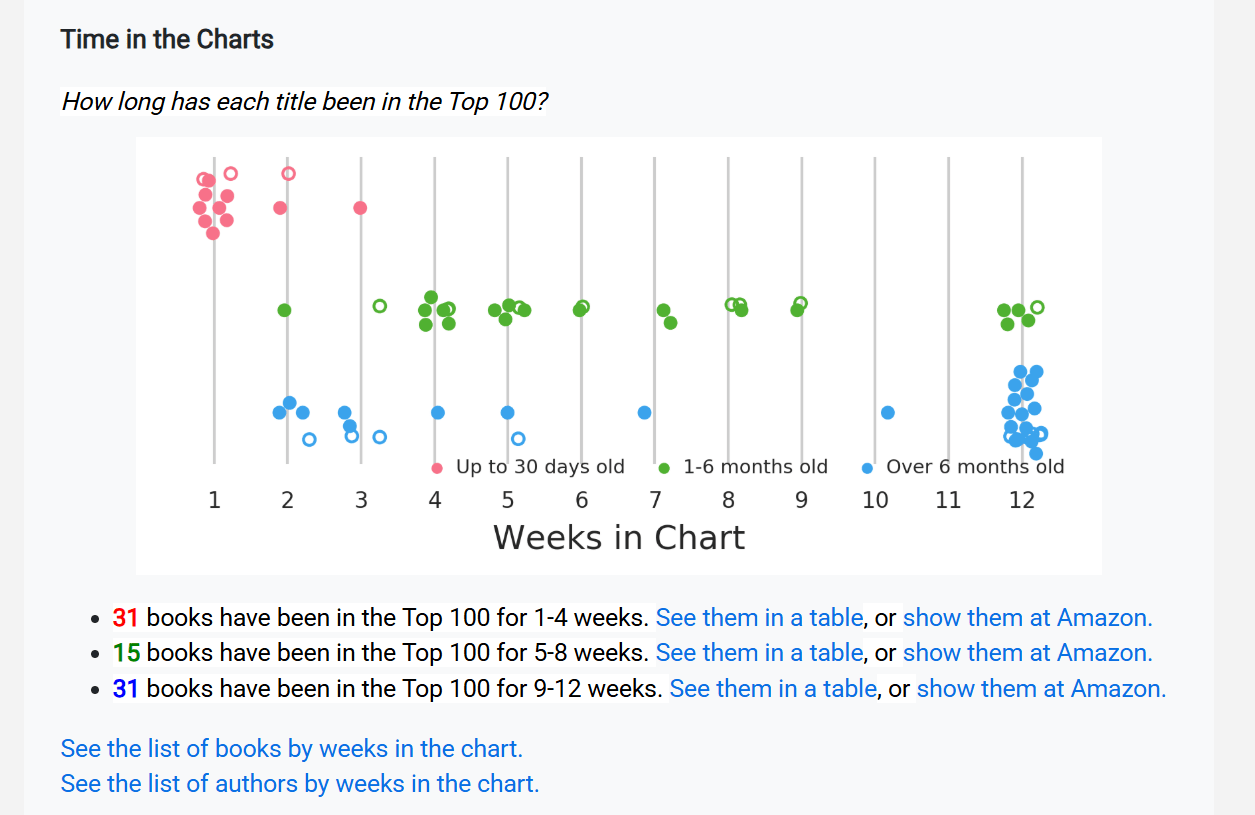
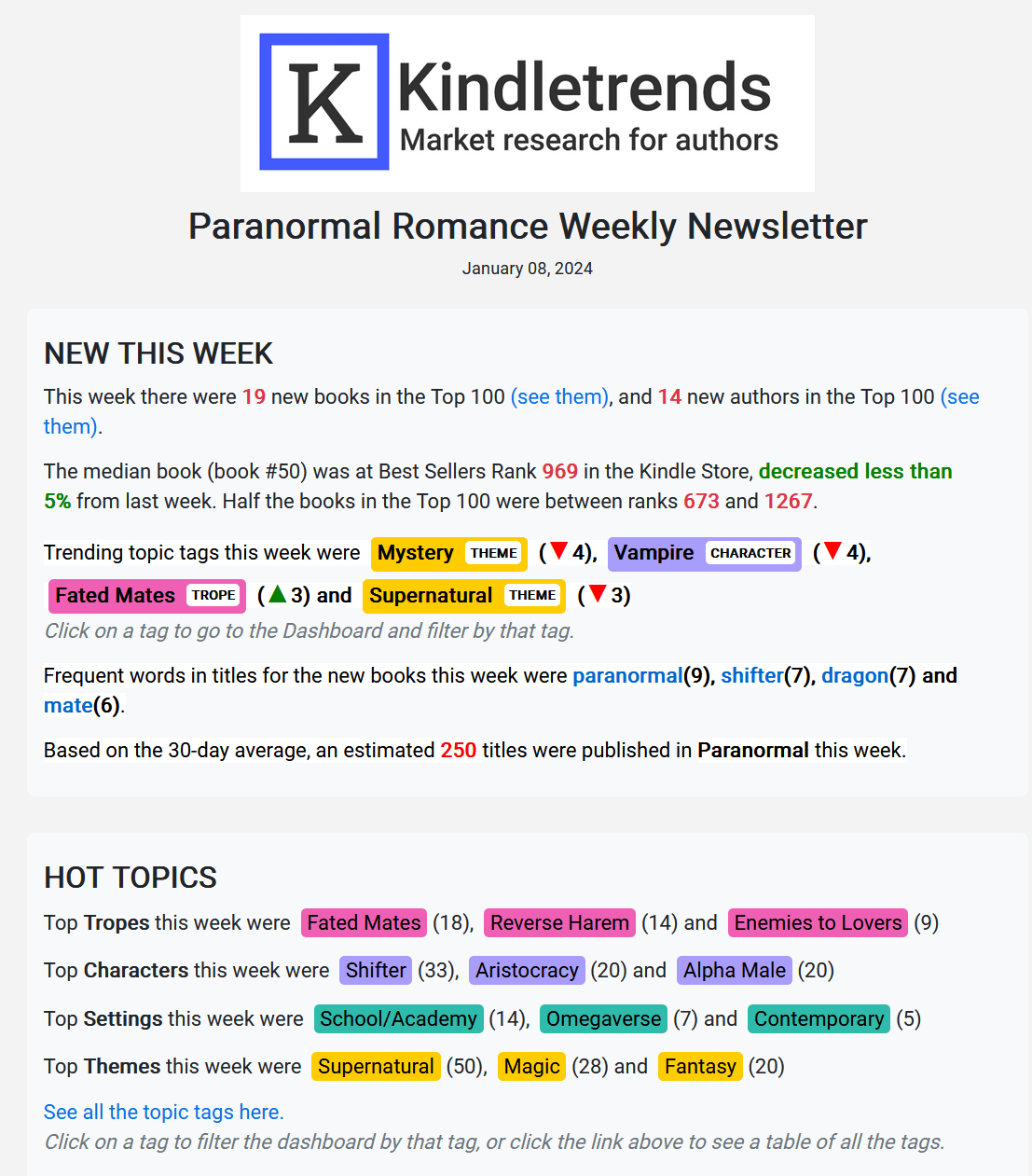
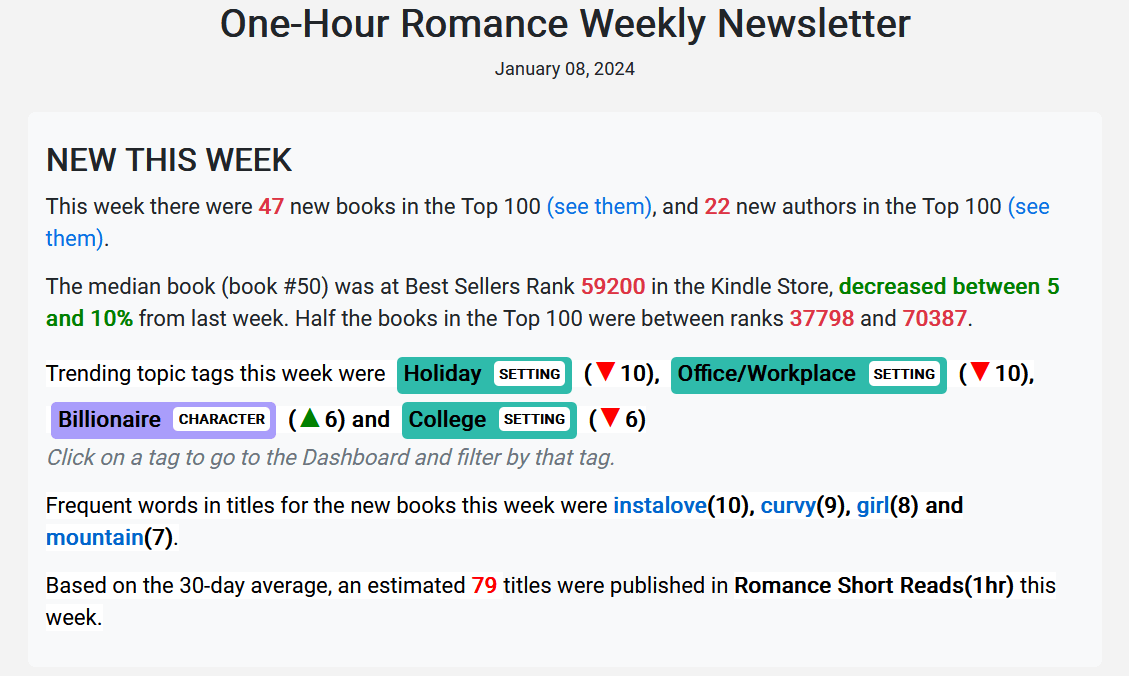
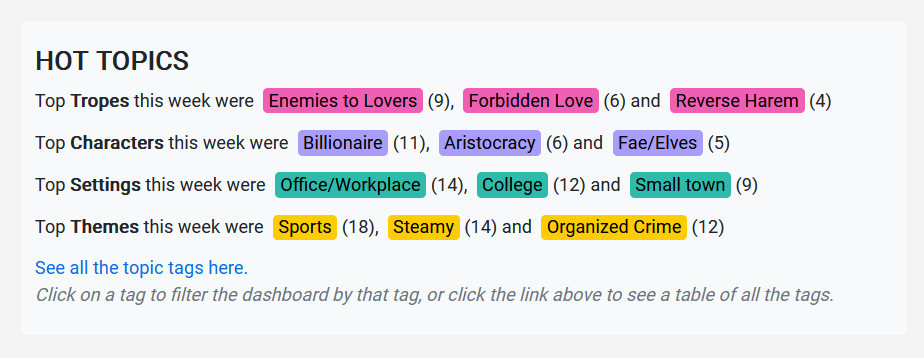
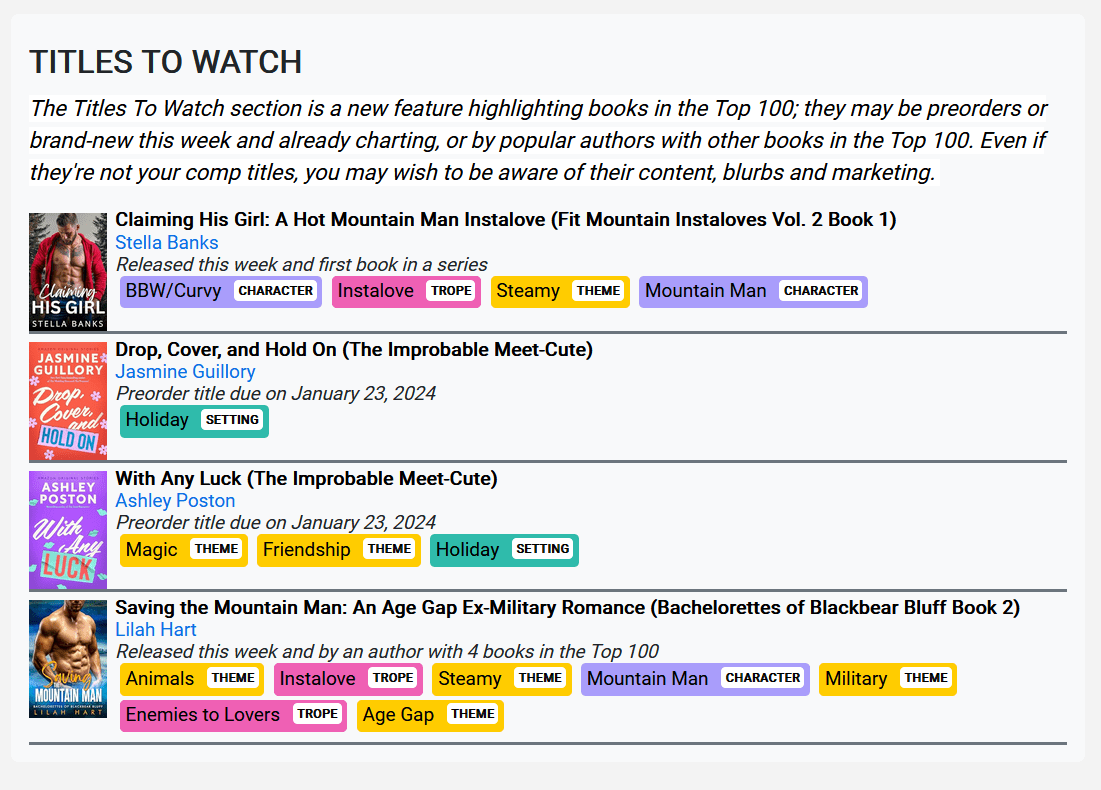
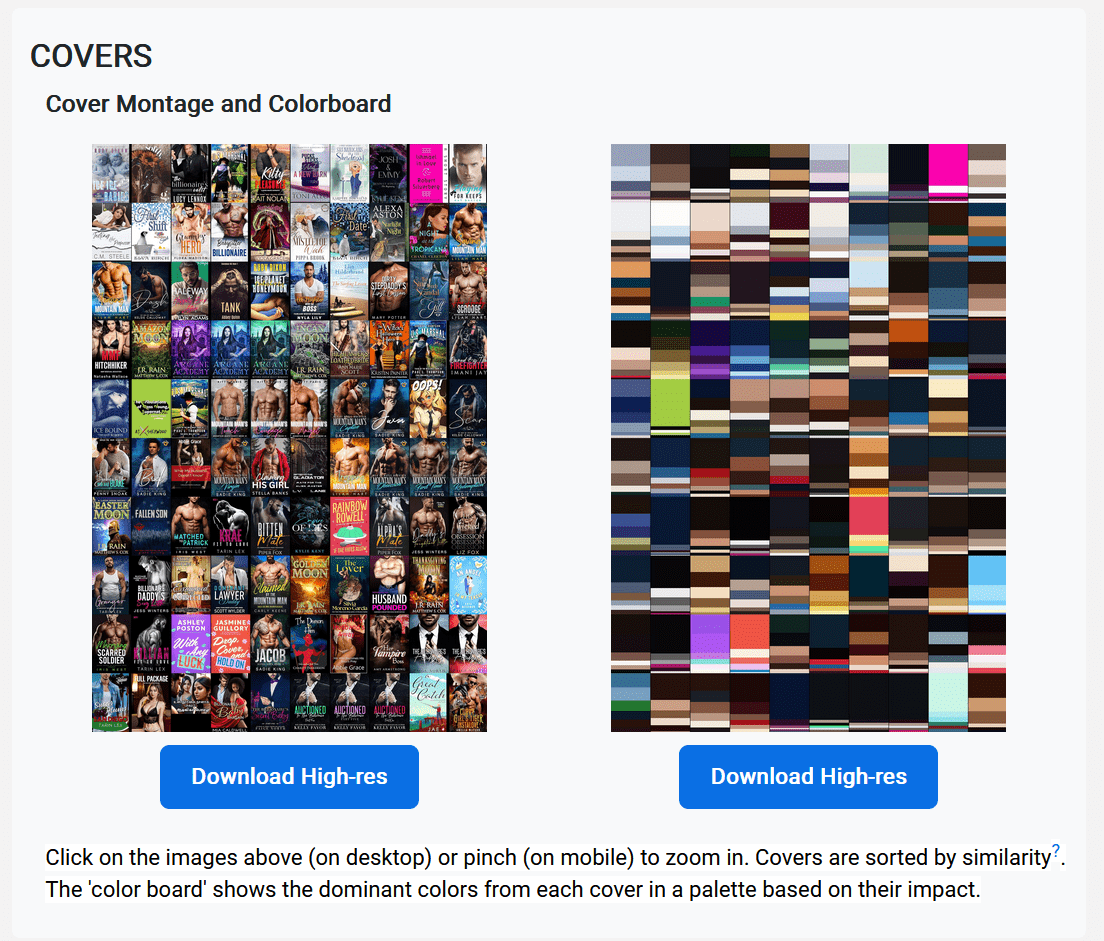
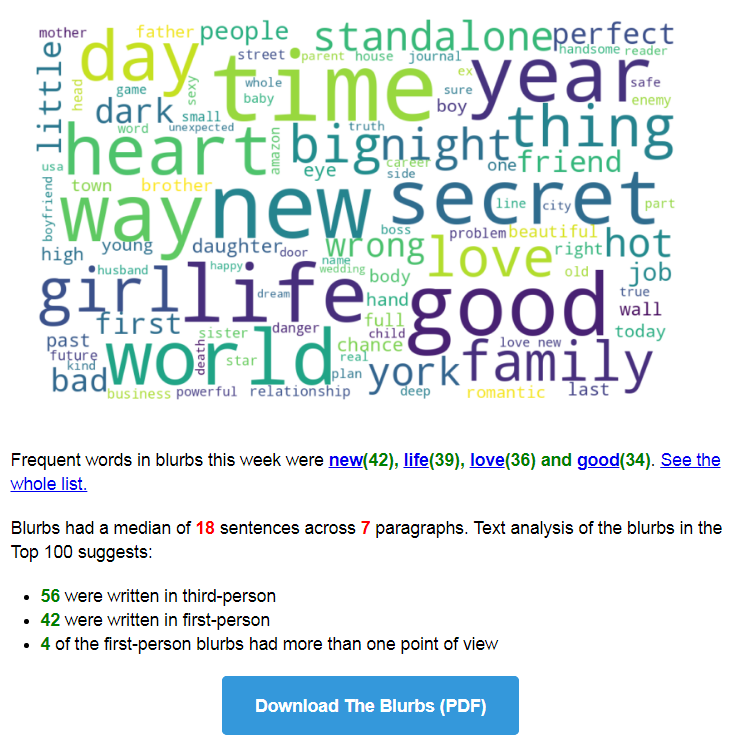
A weekly and monthly market research newsletter
Research done for you, in your inbox every week
Romance
One-Hour Romance (KSR)
Paranormal Romance
Gay Romance
Historical Romance
Science Fiction Romance
Mystery, Thriller & Suspense
Cozy Mystery
Science Fiction
Fantasy
Teen & Young Adult
Urban Fantasy
Your first month is completely free
You can cancel any time you want
Use the code BIAM for the next week, and subscribe for USD10/month forever.
Lana Love
Becca Syme
AJ Lancaster
TK Eldridge
Lizzie Dunlap from Pixie Covers
Elizabeth Brady
Thank you to all the authors and artists who helped with this talk
Nicole for giving me a chance to speak
All of you for your time and attention
For more free resources, check out:
For the slides for this talk:
By Nat Connors