reading time
Oral Exam English 6
Overview

THE ASSIGNMENT
A reading journal
A reading journal is a small notebook where you can jot down important information whilst reading your book.
Everything is handwritten and you record information in a targeted way. It’s personalised, with your own schedule.
This notebook will also be used during your oral exam.
1. Choose a book from the reading list OR suggest a book yourself.
2. Get yourself a small notebook. You can find one for around two euros at Action.
3. Bring the notebook with you to your oral exam.
4. The reading material for your book is divided into seven sessions, each with specific questions.
5. After each session, take a photo or photos of the relevant pages in your notebook and leave them in the uploadzone.
6. You will only receive an overall mark for your book assignment during the oral exam.
HOW?
1. Get your book. (Library - online - bookstore - English library school)
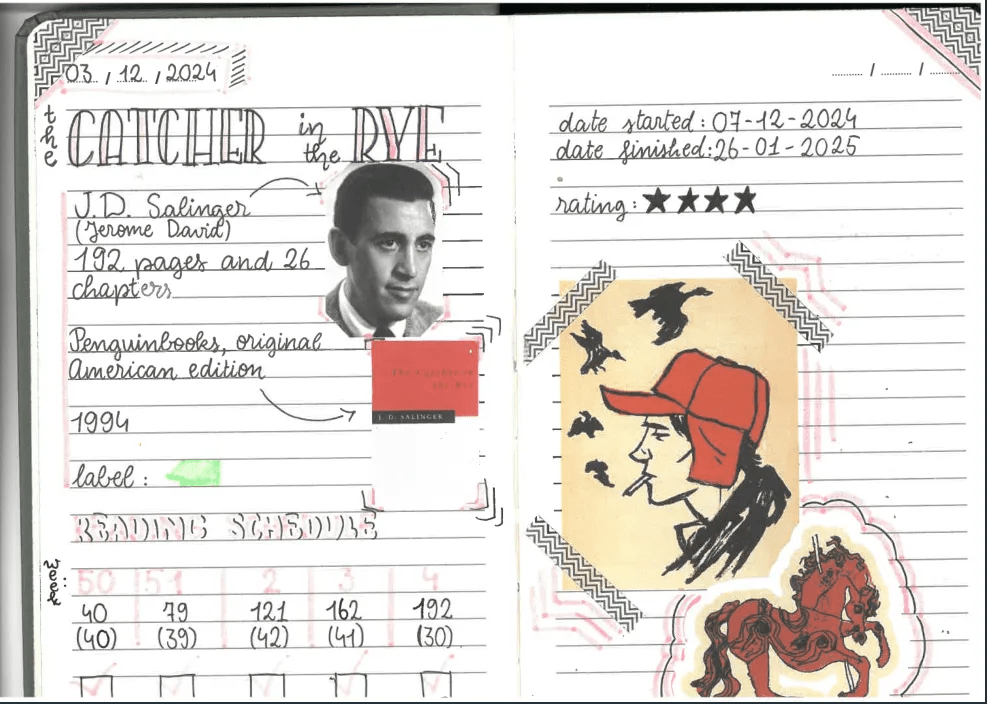
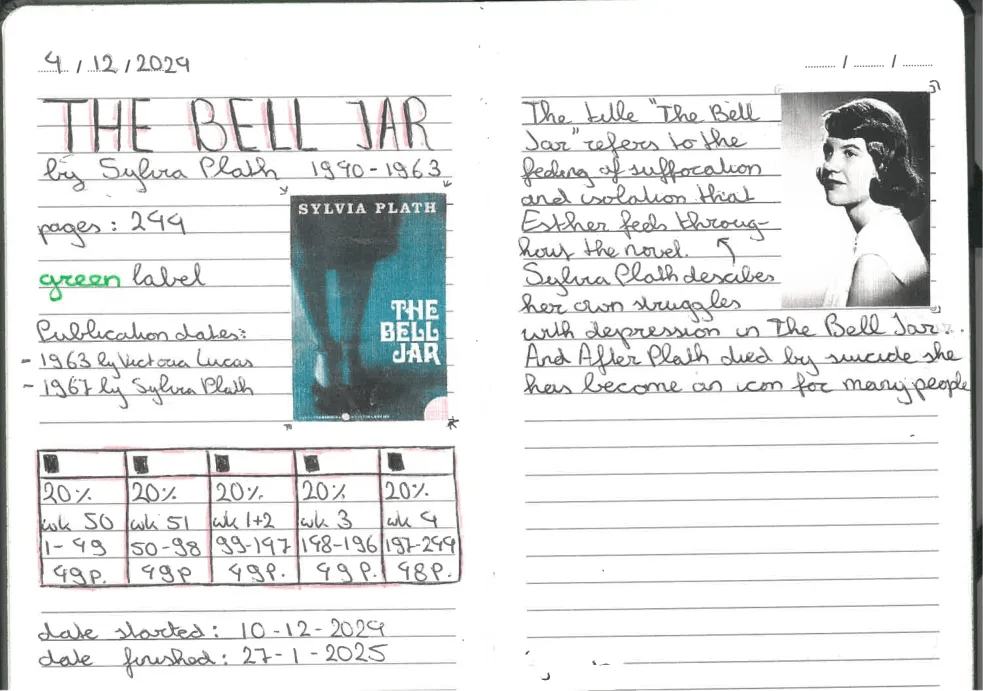
2. General information
Author & title
Number of pages
Reading schedule
Label
Important background info
3. Other relevant info (depends on choice of book)
sessiON 1
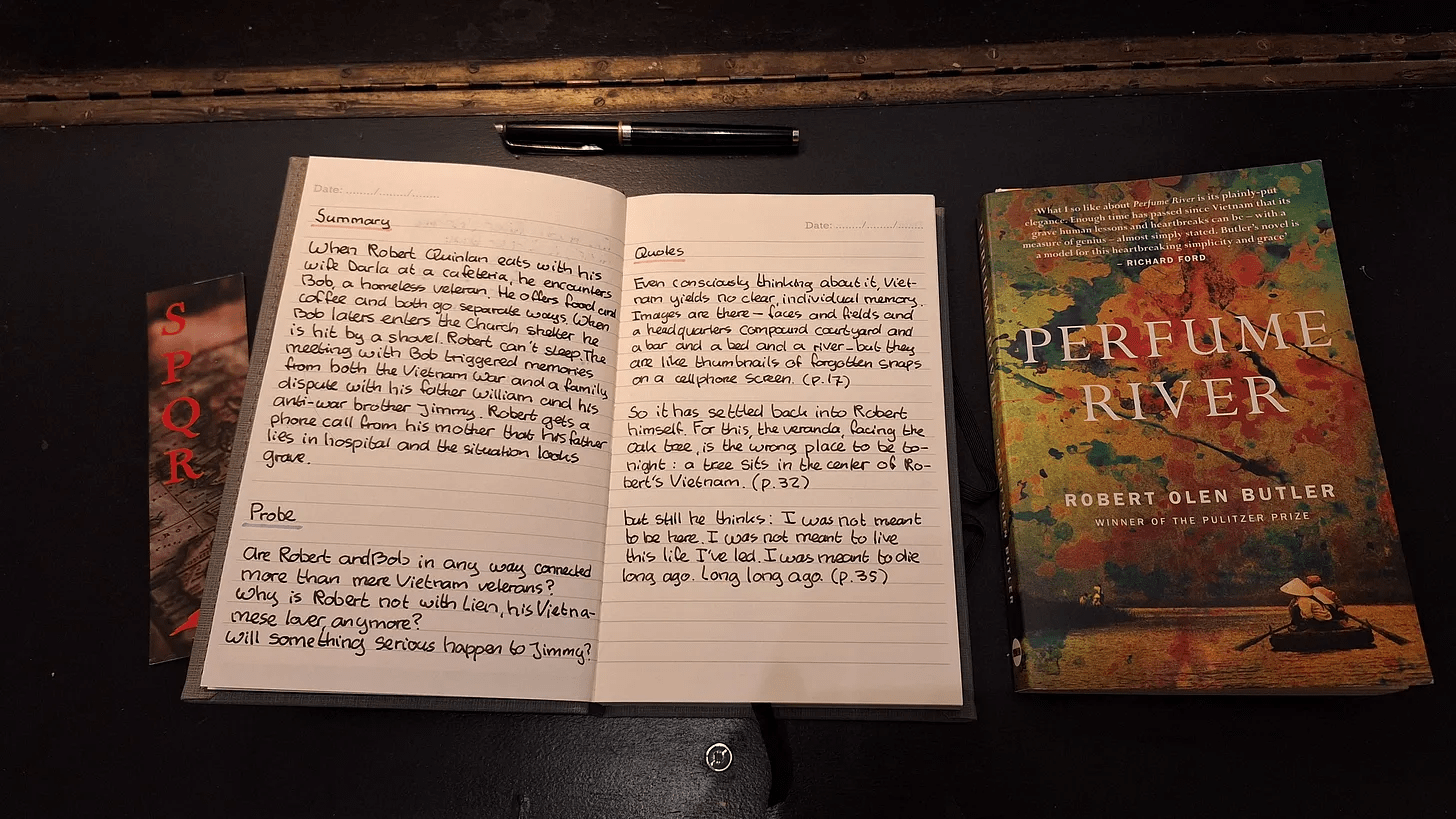
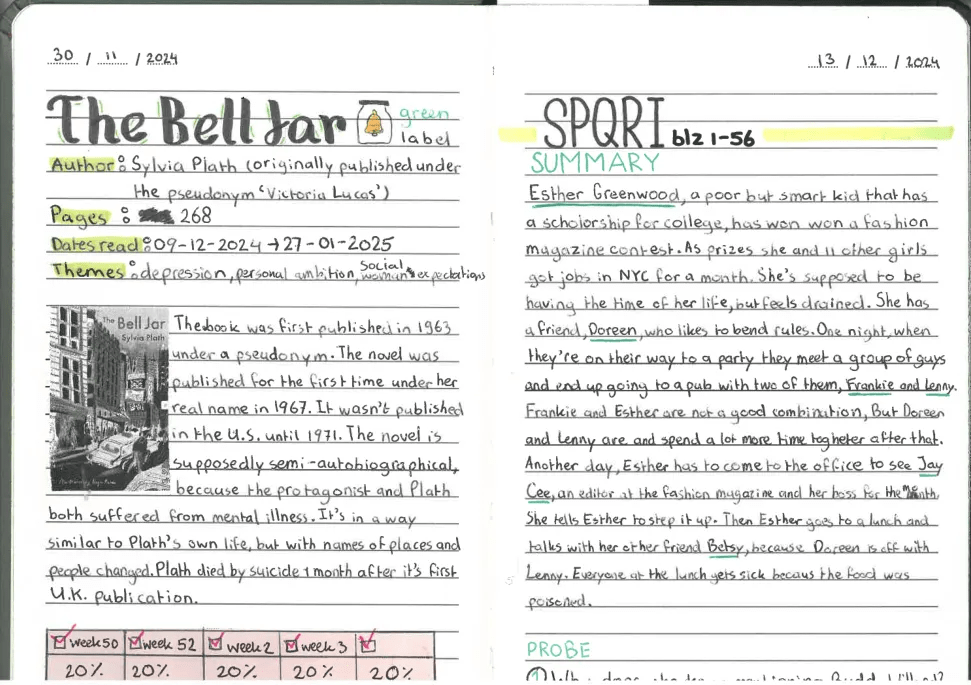
SPQR
Summary: Write a summary of at least 50 words. (What is the main point? What are the key scenes? What should you include and what should you leave out? Paraphrasing and summarising are important skills for making a (longer) piece of text your own)
Probe: ask at least 2 questions about the text you have read. (The questions can be of various kinds, as long as they relate to the plot of the book: why characters take certain actions, what you would like more information about, speculations about what might happen next. The questions do not need to be answered and may never be answered because the book does not reveal this.)
Quote: copy at least 2 relevant quotes. (Ideally, these quotes should relate to the important literary elements, important background info or symbolism.)
Reflection: write a short reflection. (Here you can answer the previous questions, provide feedback on what you have read and express your opinion.)
sessions 2-6
Write a short analysis in which you answer the following questions (at least!)
- Did the book surprise you? How? (refer to quotes, moments in the book!)
- What will you remember from this book?
- What did you appreciate most about the book? (or the other way around)
- Did you appreciate the book more after doing some research about it?
session 7

Why?
How does this fit into my development?
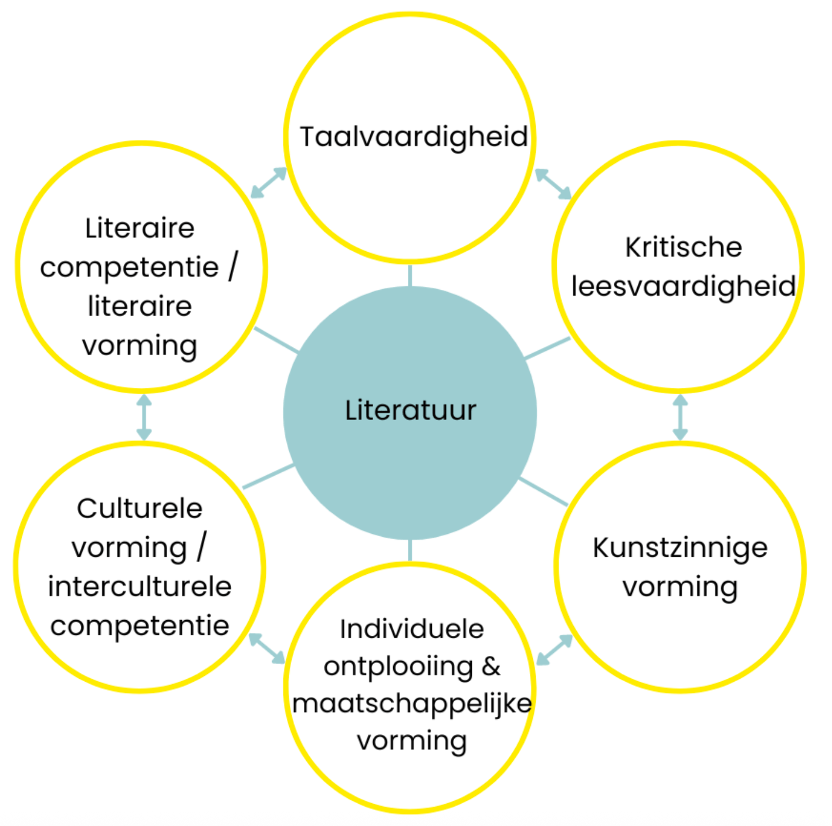
In addition to the proven cognitive benefits of reading, there are several other advantages associated with this assignment.
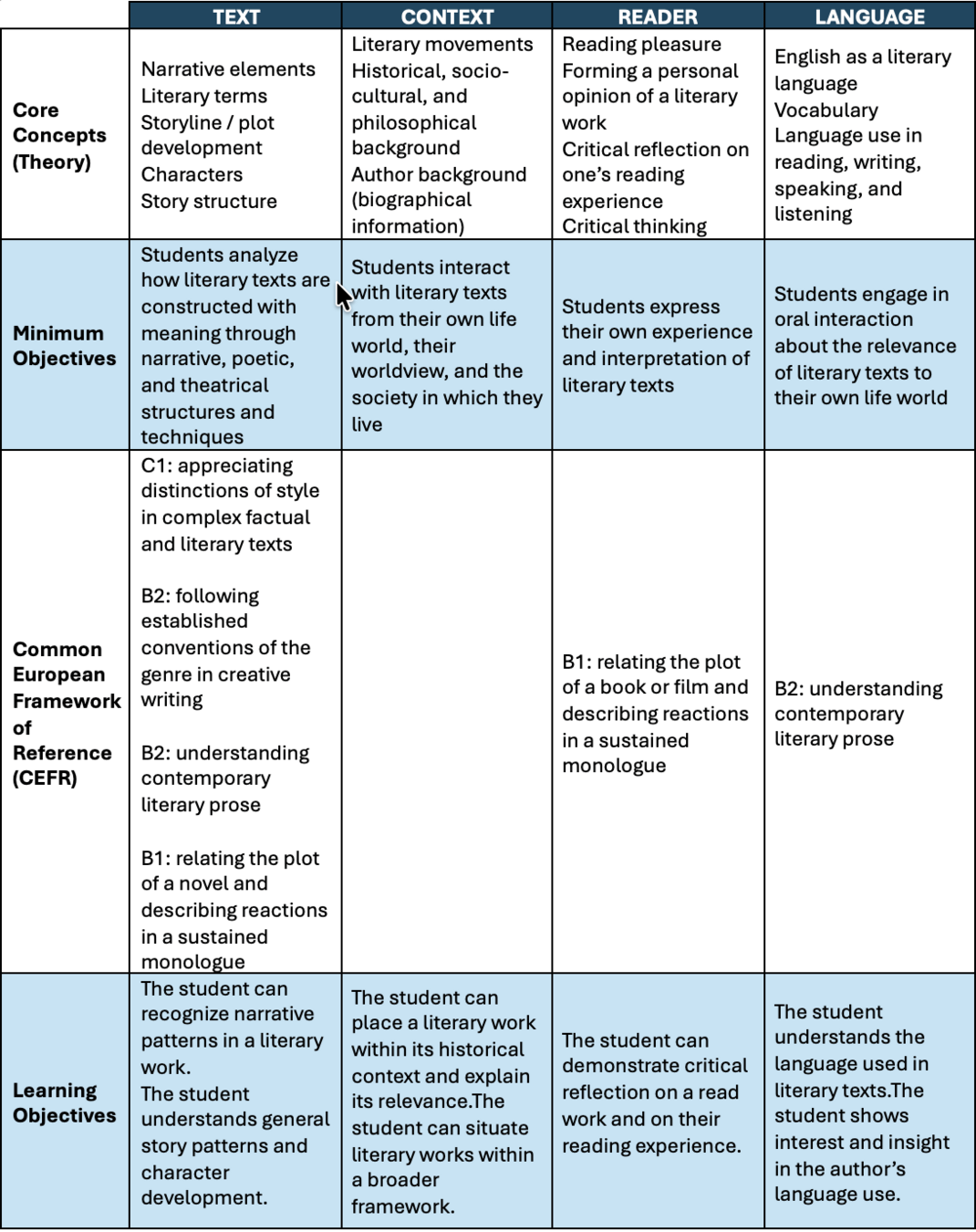
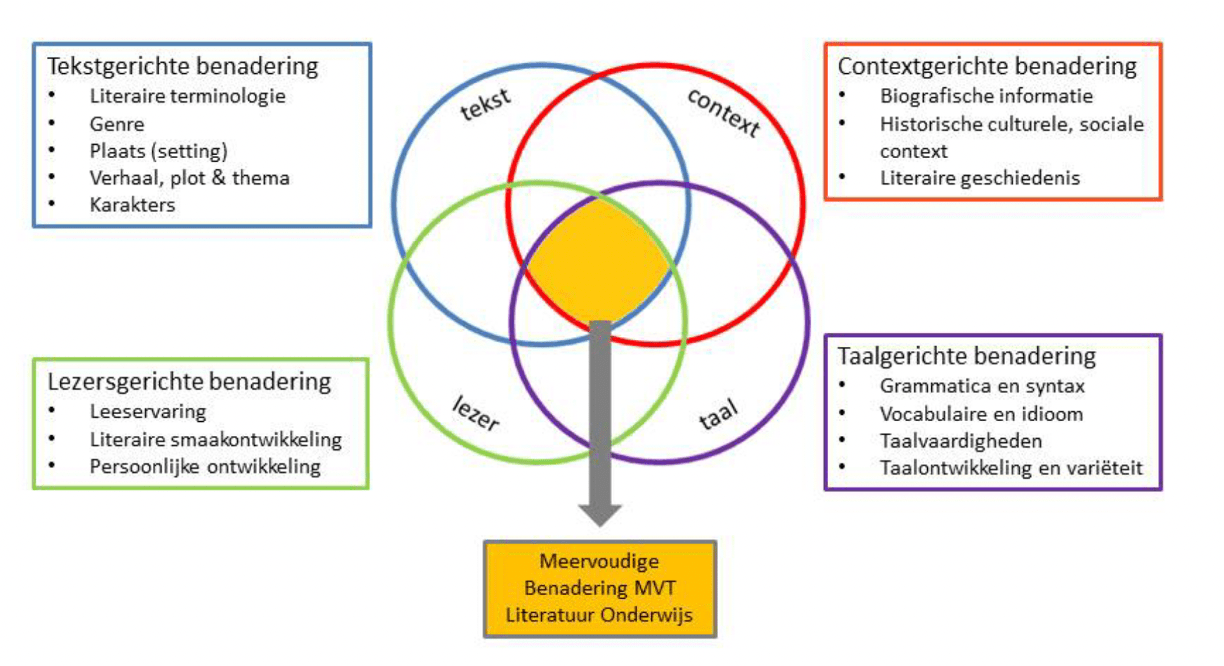
Furthermore, this reading assignment aligns with the Flemish curriculum objectives, the CEFR and the pedagogical foundations of literature teaching.
Memory: Keeping a reading journal helps a novel stick in your memory better. You force yourself to take breaks and reflect on what you have read. It is a form of active reading.
Gathering and organising information (academic skill): A reading journal forces you to make choices when summarising and writing a reflection.
Reflection: It helps you think critically about what you have read.
Reading habits: A reading journal helps you create a reading schedule and monitor your progress. You gain insight into your reading pace and your reading habits.
Why?
WHY?

THE READING LIST
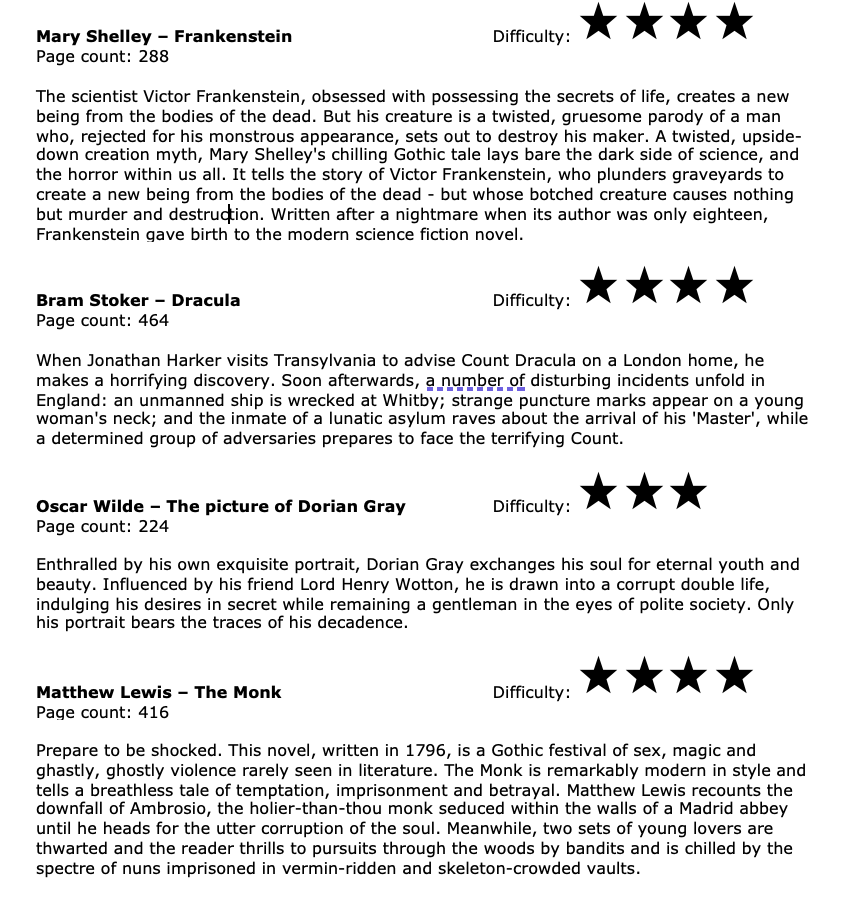
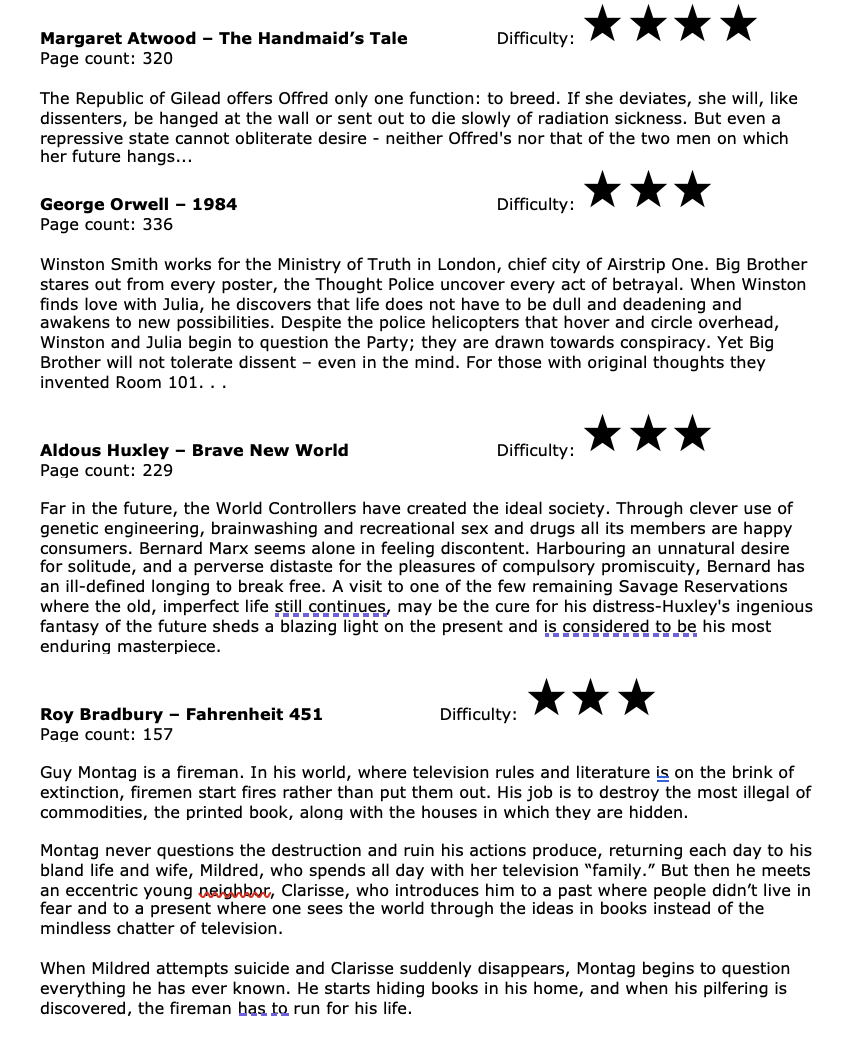
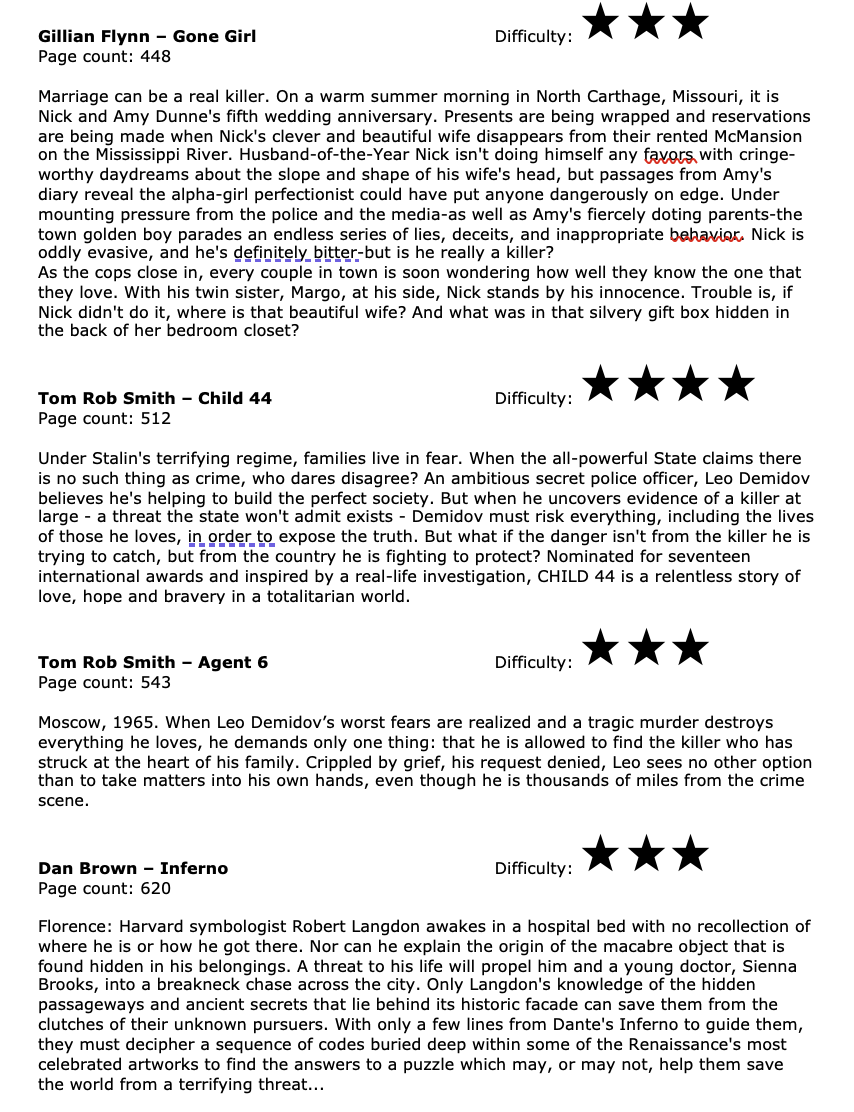
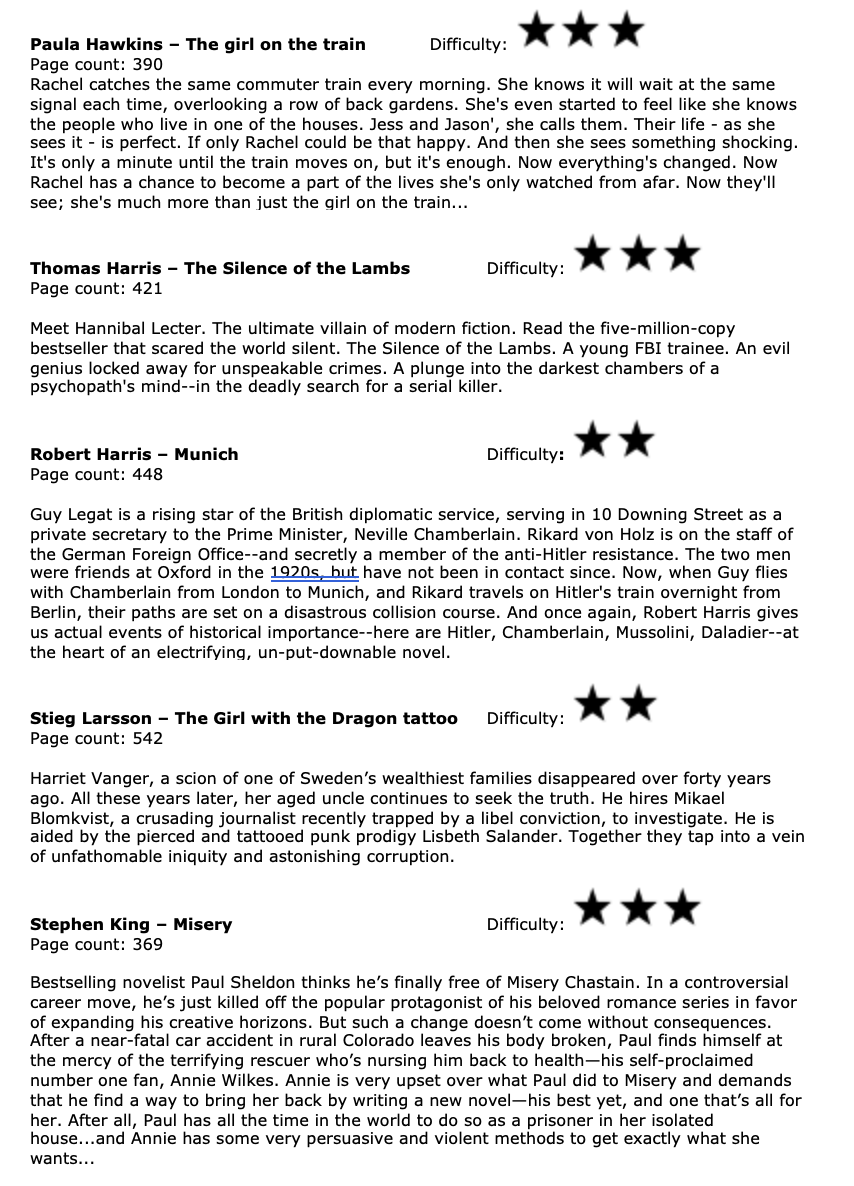
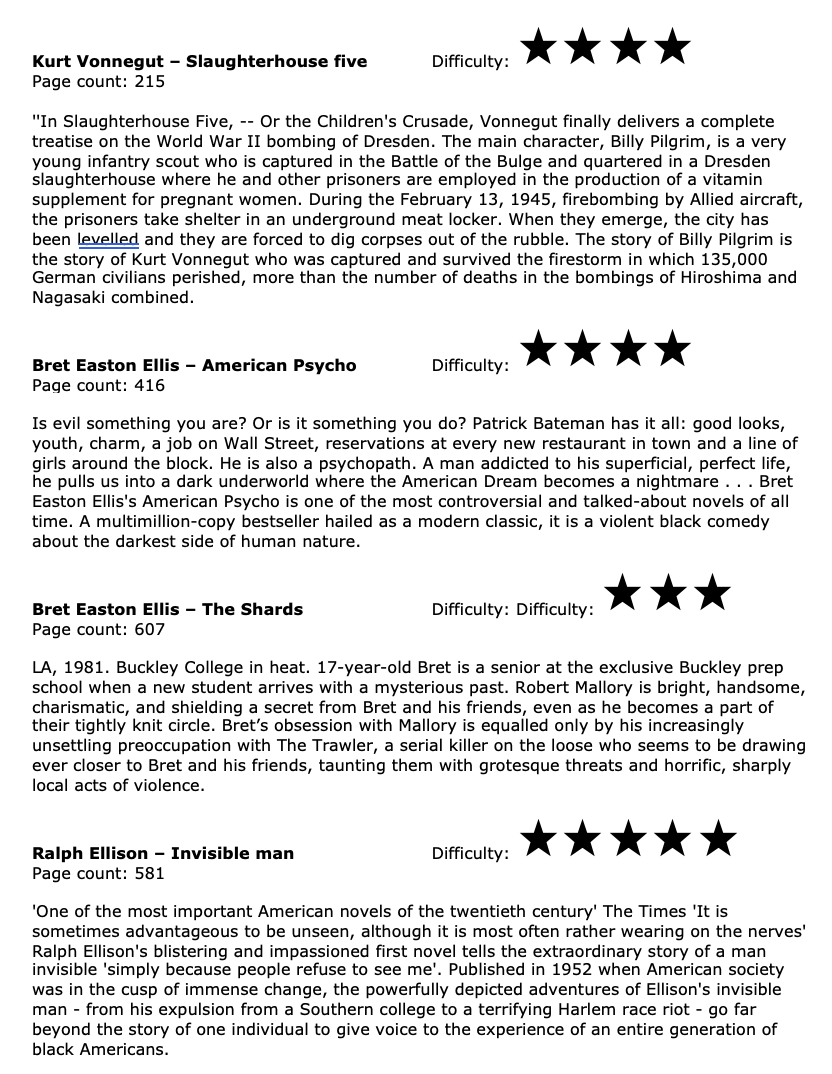
First, there is a slide explaining the labels and difficulty levels for the books.
Next, you’ll find a slide that directs you to different genres.
The books are either bought, borrowed from the library, borrowed from the MCR library, or very kindly lent from me.
LABELS
LIGHT - B1
These books have a clear storyline with a straightforward structure and a manageable number of characters and subplots. The language is simple and easy to understand, allowing readers to follow the story without too much difficulty. The ideas explored are generally clear and relatable, and address common themes in a way that readers can easily relate to.
ADVANCED - C1
These stories feature intricate plot structures with complex character development and multi-layered storylines. The language is refined and vivid, with a rich vocabulary and complex sentence structures. The ideas explored are intellectually challenging: they address profound philosophical questions and explore complex themes.
MUSCLE WORK - C2
These books feature sophisticated plot structures with nuanced character development and multi-layered storylines. The language is refined and vivid, with a rich vocabulary and complex sentence structures. The ideas explored are highly challenging: profound philosophical questions and social critiques.
AVERAGE - B2
These books feature a more complex and engaging narrative, with multiple layers and interwoven storylines. The language is more sophisticated, with a richer vocabulary and more nuanced sentence structures. The ideas explored are thought-provoking and delve into deeper themes, requiring readers to analyse the story on a deeper level.
OverVIEW
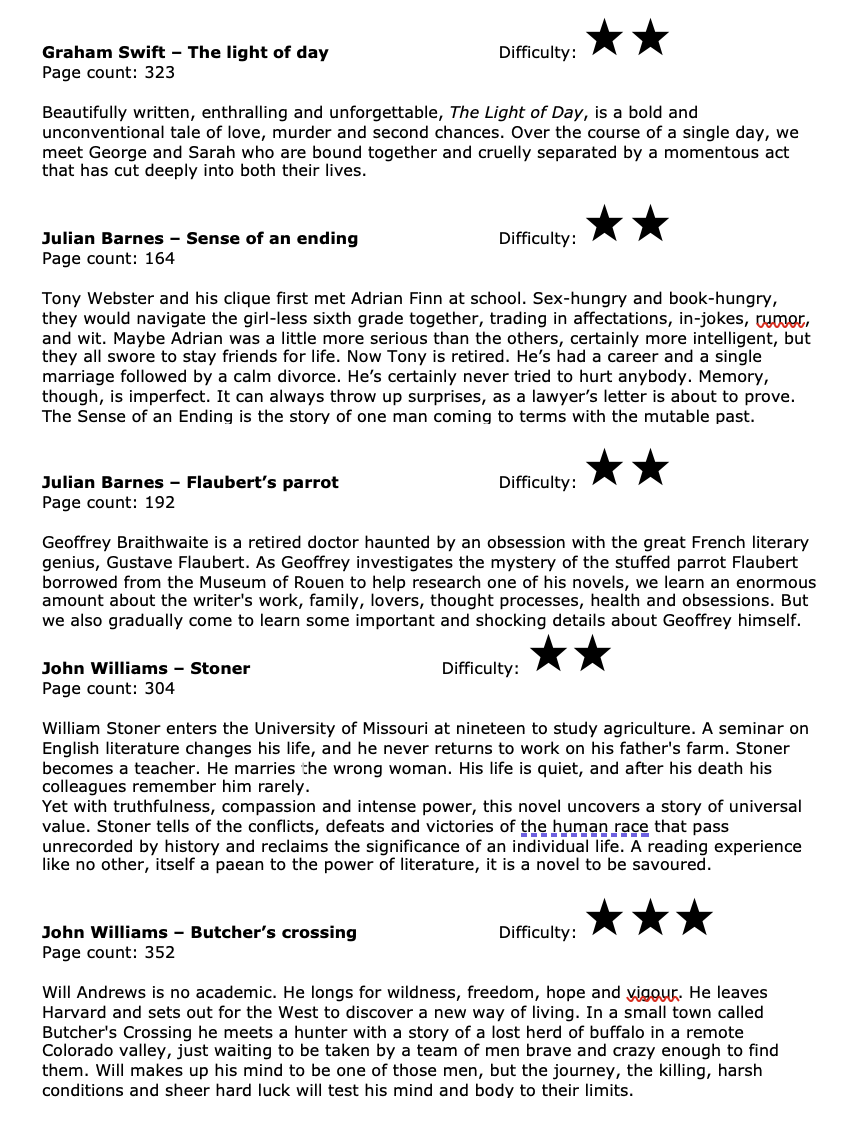
Psychological novels
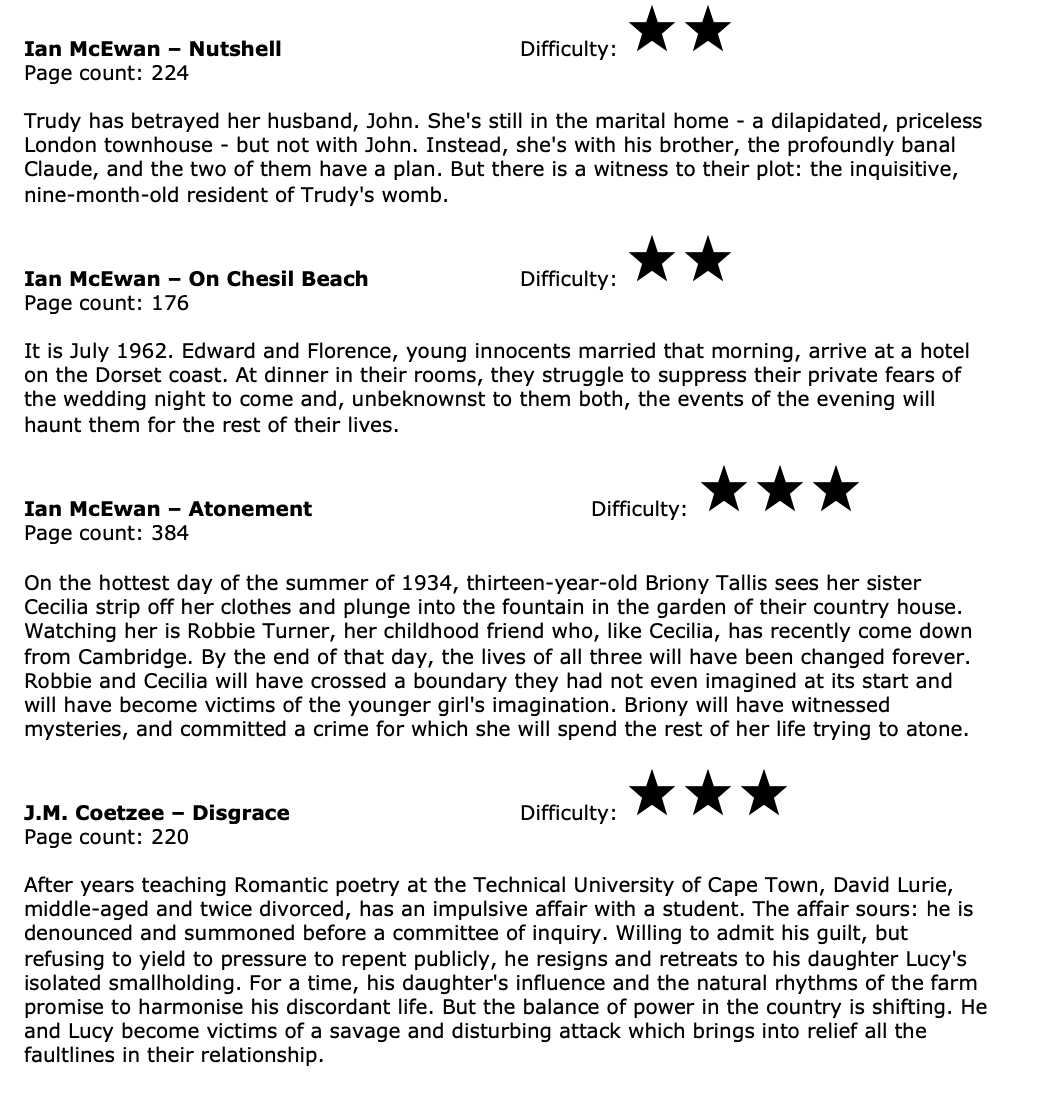
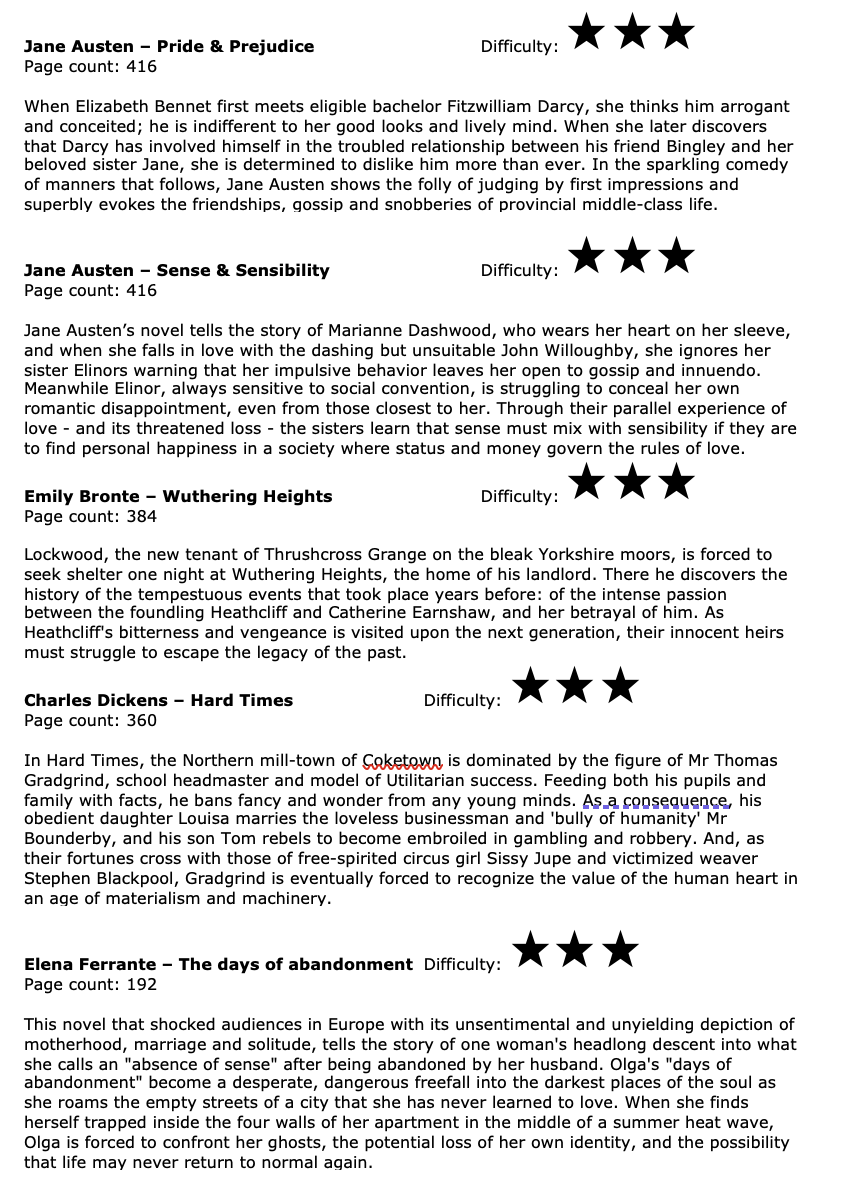
Psychological novels
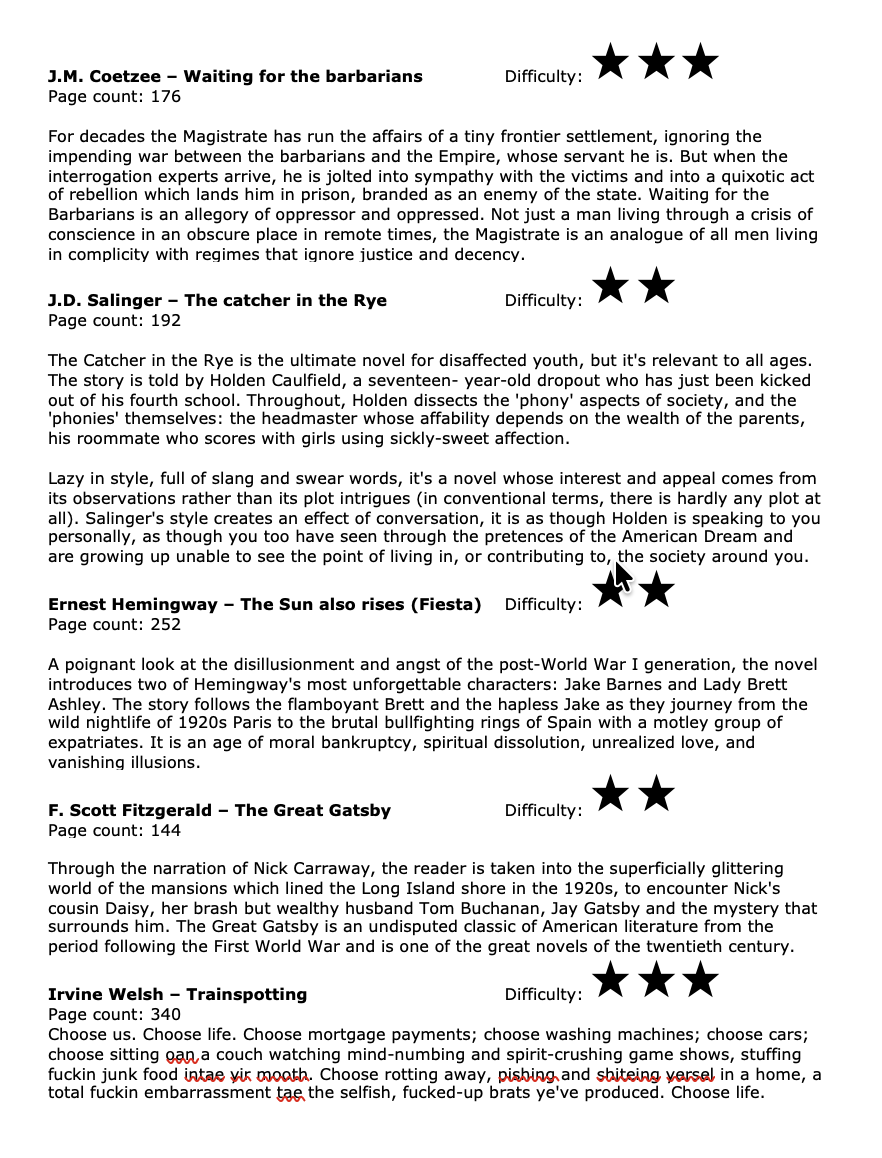
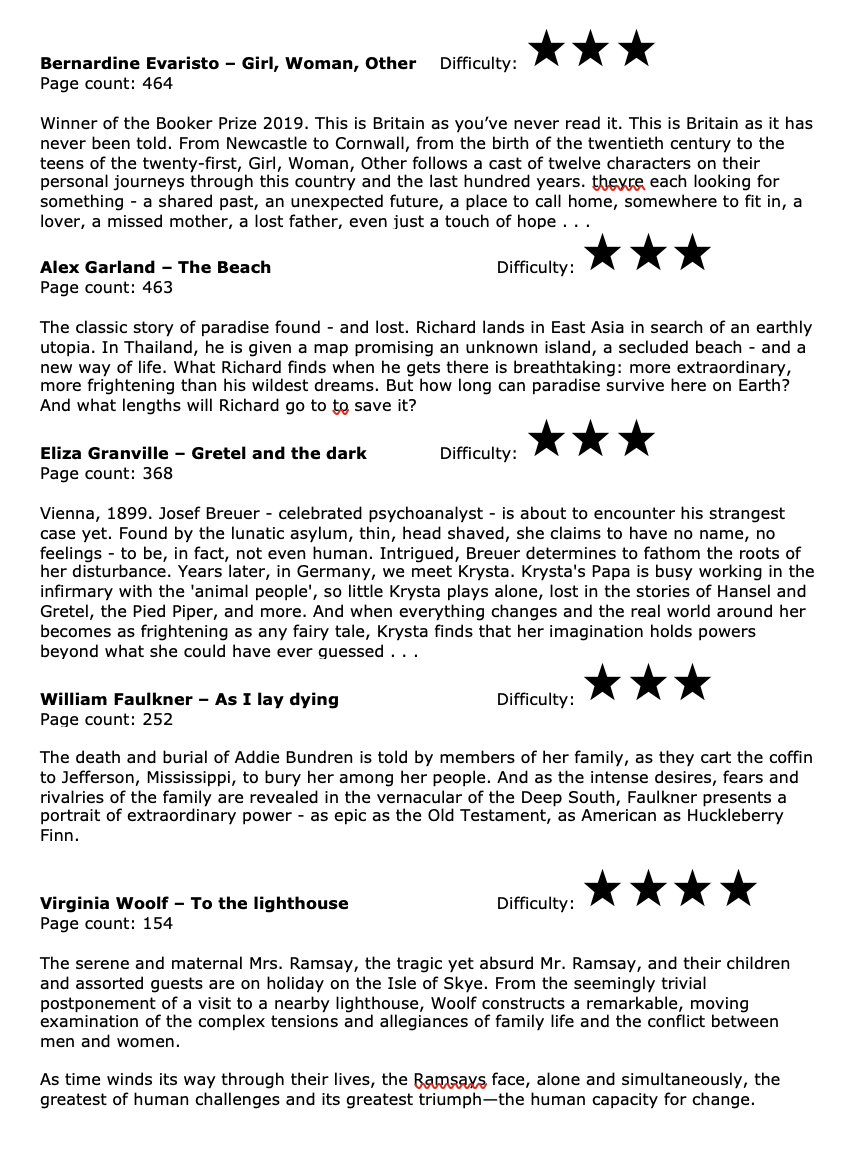
Psychological novels
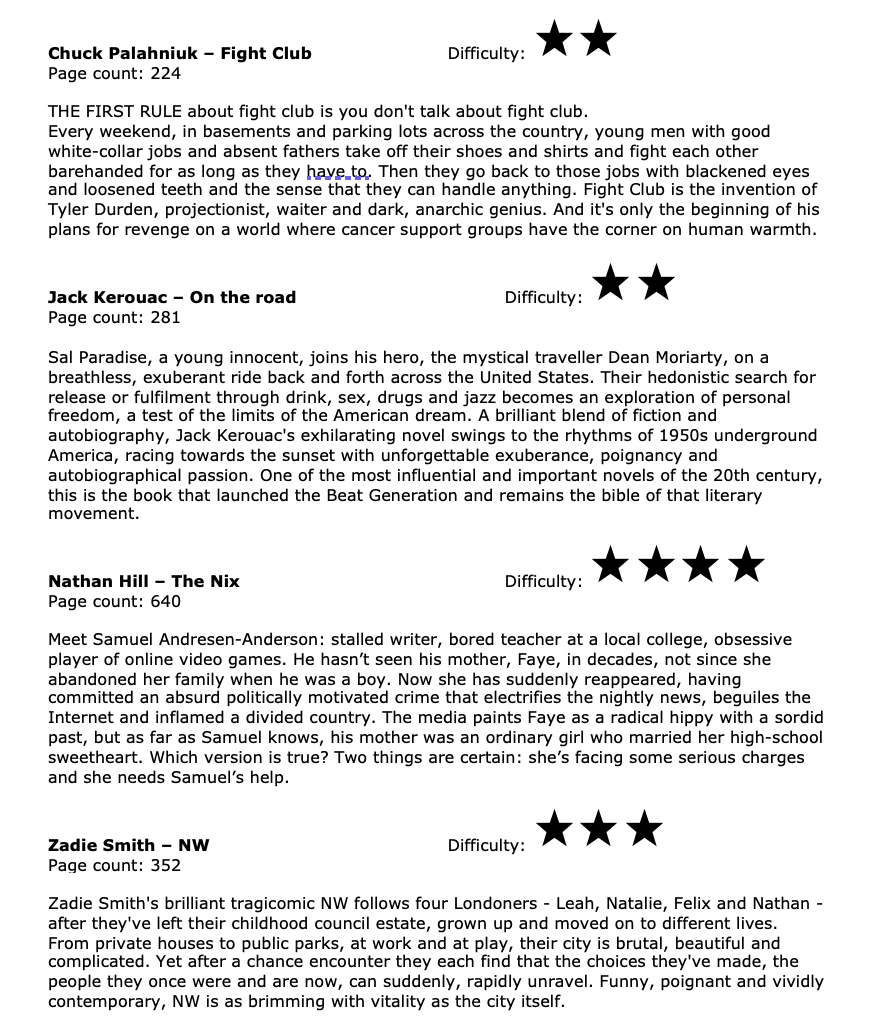
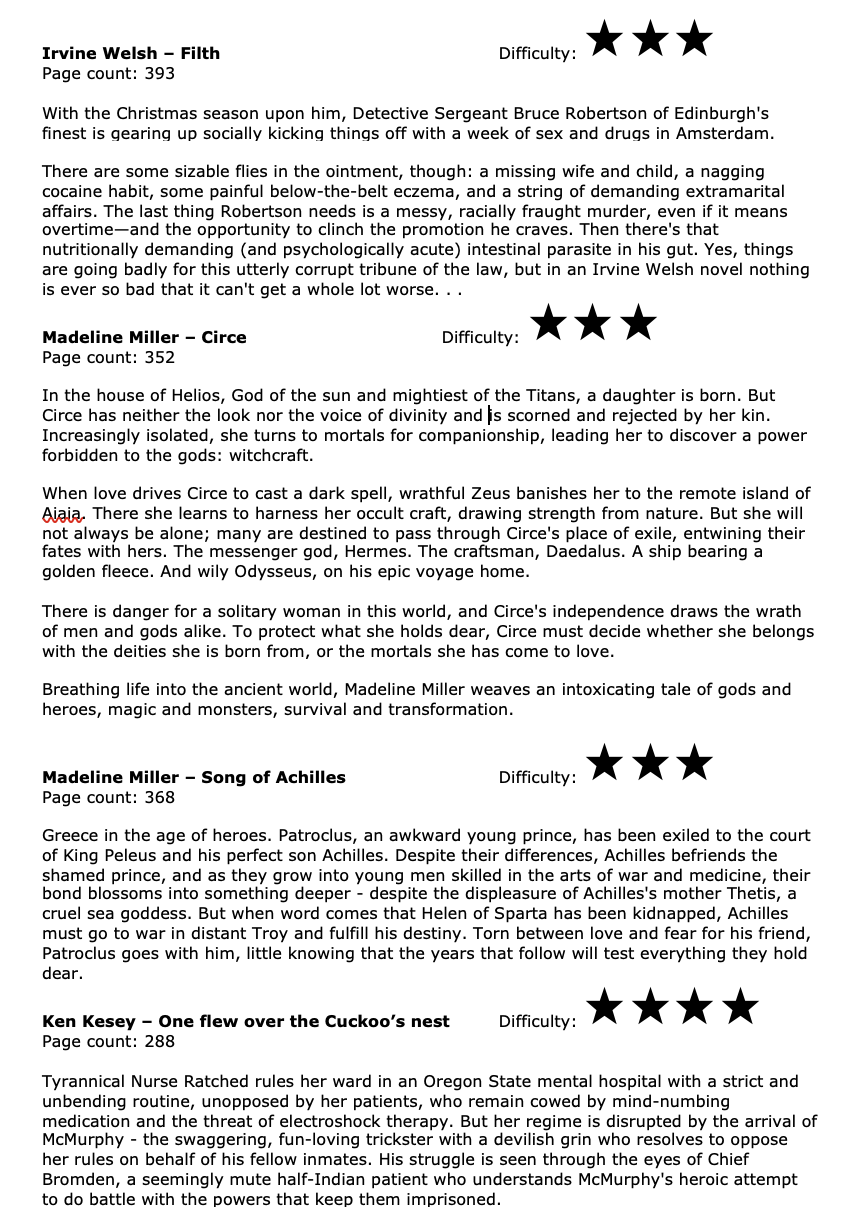
Psychological novels
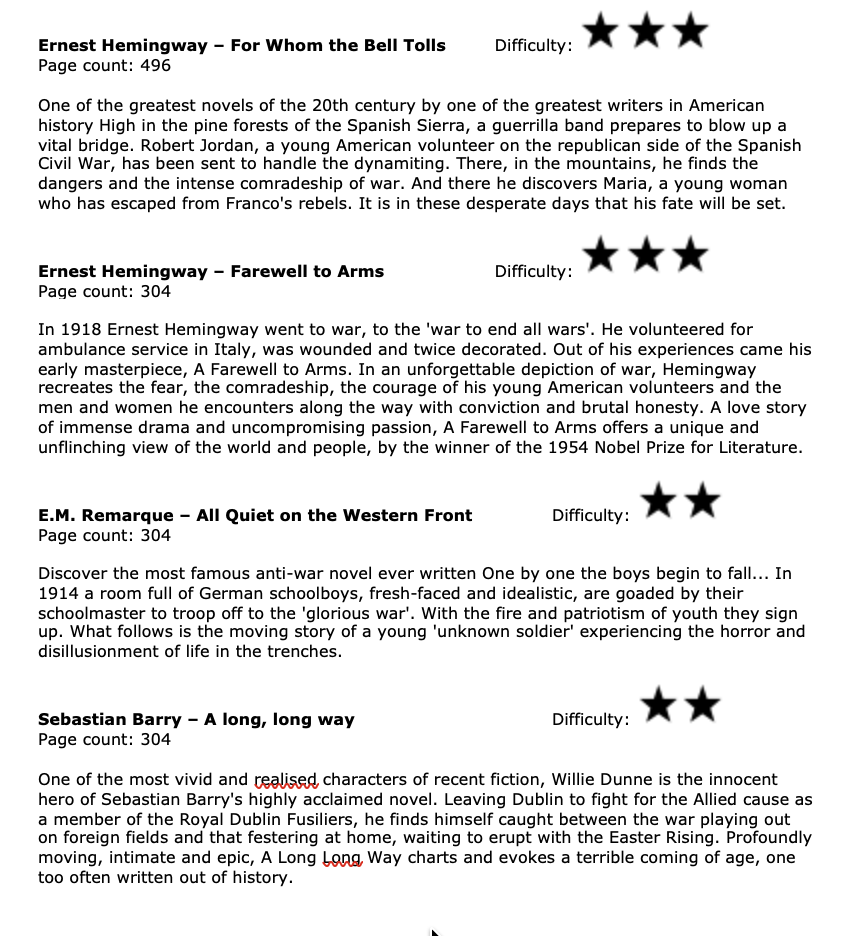
WAR novels
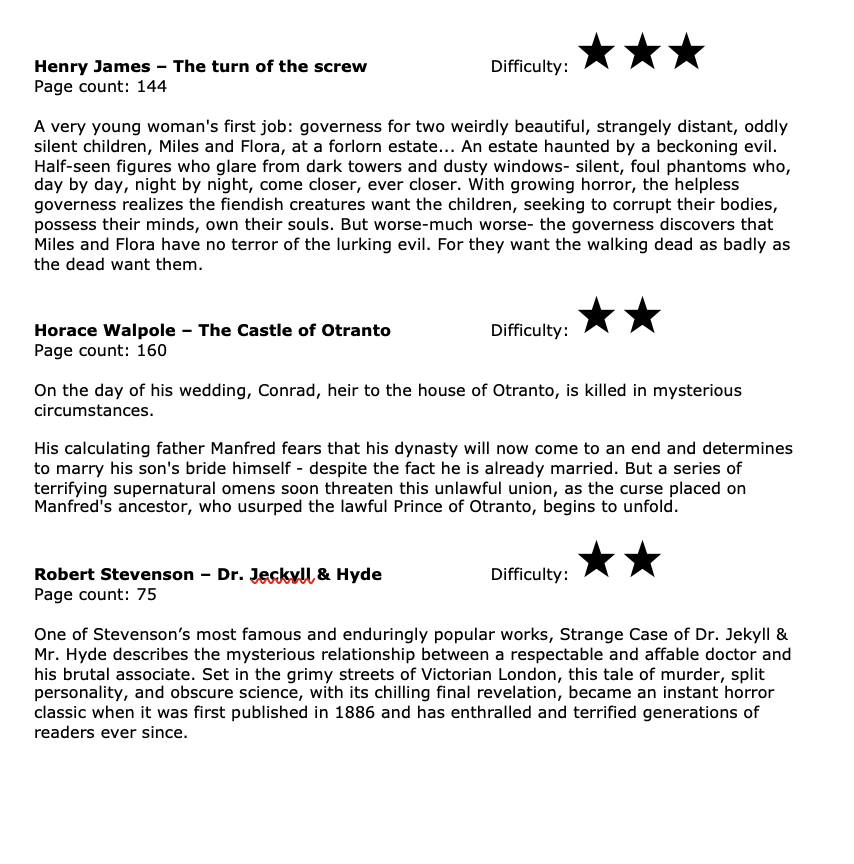
GOTHIC novels
DYSTOPIAN novels
THRILLERS
HUMORISTIC NOVELS
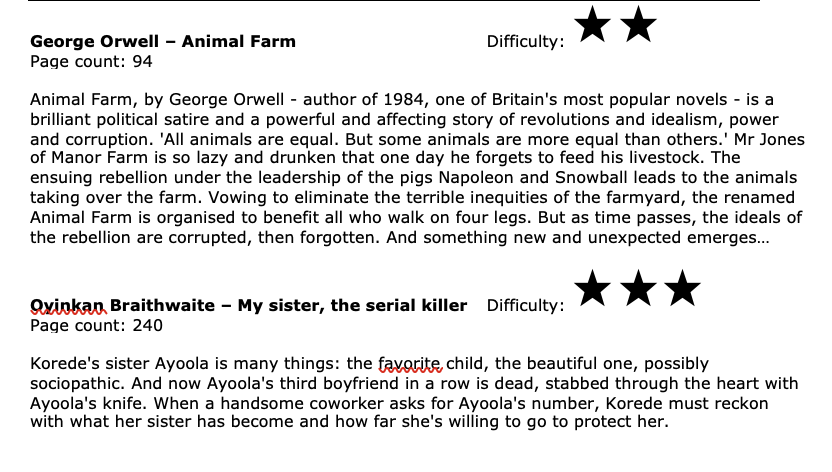
NON-FICTION
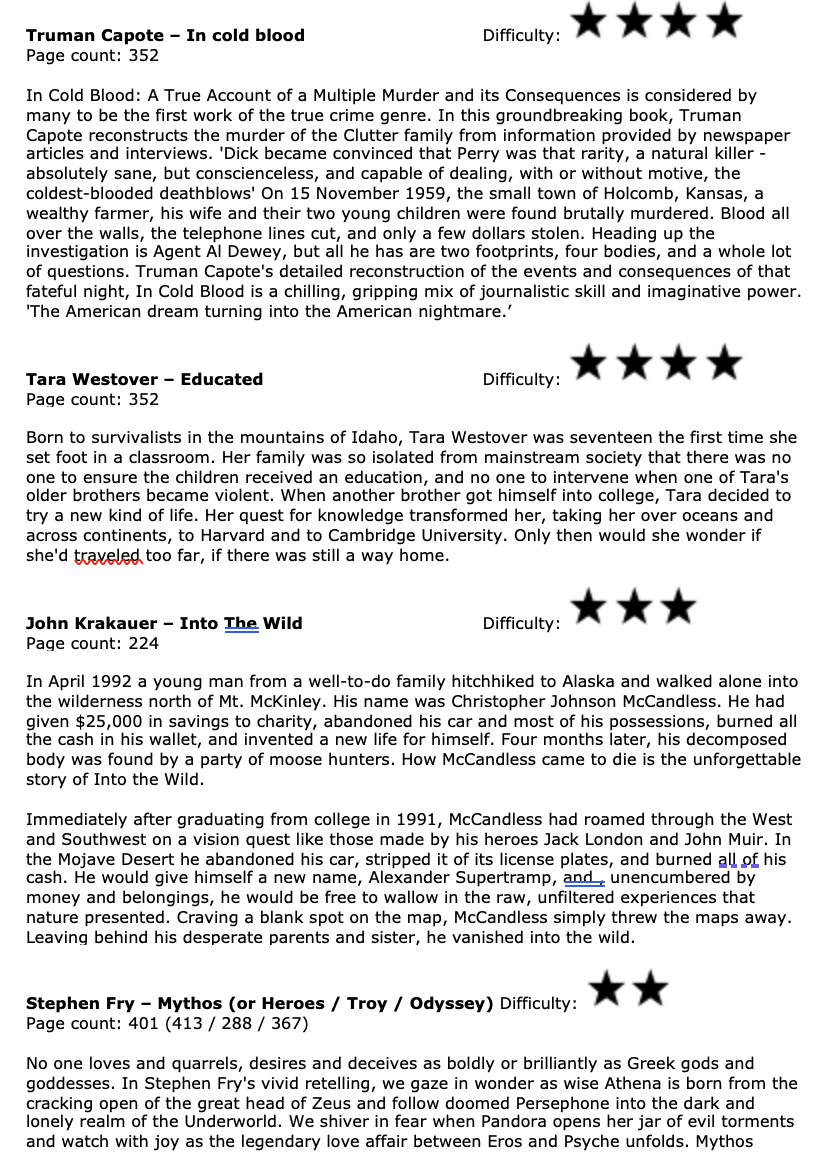
MUSCLE WORK
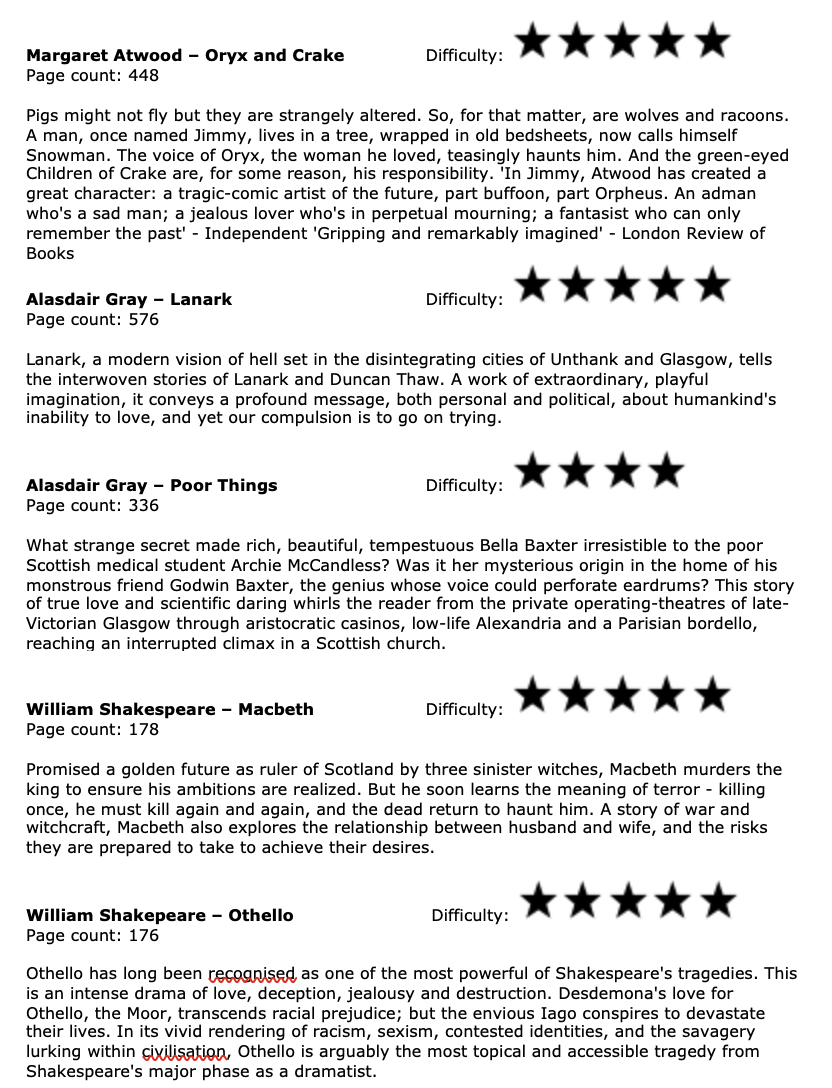
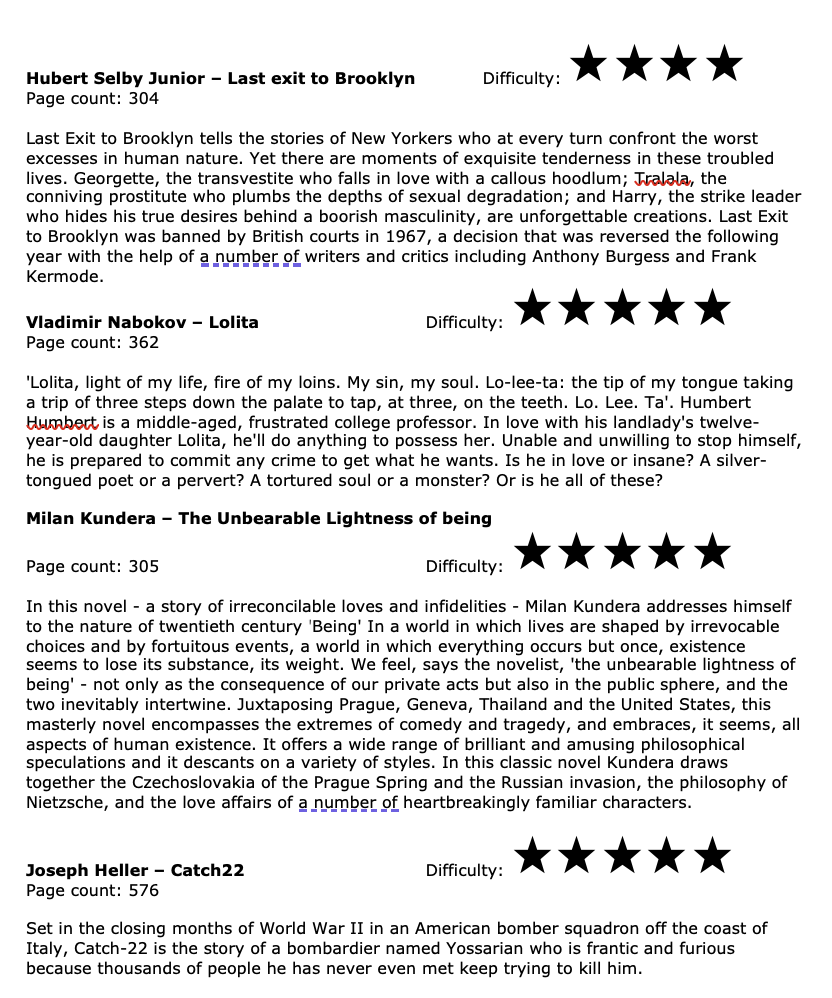
MUSCLE WORK
ENG6 - literary assignment
By klaasvangilbergen