Which
Phone
to get to run
Mobile Linux
on?
Outline
- Introduction
- What is this about?
- What is this not about?
- Devices
- Let's discuss!
Who am I?
- Peter, 39
- Blog: https://linmob.net (Weekly Updates on #LinuxMobile)
- Side project: https://linuxphoneapps.org (talk later today)
- Contributing to mobile-config-firefox
Who's here?
Raise your hand if
- This is my first exposure to running desktop-ish Linux on a handheld device
- I have been to this dev-room in the years before (or attended similar things before and feel somewhat familiar with the topic)
- I have ported a device to $OS and it's going great
- I am building my own hardware, suckers!
(if new people)
Common Problems
- Be warned: Reliable audio is a challenge, still
- some Bluetooth profiles (e.g., the one for in car-use, HFP) are often not properly supported
- VoLTE (Voice over LTE/5G) depends on your carrier, so just because VoLTE works with $device on $other_carrier, that does not mean it will work for you
- No RCS (Rich Communication Services, SMS/MMS sucessor) support on any #MobileLinux OS so far
- While GPS works on many devices, without AGPS (and similar tricks) you'll wait a few minutes to get a fix and see that dot on the map
What is this session about?
- Discussing hardware options
- Sharing knowledge
- Finding the right device for you (hopefully)
- If new: Knowing what you are getting into (maybe)
What is this session about?
- Discussing hardware options
- Sharing knowledge
- Finding the right device for you (hopefully)
- If new: Knowing what you are getting into (maybe)
What this (IMHO) should not be about
- Placing blame on people who did the hard work to port a device
- Finding the 100% libre, blob-free unicorn device (it does not exist and sadly does not seem too feasible)
Devices
Intro
In 2020/2021 the answer was easy: Get a PinePhone, or if you have pre-ordered it or are made of money, get a Librem5.
Since then, it's gotten more difficult.
And then a little less difficult.
Maybe.
1. Devices sold with Linux
a) "Close to Mainline" Devices
Purism Librem 5
-
Late 2017 Crowdfunder, Modular, NXP i.MX 8M Quad, 3GB RAM, 32 GB eMMC
-
massive delays, software/hardware enablement initially behind a certain popular device we will talk about next
-
USA-made variants for patriots or people who want 4GB of RAM (SoC maximum) and 128 GB eMMC
-
development paused after "PureOS Byzantium" (≈ Debian Bullseye) was considered ready - or due to financial issues?
-
lately there's a small (but steady) investment in software dev again, seemingly stuck
-
you can join a subscription to fund software development if you want to, follow https://social.librem.one/@dos for progress (including awesome camera improvements)
PINE64 PinePhone
- https://pine64.org/documentation/PinePhone/_full/
- Widely delivered since 2020
- GPU: Mali 400 / OpenGLES 2.0 only
- Ships with outdated, unmaintained distribution pre-installed
-
The web has not become lighter since 2020, and as everything else becomes so much
-
Declining developer interest
-
Likely be sold for another two years
-
No longer recommended (fight me)
The PINE64 Model ...
- PineStore Ltd: Comes up with and sells devices
- pine64.org Community: Enthusiasts and Developers that try to make these devices work

This did not always go well:
These two parts are not entirely disconnected, before PineStore goes public with a new device, select Community Members know about/have devices and start working on them.
PINE64 PinePhone Pro
-
Introduced in late 2021, started shipping in 2022.
-
poor battery life (and keyboard dock (had issues) no longer on sale)
-
thermal throttling
-
probably never ready
-
get it if you won't listen

b) Halium Devices
- Various devices by Volla sold with Ubuntu Touch preinstalled (Mediatek chipsets, select devices have VoLTE support!)
- FuriLabs FLX1 (Good reviews, but not available since ~February, "sister device in planning")
- Jolla C2 (Unisoc)
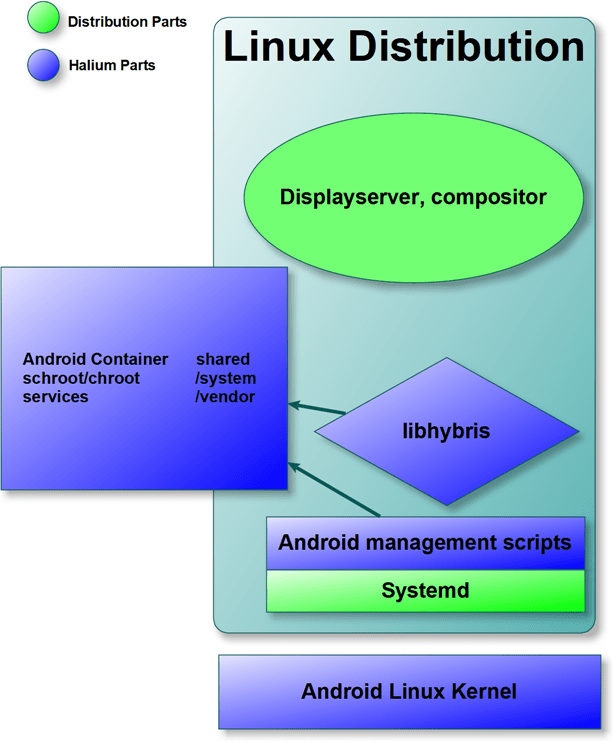
if new people: What does Halium/libhybris mean?
Why? What's the difference?
Problem
- Chipset vendors do provide drivers for Android
- These are usually not ready to be integrated in the proper kernel.org kernel: Userspace blobs, code style, ...
Solution
- There are two ways to fix this:
- Re-implement drivers so they get accepted into Linux
- Or go another route
Halium
architecture
Source:
https://halium.org/
Watch List
- RK3588s
- Liberux Nexx (failed crowdfunder, but still going)
- Dawndrums Divine D
2. Devices sold with some other OS (usually Android)
Software projects have device support lists, e.g., for mainline distros:
and for distributions that (usually) make the vendor kernel work with a Linux stack
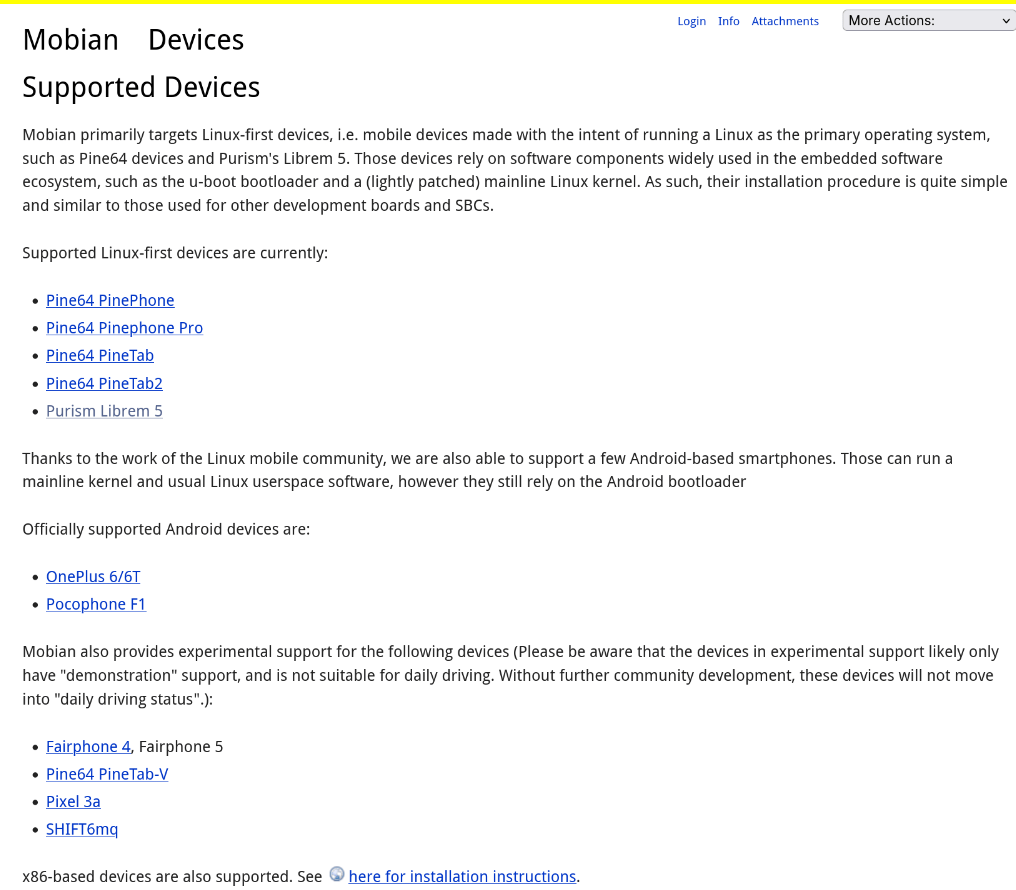
Highlights (close to mainline)
- Pixel 3a (XL)
- OnePlus 6 (T), XIAOMI Poco F1, Shift 6mq
- Fairphones 4, 5
Halium/libhybris? You tell me!
And with that, let's discuss
Thank you!
Notes
from the discussion afterwards:
- I tried to explain why running Linux on ARM is harder than x86_64
- Guido mentioned that there may be a nlnet-funded RCS project soon
-
Healthcare issues: Hearing implants, Insulin pumps, all devices that need Bluetooth connections and companion apps to work. Waydroid pass through would be really important for this
- alternatively: Re-implement apps with Bluetooth LE support natively; may be less hard than assumed as BLE protocols are not too complicated and similar across devices
- There was also talk about Android-based options, and VMs on Android
Which Phone to get to run Mobile Linux on?
By linmob