Gamification
Which really should be
"Game Based Learning"
By: Kevin Baugh / @baughss
The elephant in the room
No one can seem to come to a strict definition for what gamification is.
Is it adding game elements to non-games?
A serious gaming experience?
Learning through play?
Mud in the water
If no one can come up with a definition for gamification, then it's a bad word to use.
Let's come up with a new one
Game Based Learning
Great, another name
Game Based Learning helps to define what gamificaiton does in an educational context.
- Adding game elements to teaching principles
- Teaching through games
Gamification's origin story
First documented use of the word in 2008
Coined for widespread use by Nick Pelling in 2010
NOT A NEW IDEA
Although the term is fairly new, the concept itself has been around since at least the 1980's
- Malone, T.W. Toward a theory of intrinsically motivating instruction, (1980) Cognative Science 4 333-370
- "heuristics for designing enjoyable user interfaces"
- Carroll, J.M. The Adventure of Getting to Know A Computer, Computer 15, 11 (1982), 49-58
- "metaphoric cover stories"
Broken down
- Serious Games
- Pervasive Games
- Simulations
- Meta-games (games about games)
Problem with gamification
(At least in education)
- Scatter effect
- Sort of like a shotgun for learning, doesn't work for everyone.
- Making things fun.
- For some reason this is one of the hardest things we face.
- How to test for the learned knowledge?
How has this problem been tackled in the past?
Puzzles
Definition
Any sort of "contemporary" puzzle game that is used by instructors to try and facilitate learning.
Major Examples
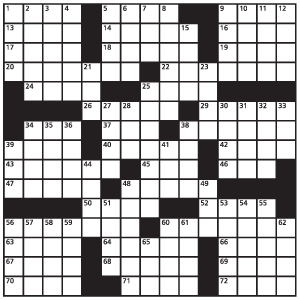

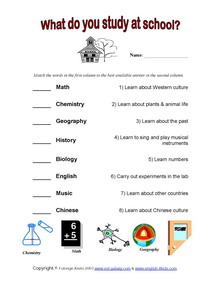
- Crossword
- Word Search
- Matching
Pros
-
Everyone knows it and is used to it
-
It's quick
-
You don't have to think when building it.
Cons
-
Everyone knows about it and is used to it
-
It's not exciting for the player
-
Seems tedious
Carroting
Definition
A game that has hurdles you have to pass if you want to progress in the game.
Want to further the story line? Then find all the nouns in this sentence to continue.
Worst Offender

You have to answer math problems in order to earn ammo so you can shoot trash.
Seriously.
PROS
-
There's a clear distinction between what's being taught and what's a game
- The student's have to pass the course to continue
CONS
-
It's boring
-
It makes learning seem like a burden
-
There's no thought that goes into the game.
-
Nothing to link the game to learning
Blenders
Definition
Blenders try to make learning the main game mechanic and build a simple game around this one concept.
Eat all the odd numbers before the timer runs out!
Prime Example
Number Munchers

Eat the answers to the math problems before the monsters eat you!
PROS
-
Elements are mixed into actual gameplay
-
Students learn quicker reaction times
CONS
-
Students didn't actually learn the information
- They were too concentrated on beating the level
-
Causes anxiety in some students
- Running from monsters became the main goal
TANGENTIAL
Definition
"Tangential learning is not what you learn by being taught but rather what you learn by being exposed to things in a context which you are already highly engaged in. "
--James Portnow, The Power of Tangential Learning
Notable Example
Assassin's Creed III
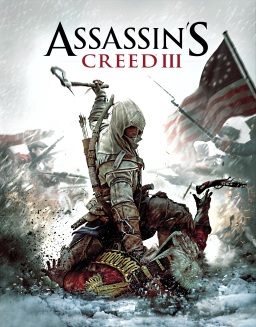
Animus Database
PROS
-
Learning elements are mixed into the story
-
More options for learning are available
-
Doesn't shove learning down your throat.
- It's not the point of the game
CONS
-
Puts learning into the students hands
-
They can learn more or not. It's a choice
-
There's no real way to test this
-
It's self paced learning rather than teaching
Alternate Reality Games
Definition
"ARGs are games that are driven by storyline and typically supported through some type of online game portal that manages the game.
Playing the game, however, requires that you interact with characters, other players, and storyline elements that might be online, but may also be found in aspects of your "real" life.
Websites, social media tools, media broadcasts, phone calls, text messages, and sometimes person-to-person interactions are all potential elements that move the storyline along."
--Koreen Olbrish, The ABC's of ARGs: Alternate Reality Games for Learning
Notable Example
PROS
-
Engaging
- Doesn't seem like learning
- Gives students a goal to achieve rather than a game to play
- Allows students from different disciplines to work together toward a shared goal
CONS
-
Complicated to set up
-
Extremely long execution times
-
Has a limit for diminishing returns
What else can we do?
Head fake
Coined by Randy Pausch in "The Last Lecture"
Where you make someone think you're talking about one concept, when you're really talking about another.
.jpg)
Great idea, couple of problems
There's no method of revealing to them that they were being taught.
It's really applied to any situation where you are talking about one thing, but really mean another.
Isn't focused on learning, focused more on "tricking" the person into doing something different.
The Miyagi Method
Who is Miyagi?
.jpg/250px-Pat-Morita_(Karate_Kid).jpg)
Mister Miyagi is a character from the film The Karate Kid, played by Pat Morita.
He's a karate instructor who teaches a boy karate by making him do chores.
Wax on, Wax off
What does this have to do with learning?
The same principle can apply to learning.
Think of it like a head fake with a message at the end
Core idea
The instructor chooses a concept they want to teach and weaves it into a narrative game.
(This is important) The concept MUST seem like a game mechanic and cannot be obvious or an integral part of the game.
Example time
Step 1
Figure out your main theme or concept
I want to teach the group of people in a computer science course about classes.
Step 2
Refine the theme into parts
Here's what I want them to learn about classes:
- You can create an instance of a class
- Classes can have methods
- Classes can have properties
- Classes serve as a blueprint for each instance of that class.
Step 3
Create a game

Gun crisis is a side scrolling shooter where, as the story goes on, reality starts to break down around the player and they start to see the "code behind it all".
Step 4
FIGURE OUT A GOOD MECHANIC FOR YOUR GAME
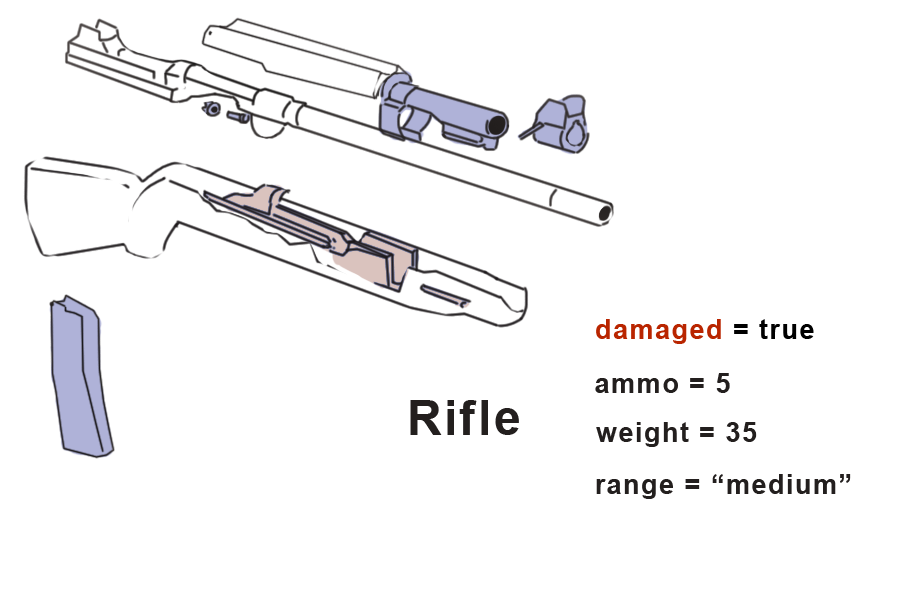
Since our game consists of a lot of guns, creating your own gun would be a good mechanic to use to introduce the concept of classes.
Step 5
Explain your mechanic to yourself
Players in Gun Crisis 300 are able to use blueprints (classes) to make their own guns (instances) that have attachments (properties) and actions (methods)
Step 6
Let's play!
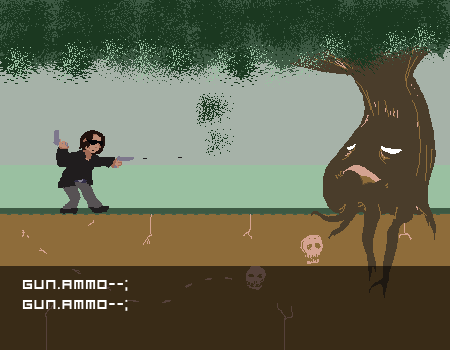
This one is kind of obvious
Step 7
Wrap up
Tie in learning concept to game mechanic
This can be done a number of ways:
- Through a wrap up lecture (meta)
- Within the game itself (narrative)
- Show and Tell (wax on, wax off)
Where's the wrap up in Gun Crisis?
As reality breaks down, the blueprints and all other mechanics slowly degrade to their code concept counter parts.
-
Blueprints start to looks like how classes are made
-
Items become properties on the class
-
Actions become methods on the classes
-
Each gun starts to be call and instance of class X
References
Gamification
-
Gamification by Design: Implementing Game Mechanics in Web and Mobile Apps
- By Gabe Zichermann, Christopher Cunningham
-
Defining Gamification - A Service Marketing Perspective
-
From Game Design Elements to Gamefulness: Defining “Gamification”
- Gamification: A Simple Introduction
- By Andrzej Marczewsk
- Gamification Wiki
References
Gamification
By Kevin Baugh