Measures of electoral inequality
Electoral inequality measurement
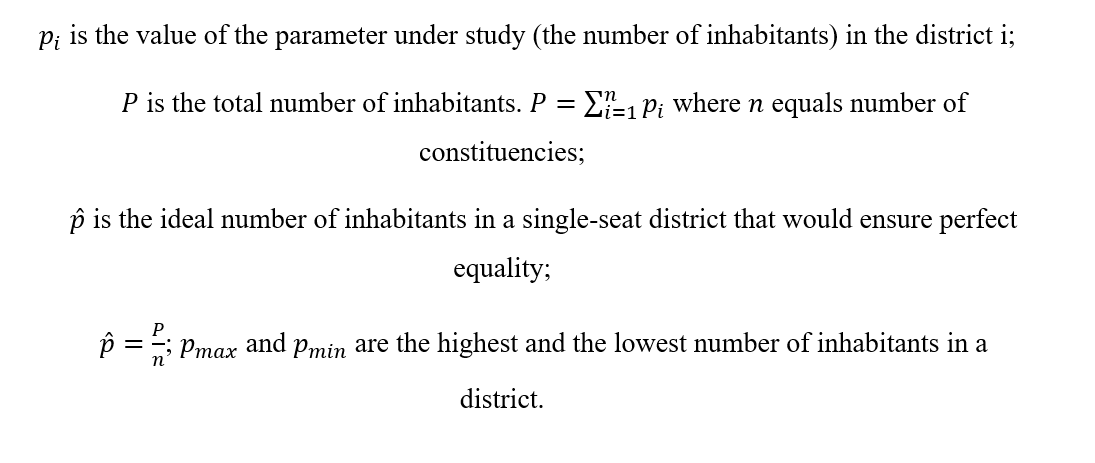
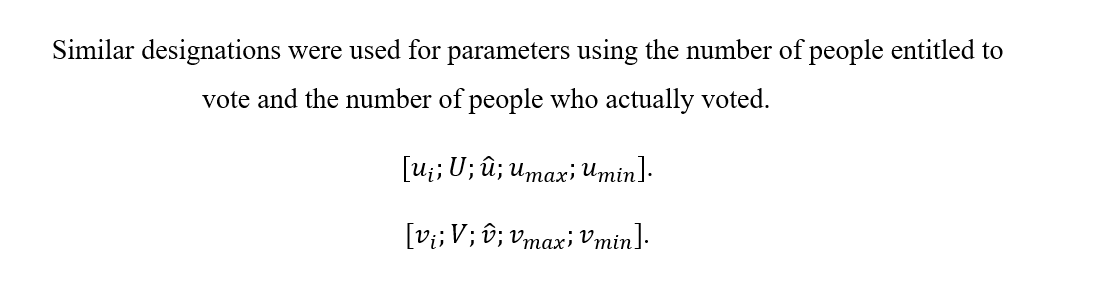
An important issue is what parameter should be used to determine the structure of electoral districts. Three basic ones can be distinguished among the possible ones: the number of residents (generally - inhabitans or limited only to citizens of a given country), the number of eligible voters and the number of actual voters.
Electoral inequality measurement
Taking into account the specificity of elections held in single-member districts (their structure must be known before the vote), making a division based on the third of the indicated parameters should be considered impossible.
However, the choice between the remaining two is not neutral from the point of view of the mechanics of the electoral system.
Electoral inequality measurement
It should be remembered that only some residents (citizens) meet the conditions granting them the right to vote (e.g. age requirement), and the proportions between the number of eligible voters and the number of residents in individual districts may differ (even significantly).
Electoral inequality measurement
Electoral inequality measurement
Measures of electoral inequality
- Relative Deviation [PD]
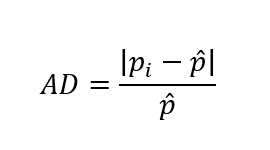
- Absolute Deviation [AD]
- Voter Equivalency Ratio [VER]
- Total Population Deviation, maximum population deviation [TPD]
Miary nierówności
- Theoretical control index (also known as: „electoral percentage” and „minimum population share”) [TCI]
- Loosemore-Hanby inequality index [LHI]
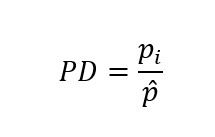
Relative deviation [PD]
A coefficient value of 1 means that the district maintains the ideal norm of representation. Lower values mean a smaller number of residents, and therefore higher voting power compared to the state of ideal equality, while values higher than 1 mean a larger number of residents and lower voting power.
Absolute deviation [AD]
A coefficient value of 0 indicates that the district observes the norm of representation. A higher value of the coefficient indicates a greater degree of deviation from the norm of representation in the district.
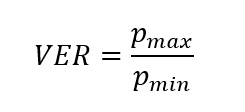
Voter equivalency ratio [VER]
A coefficient value of 1 means maintaining perfect equality in all districts (voting power is equal in all districts). The higher the coefficient value, the greater the difference between the weakest and strongest votes.
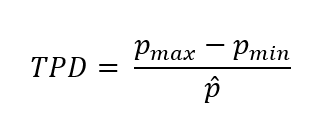
Total Population Deviation [TPD]
A coefficient value of 0 indicates that the equality of representation is fully maintained. A higher coefficient value indicates a greater degree of inequality between the districts with the lowest and highest voting power.
Theoretical Control Index [TCI]
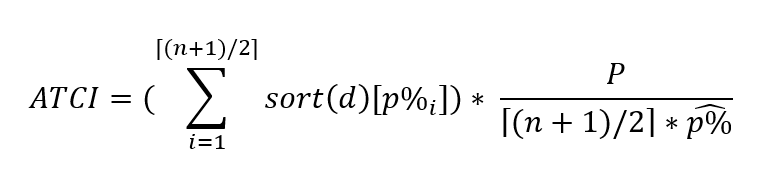
Where sort(d) means the arrangement of the set of districts in non-decreasing order by the number of inhabitants and p%i means the percentage share of inhabitants in district i in the total set of inhabitants
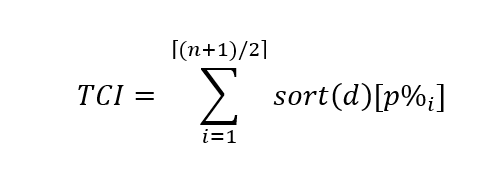
Theoretical Control Index [TCI]
In contrast to the previously indicated coefficients, TCI refers to all districts, not being limited to the two extremes. A TCI value of 0.5 means that the population of districts allowing for obtaining a majority is 50% of the total. The weakness of this form of index is the fact that the absolute majority is differentiated depending on the number of seats, and the fact whether the total number of seats is even or odd is also significant (e.g. in both bodies with the number of seats S=14 and S=15, an absolute majority is only obtained by obtaining 8 seats). This index can be modified to eliminate this shortcoming:
Theoretical Control Index [TCI]
Where ATCI stands for Adjusted Theoretical Control Index.
A coefficient value of 1 (or 100%) indicates perfect equality. The lower the value, the greater the level of inequality (obtaining a majority of seats requires a proportionally smaller population than would be required by the principle of equality). A purely theoretical value of ATCI=0 would mean that the districts in the number that would allow for an absolute majority are devoid of population.
Loosemore-Hanby inequality index [LHI]
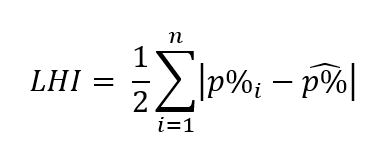
This index takes values from 0 to 1.
An index value of 0 means maintaining perfect equality. The higher the value, the higher the level of inequality.
Copy of deck
By Maciej Onasz