

Challenging the Climate of Testing

by James Simms

Which model?

The school

The 

Learner

P

P

P

P

P

P

P

P

The learner

P

P

P

P

P

P

P

P

The School hub

Three Primary Objectives for this Session

  • The context - including a little bit of history
  • Can we test the learning potential of human beings?
  • What would a brilliant testing regime look & feel like?

The History of Education in the Uk

1870 - compulsory education established

1970s & 1980s growth in Japanese Industry

2000-2015 adoption of the Japanese model of Quality Assurance

So how does it work?

The school model

= test

= teaching

Why?

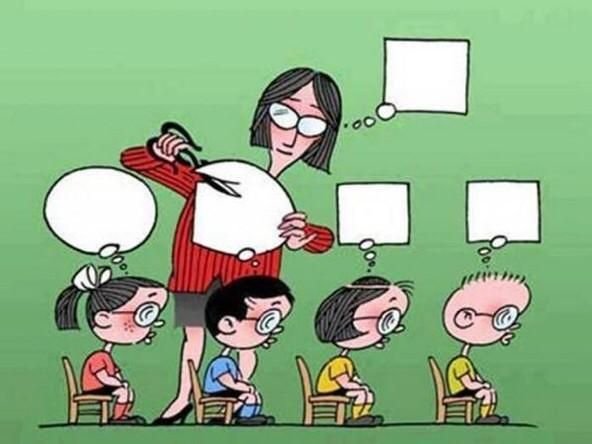
It will be argued here that testing has become a default response by educators, largely judged by test outcomes themselves, to both monitor & groom learners' behaviours towards successful performance in apparently legitimate and relevant assessments. These assessments are falsely thought to measure future learning potential of human beings.

Why?

It will be argued here that testing has become a default response by educators, largely judged by test outcomes themsleves, to both monitor & groom learners' behaviours towards successful performance in apparently legitimate and relevant assessments. These assessments are falsely thought to measure future learning potential of human beings.

Future learning potential of human beings

Carol Dweck argues that

"Learning potential is unknown and unknowable"

But my class teacher gives me a level, predicts my test score, describes my ability and refers to my intellectual facility in definitive terms. How can he/she have this insight when the science of the brain, mind and consciousness contradicts this idea? 

Aren't they the expert in how human beings learn?

You might hear or read statements such as...

Your son/daughter is a natural....

They're just not a natural...

Your son/daughter's reading level is...

Your son/daughter's level is....

Your son/daughter is making the expected progress...

Their test score shows they aren't working hard enough

Our testing procedure is standardised nationally

An assessment can do one thing and one thing only:

A perfect assessment can measure the human knowledge and skills of a specific set of concepts on a specific day, in specific conditions and the moment the assessment ends it is immediately out-of-date.

Assessment is momentary & when it is applied globally can have huge detrimental effects

Are any of these familiar?

I'm just not good at....

I'm not a natural....

I don't like.....

I'm not as smart as....

This mentality can be described as learned helplessness and is a belief that failure is inevitable.

Do you exhibit this approach in your life?

Does this affect your behaviour?

What should testing look like?

All testing, with the exception of external exams, should be diagnostic

Learning data should be continuous, live and volatile and be shared with the parent

Mistakes should be the very life of new learning

Parents should be able to see daily what learning progress is being made & where areas of attention are

Learning of formal knowledge should continue beyond the classroom

No test will ever exist that measures learning potential

Examples

Actions

  1. Always politely reinforce that testing is momentary when speaking with teachers
  2. Always expect/demand that a feedback survey is completed for every school event
  3. Always pick up on testing rhythms and, where necessary record your child's comments in your diary
  4. If you are thinking it then someone else is too. Share!
  5. Support any member of this group in politely and proactively discussing these concerns with school.
  6. Seek excellent examples of data/testing use and share with the school
  7. Repeat our meetings at regular intervals
  8. Become PGs and try to influence from there

Possible actions

  1. Formalise this group structure into an authentic action group to support parents
  2. Provide the school with exemplar resources: http://mypeexam.org/courses/sats-spellings-test-course/
  3. Provide our own LIVE and On Demand support for children preparing for SATS or equivalent challenges.

Challenging the Climate of Testing

By James Simms

Challenging the Climate of Testing

  • 772