Pulvino-cortical interactions
2026-05-21
Update on pilot + Next steps
- 2 EMU staff members know how to help set up: Siri, Jason (the supervisor)
- TODO document the setup steps
- Hospital sEEG software
- Manually add trigger channels (DC01-16)
- Select electrode montage (all REF)
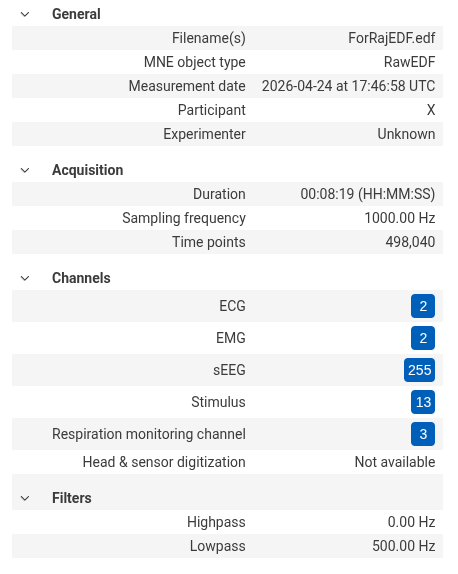
- Hardware connections
- hospital Nihon-Kohden sEEG amplifier
- parallel port cable
- RippleNeuroMed sEEG acquisition system
- Behrmann lab sEEG laptop + MATLAB
- Hospital sEEG software
sEEG logistics at Presby: Setup
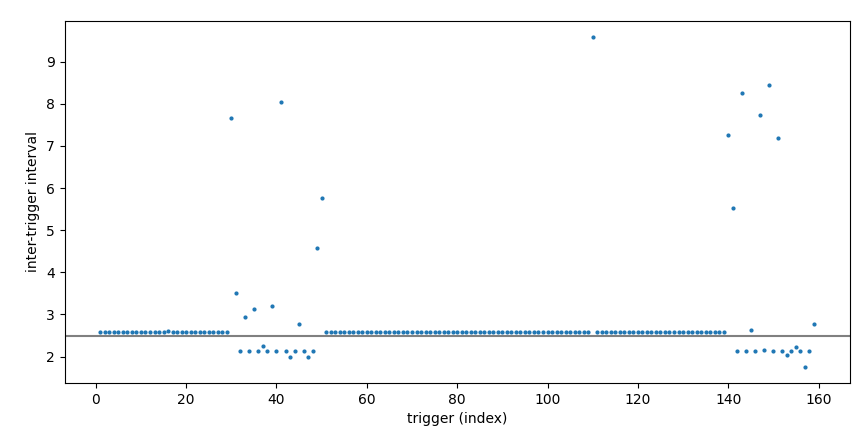
- Write bytes to parallel port with MATLAB's Xippmex `digout`
- Need to send ON + OFF pulses manually (I use 5 ms width)
- Not all trigger channels work reliably across all hospital sEEG systems used for different participants, so I send the same pulse across channels for redundancy [can't encode any info besides 1 bit]
sEEG logistics at Presby: Triggers
- Received access to their data storage server: Jorge's lab manager Jay Chen
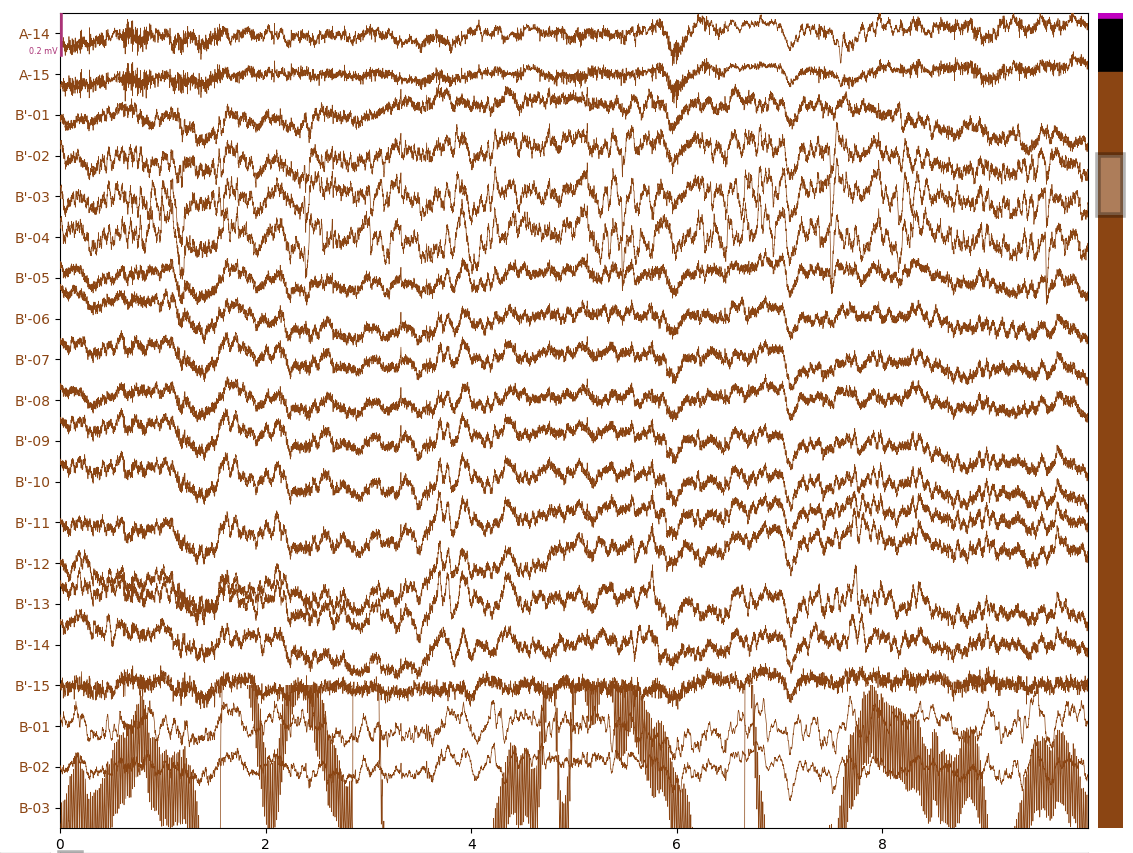
- Data files: given start/end timestamps, Jay provides EDF file + MRI + CT
- Electrode referencing/ground channel are still unclear
- Channels are named inconsistently: some weird names (ST5, SP4, ... instead of A6, B5)
- Can be corrected/imputed based on other info
sEEG logistics at Presby: sEEG data
- Last we discussed...
- standard sEEG experiment
- present visual stimuli with a simple task
- record from pulvinar + cortex
- intra-operative experiment (shelved for later)
- present simple ON/OFF flashes via goggles
- record from pulvinar + cortex
- standard sEEG experiment
Main experiment: From last time
- Does pulvinar activity precede/modulate V1?
- Is this affected by emotional valence, e.g. only for threatening stimuli?
- What about more general pulvino-cortical interactions?
- e.g. visual cortex
- e.g. association cortex
(I've been slowly going through the papers you cited in the grant proposal)
Main experiment: Questions
- 1 stimulus = 2 s video + 1 s blank
- 7 stimulus conditions
- 3 types of faces [identity-matched]
- neutral
- smiling
- fearful
- 4 types of objects/scenes
- negative threats
- evolutionary threat
- neutral
- positive
- 3 types of faces [identity-matched]
- 4 stimuli per condition
- 2 repetitions per stimulus
Main experiment: Task and stimuli
- 2 tasks (no fixation)
- 1-back
- 2-AFC valence detection
- 4 runs per task
- all conditions mixed, randomized
- distinct stimuli across runs
- Each run is ~3 min
- ~24 min total
- Small subset of stimuli repeated 10x to estimate channel reliability?
- Do we want particularly shocking, maximally salient stimuli?
- If V1, do we want fixation? pRF mapping?
1-back task (no fixation)
- 8 stimulus conditions
- 4 types of faces [identity-matched]
- neutral / surprise; happiness; fear; anger
- 4 types of objects/scenes
- neutral; positive; evolutionary threats; modern threats
- 4 types of faces [identity-matched]
- In each run [all conditions mixed; distinct stimuli in each run]
- 1.5 s per stimulus [1 s video + 0.5 s blank, eased in/out]
- 4 stimuli per condition @ 2 repetitions
+1 stimulus per condition @ 8 repetitions - = 5 stimuli per condition
- = 128 trials + 16 1-back repeats (8:1 ratio)
- ~ 3.6 min [144 trials]
- Scale number of runs depending on patient (8 runs ~ 30 min)
Bonus task: pRF mapping (with fixation) [Note: seizures!]
Post-discussion update
Main Qs
- Does pulvinar activity precede/modulate V1 (and other visual/association cortex)?
- Is this affected by emotional valence, e.g. for threatening stimuli?
Bonus Qs
- How does the channel response change over repeated stimulus presentations?
- Can we characterize pRFs with iEEG?
Measurements
- sEEG
- behavior (limited, attention check only)
- eye-tracking (if possible)
visual threat processing is rapid for "ancestral"/"evolutionary" threats
subcortex
primitive, dumb
cortex
modern, smart
visual threat detection in subcortex?
More generally, one might perform an Intracranial EEG Investigation of Human Pulvinar and Cortical Dynamics During Visual and Cognitive Processing
Goal
- show naturalistic videos
- record brain responses (cortex + subcortex)
- see if there's a latency difference
- (possibly modulated by stimulus type)
Stimulus types
- faces (neutral, happy, angry, scared)
- scenes (neutral, positive, ancestral threat, modern threat)
Stimulus curation
clip and crop 1 s videos from pexels.com or existing databases
normalize inter-eye distances
+ study more general pulvinar-cortex interactions

- JavaScript and web development
- video processing
- ffmpeg
- Handbrake/Kdenlive
- UniFace Python library for face processing
What is a confound, even?
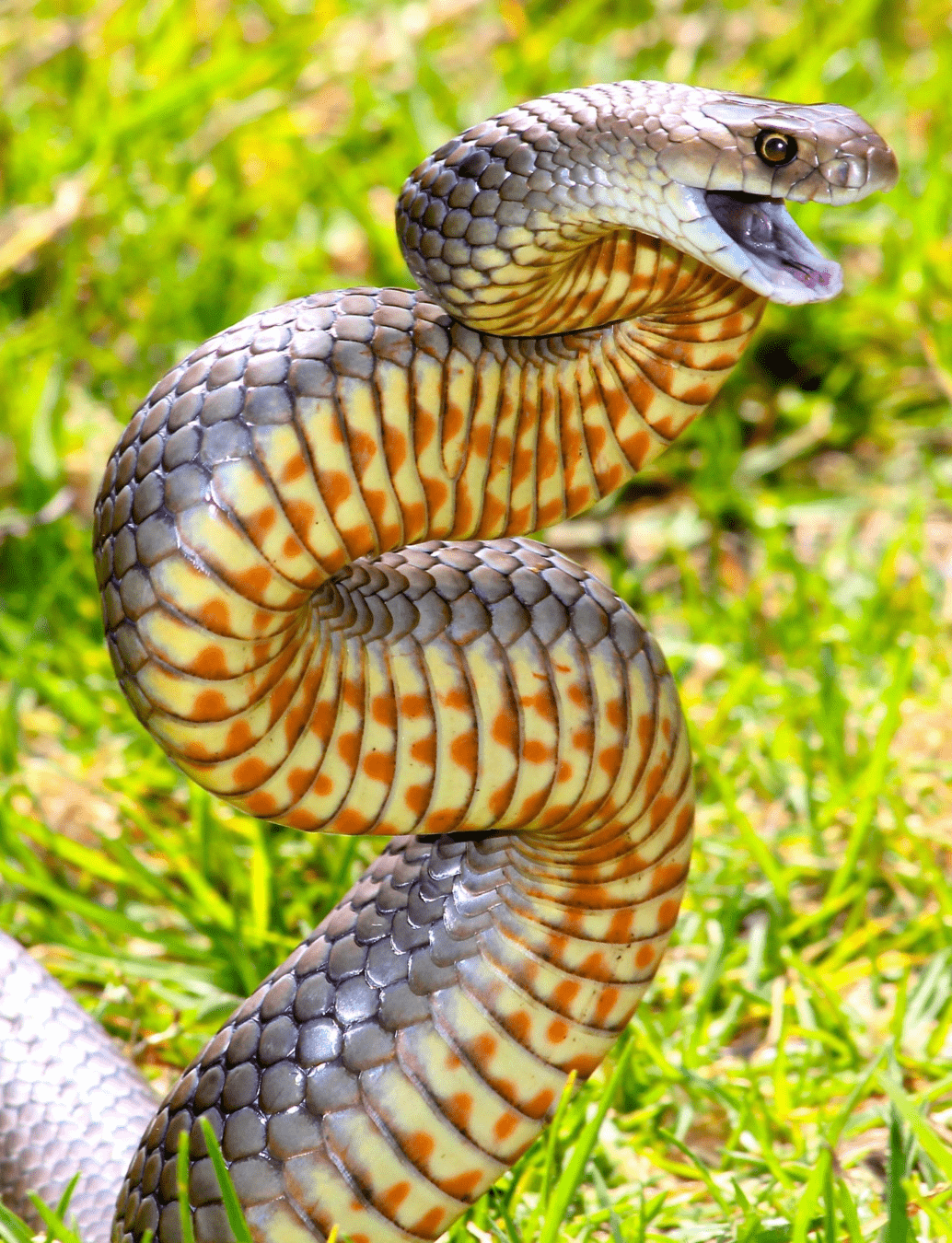
"well ackchyually, [X] cares about these low-level confounds, not snakes more generally"
But X these low-level features covary with semantics---maybe the brain leverages them to detect high-level things!
Maybe we throw the baby out with the bathwater if we control for every possible "confound"
e.g. Partialling out early DNN features
(But also, I'm worried about this)
Pulvino-cortical interactions
By raj-magesh