Vector Analysis
Scalars and Vectors
- Scalars have magnitude only
- Vectors have both magnitude and direction
- For a physical quantity to be vector:
- Necessary condition: should have direction
- Sufficient condition: Should follow sum of vector addition
Q: Which is scalar quantity?
a) Temperature gradient
b) intensity of magnetization
c) intensity of radiation
d) current density
Correct: c
Intensity of radiation has only magnitude.
Q: Angular momentum is
a) a scalar
b) a polar vector
c) an axial vector
d) same as torque
Correct: c
Some vectors
- All gradients of scalars
- potential gradient
- pressure gradient
- All Field strength (intensity) are vectors
- Electric Field Strength
- Magnetic Field Strength
- Gravitational Field Strength
- Flux of scalar is vector
- Electric Flux
- Magnetic Flux
- All Potentials are scalars
- Small length and area are vector
Unit Vector
A vector with unit magnitude
\hat{a} = \frac{\overline{a}}{|\overline{a}|}
dimensionless and unitless. Possess only direction.
Triangle Law of Vector
vectors a and b represented in magnitude and direction by two sides of a triangle taken in same order
then their resultant c is given in magnitude and direction by 3rd side taken in reverse order.
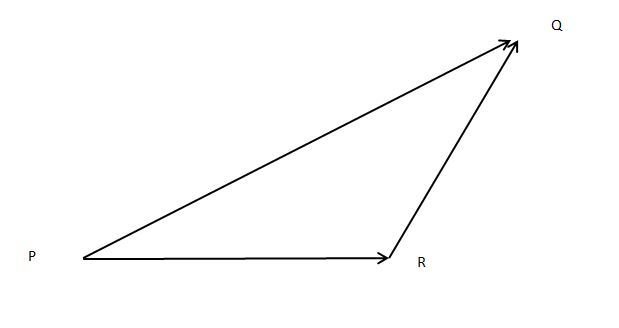
\overline{a}
\overline{b}
\overline{c}
Lami's Theorm
co-planar vectors a, b, c are in equilibrium then
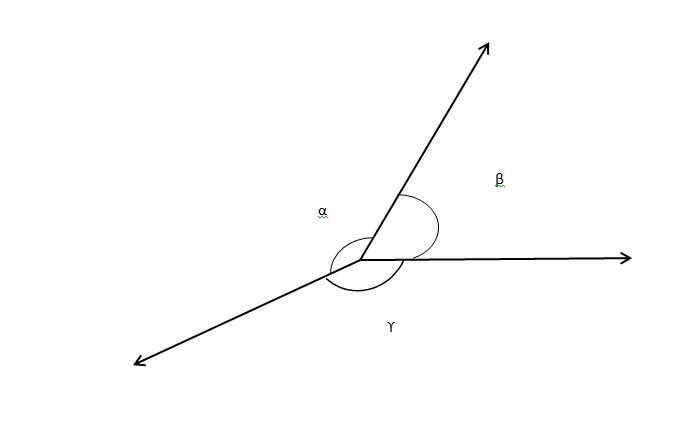
\overline{a}
\overline{b}
\overline{c}
\frac{a}{cos\alpha} = \frac{b}{cos\beta} = \frac{c}{cos\gamma}
\alpha
\beta
\gamma
cos\beta = \frac{b^{2}-a^{2}-c^{2}}{2ac}
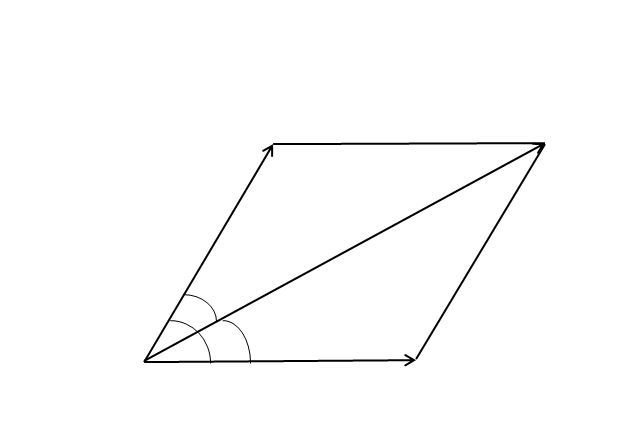
Parallelogram law
\overline{a}
\overline{b}
\overline{c} = \overline{a} + \overline{b}
\theta
\alpha
\beta
vectors a and b acting at a point represented in mag. and direction by 2 sides of a parallelogram then
\overline{c} = \overline{a} + \overline{b}
O
A
B
C
|\overline{a}+\overline{b}|=OC=\sqrt{a^2+2abcos\theta + b^2}
\alpha = tan^{-1}(\frac{bsin\theta}{a+bcos\theta}) with \space \overline{a}
\beta = tan^{-1}(\frac{asin\theta}{b+acos\theta}) with \space \overline{b}
If a > b,
If a < b,
\alpha > \beta
\alpha > \beta
If a = b,
\alpha = \beta = \frac{\theta}{2}
Parallelogram law
\overline{a}
\overline{b}
\overline{c} = \overline{a} + \overline{b}
\theta
\alpha
\beta
Special cases:
O
A
B
C
\theta = 0 ^{o}, then \space |\overline{a}+\overline{b}| = a + b
when
\theta = 90 ^{o}, then \space |\overline{a}+\overline{b}| = \sqrt{a^2+b^2}
when
\theta = 180 ^{o}, then \space |\overline{a}+\overline{b}| = a - b
when
|\overline{a}| = |\overline{b}| = A
when
then
|\overline{a}+\overline{b}| = 2Acos\frac{\theta}{2}
so, \space a-b \leq |\overline{a}+\overline{b}| \leq a+b
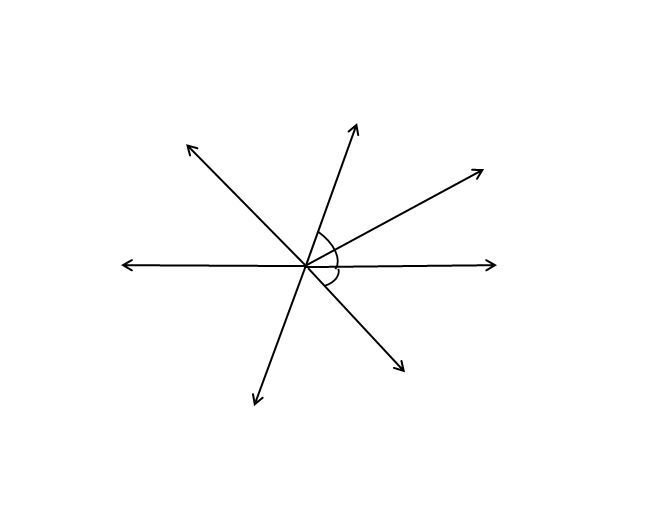
Vector Difference
\overline{b}
\overline{a}
\overline{a} + \overline{b}
-\overline{a}
-\overline{b}
\overline{a} - \overline{b}
\overline{b} - \overline{a}
\alpha
\theta
\alpha = tan^{-1}(\frac{bsin\theta}{a-bcos\theta}) \space with \space \overline{a}
Special cases:
\theta = 0 ^{o}, then \space |\overline{a}-\overline{b}| = a - b
when
\theta = 90 ^{o}, then \space |\overline{a}-\overline{b}| = \sqrt{a^2+b^2}
when
\theta = 180 ^{o}, then \space |\overline{a}+\overline{b}| = a + b
when
|\overline{a}| = |\overline{b}| = A
when
then
|\overline{a}-\overline{b}| = 2Asin\frac{\theta}{2}
so, \space a-b \leq |\overline{a}-\overline{b}| \leq a+b
|\overline{a}-\overline{b}|=OC=\sqrt{a^2 - 2abcos\theta + b^2}
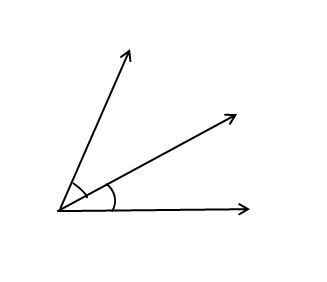
General Component
\alpha
\beta
\overline{F_1}
\overline{F_2}
\overline{F}
\overline{F_1}
\overline{F}
\overline{F_2}
\theta
\overline{F_1} = \frac{sin\beta}{sin(\alpha+\beta)}F
\overline{F_2} = \frac{sin\alpha}{sin(\alpha+\beta)}F
F_{1}^{2} + 2F_{1}F_{2}cos(\alpha + \beta) + F_{2}^{2} = F^{2}
\frac{F_{1}}{F_{2}} = \frac{sin\beta}{sin\alpha}
x
Y
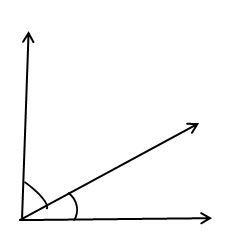
\overline{F_x} = FCos\theta
\overline{F_y} = FSin\theta
F_{x}^2 + F_{y}^2 = F^2
\frac{F_x}{F_y} = Cot\theta
Rectangular Component
Scalar(dot) Product
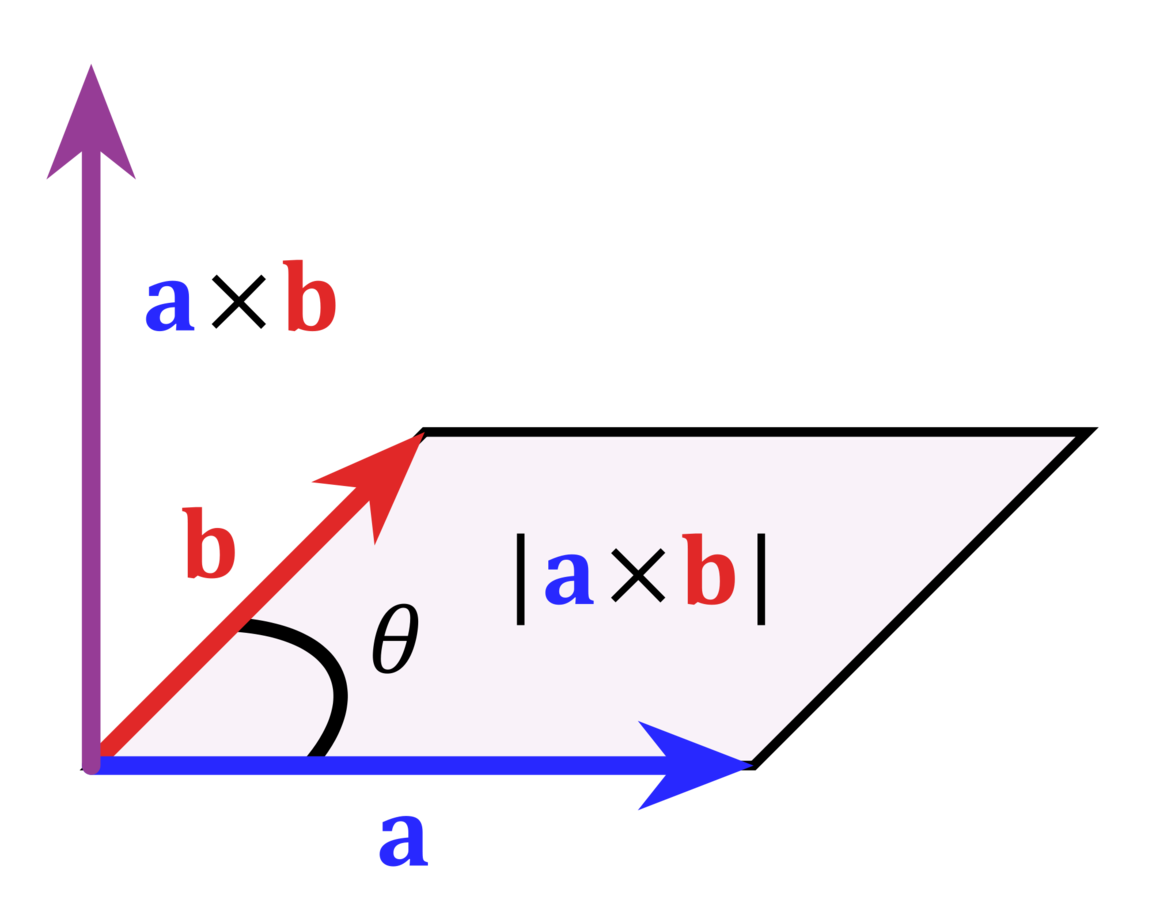
Vector(Cross) Product
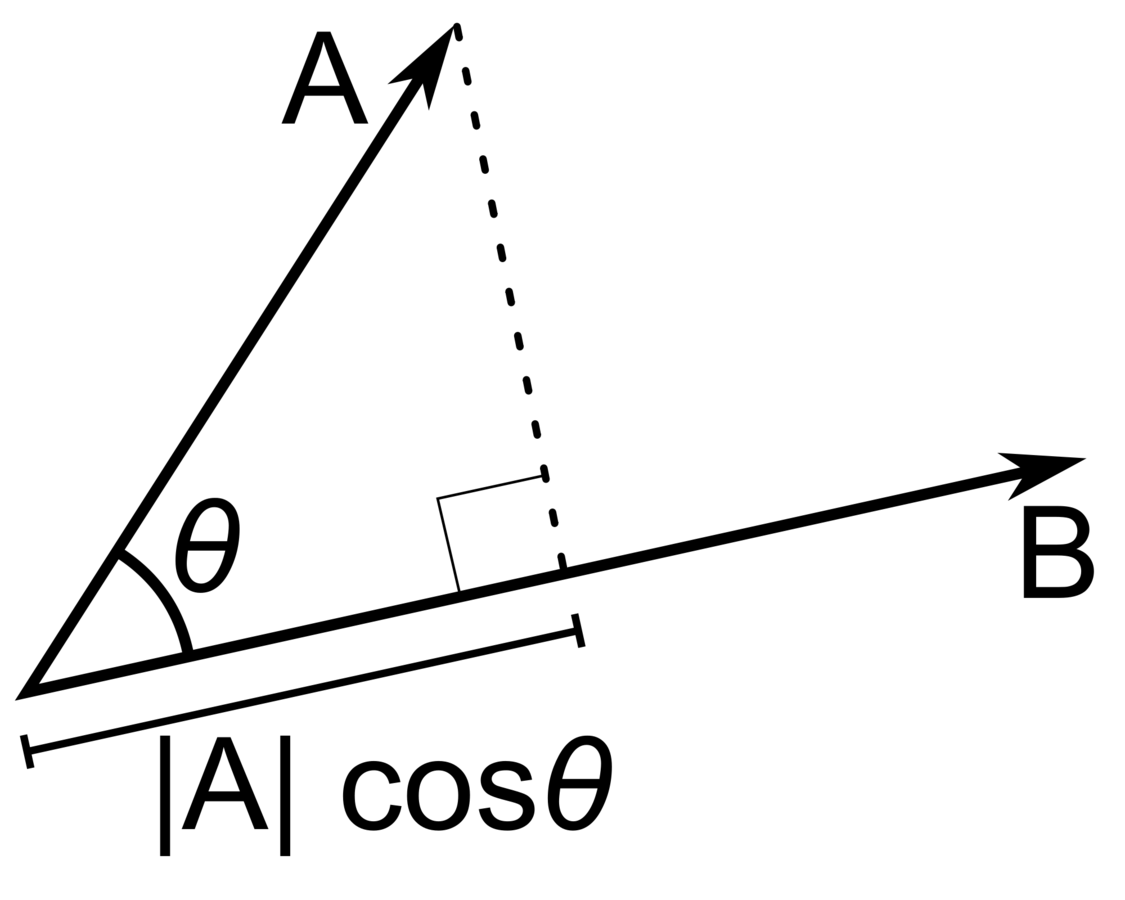
\overline{a}.\overline{b} = abcos\theta = \overline{b}.\overline{a}
|\overline{a} * \overline{b}| = absin\theta, \overline{a} * \overline{b} \neq \overline{b} * \overline{a}
\overline{a}.\overline{b} = ab(max) if(\theta=0)
\overline{a}.\overline{b} = -ab(min) if(\theta=180)
\overline{a}.\overline{b} = 0 \space if(\theta=90)
\overline{a}.\overline{a} = a^{2}
\hat{a}.\hat{a} = 1
|\overline{a} * \overline{b}| = ab(max) \space if \theta = 90^{o}
|\overline{a} * \overline{b}| = 0(min) \space if \theta = 90^{o}
|\overline{a} * \overline{a}| = 0
Cross product is never -ve
Vector Analysis
By Roshan Bhandari