Reactive-Extensions
JavaScript

Sam Baeck
-
What is RxJS?
-
Observables
-
Creating Observables
-
Operators
-
Hot vs cold
-
Subject
-
Timer
What is RxJS?
- Reactive programming library for JS, based on the Reactive Extensions (Rx)
- Based on events
- Treats every source of data with the same computing model using the Observable => Stream
- Used in Angular!

RxJS
- Interact with a multitude of events
- Write less code to do more
=> avoid the 'if this then that' - Promises have their limitations
- At the end... it's easier to reason about
Angular 1
- Promises are used for async
- Used only in $http requests
- Cannot be cancelled. Always resolves or rejects
- Can only hold a single value and only be resolved or rejected once
Angular 2 => event-based
- DOM events => click, input, scroll, ...
- WebSockets
- Animations
- Requests
- Routing
- Forms
- ...
Observables
- Collection of values overtime => stream of data
- Imagine multiple promises as arrays
- Can be manipulated in similar ways as arrays
- Often represented as a marble diagram
- It lets us define things that need to be done once an event arrives
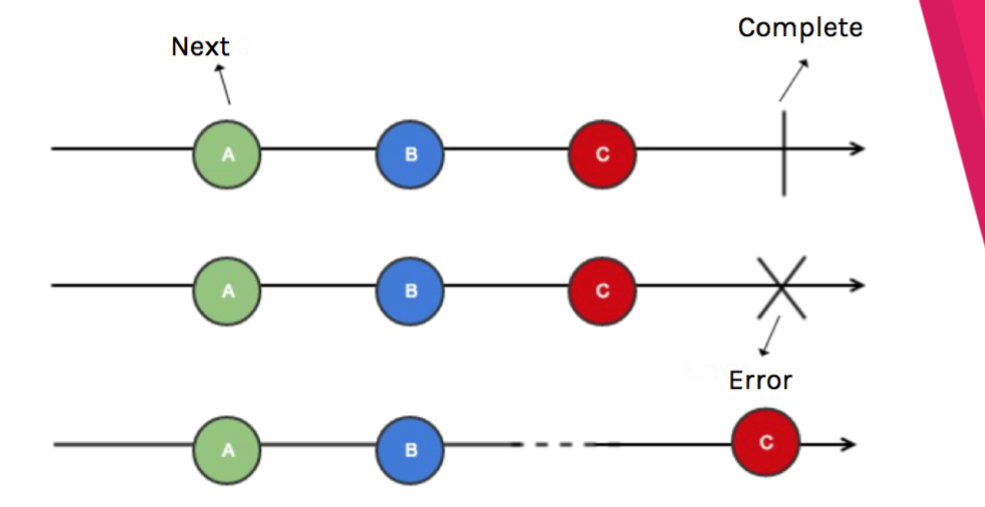
Terminology
- The stream is called the Observable
- Listening to a stream is Subscribing
- To do so we need an Observer
- The result of subscribing is a Subscription
Promises vs Observables
Listening to a promise
Subscribing to an Observable
myPromise.then(successFn, errorFn);myObservable$.subscribe(nextFn, errorFn, completeFn);Promises vs Observables
Cancelling a promise
Cancelling an Observable
let subscription = myObservable$.subscribe(nextFn, errorFn, completeFn);

subscription.unsubscribe();
You can't!
Creating an Observable
- create
- empty
- from
- fromEvent
- timer
- fromPromise
- interval
- range
- throw
- new Observable(...)
Observable.interval
let intervalObs$ = Rx.Observable.interval(1000);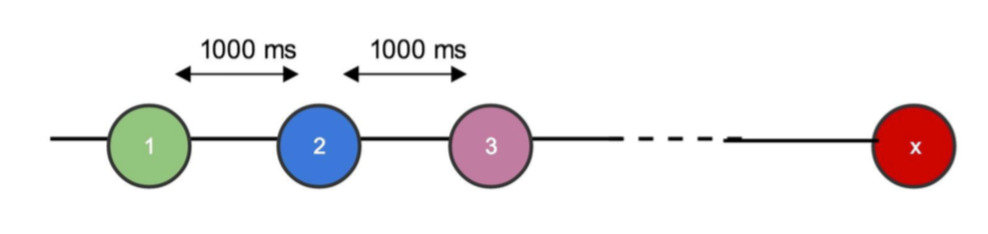
Observable.of
let observable$ = Rx.Observable.of('a','b','c');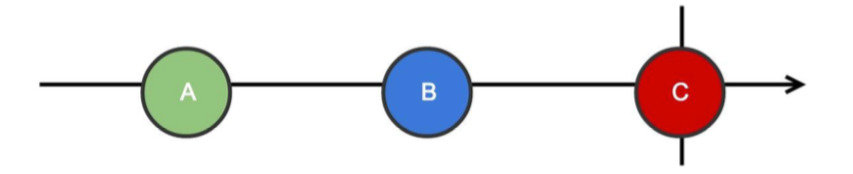
Observable recap
- A set of any number of events over any number of time
- You can provide three methods for every type of event as the subscribe parameters
- Once you subscribe, you get a subscription which you can use to unsubscribe
There's more!

Rx operators
- Methods on an observable to create new observables
- Can be used to filter, combine, transform
- Operators can be chained
Map operator

Filter operator

Switchmap operator
- Used to combine different observables
- Takes an observable as parameter and returns another observable, unsubscribing from the first one and subscribing to the new one
Hot
-
Not lazy
-
Multicast
-
Same producer for every subscription
- Lazy
- Unicast
- New producer for every subscription
Cold
-
Observables where you can add values to the stream yourself
-
You can manage the producer of values
Subjects
DEMOTIME
Livecoding => implement typeahead https://jsbin.com/nanazetizi/1/edit?html,js,console,output
Reactive Extensions
By Sam Baeck