Descriptive, Predictive, and Mixed Methods in Post-Positivist Research and Beyond
Shayan Doroudi
EDUC 222: Research Epistemologies and Methodologies
What paradigm(s) are the authors coming from?
“In either case, a researcher’s goal at this stage of the process is to trans- form reality into data that are available for analysis.”
(Loeb et al., 2017, p. 9)
Loeb, S., Dynarski, S., McFarland, D., Morris, P., Reardon, S., & Reber, S. (2017). Descriptive analysis in education: A guide for researchers. (NCEE 2017–4023). Washington, DC: U.S. Department of Education, Institute of Education Sciences, National Center for Education Evaluation and Regional Assistance.
Hennig, C. (2003, July). How wrong models become useful—and correct models become dangerous. In Between Data Science and Applied Data Analysis: Proceedings of the 26th Annual Conference of the Gesellschaft für Klassifikation eV, University of Mannheim, July 22–24, 2002 (pp. 235-243). Springer.
“It is possible that individuals or social systems are influenced so much by the formalized discourse and the repercussion of the models, that they reduce their reality to the formalized aspects and, in the most extreme case, that they are no longer able or willing to observe deviations. That is, models can match an observer’s reality, but this does not say that they fit any observer independent reality.”
(Hennig, 2003, pp. 238-239)
Why can’t we just replace descriptive analyses with statistical analyses?
Weis, L., Eisenhart, M., Duncan, G. J., Albro, E., Bueschel, A. C., Cobb, P., ... & Wilson, J. (2019). Mixed methods for studies that address broad and enduring issues in education research. Teachers College Record, 121(10), 1-16.
“In some programs and universities, students are expected to develop expertise in one method, with some training in another type. For example, quantitatively focused individuals might be expected to take a one- or two-semester course on ethnographic methods, and qualitatively focused students would be expected to do a year of statistical methods. This is not optimal mixed-methods training, in our view.”
(Weis et al., 2019, pp. 8-9).
So how is our PhD program doing?
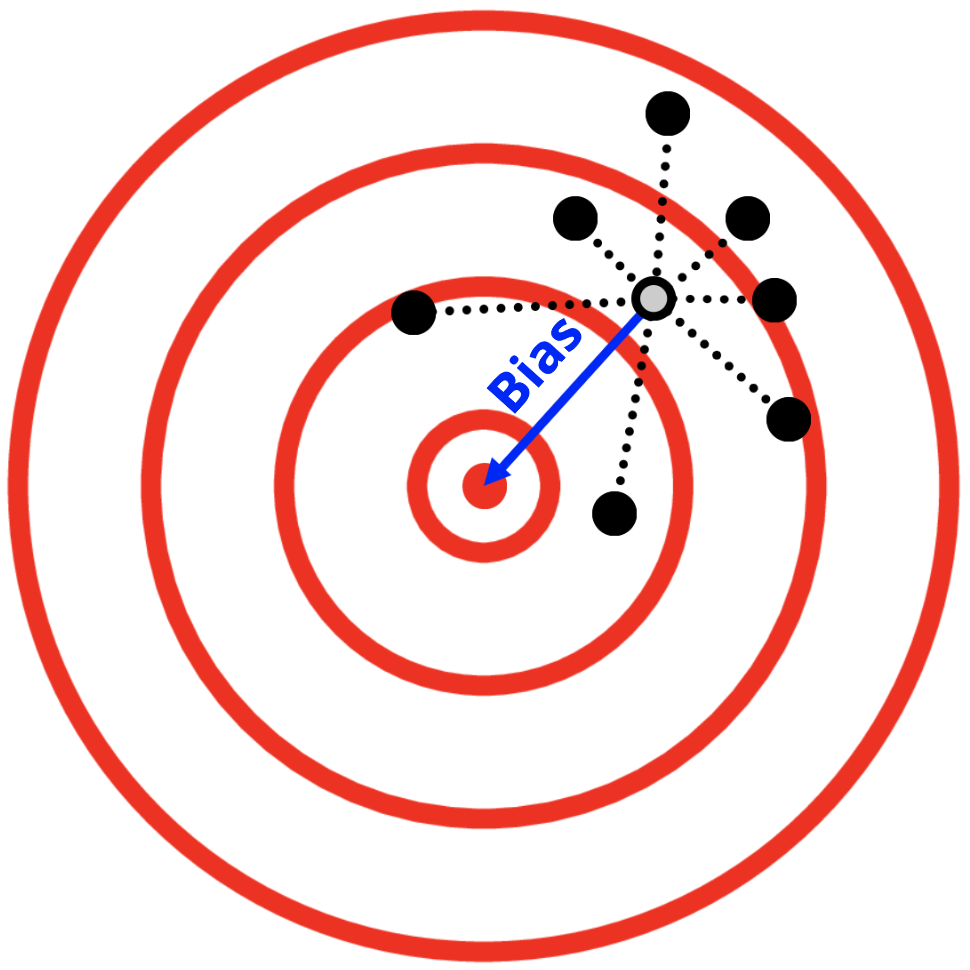

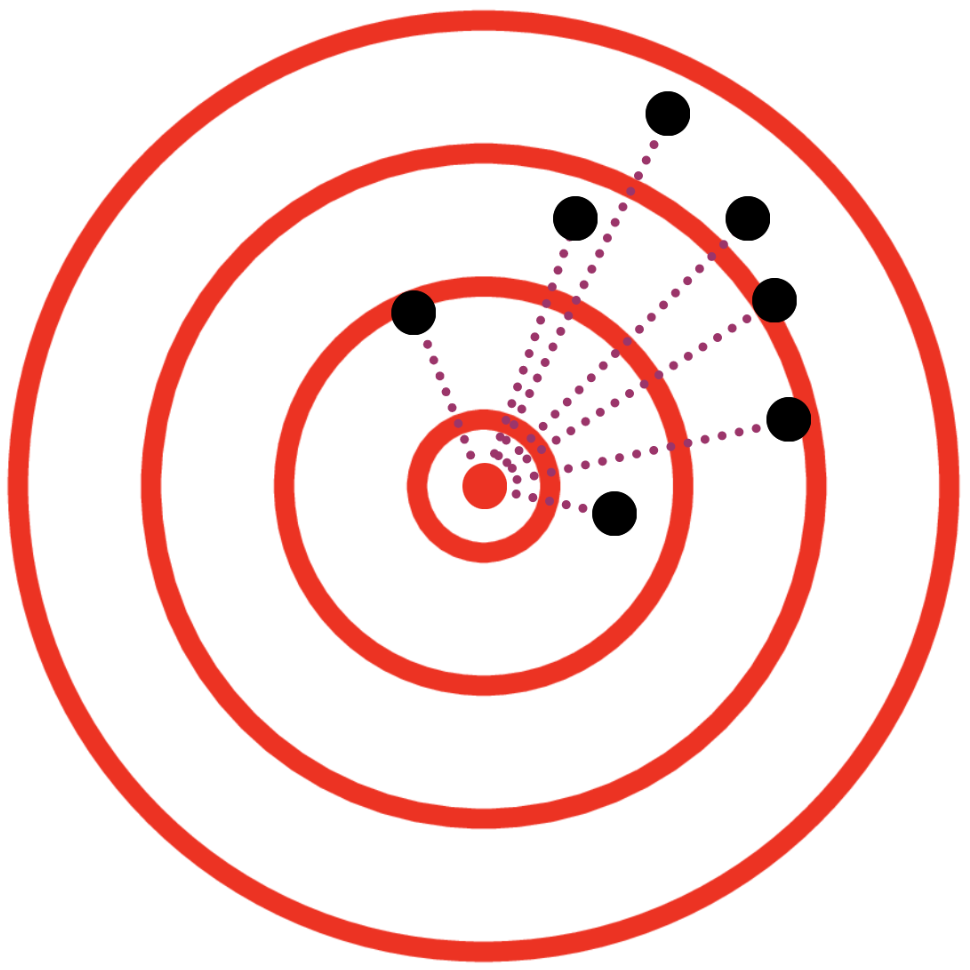
Mean-Squared Error = Bias Squared + Variance
Bias-Variance Decomposition
EDUC 222 - Week 5
By Shayan Doroudi