Présentation de l'architecture du BSIM.CCU
-
Présentation des fonctionnalités demandées
-
Solutions proposées
-
Développement futur
Plan
-
Présentation des fonctionnalités demandées
-
Solutions proposées
-
Développement futur
Plan
Présentation des fonctionnalités demandées
- Être stable sur le long terme (> 1 mois)
- Être résilient des erreurs du côté PyramIDS
- Envoyer les messages dans leurs formats corrects
- Avoir les fonctions nécessaires pour la science (?)
Présentation des fonctionnalités demandées
- Être stable sur le long terme (> 1 mois)
- Être résilient des erreurs du côté PyramIDS
- Envoyer les messages dans leurs formats corrects
- Avoir les fonctions nécessaires pour la science (?)
Présentation des fonctionnalités demandées
Être stable sur le long terme (> 1 mois)
⇒ Rust
- Être résilient des erreurs du côté PyramIDS
- Envoyer les messages dans leurs formats corrects
- Avoir les fonctions nécessaires pour la science (?)
Présentation des fonctionnalités demandées
Être stable sur le long terme (> 1 mois)- Être résilient des erreurs du côté PyramIDS
- Envoyer les messages dans leurs formats corrects
- Avoir les fonctions nécessaires pour la science (?)
Présentation des fonctionnalités demandées
Être stable sur le long terme (> 1 mois)- Être résilient des erreurs du côté PyramIDS
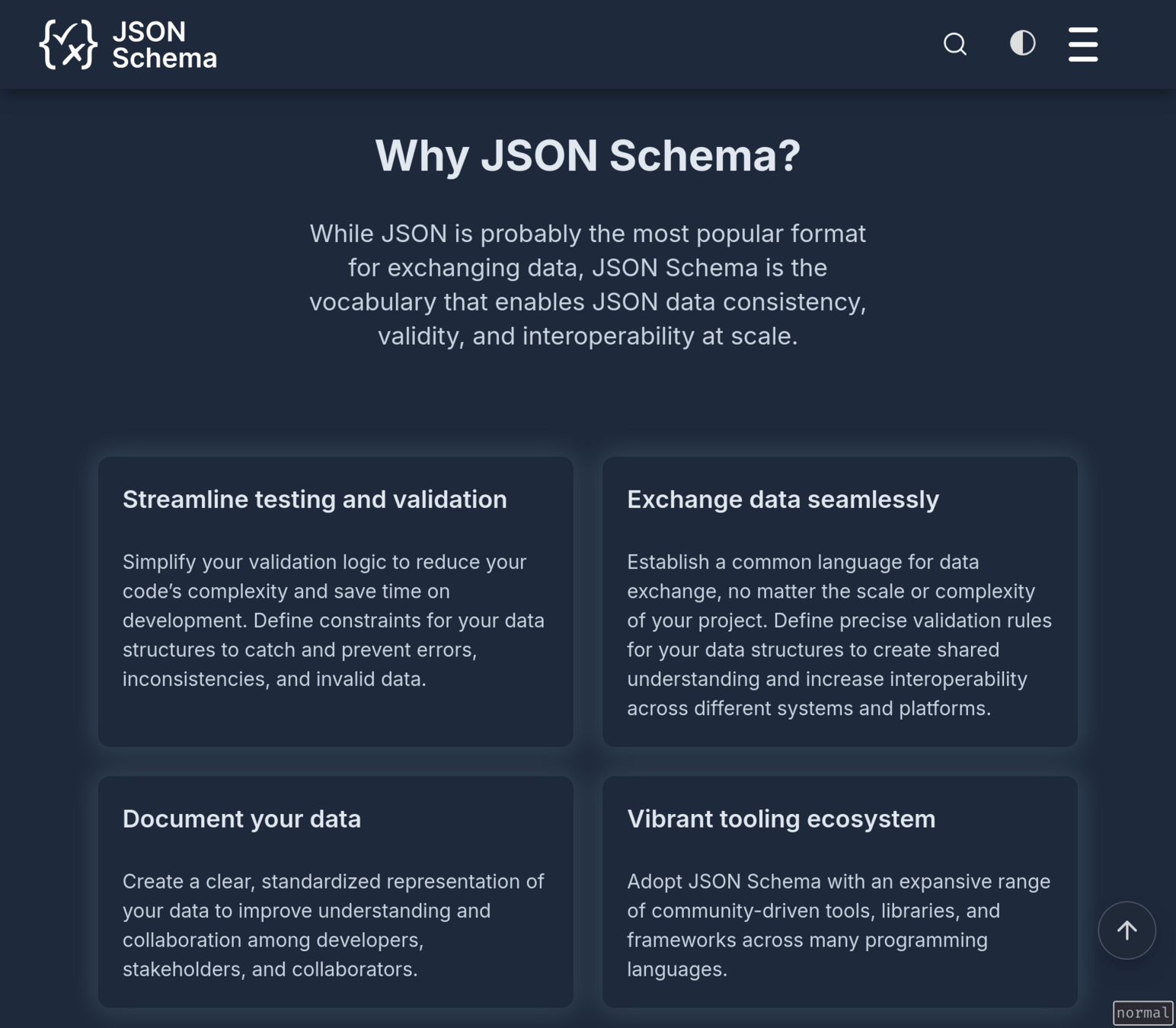
⇒ Spécifications des messages en JSON Schema
- Envoyer les messages dans leurs formats corrects
⇒ Spécifications des messages en JSON Schema
- Avoir les fonctions nécessaires pour la science (?)
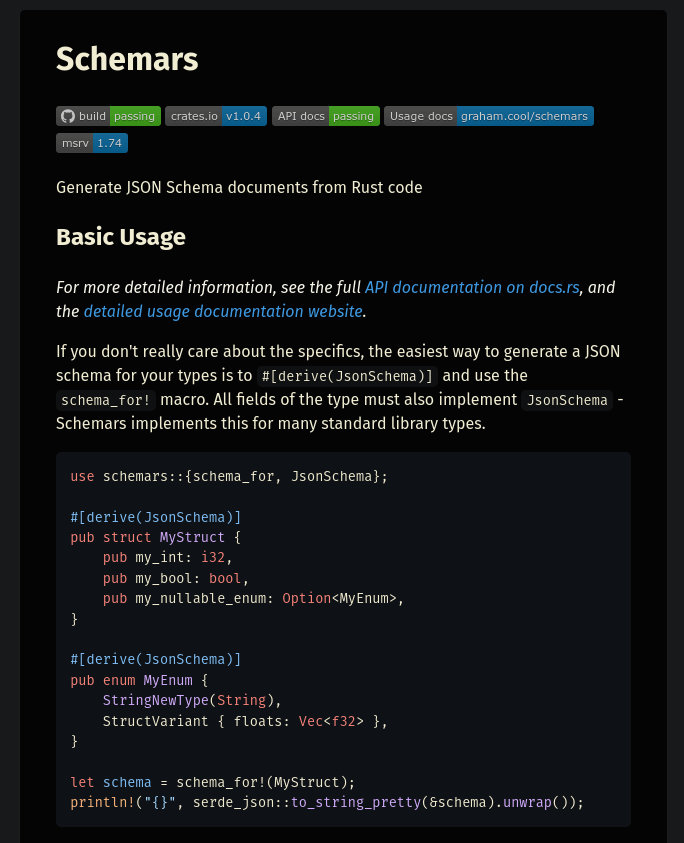
JSON Schema
JSON Schema
-
Présentation des fonctionnalités demandées
-
Solutions proposées
-
Développement futur
Plan
Solutions proposées
/// This trait centralizes all the interaction with PyramIDS
pub trait Pyramids {
    /// Associated type for the initialization
    type Initialization;
    /// Associated type for the incoming messages
    type Incoming;
    /// Associated type for the outgoing messages
    type Outgoing;
    /// Associated Result type from the crate
    type Result<T>;

    /// Initialization step sending back the `JoinHandle` given by `tokio::spawn`
    async fn initialize(&mut self) -> Self::Result<Self::Initialization>;

    fn subscriptions<Topic, Message>(
    	&mut self,
        m: IncomingMessages<Topic, Message>
    )
    where
        Topic: Into<String>,
        Message: Into<String>;

    /// Helper to send all the messages that we can to the broker
    async fn send<Topic, Message>(
        &self,
        message: OutgoingPayload<Topic, Message>,
    ) -> Self::Result<Self::Outgoing>
    where
        Topic: Into<String>,
        Message: Into<String>;

    /// Helper to receive all the messages that we subscribed to
    async fn recv(&mut self) -> Self::Result<Self::Incoming>;
}
Trait
Comportement partagé en Rust ⇒ Trait
Exemple - TAS
## Topics

### Pyramids -> TAS

`lisa/{prod_or_simu}/devices/bsim/tas/<cmd>`

used to start scan, stop scan, sync datalogger time.

### TAS -> Pyramids

`lisa/{prod_or_simu}/devices/bsim/tas/housekeeping`

used to send if tas is scanning or not.

`lisa/{prod_or_simu}/devices/bsim/tas/measures`

used to send temperatures measurements.

## Payloads

### cmd

Action has to be one of the following :

Start   // Start scan
Stop    // Stop scan
Sync    // Sync datalogger clock with clock from PC
pub struct Tas {
    pyramids_client: Pyramids_Client,
    instrument_client: Instrument_Client,
    settings: TasSettings,
    subscriptions: Vec<Payload>,
	// ... Internal fields
}

impl Pyramids for Tas {
    type Initialization = ();
    type Incoming = Event;
    type Outgoing = ();
    type Result<T> = Result<T>;

    async fn initialize(&mut self) -> Result<()> {
        self.init().await?;
        Ok(())
    }

    async fn send<S: Into<String>, M: Into<String>>(
        &self,
        message: OutgoingPayload<S, M>,
    ) -> Result<()> {
        self.pyramids_client
            .publish(
                message.topic.into(),
                QoS::ExactlyOnce,
                false,
                message.message.into().clone(),
            )
            .await?;
        Ok(())
    }

    async fn recv(&mut self) -> Result<Event> {
        Ok(self.pyramids_client.poll().await?)
    }
}
Exemple - TAS
And in the binary definition
// main
let settings = Settings::new()
        .map_err(|e| e.to_string())
        .expect("Can not read settings");

    let tas_settings = settings
        .tas
        .into_iter()
        .next()
        .expect("Did not find the dataloggers settings");

    let addr = tas_settings.address.clone();
    let instrument_client = tas::Client::connect(addr)
        .await
        .expect("cant connect to datalogger");
    let pyramids_client = mqtt_Client::connect(["localhost:1883", "localhost:1883"])
        .await
        .expect("Could not reach the MQTT broker");

    let mut tas = Pyramids_Client::from_settings(instrument_client, pyramids_client, tas_settings);
    tas.initialize().await?;

  // Continue right
// Continued
loop {
let message = tas.recv().await?;
// XXX: Match in trait ?
match message {
// We receive communication on the client
Event::Incoming(packet) => {
// Someone published (most likely on a topic we subscribe to)
if let Packet::Publish(p) = packet {
// We grab the topic and the payload
let Publish { topic, payload, .. } = p;
match topic.as_str() {
"lisa/prod/devices/bsim/tas/start" => tas.start(),
"lisa/prod/devices/bsim/tas/stop" => tas.stop(),
"lisa/prod/devices/bsim/tas/sync" => tas.sync(),
_ => {
// XXX: Unknown topic, what do we do ?
todo!();
}
}
} else {
match packet {
Packet::Subscribe(subscribe) => todo!(),
Packet::Unsubscribe(unsubscribe) => todo!(),
Packet::PingReq => todo!(),
Packet::PingResp => todo!(),
Packet::Disconnect => todo!(),
_ => continue,
}
}
}
// XXX: Log outgoing requests?
_ => continue,
}
}
}
Exemple - TAS
And in the binary definition
// main

/* Initialization */
let settings = Settings::new()
        .map_err(|e| e.to_string())
        .expect("Can not read settings");

    let tas_settings = settings
        .tas
        .into_iter()
        .next()
        .expect("Did not find the dataloggers settings");

    let addr = tas_settings.address.clone();
    let instrument_client = tas::Client::connect(addr)
        .await
        .expect("cant connect to datalogger");
    let pyramids_client = mqtt_Client::connect(["localhost:1883", "localhost:1883"])
        .await
        .expect("Could not reach the MQTT broker");

    let mut tas = Pyramids_Client::from_settings(instrument_client, pyramids_client, tas_settings);
    tas.initialize().await?;

/* Main control loop */
  // Continue right ↗
// Continued
loop {
let message = tas.recv().await?;
// XXX: Match in trait ?
match message {
// We receive communication on the client
Event::Incoming(packet) => {
// Someone published (most likely on a topic we subscribe to)
if let Packet::Publish(p) = packet {
// We grab the topic and the payload
let Publish { topic, payload, .. } = p;
match topic.as_str() {
"lisa/prod/devices/bsim/tas/start" => tas.start(),
"lisa/prod/devices/bsim/tas/stop" => tas.stop(),
"lisa/prod/devices/bsim/tas/sync" => tas.sync(),
_ => {
// XXX: Unknown topic, what do we do ?
todo!();
}
}
} else {
match packet {
Packet::Subscribe(subscribe) => todo!(),
Packet::Unsubscribe(unsubscribe) => todo!(),
Packet::PingReq => todo!(),
Packet::PingResp => todo!(),
Packet::Disconnect => todo!(),
_ => continue,
}
}
}
// XXX: Log outgoing requests?
_ => continue,
}
}
}
-
Présentation des fonctionnalités demandées
-
Solutions proposées
-
Développement futur
Plan
Les casseroles
- IHM
- Mock Pyramids
- Amélioration de l’encapsulation
- Création d'une variable d'état (automate fini ?)
// Continued
    loop {
        let message = tas.recv().await?;
        // XXX: Match in trait ?
        match message {
            // We receive communication on the client
            Event::Incoming(packet) => {
                // Same ol' same
                } else {
                // XXX: Useful ?
                    match packet {
                        Packet::Subscribe(subscribe) => todo!(),
                        Packet::Unsubscribe(unsubscribe) => todo!(),
                        Packet::PingReq => todo!(),
                        Packet::PingResp => todo!(),
                        Packet::Disconnect => todo!(),
                        _ => continue,
                    }
                }
            }
            // XXX: Log outgoing requests?
            _ => continue,
        }
    }
}
Présentation de l'avancement de l'architecture du BSIM.CCU
By Claude-Alban RANÉLY-VERGÉ-DÉPRÉ