SOLID, testing and javascript
by: Stiven Cardona Monsalve

Hola

SOLID, test integrales, test unitarios, test end to end.
Que significa esto ?
Estan preparados para aprender un poco de SOLID y testing?


SOLID al rescate

Desarrollo Inicial
Mantenimiento
Costo

Ecuación SOLID
intuitivo + testeable + tolera cambios = SOLID
Singleton
Tight Coupling
Untestability
Premature Optimización
Indescriptive
Duplication
SOLID
Single Responsability
Open/Closed
Liskov substitution
Interface segregation
Dependencie Inversion

No es mi intención herir sentimientos

STUPID

SINGLETON
class Singleton {
  constructor(){
    if(Singleton.instance){
      return Singleton.instance;
    }

    this.title = "my singleton";
    Singleton.instance = this;
  }
}


let mySingleton = new Singleton()
let mySingleton2 = new Singleton()

console.log("Singleton 1: ", mySingleton.title);
mySingleton.title = "modified in instance 1"
console.log("Singleton 2: ", mySingleton2.title);
PERDIDA DE CONTROL
TIGHT COUPLING
UNTESTABILITY
generate

PREMATURE OPTIMIZATION
"Si ni si quiera hemos empezado a escalar la montaña porque preguntarnos que haremos en la cima"

No significa que debamos escribir código poco optimo
Esencial vs Accidental (Idea Principal)
INDESCRIPTIVE NAMING
//bad
const fruit = ['manzana', 'mango', 'fresa'];

//regular
const fruitList = ['manzana', 'mango', 'fresa'];

//good
const fruits = ['manzana', 'mango', 'fresa'];

//better
const fruitsNames = ['manzana', 'mango', 'fresa'];
//bad
const open = true;
const write = true;
const fruit = true;


//better
const isOpen = true;
const canWrite = true;
const hasFruit = true;
DUPLICATION
-
Duplicidad Real
-
Duplicidad Accidental
please DRY (Don't Repeat Yourself)
//worse
const reportData = {
  name: "Software Crafters",
  createdAt: new Date(),
  purchases: 100,
  conversionRate: 10,
}

function withOutDRY(){
  function showReport(reportData) {
    const reportFormatted = `
      Name: ${reportData.name}
      Created at: ${reportData.createdAt}
      Purchases: ${reportData.purchases}
      Conversion Rate: ${reportData.conversionRate}%
      `
    console.log("Showing report", reportFormatted)
  }

  function saveReport(reportData) {
      const reportFormatted = `
        Name: ${reportData.name}
        Created at: ${reportData.createdAt}
        Purchases: ${reportData.purchases}
        Conversion Rate: ${reportData.conversionRate}%
        `
    console.log("Saving report...", reportFormatted)
  }

  showReport(reportData)
  saveReport(reportData)

}
//better
const reportData = {
name: "Software Crafters",
createdAt: new Date(),
purchases: 100,
conversionRate: 10,
}
function withDRY(){
function formatReport(reportData){
return `
Name: ${reportData.name}
Created at: ${reportData.createdAt}
Purchases: ${reportData.purchases}
Conversion Rate: ${reportData.conversionRate}%
`
}
function showReport(reportData) {
console.log("Showing report...", formatReport(reportData));
}
function saveReport(reportData) {
console.log("Saving report...", formatReport(reportData));
}
showReport(reportData)
saveReport(reportData)
}SOLID

Ok, vale se lo que estoy haciendo mal.
Pero hmmmm.

Cómo puedo organizar mis funciones y estructuras de datos en componentes ?
y cómo los conecto?

SINGLE RESPONSABILITY
Mis clases deben tener una única responsabilidad
Pero ojo tener una única responsabilidad
no implica hacer una única cosa
class UseCase{
  doSomethingWithTaxes(){
    console.log("Do something related with taxes ...")
  }

  saveChangesInDatabase(){
    console.log("Saving in database ...")
  }

  sendEmail(){
    console.log("Sending email ...")
  }
}
class UseCase{
constructor(repo, notifier){
this.repo = repo;
this.notifier = notifier;
}
doSomethingWithTaxes(){
console.log("Do something related with taxes ...")
}
saveChanges(){
this.repo.update();
}
notify(){
this.notifier.notify("Hi!")
}
}
class Repository{
add(){
console.log("Adding in database");
}
update(){
console.log("Updating in database...");
}
remove(){
console.log("Deleting from database ...");
}
find(){
console.log("Finding from database ...");
}
}
class NotificationService{
notify(message){
console.log("Sending message ...");
console.log(message);
}
}
OPEN / CLOSED
"Todas las entidades de software deberían estar abiertas a extensión, pero cerradas a modificación "
Bertrand Meyer

var axios = require('axios');

class TodoExternalService{

  requestTodoItems(callback){
    const url = 'https://jsonplaceholder.typicode.com/todos/';

    axios
      .get(url)
      .then(callback)
  }
}

new TodoExternalService().requestTodoItems(response => console.log(response.data))
//infraestructure/ClientWrapper
const axios = require('axios');
export class ClientWrapper{
makeGetRequest(url, callback){
return axios.get(url).then(callback);
}
}
//domain/TodoService
export class TodoService{
client;
constructor(client){
this.client = client;
}
requestTodoItems(callback){
const url = 'https://jsonplaceholder.typicode.com/todos/';
this.client.makeGetRequest(url, callback)
}
}
//idex
import {ClientWrapper} from './infrastructure/ClientWrapper'
import {TodoService} from './domain/TodoService'
const start = () => {
const client = new ClientWrapper();
const todoService = new TodoService(client);
todoService.requestTodoItems(response => console.log(response.data))
}
start();//infraestructure/ClientWrapper
export class ClientWrapper{
makeGetRequest(url, callback){
return fetch(url)
.then(reponse => response.json())
.then(callback)
}
}
//domain/TodoService
export class TodoService{
client;
constructor(client){
this.client = client;
}
requestTodoItems(callback){
const url = 'https://jsonplaceholder.typicode.com/todos/';
this.client.makeGetRequest(url, callback)
}
}
//idex
import {ClientWrapper} from './infrastructure/ClientWrapper'
import {TodoService} from './domain/TodoService'
const start = () => {
const client = new ClientWrapper();
const todoService = new TodoService(client);
todoService.requestTodoItems(response => console.log(response.data))
}
start();LISKOV SUBSTITUTION
Ganadora del premio Turing (el Nobel de la informatica), la primera mujer en los USA en conseguir el doctorado en Ciencias Computacionales



Si una clase A es extendida por una clase B, debemos ser capaces de sutituir cualquier instancia de A por cualquier objeto de B sin que el sistema deje de funcionar o se presenten comportamientos inesperados
OJO MUCHA ATENCIÓN

class Rectangle {
  constructor() {
    this.width = 0;
    this.height = 0;
  }

  setWidth(width) {
    this.width = width;
  }

  setHeight(height) {
    this.height = height;
  }

  getArea() {
    return this.width * this.height;
  }
}

class Square extends Rectangle {
  setWidth(width) {
    this.width = width;
    this.height = width;
  }

  setHeight(height) {
    this.width = height;
    this.height = height;
  }
}

test('Should be able to calculate the area for the rectangle', ()=>{
  let rectangle = new Rectangle()
  rectangle.setHeight(5)
  rectangle.setWidth(4)

  expect(rectangle.getArea()).toBe(20)
})

test('Should be able to calculate the area for the square', ()=>{
  let square = new Square()
  square.setHeight(5)
  square.setWidth(4)

  expect(square.getArea()).toBe(20)
})
class Figure{
  constructor() {
    this.width = 0;
    this.height = 0;
  }

  getArea() {
    return this.width * this.height;
  }
}

class Rectangle extends Figure {
  constructor(width, height) {
    super();
    this.width = width;
    this.height = height;
  }
}

class Square extends Figure {
  constructor(length) {
    super();
    this.width = length;
    this.height = length;
  }
}

test('Should be able to calculate the area for the rectangle', ()=>{
  let rectangle = new Rectangle(5, 4)

  expect(rectangle.getArea()).toBe(20)
})

test('Should be able to calculate the area for the square', ()=>{
  let square = new Square(5)

  expect(square.getArea()).toBe(25)
})INTERFACE SEGREGATION
Si nuestras interfaces definen más métodos de los necesarios, entonces en nuestras clases podriamos vernos obligados a crear implementaciones forzadas
interface Car{
  accelerate: () => void;
  brake: () => void;
  startEngine: () => void;
}

class Mustang implements Car {

  accelerate(){
    console.log("Speeding up...")
  }

  brake(){
    console.log("Stoping...")
  }

  startEngine(){
    console.log("Starting engine...")
  }
}
interface Car{
accelerate: () => void;
brake: () => void;
startEngine: () => void;
autoPilot: () => void;
}
class ModelS implements Car {
accelerate(){
console.log("Speeding up...")
}
brake(){
console.log("Stoping...")
}
startEngine(){
console.log("Starting engine...")
}
autoPilot(){
console.log("Self drinving");
}
}
class Mustang implements Car {
accelerate(){
console.log("Speeding up...")
}
brake(){
console.log("Stoping...")
}
startEngine(){
console.log("Starting engine...")
}
autoPilot(){
throw new Error("UnSupported operation");
}
}interface Car{
accelerate: () => void;
brake: () => void;
startEngine: () => void;
}
interface Tesla{
autoPilot: () => void;
}
class ModelS implements Car, Tesla {
accelerate(){
console.log("Speeding up...")
}
brake(){
console.log("Stoping...")
}
startEngine(){
console.log("Starting engine...")
}
autoPilot(){
console.log("Self drinving");
}
}
class Mustang implements Car {
accelerate(){
console.log("Speeding up...")
}
brake(){
console.log("Stoping...")
}
startEngine(){
console.log("Starting engine...")
}
}DEPENDENCY INVERSION
Gracias al principio de inversión de dependencias, podemos hacer que el código que es el núcleo de nuestra aplicación no dependa de los detalles de implementación
// hidden dependency
class UseCase{
  constructor(){
    this.externalService = new ExternalService();
  }

  doSomething(){
    this.externalService.doExternalTask();
  }
}

class ExternalService{
  doExternalTask(){
    console.log("Doing task...")
  }
}

// dependency injection
class UseCase{
  constructor(externalService: ExternalService){
    this.externalService = externalService;
  }

  doSomething(){
    this.externalService.doExternalTask();
  }
}

class ExternalService{
  doExternalTask(){
    console.log("Doing task...")
  }
}
interface IExternalService{
doExternalTask: () => void;
}
class UseCase {
externalService: IExternalService;
constructor(externalService: IExternalService){
this.externalService = externalService;
}
doSomething(){
this.externalService.doExternalTask();
}
}
class ExternalService implements IExternalService {
doExternalTask(){
console.log("Doing external task...")
}
}
const client = new UseCase(new ExternalService());
client.doSomething();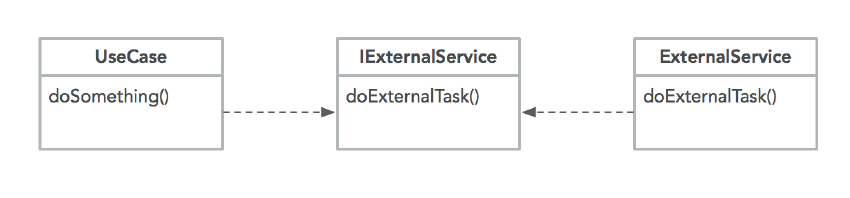
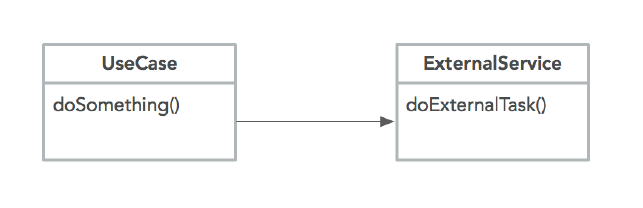

Cumplimos con el objetivo?
Introducción al testing

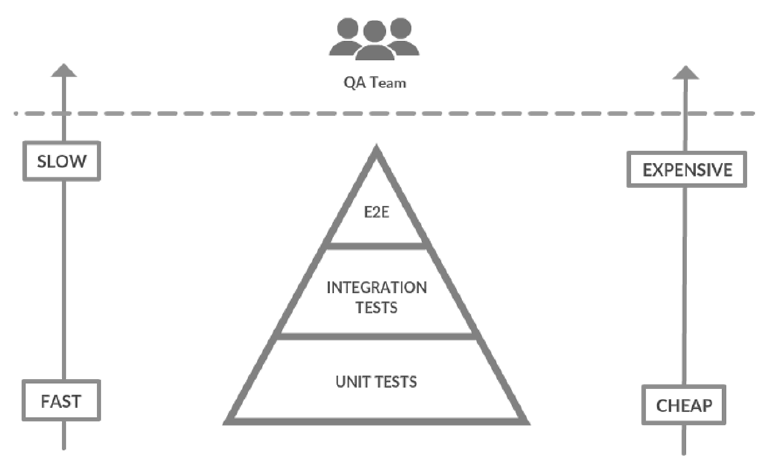
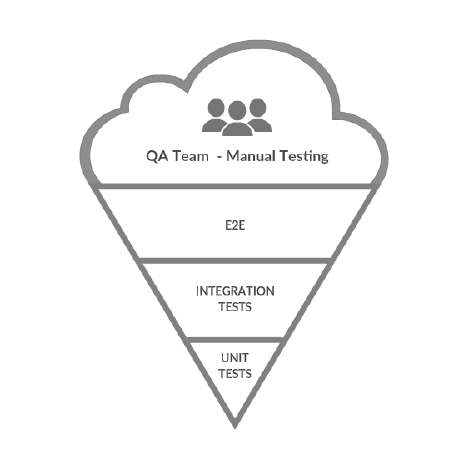
Tipos de TEST
-
Test funcionales
-
Test no funcionales

"El testing de software puede verificar la presencia de errores pero no la ausencia de ellos" Edsger Dijkstra
Test funcionales
-
Test unitarios
-
Test integrales
-
Test de sistema (end to end)
Test no funcionales
-
Tests de carga
-
Tests de velocidad
-
Tests de usabilidad
-
Tests de seguridad
- Fase inicial
- Fase de ejecución
- Fase de evaluación

Test Unitarios
-
Rapidos
-
Aislados
-
Atómicos
-
Fáciles de mantener y extender
-
Deterministas
-
Legibles
test('return zero if recieve one'){
  //Arrange
  const n = 1;

  //Atc
  const result = fibonacci(n);

  // Assert
  expect(result).toBe(0);
}

test('return zero if recieve one', () => {
  expect(fibonacci(1)).toBe(0);
})
Test End to End

SOLID, testing and javascript
By Stiven Cardona