Python
Class
Class 是什麼?
假設你今天在 Python 裡面要寫一個遊戲,
遊戲裡面有很多角色,
每個角色都有等級、血量、攻擊力等資料。
有什麼方法,可以讓我們寫起來輕鬆一點嗎?
Class 是什麼?
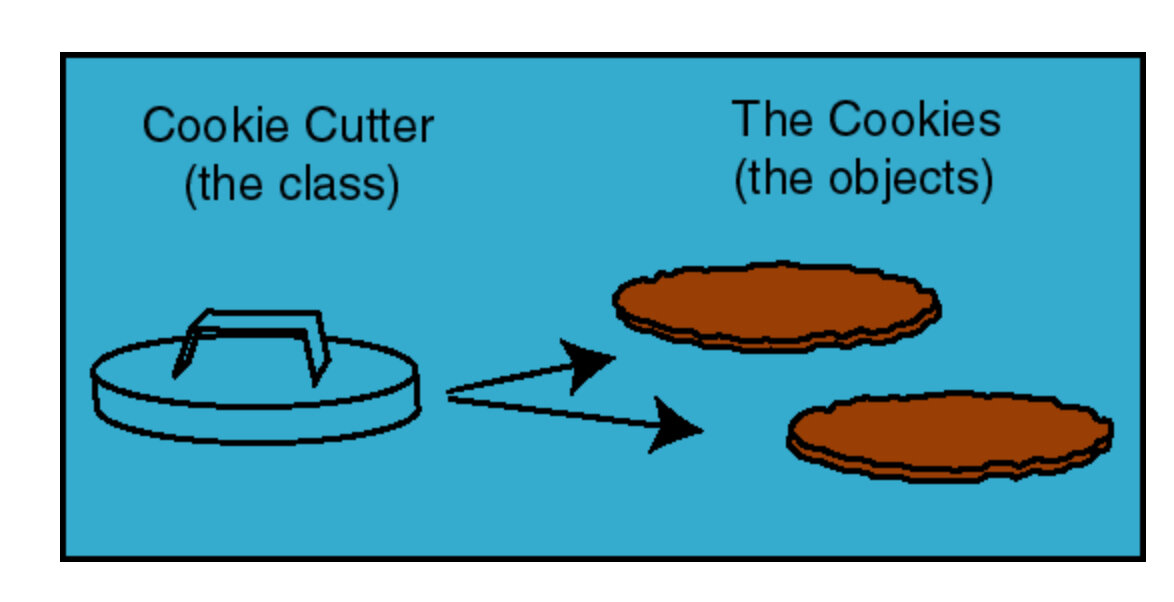
可以把 class 想成一個餅乾模型,你就可以用那個模型製作很多餅乾,每個餅乾都具有某些屬性。
一個餅乾稱之為一個「物件」(Object)
Class 是什麼?
例子:
Class
角色模板
屬性 1: 名稱
屬性 2: 血量
屬性 3: 等級
名稱= 忍者
血量=100
等級=5
名稱= 超人
血量=90
等級=10
名稱= 玩家
血量=20
等級=1
Object
Object
Object
Class 怎麼寫: 宣告一個 class
class character ():

	def __init__(self, name, blood, level):

    	self.name = name
        self.blood = blood
        self.level = level
class 的名稱
initialize (=初始化)
宣告一個物件時自動執行這個函式
初始化一個 object 時需要輸入的內容
Class 怎麼寫: self 是啥
class character ():

	def __init__(self, name, blood, level):

    	self.name = name
        self.blood = blood
        self.level = level
self 基本上是「自己」的概念
self.name 的意思就是「自己的名字」
至於「自己」是誰,取決於你現在在處理哪個物件
因此在宣告 class 時習慣把「自己」統稱取作 self
*補充:其實可以把所有的 self 替換成任何字詞,例如 this, apple, hello 什麼都可以,但慣例使用 self
Class 怎麼寫: 宣告一個 Object
class character ():

	def __init__(self, name, blood, level):

    	self.name = name
        self.blood = blood
        self.level = level


 ninja = character (ninja, 100, 5)
 player = character (player, 20, 1)
宣告 objects
name
blood
level
Class 怎麼寫: 使用 Object
print (ninja.blood) #可以 print 輸出不同屬性
player.level += 1 #可以更改屬性的內容
Class 更多功能 - 方法 (methods)
class character ():

	def __init__(self, name, blood, level):

    	self.name = name
        self.blood = blood
        self.level = level

    def level_up (self, level):
      	self.level += 1

    def add_blood (self, blood):
      	self.blood += 20

ninja = character(ninja, 20, 1)

ninja.add_blood()
print(ninja.blood) # 會輸出 21
instance method
(實體方法)
用來對物件做事
函數第一個吃的一定是 self
Class 更多功能 - 方法 (methods)
class Character( ):
    count = 0

    def __init__(self, name, level):
        self.name = name
        self.level = level
        Character.count += 1


class Ninja(Character):
    def __init__(self, name, level, weapon):

        super().__init__(name, level)
        self.weapon = weapon
class method
(類別方法)
用來對 這「整個類別」做事
函數第一個吃的一定是 cls
(cls 就是 class )
Class 更多功能 - 繼承
class Character( ):
    count = 0

    def __init__(self, name, level):
        self.name = name
        self.level = level
        Character.count += 1


class Ninja(Character):
    def __init__(self, name, level, weapon):

        super().__init__(name, level)
        self.weapon = weapon
用 super ( ) 就可以使子類別 Ninja 繼承父類別 Character的東西
OOP (Object Oriented Programming) 物件導向程式設計
- 以一個一個「物件」為主體寫程式
- OOP 算是一種寫程式的邏輯 / 方法
- class 和 object 就屬於實踐 OOP
OOP 的特色及好處:
封裝
Encapsulation
繼承性
Inheritance
多型
Polymorphism
OOP (Object Oriented Programming) 物件導向程式設計
- 封裝:把東西包在 class 裡面,可以讓使用者忽略細節,並有一些方法能讓使用者較難直接獲取特定資訊(有興趣可以查 getter/setter)
2. 繼承:就剛剛講的繼承
3. 多型:可以用繼承的方法,創造多個子類別,讓每個子類別有一些不同的特色
Python: class
By Suzy Huang