A teacher educators’ perspective on the arrival of GenAI:
this is what and how we want to learn
University of Tartu
Faculty of Social Sciences - Institute of Education
Curriculum for Educational Technology
Thibaut Cromphaut & Indriķis Andris Birznieks
Supervisor: Professor Emanuele Bardone
Part 1
Context and problem statement, main goal and 3 theoretical strands
Context and problem statement
- Teacher educators
- Generative AI (GenAI)
Yet, little to no research asks teacher educators directly.
Aim
What and how do teacher educators want to learn about GenAI?
What themes do teacher educators identify as crucial for their own professional development regarding the integration of GenAI in their teaching?
How do teacher educators want to be professionalized, given the fast-changing nature of these technologies?
Research questions
3 theoretical strands
Effective professional development
(Darling-Hammond et al., 2017; Merchie et al., 2016)
Promises and challenges of GenAI
(Yan et al., 2024)
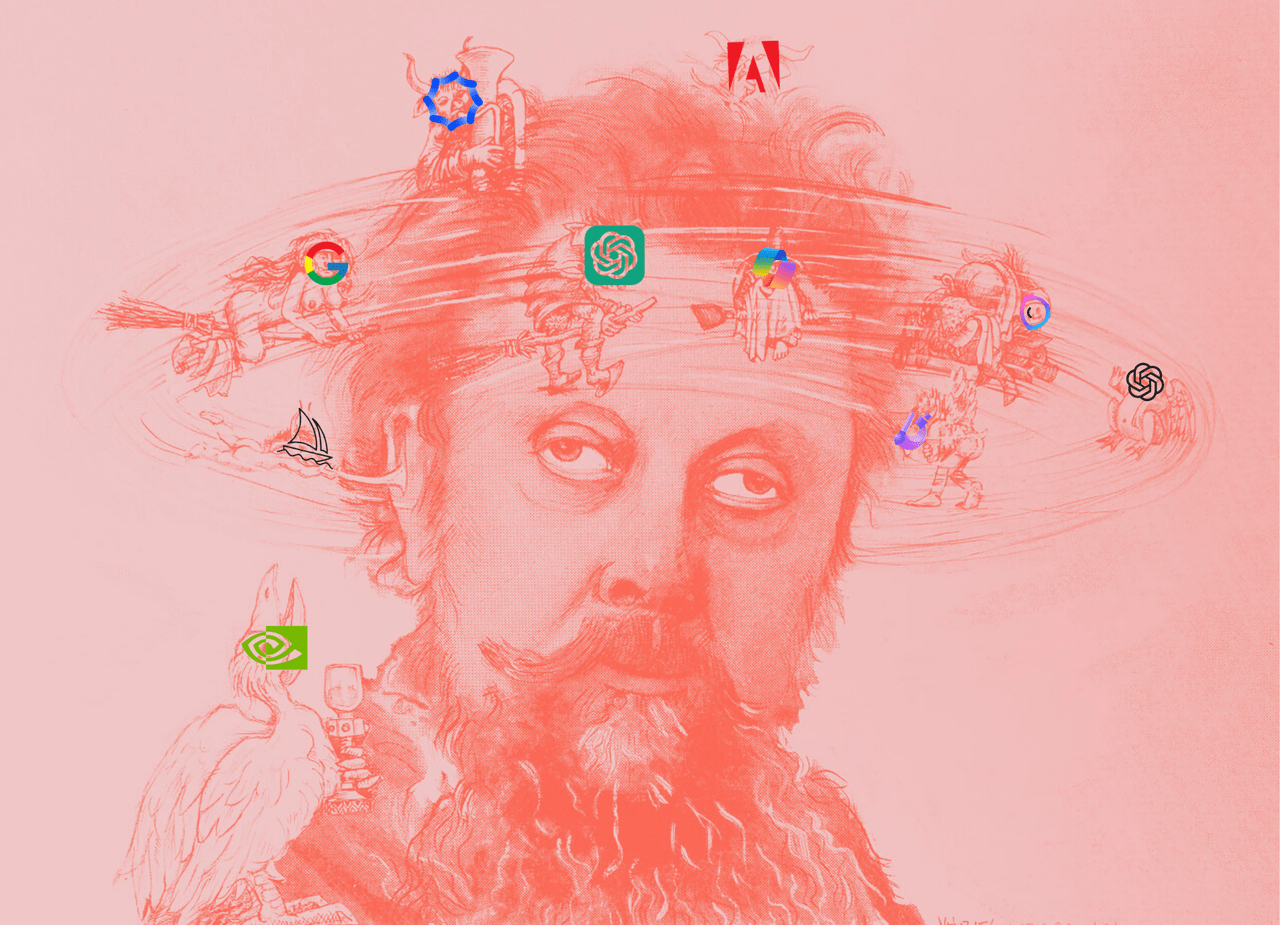
Arrival technologies
(Reich & Dukes, 2024)
Arrival technologies
(Reich & Dukes, 2024)
“Historically, most education technologies have been adopted by schools; by contrast, ChatGPT arrived.”
(Klopfer et al., cited in Reich & Dukes, 2024, p. 1)
Promises and challenges of GenAI
(Yan et al., 2024)
“Educational institutions must invest in ongoing professional development and support systems to help teachers manage techno-stress and workload burdens from adopting new technologies.” (Yan et al., 2024, p. 1846)
Effective professional development
(Darling-Hammond et al., 2017; Merchie et al., 2016)
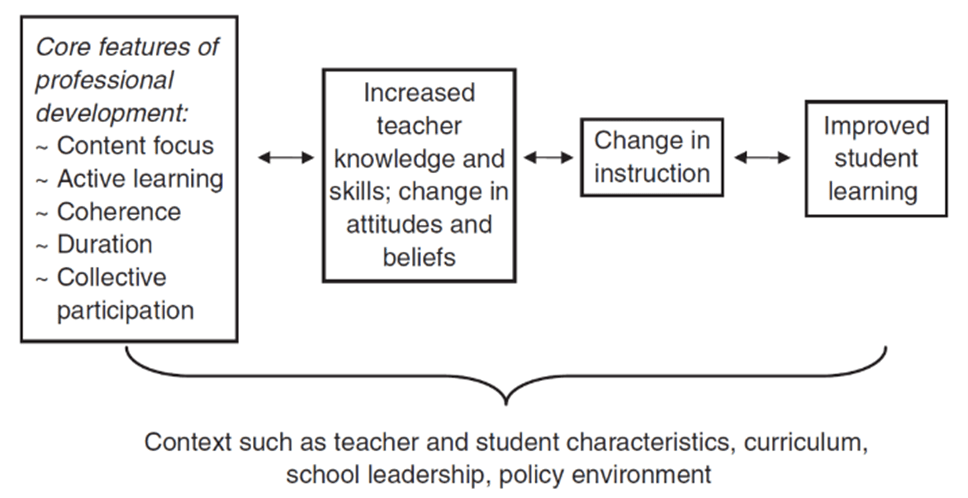
Desimone’s (2009) core conceptual framework
Part 2
Research design, methods and results
Research design: case study
General stance, perceived competence, learning needs
Discussions for deeper understanding, designing and discussing PD pathways
Exploratory mixed methods
Methods
- Survey (N=25):
- Focus groups (N=9)
Results ('Context')
| Field | Min | Max | Mean | Median |
|---|---|---|---|---|
| Age |
29 | 58 | 43.52 | 46 |
| Years of teaching experience | 1 | 31 | 16.68 | 15 |
Results ('What')
|
Prompts, responsible usage, and identification of text generated by GenAI |
|
Material creation, grading support and feedback generation |
|
Ethical issues, cognitive and environmental impact and sustainable use |
|
Using it beyond text generation, deploying open-source models and offline usage |
|
Fundamentals |
|
Use cases |
|
Concerns |
|
Advanced use |
Teacher educators’ reported interests regarding GenAI-related learning.
Results ('What': use case )
Quotes
"I don't like writing generally, ... When I'm grading I can ask AI to assist me ... to uplift my feedback. I designed my own CustomGPT to do that for me in giving good feedback."
“I think ChatGPT helps me to think more out of the box and to generate ideas, even though the ideas are not in themselves good ideas. But it inspires me to generate good ideas"
"I can imagine that chatbots go wrong from time to time. If it generates something completely wrong, the students and us would have a laugh."
Results ('How')
Teacher educators preferred professional development formats for learning about GenAI.
| Field | Count |
| Workshops or face-to-face seminars | 13 |
| Online courses/modules (asynchronous) | 9 |
| Synchronous webinars or virtual labs | 4 |
| Peer collaboration or learning communities | 12 |
| Coaching or mentoring from experts | 15 |
| Other | 3 |
Results ('How')
Quotes
"Just sitting together with colleagues and each one in turn presenting a case, a problem which they are confronted with and helping them to reflect on it."
"P4, for example, is someone who uses a lot of AI tools already... If there is a tool or platform or anything where I can listen to P4 and the tools P4 uses, it would be great."
"I liked the idea of P3 to have a professional learning community ... because we have already talked about it in the book club and on several other occasions."
Part 3
Key findings and recommendations
Optimistic about the opportunities...
“I’m not using GenAI in my work. I’m a bit hesitant, because I don’t know what the effect will be."
"It helps me to give students more detailed feedback on physics exercises."
"I have since last week a generative AI model running myself on Raspberry Pi just for training purposes."
but cautious
Concerned about ethics (digital divide, transparency)
“It’s getting quite unfair for students... They have so many more benefits than using the free version or not using it at all."
"There’s maybe going to be a gap between early adopters in GenAI and people that don’t jump on the train. I don’t know what consequences this gap can have."
“What does GenAI exactly base itself on to come to some kind of evaluation of a work? You should be able to explain it! "
Assessment
"The way we assess is like often still old school, because we don't pay a lot of attention to it. ... And now we are forced to do that."
"Another thing with using AI for assessment and giving feedback – I think that that’s the task of the educator."
"It feels so wrong. It feels like an attack to the core of my profession. It gives me a really strange and uncomfortable feeling."
Collectively,

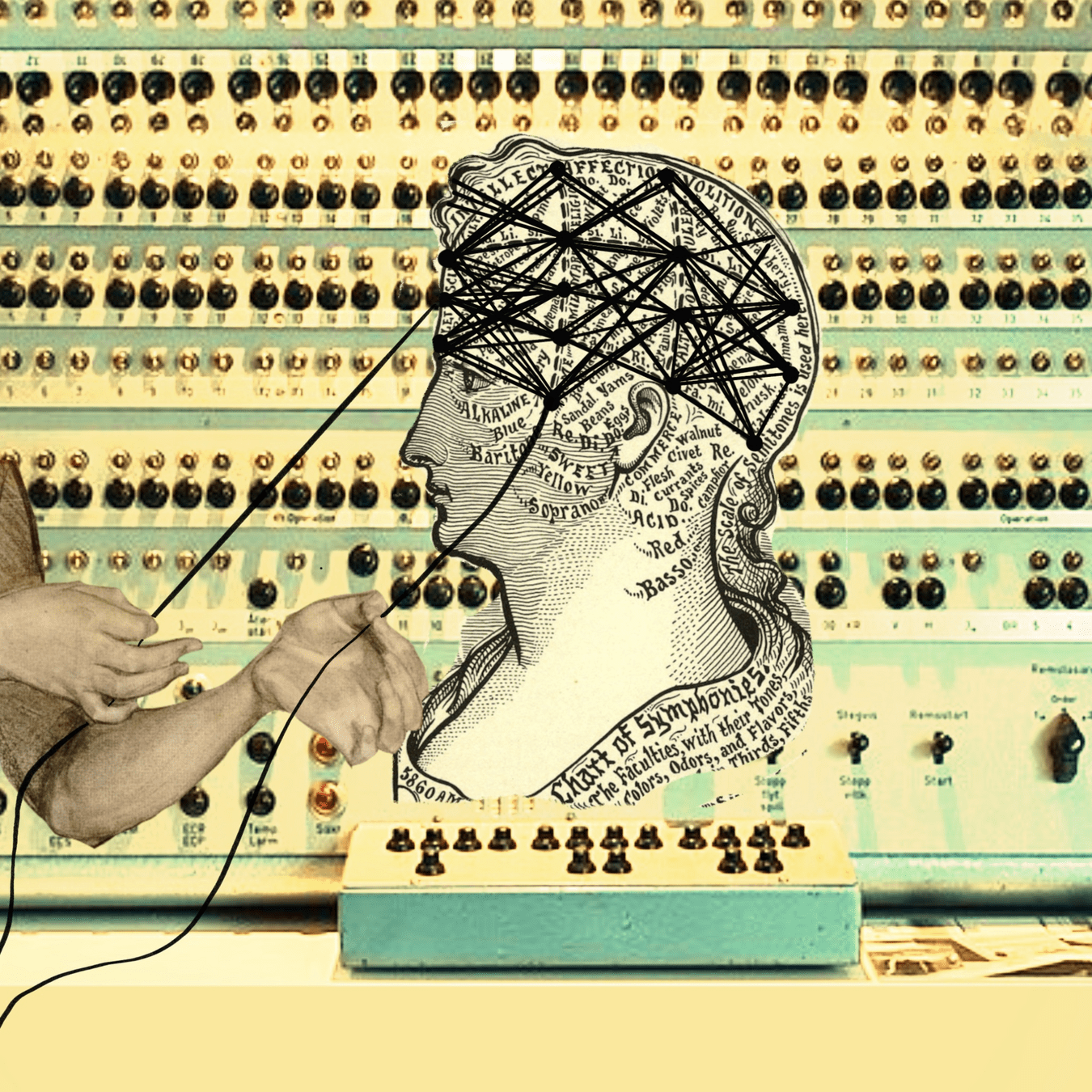
Manage the constant influx of information
Decide on what and how to learn
(goal)
Discover its real potential and limitations
References
Darling-Hammond, L., Hyler, M. E., Gardner, M. (2017). Effective Teacher Professional Development. Palo Alto, CA: Learning Policy Institute. https://doi.org/10.54300/122.311
Desimone, L. M. (2009). Improving Impact Studies of Teachers’ Professional Development: Toward Better Conceptualizations and Measures. Educational Researcher, 38(3), 181-199. https://doi.org/10.3102/0013189X08331140
Merchie, E., Tuytens, M., Devos, G., & Vanderlinde, R. (2016). Evaluating teachers’ professional development initiatives: towards an extended evaluative framework. Research Papers in Education, 33(2), 143–168. https://doi.org/10.1080/02671522.2016.1271003
Reich, J., & Dukes, J. (2024). Toward a new theory of arrival technologies: The case of ChatGPT and the future of education technology after adoption. OSF Preprints. https://doi.org/10.35542/osf.io/x6vn7
Yan, L., Greiff, S., Teuber, Z., & Gašević, D. (2024). Promises and challenges of generative artificial intelligence for human learning. Nature Human Behaviour, 8(10), 1839-1850. https://doi.org/10.1038/s41562-024-02004-5
Defence University of Tartu
By Thibaut Cromphaut
Defence University of Tartu
IR: Vrije brainstorm over AI