Entropy methods
for the fermionic Boltzmann equation
Thomas Borsoni*
Journées Jeunes EDPistes de France
January 15, 2026
*postdoc at CERMICS, École Nationale des Ponts et Chaussées
Supervised by V. Ehrlacher & T. Lelièvre
Outline
The classical and fermionic Boltzmann equations
Trend to equilibrium
Introduction
1. The entropy method
2. Overview for kinetic equations
3. Transfer from classical to fermionic
The classical and fermionic Boltzmann equations
Trend to equilibrium
Introduction
1. The entropy method
2. Overview for kinetic equations
3. Transfer from classical to fermionic
(\partial_t + v \cdot \nabla_x) g_{t,x}(v) = Q(g_{t,x})(v)
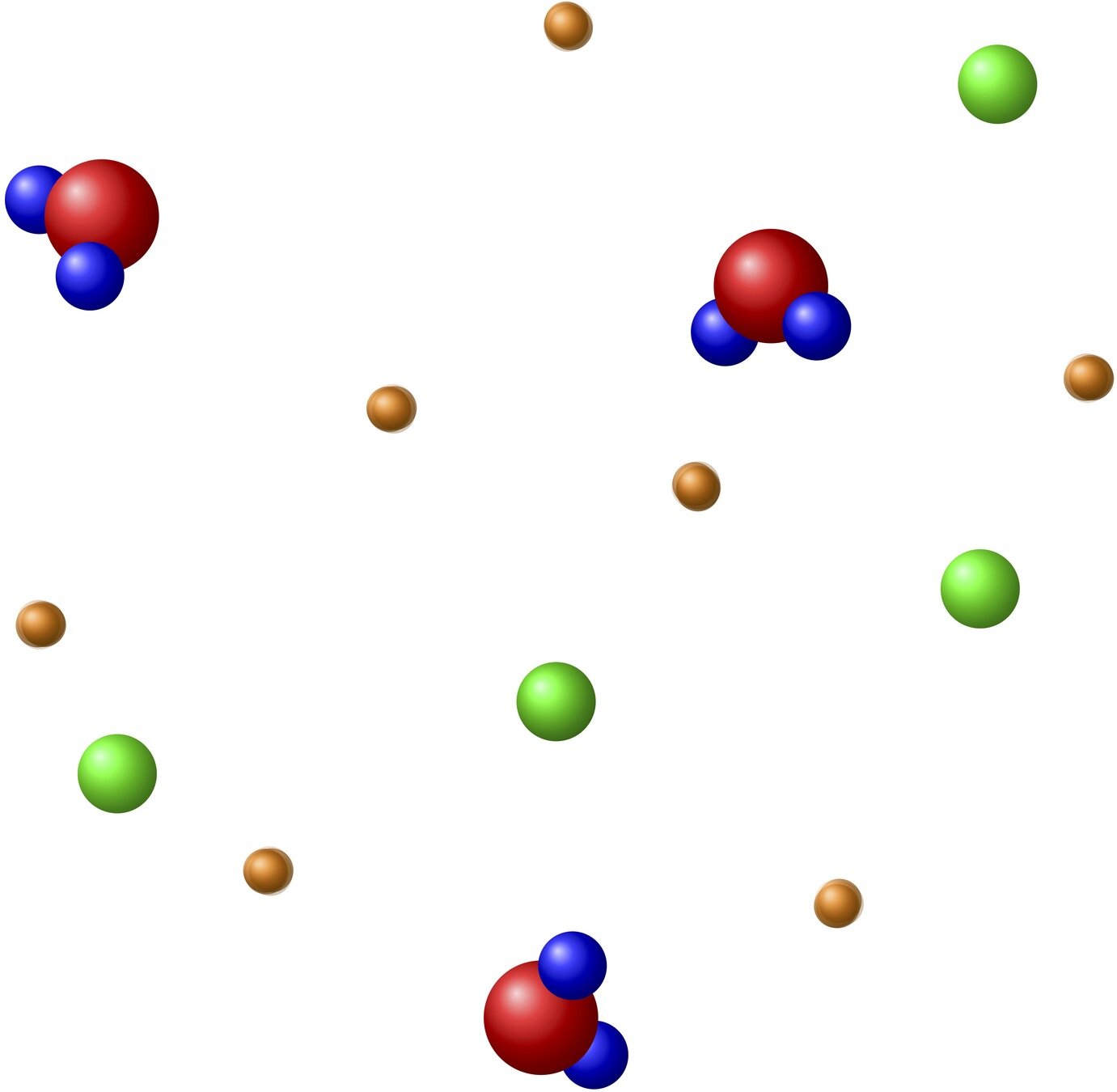
\(g \equiv g_{t,x}(v)\) density of molecules
+
x
the classical Boltzmann equation
v
Boltzmann equation:
v
v_*
v'
v'_*
\begin{align*}
v+v_*&=v'+v'_* \\
\frac12|v|^2 + \frac12|v_*|^2 &= \frac12|v'|^2 + \frac12|v'_*|^2 \\
\end{align*}
Conservation laws
Collision operator:
\newcommand{\dd}{\mathrm{d}}
Q_{\textcolor{green}{0}}(g)(v) = \iint_{\R^3 \times \mathbb{S}^2}
[g(v') g(v'_*) -
g(v) g(v_*)] \;
B \; \dd v_* \, \dd \sigma
\begin{align*}
v' = \frac{v+v_*}{2} + \frac{|v-v_*|}{2} \; \sigma \\
v'_* = \frac{v+v_*}{2} - \frac{|v-v_*|}{2} \; \sigma\\
\end{align*}
\newcommand{\Sb}{\mathbb{S}}
\sigma \in \Sb^2
\implies
(momentum)
(energy)
\(B \equiv B(v,v_*, \sigma) > 0 \) \(\leftrightarrow\) interaction potential
Collision kernel:
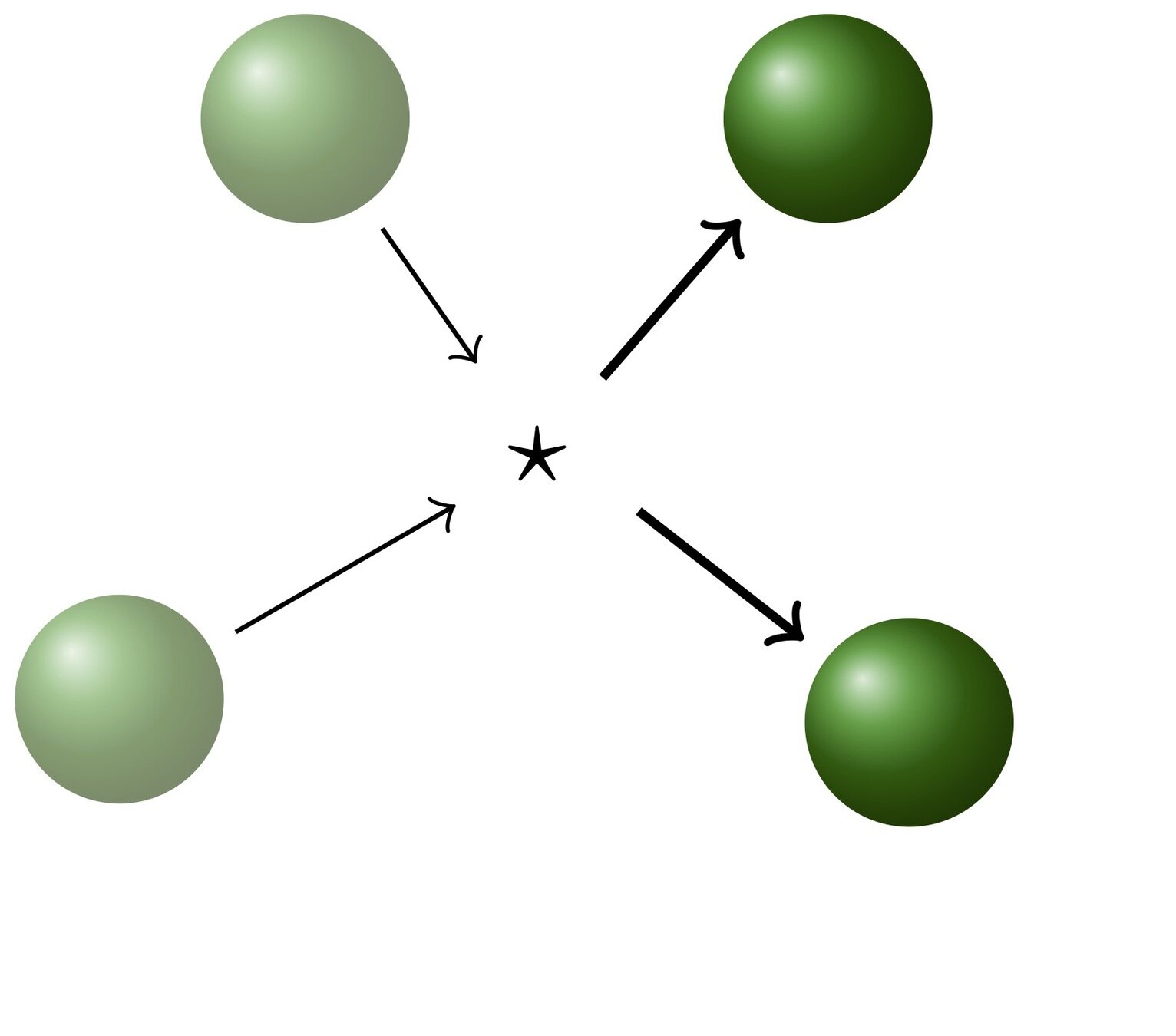
Statistical description of a rarefied monoatomic gas
\partial_t g_{t}(v) = Q_{\textcolor{green}{0}}(g_{t})(v)
\(g \equiv g_{t}(v)\) density of molecules
+
x
the space-homogeneous
classical Boltzmann equation
v
- Boltzmann equation
v
v
\textcolor{blue}{u}
\textcolor{blue}{\sqrt{T}}
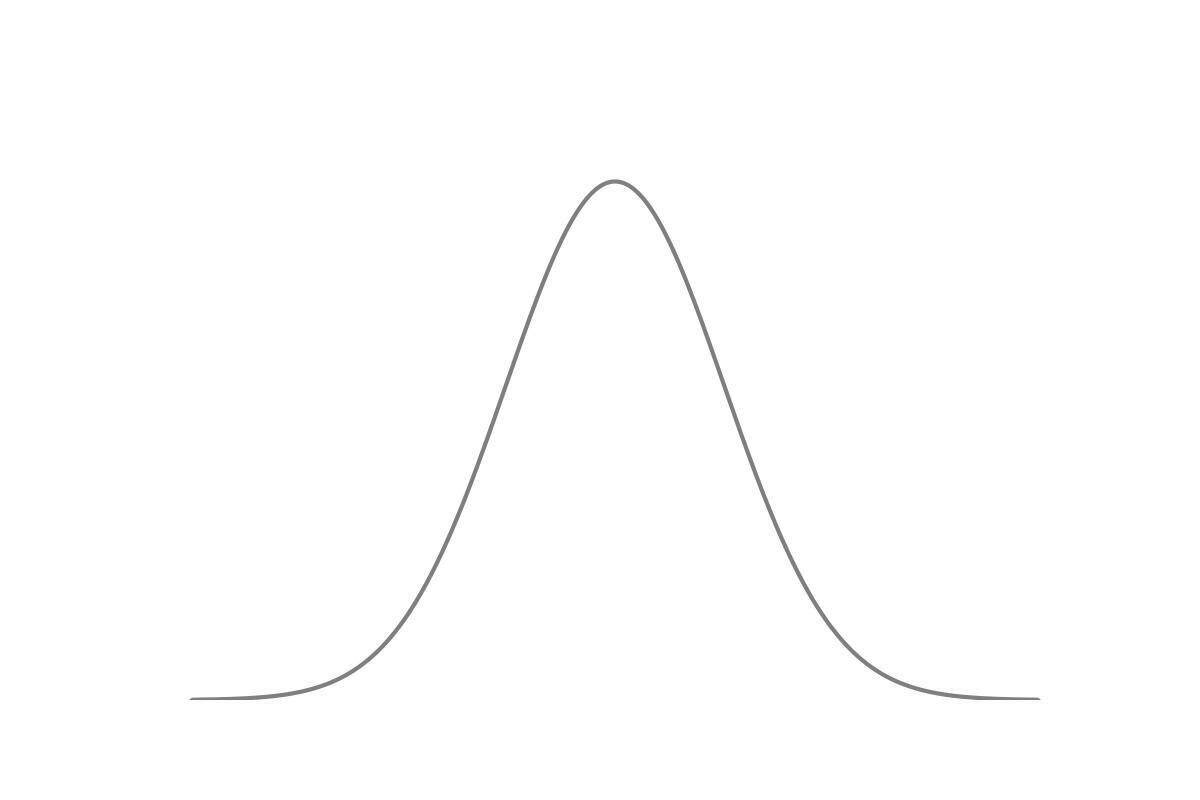
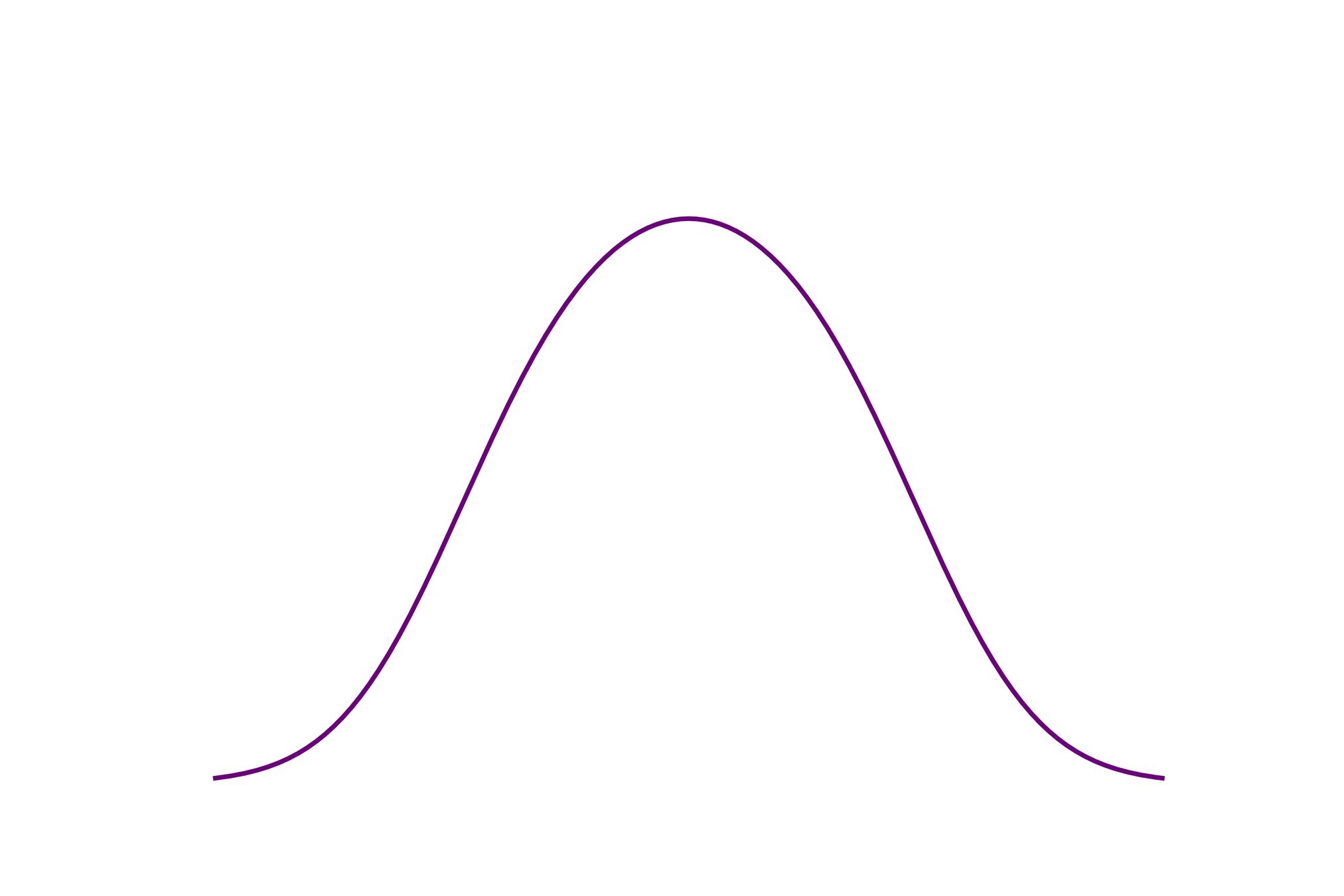
M^{g_0}_{\textcolor{green}{0}}(v) = \textcolor{blue}{\rho}\, (2 \pi \textcolor{blue}{T})^{-\frac32} \, \exp \left(-\frac{|v-\textcolor{blue}{u}|^2}{2 \, \textcolor{blue}{T}} \right)
- Equilibrium
g_t \underset{t \to \infty}{\to} M^{g_0}_{\textcolor{green}{0}}
expected behaviour
g_0
Maxwellian
distribution
- Conservation of
- Mass
- Momentum
- Energy
\partial_t f_{t}(v) = Q_{\textcolor{purple}{\delta}}(f_{t})(v)
\(f \equiv f_{t}(v)\) density of fermions
the space-homogeneous
fermionic Boltzmann equation
- Boltzmann-Fermi-Dirac equation
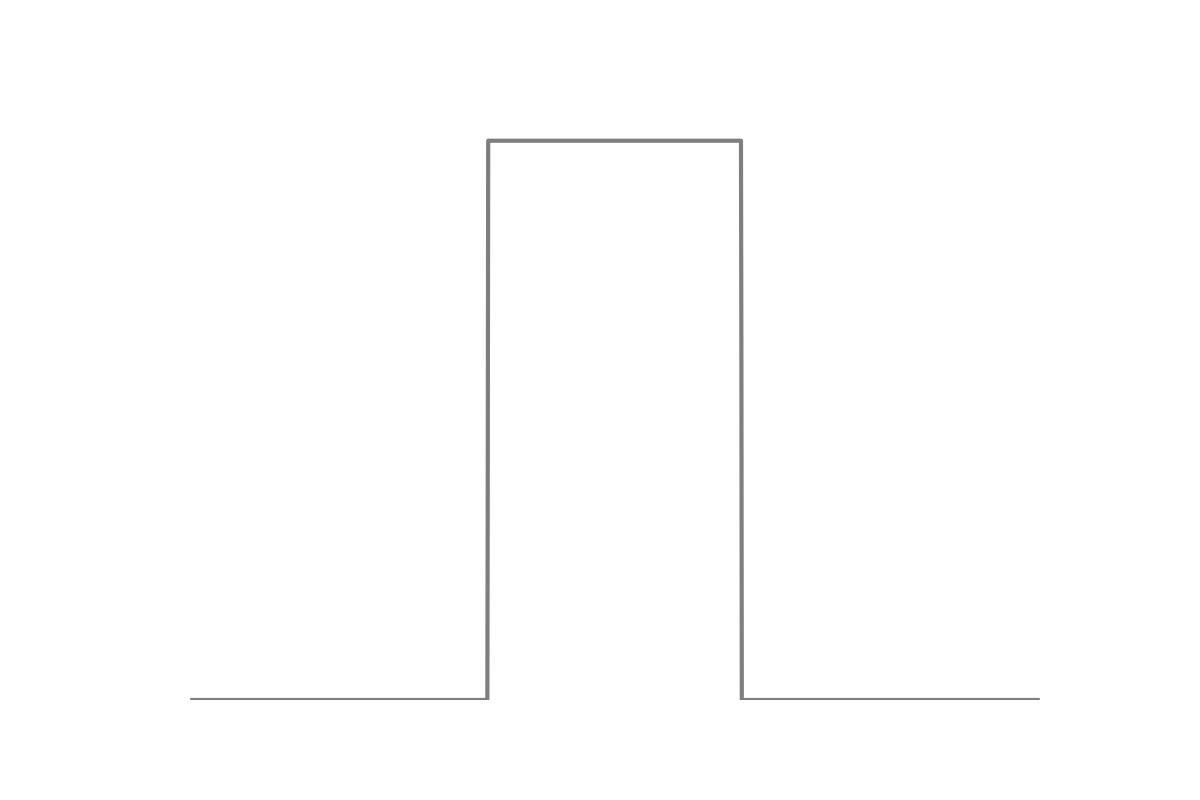
Pauli exclusion principle
0 \leq f_{t} \leq \frac{1}{\textcolor{purple}{\delta}}
0 < \textcolor{purple}{\delta} \ll 1
Q_{\color{purple} \delta}(f)(v) = \iint_{\R^3 \times \mathbb{S}^2}
\left[f' f'_* (1- \textcolor{purple}{\delta} f)(1- \textcolor{purple}{\delta} f_*) -
f f_* (1 - \textcolor{purple}{\delta} f')(1-\textcolor{purple}{\delta} f'_*) \right]
B \; \mathrm{d} v_* \, \mathrm{d} \sigma
- Collision operator
\frac{1}{\textcolor{purple}{\delta}}
v
\frac{1}{\textcolor{purple}{\delta}}
v
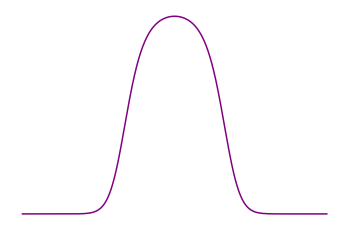
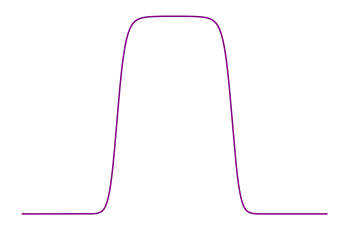
- Equilibrium
Fermi-Dirac
statistics
\frac{1}{\textcolor{purple}{\delta}}
v
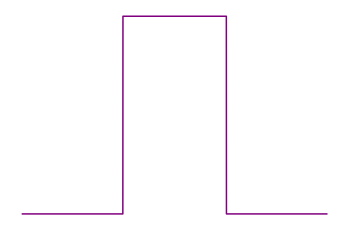
- Conservation of
- Mass
- Momentum
- Energy
- Existence & stability of solutions to homogeneous BFD for cut-off hard potentials
Lu, Wennberg
2001 -> 2008
Existence and uniqueness of solutions to inhomogeneous BFD for cut-off kernels
Dolbeault
1994
- Relaxation to equilibrium of such solutions:
either \(f_0 =\) or \(f_t \; \underset{t \to \infty}{\rightarrow}\)
Derivation of the equation from particles system (partially formal)
Benedetto, Castella, Esposito, Pulvirenti
2003
at which rate?
saturated state
Fermi-Dirac equilibrium
Some results on BFD
The classical and fermionic Boltzmann equations
Trend to equilibrium
Introduction
1. The entropy method
2. Overview for kinetic equations
3. Transfer from classical to fermionic
\partial_t f_t = Q(f_t)
\(D(h) \gtrsim {H(h|M^h)}^{1+\alpha}\)
\displaystyle \frac{\mathrm{d}}{\mathrm{d} t} H(f_t|M^{f_0}) =: - D(f_t)
\(D(h) \geqslant C H(h|M^h)\)
the entropy method
Relative entropy to equilibrium:
\(H(f_t|M^{f_0}) \lesssim t^{-1/\alpha}\)
\(H(f_t|M^{f_0}) \lesssim e^{-Ct} \)
Csiszár-Kullback-Pinsker
(for the Boltzmann entropy)
\|f_t - M^{f_0}\|_{L^1}^2 \lesssim H(f_t|M^{f_0})
H(g|M^g) = H(g) - H(M^g) \geq 0
- Entropy (Lyapunov) functional \(H\)
- Equilibrium distributions \(M\)
entropy dissipation
\forall h,
entropy inequality
The classical and fermionic Boltzmann equations
Trend to equilibrium
Introduction
1. The entropy method
2. Overview for kinetic equations
3. Transfer from classical to fermionic
fermionic entropy
classical entropy
H_{\textcolor{green}{0}}(g) = \int g \log g - g
H_{\textcolor{purple}{\delta}}(f) = \int f \log f + {\textcolor{purple}{\delta}}^{-1} (1 - {\textcolor{purple}{\delta}} f)
\log (1-{\textcolor{purple}{\delta}} f)
M_{\textcolor{green}{0}}(v) = e^{a - b|v-u|^2}
\displaystyle M_{\textcolor{purple}{\delta}}(v) = \frac{e^{a - b|v-u|^2}}{1 + \textcolor{purple}{\delta} e^{a - b|v-u|^2}}
Equilibrium: Fermi-Dirac statistics
Equilibrium: Maxwellian
entropies and equilibria
classical Boltzmann
Fermionic boltzmann
H_{\textcolor{green}{0}}(g) = \int \Phi_{\textcolor{green}{0}}(g)
H_{\textcolor{purple}{\delta}}(f) = \int \Phi_{\textcolor{purple}{\delta}}(f)
M_{\textcolor{green}{0}}(v) = (\Phi_{\textcolor{green}{0}}')^{-1} \left(\alpha + \beta \cdot v + \gamma |v|^2 \right)
\displaystyle M_{\textcolor{purple}{\delta}}(v) = (\Phi_{\textcolor{purple}{\delta}}')^{-1} \left(\alpha + \beta \cdot v + \gamma |v|^2 \right)
Equilibrium: Fermi-Dirac statistics
Equilibrium: Maxwellian
entropies and equilibria
\Phi_{\textcolor{purple}{\delta}}'(x) = \log \left(\frac{x}{1 - \textcolor{purple}{\delta} x} \right)
\Phi_{\textcolor{green}{0}}' = \log
entropy \(\displaystyle H : h \mapsto \int \Phi(h)\) \(\Phi\) \(\mathcal{C}^2\) st. convex
equilibrium
M = (\Phi')^{-1} (\alpha \, \text{mass} + \beta \cdot \text{momentum} + \gamma \, \text{energy})
fermionic entropy
classical entropy
classical Boltzmann
Fermionic boltzmann
D_{\textcolor{green}{0}}(g) \gtrsim H_{\textcolor{green}{0}}(g|M_{\textcolor{green}{0}}^g)^{1 \textcolor{grey}{+ \alpha}}
Boltzmann
Carlen, Carvalho, Desvillettes, Toscani, Villani
1992 \(\to\) 2003
Landau
D_{\text{Landau}, \, \textcolor{purple}{\delta}}(f) \gtrsim H_{\textcolor{purple}{\delta}}(f
|M_{\textcolor{purple}{\delta}}^f)^{1 \textcolor{grey}{+ \alpha}}
LAndau
Desvillettes, Villani
2000
Alonso, Bagland, Desvillettes, Lods
2020-2021
D_{\textcolor{purple}{\delta}}(f) \gtrsim H_{\textcolor{purple}{\delta}}(f|M_{\textcolor{purple}{\delta}}^f)^{1 \textcolor{grey}{+ \alpha}}
Boltzmann
Overview of entropy inequalities for kinetic equations
Fokker-Planck
log-Sobolev inequality
Fokker-Planck
D_{\text{Landau}, \, \textcolor{green}{0}}(g) \gtrsim H_{\textcolor{green}{0}}(g|M_{\textcolor{green}{0}}^g)^{1 + \textcolor{grey}{\alpha}}
D_{\text{FP}, \, \textcolor{green}{0}}(g) \gtrsim H_{\textcolor{green}{0}}(g|M_{\textcolor{green}{0}}^g)
D_{\text{FP}, \, \textcolor{purple}{\delta}}(g) \gtrsim H_{\textcolor{purple}{\delta}}(g|M_{\textcolor{purple}{\delta}}^g)
generalized
Gross
1975
Carillo, Laurençot, Rosado
2009
D_{FP, \, \textcolor{green}{0}}(g) = \int |\nabla \sqrt{g}|^2
H_{\textcolor{green}{0}}(g) = \int g \log g - g
classical
classical
classical
fermionic
fermionic
fermionic
H_{\textcolor{purple}{\delta}}(f) = \int f \log f + \textcolor{purple}{\delta}^{-1} (1- \textcolor{purple}{\delta} f) \log (1 - \textcolor{purple}{\delta} f)
Toscani \(\leqslant\) 1999,...
Transfer from classical to fermionic
B. 2024
The classical and fermionic Boltzmann equations
Trend to equilibrium
Introduction
1. The entropy method
2. Overview for kinetic equations
3. Transfer from classical to fermionic
transfer of inequalities
D_{\textcolor{green}{0}}(g) \gtrsim H_{\textcolor{green}{0}}(g|M_{\textcolor{green}{0}}^g)^{1 + \alpha}
We know:
\gtrsim \; \; D_{\textcolor{green}{0}}\left(\frac{f}{1 - \textcolor{purple}{\delta} f}\right)
entropy inequality for classical Boltzmann
\gtrsim \; \; H_{\textcolor{green}{0}} \left(\frac{f}{1- \textcolor{purple}{\delta} f} \left| M_{\textcolor{green}{0}}^{\frac{f}{1- \textcolor{purple}{\delta} f}} \right. \right)^{1 + \alpha}
entropy inequality for fermionic Boltzmann
We want:
D_{\textcolor{purple}{\delta}}(f) \gtrsim D_{\textcolor{green}{0}}\left(\frac{f}{1 - \textcolor{purple}{\delta} f}\right)
fermionic entropy dissipation of \(f\)
classical entropy dissipation of \( \displaystyle \frac{f}{1-\textcolor{purple}{\delta} f} \)
\( \gtrsim\)
D_{\textcolor{purple}{\delta}}(f) \textcolor{red} \qquad \qquad \qquad \qquad \qquad \qquad \qquad
\qquad \qquad \quad \textcolor{orange}{\gtrsim} \;H_{\textcolor{purple}{\delta}}(f|M_{\textcolor{purple}{\delta}}^f)^{1 + \alpha}
?
\forall g,
\forall f,
\forall f,
H_{\textcolor{green}{0}}\left(\left.\frac{f}{1 - \textcolor{purple}{\delta} f}\right|M^{\frac{f}{1 - \textcolor{purple}{\delta} f}}_{\textcolor{green}{0}}\right)
\geqslant H_{\textcolor{purple}{\delta}}(f|M^f_{\textcolor{purple}{\delta}}).
As soon as all terms make sense,
classical relative entropy to equilibrium of \(\displaystyle \frac{f}{1-\textcolor{purple}{\delta} f}\)
fermionic relative entropy to equilibrium of \(f\)
Theorem.
comparison of relative entropies
B. 2024
R_g : \delta \in \R_+ \mapsto H_{\delta}\left( \frac{g}{1 + \delta g} \left|M^{\frac{g}{1 + \delta g}}_{\delta} \right. \right)
Fix
is nonincreasing on \(\R_+\).
g \geqslant 0,
- nice representation of the relative entropy to equilibrium
- general link between entropy and equilibrium
- fact that \(x \mapsto -\left(\frac{x}{1+\delta x} \right)^2\) is decreasing
Show that \(R_g' \leq 0\) on \(\R_+^*\) and \(R_g\) continuous on \(\R_+ \)
Proof scheme
We show:
We use:
Proposition.
0\leqslant f \in L^1_2(\R^3)
\displaystyle \textcolor{black}{ 1 - \textcolor{purple}{\delta} f \geqslant} \kappa,
For all
such that
\textcolor{purple}{\delta} \textcolor{black}{> 0,} \;\; \kappa \textcolor{black}{\in (0,1)}
and
Classical / Fermi-Dirac equivalence
\textcolor{black}{H_{\textcolor{purple}{\delta}}(f|M^f_{\textcolor{purple}{\delta}}) \leqslant
H_{\textcolor{green}{0}}\left(\left.\frac{f}{1 - \textcolor{purple}{\delta} f}\right|M^{\frac{f}{1 - \textcolor{purple}{\delta} f}}_{\textcolor{green}{0}}\right)
\leqslant} \textcolor{black}{e}^{ \textcolor{black}{16} \, { \textcolor{black}{(}\kappa^{\textcolor{black}{-1}} \textcolor{black}{- 1)} } } \textcolor{black}{\; H_{\textcolor{purple}{\delta}}(f|M^f_{\textcolor{purple}{\delta}})}
\phantom{\frac{1-\kappa}{\kappa}}
\textcolor{black}{D_{\textcolor{purple}{\delta}}(f) \leqslant
D_{\textcolor{green}{0}}\left(\frac{f}{1 - \textcolor{purple}{\delta} f}\right)
\leqslant} \kappa^{\textcolor{black}{-4}} \textcolor{black}{ \; D_{\textcolor{purple}{\delta}}(f)}
For Boltzmann/BFD (& Landau/LFD) dissipations:
entropy inequality for Boltzmann
entropy inequality for Boltzmann-Fermi-Dirac
\kappa
\iff
1
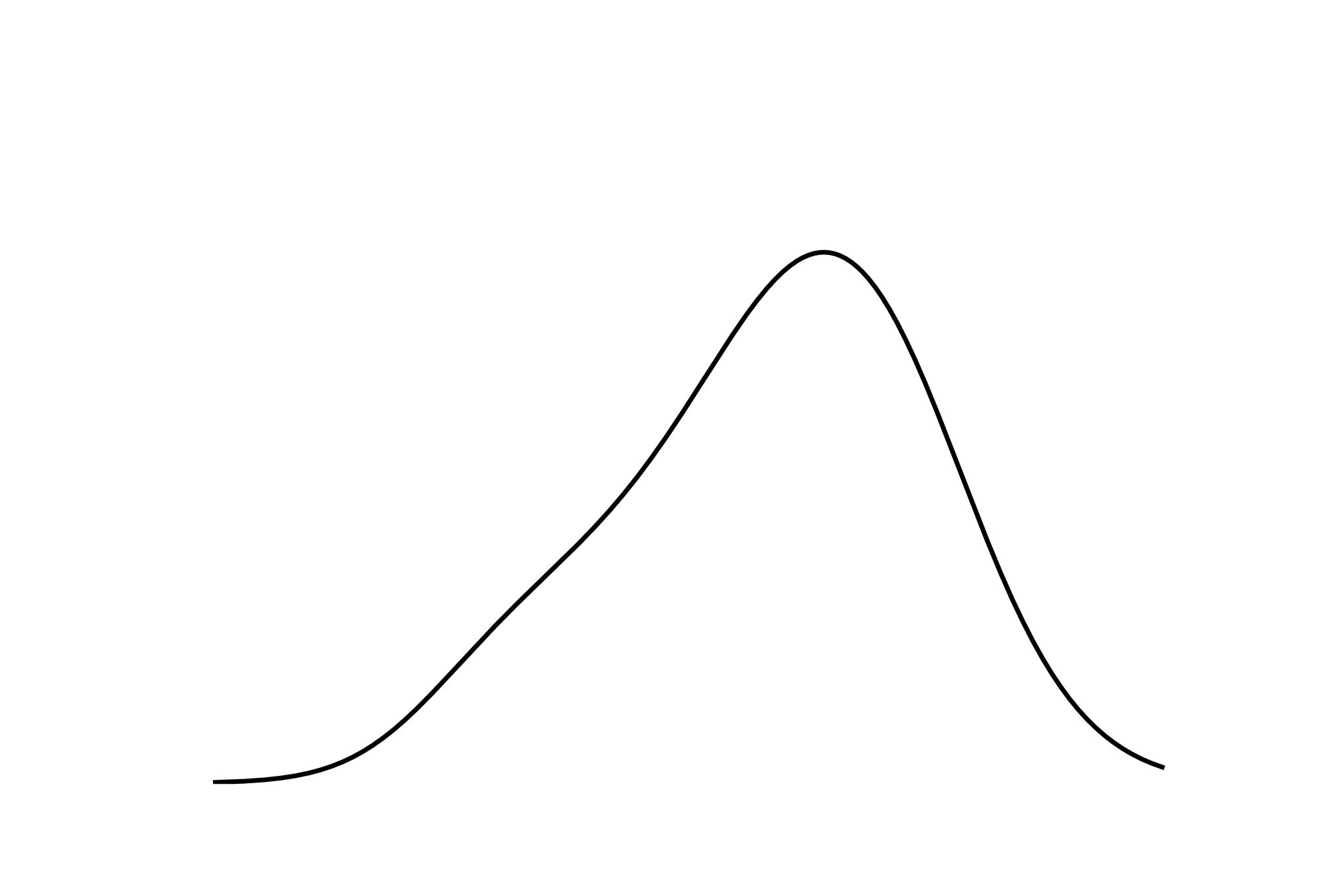
\textcolor{purple}{\delta} f
\kappa
D_{\textcolor{purple}{\delta}}(f) \gtrsim H_{\textcolor{purple}{\delta}}(f|M^f_{\textcolor{purple}{\delta}}), \; \; \forall f \in \mathcal{F}
\forall g \in \mathcal{G}, \; \; D_{\textcolor{green}{0}}\left(g\right) \gtrsim
H_{\textcolor{green}{0}}\left(\left.g\right|M^{g}_{\textcolor{green}{0}}\right)
Conclusion
2024
Conclusion
Conclusion
- Entropy inequality \(\implies\) rate of convergence to equilibrium
- Known entropy inequalities for classical Boltzmann
- Transfer: classical entropy inequality \(\implies\) fermionic entropy inequality
- Result: large range of fermionic entropy inequalities
- Implication: explicit rate of convergence to equilibrium for fermionic Botzmann, by Lods & B. (hard potentials) and Jiang et Wang (moderately soft potentials)
D \gtrsim H^{1 + \alpha}
\|f_t - M\| \lesssim t^{-\alpha}
contribution
method
literature
Thank you for your attention!

General weighted \(L^p\) Csiszár-Kullback-Pinsker
\|f-M^f\|^2_{L^p_{\varpi}} \leqslant {\small C_{\Phi, \varpi, p, f, M^f}} \; H(f|M^f),
Proposition.
(general entropy)
\(\displaystyle H(f) = \int\Phi(f)\), \(\Phi \; \; \mathcal{C}^2\) st. convex, \(M^f\) equilibrium, and
C_{\Phi, \varpi, p,f,M^f} = \left(\int_0^1 (1-\tau) \left\| \Phi''((1-\tau)M^f + \tau f)^{-1} \right\|_{L^{\frac{p}{2-p}}_{\varpi^2}}^{-1} \, \mathrm{d} \tau \right)^{-1}
For any \(f\), any \(p \in [1,2]\) and \(\varpi\) weight,
\|f-M_0^f\|^2_{L^p_{\varpi}} \leqslant 2 \max \left(\|f\|_{L^{\frac{p}{2-p}}_{\varpi^2}}, \|M_0^f\|_{L^{\frac{p}{2-p}}_{\varpi^2}} \right)\, H_{0}(f|M_0^f),
Corollary.
For any \(0\leq f \in L^1_2\cap L \log L(\R^3)\), \(p \in [1,2]\) and \(\varpi : \R^3 \to \R_+\),
(Boltzmann entropy)
\(\displaystyle H_0\) Boltzmann entropy and \(M_0^f\) Maxwellian.
[simplified]
Presentation EDPistes
By Thomas Borsoni