
Kotlin in 2018
-
The fastest growing language in 2018
- 2.6 times the number of github contributors
-
One of the most loved languages of 2018
-
5-10 years ahead of Java
-
Kotlin 1.3 released
- Coroutines are stable
- Kotlin/Native is beta
- Lots of other improvements
Why use Kotlin?
-
Kotlin is a better language for the JVM than Java
-
Really easy to get up and running
-
Simpler language than Java
-
Much safer than Java
-
No more NullPointerExceptions!
-
Streamlines the handling of null values
-
-
More readable than Java
-
Has an excellent standard library
-
100% Interoperable with Java
-
Start using Coroutines now!
On every platform it's important that we provide an experience that is
-
Fluid from the user's perspective
-
Scalable when needed
"Asynchronous or non-blocking programming is the new reality"
Lots of ways to do async
-
AsyncTask
-
Executors
-
Loaders
-
Future
-
Libraries (like RxJava)
-
Coroutines
Why Coroutines?
-
A new way of managing background threads
-
Makes writing async code much easier
-
Convert async callbacks for long-running tasks into sequential code
- The structure of imperative synchronous code is the same as async code
What are Coroutines?
-
Essentially, light weight threads
- A new Thread uses 1MB
- A new coroutine uses in the 10s of kilobytes
- Suspended coroutine calls are removed from the stack
-
Does not block thread, "suspends" thread
-
Uses callbacks under the hood, but looks like sequential code
Coroutines vs RxJava
Coroutines can replace:
-
Single / Maybe / Completable
-
Not everything
-
There are some Rx coroutine wrappers
"Coroutines are always related to some local scope in your application, which is an entity with a limited life-time, like a UI element"
Structured Concurrency
Coroutine Scope
-
For managing coroutine cancellation
-
Parent-child relationship between coroutines
-
Ensures that cancelling a parent will cancel all its children
-
private val parentJob = Job()
private val uiScope = CoroutineScope(Dispatchers.Main + parentJob)
fun requestSomeData() {
    uiScope.launch {
        updateUI(performRequest())
    }
}
override fun onDestroy() {
    parentJob.cancel()
}
fun requestSomeData() {
launch {
updateUI(performRequest())
}
}
Using CorutineScope
Dispatchers
-
Controls where the coroutine is run
-
i.e. the threadpool
-
-
Dispatchers.Default
- Num CPU cores threads
-
Dispatchers.IO
- Min 64 threads
-
Dispatchers.Main
-
Dispatchers.Unconfined
- Don't use this
Changing Dispatcher
val result = withContext(Dispatchers.IO) {
    queryDatabase()
}

withContext(Dispatchers.Main) {
    updateUI(result)
}-
withContext will run block in specified dispatcher
-
When finished the coroutine will continue on the previous dispatcher
-
Good way to switch threads briefly to handle expensive operations
Use Sealed Classes
-
instanceof checks in Java are a code smell
-
I assumed the same in Kotlin
-
But not with sealed classes!
Use Sealed Classes
-
What are sealed classes?
- Representing restricted class hierarchies
- Allows your classes to behave like enums
Sealed Classes
sealed class Expr
data class Const(val number: Double) : Expr()
data class Sum(val e1: Expr, val e2: Expr) : Expr()
object NotANumber : Expr()
fun eval(expr: Expr): Double = when(expr) {
is Const -> expr.number
is Sum -> eval(expr.e1) + eval(expr.e2)
NotANumber -> Double.NaN
// the `else` clause is not required
// because we've covered all the cases
}Good uses of Sealed Classes
-
Event Sourcing
-
Great use of sealed classes
-
Example was pizza ordering system
-
-
Improving booleans (booleans are bad)
-
val priceRollupFlag: Boolean
-
Convert to sealed classes/enums
-
Maintainable and Extensible
-
Expressive + has domain meaning
-
-
Kotlin is coming to the server
- Lots of companies whole heartedly adopting kotlin on the backend
- I can't wait for Kotlin to be everywhere!
Kotlin is coming to the server
- Some really cool server libraries
- http4k
- Everything is a function
- Extremely easy to test
- Really lightweight and un-opinionated
- Can run with any container/frameworks
- Ktor
- Async framework developed by Jetbrains
- Uses coroutines a lot
- Really easy to safely async everything
- Great testing tools
- http4k
Convert Gradle Scripts to Kotlin DSL
Gradle Kotlin DSL
-
From the creator of Gradle
-
"Kotlin is better than groovy"
- "I wish Kotlin existed when I created Gradle"
- "You lucky b*******s"
-
Gradle Kotlin DSL
- Why switch to the Gradle Kotlin DSL
- Type safe build logic
- Great IDE Support
- Way more compile time checks
- Shorter feedback loop
- Groovys dynamism has performance hit
- Null Safety
- Documentation + discovery
Gradle Kotlin DSL
- Migration guide
- Can be done automatically
- Easier with some preparatory steps to make scripts more declarative
- Kotlin + groovy can live side by side
- Kotlin should drive groovy, not the opposite
- Due to groovy dynamism
Gradle Kotlin DSL
- Shipped as part of Gradle 5.0
Unit Testing Best Practices
-
Use JUnit5
-
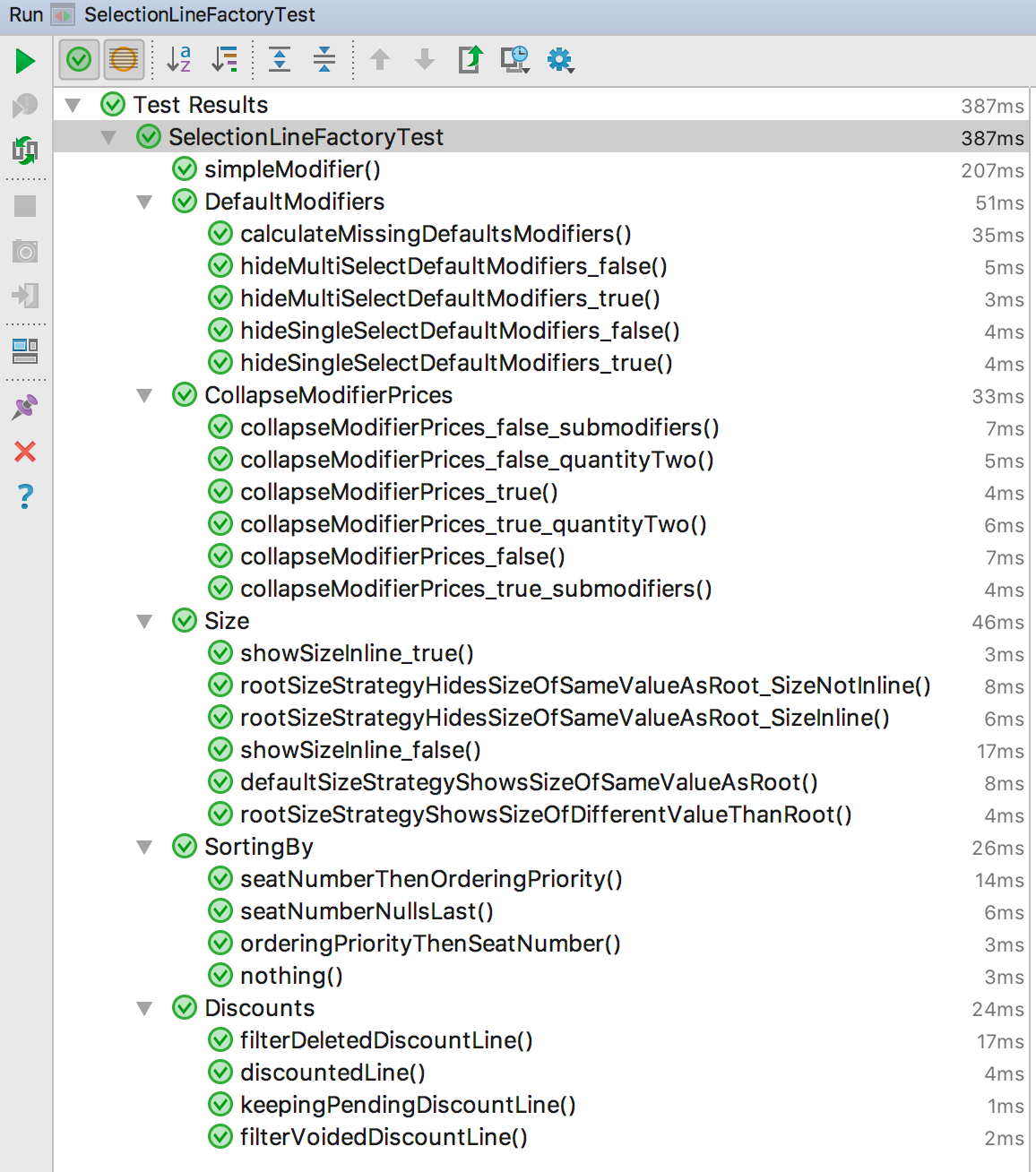
Nested Test classes
-
@TestInstance(PER_CLASS)
-
Unit Testing Best Practices
-
Mocking can be expensive
-
Especially mocking final classes
-
-
Instead of recreating mocks for each test method, just clear the mocks
-
75% performance improvement
-
Unit Testing Best Practices
@TestInstance(TestInstance.Lifecycle.PER_CLASS)
class DesignControllerTest {

    private val dao: DesignDAO = mockk()
    private val mapper: DesignMapper = mockk()
    private val controller = DesignController(dao, mapper)

    @BeforeEach
    fun init() {
        clearMocks(dao, mapper)
    }

    // takes 250 ms
    @RepeatedTest(300)
    fun foo() {
        controller.doSomething()
    }
}
Unit Testing Best Practices
-
Default parameters are great for testing
-
Can be harmful if overused in production code
Dissecting the stdlib
-
Kotlin written by those who know it best
inline fun <reified T> fromHashTable(
        hashTable: Hashtable<String, out Any>): T {

    return objectMapper.readValue(
            objectMapper.writeValueAsString(hashTable),
            T::class.java)
}
You don't need to go crazy with pure functional programming
-
I'm a huge fan and advocate of the functional programming style over the imperative style.
- Making everything immutable
- Thinking of your code in terms of data flow transformation, instead of mutable state that you update.
-
Arrow
- Pure functional programming library
- I'm happy with the amount of functional programming tools in the Kotlin stdlib
Make better use of Static Code Analysis
- Lots of options
- Detekt/Ktlint
- Can enforce checks at build time
- Can log a warning with a link to shared Intellij settings
- ReviewBots to comment on PRs
- Can automate lots of code review work
- Can get a lot of value from this
The Future
- Big focus on improving build times
- Immutability as a first class construct
- Plans for doing concurrency very well
Resources
Thank you
- Questions/feedback/comments
KotlinConf 2018
By Tom Hanley