Bioinformatics Team
MRC Clinical Sciences Centre
Thomas Carroll
The Bioinformatics Team.
- Tom Carroll
- Gopuraja Dharmalingam
- Sanjay Khadayate
- Yi-Fang Wang
- Marion Dore
- TBD
Websites
Where to find the team.
- ICTEM
- 2nd floor, MRC.
- Central aisle,
- Behind the printers.
Role
- Analysis
- Experimental design.
- Bioinformatics Infrastructure.
- Training.
- Bioinformatics Seminar Series - June 2016.
Text
Experimental Design
“To consult the statistician after an experiment is finished is often merely to ask him to conduct a post mortem examination. He can perhaps say what the experiment died of.”
Fisher RA, 1938
- Work closely with Genomics Team to help with design questions
- Replicate number.
- Sequencing depth.
- Sequencing strategy.
Nice example experimental design
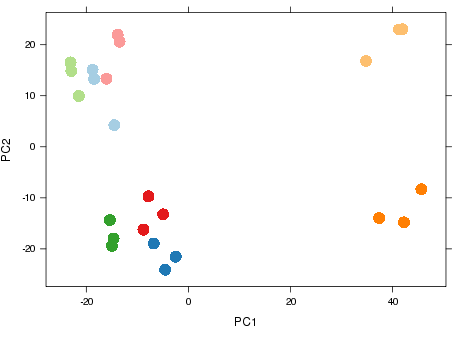
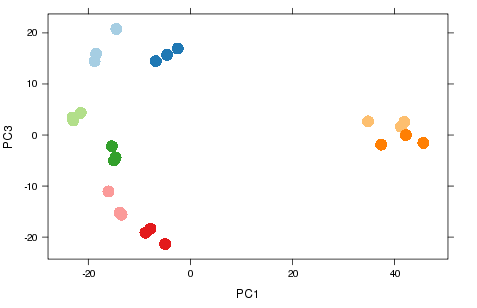
- RNA-seq experiment (2014)
- Graph shows major sources of variation.
- Samples from same groups close together.
- Samples from different experimental conditions separate.
Nice example of experimental design
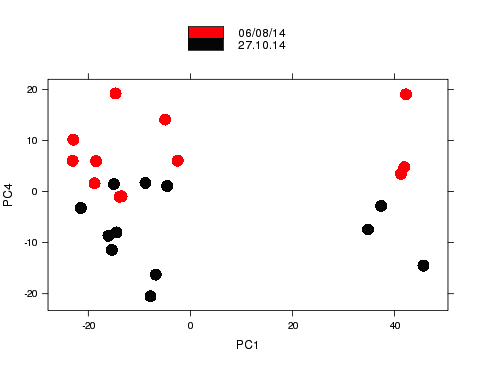
- Smaller sources of variance relating to other metadata.
- Samples group according to the day that RNA was extracted on.
- Known effects can be removed from analysis.
Analysis
- Initial data processing and QC.
- Advice and support as needed.
- Support throughout project.
Increased demand for long term support.
Authorships in 19 publications since 2014
12 in 2015.
Analysis support
- Increased use of high throughput techniques in projects.
- Greater use for bioinformatics in projects.
- Analysis across project lifetime or individual elements.
- Requires reproducible research.
Reproducible research
- Reproducible results from computational methods should be straight forward.
- Common problems.
- Version and software changes.
- Lack of analysis documentation.
rMarkdown
- rMarkdown converted R code to dynamic reports.
- Code, results and versions are reported within the same page.
- HTML allows for inclusion of dynamic elements.
A do it yourself guide
Project tracking
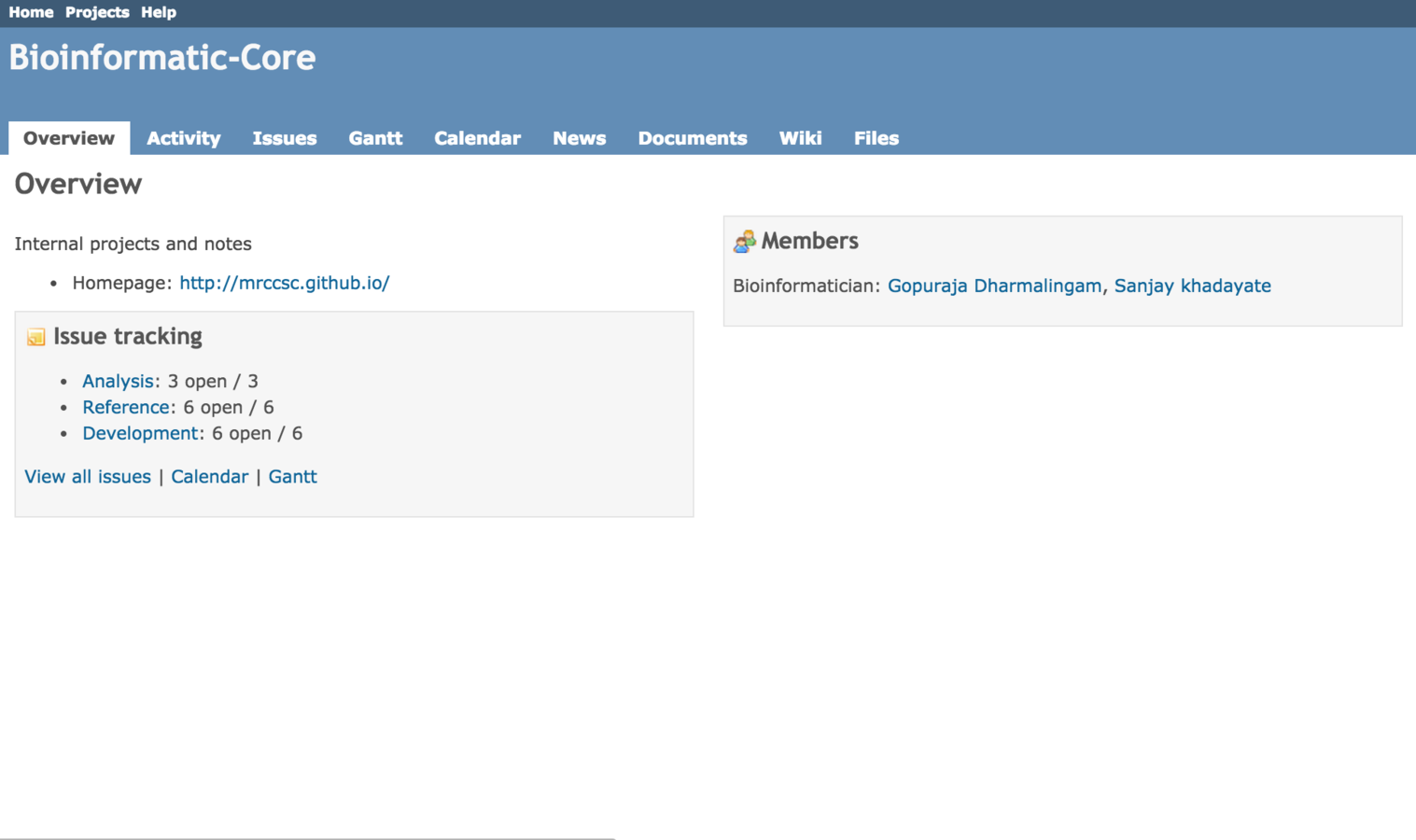
- Use Redmine software.
- Multiple user interface to record project information.
- Repository to version control scripts (SVN).
- Wiki for internal documentation.
Infrastructure
- Analysis pipelines.
- Data delivery.
- Software development.
ChIP-seq and RNA-seq
pipelines.
- Common analysis steps can be automated.
- Optimised for local resources.
- Reproducible and comparable.
- ChIP-seq and RNA-seq pipeline to automate alignment and quality control.
- Freely available for use or customisation on github
RNA-seq and others in the pipeline
- Internal RNA-seq pipeline
- Written in R.
- Easily installed, maintained.
- Allows Core to move between systems easily.
- Released soon.
- Genomics pipeline.
- R based.
- Automate basecalling and sequence QC capture.
- Development version on github site.
- ChIP-seq R pipeline.
- Basecalling to ChIP/RNA-seq QC.
UCSC genome browser
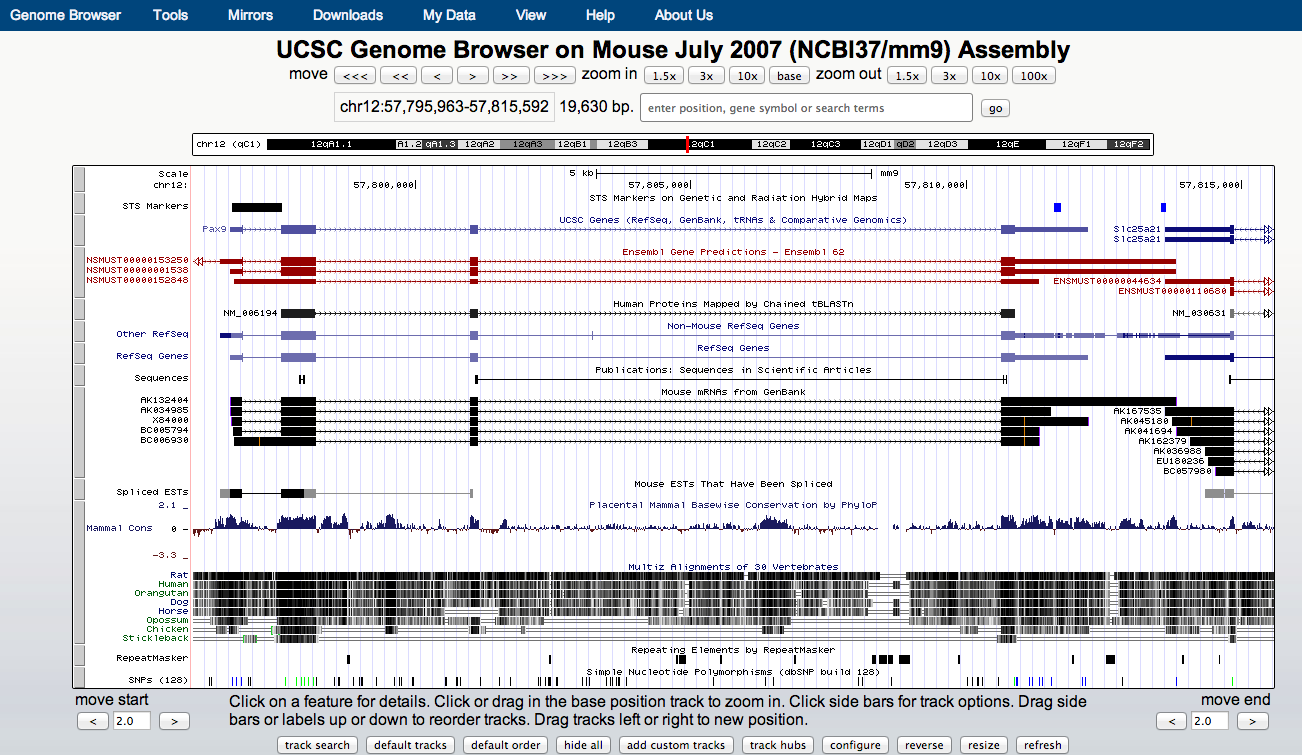
- UCSC allows for visualisation of a range of genomics data types.
- Public instances can be very slow.
- CSC public instance maintained by Bioinformatics team.
-
web: http://ucsc
FTP: ftp://ucsc
Software
- Develop and maintain software relevant to our work.
- R packages and javascript toolsets.
-
Release software to public (peer-reviewed) repositories.
- Collaborative feedback.
- Automated build reports and checking.
ChIPQC
- Lack of suitable R/Bioconductor quality control tools for ChIP-seq.
- Require methods to assess quality across high volumes of samples
- ChIPQC developed and tested on 500 public datasets.
- IGV is an popular alternate to UCSC.
- Allows for inclusion of per sample metadata and complex sample display types.
- Tracktables creates standalone and rMarkdown compliant tables.
Tracktables
- Visualising genomics data over regions of the genome.
- Allows for rapid generation of profiles and subsetting by IDs or other regions.
- Arithmetic operations between and within profiles allows for rapid, iterative investigation of hypotheses.
Soggi
- Peak calling in R is convenient.
- Many peak callers in R have unwieldy input and far from optimised.
- triform contains a reliable peak calling algorithm in need of optimisation for speed and long marks.
- MRC CSC took over maintenance of triform in 2015
triform
Training
-
Aim to develop courses to meet MRC Clinical Sciences requirements.
- R
- Python
- High throughput sequencing analysis.
CSC Bioinformatics Course
- Current and upcoming Bioinformatics training material can be found at our site
http://mrccsc.github.io/training.html
Training Collaborations
Develop and share courses between other Bioinformatics teams.
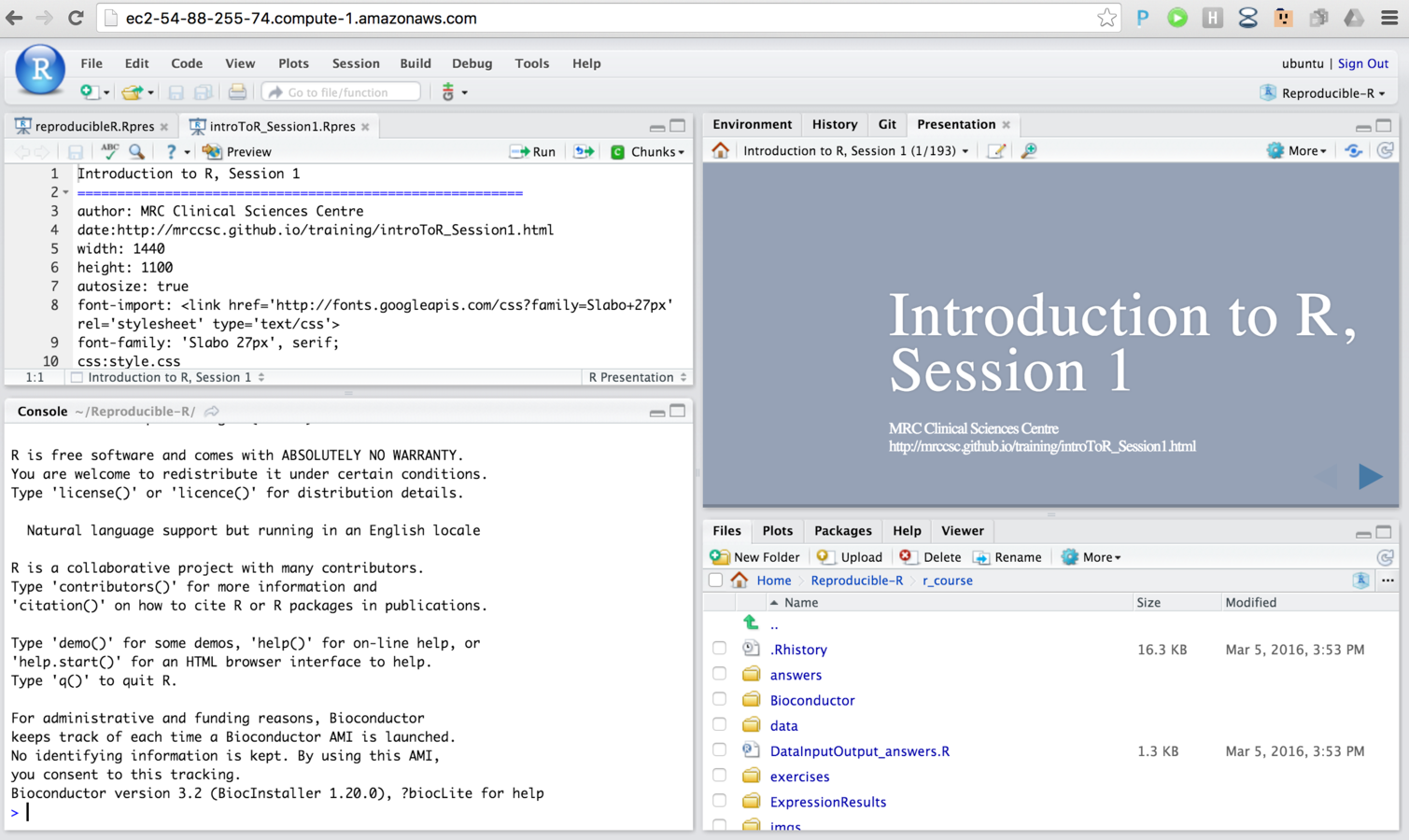
Training on the cloud.
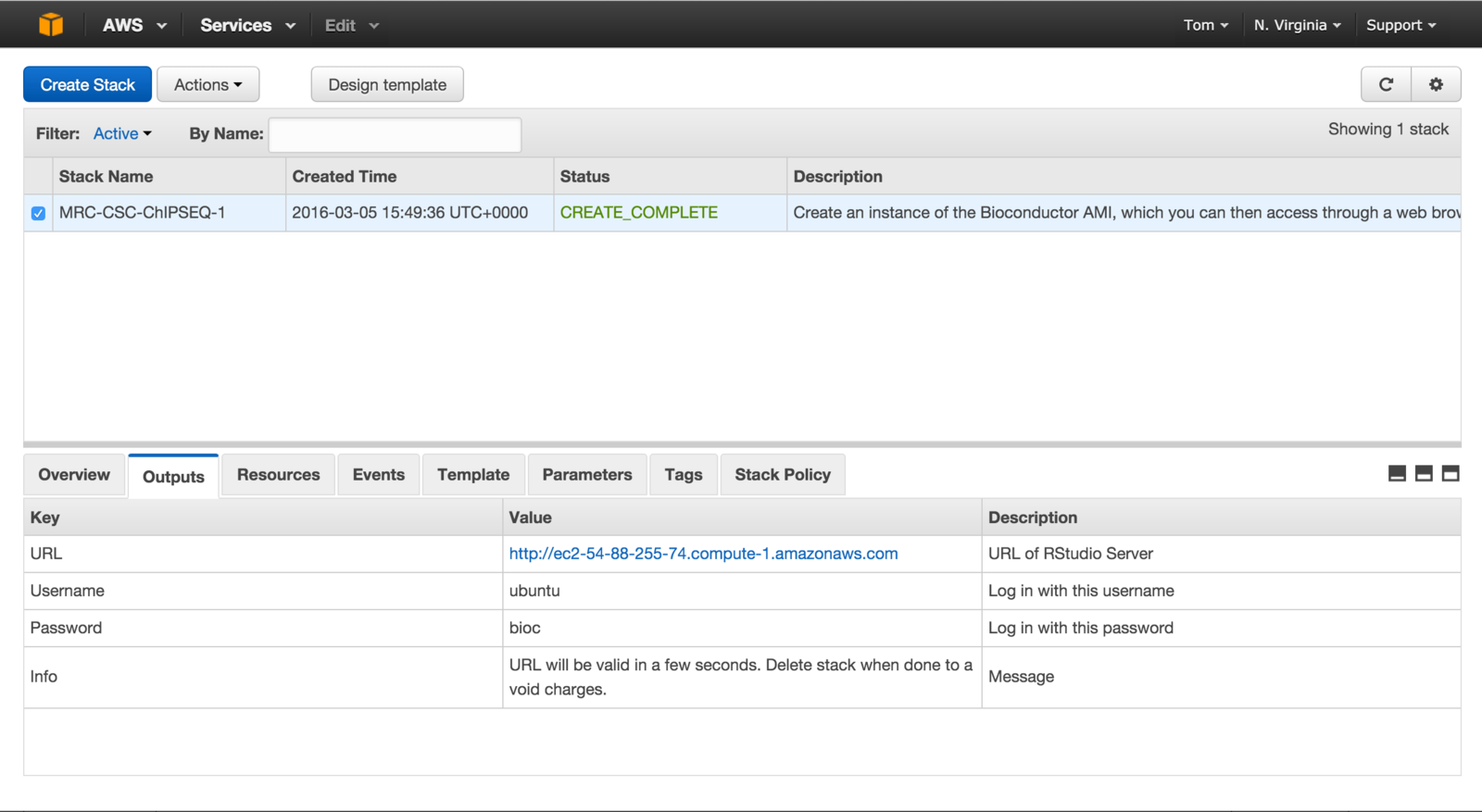
- Awarded grant from Amazon Web Services.
- Use virtual linux servers to host R and RStudio pre-loaded with course material.
- Allow for larger, real world analysis tasks during training.
- No need for dedicated classroom - train from anywhere.
Bioinformatics Seminar Series
-
Discuss methodology behind bioinformatics analyses.
- Laurent Gatto - Head of Computational Proteomics, Cambridge Proteomics centre.
- Simon Andrews - Head of Bioinformatics, Babraham Institute
- Starts again June 2016.
- More information on previous and upcoming speakers will be found on our website.
Have a great week!
Contacts and thanks
Bioinformatics Team
Tom - thomas.carroll@imperial.ac.uk
Gopu - gopuraja.dharmalingam@imperial.ac.uk
Sanjay - sanjay.khadayate@imperial.ac.uk
Yi-Fang - yifang.wang@imperial.ac.uk
Marion - marion.dore@imperial.ac.uk
Bioinformatics2016
By tom carroll