university writing 30:151
january 26, 2016
last week: summary, paraphrase, and quotation
different ways of integrating evidence
essentially, modes of restatement
plagiarism & academic integrity
clauses and sentence structure
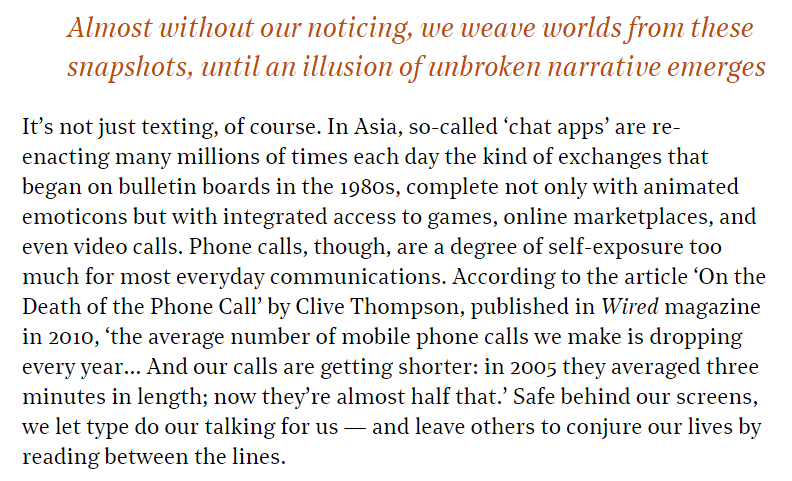
critical reading through "i type therefore i am"
reading goal: figure out what the author is saying
analysis & exposition
reading for information v. reading for "ways of thinking"
[VIA]
MINIMIZE facts and examples
what a text says, what it does, what it means
critical reading as a technique for discovery
steps
[ADAPTED FROM:
AMANDA GRAHAM]
1) the article as a whole
who?
basic knowledge of the author
what?
general impression of themes and issues
who is the audience?
[LINK]
is the medium significant?
2) read to determine purpose, direction, and structure
in this case, notice how sections are concluded
what is the main argument?
academic article v.
online magazine
what is the author's point of view?
content cues
title and subtitle
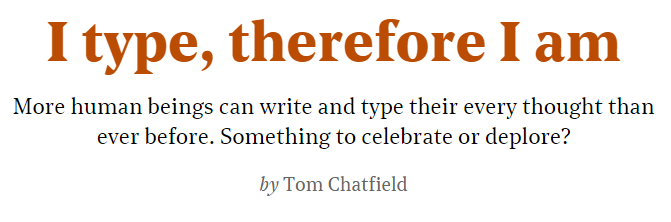
[LINK]
title?
descartes:
"i think, therefore i am"
chatfield:
adapting an age-old problem to a new set of circumstances
first section: dedicated to describing this new context
As a result of this, for the first time ever we live not only in an era of mass literacy, but also — thanks to the act of typing onto screens — in one of mass participation in written culture.
This sheer quantity is in itself something new.
CONCLUSION OF SECTION 1
define the problem as a question:
Bunn: "train yourself to formulate questions as you read based on whatever you notice in the text."
is the open and prolific nature of digital communication good or bad for how we conceive of ourselves and our identities?
once you identify the issue or problem, locate where the author responds explicitly to it
Yet language is a bewitchment that can overturn itself — and can, like all our creations, convince us there is nothing beyond it. In an era when the gulf between words and world has never been easier to overlook, it’s essential to keep alive a sense of ourselves as distinct from the cascade of self-expression; to push back against the torrents of articulacy flowing past and through us.
details take on a new meaning when you specify the thesis
Paragraph 2: "silence"
does chatfield come by his conclusion with intellectual honesty?
section 4, paragraph 2: "much to celebrate"
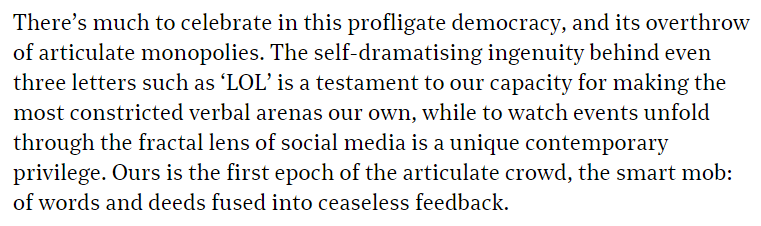
[LINK]
general tips for assignment prompts
[VIA]
1) focus on the verbs
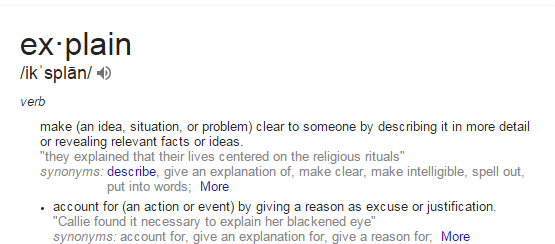
[Google]
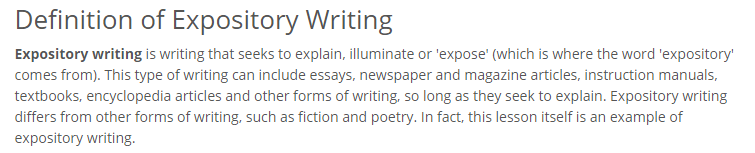
expository
expose
[VIA]
2) context and schedule
3) free-writing
4) clarification
how many sources?
summary or critical essay?
be explicit: what about this assignment is asking me to think critically?
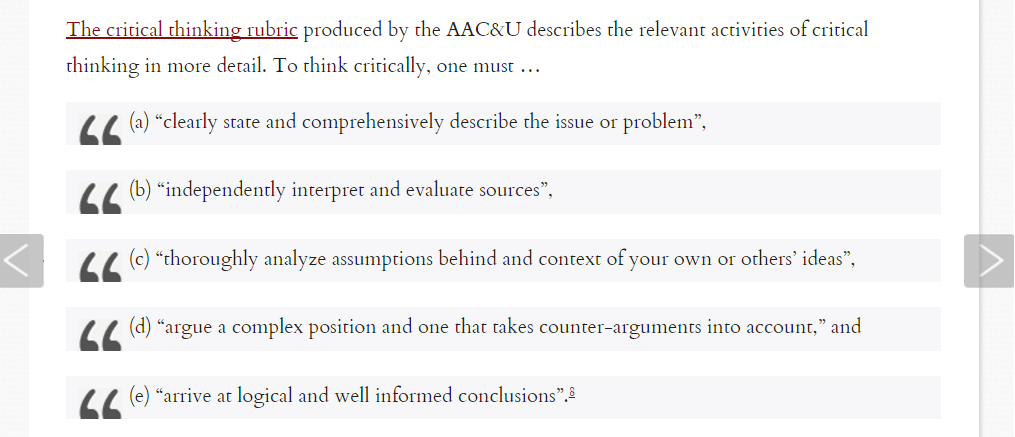
"habit of mind"
5) "rubric"
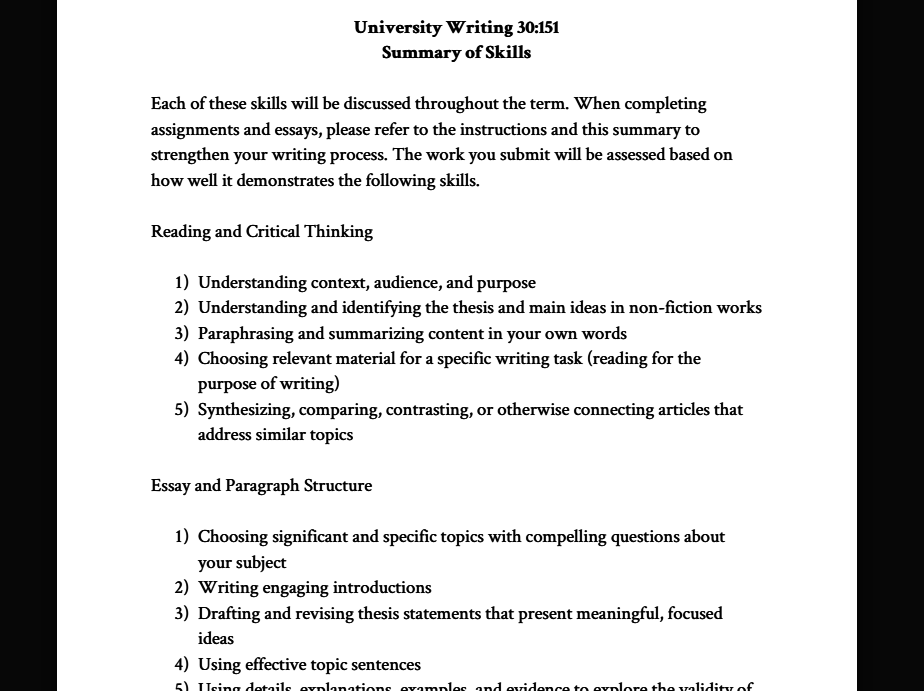
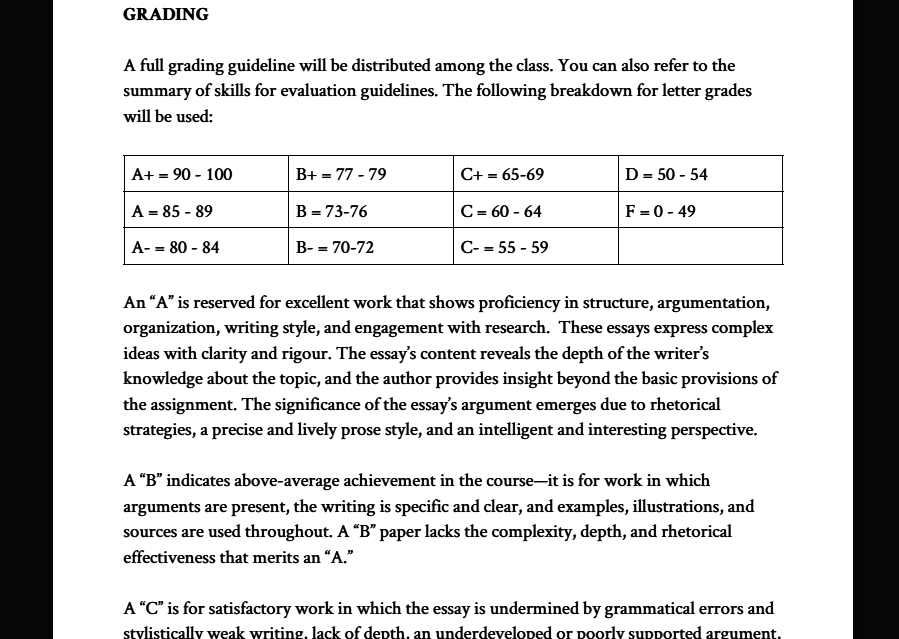
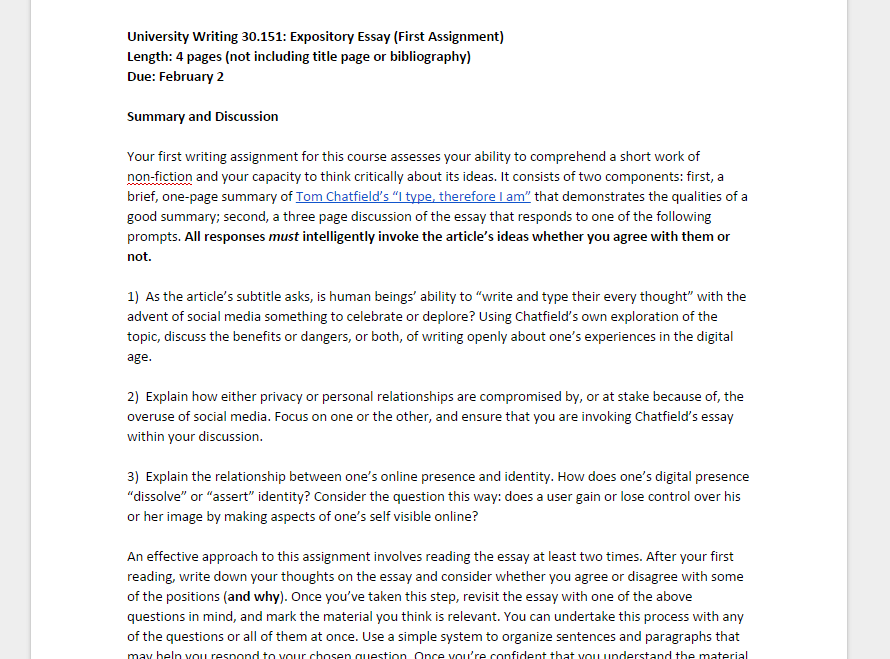
caveat: no rubric is completely transparent or "objective"
essay evaluation relies on judgement
learning to self-evaluate
10 minutes: free-writing and brainstorming
think and respond freely to the article and question #1
use the article to prompt further questions
use the question to explore and "expose" the article
paragraph structure
why start with paragraphs?
building blocks of the essay
microcosm of essay structure
"microcosm"?
a small thing that epitomizes or exemplifies a larger thing
transition sentence
// topic sentence
how is the argument progressing?
idea hook
paragraph hook
topic sentence
the paragraph's main idea
a "controlling" idea
topic sentence tells your reader the point of all the evidence
a "thesis statement" for the paragraph unit
an assertion or a claim that supports your essay's thesis
if i could transmit the paragraph's meaning in one sentence, what would i say?
connected to broader argument
how does this paragraph serve the broader point?
if it's unclear to you, it's unclear to the reader
recommendation: don't assume; make it explicit
expanding the paragraph
what else does a paragraph contain?
broadly?
materials that develop & support the topic sentence
more specific:
evidence
discussion
3 characteristics for effective paragraphs
1) unity
one main idea
all content works on the topic sentence's behalf
shows organization
shows discipline
helps the reader
second aspect of unity:
is the paragraph integrated / connected to previous and subsequent paragraphs?
thesis
2) coherence
as a technique
coherence is actively created
sentences are purposefully ordered and "bonded" together
coherence
=
readability
logical order
every piece fits: puzzle metaphor
consistent pov
transitional words / phrases
each sentence relates to the one it follows:
-
Specifies it
-
Clarifies it
-
Generalizes from it
-
Adds to it
-
Illustrates it
3) adequate development
5 steps
1) write a topic sentence
2) explain the idea
3) Give Examples (show)
4) explain the examples
5) complete the idea
make it relevant to your broader argument
</>
UW: Jan 26, 2016 (Critical Reading, "I type, therefore I am," Paragraphing)
By Trent Gill
UW: Jan 26, 2016 (Critical Reading, "I type, therefore I am," Paragraphing)
Our discussion on critical reading expands on our topics from week 3. We take a deeper look at the methods and strategies writers use to get more out of a text. Summarizing, paraphrasing, and quoting are used to present information in a new context, but critical reading is how we make sense of attitudes, ideologies, and patterns of thought in a complex work. We'll discuss Tom Chatfield's "I type therefore I am" and show how close reading leads to exposition, two essential tools for reading and writing in an academic context.