Quicksort:
art of analysis
&
Power of Randomization
MIT OpenCourse
Introduction to Algorithms, Lec 4
Tzu-Li Tai (Gordon Tai)
@ NCKU TechOrange
What will be covered
- Learn the Quicksort algorithm
- Today is going to be all about analysis !!!
- Further learn the Randomized Quicksort
Quicksort
DIVIDE: Divide A[p...r] into left/right partition according to a pivot value, so that elements on the left is smaller than elements on the right. Calculate the index of the pivot.
CONQUER: Recursively Quicksort the partitions
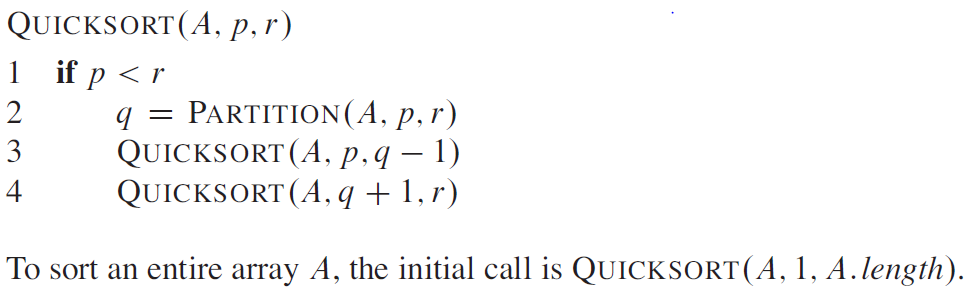
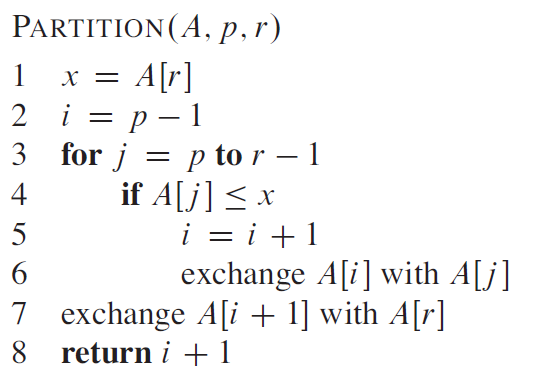
The partiTion
Looks hard...right?
Well... it's actually super easy
Try to love math
WHY?
Lecture 4 allowed me to realize
how fun algorithms can be when
combined with mathematics !!!
Where it starts to get fun:
Performance analysis
- Worst case
- Best case
- 亂七八糟 case
亂中有序 -
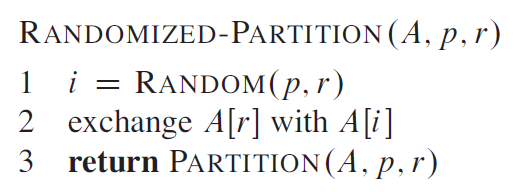
Randomized quicksort
Randomly select the pivot element (instead of always using the last element as pivot).
Remember to swap the chosen pivot with last element.
What's good about randomized quicksort?
- Independent of input ordering
- You might ask: what if we still always pick a bad pivot?
- That's caused by the random-number generator, not the input.
iT'S rANDOM.
wHAT CAN WE "EXPECT"?
What we did today...
- Learn a new sorting algorithm
- More importantly, we analyzed the algorithm
- We found out that the algorithm performs very bad on worst cases. However, it perform very well on some other cases.
What we did today...
- Used a "randomization" technique to eliminate dependency on algorithm input.
- By doing so, we can expect the performance of the randomized algorithm, no matter what the input is!
- This, is the power of randomized algorithms
EXTRA:
Designing your own algorithm -
Walking a maze
Quicksort - The Art of Algorithm Analysis
By Tzu-Li Tai
Quicksort - The Art of Algorithm Analysis
MIT OpenCourse, Introduction to Algorithms, Lec 4