Juan Miguel's Lesson
Grammar bank / Exam prep.
- Past simple, past perfect simple and past perfect continuous.
- Reported speech.
- Verb patterns (object + infinitive).
- Be allowed to vs. Let.
- Third conditional.
- Time linkers.
Past Simple
Una acción terminada, corta o puntual en un momento específico.
Past Perfect Simple
Una acción ocurrió primero en una secuencia.
Past Perfect Continuous
Duración o proceso antes de otra acción pasada.
- Usa had + V3 para lo que pasó primero.
- Si la acción duró un tiempo, usa had been + -ing.
- Simple: yesterday, last week, two days ago.
- Perfect simple: before, after, by the time, already, just.
- Perfect continuous: for, since, before, until, when.
Simple
Acción acabada en el pasado, en un momento específico - FOTO
Perfect Simple
Acción pasada que ocurrió antes de otra acción pasada - DOS VECES AL PASADO
Perfect Continuous
Acción en progreso en el pasado, que llevaba tiempo sucediendo antes de otra acción - PELÍCULA
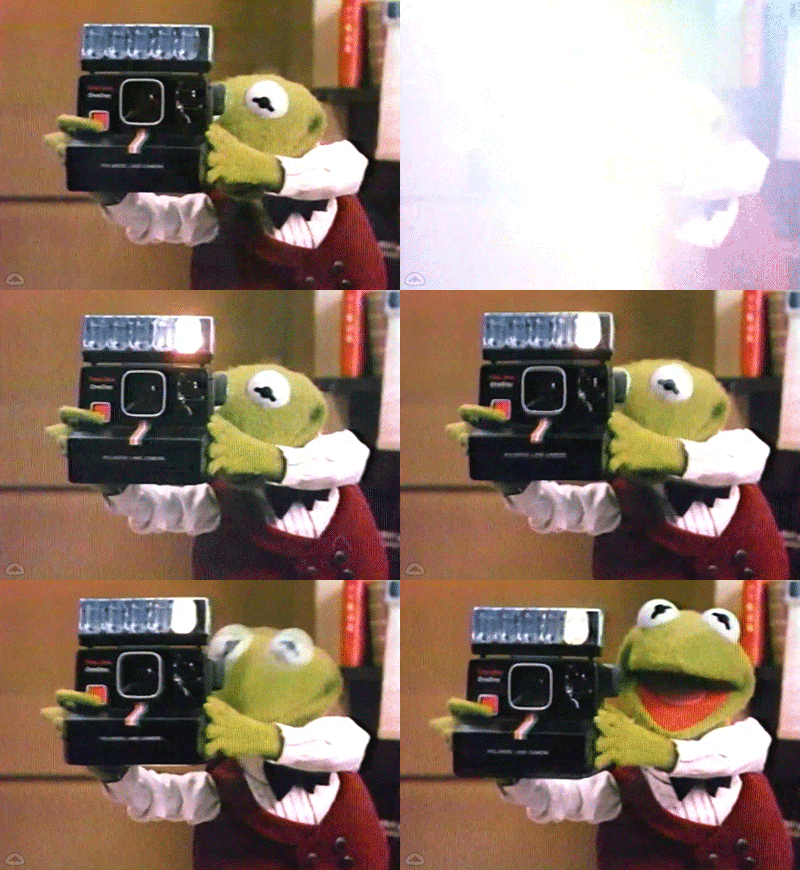
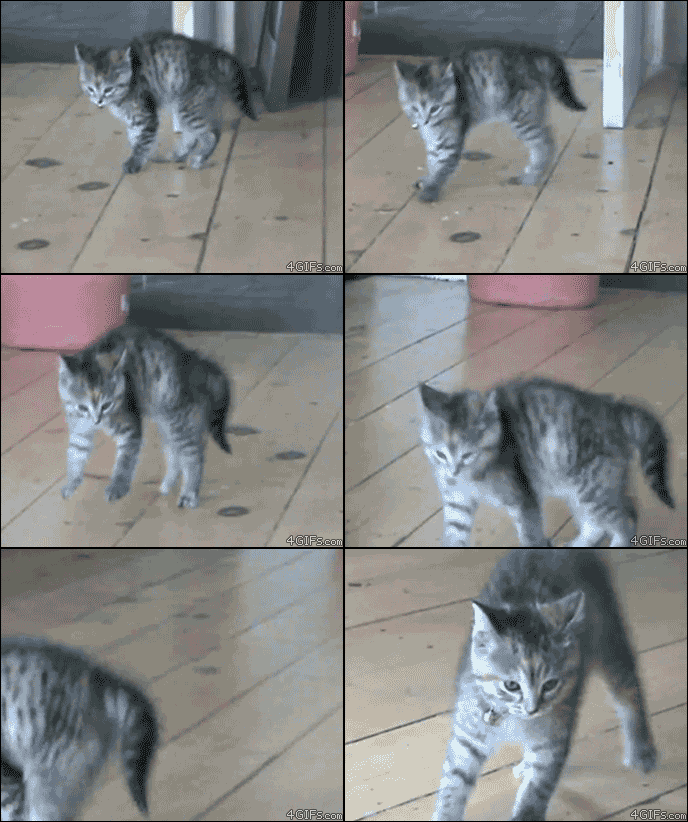
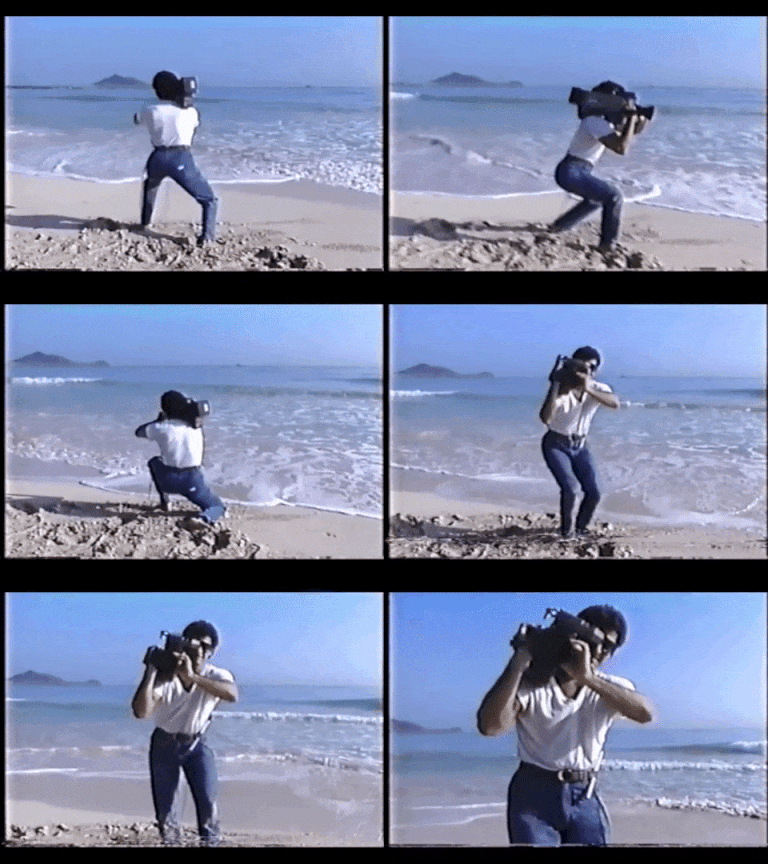
Be allowed to
More formal (permiso concedido/algo está permitido)
Be allowed to
More formal (permiso concedido/algo está permitido)
Be allowed to
More formal (permiso concedido/algo está permitido)
Let
Casual conversation (cuando tu das permiso a)
| WORD | Quien da el permiso | STRUCTURE |
|---|---|---|
| Be allowed to | Otra persona (tu lo recibes) | Be + allowed to + infinitive |
| Let | Tu das el permiso | Let + persona + infinitive |
Conditionals
Third conditional
If I hadn't eaten so much, I wouldn't have felt sick.
She wouldn't have been tired if she had gone to bed earlier.
I wouldn’t have arrived on time if I hadn’t taken a taxi.
If I hadn’t overslept, I wouldn’t have been late.
If you had trained harder, you would have won the race.
If clause
if + S + HAD + V3 (past participle) + C
Main clause
would/could/might + HAVE + (V3) + C
Imaginary situations in the past and their consequences.
Algo que YA ha pasado y, por lo tanto, NO podemos cambiar.
Reported Speech
Say
Énfasis en lo que se dice (las palabras en sí pero no a quien)
Tell
Enfocado en el receptor (a quién le dices algo)
Ask
Preguntas, peticiones o favores
Statements
Alguien dice algo
Commands
Alguien dice lo que debes hacer
Suggestions
Alguien da una idea o un consejo
Statements
Backshifting
Commands
To + Base verb // NOT + To + Base verb
Suggestions
Suggested + ING // Suggested + Should + Base verb
Reported questions
- When the direct question begins with a question word (who, where, how, when, etc.), the reported question is introduced with the same question word.
- When the direct question begins with be, do, have, can, should, etc. the reported question is introduced with if or whether.
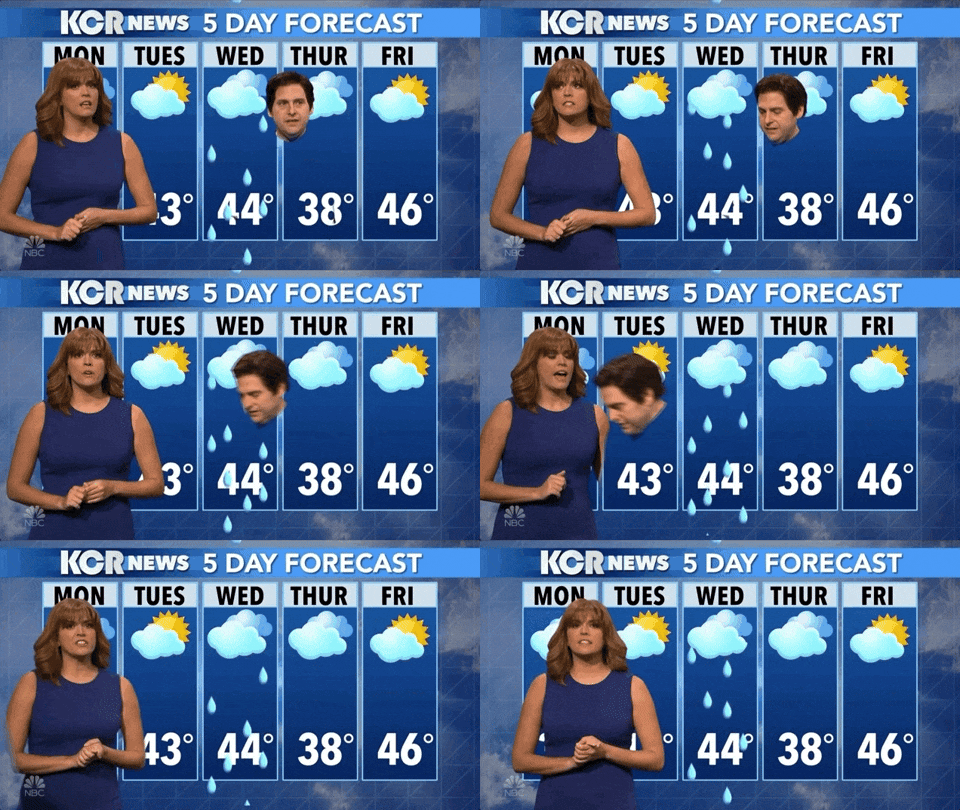
DQ: Can you tell me the weather forecast?
RQ: She asked him if he could tell her the weather forecast.
Suggestions
- We use a GERUND (ing) after suggest.
- We don't say the person we are talking to.
- Other verbs and times expressions are reported as usual.
DS: Let’s watch a movie
RS: He suggested watching a movie.
Commands
- We use to + infinitive or not to + infinitive
- Told: report stronger commands.
- Ask: more polite requests.
DS: Don't write on the table!
RS: They told him not to write on the table.
RS (Used to)
Used to NO cambia. Solo cambian los pronombres y, a veces, los tiempos del verbo principal.
RS (Verb patterns)
Verbo + persona + to + verbo
Cuando alguien le dice a otra persona que haga algo
| Advise/Warn | Convince | Order |
|---|---|---|
| Ask | Encourage | Recommend |
| Beg | Invite | Tell |
Time linkers
Words and phrases that indicate time help our listeners to understand exactly when things happened, happen, or will happen in our life!
While - AL MISMO TIEMPO
As soon as - JUSTO DESPUÉS
During - DENTRO DE UN PERIODO DE TIEMPO
By the time - CUANDO ALGO YA PASÓ
Until - HASTA ESE MOMENTO
When - EN EL MOMENTO EN QUÉ
Since - DESDE ESE PUNTO
Collocations
Two or more words that often go together. These combinations just sound "right" to native English speakers, who use them all the time. On the other hand, other combinations may be unnatural and just sound "wrong".
Have lunch/dinner...
Have a bath
Do homework
Do your hair
Take a break
Save money
Pay attention
Go abroad
Go crazy
Get ready
Get started
Get upset
Catch a bus
Expressions with make
We use make + object to talk about things that we produce or create
Make a difference
Make a mistake
Make a mess
Make a claim
Make fun of
Make a complaint
Make sure
Juan Miguel's Lesson. Grammar Bank: 4th Term Final Exam.
By Valentina Rodríguez Ramírez