









ACademic Integrity

Julie Morris, julie.morris@unb.ca

Cat Gracey, catherine.gracey@unb.ca

February 20th, 2025

Agenda

Scholarly Communications

The process by which scholars – academics, researchers, and students alike – publish or otherwise share the products of their research

  • It's both about where you publish (the readership and reputation of journals can be key factors) and what you publish (the quality of your research)
  • We'll discuss both of these sides today

Thinking about research integrity

  • Is this a good journal/conference?
    • Does it have a good reputation in my field?
    • Will my community of practice read/see it?
    • Will it be well-cited?
    • Am I in good company?
    • Is this a publisher of good repute?

Considering where to publish

Your supervisor will know a great deal about this topic!

  • You might be required to make your work OA (see next slide)

  • You might want your work to be OA (for greater visibility or to reach a particular audience)

The open access factor

TRI-Agency OA policy

  1. “Grant recipients are required to ensure that any peer-reviewed journal publications arising from Agency-supported research are freely accessible within 12 months of publication.”
  2. “Grant recipients can publish in a journal that offers immediate open access or that offers open access on its website within 12 months.”
  3. “Grant recipients can deposit their final, peer-reviewed manuscript [post-print] into an institutional or disciplinary repository that will make the manuscript freely accessible within 12 months of publication.”
  4. If your work is not published in an open access venue, you are required to share it in an open access repository, be it “institutional” or “disciplinary”.
  • Open Access?
    • Is this journal open access or not?
    • What does "hybrid OA" mean?
    • Am I under an OA mandate?
    • Why am I paying for publishing?
    • Do I actually need to pay for publishing?

Publishing with intention

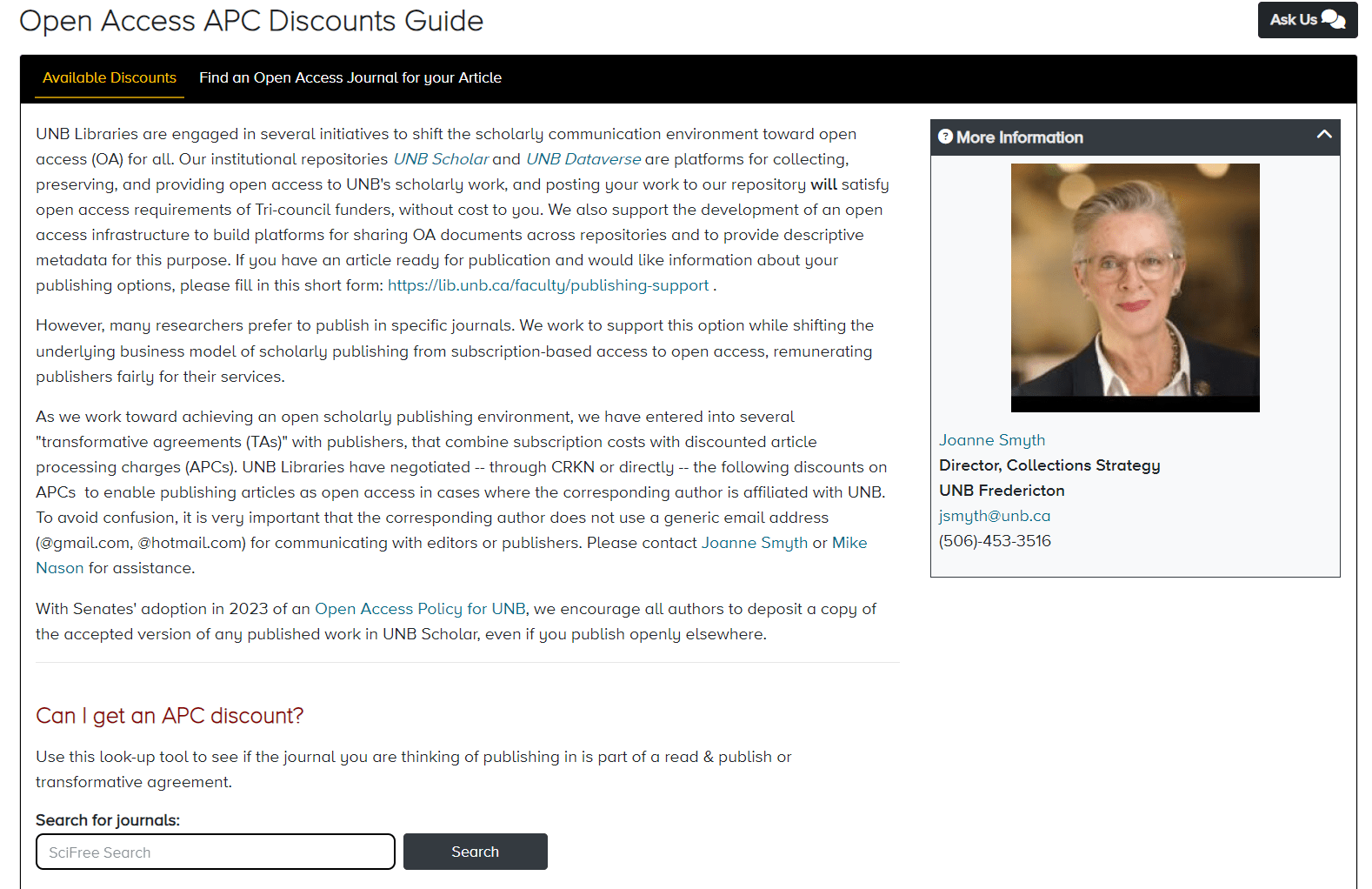
When you think of Open Access, you might immediately associate this with 'Open Access Journals' that charge you money to publish your work.

maintaining financial viability via apc

Pre-OA, publishers traditionally made their money via subscriptions (from libraries, other organizations, or individuals). When they make access free, they need to make money another way.

Therefore, many shift the cost from readers to authors themselves and charge them anywhere from $200 -$13,000 USD to make their work OA

A result of this is that you probably feel like open access requires you to spend money. Or that open access means having to pay an APC. This isn't true!

Self-archiving

(Green)

Publish your work in a 'closed' journal

Later, upload a version to a repository

Can require an embargo or alternative version

Free for both readers and authors*

Free OA Journals

(Diamond)

Some journals do not charge APCs

Funded, or volunteer run

Oftentimes society publishers

Free for both readers and authors

Utilizing discounts via UNB

APC waivers or discounts are applied

With specific publishers/journals

Need a UNB author (sometimes first or corresponding

Free for readers, low(er) cost for authors

Some free/low cost OA Options

*Not free for readers on the original publisher site, but a free version is available

Self-archiving

(Green)

Publish your work in a 'closed' journal

Later, upload a version to a repository

Can require an embargo or alternative version

Free for both readers and authors*

Free OA Journals

(Diamond)

Some journals do not charge APCs

Funded, or volunteer run

Oftentimes society publishers

Free for both readers and authors

Utilizing discounts via UNB

APC waivers or discounts are applied

With specific publishers/journals

Need a UNB author (sometimes first or corresponding

Free for readers, low(er) cost for authors

To learn more, come out to Mike Nason's talk next week!

*Not free for readers on the original publisher site, but a free version is available

In summarY:

The amount you spend is not directly correlated to the quality of the journal, and you don't have to spend lots money to get into a reputable journal

Cost (or lack thereof) is impacted by

  • Business model of the publisher
  • Geographical location of the publisher
  • Disciplinary norms
  • Saturation of the field

Before we move on... I have to leave you on a downer...

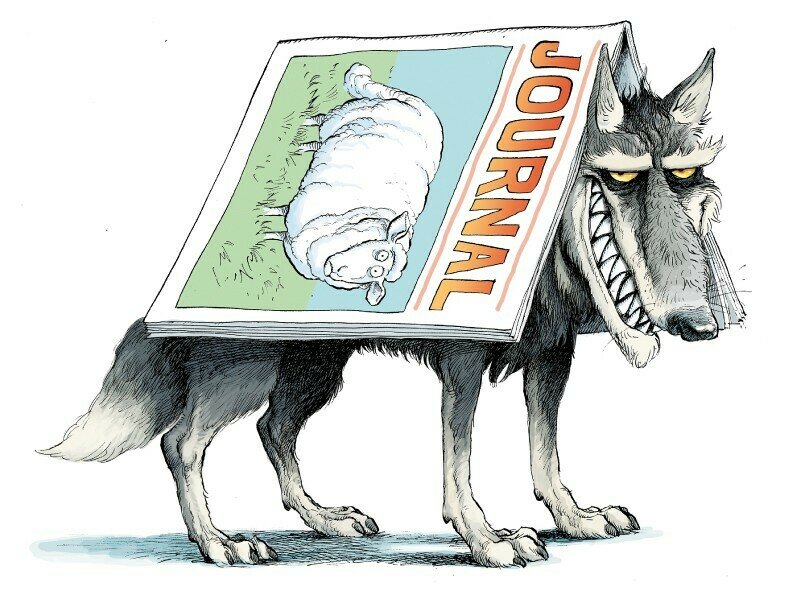
Some publishers know that they can charge authors for OA publishing, and they take advantage of this, without doing the expected associated work

Predatory/Bad-Faith Publishers

Lists exist, but they are not comprehensive/entirely accurate. Instead,

Look out for red flags:

  • Solicitation
  • Promise to publish
  • Very short peer-review
  • Lack of clear information on website
  • Lots of previous retractions

You want to avoid publishing in Predatory journals

This can damage your reputation, or call into question the integrity of your research

  • Ahead of your work being published, you'll be asked to sign a publication agreement (or copyright transfer)

  • This will lay out who owns copyright - and other rights

  • Do not just sign! Consider what rights matter to you, and feel free to connect with one of us about the agreement.

Author rights

If publishers hold exclusive rights to your work, they have the authority to license it for various uses, including AI training, and financially benefit from these deals.

– Dede Dawson, 2024

  • For access to their data to train their AI models with:

    • Microsoft paid Taylor & Francis $10 million

    • An unnamed company paid Wiley $23 million (with another $21 million coming soon)

  • Authors did not explicitly consent to this, but most had signed their rights away
  • Authors did not see compensation for this, and many likely paid to publish their works

Why this matters

Scholarly Profiles

Scholarly Profiles

  • Kind of like a CV
  • Facilitates collection/analysis of metrics and citations
  • Connects researchers with other researchers, or research

Publications

Funding

Degrees

Projects

Credentials

Employment

Contact info

Supports attribution and visibility of:

  • Grants
  • Research
  • Scholarship
  • Creative Works

Social Media

Research Impact Metrics

what are metrics?

  • Speaks to reach, impact, and significance of research outputs
  • Quantitative measures about research
  • Available at the author level, article level, or journal level

Example use cases:

  • Professional assessment
  • Grant applications
  • Institutional impact ratings

bibliographic databases

Examples

Articles in scholarly journals

Monographs

Research Reports

Preprints

White papers

Position papers

Posters

Theses and dissertations

Conference papers and presentations

Multimedia works

Blog posts

Data sets

PUblish or Perish

Pressure on academics to publish quantity, not quality

Less intrinsic motivation

May contribute to more bad faith publishing

Fewer publications about negative results in science

Quantitative Approaches

Author Level

Number of publications

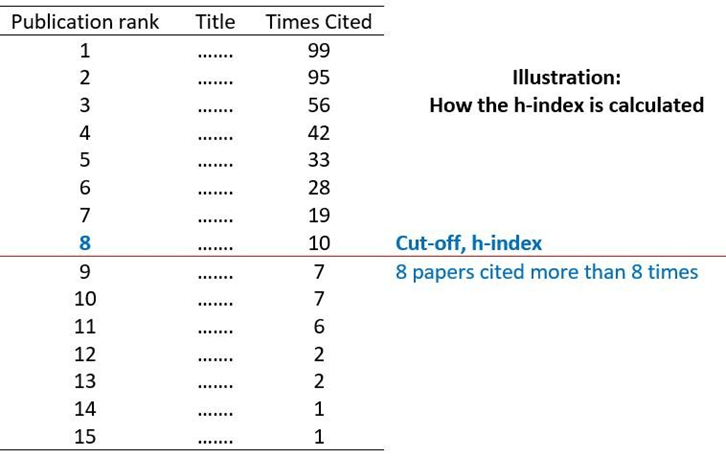
H-index, G-index, i10-Index, m-index, Py-index, etc.

h-index

Quantitative Approaches

Citation frequency and rate

Article Level

Field citation ratio

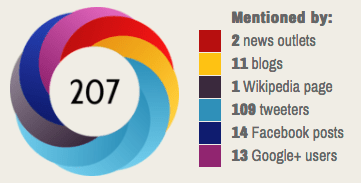
Altmetrics

Quantitative Approaches

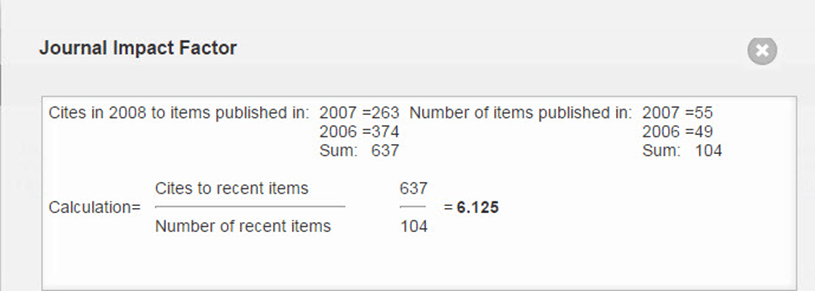
Journal Impact Factor (JIF)

Journal Level

Percentiles

Eigen Factor

Cite Score

Journal Impact Factor (JIF)

Evaluation

Used for professional assessments, and department evaluation

Impact

Determines relevance and impact

Ranking

Method of ranking journals based on number of citations

÷

Total number of times journal article was cited during last 2 years

Total number of citeable articles in the journal during last 2 years

=

JIF for a particular year

Journal Impact Factor (JIF)

Responsible use of metrics

Leiden Manifesto

  • Guides responsible use of metrics in bibliometrics

declaration on research assessment

  • Recognizes the need to improve the ways in which the outputs of scholarly research are evaluated

Sociology of citations

  • Gender bias
  • Racial bias
  • Self-citation

Why does it all matter?

Inspires intentional consumption of research and participation in the scholarly publishing ecosystem.


Academic Integrity and Artificial Intelligence

  • Academic Integrity as a Student

    • UNB Policies on AI

    • Acknowledgement vs Citations

  • Academic Integrity as a Researcher
    • Publisher/Funder Policies on AI

We'll briefly cover both of these points today:

Academic integrity as a unb student

The current Unb Academic Integrity policy doesn't mention ai

This is likely to change very soon (the new policy is going to Senate soon)

Academic Integrity policy

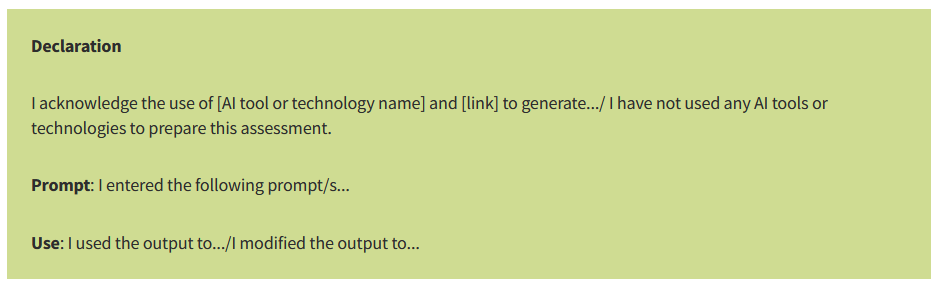
What does this mean for you?

You cannot pass off work done by AI as your own

You must acknowledge when you use AI

You must defer to your professor's guidelines on AI use

1.

2.

3.

  • A statement indicating how someone/something has helped you

Acknowledgement

  • For an information source 
    • AI is not a valid information source

CItation

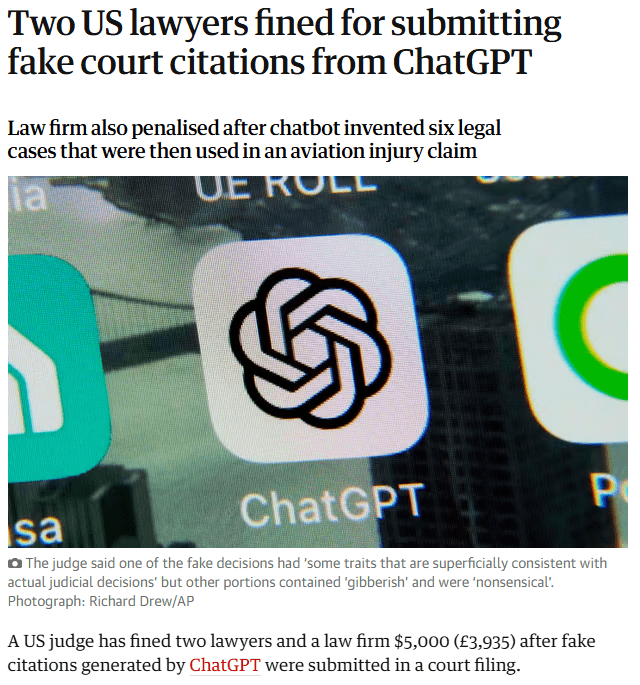
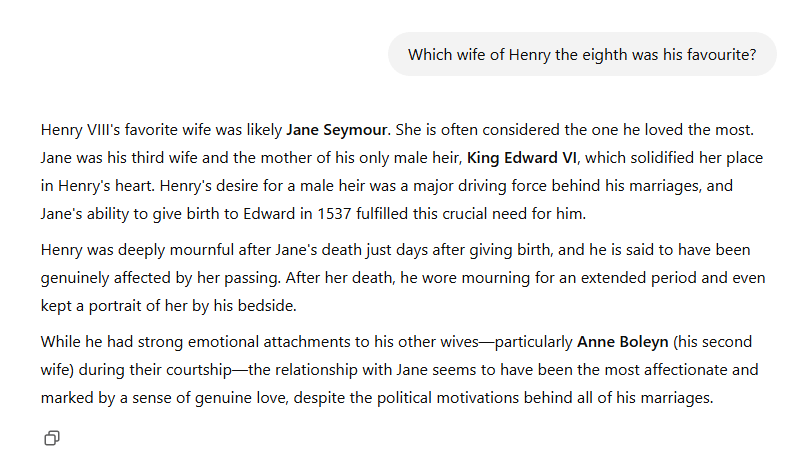
Generative AI is stringing together words based on predictions, it has no concept of truth, meaning 'hallucinations' or mistakes can happen.


AI Information Source

The above may or may not be true, but it's hard to evaluate without sources. Was this answer generated based on academic expert opinions, or people discussing The Tudors on Reddit?

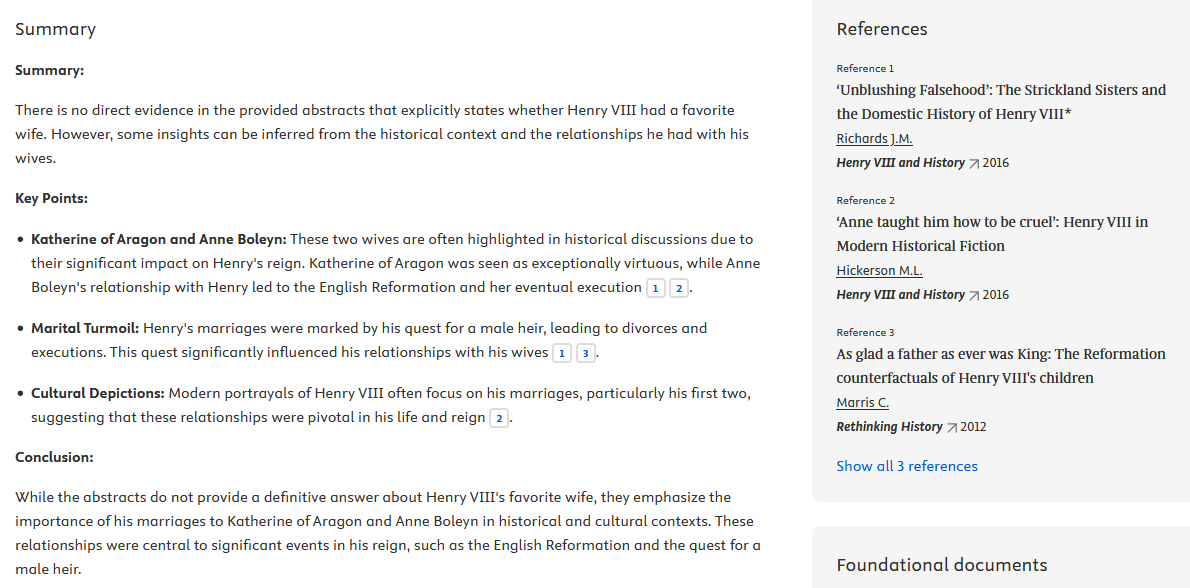
If it can search (which some tools do not), and it can provide references, you should be using those references in your work, rather than citing the tool itself. See below an example from Scopus AI.

AI Information Source

  • Unclear training data (which makes true attribution impossible)

  • Biases or skews in training data that result in harmful outputs

  • Steals clicks from real authors

  • Summaries based only on titles/abstracts for paywalled items (cough, cough, many academic articles)

Other Concerns on AI as an Information Source

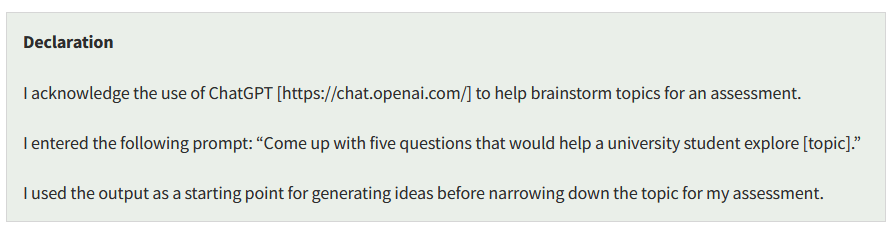
So how do I acknowledge?

If you must cite, see the Academic Integrity Guide

As a UNB student, you are subject to the processes outlined in the Academic Offenses Document, and penalties can include:

  • A failing grade on the assignment
  • A failing grade in the class
  • Suspension 
  • Withdrawal from the university

The exact penalty depends on the case, and whether it is a first, second or third offense. 

Repercussions of academic misconduct as a student

Academic integrity as a Researcher

As we previously covered, where you publish matters for your reputation.


Additionally, what you publish is incredibly important. In addition to the peer-review process, your colleagues may read your work so you want to put your best foot forward. This requires both high-quality work and transparency about your process. You do not want your work to be put into question!

Reputation as a researcher

  • GenAI can be used in the preparation of grant applications if authors:
    • Ensure information is true, accurate and complete
    • Properly acknowledge/reference information*
    • State if and how GenAI has been utilized in developing their application, and follow all instructions specific to each funding opportunity

* Remember to go back to the original source

Grant writing (Tri-Agency)

  • Publicly available GenAI cannot be used for evaluating grant applications
    • These tools could result in breaches of privacy and the loss of custody of intellectual property
  • CIHR has banned the use of AI tools, including those that transcribe/summarize spoken words, in meetings focused on peer-reviewing funding applications.

Grant Evaluation (Tri-agency)

  • What you are/aren't allowed to do depends on the publisher/journal (mostly)
  • Generally speaking:
    • AI cannot be listed as an author on a paper
    • Unacknowledged AI use is not acceptable
    • Publishers will encourage you to submit a disclosure statement of how AI was used (if allowed)

Manuscript preparation

  1. Substantial contributions to the conception or design of the work; or the acquisition, analysis, or interpretation of data for the work; AND
  2. Drafting the work or reviewing it critically for important intellectual content; AND
  3. Final approval of the version to be published; AND
  4. Agreement to be accountable for all aspects of the work in ensuring that questions related to the accuracy or integrity of any part of the work are appropriately investigated and resolved.

What is an author?

  • Most publishers ban the use of GenAI tools for peer-review purposes, because:
    1. Peer Review is meant to be a confidential process, and inputting work into AI tools violates this
    2. While AI can do lots of things, it cannot replace the expertise and knowledge of seasoned researchers 

Peer-review

This is a little bit more complicated because you answer to funders, publishers and the greater research community, not just UNB. Consequences may include:

  • Retraction of your articles
    • Drop in citations
    • Loss of reputation
  • Removal of awards or funding opportunities
  • Job loss
  • Degrees revoked

Repercussions of Academic Misconduct as a Researcher

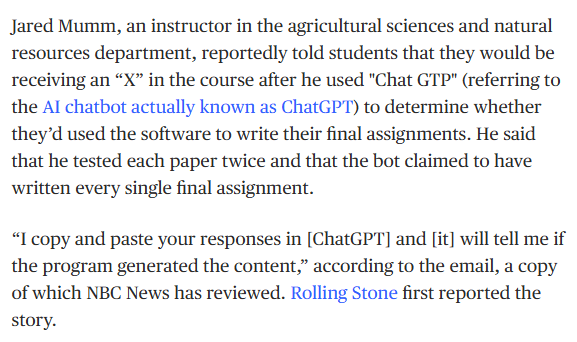
  • Not 100% accurate (or even close to that)

  • You should aim to protect yourself from false accusations of AI use

    • Keep previous versions of works

    • Turn on track changes

    • Utilize other tools to illustrate your work (Zotero)

    • Avoid inputting your work into GenAI tools 

AI Detection Tools

Questions?

AI Academic Publishing Workshop Series

By Catherine Gracey

AI Academic Publishing Workshop Series

  • 129