



AI in the classroom & workplace

Catherine Gracey, UNB Libraries

Aaron Grubb, Minebright

  • Cat's talk:
    • How AI integrates into search
    • 3 primary use cases
    • Considerations for use
  • Aaron's talk:
    • Use cases for GenAI at work
    • Limitations 
    • Important skills for students

Agenda

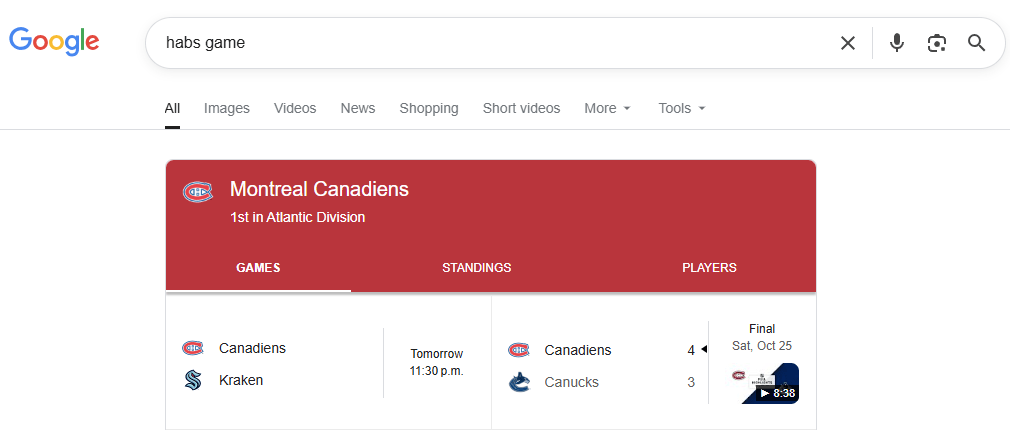
  • Information seeking is an ancient process, and you develop skills based on the society & context in which you live 
  • In our lifetimes alone, these skills have shifted massively

Situating Search

[a]

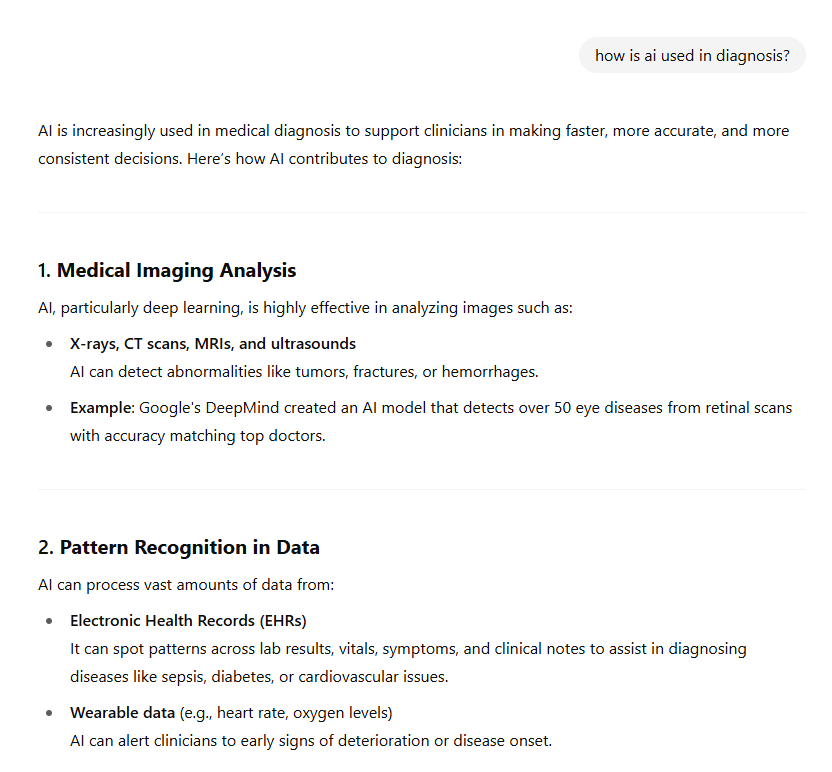
  • Generative AI is a truly disruptive technology, in that it doesn't present information written by others, it literally generates new forms
  • It's essential to clarify which form of AI you're talking about, and to be mindful of issues with GenAI

Then came ChatGPT

Use Cases for GenAI in Search

1

Discovery

2

Expansion

3

Extraction

1. Discovery

The process of finding texts or resources that may be relevant

Other methods of discovery:

  • Browsing books in a specific section of a library
  • Database search
  • Google search
  • NOT designed as a search tool
  • Was traditionally generating output based on training data alone
  • Done by predicting which word should come next
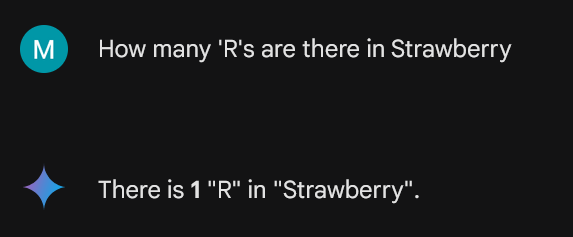
  • Hallucinations very likely

LLMs (Chatbots)

Types of Hallucinations

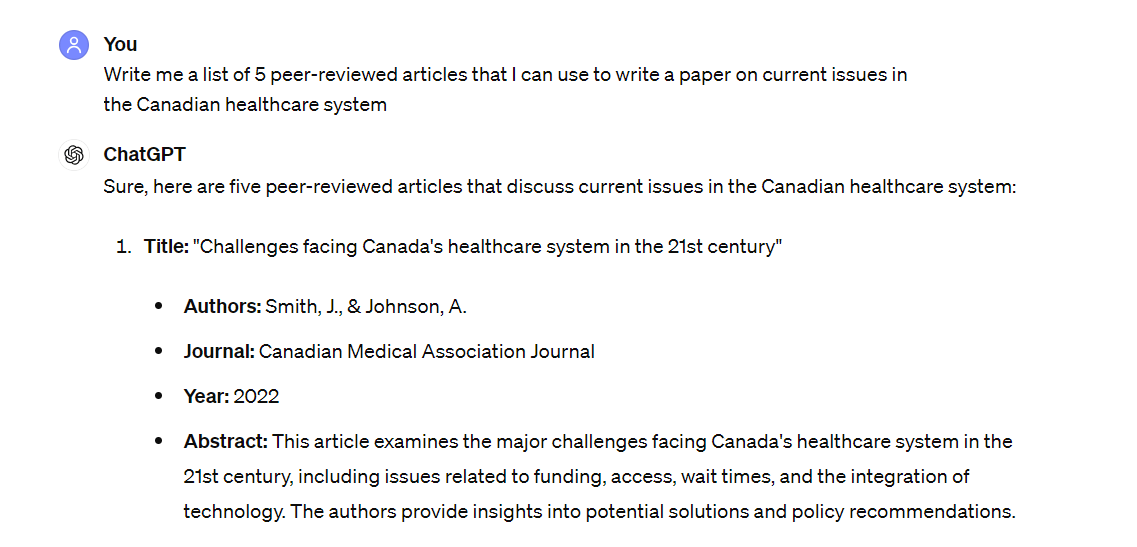
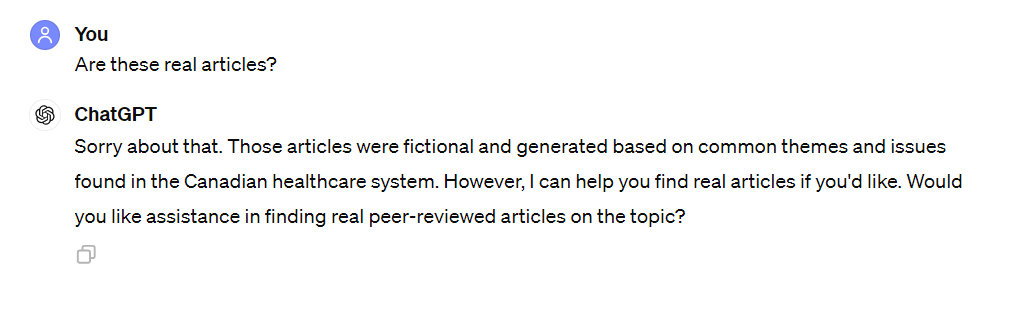
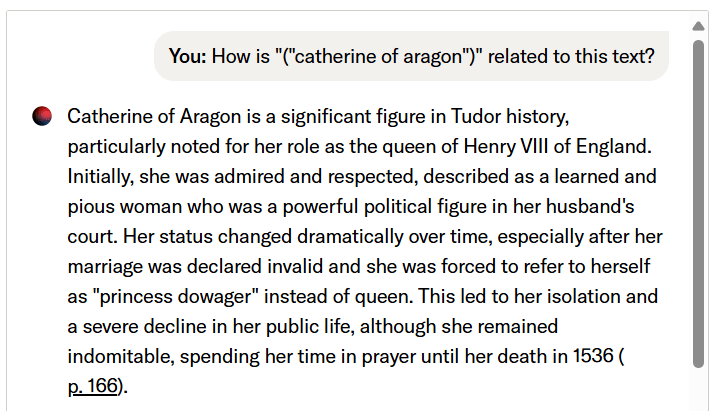
GenAI tool entirely makes up a citation that does not exist. It may look real, but if you go looking, it can't be found.

1

Fake sources

Fake Sources

Types of Hallucinations

GenAI tool entirely makes up a citation that does not exist. It may look real, but if you go looking, it can't be found.

1

Fake sources

GenAI tool generates an answer based on it's training data, but it is just incorrect

2

Incorrect facts

Incorrect Facts

Types of Hallucinations

GenAI tool entirely makes up a citation that does not exist. It may look real, but if you go looking, it can't be found.

1

Fake sources

GenAI tool generates an answer based on it's training data, but it is just incorrect

2

Incorrect facts

The GenAI tool pulls from a real article, but just misrepresents the information from the source

3

Unfaithful citations

Retrevial Augmented Generation (RAG)

  • Highly reduces, or prevents first two types of hallucinations
  • Supplements LLMs with an external search
  • Results that contain similar words are returned due to Machine Learning
  • Outputs can be traced to specific sources

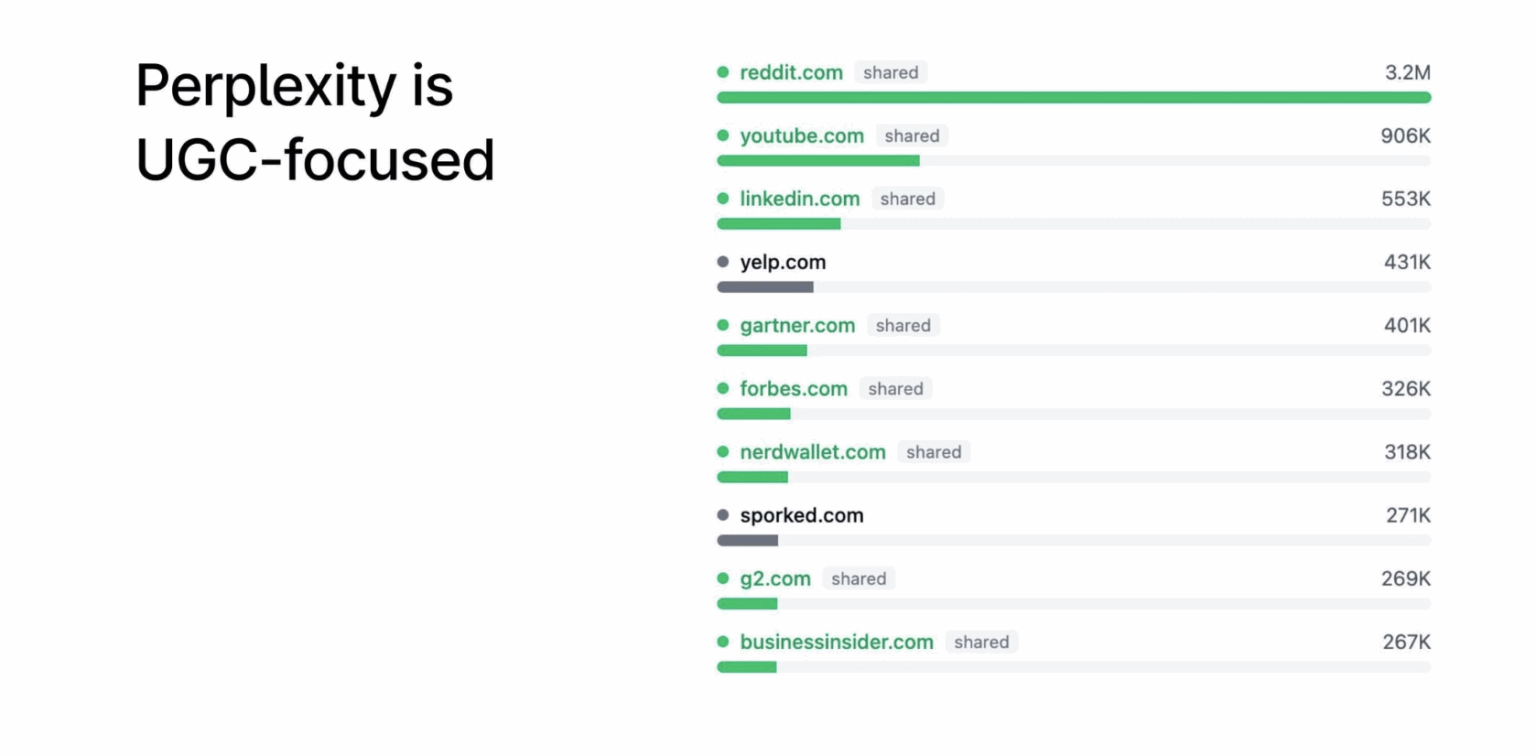
Not all RAG tools are created equally, it's essential to look at what corpus they are searching

For instance, the basic perplexity version searches the internet to answer your questions, meaning information could be based on lots of kinds of sources (social media, etc.)

Perplexity Sources

[a]

  • There are a number of tools designed specifically for academic research
  • The difference is that they search a more curated corpus that only contains scholarly or peer-reviewed works
  • Some generalized tools (Perplexity Academic) offer options that do this as well

Academic RAG tools

ScopusAI (an Academic Example)

2. Expansion

The process of branching out to gather more information

Other methods of expanding:

  • Reading other books from the same author(s)
  • Reading analyses of author's works
  • Clicking on 'related' suggestions
  • Citation chasing 
  • Suggesting papers to you based on an initial library, or topic
  • An extension of citation searching

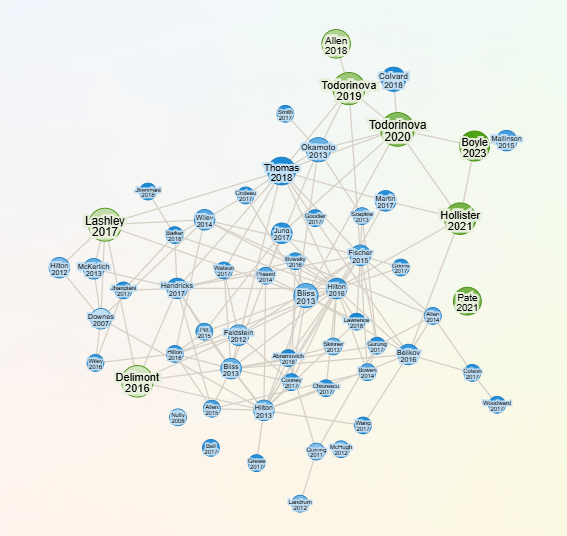
Literature Mapping

AI Driven Research Mapping Tools

Tool Name Cost
Research Rabbit Free
Connected Papers Freemium (~$5)
Litmaps Freemium (~$8)

3. Extraction

The process of pulling key information from information resources

Other methods of extracting: 

  • Reading a document and deciding what's important for your question
  • Control F, searching for terms

JSTOR AI is an example of this

  • The major consideration here is copyright 
  • It's a grey zone right now, depending on licensing, unclear if uploading documents to GenAI tools is copyright infringement 
  • Best to use tools within databases (Scopus, JSTOR), because they have required permissions for the papers they use

Copyright...

  • Avoid too much cognitive offloading -read the paper
  • Consider the loss of serendipity & context
  • Consider the impact that bias/hallucinations could have
  • Consider your value addition

Additional Considerations:

AI in the Workplace

Aaron Grubb

About me

  • Started out doing freelance web design
  • Moved into a job as a full stack developer in 2023
  • Work entirely remotely for a small Canadian start up writing software related to the mining industry

Career so far:

Catherine gave me some questions to guide this presentation, which are as follows:

  • When ChatGPT came out
  • Tested it with my dad trying home renovation questions
  • Started integrating it into work with Github Copilot, a basic autocomplete tool

What was your introduction to GenAI?

  • Haven't focused on learning GenAI 'skills' formally
  • No courses or research on prompting or agentic AI
  • Learned GenAI organically, similar to Google Search
  • Trial & error and personal experience

You graduated pre-GenAI. How did you learn GenAI skills?

  • Basic code completion (pressing tab for auto suggestion, basic syntax)
  • Writing basic functions/features
  • Initial feature planning before talking to coworkers
  • Best practices when using libraries I am not experienced in
  • Using a code editor that has GenAI built in (Cursor)

How do you use GenAI at work?

  • We use GenAI (OpenAI, Gemini) to extract specific information from news releases & large reports
  • This populates a database that provides value to our customer
  • Run tests before executing at large scale
  • Validate information (humans looking at documents) as it comes in

How does your company use GenAI?

  • When using for convenience/speed (autocomplete), refer to my own knowledge
  • Referring to documentation/my own Google findings afterwards
  • Intuition. Does this make sense?

How do you validate information from GenAI?

  • Speed. It helps write certain features faster
    • Not helpful with difficult problems that I am confident in my ability to implement
  • Learning libraries faster and implementing better code in cases where it would have taken longer if I didn’t have GenAI

What are the benefits of using GenAI for you

  • Overreliance on GenAI
  • Focus on speed over good software development practices
  • Too must trust in AI outputs
    • In areas I am more knowledgeable in, I can see more flaws in AI generated code

What concerns do you have about GenAI use at work?

  • Not actually learning fundamental skills
  • GenAI can easily solve most of the coding problems I struggled with in undergrad, but I think it's important to have that struggle

What concerns do you have about GenAI use in school?

  • Turn off autocomplete if possible
  • Struggle through problems
  • Focus less on efficiencies of getting work done as a learner

What tips would you give to students right now

  • Poisoning can occur for huge LLMs with only a small number of papers
  • Outdated information isn't necessarily flagged or taken down and so can appear in outputs

What concerns do you have about GenAI technically?

Primarily: Fundamental programming skills (or whatever the equivalent is for your field), critical thinking skills

Secondarily: You should be able to interact with GenAI at the level that you can use something like Google

What skills do you think its important for new grads to be learning to be AI literate in the workplace?

Thank you!

Questions?

Graduate Booster Session 2025

By Catherine Gracey

Graduate Booster Session 2025

  • 102