How to write your own (fake) Vulkan Driver
Taking Mocking to the Moon: A testing story
By Charles Giessen
Who am I?
Charles Giessen
I work at LunarG, working on tooling and ecosystem for the Vulkan API
I primarily focus on the Vulkan-Loader but also work on Vulkaninfo and vk-bootstrap
You might remember me from a 2019 lightning talk about Vulkaninfo...
What is Vulkan?
Its a low level, explicit graphics API
Think of OpenGL or DirectX. Same thing, different API
Made by the Khronos Group, who also make OpenGL
What is the Vulkan-Loader?
- Library which is the heart of the Vulkan Ecosystem
- every (desktop) Vulkan application goes through the loader
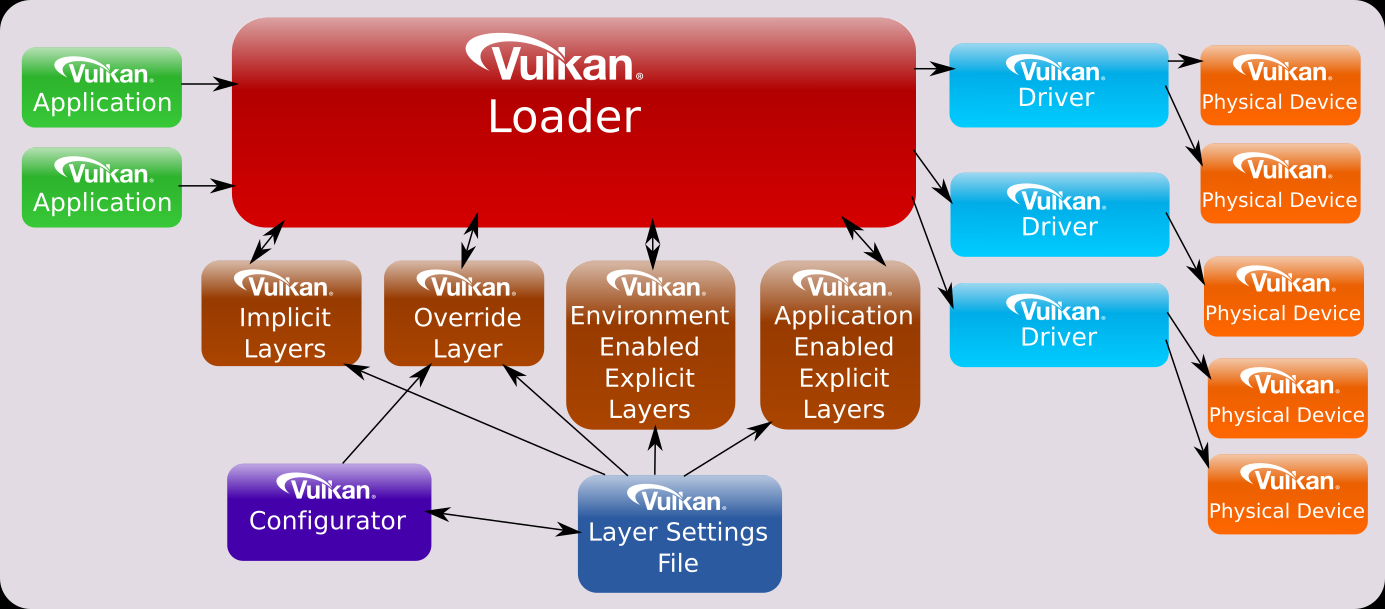
Components of Vulkan
Applications - Makes the Vulkan API calls
Layers - optional plugins to the API, intercept function calls to do stuff like validation, recording, debugging, etc
Drivers - The actual graphics driver that executes all the API calls on a real Vulkan "implementation".
--Problem--
Vulkan-Loader has minimal test coverage
Specifically:
- Tests are flaky - depend on host system state
- Use drivers on the system, and work around them
- They aren't authoritative
- E.g. call function to get a value, call the same function again and check that the same value is returned
Difficulties
- Vulkan-Loader codebase is C99, not C++ sigh
- Test code is C++ fortunately
- Fragile - little structure in the code
- Can't add unit tests without possibly introducing bugs
- Extremely integrated into the host system
- Filesystem, registry, env-vars, OS calls left and right
- Current tests modify host system in non-destructive ways, very limiting
- But destructive host modification is a no-go, would interfere with other running Vulkan apps
Solution!
Mock the world!
Wait, wrong mocking


"mocking" the world
- Find all possible inputs to the Vulkan-Loader
- Filesystem
- Registry - Windows only
- Environment Variables
- OS specific calls
- Drivers
- Layers
- Intercept and/or fake them
- ...
- Profit!
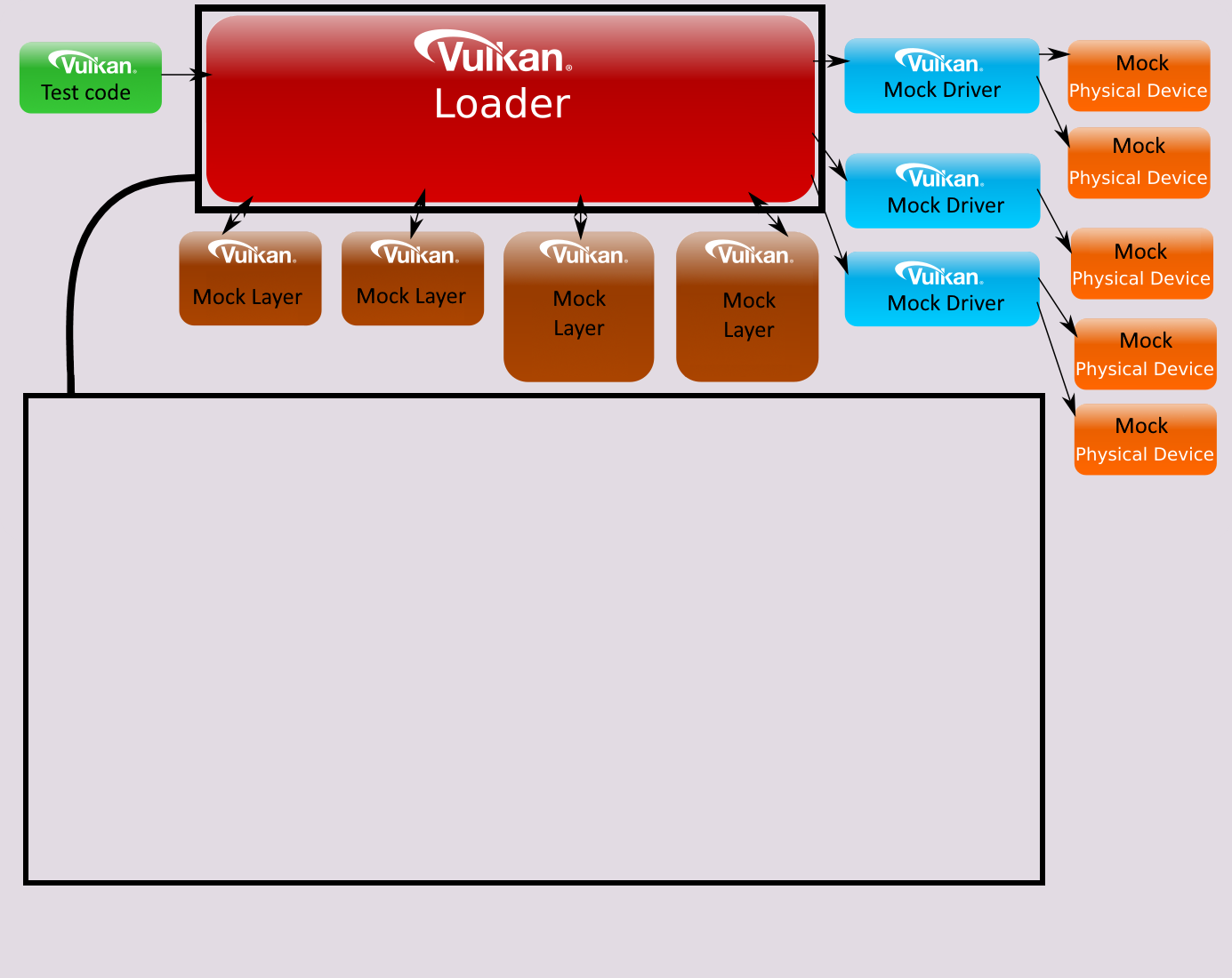
- Black box is the 'FrameworkEnvironment'. It coordinates the whole architecture.
- Green is the 'Test Cases'. These setup system state then run tests against them
- Brown are Mock Layers
- Blue are Mock Drivers
- Which have Mock Physical Devices
FrameworkEnvironment
- Intercepts & modifies all the system state, including
- Filesystem & access to it
- Windows Registry
- Windows Driver API's (DXGI, D3DKMT)
- Environment Variables
- Elevated process state (is it running as sudo)
Windows Specific stuff
- Registry interception
- `RegOverridePredefKey` is like chroot but for the registry
- Lots of manual work to recreate the registry that the loader expects
- Windows Driver API's
- Loader calls into Windows API's for information about drivers
- Must recreate that by intercepting the functions & providing the desired information
- Uses the Detours library to do the DLL injection
- Detours uses makefiles for some odd reason...
Linux/MacOS specific stuff
- Only need to redirect filesystem calls
- opendir, access, and fopen are the only calls used
- Tests still use the filesystem, the calls just return the data we want them to.
- File search logic is complicated, using XDG_*** env-vars as a source
- Must clear those out and set them to known values
- Function interception works with the dynamic linker out of the box
- MacOS needs magic incantation to work
struct Interposer {
    const void* shim_function;
    const void* underlying_function;
};
__attribute__((used)) static Interposer _interpose_opendir
	__attribute__((section("__DATA,__interpose"))) =
    	{VOIDP_CAST(my_opendir), VOIDP_CAST(opendir)};
Mock Driver aka TestDriver
- Shared Library which implements the 'Driver Interface' the loader expects
- test_driver.h
- test_driver.cpp
- Need a way to talk to the TestDriver from the test
- Load a function pointer from TestDriver which grants direct access to the data structures used
- Highly configurable
- Tests can set modify the TestDriver in just about every way, except....
Binary Exports
- Loader expects a Driver to export certain functions
- Which are exported changes per interface version
- Thus, multiple driver binaries need to exist for complete testing
- CMake is used to stamp out the variations
- What is exported is controlled by compiler options
Mock Layer aka TestLayer
- Almost identical to TestDriver
- Also has function to get & set state
- Also has multiple binary exports
Test Code
- Basic outline
- Create a framework
- Set the state
- Call Vulkan API functions
- Check results
- Setup a 'Physical Device' in the mock
- Add a layer
- Check if that layer can be found
TEST(CreateInstance, LayerPresent) {
    FrameworkEnvironment env{};
    const char* layer_name = "TestLayer";
    env.add_explicit_layer(
        ManifestLayer{}.add_layer(
            ManifestLayer::LayerDescription{}
            .set_name(layer_name)
            .set_lib_path(TEST_LAYER_PATH_EXPORT_VERSION_2)),
        "test_layer.json");

    InstWrapper inst{env.vulkan_functions};
    inst.create_info.add_layer(layer_name);
    inst.CheckCreate();

    uint32_t layer_count = 0;
    ASSERT_EQ(VK_SUCCESS, env.vulkan_functions.
    	vkEnumerateInstanceLayerProperties(&layer_count, nullptr));
    ASSERT_EQ(layer_count, 1);
}
Example Test
Thanks!
Questions?
How to write your own (fake) Vulkan Driver
By Charles Giessen