สัมมนา การสร้างข้อมูลเส้นทางการเดินรถบัส ของขสมก เพื่อการจัดการ ตามมาตรฐาน GTFS
โดย นาย ฉัตรชัย หลิมประเสริฐศิริ
จากบริษัท เน็กเวฟเวอร์ดอตเนทจำกัด
Partner Google Transit
ลำดับหัวข้อสนทนา ในวันนี้
(ใช้เวลา2-3 ชั่วโมง)
- ประโยชน์จากการจัดการ ข้อมูลเส้นทางการเดินรถ และ ข้อมูลพื้นฐาน
- ขสมก มีข้อมูลอะไร อยู่ในบัจจุบัน
- มาตรฐาน สากลที่เกี่ยวข้อง GTFS Static
- GTFS RealTime คืออะไร
- เราจะสร้างข้อมูล ให้ได้ตามมาตรฐาน ทำอย่างไร
- การตรวจสอบข้อมูล และ การนำไปใช้งาน
- สอบถาม และ แลกเปลี่ยนความคิดเห็น
ประโยชน์จากการจัดการ ข้อมูลเส้นทางการเดินรถ และ ข้อมูลพื้นฐาน

ประโยชน์จากการจัดการ ข้อมูลเส้นทางการเดินรถ และ ข้อมูลพื้นฐาน
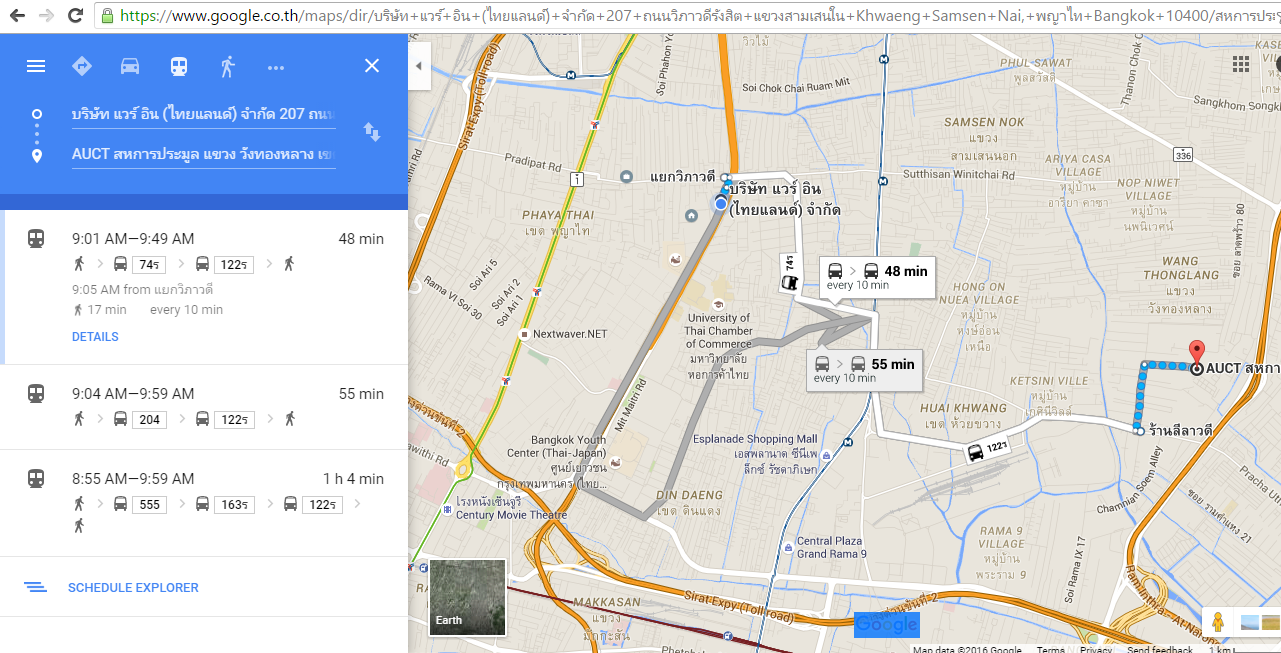
ประโยชน์จากการจัดการ ข้อมูลเส้นทางการเดินรถ และ ข้อมูลพื้นฐาน
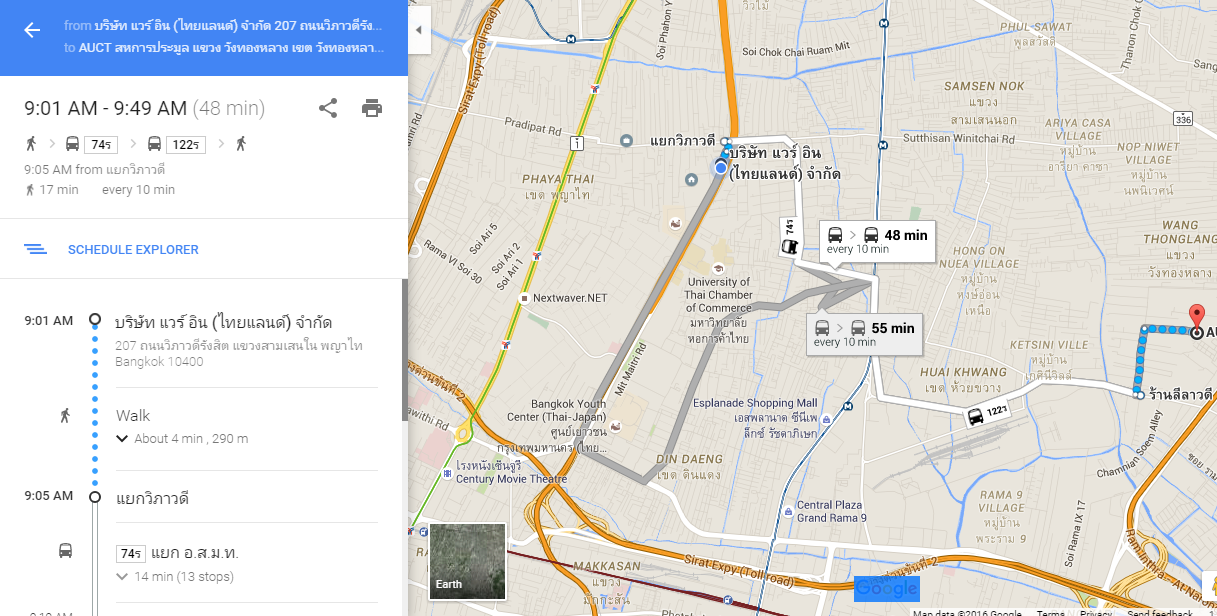
ประโยชน์จากการจัดการ ข้อมูลเส้นทางการเดินรถ และ ข้อมูลพื้นฐาน
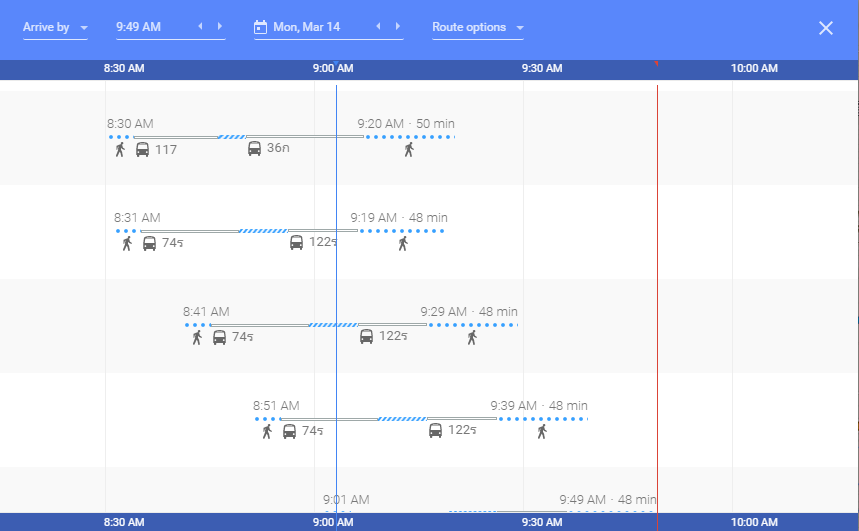
ขสมก มีข้อมูลอะไร อยู่ในบัจจุบัน
- ข้อมูล สถานที่ตั่ง ป้ายรถโดยสาร ( BusStop)
- เส้นทาง เดินรถโดยสาร ตามเส้นทาง โดยแบ่งเขตการการเดินรถ
- สถานที่ เริ่มต้น และ ปลายทาง ของแต่ละเส้นทาง
- ตารางการเดินรถ ในแต่ละวัน ตั่งแต่ วันจันทร์ - วันอาทิตย์ ตั่งแต่เริ่มวันจนสิ้นสุดวัน
ขสมก จัดทำข้อมูลอย่างไร
ข้อมูล สถานที่ตั่ง ป้ายรถโดยสาร ( BusStop)
ดำเนินการโดย การ 2 วิธีการ
- ใช้การปักหมุด โดยใช้อุปกรณ์ GPS โดยเดินทางไปป้ายรถโดยสาร https://play.google.com/store/apps/details?id=nl.sogeti.android.gpstracker&hl=en
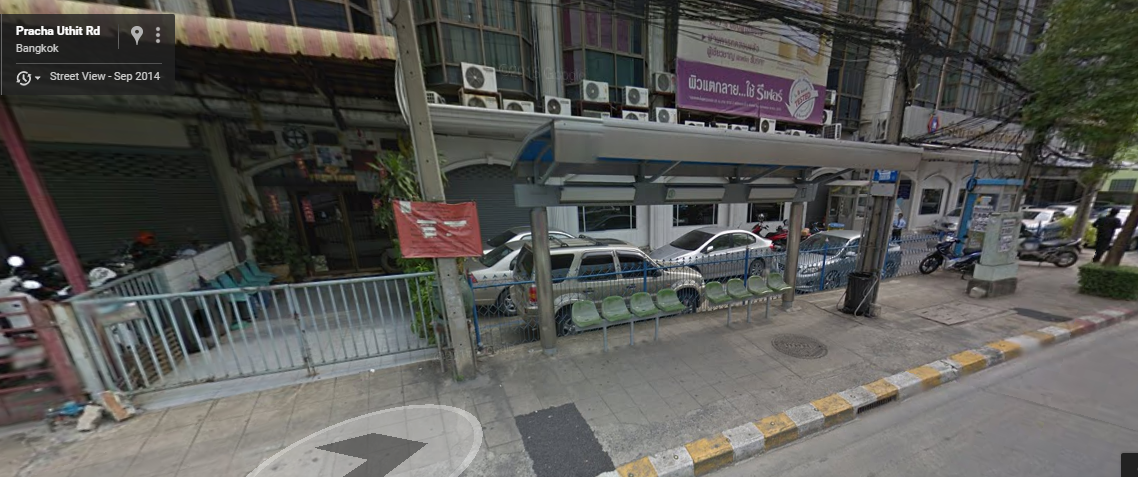
- ใช้การปักหมุด โดยการใช้ Google Map ค้นหาป้ายรถโดยสาร ผ่านทาง ภาพ StreetView แล้วยปักหมุด
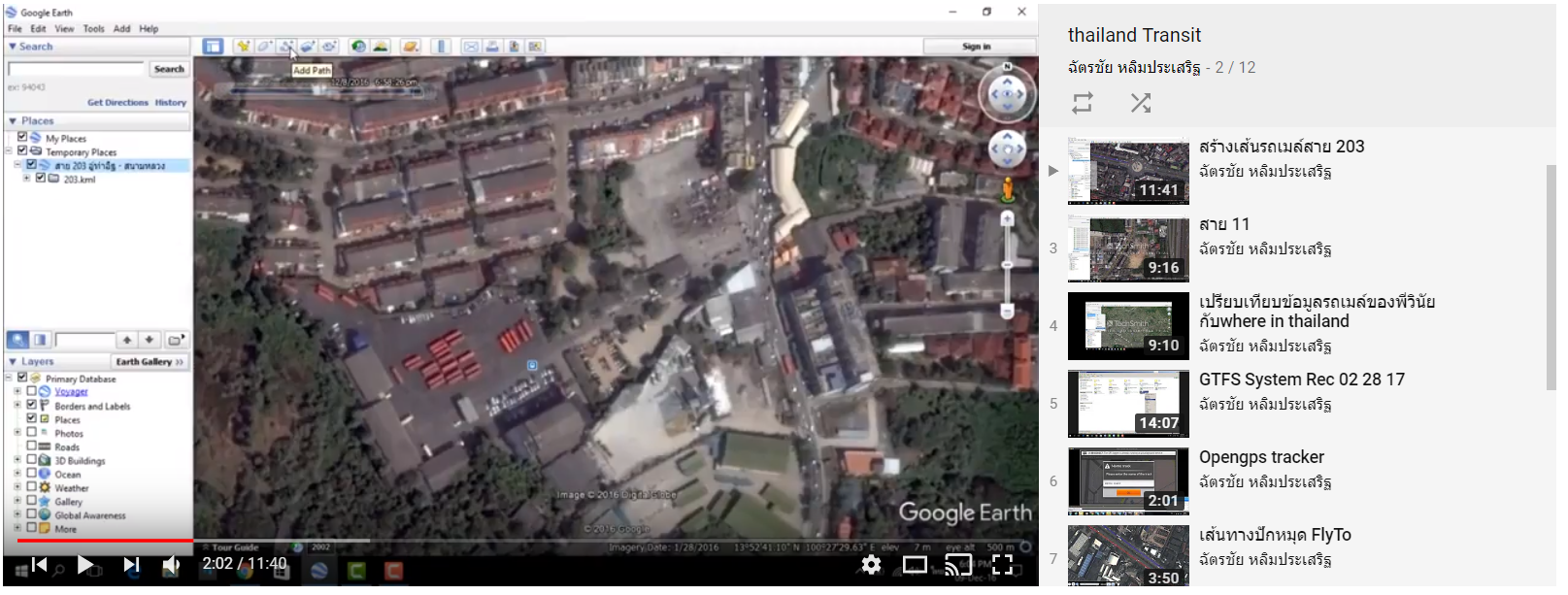
ข้อมูลวีดีโอ การจัดทำข้อมูลสำรวจ
วีดีโอประกอบการทำงาน GTFS
https://www.youtube.com/watch?v=mrjLwkKy5zw&list=PLbg5mFh1wx6O1_UXqWrCPxywpyfQUBkJm
มาตรฐาน สากลที่เกี่ยวข้อง GTFS Static
What is GTFS?
The General Transit Feed Specification (GTFS) defines a common format for public transportation schedules and associated geographic information. GTFS "feeds" allow public transit agencies to publish their transit data and developers to write applications that consume that data in an interoperable way.
GTFS เป็นข้อกำหนด แบบเปิดเผย ชุดข้อมูล สำหรับการใช้เพื่อสร้างระบบบริหารจัดการ พัฒนาระบบสร้าง Application สำหรับการใช้ประโยชน์จากข้อมูลพื้นฐาน เพื่อการวางแผนการเดินทาง จากต้นทางถึงปลายทาง
มาตรฐาน สากลที่เกี่ยวข้อง GTFS Static
FilenameRequiredDefines
| agency.txt | Required | One or more transit agencies that provide the data in this feed. |
| stops.txt | Required | Individual locations where vehicles pick up or drop off passengers. |
| routes.txt | Required | Transit routes. A route is a group of trips that are displayed to riders as a single service. |
| trips.txt | Required | Trips for each route. A trip is a sequence of two or more stops that occurs at specific time. |
| stop_times.txt | Required | Times that a vehicle arrives at and departs from individual stops for each trip. |
| calendar.txt | Required | Dates for service IDs using a weekly schedule. Specify when service starts and ends, as well as days of the week where service is available. |
| calendar_dates.txt | Optional | Exceptions for the service IDs defined in the calendar.txt file. If calendar_dates.txt includes ALL dates of service, this file may be specified instead of calendar.txt. |
| fare_attributes.txt | Optional | Fare information for a transit organization's routes. |
| fare_rules.txt | Optional | Rules for applying fare information for a transit organization's routes. |
| shapes.txt | Optional | Rules for drawing lines on a map to represent a transit organization's routes. |
| frequencies.txt | Optional | Headway (time between trips) for routes with variable frequency of service. |
| transfers.txt | Optional | Rules for making connections at transfer points between routes. |
| feed_info.txt | Optional | Additional information about the feed itself, including publisher, version, and expiration information. |
มาตรฐาน สากลที่เกี่ยวข้อง GTFS ( agency)
Field NameRequiredDetails
| agency_id | Optional |
The agency_id field is an ID that uniquely identifies a transit agency. A transit feed may represent data from more than one agency. The agency_id is dataset unique. This field is optional for transit feeds that only contain data for a single agency. |
| agency_name | Required |
The agency_name field contains the full name of the transit agency. Google Maps will display this name. |
| agency_url | Required |
The agency_url field contains the URL of the transit agency. The value must be a fully qualified URL that includes http:// or https://, and any special characters in the URL must be correctly escaped. See http://www.w3.org/Addressing/URL/4_URI_Recommentations.html for a description of how to create fully qualified URL values. |
| agency_timezone | Required |
The agency_timezone field contains the timezone where the transit agency is located. Timezone names never contain the space character but may contain an underscore. Please refer to http://en.wikipedia.org/wiki/List_of_tz_zones for a list of valid values. If multiple agencies are specified in the feed, each must have the same agency_timezone. |
| agency_lang | Optional |
The agency_lang field contains a two-letter ISO 639-1 code for the primary language used by this transit agency. The language code is case-insensitive (both en and EN are accepted). This setting defines capitalization rules and other language-specific settings for all text contained in this transit agency's feed. Please refer to http://www.loc.gov/standards/iso639-2/php/code_list.php for a list of valid values. |
| agency_phone | Optional |
The agency_phone field contains a single voice telephone number for the specified agency. This field is a string value that presents the telephone number as typical for the agency's service area. It can and should contain punctuation marks to group the digits of the number. Dialable text (for example, TriMet's "503-238-RIDE |
| agency_fare_url | Optional |
The agency_fare_url specifies the URL of a web page that allows a rider to purchase tickets or other fare instruments for that agency online. The value must be a fully qualified URL that includes http:// or https://, and any special characters in the URL must be correctly escaped. See http://www.w3.org/Addressing/URL/4_URI_Recommentations.html for a description of how to create fully qualified URL values. |
| agency_email | Optional |
The agency_email field contains a single valid email address actively monitored by the agency’s customer service department. This email address will be considered a direct contact point where transit riders can reach a customer service representative at the agency. |

มาตรฐาน สากลที่เกี่ยวข้อง GTFS ( stops.txt)
Field NameRequiredDetails
| agency_id | Optional |
The agency_id field is an ID that uniquely identifies a transit agency. A transit feed may represent data from more than one agency. The agency_id is dataset unique. This field is optional for transit feeds that only contain data for a single agency. |
| agency_name | Required |
The agency_name field contains the full name of the transit agency. Google Maps will display this name. |
| agency_url | Required |
The agency_url field contains the URL of the transit agency. The value must be a fully qualified URL that includes http:// or https://, and any special characters in the URL must be correctly escaped. See http://www.w3.org/Addressing/URL/4_URI_Recommentations.html for a description of how to create fully qualified URL values. |
| agency_timezone | Required |
The agency_timezone field contains the timezone where the transit agency is located. Timezone names never contain the space character but may contain an underscore. Please refer to http://en.wikipedia.org/wiki/List_of_tz_zones for a list of valid values. If multiple agencies are specified in the feed, each must have the same agency_timezone. |
| agency_lang | Optional |
The agency_lang field contains a two-letter ISO 639-1 code for the primary language used by this transit agency. The language code is case-insensitive (both en and EN are accepted). This setting defines capitalization rules and other language-specific settings for all text contained in this transit agency's feed. Please refer to http://www.loc.gov/standards/iso639-2/php/code_list.php for a list of valid values. |
| agency_phone | Optional |
The agency_phone field contains a single voice telephone number for the specified agency. This field is a string value that presents the telephone number as typical for the agency's service area. It can and should contain punctuation marks to group the digits of the number. Dialable text (for example, TriMet's "503-238-RIDE |
| agency_fare_url | Optional |
The agency_fare_url specifies the URL of a web page that allows a rider to purchase tickets or other fare instruments for that agency online. The value must be a fully qualified URL that includes http:// or https://, and any special characters in the URL must be correctly escaped. See http://www.w3.org/Addressing/URL/4_URI_Recommentations.html for a description of how to create fully qualified URL values. |
| agency_email | Optional |
The agency_email field contains a single valid email address actively monitored by the agency’s customer service department. This email address will be considered a direct contact point where transit riders can reach a customer service representative at the agency. |
มาตรฐาน สากลที่เกี่ยวข้อง GTFS ( - )
https://developers.google.com/transit/gtfs/reference#stopstxt
GTFS RealTime คืออะไร
What is GTFS-realtime?
GTFS-realtime is a feed specification that allows public transportation agencies to provide realtime updates about their fleet to application developers. It is an extension to GTFS (General Transit Feed Specification), an open data format for public transportation schedules and associated geographic information. GTFS-realtime was designed around ease of implementation, good GTFS interoperability and a focus on passenger information.
The specification was designed through a partnership of the initial Live Transit Updates partner agencies, a number of transit developers and Google. The specification is published under the Apache 2.0 License.
GTFS RealTime คืออะไร
Overview of GTFS-realtime feed types
The specification currently supports the following types of information:
- Trip updates - delays, cancellations, changed routes
- Service alerts - stop moved, unforeseen events affecting a station, route or the entire network
- Vehicle positions - information about the vehicles including location and congestion level
Updates of each type are provided in a separate feed. Feeds are served via HTTP and updated frequently. The file itself is a regular binary file, so any type of webserver can host and serve the file (other transfer protocols might be used as well). Alternatively, web application servers could also be used which as a response to a valid HTTP GET request will return the feed. There are no constraints on how frequently nor on the exact method of how the feed should be updated or retrieved.
Because GTFS-realtime allows you to present the actual status of your fleet, the feed needs to be updated regularly - preferably whenever new data comes in from your Automatic Vehicle Location system.
GTFS RealTime คืออะไร
https://developers.google.com/transit/gtfs-realtime/#how-do-i-start
GTFS RealTime คืออะไร
เราจะสร้างข้อมูล ให้ได้ตามมาตรฐาน ทำอย่างไร
ขอแนะนำเครื่องมือ 3 ตัว
- Open GPS Tracker เป็น Application Android บนมือถือ
- Google Map StreetView
- Google Earth
- Tools KML2KML
- Transit Feed Master เพื่อตรวจสอบข้อมูล
โปรแกรมที่ต้องพัฒนา
- โปรแกรมแสดง BusStop , Route , Trips , แสดงตำแหน่งของรถตาม Trips และตำแหน่งของ รถที่ใกล้ BusStop
- โปรแกรมที่แสดงการ สร้าง เส้นทางเชื่อมโยงจาก Trips ของเส้นทางรถโดยสารแบบต่างๆ เชื่อมโยงการเดินทาง จากต้นทาง ถึงปลายทาง
- โปรแกรม ตรวจสอบคุณภาพข้อมูล ก่อนประมวลผล
การตรวจสอบข้อมูล และ การนำไปใช้งาน
- ตรวจสอบ เส้นทาง การเดินรถ ? ทิศทาง เข้า/ออก
- ตรวจสอบ ตำแหน่งป้ายรถโดยสาร ? ระดับความแม่นยำ
- ตรวจสอบ การเข้าจอดตามป้ายของ รถโดยสารว่าจอดป้ายไหน ?
- ตรวจสอบ ตารางเวลาของ การ เดินรถ เริ่มต้น/สิ้นสุด
- ตรวจสอบ การเปลี่ยนแปลงข้อมูล ตามนโยบายการเดินรถ
Text
- สอบถาม
- แลกเปลี่ยนความคิดเห็น
จบการ สัมมนา
deck
By Chatchailim Lim