












Content ITV PRO
This is Itvedant Content department
Learning Outcome
4
Recognize how missing components lead to weak or inaccurate AI output.
3
Construct a well-structured prompt by combining multiple components.
2
Explain the purpose of each prompt component.
1
Identify the core building blocks that make up an effective prompt.
Quick recall of previous topic
What we've covered.
Prompt Engineering
the skill of writing clear, structured instructions for AI.
Role of Prompts
prompts control the AI's task, context, tone, and output.
AI Capabilities & Limitations
AI is powerful but needs precise direction to avoid vague or inaccurate output.
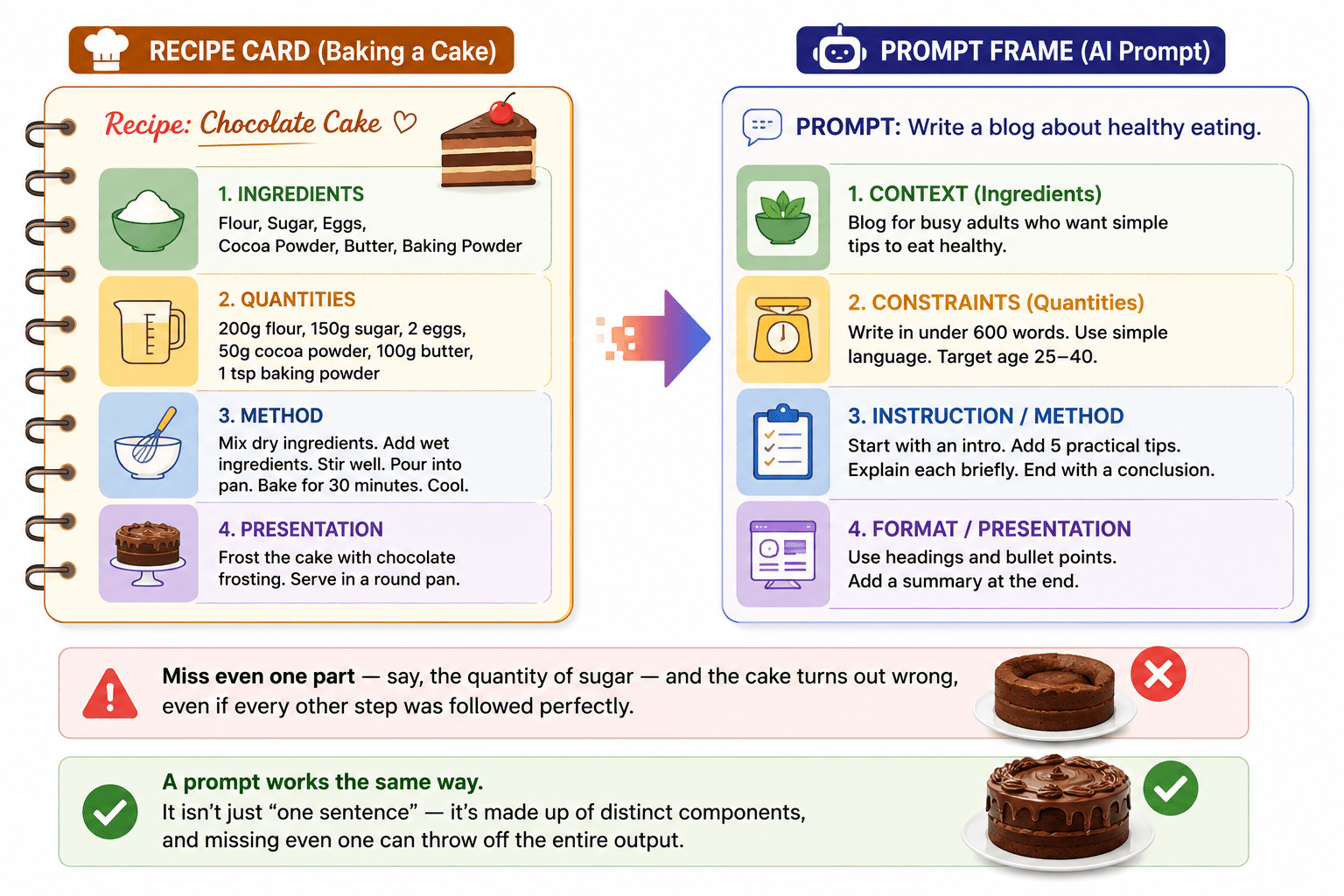
Imagine you're baking a cake.
A recipe isn't just "make a cake." It has distinct parts:
Think About It
Previously, we imagined a cake recipe — made up of ingredients, quantities, method, and presentation. Miss one part, and the cake doesn't turn out right.
Exactly! Just like a recipe, a prompt is made up of distinct components — and each one plays a specific role in shaping the final output.
But... What exactly are these components, and what happens when one of them is missing?
Can a single vague sentence to AI contain everything it needs to produce the exact output you want?
A small thought before we go technical
Expected Answer
NO
Now let's break down the real components of a prompt.
What Are Prompt Components?
Definition
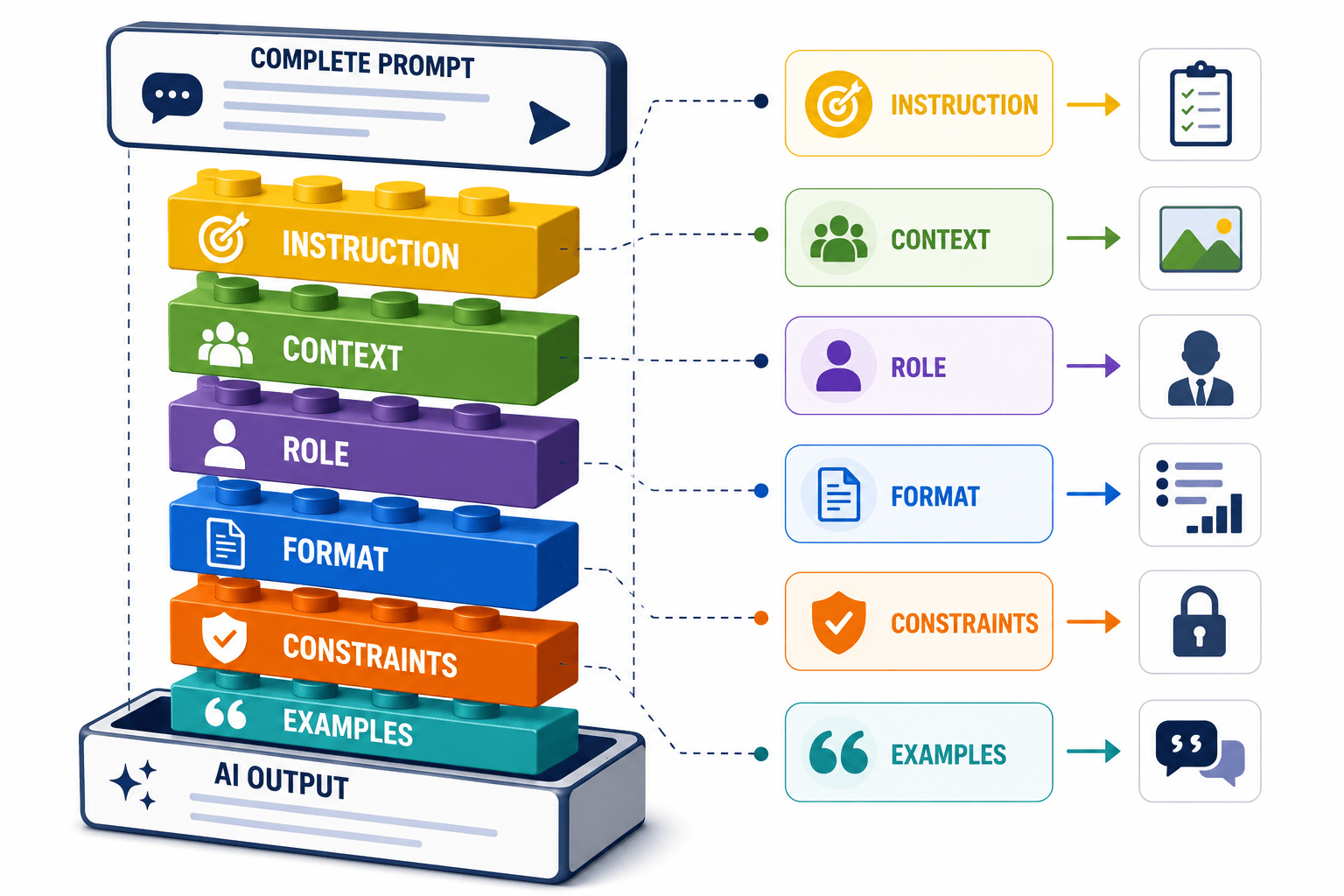
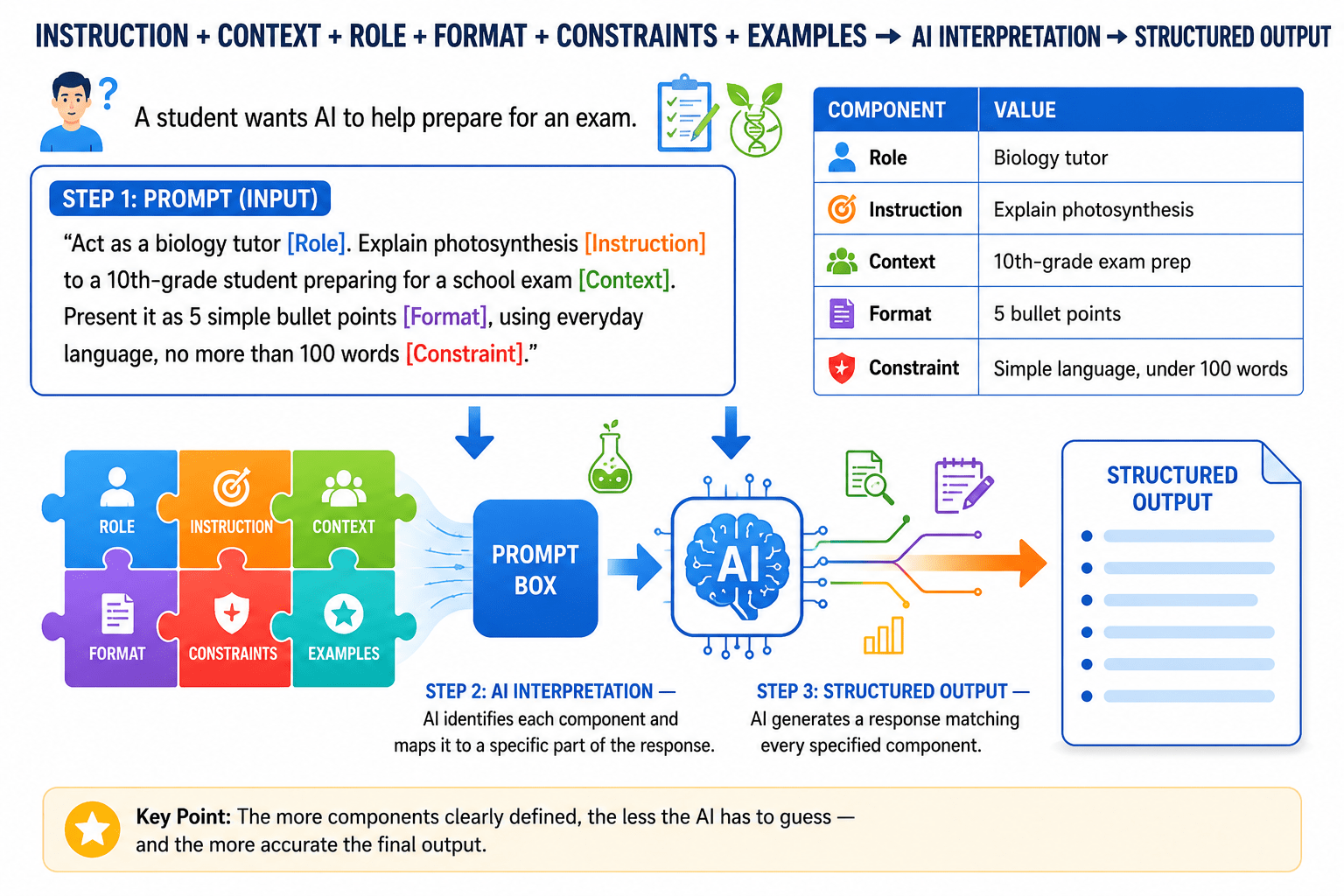
Prompt Components are the individual building blocks that combine to form a complete, effective prompt. Each component gives the AI a specific piece of information — together, they leave little room for the AI to guess.
Why it matters:
A prompt with all components is far more likely to produce accurate, usable output on the first try.
Understanding components lets you diagnose why a prompt isn't working — you can check which piece is missing.
It turns prompt writing from guesswork into a repeatable, structured process.
Real-Life Examples
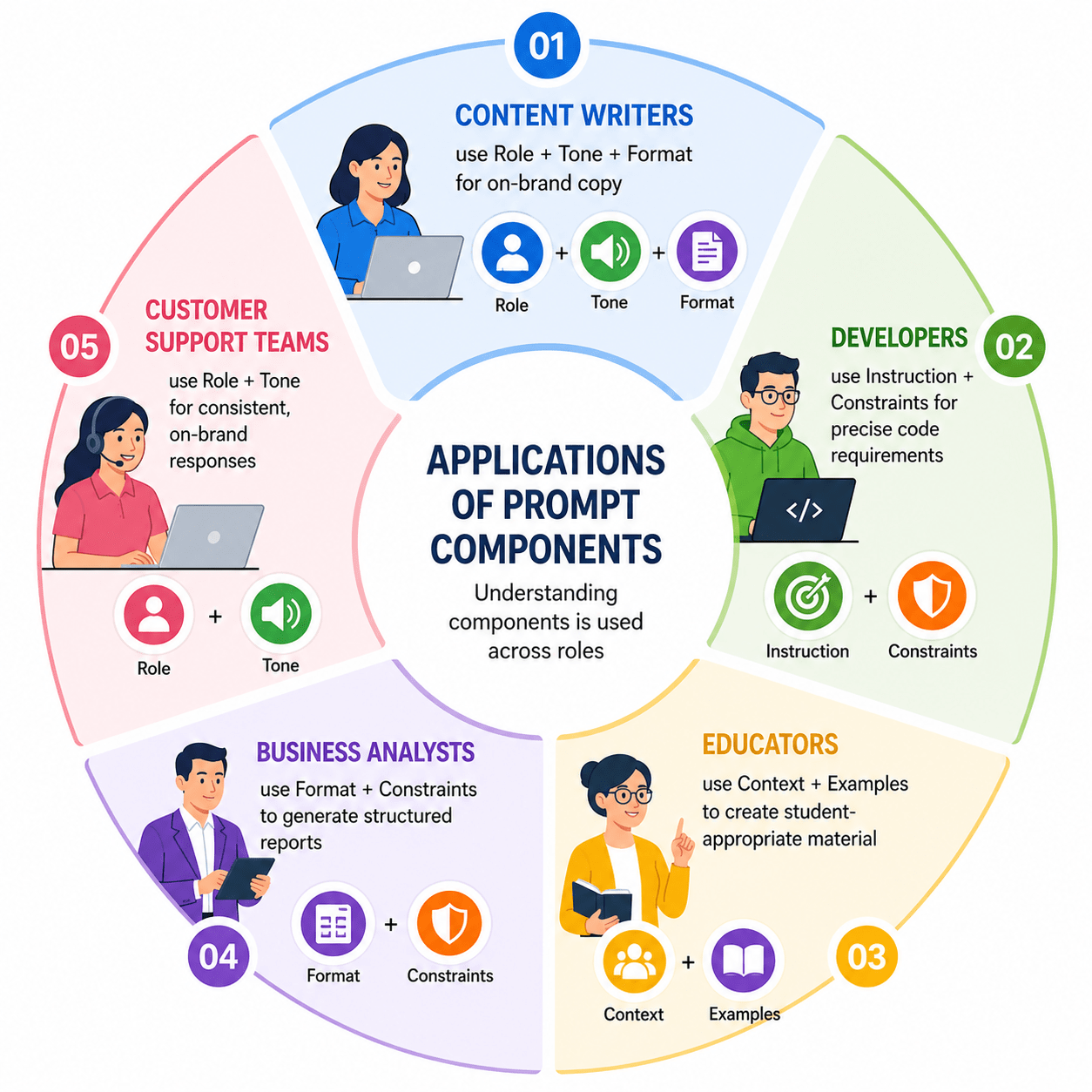
A content writer checks off Instruction, Context, and Format before sending a prompt — getting a ready-to-publish draft.
A developer includes Role and Constraints in a prompt to get code that matches their team's exact standards.
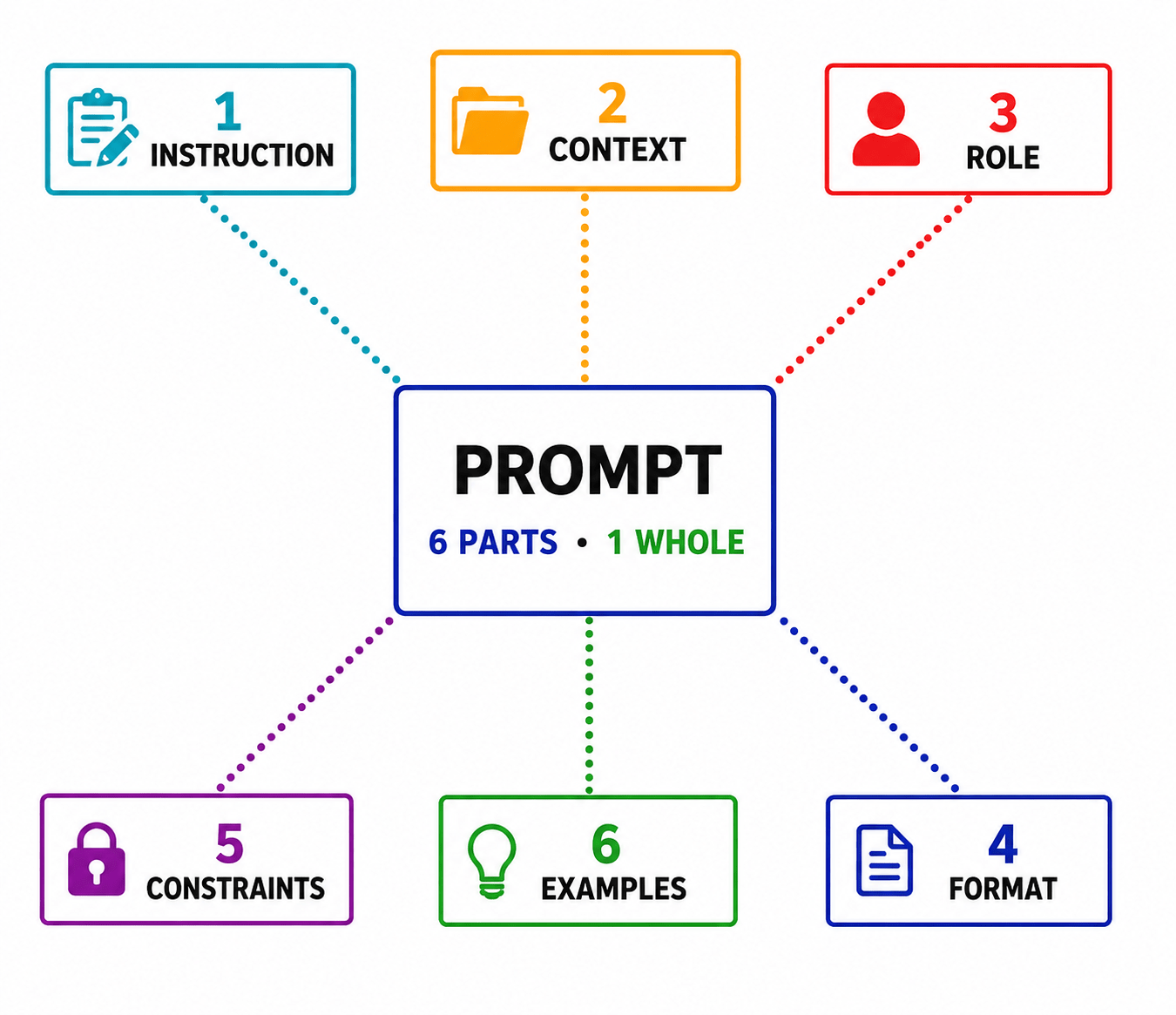
Component 1: Instruction
The Instruction is the core action — what you want the AI to actually do.
Without a clear instruction, the AI doesn't know the task itself (write? summarize? translate? calculate?).
Example:
"Summarize the following article in 3 bullet points."
Component 2: Context
Context gives background information — who it's for, why it's needed, or the situation surrounding the task.
Without context, the AI fills gaps with generic assumptions that may not match your actual need.
Example:
"...for a beginner audience who has never used AI tools before."
Component 3: Role / Persona
Role tells the AI who to act as — this shapes its expertise, vocabulary, and perspective.
Without a defined role, AI defaults to a generic, neutral voice.
Example:
"Act as a senior data analyst reviewing this report."
Component 4: Format / Output Structure
Format specifies exactly how the output should be structured — table, list, email, code block, word count.
Without this, AI defaults to its own general format, which may not fit your need.
Example:
"Present the answer as a table with 2 columns: Pros and Cons."
Component 5: Constraints
Constraints define the limits — length, tone, things to avoid, or must-include rules.
Without constraints, output may be too long, too short, or include things you didn't want.
Example:
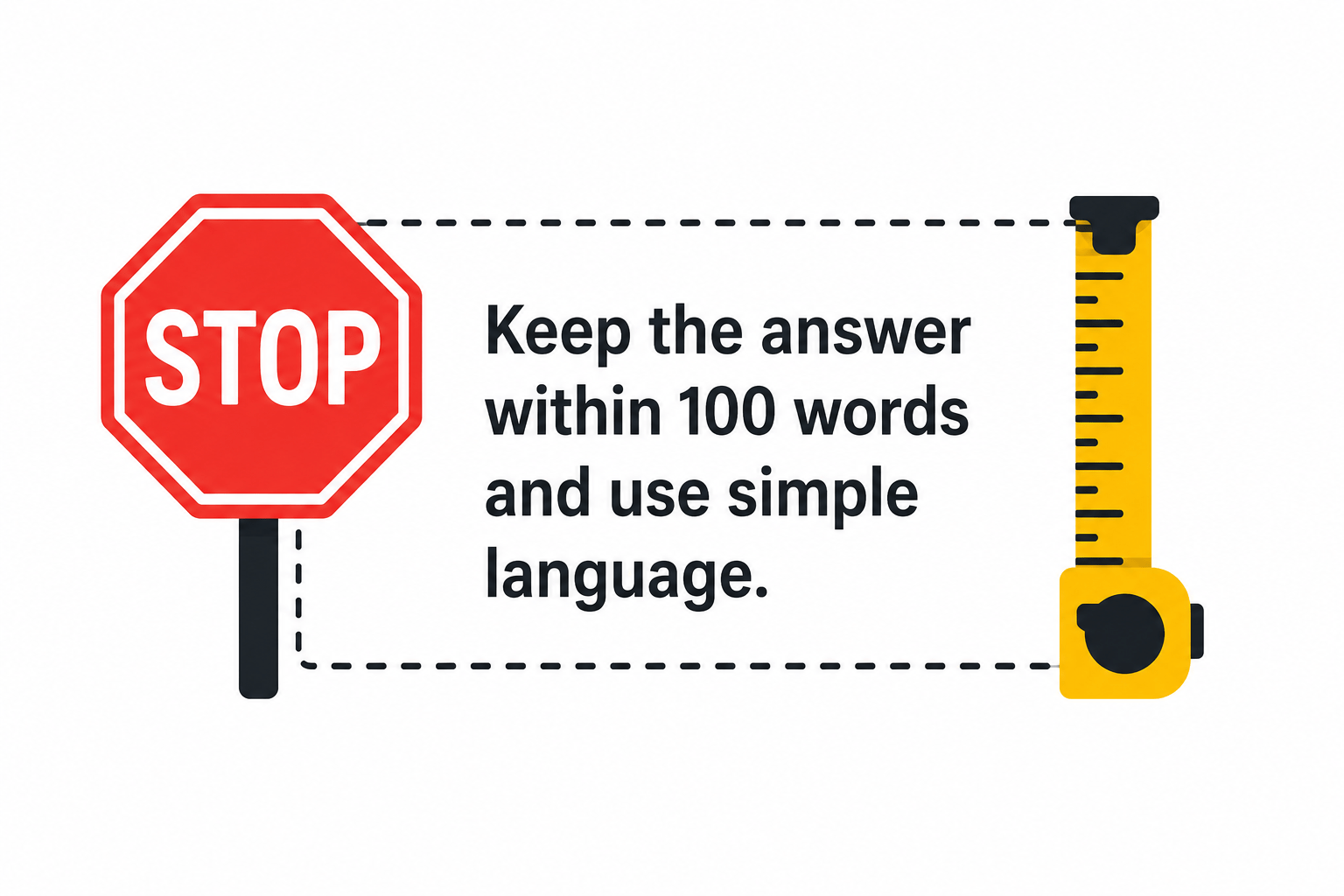
"Keep it under 100 words. Avoid technical jargon. Do not use bullet points."
Component 6: Examples (Few-Shot Guidance)
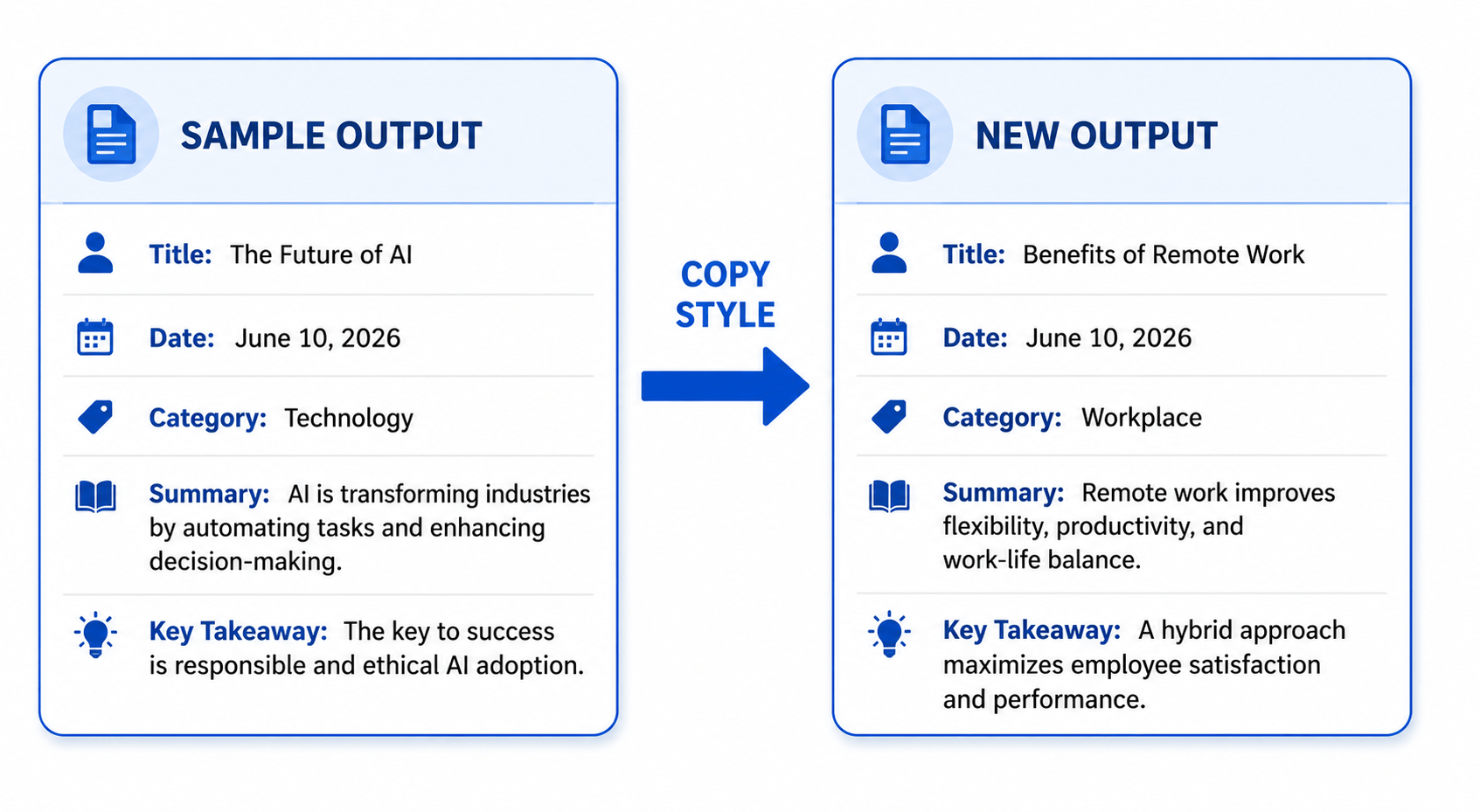
Examples show the AI exactly what kind of output you expect, by giving a sample.
This is especially powerful when instructions alone are hard to describe in words.
Example:
"Write a tagline like this: 'Just Do It.' Short, punchy, under 5 words."
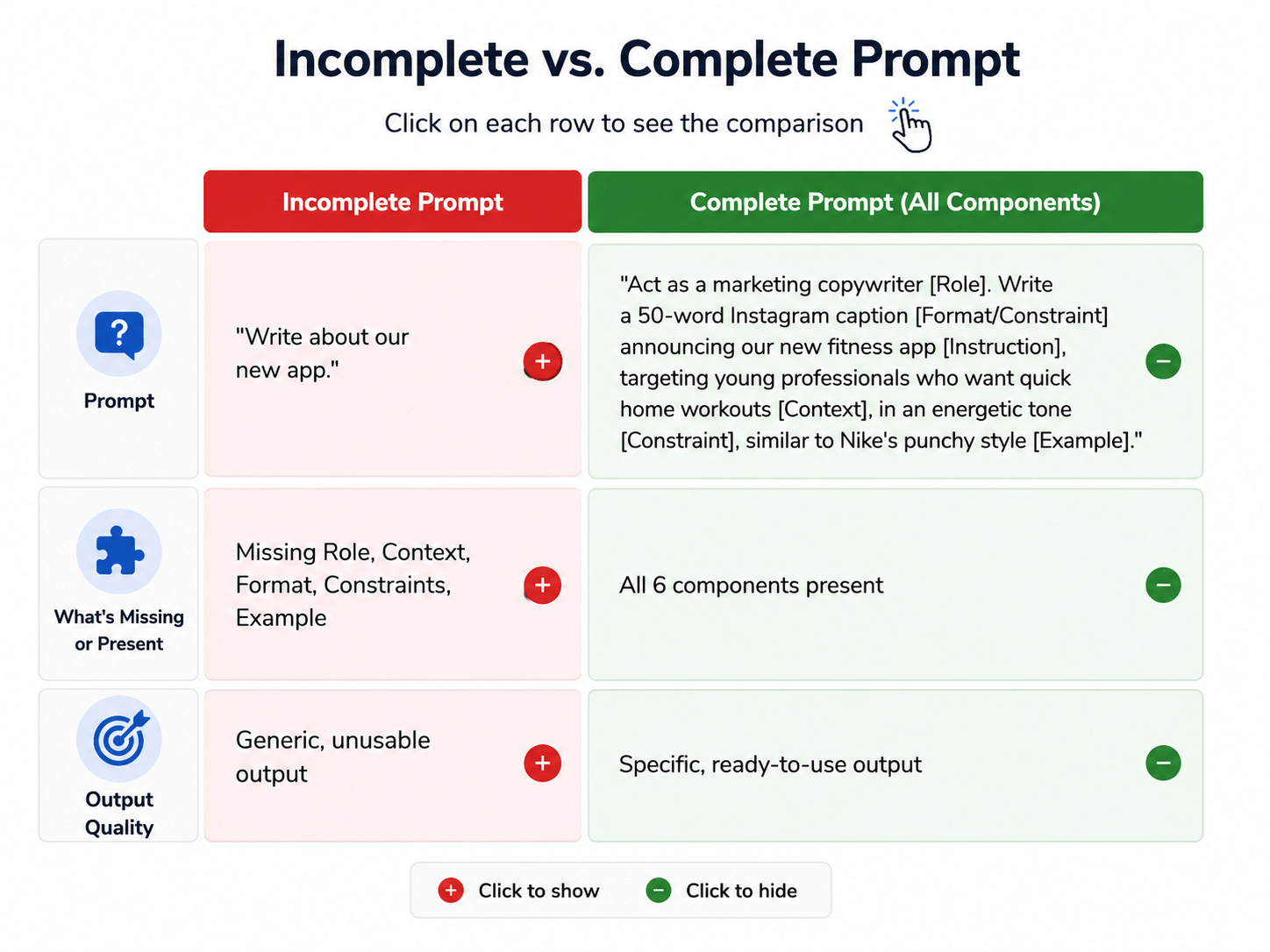
Complete vs. Incomplete Prompt (Comparison)
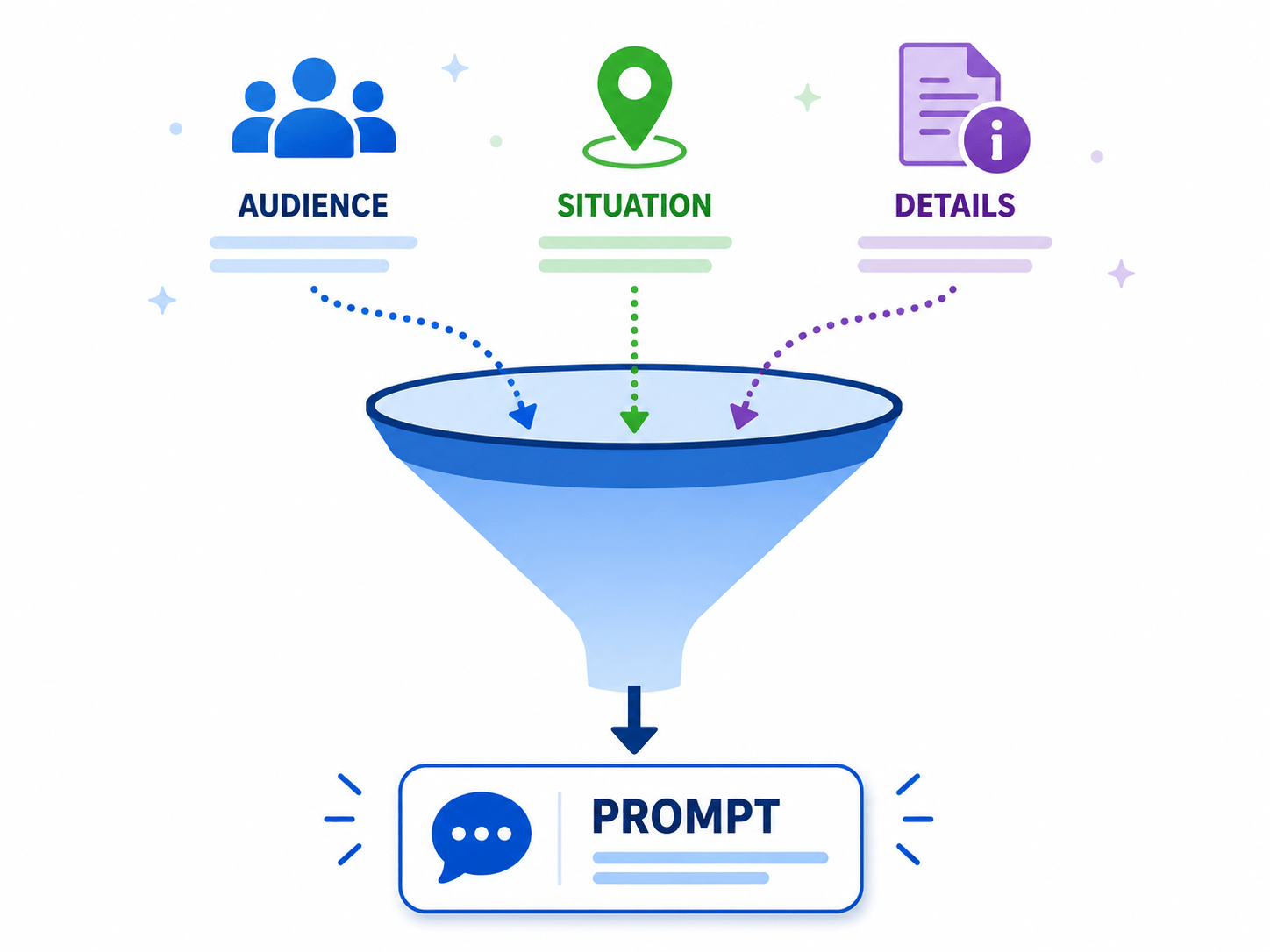
How Components Work Together (Core Mechanism)
Applications of Prompt Components
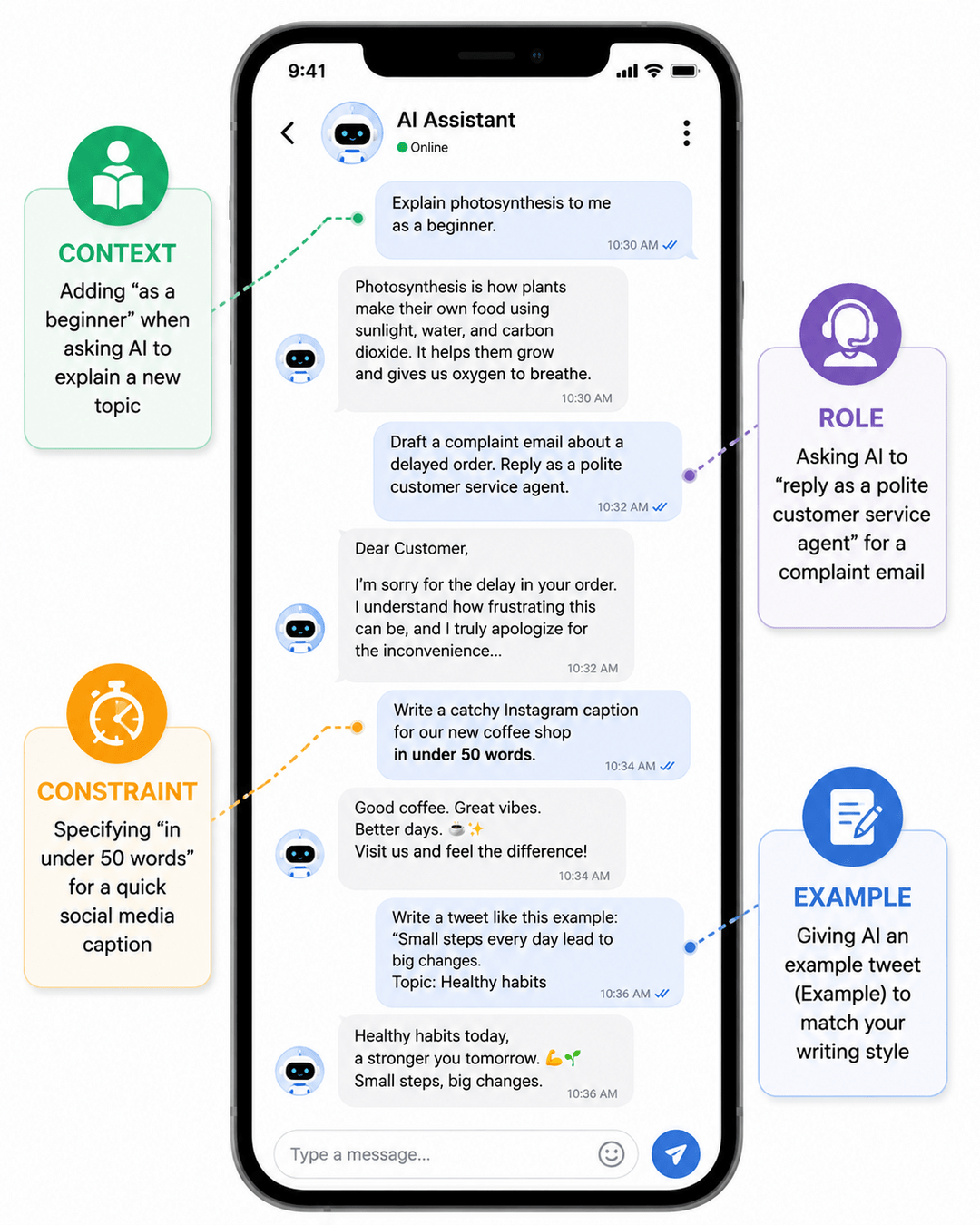
Daily Life Applications
Summary
4
Better prompts lead to better AI responses.
3
Complete prompts produce better results.
2
Each component makes the prompt clearer.
1
Prompts include Instruction, Context, Role, Format, Constraints, and Examples.
Quiz
Which prompt component tells the AI who to act as, shaping its expertise and voice?
A. Constraint
B. Format
C. Role / Persona
D. Example
Quiz-Answer
Which prompt component tells the AI who to act as, shaping its expertise and voice?
A. Constraint
B. Format
C. Role / Persona
D. Example
By Content ITV