Michael Küffmeier

S. G. Zaidi, C. Granzow Holm, T. Haugbølle (NBI) & many more
From cloud to disk
Modeling the formation of protoplanetary disks

When?

"At the beginning."

How?
History of modeling disk formation
spherical core collapse:
rotation
magnetization (mass-to-flux ratio)
non-ideal MHD effects
dust evolution
turbulence
useful for parameter studies
\rho(r) = \frac{\rho_{\rm c} R_{\rm c}^2}{R_{\rm c}^2 + r^2}
Bonnor-Ebert sphere
or uniform density
\rho(r) = \rho_{0}
History of modeling disk formation
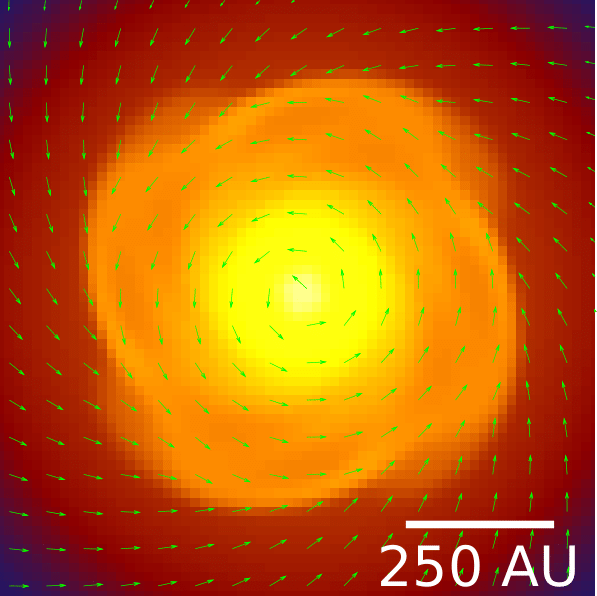
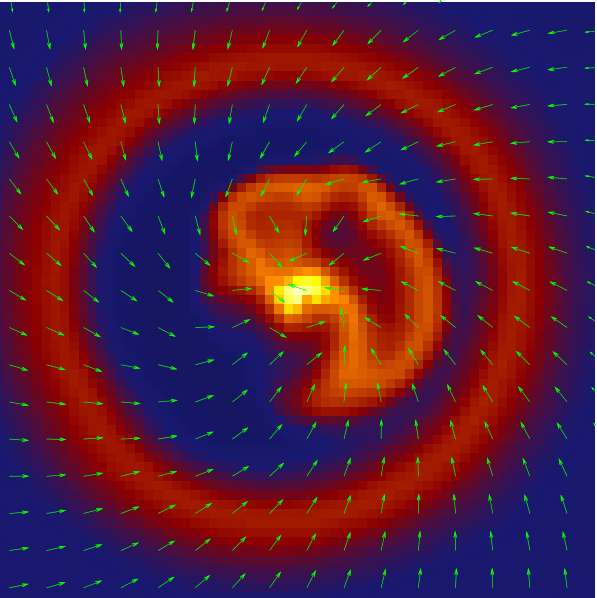

What about magnetic fields?
Help! Where is the disk?!
Santos-Lima et al. 2012
Hydro
ideal MHD
Magnetic braking catastrophe
Angular momentum is transported too efficiently from the disk
History of modeling disk formation
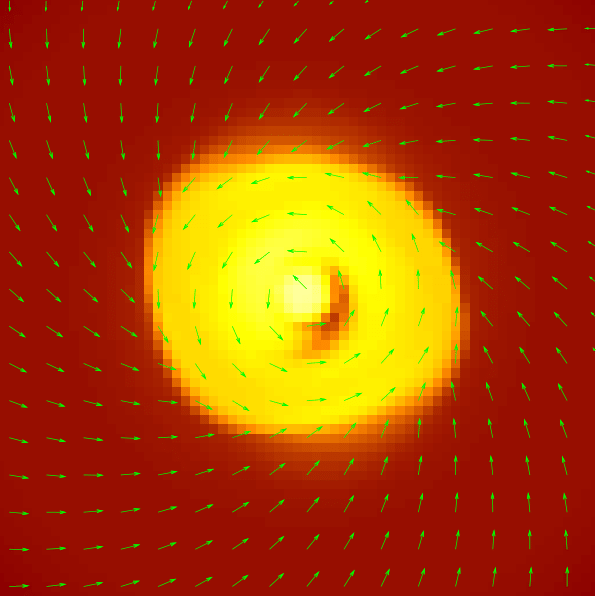
Help! Where is the disk?!
Resistivities
Santos-Lima et al. 2012
Hydro
ideal MHD
non-ideal MHD
What about magnetic fields?
for pioneering work see Galli & Shu 1993 a/b
see Hennebelle et al. 2016 or Lee et al. 2021 for analytical studies
more references in reviews by Wurster & Li 2018, Tsukamoto et al. 2023 and Küffmeier 2024
non-ideal MHD is not a single parameter
Caveat!
depends on cosmic-ray ionization rate!
Effect of ionization on disk size
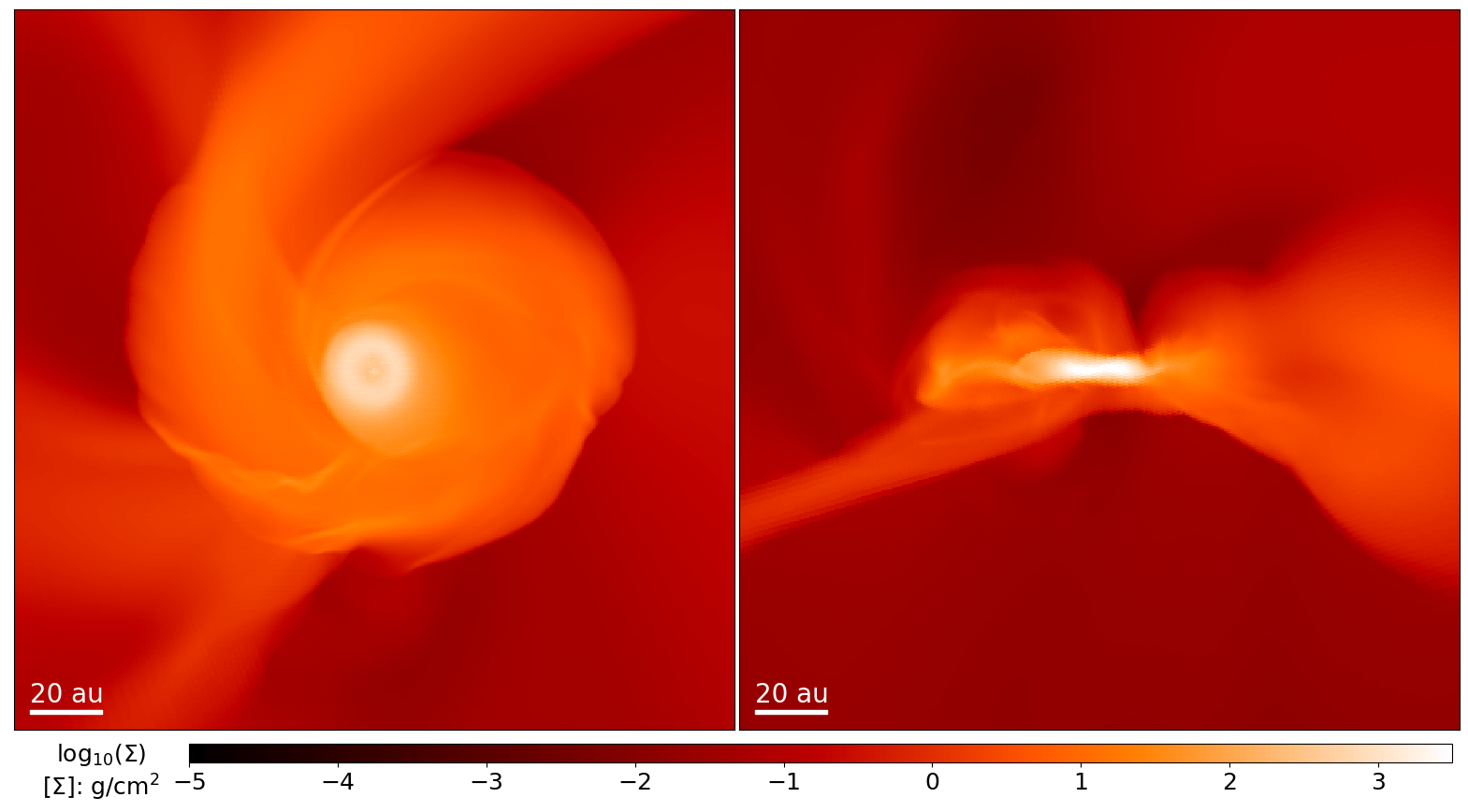
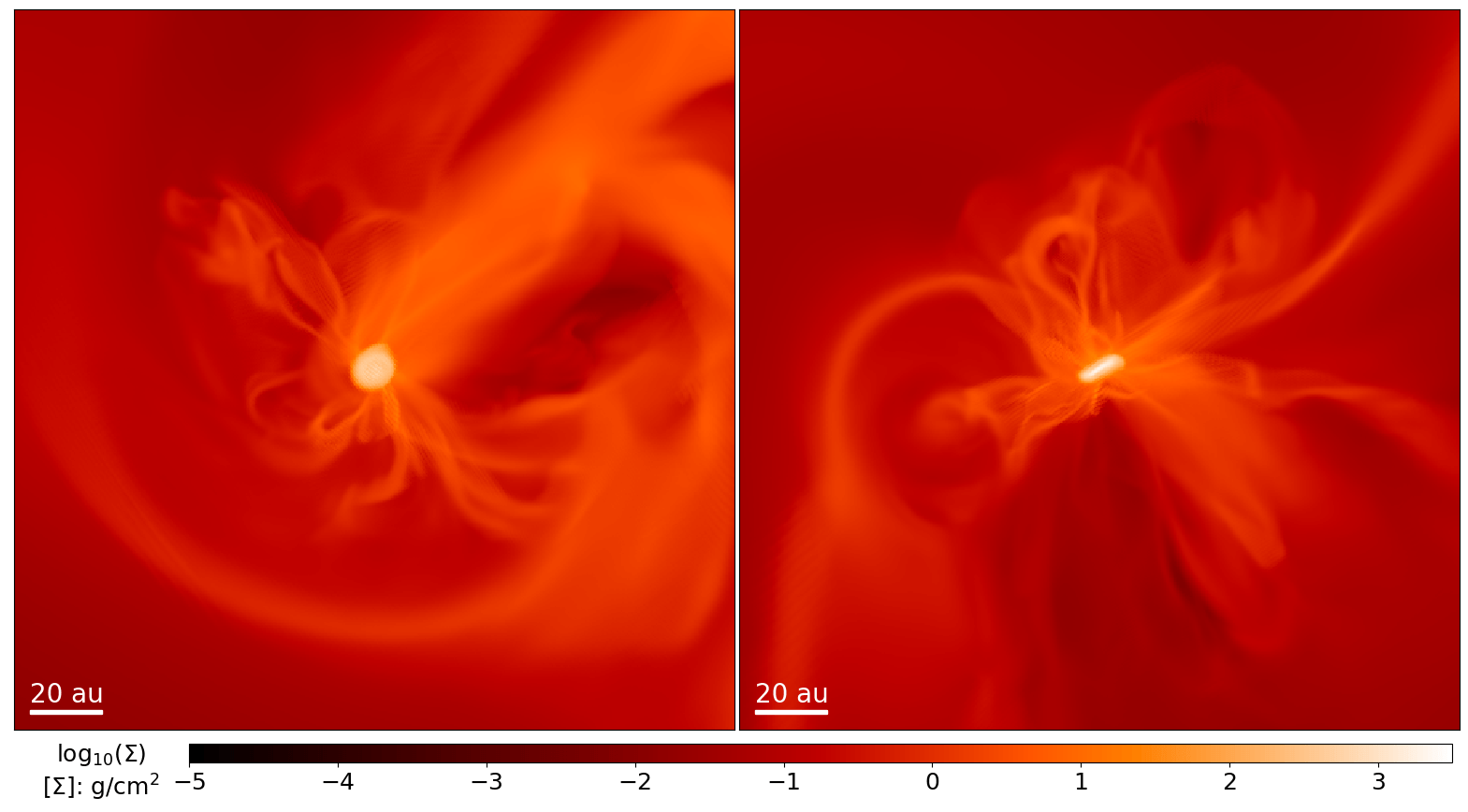
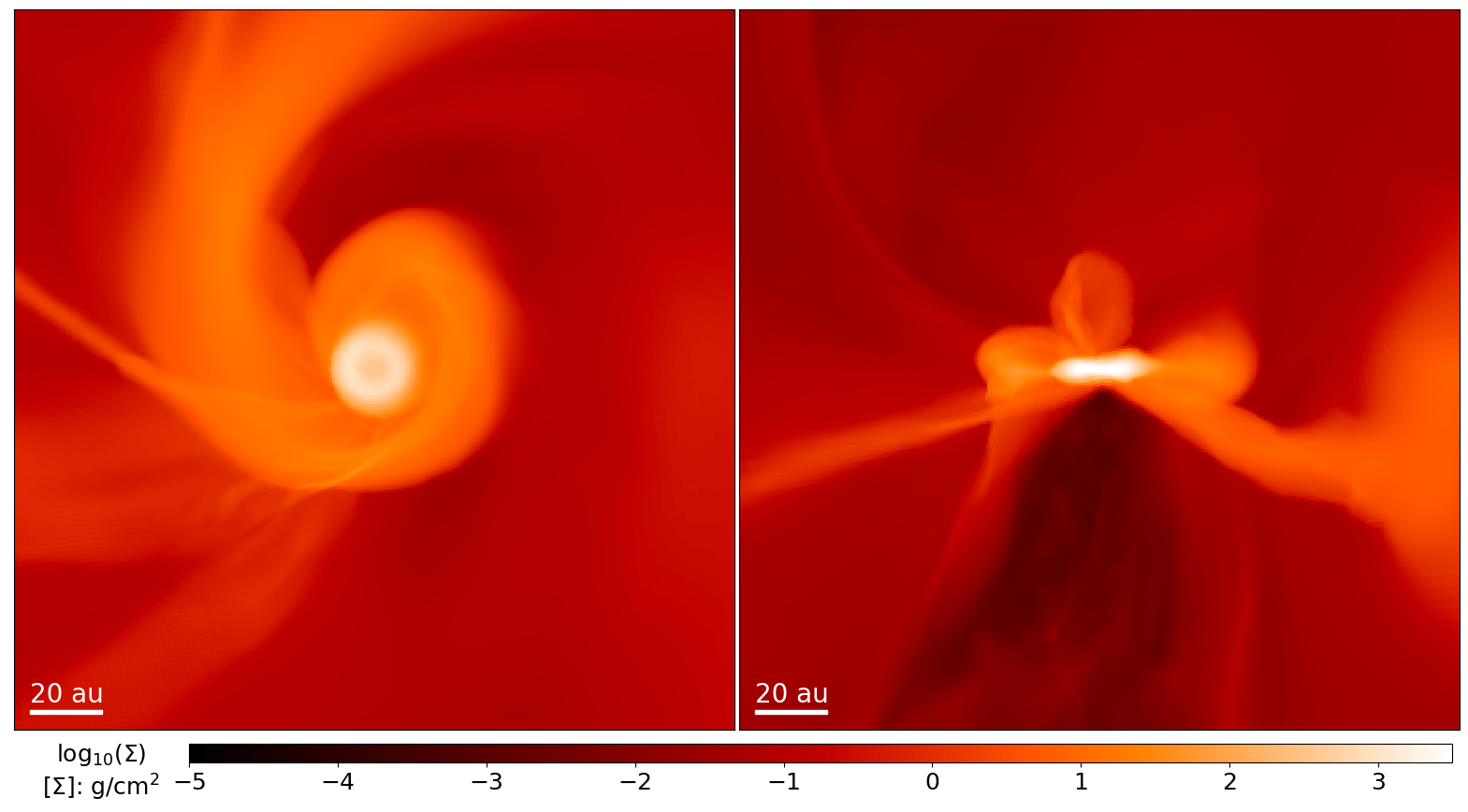
Küffmeier, Holm et al. in prep
ideal MHD
non-ideal MHD
\color{white}\zeta=10^{-18} \rm s^{-1}
\color{white}\zeta=10^{-17} \rm s^{-1}
\color{white}\zeta=10^{-16} \rm s^{-1}
increasing ionization rate
enhanced magnetic braking
smaller disks
100 au
100 au
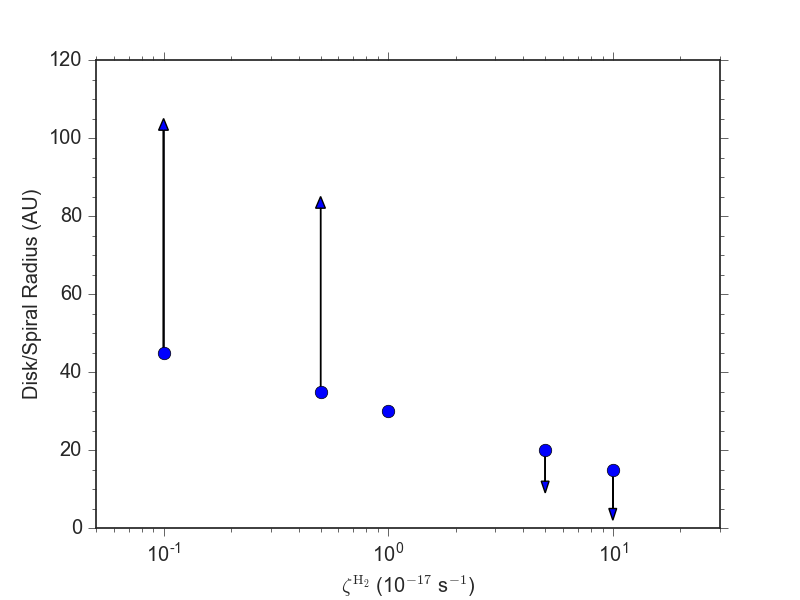
Küffmeier, Zhao & Caselli 2020, see also Kobayashi et al. 2023
Observed variations:
Maps of CR-ionization rates (e.g., NGC 1333 Pineda et al. 2024, or AG 351 & AG 354 Sabatini et al. 2023)
Protostars B335 (Cabedo et al. 2023), IRAS4A, L1448-C, L1157 (Schwarz et al. 2026)
Effect of ionization
Küffmeier, Holm et al. in prep
\color{white}\zeta=10^{-18} \rm s^{-1}
\color{white}\zeta=10^{-17} \rm s^{-1}
\color{white}\zeta=10^{-16} \rm s^{-1}
increasing ionization rate
enhanced magnetic braking
smaller disks
100 au
Observed variations:
Maps of CR-ionization rates (e.g., NGC 1333 Pineda et al. 2024, or AG 351 & AG 354 Sabatini et al. 2023)
Protostars B335 (Cabedo et al. 2023), IRAS4A, L1448-C, L1157 (Schwarz et al. 2026)
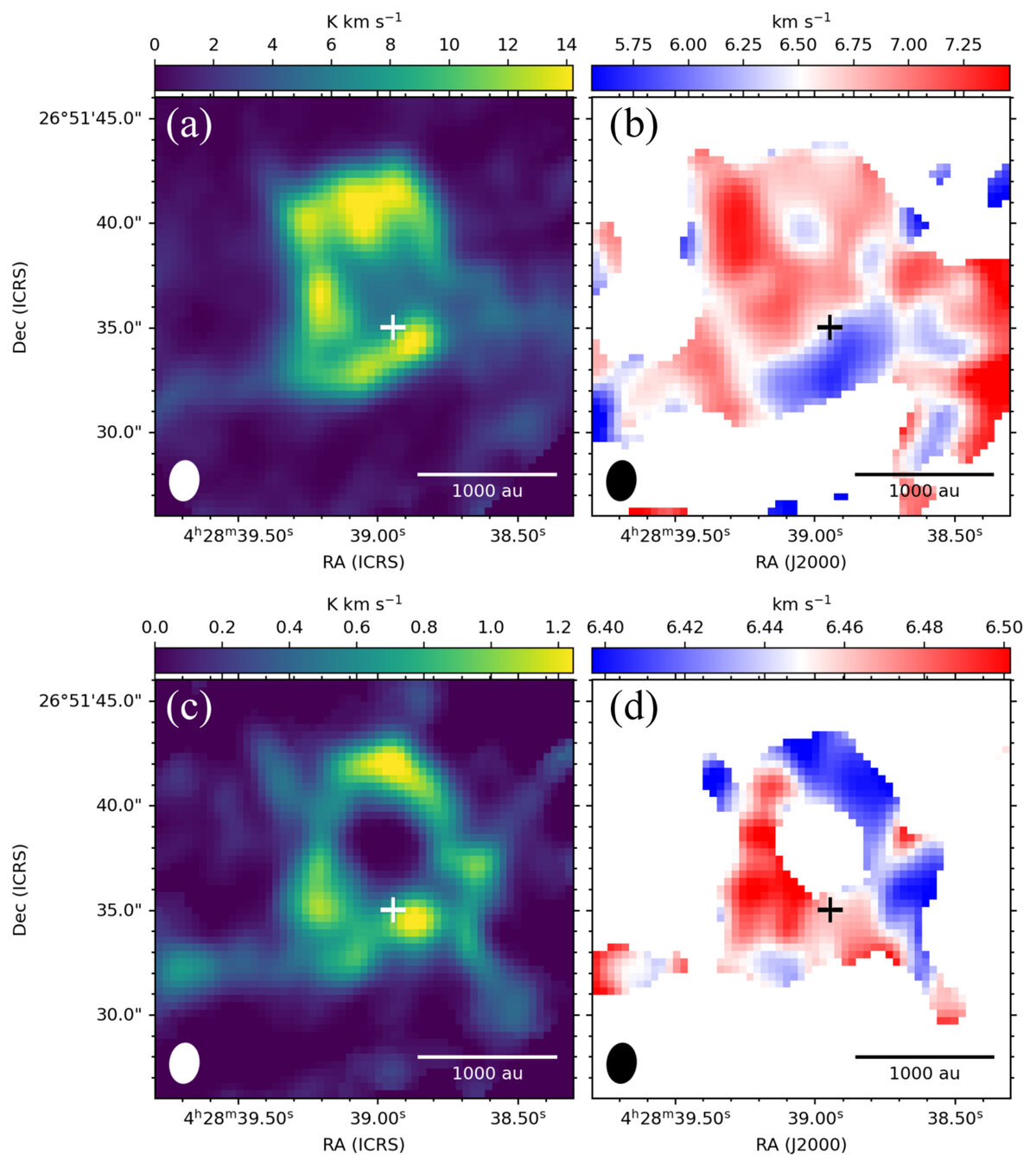
Tokuda et al. 2026
interchange instability
(see Tsukamoto et al. 2023 [and references in the review] and Machida & Basu 2025)
?
Environment?
Stars form in molecular clouds
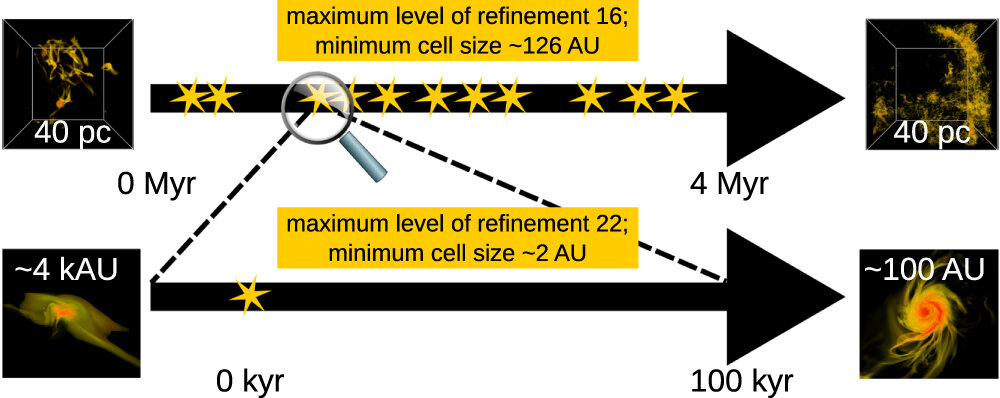
Accretion process is heterogeneous in time, in space, and among protostar.
Küffmeier, Haugbølle & Nordlund 2017
"mass accretion onto the star–disk system is filamentary, acting through accretion channels and accretion sheets"
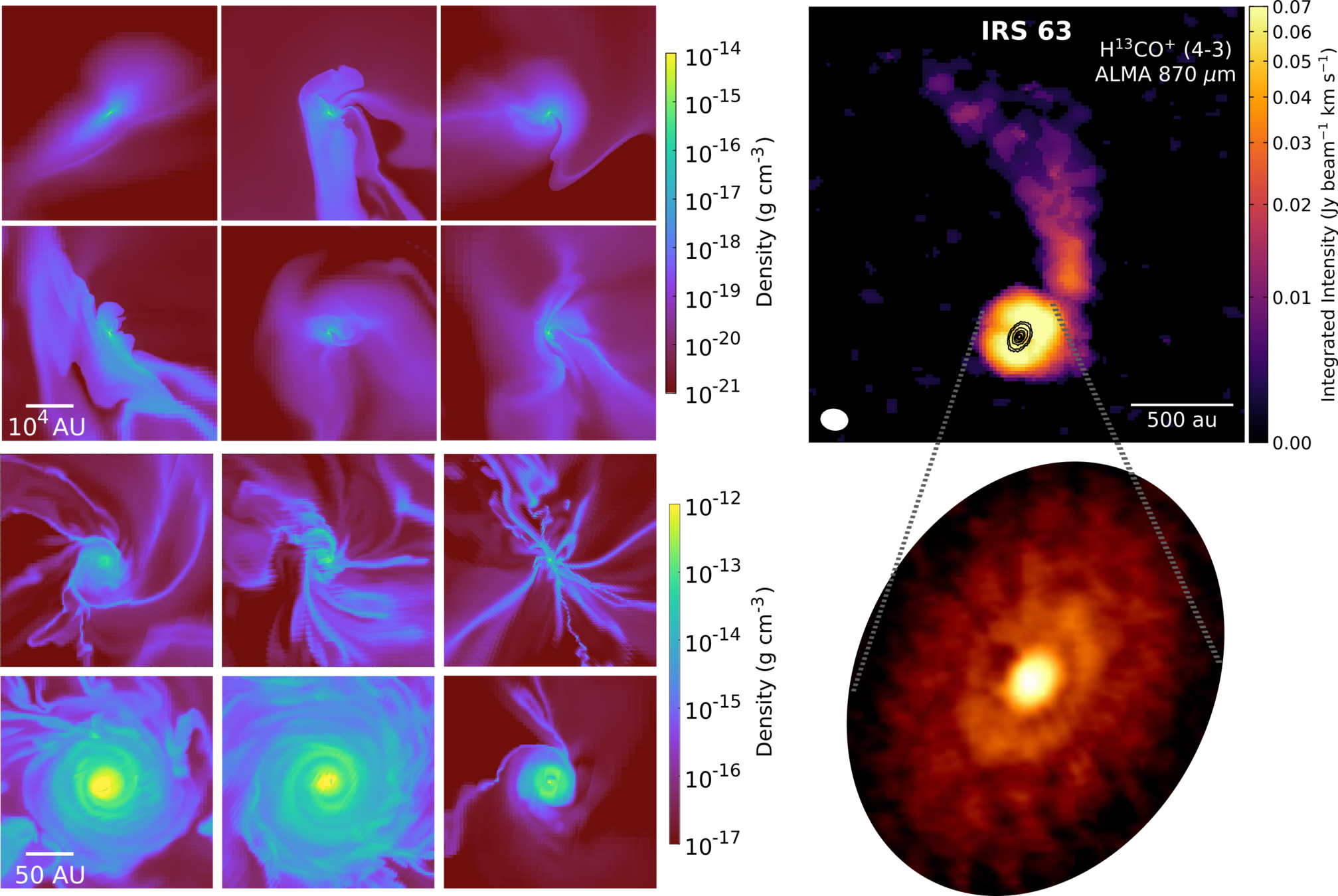
Segura-Cox et al. 2020
"...you simply cannot look at disks with ideal MHD.
I thought you knew all of this, and the people in [---] are not impressed."
e-mail reaction after publication in 2017



Stars form in molecular clouds
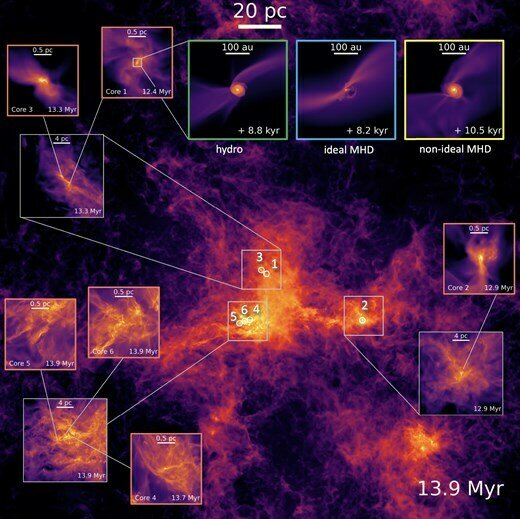
Mayer et al. 2025
To zoom or not to zoom
Santos-Lima et al. 2012
Hydro
ideal MHD
non-ideal MHD
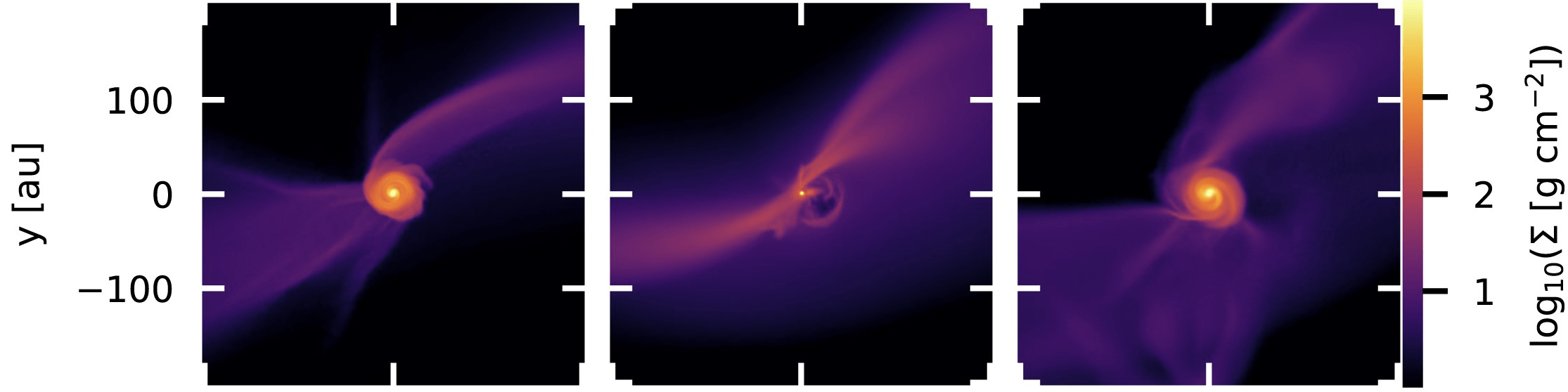
Mayer et al. 2025
100 au
Hydro
ideal MHD
non-ideal MHD
Hydro
ideal MHD
non-ideal MHD
Implications for Al-26 heterogeneity
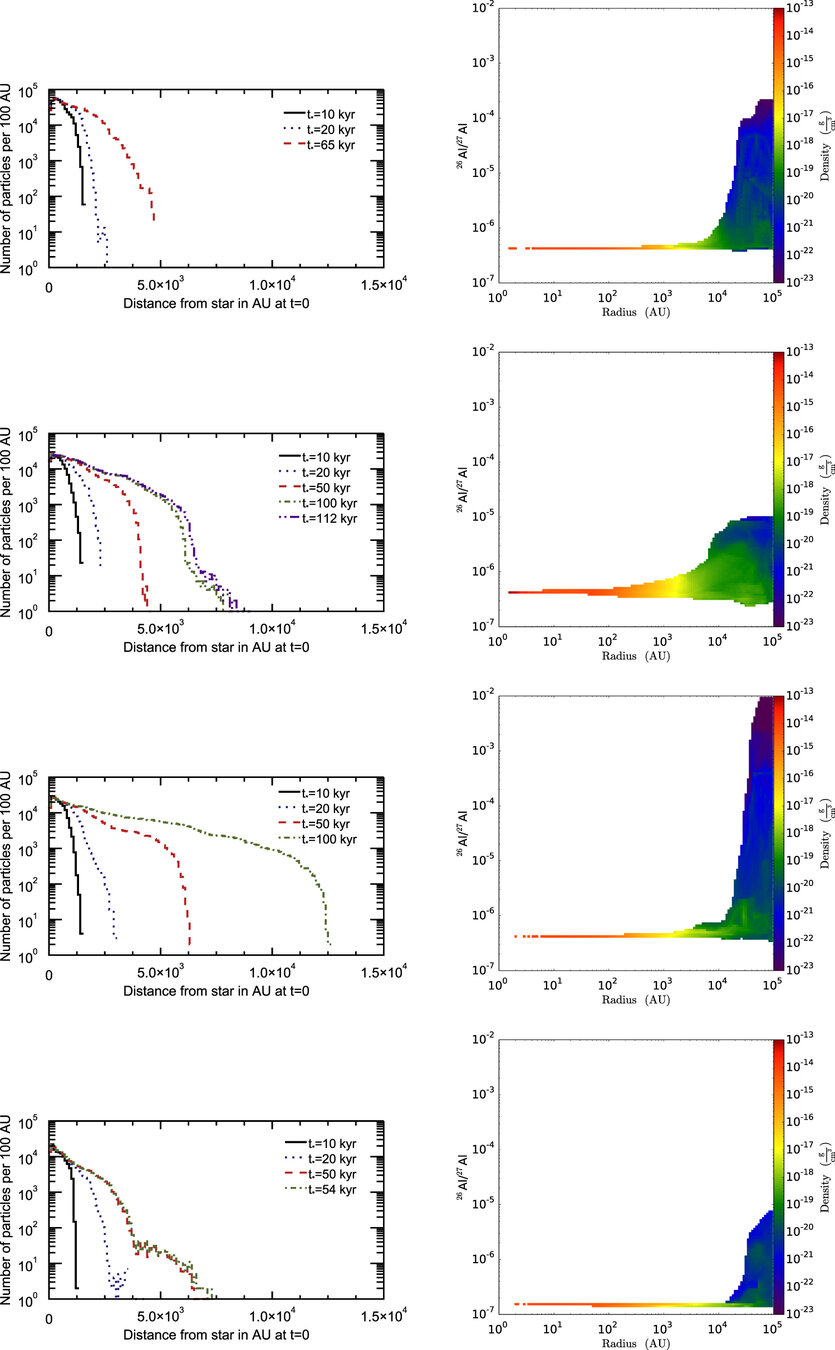
Küffmeier et al. 2016
- Gas is well-mixed within core, and hence Al-26 abundance is fixed during CAI formation (t<~100 kyr).
- BUT: significant deviations in Al-26 abundance beyond the core may likely be imprinted in disk afterwards!
When?
Classical picture: the disk is detached and only evolves afterwards.
When?
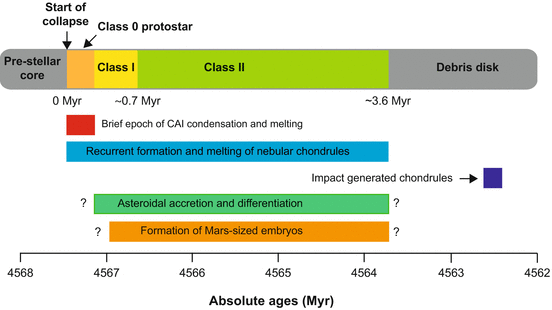
Bizzarro et al. 2017
Disks solely from early collapse is not the full story.
Formation of embedded protostellar multiple
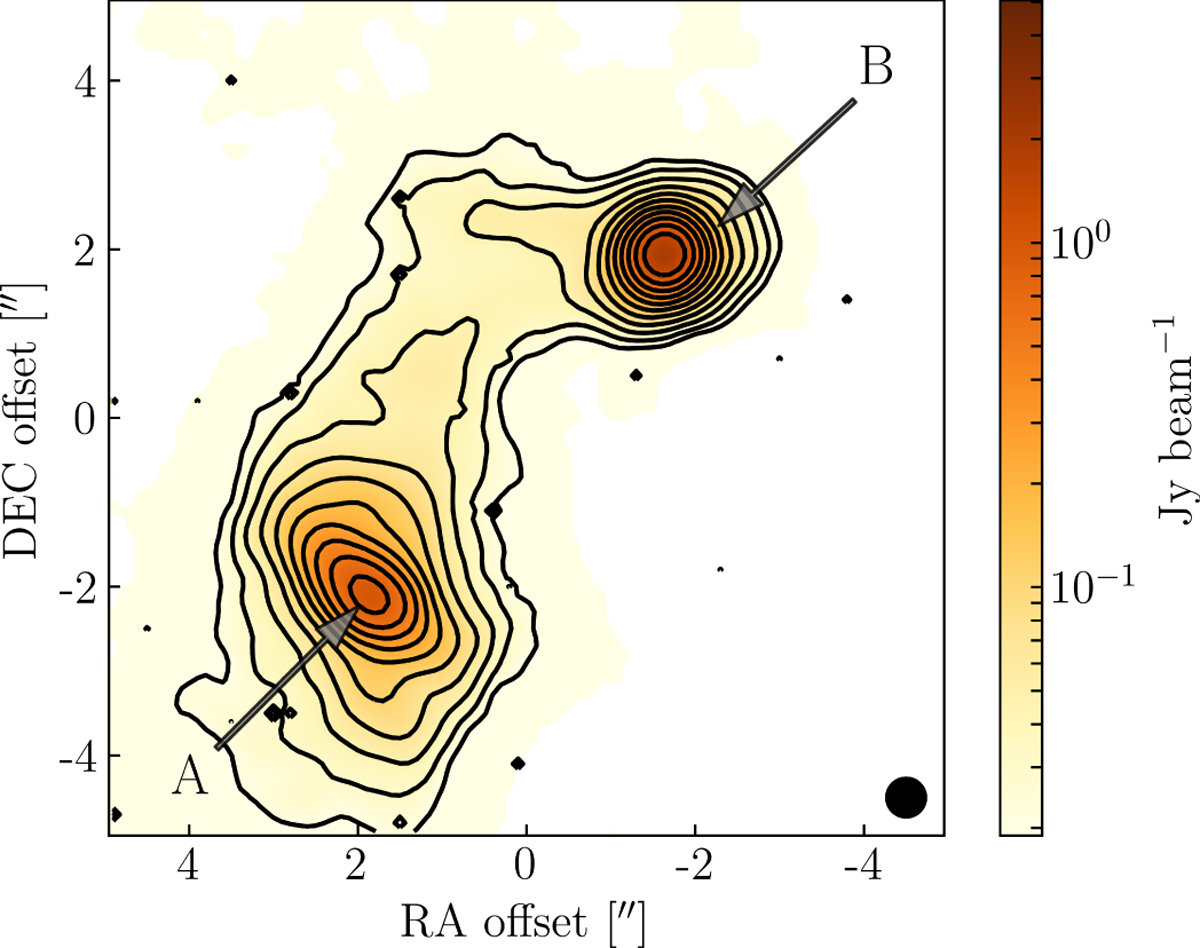
Küffmeier et al. 2019
Jacobsen et al. 2019
IRAS 16293-2422
636 au
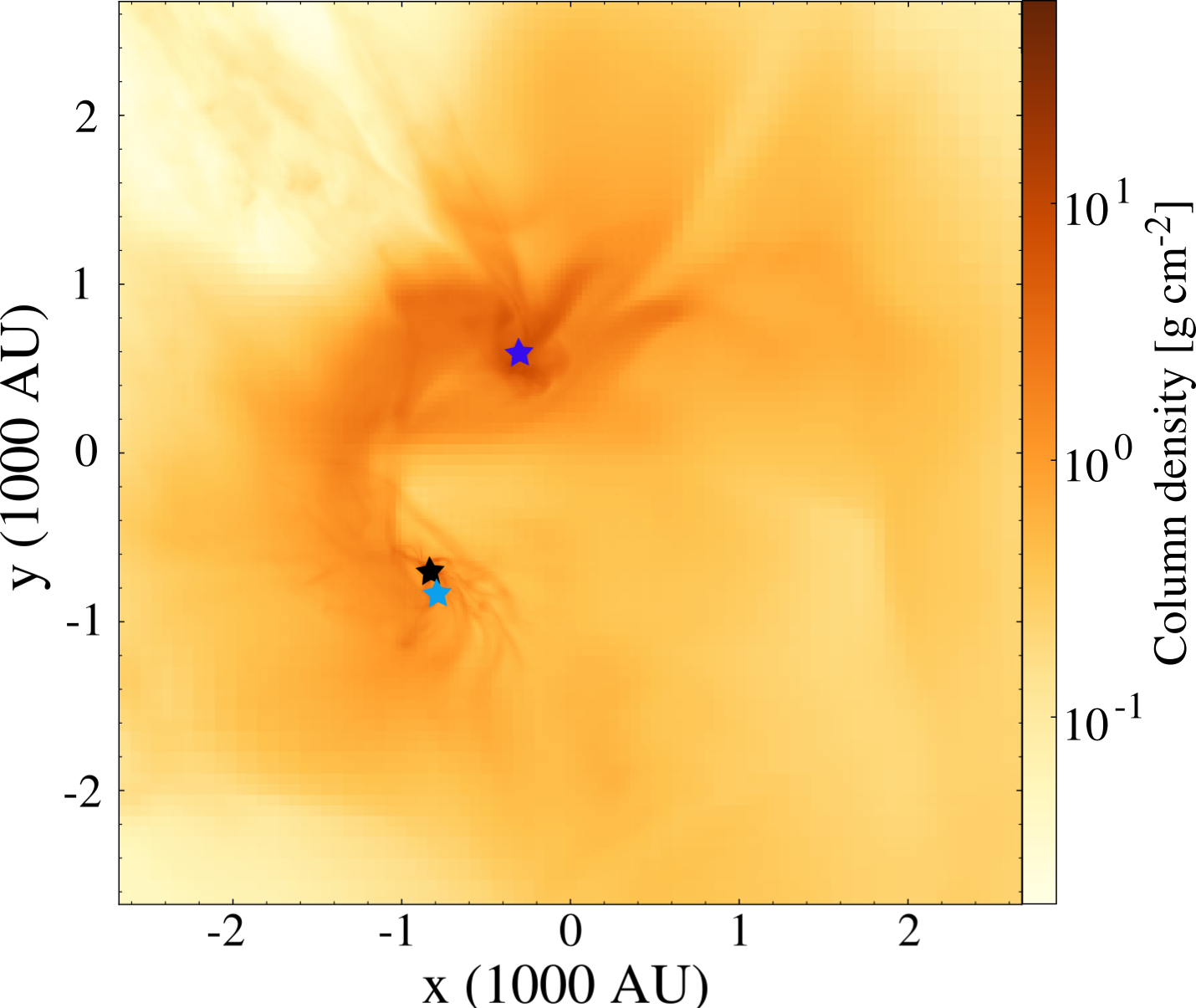
Zoom-in simulation
Transient "bridge"-structures* (τ~10 kyr) are a common by-product of turbulent fragmentation
*Could be easily classified as "streamer" during "bridge" dispersal because material accretes towards the companion with highest gravitational potential
Formation of embedded protostellar multiple
Küffmeier+ 2019
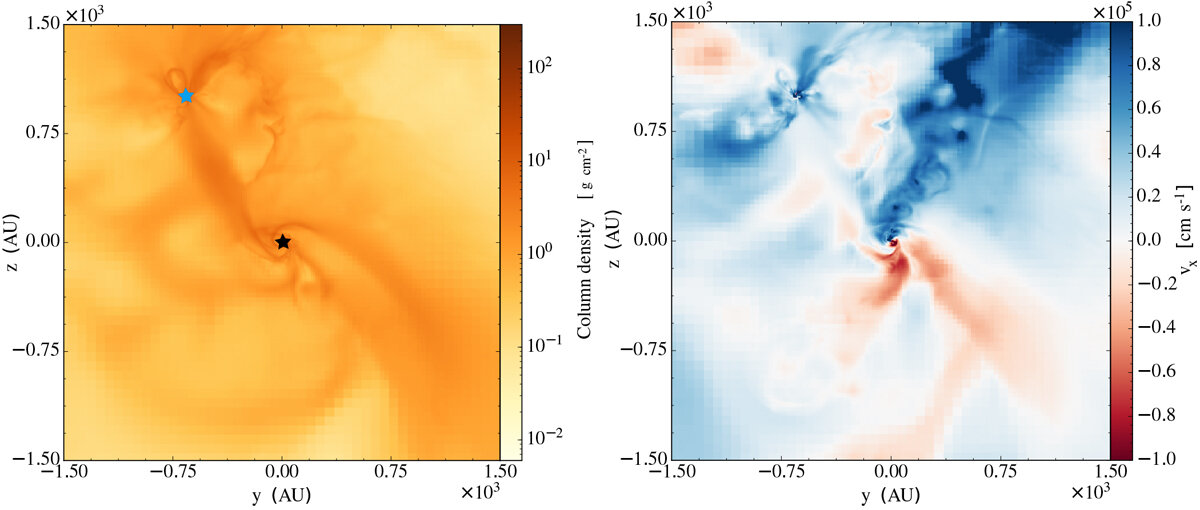
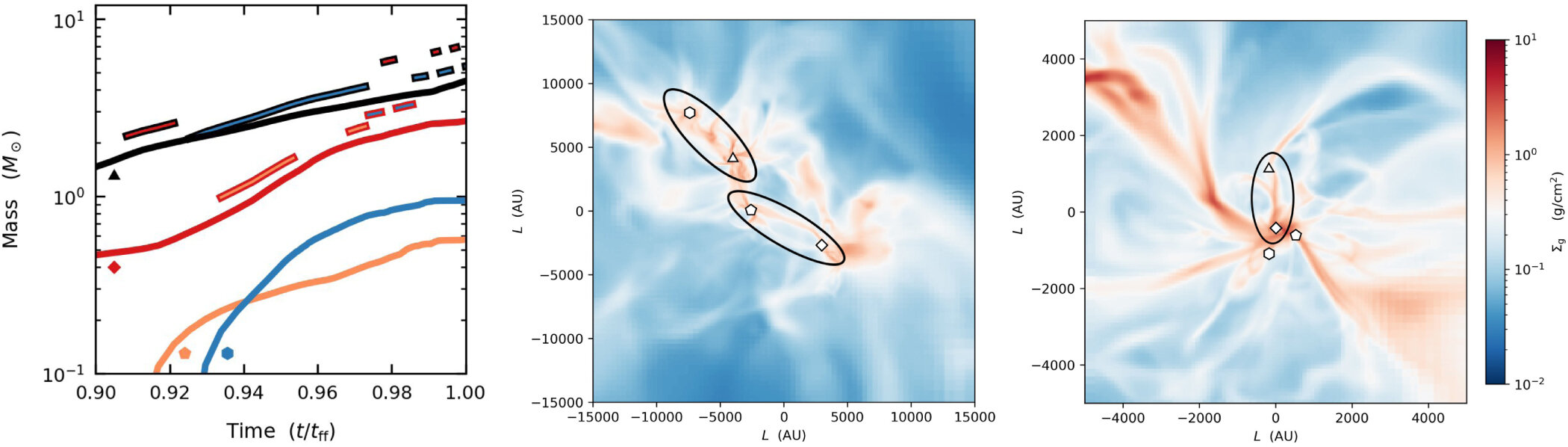
Küffmeier+ 2019
Lee, Offner+ 2019
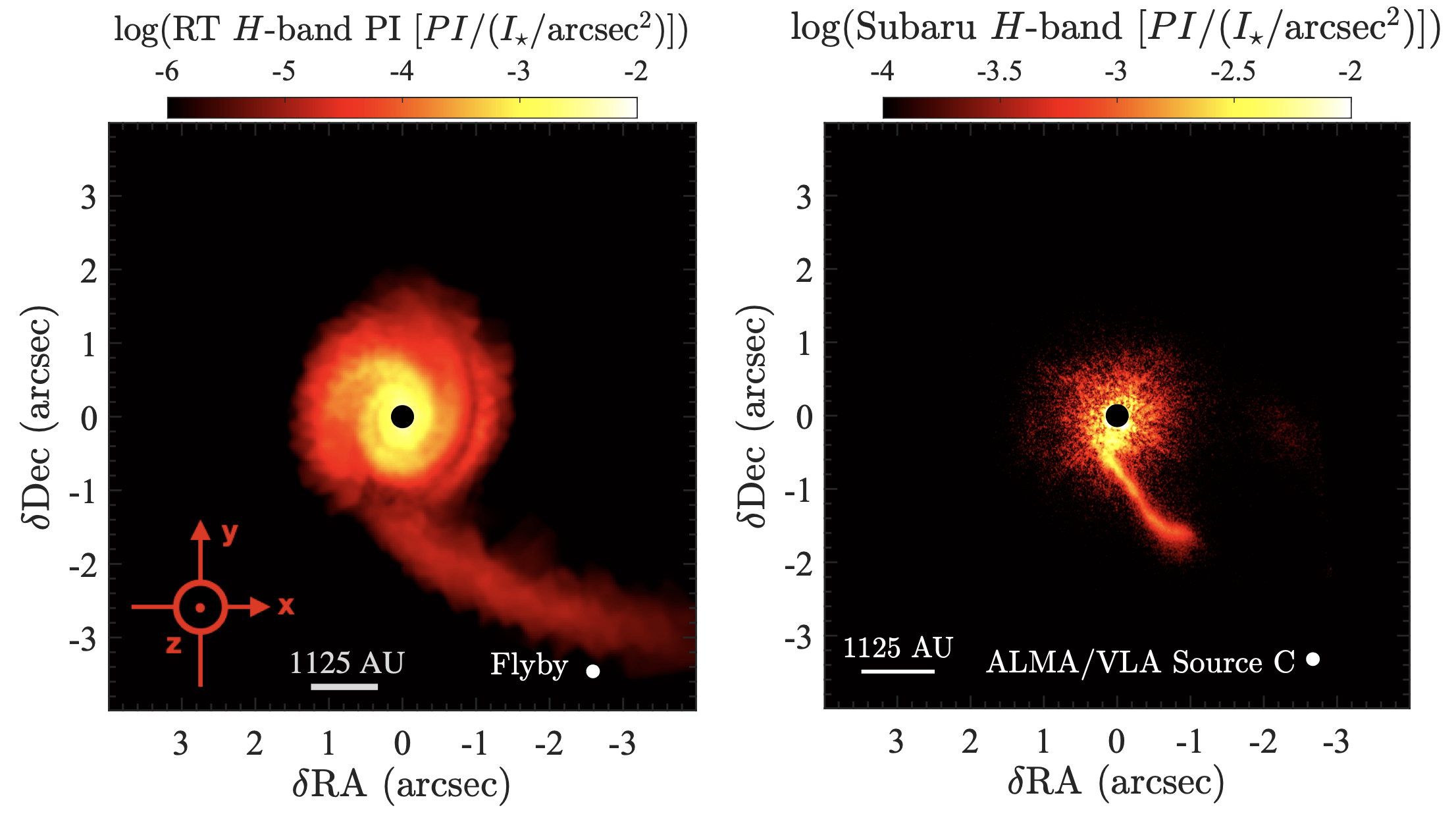
Dong+ '22
credit to simulation: Cuello
Is Z CMa a by-product of multiplicity formation, stellar flyby or something else?

Transient "bridge"-structures (τ~10 kyr) are common
Formation of embedded protostellar multiple
Close binaries can form wide
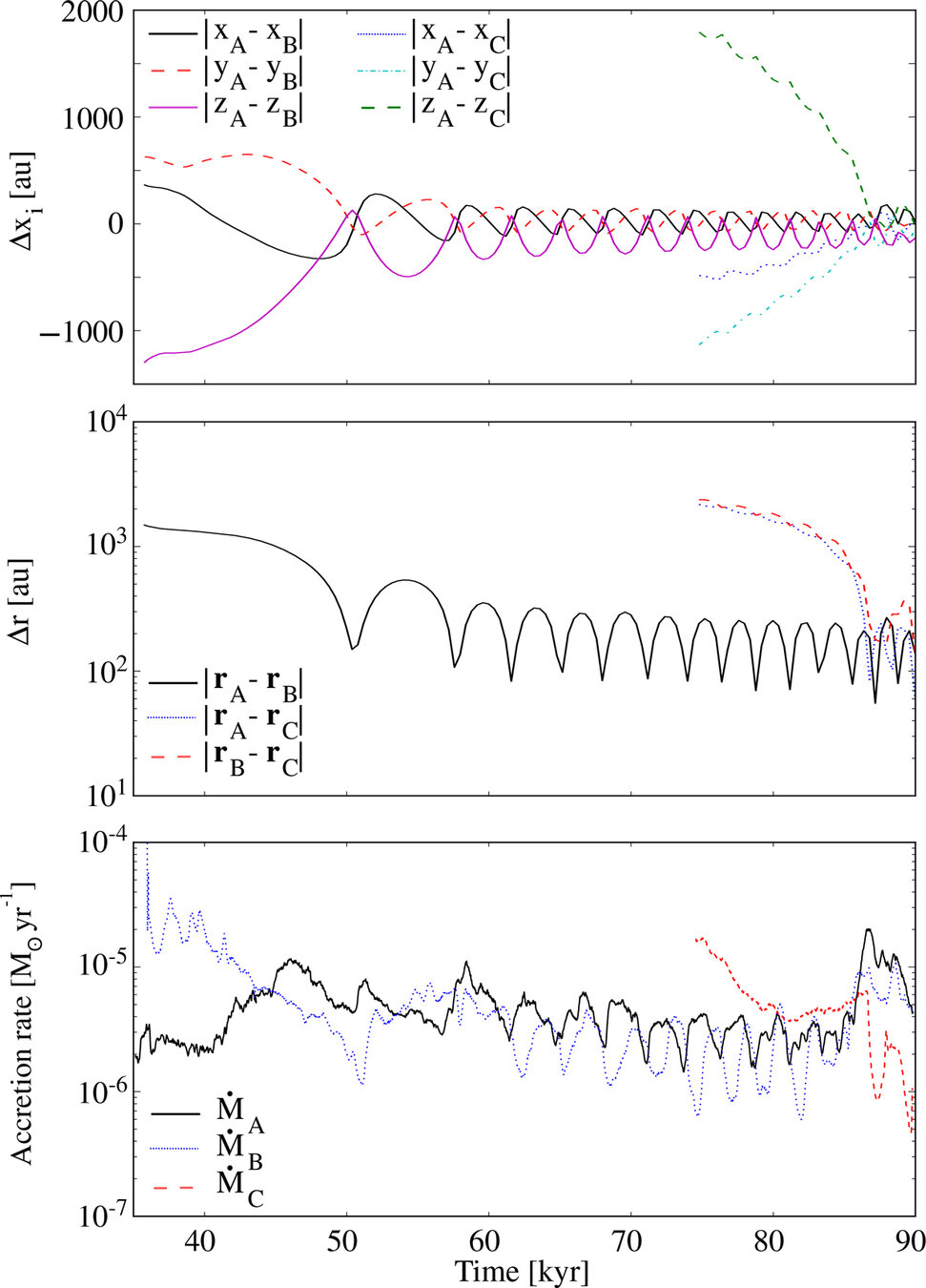
(for statistical analysis of binary formation see Kuruwita & Haugbølle '23; for comprehensive overview of formation pathways see talk by K. Kratter )
Periodic episodic accretion
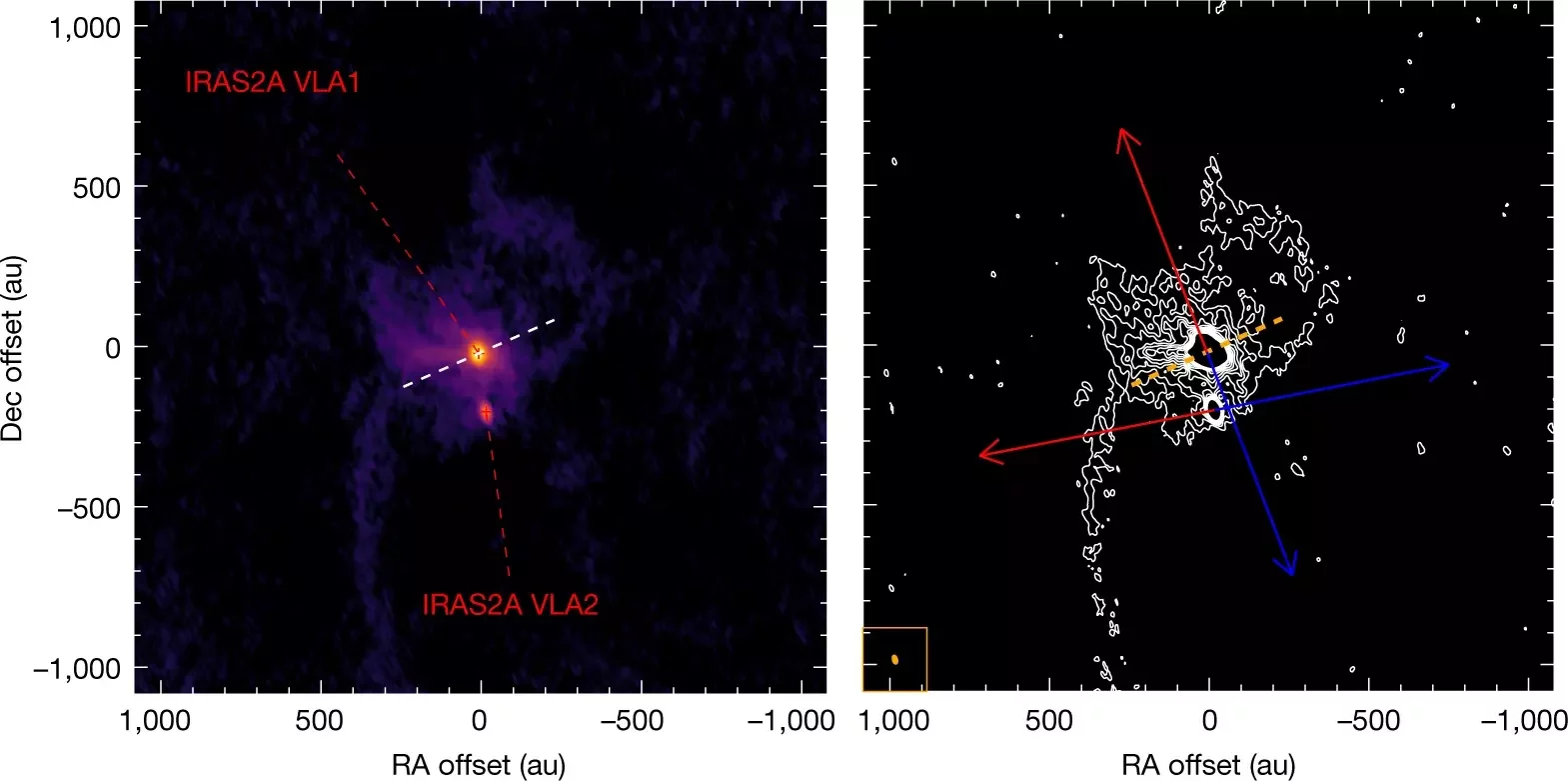
Possible explanation for wobbly, perpendicular jets in NGC1333-IRAS2A VLA1/2 (Jørgensen+ '22)
Küffmeier+ '19
What fraction of close binaries formed wide?
Formation of embedded protostellar multiple
Multiples can share accretion reservoir
Küffmeier+ '19
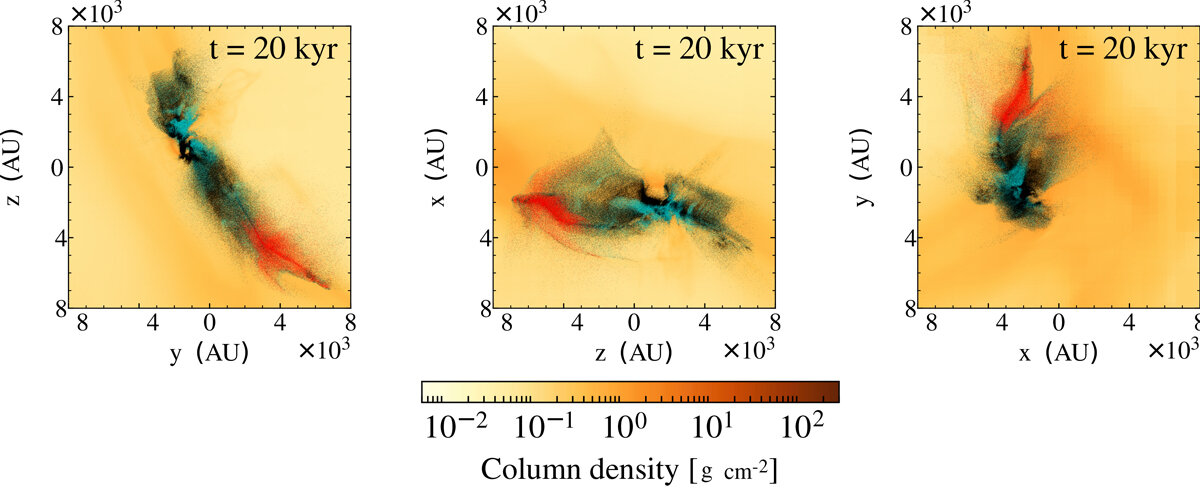
The colored dots show the location of gas accreting onto primary (black), secondary (cyan) and tertiary (red) at t=20 kyr after primary formation.
Shared mass reservoir of binary
zoom-in: max. resolution 0.8 AU; barotropic eq. of state; ideal MHD (simulations by T. Haugbølle)
1000 au
Accreting from companion's disk
Caveat: zoom-in with only maximum resolution of 3 AU; barotropic equation of state; ideal MHD (more to be done, but intriguing)
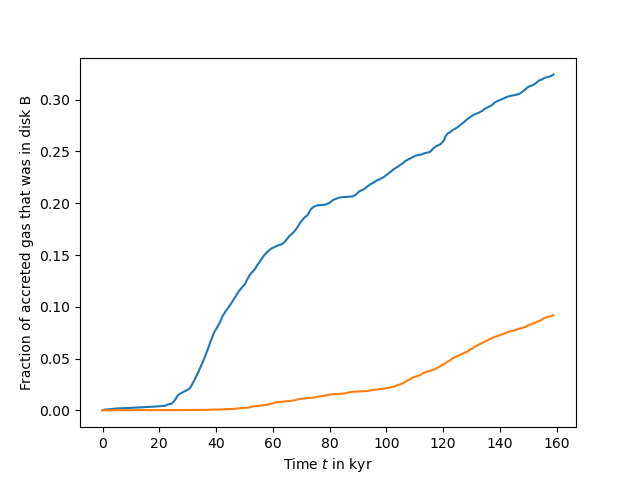
about 30 % of accreting mass goes through the star's own disk
almost 10 % of accreting mass of companion goes through the primary star's disk
preliminary
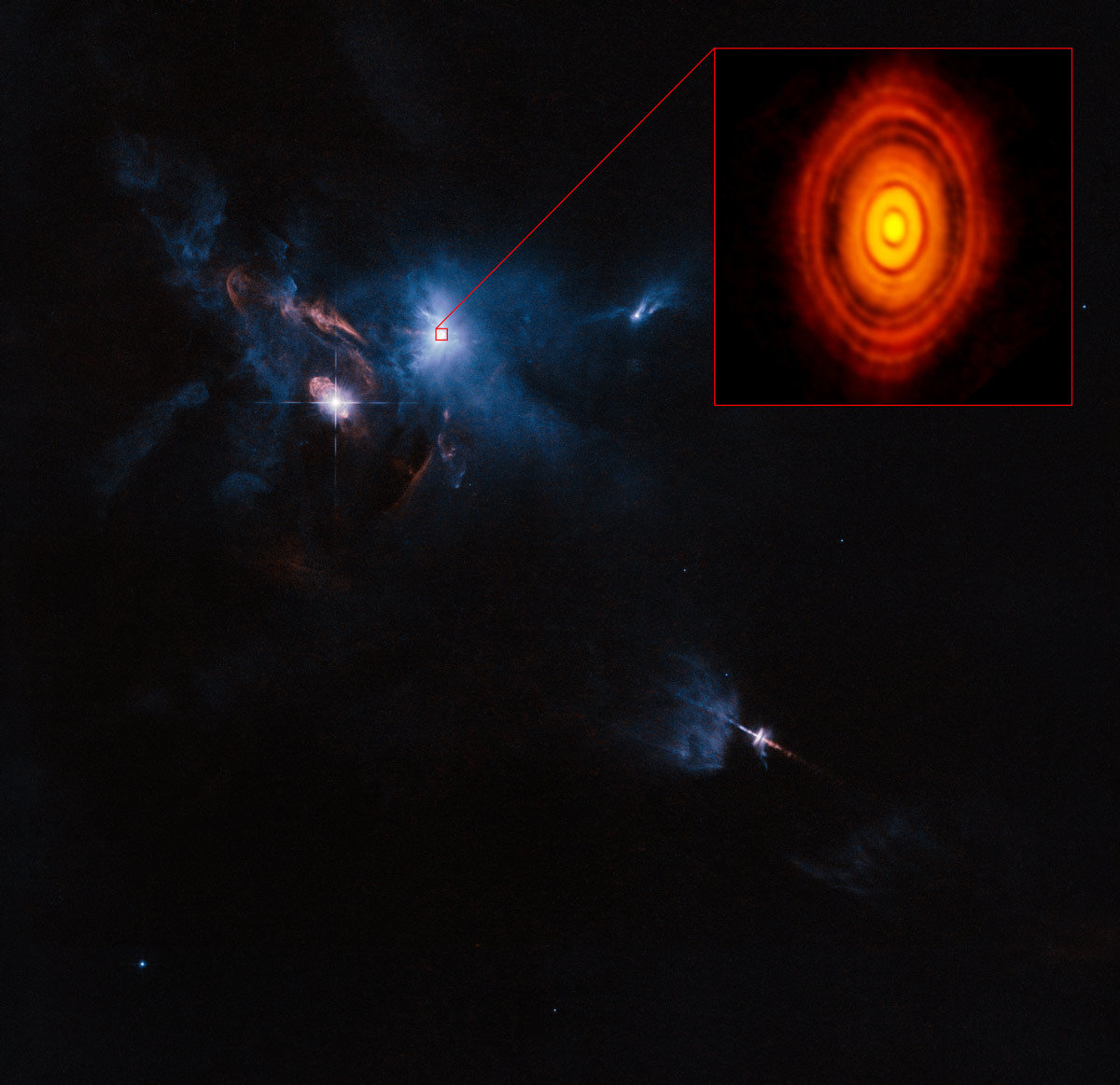
Credit: ALMA (ESO/NAOJ/NRAO)
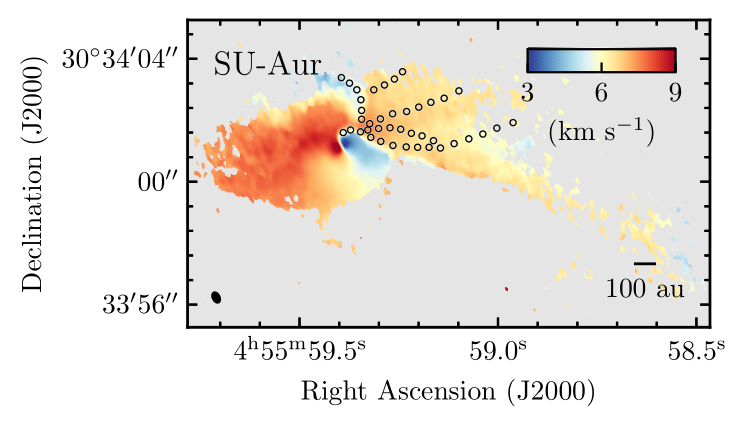
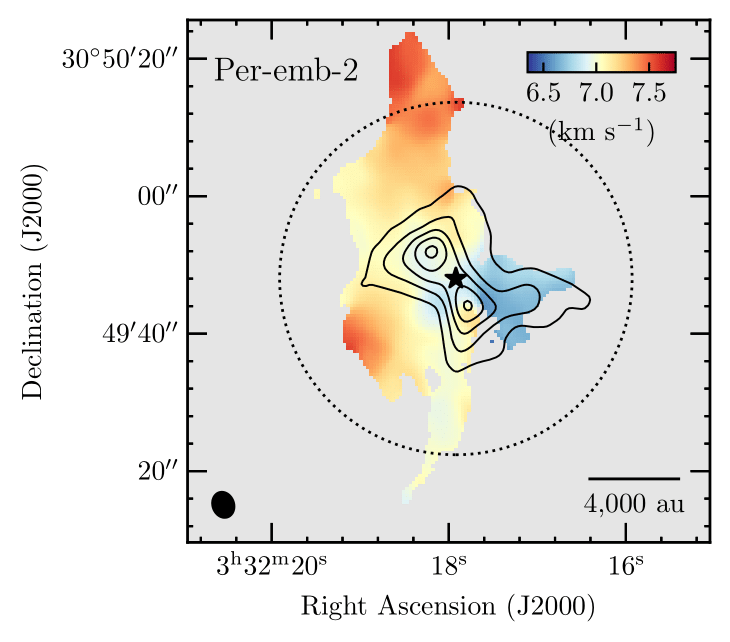
Ginski et al. 2021
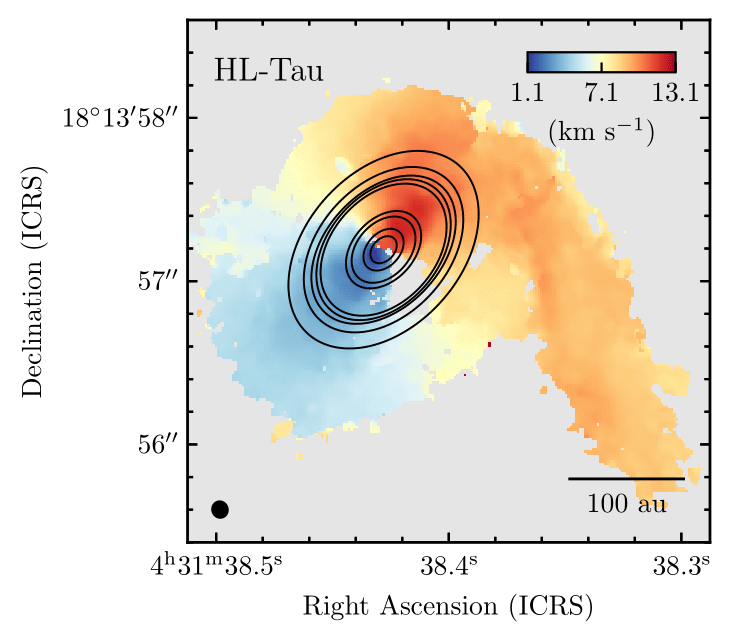
Yen et al. 2019
Garufi et al. 2021
Pineda et al. 2020
50 au
BHB1 (Alves et al. 2020), GM Aur (Huang et al. 2021), IRS 63 (Segura-Cox in prep.), AB Aur (Grady et al. 1999 / Fukagawa et al. 2004), M512 Grant et al. 2021, Gupta et al. 2024, Cacciapuoti et al. 2024) ...
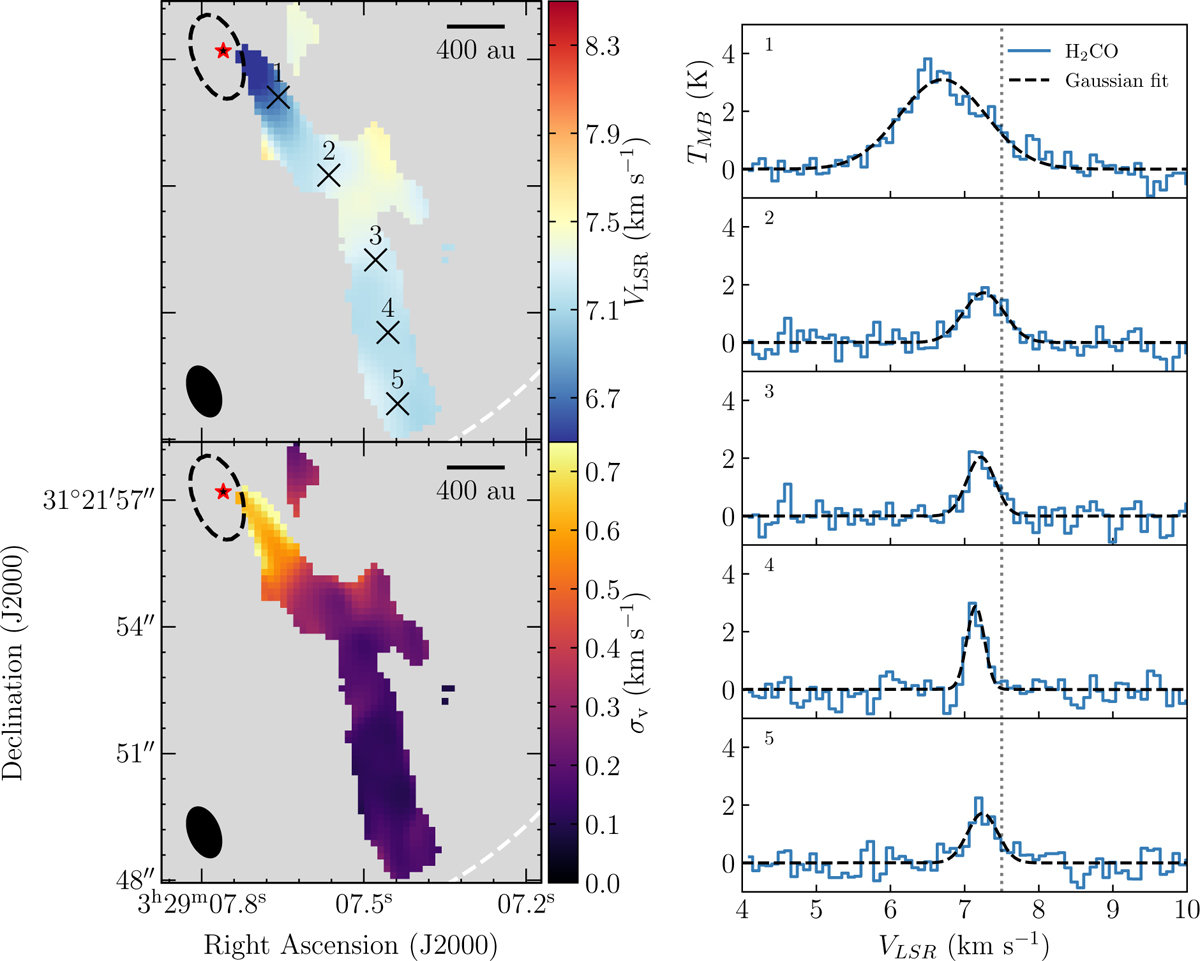
Per-emb-50
Valdivia-Mena et al. 2022
Science question:
Can we get better (statistical) constraints on the relevance and importance of (late) infall from existing simulation data?
Streamers:
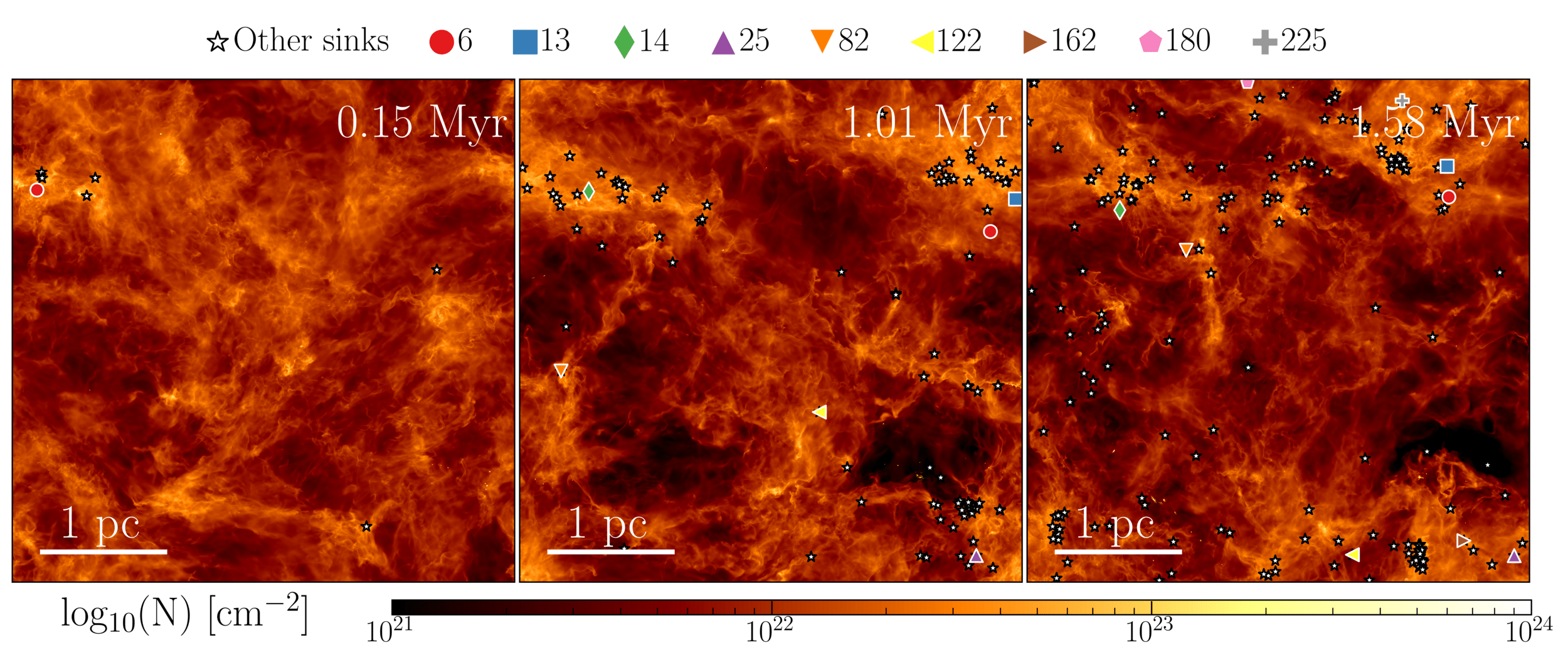
Cores are in clouds
credit: Holm
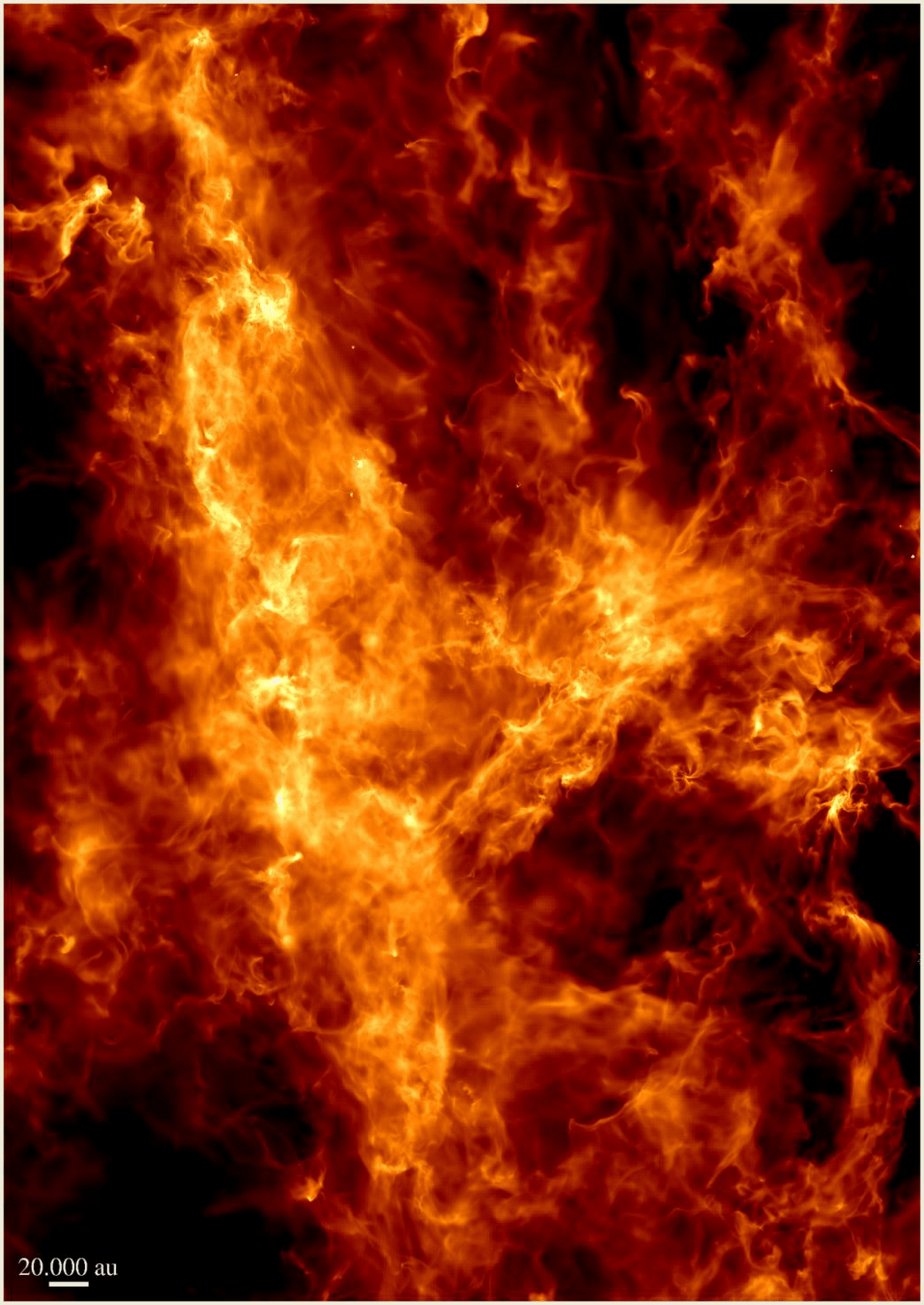
Christian G. Holm

Zoom-in onto 9 star-disk systems: 4 pc -> sub-au
ideal MHD (non-ideal MHD papers in progress)
isothermal parental run
barotropic equation of state for zoom-ins
average column density
code: DISPATCH
(Machida+ 2007)
\Sigma\approx 10^{22} \rm cm^{-2}
(Nordlund+ 2018)
Granzow Holm et al. 2026
Core properties
Christian G. Holm
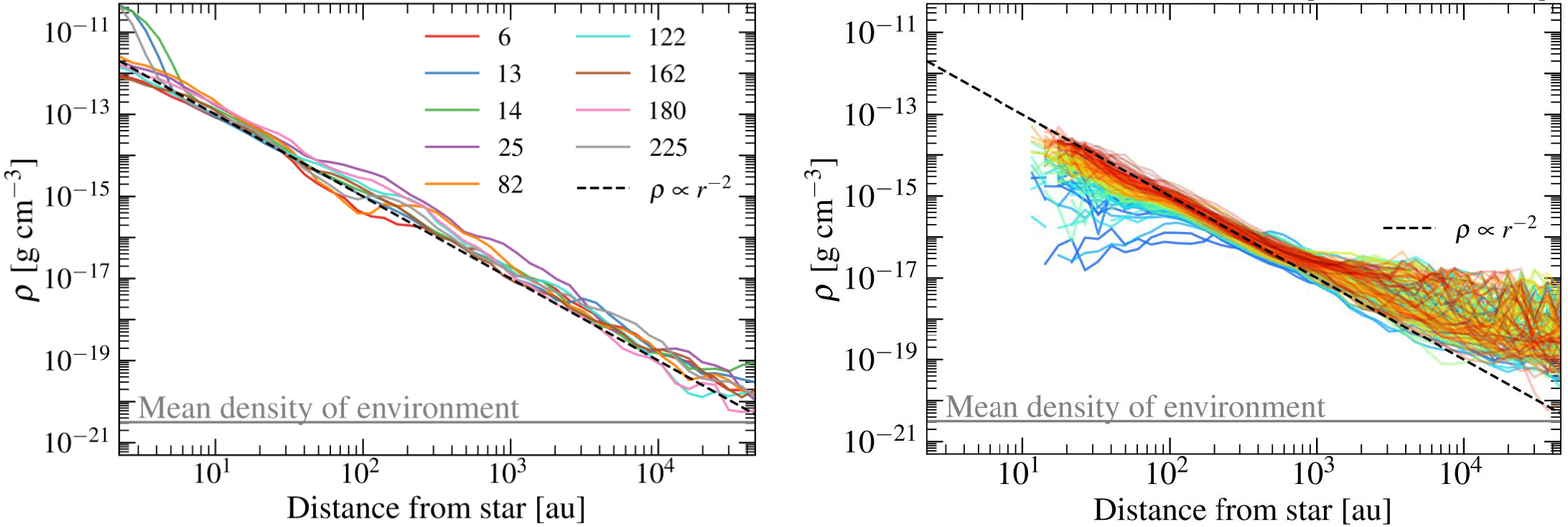
\sigma_{\rm v}=(0.34 \pm 0.04)\ \rm km\, s^{-1}
B_{\rm rms} = (53 \pm 20)\ \mu\rm G
(Li+ 2023)
\sigma_{\rm v} = 0.29 \ \rm km\, s^{-1}
10\ \mu\rm G
to
100\ \mu\rm G
(Crutcher+ 2010, Crutcher 2012)
Prestellar core properties
Observations
Selected the most isolated!
denser environment is common
Granzow Holm et al. 2026
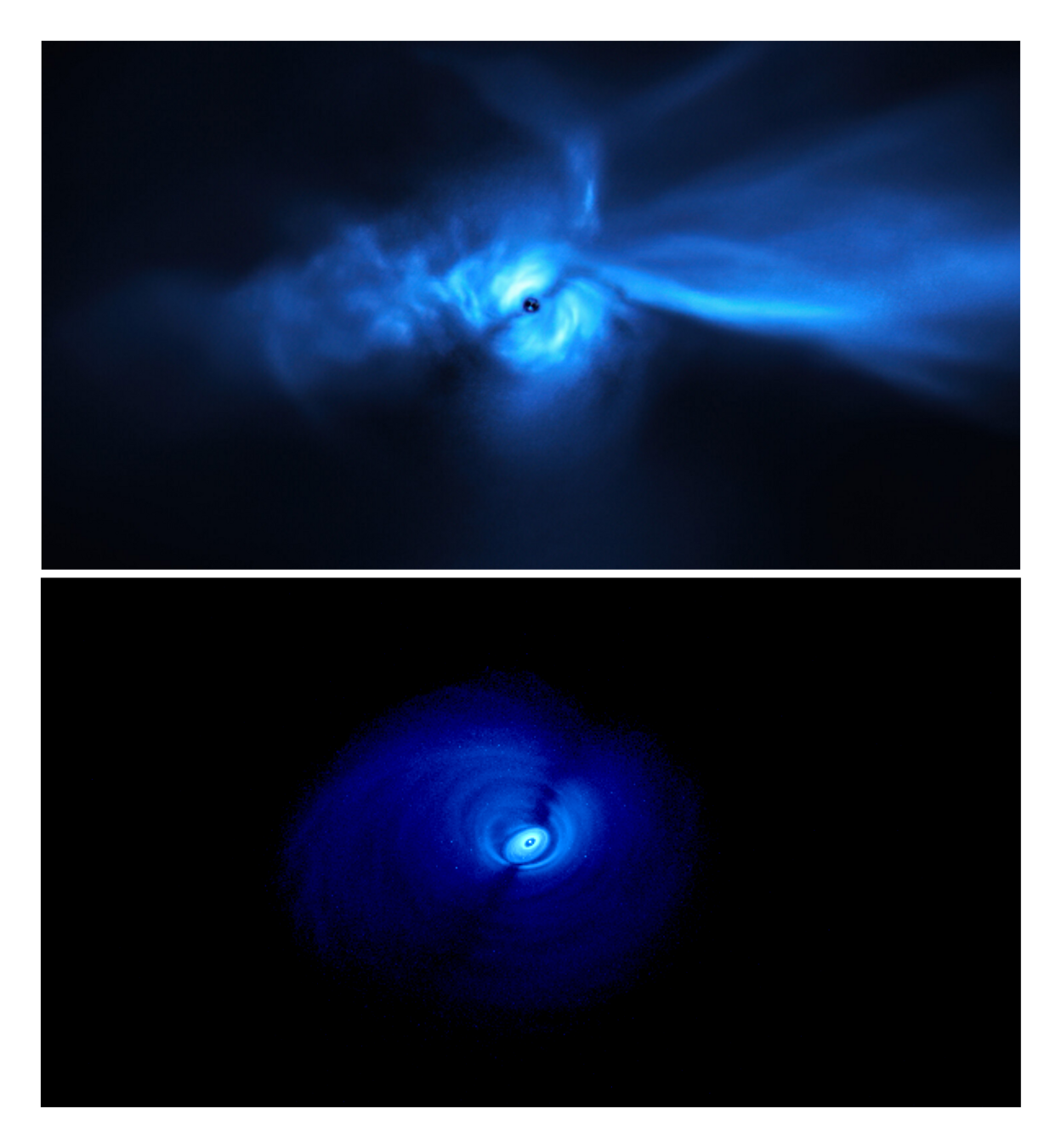
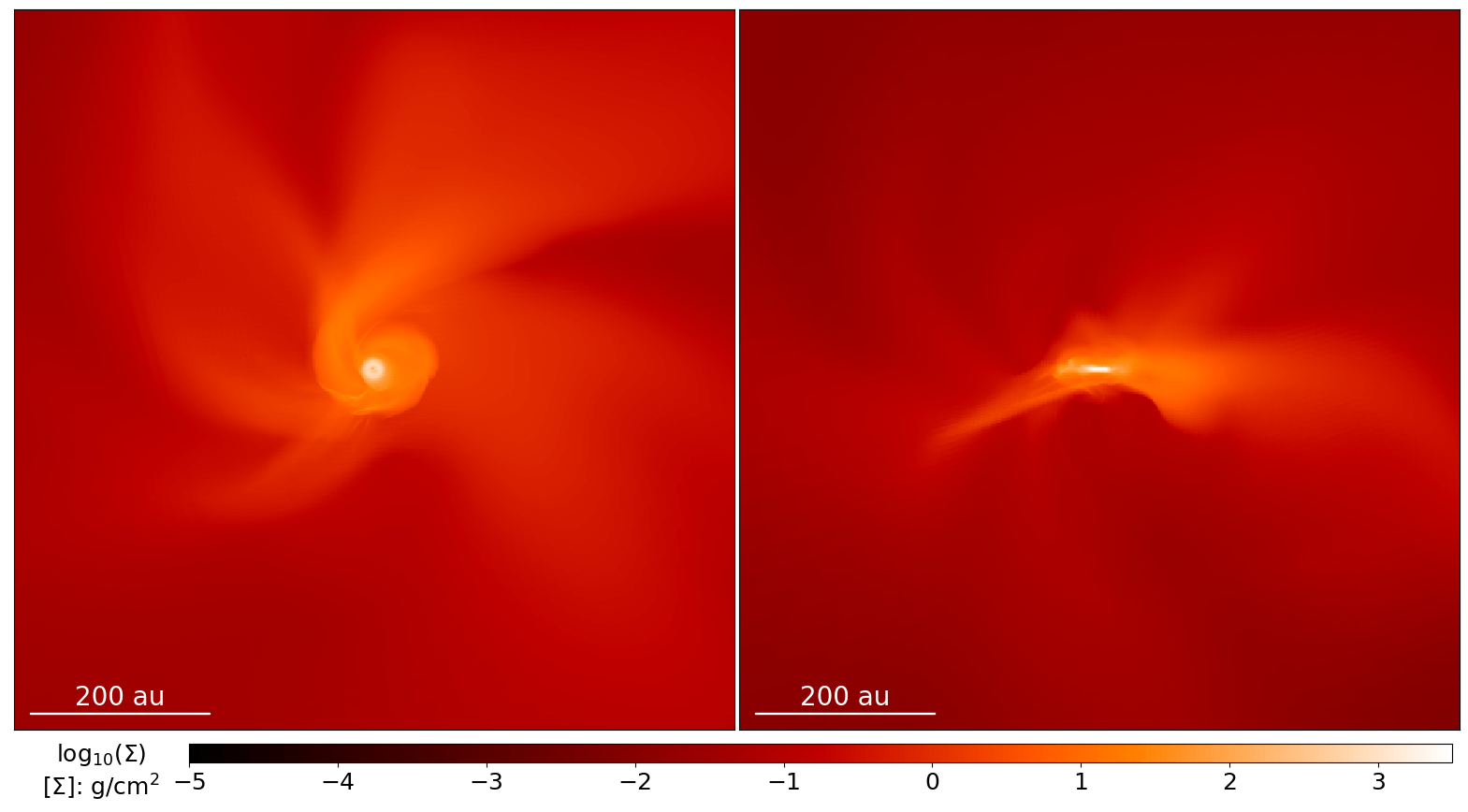
Disks (re)form via filamentary infall
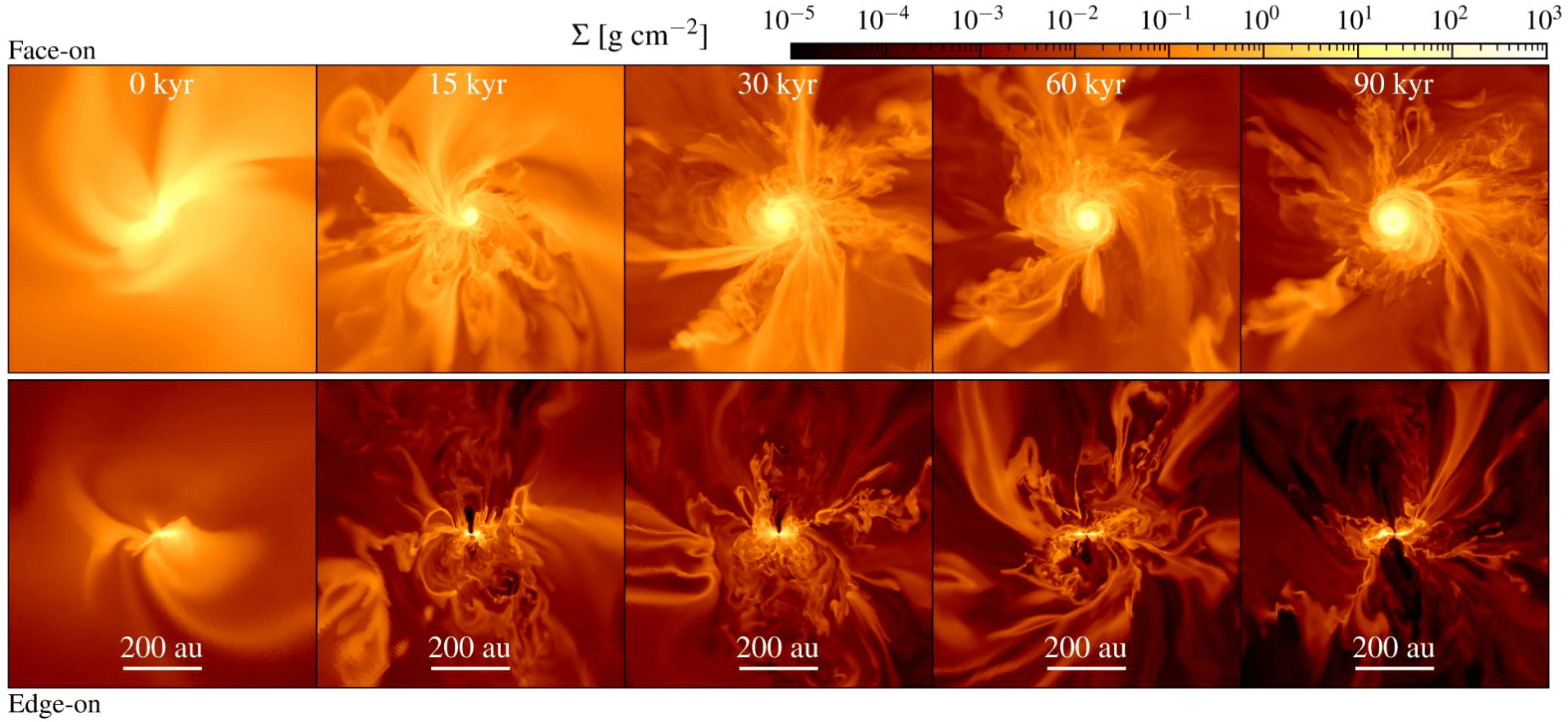
...but it happens earlier
smoother, and easier
the lower the ionization rate is.
\color{white}t=2 \, \rm kyr
...and YES, the disk properties are strongly affected by non-ideal MHD effects!
Granzow Holm et al. 2026
Five early massive streamers
Christian G. Holm
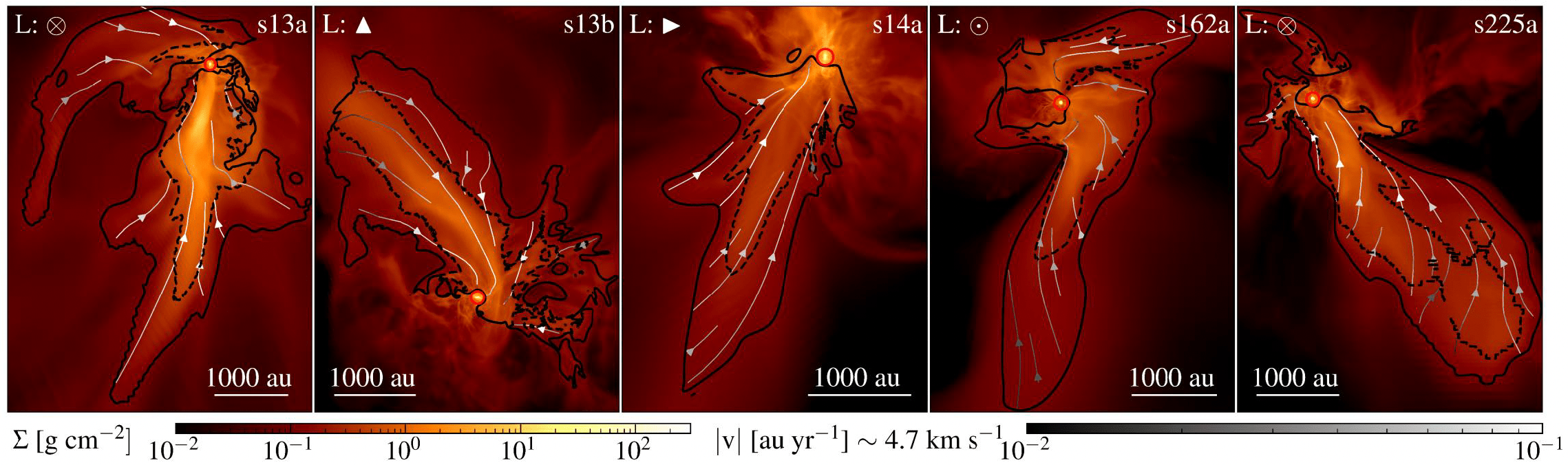
Streamer criteria:
\Sigma>0.1 \rm g\, cm^{-2}
v_{\rm rad, in}>v_{\rm rot}
The density contrast relative to the environment is a factor of 4 to 6.
The streamer mass is between 0.1 and 0.4 .
The streamers persist for ~10 kyr, with mass accretion rates of .
10^{-5} \rm M_{\odot}\, yr^{-1}
\rm M_{\odot}
Granzow Holm et al. 2026
Five early massive streamers
Christian G. Holm
Streamer criteria:
\Sigma>0.1 \rm g\, cm^{-2}
v_{\rm rad, in}>v_{\rm rot}
The density contrast relative to the environment is a factor of 4 to 6.
The streamer mass is between 0.1 and 0.4 .
The streamers persist for ~10 kyr, with mass accretion rates of .
10^{-5} \rm M_{\odot}\, yr^{-1}
\rm M_{\odot}
Granzow Holm et al. 2026

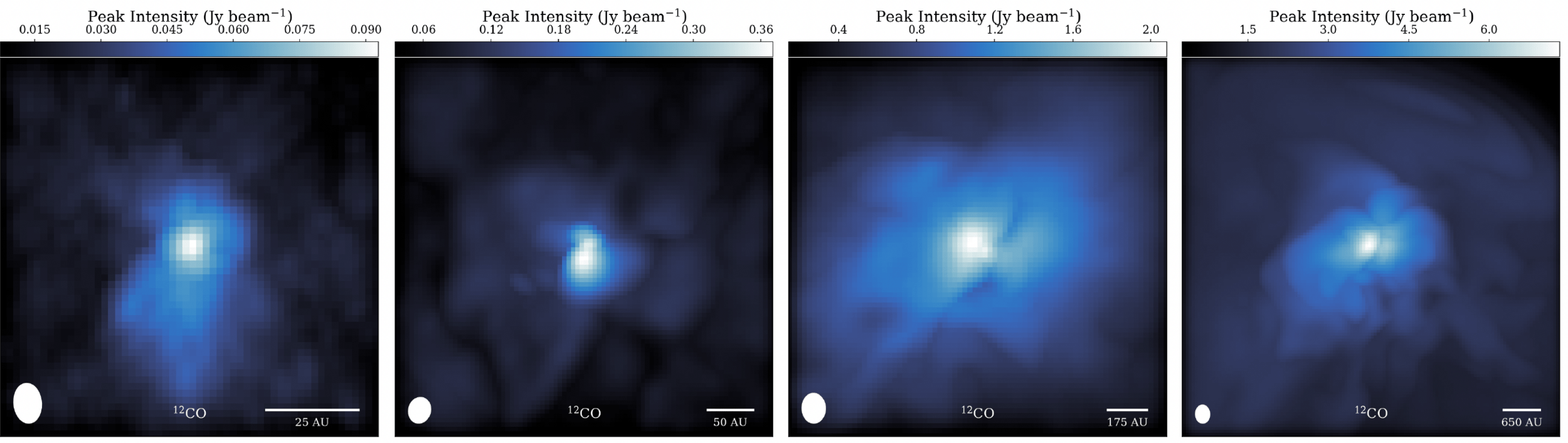
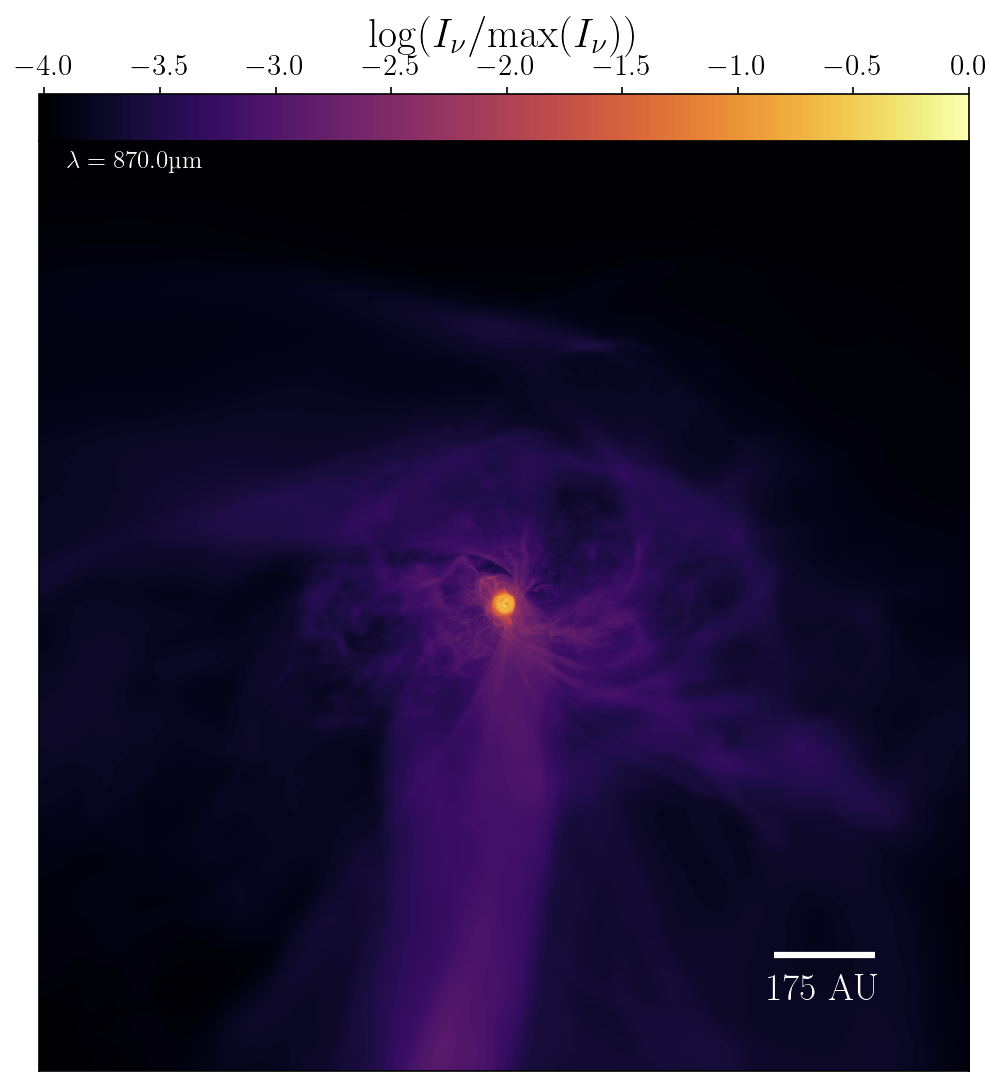
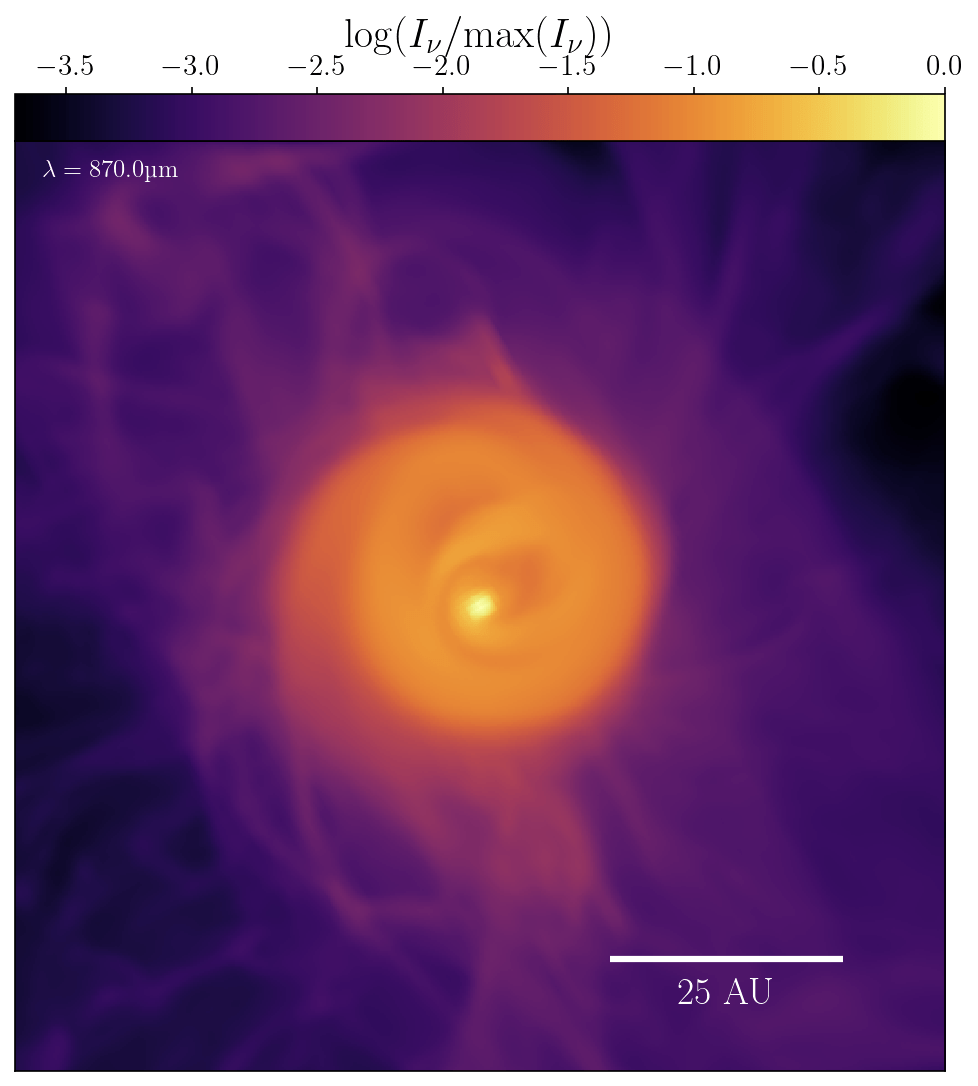
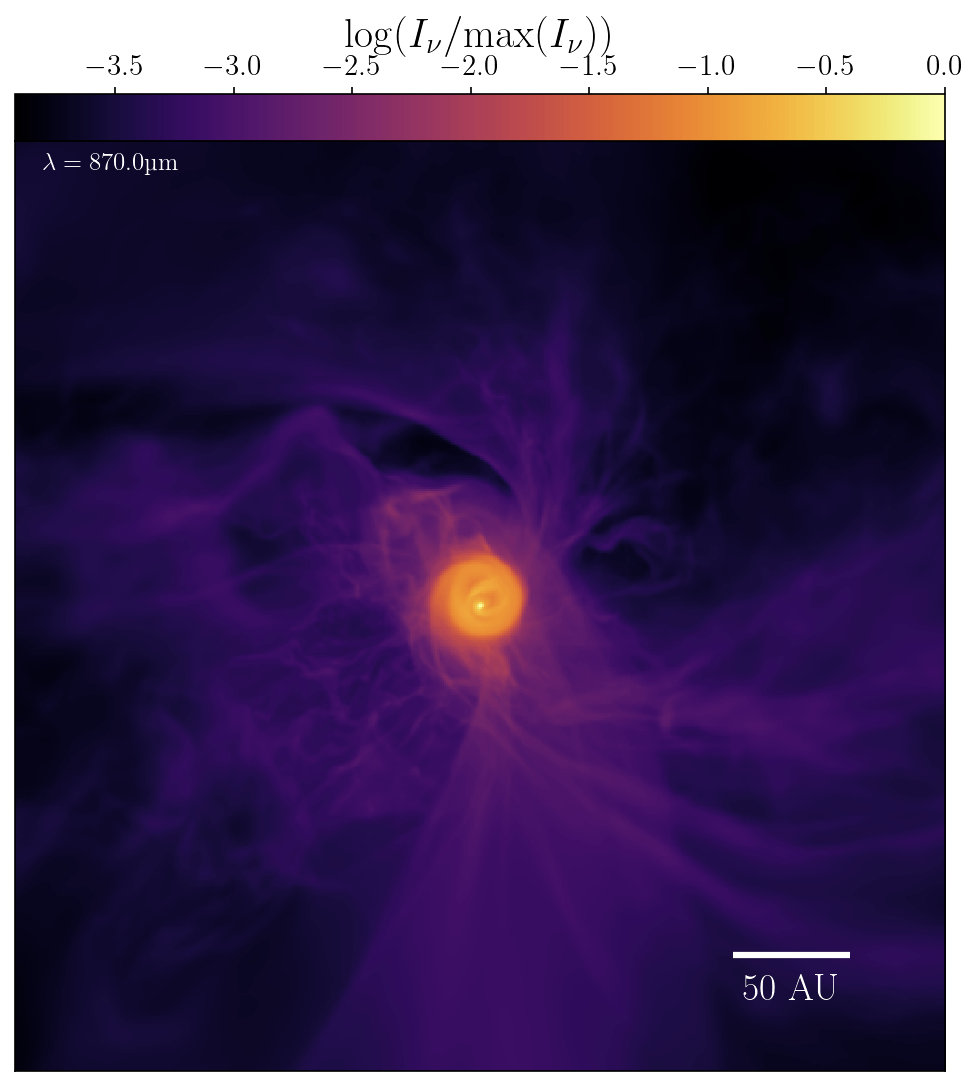
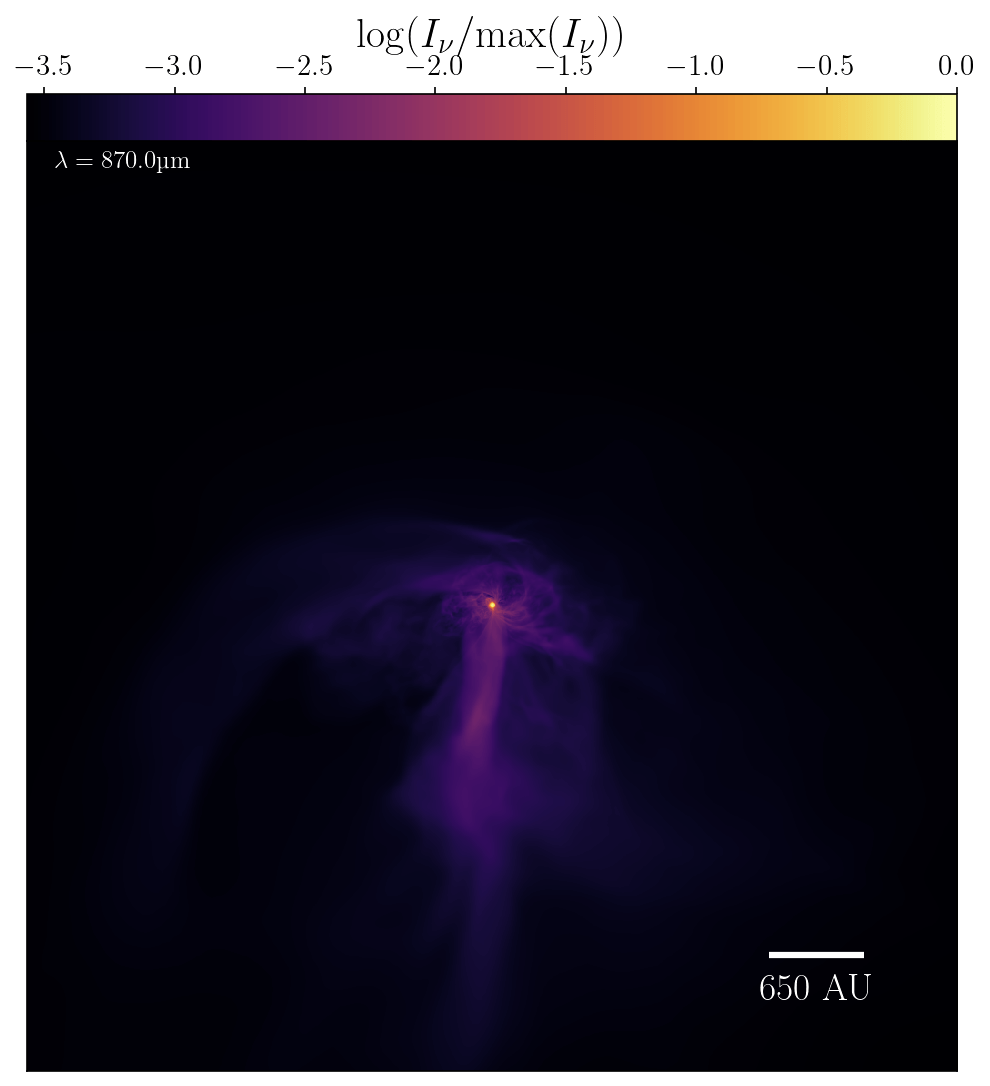
Synthetic observations
preliminary results
see also Andreas Kjær Rasmussen's streamer catalogue: https://streamer-explorer.streamlit.app/
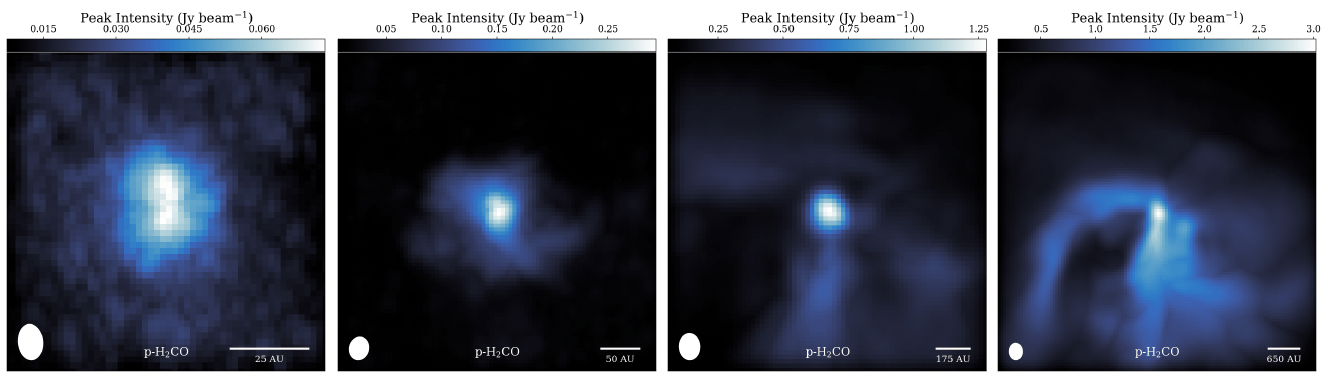
Beyond the collapse?
Origin of accreting gas
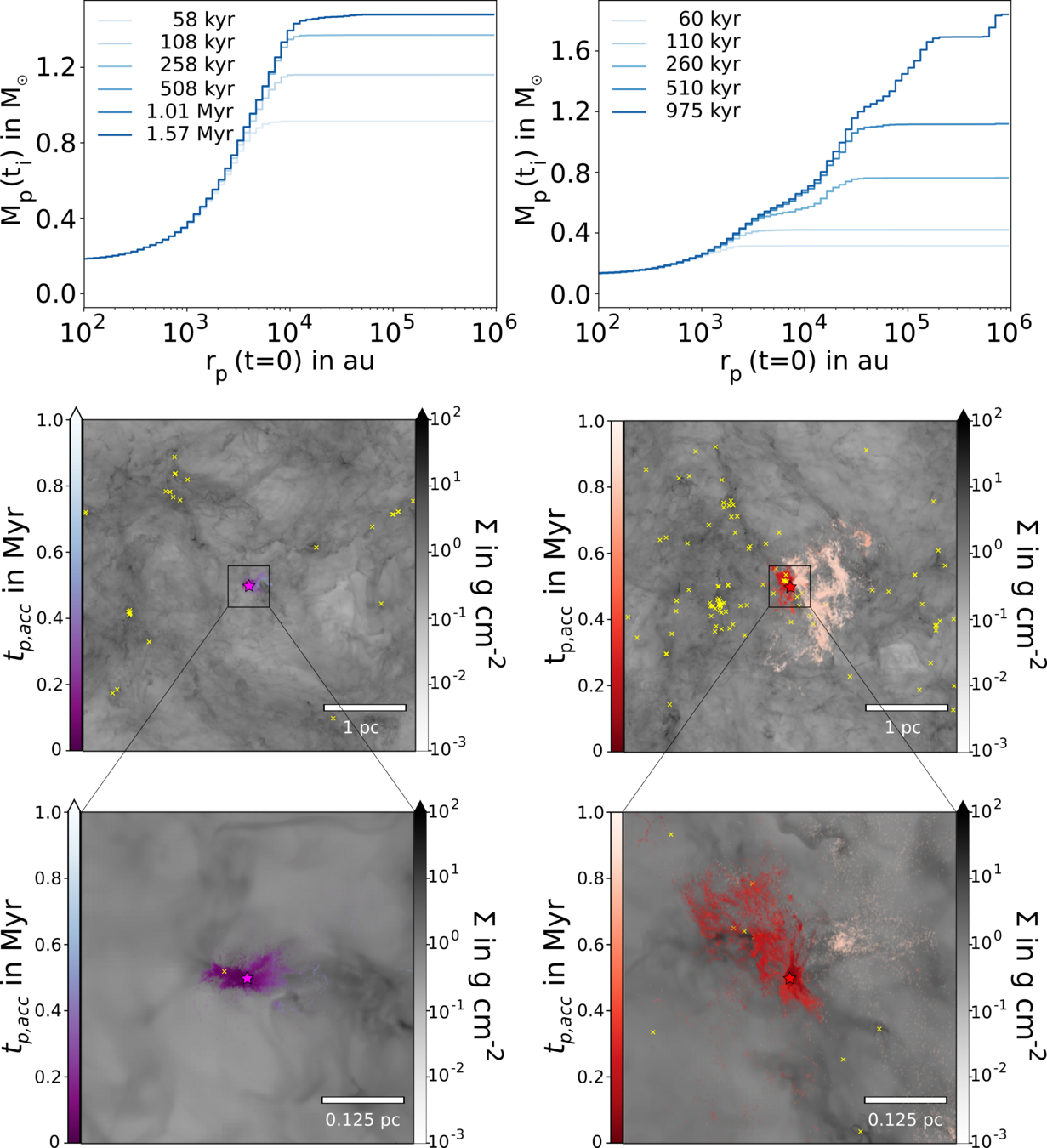
Küffmeier, Jensen & Haugbølle '23
see also Pelkonen+ 2021
Origin of accreting gas
Kaalva, Offner, Filippova & Grudic '26
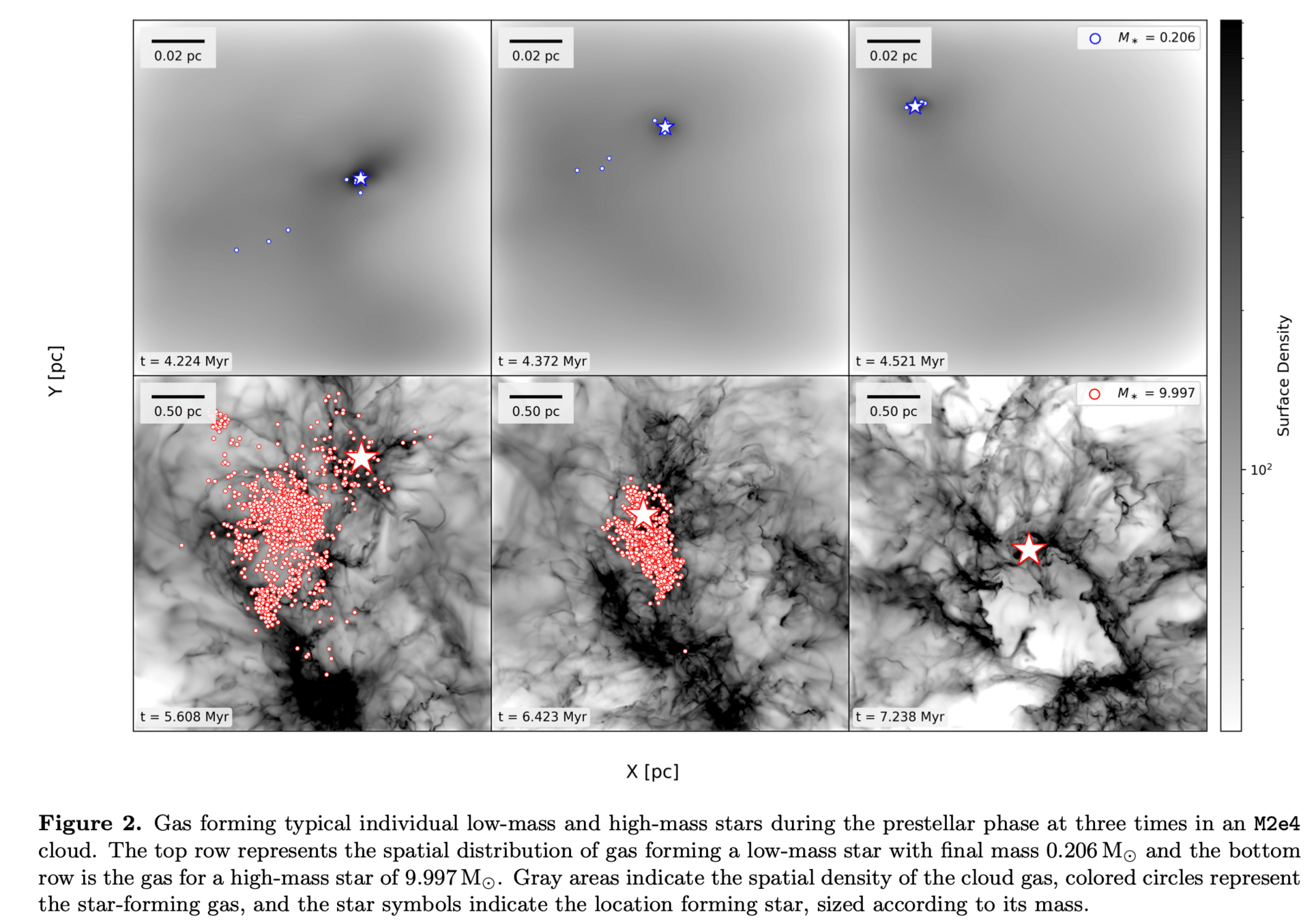
Origin of accreting gas
"In the case of the more massive stars, accretion from the environment outside the original core volume is even more important than that from the core itself. [...]
The assumption of spherical symmetry cannot be applied to the majority of collapsing cores, and is never a good description of how stars accrete gas from outside the original core radius."
(Smith, Glover, Bonnell, Clark & Klessen 2011)
"We find that, once a protostar forms, the lifetime of the unaccreted gas correlates with the final stellar mass, where low-mass stars (M∗ < 0.5 M⊙) accrete for 0.5-0.6 Myr from a relatively local reservoir of gas, and high-mass stars (M∗ > 2 M⊙) accrete over 3.3-4.7 Myr from a much larger volume."
(Kaalva, Offner, Filippova & Grudic 2026)
inertial-inflow model (Padoan+ '20)
Origin of accreting gas
"In the case of the more massive stars, accretion from the environment outside the original core volume is even more important than that from the core itself. [...]
The assumption of spherical symmetry cannot be applied to the majority of collapsing cores, and is never a good description of how stars accrete gas from outside the original core radius."
(Smith, Glover, Bonnell, Clark & Klessen 2011)
model for massive star formation: inertial-inflow model (Padoan+ '20)
Infall & multiplicity scale with stellar mass
based on Pelkonen+ '21
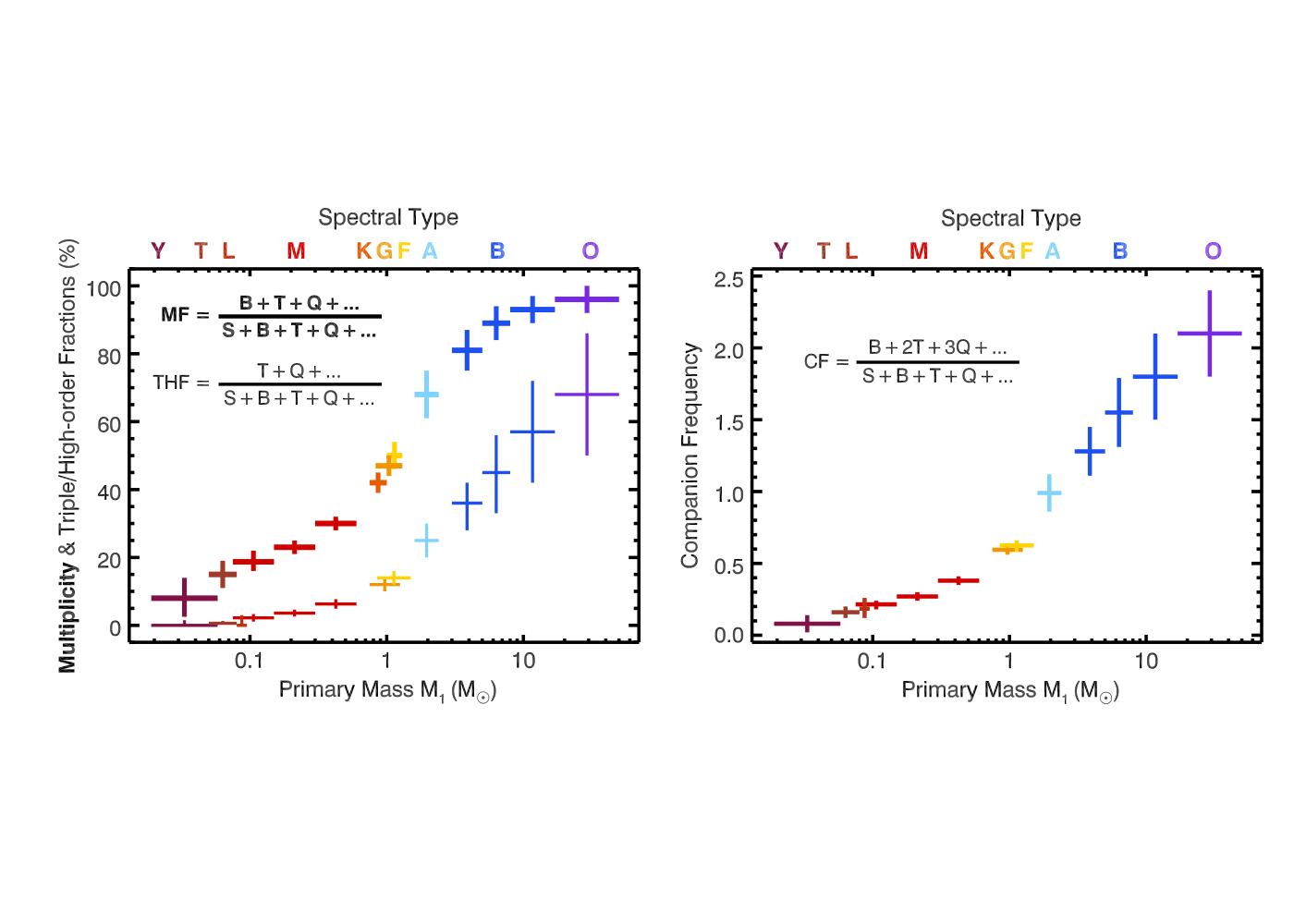
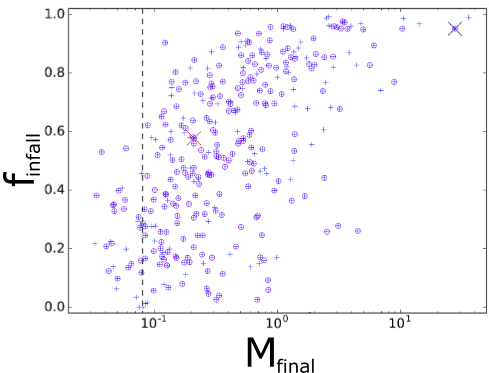
Offner+ '23
What is the connection?
(see talks by D. Taylor, T. M. Valdivia Mena, D. Price, C. Gieser, J. Pineda)
Do we really know disk "lifetimes"?
Küffmeier, Winter, Kuznetsova, Vioque & Gupta 2026
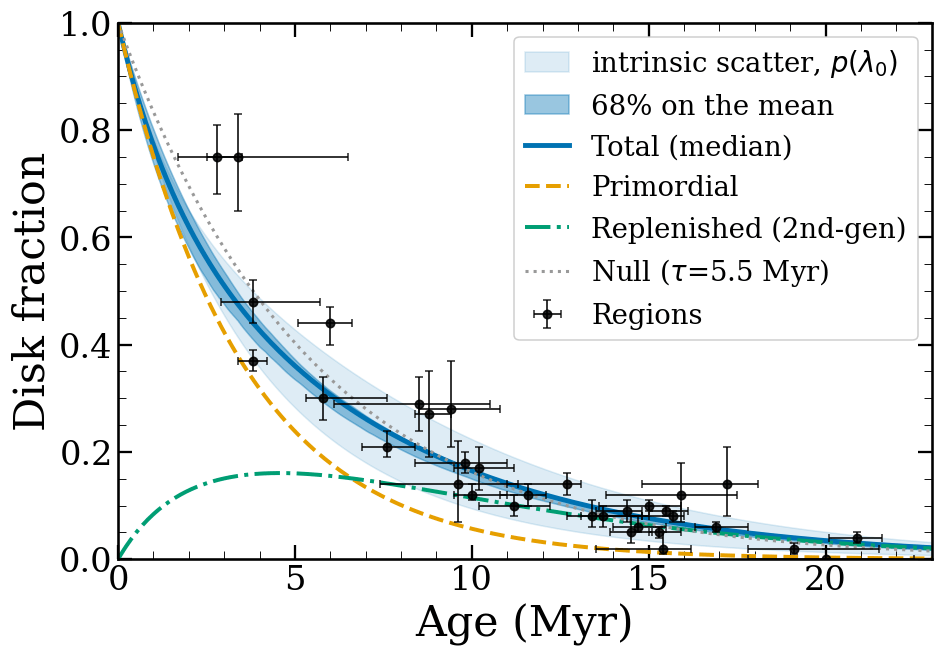
Orientation of infall
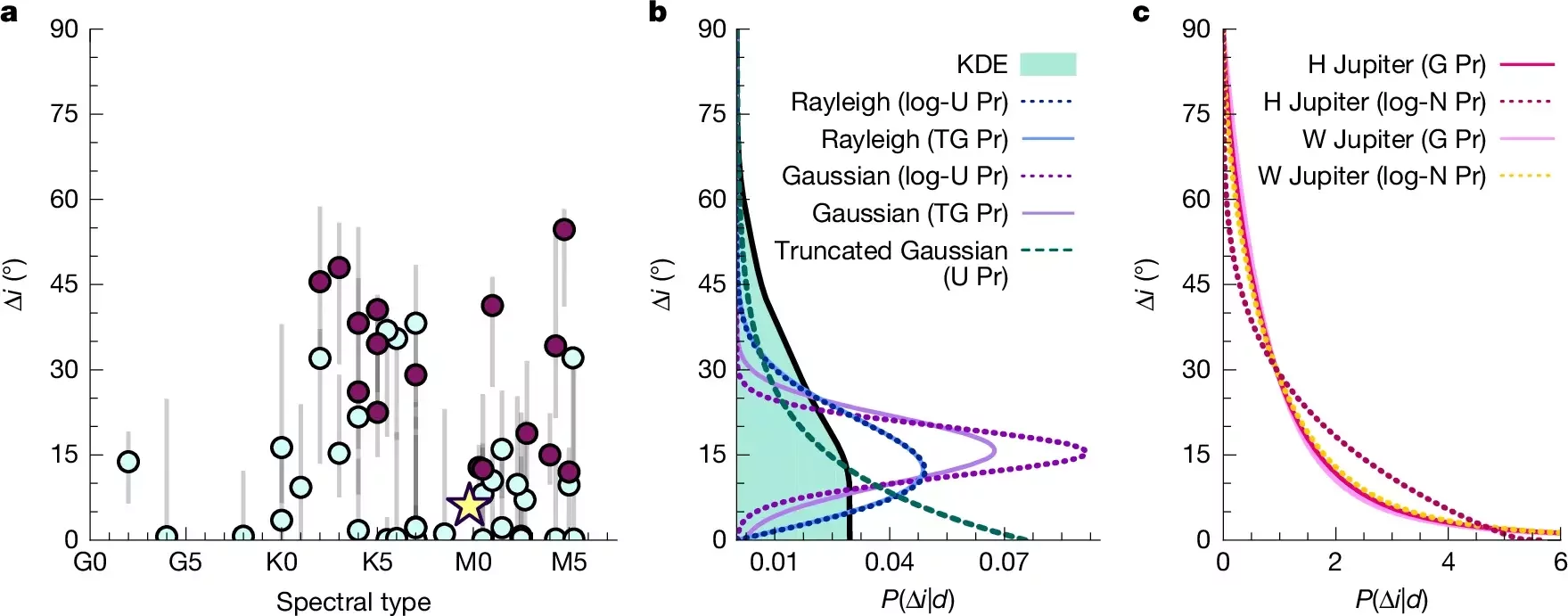

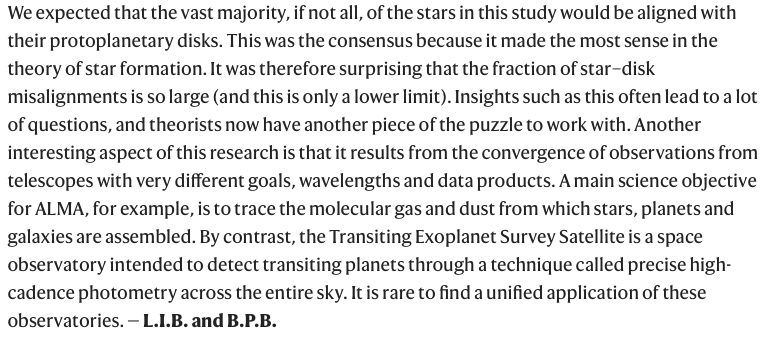
...
A disk contains only 1% of the stellar mass:
"Easy" to replenish with post-collapse (late) misaligned infall.
Turbulence matters from cloud to core (Padoan+ '97/'20, Klessen '01, Padoan & Nordlund '02, Hennebelle & Chabrier '08), down to binary (Offner+ '10) and disk scales (Küffmeier+ '17)
It implies misaligned infall (Küffmeier+ '24, Pelkonen+ '25), i.e., "chaotic star formation" (Bate '10)
and primordial misaligned disks (Thies+ '11, Bate '18, Küffmeier+ '21)
State-of-the-art in theory of star formation
How important is multiplicity in ejecting run-away stars?
Animation by S. Raymond
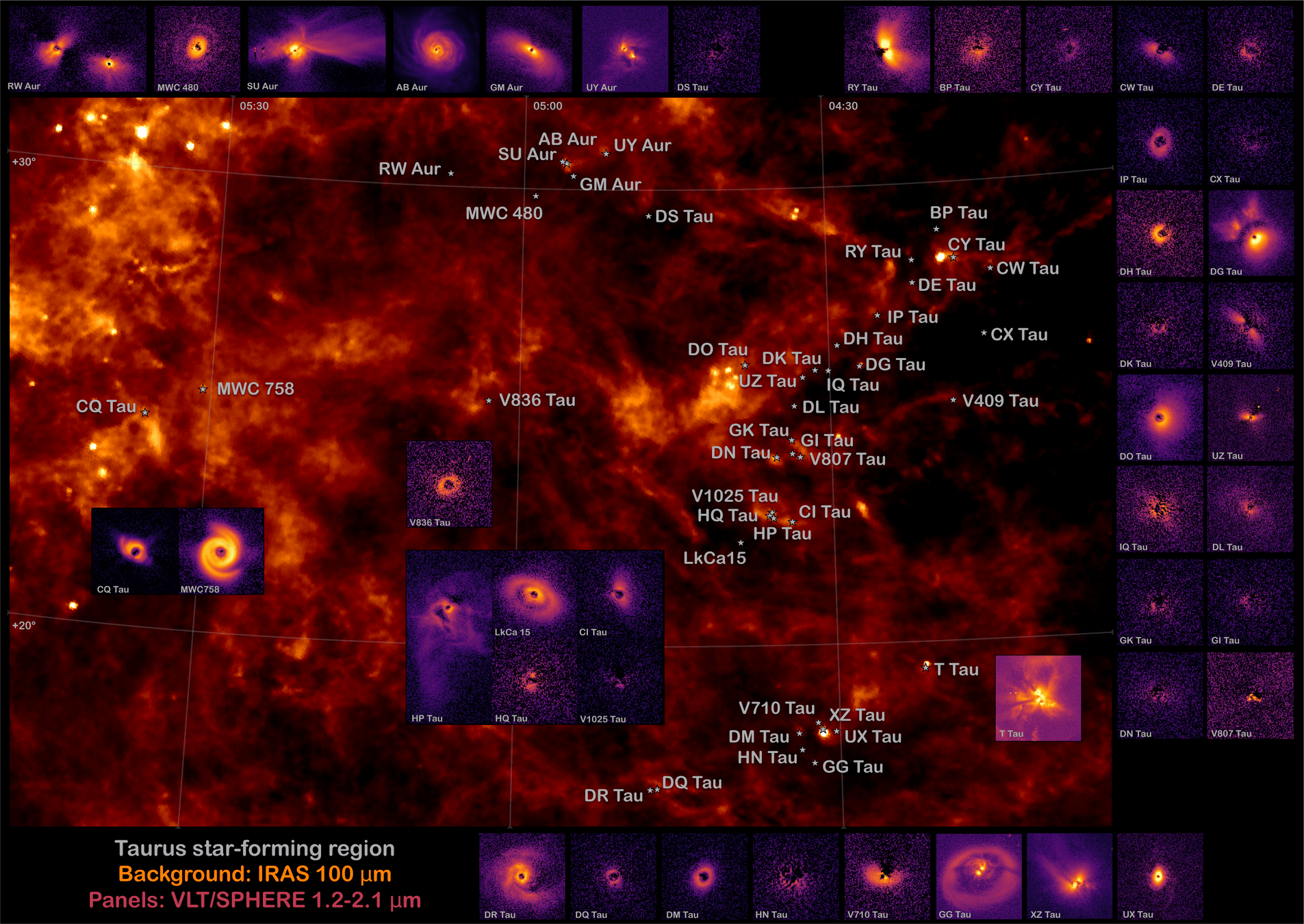
Credit: Garufi et al. 2024
Disks are rarely isolated.
Yes, the famous Antonio Garufi
(I was his driver!)
Streamers and shadows as signs of infall-induced disks
Formation of misaligned configuration
Observable as shadows in outer disk
Küffmeier, Dullemond, Reissl & Goicovic 2021
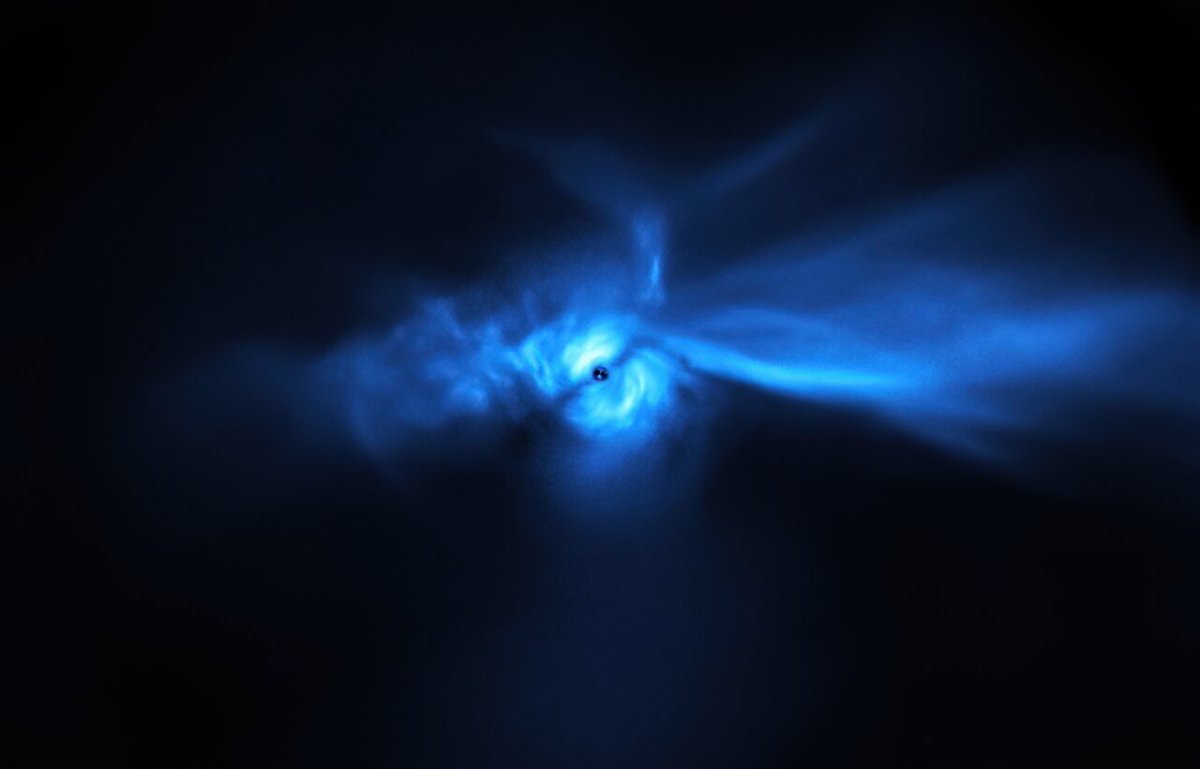
SU Aur (Ginski et al. 2021)
300 au
Krieger, Küffmeier et al. 2024
Two phases of disk formation
Küffmeier, Winter, Kuznetsova, Vioque & Gupta 2026
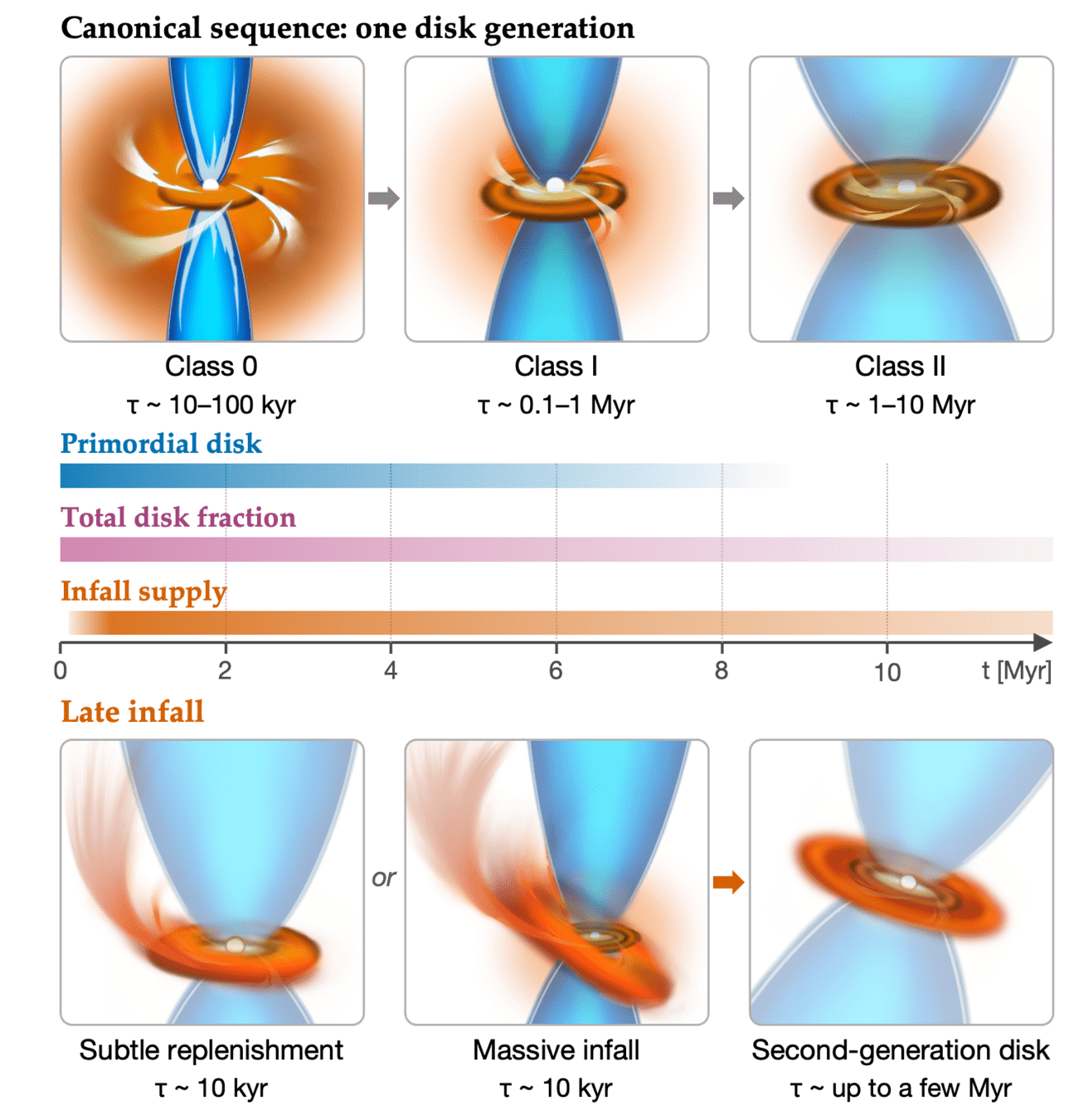
Artwork: Martine Lützen
Summary
Disks are replenished and distorted by filamentary infall (streamers).
Star and disk formation is a two-phase process consisting of mandatory initial collapse and post-collapse ("late") infall phase.
The degree of ionization is important for disk properties, but large delivery of angular momentum simplifies disk formation after very early collapse phase.
To do
...solely replenishes the disk,
I
...plays an active role in triggering instabilities,
II
...induces dramatic changes such as misalignment.
III
Explore frequency and properties of infall onto star-disk systems that ...



images: A. Houge
Copy of Prestellar core workshop Kyushu 2026
By kuffmeier