Michael Küffmeier


S. G. Zaidi, C. Granzow Holm, T. Haugbølle (NBI), J. Pineda (MPE), D. Segura-Cox (Rochester), S. Reißl, C. P. Dullemond (ITA)
Disk Formation Beyond Collapse
Infall and Rejuvenation

When?

"At the beginning."
When?
Classical picture: the disk is detached and only evolves afterwards.
When?
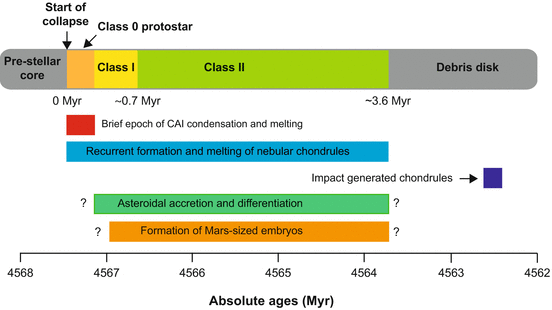
Bizzarro et al. 2017
How?
The classical picture
credit: M. Persson
star formation
planet formation

History of modeling disk formation
spherical core collapse:
rotation
magnetization (mass-to-flux ratio)
non-ideal MHD effects
dust evolution
turbulence
useful for parameter studies
\rho(r) = \frac{\rho_{\rm c} R_{\rm c}^2}{R_{\rm c}^2 + r^2}
Bonnor-Ebert sphere
or uniform density
\rho(r) = \rho_{0}
History of modeling disk formation
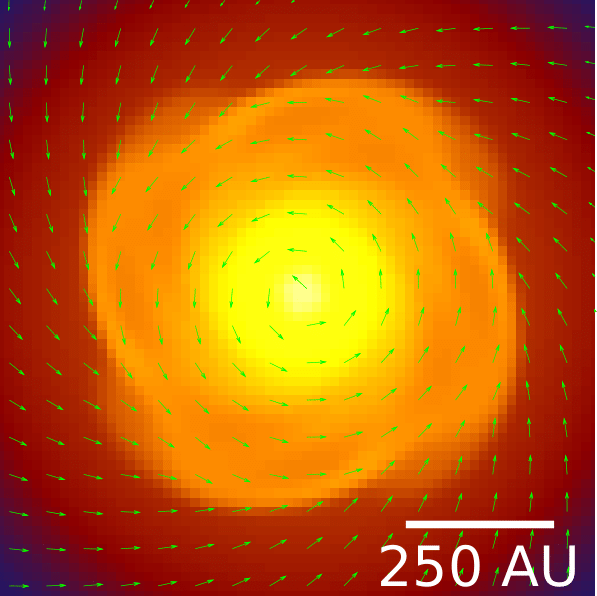
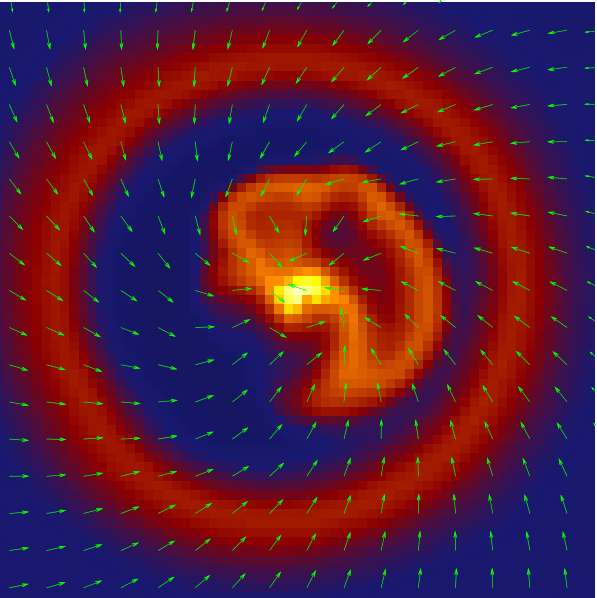

What about magnetic fields?
Help! Where is the disk?!
Santos-Lima et al. 2012
Hydro
ideal MHD
L_{\rm mag} = \int_{t_{\rm c}}^{t}\int^V r (\mathbf{J} \times \mathbf{B})_\phi \mathrm{d}V\mathrm{d}t
Magnetic braking catastrophe
Angular momentum is transported too efficiently away from the disk
magnetohydrodynamics
\frac{\partial \mathbf{B}}{\partial t} = \nabla\times (\mathbf{v}\times\mathbf{B})
ideal MHD
\color{red}-\nabla\times[\eta_{\rm O} (\nabla \times \mathbf{B})]
\color{purple}-\nabla\times \{\eta_{\rm H} [(\nabla \times \mathbf{B}) \times \mathbf{B}/B] \}
\color{blue}-\nabla\times \{\eta_{\rm AD} \mathbf{B}/B \times [(\nabla \times \mathbf{B}) \times \mathbf{B}/B] \}
Ohmic dissipation
Hall
ambipolar diffusion
Non-ideal
Non-ideal MHD
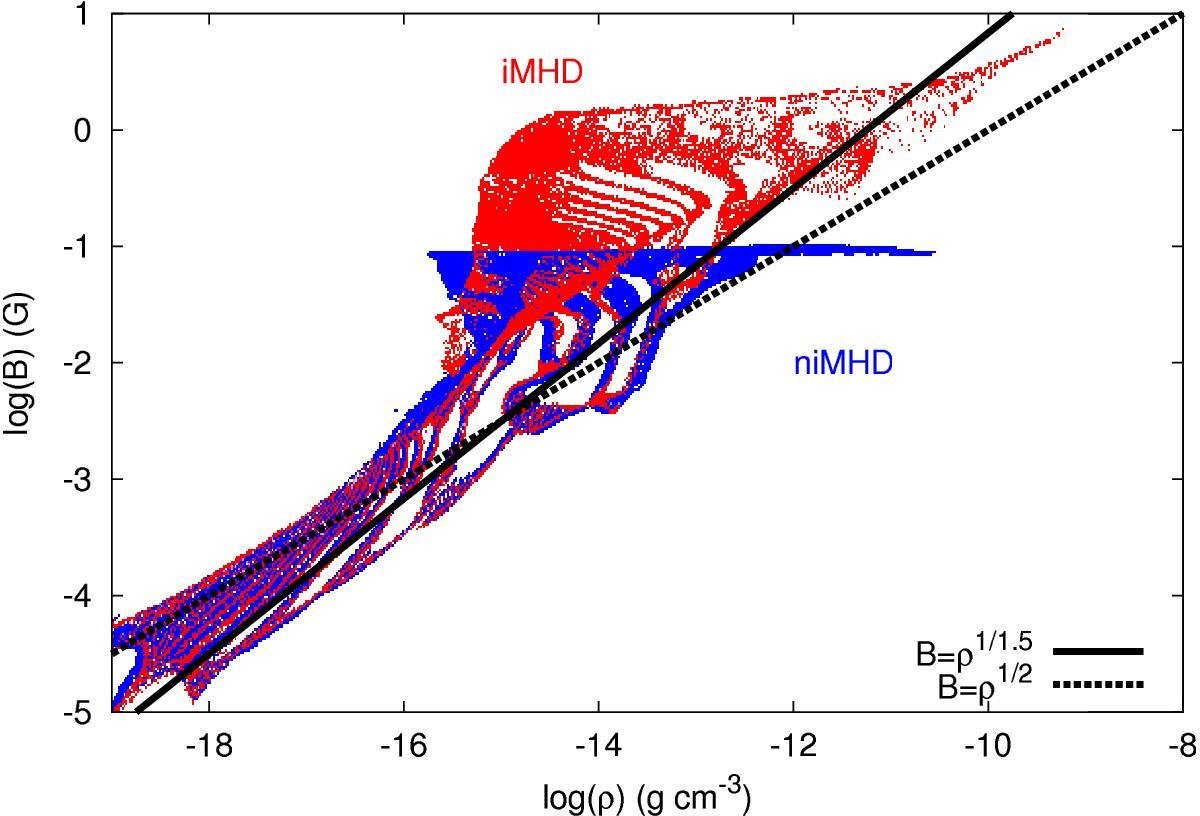
Masson et al. 2016
resistivities quench pile-up of magnetic field
avoids magnetic braking catastrophe
see Hennebelle et al. 2016 or Lee et al. 2021 for analytical studies
more references in reviews by Wurster & Li 2018 and Tsukamoto et al. 2023
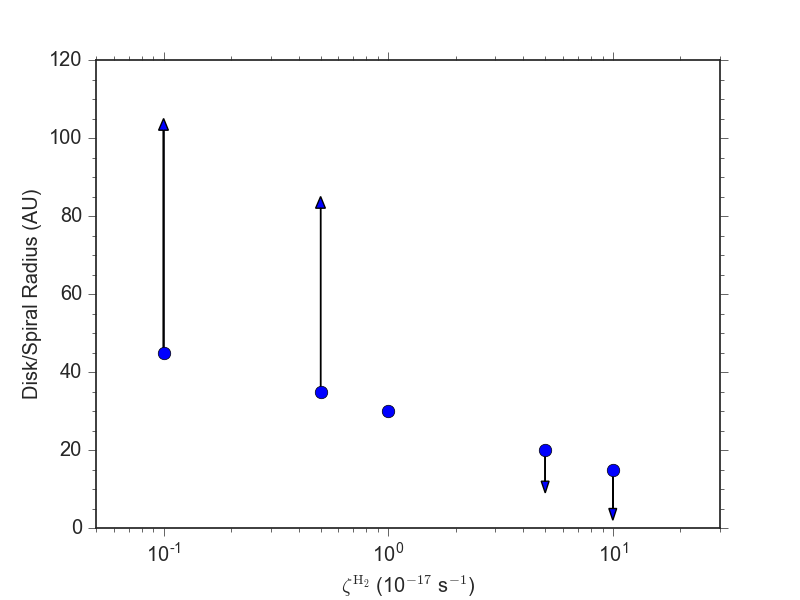
Effect of ionization on disk size
increasing ionization rate
enhanced magnetic braking
smaller disks
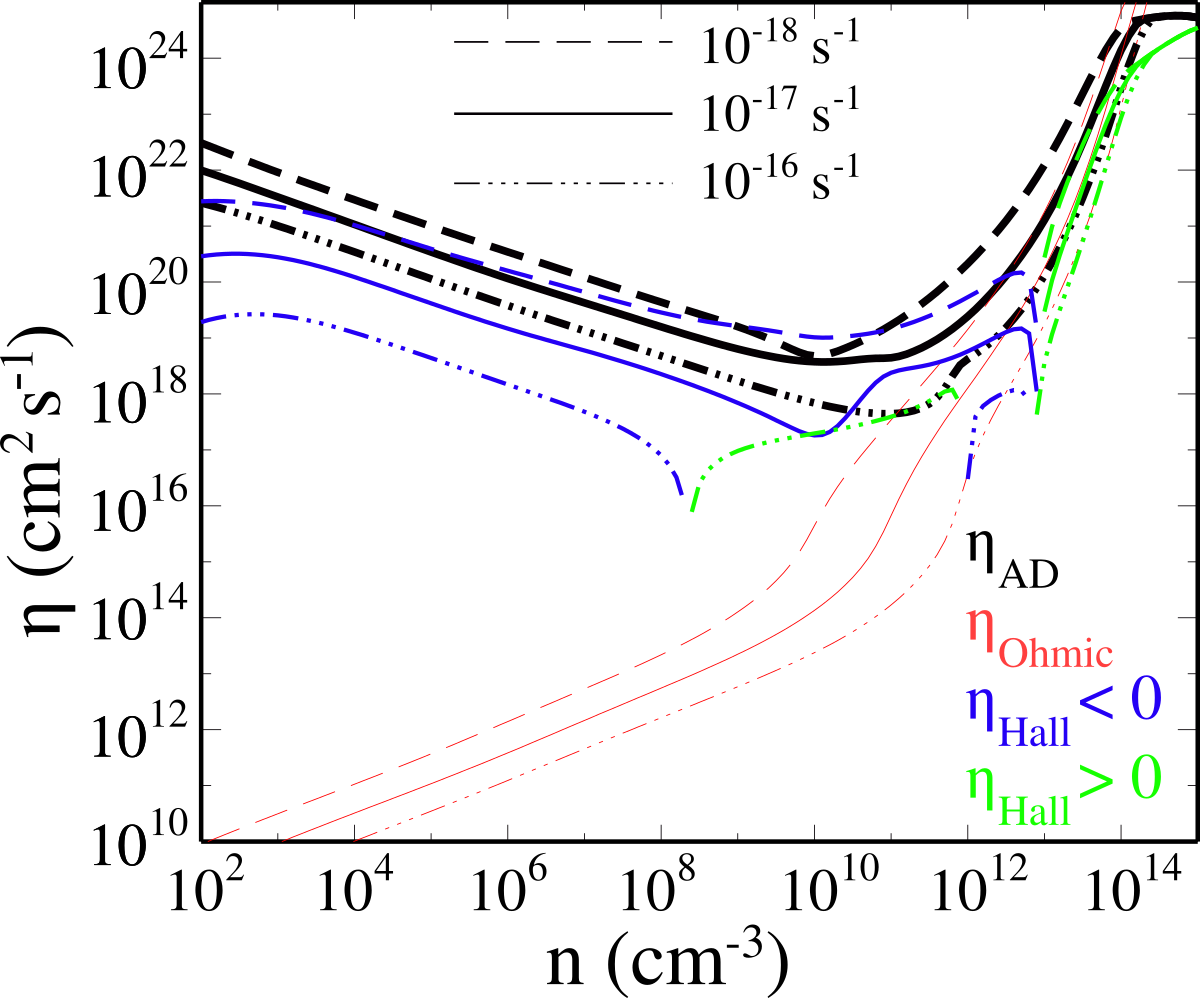
Küffmeier, Zhao & Caselli 2020
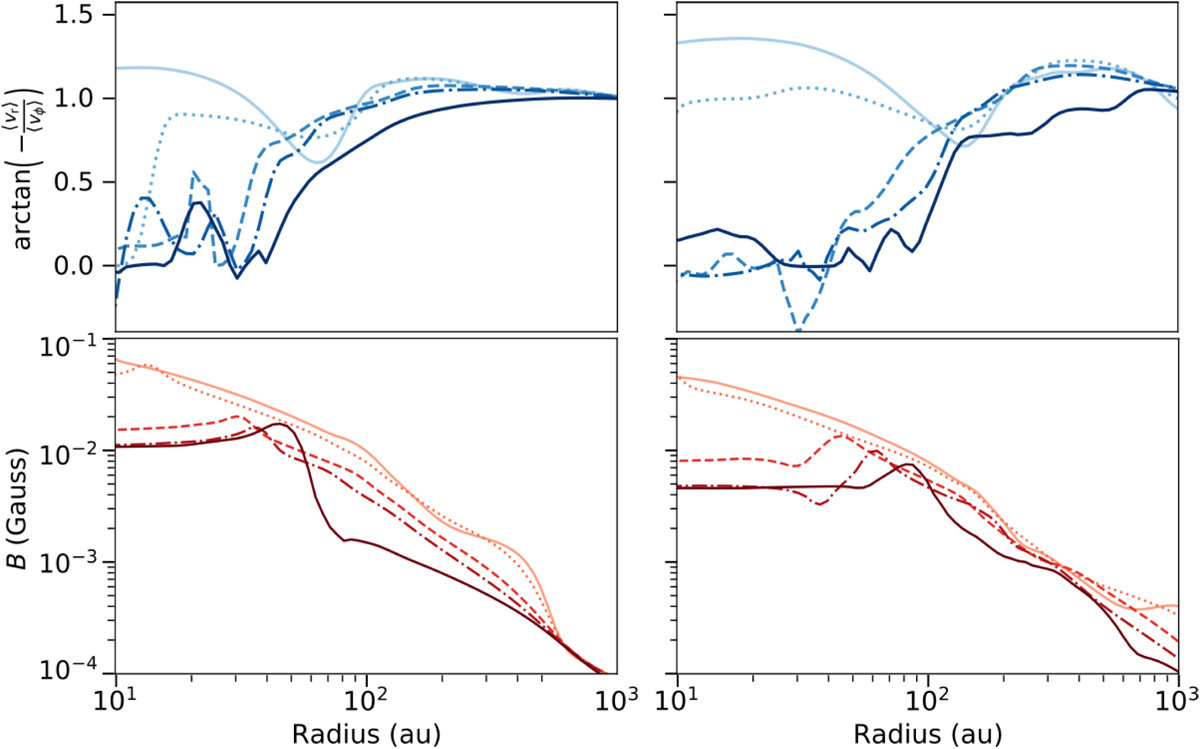
rotation
infall
from light to dark colors: high to low ionization rates
see also Wurster et al. 2018
History of modeling disk formation
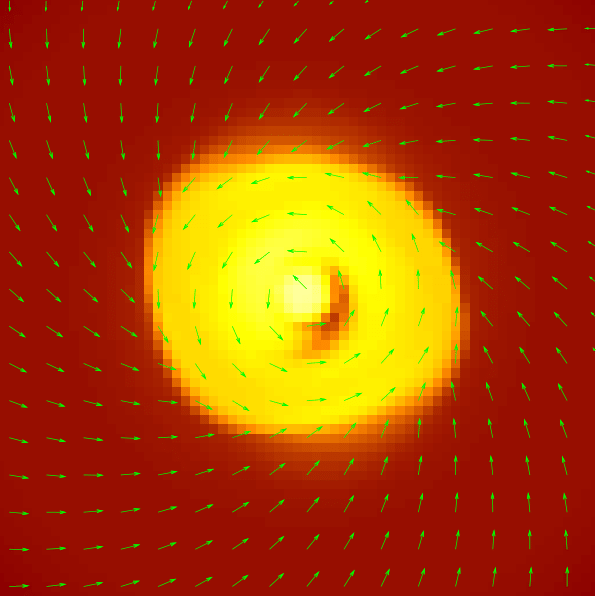
What about magnetic fields?
Help! Where is the disk?!
Ohmic, Ambipolar, Hall
Santos-Lima et al. 2012
Hydro
ideal MHD
non-ideal MHD
non-ideal MHD is not a single parameter that is turned on or off!
It depends on ionization fraction.
Achtung!
see Wurster et al. 2018, Kuffmeier et al. 2020; reviews by Tsukamoto et al. 2023, Kuffmeier submitted
History of modeling disk formation
What about magnetic fields?
Help! Where is the disk?!
Santos-Lima et al. 2012
Hydro
ideal MHD
Magnetic braking catastrophe
Angular momentum is transported too efficiently from the disk
magnetohydrodynamics
\frac{\partial \mathbf{B}}{\partial t} = \nabla\times (\mathbf{v}\times\mathbf{B})
ideal MHD
\color{red}-\nabla\times[\eta_{\rm O} (\nabla \times \mathbf{B})]
\color{purple}-\nabla\times \{\eta_{\rm H} [(\nabla \times \mathbf{B}) \times \mathbf{B}/B] \}
\color{blue}-\nabla\times \{\eta_{\rm AD} \mathbf{B}/B \times [(\nabla \times \mathbf{B}) \times \mathbf{B}/B] \}
Ohmic dissipation
Hall
ambipolar diffusion
Non-ideal
Non-ideal MHD
Masson et al. 2016
resistivities quench pile-up of magnetic field
avoids magnetic braking catastrophe
see Hennebelle et al. 2016 or Lee et al. 2021 for analytical studies
more references in reviews by Wurster & Li 2018, Tsukamoto et al. 2023 and Küffmeier 2024
History of modeling disk formation
Help! Where is the disk?!
Resistivities
Santos-Lima et al. 2012
Hydro
ideal MHD
non-ideal MHD
What about magnetic fields?
for pioneering work see Galli & Shu 1993 a/b
see Hennebelle et al. 2016 or Lee et al. 2021 for analytical studies
more references in reviews by Wurster & Li 2018, Tsukamoto et al. 2023 and Küffmeier 2024
non-ideal MHD is not a single parameter
Caveat!
depends on cosmic-ray ionization rate!
Effect of ionization on disk size
Küffmeier, Zhao & Caselli 2020; see also Wurster et al. 2018
increasing ionization rate
enhanced magnetic braking
smaller disks
\frac{\partial \mathbf{B}}{\partial t} = \nabla\times (\mathbf{v}\times\mathbf{B})
-\nabla\times \{\eta_{\rm AD} \mathbf{B}/B \times [(\nabla \times \mathbf{B}) \times \mathbf{B}/B] \}
Effect of ionization on disk size
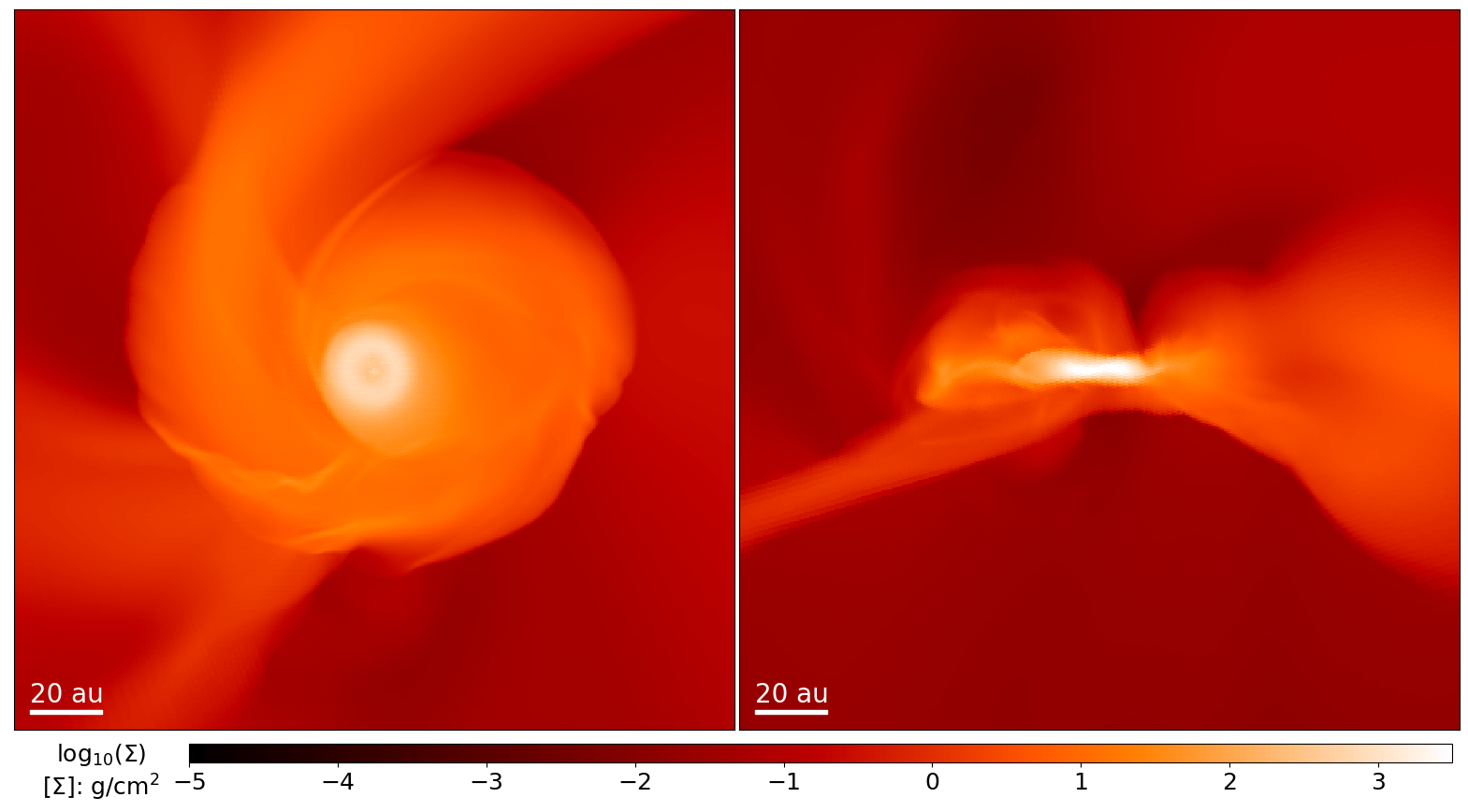
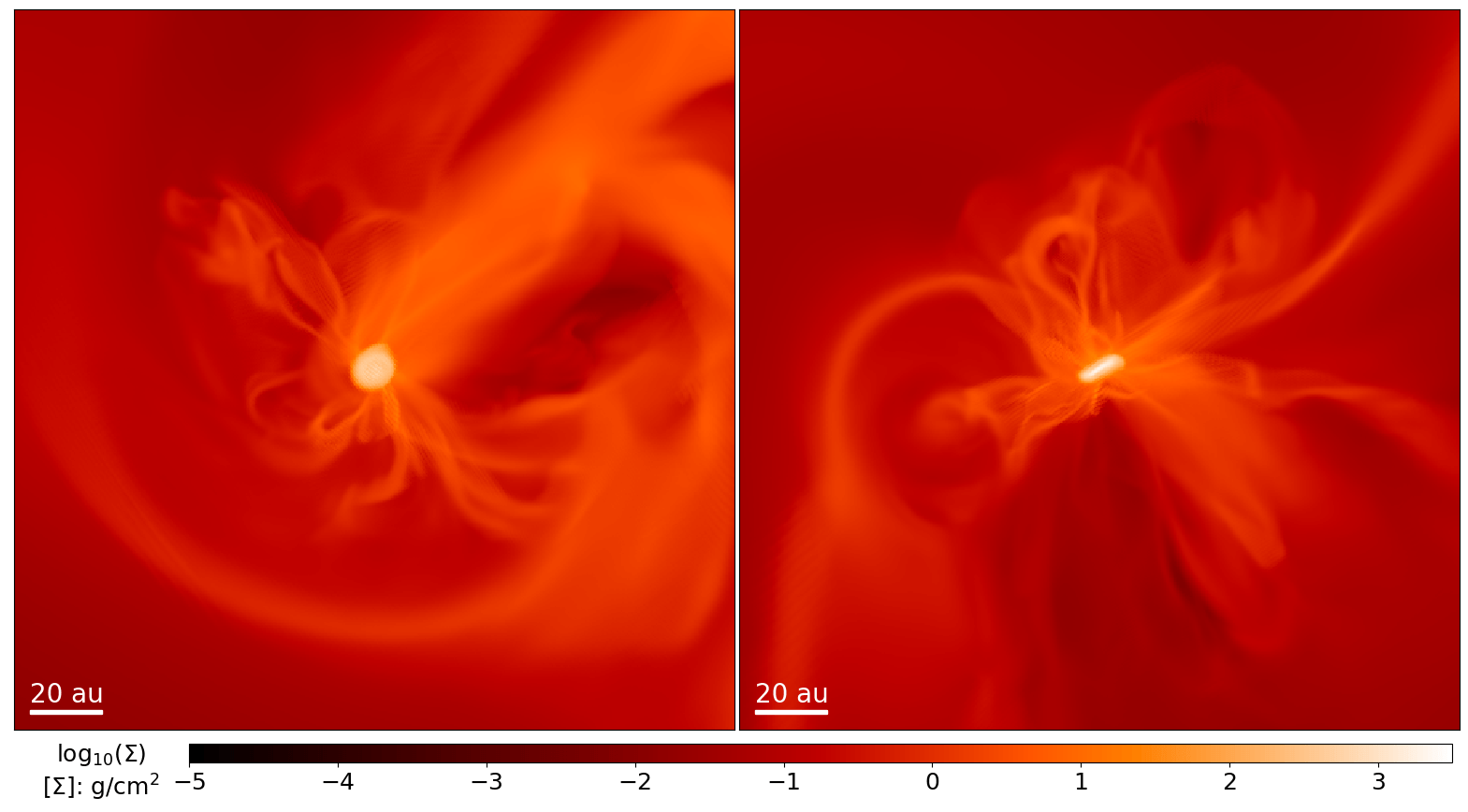
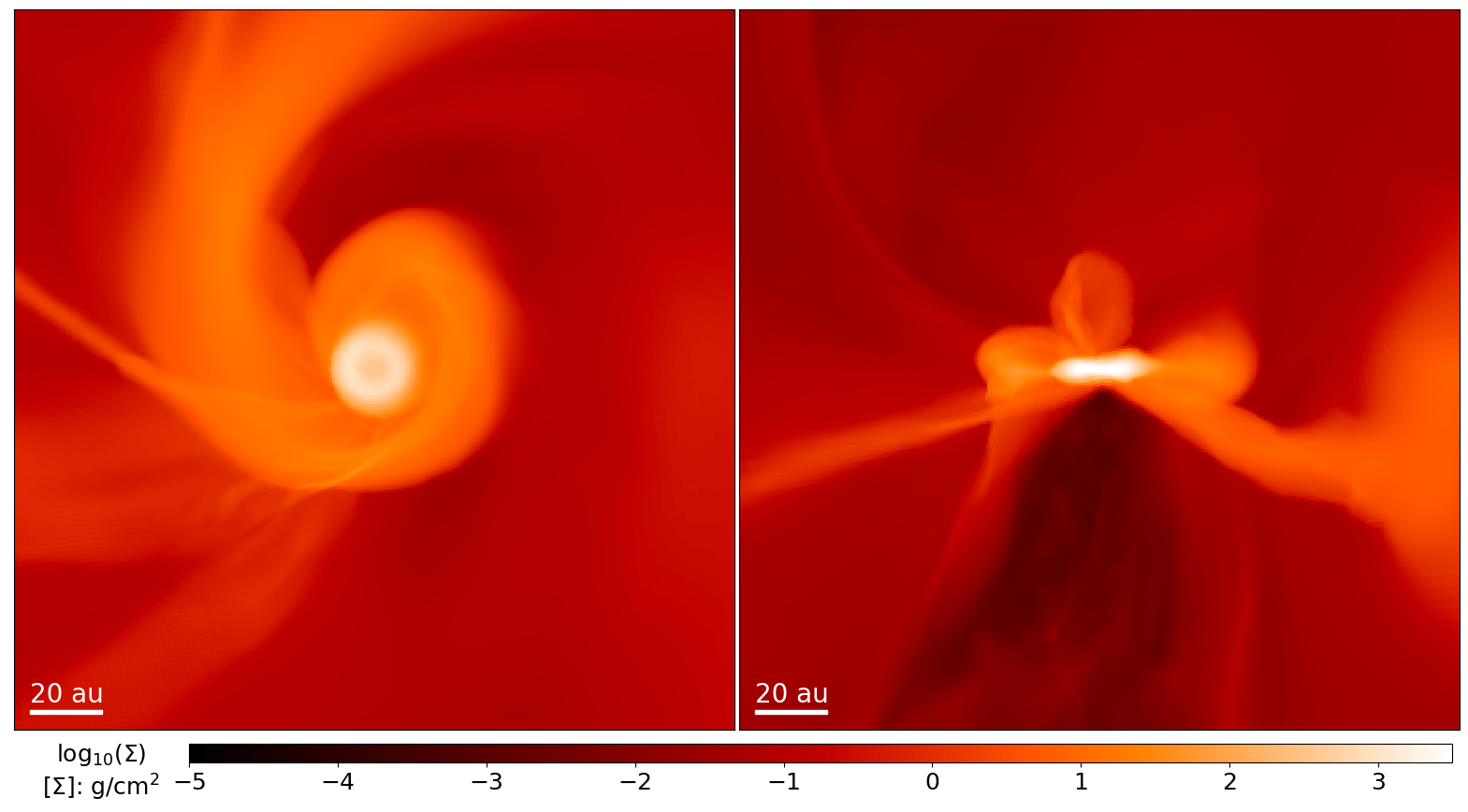
Küffmeier, Holm et al. in prep
ideal MHD
non-ideal MHD
\color{white}\zeta=10^{-18} \rm s^{-1}
\color{white}\zeta=10^{-17} \rm s^{-1}
\color{white}\zeta=10^{-16} \rm s^{-1}
increasing ionization rate
enhanced magnetic braking
smaller disks
100 au
100 au
Küffmeier, Zhao & Caselli 2020, see also Kobayashi et al. 2023
Observed variations:
Maps of CR-ionization rates (e.g., NGC 1333 Pineda et al. 2024, or AG 351 & AG 354 Sabatini et al. 2023)
Protostars B335 (Cabedo et al. 2023), IRAS4A, L1448-C, L1157 (Schwarz et al. 2026)
Effect of ionization
Küffmeier, Holm et al. in prep
\color{white}\zeta=10^{-18} \rm s^{-1}
\color{white}\zeta=10^{-17} \rm s^{-1}
\color{white}\zeta=10^{-16} \rm s^{-1}
increasing ionization rate
enhanced magnetic braking
smaller disks
100 au
Observed variations:
Maps of CR-ionization rates (e.g., NGC 1333 Pineda et al. 2024, or AG 351 & AG 354 Sabatini et al. 2023)
Protostars B335 (Cabedo et al. 2023), IRAS4A, L1448-C, L1157 (Schwarz et al. 2026)
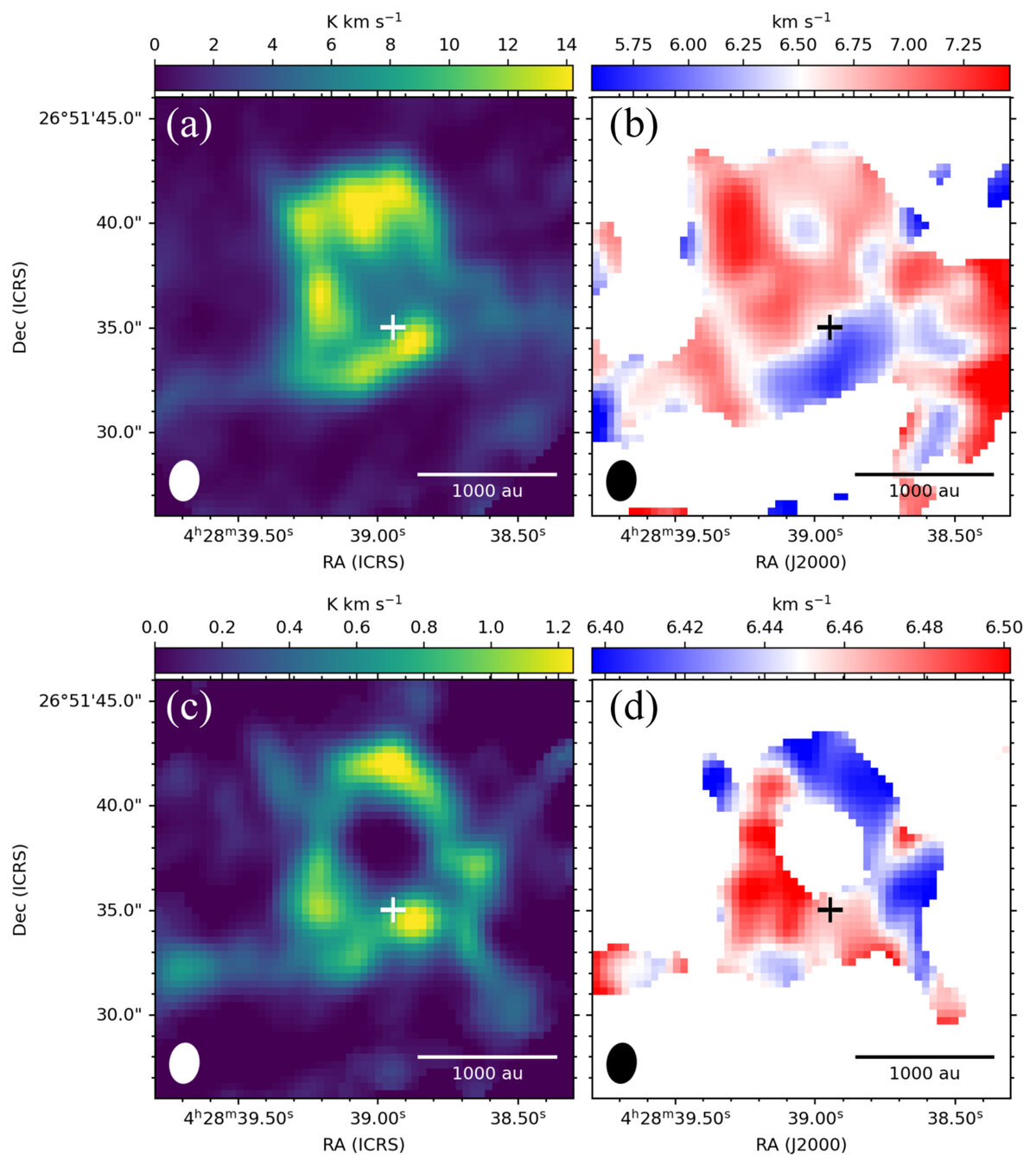
Tokuda et al. 2026
interchange instability
(see Tsukamoto et al. 2023 [and references in the review] and Machida & Basu 2025)
?
Environment?
Stars form in molecular clouds
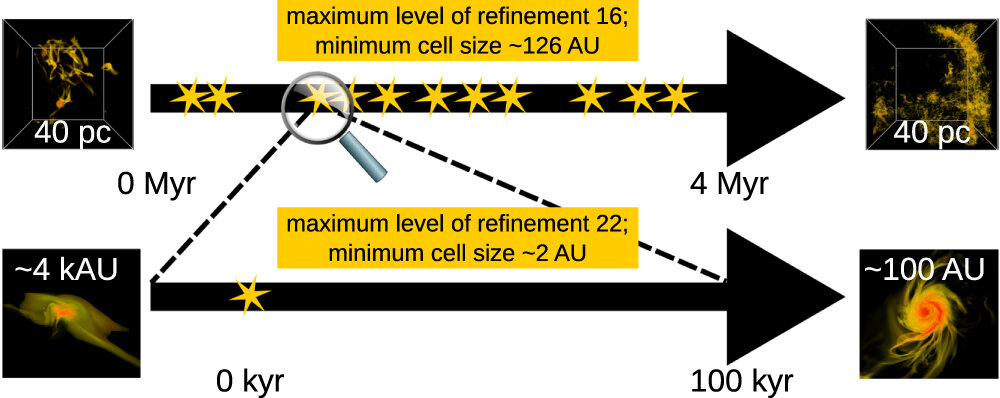
Accretion process is heterogeneous in time, in space, and among protostar.
Küffmeier, Haugbølle & Nordlund 2017
"mass accretion onto the star–disk system is filamentary, acting through accretion channels and accretion sheets"
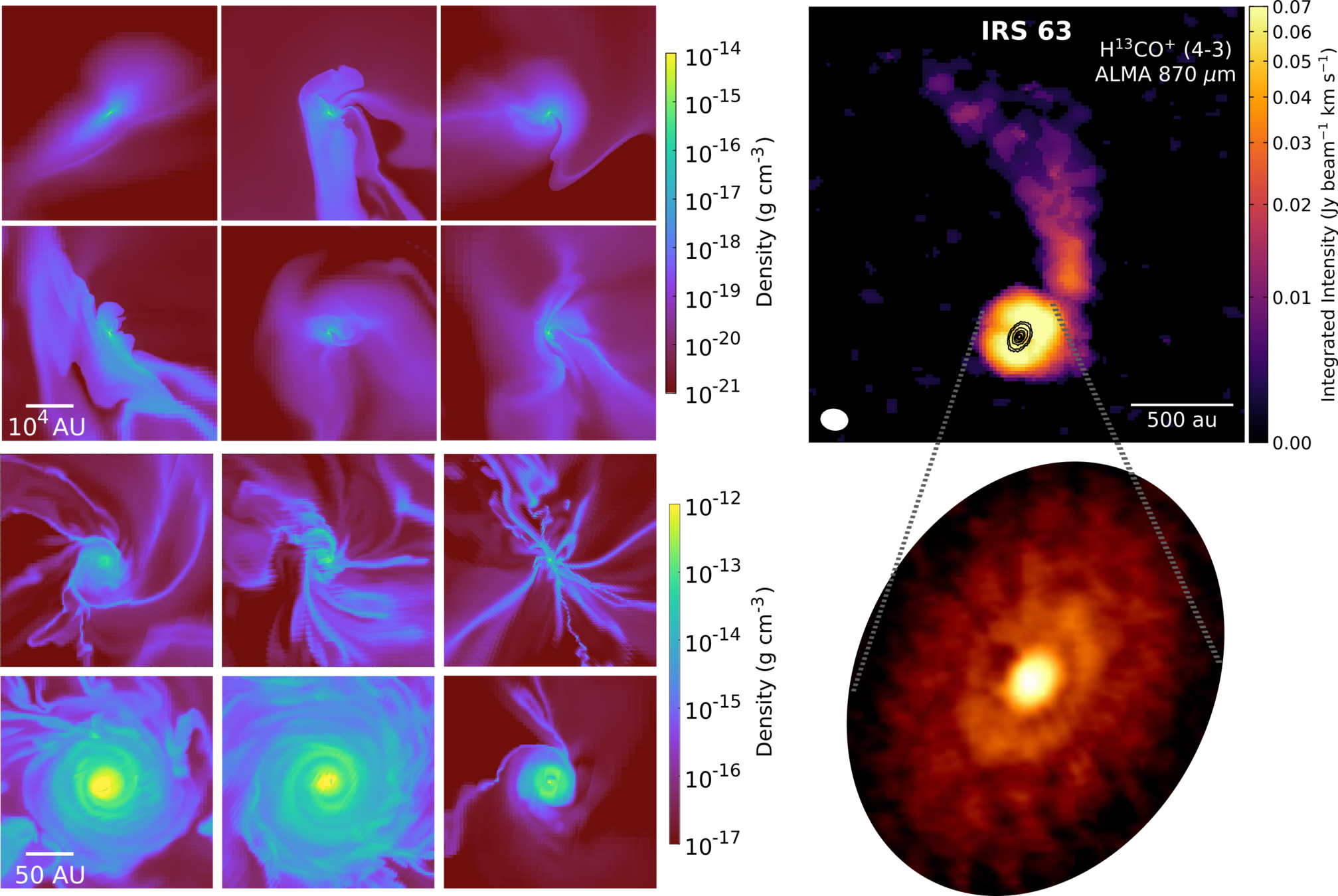
Segura-Cox et al. 2020
"...you simply cannot look at disks with ideal MHD.
I thought you knew all of this, and the people in [---] are not impressed."
e-mail reaction after publication in 2017


Stars form in molecular clouds
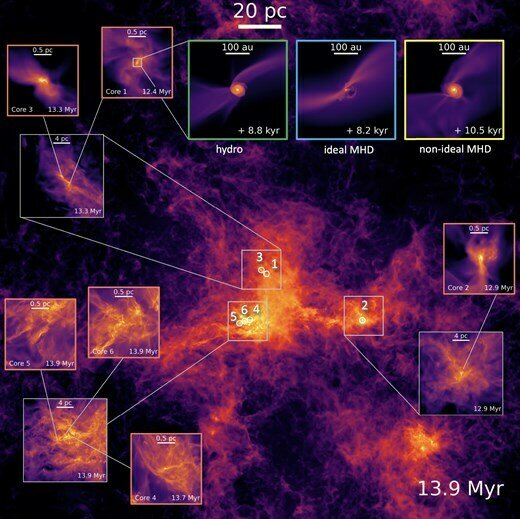
Mayer et al. 2025
To zoom or not to zoom
Santos-Lima et al. 2012
Hydro
ideal MHD
non-ideal MHD
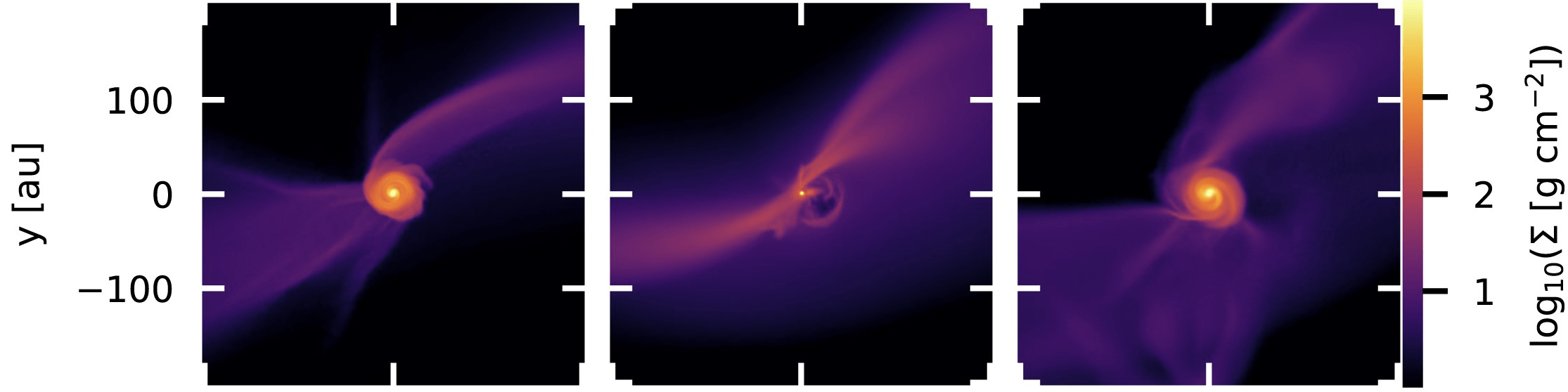
Mayer et al. 2025
100 au
Hydro
ideal MHD
non-ideal MHD
"What a waste of computing time, Alex. Same as isolated collapse models!"
Hydro
ideal MHD
non-ideal MHD

Disks solely from early collapse is not the full story.
Cores are in clouds
credit: Holm
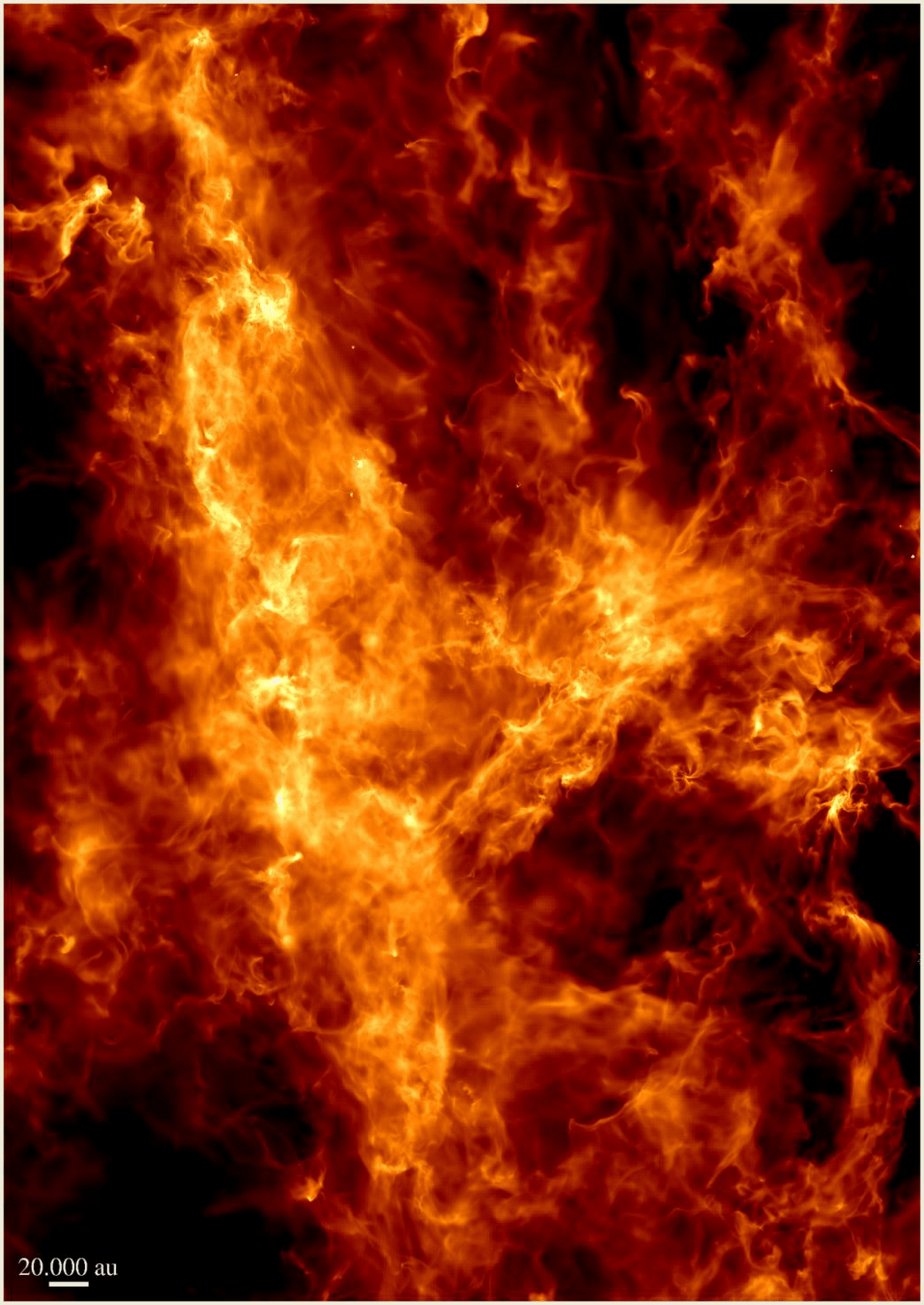
Christian G. Holm

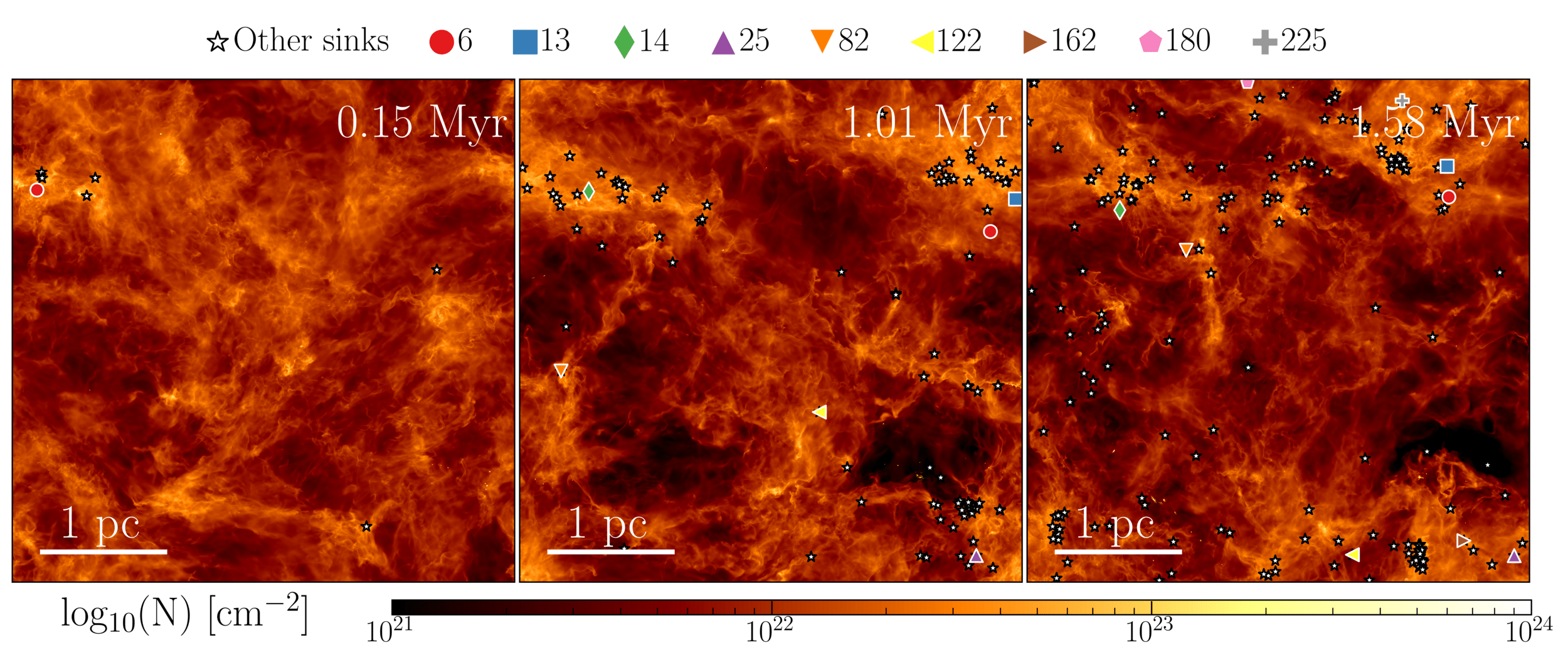
Zoom-in onto 9 star-disk systems: 4 pc -> sub-au
ideal MHD (paper in review; non-ideal MHD running)
isothermal parental run
barotropic equation of state for zoom-ins
average column density
code: DISPATCH
(Machida+ 2007)
\Sigma\approx 10^{22} \rm cm^{-2}
(Nordlund+ 2018)
Holm et al. in review
Environmental effects
credit: Holm
Christian G. Holm
Adaptive mesh refinement: 4 pc -> sub-au
ideal MHD (but non-ideal MHD in progress)
barotropic equation of state for zoom-ins
average column density
code: DISPATCH
(Machida+ 2007)
\Sigma\approx 10^{22} \rm cm^{-2}
(Nordlund+ 2018)
The natal environment holds close resemblance to nearby star-forming regions in terms of velocity dispersion and magnetic field strengths.
(Li+ 2023)
\sigma_{\rm v}=(0.34 \pm 0.04)\ \rm km\, s^{-1}
\sigma_{\rm v} = 0.29 \ \rm km\, s^{-1}
(53 \pm 20)\ \mu\rm G
(65 \pm 19)\ \mu\rm G
10\ \mu\rm G
to
100\ \mu\rm G
(Crutcher+ 2010, Crutcher 2012)
model:
observations:
model:
observations:
Core properties
Christian G. Holm
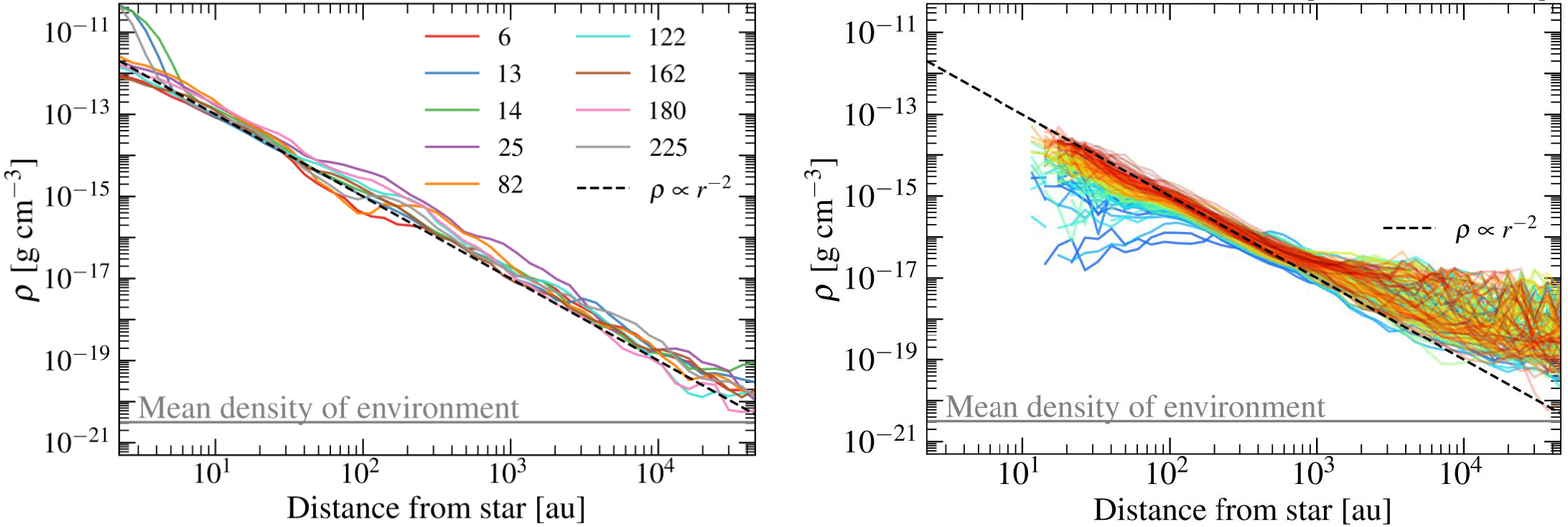
\sigma_{\rm v}=(0.34 \pm 0.04)\ \rm km\, s^{-1}
B_{\rm rms} = (53 \pm 20)\ \mu\rm G
(Li+ 2023)
\sigma_{\rm v} = 0.29 \ \rm km\, s^{-1}
10\ \mu\rm G
to
100\ \mu\rm G
(Crutcher+ 2010, Crutcher 2012)
Prestellar core properties
Observations
Holm et al. in review
Selected the most isolated!
consistent with observed profiles shown by Jaime on Monday
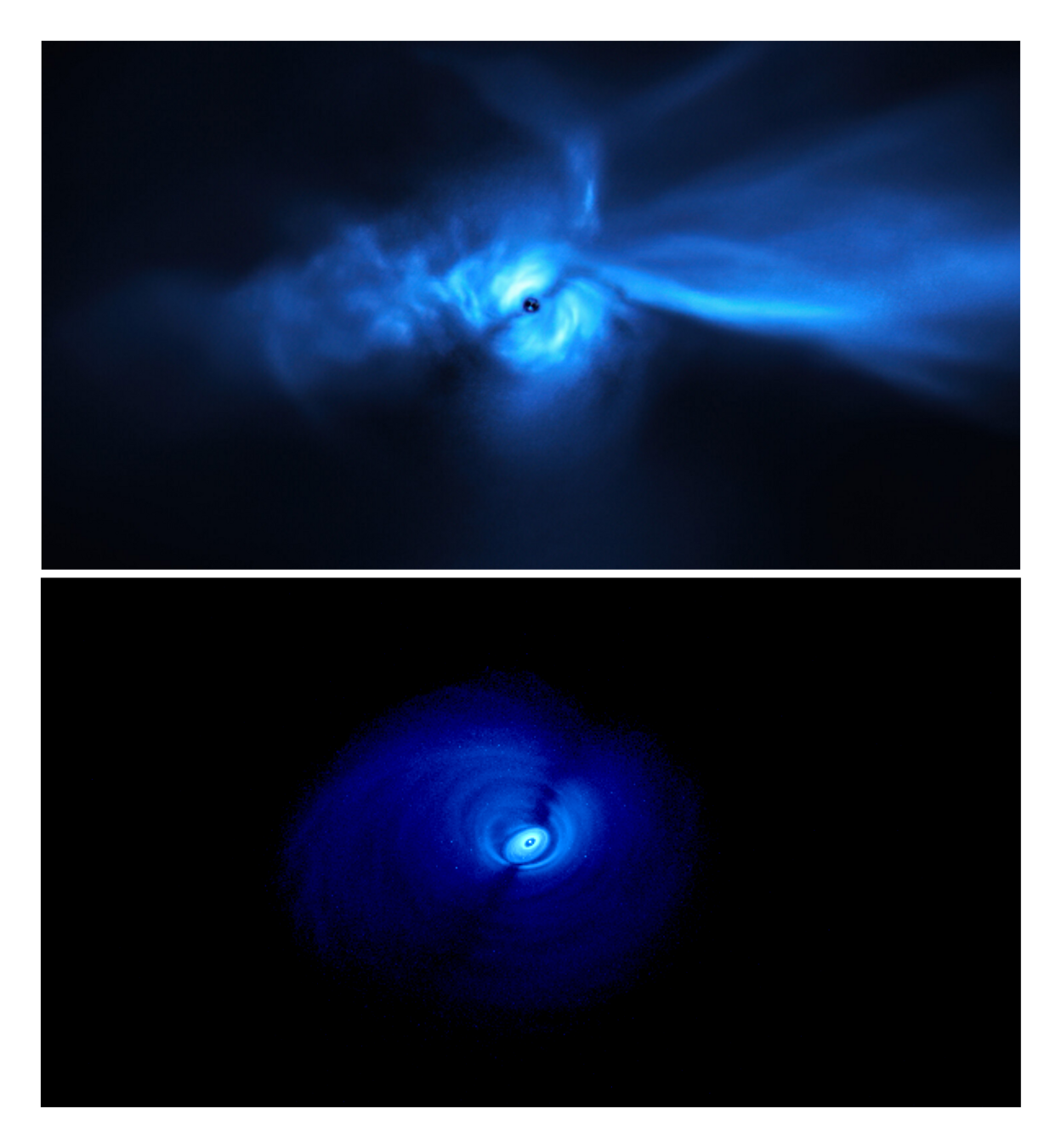
Disks (re)form via filamentary infall
Holm et al. in review
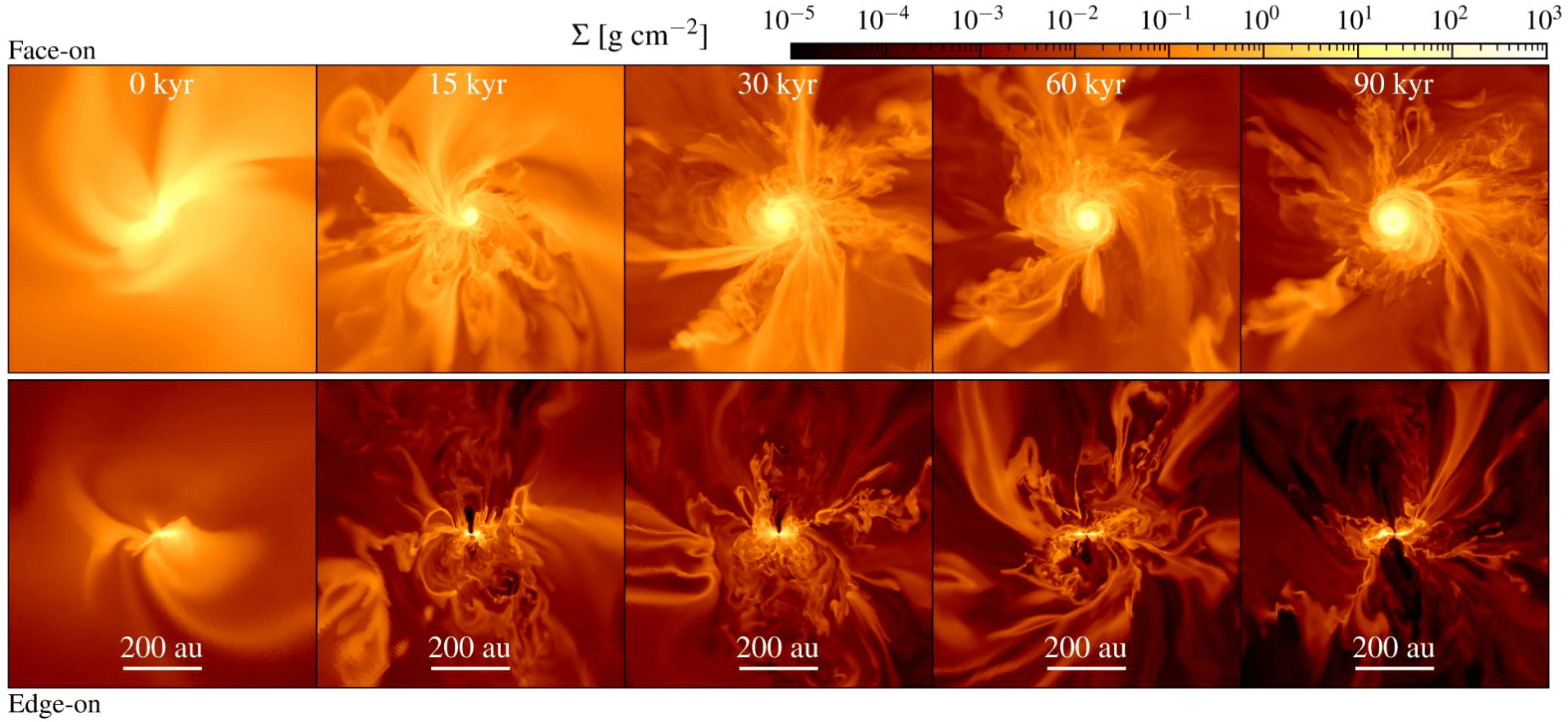
...but it happens earlier
smoother, and easier
the lower the ionization rate is.
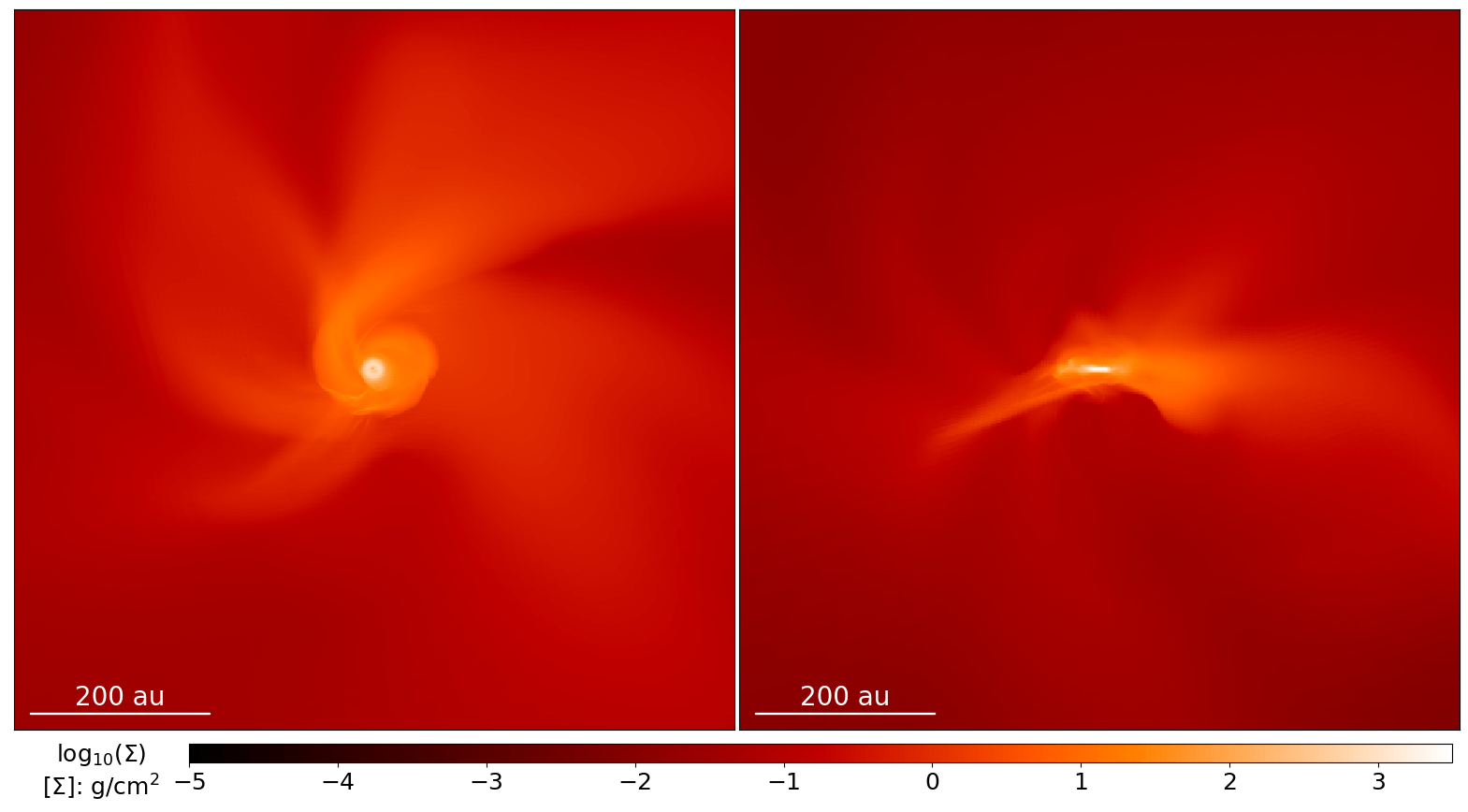
\color{white}t=2 \, \rm kyr
...and YES, the disk properties are strongly affected by non-ideal MHD effects!
A few massive streamers
Christian G. Holm
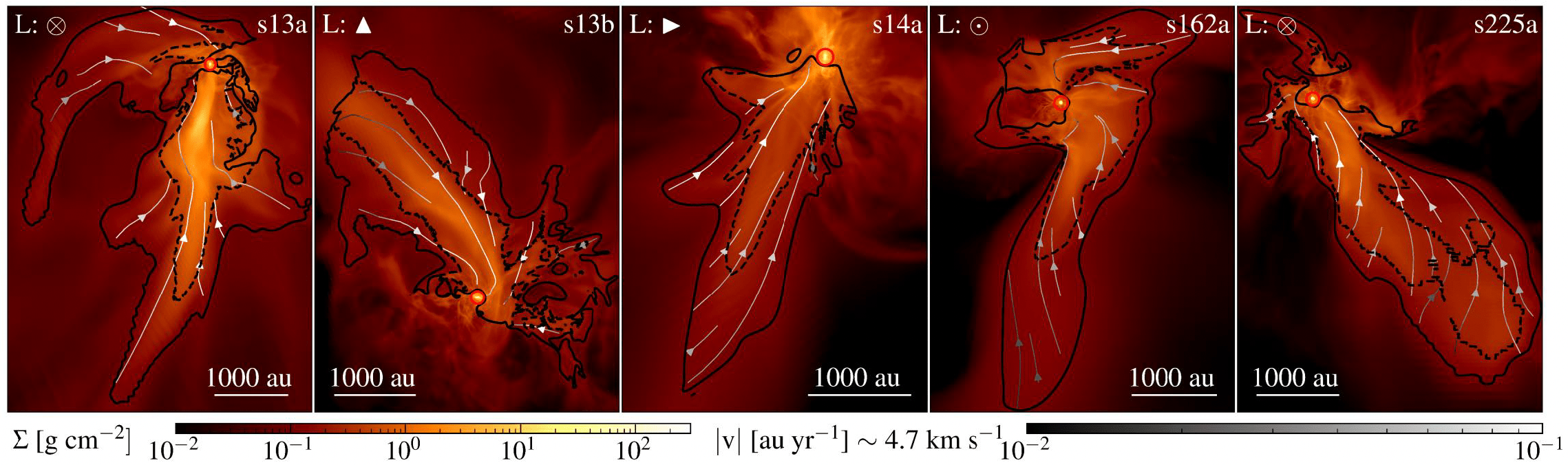
Streamer criteria:
\Sigma>0.1 \rm g\, cm^{-2}
v_{\rm rad, in}>v_{\rm rot}
The density contrast relative to the environment is a factor of 4 to 6.
The streamer mass is between 0.1 and 0.4 .
The streamers persist for ~10 kyr, with mass accretion rates of .
10^{-5} \rm M_{\odot}\, yr^{-1}
\rm M_{\odot}
Holm et al. in review
Follow-up:
synthetic observations
see Shirin Zaidi's poster and Andreas Kjær Rasmussen's streamer website: https://streamer-explorer.streamlit.app/
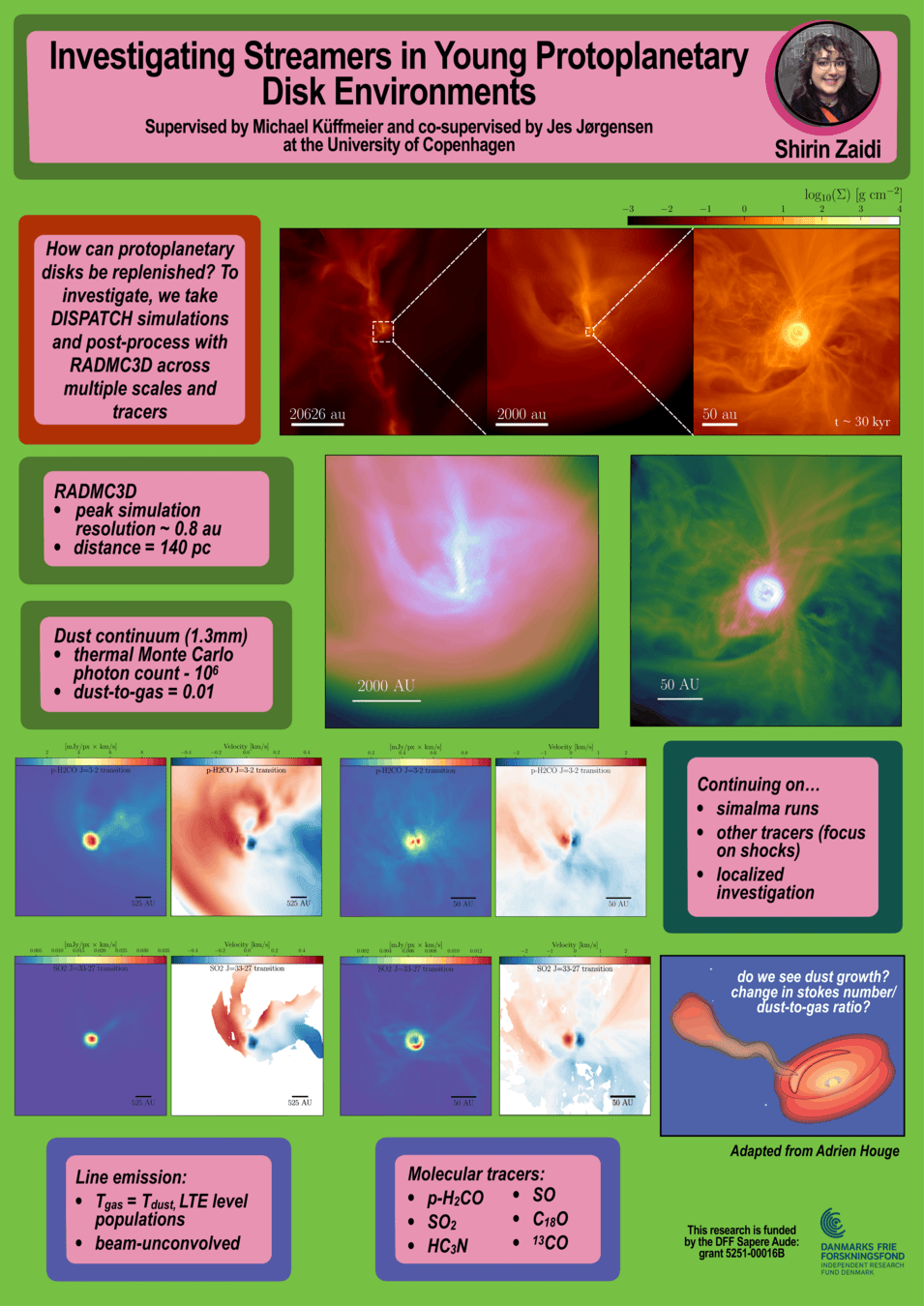

Beyond the initial collapse
Christian G. Holm
preliminary work
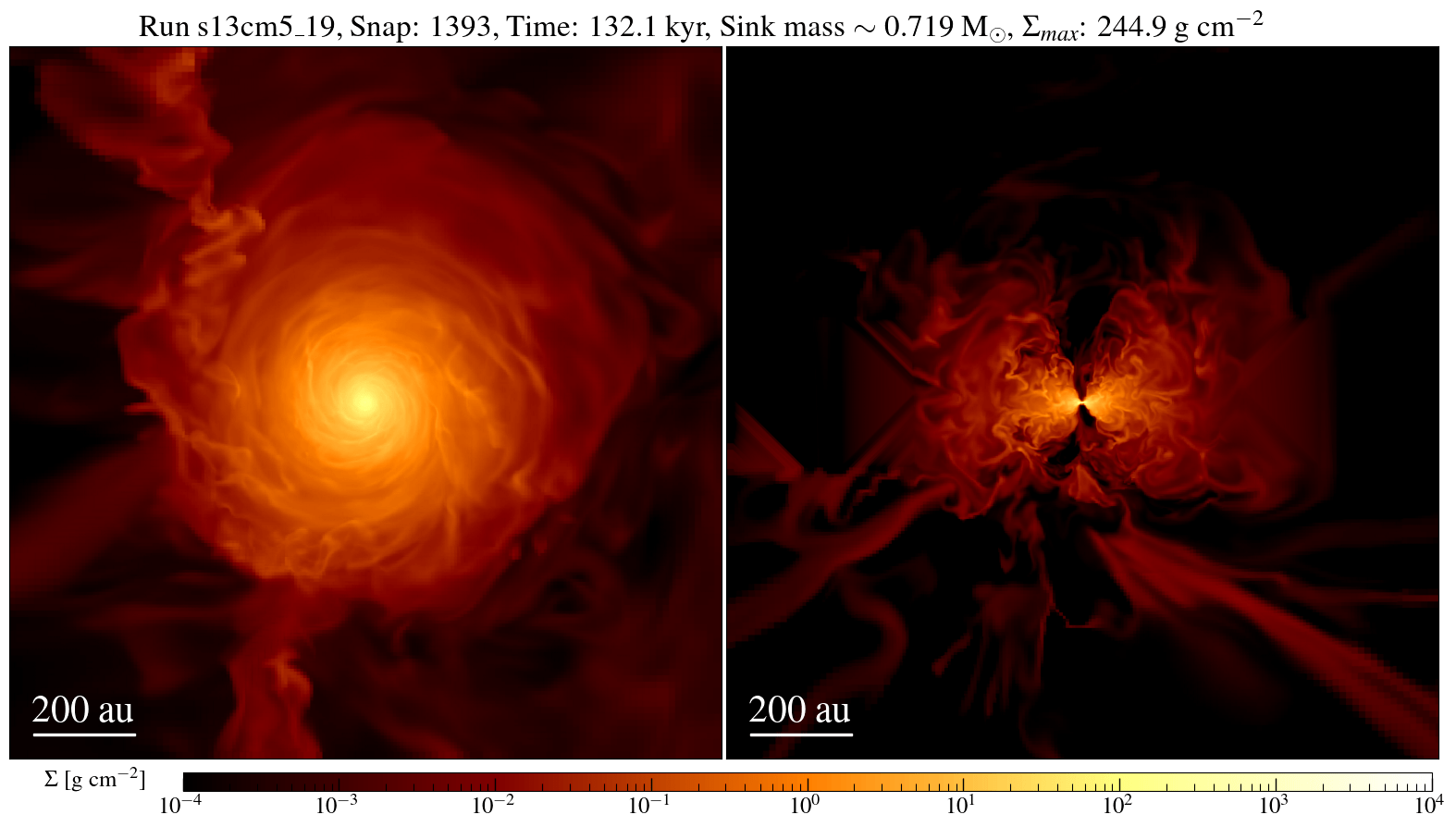
Beyond the collapse?
Origin of accreting gas
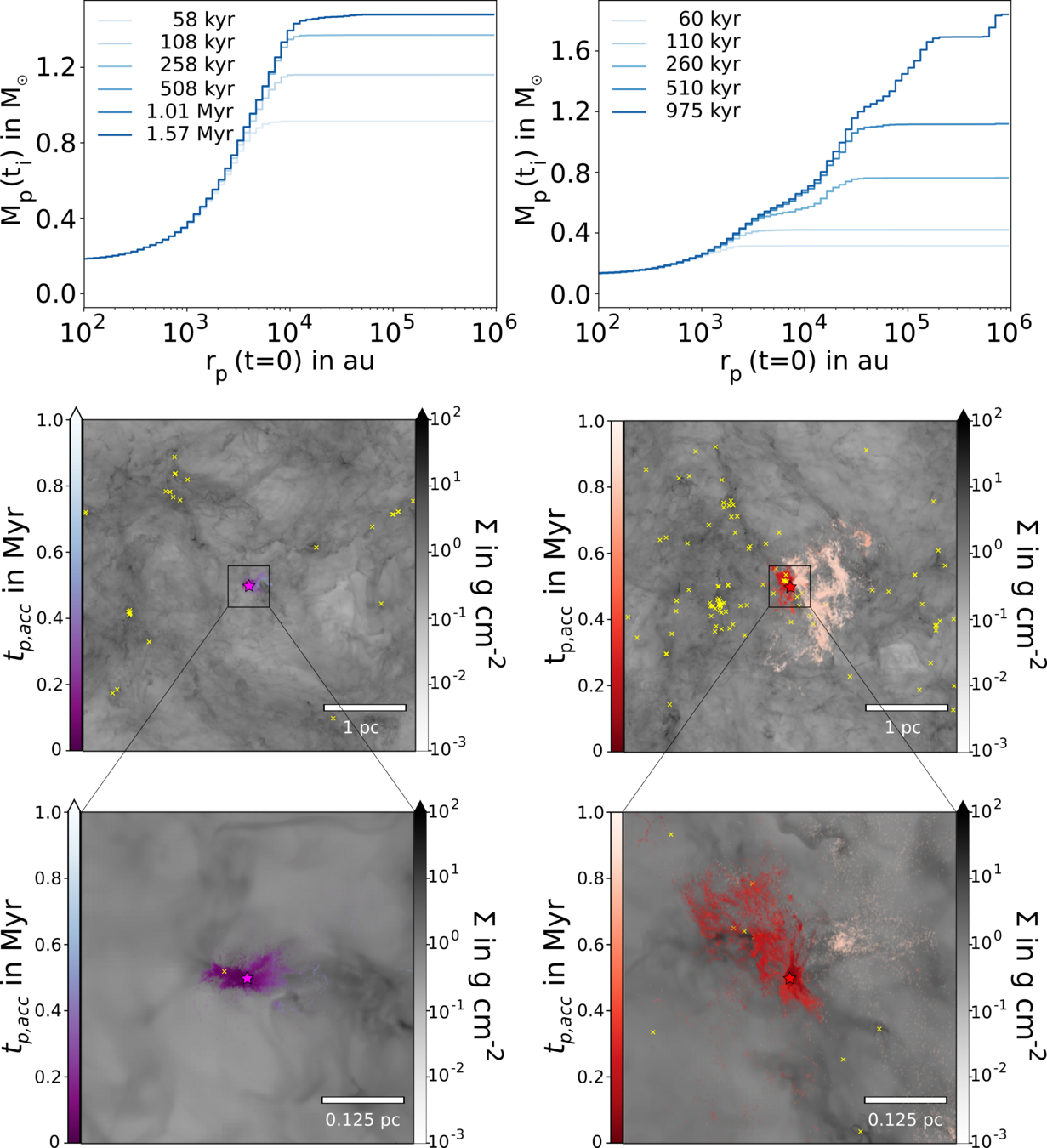
Küffmeier, Jensen & Haugbølle '23
see also Pelkonen+ 2021 and poster by Shingo Nozaki
Origin of accreting gas
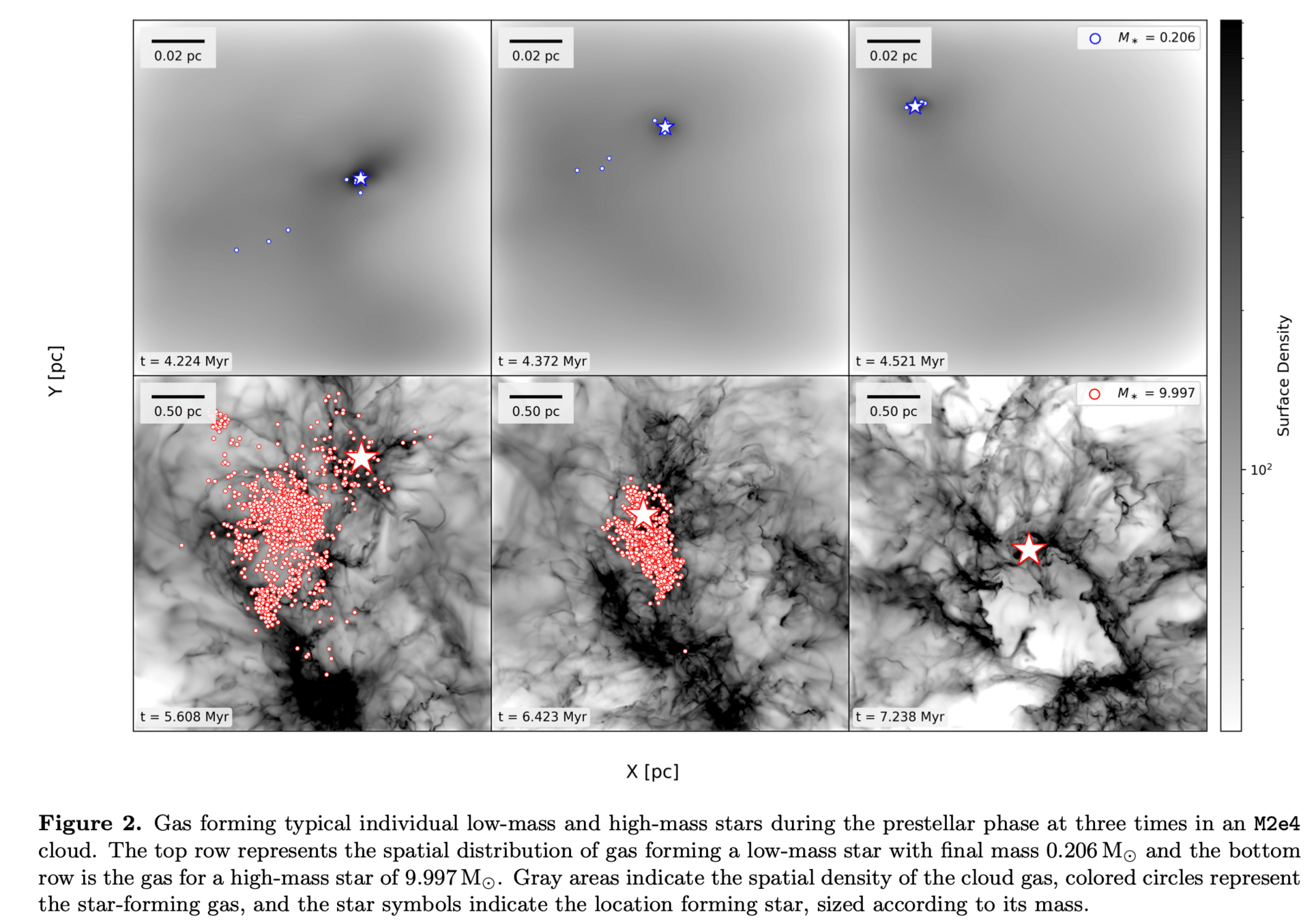
Kaalva, Offner, Filippova & Grudic '26
Animation by S. Raymond
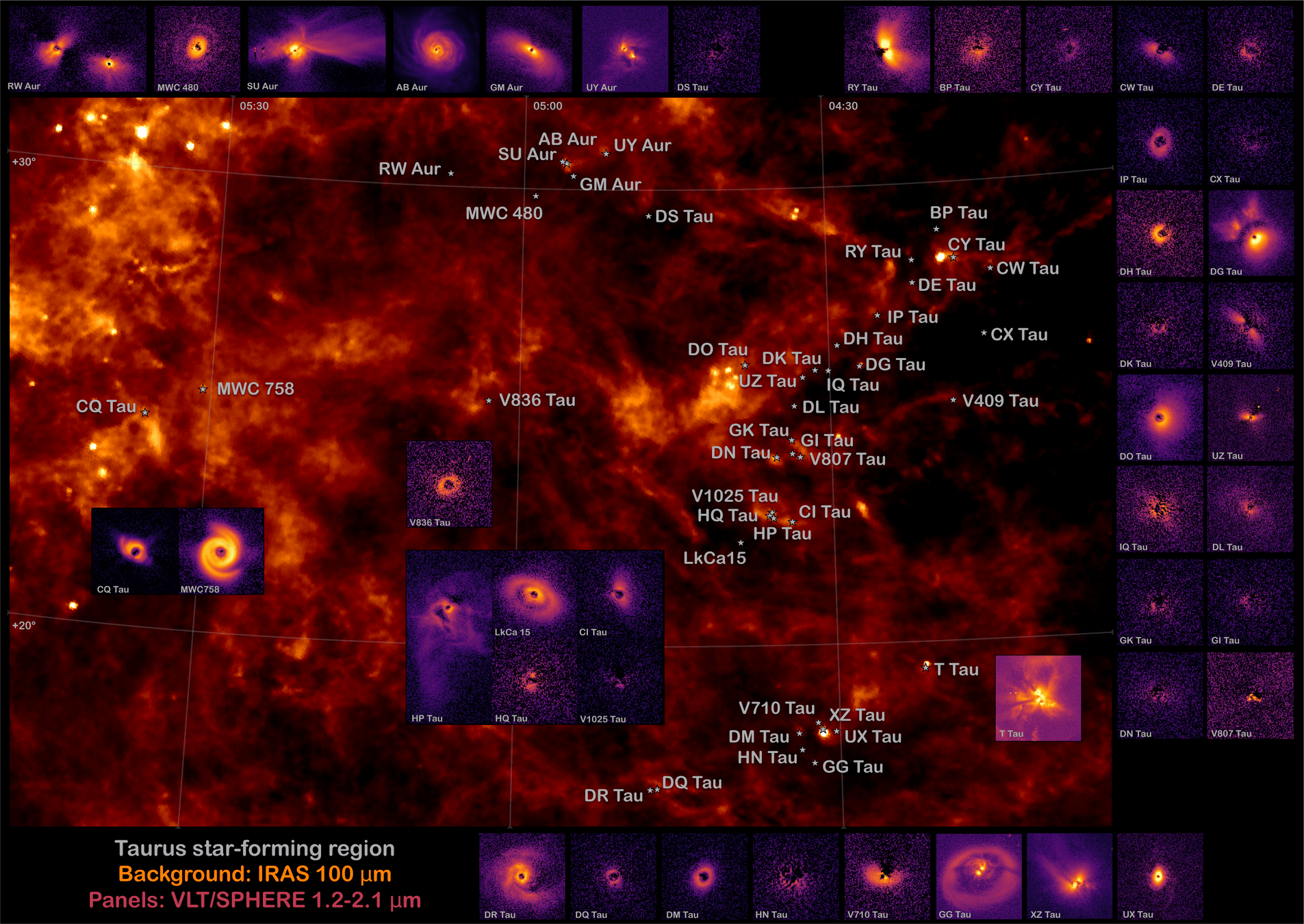
Credit: Garufi et al. 2024
Disks are rarely isolated.
Streamers and shadows as signs of infall-induced disks
Formation of misaligned configuration
Observable as shadows in outer disk
Küffmeier, Dullemond, Reissl & Goicovic 2021
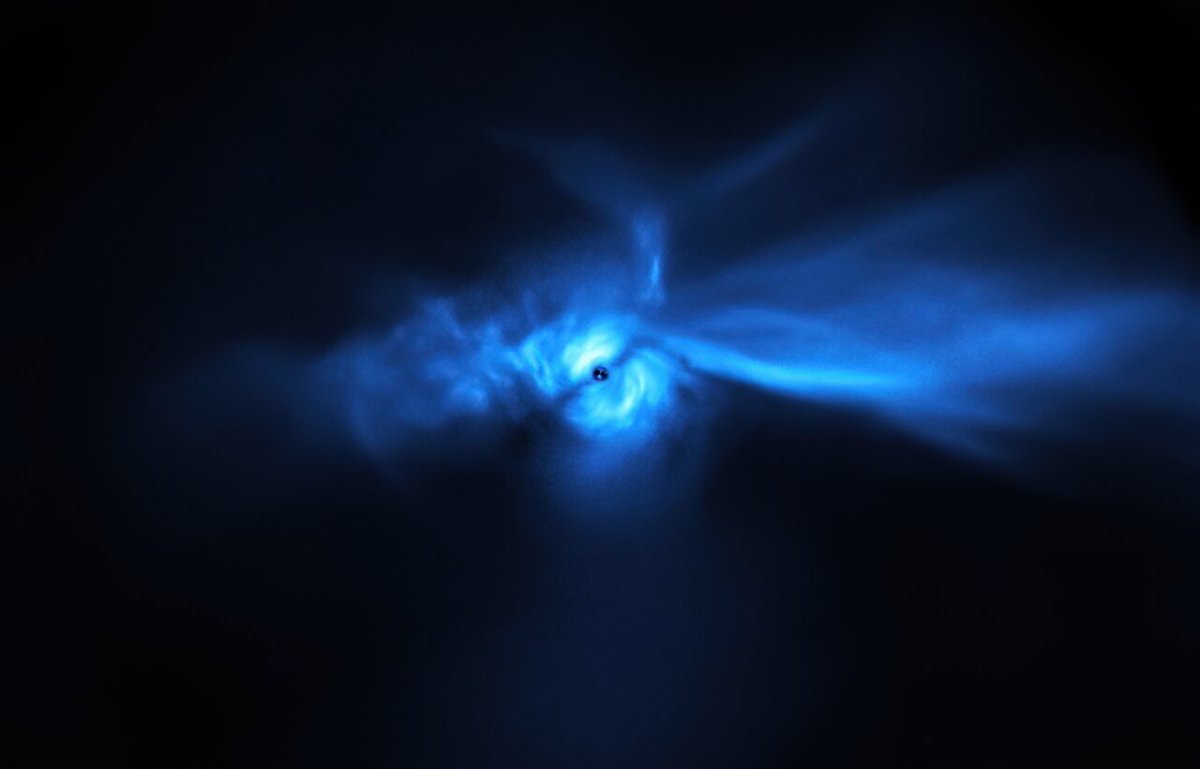
SU Aur (Ginski et al. 2021)
300 au
Krieger, Küffmeier et al. 2024
Two phases of disk formation
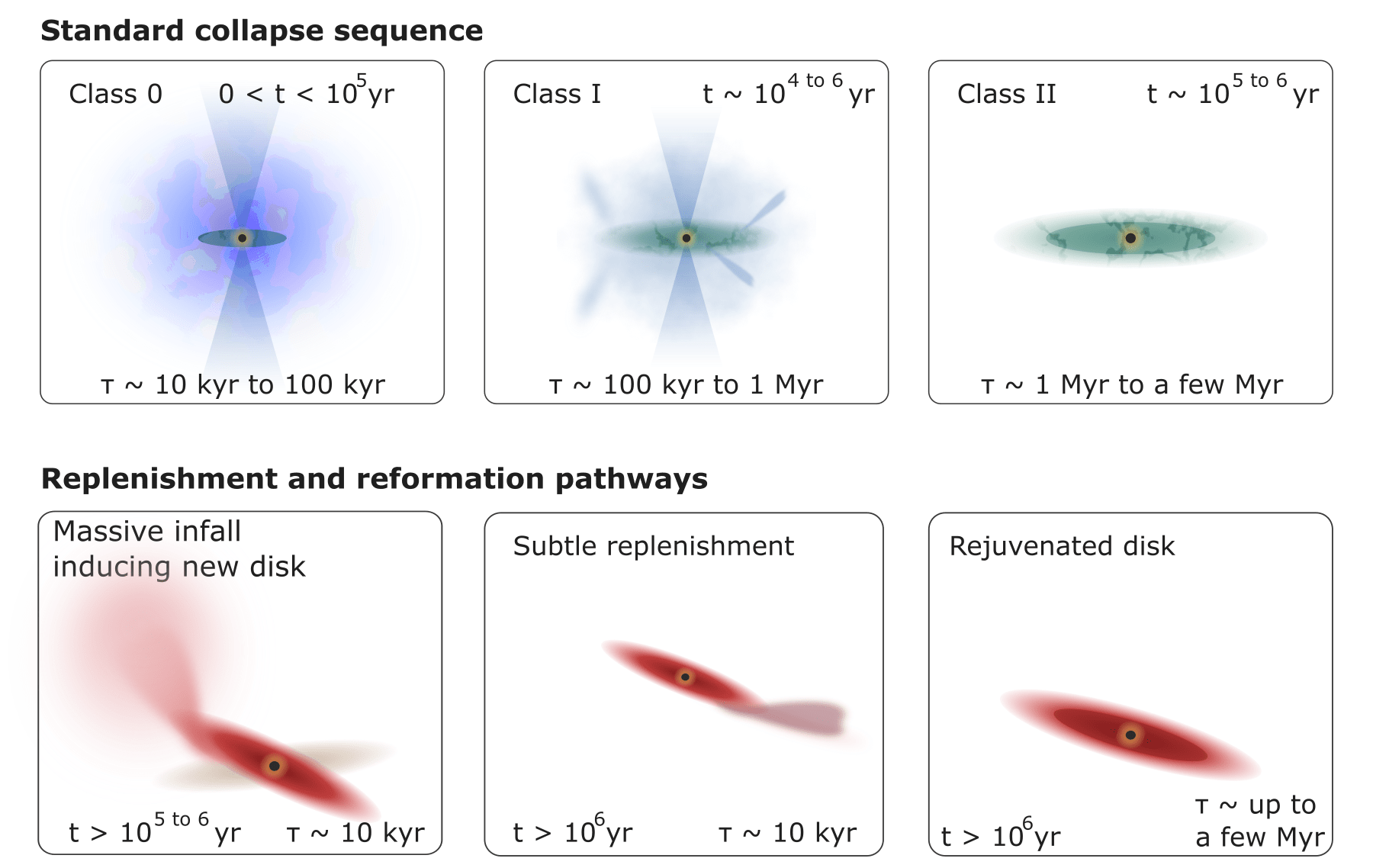
Küffmeier, Winter, Kuznetsova et al. in prep
Summary
Disks are replenished and distorted by filamentary infall (streamers).
Star and disk formation is a two-phase process consisting of mandatory initial collapse and post-collapse ("late") infall phase.
The degree of ionization is important for disk properties, but large delivery of angular momentum simplifies disk formation after very early collapse phase.
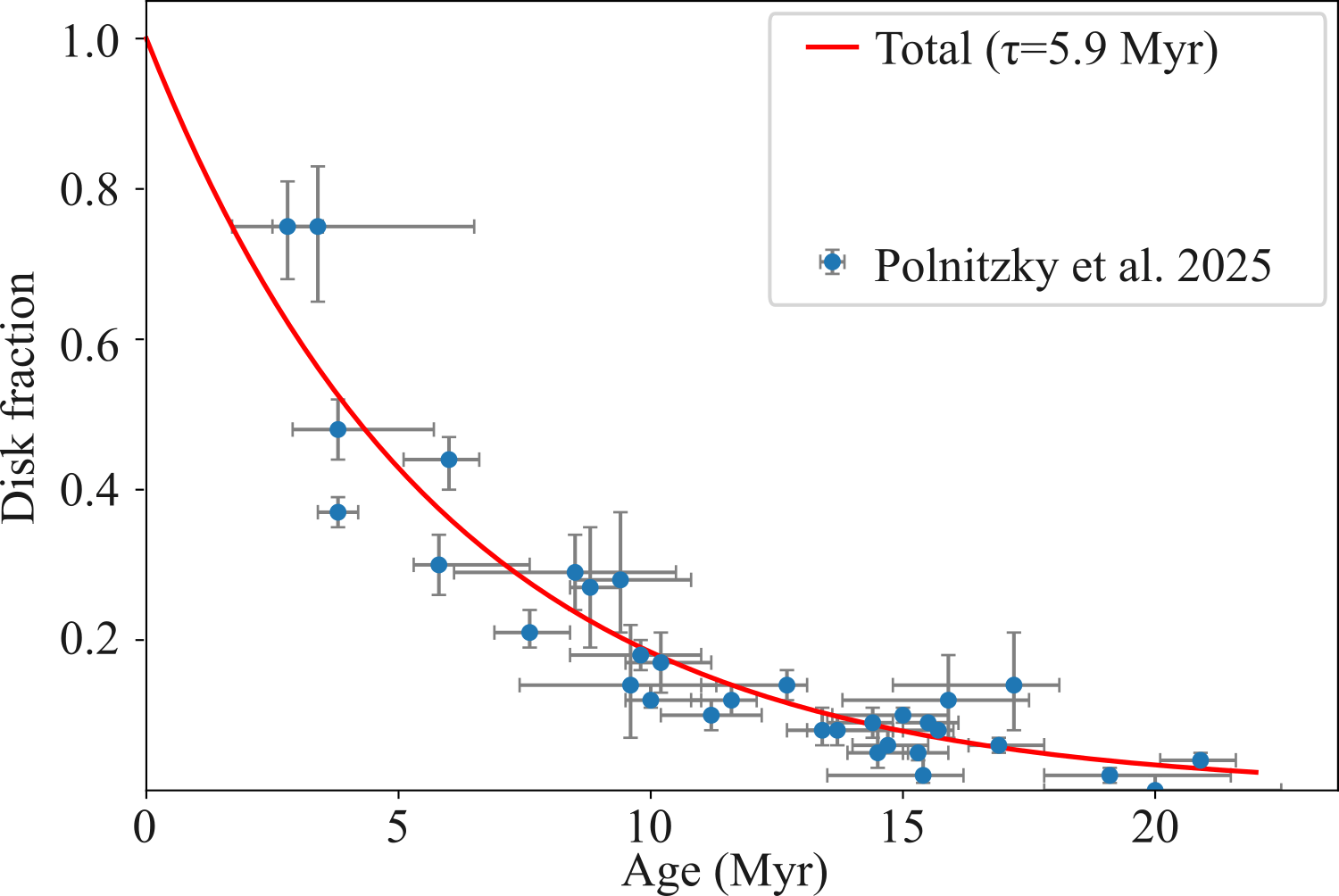
Do we really know disk "lifetimes"?
Fraction reflecting occurrence of infall events instead of disk age?
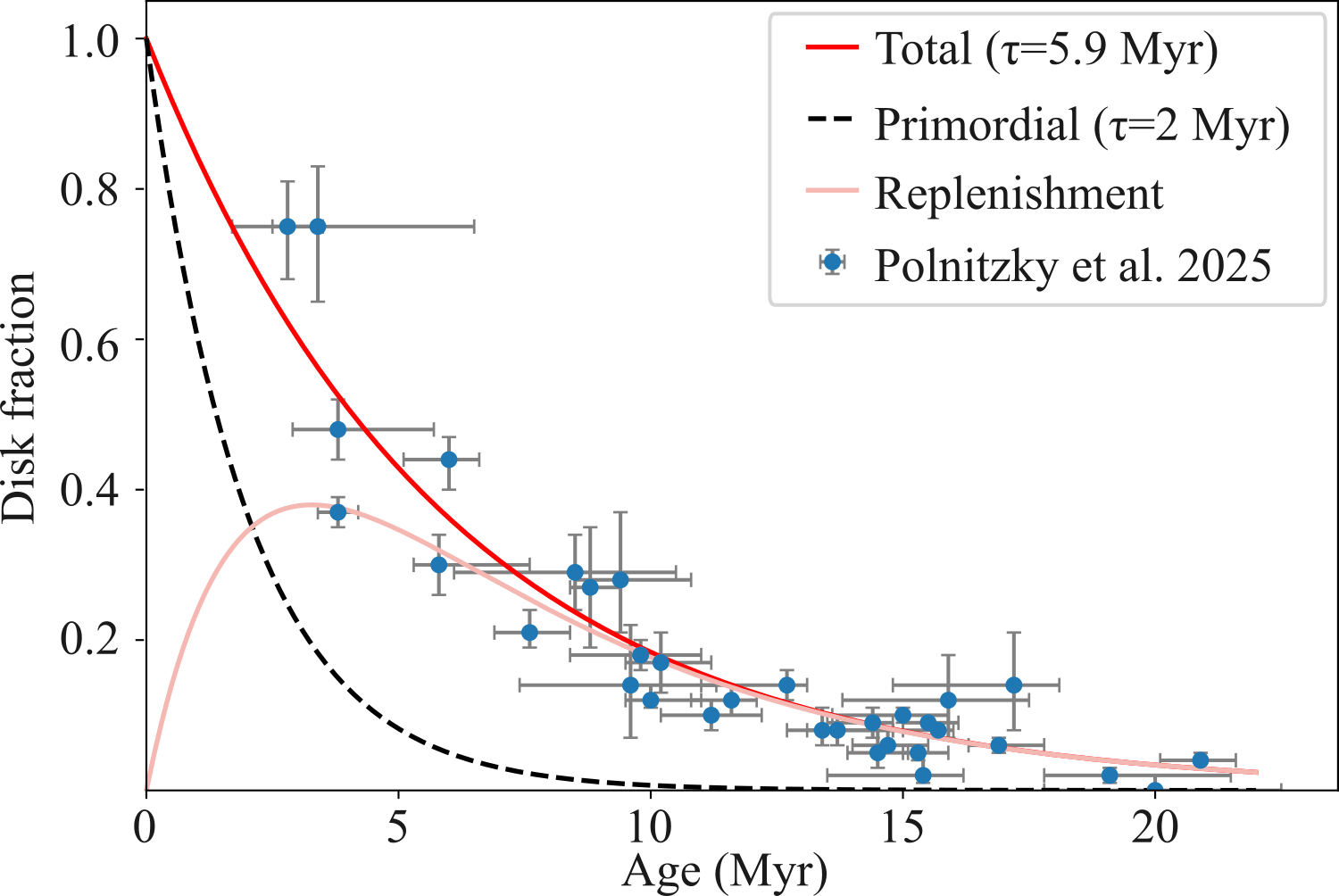
Fraction reflecting occurrence of infall events instead of disk age?
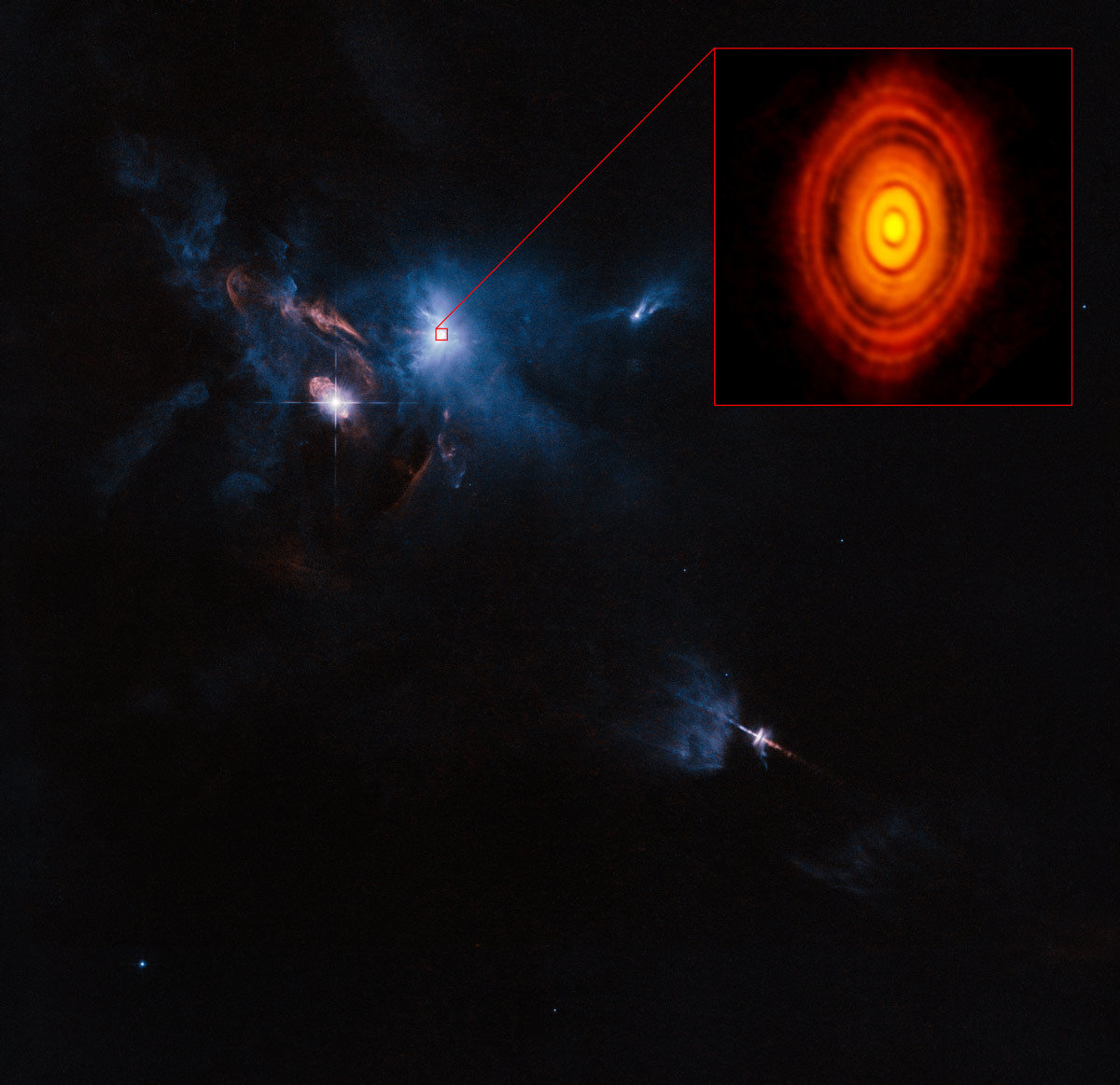
Credit: ALMA (ESO/NAOJ/NRAO)
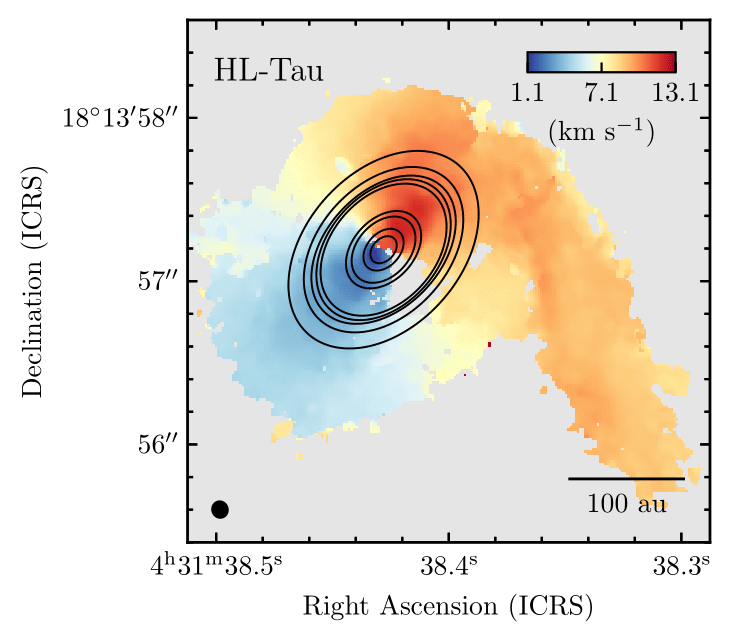
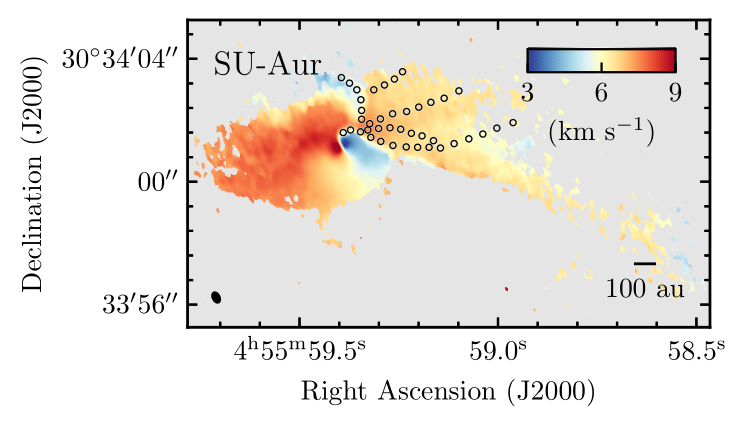
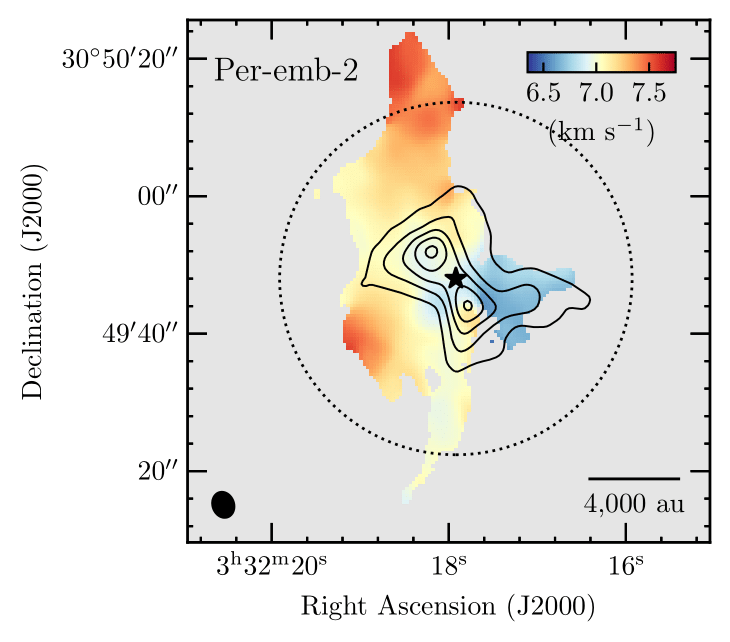
Ginski et al. 2021
Yen et al. 2019
Garufi et al. 2021
Pineda et al. 2020
50 au
BHB1 (Alves et al. 2020), GM Aur (Huang et al. 2021), IRS 63 (Segura-Cox in prep.), AB Aur (Grady et al. 1999 / Fukagawa et al. 2004), M512 Grant et al. 2021, Gupta et al. 2024, Cacciapuoti et al. 2024) ...
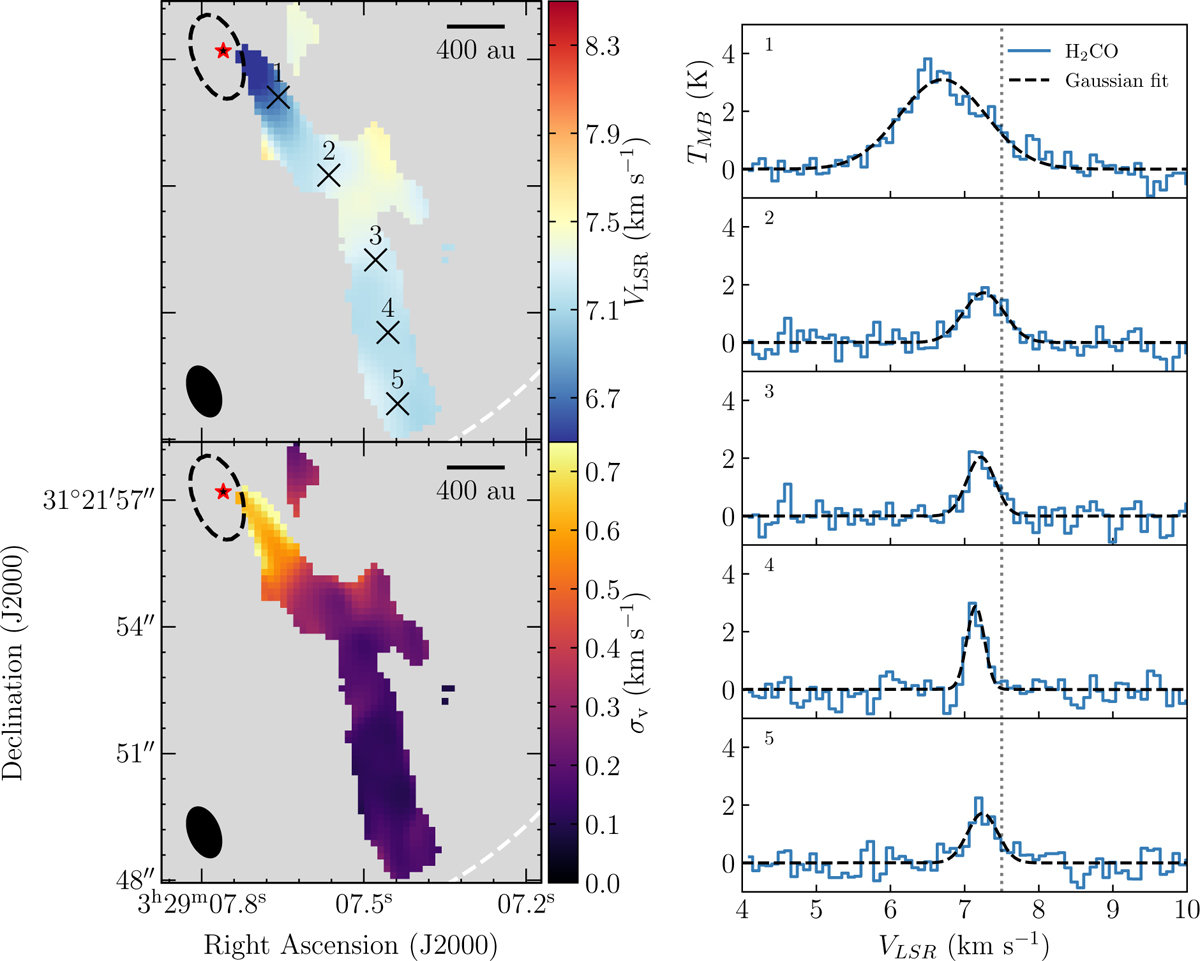
Per-emb-50
Valdivia-Mena et al. 2022
Streamers:
Effect of ionization on disk size
increasing ionization rate
enhanced magnetic braking
smaller disks
ideal MHD
non-ideal MHD
"mass accretion onto the star–disk system is filamentary, acting through accretion channels and accretion sheets"
Küffmeier, Haugbølle & Nordlund 2017
mass accretion occurs along distinct channels (shear flows) created locally by the turbulent motions
Seifried et al. 2013
Küffmeier et al. 2017
Segura-Cox et al. 2020
Effect of ionization on disk size
Tokuda et al. 2026
"...you simply cannot look at disks with ideal MHD. I thought you knew all of this, and the people in [---] are not impressed."
e-mail to me on paper in 2017
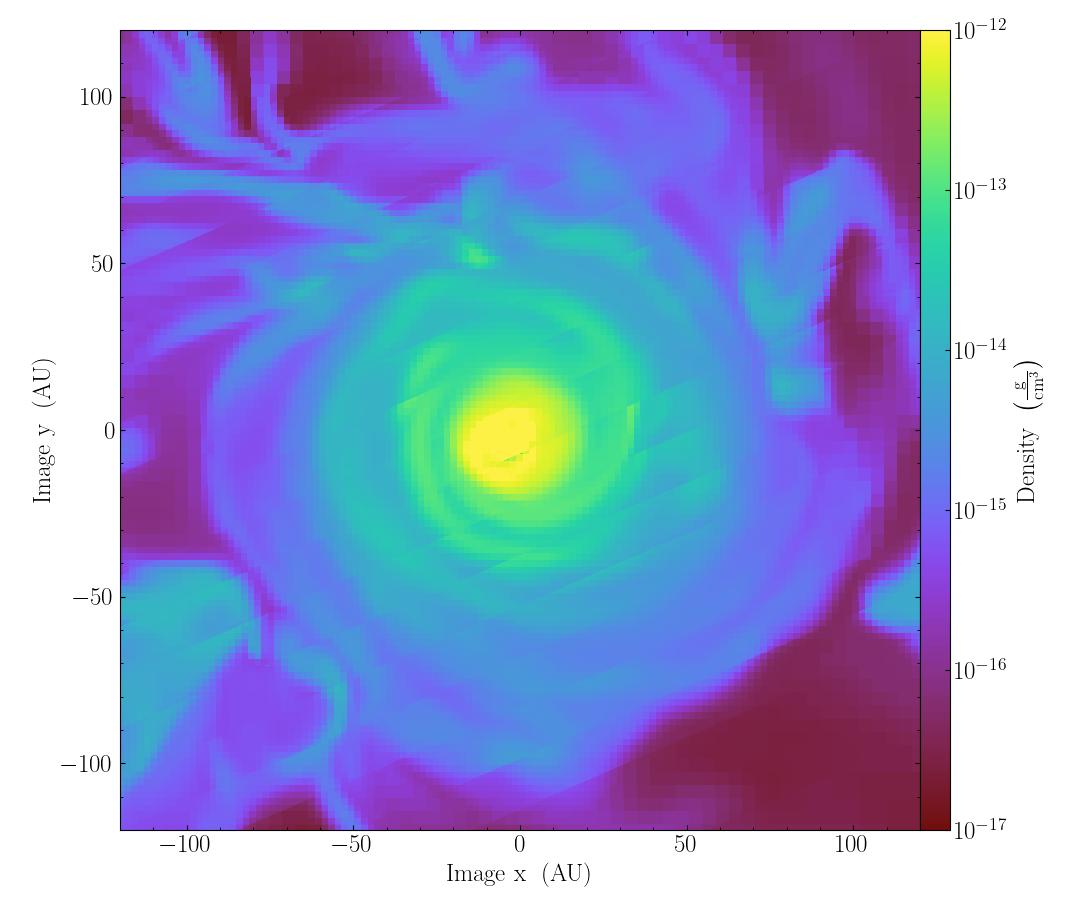
Küffmeier et al. 2017
9 years later
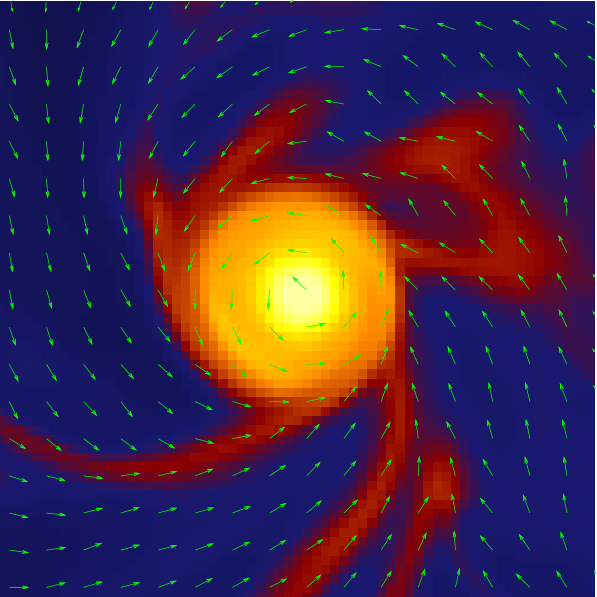
What about magnetic fields?
Help! Where is the disk?!
Ohmic, Ambipolar, Hall
Turbulence
Santos-Lima et al. 2012
Hydro
ideal MHD
non-ideal MHD
turbulence + MHD
History of modeling disk formation
for more references, see reviews
(e.g., Wurster & Li 2018, Zhao et al. 2022, Tsukamoto et al. 2023, Küffmeier 2024)
see Seifried et al. 2012/13!
What about magnetic fields?
Help! Where is the disk?!
Ohmic, Ambipolar, Hall
Turbulence
Santos-Lima et al. 2012
Hydro
ideal MHD
non-ideal MHD
turbulence + MHD
Other effect: dust
dust growth weakens magnetic braking => larger disks
Zhao et al. 2018, Marchand et al. 2020
dust-rich disks from collapse
"ash-fall" scenario
Tsukamoto et al. 2021
Lebreuilly et al. 2020
dust accumulates
History of modeling disk formation
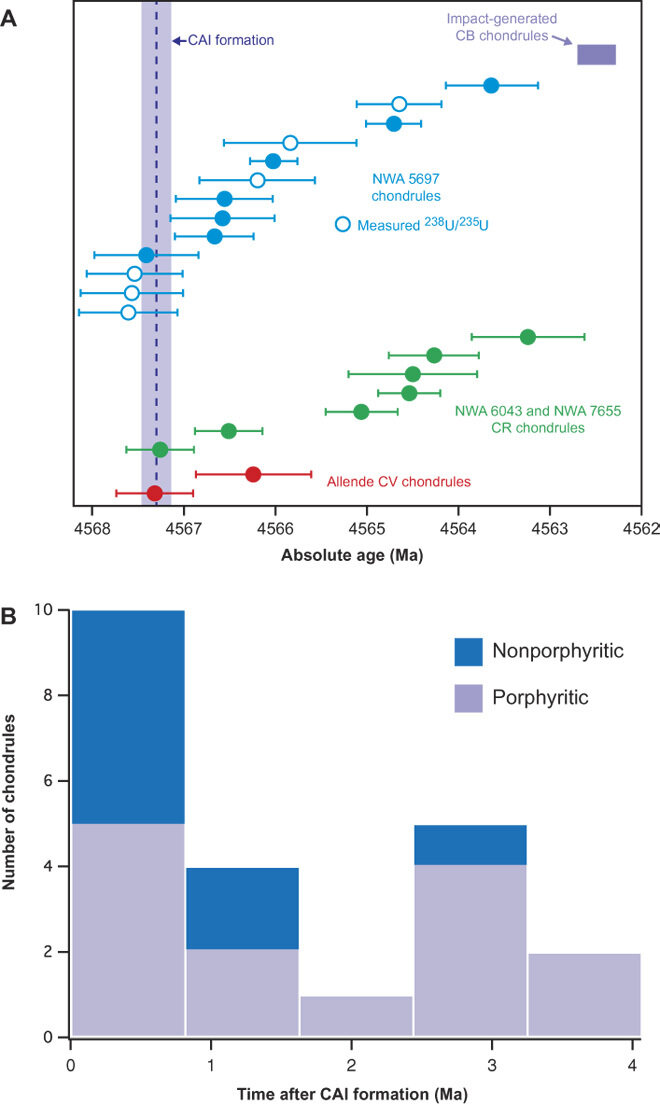
Bollard et al. '17
When?
Spherical collapse models simulate a few 10 kyr.
When?
And then?
After initial collapse, the disk evolves in isolation.
credit: M. Persson
To do
...solely replenishes the disk,
I
...plays an active role in triggering instabilities,
II
...induces dramatic changes such as misalignment.
III
Explore frequency and properties of infall onto star-disk systems that ...
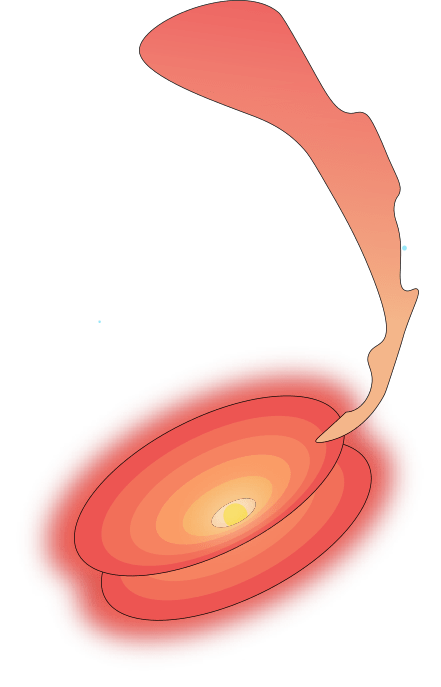
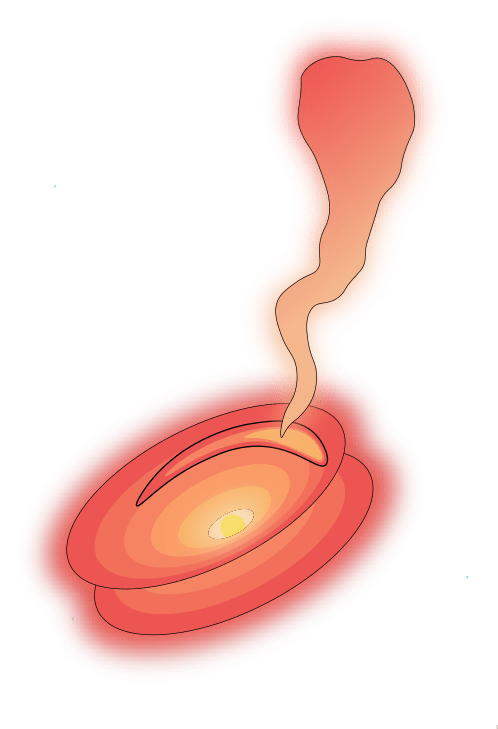
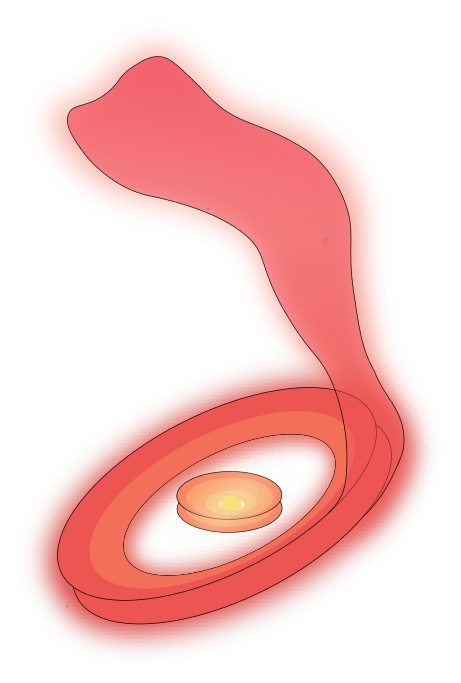
images: A. Houge
Revisiting star-disk formation from a Giant Molecular Cloud perspective
Model star formation in a Molecular Cloud
isothermal magnetohydrodynamical (MHD) with driven turbulence
adaptive mesh refinement (AMR) simulations
image from Holm et al. '26 submitted
Late infall is common for stars
On average, even solar mass stars gain ~50 % of their final mass through accretion of initially unbound material
Note that some protostars still accrete after 1.2 Myr
Küffmeier, Jensen & Haugbølle '23
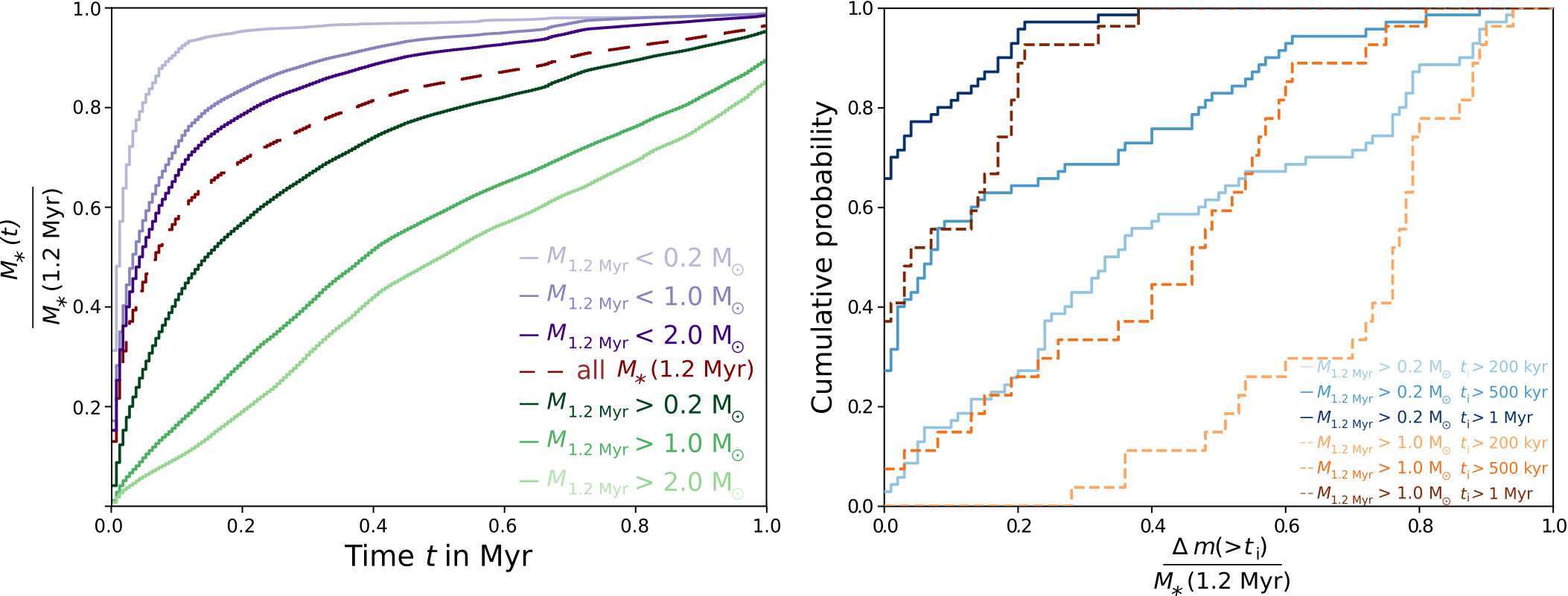
(Pelkonen et al. 2021)
Origin of accreting gas
"In the case of the more massive stars, accretion from the environment outside the original core volume is even more important than that from the core itself. [...]
The assumption of spherical symmetry cannot be applied to the majority of collapsing cores, and is never a good description of how stars accrete gas from outside the original core radius."
(Smith, Glover, Bonnell, Clark & Klessen 2011)
"We find that, once a protostar forms, the lifetime of the unaccreted gas correlates with the final stellar mass, where low-mass stars (M∗ < 0.5 M⊙) accrete for 0.5-0.6 Myr from a relatively local reservoir of gas, and high-mass stars (M∗ > 2 M⊙) accrete over 3.3-4.7 Myr from a much larger volume."
(Kaalva, Offner, Filippova & Grudic 2026)
inertial-inflow model (Padoan+ '20)
Implications of (late) infall
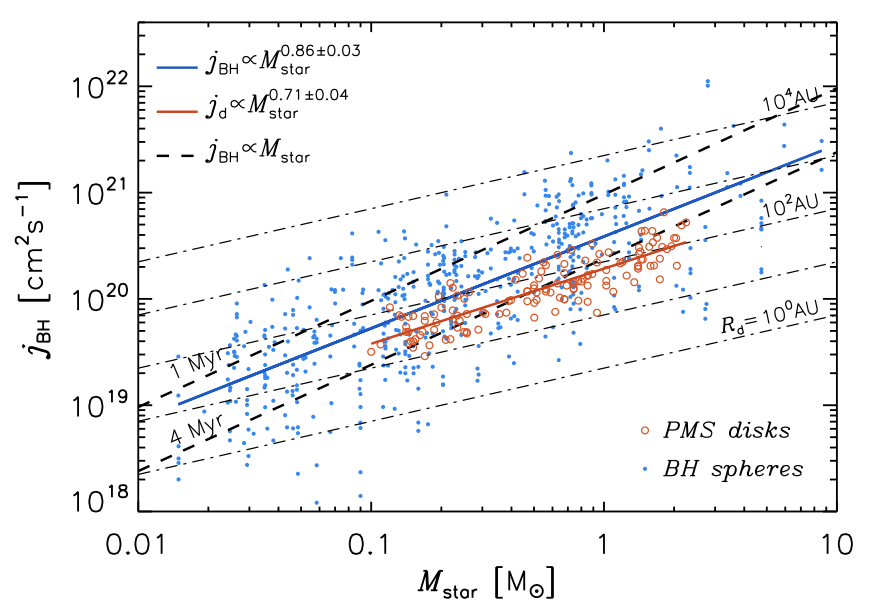
Angular momentum budget
- Large scatter of ang. mom.
- Increasing specific angular momentum for increasing final stellar mass
Specific angular momentum computed from all accreting tracer particles at the first snapshot after star formation
- subtle correlation with mass (inherited by disks??)
"We find marginal relationships between disk sizes and M*." (Long+ 2022)
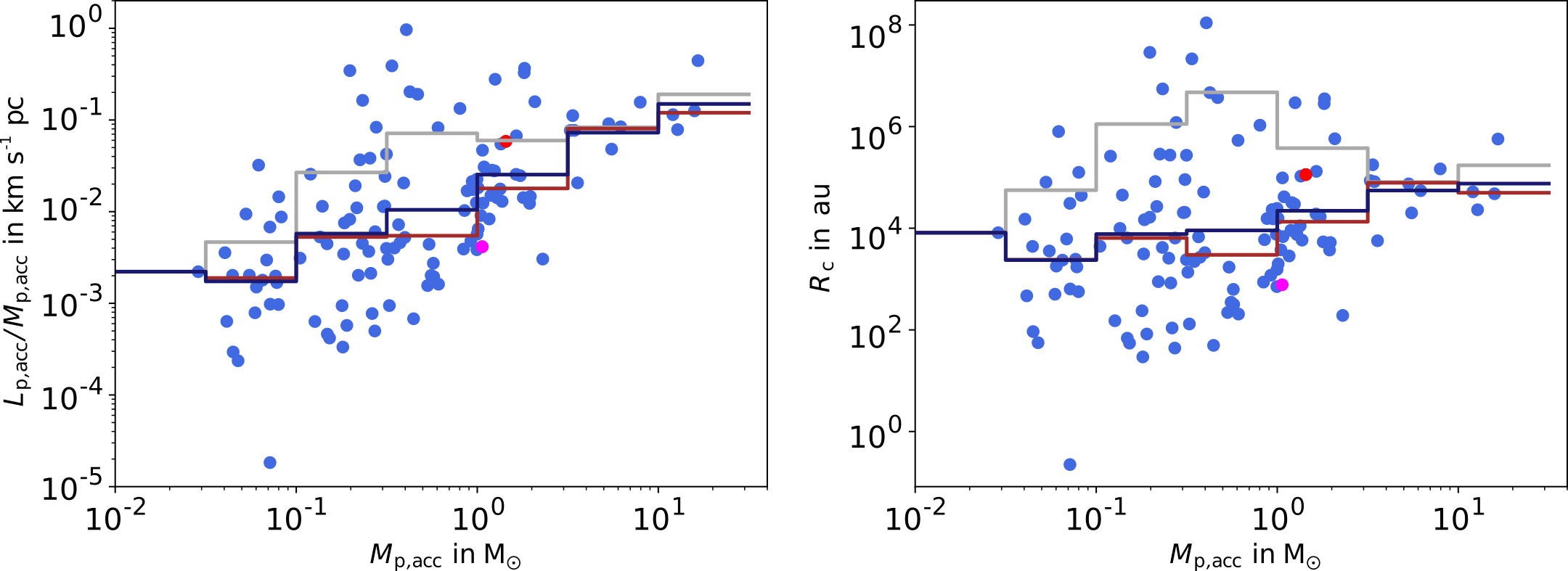
Küffmeier, Jensen & Haugbølle '23
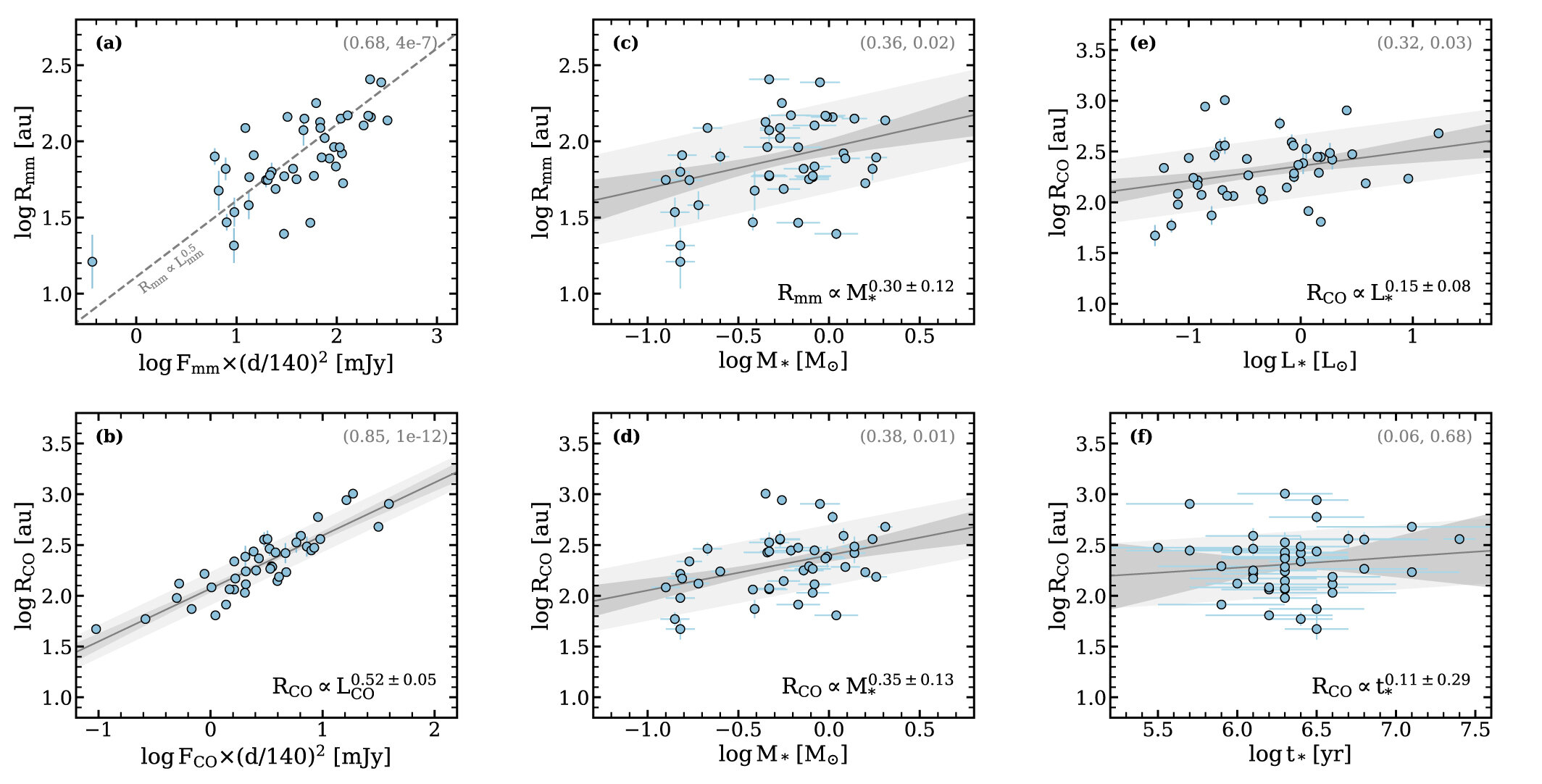
Long et al. 2022
see also Padon+ '05 & '25 and Winter+ '24 for analyses/discussions of Bondi-Hoyle(-Lyttleton) accretion
Padoan+ '25
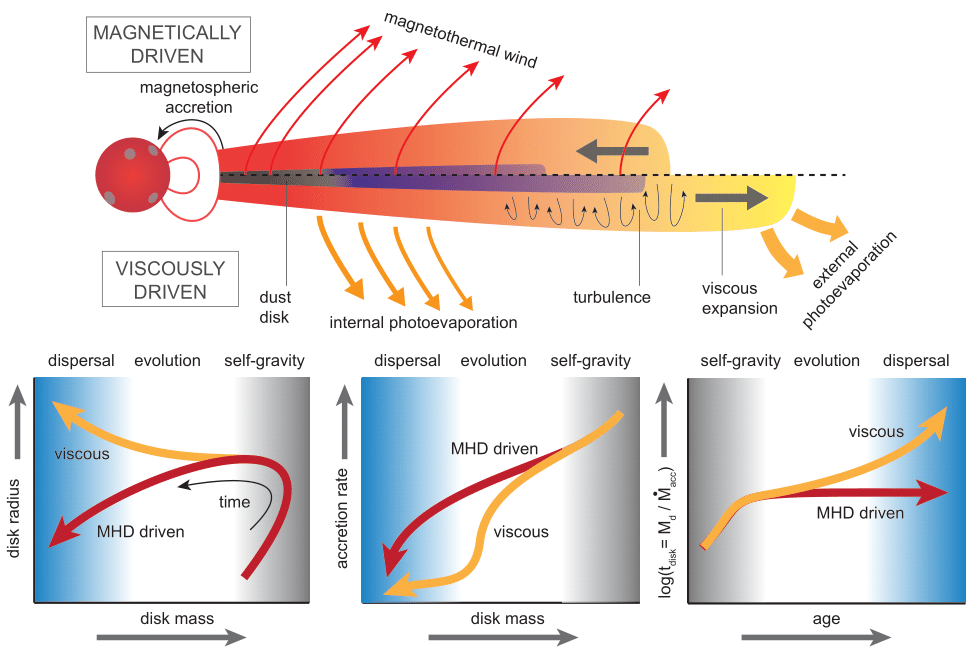
Spreading vs wind-driven?
Manara et al. 2023
Caveat!
Infall matters. Disks can easily be wind-driven and yet grow in size through infall of gas with high angular momentum.
Long et al. 2022
?
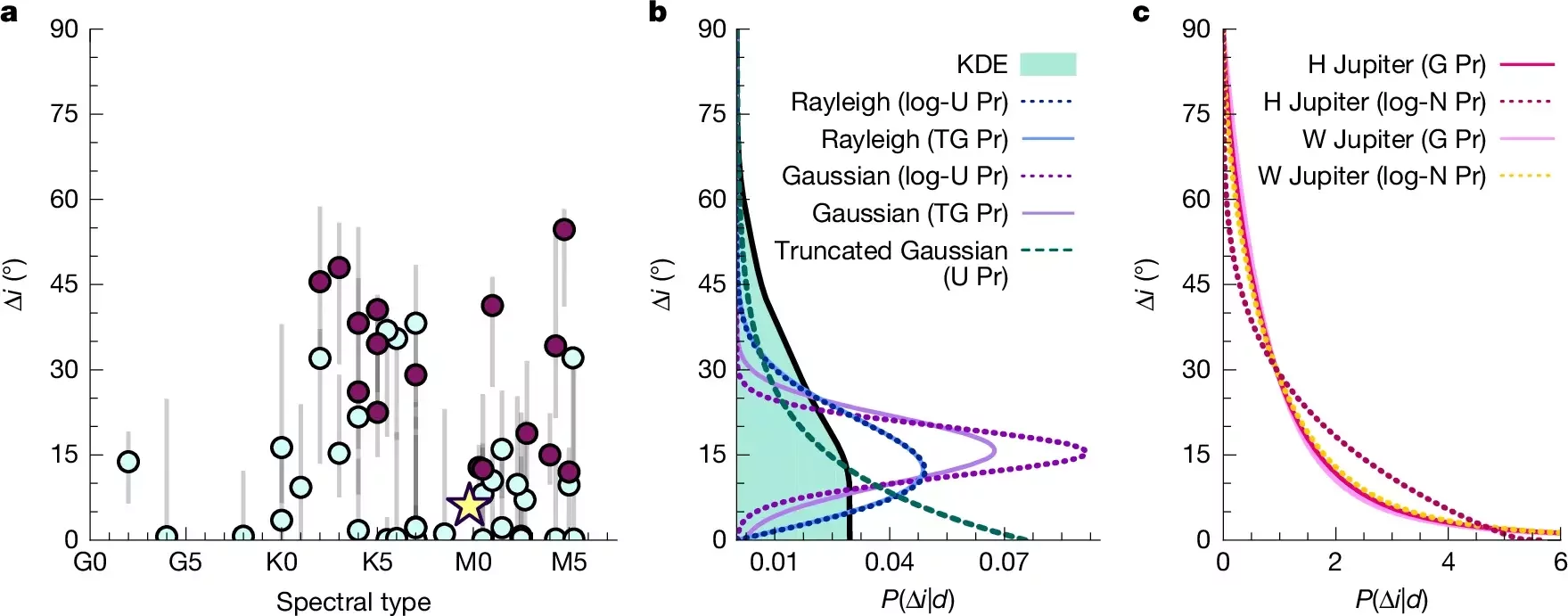
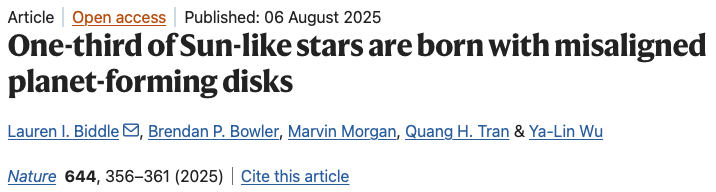
Orientation of infall
...
A disk contains only 1% of the stellar mass:
"Easy" to replenish with post-collapse (late) misaligned infall.
Turbulence matters from cloud to core (Padoan+ '97/'20, Klessen '01, Padoan & Nordlund '02, Hennebelle & Chabrier '08), down to binary (Offner+ '10) and disk scales (Küffmeier+ '17)
It implies misaligned infall (Küffmeier+ '24, Pelkonen+ '25), i.e., "chaotic star formation" (Bate '10)
and primordial misaligned disks (Thies+ '11, Bate '18, Küffmeier+ '21)
State-of-the-art in theory of star formation
Do we really know disk "lifetimes"?
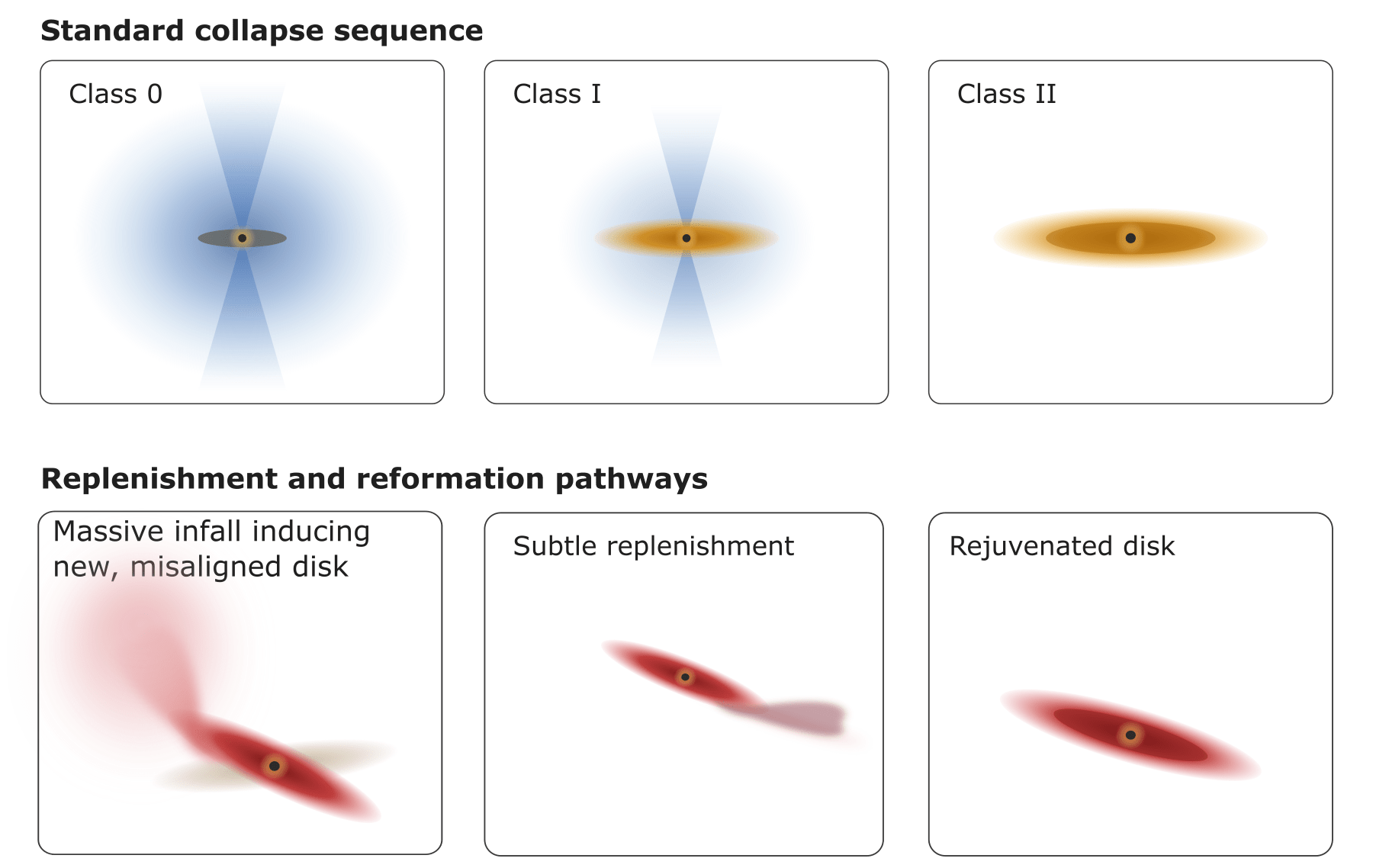
Two phases of disk formation
YSOs can appear younger than they really are
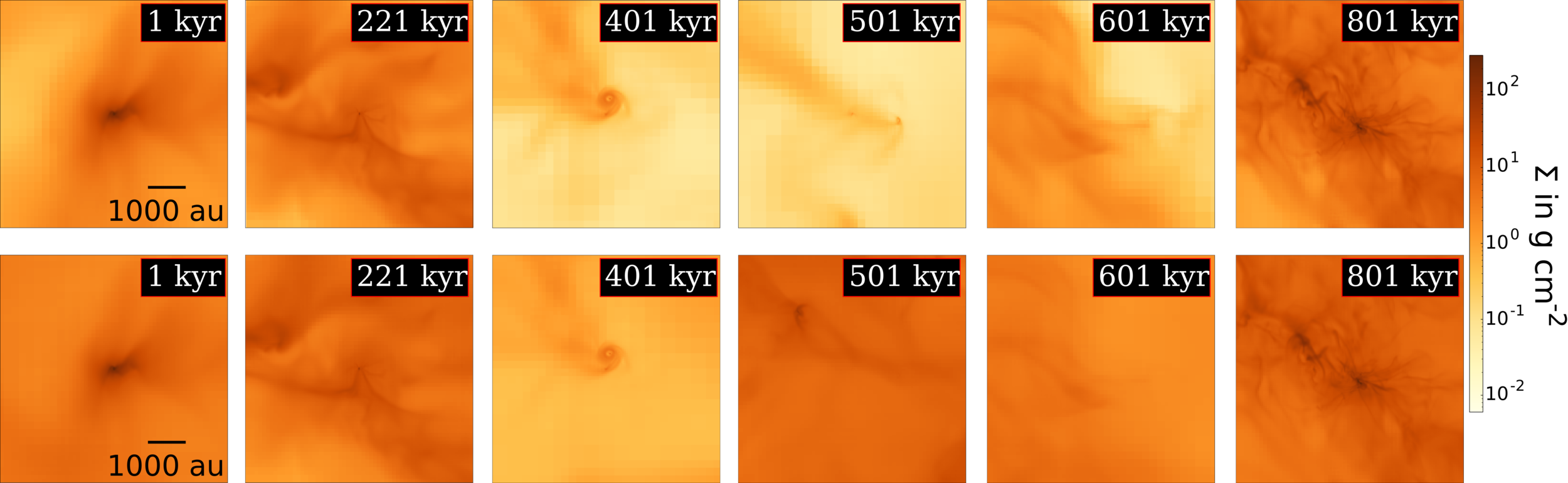
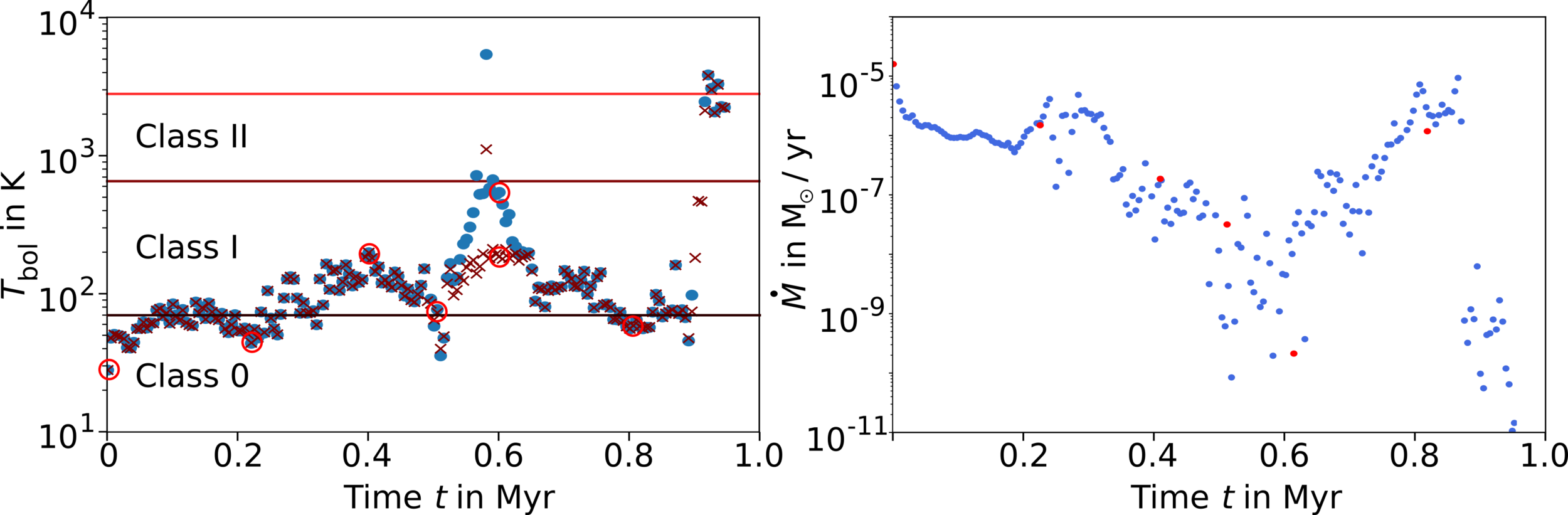
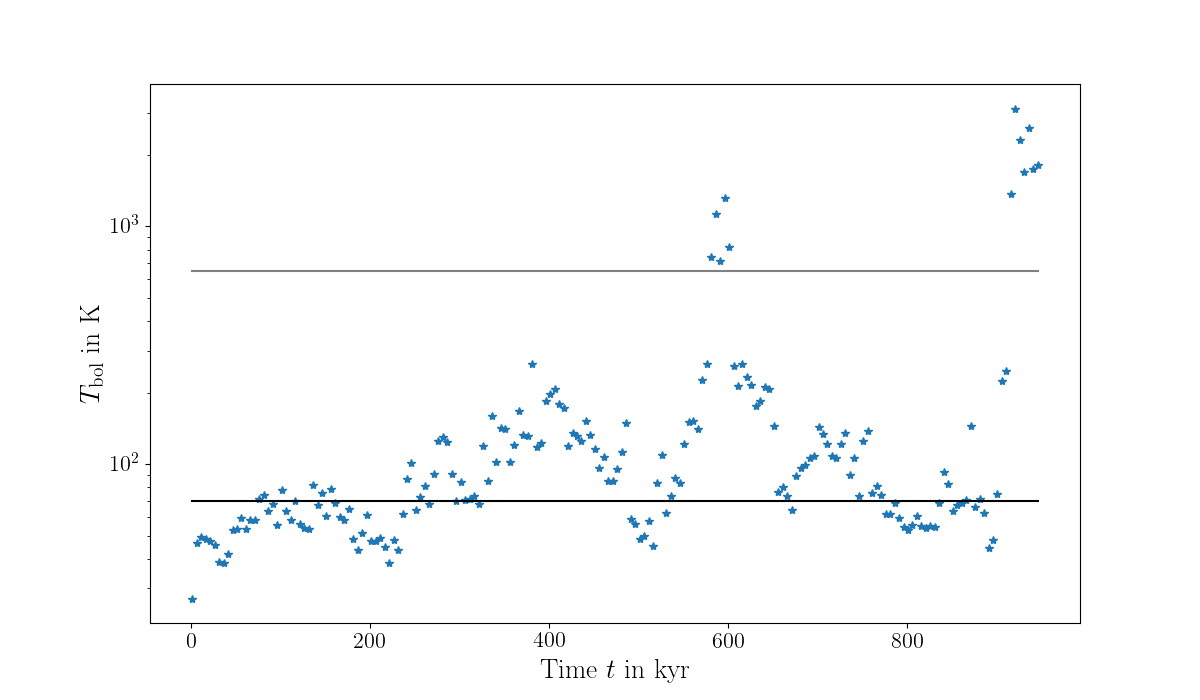
Class I
Class 0
Class II
On average, stars with increasing final mass undergo prolonged infall
Orientation of star-disk systems can change substantially
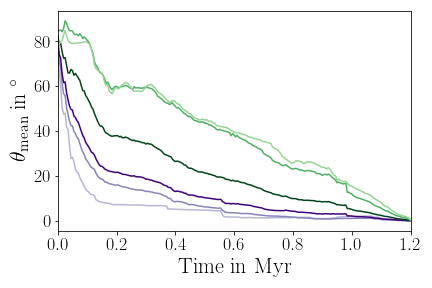
Orientation of infall
Küffmeier, Pineda, Segura-Cox & Haugbølle 2024
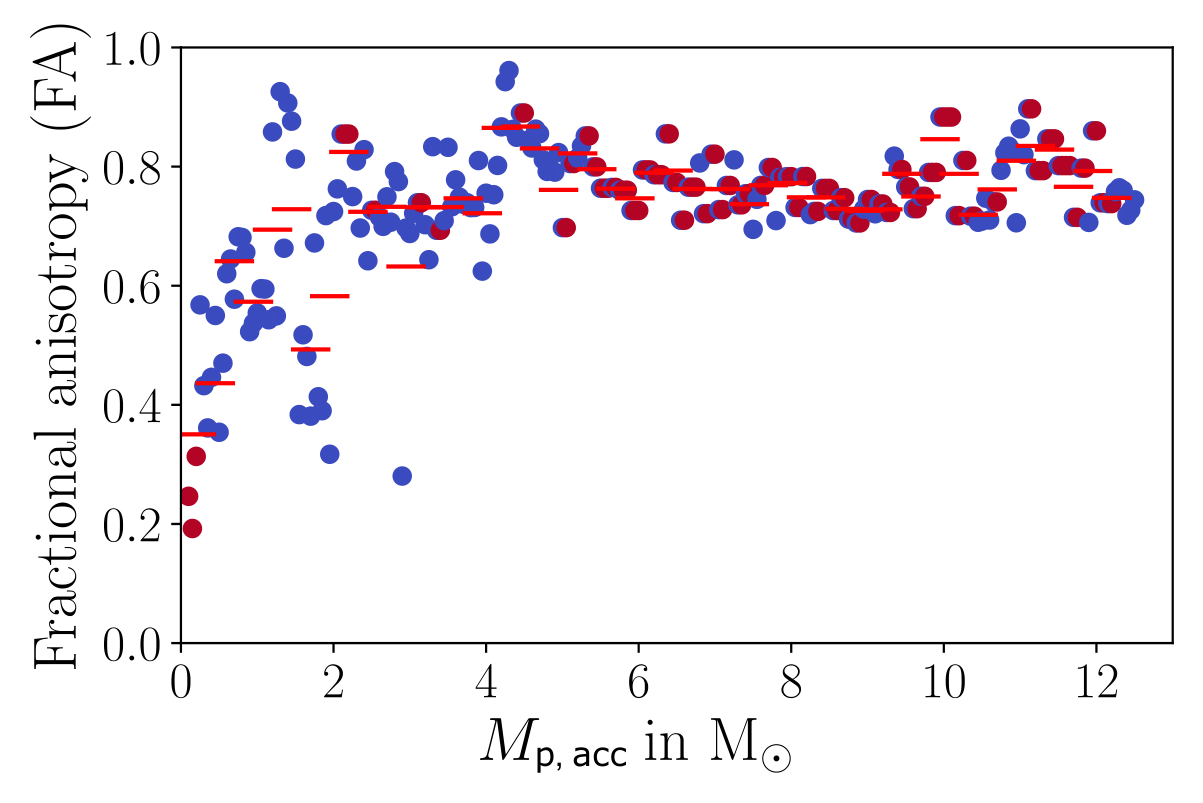
How to quantify anisotropy of accretion?
FA = 0: perfectly isotropic accretion
FA = 1: maximally anisotropic accretion
Fractional anisotropy based on tracer particles
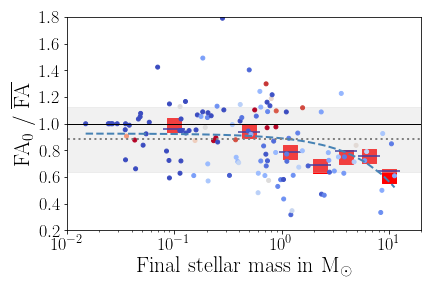
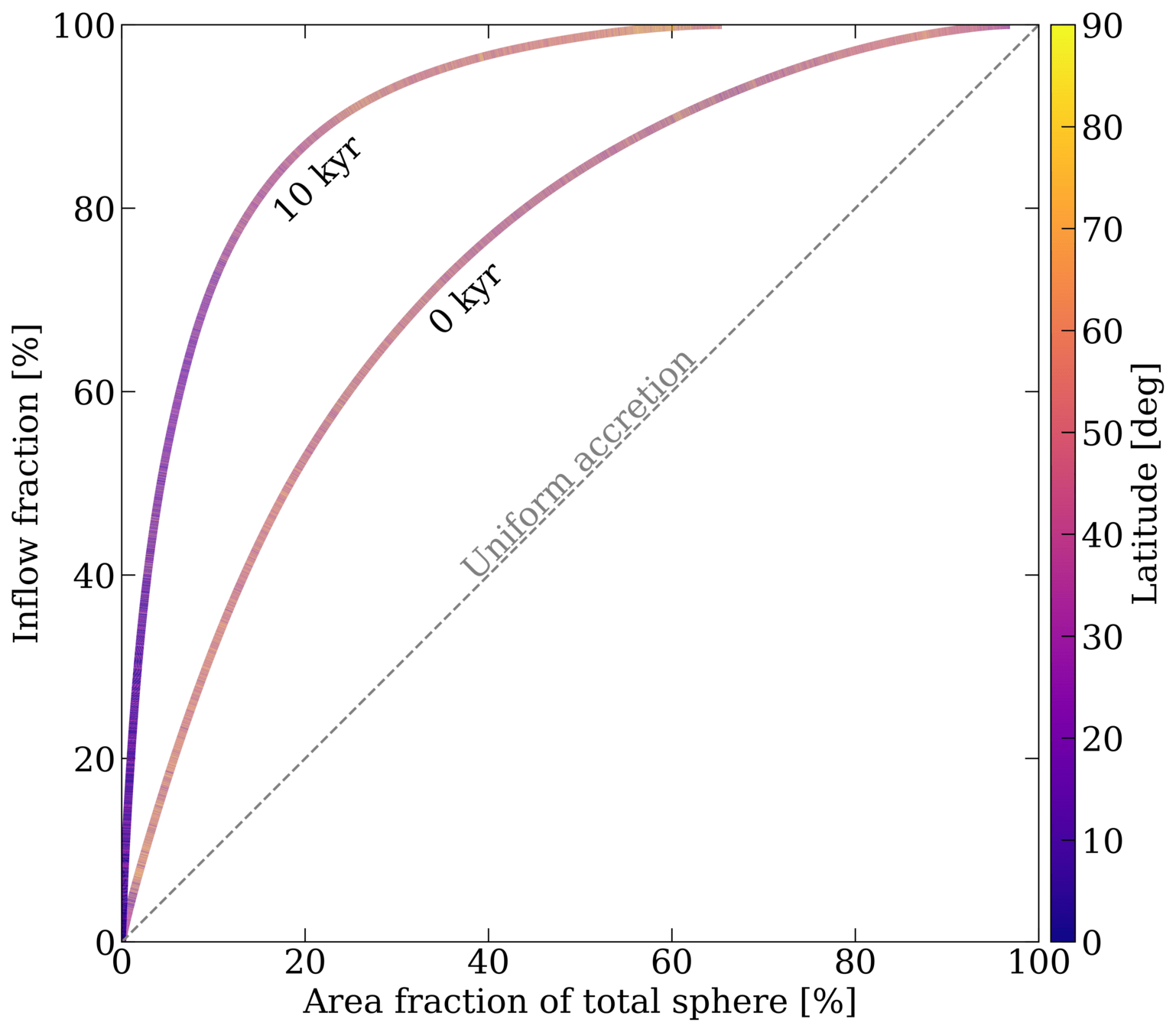
Post-collapse infall is more anisotropic than initial collapse
Post-collapse accretion phase resembles Bondi-Hoyle
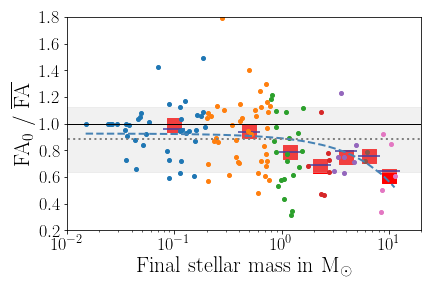
Küffmeier, Pineda, Segura-Cox & Haugbølle 2024
Post-collapse infall is more anisotropic than initial collapse
Anisotropic accretion
FA = 0: perfectly isotropic accretion
FA = 1: maximum anisotropic accretion
Küffmeier, Haugbølle, Pineda & Segura-Cox 2024
Late infall is more anisotropic than early collapse
\mathrm{FA} = \sqrt{ \frac{1}{2}} \frac{\sqrt{(\lambda_1 - \lambda_2)^2 + (\lambda_2 - \lambda_3)^2 + (\lambda_3 - \lambda_1)^2}}{\sqrt{\lambda_1^2 + \lambda_2^2 + \lambda_3^2}}
Fractional anisotropy (FA) serves as a good measure for the (an-)isotropy of accretion.
FA=0: perfectly isotropic accretion, FA=1: maximally anisotropic

\frac{\Delta t_{\rm single}}{\Delta t_{\rm single}+\Delta t_{\rm mult}}
1
0
FA can also be a useful measure to compare (an)isotropy of stellar spins in clusters
Open questions and preliminary results
Credit: NASA/ESA Hubble space telescope &
ALMA (ESO/NAOJ/NRAO)
The big challenge:
link planet to star formation
50 au
Zoom-in on embedded stars
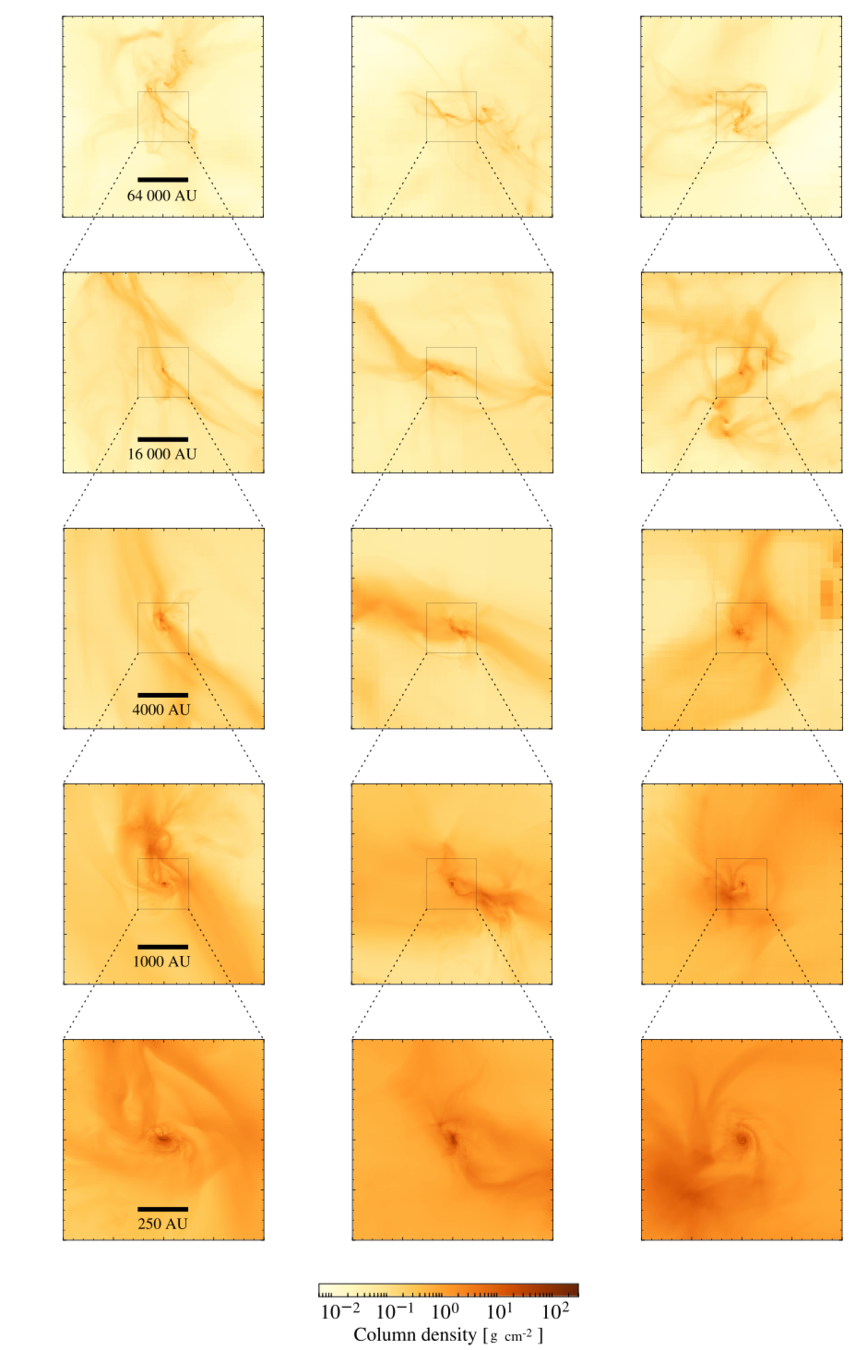
Küffmeier et al.
2019
Küffmeier et al. 2018
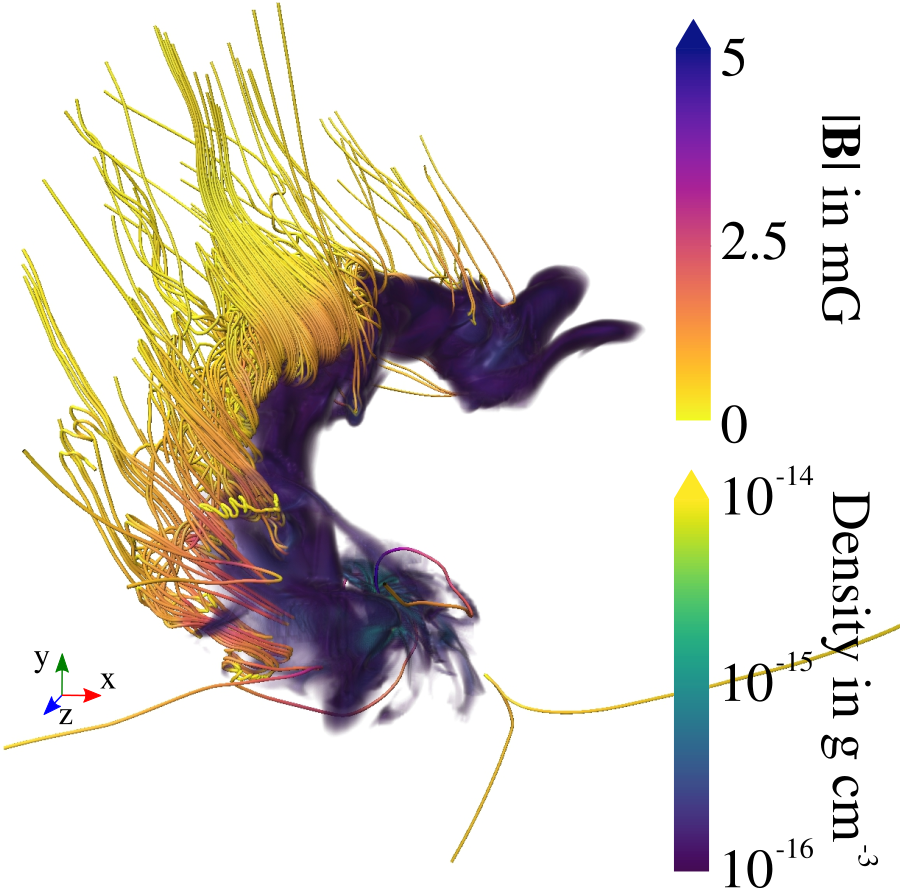
Küffmeier, Reißl et al. 2020
bridge structure similar to IRAS 16293--2422 (e.g. Sadavoy+ 2018, van der Wiel+ 2019, Maureira+ 2020)
~1500 AU
Pro: self-consistent initial and boundary conditions for star formation
Con: computationally more expensive, more difficult analysis
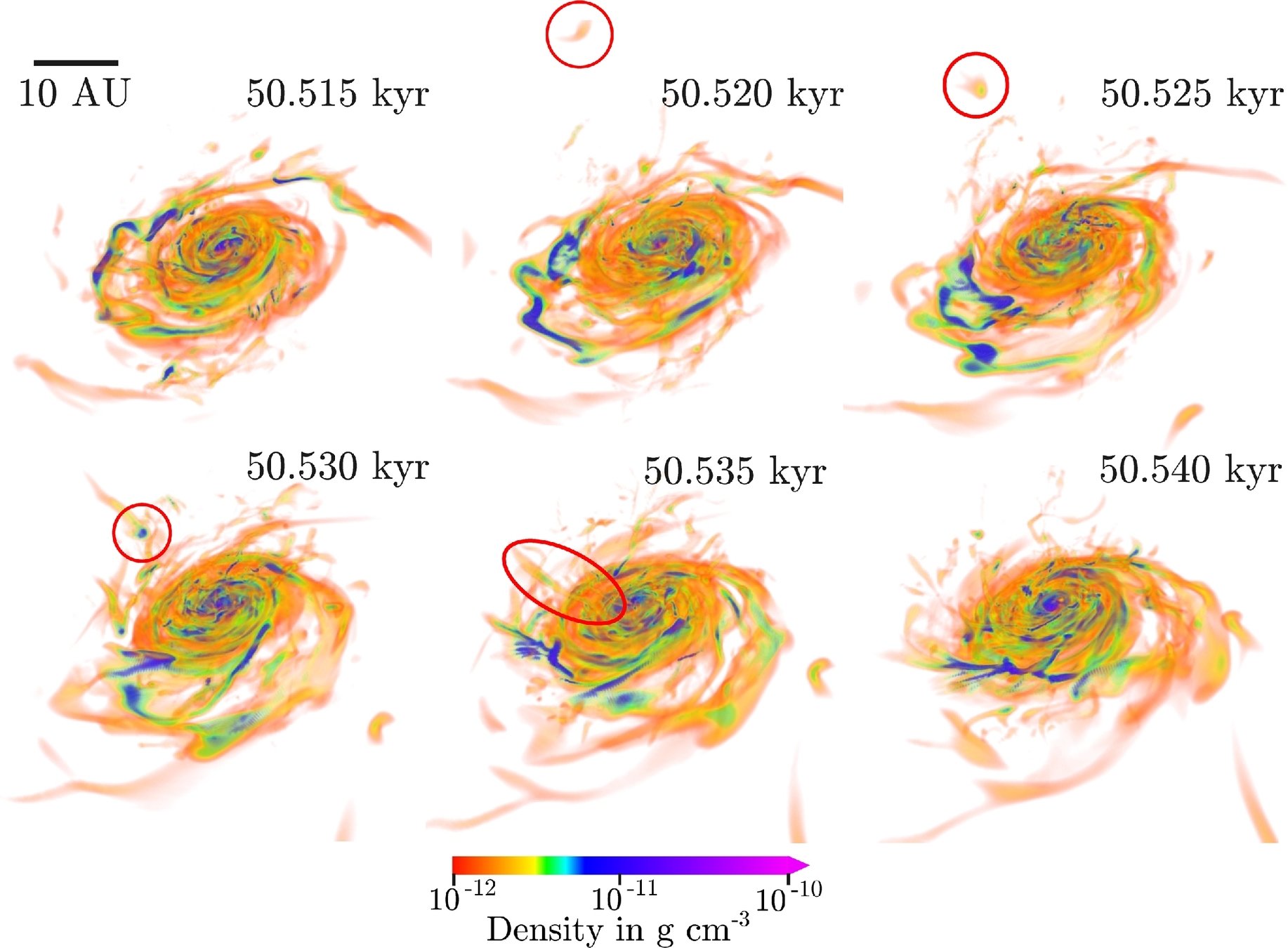
for a similar concept, see also Lebreuilly et al. 2024, Yang & Federrath 2025
Zoom-in simulations
Christian G. Holm
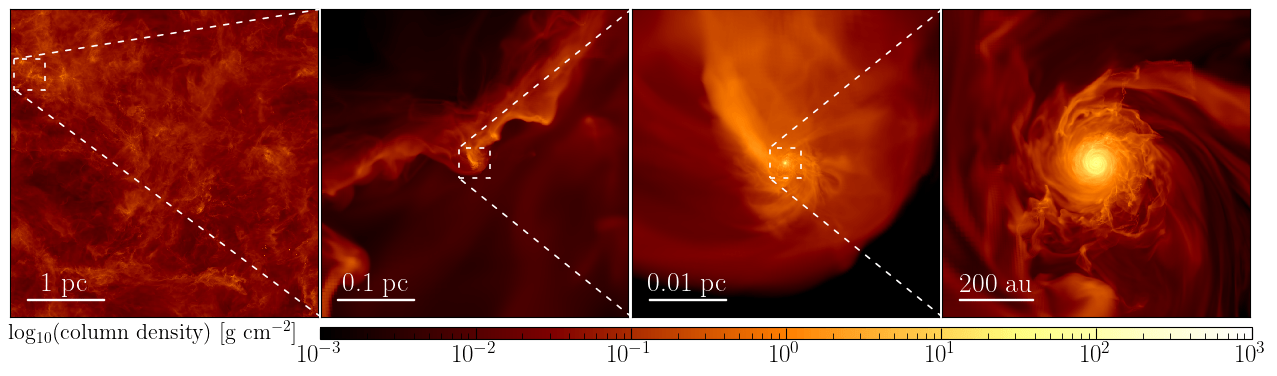
Zoom-in simulation*, ~1 au resolution in disk, barotropic equation of state
*(starting from previous RAMSES simulations and run with DISPATCH)
How does (early) infall shape disk formation?
Christian G. Holm
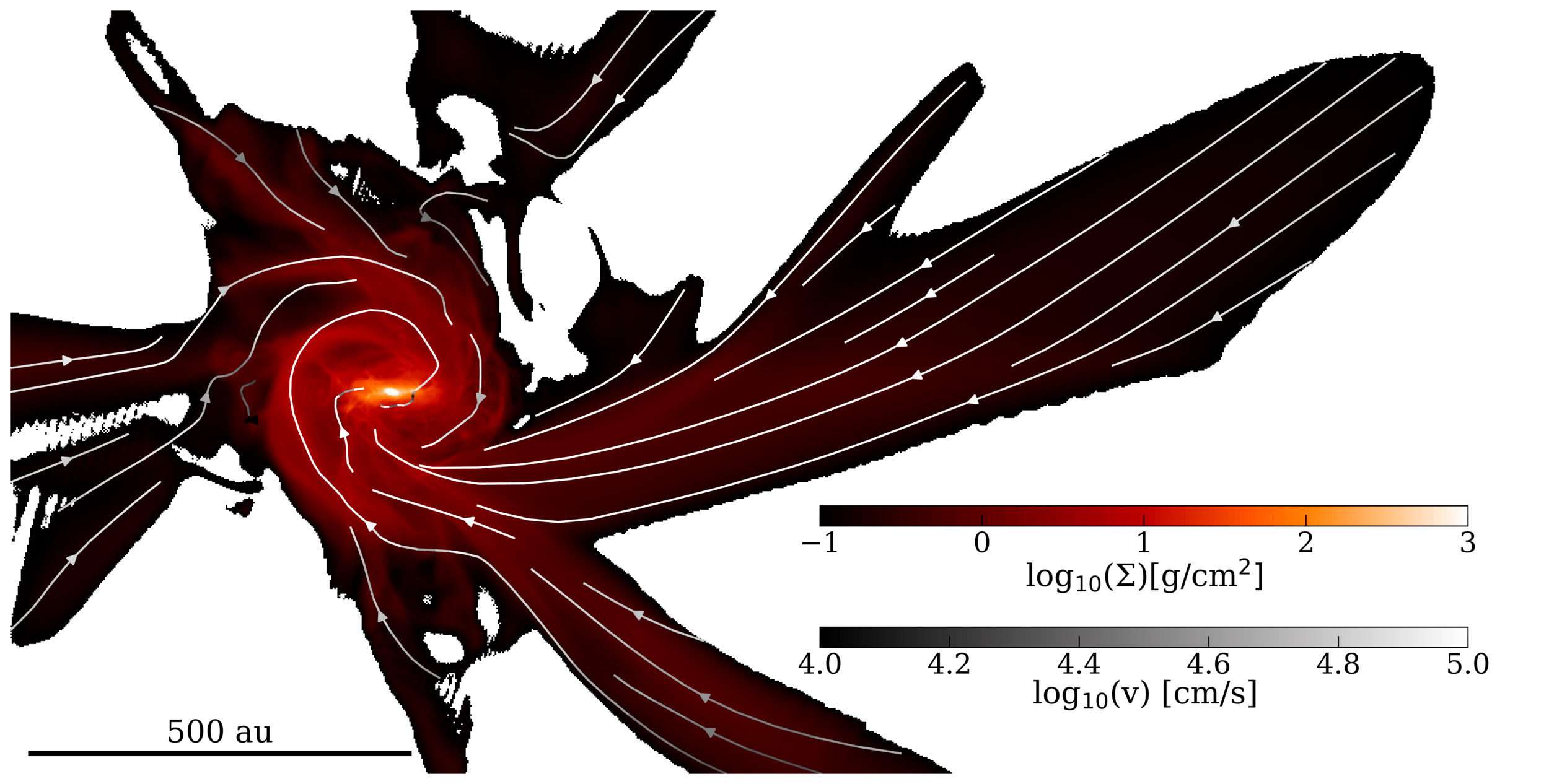
Zoom-in simulation, ~1 au resolution in disk, barotropic equation of state
Christian G. Holm
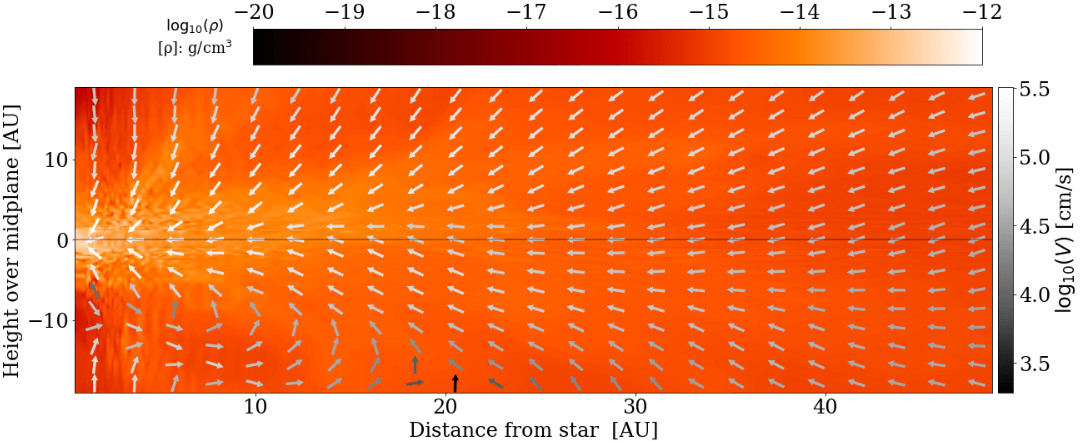
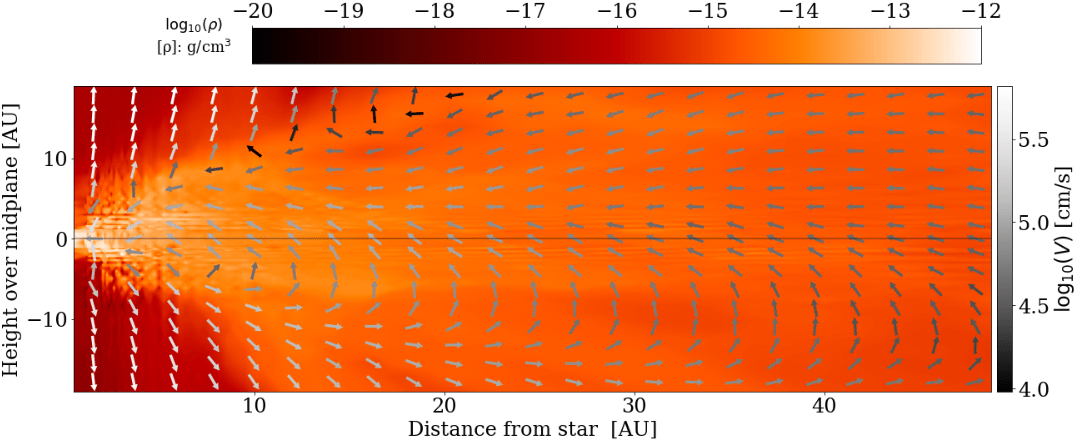
star A, t = 13 kyr
star A, t = 25 kyr
strong magnetic braking,
strong outflow
Gas accretes through the disk (little polar accretion)
Christian G. Holm
Gas accretes through the disk (little polar accretion)
Young embedded disks
Christian G. Holm
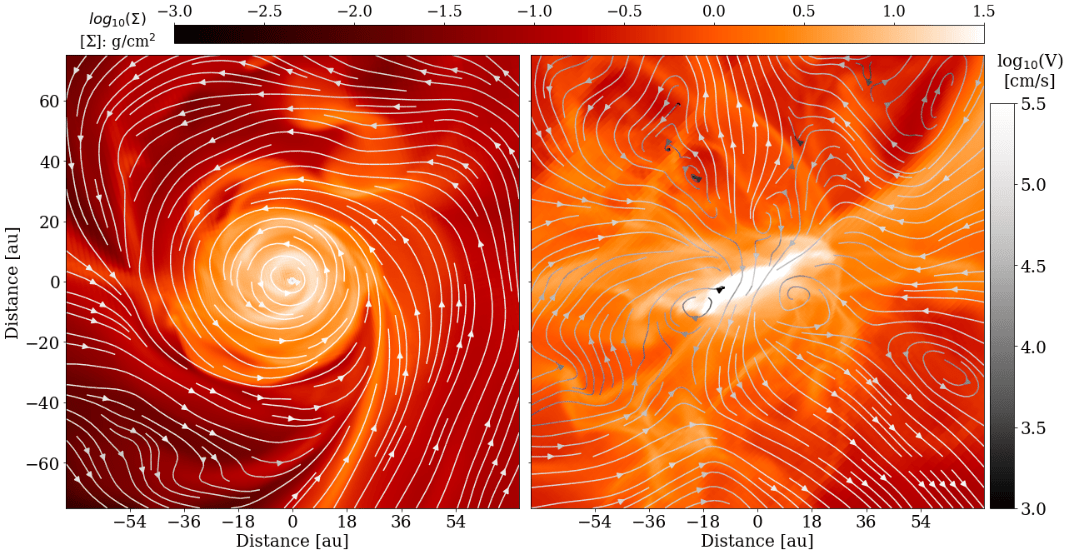
Zoom-in simulation*, ~1 au resolution in disk, barotropic equation of state
Christian G. Holm
How do outflows affect disk formation?
star A, t = 13 kyr
star A, t = 25 kyr
strong magnetic braking,
strong outflow
Prospect to compare with observations of outflows (e.g., ALMA-DOT, PI: Podio)
In progress: non-ideal MHD simulations and comparison with results by Lebreuilly et al. 2022
What fraction of the gas and dust returns to the disk after being ejected by an outflow?
Key question
Credit: Tsukamoto et al. 2021
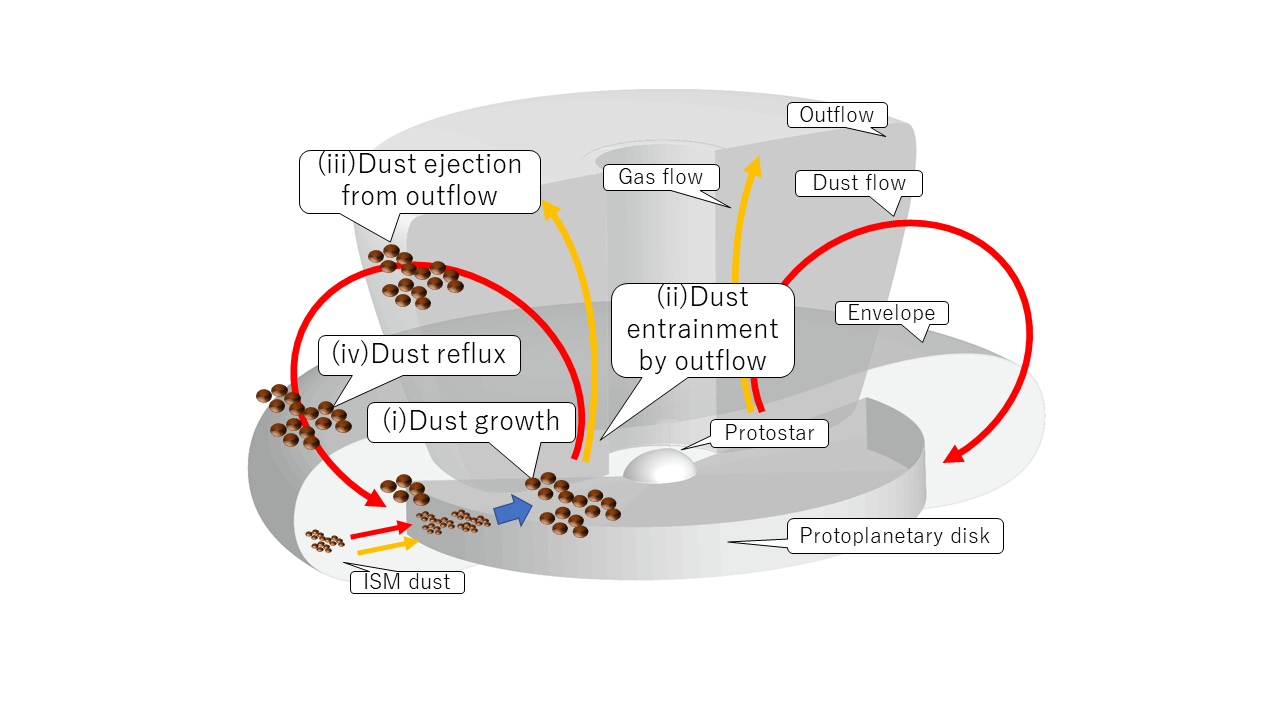
"Ash-fall" scenario aka conveyor belt
Increase in dust-to-gas ratio because dust can grow in disk and return
Tsukamoto et al. 2021
Simulations: Holm, Haugbølle
Visualizations: Berlok
Implications for Al-26 heterogeneity
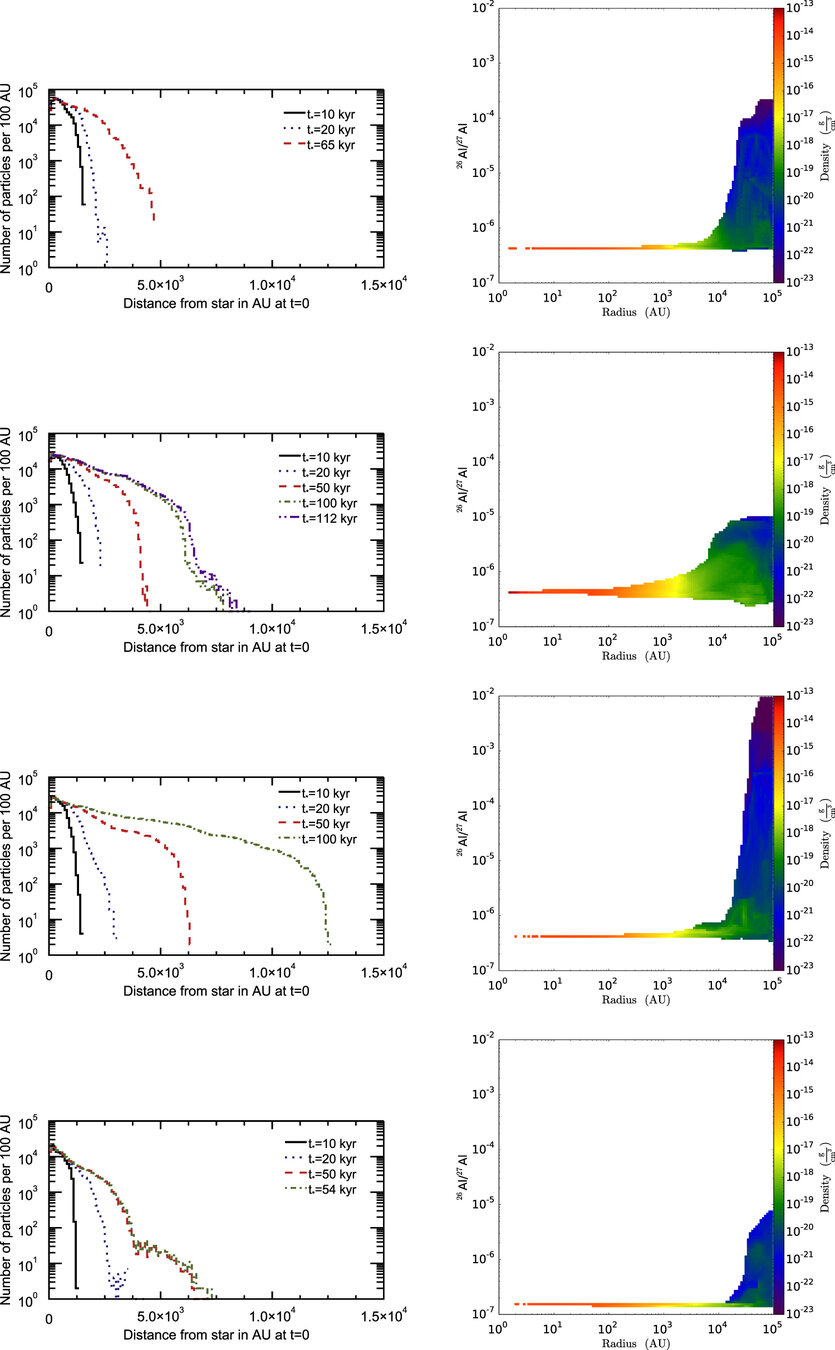
Küffmeier et al. 2016
- Gas is well-mixed within core, and hence Al-26 abundance is fixed during CAI formation (t<~100 kyr).
- BUT: significant deviations in Al-26 abundance beyond the core may likely be imprinted on disk afterwards!
Christian G. Holm
How do infall and outflow affect the disk?
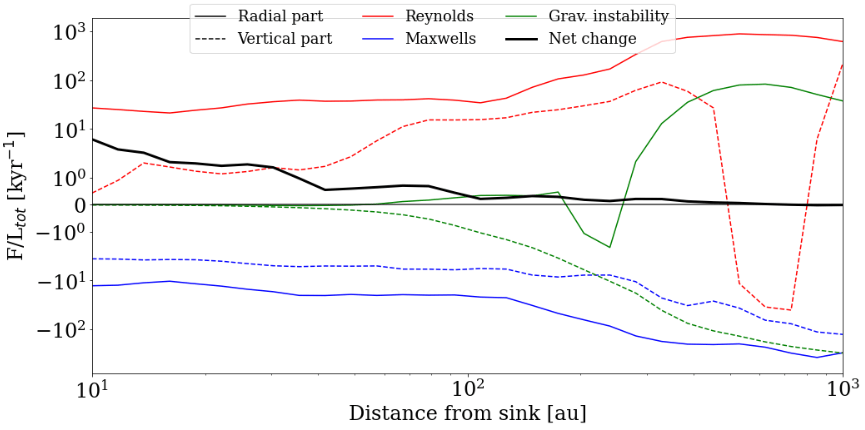
Angular momentum transport via magnetic braking
Zoom-in on embedded protostars
Küffmeier, Calcutt & Kristensen 2019
bridge structure similar to IRAS 16293--2422 (e.g. Sadavoy+ 2018, van der Wiel+ 2019, Maureira+ 2020)
Küffmeier, Reißl et al. 2020
~1500 AU
Küffmeier et al. 2018
Prestellar core workshop Kyushu 2026
By kuffmeier