The Many Traps of Hamlet
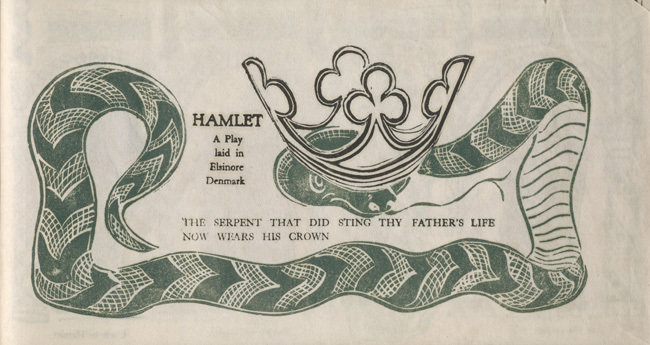
What kinds of "traps"?
In William Shakespeare's Hamlet, there are multiple instances of characters trying to entrap other characters.
This is performed when characters seek information about someone, or to harm the person they're trapping in some way.
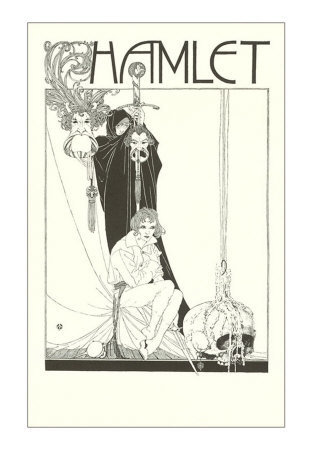
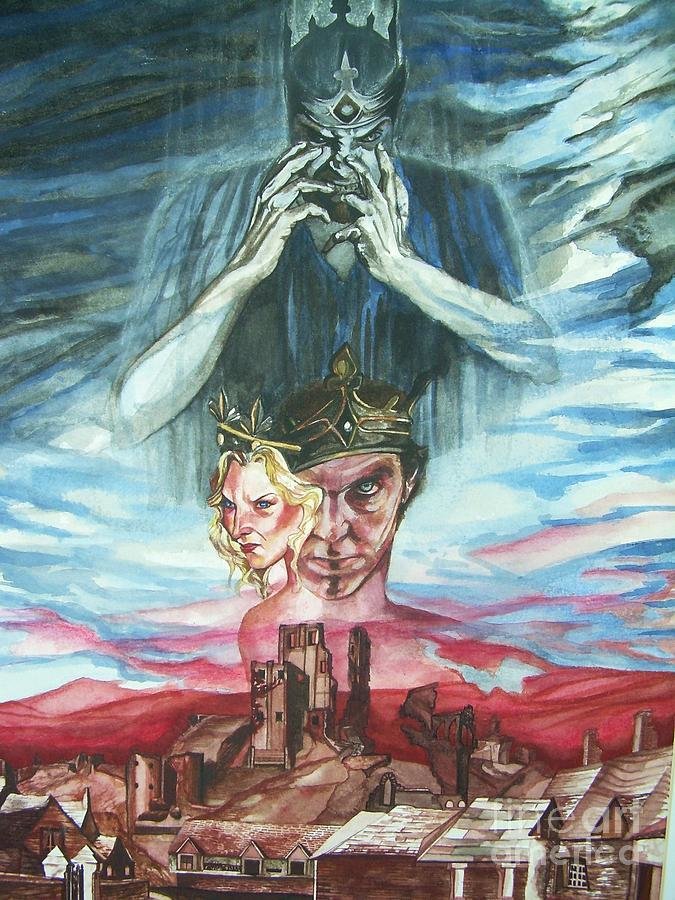
-The "Mouse Trap"
-The Fencing Duel
-Rosencrantz and Guildenstern's Mission

The "Mouse Trap"
"Hamlet. ...Dost
thou hear me, old friend; can you play the Murder
of Gonzago?
First Player. Ay, my lord.
Hamlet. ...We'll ha't to-morrow night. You could, for
need, study a speech of some dozen or sixteen
lines, which I would set down and insert in't, could
you not?
First Player. Ay, my lord." (II, ii, 535 - 543)
"Fie upon't! foh! About, my brain! Hum, I have heard
That guilty creatures sitting at a play
Have by the very cunning of the scene
Been struck so to the soul that presently
They have proclaim'd their malefactions;
For murder, though it have no tongue, will speak
With most miraculous organ. I'll have these players
Play something like the murder of my father
Before mine uncle: I'll observe his looks;
I'll tent him to the quick: if he but blench,
I know my course. The spirit that I have seen
May be the devil: and the devil hath power
To assume a pleasing shape; yea, and perhaps
Out of my weakness and my melancholy,
As he is very potent with such spirits,
Abuses me to damn me: I'll have grounds
More relative than this: the play 's the thing
Wherein I'll catch the conscience of the king."(II, ii, 589- 607)
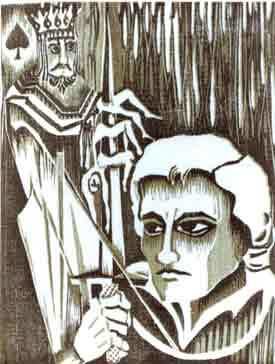
"King Claudius. Have you heard the argument? Is there no offence in 't?
Hamlet. No, no, they do but jest, poison in jest; no offence
i' the world.
King Claudius. What do you call the play?
Hamlet. The Mouse-trap. Marry, how? Tropically. This play
is the image of a murder done in Vienna: Gonzago is
the duke's name; his wife, Baptista: you shall see
anon; 'tis a knavish piece of work: but what o'
that? your majesty and we that have free souls, it
touches us not: let the galled jade wince, our
withers are unwrung." (III, ii, 230-241)
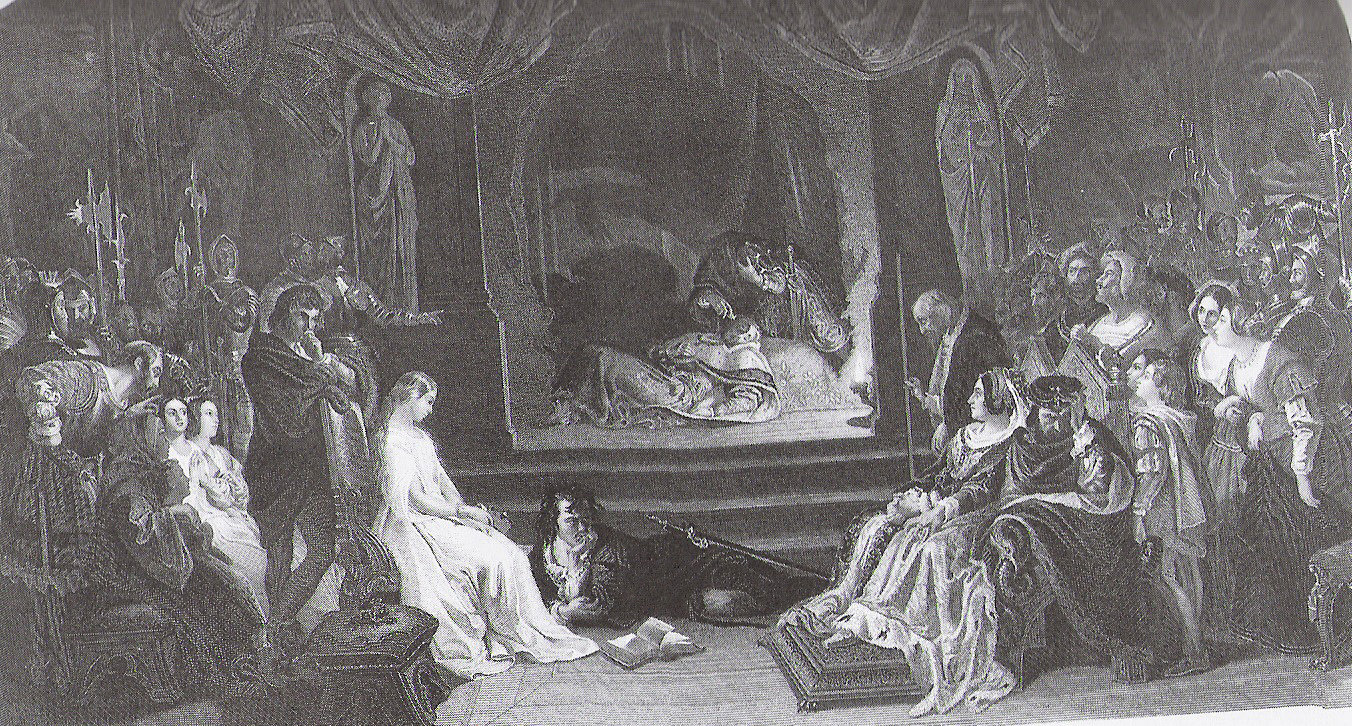
What themes can be seen in this trap?
Appearance versus Reality
Vengeance
Corruption
The Murder Plot
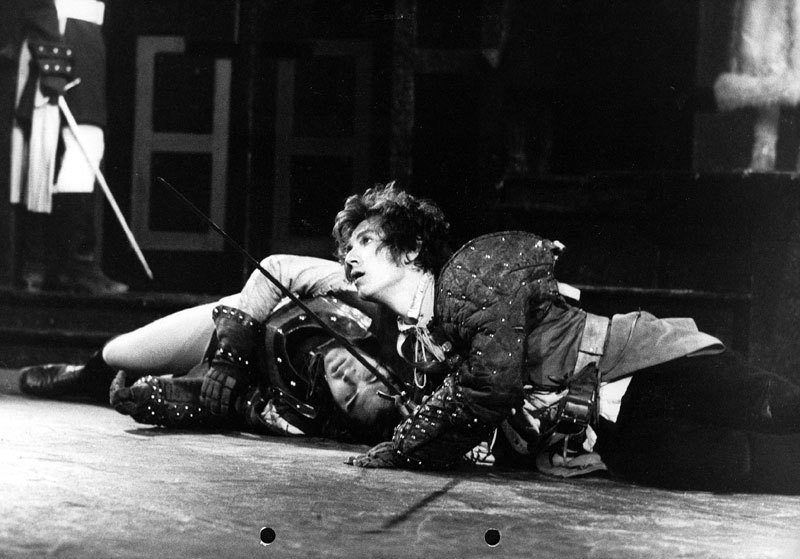
"No place, indeed, should murder sanctuarize;
Revenge should have no bounds. But, good Laertes,
Will you do this, keep close within your chamber.
Hamlet return'd shall know you are come home:
We'll put on those shall praise your excellence
And set a double varnish on the fame
The Frenchman gave you, bring you in fine together
And wager on your heads: he, being remiss,
Most generous and free from all contriving,
Will not peruse the foils; so that, with ease,
Or with a little shuffling, you may choose
A sword unbated, and in a pass of practise
Requite him for your father." (IV, vii, 128- 138)
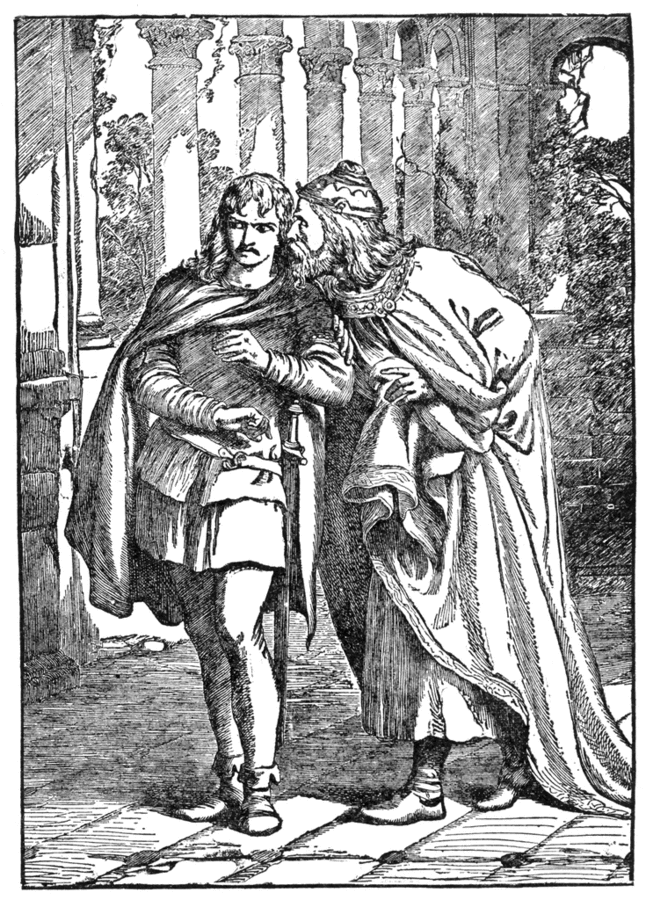
"I will do't:
And, for that purpose, I'll anoint my sword.
I bought an unction of a mountebank,
So mortal that, but dip a knife in it,
Where it draws blood no cataplasm so rare,
Collected from all simples that have virtue
Under the moon, can save the thing from death
That is but scratch'd withal: I'll touch my point
With this contagion, that, if I gall him slightly,
It may be death."(IV, vii, 139- 147)
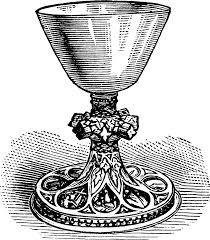
"...And that he calls for drink, I'll have prepared him
A chalice for the nonce, whereon but sipping,
If he by chance escape your venom'd stuck,
Our purpose may hold there." (IV, vii, 159- 162)
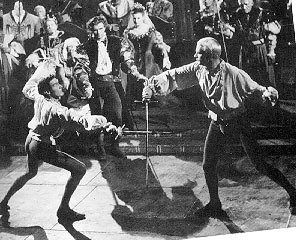
What themes can be seen in this trap?
Appearance Versus Reality
Vengeance
Corruption
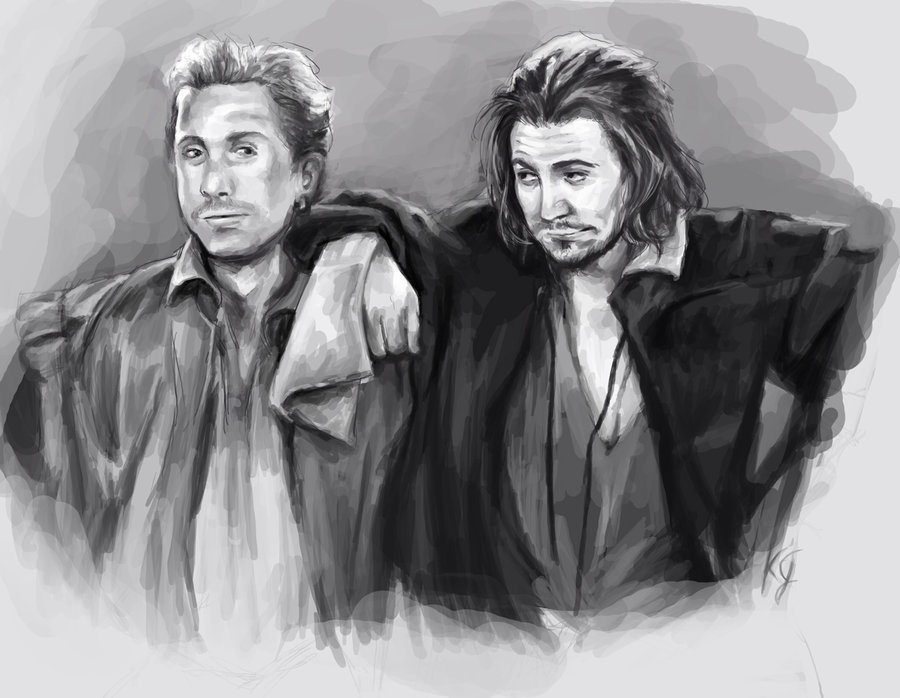
Rosencrantz and Guildenstern's Mission
Welcome, dear Rosencrantz and Guildenstern!
Moreover that we much did long to see you,
The need we have to use you did provoke
Our hasty sending. Something have you heard
Of Hamlet's transformation; so call it,
Sith nor the exterior nor the inward man
Resembles that it was. What it should be,
More than his father's death, that thus hath put him
So much from the understanding of himself,
I cannot dream of: I entreat you both,
That, being of so young days brought up with him,
And sith so neighbour'd to his youth and havior,
That you vouchsafe your rest here in our court
Some little time: so by your companies
To draw him on to pleasures, and to gather,
So much as from occasion you may glean,
Whether aught, to us unknown, afflicts him thus,
That, open'd, lies within our remedy.(II, ii, 1-18)
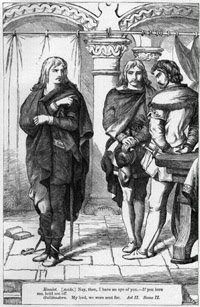
"Hamlet. No such matter: I will not sort you with the rest
of my servants, for, to speak to you like an honest
man, I am most dreadfully attended. But, in the
beaten way of friendship, what make you at Elsinore?
Rosencrantz. To visit you, my lord; no other occasion.
Hamlet. Beggar that I am, I am even poor in thanks; but I
thank you: and sure, dear friends, my thanks are
too dear a halfpenny. Were you not sent for? Is it
your own inclining? Is it a free visitation? Come,
deal justly with me: come, come; nay, speak.
Guildenstern. What should we say, my lord?
Hamlet. Why, any thing, but to the purpose. You were sent
for; and there is a kind of confession in your looks
which your modesties have not craft enough to colour:
I know the good king and queen have sent for you.
Rosencrantz. To what end, my lord?
Hamlet. That you must teach me. But let me conjure you, by
the rights of our fellowship, by the consonancy of
our youth, by the obligation of our ever-preserved
love, and by what more dear a better proposer could
charge you withal, be even and direct with me,
whether you were sent for, or no?
Rosencrantz. [Aside to GUILDENSTERN] What say you?
Hamlet. [Aside] Nay, then, I have an eye of you.--If you
love me, hold not off.
Guildenstern. My lord, we were sent for.
Hamlet. I will tell you why; so shall my anticipation
prevent your discovery, and your secrecy to the king
and queen moult no feather. I have of late--but
wherefore I know not--lost all my mirth, forgone all
custom of exercises; and indeed it goes so heavily
with my disposition that this goodly frame, the
earth, seems to me a sterile promontory, this most
excellent canopy, the air, look you, this brave
o'erhanging firmament, this majestical roof fretted
with golden fire, why, it appears no other thing to
me than a foul and pestilent congregation of vapours."
(II, ii, 268-306)
What themes can be seen in this trap?
Appearance versus Reality
Corruption
Betrayal
Appearance versus reality, corruption, and vengeance or betrayal can be seen in all of these examples.


In Conclusion...
Thanks for Listening!
Hamlet Presentation
By matthewgervasi