


Player-Computer Interaction
NARRATIVE
DESIGN
UNIT 11:
Prof. Dr. Eike Langbehn
Department of Media Technology
Faculty of Design, Media and Information
Hamburg University of Applied Sciences

SECTION NAME
EXAMPLES
UNIT 2:
AGENDA
PLAYER-COMPUTER INTERACTION
UNIT 11: NARRATIVE DESIGN
1. INTRO
2. REQUIREMENT
ANALYSIS
3. GAME
DESIGN
0. ORGANIZATION
4. GETTING STARTED
WITH GODOT
5. USER
STUDIES
6. ANALYSIS OF
HUMAN FACTORS
7. INTERACTION
DESIGN
8. ADVANCED PROGRAMMING
WITH GODOT
9. EVALUATION
MODELS
10. MARKET
ANALYSIS
11. NARRATIVE
DESIGN
12. GAME ENGINE
ARCHITECTURE
LEARNING outcomes
- Understand how stories can be told in games interactively
PLAYER-COMPUTER INTERACTION
UNIT 11: NARRATIVE DESIGN
story
- Stories are linear in most media (Books, Films, etc.)
- Difficult to integrate traditional storytelling in games
- Story resolved by the players
PLAYER-COMPUTER INTERACTION
UNIT 11: NARRATIVE DESIGN
3 Act Structure
- Exposition
- Characters, Places, Conflict
- Confrontation
- Progression of Conflict
- Resolution
- Overcome Conflict
Exposition
Rising action
Climax
Falling action
Resolution
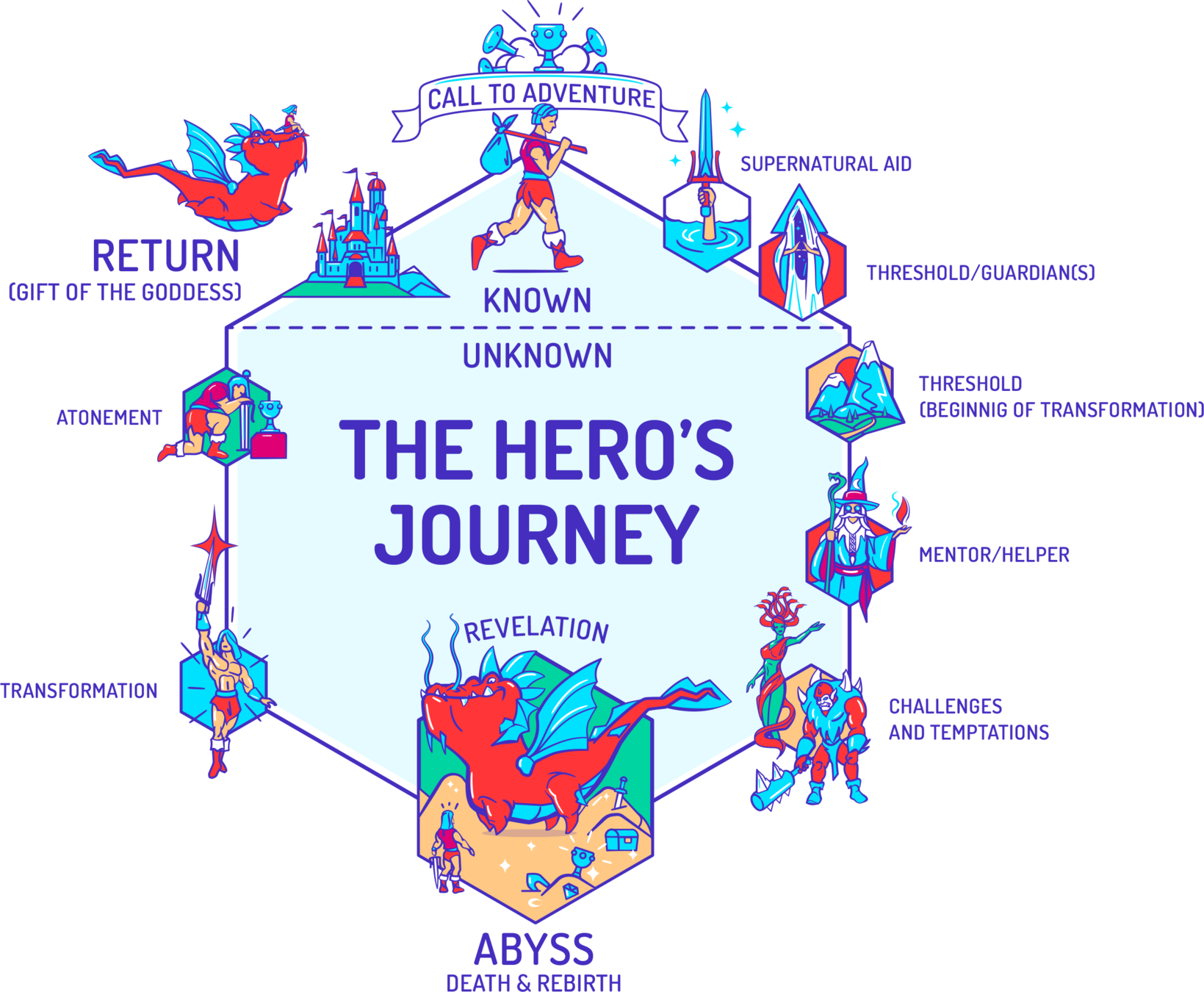
the hero's journey
- Joseph Campbell: “The Hero with a Thousand Faces”
- Common template for a lot of tales and myth
- Was used by George Lucas for Star Wars
PLAYER-COMPUTER INTERACTION
UNIT 11: NARRATIVE DESIGN
from novels to games
- First games were mainly text-based
- Inspiration from novels
PLAYER-COMPUTER INTERACTION
UNIT 11: NARRATIVE DESIGN
from films to games
- With graphics and audio film influences became important
- Films and games inspired each other
- Example Lucasfilm Games (LucasArts):
- Indiana Jones and the Last Crusade: The Graphic Adventure (1989)
- Rebel Assault (1993)
- Real Film, CGI, Computer graphics
- Helped the CD ROM to become popular
PLAYER-COMPUTER INTERACTION
UNIT 11: NARRATIVE DESIGN
from films to games
- Wing Commander
- Developers tried increasing the level of realism of games
PLAYER-COMPUTER INTERACTION
UNIT 11: NARRATIVE DESIGN
from films to games
- Motion Capturing
- The Last of Us
PLAYER-COMPUTER INTERACTION
UNIT 11: NARRATIVE DESIGN
from films to games
- Virtual Production
- The Mandalorian
PLAYER-COMPUTER INTERACTION
UNIT 11: NARRATIVE DESIGN
ludonarrative dissonance
Ludonarrative dissonance is the conflict between a video game's narrative told through the story and the narrative told through the gameplay.
PLAYER-COMPUTER INTERACTION
UNIT 11: NARRATIVE DESIGN
- Wikipedia
Ludology = Game studies
Narrative = Sequence of events that tell a story
storytelling in games
PLAYER-COMPUTER INTERACTION
UNIT 11: NARRATIVE DESIGN
GAMEPLAY
STORY
EXPERIENCE
stories in games
PLAYER-COMPUTER INTERACTION
UNIT 11: NARRATIVE DESIGN
Story and gameplay are like oil and vinegar. Theoretically they don’t mix, but if you put them in a bottle and shake them up real good, they’re pretty good on a salad.
- Bob Bates
linear storytelling
PLAYER-COMPUTER INTERACTION
UNIT 11: NARRATIVE DESIGN
Gameplay
Story
Gameplay
Story
Gameplay
Story
Gameplay
branching
PLAYER-COMPUTER INTERACTION
UNIT 11: NARRATIVE DESIGN
emergent storytelling
PLAYER-COMPUTER INTERACTION
UNIT 11: NARRATIVE DESIGN
- Emergent Storytelling
- Stories emerge from
- Gameplay
- Interaction with systems of the game
- Random events
- No author involved
environment storytelling
PLAYER-COMPUTER INTERACTION
UNIT 11: NARRATIVE DESIGN
- Environment tells the story
- Environment is interactive
- Gameplay
- Audio
- Books
- "You see what happened"
story through interactions
PLAYER-COMPUTER INTERACTION
UNIT 11: NARRATIVE DESIGN
- No break between story and gameplay
- Player has control all the time
- Story is pre-determined (has an author)
- Story is told in an “interactive” way
- Story is told through interactions
Player-Computer Interaction
The contents of this Open Educational Resource are licensed under the Creative-Commons Attribution 4.0 International license (CC BY 4.0)
Attribution: Eike Langbehn, Anh Sang Tran, Peter Wood
Unit 11 - V5
By sangow