Network anomalies detection
Workflow
- Gathering data
- Cleaning data
- Detection
- Unsupervised
- Supervised
- Evaluation
Data
- SNMP
- Fortinet API
- Packet captures
- Synthetic data
Example 1
Anomaly detection in Network Traffic Using Unsupervised Machine learning Approach. Aditya Vikram, None Mohana. Published online June 1, 2020. doi:https://doi.org/10.1109/icces48766.2020.9137987
Example 1
Data
- NSL-KDD
- 41 features
- https://www.kaggle.com/datasets/hassan06/nslkdd
Anomalies
- DoS
- R2L - Remote to local
- Probe - find open ports
- U2R - user to root
Classifiers
- Isolation Forest
- One-Class SVM
Example 1
80/20 data split
PCA used for reducing dimensions

Example 1


Isolation forest
- Unsupervised decision-tree based
- Consists of multiple isolation trees
- Split data until each partition contains one data point
- Random split on a random feature
- Feature chosen at random
- Random point between min and max for a split
- Idea is that outliers require less splits to separate
Isolation forest
Isolation forest
Anomaly score
s(x,n) = 2^{-\frac{E(h(x))}{c(n)}}
- E(h(x)) - average path length to isolate x across trees
- c(n) - normalization factor

One-class SVM
In general SVM is supervised
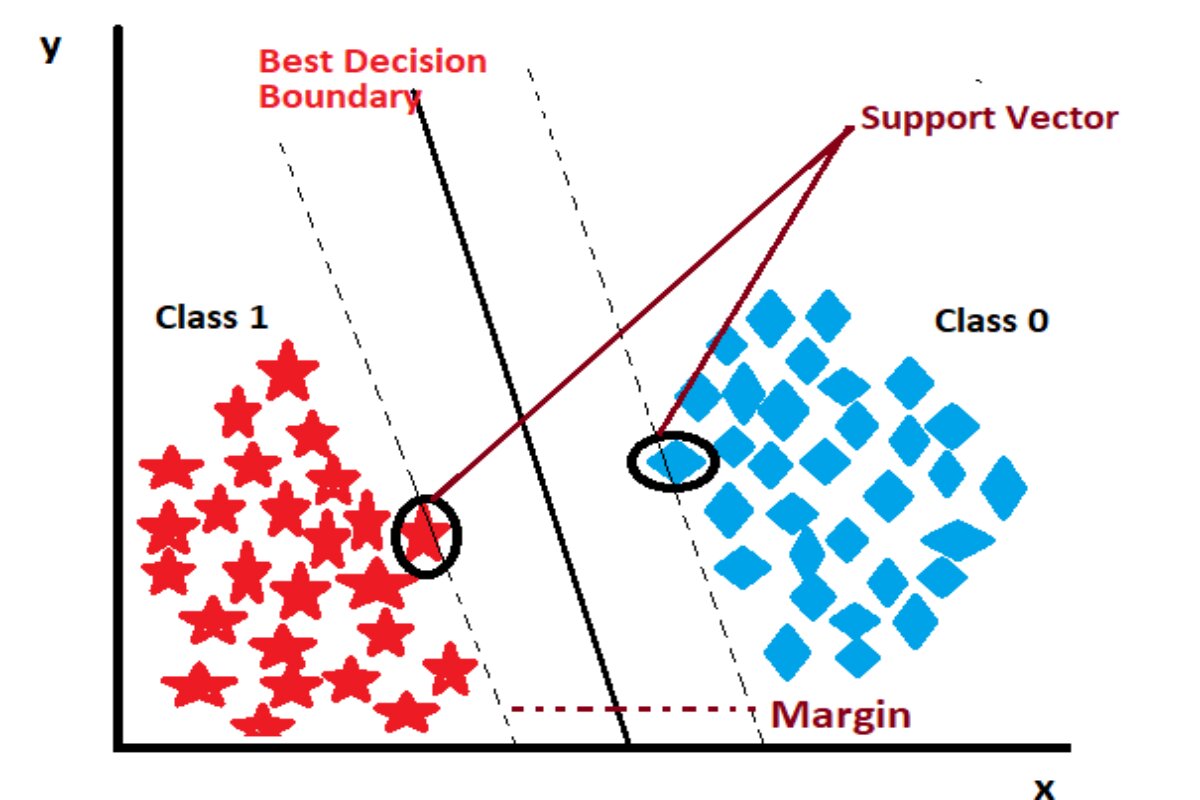
One-class SVM
In One-class SVM we only have 1 class so we use origin as a "fake" second class.
Parameters: kernel, ν

Example 2
Combining Unsupervised Approaches for Near Real-Time Network Traffic Anomaly Detection. Carrera F, Dentamaro V, Stefano Galantucci, Iannacone A, Donato Impedovo, Pirlo G. Applied Sciences. 2022;12(3):1759-1759. doi:https://doi.org/10.3390/app12031759
Example 2
Data
- KDD99, NSL-KDD, CIC-IDS2017
- https://www.kaggle.com/datasets/hassan06/nslkdd
Anomalies
- Zero-day attacks
Classifiers
- Deep Autoencoding Gaussian Mixture Model with Extended Isolation Forest (DAGMM-EIF)
- Deep Autoencoder with Extended Isolation Forest (DA-EIF)
- Memory-augmented Deep Autoencoder with Extended Isolation Forest (MemAE-EIF)
- .....
- capture important features in the lower dimensional representation
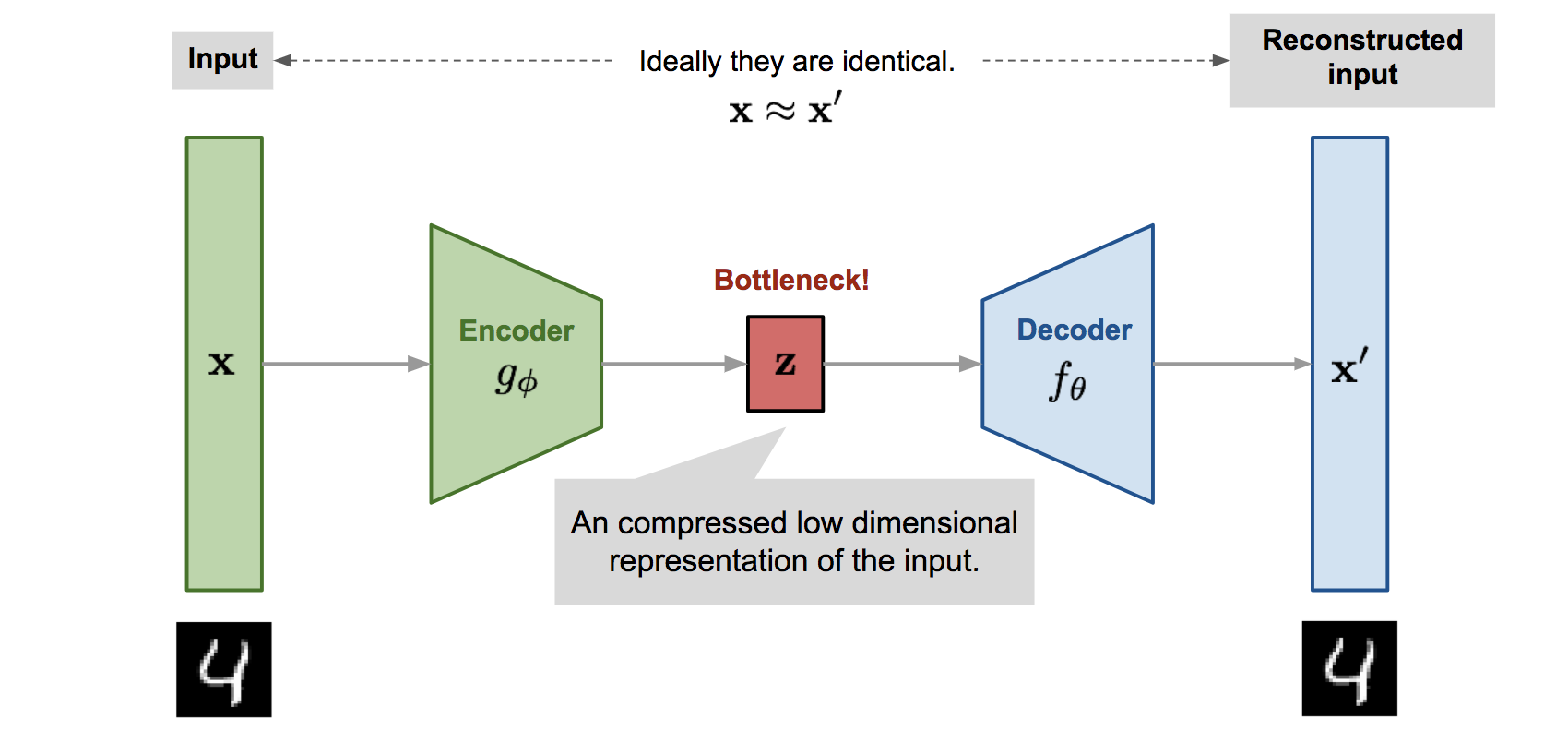
Autoencoder
- When decoding data we end up with some reconstruction error E(x, x')
- If the reconstruction error is above some threshold value we call that anomaly
Autoencoder
- clustering ML method
- composed of multiple Gaussians
- in our case data is features + reconstruction error
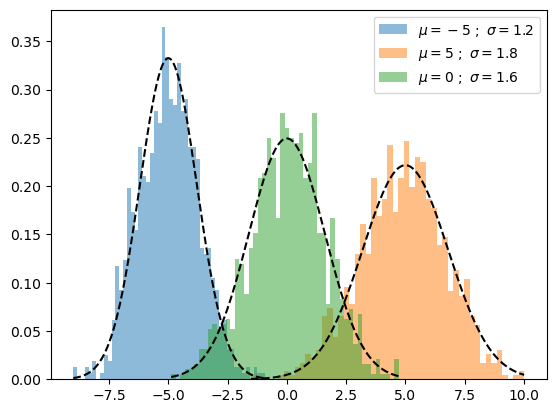
Gaussian Mixture Model
- Issue: Autoencoder can generalize and reconstruct anomalies
- Memory module, add normal items during training
- During reconstruction retrieve these normal items
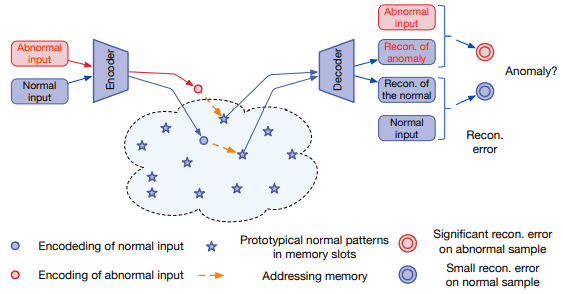
Memory Augmented Deep Autoencoder
Extended Isolation Forest

Isolation Forest but we add slope
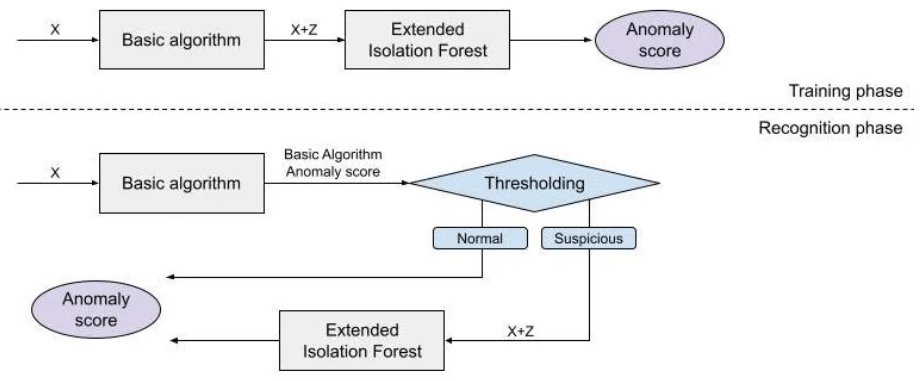

Algorithms tested
- Extended Isolation Forest (EIF)
- Ensemble Consensus (EC)
- Deep Autoencoding Gaussian Mixture Model (DAGMM)
- Deep Autoencoding Gaussian - Extended Isolation Forest (DAGMM-EIF)
- Deep Autoencoder (DA)
- Deep Autoencoder - Extended Isolation Forest (DA-EIF)
- Deep Structured Energy Based Models (DSEBM)
- Memory-Augmented Deep Autoencoder (MemAE)
- Memory-Augmented Deep Autoencoder—Extended Isolation Forest (MemAE-EIF)
Evaluation metrics
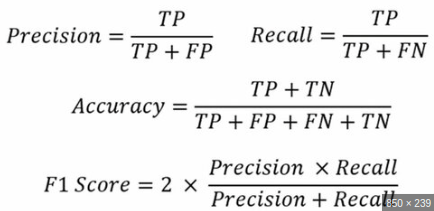
- Precision
- Recall
- F1-Score
- Accuracy
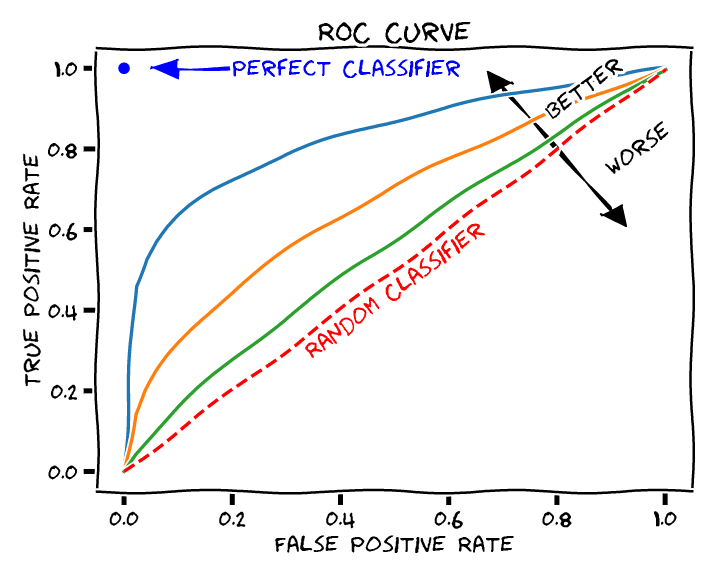
- AUC for ROC
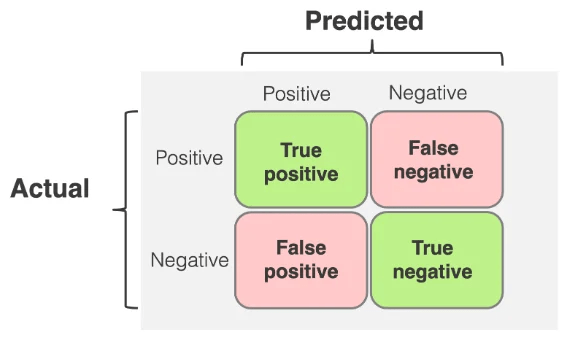
Receiver-operating characteristic
- visual representation of model performance across all thresholds
- higher AUC means better model
Results
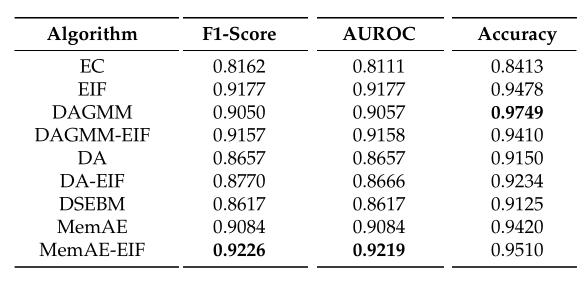
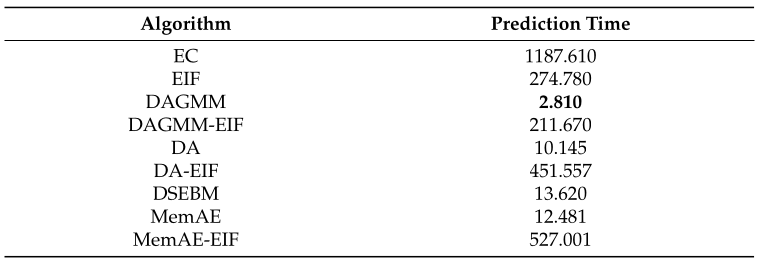
Results
The results obtained show that the MemAE-EIF algorithm achieves the best performance in terms of accuracy and F1-score for all the datasets examined. A high precision rate is equivalent to a low number of false positives, which are false alarms that experts in the field must handle.
Results
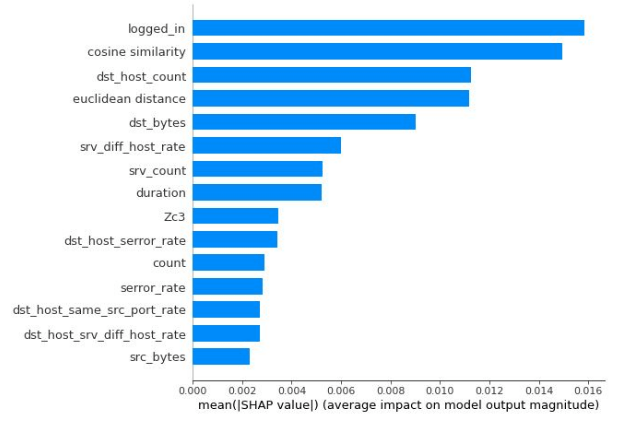
SHAP values for EIF model of MemAE-EIF algorithm
(KDDCUP99 dataset)
Example 3
Exploiting SNMP-MIB Data to Detect Network Anomalies using Machine Learning Techniques. Al-Naymat G, Al-kasassbeh M, Al-Hawari E. arXiv.org. Published 2018. Accessed October 21, 2024. https://arxiv.org/abs/1809.02611
Example 3
Data
- SNMP-MIB dataset
Al-Kasassbeh, M., Al-Naymat, G., & Al-Hawari, E. (2016). Towards Generating Realistic SNMP-MIB Dataset for Network Anomaly Detection. International Journal of Computer Science and Information Security, 14(9), 1162)
Anomalies
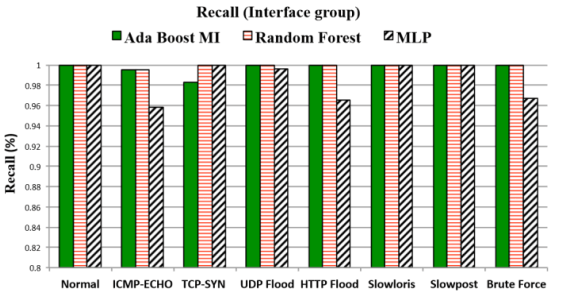
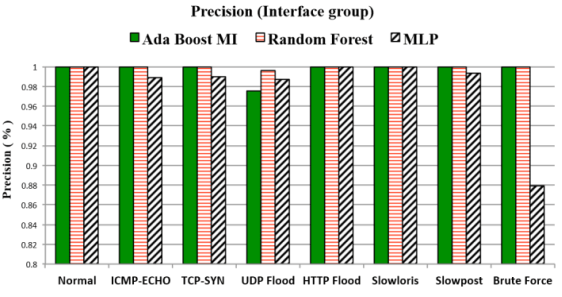
- DoS (TCP-SYN flooding, UDP flooding, ICMP-ECHO flooding, HTTP flood, Slowloris, Slowpost)
- Brute force attack
Classifiers
- AdaboostM1 with J48
- Random Forest
- MLP
AdaboostM1 with J48
J48 (same as C4.5?)
- decision tree algorithm
- maximize information gain on each split
AdaBoost
- combine multiple weak learners (decision trees)
- each next learner focuses on the samples that were misclassifed
- prediction = weighted combination of all learners
Random Forest™
- ensemble learning method made out of decision trees
- bootstrap aggregation
- random feature selection
- majority vote
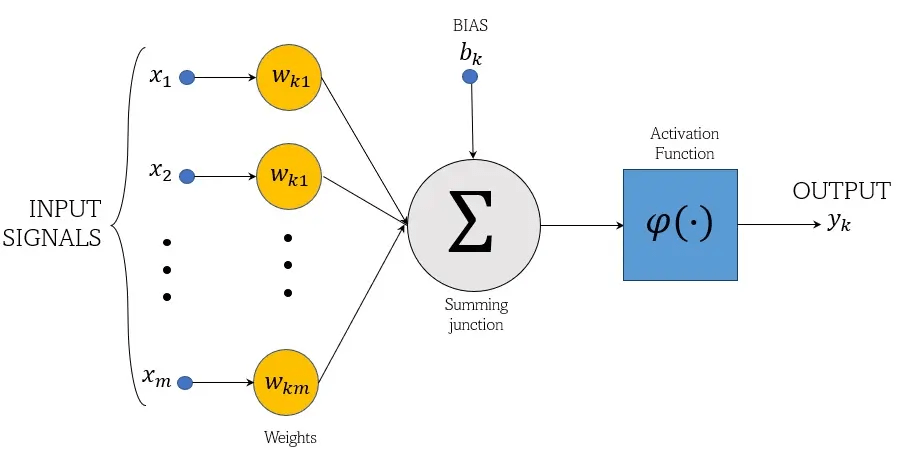
MLP - Multilayer Perceptron
- feedforward neural network
- fully connected
- nonlinear activation function
Data
- 4998 records
- 34 MIB variables
- But only using 8 variables from the interface group
- 70/30 split
| Var | Name |
|---|---|
| 1 | ifInOctets |
| 2 | ifOutOctets |
| 3 | ifOutDiscards |
| 4 | ifInUcastPkts |
| 5 | ifInNUcastPkts |
| 6 | ifInDiscards |
| 7 | ifOutUcastPkts |
| 8 | ifOutNUcastPkts |
Results
Example 4
Detecting network anomalies using machine learning and SNMP-MIB dataset with IP group. Manna A, Alkasassbeh M. arXiv.org. Published 2019. Accessed October 22, 2024. https://arxiv.org/abs/1906.00863
Example 4
Data:
- same as previous paper
- https://www.kaggle.com/datasets/malkasasbeh/network-anomaly-detection-dataset
Anomalies:
- icmp-echo, tcp-syn, udp-flood, httpFlood, slowloris, slowost, bruteforce
Classifiers
- Random Forest
- Decision tree
- REP Tree
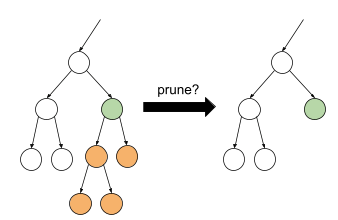
REP Tree
- decision tree built on training data that aims for high accuracy
- REP - reduced error pruning
- start from bottom of the tree, evaluate if each subtree can be replaced with a leaf
- compare accuracy against test data
Data
| Variable Name | Variable Description |
|---|---|
| ipInReceives | The total number of input datagrams that are received from the interfaces, including those received in error. |
| ipInDelivers | The total number of input datagrams that are delivered to the IP user protocols successfully (including ICMP). |
| ipOutRequests | The total number of IP datagrams supplied to IP in requests for transmission, not including ipForwDatagrams. |
| ipOutDiscards | The number of output datagrams that do not have errors preventing their transmission to their destination. |
| ipInDiscards | The number of input datagrams that do not have errors preventing their transmission to their destination. |
| ipForwDatagrams | The number of input datagrams for which this entity was not their final destination. |
| ipOutNoRoutes | The number of datagrams discarded because no route could be found to transmit them to their destination. |
| ipInAddrErrors | The number of input datagrams discarded because the IP address in their destination field was not valid. |
Results
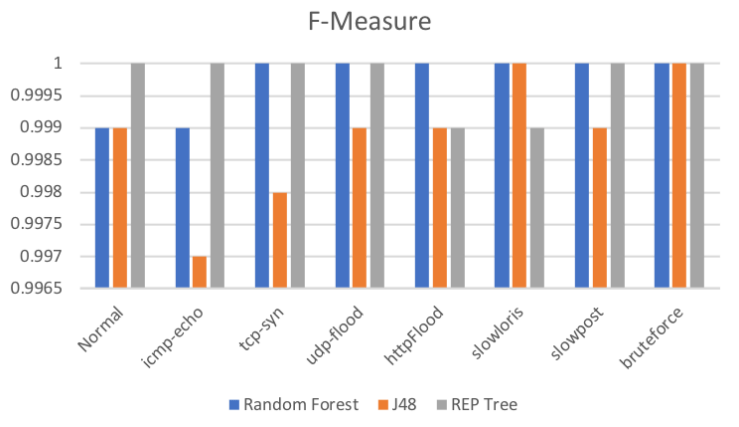
Similar results for 5 and 3 variables (ReliefFAttributeEval, InfoGainAttributeEval)
Example 5
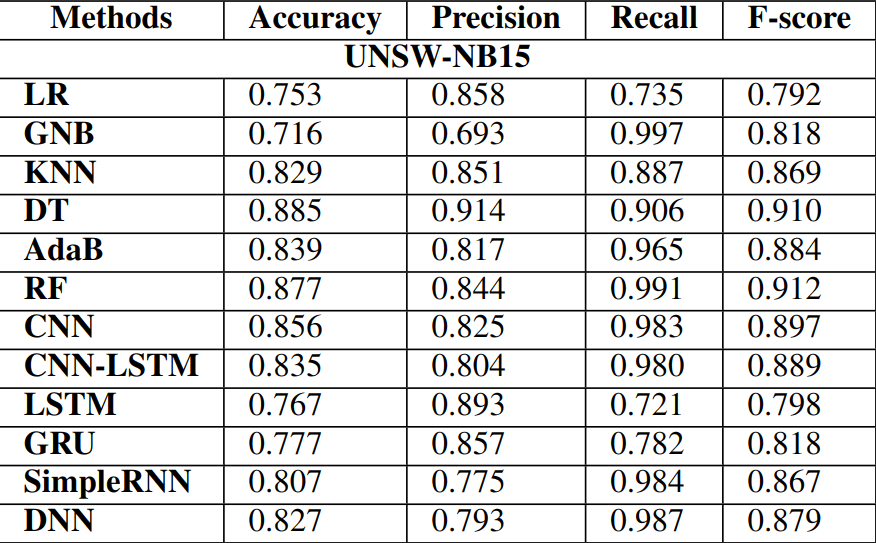
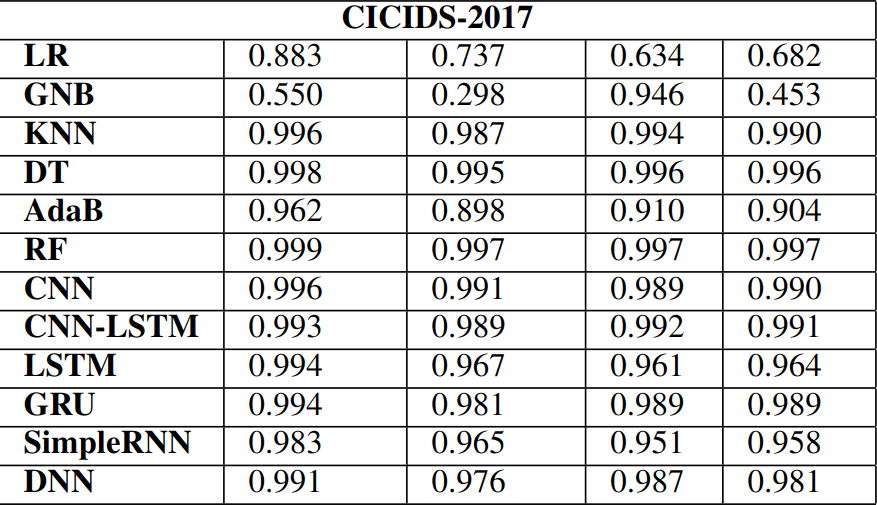
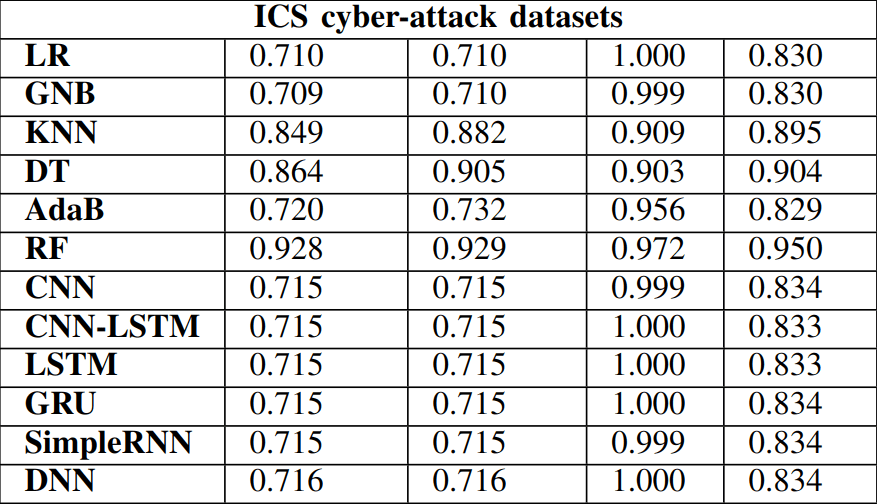
Evaluation of Machine Learning Algorithms for Anomaly Detection. Nebrase Elmrabit, Zhou F, Li F, Zhou H. Zenodo (CERN European Organization for Nuclear Research). Published online June 1, 2020. doi:https://doi.org/10.1109/cybersecurity49315.2020.9138871
Example 5
Data:
- NSW-NB15
- CICIDS2017
- ICS cyber-attack dataset
Anomalies:
- DoS, port scanning, SQL injection, brute force, worms and other associated vulnerabilities found in datasets
Algorithms
- Logistic regression
- Gaussian Naive Bayes
- K-nearest neighbors
- Decision tree
- Adaptive boosting
- Random forest algorithm
- Convolutional neural network
- Convolutional neural network and Long short-Term Memory
- Long short-Term memory
- Gated recurrent units
- Simple recurrent neural network
- Deep neural network
Results
Results
Results
Network anomalies detection
By Sasa Trivic