https://slides.com/sferna109/deck2/fullscreen

Forthcoming Project:

Documenting La Frontera through Digital Projects


2018 SSAW Triennial Conference

Sylvia Fernández

@sferna109 / safernandez4@uh.edu

Ph.D. Candidate

Hispanic Studies, University of Houston

Border - Borderlands

"A border is a dividing line,
a narrow strip along a steep edge,
created by the emotional residue of an unnatural boundary.
It is in a constant state of transition."
-Gloria E. Anzaldúa

  • What do you understand as the border?
  • What is the difference between border and borderlands?
  • How can you do work that transforms and humanizes the US-Mexico borderlands?
  • Nonetheless, this is not something recently, the borderlands’ communities have confronted these kinds of action and accusations in their daily lives.
  •  Another perception of the U.S.-Mexico border region as a transnational social, cultural, and geographic space
  •  Address transnational cultures of the borderlands from multiple perspectives, exploring cultural articulations from the entire border area as well as the complexity and intersectionality of ethnic, national, and class identities in the region through the process description of a forthcoming project titled, United Fronteras.


Alternative ways to work with the borderlands

  • dynamic, socially constructed sites of complex, and

    often contradictory, cultural practices, social relationships, and ideological formations

  • nor a fixed identity and exceptional cultural status and development

  • critical (re)valuation and as a condition of creation

  • practices of (re) formulating, creating, shifting, crossing, transgressing, and blurring

Borderlands: Space and Place

Geo-humanities


  • Geocoded data and digital technologies can help us to visualize the spatial settings referenced in projects of literary, cultural, historical, artistic, activist, and other topics.


  • The spatial turn represents the impulse to position new tools against old questions.

#borderlandsDH


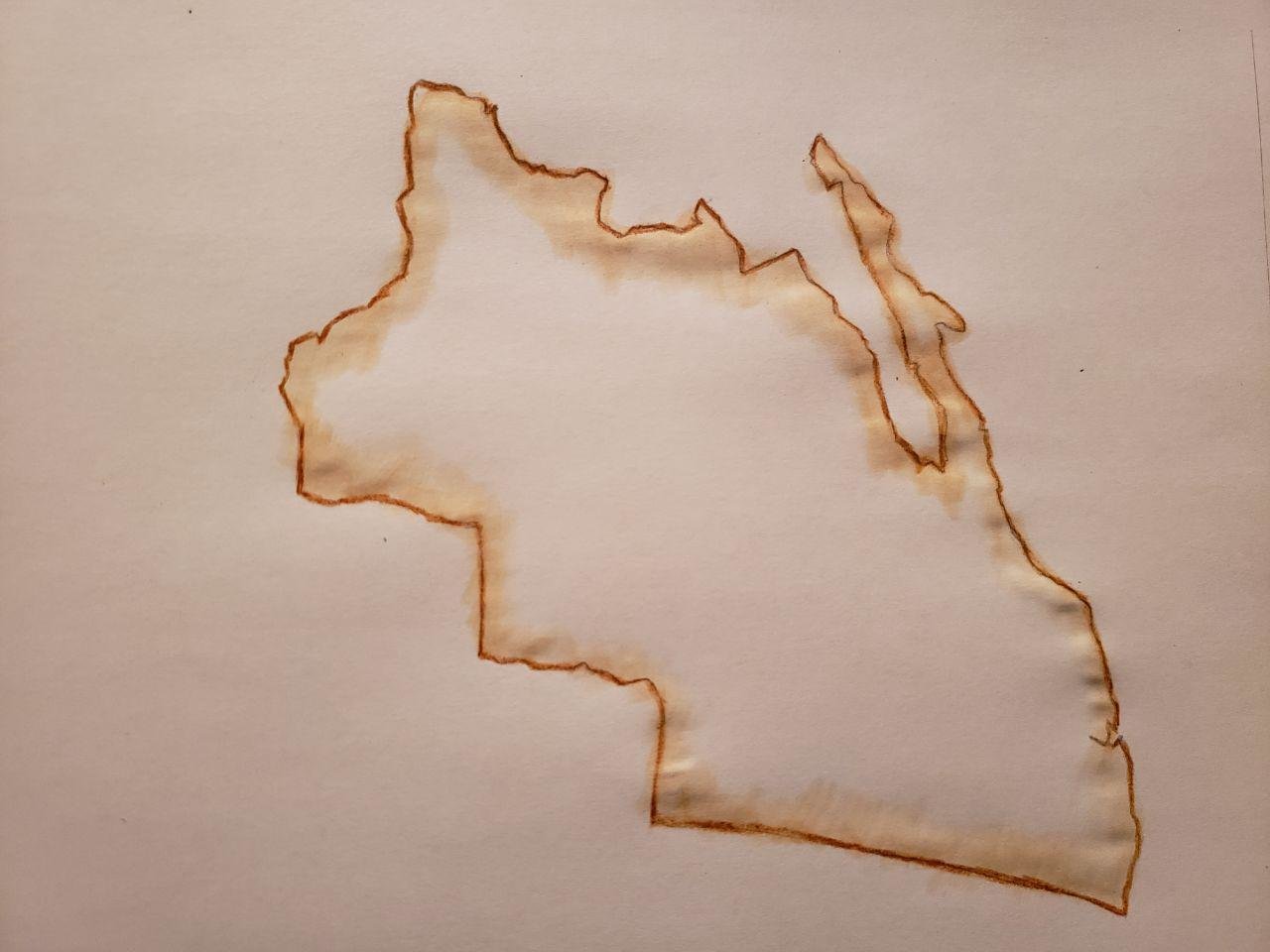
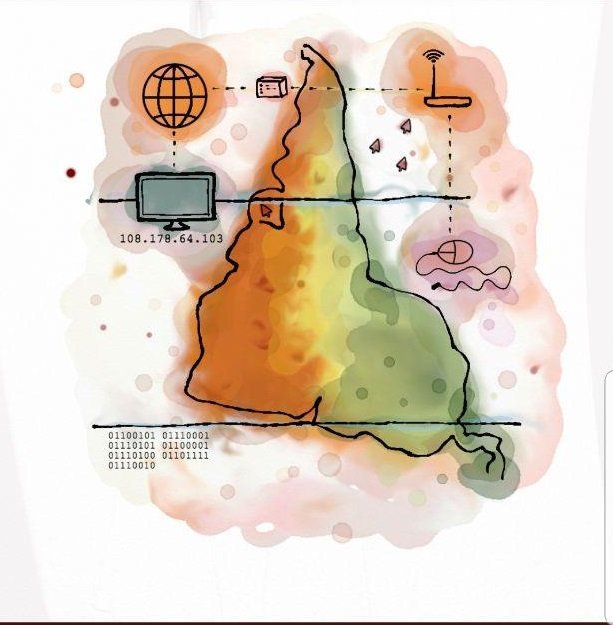
  • Creating new / alternative / challenging forms to visualize the borderlands by incorporating the studies of the borders with geocoded data and digital technologies and tools.  
  • For Gloria Anzaldúa, the creative act is vital since it articulates, (re)names, trace maps not based on cartographies, but also, it is where women of color shape a space from and where they can auto-invent themselves in a nation that has keep them on the sociopolitical, economic, racial/ethnic and [academic] margins.
  • United Fronteras: creative form of mapping borderlands projects that utilize a digital component.

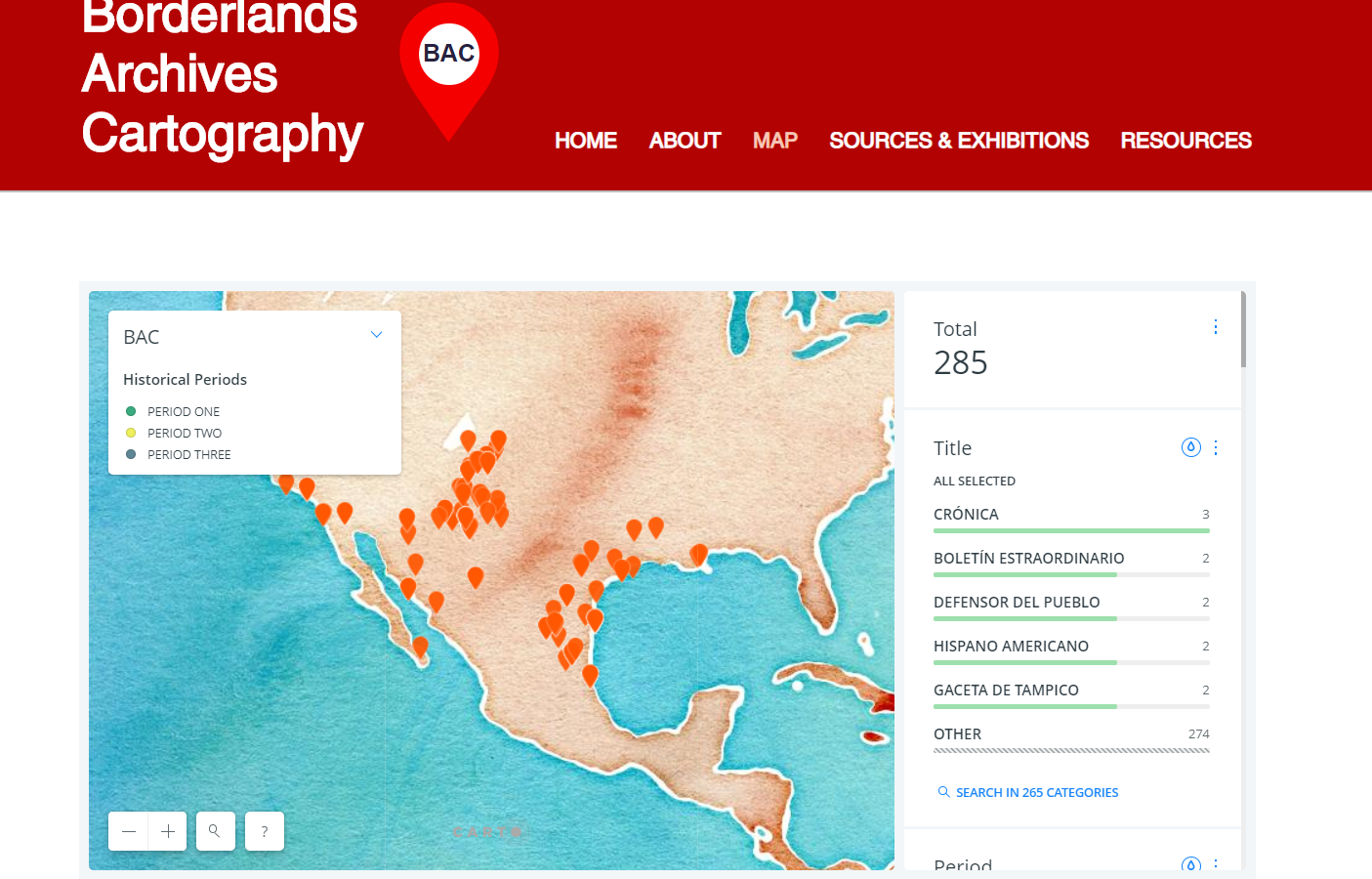
Borderlands Archives Cartography

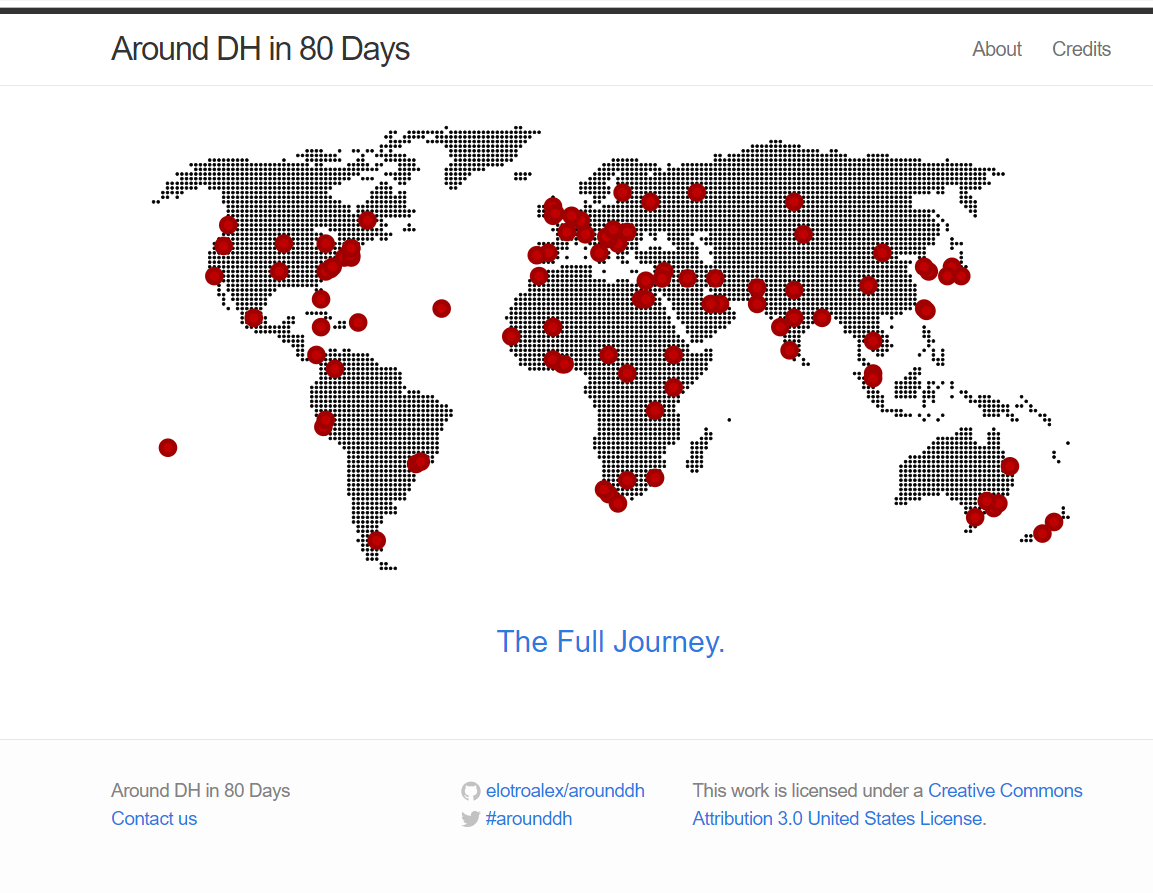
Around DH in 80 Days

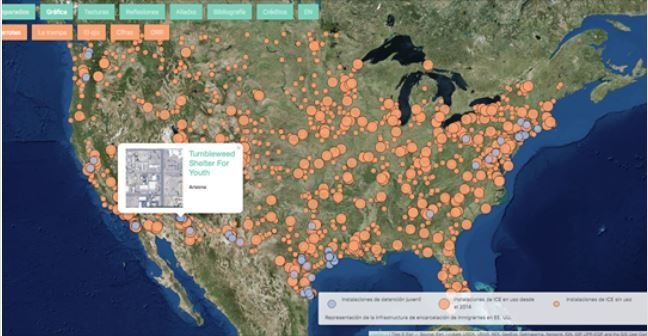
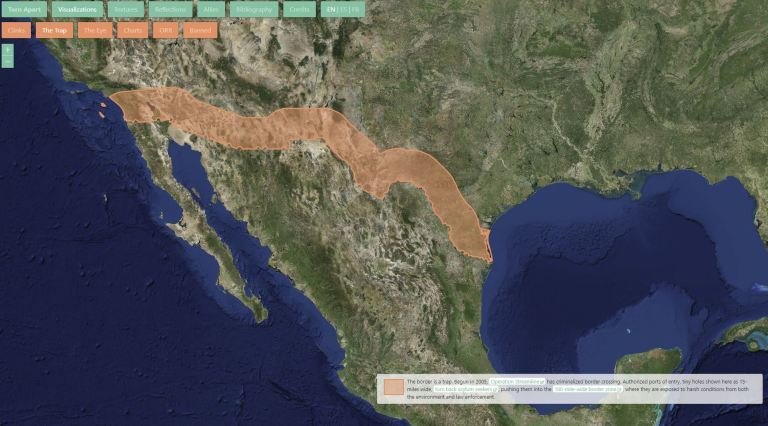
Torn Apart / Separados

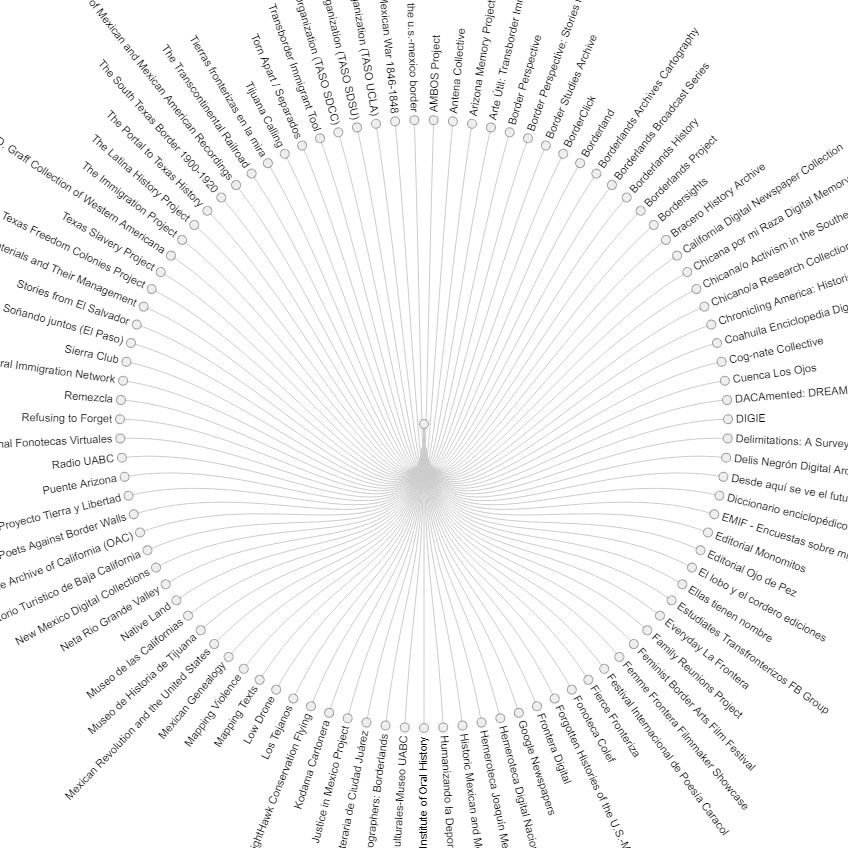
United Fronteras

UF Projects

Currently a total of 102

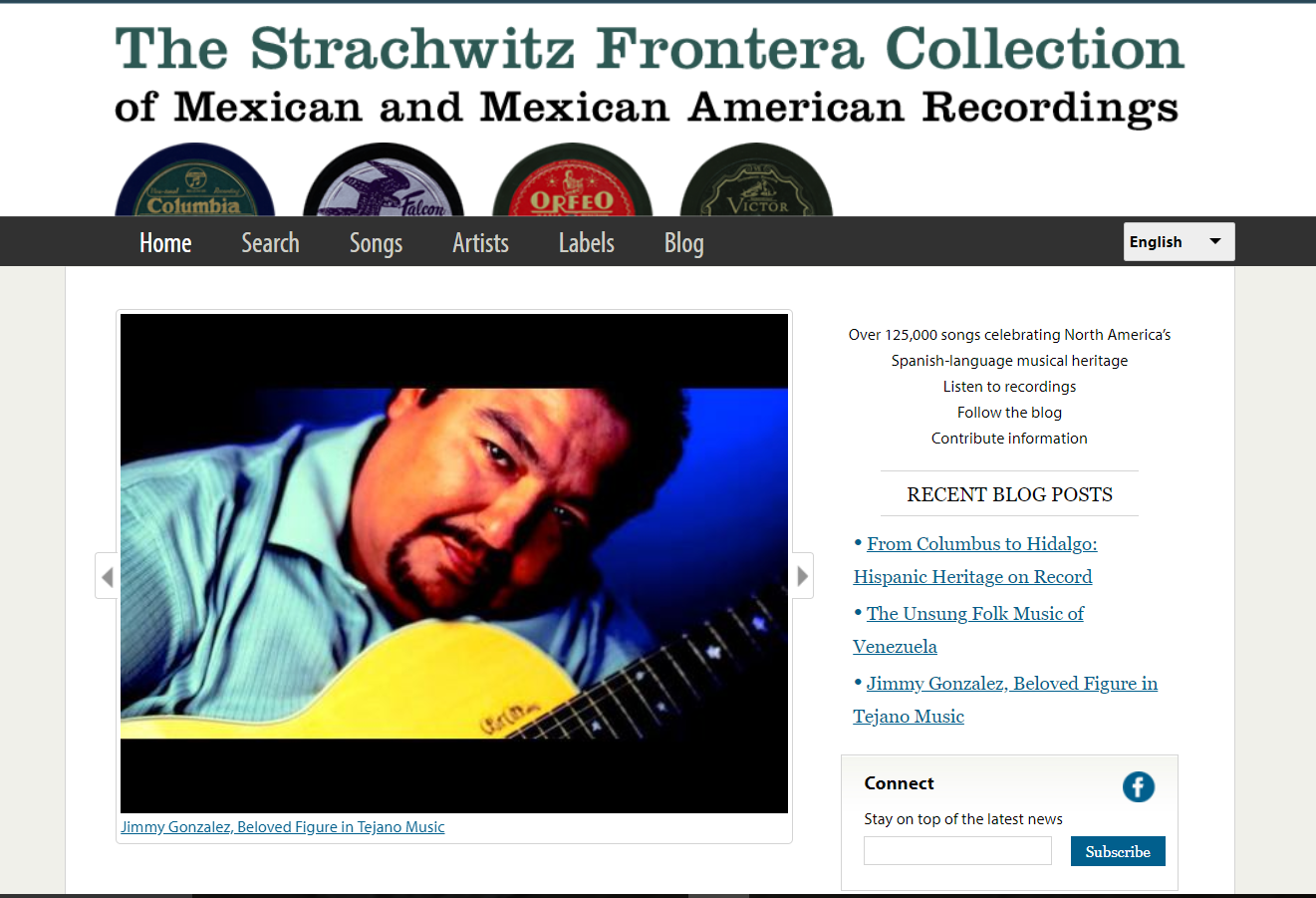
The Strachwitz Frontera Collection

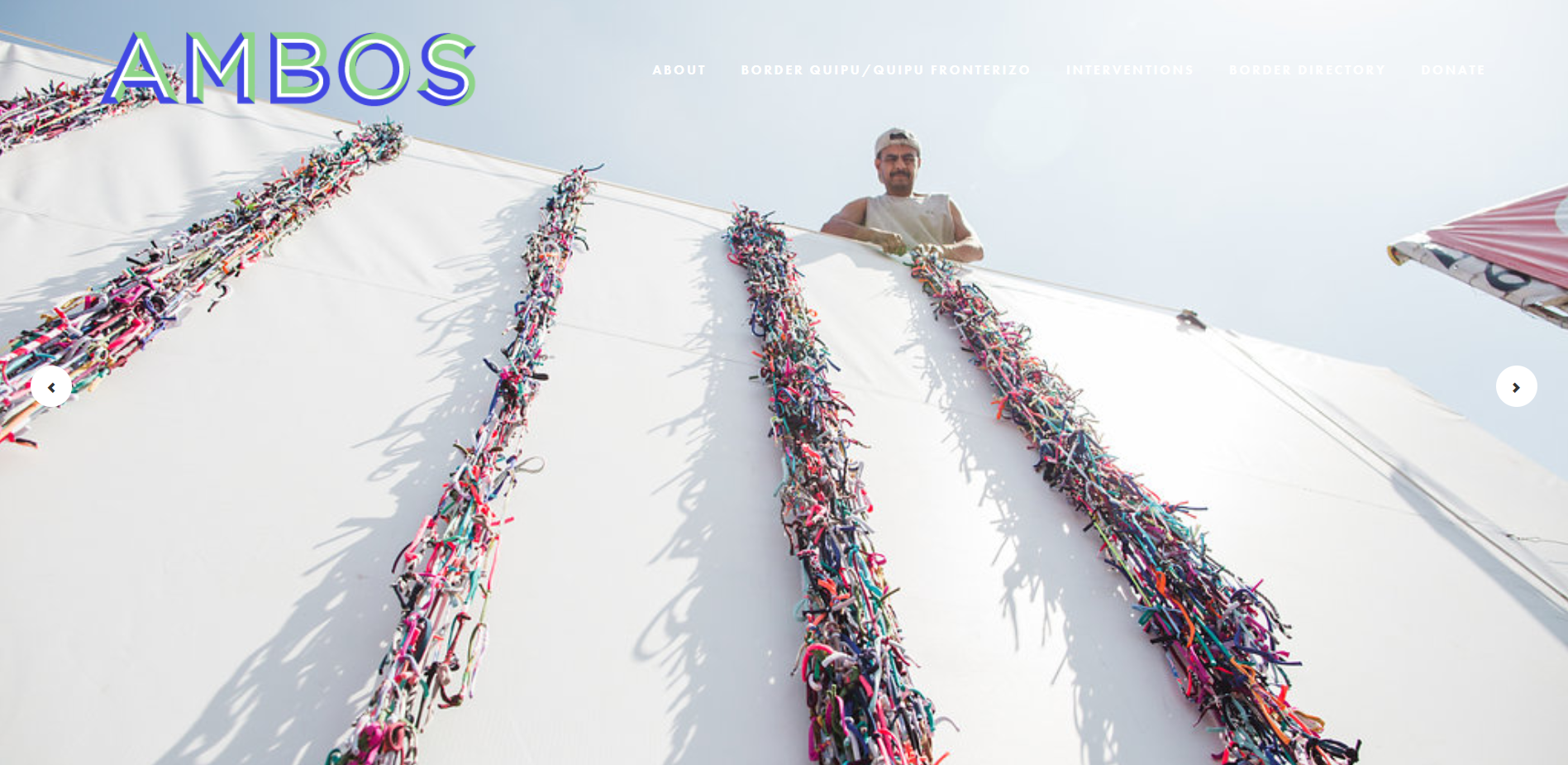
AMBOS Project

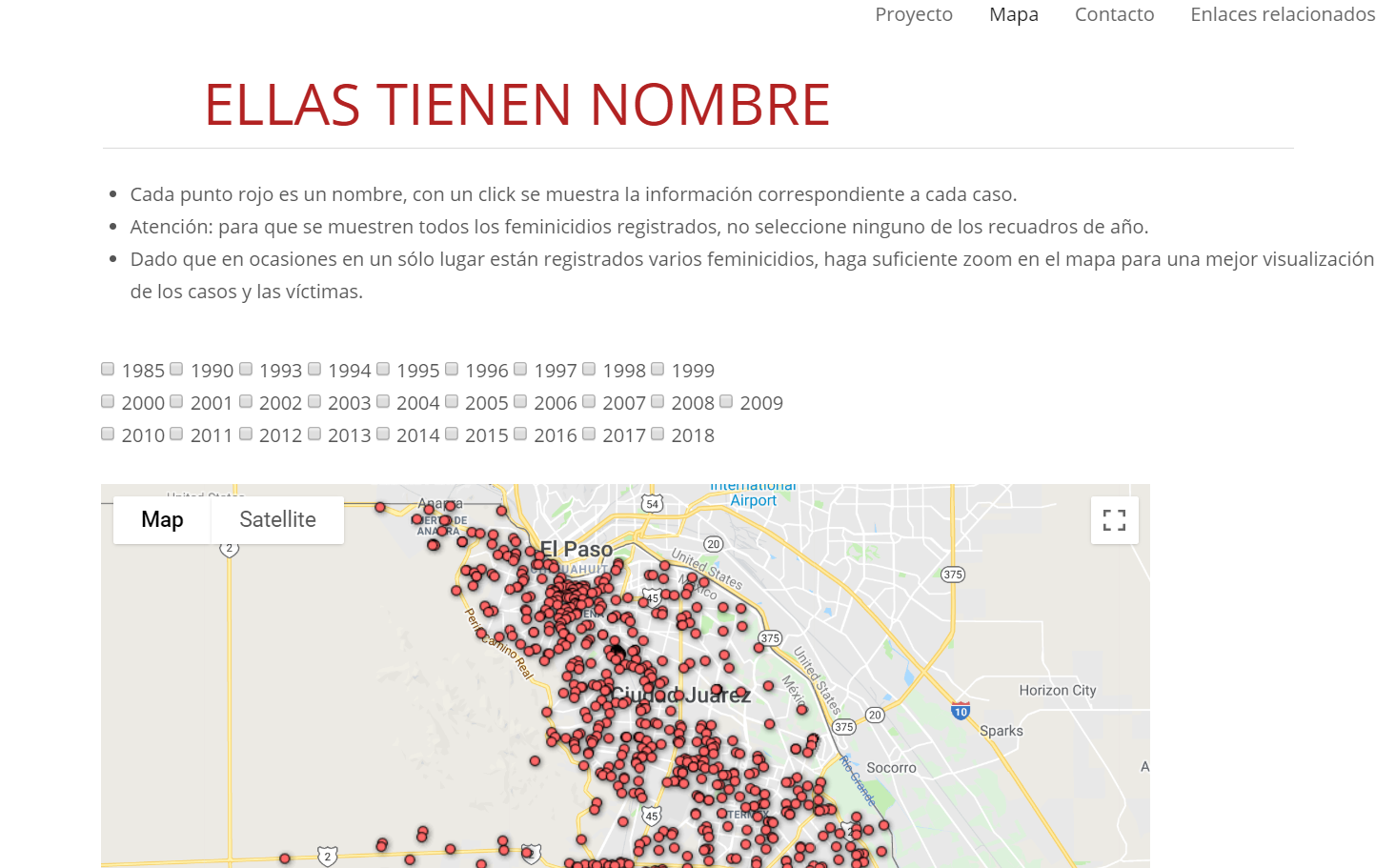
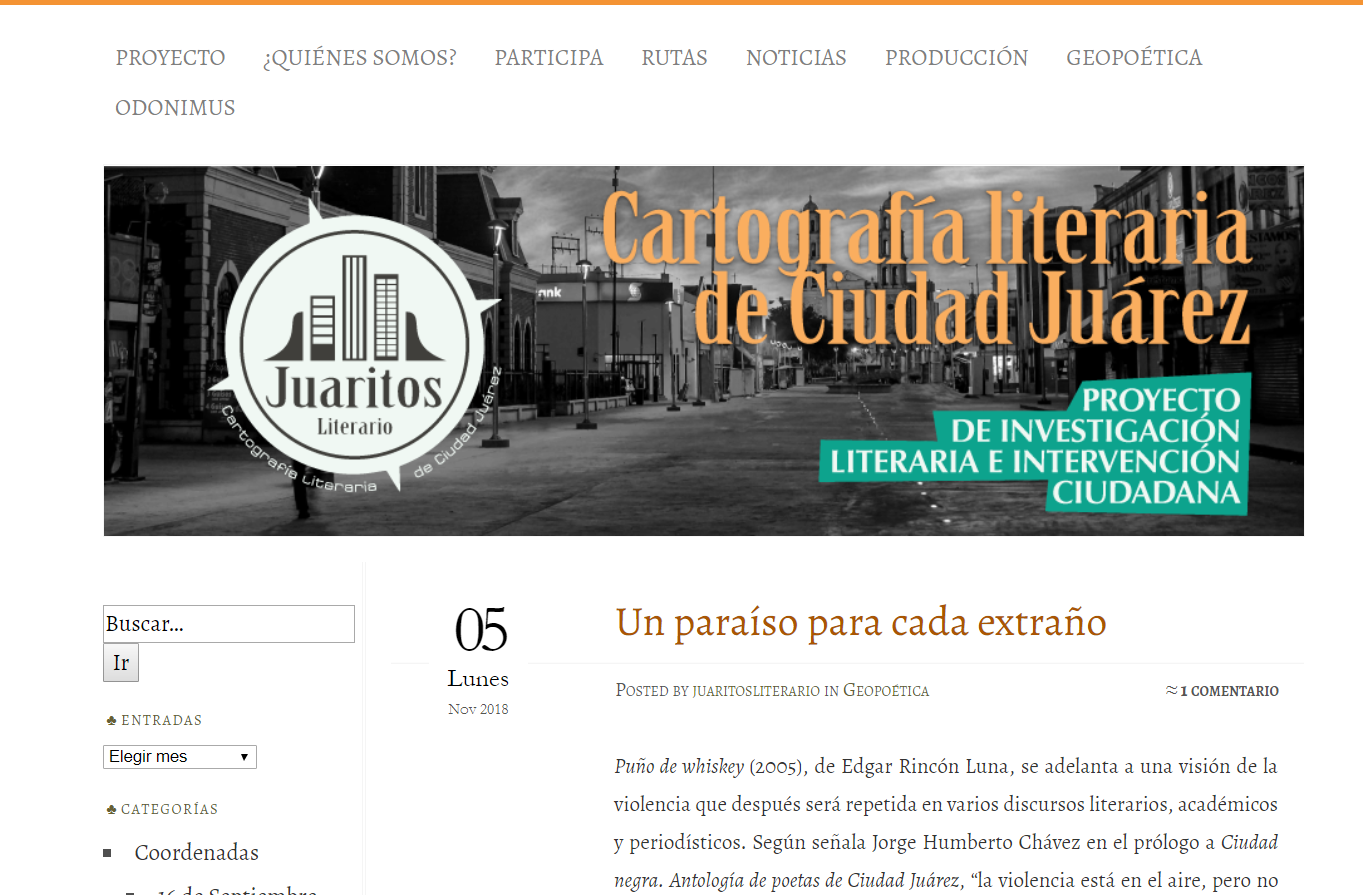
               Ellas tienen nombre  &  Juaritos Literario

               OBJECTIVES OF UNITED FRONTERAS

  • Decentralized First and Third Worlds, as well as the US-Mexico border.


  • Engage with borderlands around the world to compare these experiences, bringing forward perspectives that oftentimes contradict the sentiments of division that are frequently influenced and represented by those in power

UF TEAM

1. Carolina Alonso, Assistant Professor, Borders and Languages and Gender and Sexuality Studies, Fort Lewis College

2. Maira Álvarez, Ph.D. Candidate, Hispanic Studies, University of Houston

3. Isis Campos, Ph.D. Candidate, Hispanic Studies, University of Houston

4. Estefanía Castañeda Perez, Ph.D. Student, Ford Foundation and Natural Science Foundation Predoctoral Fellow, University of California at Los Angeles

5. Vannessa Falcón Orta, Ph.D. Candidate in Education, San Diego State University & Claremont Graduate University  

6. Sylvia Fernández, Ph.D. Candidate, Hispanic Studies University of Houston


7. Alexander Gil, Digital Scholarship Coordinator for the Humanities and History Division and Affiliate Faculty for the English and Comparative Literature Department, Columbia University

8. Laura Gonzales, Assistant Professor, English Department, University of Texas at El Paso

9. Aurelio Meza, Ph.D. Candidate, Humanities, Concordia University

10. Rubria Rocha, Ph.D. Candidate, Hispanic Studies Texas A & M

11. Verónica Romero, Ph.D. Student, Hispanic Studies University of Houston

12. Daisy Vasquéz Vera, Ph.D. Student, University of California Los Angeles

13. Annette Zapata, Ph.D. Candidate, Hispanic Studies University of Houston

               COLLABORATE

               unitedfronteras@gmail.com

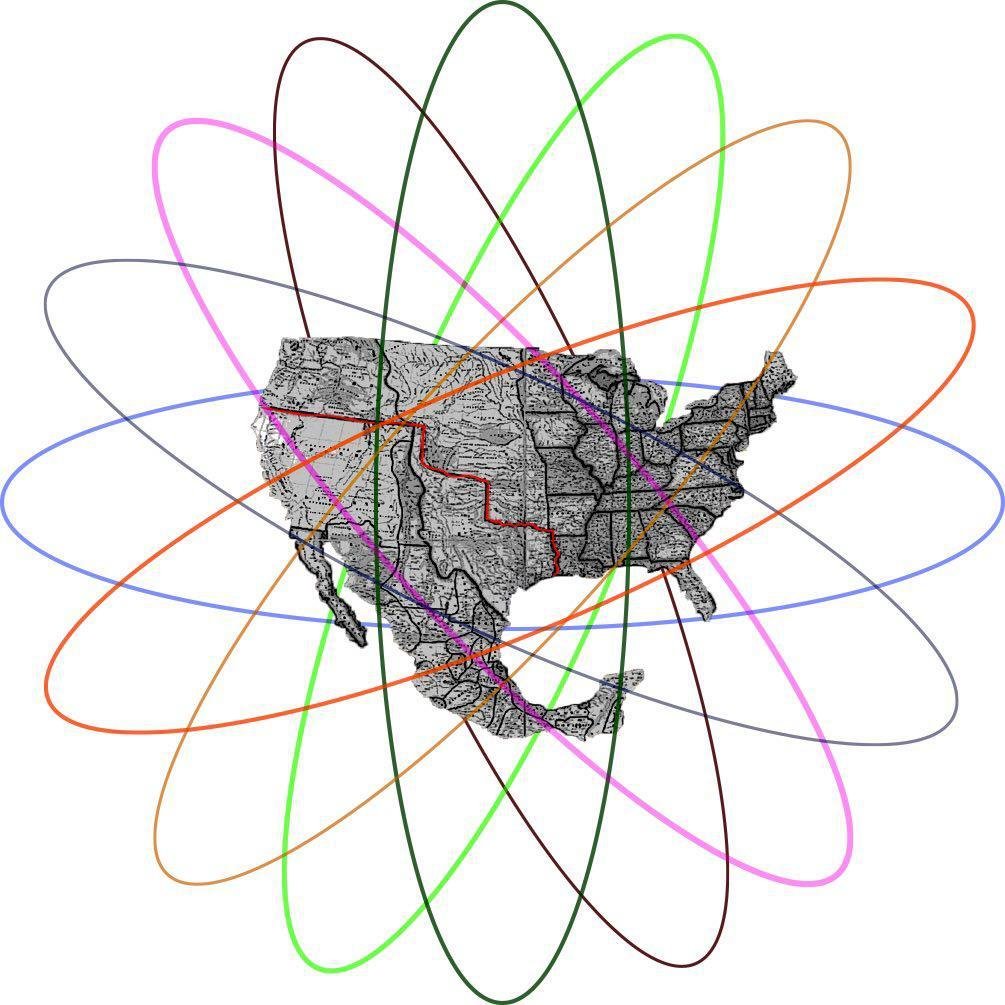
I. US-Mexico Projects with a digital component

II. Nineteenth century (1800-1899)

               Includes projects from the entire states.

           1) U.S. border states include California, Nevada, Utah, Colorado, Arizona, New Mexico, Texas, Louisiana and Florida    

        2) Mexico border states include Baja California, Sonora, Chihuahua, Coahuila, Nuevo León and Tamaulipas.

III. Twentieth and twenty-first centuries (1900-Present)

           Includes projects from the cities and counties located along the current division line from California, Arizona, New Mexico, Texas, Baja California, Sonora, Chihuahua, Nuevo León and Tamaulipas.  


(SSAWW2018) Forthcoming Project: Documenting La Frontera through Digital Projects

By Sylvia Fernández

(SSAWW2018) Forthcoming Project: Documenting La Frontera through Digital Projects

  • 134