Addressing Inequitable Learning Gaps Using Agent-based Modeling and the ICAP Framework
Zayaan Khan, Shayan Doroudi
University of California, Irvine
AERA 2026
April 11, 2025

ICAP (Chi & Wylie, 2014) posits four modes of cognitive engagement:
- Passive
- Active
- Constructive
- Interactive
Observation: If some students learn with lower modes of engagement and others learn with higher modes of engagement, that could result in educational inequity.
What happens to that inequity when you take these students and put them in the same class?
We answer this question using ABICAP, our agent-based model based on the ICAP framework.


(passive learners)
ABICAP Jupyter Notebook
Passive
First learning phase (e.g., K-12)
Constructive
Passive
First learning phase (e.g., K-12)
Second learning phase
(e.g., college classroom with constructive instruction)
Constructive
Everyone learns constructively
Passive
First learning phase (e.g., K-12)
Second learning phase
(e.g., college classroom with constructive instruction)
Constructive
Everyone learns constructively
?
Passive
First learning phase (e.g., K-12)
Second learning phase
(e.g., college classroom with constructive instruction)
Constructive
Everyone learns constructively
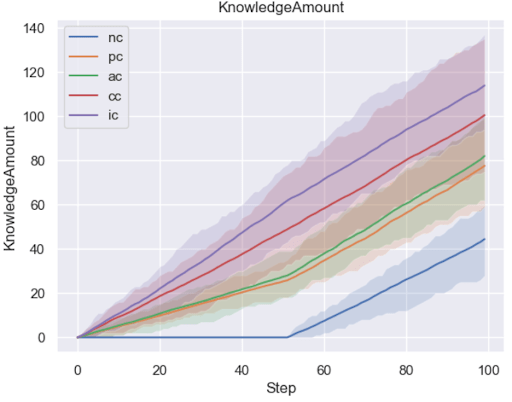
To our surprise, knowledge gaps remain constant (i.e., no "rich get richer" effect)!
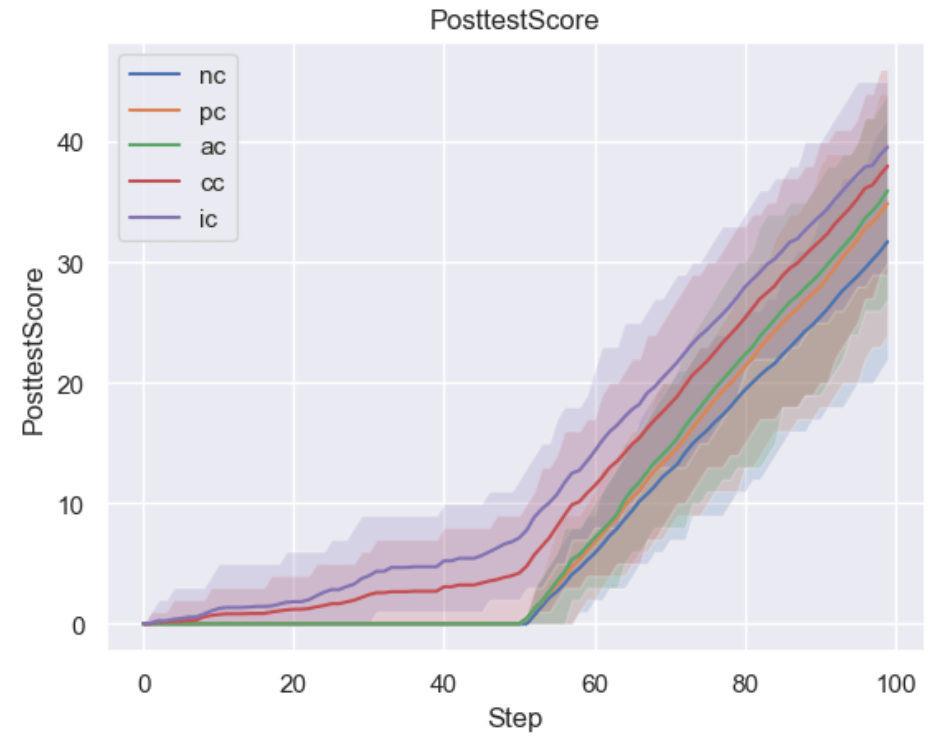
But if we only look at the knowledge they are supposed to learn in the new class, knowledge gaps shrink!
RQ2: Of the four levels of cognitive engagement specified by ICAP, which best closes knowledge gaps produced by inequities in education?
Answer: Higher cognitive engagement appears to be best, with gaps shrinking the most for interactive learning.
That is, the best pedagogy to improve equity seems to be the best pedagogy for learning generally!
Equity ABICAP AERA
By Shayan Doroudi