Tajwīd
“beautification” or “enhancement”
Prerequisities
Wājib to have wuḍūʿ for touching the words on the muṣḥaf.
Wuḍūʿ
Mustaḥabb to have wuḍūʿ for reading Qurʾan.

16:98 - So when you recite the Qurʾan, seek refuge in Allah from the outcast Satan.
Istiʿādhah
Basmalah
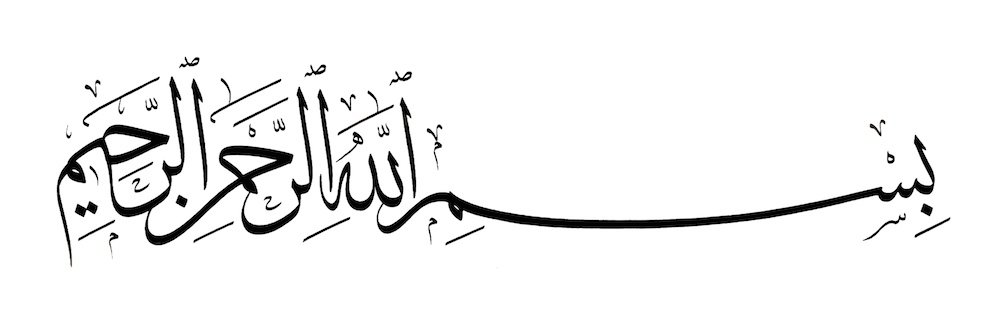
In the Name of Allah, the All Merciful, the Especially Merciful
Four verses make sajdah wājib:
32:15
41:37
53:62
96:19
Wājib Sujūd

Not 41:38
Symbol for sajdah verses:
For other verses with sajdah symbol, sajdah is mustaḥabb.
Tajwīd Rules
Ghunnah
Condition:
Whenever you have نّ or مّ
Whenever you have مْ followed by ب
Pronunciation:
You stretch the ن and م for two harakāt and give the letter a nasal quality.
In the case of م you upper lip should hover just above the lower lip (i.e., you should not close your lips tight).
Four ways to "pronounce" nūn sākin / tanwīn depending on what letter follows it.
Rules of Nūn Sākin and Tanwīn
Iẓhār
Idghām
Ikhfāʾ
Iqlāb
(making clear)
(changing)
(merging)
(hiding)
ـًـٍـٌ نْ
Condition: نْ followed by throat letters (ء ه ع غ ح خ)
Iẓhār
ـًـٍـٌ نْ
Pronunciation: Pronounce نْ the way you naturally would
Condition: نْ followed by ب
Iqlāb
Pronunciation: Convert نْ into a ْم
Apply ghunnah to ْم
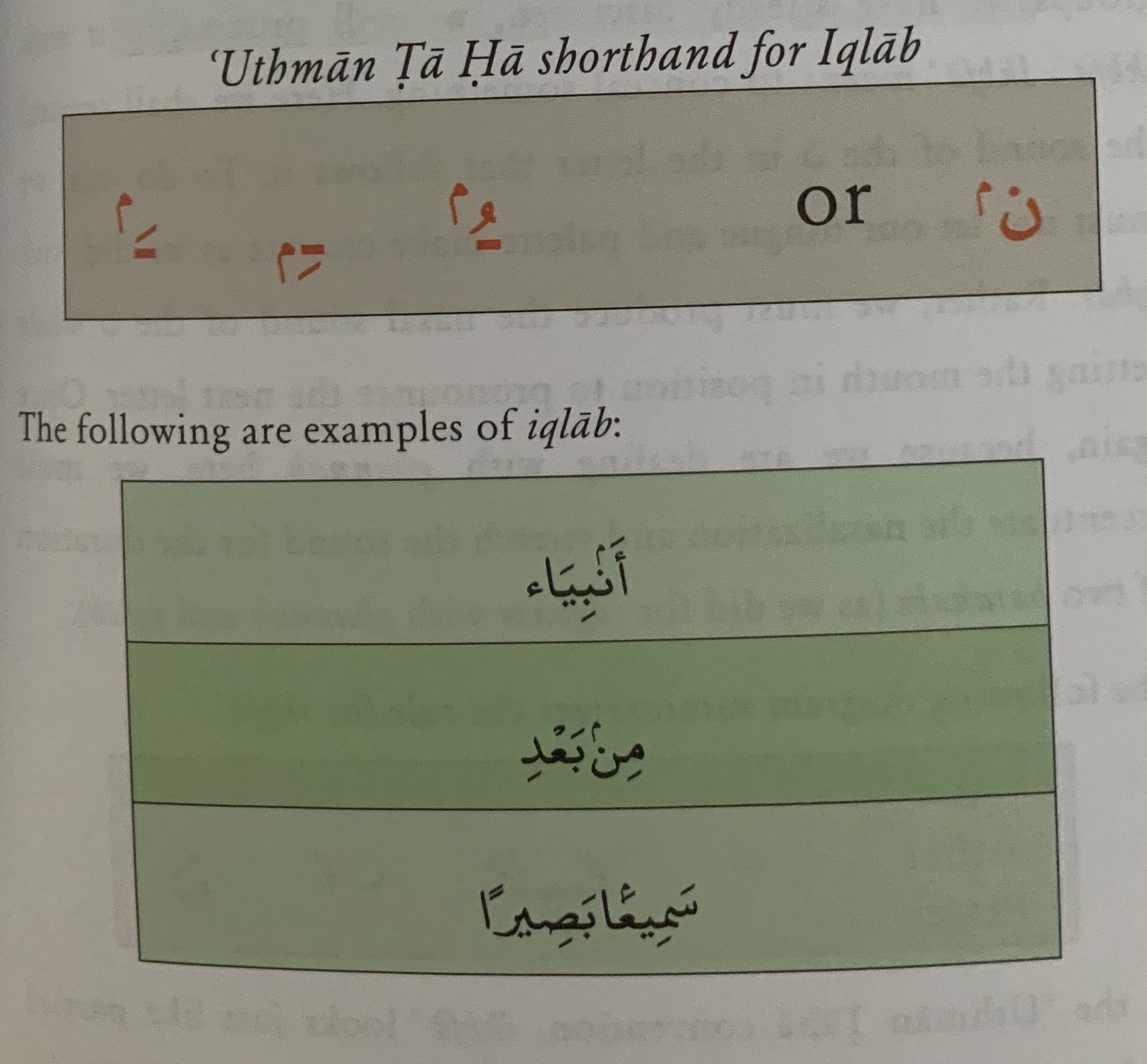
ـًـٍـٌ نْ
Condition: نْ followed by one of the following: ي ر م ل و ن
Idghām
Pronunciation (two cases):
ن م ر ل
Replace the ن with a shaddah on the next letter
(Complete idghām)
ـًـٍـٌ نْ
ي or و
Replace the ن with a shaddah on the next letter and add apply ghunnah to the next letter, making a new sound for ي and و
(Partial idghām)
Ghunnah Revisited
Conditions:
Pronunciation:
You stretch the ن and م for two harakāt and give the letter a nasal quality.
In the case of م you upper lip should hover just above the lower lip (i.e., you should not close your lips tight).
(incl. idghām)
(incl. iqlāb)
Whenever you have نّ or مّ
Whenever you have مْ followed by ب
When you have idghām with ي or و
Tajwid
By Shayan Doroudi