Introduction
Numerical Methods
David Mayerich
Scalable Tissue Imaging and Modeling (STIM) Laboratory
Department of Electrical and Computer Engineering
Cullen College of Engineering
University of Houston
David Mayerich
STIM Laboratory, University of Houston

Goals and Expectations
-
Fundamentals of numerical methods
-
Resolving numerical errors: quantization, binarization, etc.
-
Solving complex equations and evaluating functions
-
Linear systems
-
Partial differential equations and physical systems
-
David Mayerich
STIM Laboratory, University of Houston
-
Experience in implementation (C/C++ and MATLAB/Python)
-
When you encounter a numerical problem, you should know how to find the best (fastest, most accurate, most efficient, etc.) solution
-
Grades should be predictable: rubrics are provided for all assignments
Resources
-
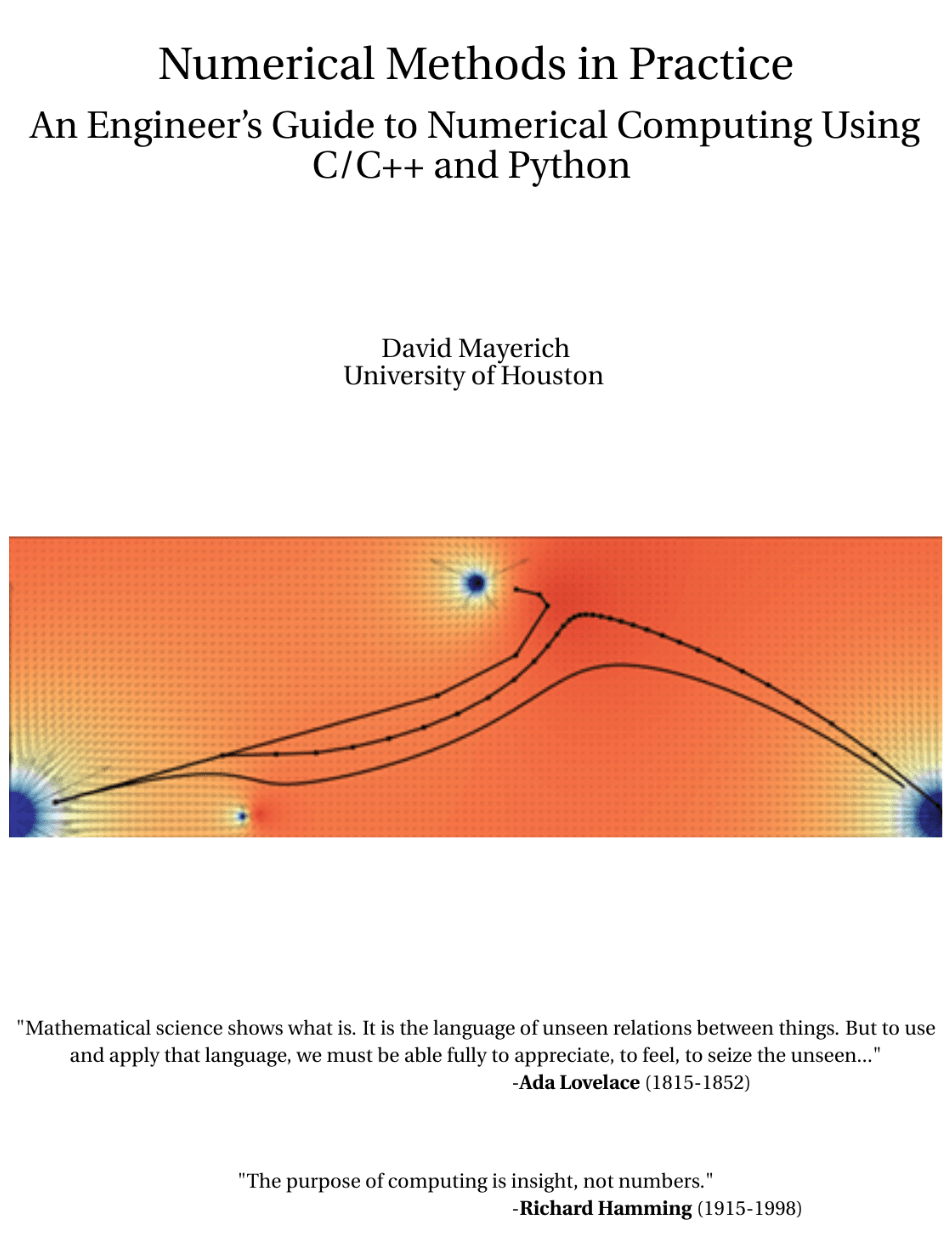
Numerical methods in Practice: A Programming Guide to Numerical Computing Using C and Python, D. Mayerich
-
open-access textbook written specifically for this class
-
https://stim.ee.uh.edu/education/ece-3340-numerical-methods/
-
-
Standard scientific calculator (nothing fancy, see syllabus)
David Mayerich
STIM Laboratory, University of Houston
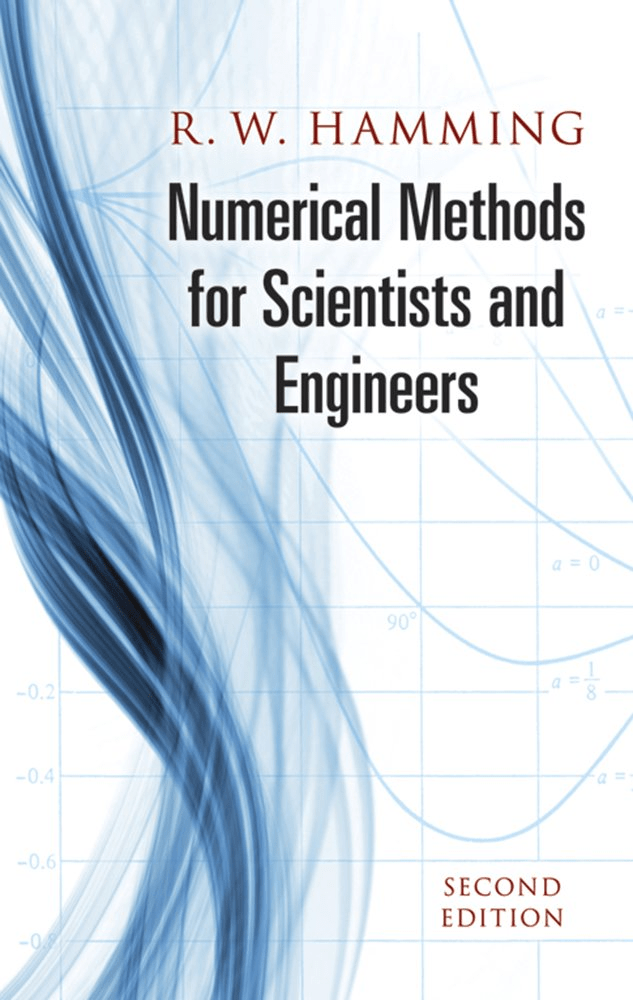
Numerical Methods for Scientists and Engineers, R.W. Hamming
- Math-focused discussion
- Short and precise
- Inexpensive
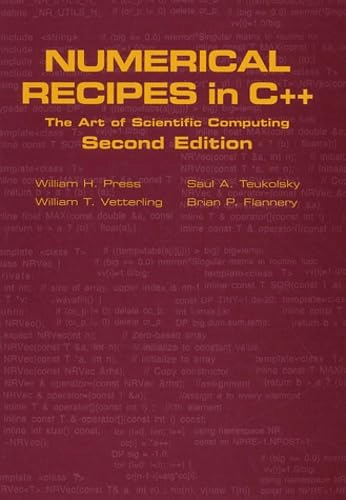
Numerical Recipes: The Art of Scientific Computing, W.H. Press, et al.
- C implementations
- Advanced problems
- Expensive
Alternatives
Prerequisites
David Mayerich
STIM Laboratory, University of Houston
- C/C++ programming
- MATLAB/Python
a \in \mathbb{R} \quad \mathbf{b} \in \mathbb{C}^3 \quad \mathbf{A}\in\mathbb{R}^{4\times 3}
- Taylor and Maclaurin series
e^x \approx 1 + x + \frac{x^2}{2!} + \frac{x^3}{3!}
- Linear systems
\mathbf{A}\mathbf{X}=\mathbf{B} \quad \mathbf{A}\in\mathbb{C}^{3\times 3}
- Partial differential equations
\frac{\partial\phi(\mathbf{x},t)}{\partial t} = \nabla \cdot \left[ D(\phi, \mathbf{x}) \nabla \phi(\mathbf{x}, t) \right]
- Taylor and Maclaurin series
MATH 3321 - Engineering Math
ECE 3331 - Programming Apps.
Grading
-
5 % Practice Problems
David Mayerich
STIM Laboratory, University of Houston
-
25% Quizzes/Programming
-
40% Exams 1 & 2
-
30% Final Exam
Weekly assignments that reflect material on the exams
Homework review, sample exam questions
Very short (ex. 1 question), every 1-2 days
Mid-term exams
(closed book, closed note)
Previous material + differentiation, integration, partial differential equations, interpolation, fitting functions
Homework Assignments
-
5% of your final grade – primarily practice for the exams
David Mayerich
STIM Laboratory, University of Houston
-
Grade based on written homework
-
Taken from class lectures and textbook
-
You may work together, but don't had in copied work
-
I will review for completion and as a benchmark for class performance
-
Submit a PDF on Canvas
-
-
I will only review assigned homework, however there are other practice problems in the textbook
-
Teams: feel free to ask and answer questions about the homework
Quizzes
-
Test your understanding of the material with regular quizzes
-
My aim here is to make sure you can predict your performance on the exams
-
Main goal here is to address a recent trend of students leaning on LLMs: I've encountered too many cases where students don't realize that they don't understand the material and do poorly on exams.
-
Calculators: you'll want a scientific calculator (same rules as the ACT)
-
Generally be 1-2 simple questions at the beginning of class
-
Submit via Canvas or just hand it in
David Mayerich
STIM Laboratory, University of Houston
Exams
-
Exams are comprehensive - previous material is fair game
-
20% numerical representations, algorithms, loss of precision
-
20% linear systems, tensors, and tensor operations
-
30% fitting, interpolation, calculus
-
David Mayerich
STIM Laboratory, University of Houston
-
Exam questions rely on material from homework, quizzes, lectures, textbook
-
There will be some programming questions but I won't rigorously review "code"
-
Calculators: you'll want a scientific calculator (same rules as the ACT)
-
Teams: don't ask/answer test-related questions until I confirm all exams are completed
(since some students may be required to take the exam outside of class time)
Why learn about numerical methods?
-
Implementation depends on requirements and constraints
-
High-level applications can use MATLAB and external libraries
-
Low-level applications are under pressure: memory, speed, processing power
-
David Mayerich
STIM Laboratory, University of Houston
- Most low-level implementations are simple
- Algorithms are well-understood, but we will discuss recent advances
- Implementation depends platform and therefore still challenging
- Constrained by architecture, memory, precision, speed, discretization errors
- Examples of algorithms that pose challenges:
- subtraction
- evaluating non-polynomial functions (sine, cosine, exp, logarithms)
- integration and differentiation
- optimization (finding minima and maxima) - often used in machine learning
Topics
1. Mathematics - notation that will help us communicate
2. Programming - translating from math to a computer (via C)
3. Discrete Math - theory for evaluating algorithms
4. Errors - how and where do computers make mistakes?
5. Numbers - how values are stored and manipulated in digital systems
6. Functions - use algorithms and series to evaluate special functions
7. Solving Equations - numerical methods to solve equations with special functions
David Mayerich
STIM Laboratory, University of Houston
Exam 1
Topics
12. Regression - building functions from samples
13. Differential Equations - numerical techniques for solving complex physical systems
David Mayerich
STIM Laboratory, University of Houston
Final Exam
8. Linear Systems - mathematical operations that take a lot of time
9. Matrix Properties - assessing linear systems and how accurately they can be solved
10. Random Numbers - probability and generating random numbers
11. Calculus - differentiation and integration using functions and values in digital systems
Exam 2
Resources
-
Website:
http://stim.ee.uh.edu
David Mayerich
STIM Laboratory, University of Houston
-
Teams forum - please ask questions:
-
homework, textbook problems, and lecture slides
-
exam questions AFTER the exams have been graded
-
conceptual questions about programming assignments - don't post blocks of code
-
messages can be sent to me privately via Teams
-
-
Lectures slides - PowerPoint slides will be available on Teams
-
Textbook - this constantly developing, so let me know if anything is vague or could use better explanation
Research Interests
David Mayerich
STIM Laboratory, University of Houston
Large Scale Microscopy
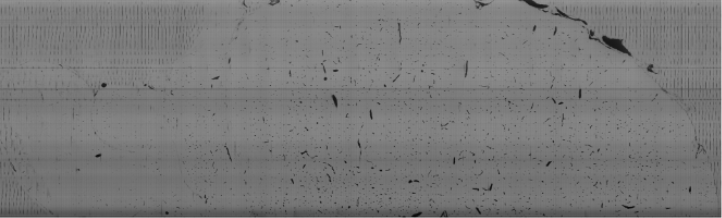
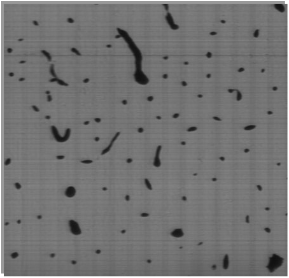
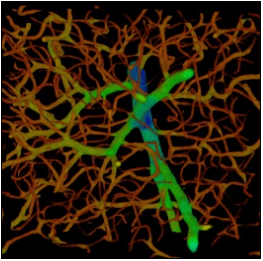
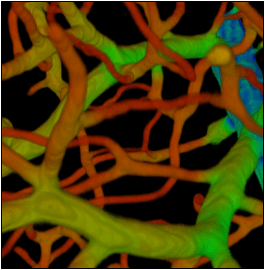
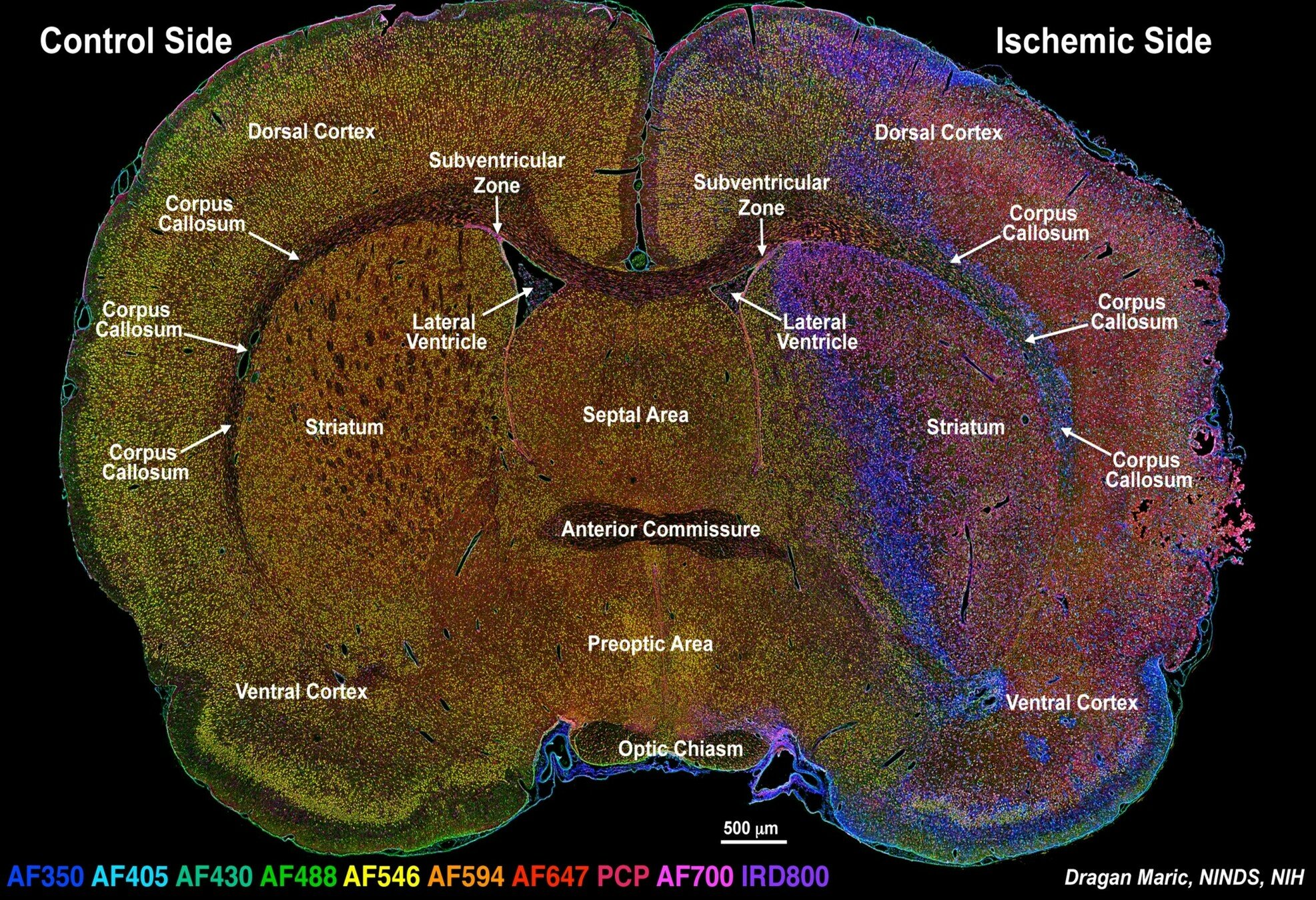
Multiplex Microscopy
Large-Data
Analysis
About Me
-
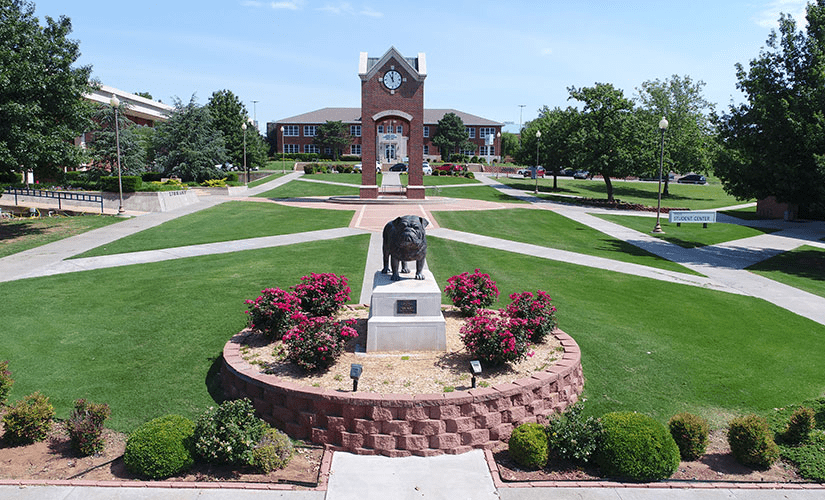
B.S. - Southwestern Oklahoma State University
David Mayerich
STIM Laboratory, University of Houston
-
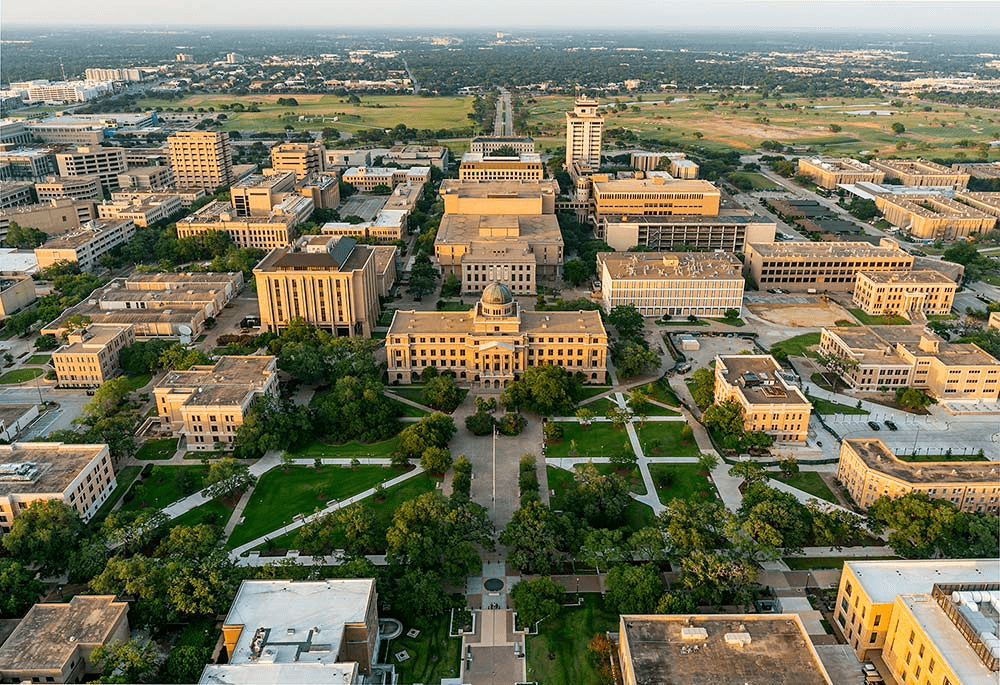
Ph.D. - Texas A&M University
- Background
- Computer Graphics, Visualization
- Biomedical Imaging, Microscopy, Spectroscopy
- High-Performance Computing, GPU Programming
- Personal
- Video Games
- Fencing
-
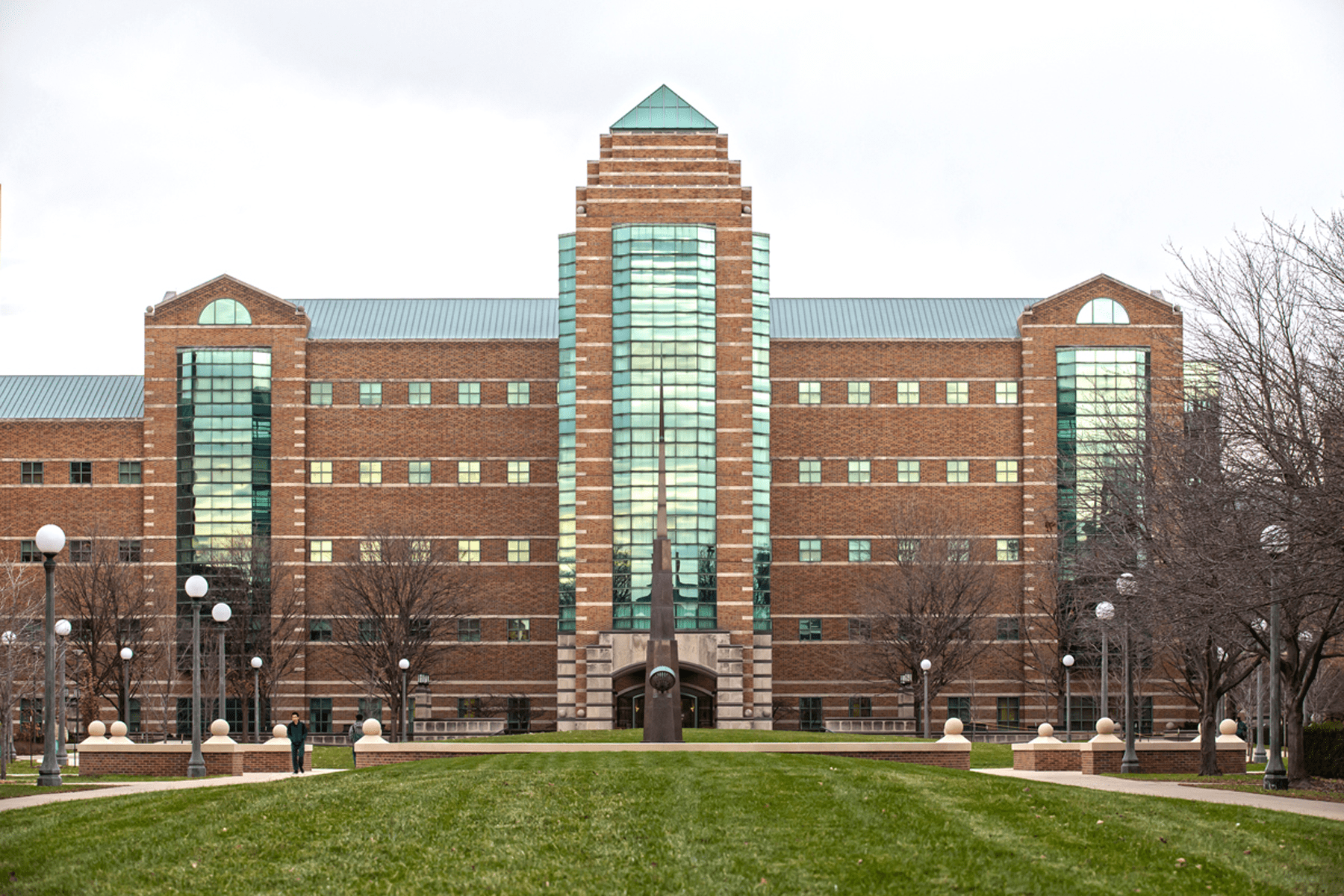
Postdoc - Beckman Institute, University of Illinois, Urbana - Champaign

A.1 Introduction
By STIM Laboratory