Recommendations in eCommerce. Basics


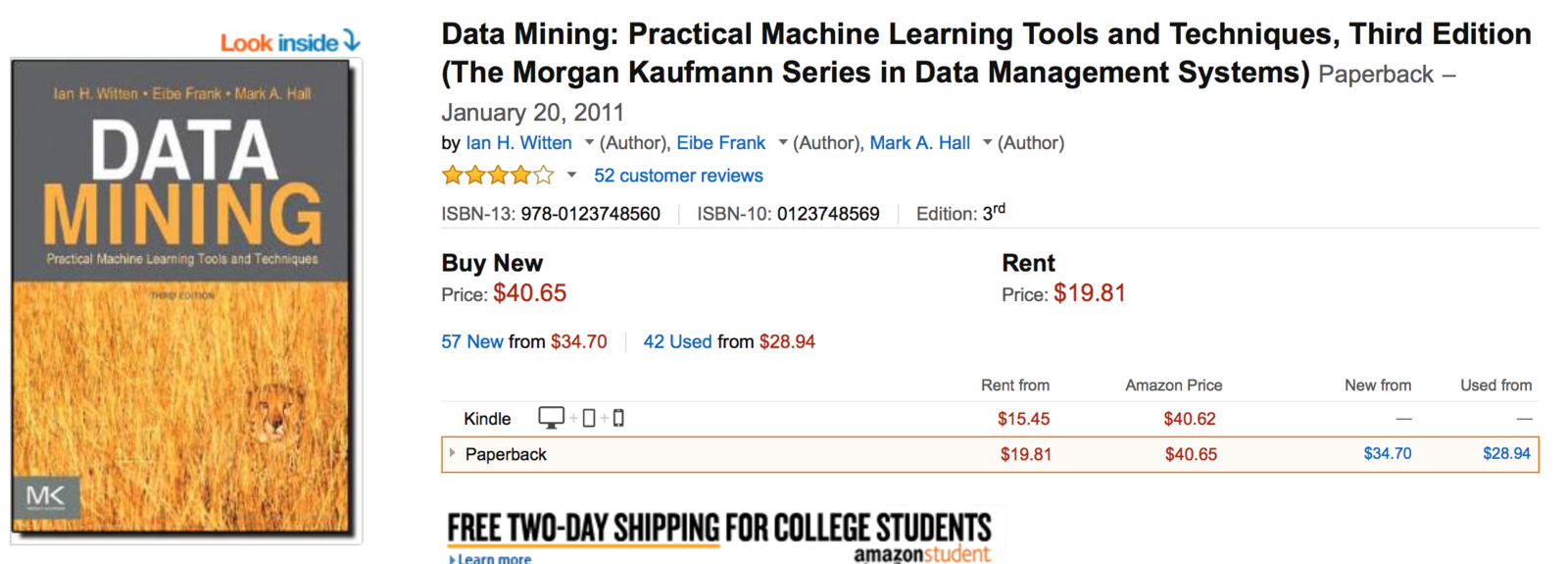

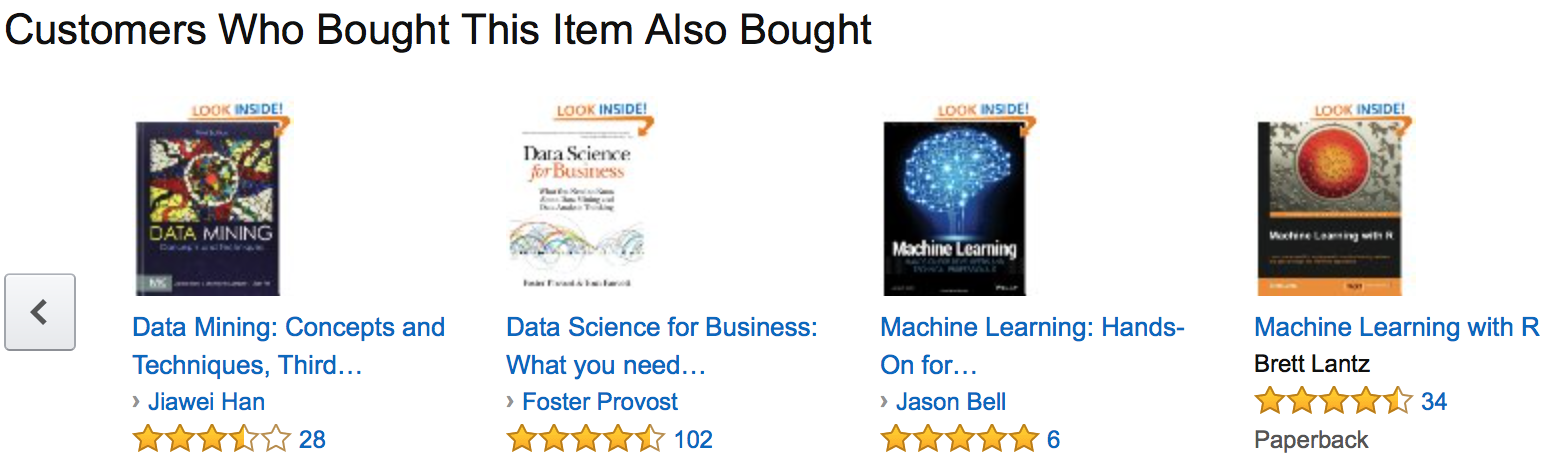


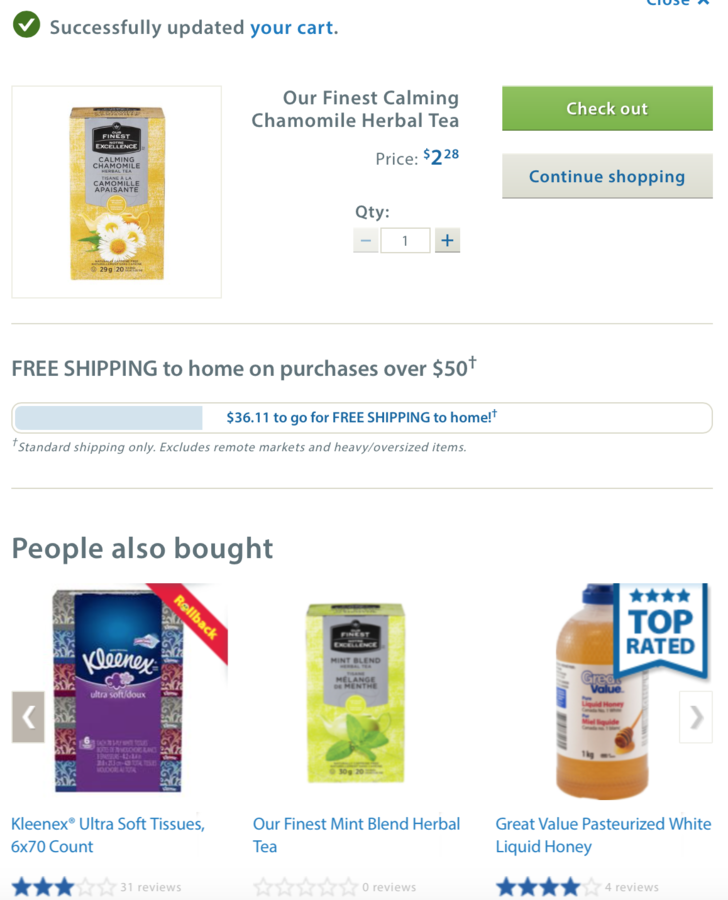


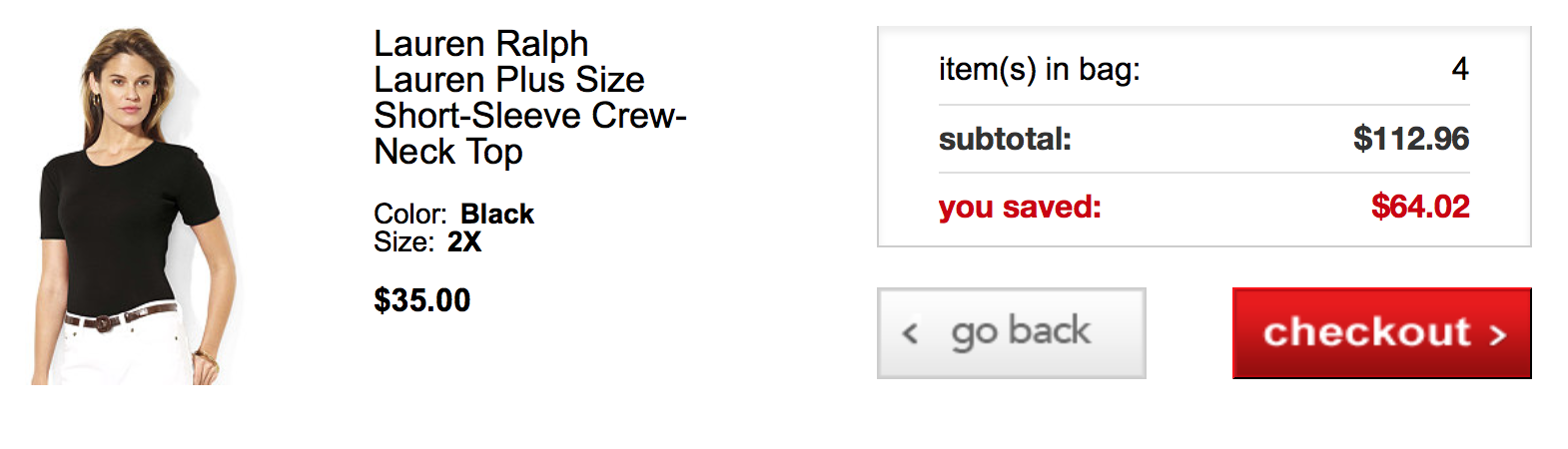



Methods
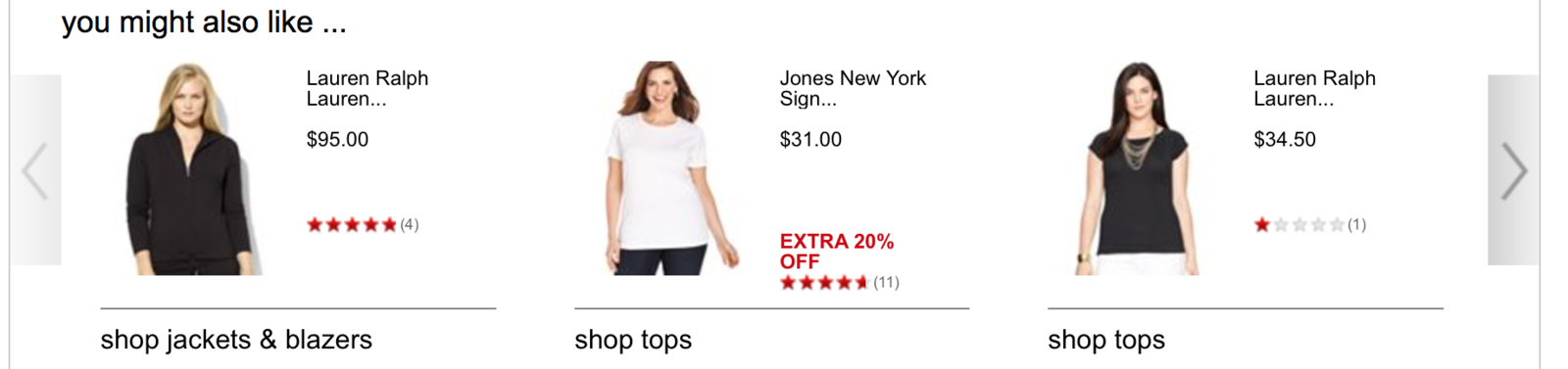
- Frequent itemsets (Association rules)
-
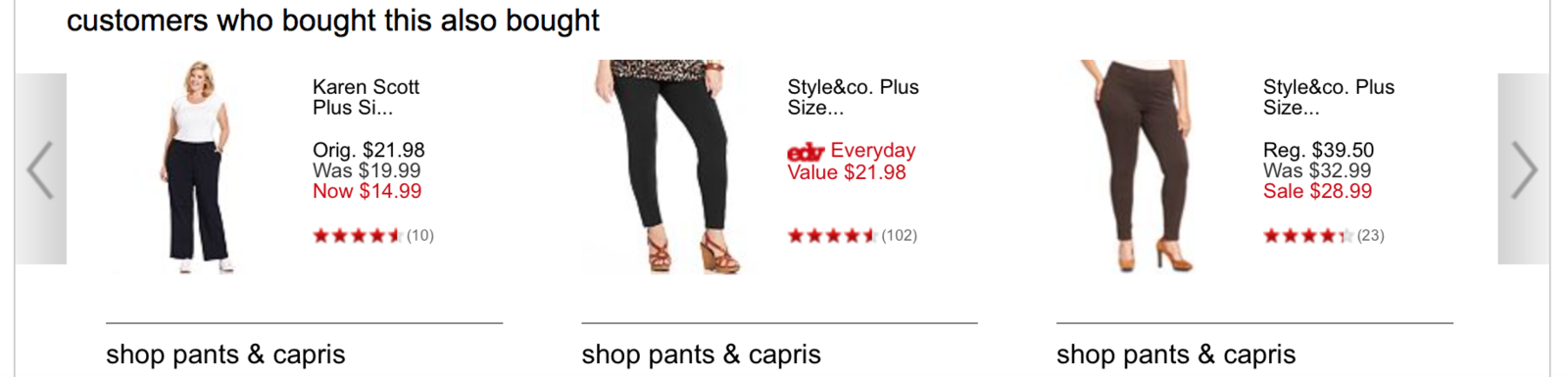
Collaborative Filtering:
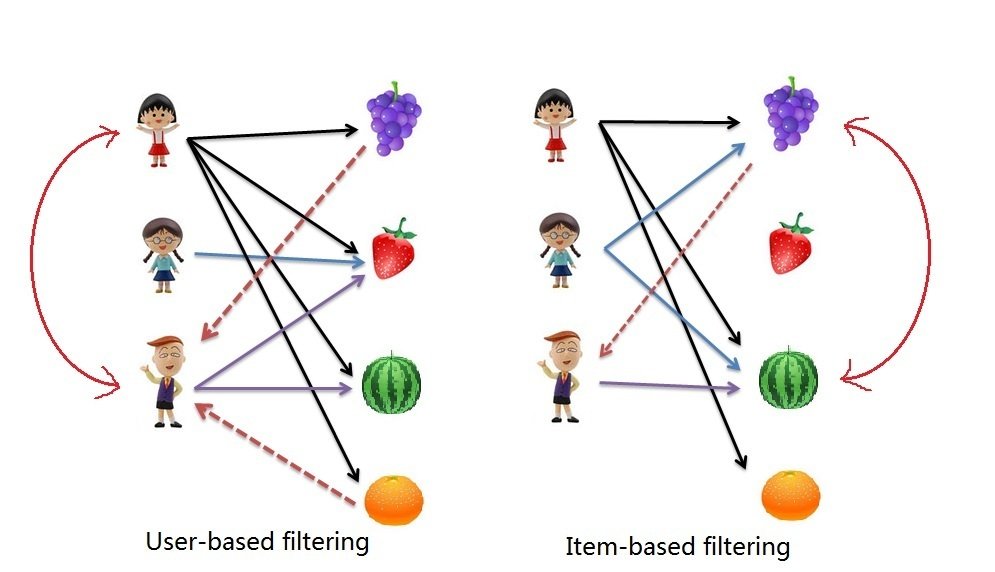
- Item-to-Item (item-based)
- user-to-user (user-based)
Frequent itemsets (assocation rules)
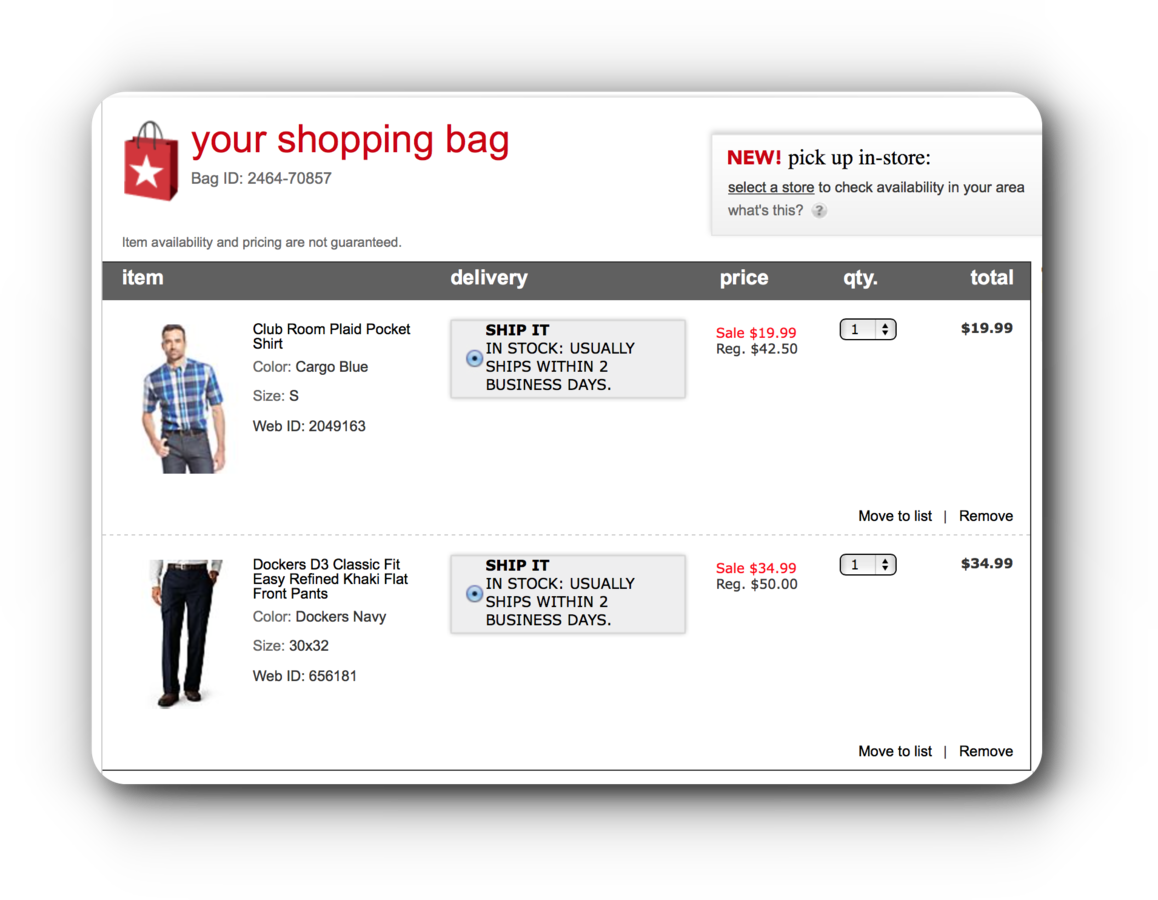
Intuitively, a set of items that appears in many baskets is said to be “frequent”
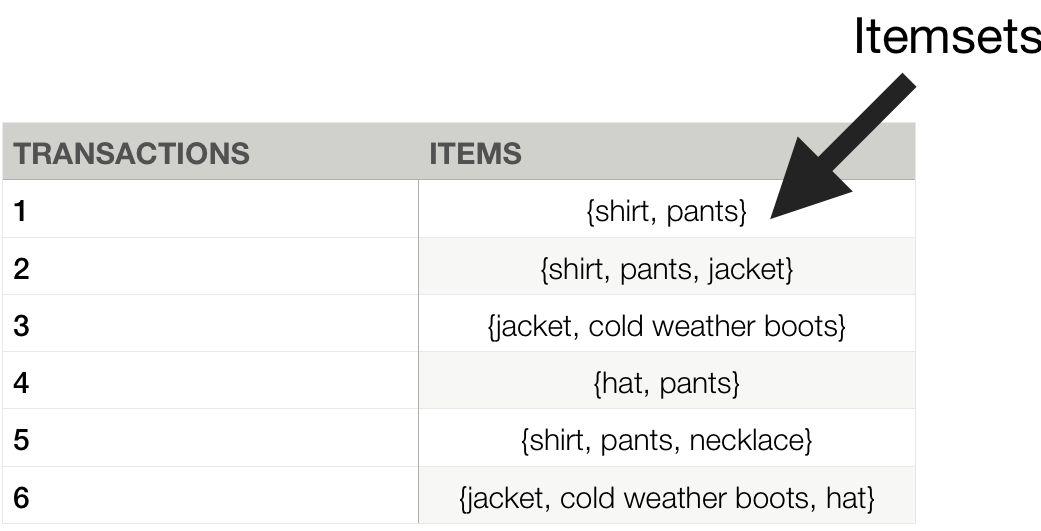
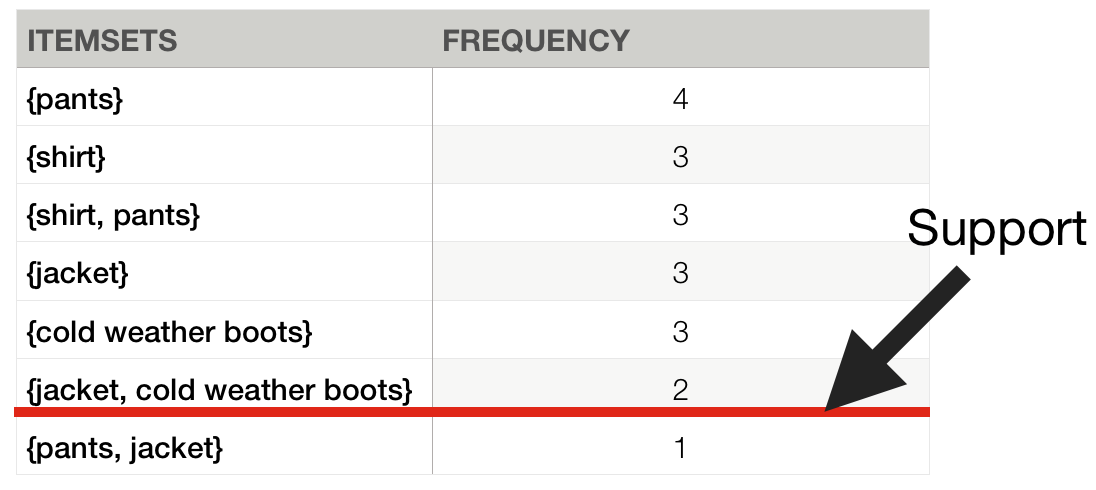
Association rules
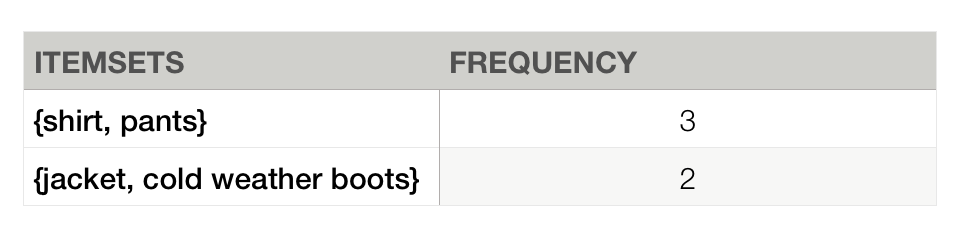
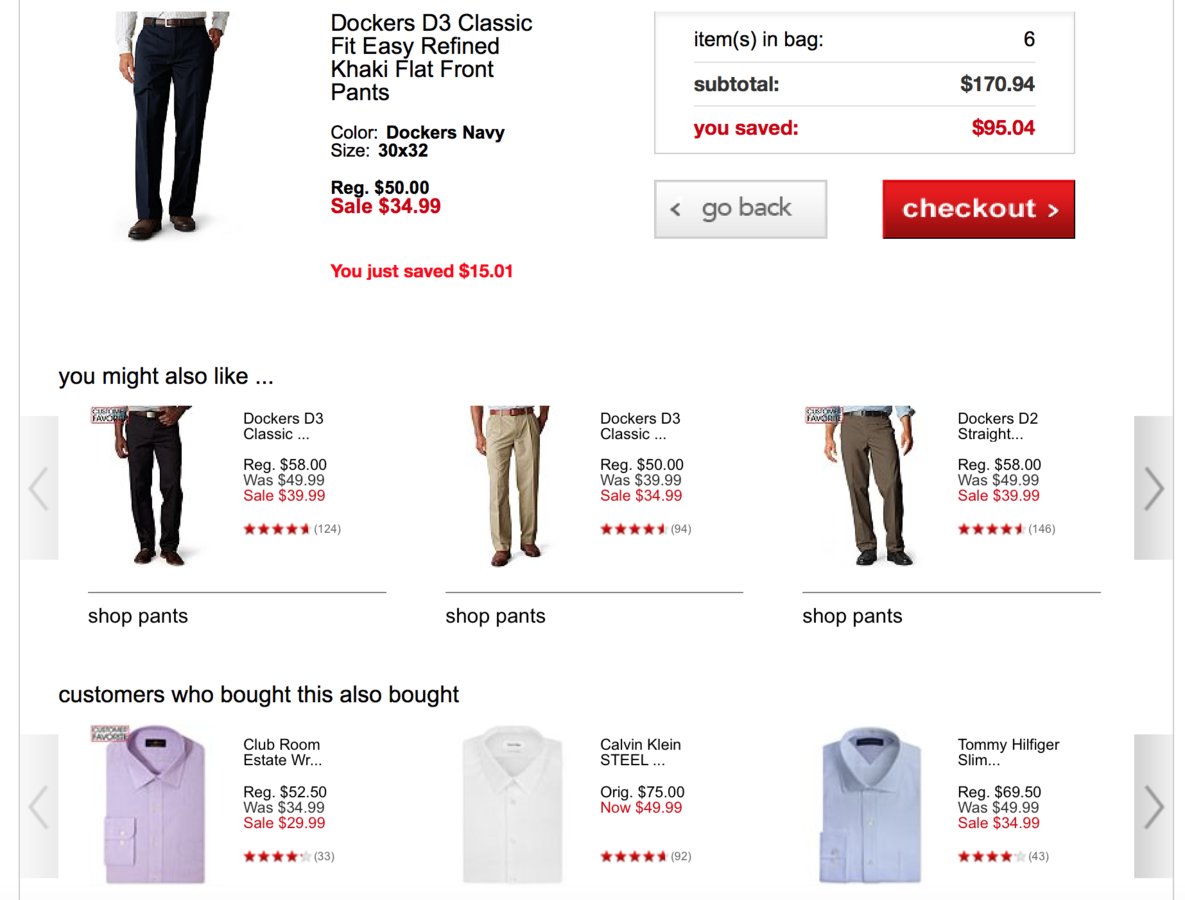
{shirt} → pants
{pants} → shirt
{jacket} → cold weather boots
{cold weather boots} → jacket
Is everything OK?
Confidence
Is everything OK?
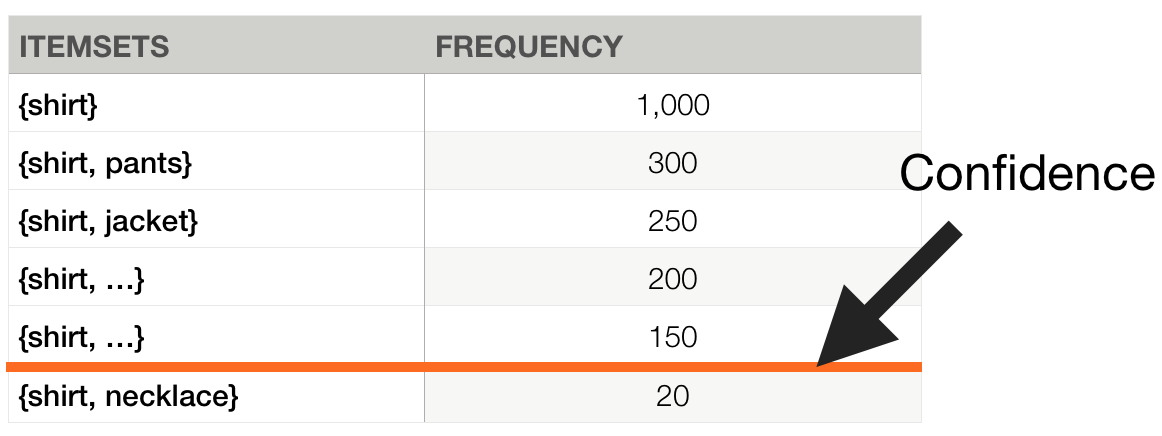
Confidence = 0.1
NOTE: don't be confused. {shirt}, {pants} aren't categories they are UPSs
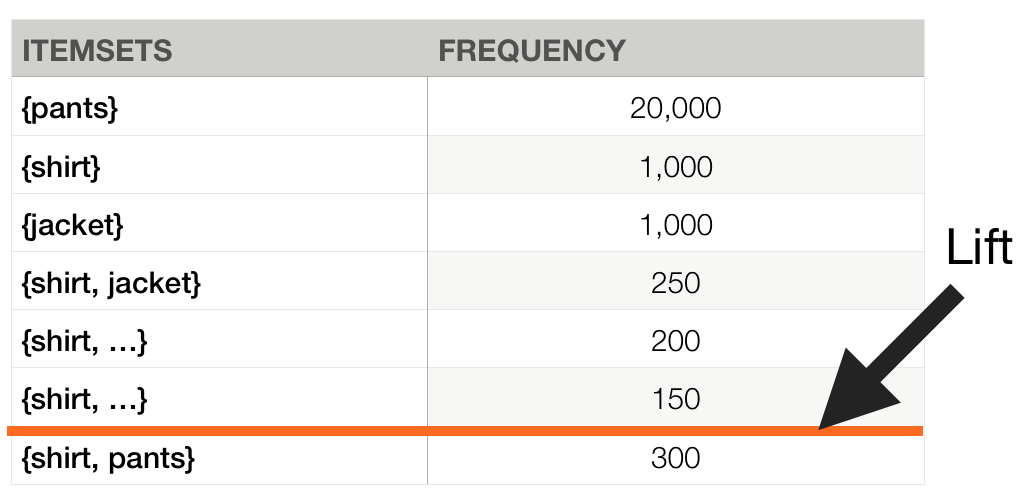
Lift
Transactions count = 100,000
Lift({shirt, jacket}) = 25
Lift({shirt, pants}) = 1.5
We're looking for Lift > 1.0 but it's better to have Lift > 2.0
just for sure
So what do we want?
1. We want do find frequent itemsets.
2. For found itemsets we'd like to build most frequent associations
3. We'd like to find not just statistically probable
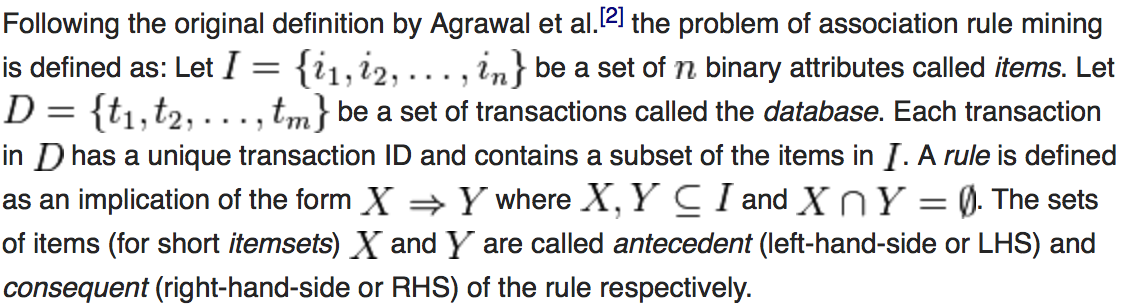
Formalism



Complexity analysis
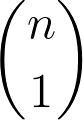
Let transaction size be = n
Max itemset cardinality = k
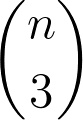
Combination:

k <= 3

Complexity analysis. Examples
Transaction (4) = {t-shirt, shirt, pants, coat}
= 4
= 6
= 4
Transaction (10) = {t-shirt, shirt, pants, coat, jacket, ....}
= 10
= 45
= 10
Overall itemsets count: 14
Overall itemsets count: 65
Transaction (100) = {....}
Overall itemsets count: 5150
Transactions count = 100,000,000 | itemsets count:
100,000,000 * 50 = 5,000,000,000 itemsets
Algorithms
Apriori algorithm - just classic
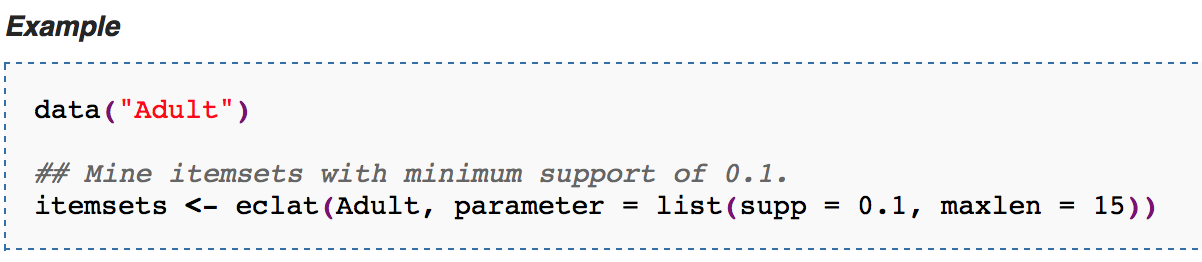
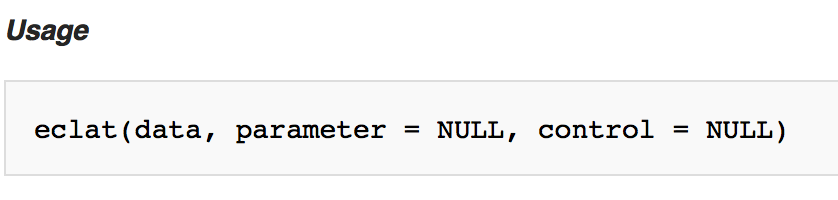
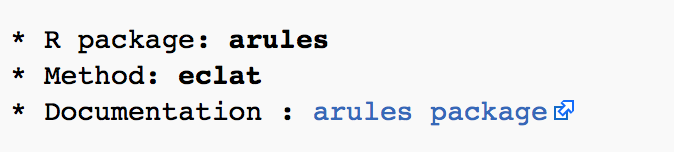
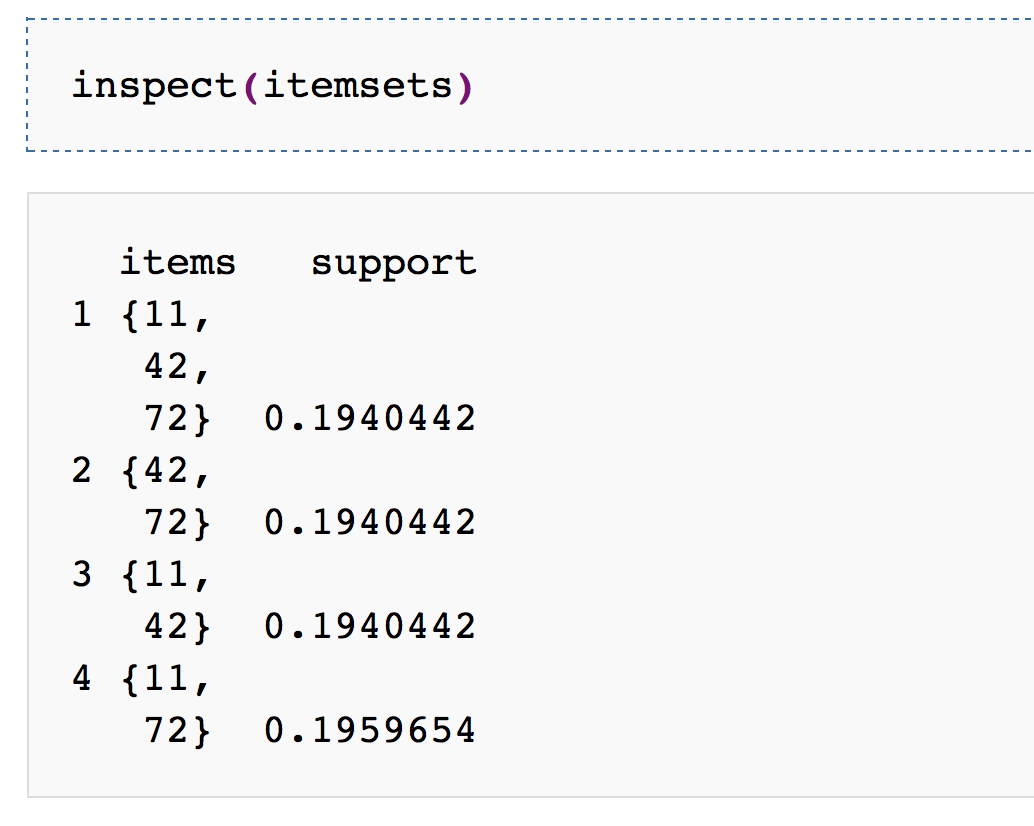
ParEclat algorithm - parallel, used in R (Eclat), package: "arules"
Parallel FP-growth algorithm - applicable for BigData. Used in Mahout. Based on FP-tree
Top-K (Non Redundant) Association Rules - applicable for real big data. It is used by Predictiveworks for their solution which is based on Spark, named (spark-arules).
Collaborative Filtering
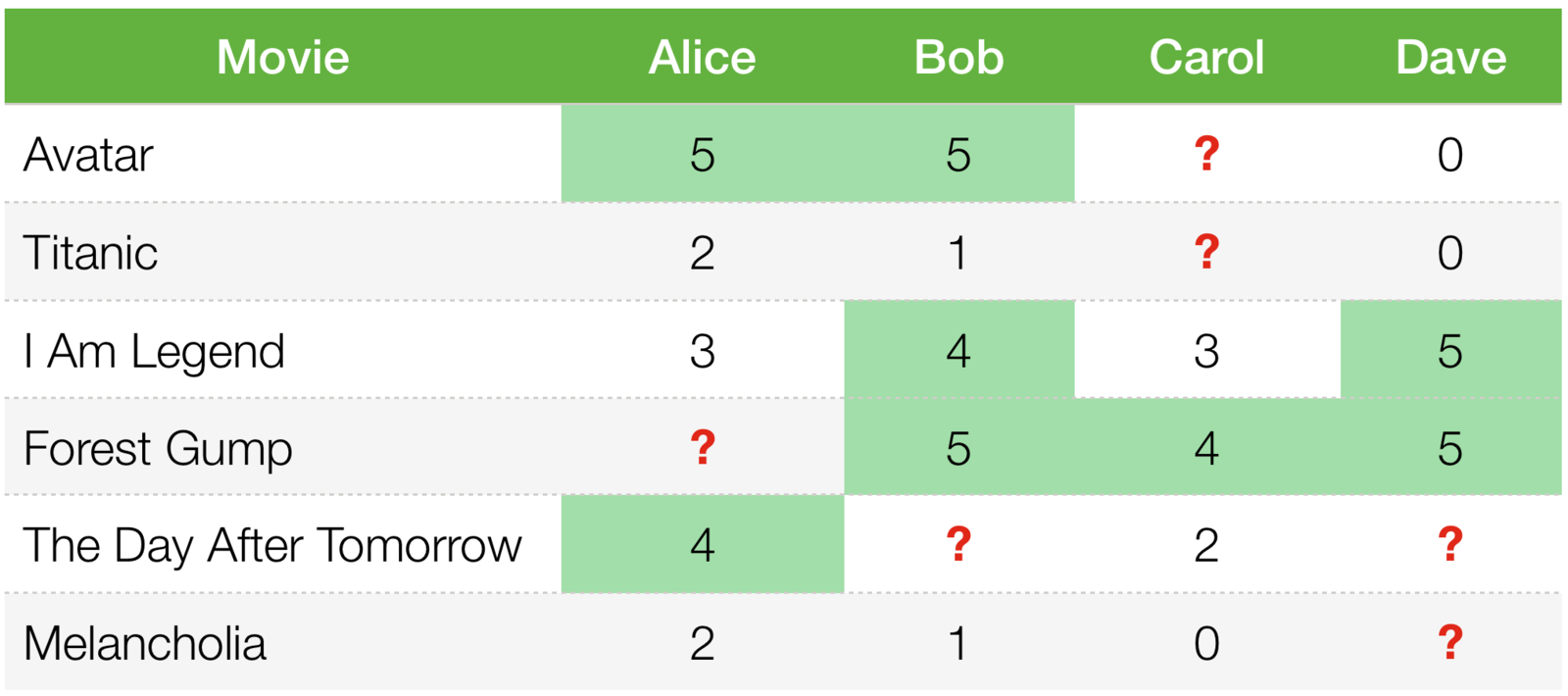
What an idea!
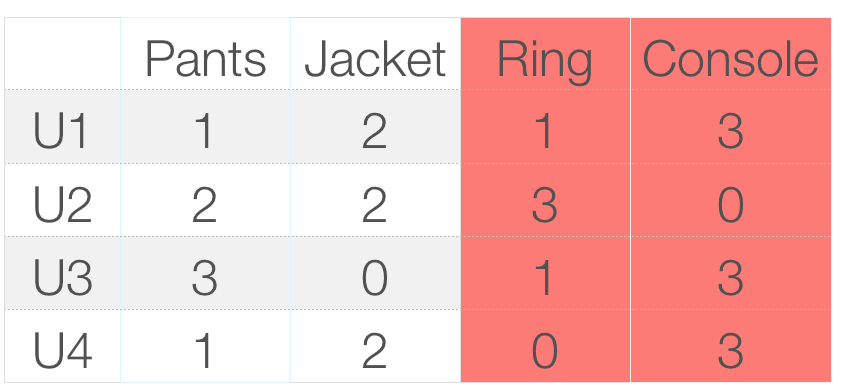
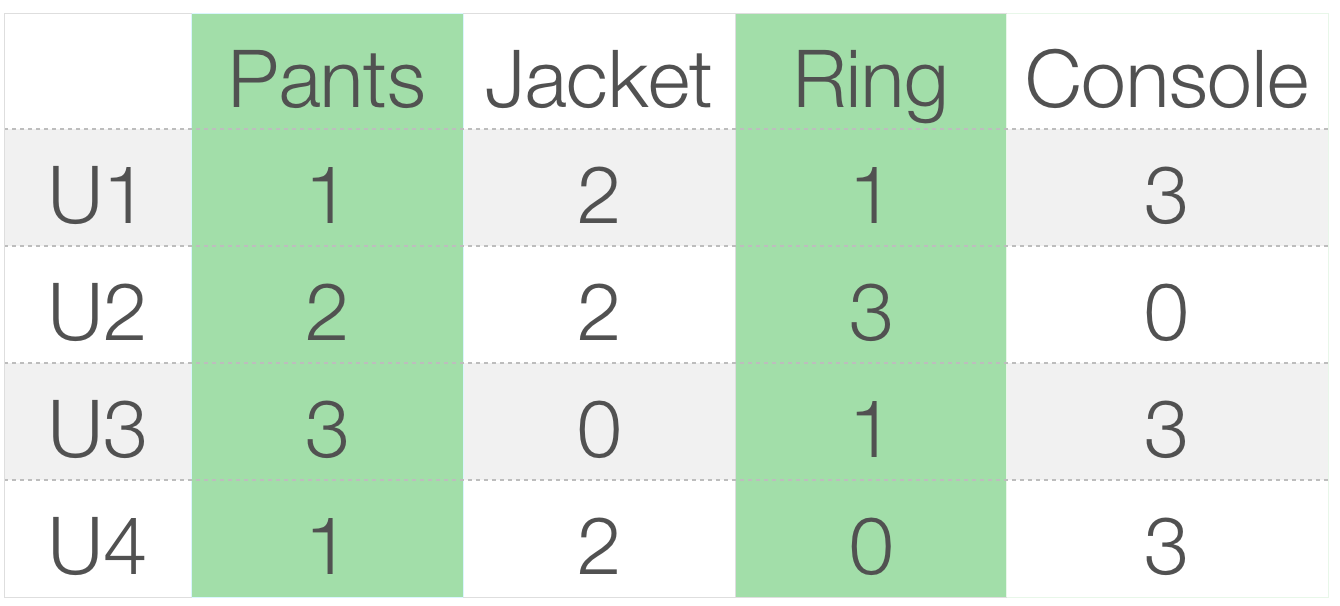
User’s purchases and rates items
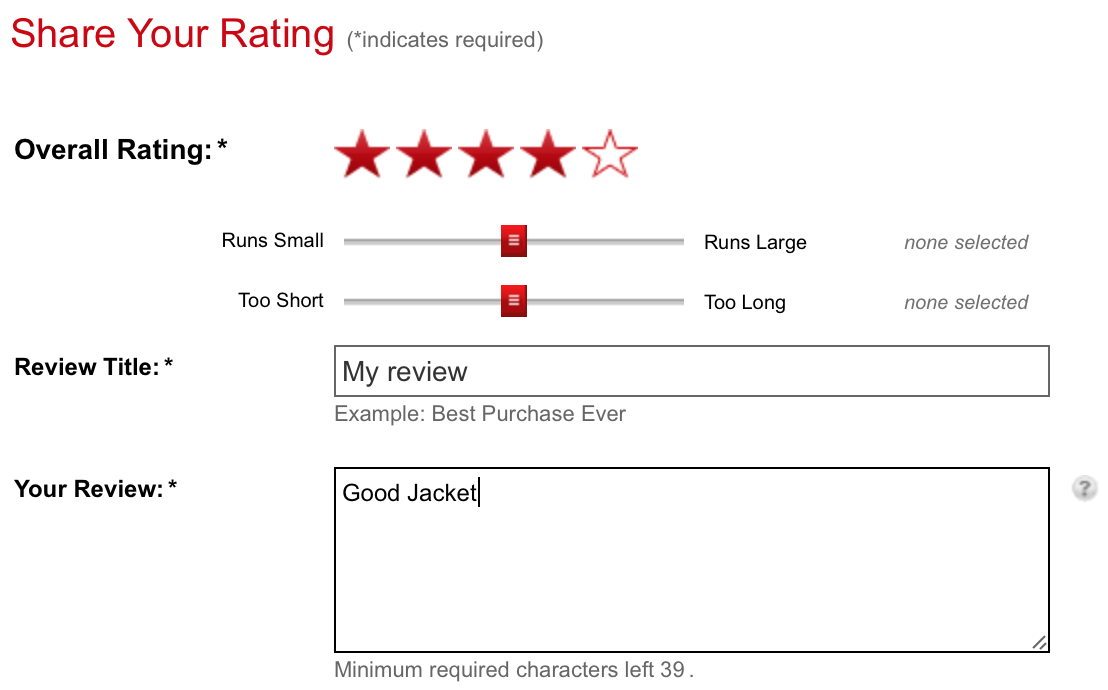
Which is better?

What's a problem with user-based collaborative filtering?
Computationally expensive. It is O(MN) in the worst case
... But it can be reduced approximately to O(M + N). Still it's
"Even so, for very large data sets — such as 10 million or more customers and 1 million or more catalog items — the algorithm encounters severe performance and scaling issues."
Is it reasonable?








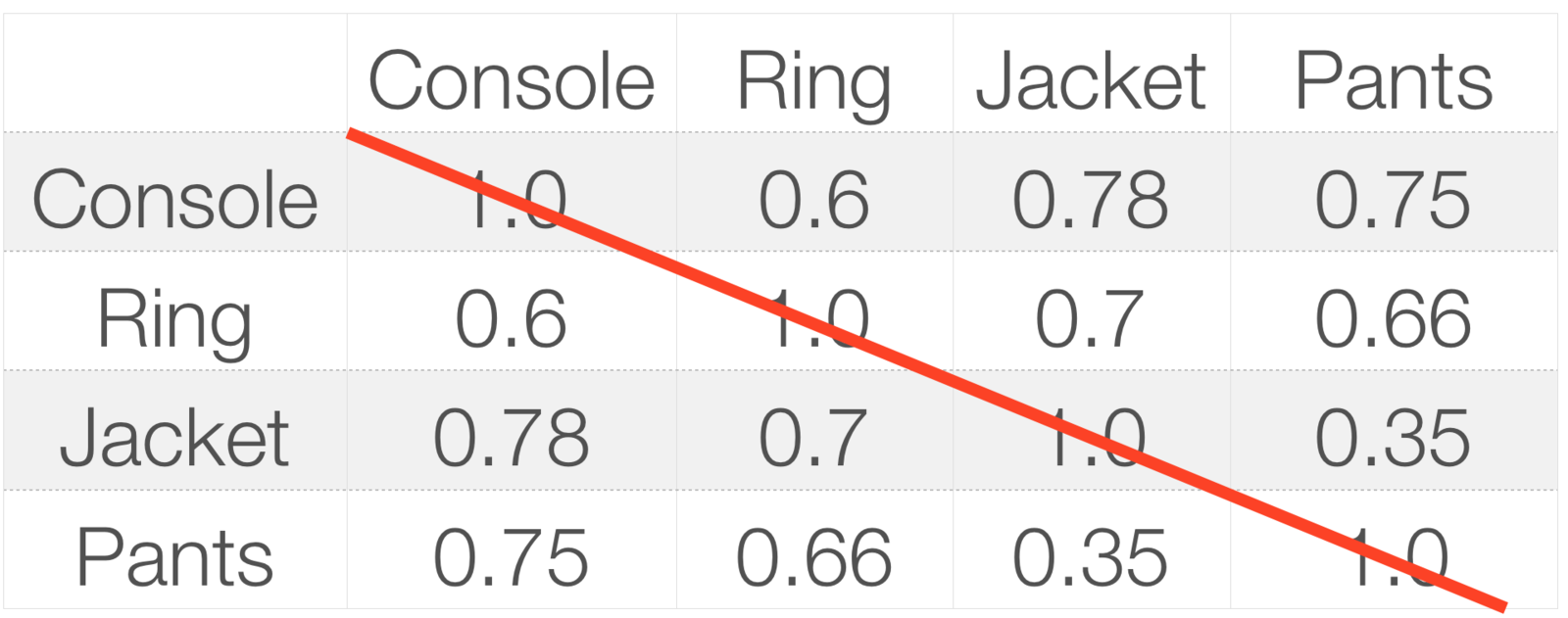
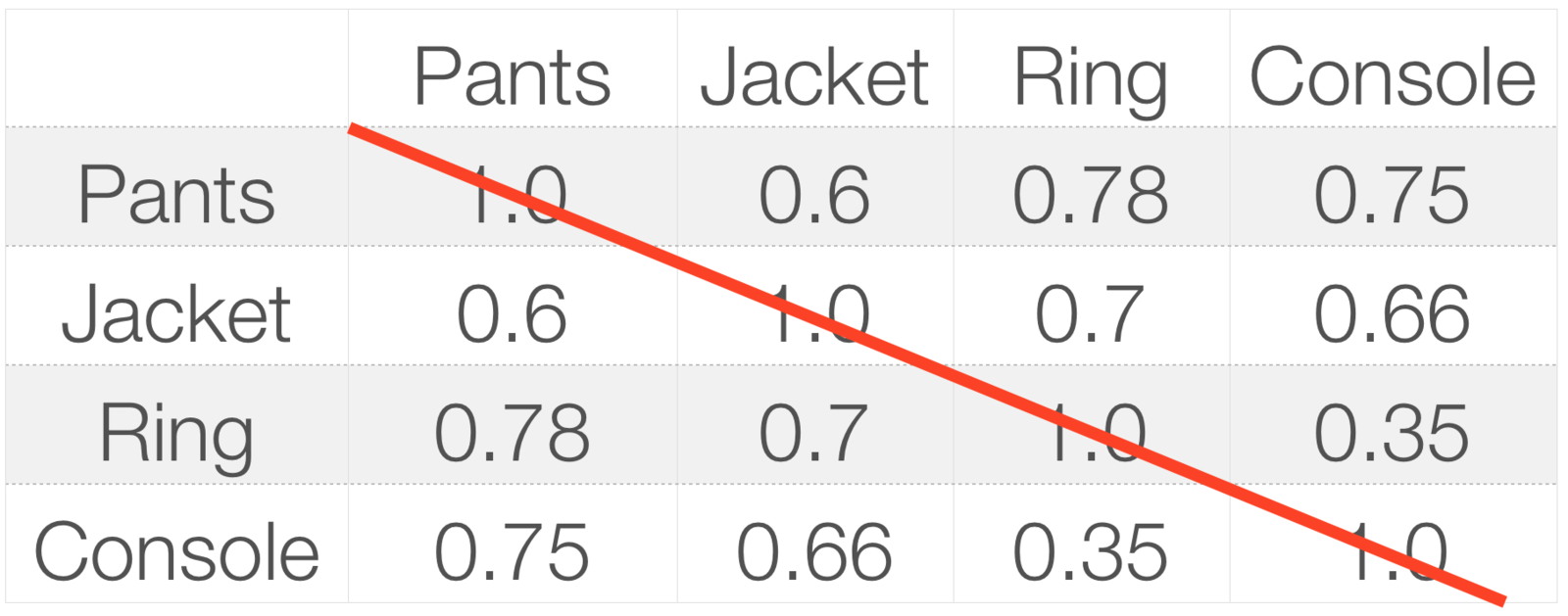
We could build a product-to-product matrix by iterating through all item pairs and computing a similarity metric for each pair.
Similarity types:
Cosine
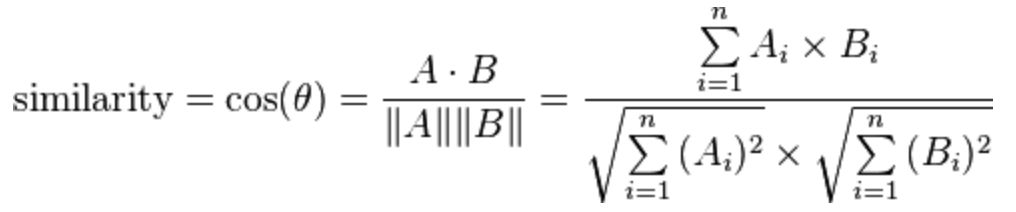
Jaccard similarity
Pearson (correlation)-based similarity
...
Example
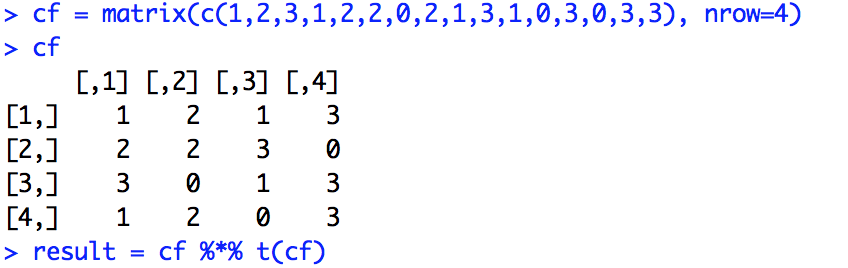
L2norm(A)
A, B = A'
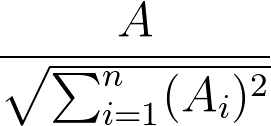
L2norm(A) * L2norm(A)' =

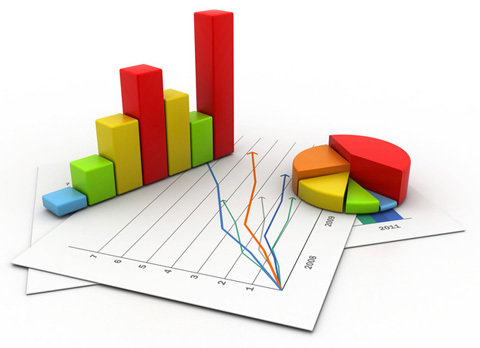
Data Mining
Wikipedia: is the computational process of discovering patterns in large data sets involving methods at the intersection of artificial intelligence, machine learning, statistics, and database systems.



Using
Having
and

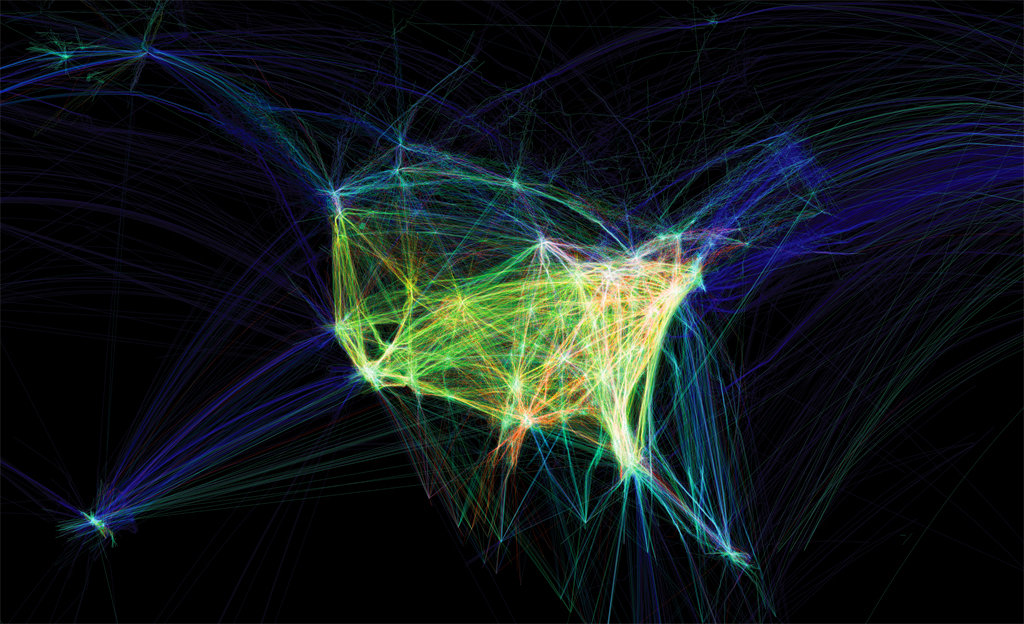
Discover
project "Celestial Mechanics" by colleagues Scott Hessels and Gabriel Dunne at UCLA
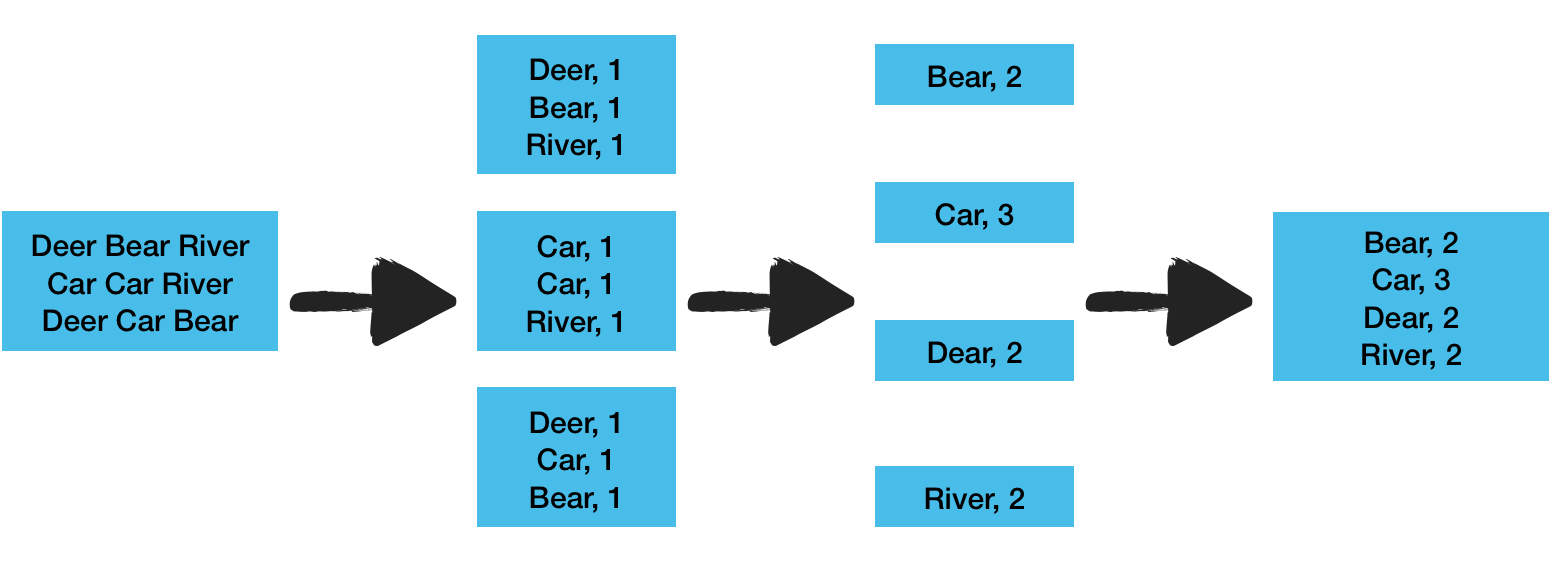
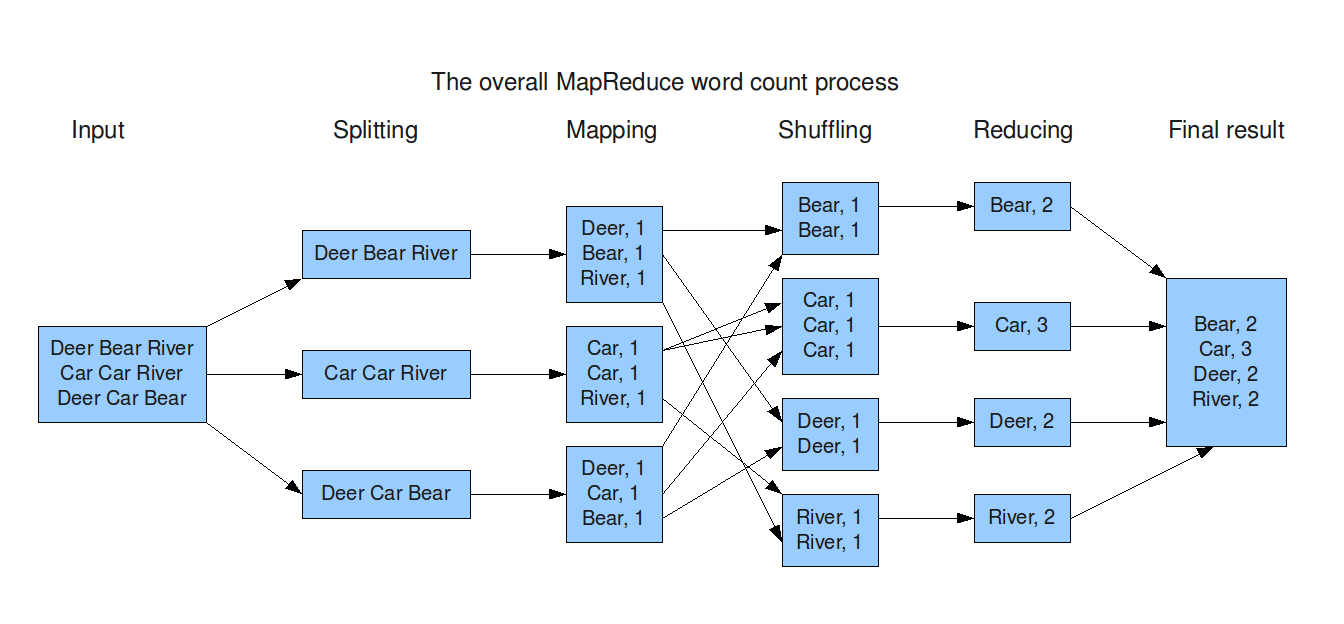
MapReduce
Input
Mapping
Reducing
Result
MapReduce Algorithms
1. Page Rank
2. Matrix-Matrix/Vector Multiplication
3. Grouping and Aggregation
4. Union, Intersection, and Difference
etc.
Examples
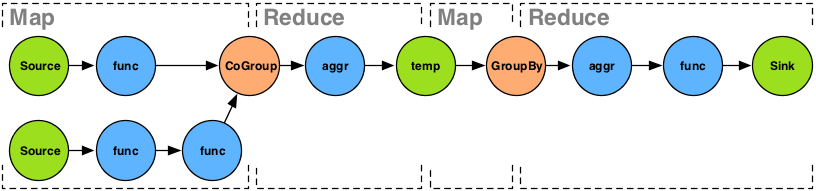


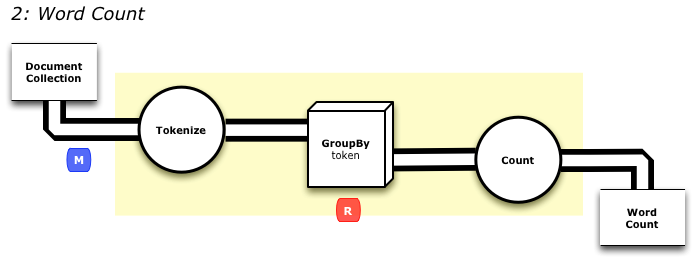
class WordCountJob(args: Args) extends Job(args) {
  TypedPipe.from(TextLine(args("input")))
    .flatMap { line => tokenize(line) }
    .groupBy { word => word } // use each word for a key
    .size // in each group, get the size
    .write(TypedTsv[(String, Long)](args("output")))

  // Split a piece of text into individual words.
  def tokenize(text : String) : Array[String] = {
    // Lowercase each word and remove punctuation.
    text.toLowerCase.replaceAll("[^a-zA-Z0-9\\s]", "").split("\\s+")
  }
}






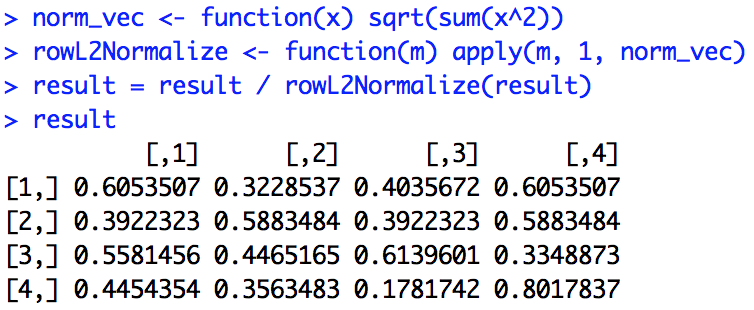
org.kiji.modeling.lib.RecommendationPipe
def cosineSimilarity[R <% Ordered[R], C <% Ordered[C]](fieldSpec: (Fields, Fields)): Pipe = {

    // Convert pipe into a matrix with rows for users and columns for items
    val userRatingsMatrix: Matrix[R, C, Double] =
        pipeToUserItemMatrix[R, C](fieldSpec._1)

    val preparedMatrix = userRatingsMatrix
      .transpose
      .rowL2Normalize
      .transpose

    val similarityMatrix = (preparedMatrix.transpose * preparedMatrix)

    similarityMatrixToPipe[C](fieldSpec._2, similarityMatrix)
}com.twitter.scalding.mathematics.Matrix
com.twitter.scalding.mathematics.RowVector
Bla Bla Cluster Diagram
(proprietary information)

!!!FOR NERDS ONLY!!!
Mahout Examples
mahout recommenditembased -s SIMILARITY_COSINE -i /path/to/input/file
    -o /path/to/desired/output --numRecommendations 25
/path/to/input/file should contain userID, itemID and preference
DataModel model = new FileDataModel(new File("data.txt"));
...
// Construct the list of pre-computed correlations
Collection<GenericItemSimilarity.ItemItemSimilarity> correlations = ...;
ItemSimilarity itemSimilarity = new GenericItemSimilarity(correlations);
...
Recommender recommender = new GenericItemBasedRecommender(model, itemSimilarity);
Recommender cachingRecommender = new CachingRecommender(recommender);
...
List<RecommendedItem> recommendations = cachingRecommender.recommend(1234, 10);
Console based:
Java based:
R Examples
R. The Eclat Algorithm
Hadoop. MapReduce
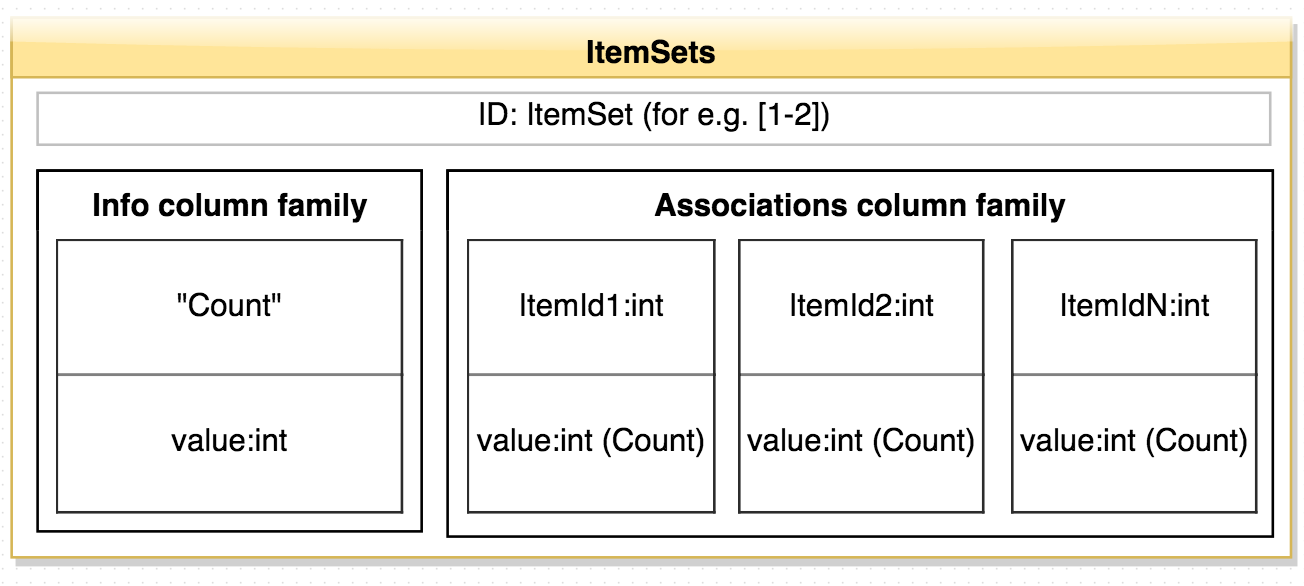
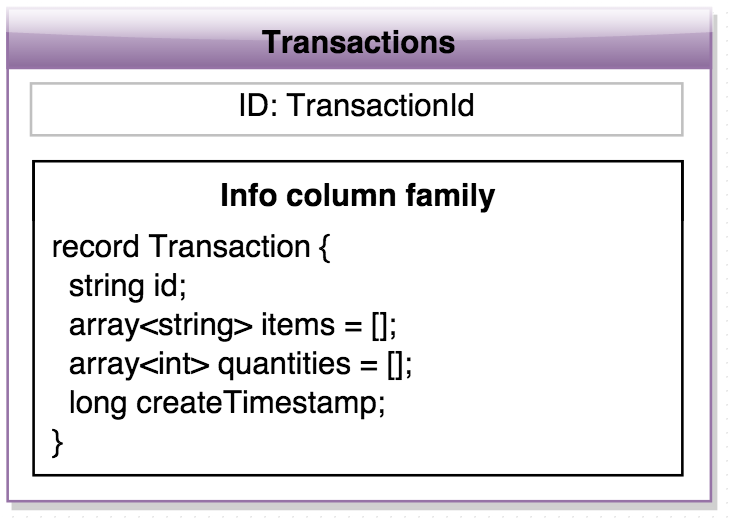
public class AssociationsMapper extends TableMapper<ImmutableBytesWritable, Association> {

    public void map(ImmutableBytesWritable row, Result value, Context context) throws ... {
        Transaction transaction = Avro.bytesToTransaction(value.getValue(INFO_FAM, ITEMS_COLUMN));

        Collection<ItemSetAndAssociation<String>> itemSetAndAssociations = itemSetsGenerator
                .generateItemSetsAndAssociations(transaction.getItems(), 1);

        context.getCounter(COUNTER).increment(itemSetAndAssociations.size());
        for (ItemSetAndAssociation<String> itemSetAndAssociation : itemSetAndAssociations) {
            for (Map.Entry<String, Long> association :
					itemSetAndAssociation.getAssociationMap().entrySet()) {
                ...
                itemSetCount = itemSetAndAssociation.getCount();
				...
                context.write(toBytesWritable(itemSetAndAssociation.getItemSet()),
                        new Association(itemSetCount, association.getKey(), association.getValue()));
                context.getCounter(Counters.ASSOCIATIONS).increment(1);
            }
            ...
        }
        context.getCounter(Counters.ROWS).increment(1);
    }
}
Mapper
public class AssociationsReducer extends TableReducer<ImmutableBytesWritable, Association,
    ImmutableBytesWritable> {

    @Override
    public void reduce(ImmutableBytesWritable key, Iterable<Association> values, Context context)
            throws IOException, InterruptedException {
        Put put = new Put(key.get());
        long itemSetCount = 0;

        Map<String, AtomicLong> associationsMap = new HashMap<>();
        for (Association value : values) {
            itemSetCount += value.getItemSetCount();
            ...
            associationsMap.putIfAbsent(value.getAssociationId(), new AtomicLong(0l));
            associationsMap.get(value.getAssociationId()).addAndGet(value.getAssociationCount());
        }
        for (Map.Entry<String, AtomicLong> entry : associationsMap.entrySet()) {
            put.add(ASSOCIATION_FAM, toBytes(entry.getKey()), toBytes(entry.getValue().get()));
        }
        put.add(COUNT_FAM, COUNT_COL, toBytes(itemSetCount));
        context.write(key, put);
    }
}
Reducer
Questions?
Recommendations in eCommerce. Basics
By Alexander Bykovsky
Recommendations in eCommerce. Basics
How to generate and service Recommendations in eCommerce using Data Mining approaches such as frequent pattern mining, collaborative filtering. Overview of frequent pattern mining metrics: support, confidence, lift. Implementation examples on Mahout, Hadoop