














































Content ITV PRO
This is Itvedant Content department
Learning Outcome
4
Maintain evidence authenticity and integrity.
3
Understand ownership and access control.
2
Identify evidence handling procedures.
1
Explain the importance of Chain of Custody in digital forensics.
5
Explain evidence admissibility requirements.
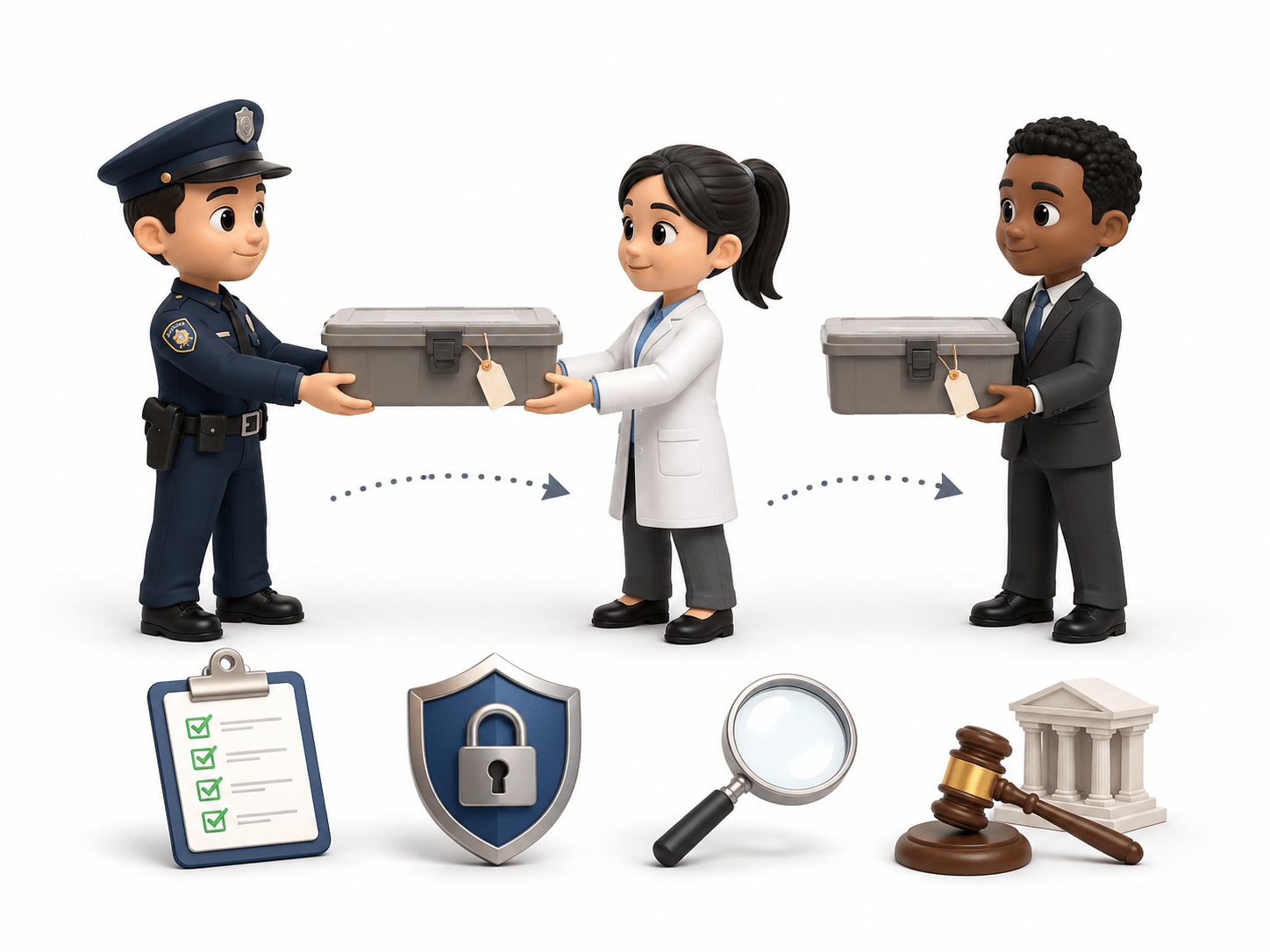
Rahul orders a mobile phone online. The seller packs it securely and attaches an order label.
The seller gives the package to a courier employee. The handover is recorded with the date, time, and responsible person.
Package = Digital Evidence; Label = Evidence ID and Case Number
Handover record = Chain of Custody Record
The package moves through different courier centers. Every transfer is recorded, and only authorized staff handle it.
Rahul receives the package and checks that the seal is intact and the phone has not been changed.
Authorized staff = Authorized Investigators;
Transfer records = Custody Tracking
Seal = Evidence Integrity;
Digital equivalent = Hash Value
Just as package tracking shows who handled a package from the seller to the customer, Chain of Custody records who handled digital evidence from collection until it is presented in court.
Chain of Custody Principles
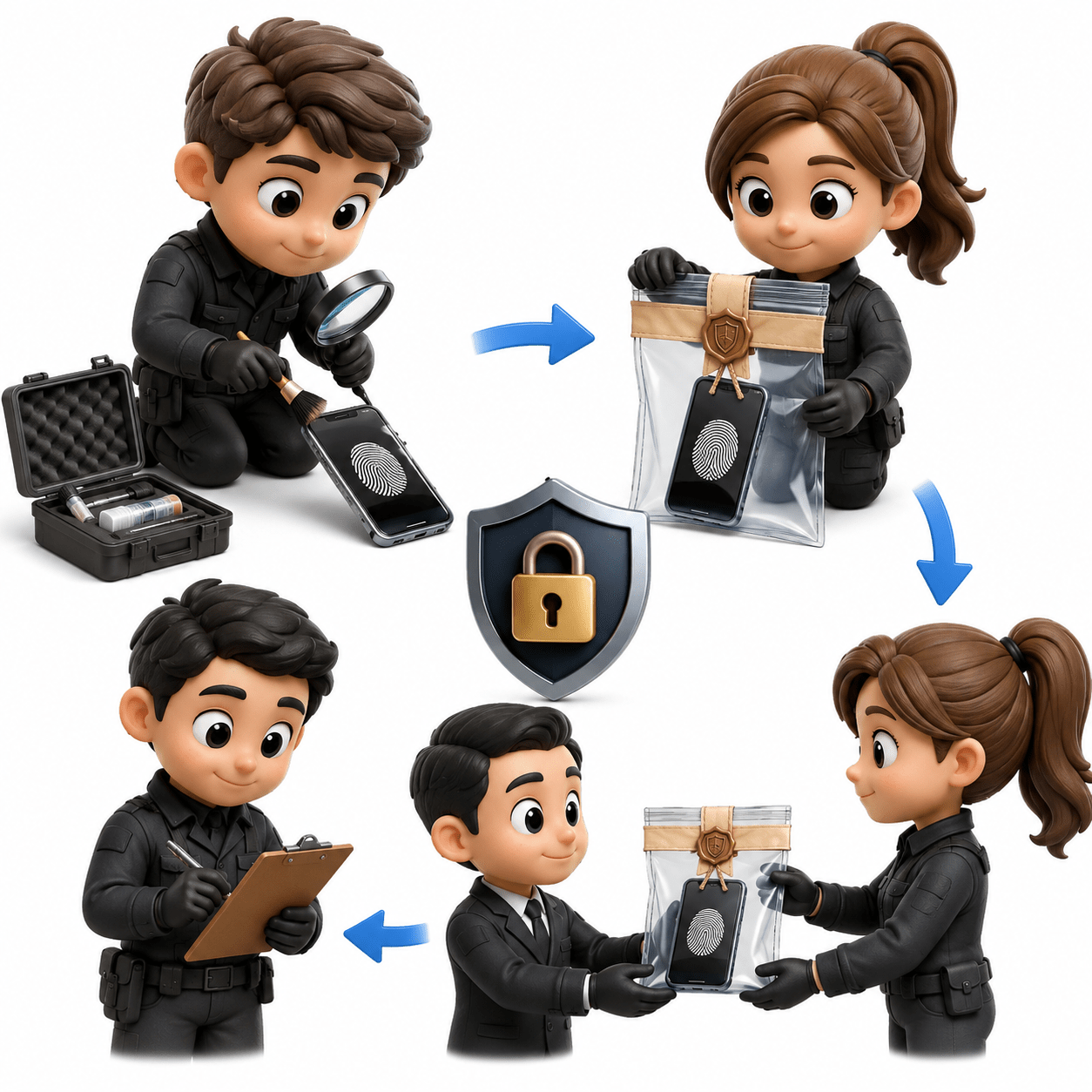
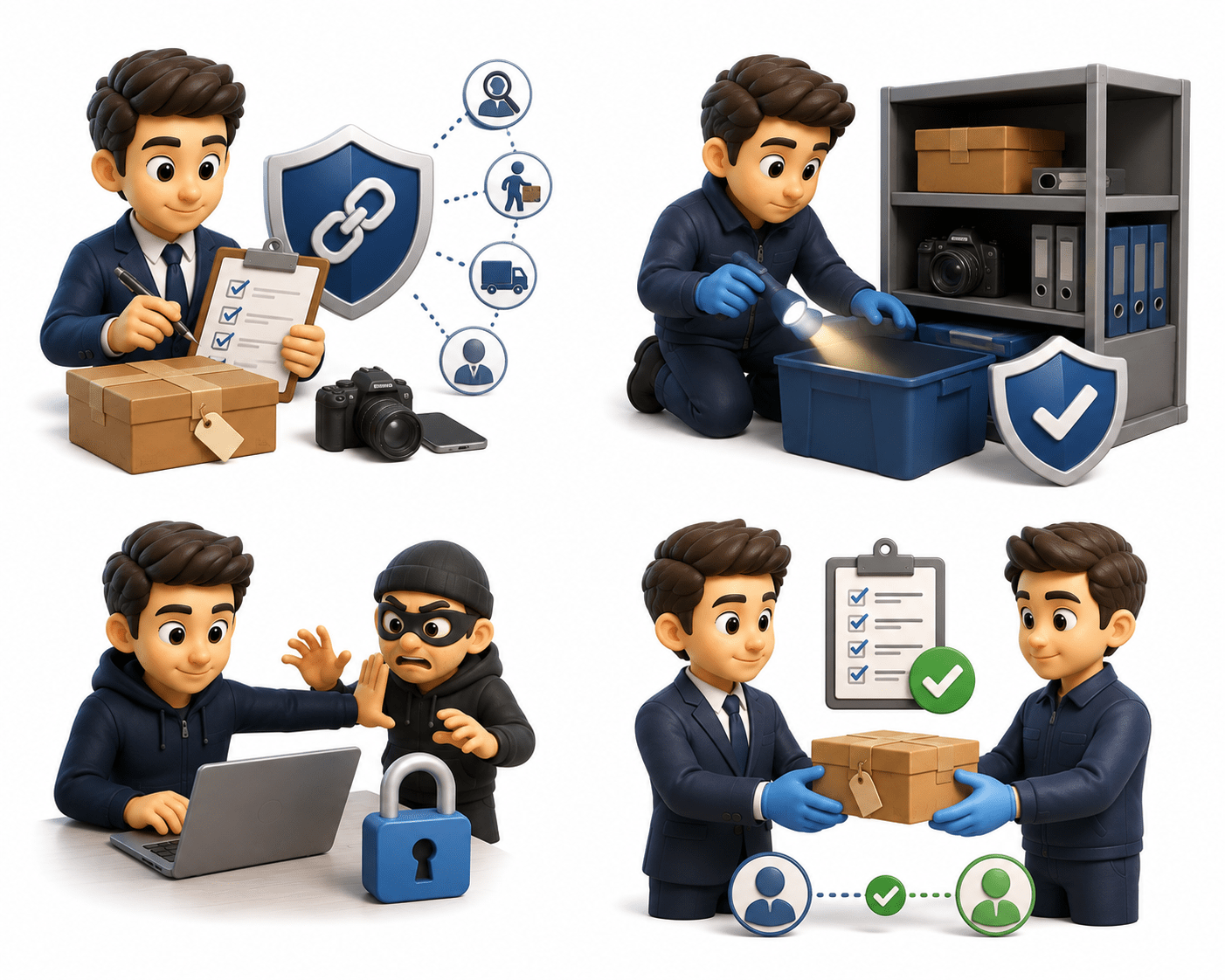
Chain of Custody (CoC) is the documented process of collecting, handling, transferring, storing, and presenting evidence while maintaining its integrity until it is presented in court.
Purpose:
Maintains evidence integrity
Prevents tampering or contamination
Records everyone who handled evidence
Supports legal admissibility
Builds trust in investigations
Ownership and Responsibility Tracking
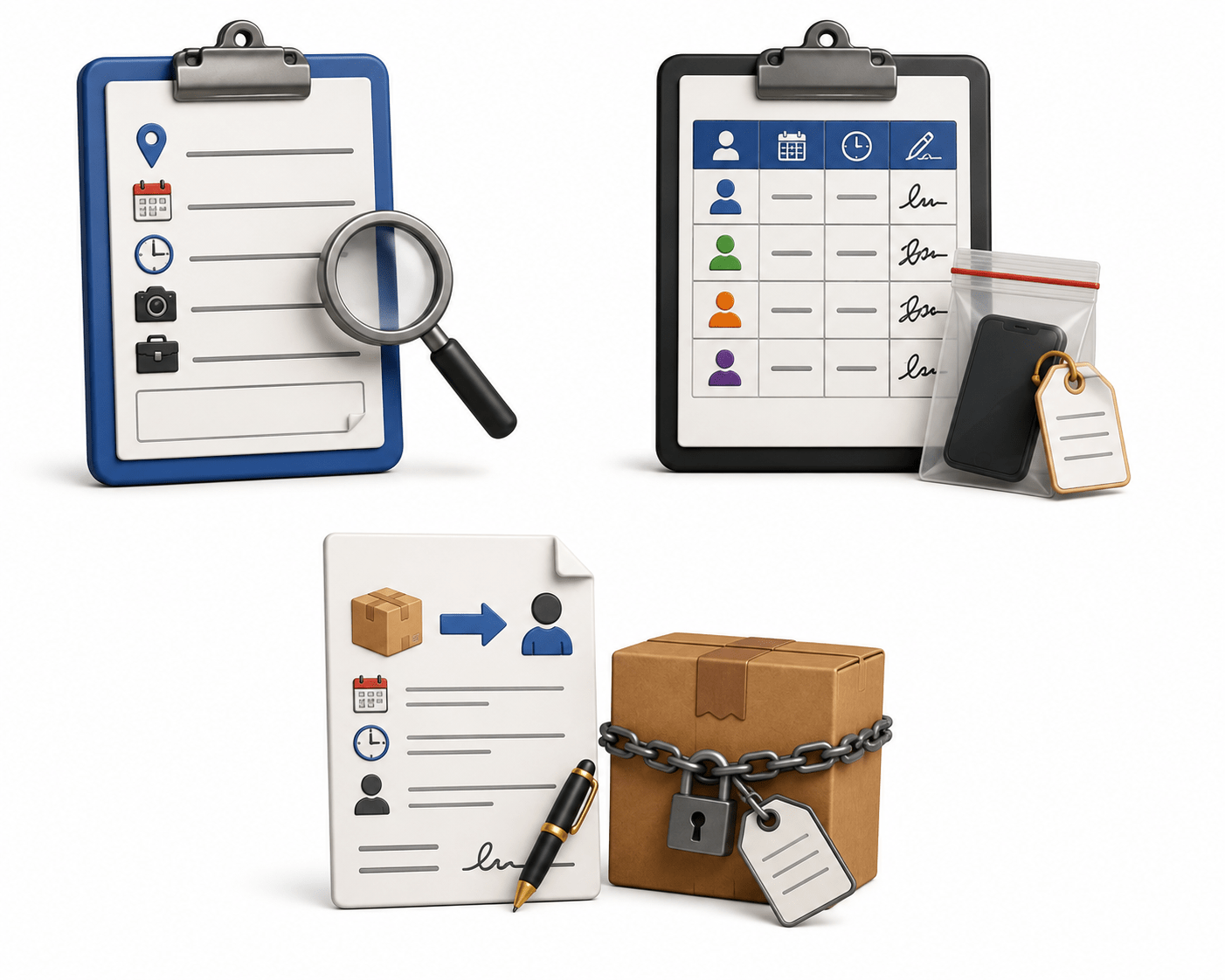
It records who is responsible for evidence during collection, transfer, examination, storage, and court presentation.
Importance:
Creates accountability
Prevents unauthorized handling
Maintains evidence integrity
Supports legal investigations
Information Recorded:
Evidence Transfer Procedures
Evidence Transfer is the controlled movement of evidence between authorized persons or locations while maintaining security and integrity.
Importance:
Maintains Chain of Custody
Prevents loss or misplacement
Protects against unauthorized access
Allows transfers to be verified
Best Practices:
Transfer only when necessary
Seal evidence before transport
Verify labels and evidence numbers
A complete record of all activities performed on evidence, including collection, transport, examination, storage, and court presentation. It proves that evidence was handled properly and maintains transparency.
Importance:
Provides evidence history.
Supports legal verification.
Shows proper procedures were followed.
Helps review previous activities.
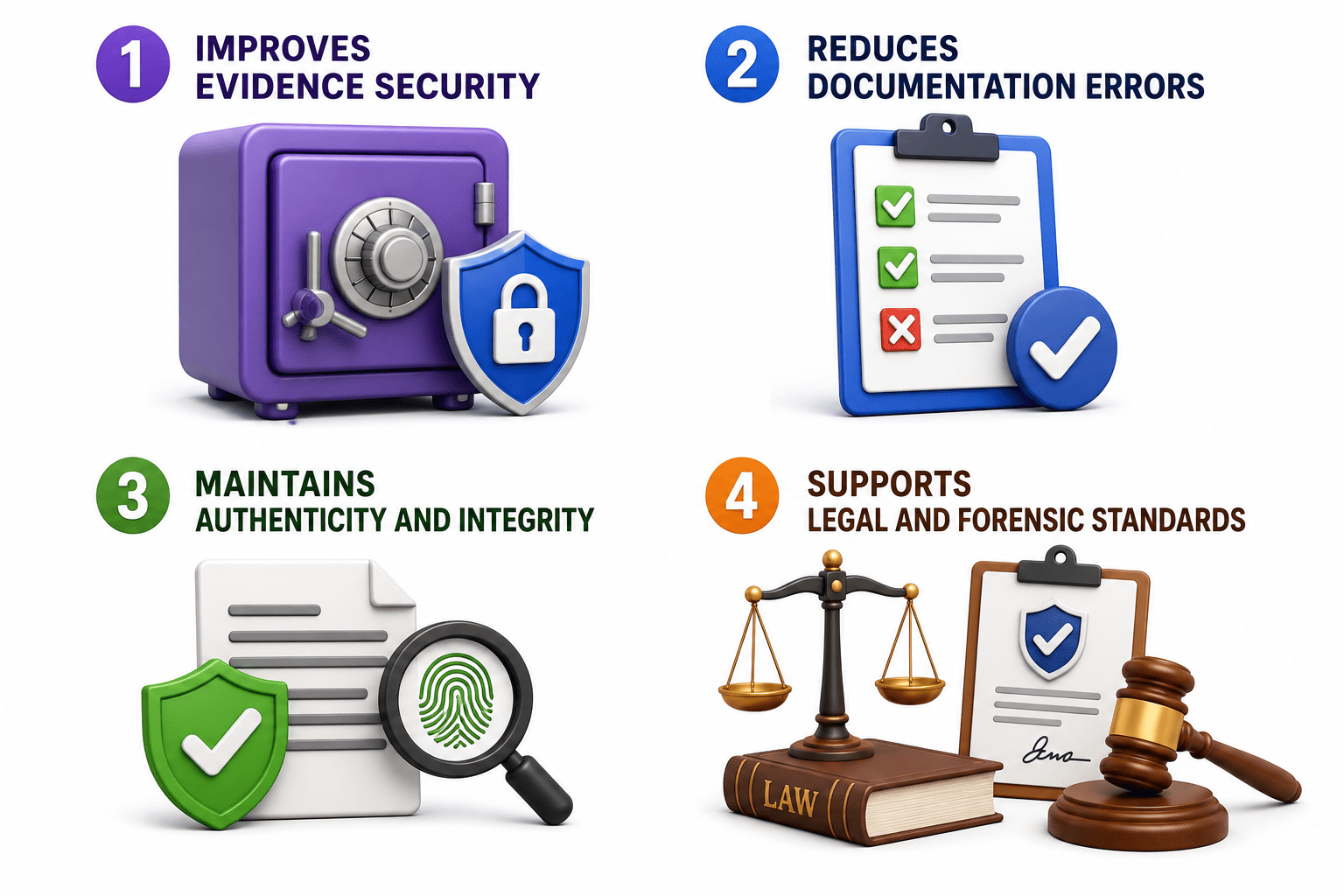
Reduces documentation errors.
Custody Documentation
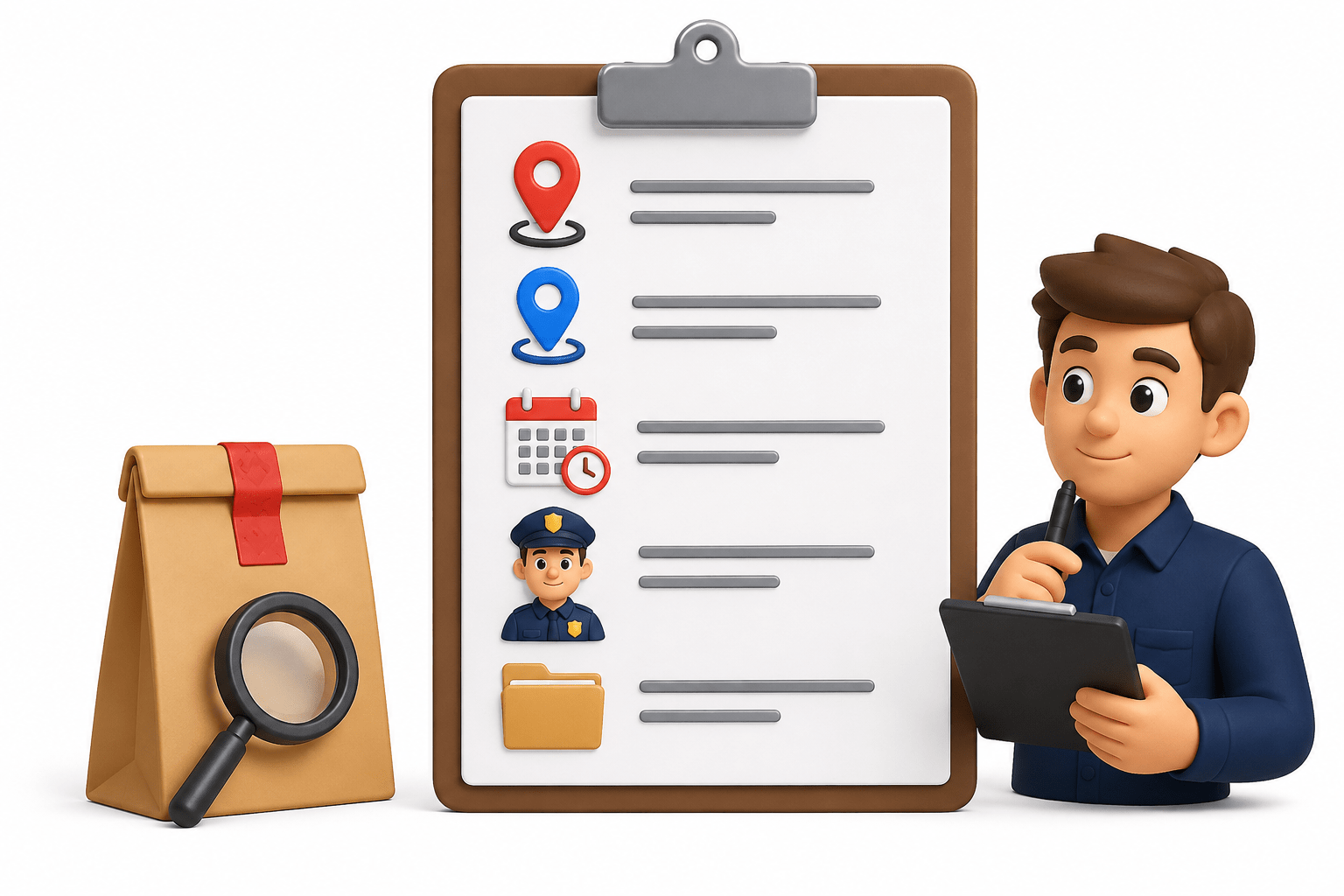
Evidence Collection Form:
Records where, when, and how evidence was collected.
Chain of Custody Form:
Tracks everyone who handled the evidence.
Transfer Records:
Document evidence transfers.
Evidence Labeling Standards
Attaching a unique label to each evidence item immediately after collection to identify and track it throughout the investigation.
Importance:
Provides unique identification.
Prevents confusion or mixing.
Makes evidence easier to track.
Supports accurate documentation.
Improves courtroom credibility.
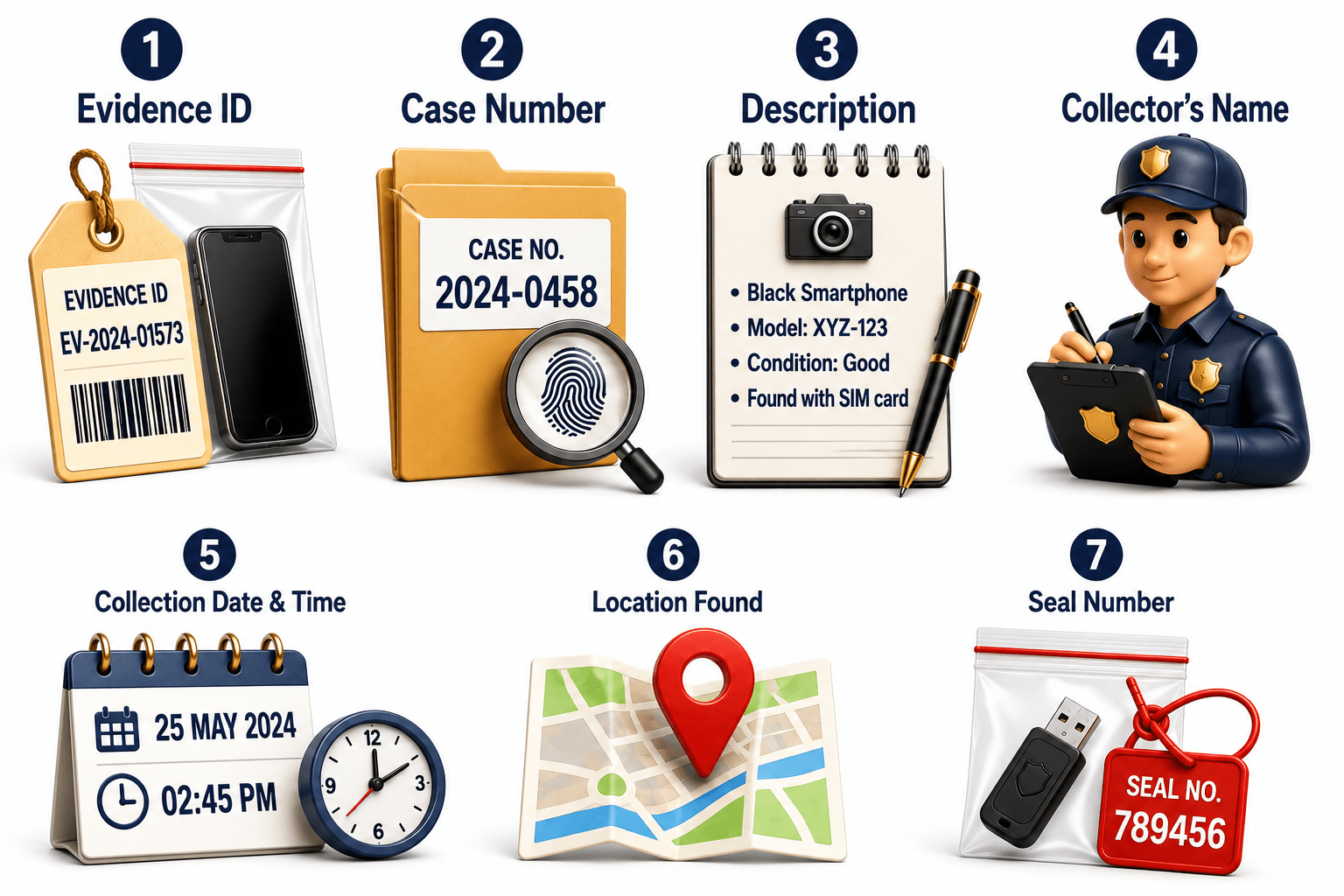
Label Information
Evidence ID: Unique evidence number.
Case Number: Links evidence to the case.
Description: Brief evidence details.
Collector's Name: Identifies the collector.
Evidence Logging Procedures
Recording collected evidence in the official evidence management system to track its status, location, and custodian.
Importance:
Creates a centralized evidence record.
Supports investigation management.
Makes evidence easier to locate.
Improves accountability.
Maintains accurate Chain of Custody records.
Information Recorded
Evidence Number: Unique identifier.
Description: Brief evidence details.
Collection Details: Who, when, and where it was collected.
Current Location: Where evidence is stored.
Current Custodian: Person responsible for it.
Status: Examination, storage, or court submission.
Access Control for Evidence
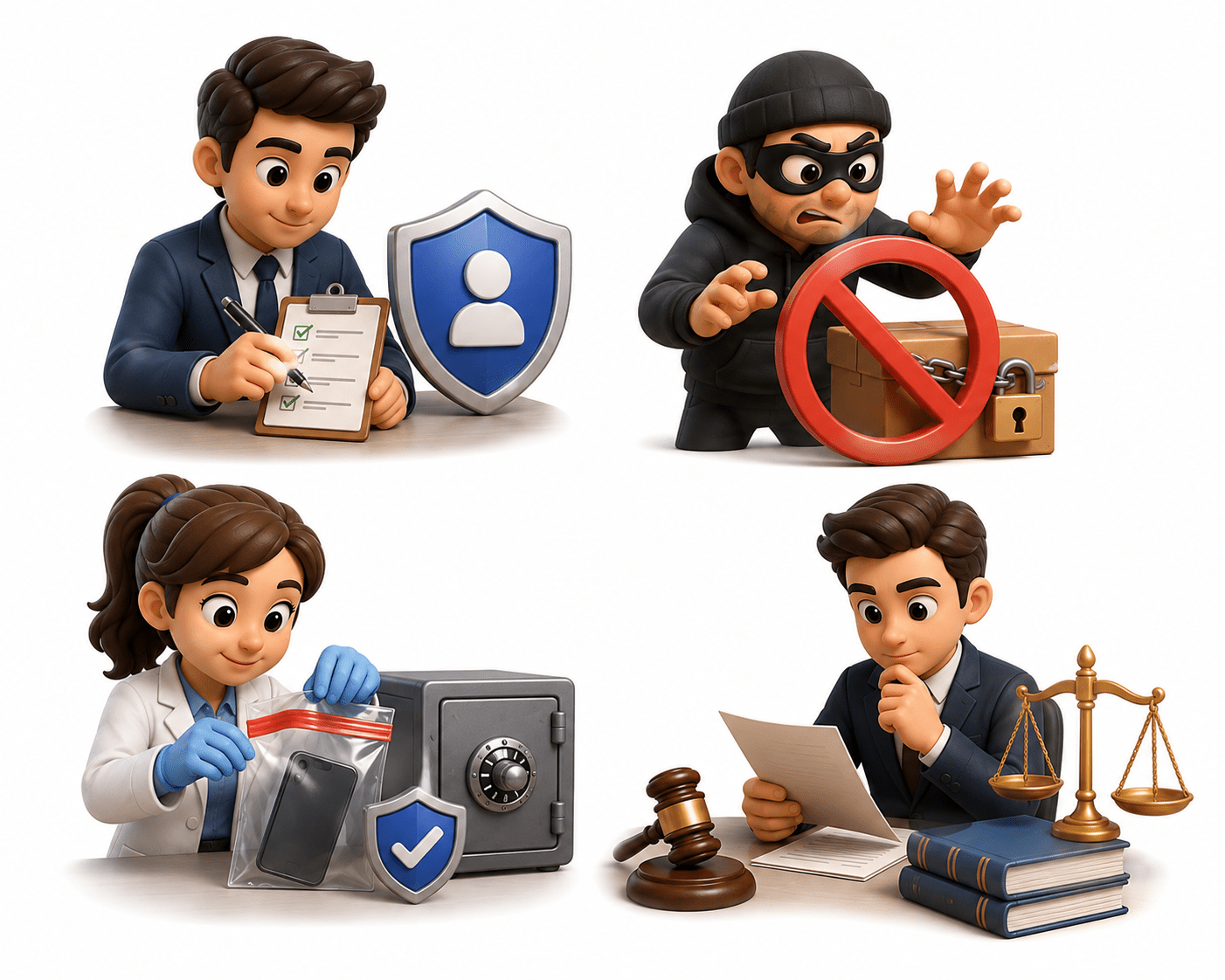
Restricting evidence access to authorized personnel who are responsible for handling or examining it. It protects evidence from unauthorized access, damage, theft, or tampering.
Importance:
Prevents unauthorized access.
Protects sensitive information.
Reduces tampering and theft risks.
Maintains evidence integrity.
Supports legal and organizational compliance.
Access Control for Evidence
Password Protection: Secures digital evidence.
Smart Cards: Restrict entry to authorized personnel.
Biometric Authentication: Verifies identity using fingerprints or facial recognition.
Locked Storage: Protects physical evidence.
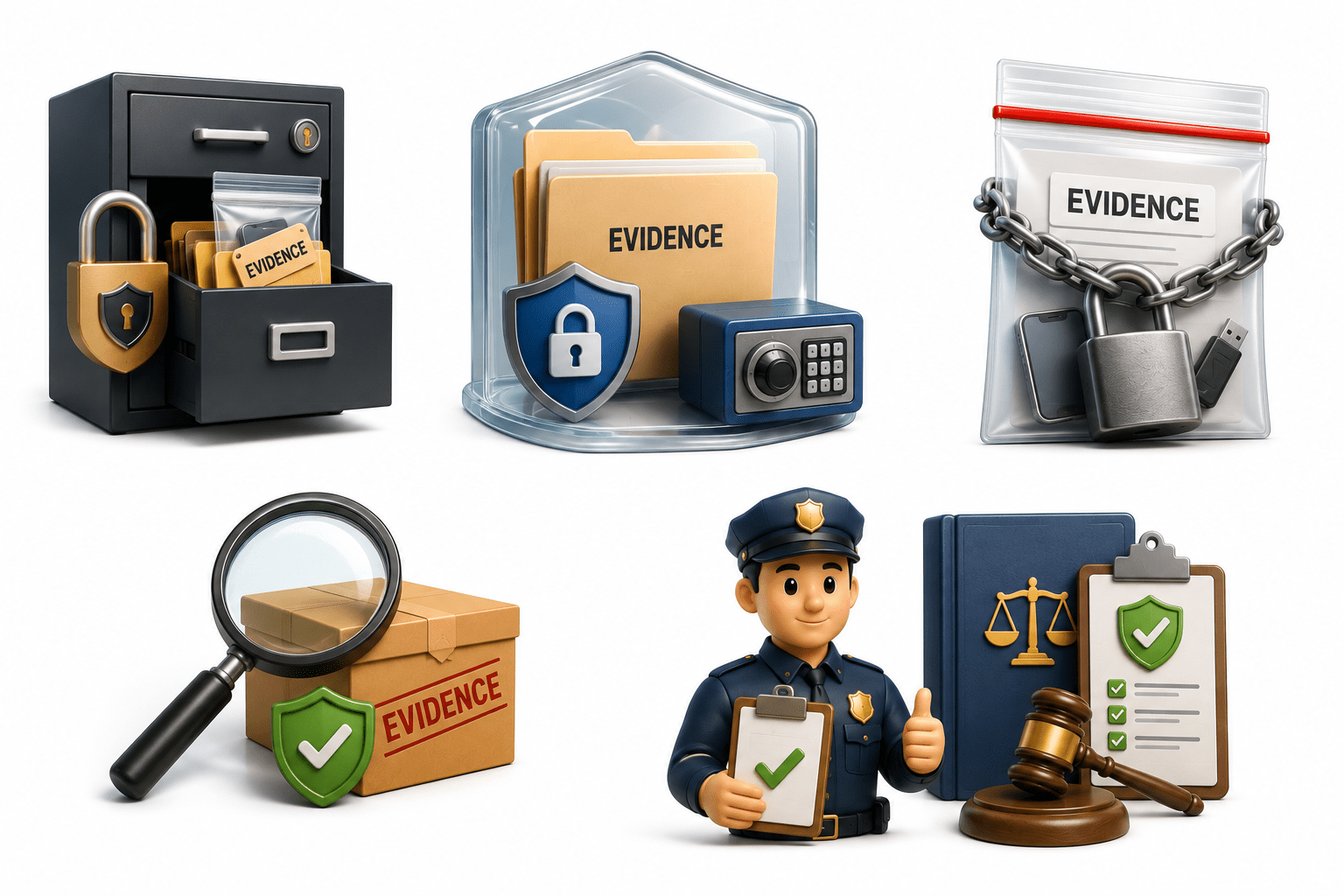
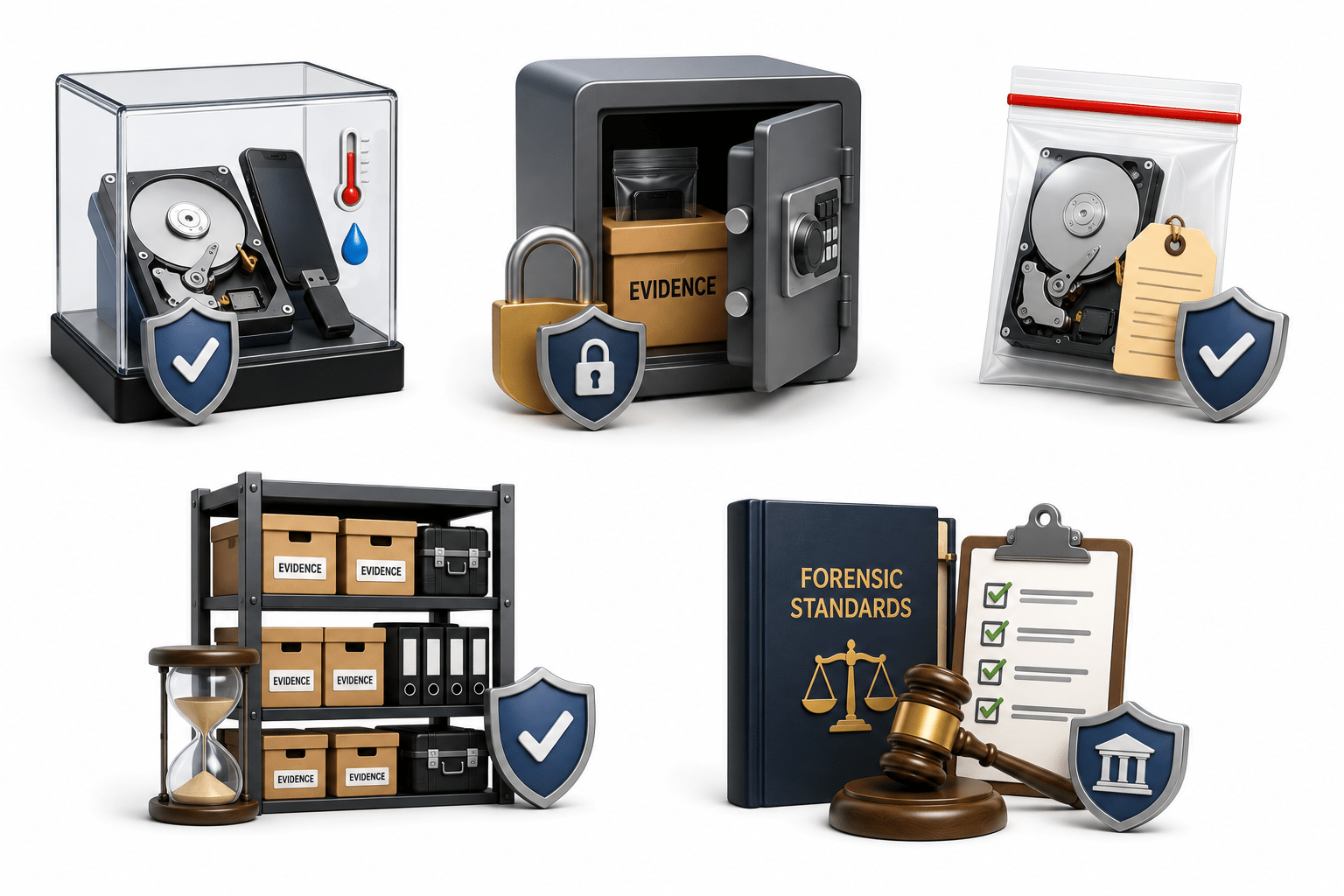
Secure Evidence Storage
Keeping evidence in a protected environment until forensic examination or legal proceedings. Proper storage prevents damage, theft, alteration, or destruction.
Importance:
Protects against physical and environmental damage.
Prevents theft, loss, and unauthorized access.
Maintains evidence integrity.
Keeps evidence available for future use.
Supports forensic and legal standards.
Locked Rooms/Cabinets: Prevent unauthorized access.
Restricted Areas: Allow access only to authorized personnel.
Climate Control: Protects from heat and moisture.
Fire Protection: Reduces fire-related damage.
Encrypted Storage: Protects digital evidence.
Secure Servers: Store large volumes of evidence.
Backup Copies: Help recover damaged evidence.
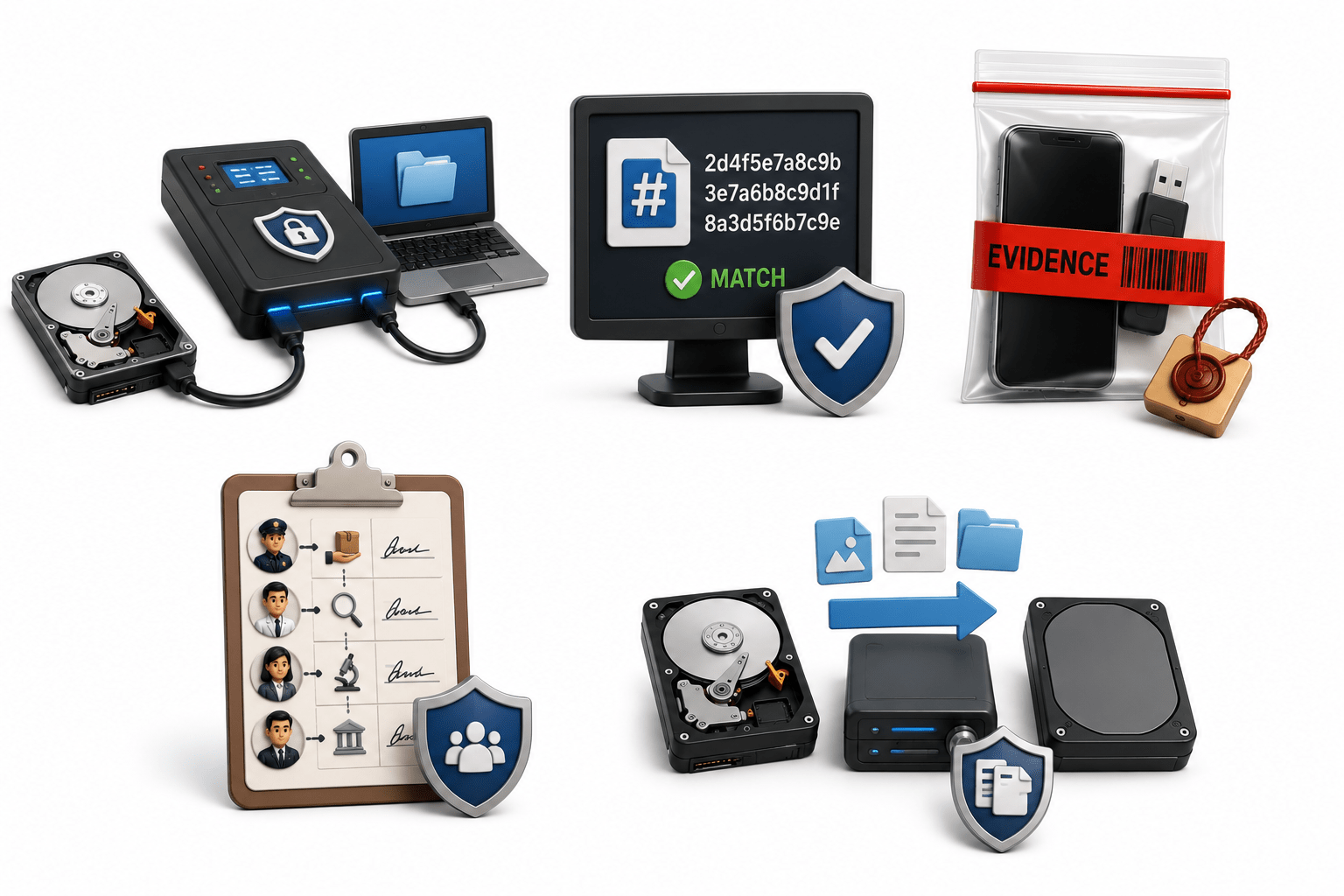
Write Blockers: Prevent modification of originals.
Physical Evidence Storage
Digital Evidence Storage
Evidence Movement Tracking
Recording every movement of evidence between locations such as crime scenes, laboratories, storage areas, and courts. It maintains a complete movement and responsibility history.
Importance:
Information Recorded
Evidence Audit
A systematic review comparing evidence, labels, custody records, and storage information to identify inconsistencies and verify security.
Importance:
Audit Activities
Verify Evidence Labels: Match labels with records.
Check Storage Locations: Confirm correct storage.
Review Custody Records: Verify all transfers.
Inspect Security Seals: Check package integrity.
Verify Hash Values: Confirm digital evidence is unchanged.
Authorization and Approval
Defines who can collect, access, transfer, examine, or dispose of evidence. Required approvals ensure security and accountability.
Importance:
Activities Requiring Authorization
Evidence Authenticity
Proving that evidence remains original, genuine, and unchanged from collection through the investigation.
Keeps evidence original.
Prevents accidental or intentional modification.
Increases confidence in forensic results.
Methods
Write Blockers
Forensic Copies
Chain of Custody
Evidence Seals
Hash Values
Multiple Evidence Sources
Managing evidence from different devices, systems, and locations separately to keep each source organized and traceable.
Provides a complete investigation picture.
Prevents evidence mixing.
Improves organization.
Supports accurate analysis.
Maintains separate Chain of Custody records.
Importance:
Common Sources:
Digital Evidence Tracking Systems
Software used to electronically manage, organize, and monitor evidence throughout an investigation. They store evidence and custody information in a secure system.
Importance:
Automates evidence management.
Reduces paperwork and errors.
Improves custody records.
Common Features:
Barcode Tracking: Quickly identifies evidence.
RFID Support: Enables electronic tracking.
Automated Logs: Records evidence activities.
Legal Admissibility
The conditions evidence must meet to be accepted in court. Evidence must be properly collected, handled, stored, and documented to remain authentic and reliable.
Why is it Important?
Ensures evidence meets legal standards.
Reduces courtroom challenges.
Maintains investigation credibility.
Protects the rights of all parties.
Legal Requirements
Proper Collection: Follow approved procedures.
Chain of Custody: Document every transfer and handler.
Evidence Integrity: Ensure evidence remains unchanged.
Complete Documentation: Record all evidence activities.
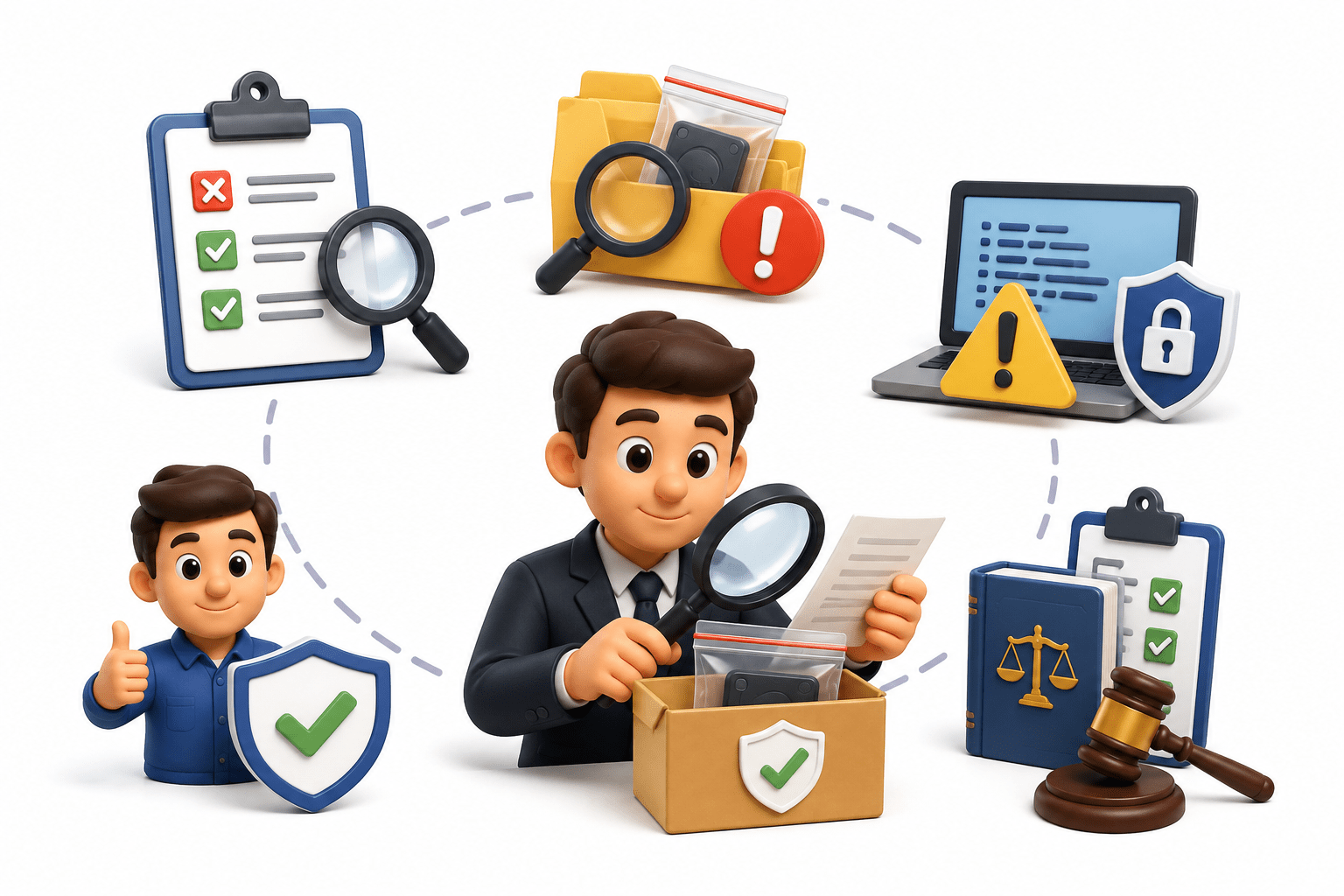
Custody Record Verification
Reviewing Chain of Custody records to ensure they are complete, accurate, and error-free before evidence is analyzed or presented in court.
Importance
Detects missing or incorrect records.
Ensures a complete evidence history.
Maintains legal compliance.
Improves evidence management.
Information Verified
Dates & Times: Confirm activities are in the correct order.
Signatures: Verify all transfers are properly signed.
Evidence IDs: Match records with actual evidence.
Evidence Presentation
Organizing and reviewing evidence, documents, reports, and supporting information before court presentation to ensure completeness and accuracy.
Ensures clear and professional presentation.
Demonstrates proper forensic procedures.
Helps explain technical findings.
Supports expert credibility.
Importance:
Preparation Activities
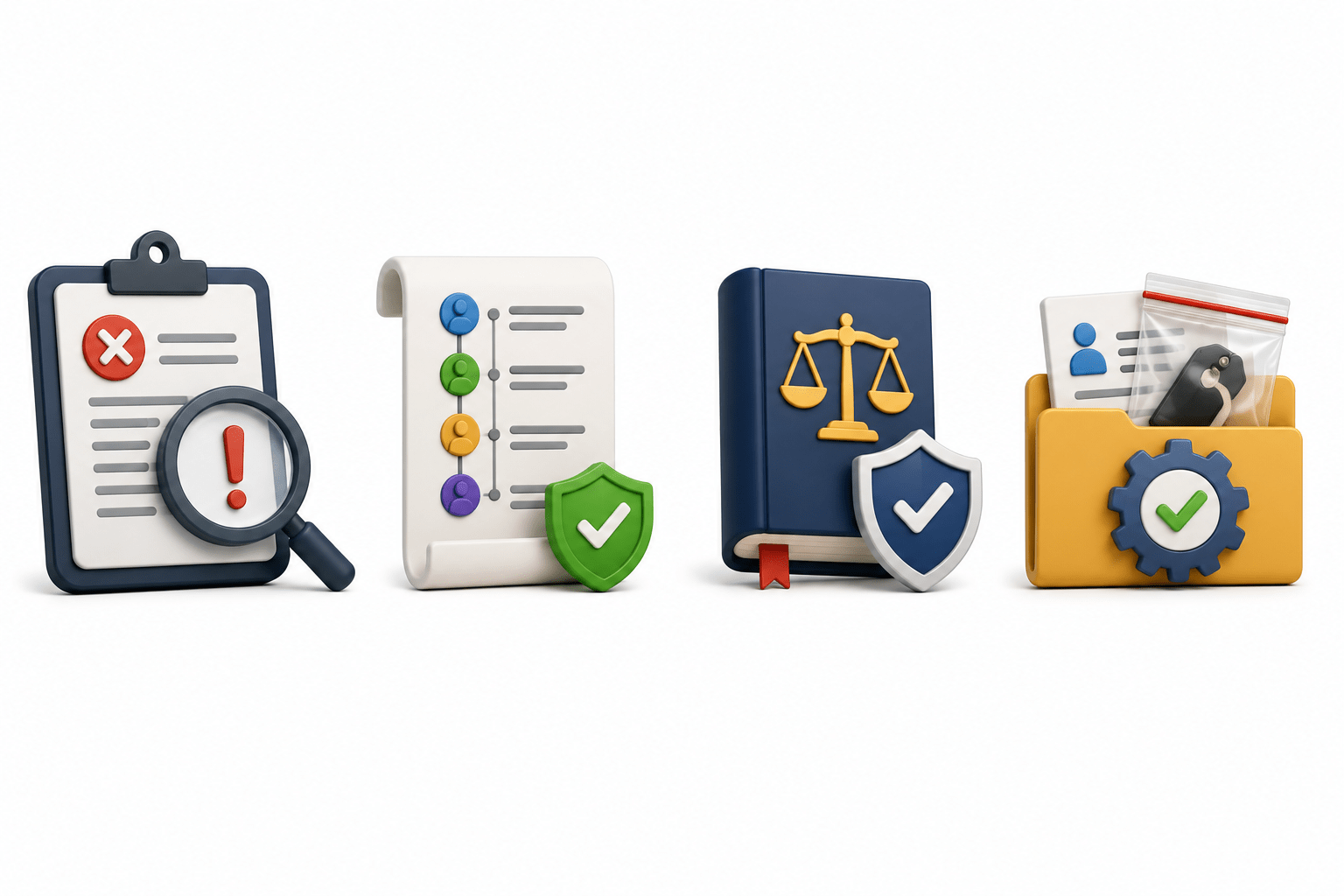
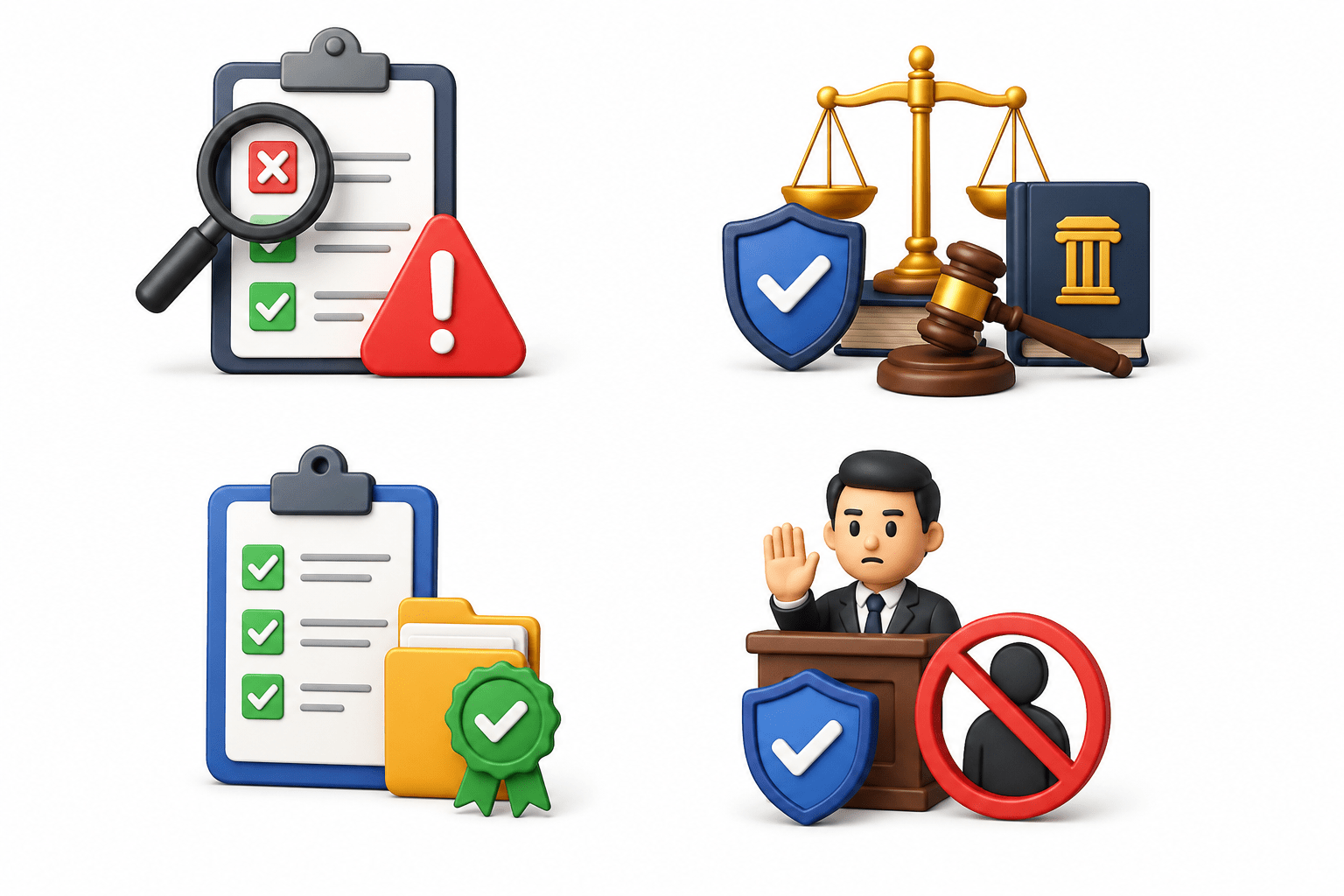
Chain of Custody Violations
Failures to follow proper evidence-handling procedures, such as missing records, unauthorized access, broken seals, or improper handling.
Why is it Important?
Identifies procedural mistakes.
Protects against legal challenges.
Maintains investigation credibility.
Encourages proper handling.
Common Violations
Missing Signatures: Transfers lack proper authorization.
Unrecorded Transfers: Evidence moved without documentation.
Broken Seals: Packaging shows possible tampering.
Best Practices for Custody Management
Recommended procedures for protecting evidence throughout its lifecycle, reducing errors, improving security, and maintaining authenticity and legal reliability.
Why is it Important?
Best Practices
Document Every Action: Record activities immediately.
Assign Unique IDs: Give each evidence item a unique number.
Seal Evidence Properly: Use approved seals.
Restrict Access: Allow only authorized personnel.
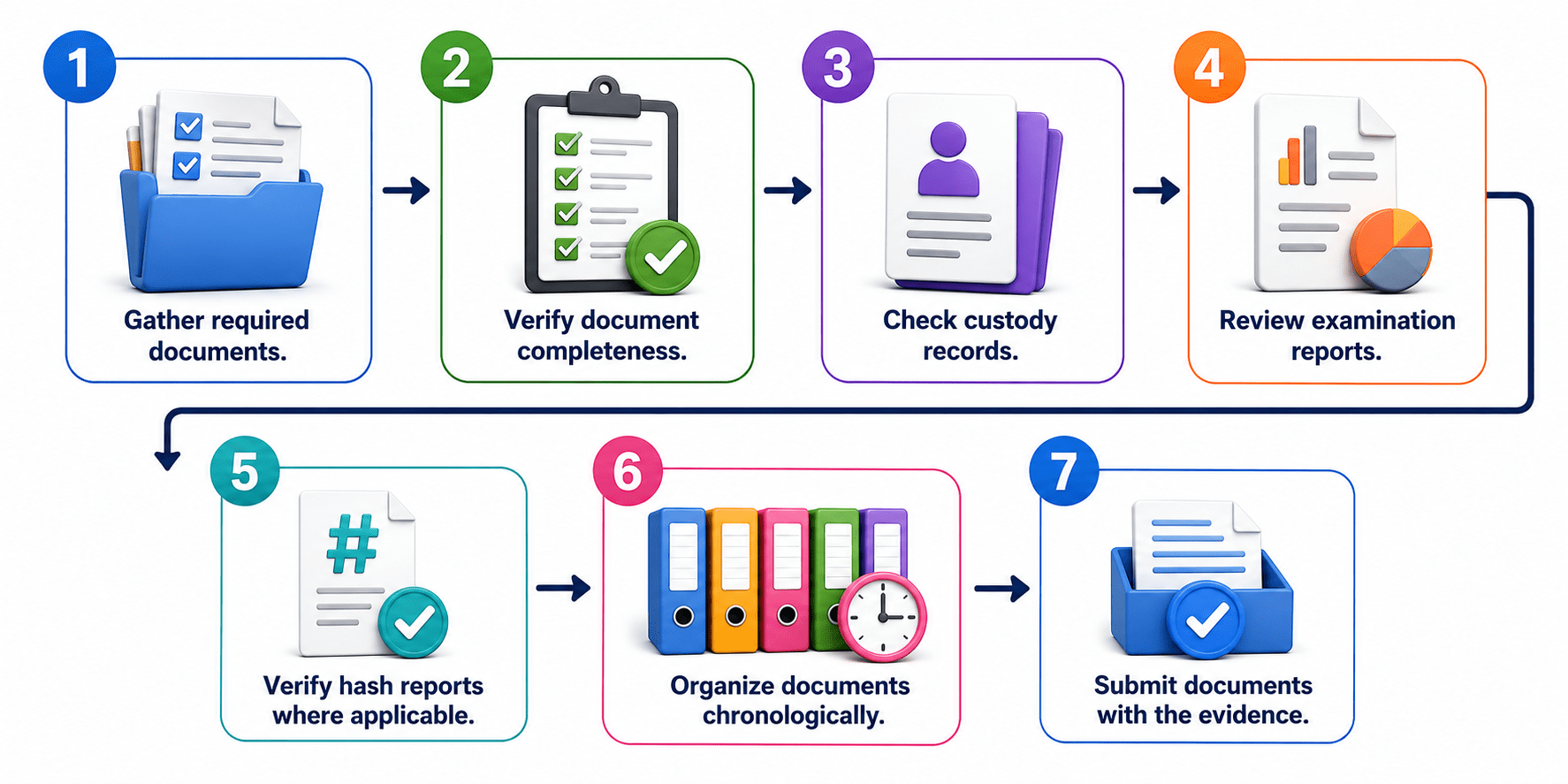
Courtroom Documentation
Documents accompanying evidence during legal proceedings to demonstrate proper collection, handling, examination, storage, and authenticity.
Why is it Important?
Procedure:
Gather required documents
Verify document completeness
Check custody records
Review examination reports
Verify hash reports where applicable
Organize documents chronologically
Submit documents with the evidence
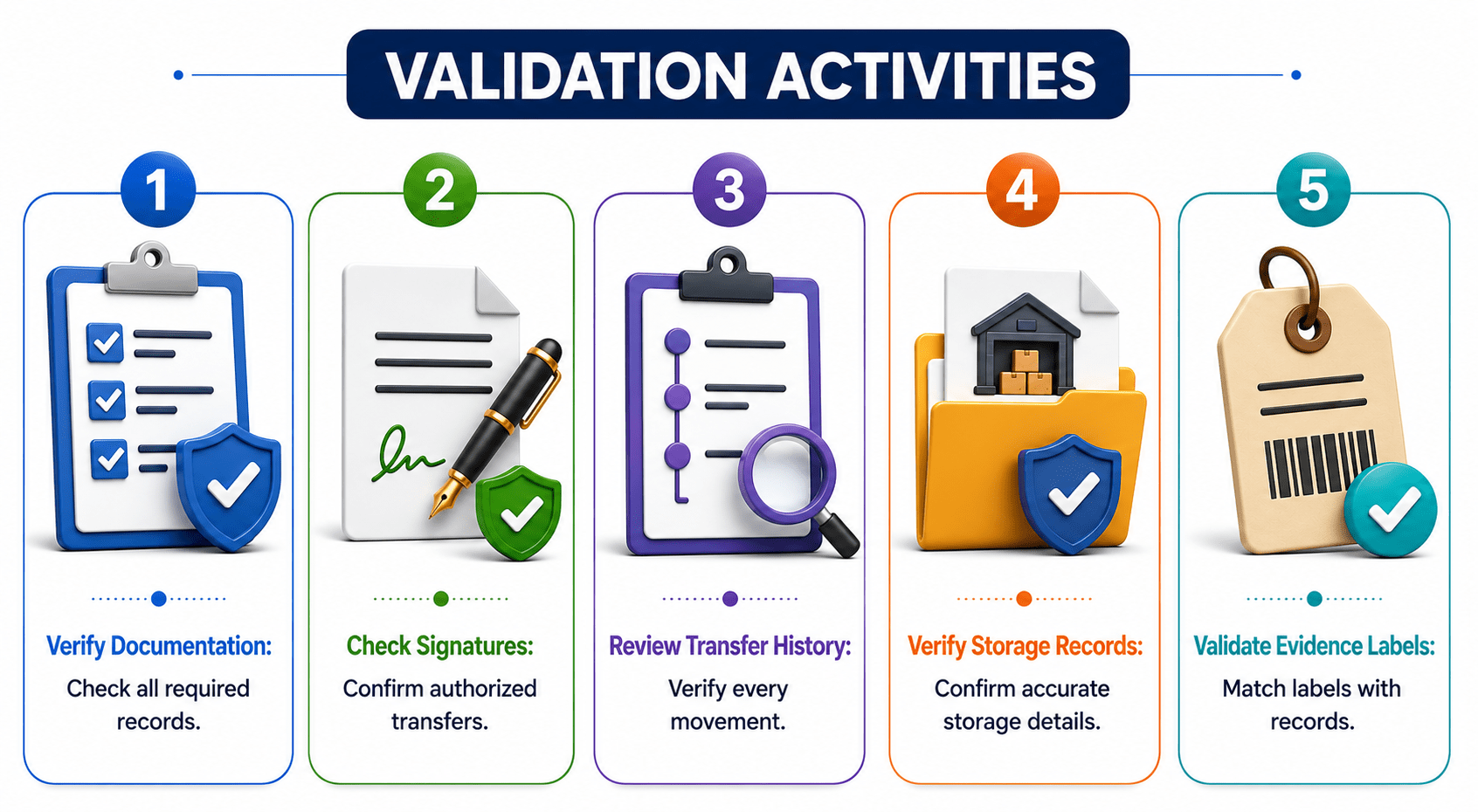
Custody Review and Validation
The final review of custody records, labels, storage details, transfer history, and supporting documents before court submission or evidence archiving.
Detects errors before court presentation.
Ensures legal and forensic compliance.
Improves documentation reliability.
Reduces courtroom challenges.
Importance
Verify Documentation
check all the required records
Check Signatures:
Confirm authorized transfers
Review Transfer History:
Verify every movement
Verify storage records:
Confirm accurate storage details
Validate Evidence Labels:
Match labels with records
Validation Activities
Summary
5
Proper CoC ensures evidence credibility and authenticity.
4
Hashes and secure storage protect evidence integrity.
3
Only authorized personnel can handle evidence.
2
Evidence needs proper labels and records.
1
CoC records everyone handling the evidence.
Quiz
What is the primary purpose of a Chain of Custody?
A. Increase internet speed
B. Track software licenses
C. Maintain the integrity and history of evidence
D. Compress digital files
Quiz-Answer
C. Maintain the integrity and history of evidence
A. Increase internet speed
B. Track software licenses
D. Compress digital files
What is the primary purpose of a Chain of Custody?
By Content ITV