








Content ITV PRO
This is Itvedant Content department
Learning Outcome
5
Connect filters to credit savings and testing.
4
Apply filters to real business rules.
3
Recognize how AND and OR combine conditions.
2
Identify operators for each data type.
1
Understand what a Make filter does.
The Placement Drive
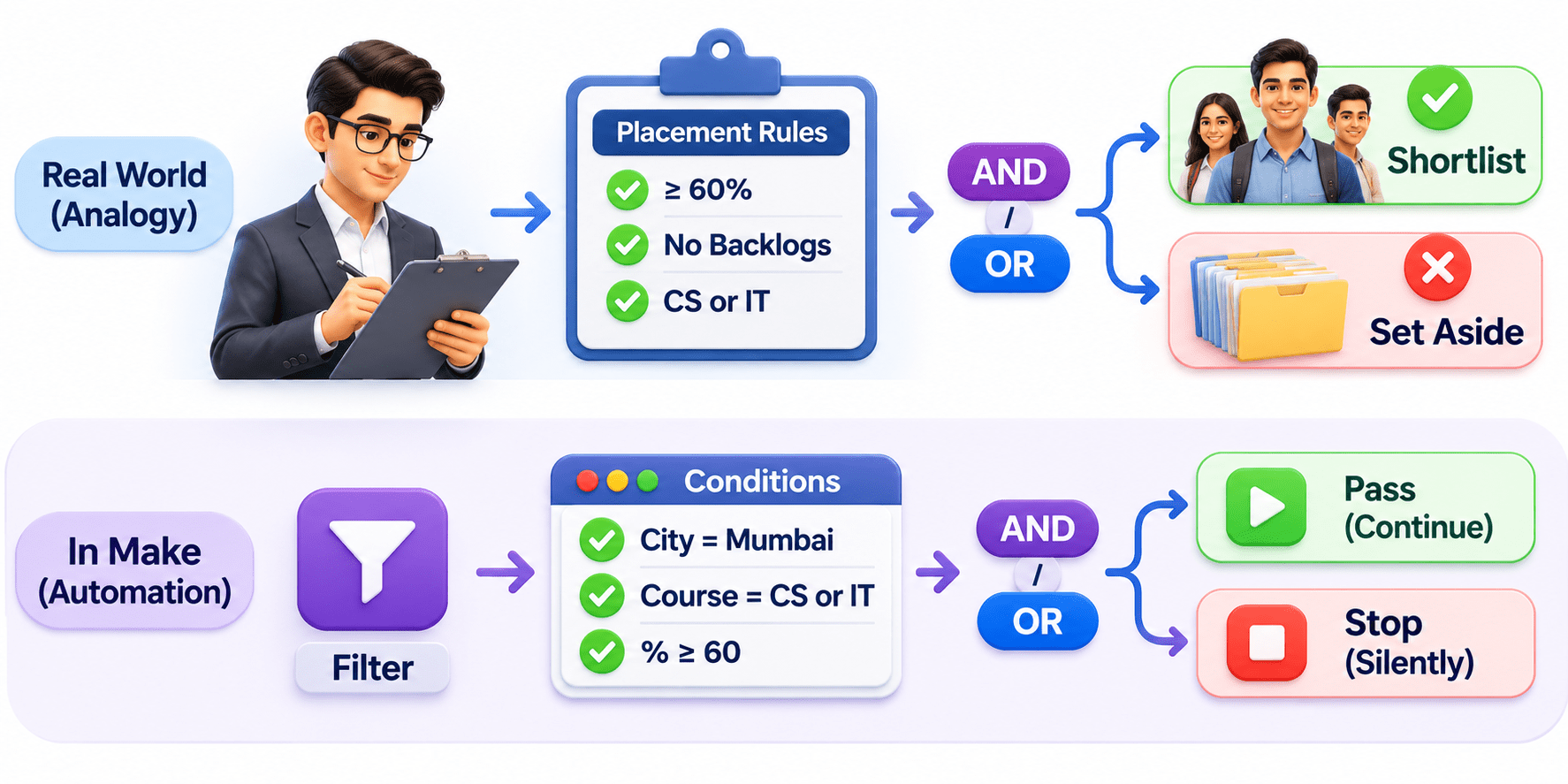
A placement drive needs 60%+, no backlogs, and a CS or IT degree. The officer checks every student against these rules.
Those who qualify are shortlisted; the rest simply aren’t forwarded. No error, no fuss.
What happens to students who don’t qualify?
Clear rules decide who moves ahead, and the rest quietly stay back.
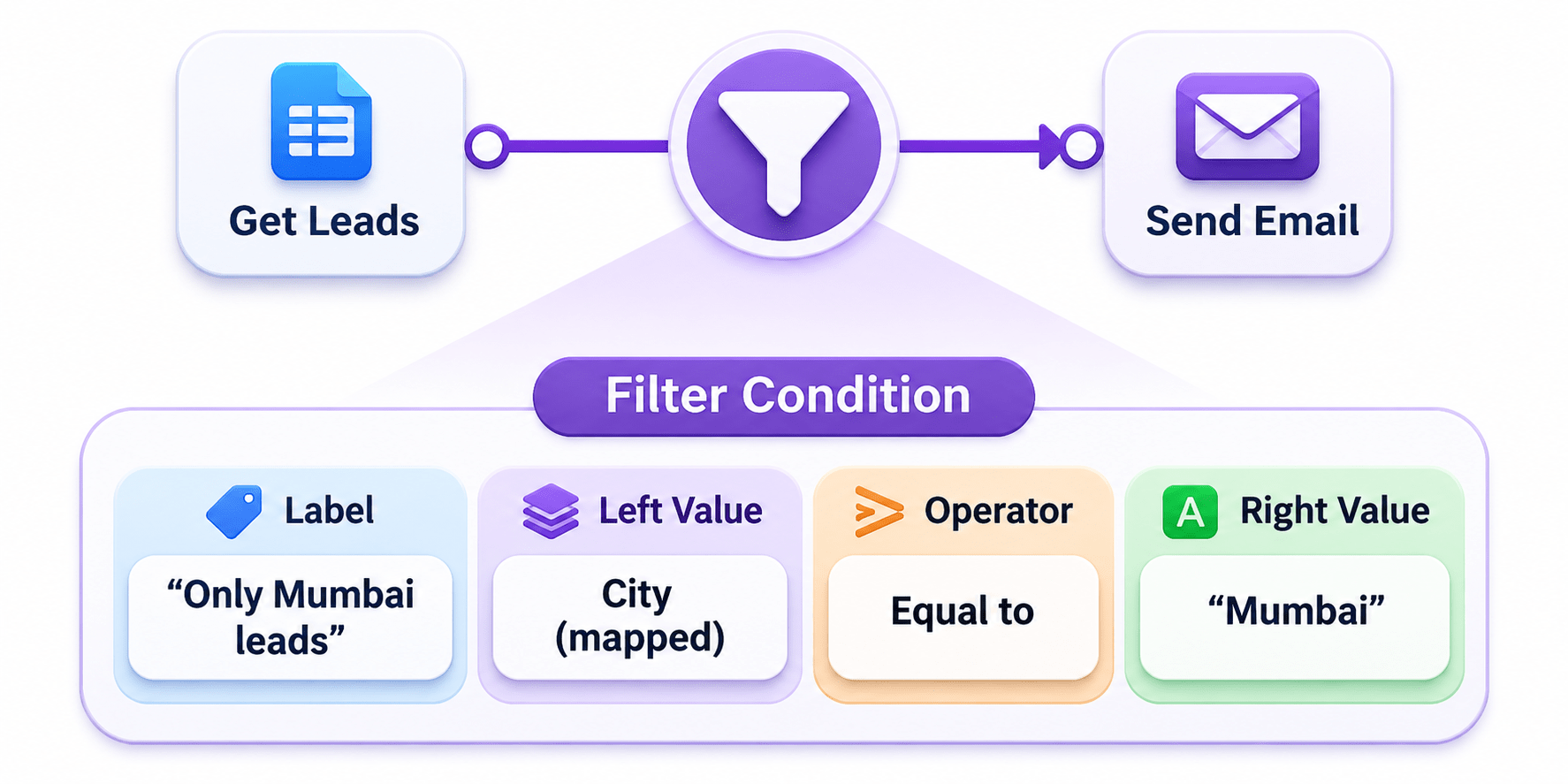
Similarly, a filter in Make lets only the records that meet your rules continue to the next module. Each rule is a condition, like “City is Equal to Mumbai”.
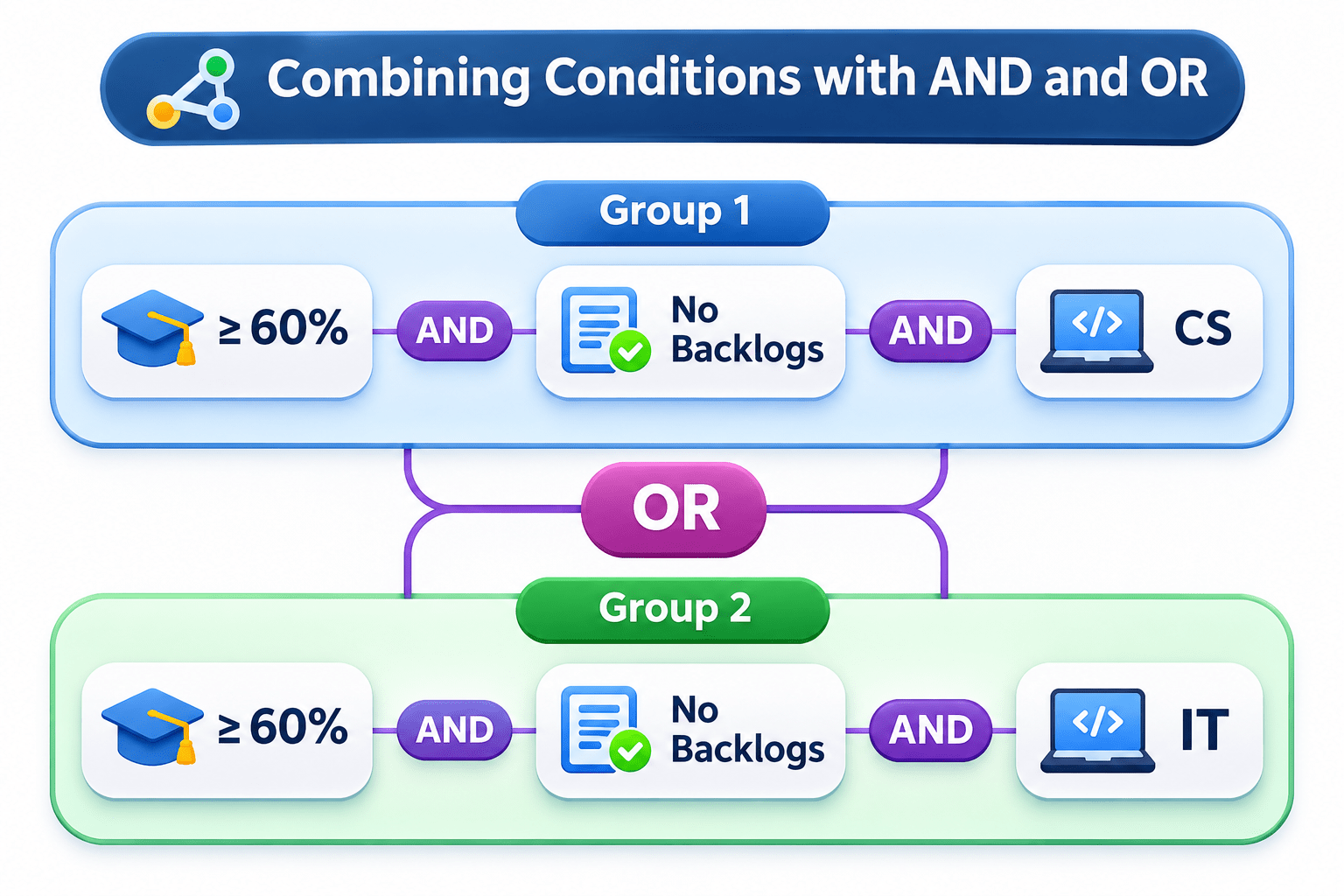
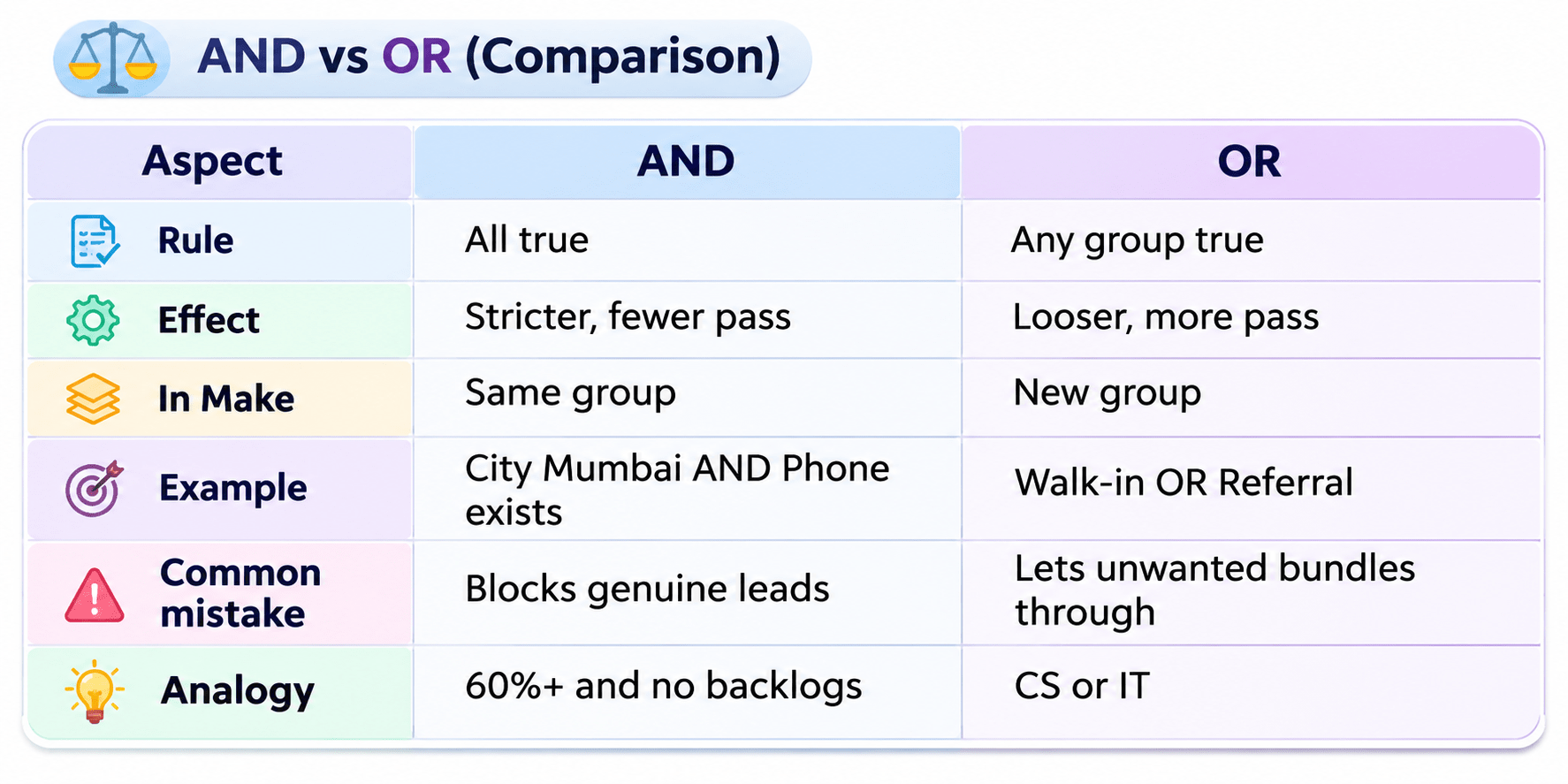
Conditions combine with AND (all must be true, like 60%+ and no backlogs) or OR (any one is enough, like CS or IT). Records that fail stop silently, without any error.
This is called Filters and Conditional Logic.
What is a Filter?
Lets only bundles that meet the criteria continue. Add one by clicking the line between modules.
Key Point: A condition reads like a sentence: “City is Equal to Mumbai.”
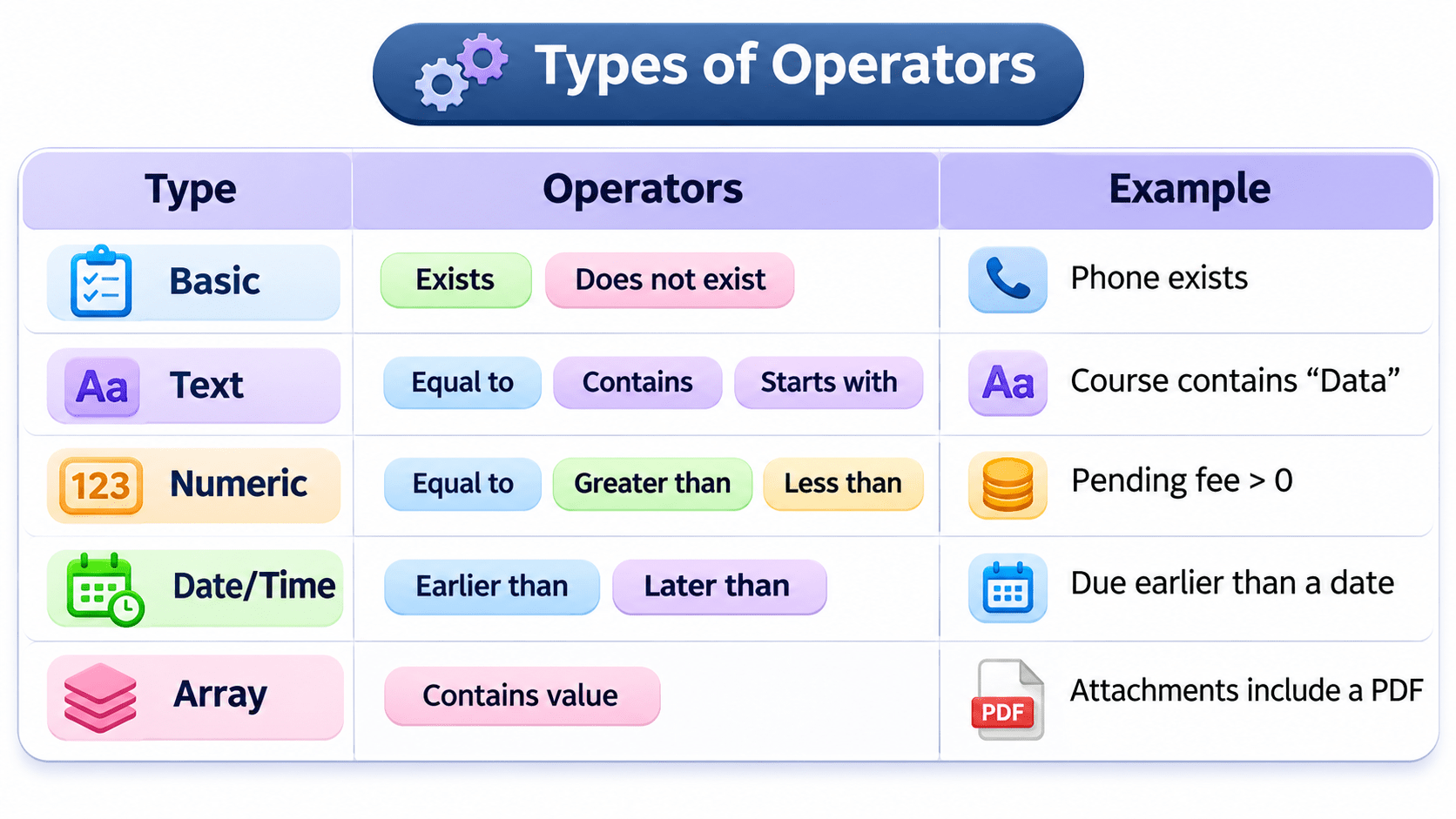
Types of Operators
Key Point: Match the operator to the data type. “₹5,000” stored as text won’t compare as a number. Use case-insensitive text operators for typed data.
Combining Conditions with AND and OR
Conditional Values and Filter Behaviour
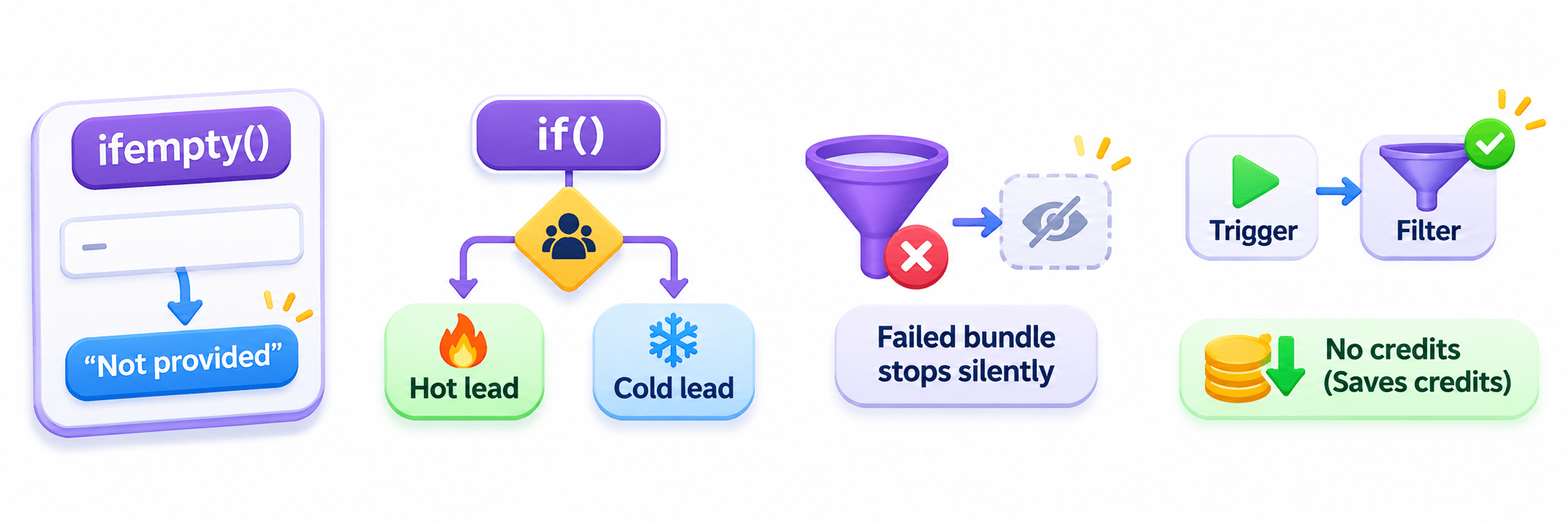
Filters use no credits and save credits, so place them early (right after the trigger)
ifempty(): fallback text, e.g. “Not provided” for a blank city
if(): choose between two values, e.g. “Hot lead” or “Cold lead”
Failed bundles stop silently: the run can still show success
AND vs OR (Comparison)
A Simple Way to Remember
AND means “all of these.” OR means “any one of these.” Unsure? Read the rule aloud as a sentence.
Think & Discuss: A case-sensitive “Mumbai” filter quietly drops “mumbai”, “Mumbai “, and “Navi Mumbai”. Why test filters with messy, real data?
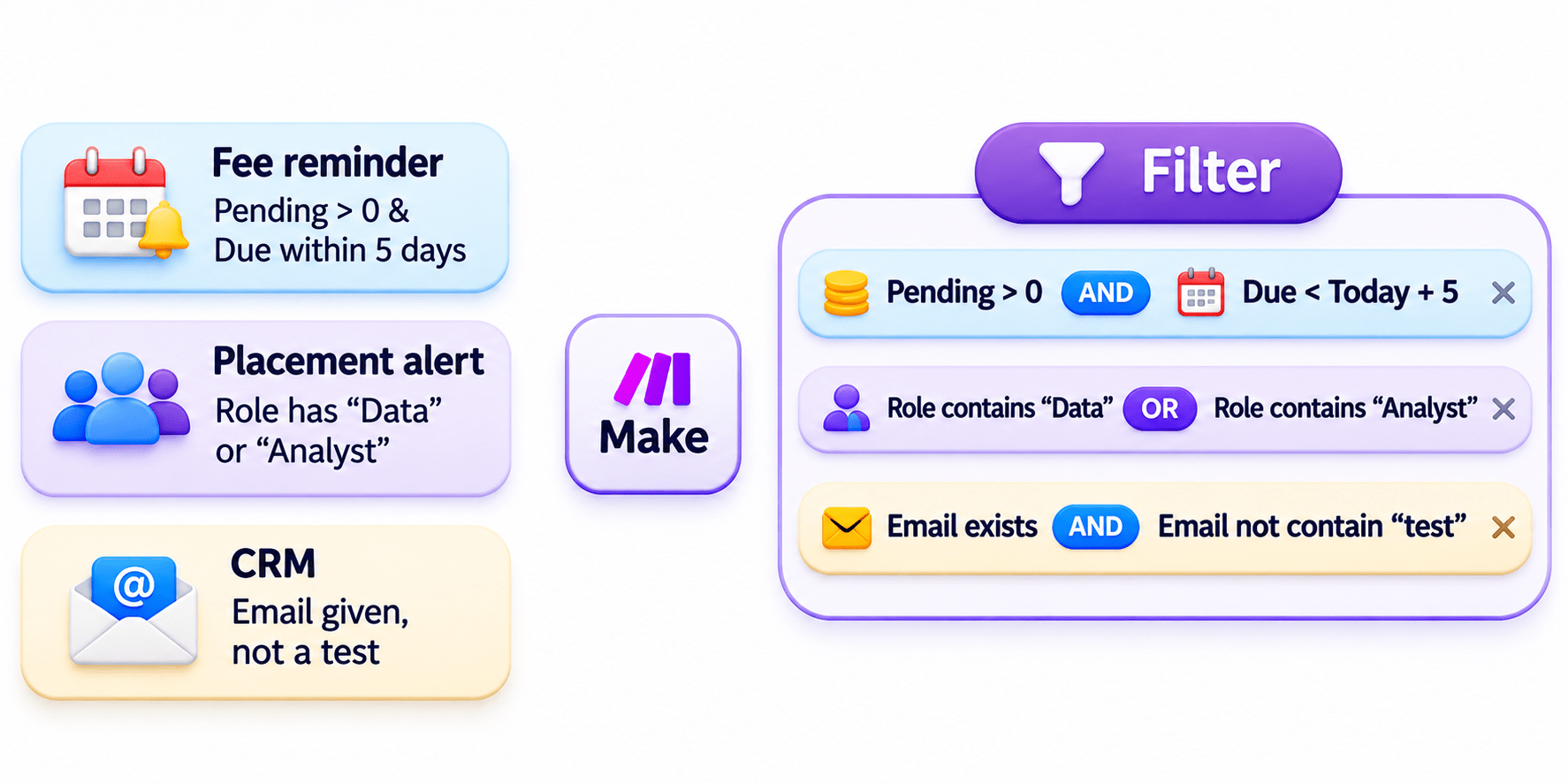
Real-World Applications: Pass or Stop?
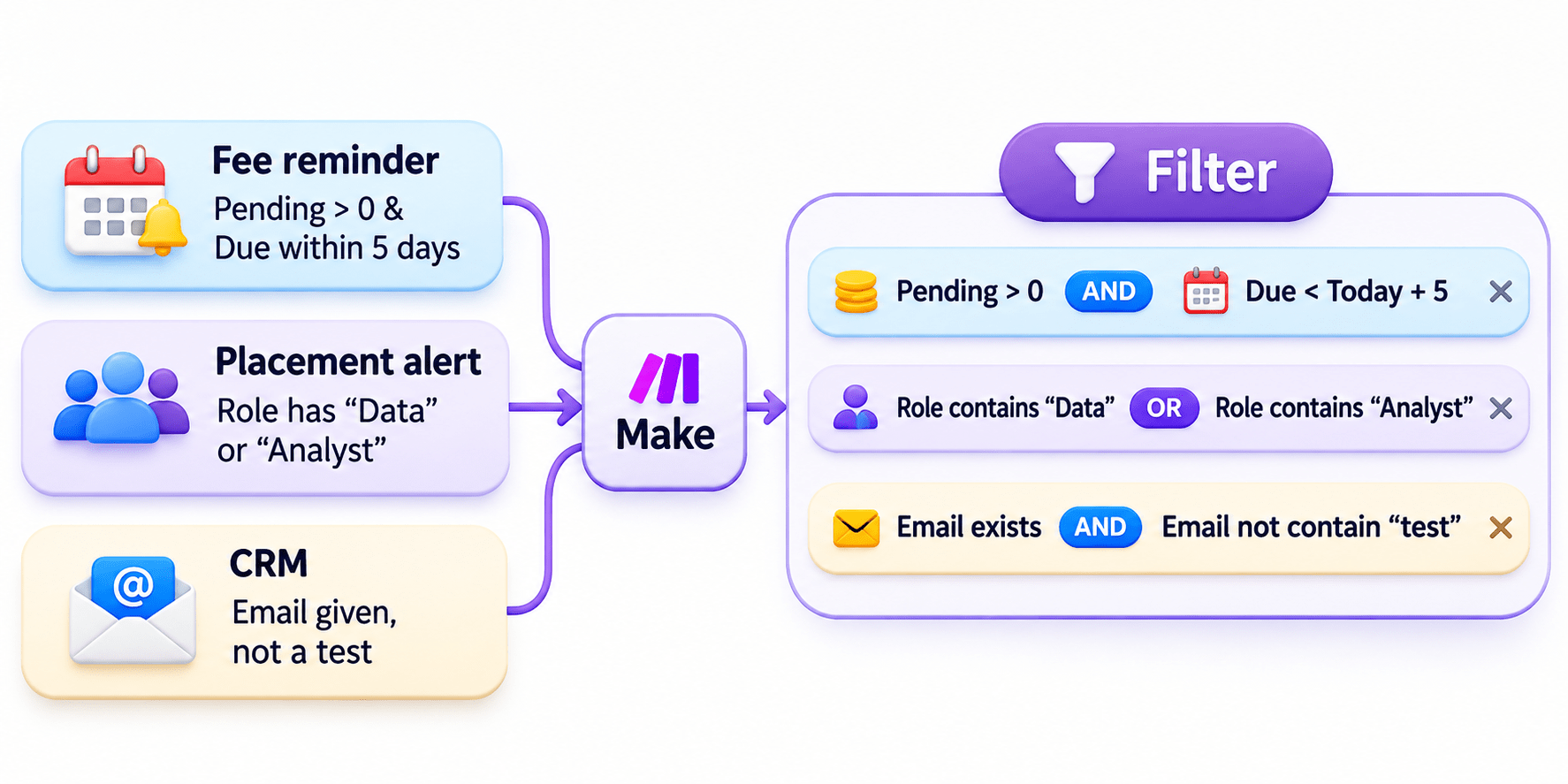
Real-World Applications: Pass or Stop?
Summary
5
Filters save credits, but test them with messy data.
4
AND means all must be true; OR starts a new group.
3
Match the operator to the data type.
2
A condition is a left value, an operator, and a right value.
1
A filter lets only matching bundles continue.
Quiz
A case-sensitive filter checks City Equal to “Mumbai”. A lead typed “mumbai”. What happens?
A. It passes
B. It stops silently
C. It raises an error
D. It passes with a warning
A case-sensitive filter checks City Equal to “Mumbai”. A lead typed “mumbai”. What happens?
A. It passes
B. It stops silently
C. It raises an error
D. It passes with a warning
Quiz-Answer
By Content ITV