





Content ITV PRO
This is Itvedant Content department
What are the causes of defects?
Learning Outcome
3
Explain defect flow from detection to closure
2
Identify different defect states
1
Understand what Defect Life Cycle
Before we start....
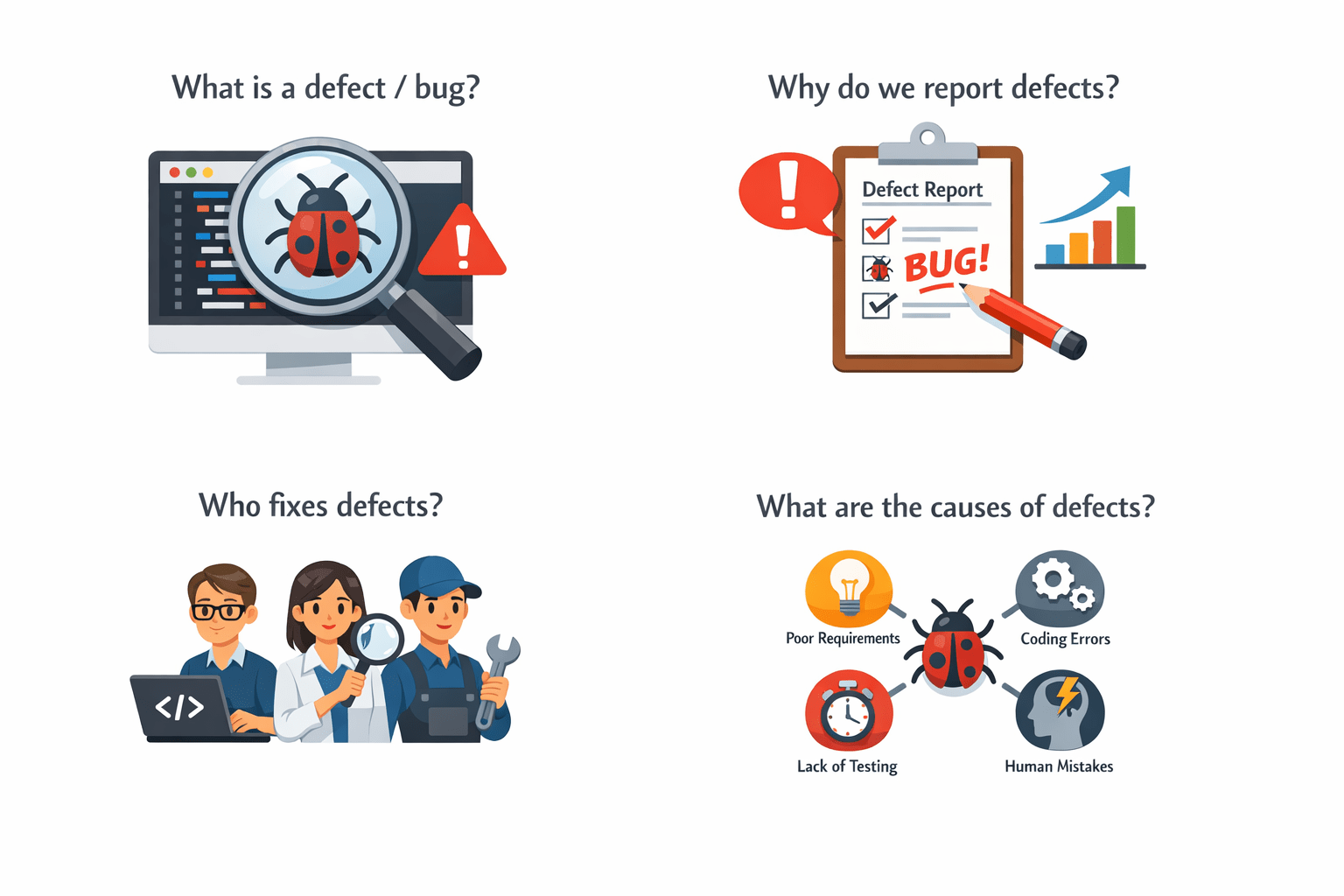
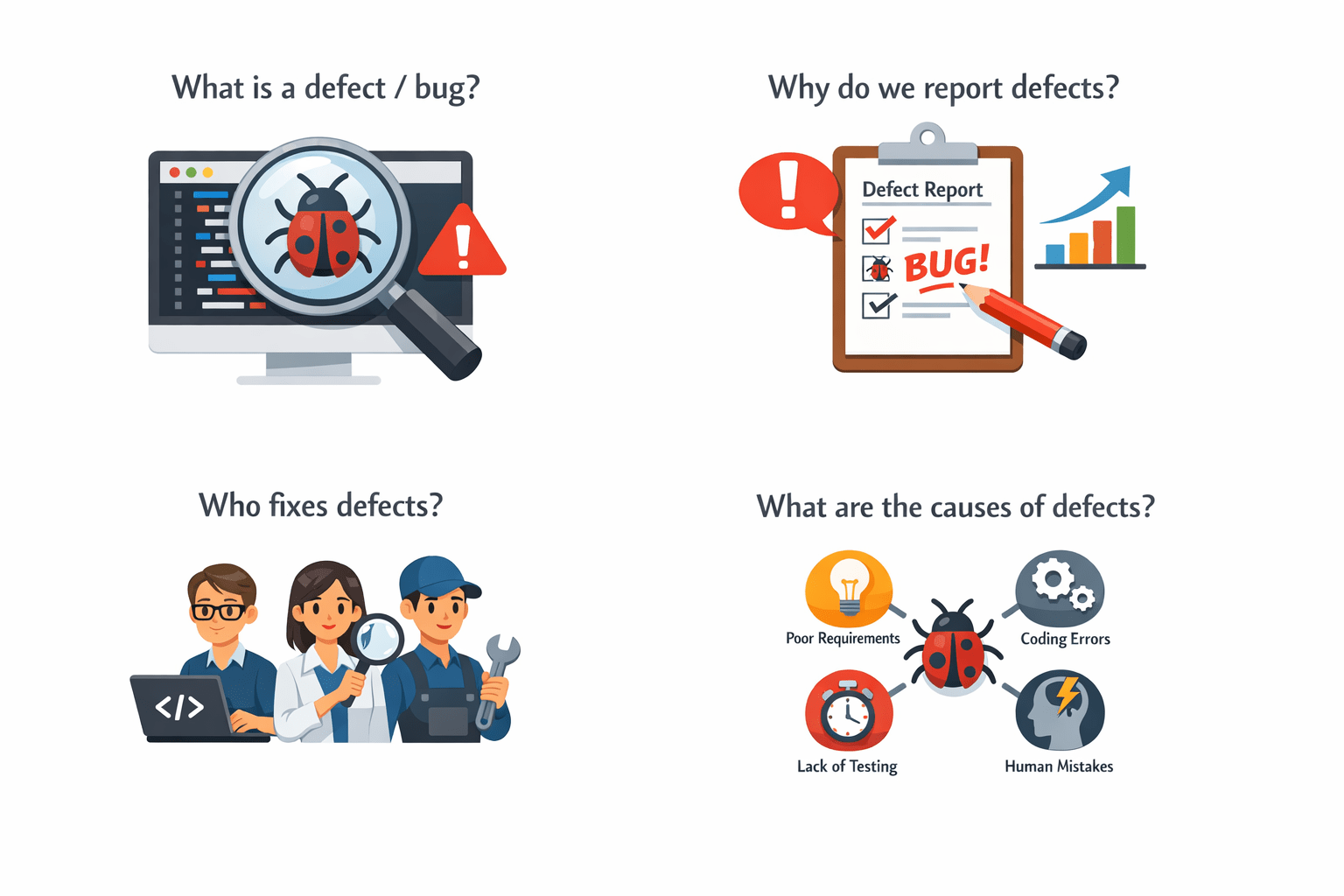
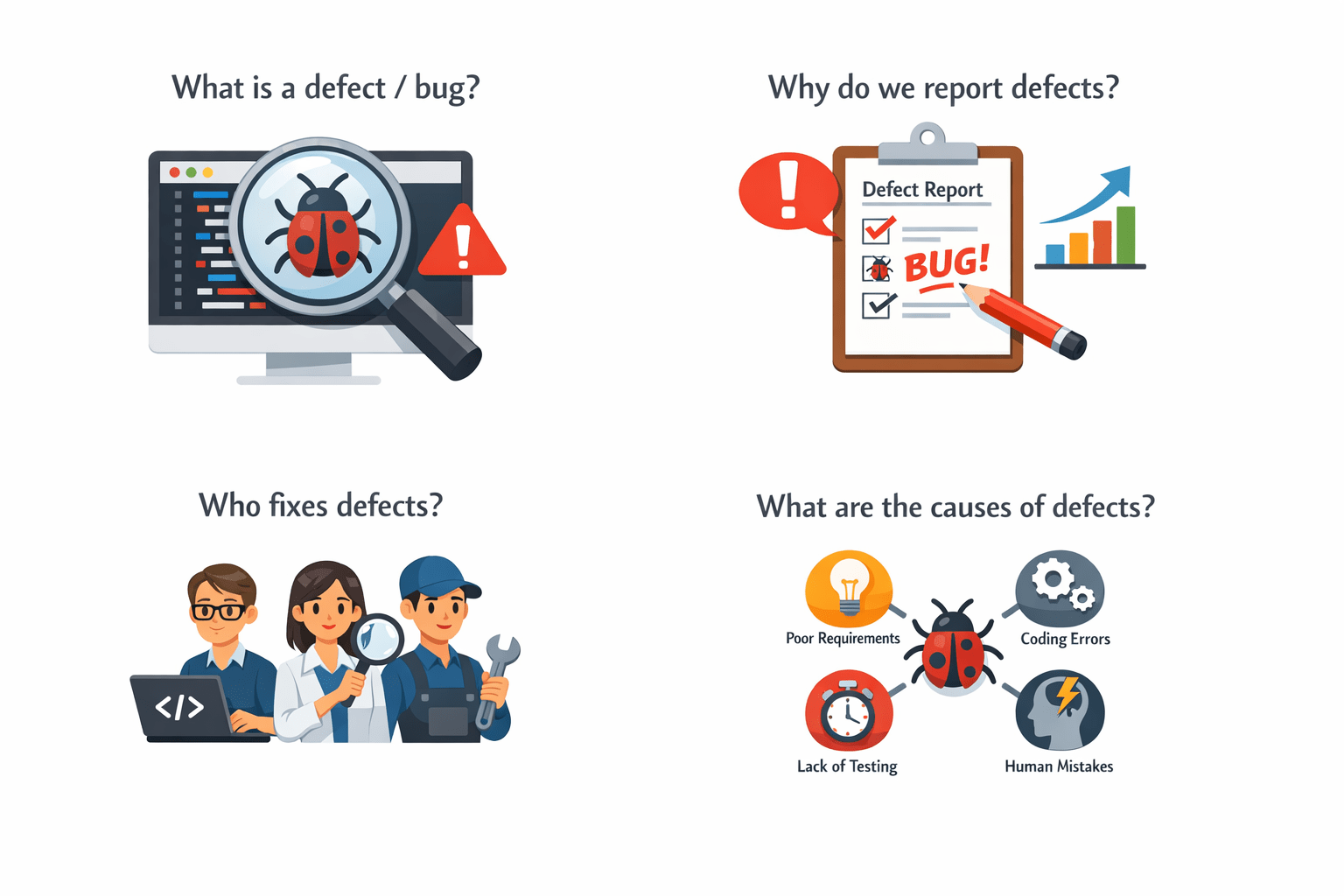
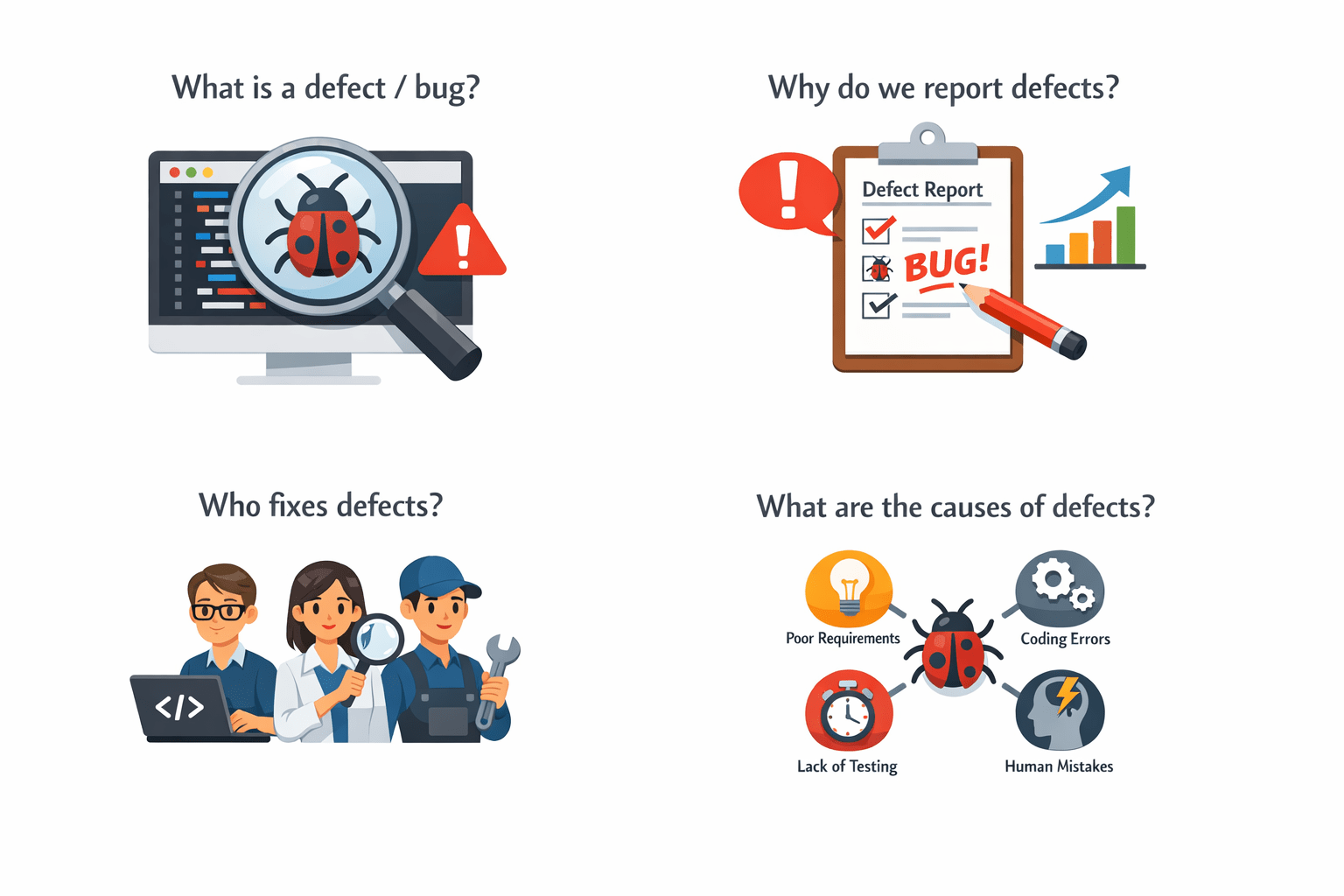
What is a defect / bug?
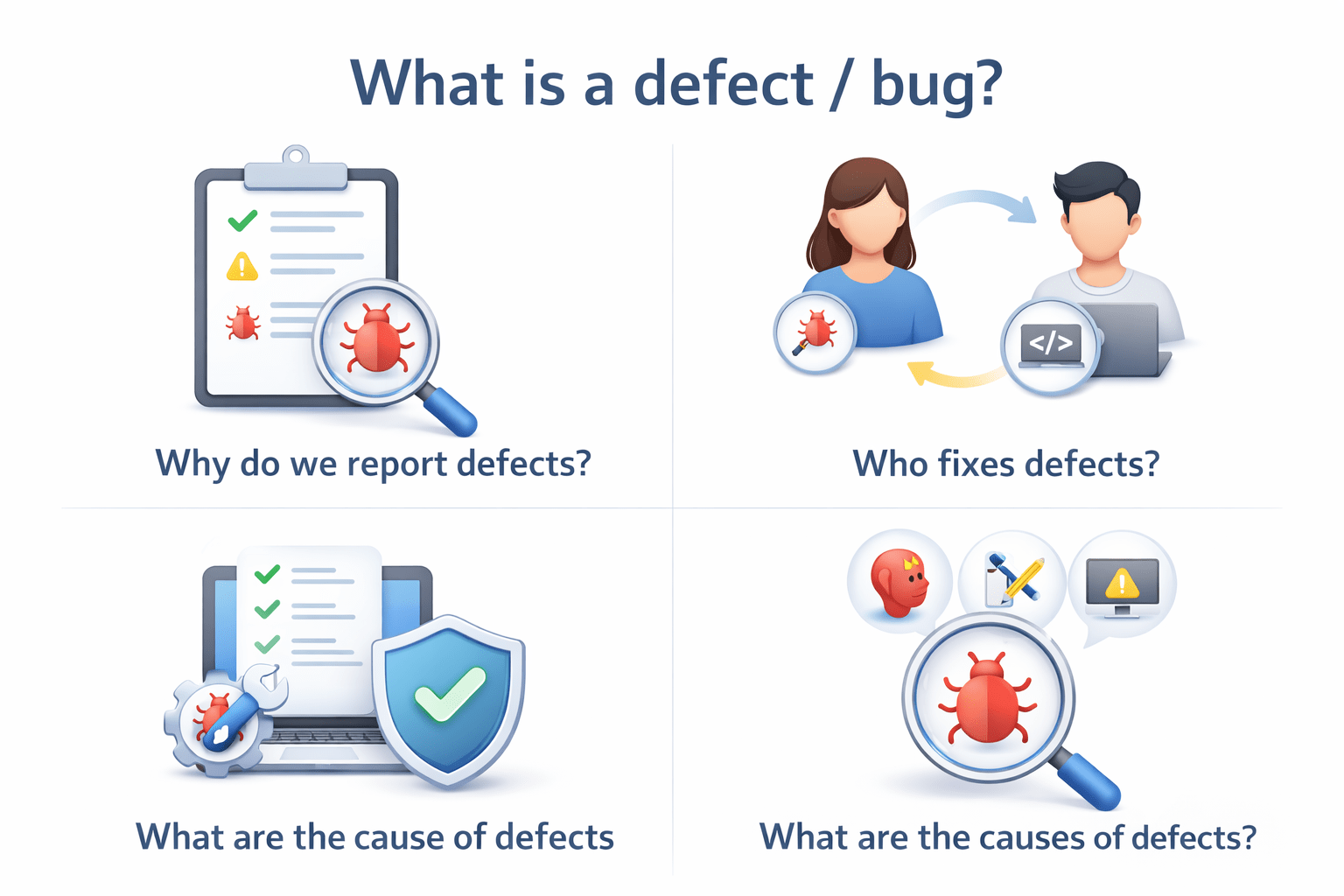
What is a defect / bug?
Why do we report defects?
Who fixes defects
What are the causes of defects?
Why do we need a Defect Life Cycle?
To track defect status clearly
To avoid missing or duplicate bugs
To improve communication between tester & developer
To ensure quality software delivery
Hook/Story/Analogy(Slide 4)
Transition from Analogy to Technical Concept(Slide 5)
Bug Lifecycle
New
Open
New
Assigned
Fixed
Pending Retest
Retest
Verified
Closed
ReOpen
Duplicate rejected deffered not a bug
How can you copy elements from an array without altering the original?
Syntax:
arr.slice(start, end)
let arr = ["a", "b", "c", "d"];
arr.slice(1, 3);

//includes start index
// omits end index
["b", "c"]
Note:
Returns new array
In Javascript, use the slice() method to copy part of an array without altering the original.
Core Concepts (Slide 7)
Core Concepts (.....Slide N-3)
Summary
3
Defect Life Cycle ensures controlled defect management
2
Tester and developer both are involved
1
Defect goes through multiple states
Quiz
In which stage does the developer start working on the defect?
A. Assigned
B. Open
C. Retest
D. Verified
Quiz
In which stage does the developer start working on the defect?
A. Assigned
B. Open
C. Retest
D. Verified
By Content ITV