


Gareth Greenaway
Keylite Roof Windows
The Basics Of Specification
Specifying From Basic Information
Overview:
Something you will come across on a fairly regular basis is our customers not knowing exactly what they want, this may be down to a variety of reasons for example a lack of product knowledge or, in the case of merchants and builders, only having been provided with very limited information by their customers. A lack of information doesn’t necessarily mean that we’re unable to quote, however, it does mean that a lot of assumptions will need to be made. When making assumptions it is generally best to use the information available to make educated guesses and combine them with either our most universal or our most popular specifications. Bearing this in mind we would usually offer white painted, centre pivot, thermal windows with deep tile profile flashings. White painted, centre pivot, thermal being our most popular specification of window and deep tile profile being a largely universal flashing type. It is important that all assumptions are noted on the quote to ensure the customer is aware that they may need to confirm details prior to placing an order.
The Basics Of Specification
Specifying From Basic Information
Quoting From Basic Information:
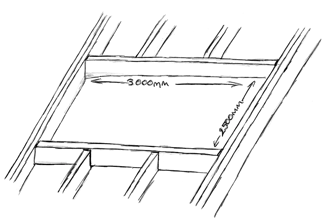
When quoting from basic information you will often only be provided with a hand drawn sketch or structural opening size, in these cases we quote for the closest available size that either matches or is smaller than what has been provided. Please see the example below:
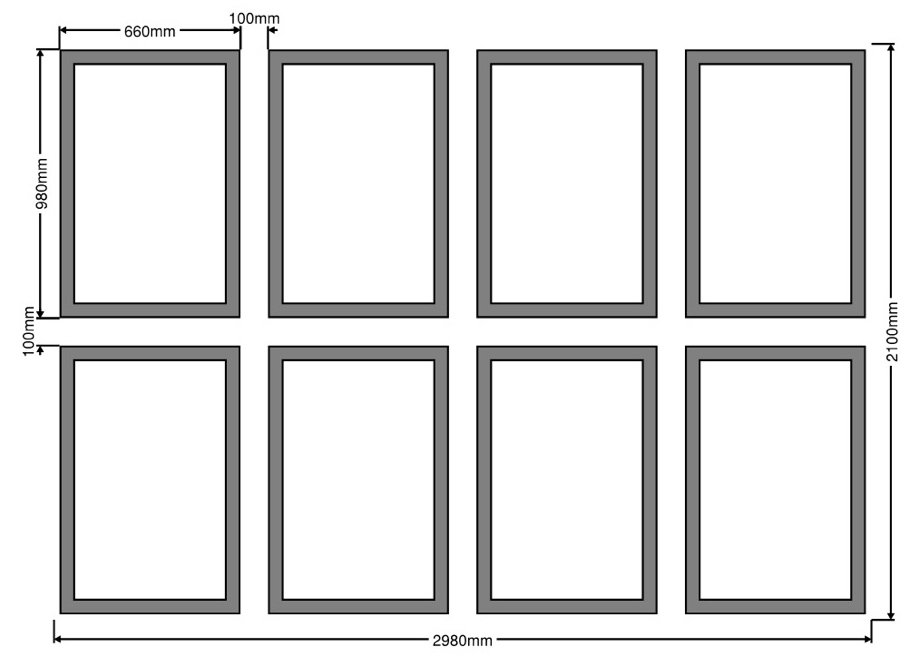
In this situation we have been given a basic sketch of a truss layout, with the measurements provided for an opening formed within the trusses. The fact that this opening has been shown at truss height, and not batten height, will need to be taken into account when specifying. The size we have been given is 3000mm by 2500mm, because we recommend splaying the reveals above and below the window, setting the rafters back by 200mm would be prudent, giving us an effective structural opening size of 3000mm by 2100mm. Obviously we don’t manufacture a window of this size so a combination of windows can be offered. Due to the size of opening we have been given we could potentially offer a bank of 8 windows formed of 2 rows of 4, one row above the other, a bank of 6 windows in 2 rows of 3 or a bank of 4 wider windows in 2 rows of 2. In this case we will generally offer the layout that most closely matches the opening size we are working to.
The Basics Of Specification
Specifying From Basic Information
have been given is 3000mm by 2500mm, because we recommend splaying the reveals above and below the window, setting the rafters back by 200mm would be prudent, giving us an effective structural opening size of 3000mm by 2100mm. Obviously we don’t manufacture a window of this size so a combination of windows can be offered. Due to the size of opening we have been given we could potentially offer a bank of 8 windows formed of 2 rows of 4, one row above the other, a bank of 6 windows in 2 rows of 3 or a bank of 4 wider windows in 2 rows of 2. In this case we will generally offer the layout that most closely matches the opening size we are working to.
To work out the potential window widths we can use for the banks of 4 we would take 340 from 3000 and divide what’s left by 4, giving us a maximum window width of 665mm (660mm would be our closest option).
To work out the potential window widths we can use for the banks of 3 we would take 240 from 3000 and divide what’s left by 3, giving us a maximum window width of 920mm (940mm would be too large so 780mm would be our closest option).
To work out the potential window widths we can use for the banks of 2 we would take 140 from 3000 and divide what’s left by 2, giving us a maximum window width of 1430mm (1340mm is our largest window width so would be our closest option).
The Basics Of Specification
Specifying From Basic Information
In this case a bank of 4 windows in a 660mm width would give us our closest fit.
To work out the potential window lengths we can use we would take 140 from 2100 and divide what’s left by 2, giving us a maximum window length of 980mm.
This gives us a window size of 660x980mm, this would be our 03B.
For this drawing we would quote:
8no. WCP 03B T
1no. TRF 03B TL
2no. TRF 03B TM
1no. TRF 03B TR
1no. TRF 03B BL
2no. TRF 03B BM
1no. TRF 03B BR
With notes stating:
Closest Available Sizes Offered, Please Confirm
Assumed Roof Tile, Please Confirm
The Basics Of Specification
Specifying From Basic Information
The Basics Of Specification
Specifying From a BoQ
Overview:
What is a Bill Of Quantities? A bill of quantities (BoQ) is a document used when tendering in the construction industry in which materials, parts, labour, and their costs, are itemised.
BoQs are generally prepared by quantity surveyors and building estimators to assist tenderers in the calculation of the construction costs for their tender. It means that all tendering contractors will be pricing the same quantities, rather than taking-off quantities from the drawings and specifications themselves, providing a fair and accurate system for tendering.
Quoting From A Bill Of Quantities:
It is industry standard that BoQs are broken down into different sections referenced alphabetically then broken down further into subsections referenced numerically, these references are consistent across all BoQs. For example section L refers to windows, doors and stairs with sub section 10 (generally noted as L10) dealing specifically with roof windows.
Whilst it is often possible to quote entirely from a BoQ, it is generally better if they are read along side another form of documentation as they will not always give you a complete picture of the situation the window is being installed into or what the customer is looking to achieve. The type and quantity of information provided on a BoQ can vary drastically from enquiry to enquiry, including anything from a simple list of sizes and quantities to a full competitor specification.
The Basics Of Specification
Specifying From a BoQ
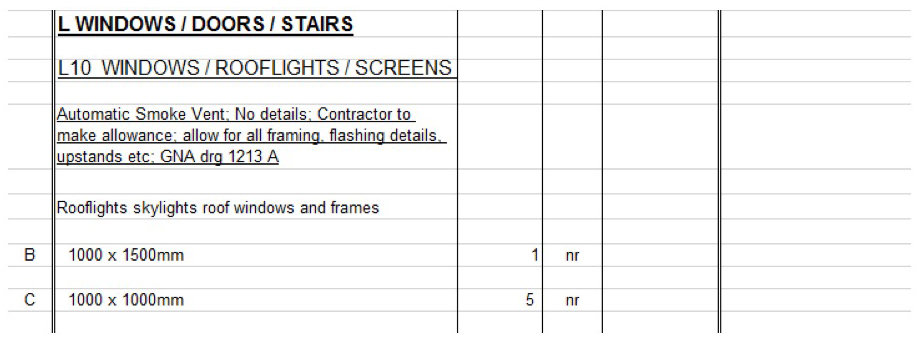
Below is an excerpt from a BoQ showing a simple window specification.
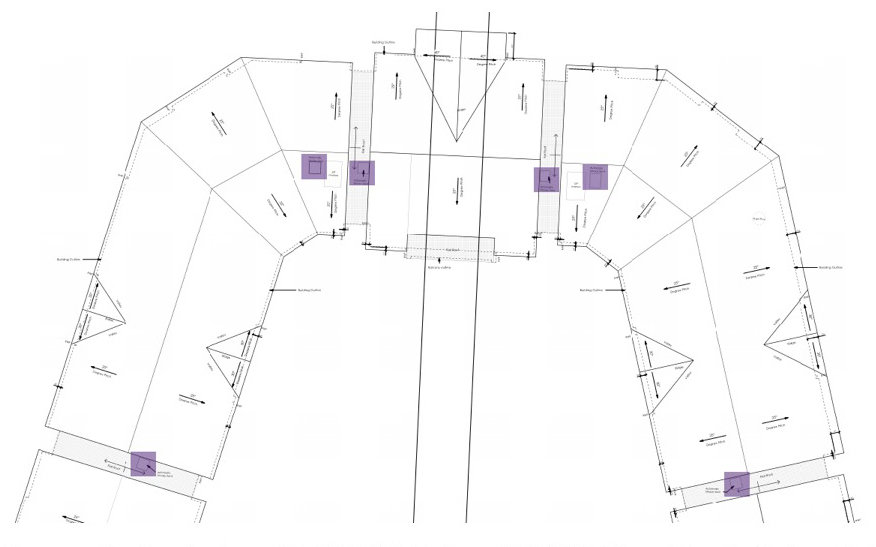
Reading this you can see that they are looking for a total of 6no. windows, all of which are to be smoke vents in either 1000x1500mm or 1000x1000mm. From the sizes and specification shown here we would likely quote on 5no. FRD S10 AOVs and 1no. FRD R1015 AOV (A none standard size), however, when read alongside the roof plan below we can see that only 4no of the 1000x1000mm rooflights are to be installed on flat roofs, with the remaining 1000x1000mm and 1000x1500mm windows to be installed on sloping roofs.
The Basics Of Specification
Specifying From a BoQ
This would modify the specification to 4no FRD S10 AOVS, 1no. WCP 08 T (providing 1m² of ventilation) with SVK and flashing and 1no. WCP 10 T (providing 1.5m² of ventilation) with SVK and flashing.
Often when quoting from a BoQ you will be making assumptions about window specifications or roof layouts, materials etc. These assumptions should always be noted on the quotation so the customer is aware and thus giving them the opportunity to confirm any details.
The Basics Of Specification
Specifying From Plans
Overview:
Quoting from plans is generally the most time consuming way of specifying, however, it is often also the most accurate, usually providing much more usable information than any other method. What tends to make quoting from plans time consuming is finding the information you need, you will often be sent packs containing dozens of numbered drawings and only 2 or 3 of these may have any relevant information, however, as you may not know which drawings these are it is important to ensure all drawings are checked.
Reading Architects Drawings:
For someone new to quoting looking at drawings can often be a daunting prospect, architects drawings can be very detailed and often look like a confusing array of lines and measurements, however, when you know what drawings you need, and what to look out for on those drawings, it becomes considerably easier. From a roof window perspective the main drawings to look out for are:
Roof Plans
Floor Plans
Elevations
Sections
Window Schedules
The Basics Of Specification
Specifying From Plans
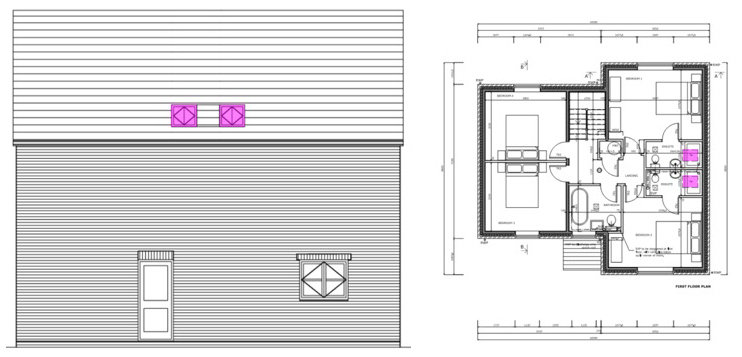
While roof plans and elevations are generally the best drawings to ascertain whether a building has roof windows or not, as they are generally more visible in these, the floor plans and window schedules are often better to quote from. These tend to contain more detailed information about the window specifications and window sizes, although this is not guaranteed. Below are examples of a floor plan and elevation showing roof windows, the roof windows have been highlighted in pink to make them easier to see.
The Basics Of Specification
Specifying From Plans
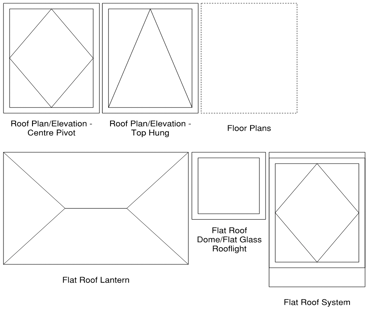
The image below demonstrates how some of our most popular products are represented on drawings, the first two would be how standard roof windows generally appear on elevations and roof plans, the third is usually how they appear on floor plans.
The fourth, fifth and sixth images show flat roof windows, including the roof lantern, flat roof dome/flat glass rooflight and the flat roof system. These generally appear on floor or roof plans and are often accompanied by a window code, either one of our own or one of our competitors, or by the window size.
The Basics Of Specification
Specifying From Plans
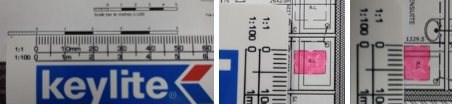
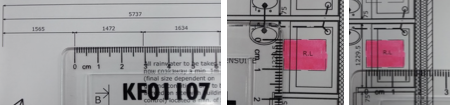
Occasionally you will be sent a set of drawings showing our products without any window codes or size references. When this happens it is usually possible to scale from the drawings, most drawings will contain a scale bar or scale reference, which, when printed, can be used in conjunction with a scale ruler to measure the opening dimension and offer our closest available size.
The Basics Of Specification
Specifying From Plans
If a scale is not provided, it is possible to use a known size and a standard ruler to calculate these measurements.
In the example above we would divide 1472 by 29 and then multiply it by 10 to calculate the width or 14 to calculate the length. This gives you a structural opening size of approximately 500x700mm, as we don’t manufacture a window in this size we would generally offer our closest available option, in this case we would offer our 01 (550x780mm) window size.
When no information regarding the window specification is provided we usually offer our most popular option, this is usually our white painted centre pivot window.
When specifying from drawings it is important to ensure any assumptions made are noted on the quote.
Please continue to the quiz below
By Gareth Greenaway
The Basics Of Specification