Katya Malinova PRO
I am an Associate Professor, Mackenzie Investments Chair in Evidence-Based Investment Management at the DeGroote School of Business, McMaster University, Canada.
Discussion of
Ruizhe Jia and Shihao Yu
Discussion by Katya Malinova
DeGroote School of Business, McMaster University
SAFE Market Microstructure Workshop, September 2026
The opening puzzle
Base, “Accelerating Base with Flashblocks” (2025); Jia and Yu (2026), Figure 1b. Effective spread excludes AMM fees.
Base’s promise
“Bringing near-instant
responsiveness to apps
on Base Mainnet.”
Faster value transfers.
More responsive applications.
Trading after Flashblocks
How do we reconcile these outcomes?
0.17
0.25
Before
After
Effective spread, ~1 ETH trades (bps)
A model of trading speed
Who captures arbitrage rents?
Who supplies liquidity?
A change in execution speed
Base: 2 s → 200 ms
Uniswap WETH–USDC
Arbitrum as the comparison
Outcome? Faster price alignment. Rents to arbitrageurs.
Thinner pool, more expensive trades.
Key contribution
Blockchain speed impacts who earns the rents and who supplies liquidity.
Why should we care?
YESTERDAY
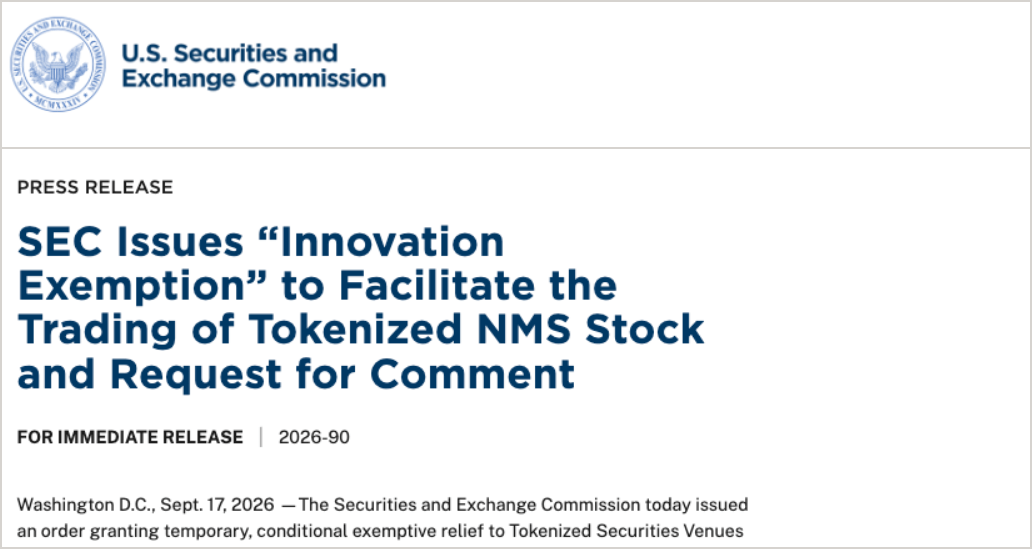
“…trade tokenized NMS stock using permissioned automated market makers and liquidity pools”
All publicly offered securities, in three phases from 2027.
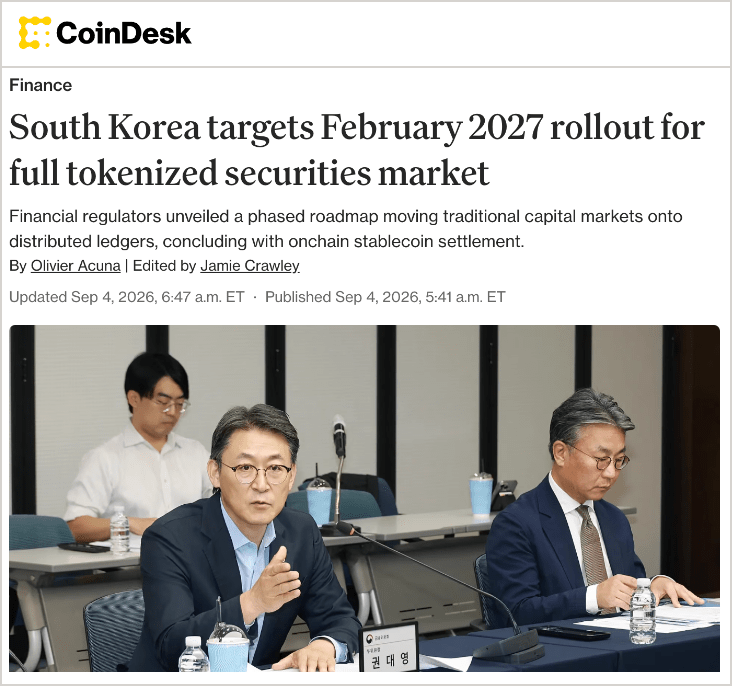
SEC press release 2026-90 (17 Sep 2026); CoinDesk (4 Sep 2026).
TWO WEEKS AGO
An automated market maker (AMM) is a trading mechanism: enables swaps against a pool of assets.
Liquidity providers
Deposit assets
Receive trading fees
Passive: remain in the pool
Active: withdraw and return
AMM pool
Asset 1
Asset 2
A rule sets trade prices
Liquidity traders
Trade for portfolio needs
Arbitrageurs
Trade against stale pool prices
Sequencer
The operator orders submitted trades and LP withdrawals.
Consider 2 transactions: an arbitrage trade, and an LP withdrawal
Trade and withdrawal requests arrive
Outside price moves
The pool quote is stale
Next block
If arbitrage executes first
1
Arbitrage trade
→ The LP bears the loss
If the withdrawal executes first
1
LP withdraws
2
Arbitrage trade against remaining capital
→ The LP avoids the loss
Equity markets: arrival decides the sniping race
Here: bid for your spot in the block
Priority fee auction: bid to the operator for an earlier place among eligible transactions
Same arrivals, same auction, different block intervals
Longer interval
A
B
A and B bid
Shorter interval
A
B
A executes
B arrives too late
Budish–Cramton–Shim: batching resolves racing. Here the batch doesn't mean "same price" => the batch competes for order sequencing and pays the operator for a place in a queue.Shorter batches bring the race back.
Base Flashblocks (July 2025): effective block time falls from 2 s to 200 ms; ordering rule unchanged
Share of gross arbitrage profit
Blockchain fees
Arbitrageur
Ethereum
every 12 s · Capponi–Jia
≈96%
≈4%
Base
every 2 s
56%
44%
Base Flashblocks
every 200 ms
12%
88%
Fewer contested priority auctions: less goes to the chain.
Illustrative sequences
Every 2 s
Arbitrage
LP loses
Same block: arbitrage executes first
Every 200 ms
LP withdraws
Arbitrage
LP avoids loss
Arbitrage
LP loses
Withdrawal can land first, but not always
Comment 1: LP bidding is ruled out by assumption [which I'll tell you why I believe is reasonable]
Would this ordering emerge if LPs could bid?
Fees: split pro rata. Losses: per unit of capital.
Normal trading
Passive LPs
Active LP
→ Active LP shares the fees
Stale-price arbitrage
Passive LPs
Active LP
→ Active LP can skip the loss
Key issue: How can AMMs keep (passive) liquidity on a fast chain?
Model interior optimum result (illustrative graph — not the paper's)
At the maximum, the active LP remains deposited.
Pool depth
Maximum depth
Faster → more fee income
fewer orders expire before they execute
Faster still → more loss events
fee gains flatten; sniping losses keep rising
Slower
Faster
Block frequency
⬈
⬊
Base after Flashblocks?
“Optimal trading speed": maximising pool depth.
Comment 2 · LP losses and block speed
Same outside price path
Before fees
$1
$4
$1
rises
reverses
In the model: once the gap is large it stays until arbitrage resets it. Faster blocks → more loss events.
Pool trades
Final holdings
Fees collected
Slow block
No pool trades
Original
None
Fast blocks
Two arbitrage trades
Original
From both trades
Gap up, then down: the model counts two losses. But: holdings return to the original (and LPs earn fee income).
Why not an external price process instead of a gap process with an absorbing “large gap” state?
What is the appropriate horizon for evaluating (passive) LP returns?
Comment 3 · AMM design
The protocol chooses
• Block speed
• Priority rule
LP participation
Liquidity available when traders need it
The AMM chooses
• Trading fee
compensation for adverse selection
• Pool design
Typically: exchanges set their own rules. Here: the trading venue does not control the clock, and “optimized” need not mean optimized for this pool.
If block speed changes adverse selection, should the AMM fee respond?
By Katya Malinova
This is he discussion that I gave at the SAFE microstructure workshop in September 2026.