GPIO Programming:
SNES Controller

Computing Machinery II Tutorial:
Week of April fo.Ols!!
Review
- We're now all experts in reading and writing C programs to control GPIO pins (gpio.h) and sending information to our host computer terminal (uart.h).
Assignment 4
Today:
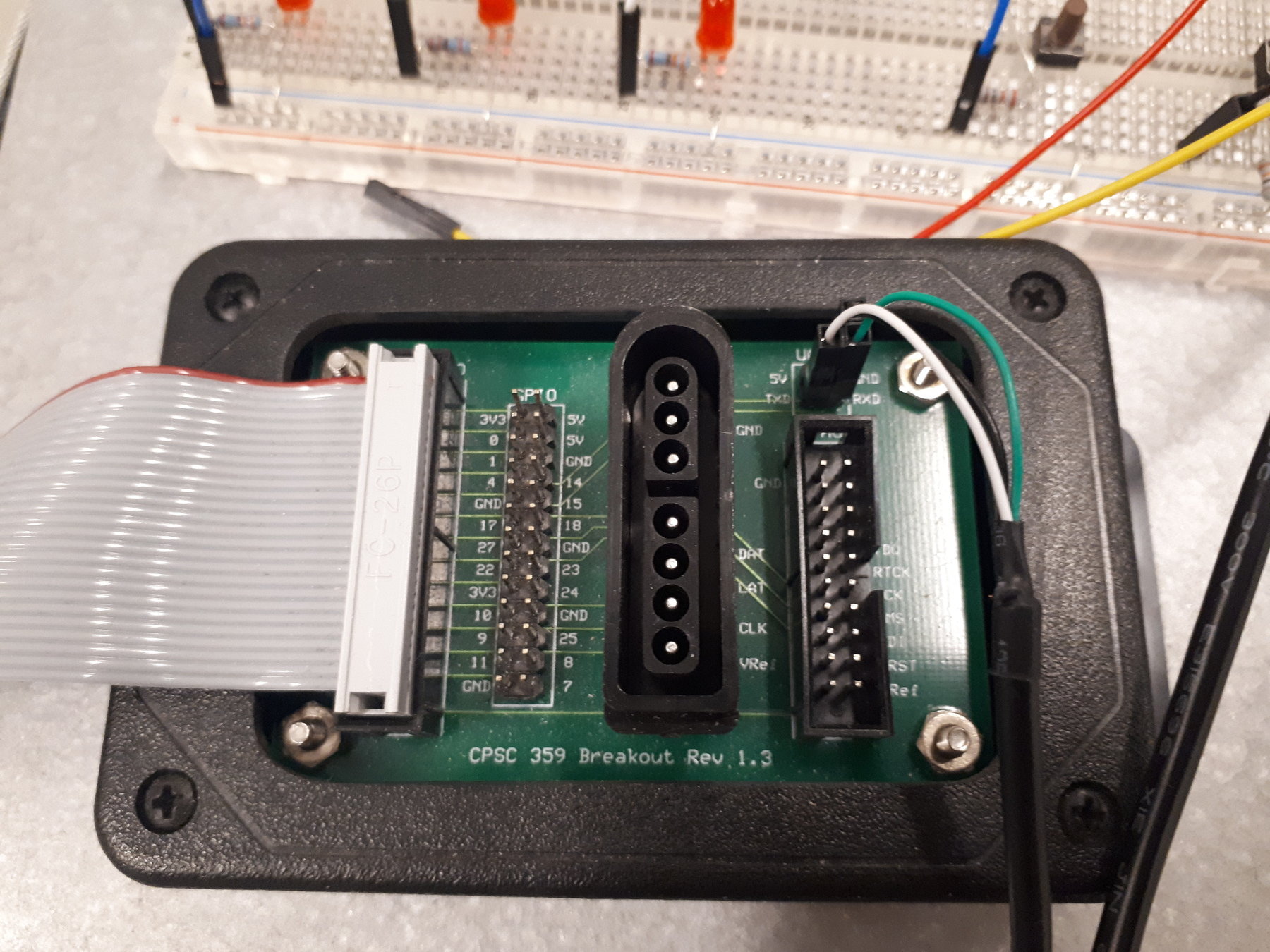
- Identify SNES Pins
-
Analyse 07_SNESController Code
- Decode outputs
-
get_SNES()
- Comprehend controller mechanism and associated communication protocol in code


SNES Pins:
Our hardware-software interface
Program output:
- We know that puthex(NUMBER); prints any number in it's hexademical representation
- There are 12 buttons to represent as numbers...
- Knowing nothing about how the controller works you might think that each button should be assigned a consecutive number starting from 1. Is this what's going on?
Program output:
- The controller is built to have it's state sampled and the controller designers chose to represent this pressed/not-pressed state of all buttons with a single 16 bit number.
- This way we can recognise combinations of buttons as distinct from a sequence of button presses, regardless of how close in time they might be.
- This also reduces controller CPU communication costs
- If L is 0x400 and A is 0x100, what is the hexidecimal representation of this button press combination?
- What button combination makes this hexadecimal number?
\cdots 00 ~ \overbrace{0001} ~ \overbrace{0101} ~ \overbrace{0011}
0x00000153
Can every button press combination be represented by a unique hexidecimal number?
Important parts of code
- includes
-
"systimer.h" for microsecond_delay()
-
- while loop
- get_SNES() returns that 16 bit number from the controller
- get_SNES() function definition describes the serial communication protocol
- pulse Latch pin
- wait
- trigger clock pin falling edge
- read data pin
- wait
- trigger clock pin rising edge
- goto step 2 (15 times)
Two Easy Extensions For You:
- Print button combinations as useful strings instead of Hex
- Catch special button combos with additional print out
- Poll controller state ~ 60 times per second.
Pi_5
By pathomas