Danna's Lesson
Past tenses / Used to and would
The children were shouting when the teacher came in.
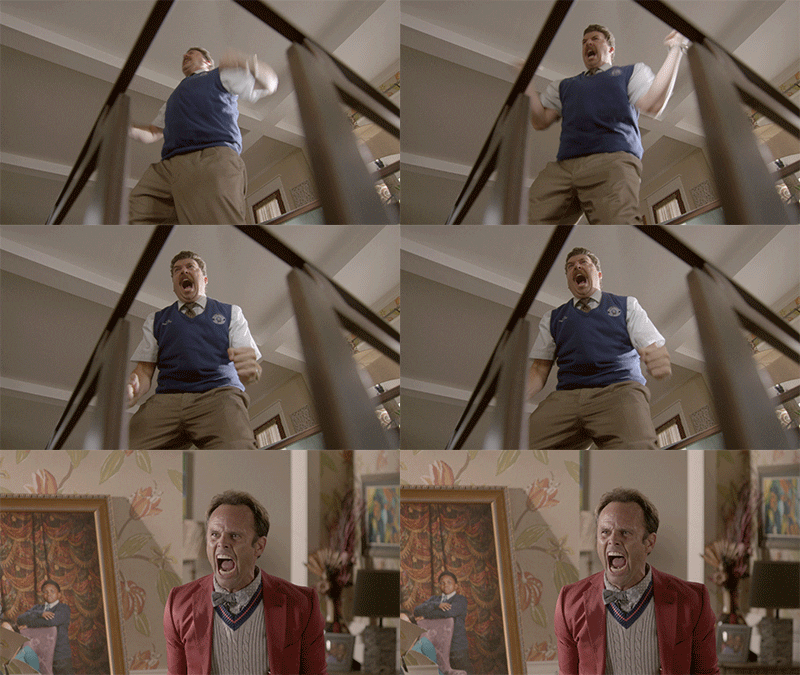
My parents were looking for a new apartment.

I was reading a very good book.

When the fire started I was watching television.

It was snowing yesterday.

Juan started a new job last week.

Past continuous
- Cosas que están pasando en un momento especifico del pasado (acciones NO TERMINADAS).
- SUJETO + VERBO TO BE (WAS/WERE) + V. -ING + COMPLE.
- S + TO BE (WASN'T/WEREN'T) + V. -ING + COMPLE.
- WAS/WERE + S + V. -ING + COMPL. + ?
Ej: Yesterday I was studying in the house.
Past simple
- Acciones terminadas (COMPLETAS).
- Rutinas del pasado.
- SUJETO + VERBO (-ED/2DA COLUMNA) + COMPL.
- S + DIDN'T + VERBO NORMAL + COMPL.
- DID + S + VERBO NORMAL + COMPL. + ?
This morning I ate arepa for breakfast.
This morning I didn't eat arepa.
This morning I was sad.
Shorter action (past simple)
Longer action (past continuous)
He took the camera and his wallet and went out for a walk.

Cathy was happy because she had won the race.
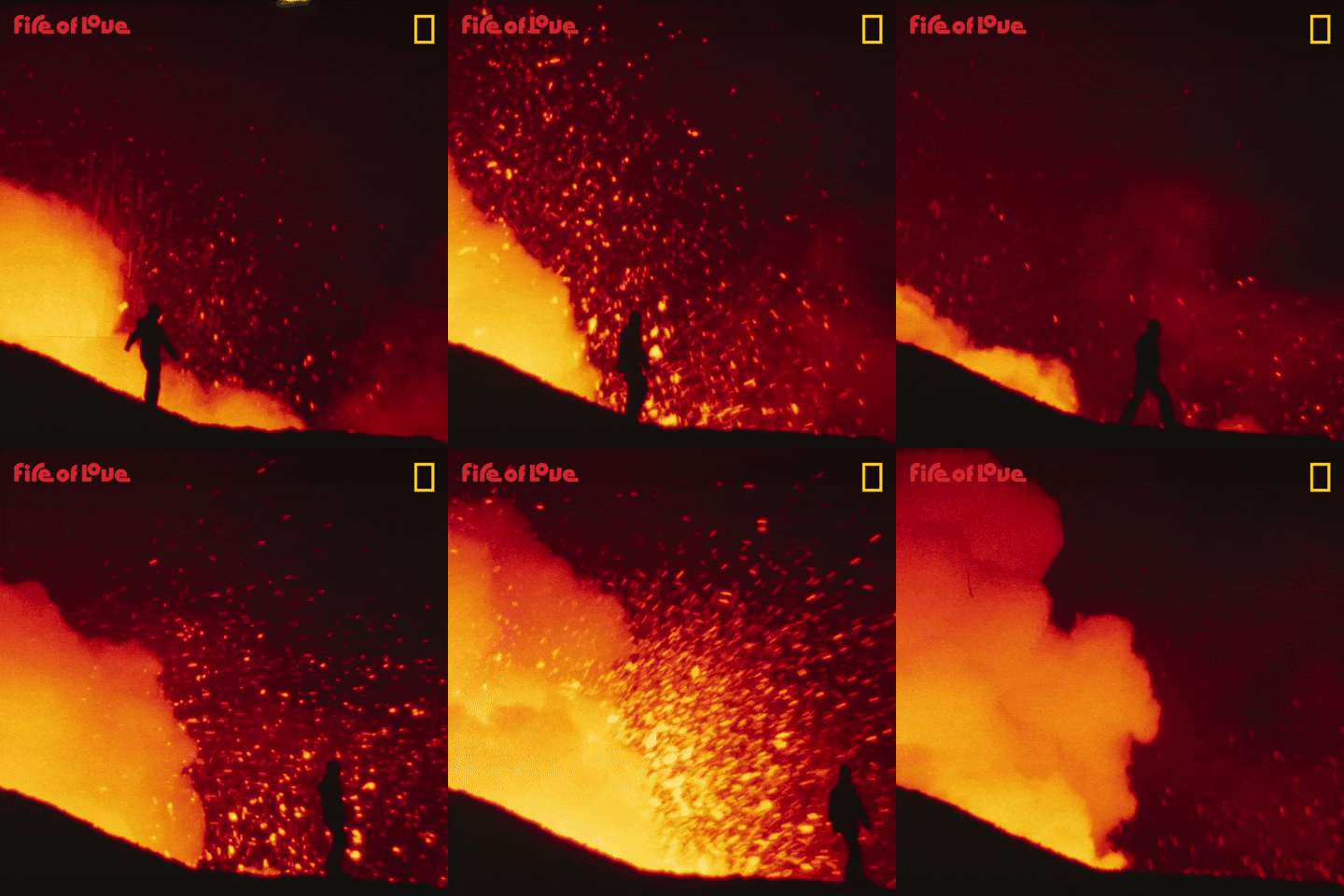
This time last week we were standing on a volcano.
They went to Australia last
year.

The ferry had already left by the time we arrived at the port.

I had been waiting for two hours when he finally arrived.

Simple
Acción acabada en el pasado, en un momento específico - FOTO
Perfect Simple
Acción pasada que ocurrió antes de otra acción pasada - DOS VECES AL PASADO
Perfect Continuous
Acción en progreso en el pasado, que llevaba tiempo sucediendo antes de otra acción - PELÍCULA
- Usa had + V3 para lo que pasó primero.
- Si la acción duró un tiempo, usa had been + -ing.
- Simple: yesterday, last week, two days ago.
- Perfect simple: before, after, by the time, already, just.
- Perfect continuous: for, since, before, until, when.
Past perfect simple
- Algo que pasó antes que otra acción en el pasado (saltar dos veces al pasado).
- SUBJECT + HAD + VERBO 3ERA COLUMNA + COMPL.
- S + HADN'T + VERBO 3ERA COLUMNA + COMPL.
- HAD + S + VERBO 3ERA COLUMNA + C + ?
Ej: I had bought a new dress before I knew the bad reviews.
Past perfect continuous
- Algo que pasaba en el pasado y que continua en el presente.
- SUBJECT + HAD + BEEN + V. -ING + COMPL.
- S + HADN'T + BEEN + V. -ING COMPL.
- HAD + BEEN + S + V. -ING + C + ?
Ej: Juanita had been looking for work for 5 months.
Juanita hadn't been looking for work for 5 months.
She was exhausted because she had been practising her coreography all morning.
Present simple
- Ej: I wake up at 5am in the morning every day.
- She wakes up at 5am...
- I don't wake up early during on weekdays.
- I go to dance at 6pm in the afternoon all Fridays.
- She goes to dance at 6pm in the afternoon all Fridays.
- What do you do in the afternoons?
- Hábitos o rutinas en el presente.
- Cosas que hacemos regularmente.
- Cosas que son verdad.
- S + VERBO (-s 3era persona) + COMPL.
- S + DON'T/DOESN'T + VERBO NORMAL + COMPL.
- DO/DOES + S + VERBO NORMAL + COMPL. + ?
Present continuous
- Acciones que están ocurriendo en este momento (now, at this moment).
- S + IS/AM/ARE + V. -ING + COMPL.
- S + ISN'T/AREN'T/AM NOT + V. -ING + COMPL.
- IS/ARE/AM + S + V. -ING + COMPL. + ?
- Ej: My mom is cooking pasta in this moment.
- My mom is not cooking pasta...
- My mom isn't playing with the dog.
- What is Juanita doing today?
Present perfect simple
- Ej: I have lived in this house all my life.
- I have not eaten pasta in the house.
- Have you travelled around the world?
- Experiencias que he tenido en la vida.
- Evento del pasado que son recientes.
- S + HAVE/HAS + V. (-ED/3ERA COLUMNA) + COMPL.
- S + HAVE NOT/HAS NOT + V. (-ED/3ERA COLUMNA) + COMPL.
- HAVE/HAS + S + V. (-ED/3ERA COLUMNA) + COMPL. + ?
Present perfect continuous
- Ej: We have been studying since you left this morning.
- We haven't been calling all the morning.
- Have you been crying?
- Situación que inicia en el pasado y sigue ocurriendo.
- Acciones repetitivas del pasado en el presente.
- S + HAVE/HAS + BEEN + V. -ING + COMPL.
- S + HAVEN'T/HASN'T + BENN + V. -ING + COMPL.
- HAVE/HAS + S + BEEN + V. -ING + COMPL. + ?
When I was little, I would get up and watch cartoons every Saturday morning. Now I rarely watch TV.
I used to watch cartoons every Saturday morning when I was very little. Now I rarely watch TV.

Every night our mother would read us a bedtime story.
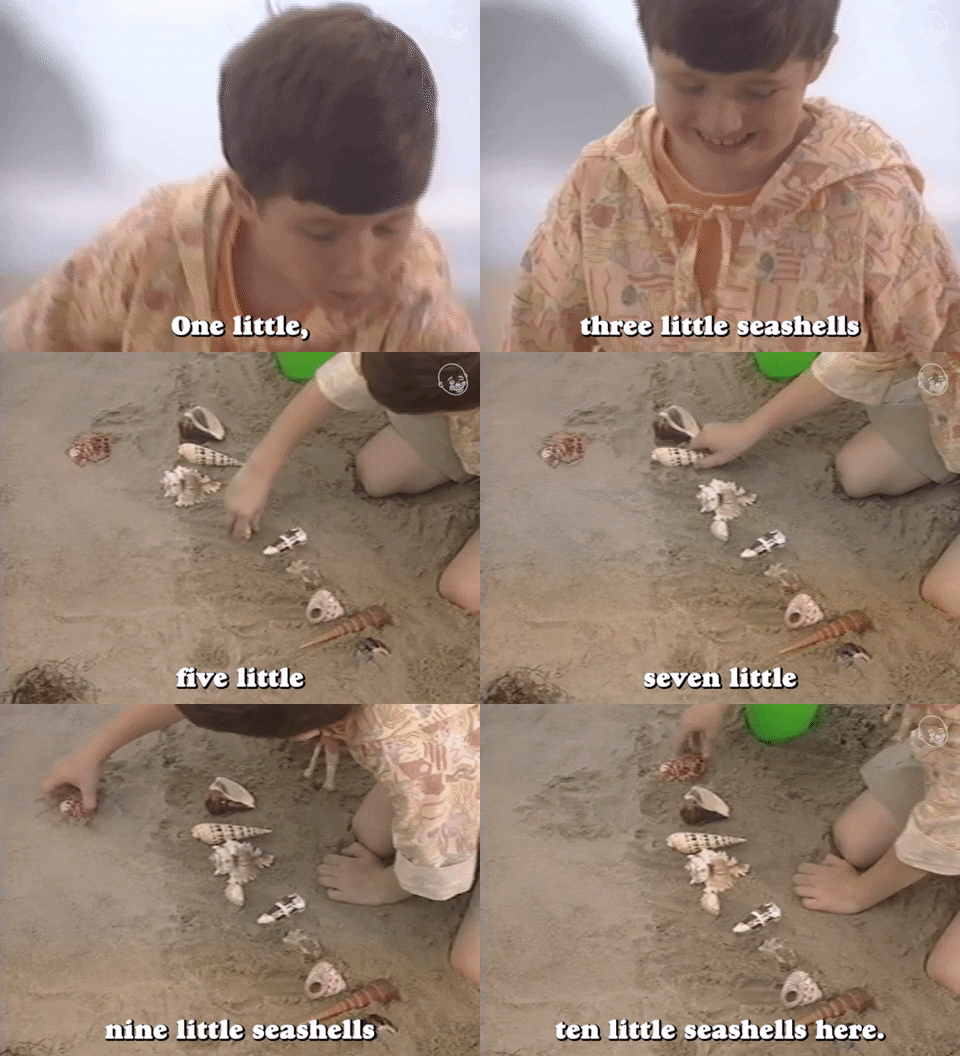
My brother used to collect seashells.
Used to vs. Would
- Both USED TO and WOULD are useful to talk about things we did regularly in the past.
- We don't use WOULD with stative verbs (past states or situations).
- WOULD is used when we established a time period before.
- USED TO don't need a time period.
Stative verbs: describen un estado en vez de una acción.
- Senses: appear, feel, hear, look, see, smell, sound, taste.
- Perception: believe, forget, know, understand.
- Feelings and emotions: desire, like, love, hate, prefer, want, enjoy.
- Other: have, need, agree, be, cost.
I would ride my bike to school when I was small.
I would play with my toys / I would have a lot of toys.
Danna's Lesson. Past tenses: simple, continuous, perfect simple and perfect continuos.
By Valentina Rodríguez Ramírez