










AI and Public Governance

POL-32450, Proseminar II, Universität Konstanz, winter semester 2026/27
Tuesdays, 11:45–13:15, Room G307

Carina Hausladen

  • A Proseminar II trains advanced academic writing
  • You develop your own research question
  • You build theory, hypotheses and a research design step by step
    • No data collection or analysis
  • You give and receive peer feedback on each other's writing
  • Goal: a short exposé (Dec 9) and a long exposé (Feb 3)

What is a Proseminar II?

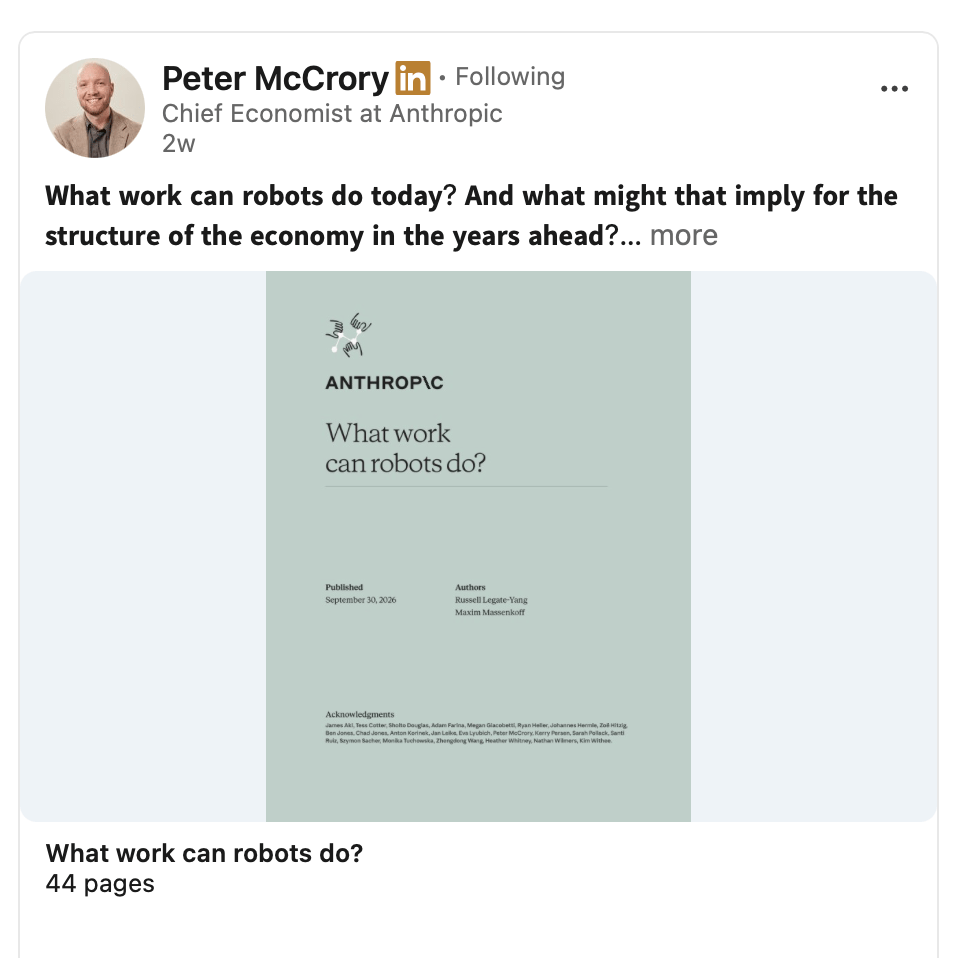
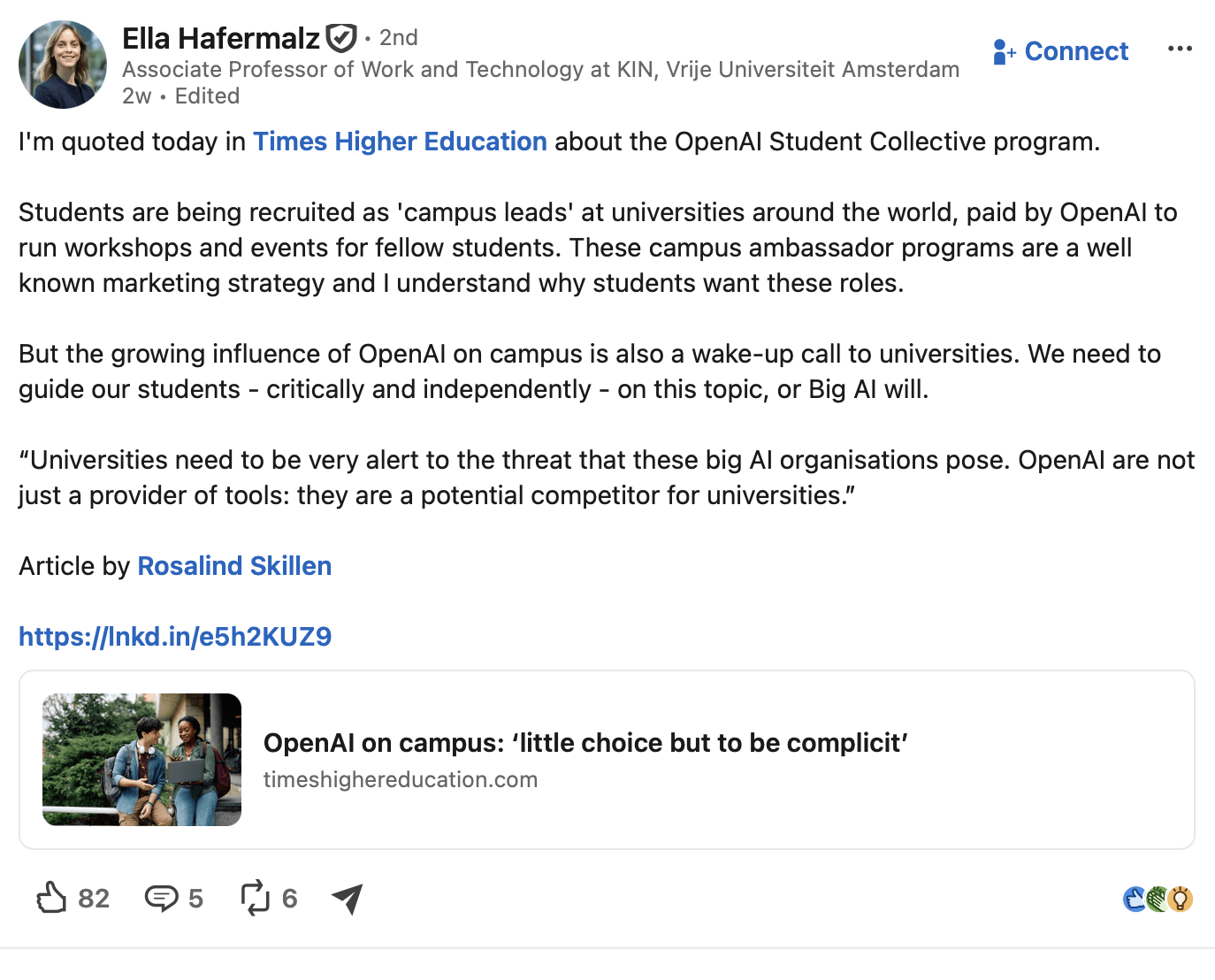
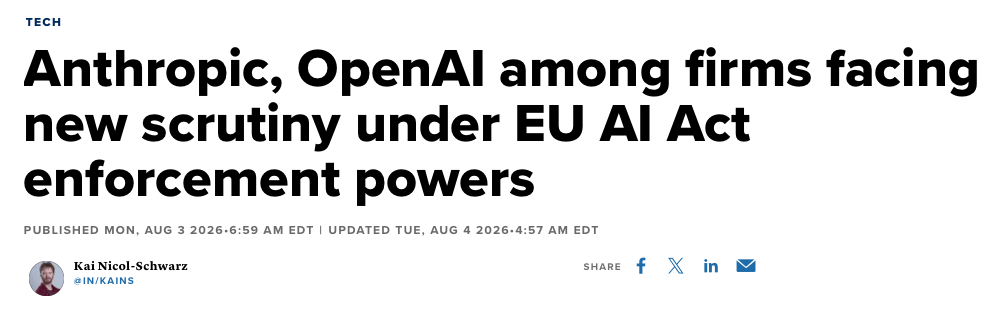
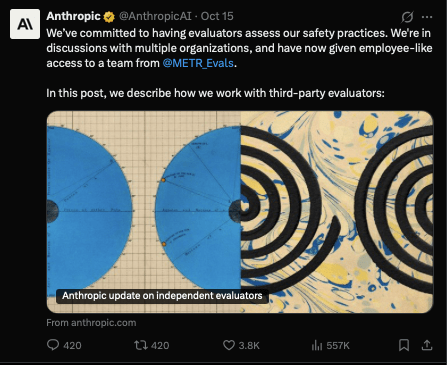
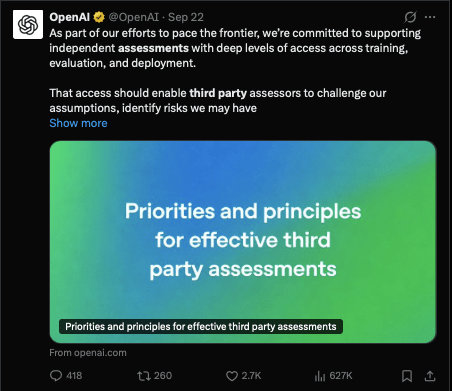
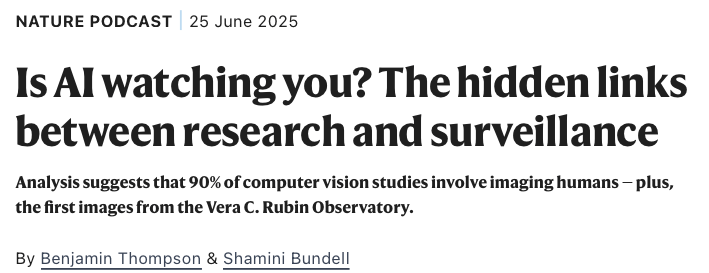
  •   AI labs no longer just build models
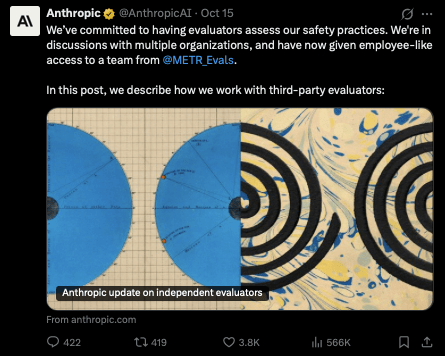
    • They hire economists, fund universities, train teachers, write policy
    • explicit strategy, and it shapes how AI should be governed
  • First we understand what AI changes, then we think about how to govern it
    • Five areas: work, science, accountability, rules, power
  • Each reading is a specific study with a research question, a hypothesis and data
  • Policy documents matter too, but in a Proseminar II we learn from research designs

How should AI be governed?

  • Paper presentation: graded, 30%
  • Short exposé: graded, 30%
  • Long-exposé presentation: ungraded
  • Long exposé: graded, 40%
  • AI Observatory: ungraded

Activities and Assessment

  • 10 minutes
    • core of your paper (7 min)
    • your extension (idea) (3 min)
  • 5 minutes class discussion

Paper Presentation

AI Observatory

  • 5–10 minutes every week: how did we actually use AI for this week's task?
  • One student leads with real examples: the prompt, the output, what they kept or threw away & summarises the discussion
  • Overleaf/AI_observatory.tex
  • Then everyone shares: what worked, what failed, what was useless
  • "I didn't use AI" counts as an answer
  • Sign up on Oct 27; for some weeks 2 students can sign up

Sessions

Date Session Due before class
Oct 20 Introduction –
Oct 27 Extension ideas and literature gap Read your paper; first extension idea
Nov 3 1. Politics of AI and work Readings; literature gap
Nov 10 2. Who shapes AI science Readings; hypothesis
Nov 17 3. Voluntary vs. mandatory accountability Readings; causal research design
Nov 24 4. Designing rules Readings; dummy figure + results
Dec 1 5. States vs. AI power Readings; introduction + conclusion
Dec 8 Short exposé presentation + group feedback Short-exposé draft; ILIAS: revision unit; submit by Dec 9
Dec 15 Theoretical model and DAG Long exposé: literature-gap figure
Dec 22 1:1 feedback (online) Long exposé: model and DAG
Jan 12 1:1 writing session Long exposé: first draft; ILIAS: writing reflection
Jan 19 Presentation: social media thread Thread on slides
Jan 26 Final presentations + feedback I –
Feb 2 Final presentations + feedback II –
  • 6 ECTS × 25 h = 150
  • 14 class sessions × 1.5 h =  21 h in class
  • → 129 h of work outside class
    • / 14 working = 9 h/week

Logistics

Logistics

Topics

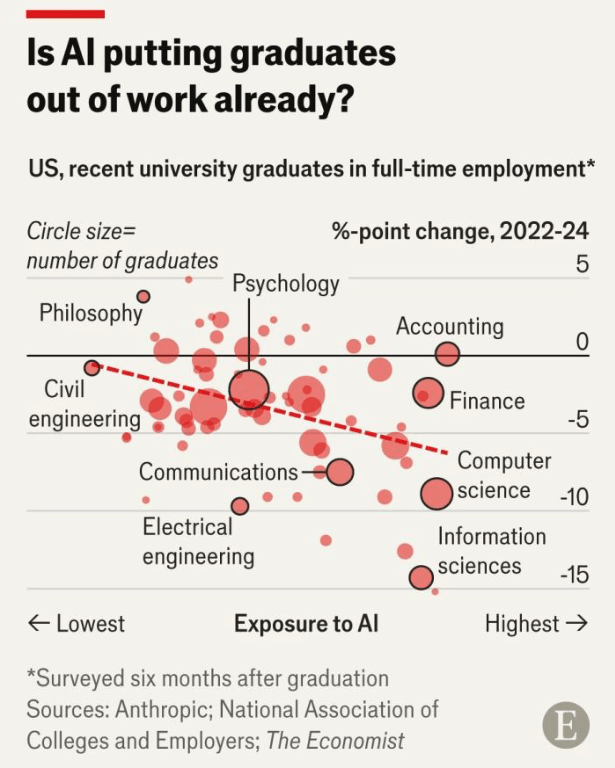
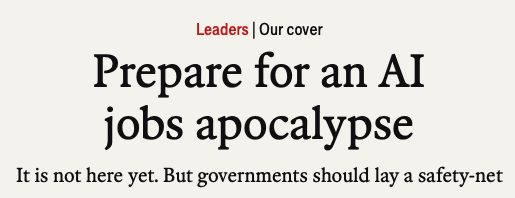
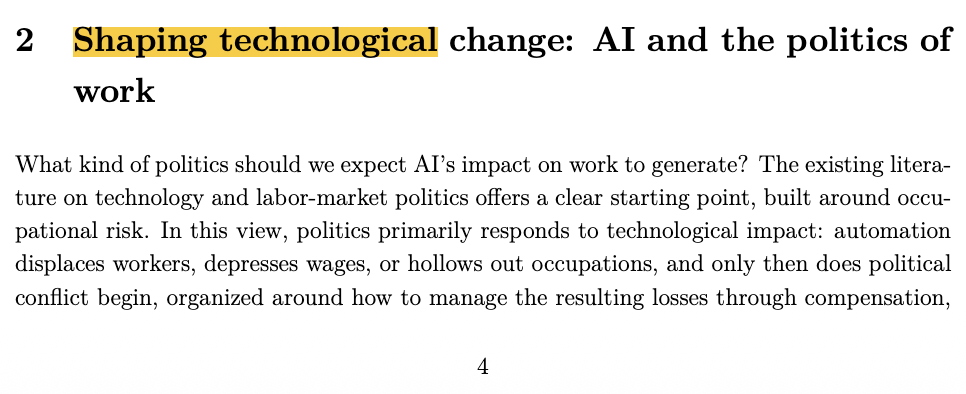
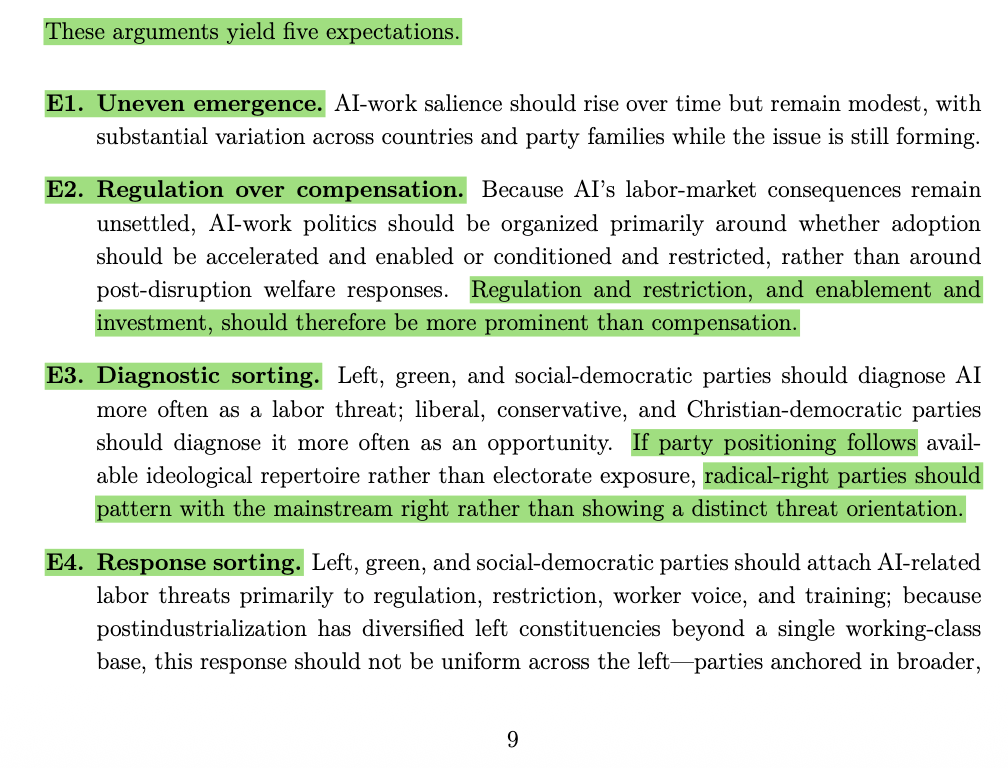
1. Politics of AI and work

2. Who shapes AI science?

"The issue is not whether my students are valuable. In the long run, they are invaluable. The issue is that their value emerges slowly, whereas AI delivers immediate returns. I feel somewhat embarrassed to admit how tempting this is. 

Yet I see these calculations shaping the labs around me. Close colleagues are quietly refraining from taking on as many students as they used to."

3. Voluntary vs. mandatory accountability

4. Designing rules

5. States vs. AI power

Paper Karaoke

2' per paper

  1. Tell us your name !
  2. read the title aloud  
  3. read the last name of first author aloud
  4. answer any or all
    1. what is the main question?
    2. which data did they use to answer it?
    3. what did they find?
    4. why was this paper interesting?

Oct 27

Why do you want to learn

"Advanced academic writing"? 

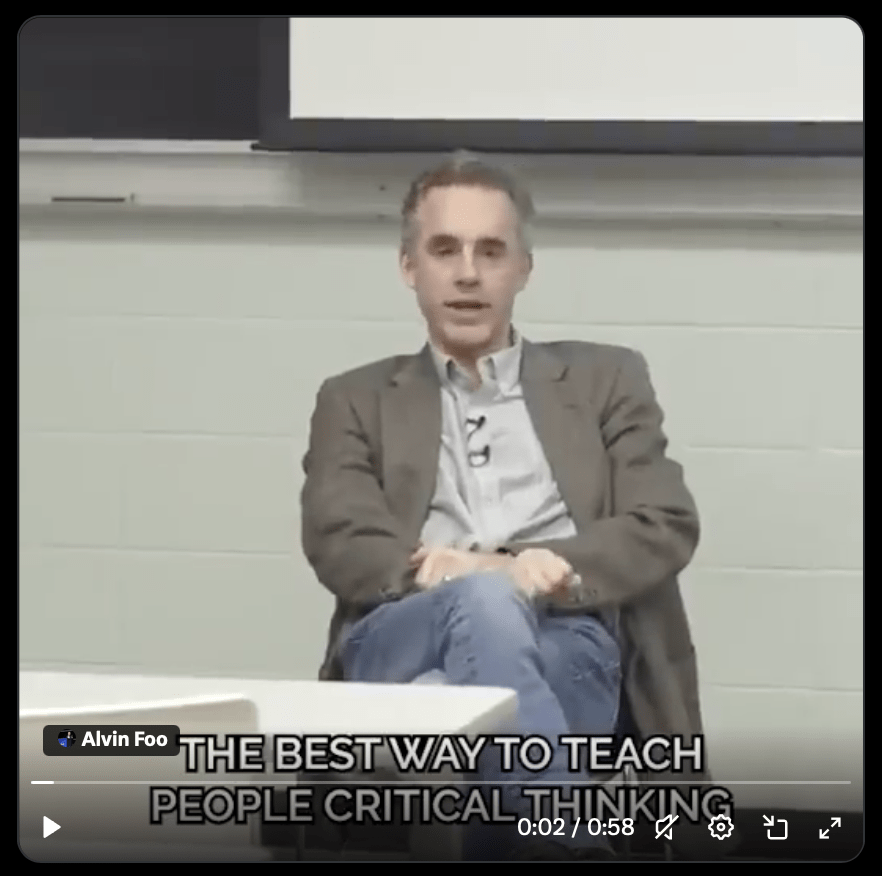
Critical thinking is shaped through writing

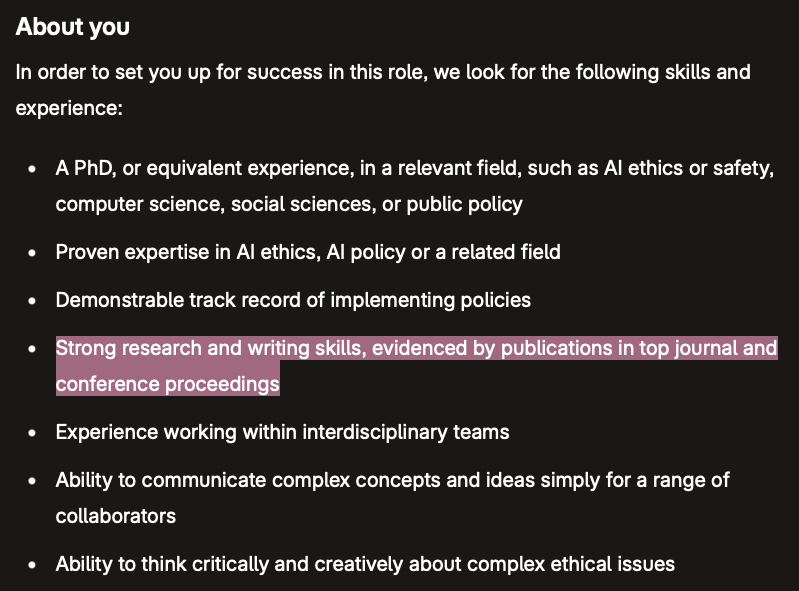
main application document:
5 pages (only)

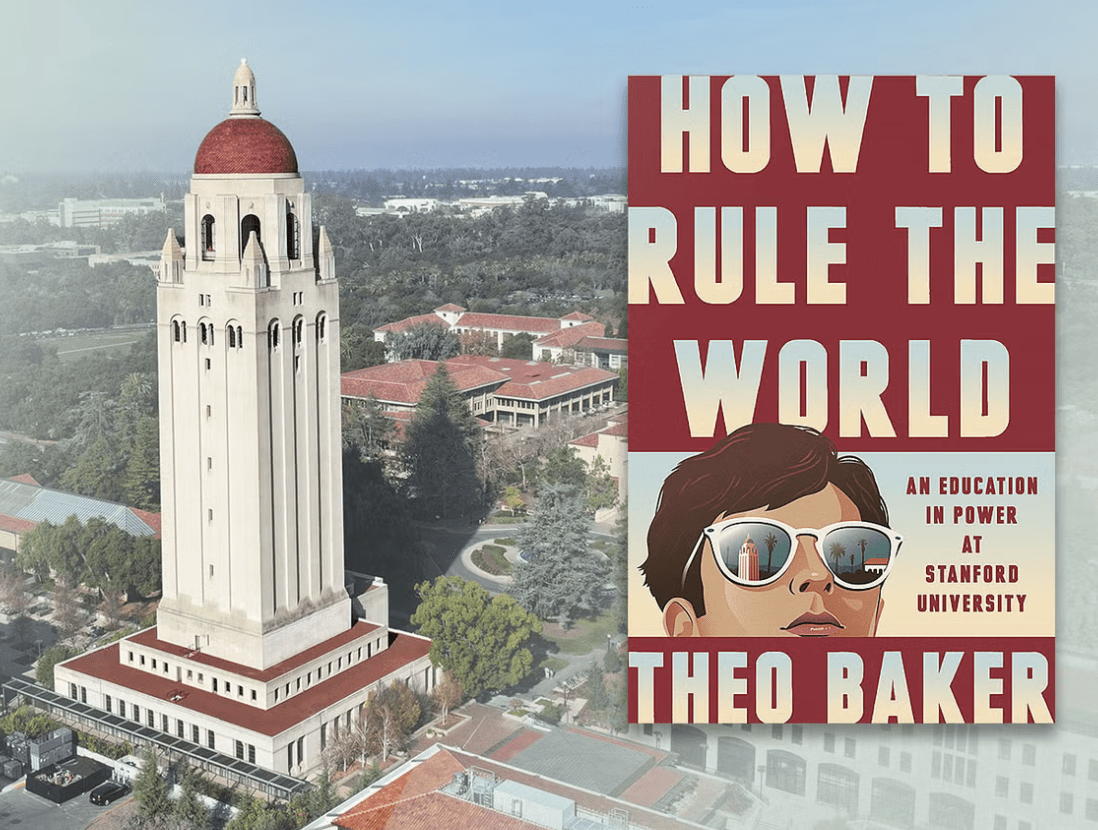
Your writing can have impact

Outline of Academic Papers

CS & policy conferences

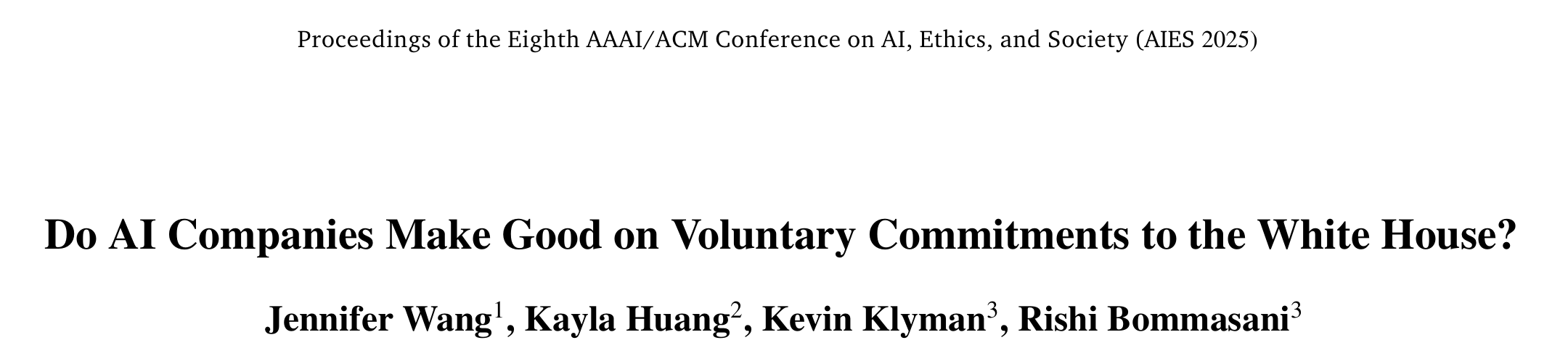
FAccT, AIES, arXiv cs.CY

Gerchick, Wang, Trišović, Jarvers, Longpre, Blankvoort

Intro → related work → methods → findings → discussion with recommendations and limitations → conclusion

Political science

AJPS, preprint in the same style

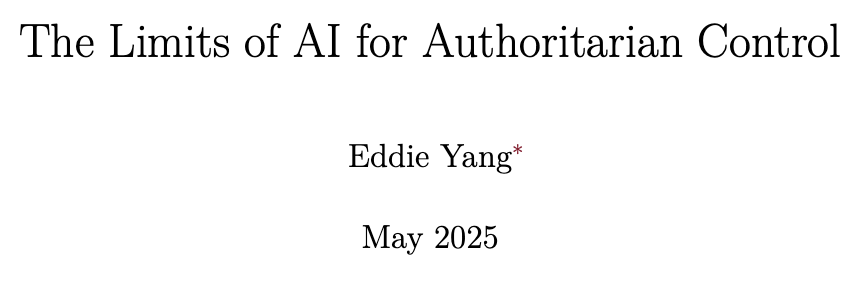
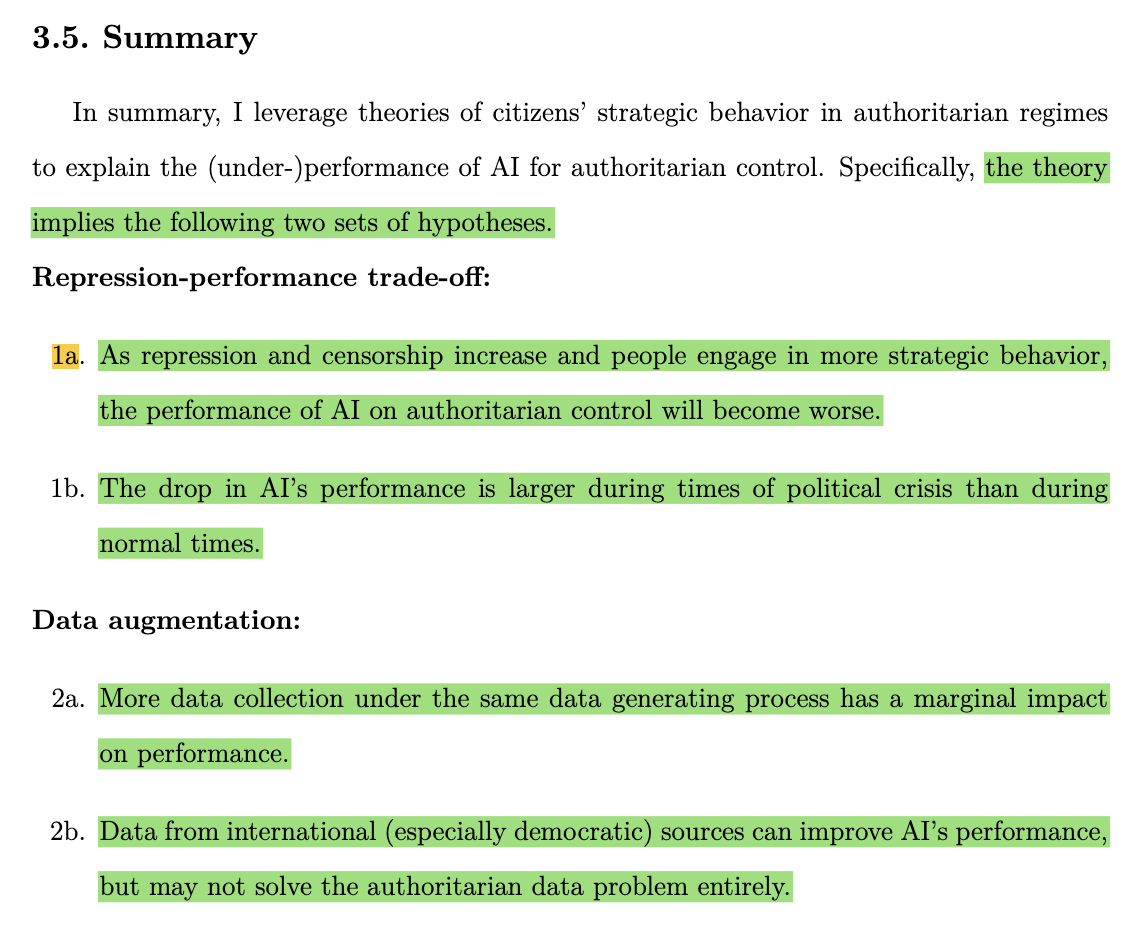
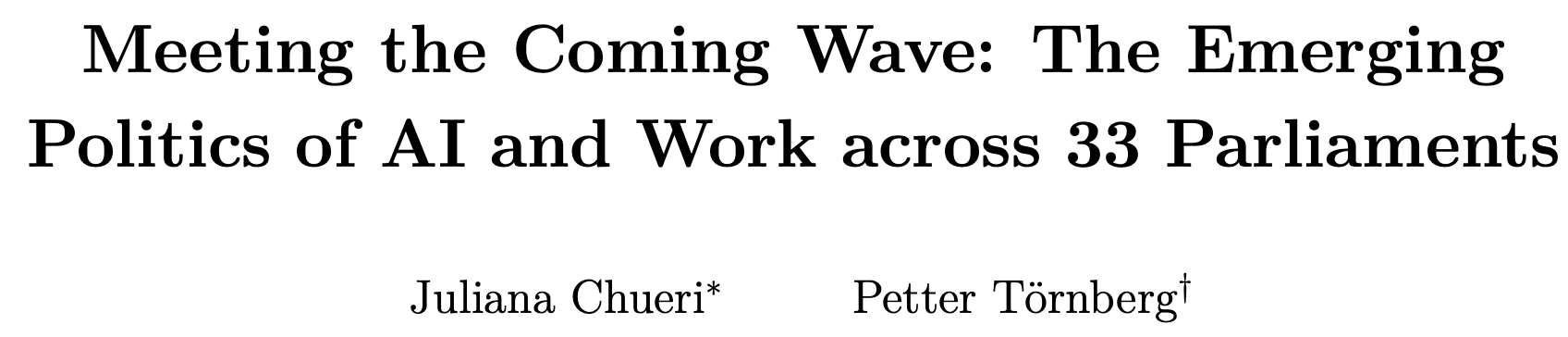
Yang, Chueri & Törnberg

Intro → background → theory with hypotheses → data and research design → results → discussion

Economics working papers

Stanford Digital Economy Lab

Brynjolfsson

Long intro with literature → data → results → robustness → alternative explanations → conclusion → long appendix

General-interest science

Nature, PNAS, PNAS Nexus

Kalluri, Waight, Hao, Laufer, Fenoaltea, Wack

Abstract → short intro → results under claim headings → discussion → methods at the end

Different disciplines, different outlines

Our Overleaf Template

https://www.overleaf.com/project/6ad66c8e39f8f9af9c366884/share#1fb1b99d0715bed0873af73530917c52ca0431b0514867cd

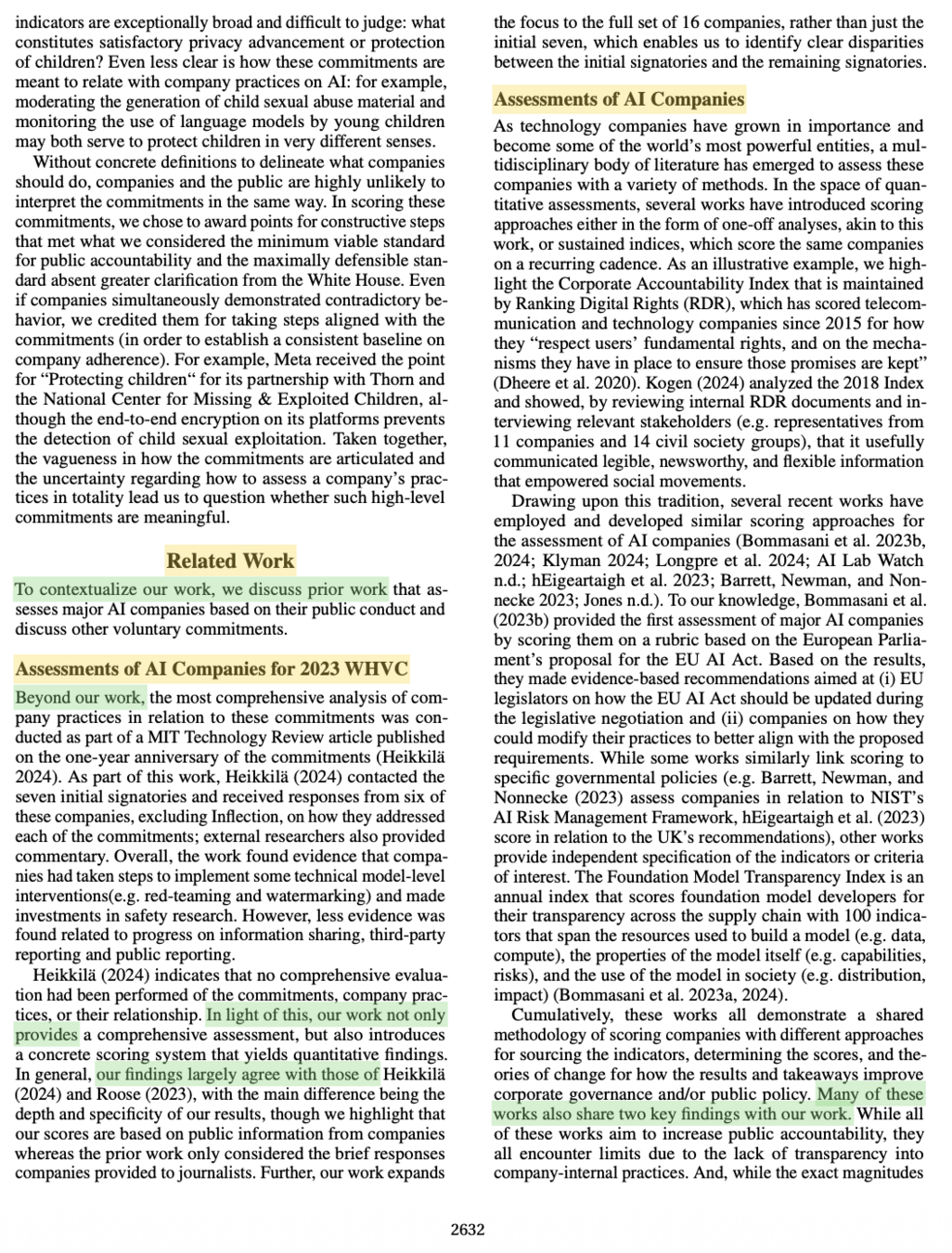
Literature Section

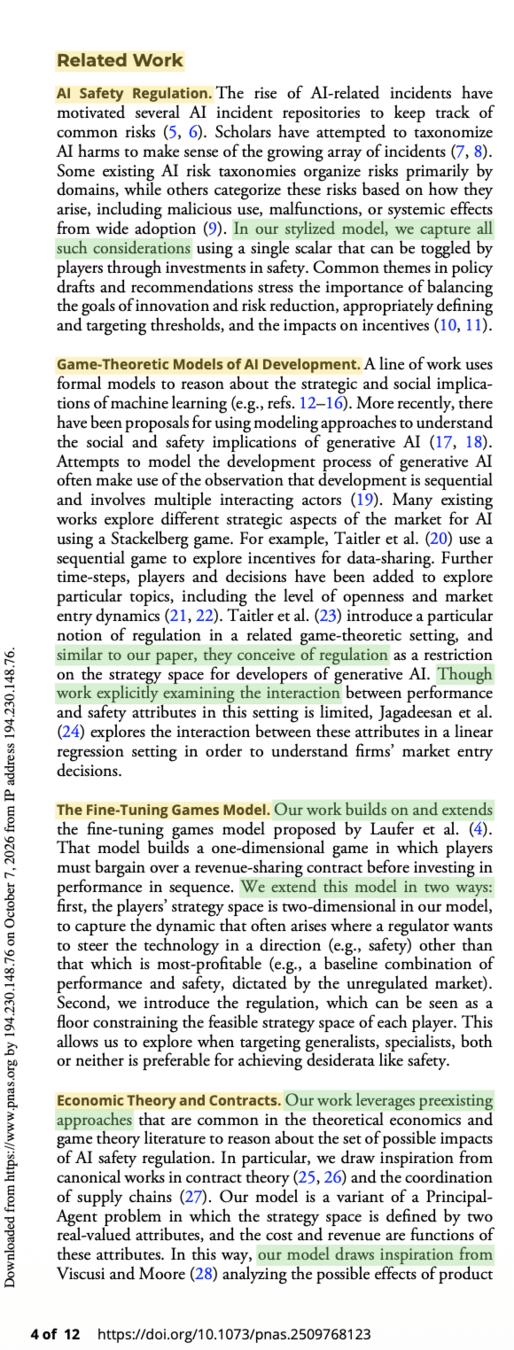
Purpose of the Literature Section

Example 1

Example 2

Your Task, due Nov 3

1. Categorize

  • Read the literature part of your paper closely
    • No such section? Check the intro
  • Split it into 2–4 strands of literature
  • Give each strand a subheading (no need to read all cited papers yet)
  • Mark how the authors relate to each strand (green in our examples)

2. Write

  • One paragraph per strand
  • End each with one sentence on how your extension idea relates to it

3. Find

  • One paper related to your paper or extension idea that your paper does not cite
    • e.g. via Google Scholar "Cited by"
  • Read it
  • Write at least one sentence on how it relates to your extension idea

Submit via Overleaf: YourName.tex, section "Literature"

Setting up your Overleaf

Set up

  1. Create a folder with your name
  2. Copy the sample paper into it and rename it YourName.tex
  3. Create YourName.bib in the same folder
  4. Point \bibliography{…} to your .bib file

Cite

  1. Find your paper on Google Scholar: "Cite" → BibTeX
  2. Paste the entry into your .bib file
  3. Cite it in your Literature section: \cite{key}
  4. Click "Cited by", pick one paper, add and cite it the same way

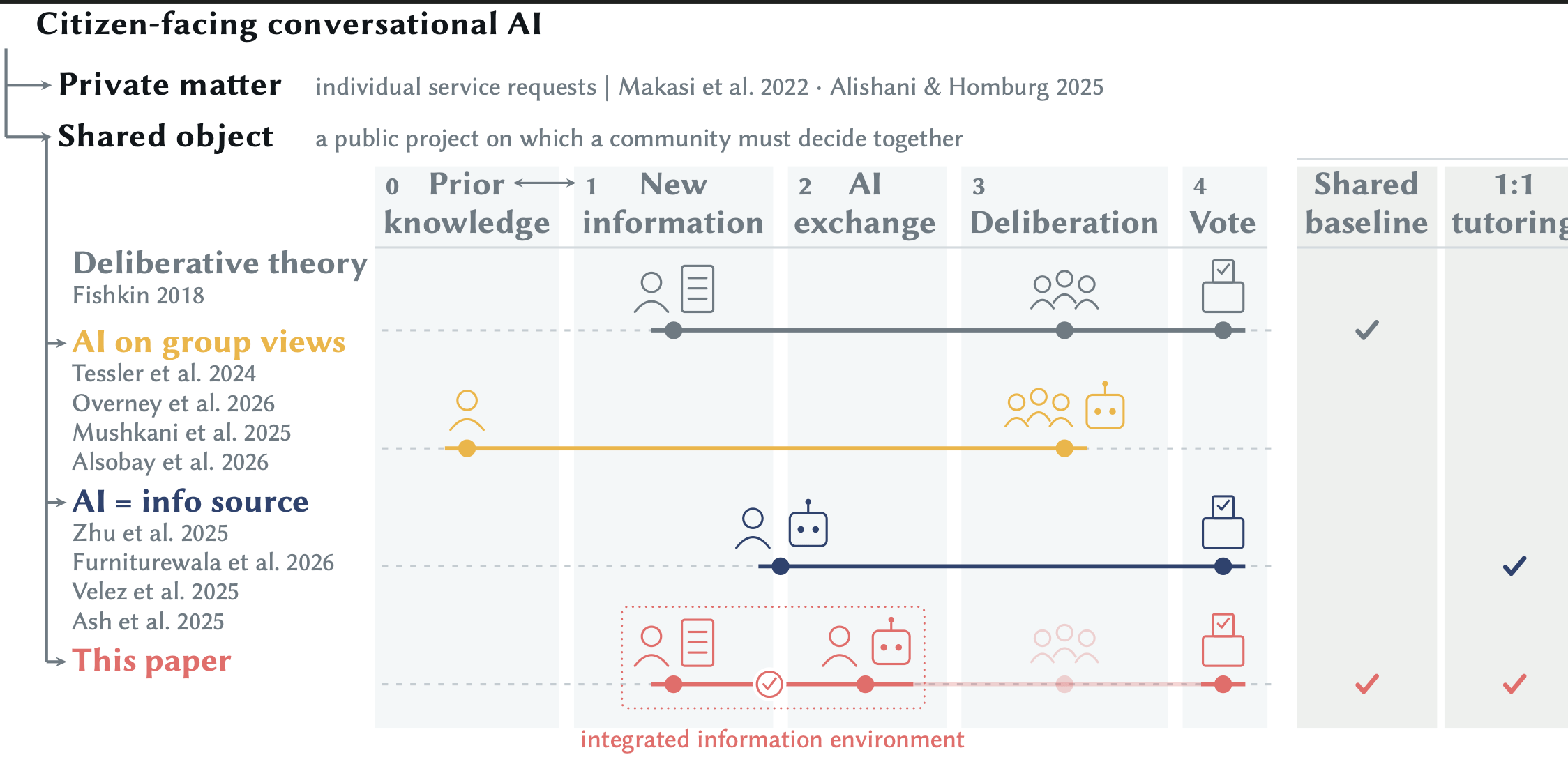
Visualizing the Literature Section

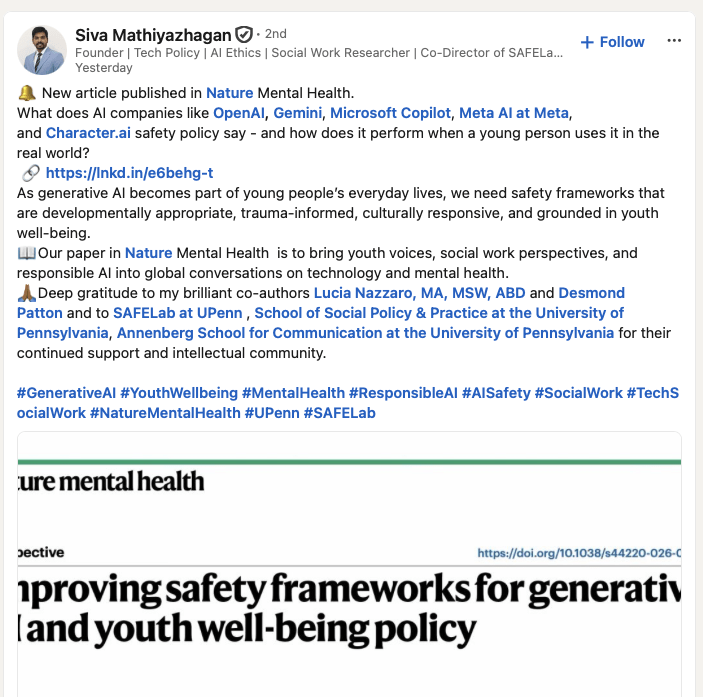
AI Observatory

  • Sign up at 0_AI_Observatory.tex
  • train your recommender systems to help you find interesting papers (LinkedIn, X, Bluesky, Substack, …)
  • other tools

Nov 3

- 15' paper 1

- 15' paper 2

- 10' AI Observatory

- 5' Break / buffer

- 20' Theory and hypotheses

- 25 Your Extension ideas &
Literature sections 

Theory and Hypotheses

Strong inference

  • Two rival theories
  • One test that decides between them (Platt 1964)

Falsification

  • 1,000 white swans do not prove "all swans are white"
  • One black swan refutes it (Popper 1934)

Theory and hypothesis

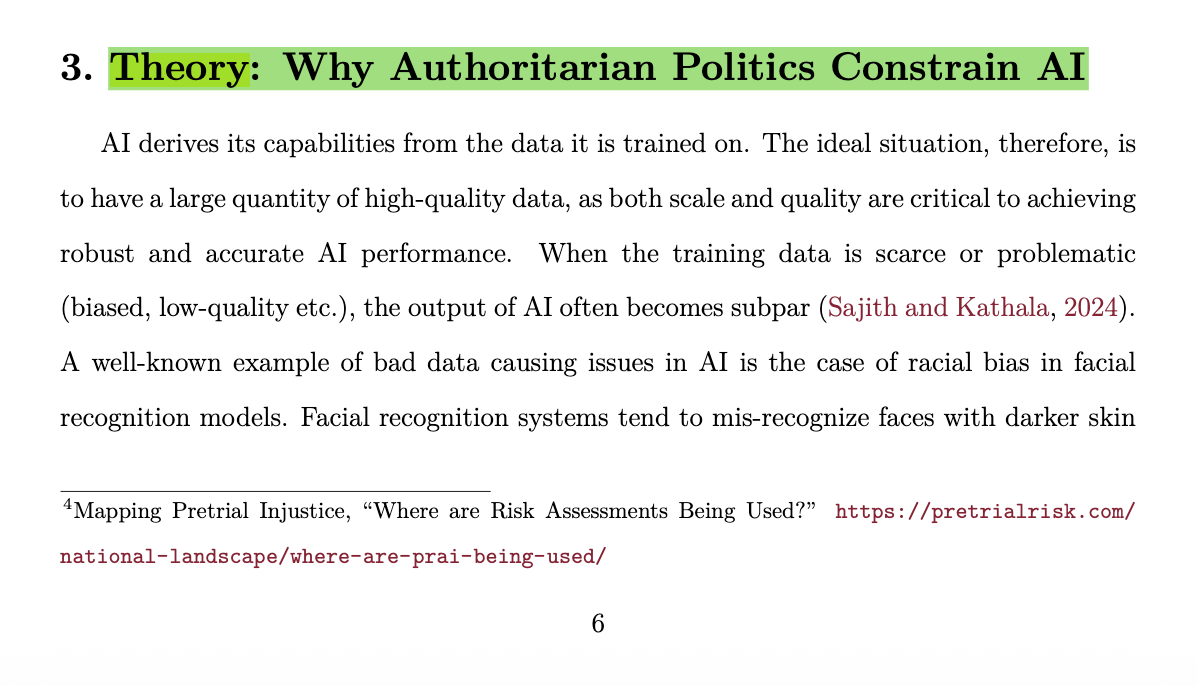
  • Theory: Why and through what mechanisms does the phenomenon occur

  • Hypothesis: What observable outcome would we expect if this theoretical explanation is correct?

Theory and Hypotheses

Example

Strong inference

  • Ultimatum game:
    • a proposer splits 10 points, a responder accepts or rejects;
    • rejecting leaves both with 0
  • Puzzle: people reject unfair offers, so they give up money. Why?
  • Rival theories
    • Theory 1, outcomes: people dislike inequality, so only the final split matters
    • Theory 2, intentions: people punish unkindness, so what the proposer could have offered matters

Falk, Fehr & Fischbacher 2003: 8/2 offer + 4 additional ones

Proposer's alternative H1: outcomes H2: intentions Responders who reject 8/2
5/5 (fair) same high 44%
2/8 (generous) same medium 27%
none (forced) same none 18%
10/0 (greedy) same low 9%

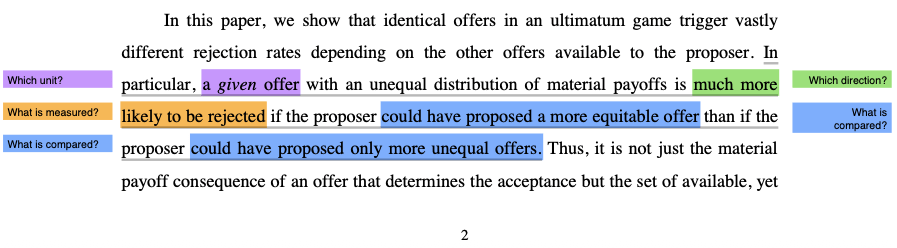
H1: Rejections of 8/2 are the same whatever the alternative.

H2: Rejections of 8/2 are higher when 5/5 was possible than when only 10/0 was.

Theory & Hypotheses in our Readings

Theory & Hypotheses in our Readings

Data → theory vs.

theory → hypotheses → data

  • Exploration is research too
    • "The student, now a junior researcher, has learned how to operate the hypothesis-testing machinery, but not how to feed it with meaningful input." (Scheel et al. 2021)
    • Descriptive work, exploratory experiments and pilots are no "second-class citizen" (Scheel et al. 2021)
    • Explore first, then test on fresh data; hardly any of 1,500 conference studies were exploratory (Aczél 2024, Nature)
  • Famous papers without a hypothesis

Exploration & Hypotheses in Practice

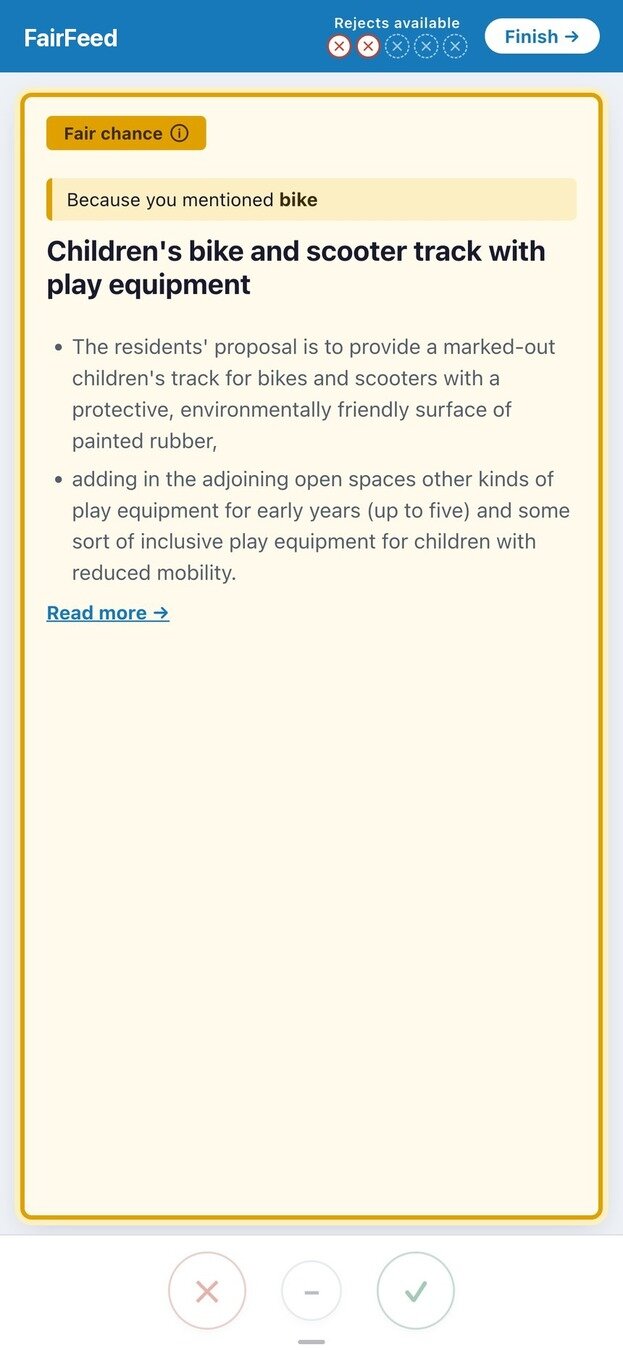
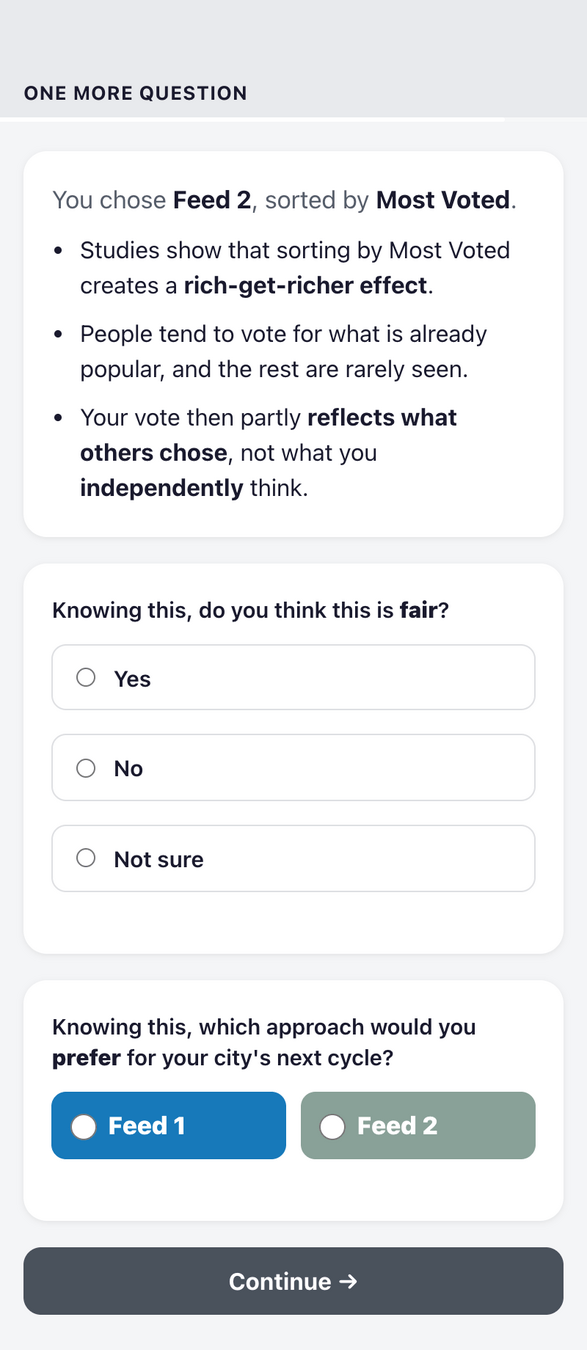
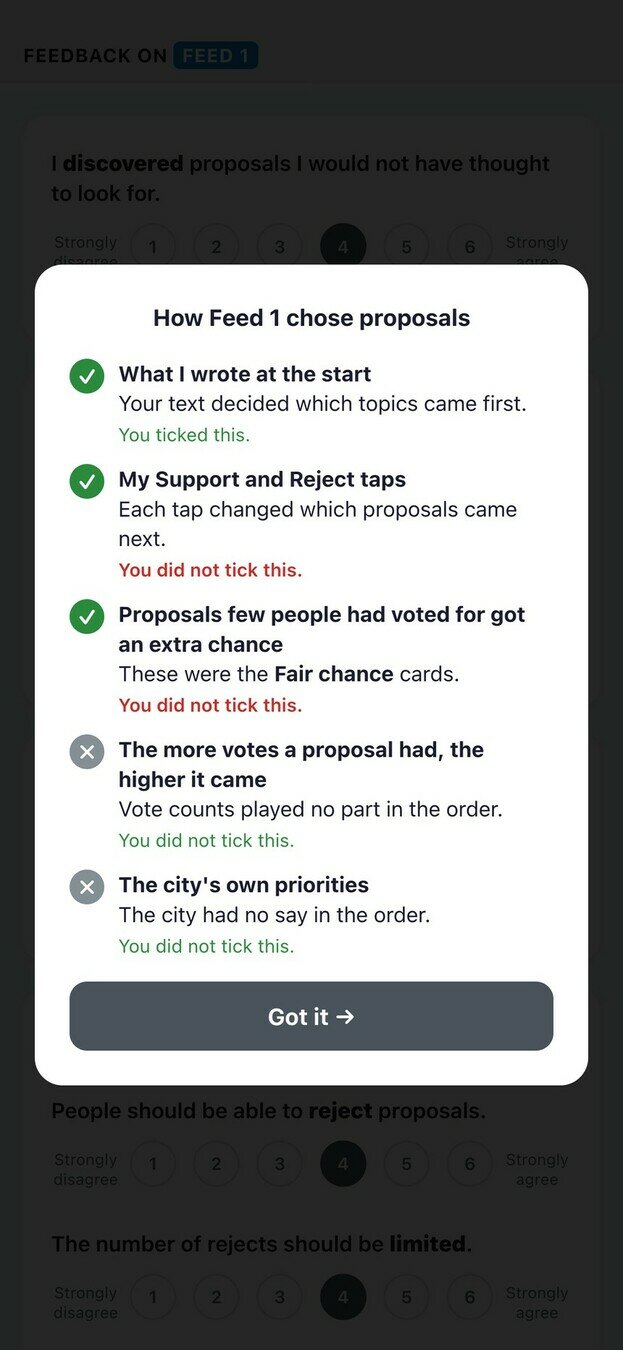
 H1: if the app tells people why a proposal is shown,  they'll understand why Most Voted is unfair, so they'll rate FairFeed as fairer.
 
Result: rejected. People liked Most Voted "to see what others support", and almost nobody mentioned fairness.

H2: people don't see FairFeed as fairer because they don't know how it orders proposals. Asking them, then explaining the rich-get-richer effect, will  change their view.
 

Result: Only 3 of 21 got the quiz fully right, and the explanation moved only very few people.


  • Every design change costs time and participants;
    • thinking in hypotheses helps you to choose the most valuable iteration
  • In practice: test many small hypotheses, until you arrive at the hypothesis or question that really matters
  • Paper often show only the end of the loop: one theory, two hypotheses, one test

Thinking in hypotheses

Your Task, due Nov 10

1. Check

  • Does your paper state a hypothesis?
    • Yes: copy it and check it against the four questions
    • No: write one for it

2. Theory

  • One theory paragraph for your extension idea
  • (Rival explanation) → your argument → mechanism → "We therefore expect…"

3. Hypothesize

  • End the paragraph with H1 for your extension idea
  • One sentence (no "and")
  • Check every H1:
    • Who vs whom?
    • Which direction?
    • Which unit?
    • What would prove it wrong?

Submit via Overleaf: YourName.tex, section "Theory and Hypotheses"

Nov 10

- 5' orga


- 15' paper 1

- 15' paper 2

- 15' paper 3

- 5' next task

- 20' questions on writing

Your Task, due Nov 17

1. Clean

  • Comment out template instructions with %

2. Format

  • Add a real title
  • Add name and email
  • Literature as paragraphs, no bullets, notes or fragments
  • Hypothesis on its own line: H1: …

3. Compile

  • Use \cite{} (or \citep or citet)
  • Check the PDF:
    • No errors?
    • No "??"
    • Every reference in the bibliography?

No new content. Make what you have read like a paper. Submit via Overleaf: YourName.tex

AI and Public Governance

By Carina Ines Hausladen

AI and Public Governance

  • 227