



Catherine Gracey
Open Scholarship and Applied Sciences Librarian at the University of New Brunswick
October 29, 2026
Kaitlin Fuller, Alison Manley, Catherine Gracey
Access slides from the QR code:
Claude, Sonnet 5.5 (Anthropic) was used to review draft slides for errors and clarity and to suggest wording for a few sentences; the content, module, layout and final decisions are the presenters' own.
Kaitlin's image taken with very clear lens
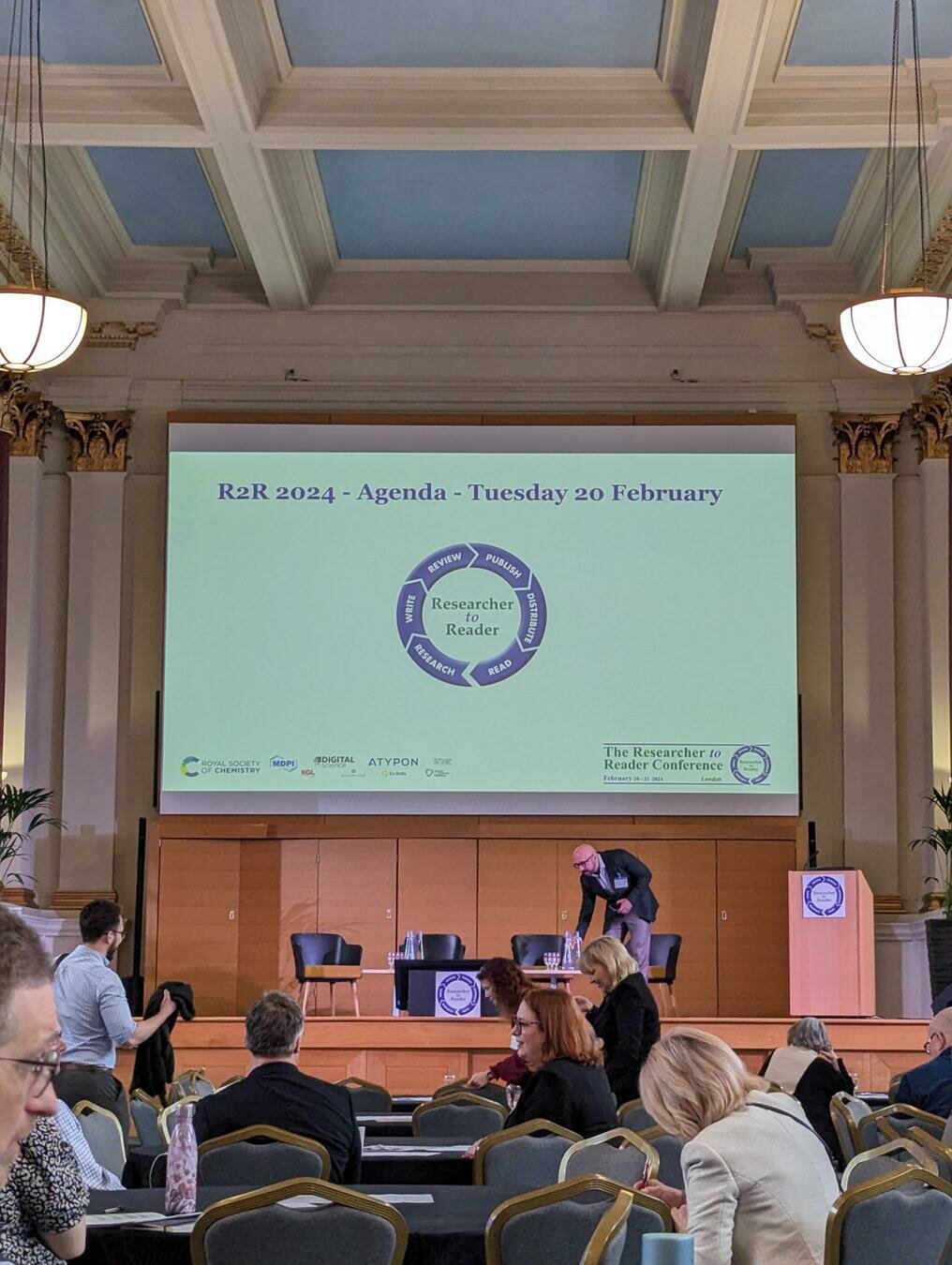
Kaitlin's image, London 2024
In 2024, we were discussing the challenges of peer review in small groups. Paper mills kept coming up, regardless of which organization people were from or what role they played.
Stock image from Unsplash
Isn't that just a few shady people?
-Me [putting foot in mouth], 2024
What are paper mills?
Stock video from UnSplash
Organizations that generate fraudulent scholarship. They sell authorship on bogus papers, citations to boost paper rankings, and/or fake research results to be submitted to journals as legitimate studies.
Paper mills have become a big business. They account for a growing proportion of published academic papers, and this growth is increasing at an alarming rate.
Stock image from Unsplash
...analysis estimates that 1.5-2% of all scientific papers published in 2022 closely resemble paper-mill works. Among biology and medicine papers, the rate rises to 3%
– Richard Van Noorden (2023)
And collaboration among journals, publishers, librarians and institutions is essential to ensure timely, effective responses and corrections to the scientific record.
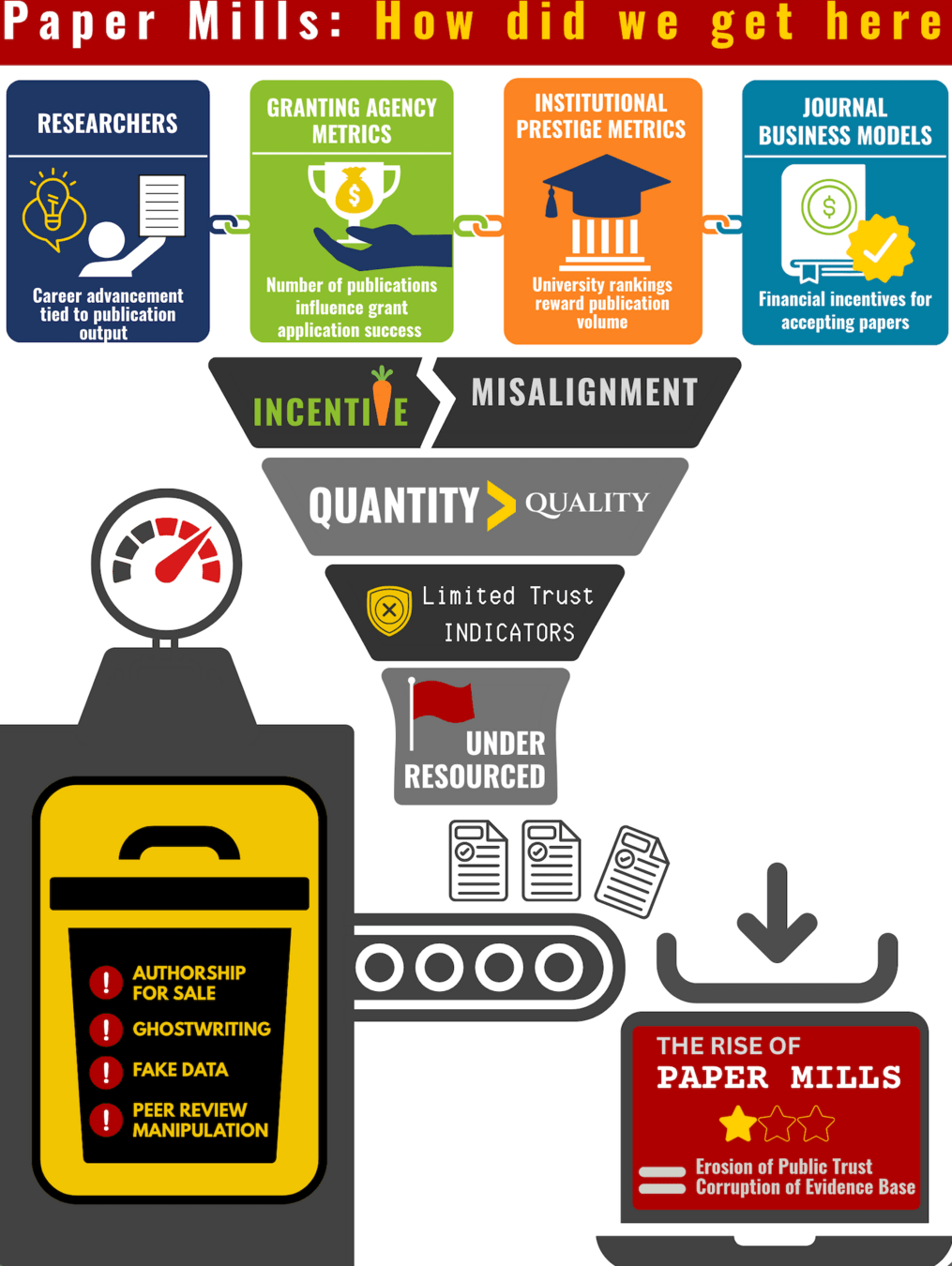
Graphic Design by Vincci Lui at the University of Toronto using Canva Pro elements.
Open science only works if what is out there and open is trustworthy.
Paper mills threaten that.
Stock image from UnSplash
Who is educating researchers, librarians, and institutions about paper mills?
Stock image from UnSplash
St. Francis Xavier University
University of Toronto
University of New Brunswick
University of Toronto
Saint Mary's University
Education & Awareness
Stock image from unsplash
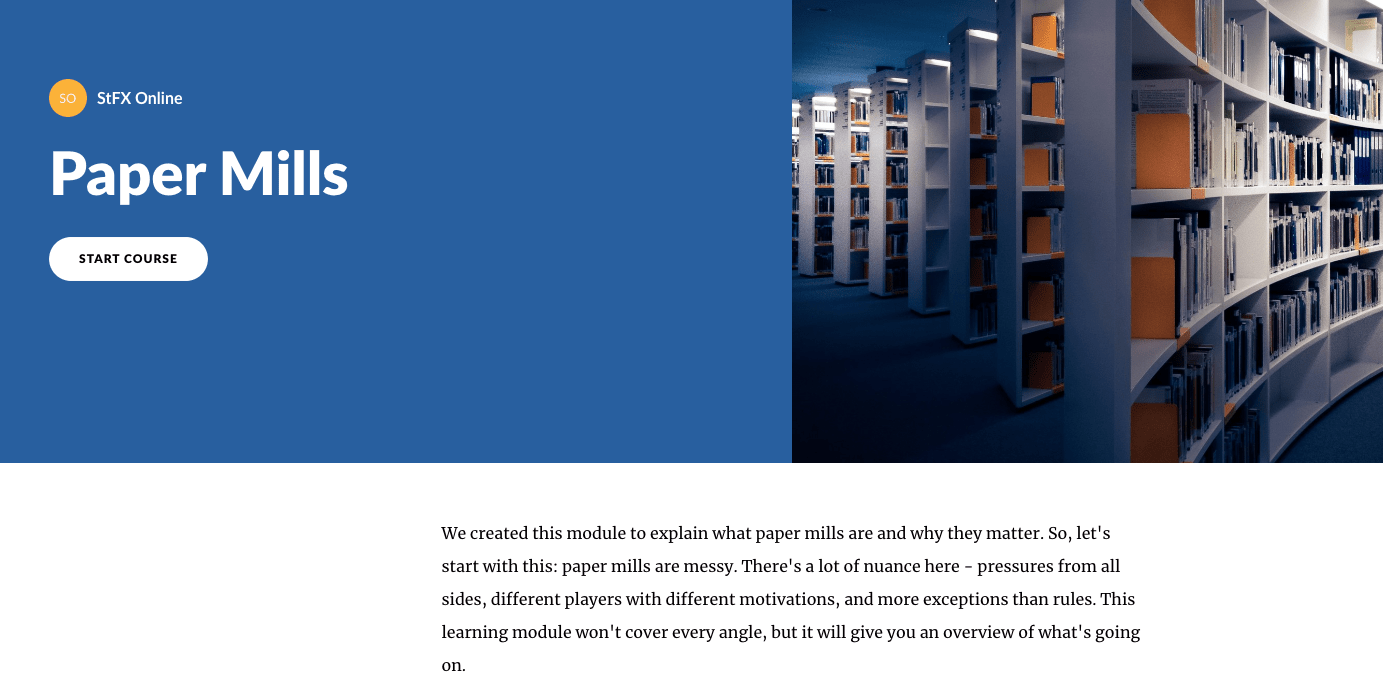
So we built one!
Determined learning objectives and layout
2 rounds of peer feedback and revisions
Discussion: what do we want to do? What is the gap we're seeing?
How do we communicate about paper mills without scaring everyone?
Technology: Examined platform options for open educational resources
PUBLISHED!
There are other things that still need to be done, but this was the first milestone.
| Feedback | Resulting changes |
|---|---|
| Audience scope comments (initially we just focused on Early Career Researchers) | Adapted some of our language to be more inclusive of all researchers from a range of disciplines while maintaining some specific messaging for ECR |
| Content scope comments (more content on predatory publishers?) | Avoided adding too much content, but contextualized relationship/similarities/differences between these two concepts |
| Pull apart what to do when publishing (creating research) vs reading (consuming research) | Broke our 'what to do' section into two (researchers and readers) to get into nuances of each role |
| Clarity, source, emphasis suggestions | Case by case basis! |
Maintenance
We've already done our first edit/reupload, to address small typos and other minor errors we've noticed. We are also staying on top of development & news in this space so that we can keep our module relevant & up to date.
Knowledge Translation Materials
One of our team members is working on turning this content into a slide deck, which we, or others can teach from
More Outreach
Team members have also drafted a blog post for DORA, joined United2Act working groups and train the trainers as well as NISO trust markers working group to share their expertise and perspectives.
Trust is the theme that ties discussions of all types of research misconduct, including paper mills, together.
Make the process transparent. Show the evidence.
StFX Online for providing technical support for the development of this module;
The University of Toronto Libraries for hosting the module;
Melissa Rothfus from Dalhousie University for helping us get started and providing feedback;
Vincci Lui from the University of Toronto Libraries for graphic design help with the infographic in Section 2;
Natalie Liza Barte, student assistant, from Saint Mary's University, for helping with reference formatting;
Carolyn DeLorey from St. Francis Xavier University for copy editing; and
All of our reviewers who helped shape this module with their feedback and insights. Your feedback was instrumental in helping us pull this together!
Sophia Godso, Dr. Laura Estill, Dr. Chris Gilham, Dr. David Maslove, Dr. Martine Puts, Dr. Jeremy Ng, Heather Cunningham, CAAL/CBPA Scholarly Communications Committee, Dr. Tanja Rombey, Dr. David Blanco de Tena-Ávila & several graduate students from the University of Toronto and upper-year undergraduates working as library assistants at St.FX.
Again, our slides are available here!
By Catherine Gracey