Electrostatics
The Electrostatic Potential Energy
Electrostatics
The Electrostatic Potential Energy
What is Potential Energy?
Electrostatics
The Electrostatic Potential Energy
What is a "Potential Energy"?
A Potential Energy is a form of energy that is defined for an arrangement or a configuration of objects.
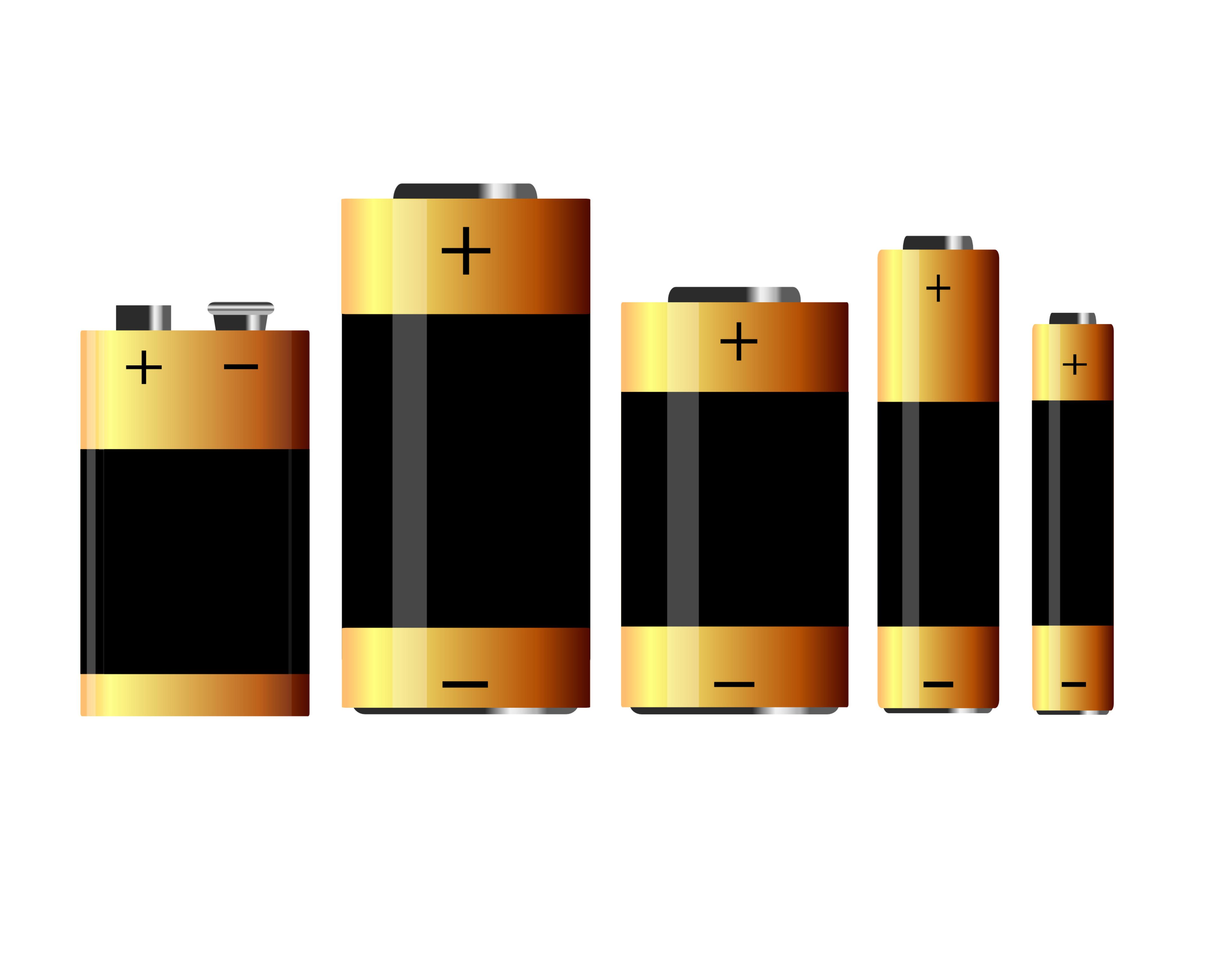


The state of the configuration is subject to forces that, if unopposed, would release the stored potential energy into motion energy.

Electrostatics
The Electrostatic Potential Energy
What is a "Potential Energy"?
For example, in opposition to the attractive gravitational force between Earth and the water upstream of a waterfall, there is a great amount of gravitational potential energy stored in the water-Earth system.
This gravitational force, when it finds no opposition, releases the gravitational potential energy, stored in the separation of the water and the planet, into a rushing motion of the water towards the planet.
Electrostatics
The Electrostatic Potential Energy
What is a "Potential Energy"?
In the case of electric charges, the electrostatic forces between them can be attractive or repulsive.
1 Like-Charges (e.g. protons in an atomic nucleus)
Imagine, for example, a number of like-charges somehow squeezed in a small space... the repulsive forces between them, if unopposed, will tend to push them away from each other.
This can be understood as positive electrostatic potential energy that is stored in the squeezed configuration of the charges, which if released into kinetic energy, flings the charges away from each other.
2 Opposite-Charges (e.g. separated charges in a battery)
On the other hand, the repulsive forces between opposite charges, if unopposed, will tend to pull them towards each other.
This can be understood as negative electrostatic potential energy that is stored in the separated configuration of the charges, which if released into kinetic energy, pulls the charges towards each other.
Electrostatics
The Electrostatic Potential Energy
The Electrostatic Potential Energy in a pair of separated point charges
Electrostatics
The Electrostatic Potential Energy
The Electrostatic Potential Energy stored in a pair of point charges
U_{\tiny ij}=\tfrac{1}{4\pi\epsilon}\frac{q_{\tiny i}\ q_{\tiny j}}{r_{\tiny ij}}
\text{the electrostatic potential energy}\\ \text{ stored in the pair }( q_i \text{ and } q_j)
\text{permittivity}
\text{ the distance between $q_i$ and $q_j$}
\text{the product of the interacting charges}
\left( k
=\frac{1}{4\pi\epsilon_0}
=8.99\times10^9
\quad \frac{\text{N$\cdot$ m$^2$}}{\text{C}^2}\right)
(\text{in free-space: } \epsilon_0
=8.85\times10^{-12}
\quad \frac{\text{C}^2}{\text{N$\cdot$ m$^2$}}
\text{The indexes indicating}\\ \text{ the two interacting charges}
q_j
q_i
{r}_{\tiny ij}

Electrostatics
Coulomb's Law -- attraction & repulsion
q_i
U_{\tiny ij}=\tfrac{1}{4\pi\epsilon}\frac{q_{\tiny i}\ q_{\tiny j}}{r_{\tiny ij}}
q_i\ q_j\gt 0 \ \implies\ {U}_{ij} \gt 0
q_i
q_j
q_i
{r}_{\tiny ij}


The Electrostatic Force
q_j
q_j
case 1 Like-Charges
Imagine, for example, a number of like-charges somehow squeezed in a small space... the repulsive forces between them, if unopposed, will tend to push them away from each other.
This can be understood as electrostatic potential energy that is stored in the squeezed configuration of the charges, which if released into kinetic energy, flings the charges away from each other.
Electrostatics
Coulomb's Law -- attraction & repulsion
q_j
q_i
U_{\tiny ij}=\tfrac{1}{4\pi\epsilon}\frac{q_{\tiny i}\ q_{\tiny j}}{r_{\tiny ij}}
q_i\ q_j\lt 0 \ \implies\ {U}_{ij} \lt 0
q_j
q_i
q_j
q_i
{r}_{\tiny ij}
The Electrostatic Force
case 2 Opposite-Charges
On the other hand, the repulsive forces between opposite charges, if unopposed, will tend to pull them towards each other.
This can be understood as negative electrostatic potential energy that is stored in the squeezed configuration of the charges, which if released into kinetic energy, pulls the charges towards each other.
Electrostatics
The Electrostatic Potential Energy
Electrostatic Potential Energy stored in a configuration of charges
Electrostatics
The net Electrostatic Potential Energy stored in a configuration of charges
\textcircled{\mathbf{+}}
\textcircled{-}
\textcircled{+}
\textcircled{-}
For a given configuration of point charges
q_1
q_2
q_4
q_3
The Electrostatic Potential Energy
Electrostatics
\textcircled{\mathbf{+}}
q_1
\textcircled{-}
\textcircled{+}
q_2
\textcircled{-}
q_4
q_3
The interaction can be described in terms of force-pairs
\text{the electric force}
\text{of $q_4$ on $q_2$}
\text{the electric force}
\text{of $q_2$ on $q_4$}
The Electrostatic Force
The Net Electrostatic Force
Electrostatics
\textcircled{\mathbf{+}}
q_1
\textcircled{-}
\textcircled{+}
q_2
\textcircled{-}
q_4
q_3
The interaction can be described in terms of the Electrostatic Potential Energy stored in each pair
The Electrostatic Potential Energy
The Net Electrostatic Force
U_{\tiny 12}
U_{\tiny 23}
U_{\tiny 34}
U_{\tiny 14}
Electrostatics
\textcircled{\mathbf{+}}
q_1
\textcircled{-}
\textcircled{+}
q_2
\textcircled{-}
q_4
q_3
The net Electrostatic Potential Energy stored in the configuration is the algebraic sum of the contributions from each pair (no double-counting.)
The Electrostatic Potential Energy
The Net Electrostatic Force
U_{\tiny 12}=U_{\tiny 21}=k\frac{q_{\tiny 1} q_{\tiny 2}}{r_{\tiny 12}}
U_{\tiny 23}
=U_{\tiny 32}
=\dots
U_{\tiny 34}
=U_{\tiny 43}
=\dots
U_{\tiny 14}=U_{\tiny 41}=\dots
U_{\tiny 13}=U_{\tiny 31}=k\frac{q_{\tiny 1} q_{\tiny 3}}{r_{\tiny 13}}
U_{\tiny 24}
=
U_{\tiny 42}
=
\dots
U_\text{net}
=\Sigma_{\small i\lt j}\ U_{\tiny ij}\\
= \Sigma_{\small i\lt j}\ \tfrac{1}{4\pi\epsilon}\frac{q_{\tiny i}\ q_{\tiny j}}{r_{\tiny ij}}
Electrostatic Potential Energy
By drmoussaphysics