








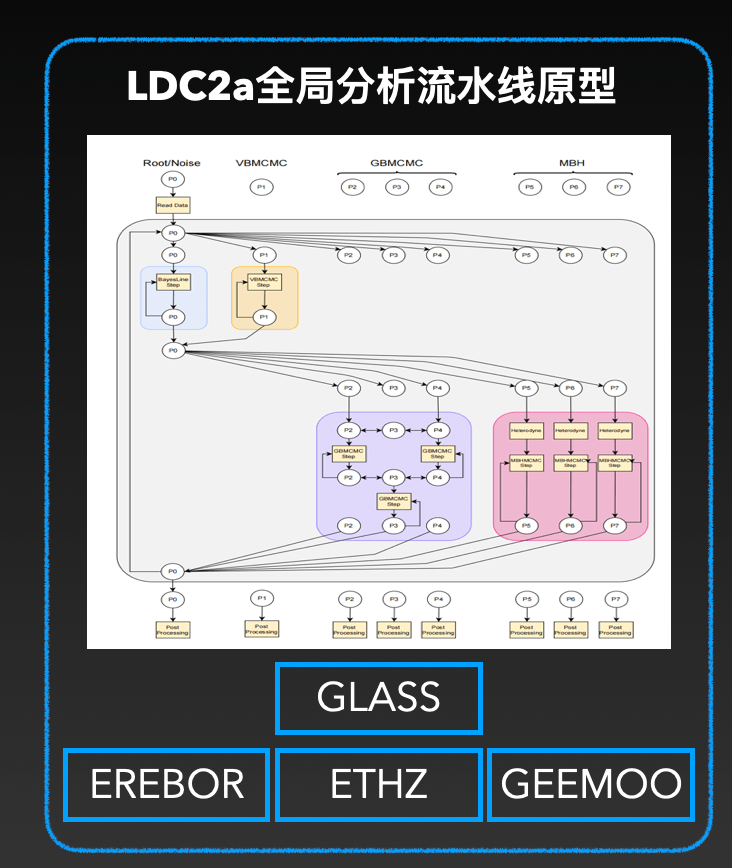
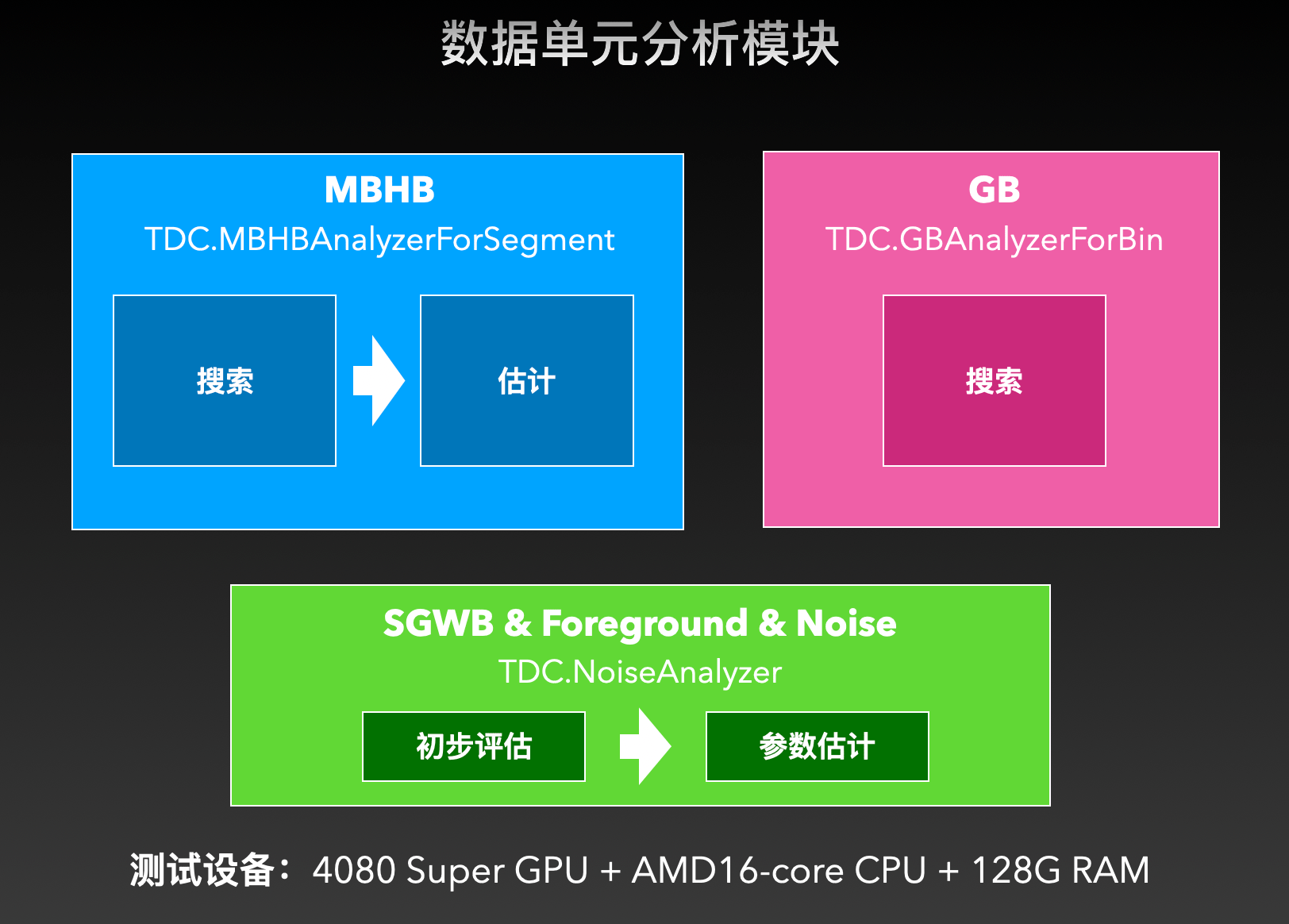
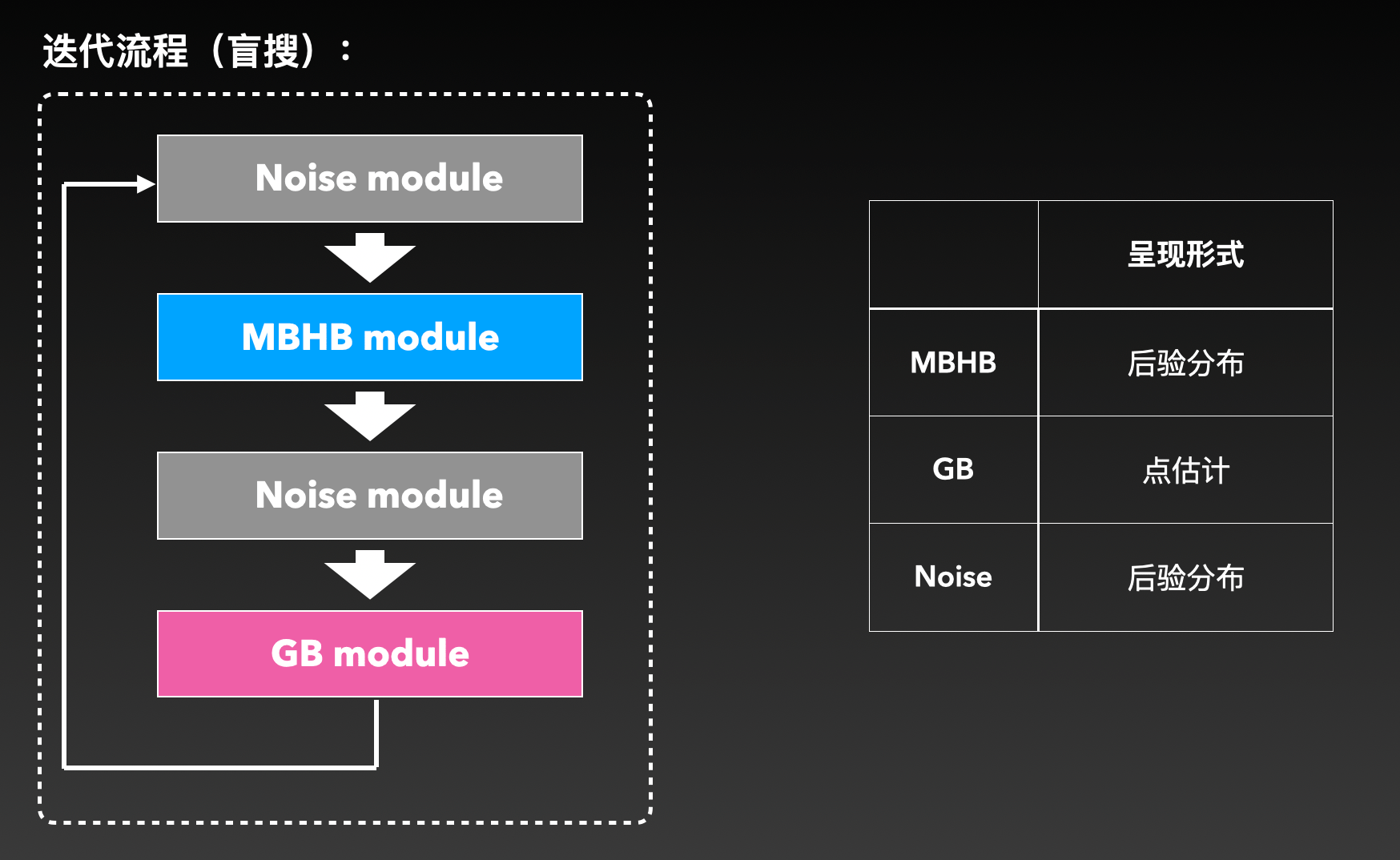
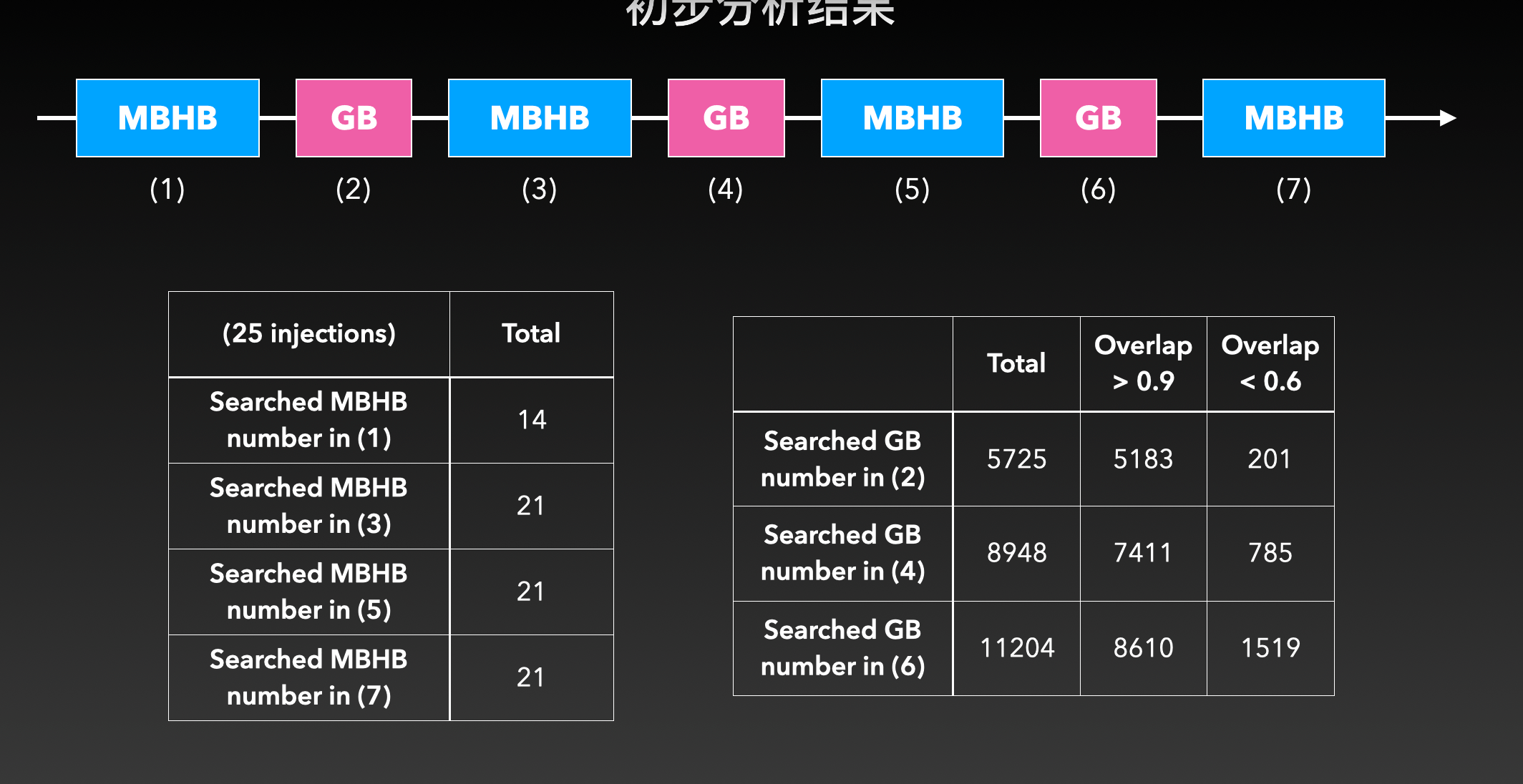

He Wang PRO
Knowledge increases by sharing but not by saving.
He WANG
On behave of Taiji Scientific Collaboration
International Centre for Theoretical Physics Asia-Pacific (ICTP-AP)
University of Chinese Academy of Sciences (UCAS)
@The University of Maryland, Washington, DC
From Taiji-1 heritage to full-mission development and data-analysis preparation
He WANG
International Centre for Theoretical Physics Asia-Pacific (ICTP-AP)
University of Chinese Academy of Sciences (UCAS)
@The University of Maryland, Washington, DC
From Taiji-1 heritage to full-mission engineering and data-analysis preparation
Section 0 — Opening
Section 1 — Science and mission concept
Section 2 — Taiji-1 heritage
Section 3 — Key enabling technologies
Section 4 — Data-analysis readiness
Section 5 — Science examples
【如果时间紧,这四页 science examples 可以压缩成两页。】
Section 6 — Network science
Wen-Rui Hu , Yue-Liang Wu, Natl. Sci. Rev. Vol 4 (2017)
Yue-Liang Wu et al., Commun. Phys. 4, 34 (2021)
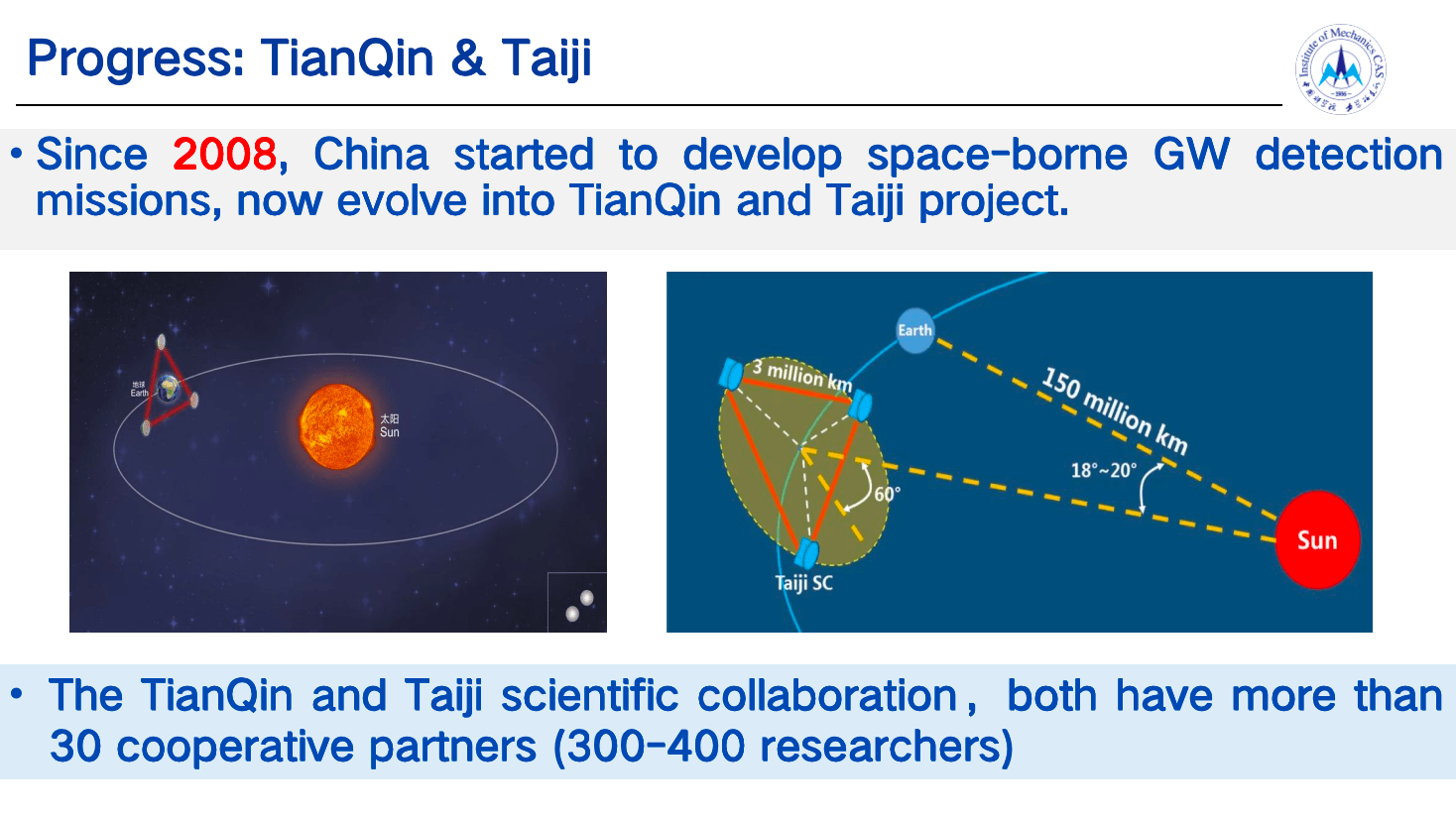
2008
— CAS initiated early studies on space-based gravitational-wave detection.
2010
— Early national proposal for space-based GW observation.
— Taiji was publicly introduced to the international community.
2016
— Taiji-1 was approved and launched as an in-orbit technology demonstrator.
2018-2019
— Overall mission design and development roadmap were published.
2021
— Current focus: engineering preparation, system-level verification, data challenges, and science-pipeline development.
2025-2026
He WANG · ICTP-AP / UCAS
Taiji: China's Space-based GW Program
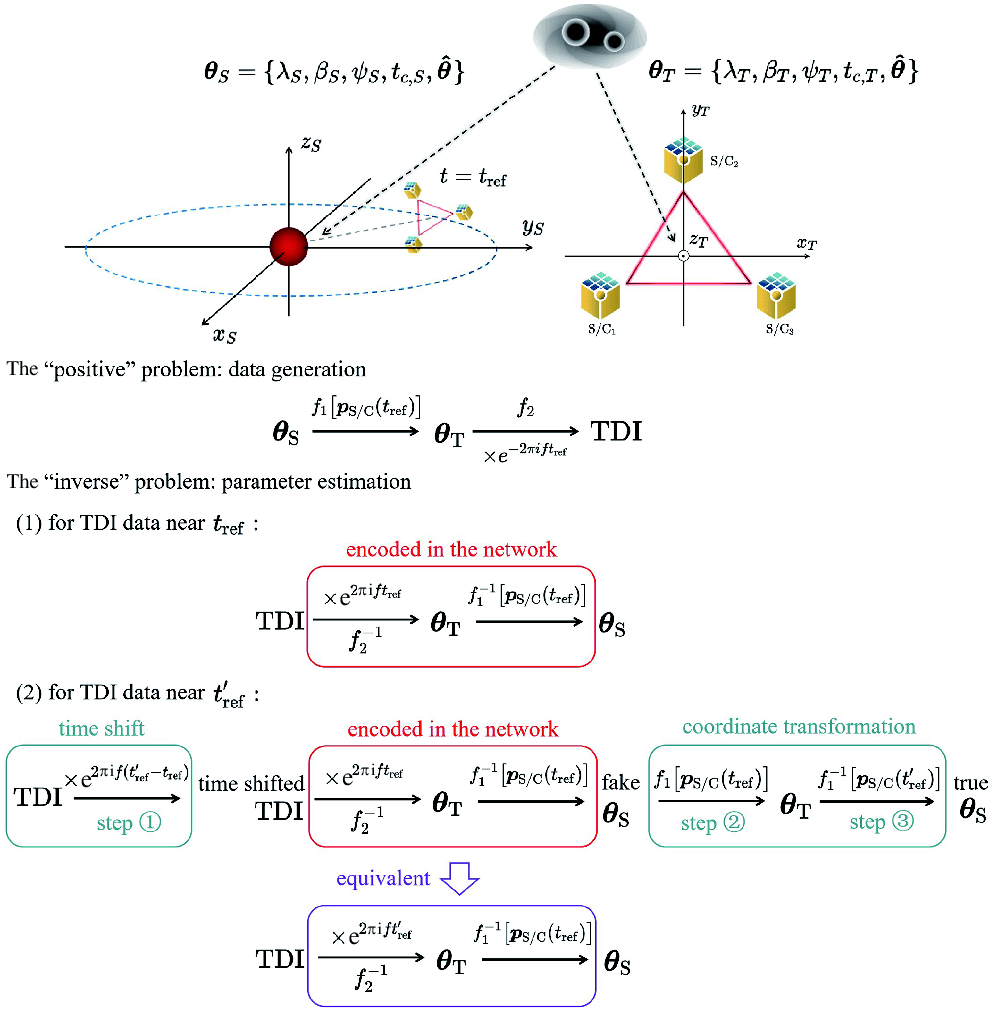
Taiji/TJ has evolved from early conceptual studies to in-orbit technology heritage and is now moving toward full-mission engineering and science-data readiness.
He WANG · ICTP-AP / UCAS
Taiji: China's Space-based GW Program
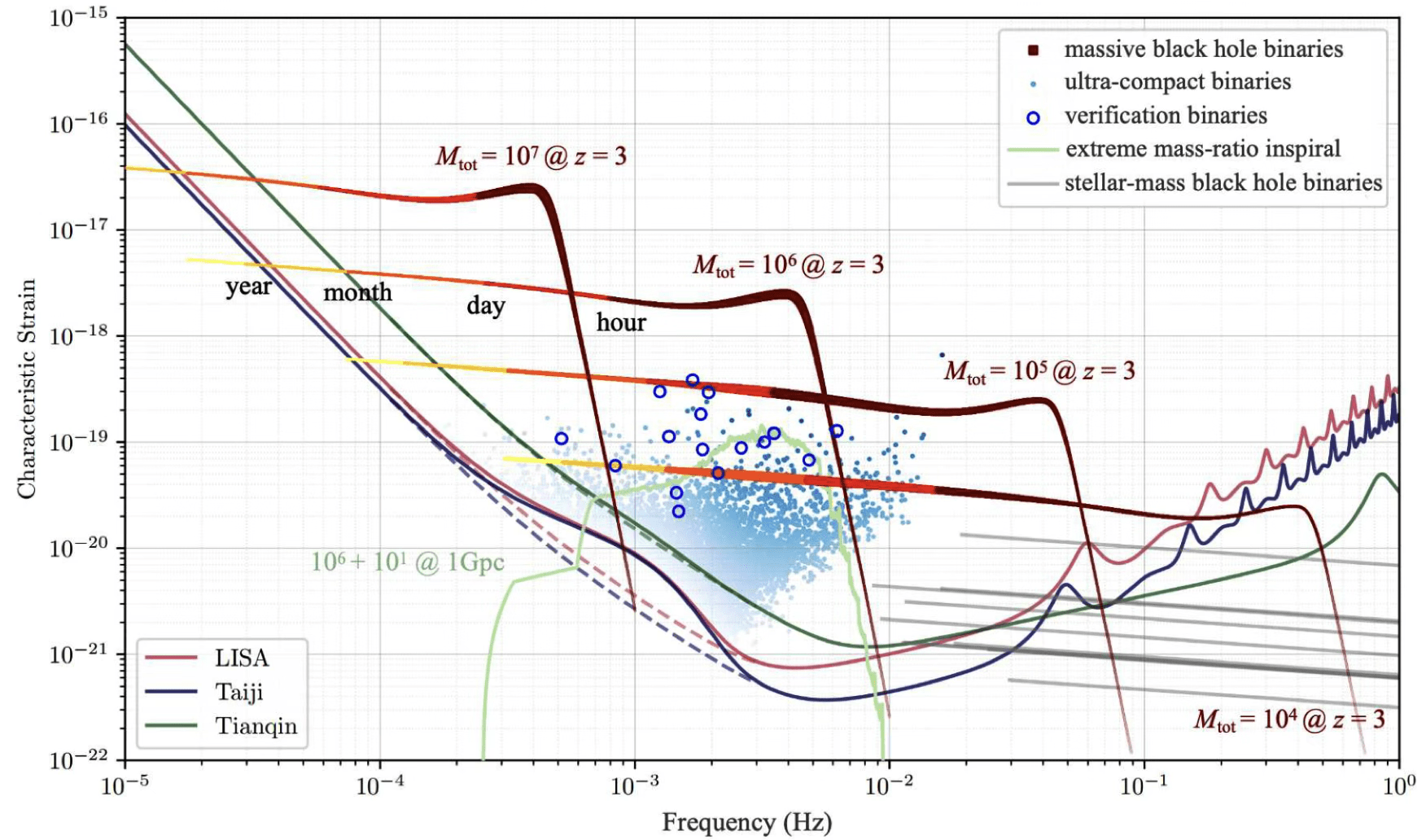
Astrophysics, cosmology, and fundamental physics in the mHz band
Taiji/TJ is motivated by three broad frontiers: black-hole astrophysics, cosmology, and fundamental physics.
He WANG · ICTP-AP / UCAS
Taiji: China's Space-based GW Program
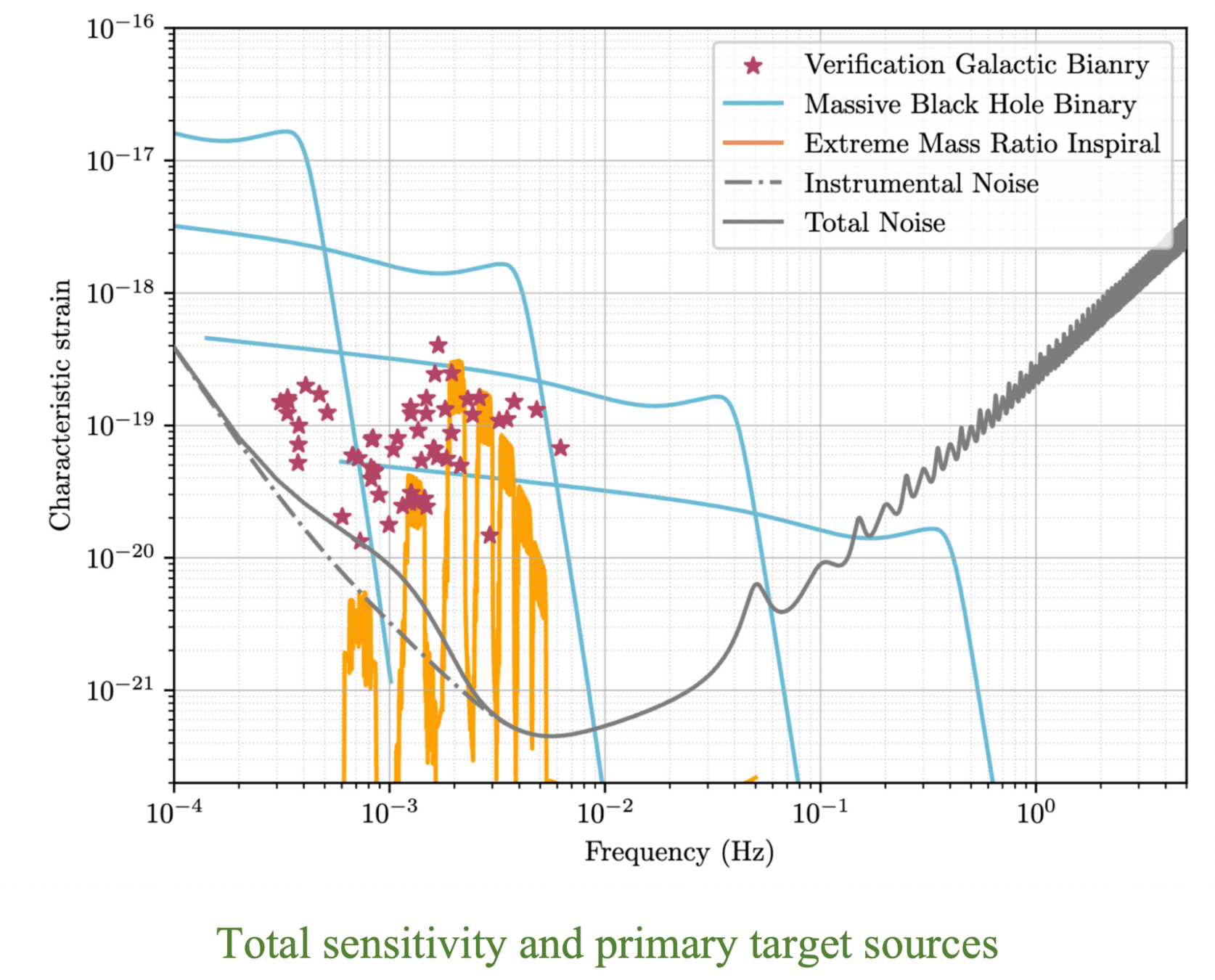
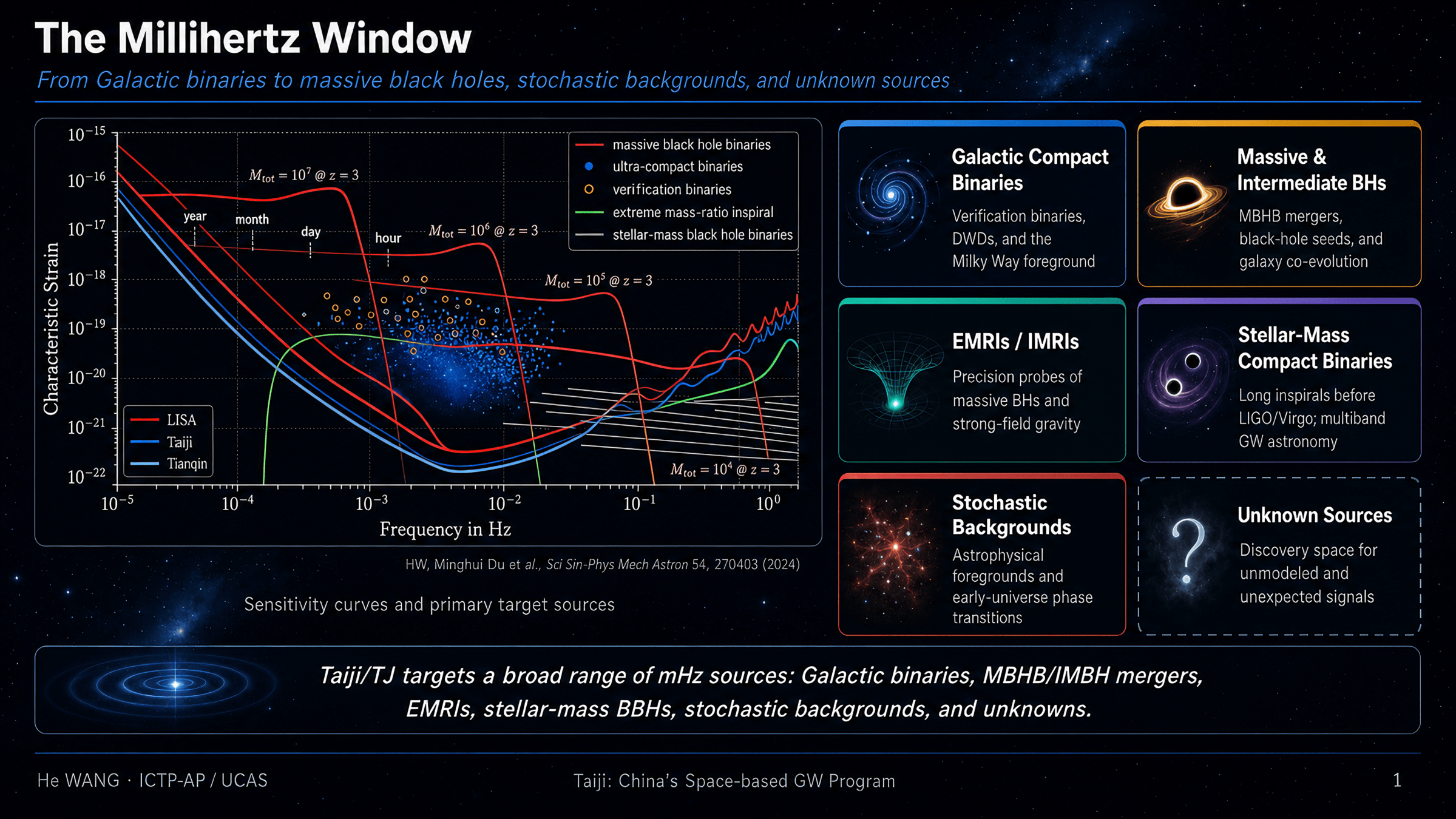
From Galactic binaries to massive black holes, stochastic backgrounds, and unknown sources
HW, Minghui Du et al., Sci Sin-Phys Mech Astron 54, 270403 (2024)
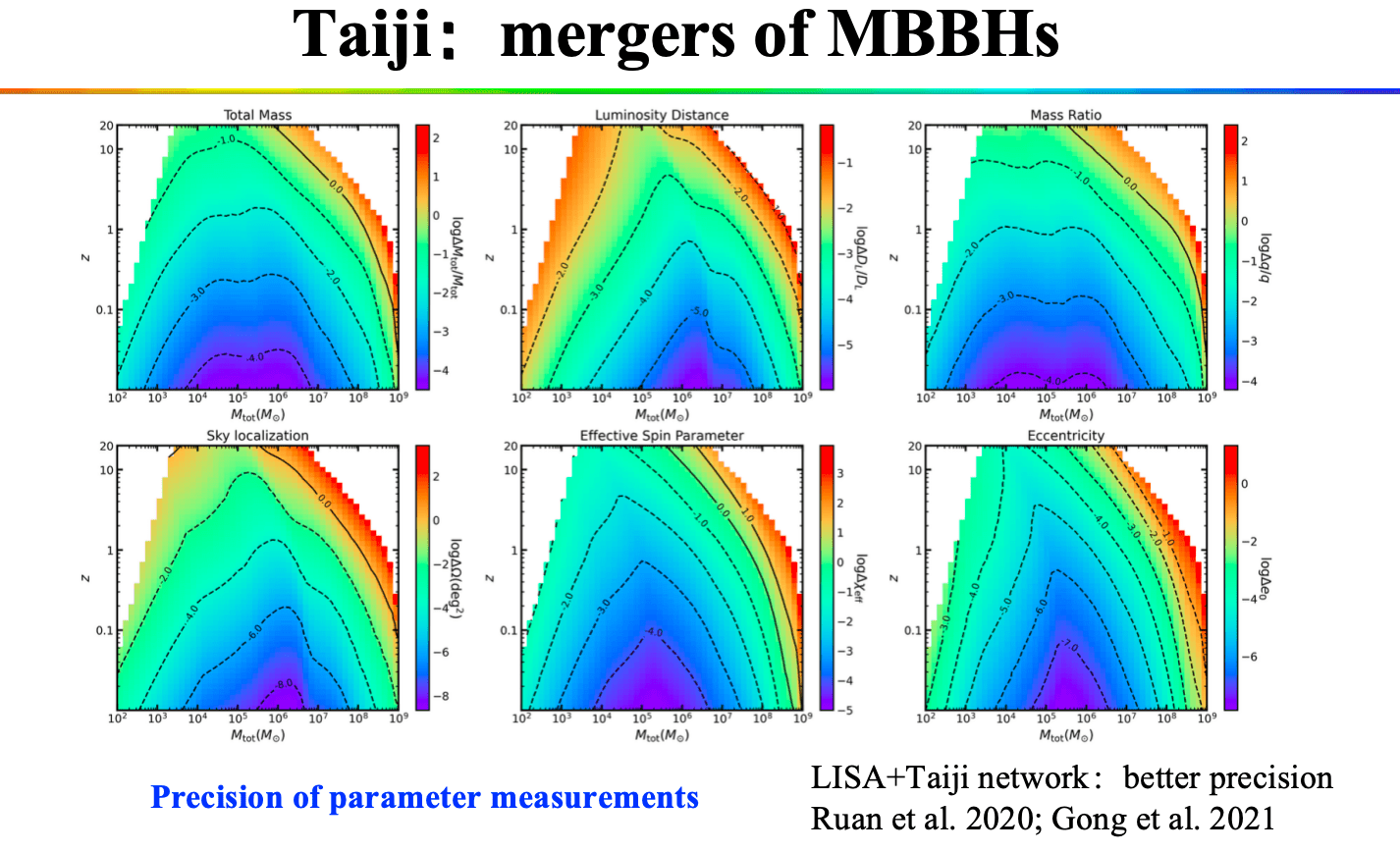
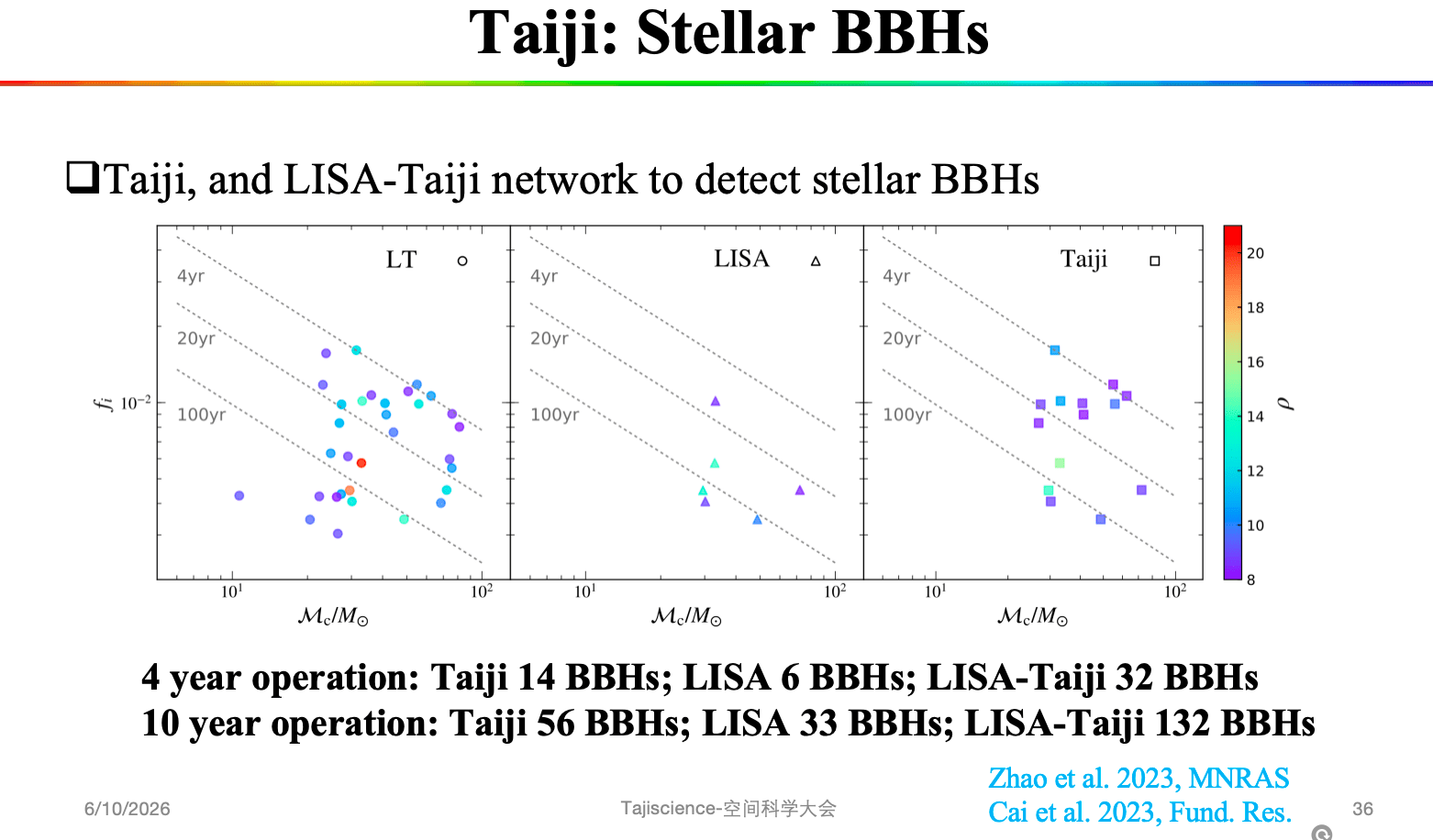
Taiji/TJ targets a broad range of mHz sources: Galactic compact binaries, MBHB/IMBH mergers, EMRIs/IMRIs, stellar-mass BBHs, stochastic backgrounds, and unknown sources.
Verification binaries,
DWDs, and the
Milky Way foreground
MBHB mergers,
black-hole seeds, and
galaxy co-evolution
Precision probes of
massive BHs and
strong-field gravity
Long inspirals before
LVK; multiband GW astronomy
Astrophysical
foregrounds and
early-universe phase
transitions
Discovery space for
unmodeled and
unexpected signals
He WANG · ICTP-AP / UCAS
Taiji: China's Space-based GW Program
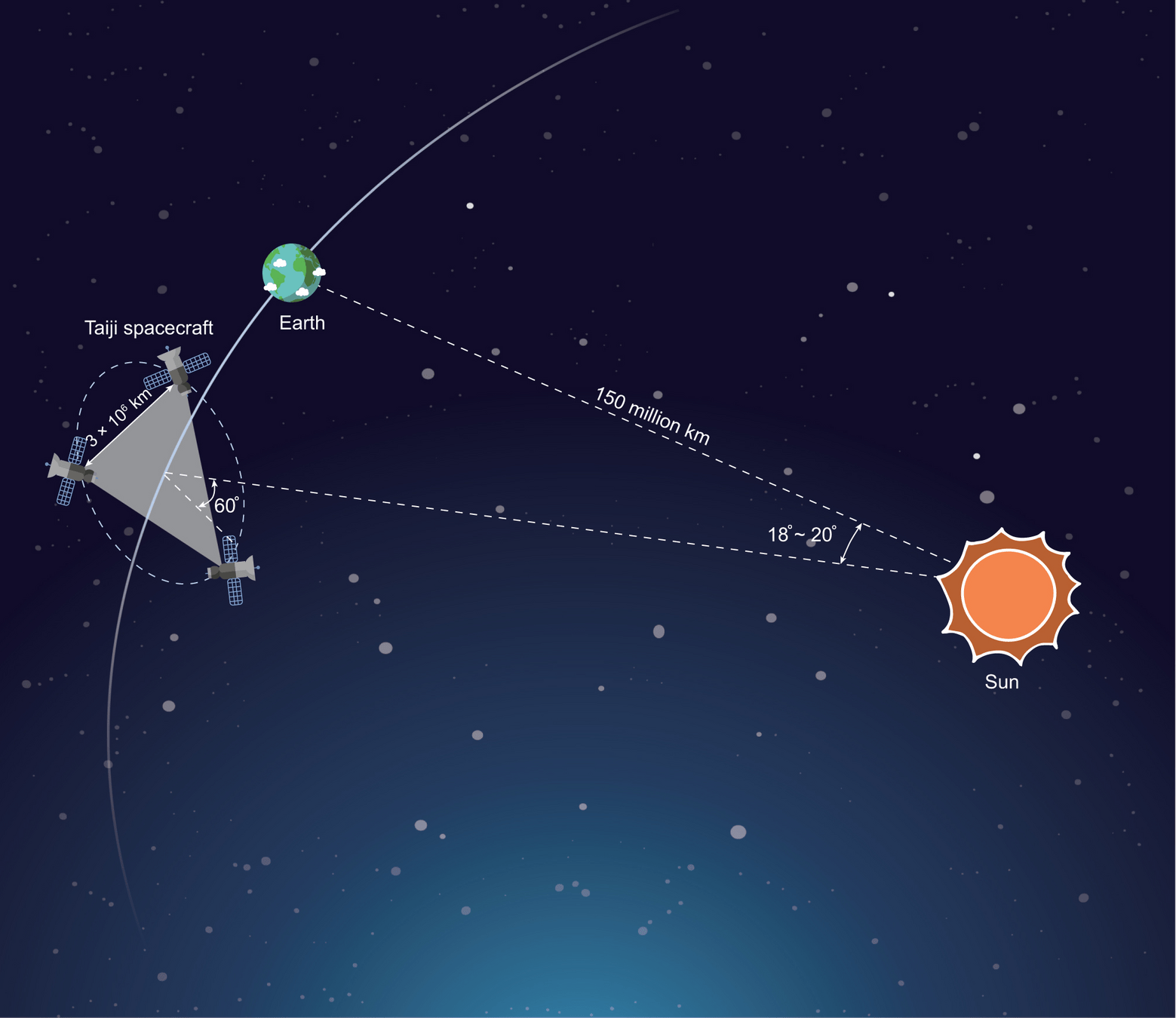
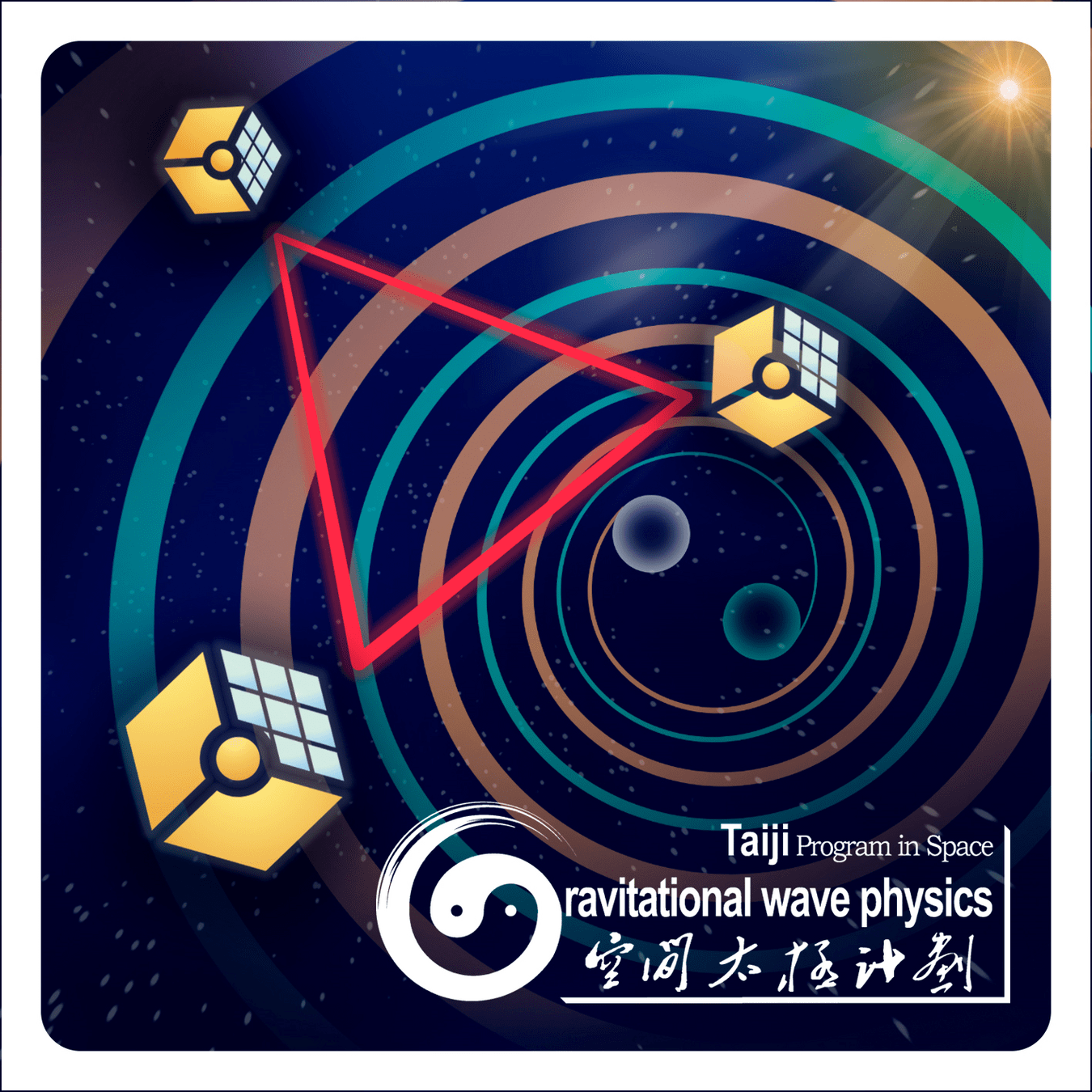
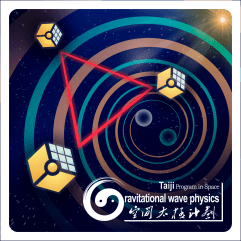
A heliocentric triangular constellation for mHz gravitational-wave astronomy
Credit: Shucheng Yang
Mission idea: use million-kilometer laser interferometry to measure differential optical-path changes between free-falling test masses.
He WANG · ICTP-AP / UCAS
Taiji: China's Space-based GW Program
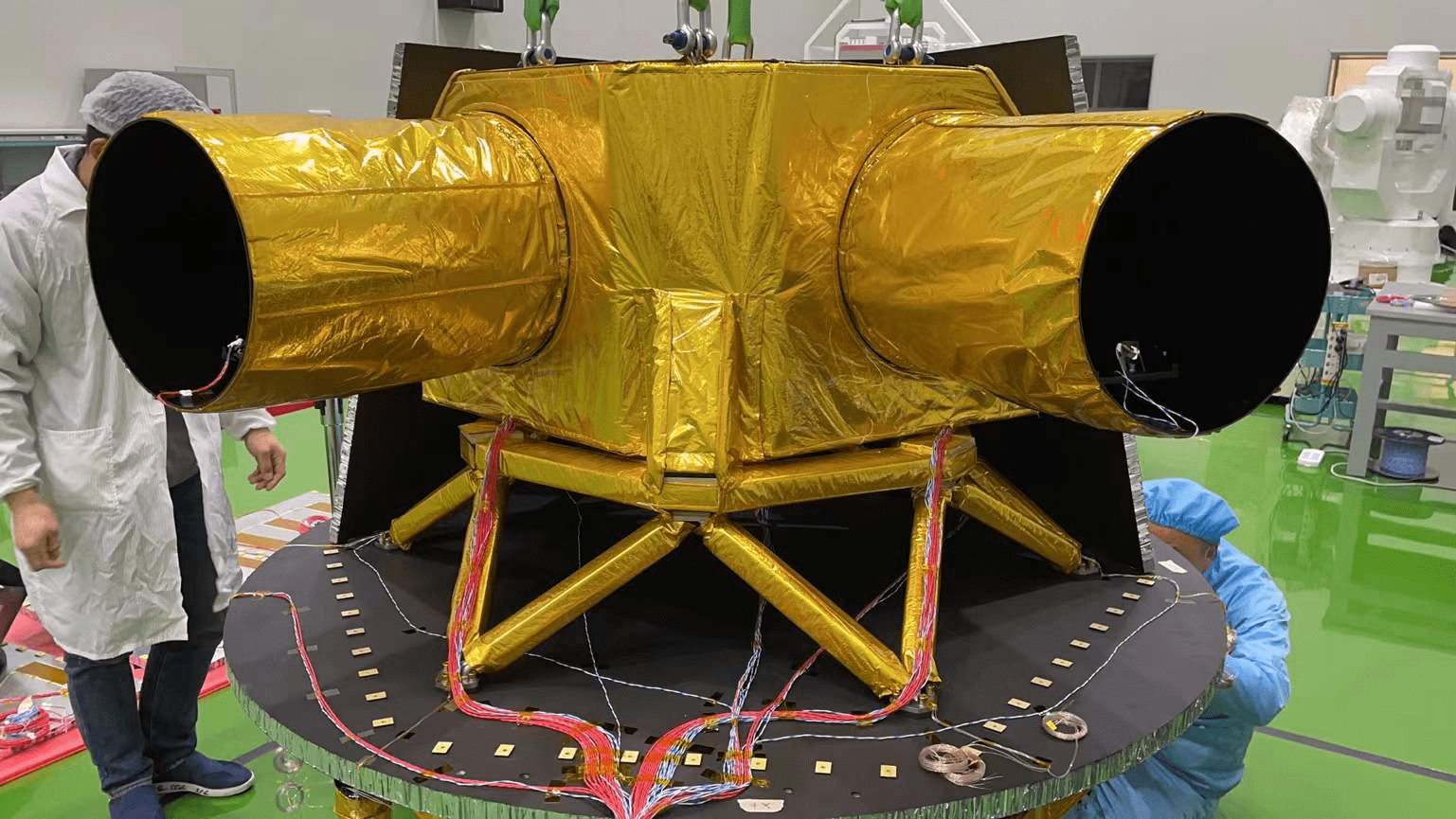
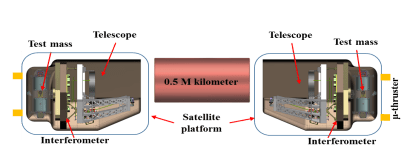
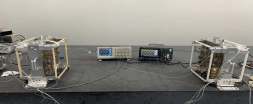
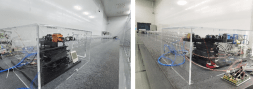
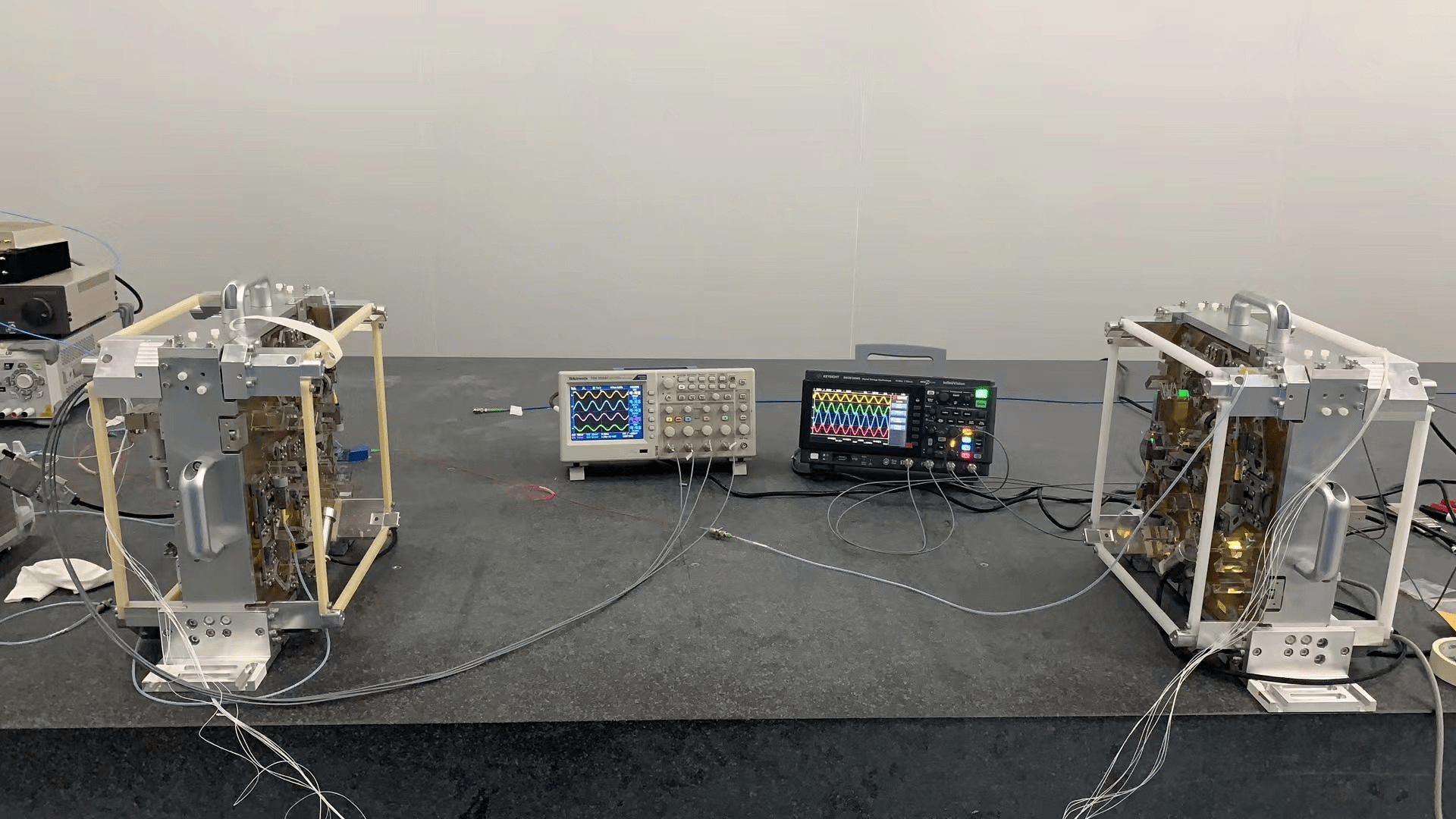
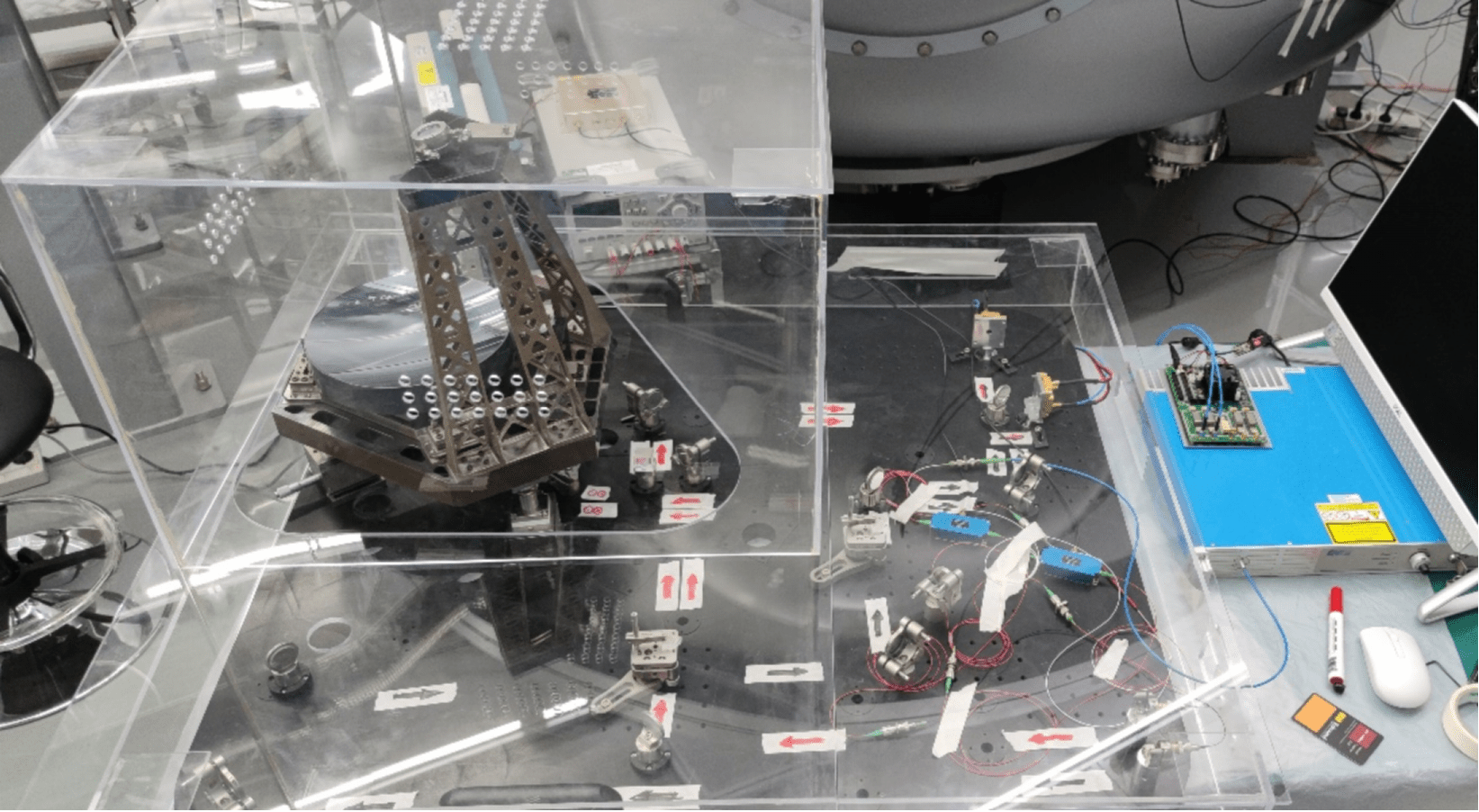
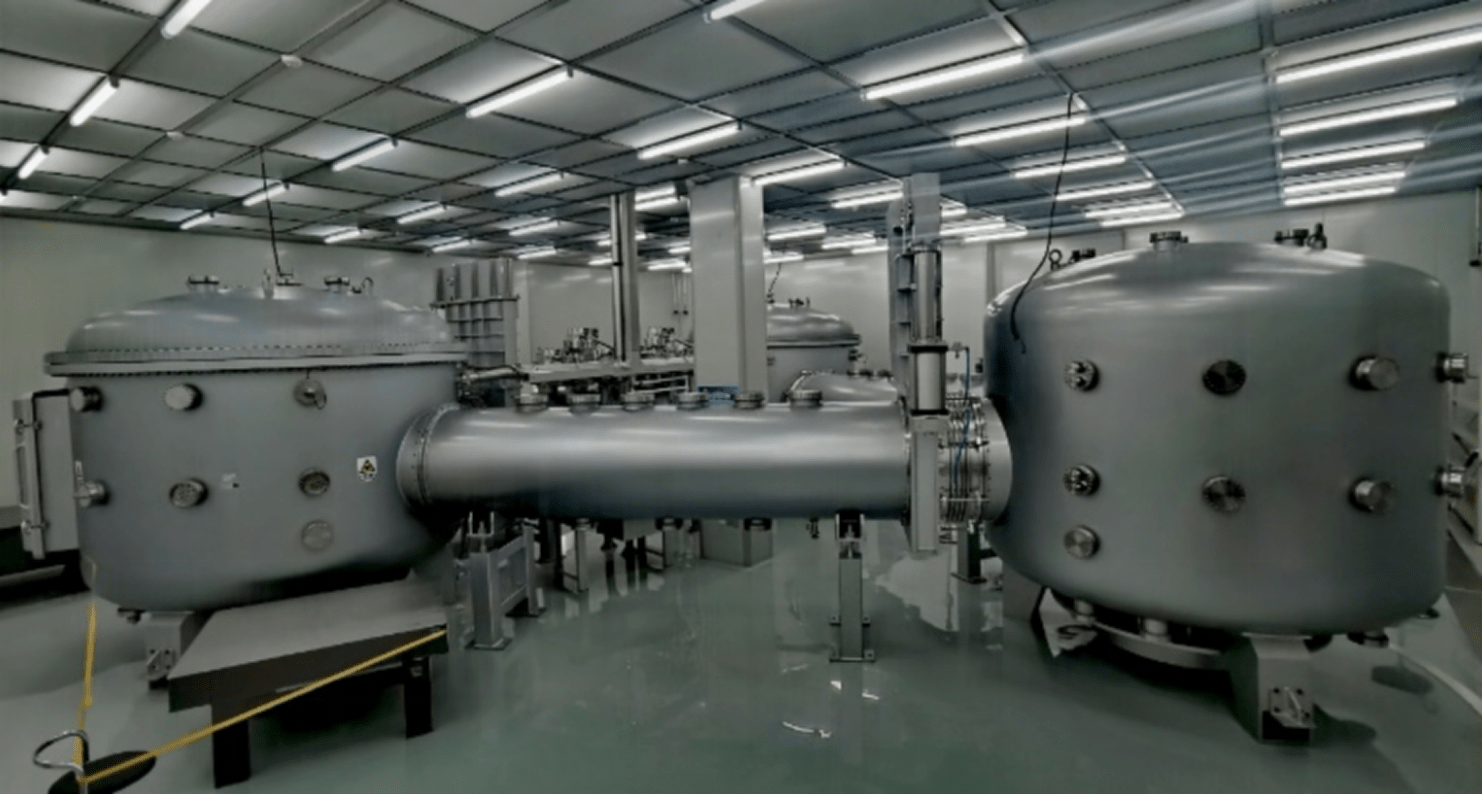
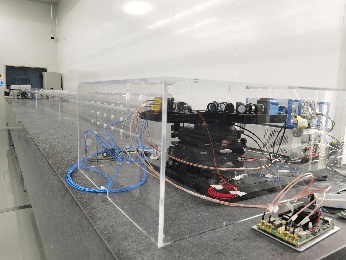
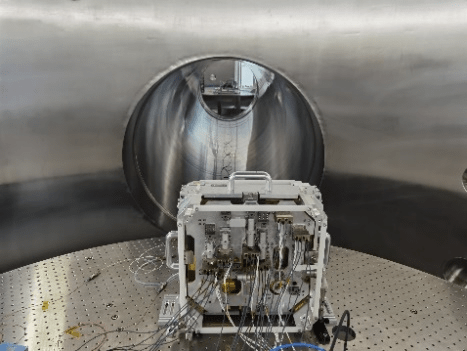
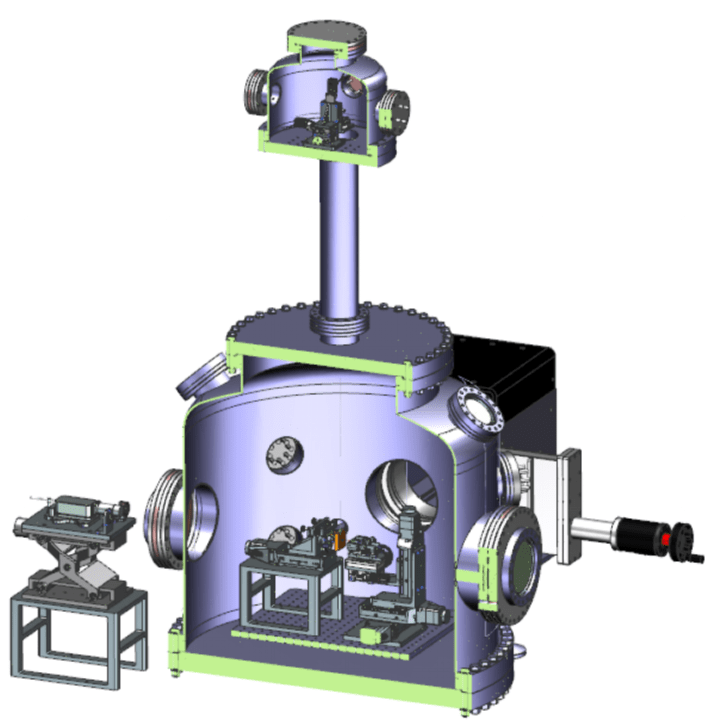
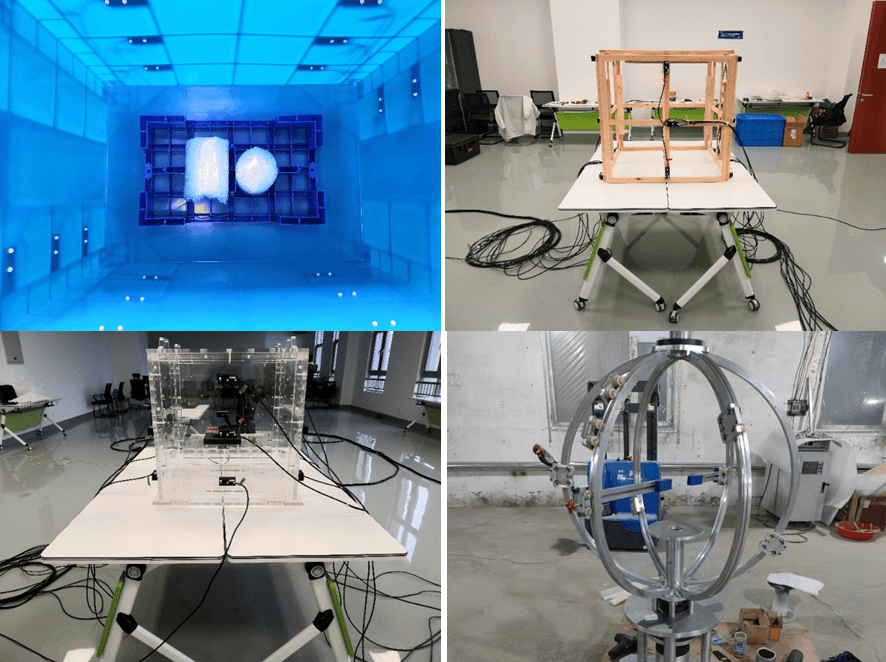
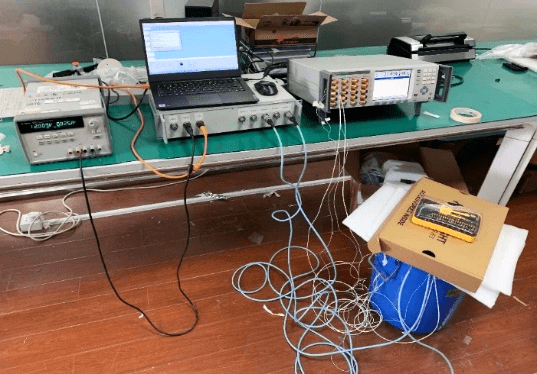
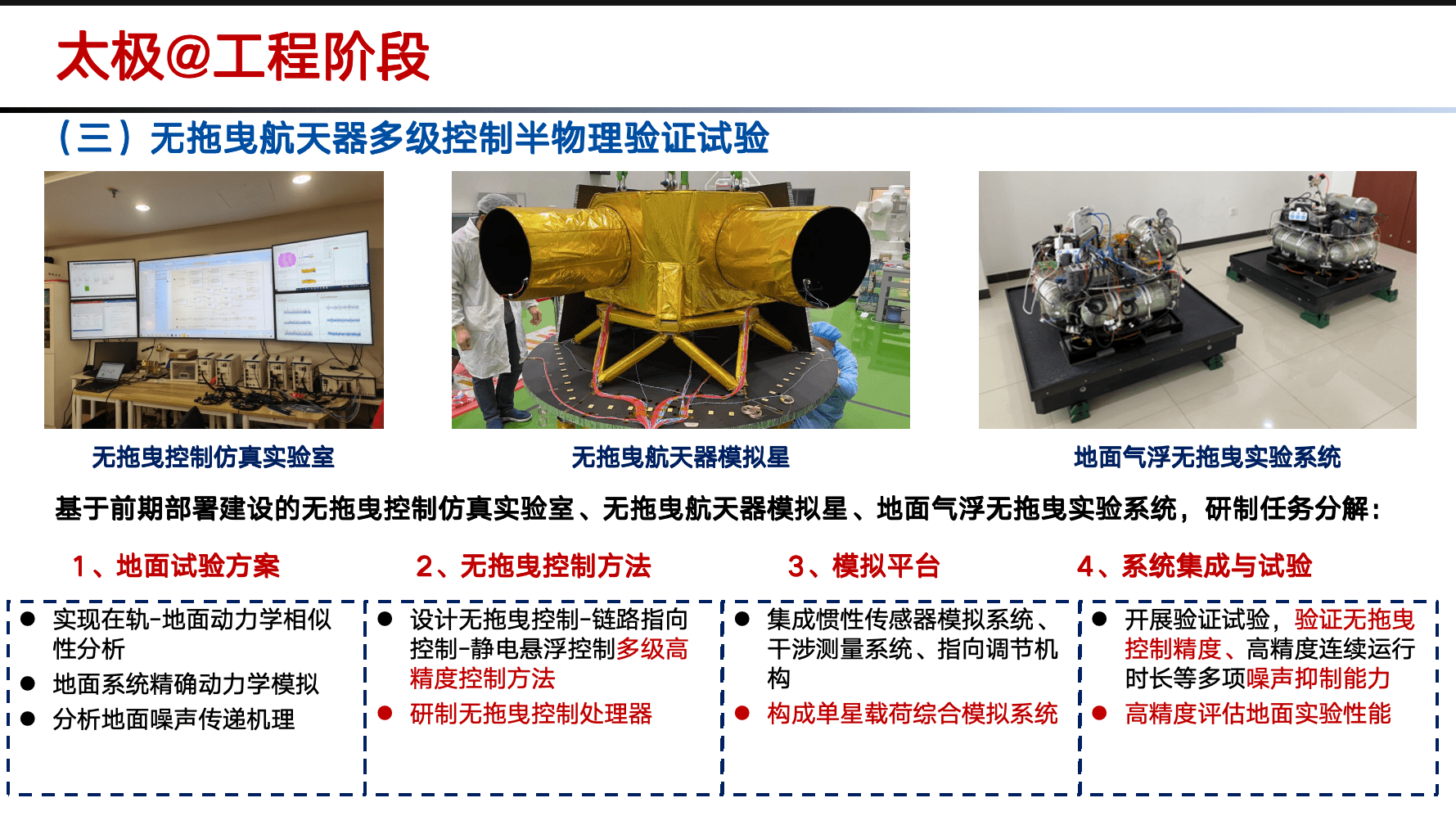
Ground-based drag-free spacecraft simulator for semi-physical verification
The historical Taiji-1/2/3 roadmap has evolved toward full-mission engineering, integration, verification, and science-data readiness.
Stage 3 — Key technology maturation
2020–2025: key technology breakthroughs and TRL assessment
* interferometer;
* ATP/acquisition tracking pointing;
* GRS;
* micro-propulsion;
* drag-free control;
* ultra-stable platform;
* noise suppression and signal inversion;
* end-to-end simulation.
Stage 4 — Full-mission engineering preparation
Current focus: full three-satellite mission engineering, integration, and verification
* mission engineering design;
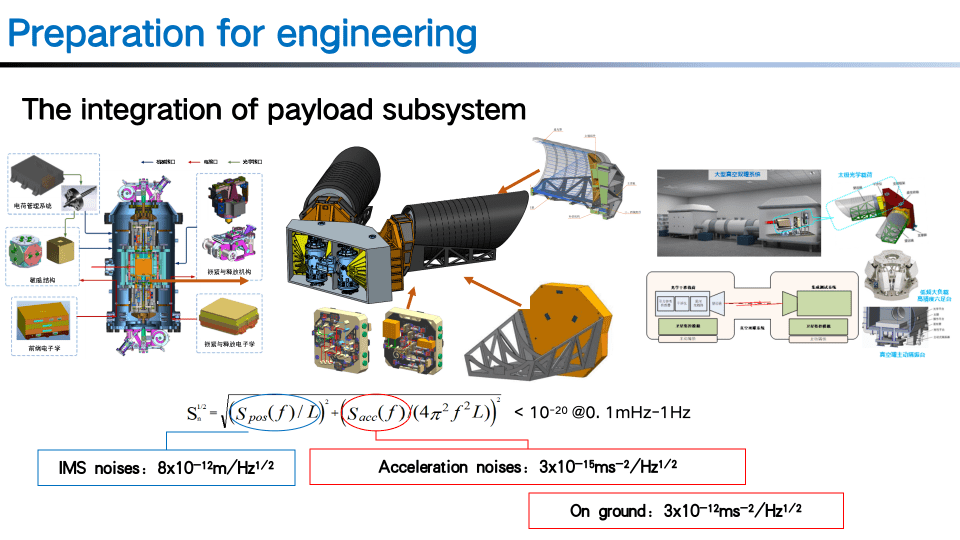
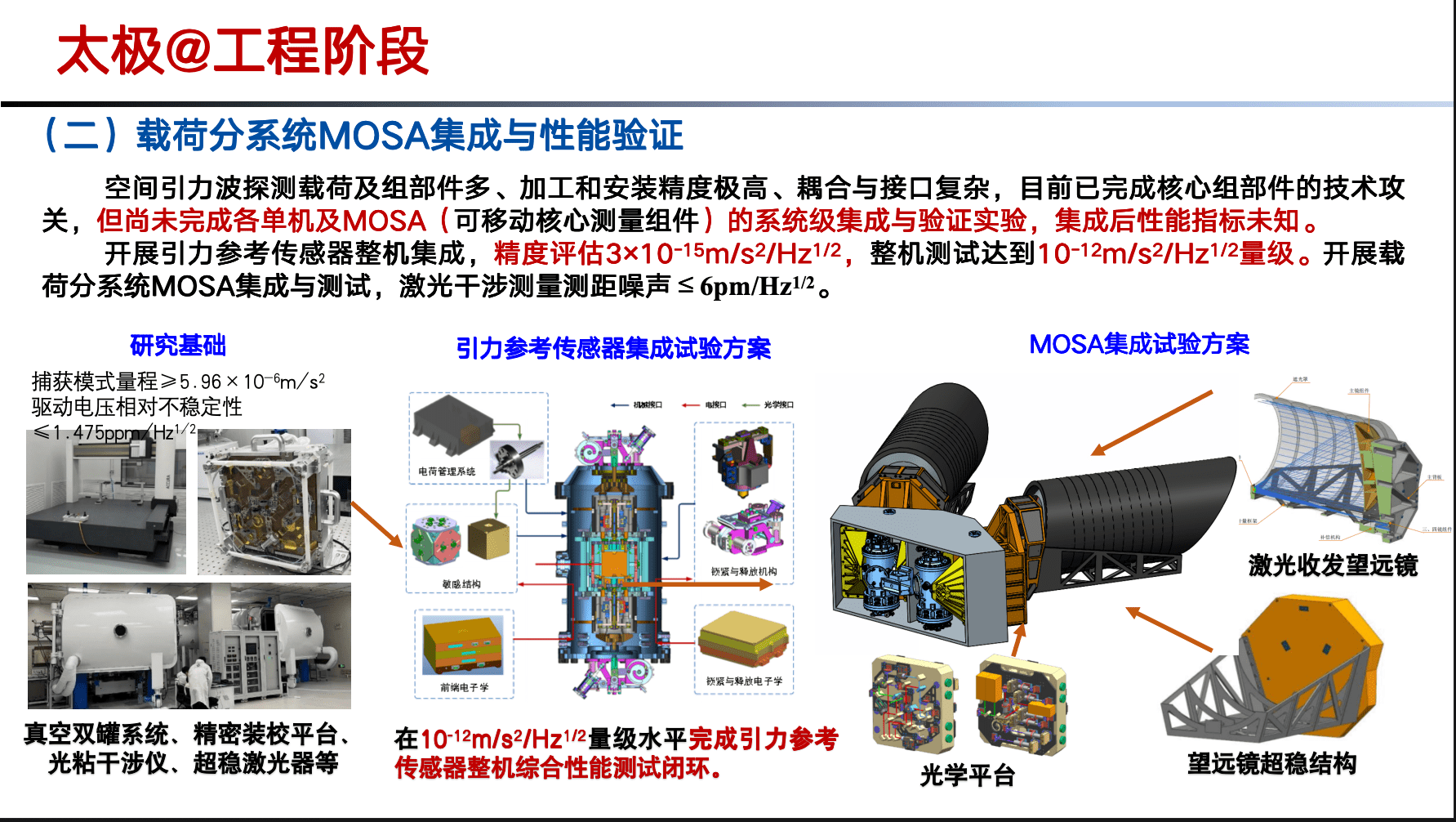
* MOSA payload subsystem integration;
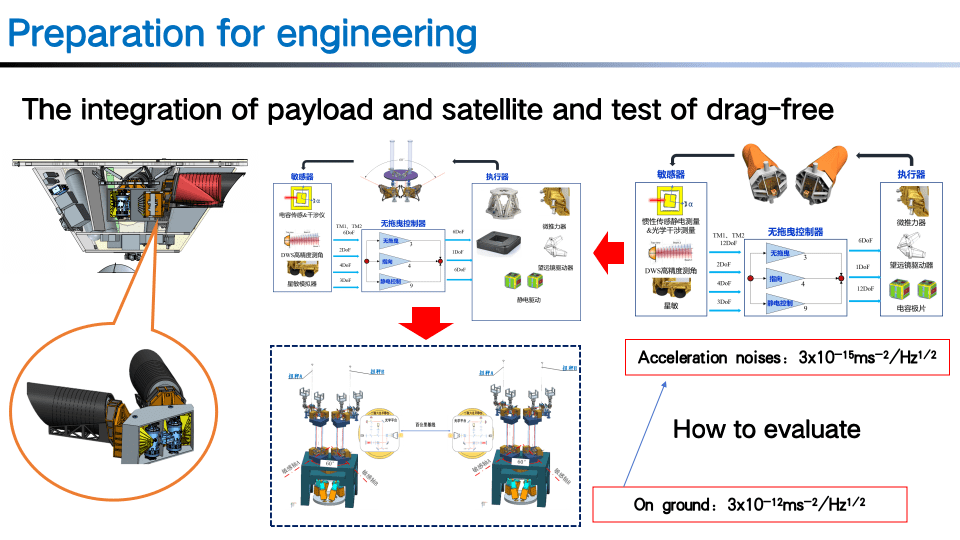
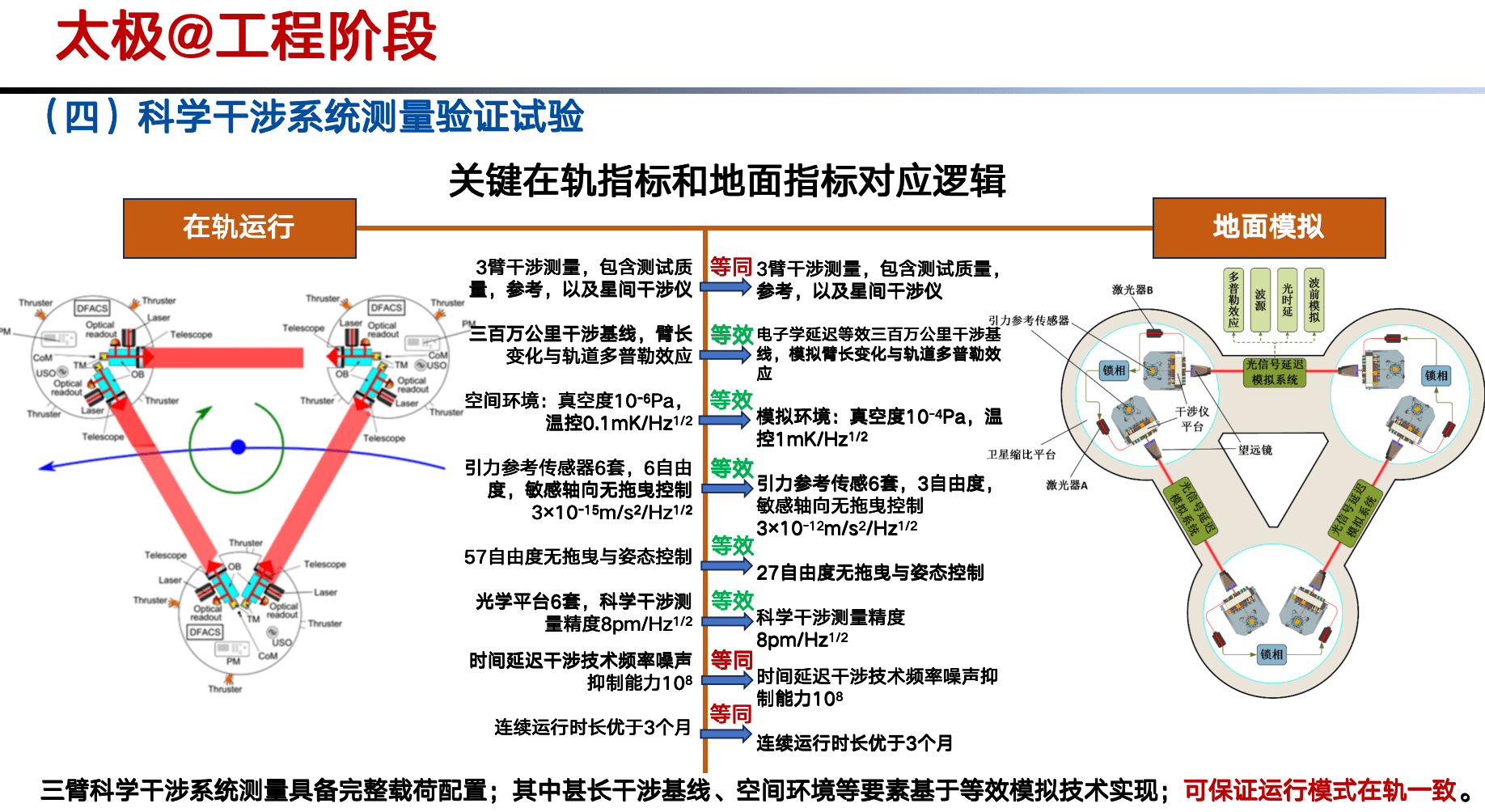
* drag-free multi-level semi-physical verification;
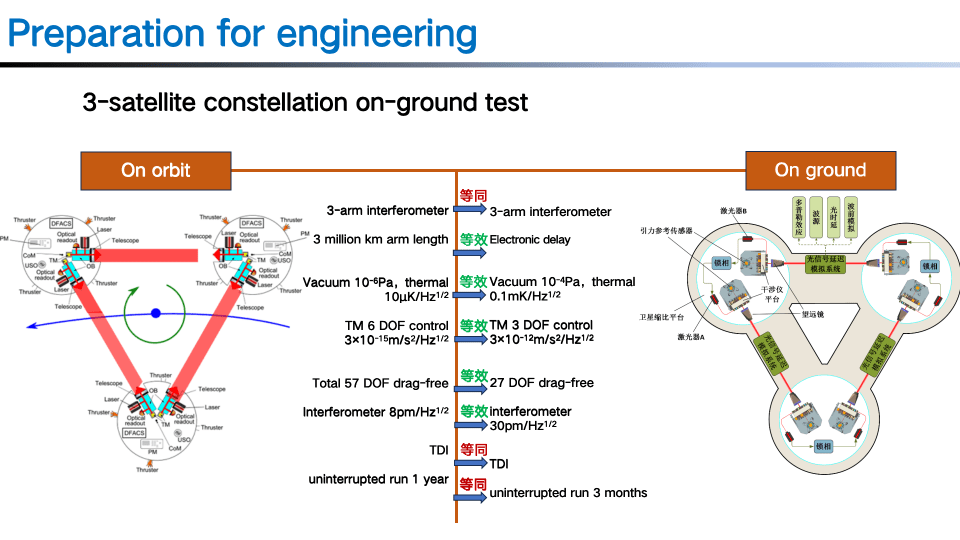
* three-arm scientific interferometer verification;
* end-to-end simulation and data pipeline readiness.
Stage 1 — Early studies and mission concept
2008–2018: concept studies and mission formulation
* CAS-led early studies of space-borne GW detection;
* Taiji publicly introduced internationally in 2016;
* mission concept and science objectives matured through published studies.
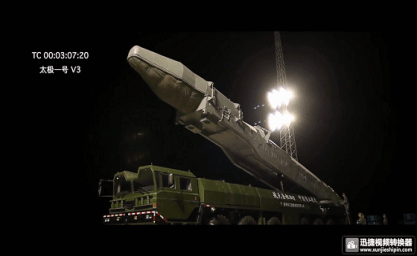
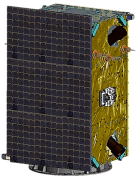
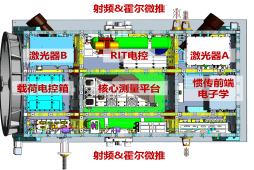
1. Taiji-1 (2019)
发射“太极一号”单星
目标:验证技术路线可行性
干涉测距指标:100pm/Hz1/2量级
加速度噪声指标:3×10⁻⁹ms-2/Hz1/2
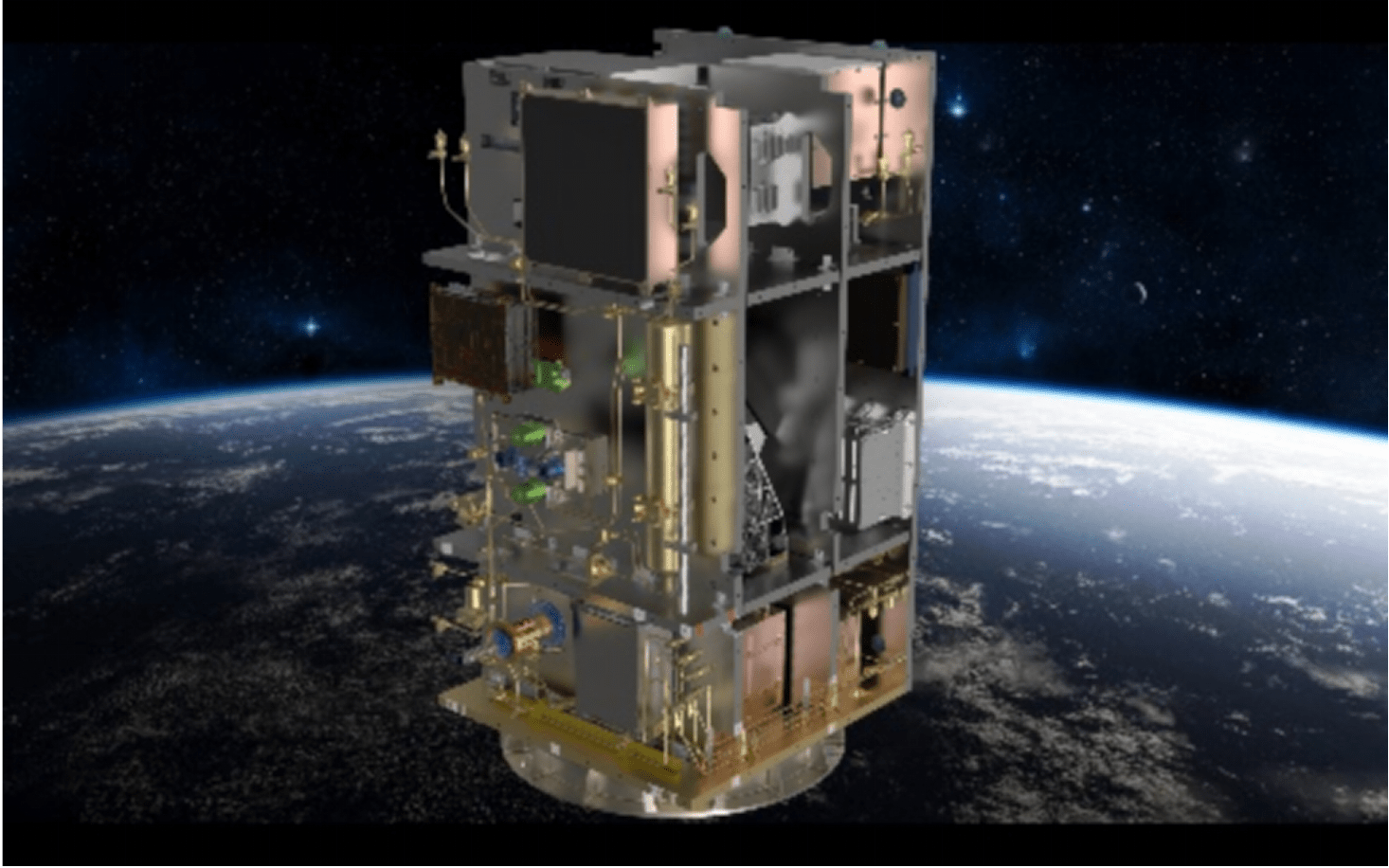
Stage 2 — Taiji-1 in-orbit heritage
2019: Taiji-1 technology demonstration and geodetic output
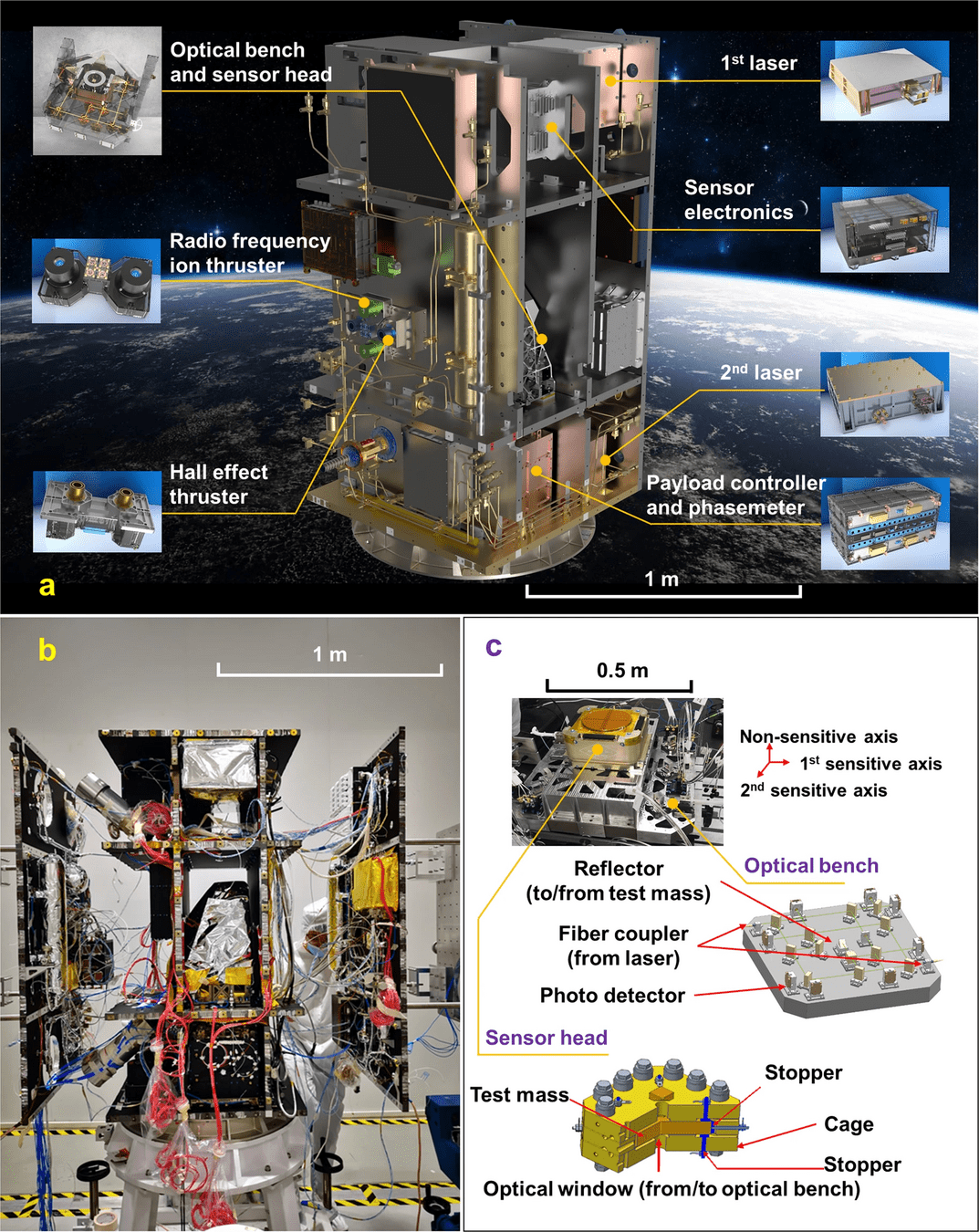
* single-satellite technology demonstration;
* laser interferometry, GRS, micro-thrusters, drag-free control, thermal control;
* global gravity field / geoid model as a scientific-geodetic output.
2. Taiji-2 (202x)
发射“太极二号”卫星
目标:日心轨道高精度控制与星间高精度干涉测量关键技术
干涉测距指标:xx pm/Hz1/2量级
加速度噪声指标:xx m s-2/Hz1/2量级
The historical Taiji-1/2/3 roadmap has evolved into a more engineering-oriented path toward a full three-satellite science mission. The current emphasis is no longer simply the next technology demonstrator, but system-level design, integration, verification, and data-analysis readiness for the full mission concept.
1. Taiji-1 (2019)
发射“太极一号”单星
目标:验证技术路线可行性
干涉测距指标:100pm/Hz1/2量级
加速度噪声指标:3×10⁻⁹ms-2/Hz1/2
He WANG · ICTP-AP / UCAS
Taiji: China's Space-based GW Program
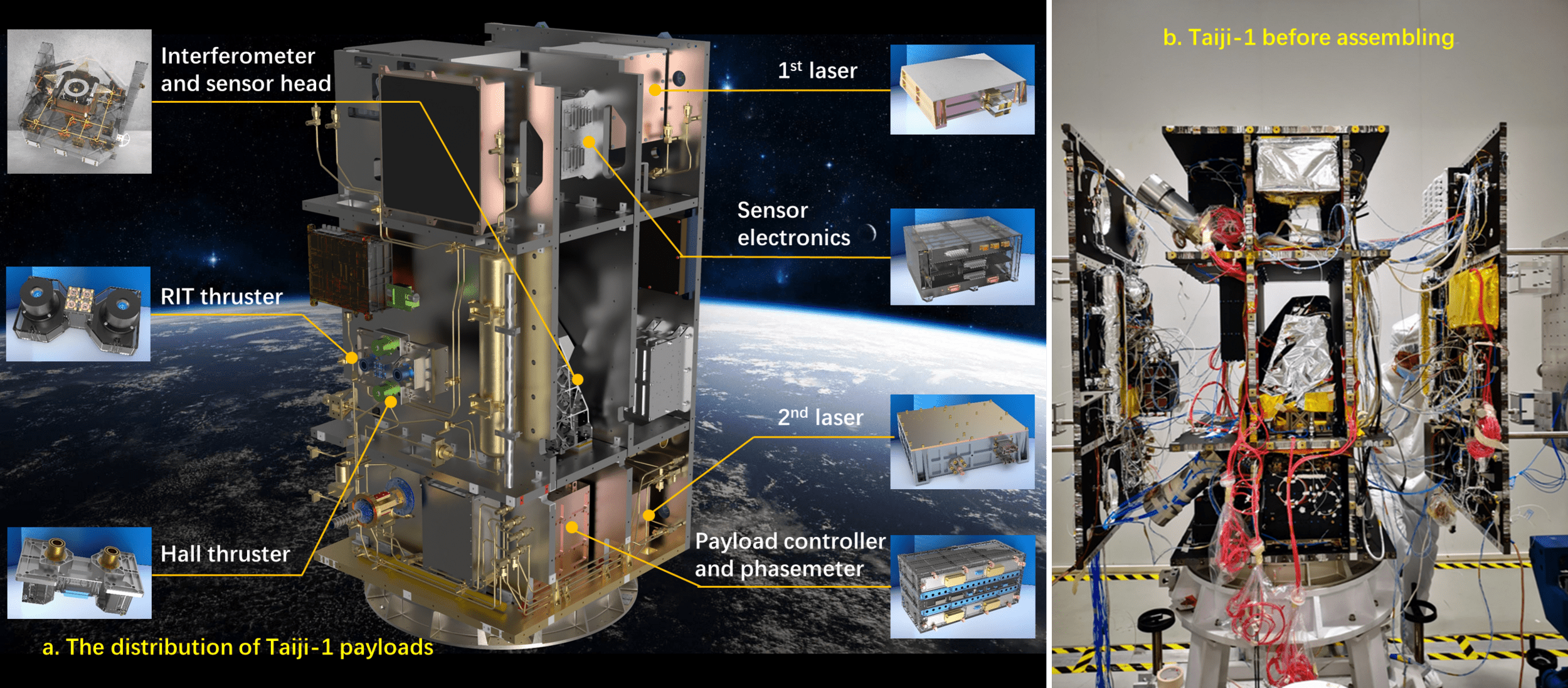
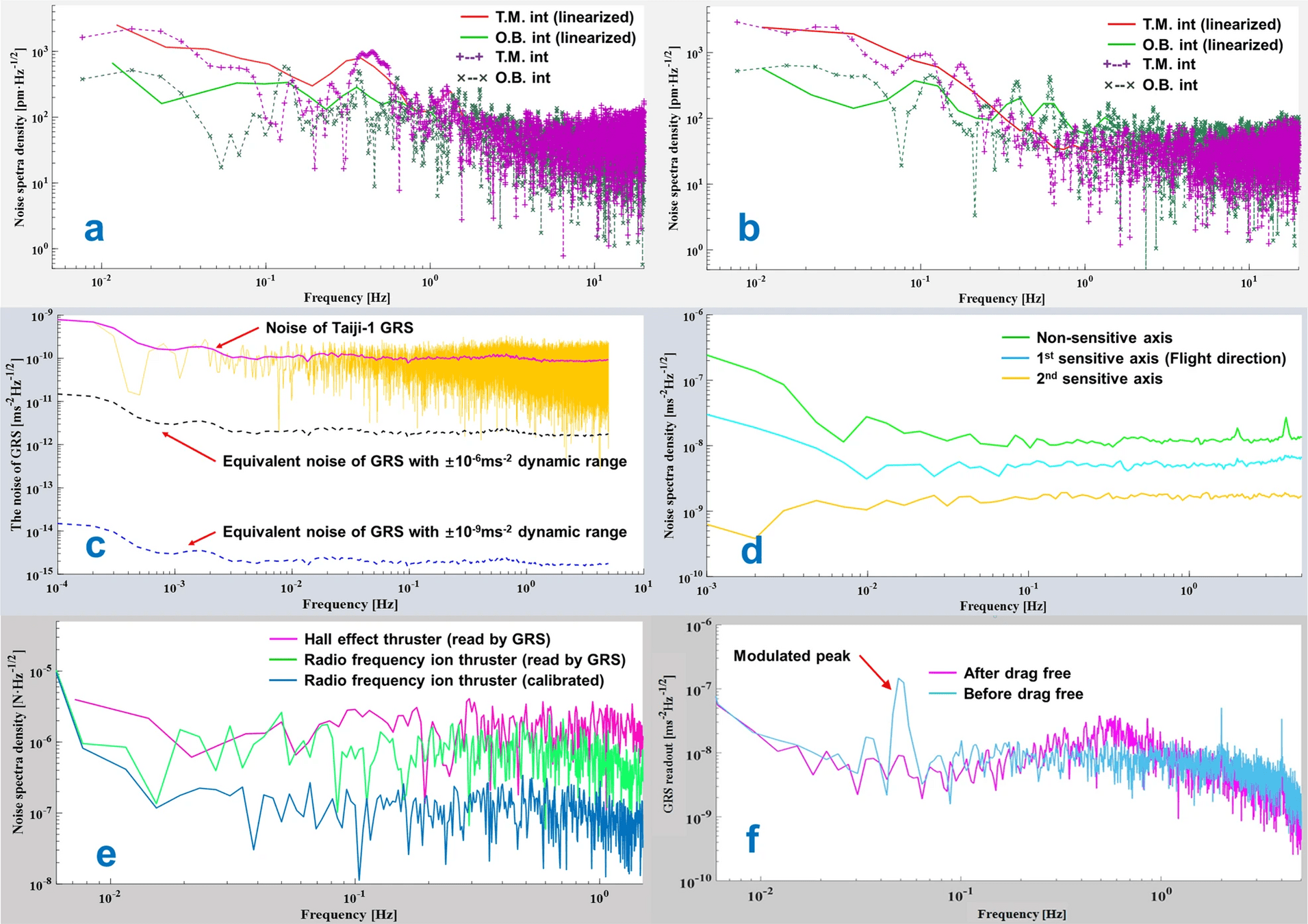
Single-satellite validation of key payload and control technologies
Drag-free test: residual acceleration before/after control-loop closure
Source: Taiji Scientific Collaboration, Communications Physics 4, 34 (2021)
Take-away: Taiji-1 was not a full GW detector, but it provided in-orbit heritage for the measurement and control technologies required by Taiji/TJ.
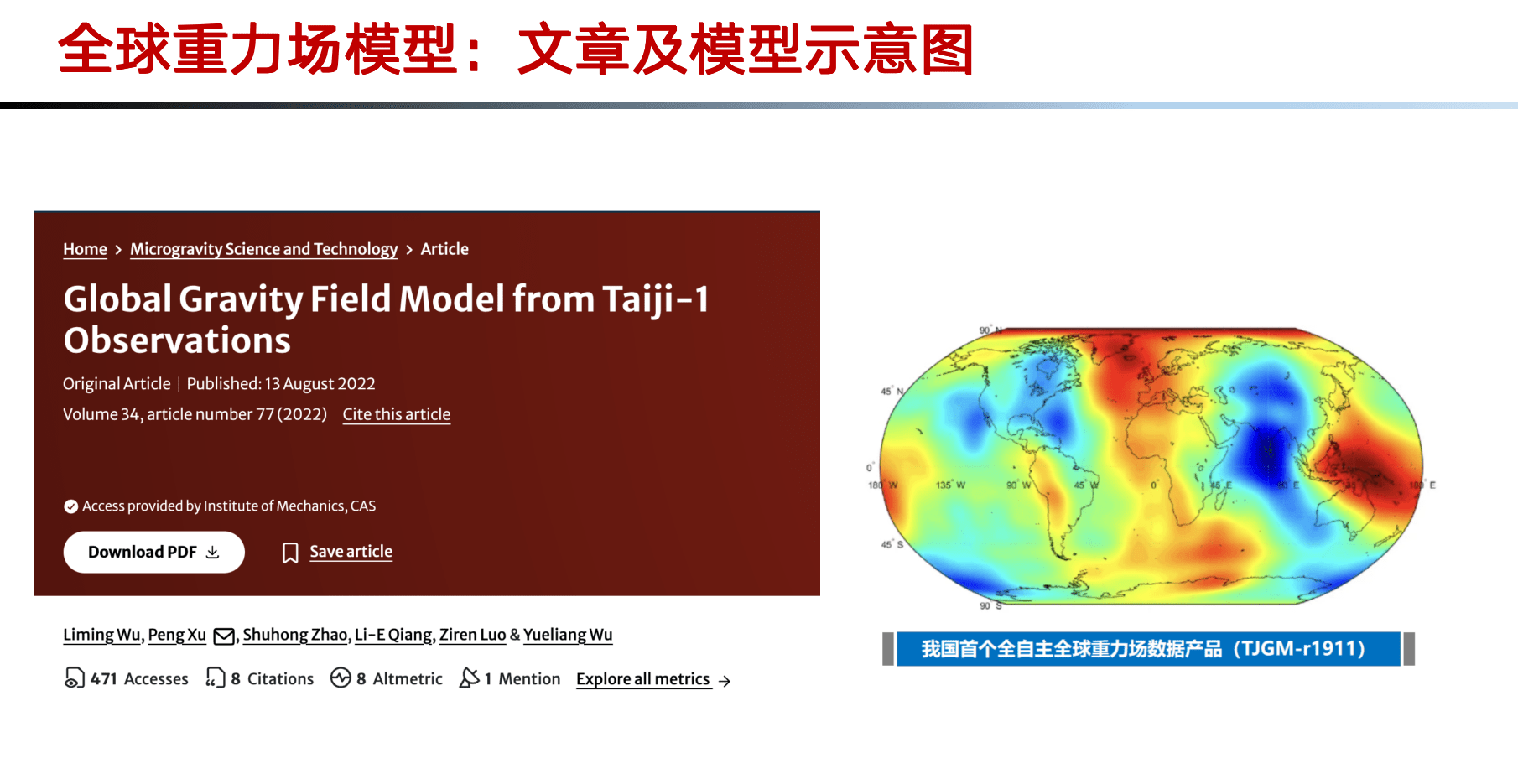
Yue-Liang Wu et al., Microgravity Sci., Technol. 34, 77 (2022). arXiv:2203.05876
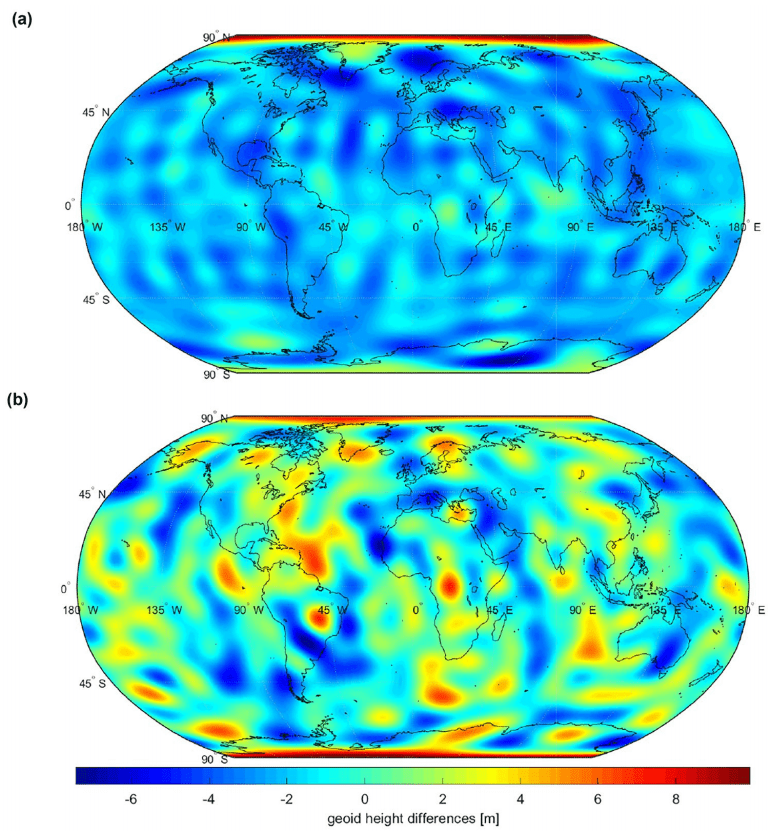
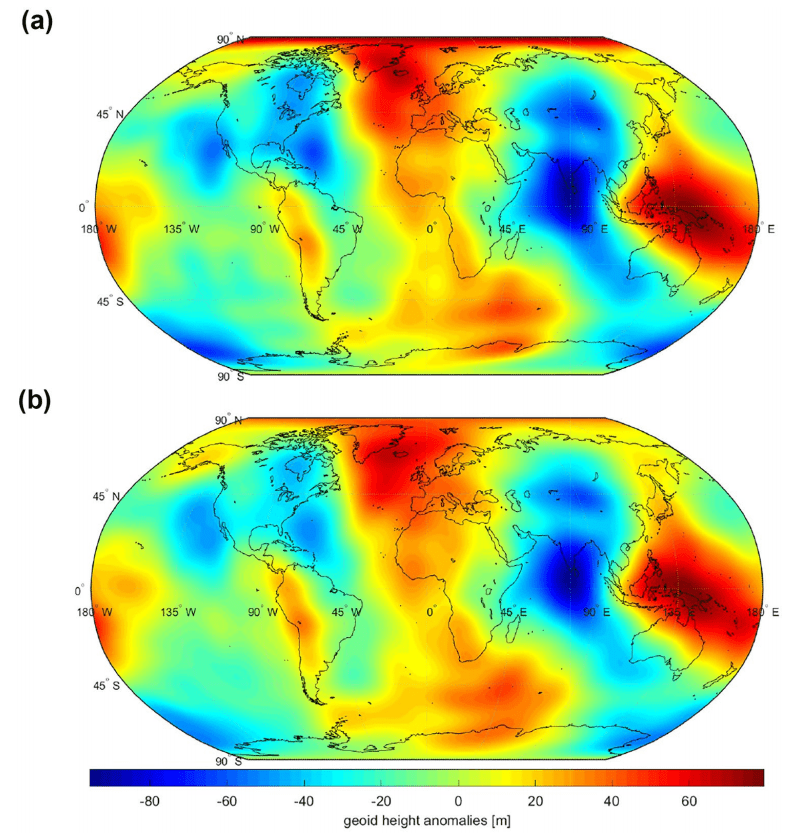
Taiji-1 observations enabled the construction of a global gravity-field model: TJGM-r1911
From in-orbit precision measurement to geodetic science
He WANG · ICTP-AP / UCAS
Taiji: China's Space-based GW Program
Geoid height anomalies from TJGM-r1911
Geoid height differences relative to EGM2008
PUBLISHED GEODETIC RESULT
GLOBAL GRAVITY-FIELD MODEL
COMPARISON WITH REFERENCE MODEL
Global Gravity Field Model from Taiji-1 Observations
Model: TJGM-r1911
Take-away: Taiji-1 demonstrated broader precision-measurement capability beyond technology validation, producing a concrete geodetic science output.
TJ-1 比较重要的科学产出(如技术验证+全球重力场)
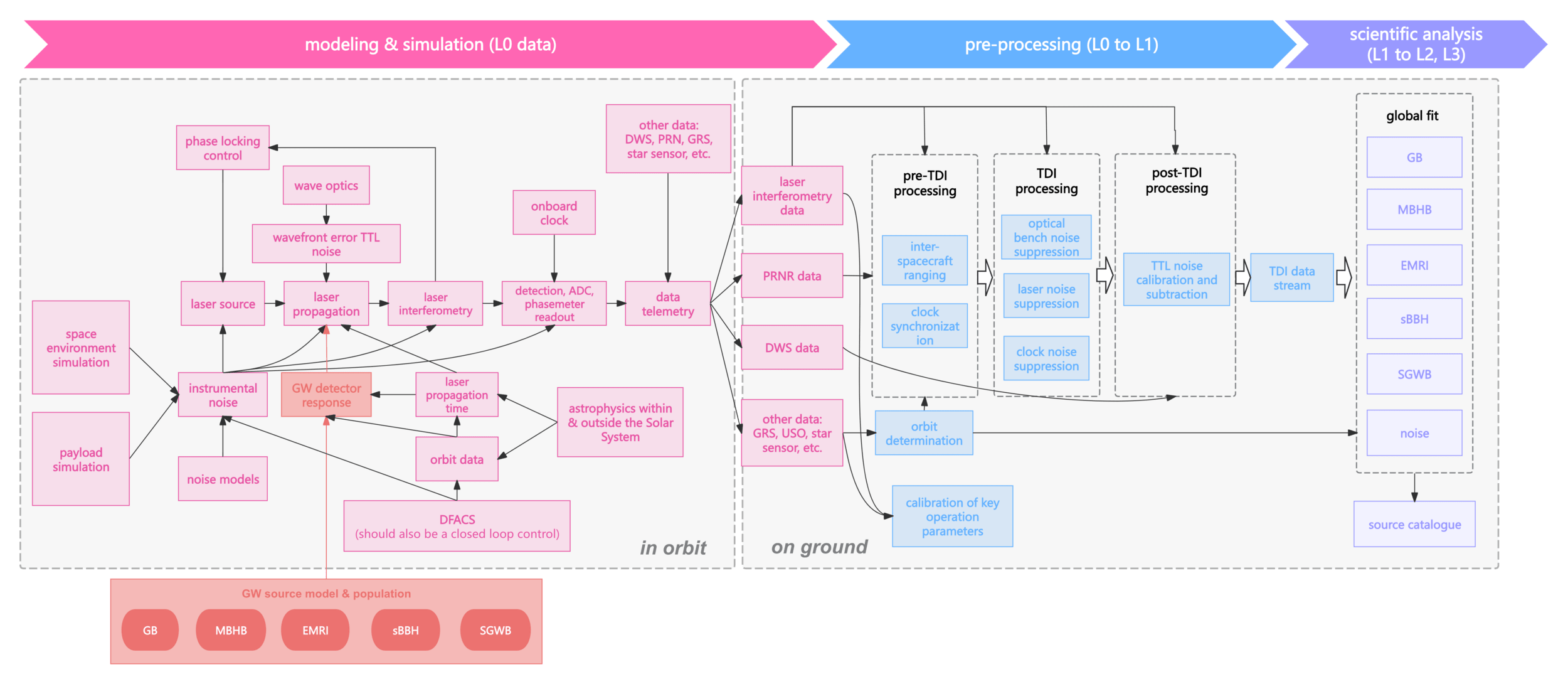
L0: 原始激光干涉测量数据
TDI处理
L1: TDI科学数据
L2,3: 波源及参数目录
Interferometer
Taiji R&D progress —— ATP
Technologies: phase-locking amplification
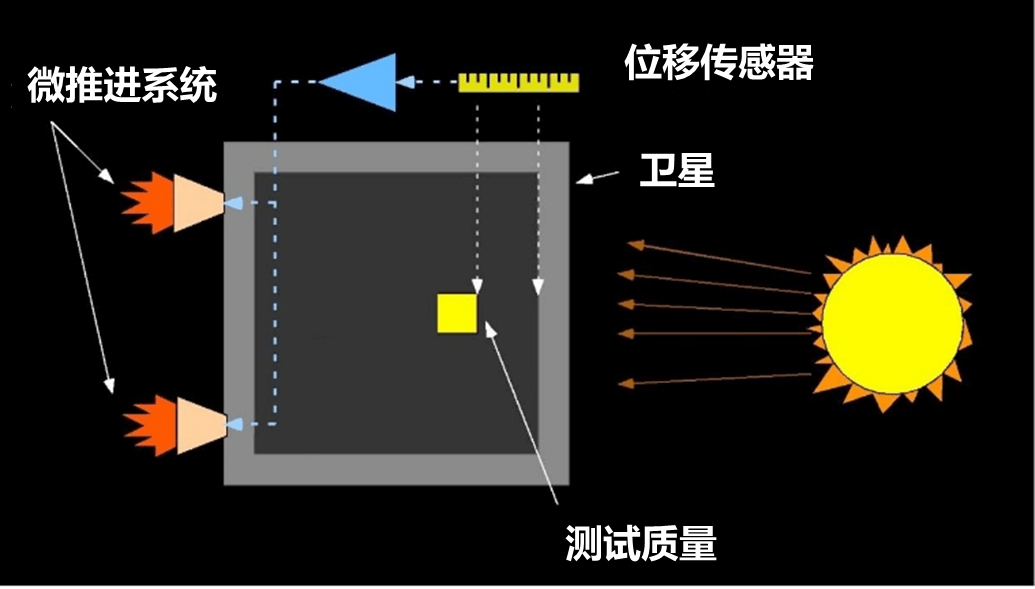
Technologies: drag-free
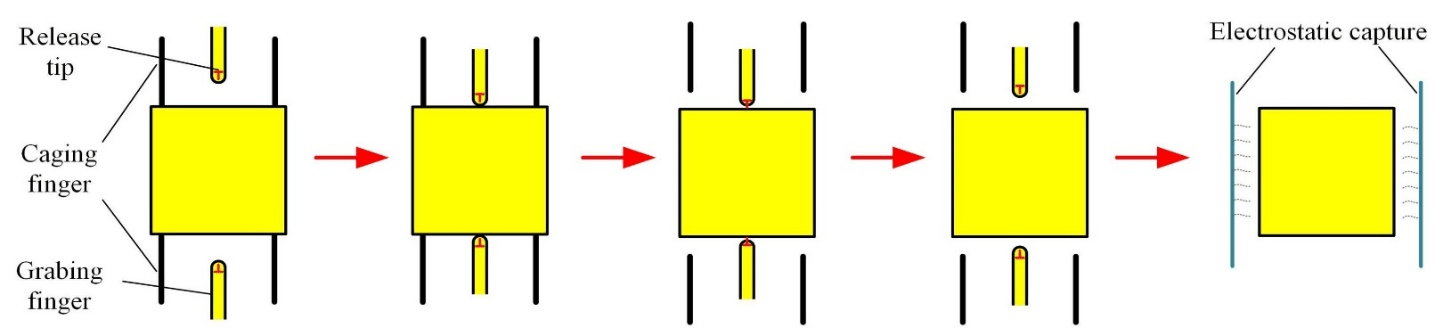
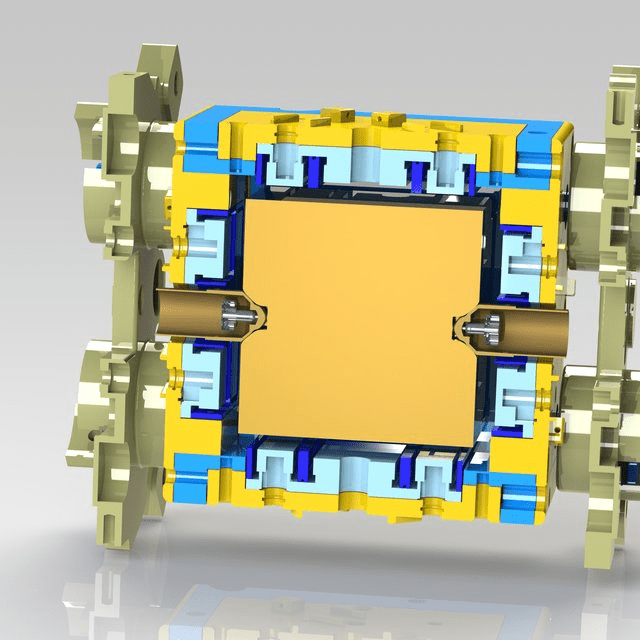
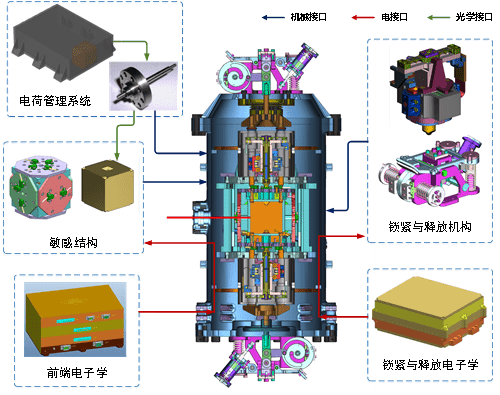
Technologies: inertial sensor
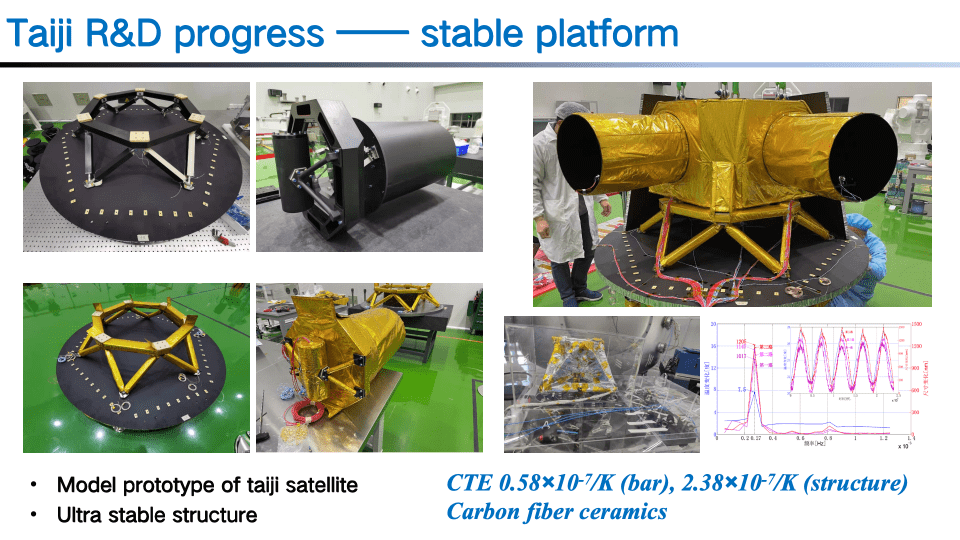
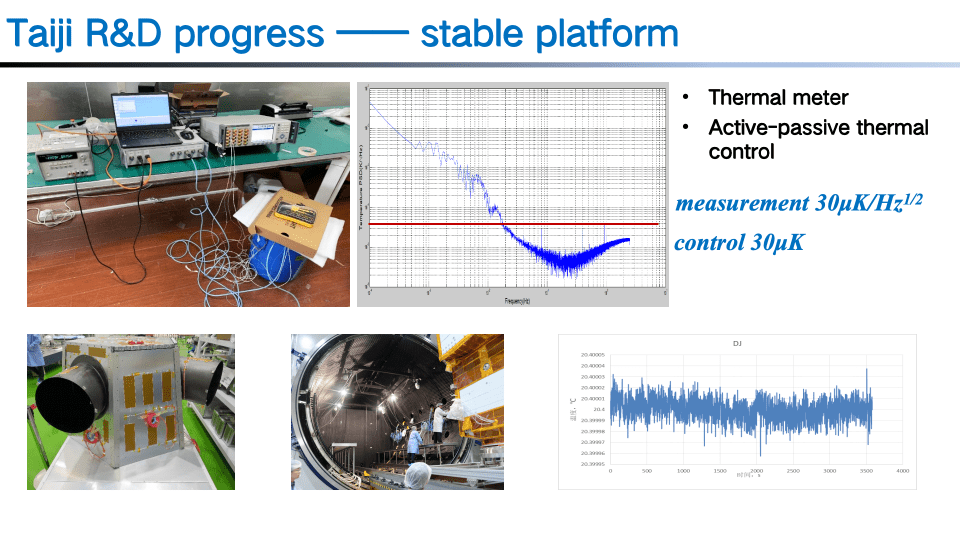
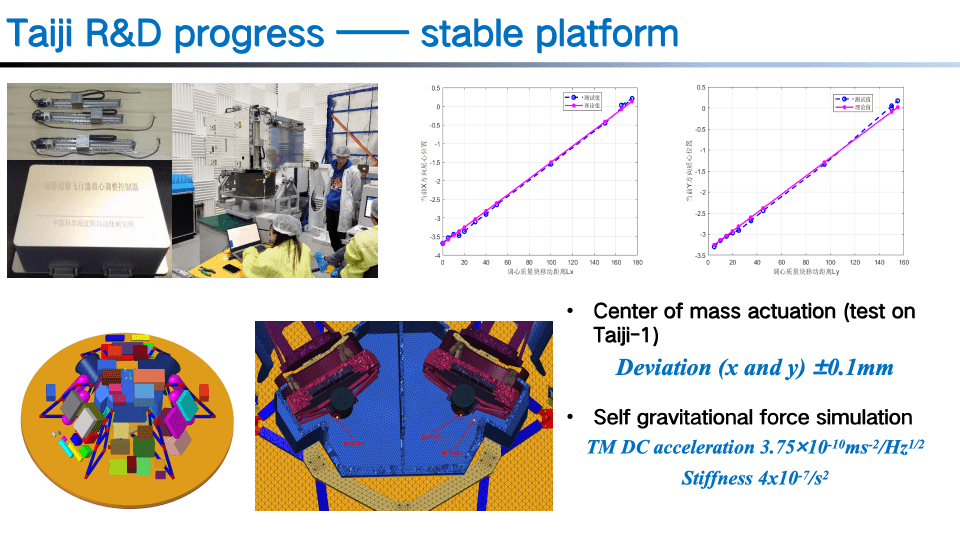
Technologies: stable platform
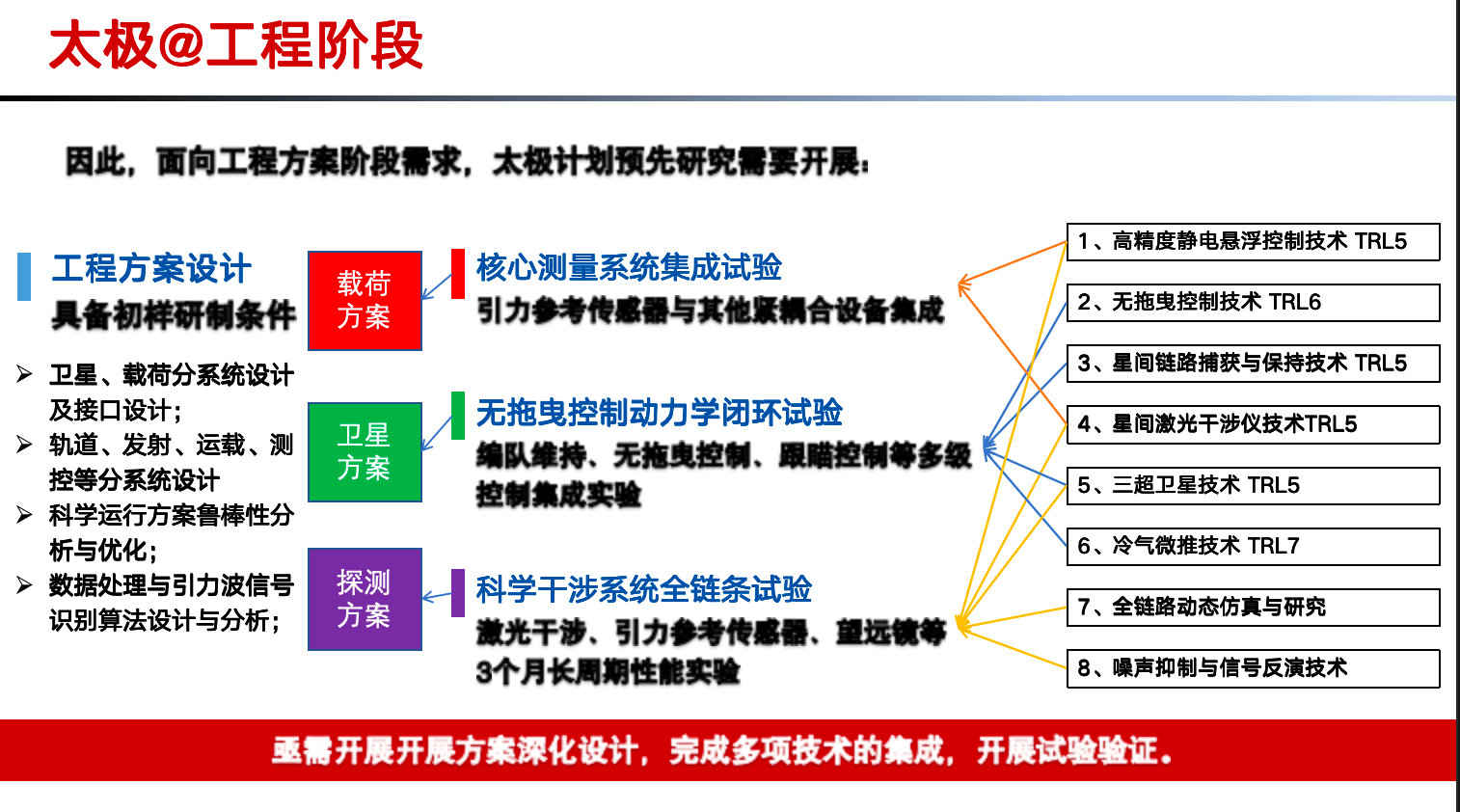
One mission-design track and three system-verification tracks
He WANG · ICTP-AP / UCAS
Taiji: China's Space-based GW Program
SUPPORTING KEY TECHNOLOGY
TRL 5
TRL 6
TRL 5
TRL 5
TRL 5
under validation
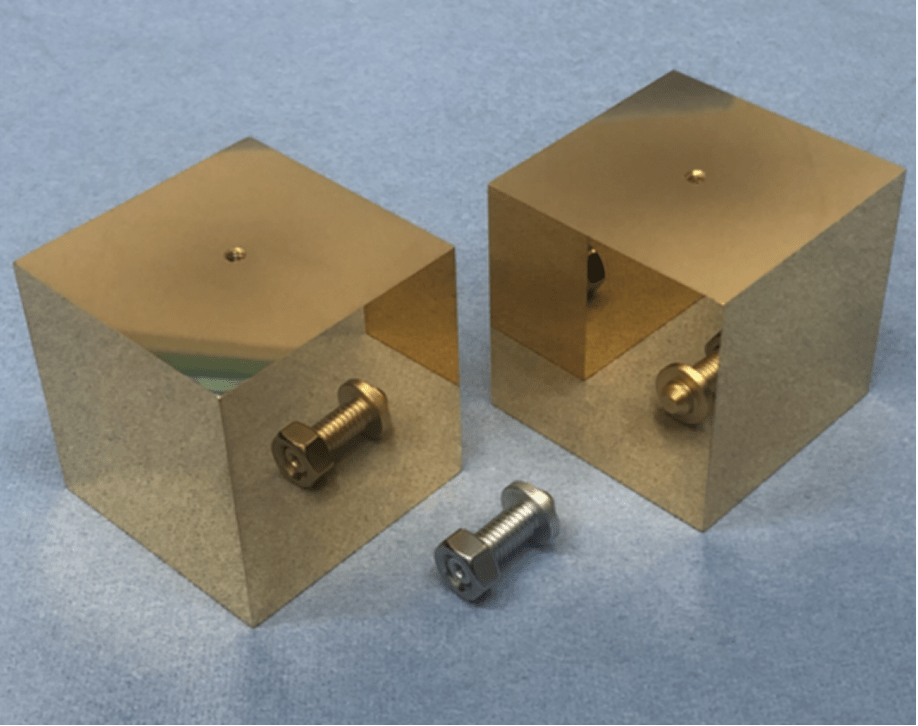
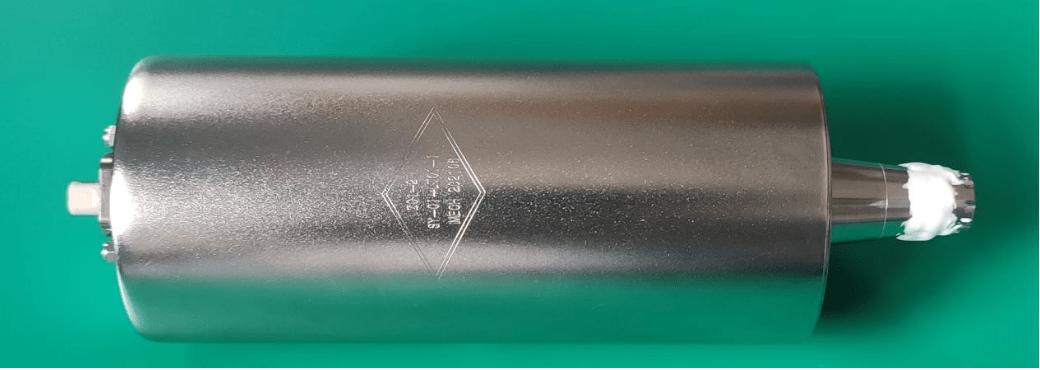
GRS / electrostatic suspension
Drag-free control
Laser-link acquisition & tracking
Laser interferometry
Unltra-stable plaform
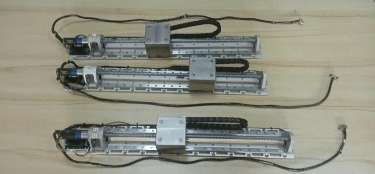
Cold-gas micro-propulsion
End-to-end dynamic simulation
Noise suppression & signal inversion
TRL 6-7
under validation
Three-arm interferometry · inertial reference · ranging / optical-path simulation · TDI-related noise suppression · long-duration stability
FULL-CHAIN VERIFICATION
04
Spacecraft–test-mass dynamics · drag-free control · pointing/control coupling · semi-physical closed-loop tests
CLOSED-LOOP VERIFICATION
03
MOSA-level integration of GRS, optical metrology, laser-link acquisition, and pointing subsystems
PAYLOAD INTEGRATION
02
Launch · orbit · transfer · TT&C · spacecraft–payload interfaces · science operations · data-processing design
MISSION DESIGN
01
Take-away: System-level verification is the bridge from key-technology maturity to full-mission readiness.
Spacecraft / payload system
Science application system
7. Noise suppression and signal inversion
8. End-to-end dynamic simulation
From component performance to link-level measurement stability
He WANG · ICTP-AP / UCAS
Taiji: China's Space-based GW Program
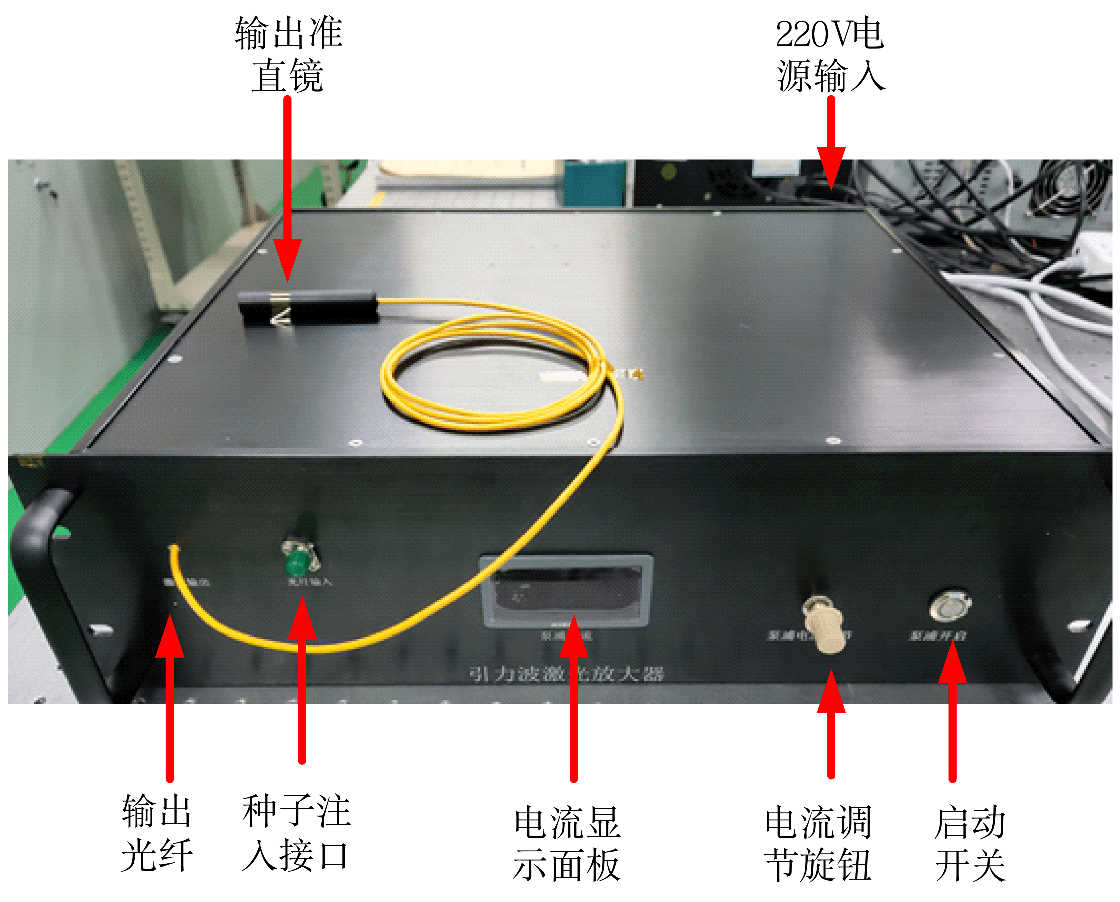
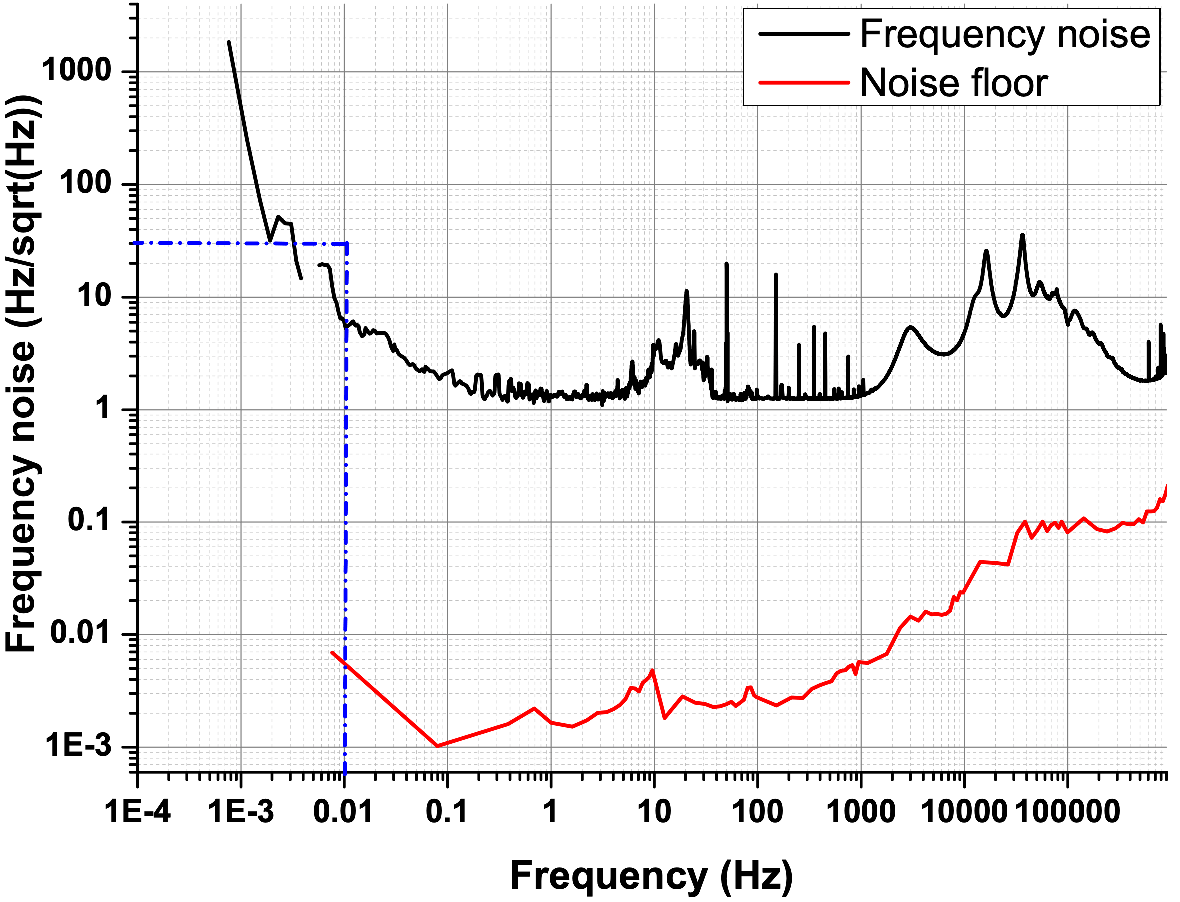
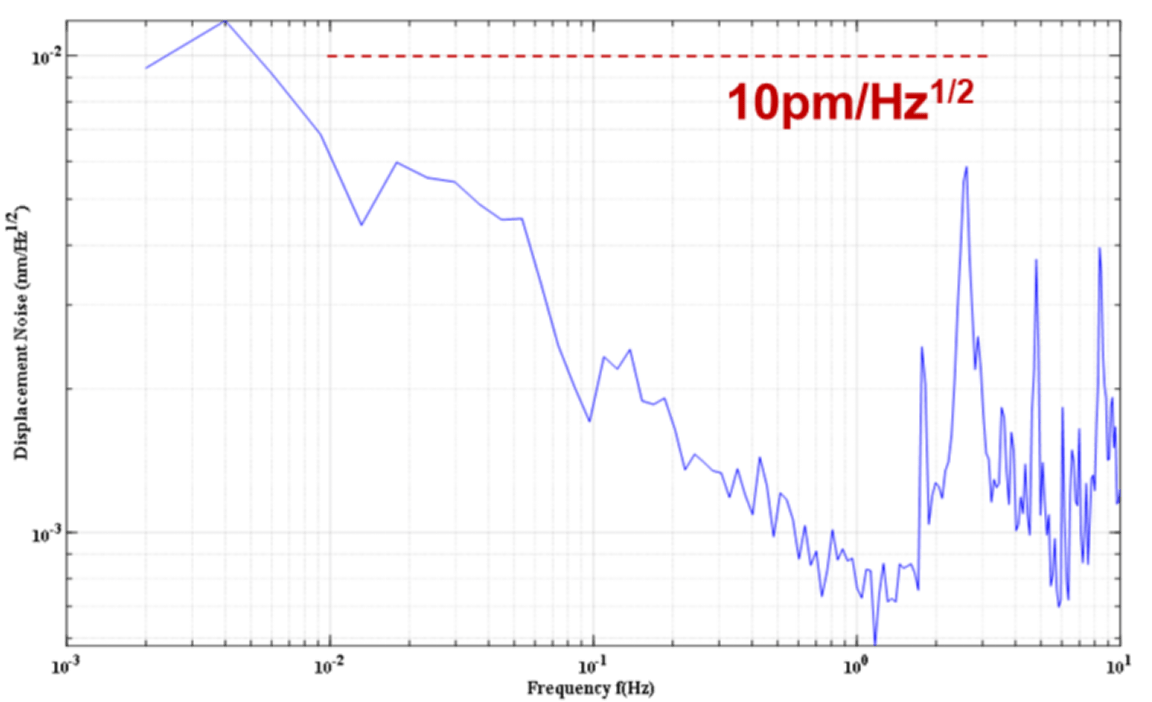
Interferometer noise: representative ground-test result
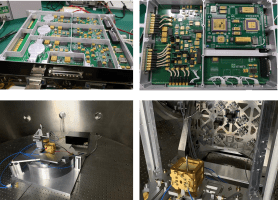
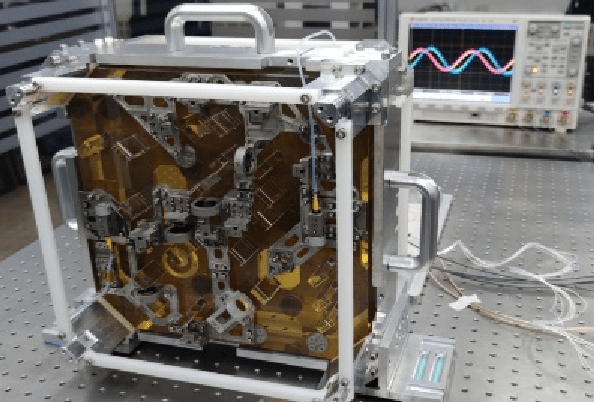
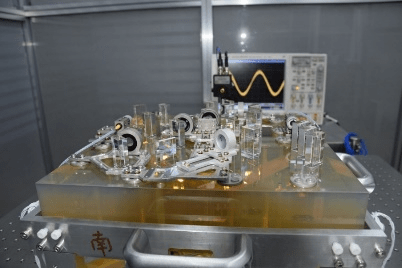
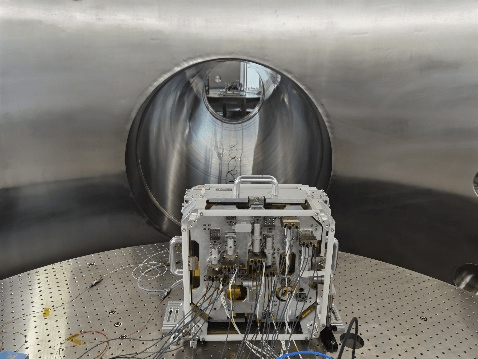
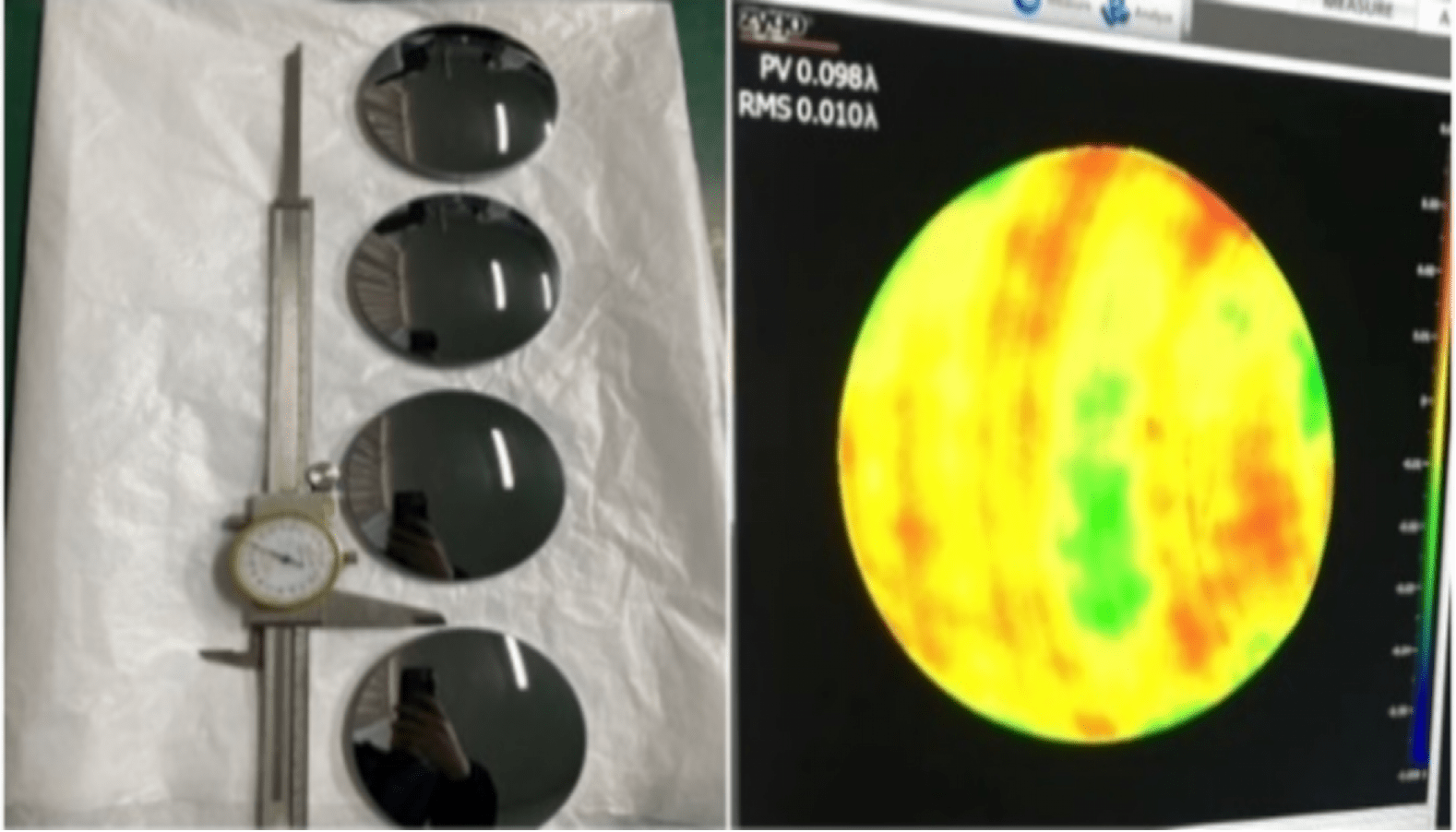
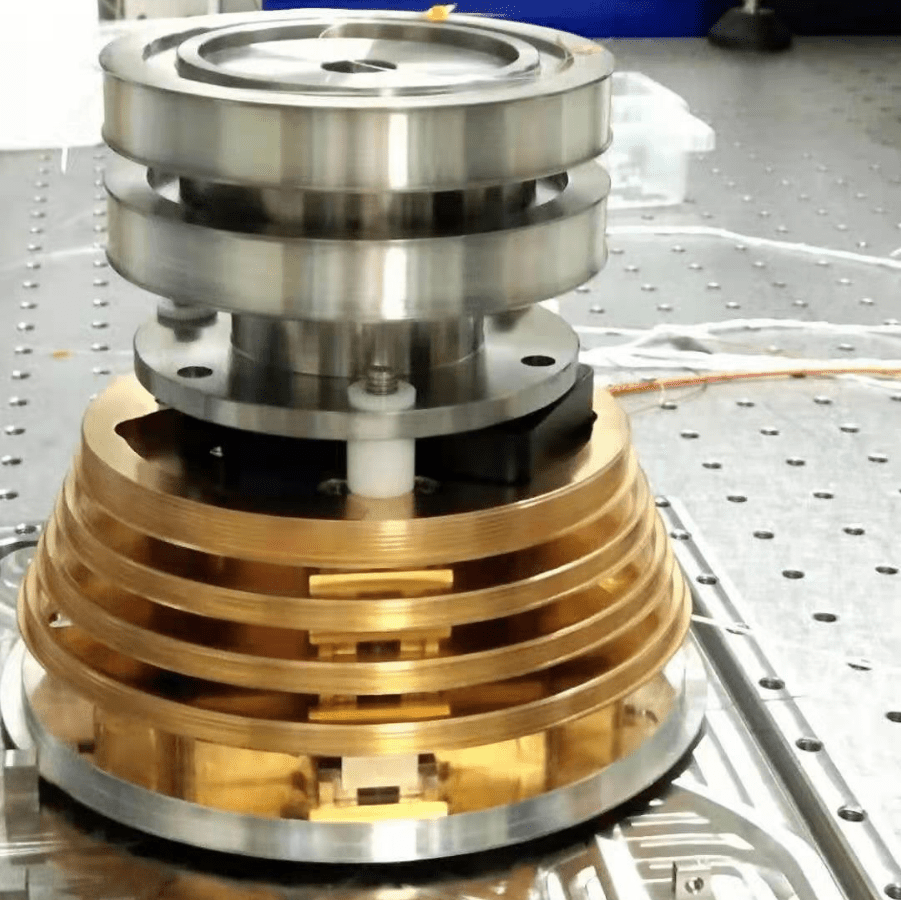
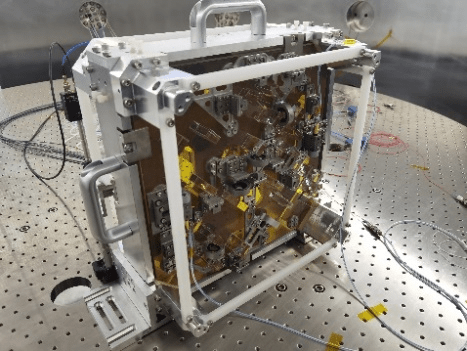
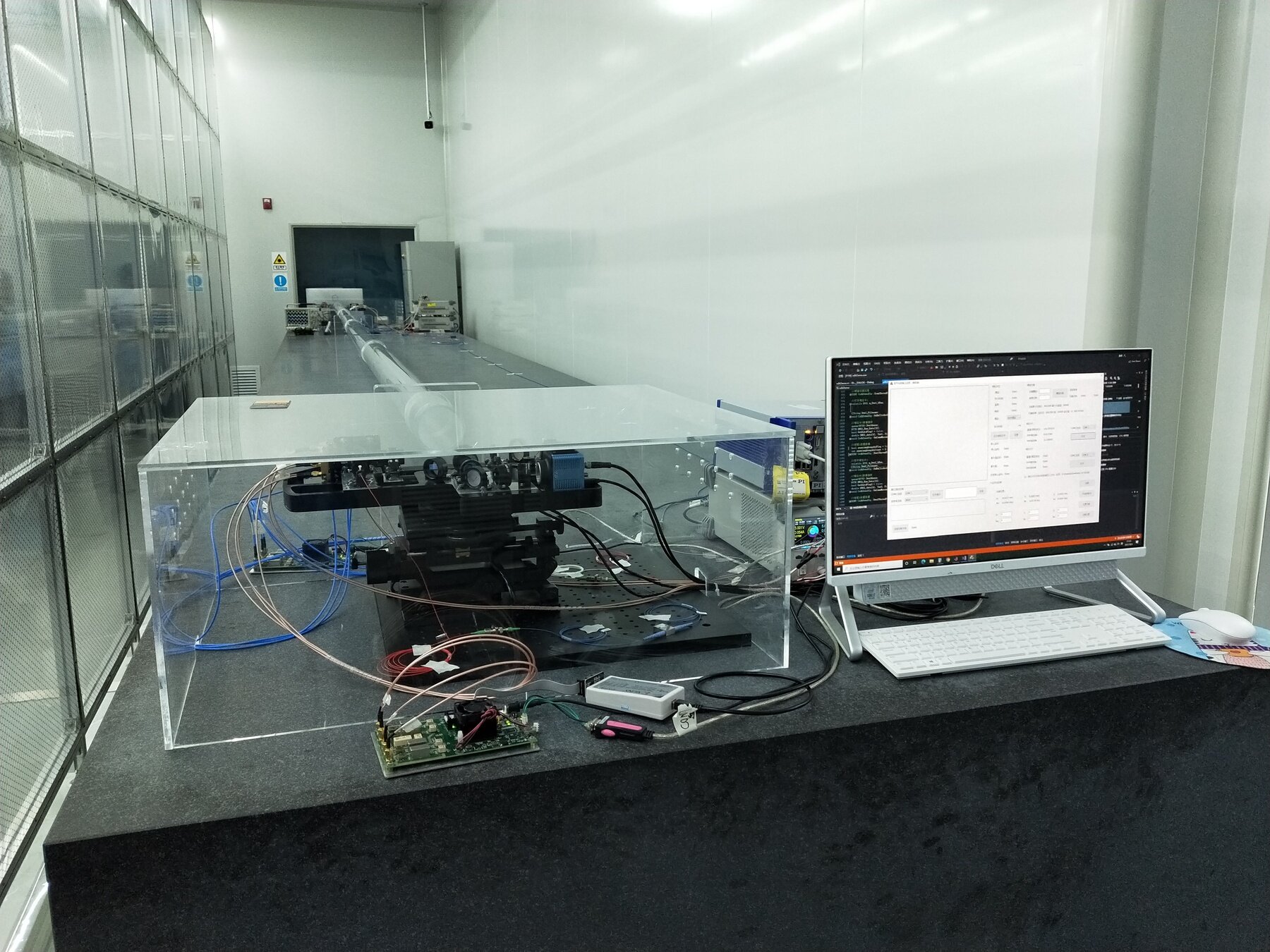
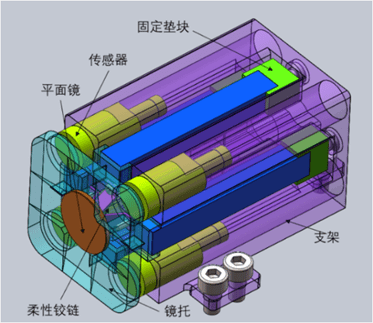
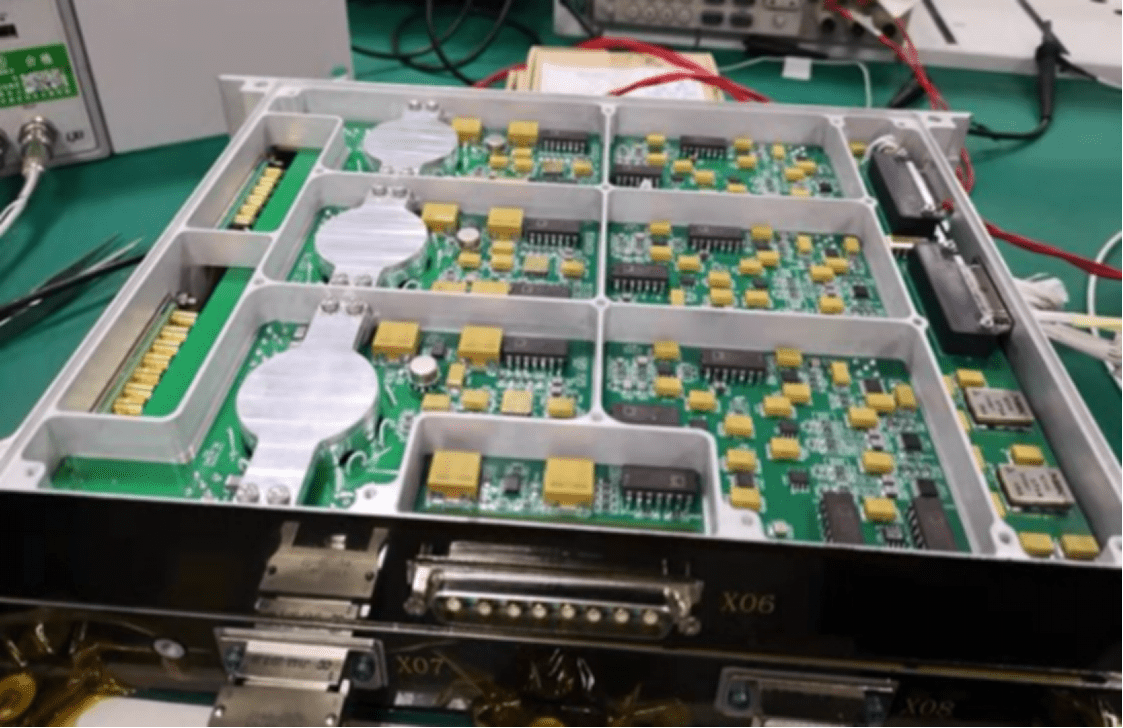
Interferometer optical bench (engineering model)
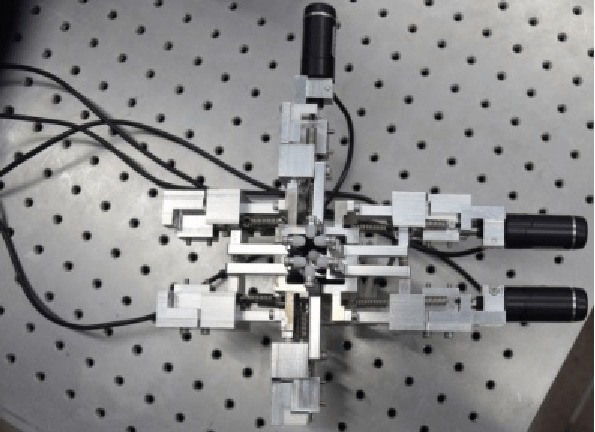
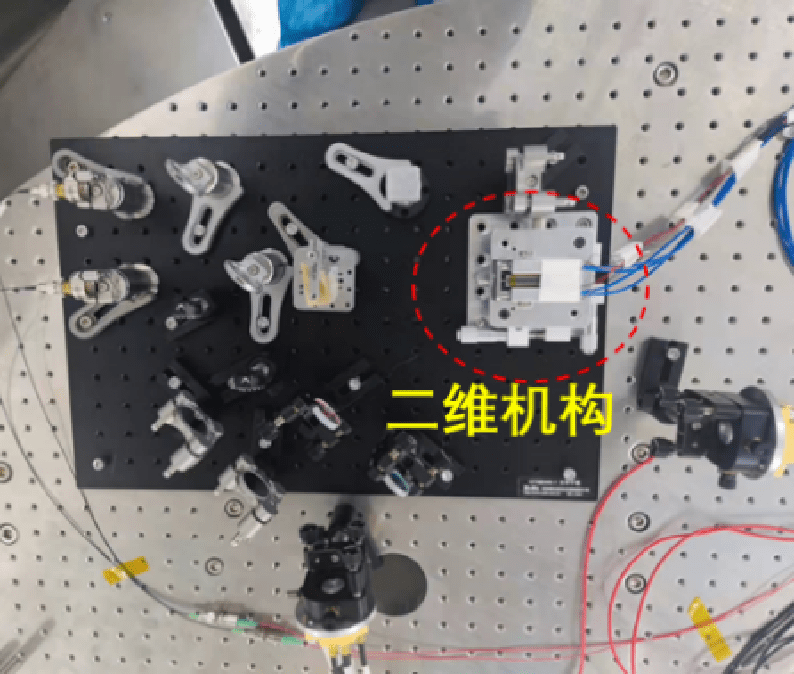
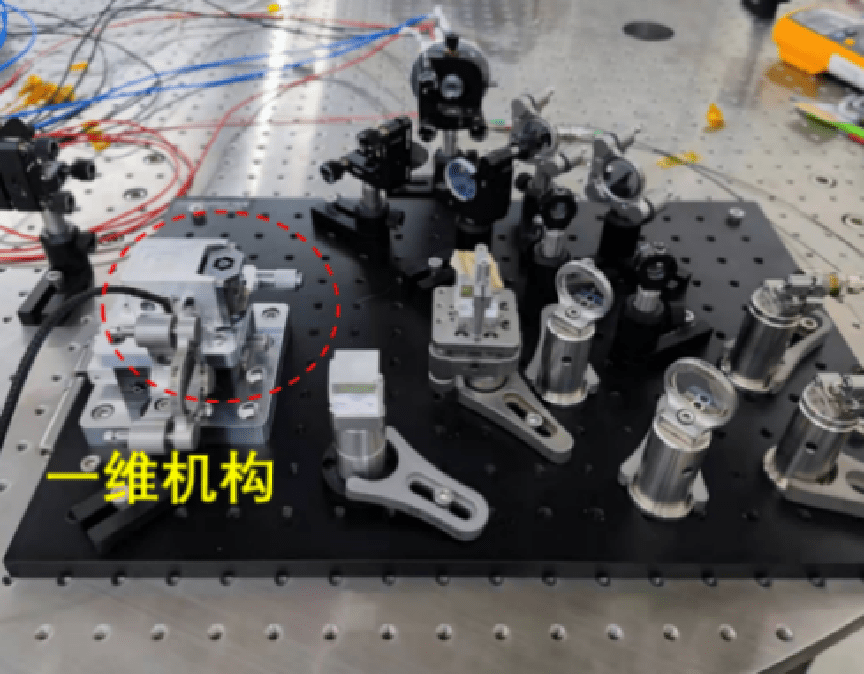
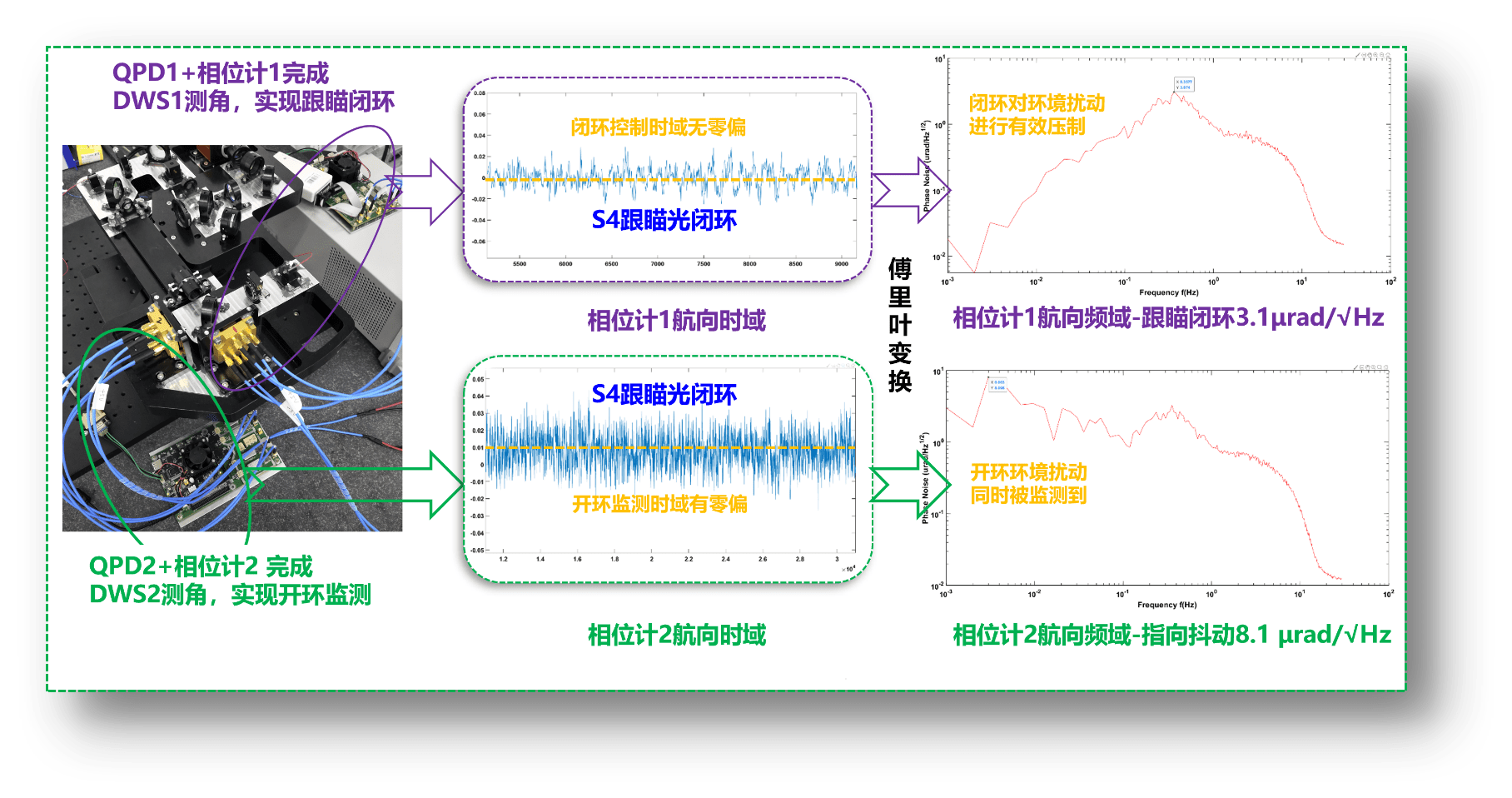
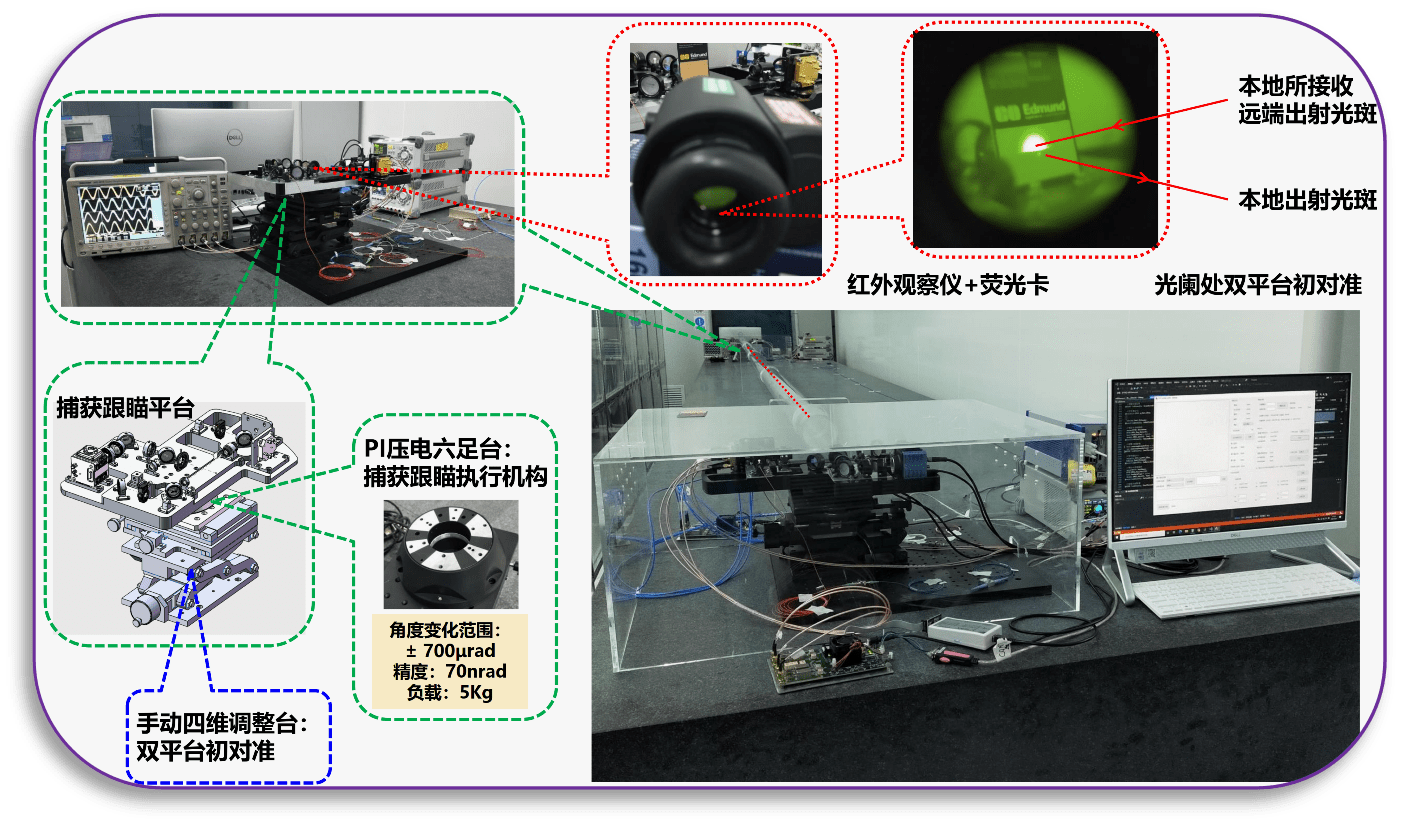
ATP acquisition and tracking experiment platform
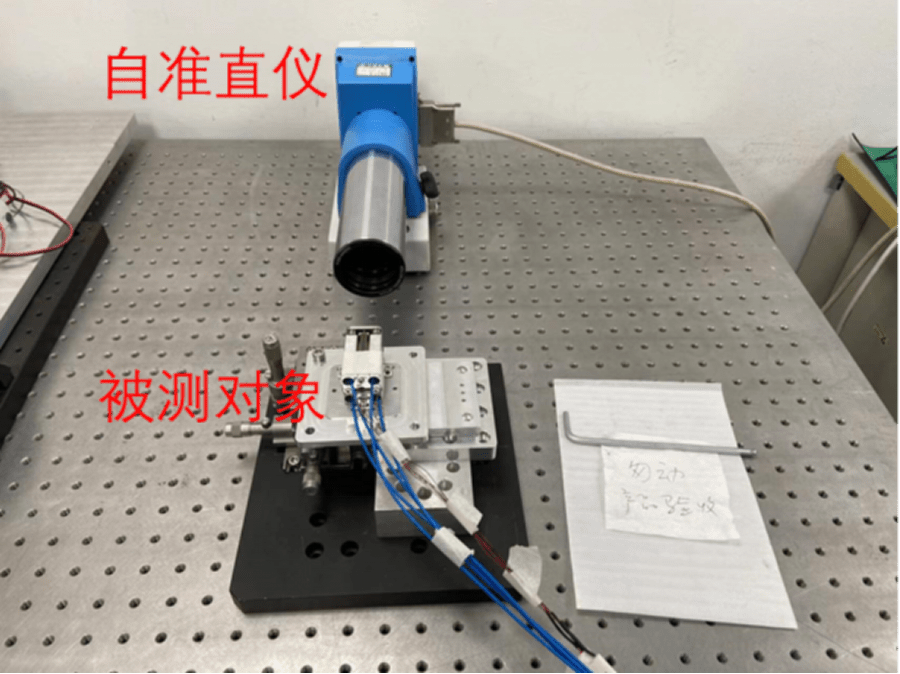
Engineering-model and ground-test results. Full mission performance requires integrated system-level verification.
Frequency stability:
Output power:
STEP 1
(req. \(30 \mathrm{Hz}/\sqrt{\mathrm{Hz}}\))
(req. \(2 \) W)
\(6 \mathrm{Hz}/\sqrt{\mathrm{Hz}}\)
\(>4 \) W
STEP 2
Intra-platform interferometery:
Phasemeter precision:
Measurement range:
(req. \(6 \mu \mathrm{rad}/\sqrt{\mathrm{Hz}}\))
auto-acquistion
\(1 \mathrm{pm}/\sqrt{\mathrm{Hz}} \ \)
\(1 \mu \mathrm{rad}/\sqrt{\mathrm{Hz}}\)
\(2-20 \mathrm{MHz}\)
STEP 3
Acquisition precision:
Tracking precision:
(req. \(1 \mu\mathrm{rad}/\sqrt{\mathrm{Hz}} \ \))
(req. \(30 \mathrm{nrad}/\sqrt{\mathrm{Hz}} \ \))
\(0.1 \mu\mathrm{rad}/\sqrt{\mathrm{Hz}} \ \)
\(21 \mathrm{nrad}/\sqrt{\mathrm{Hz}} \ \)
STEP 4
Optical-path noise:
Pointing-stability noise:
(req. \(1 \mathrm{pm}/\sqrt{\mathrm{Hz}} \ \))
(assessed)
\(<8 \mathrm{pm}/\sqrt{\mathrm{Hz}} \ \)
\(2.1 \mathrm{pm}/\sqrt{\mathrm{Hz}} \ \)
Take-away: Optical metrology is being developed toward a coupled laser-link measurement chain.
Optical metrology is being developed not only as a set of components, but as a link-level measurement chain involving laser stability, phasemeter performance, acquisition/tracking/pointing, and pointing-noise control.
From test-mass sensing to closed-loop spacecraft control
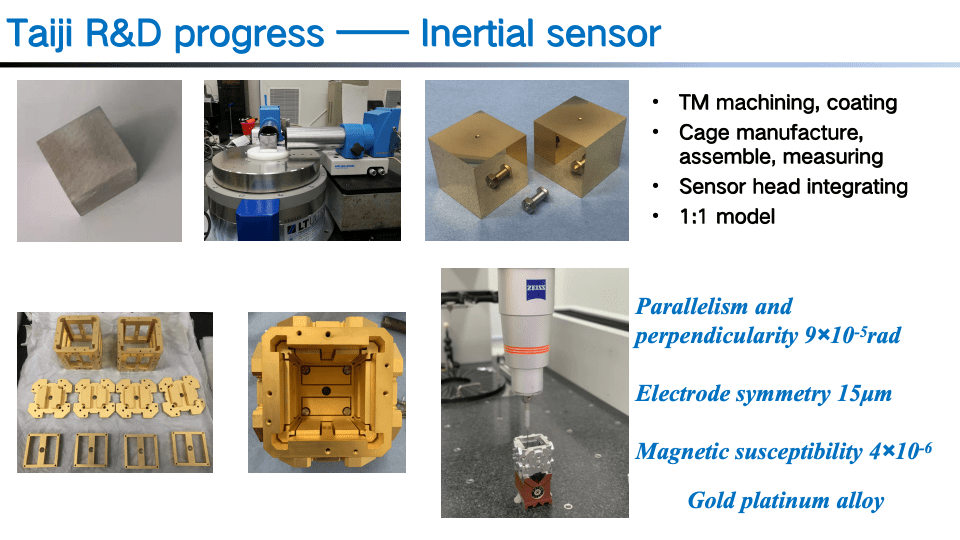
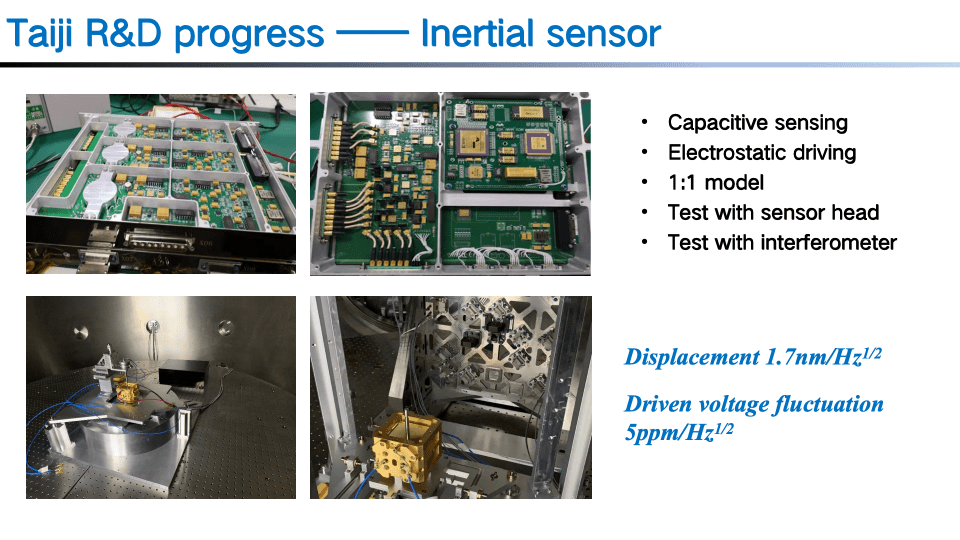
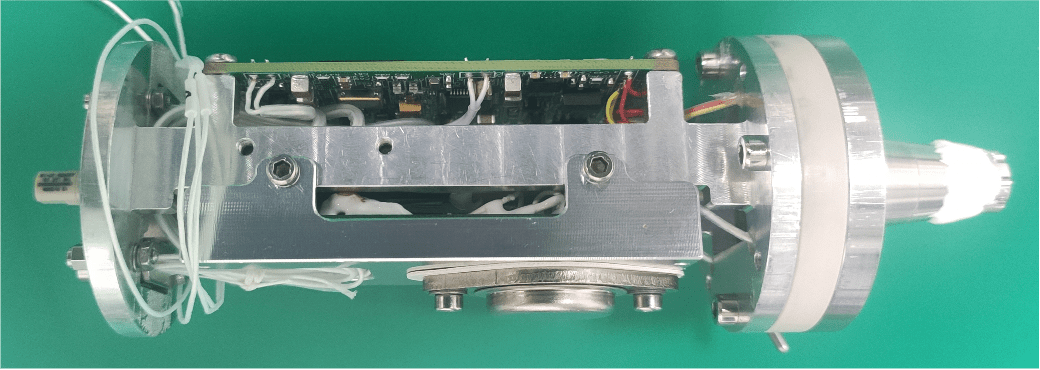
GRAVITATIONAL REFERENCE SENSOR
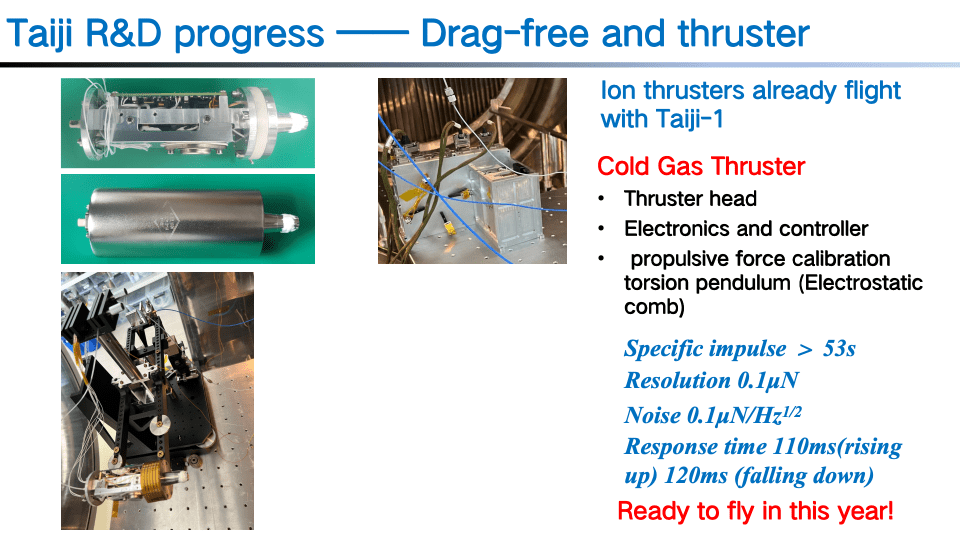
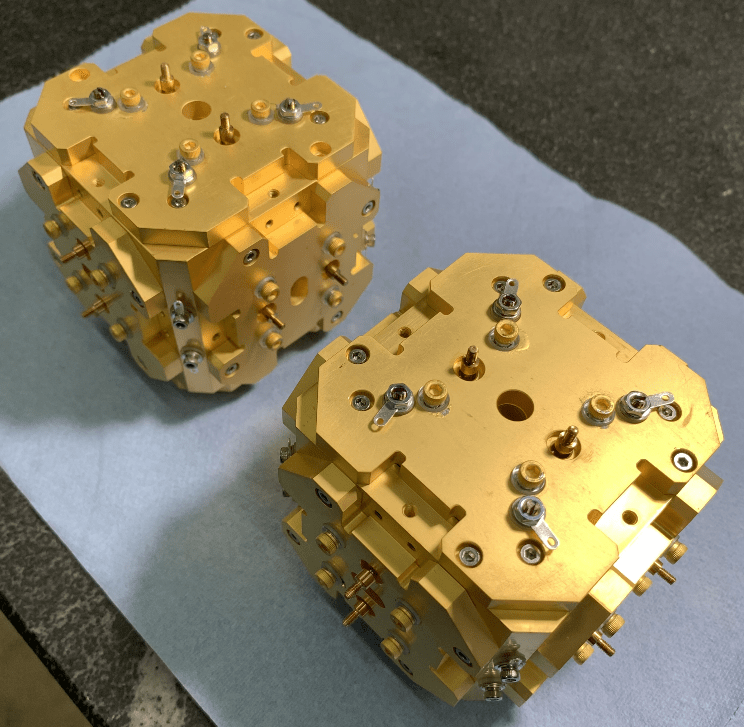
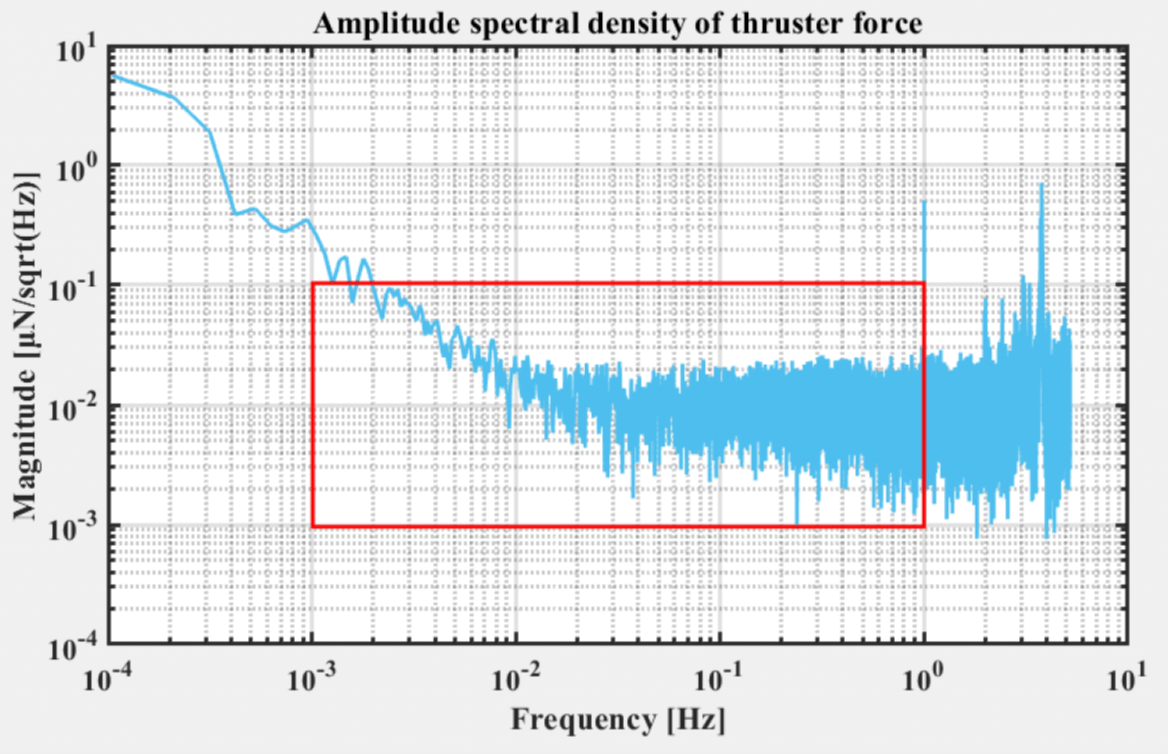
COLD-GAS MICRO-PROPULSION
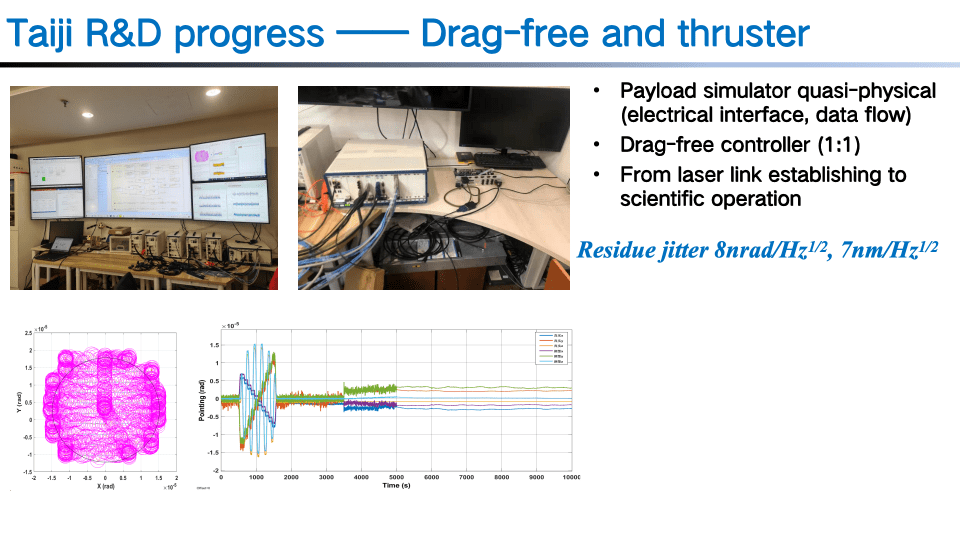
DRAG-FREE CONTROL
Axis coupling coefficient:
Electrode symmetry:
Displacement readout:
Drive-voltage stability:
Release residual velocity:
Release angular velocity:
\(< 9 \times10^{-5}\) (req. \(10^{-4}\))
\(< 15 \mu\mathrm{m}\) (req. \(150 \mu\mathrm{m}\))
\(1.7 \mathrm{nm}/\sqrt{\mathrm{Hz}}\) (req. \(3 \mathrm{nm}/\sqrt{\mathrm{Hz}}\))
\(3.3 \mathrm{ppm}/\sqrt{\mathrm{Hz}}\)
\(4 \mu\mathrm{m}/s\) (req. \(20 \mu\mathrm{m}/s\))
\(86 \mu\mathrm{rad}/s\) (req. \(400 \mu\mathrm{rad}/s\))
Thrust noise:
Thrust resolution:
Response time:
\(0.02 \mu \mathrm{N}/\sqrt{\mathrm{Hz}}\) (req. \(0.1 \mu \mathrm{N}/\sqrt{\mathrm{Hz}}\))
\(0.05 \mu\mathrm{N}\) (req. \(0.1 \mu\mathrm{N}\))
\(<120 \mathrm{ms}\) (req. \(150 \mathrm{ms}\))
SENSING & ACTUATION
FAST-RESPONSE ACTUATION
CLOSED-LOOP VERIFICATION
He WANG · ICTP-AP / UCAS
Taiji: China's Space-based GW Program
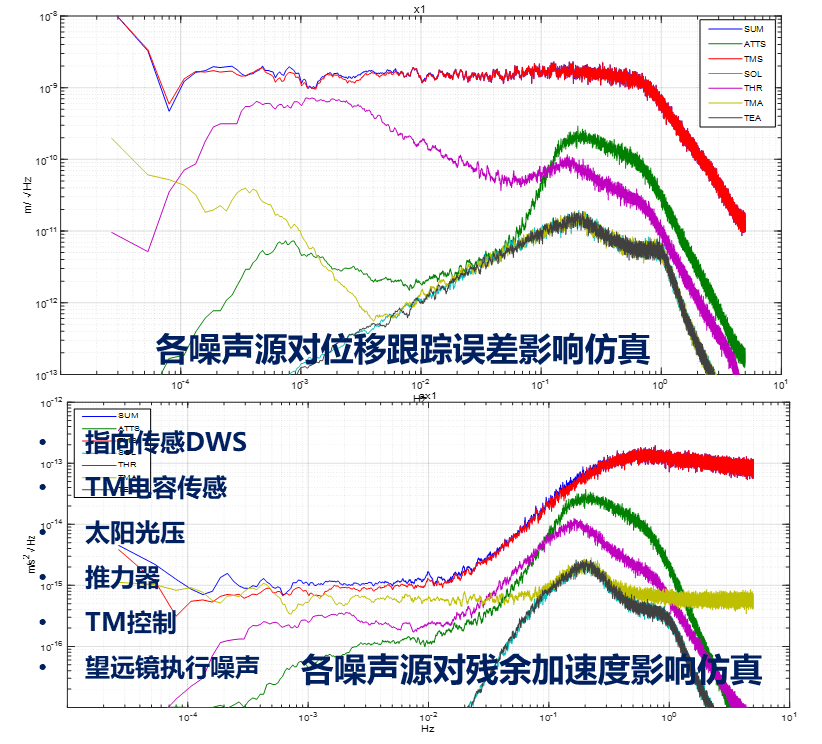
Engineering-model and ground-test results. Residual acceleration figure refers to numerical simulation; full closed-loop in-orbit verification pending.
SC-TM state estimation:
Simulated residual acceleration:
Ground semi-physical
verification platform:
Status:
multi-loop decoupling
\(\le3\times10^{-15}\,\mathrm{m\,s^{-2}}/\sqrt{\mathrm{Hz}}\)
Completed
toward closed-loop verification
Ground semi-physical
verification platform:
Take-away: The key challenge is closed-loop performance: sensing the test mass, actuating the spacecraft, and suppressing residual acceleration as one integrated system.
The target is not simply a quiet test mass or a precise thruster, but a coupled inertial-reference and spacecraft-control system.
He WANG · ICTP-AP / UCAS
Taiji: China's Space-based GW Program
The spacecraft is part of the measurement system
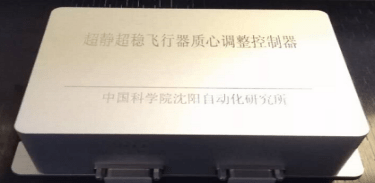
SELF-GRAVITY & CoM CONTROL
THERMAL STABILITY
ENVIRONMENTAL CLEANLINESS
Self-gravity stiffness:
Center-of-mass accuracy:
Structural thermal expansion:
Design:
controlled near test mass
Temperature-sensing resolution:
Temperature-control stability:
Method:
Platform:
\(<0.5 \mu \mathrm{K}\) (req. \(10 \mu \mathrm{K}\))
PRECISION MECHANICS
THERMAL CONTROL
NOISE BUDGET COUPLING
Taiji/TJ target allocation verified
multi-stage damping + local fine control
\(6.5 \mu \mathrm{K}/\sqrt{\mathrm{Hz}}\)
(req. \(10 \mu \mathrm{K}/\sqrt{\mathrm{Hz}}\))
thermal measurement & control testbed
low-thermoelastic-coefficient structure
\(<0.1 \mathrm{mm}\)
(req. 0.1 mm)
\(0.58\times10^{-7} /K\)
(req. \(1\times10^{-7} /K\))
Take-away: In space-borne GW detection, the spacecraft is part of the instrument, and environmental coupling is part of the noise model.
In space-borne GW detection, the spacecraft is part of the instrument, and environmental coupling is part of the noise model.
Take-away: System-level verification is the bridge from key-technology maturity to full-mission readiness.
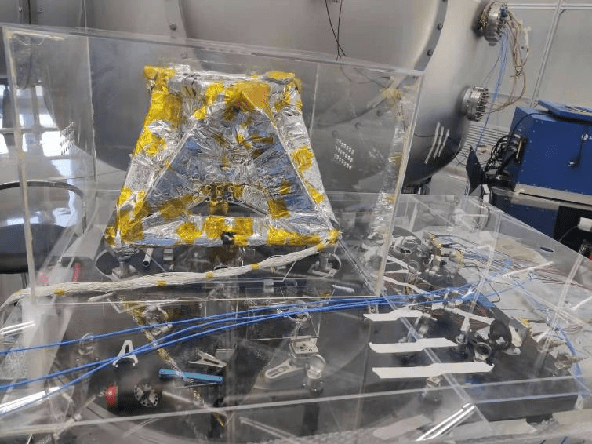
MOSA integration, drag-free closed-loop tests, three-arm scientific interferometry, and end-to-end simulation
He WANG · ICTP-AP / UCAS
Taiji: China's Space-based GW Program
MOSA PLAYLOAD INTEGRATION
END-TO-END SIMULATION
DRAG-FREE CLOSED-LOOP VERIFICATION
THREE-ARM SCIENTIFIC INTERFEROMETER
GRS · optical metrology · laser link · pointing subsystem
Payload-level noise coupling and interface verification
Engineer-model MOSA assembly and calibration
Verify coupled noise transfer across the full payload subsystem
Subsystem:
Focus:
Method:
Goal:
PAYLOAD INTERGRATION
SEMI-PHYSICAL LOOP
SC-TM dynamics · micro-thrusters · pointing/control coupling
Closed-loop drag-free control under ground-equivalent conditions
Hardware-in-the-loop semi-physical simulation platform
Test closed-loop drag-free residual-acceleration performance
Subsystem:
Focus:
Method:
Goal:
FULL-CHAIN VERIFICATION
Inerial reference · laser link · optical-path simulation · TDI
Three-arm interferometry and ranging verification
ground-equivalent semi-physical test
TDI-related laser-frequency-noise suppression · long-duration stability
Subsystem:
Focus:
Method:
Goal:
\(\Rightarrow\)DATA CHALLENGE BRIDGE
Orbit · payload interfaces · instrument noise · TDI · GW injection
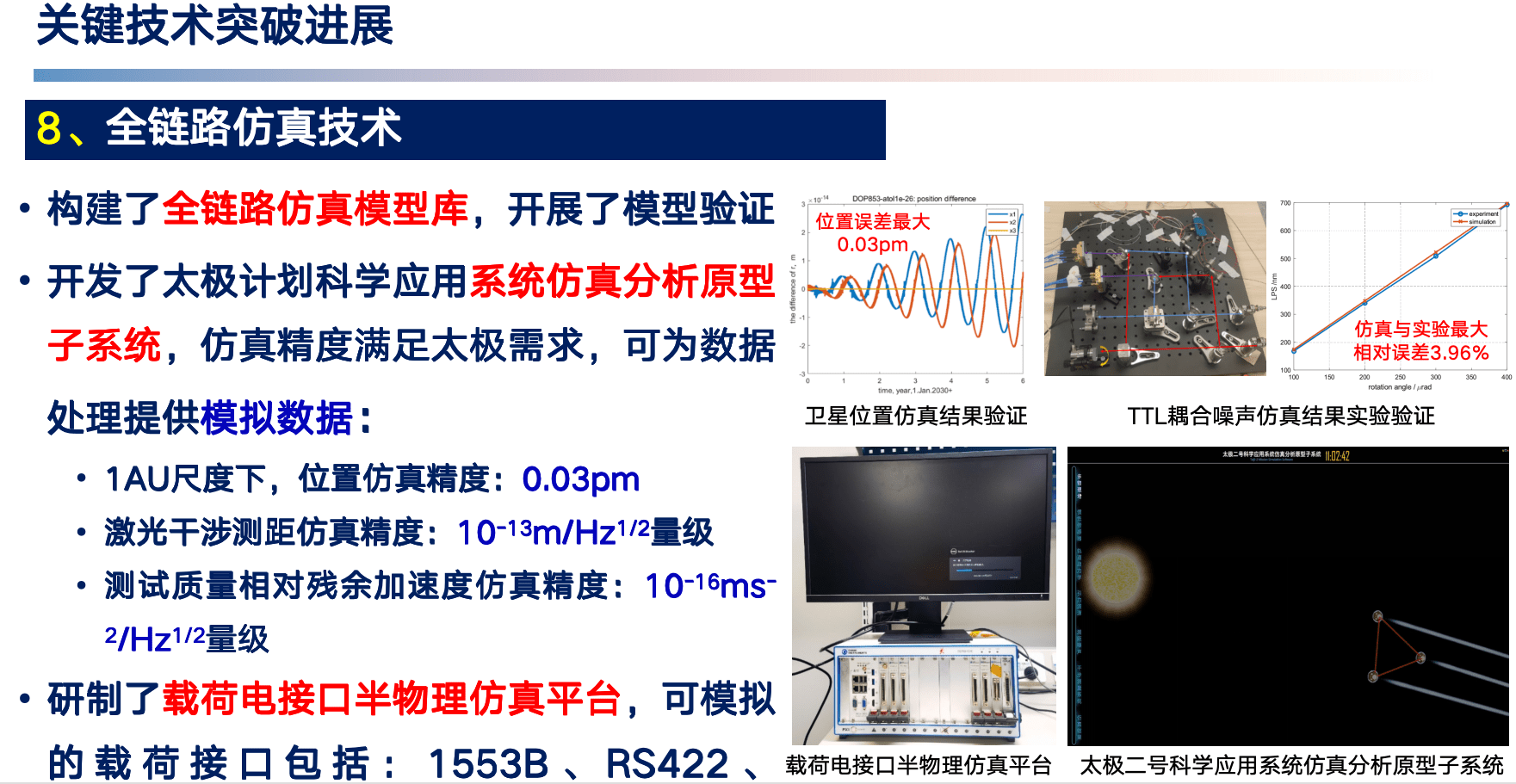
Taiji science-application simulation prototype subsystem
Full-chain simulation model library and validation
Generate mock science-data products for downstream analysis
Subsystem:
Focus:
Method:
Goal:
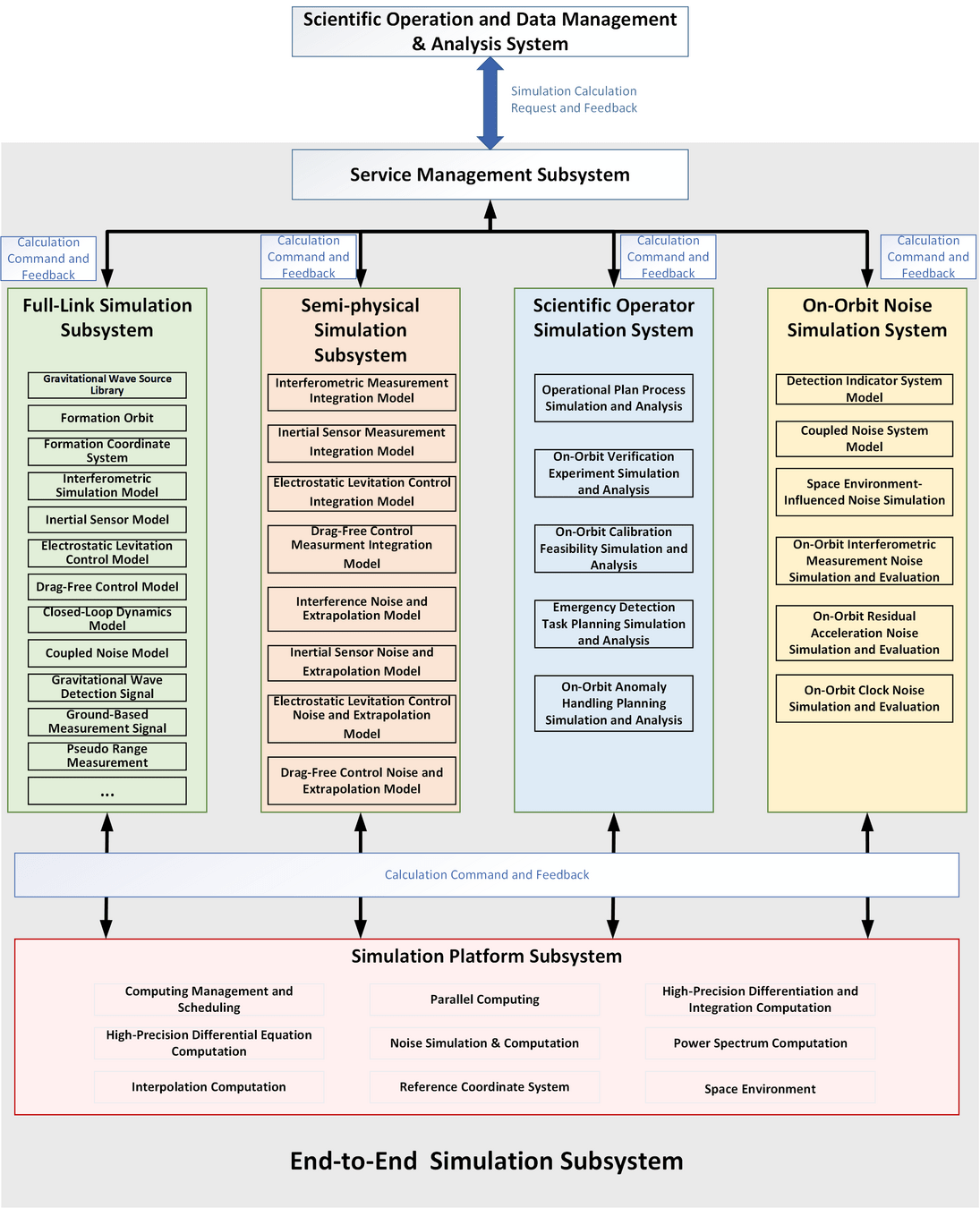
End-to-end simulation prototype
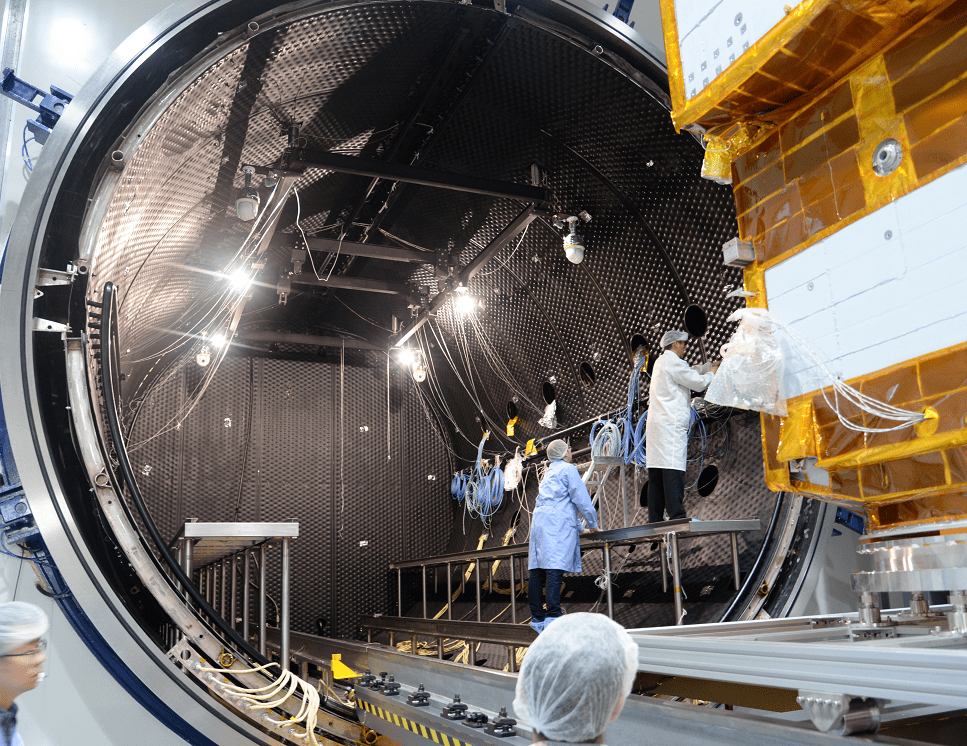
System-level experimental testbed
Engineering-stage verification architecture; full mission performance requires further integrated tests.
From mission dynamics to science-data products
Ground-equivalent integration and environmental control
The next bottleneck is system-level integration: verifying how payloads, spacecraft control, environmental coupling, TDI, and data processing work together as one measurement system.
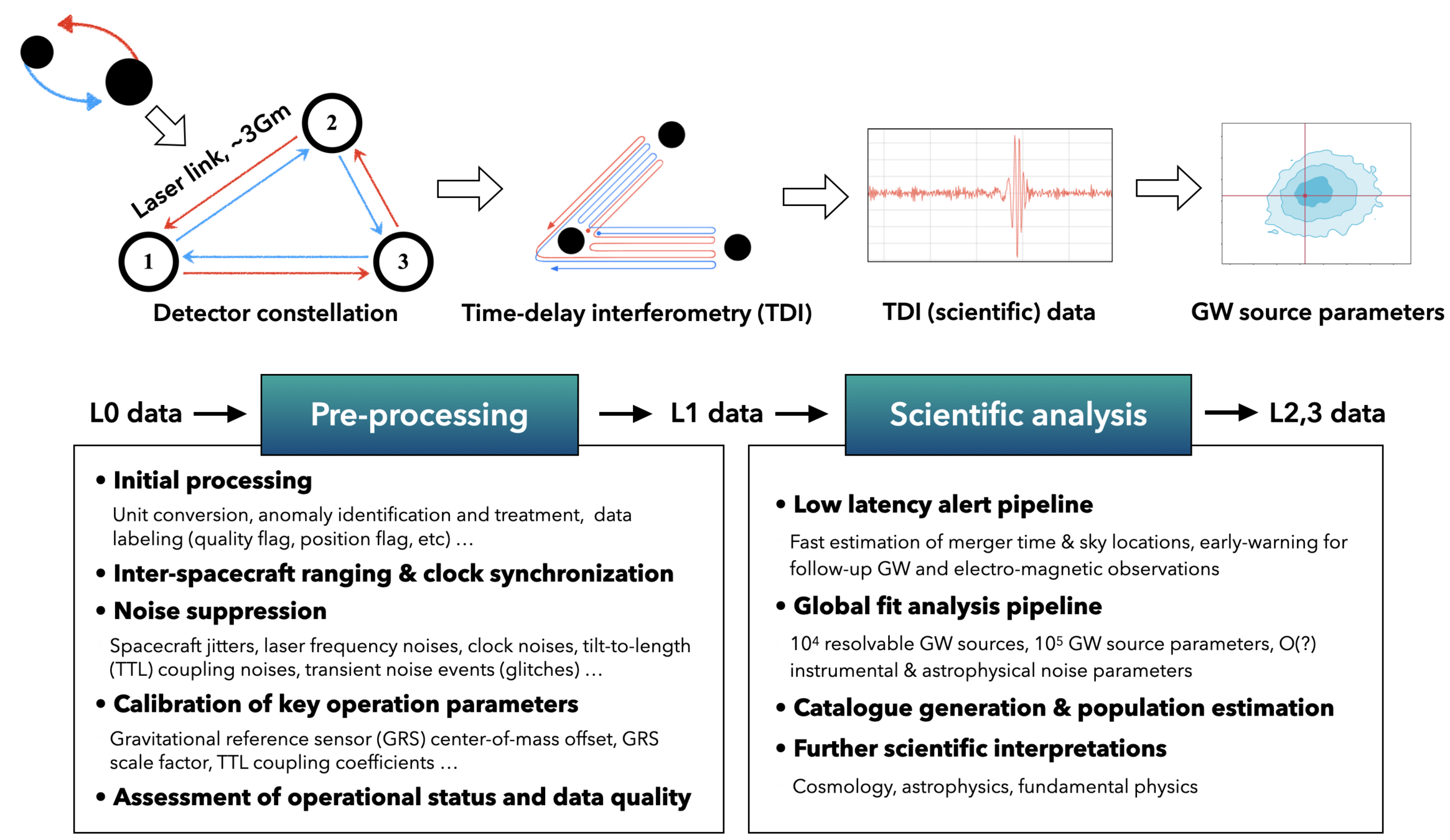
The analysis starts from measurements—not idealized strain
He WANG · ICTP-AP / UCAS
Taiji: China's Space-based GW Program
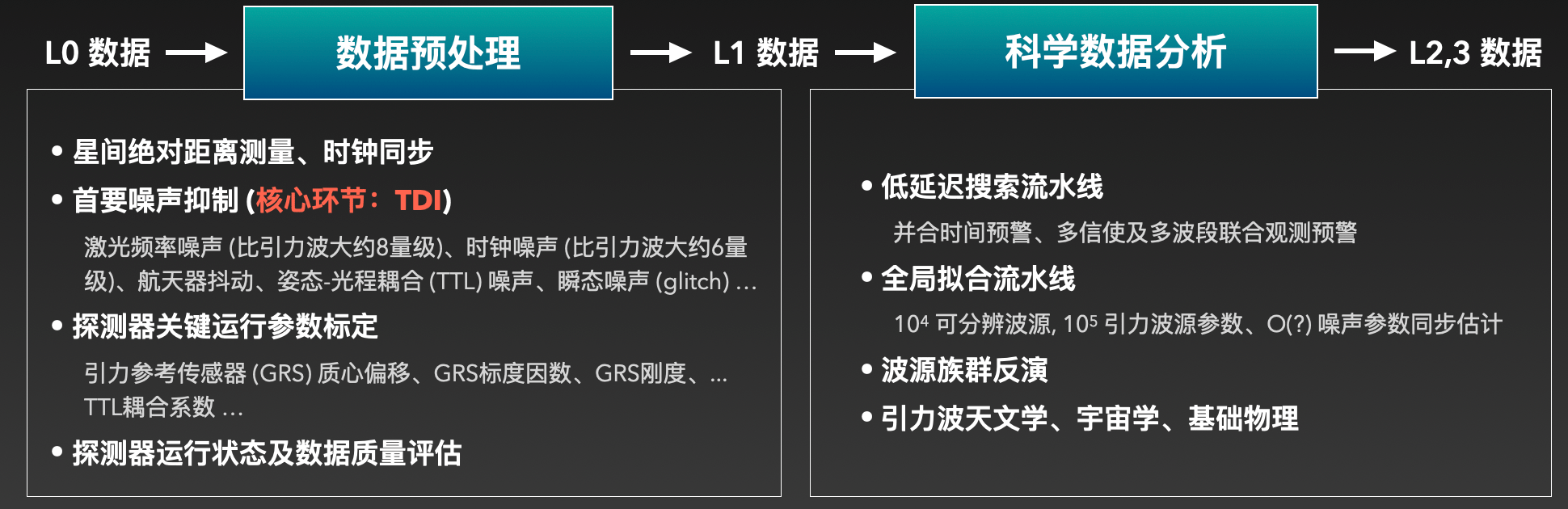
L0
L0 - L1
L1 - L2
L2 - L3
Phase · ranging
timing · telemetry
Clock sync · calibration
TDI · noise · data quality
Low-latency search
global fitting · noise characterization
Catalogs · cosmology
fundamental physics
Raw
Measurements
Preprocessing
Scientific
Inference
Science
Products
Simulation closes the loop · science requirements constrain instrument design
Orbit-dependent signal response · laser-frequency noise
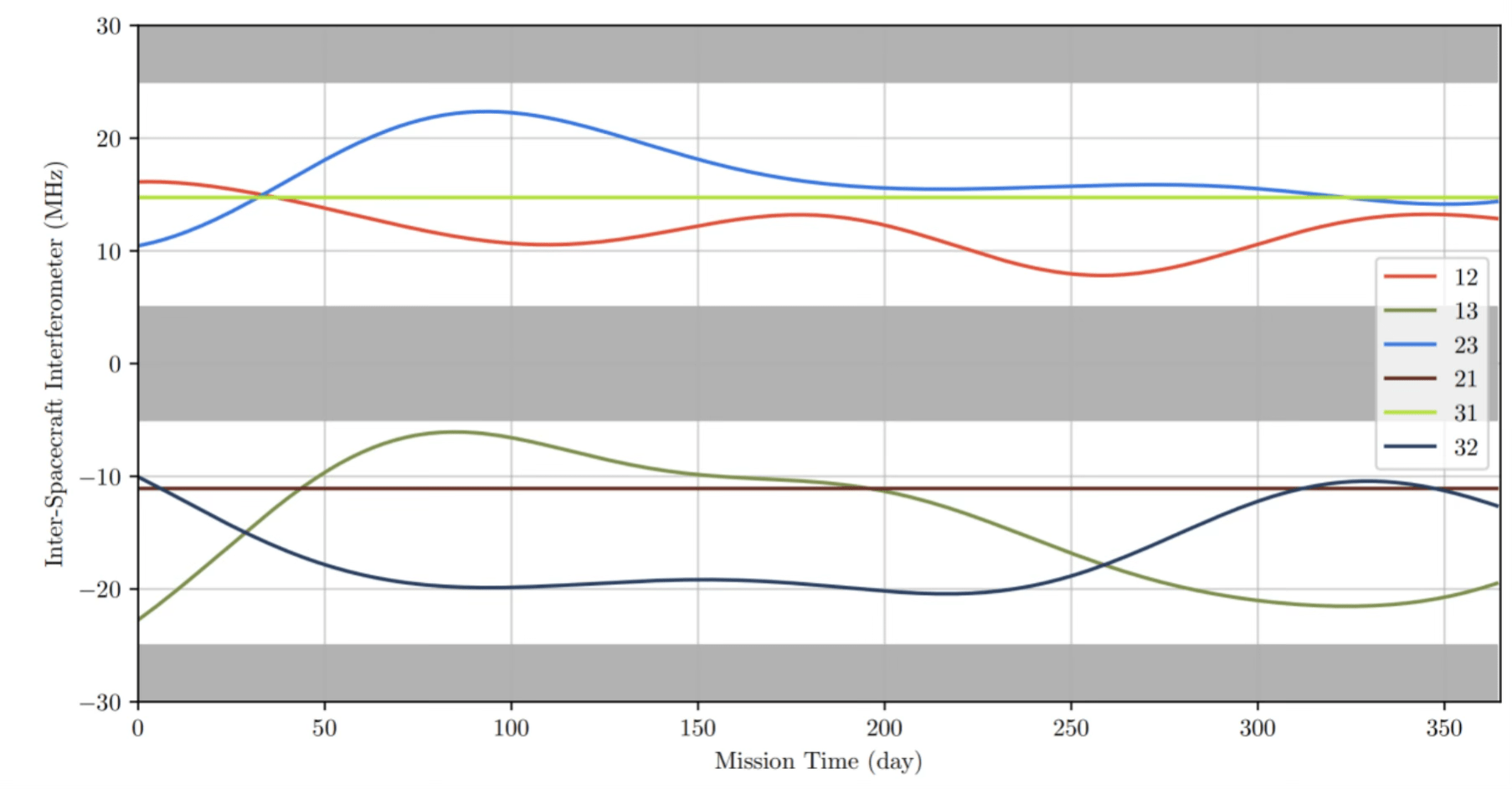
Clock noise & desynchronization · TTL coupling
GRS center-of-mass offsets · instrument transfer functions
Gaps · non-stationary noise · spectral lines
Unknow noise transients · anomaly identification
Observation interruptions · missing-data recovery
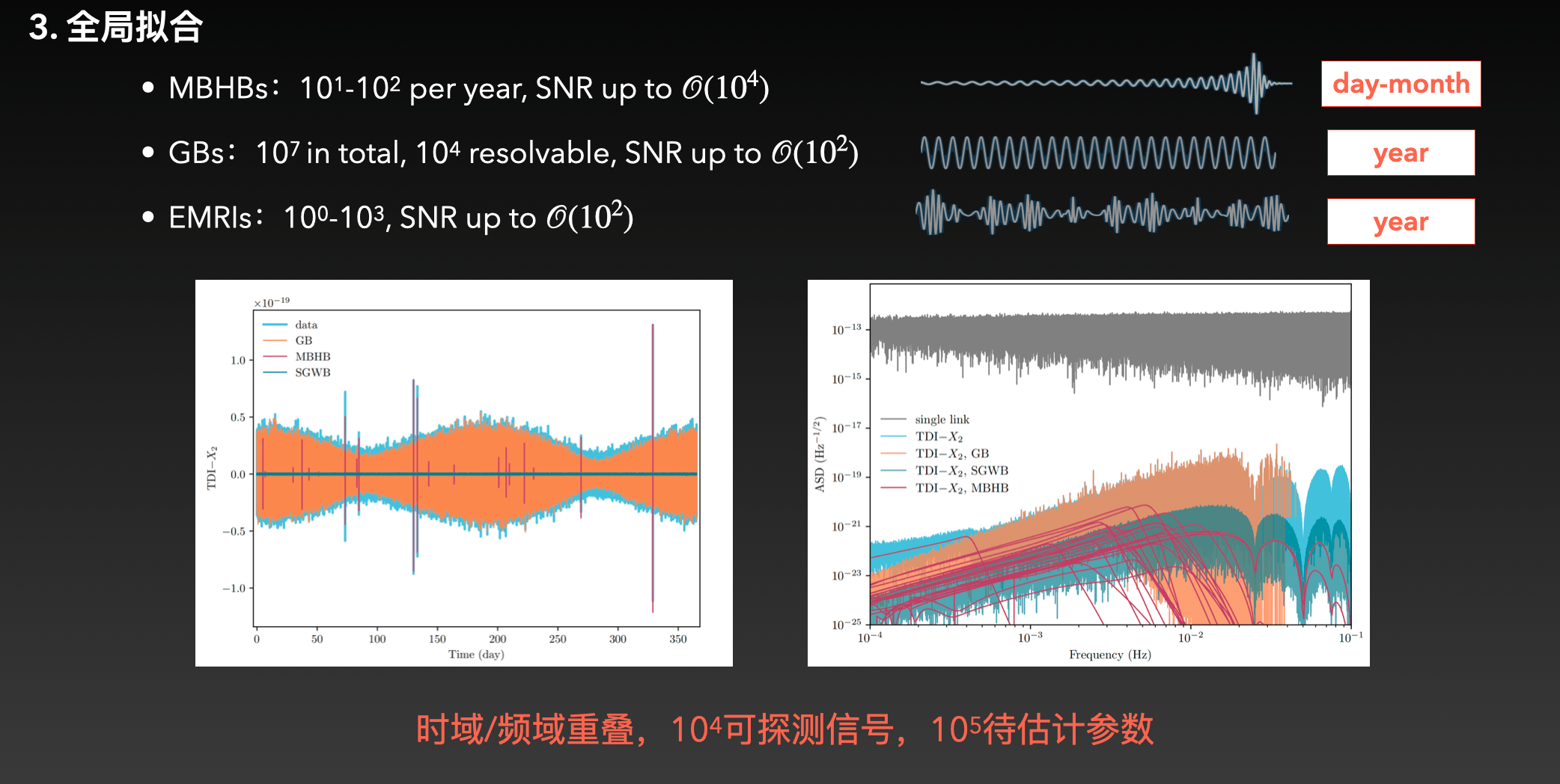
Overlapping signals · Galactic foreground · multi-source inference
Instrumental noise · stochastic backgrounds · source–noise degeneracy
Global fit · \(\sim10^4\) resolvable sources
Data challenges connect instrument realism, full-chain simulation, and validated science products
Take-away: Data analysis is part of mission design and validation — not a post-launch add-on.
Image credit: TDCII&MH Du
From raw measurements to gravitational-wave source parameters
Toward an end-to-end L0→L2 benchmark
He WANG · ICTP-AP / UCAS
Taiji: China's Space-based GW Program
Minghui Du et al., China-Phys. Mech. Astron. (2026)
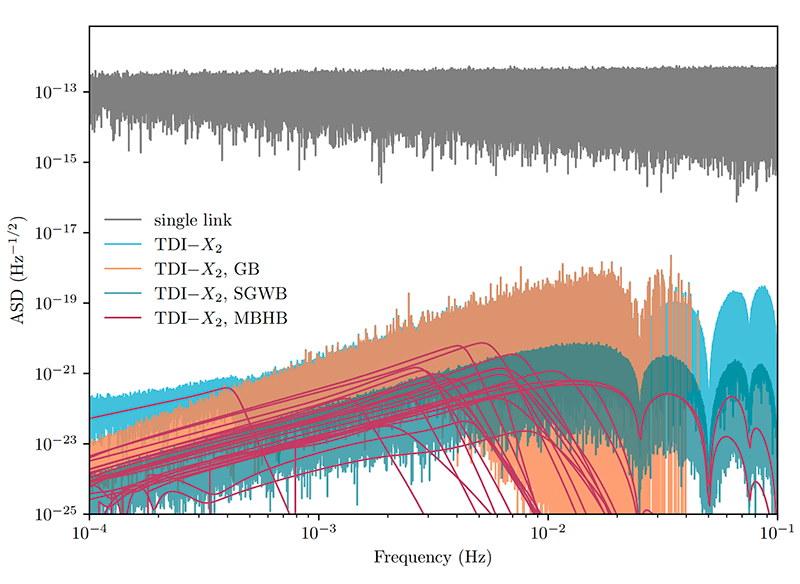
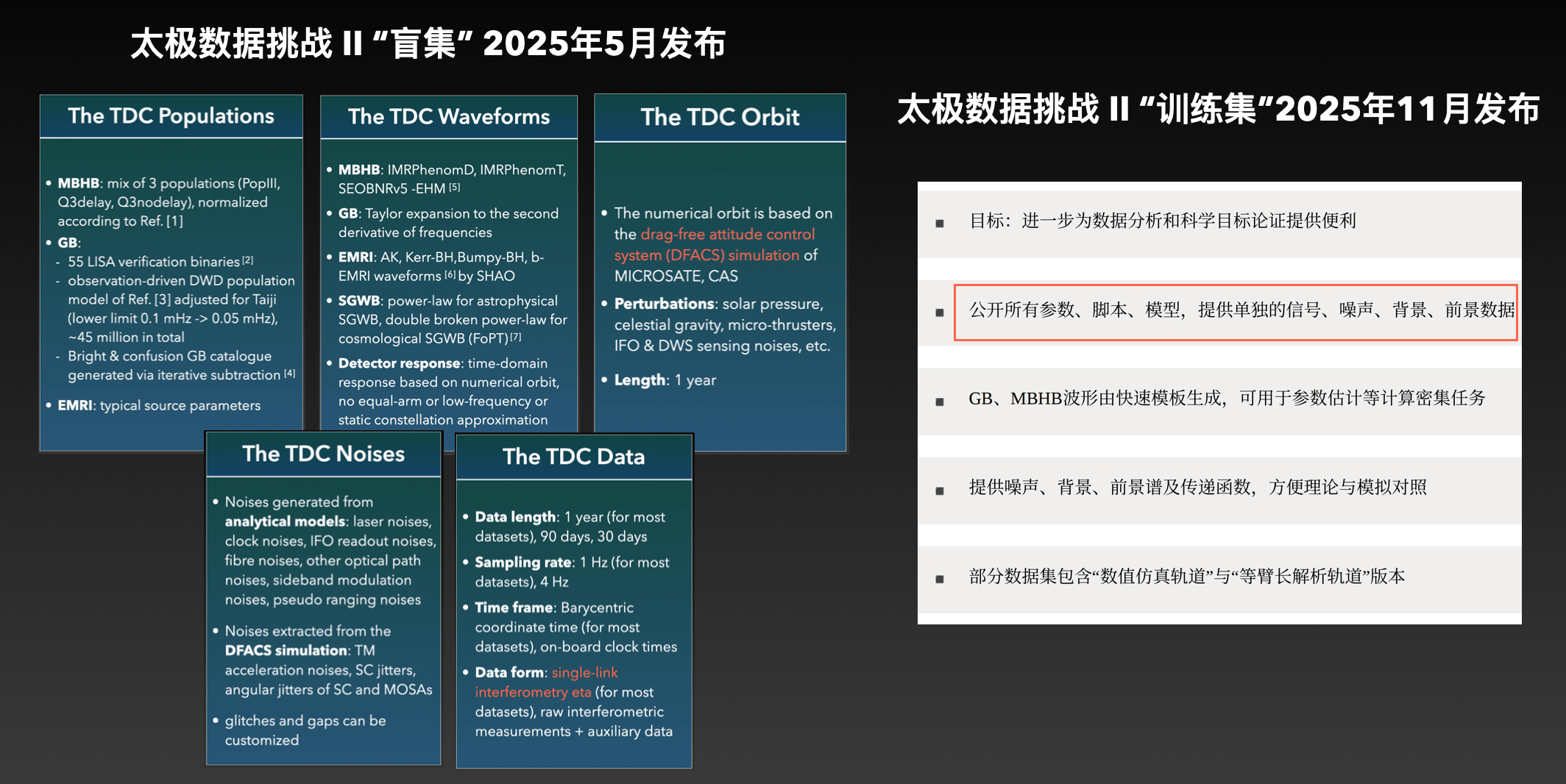
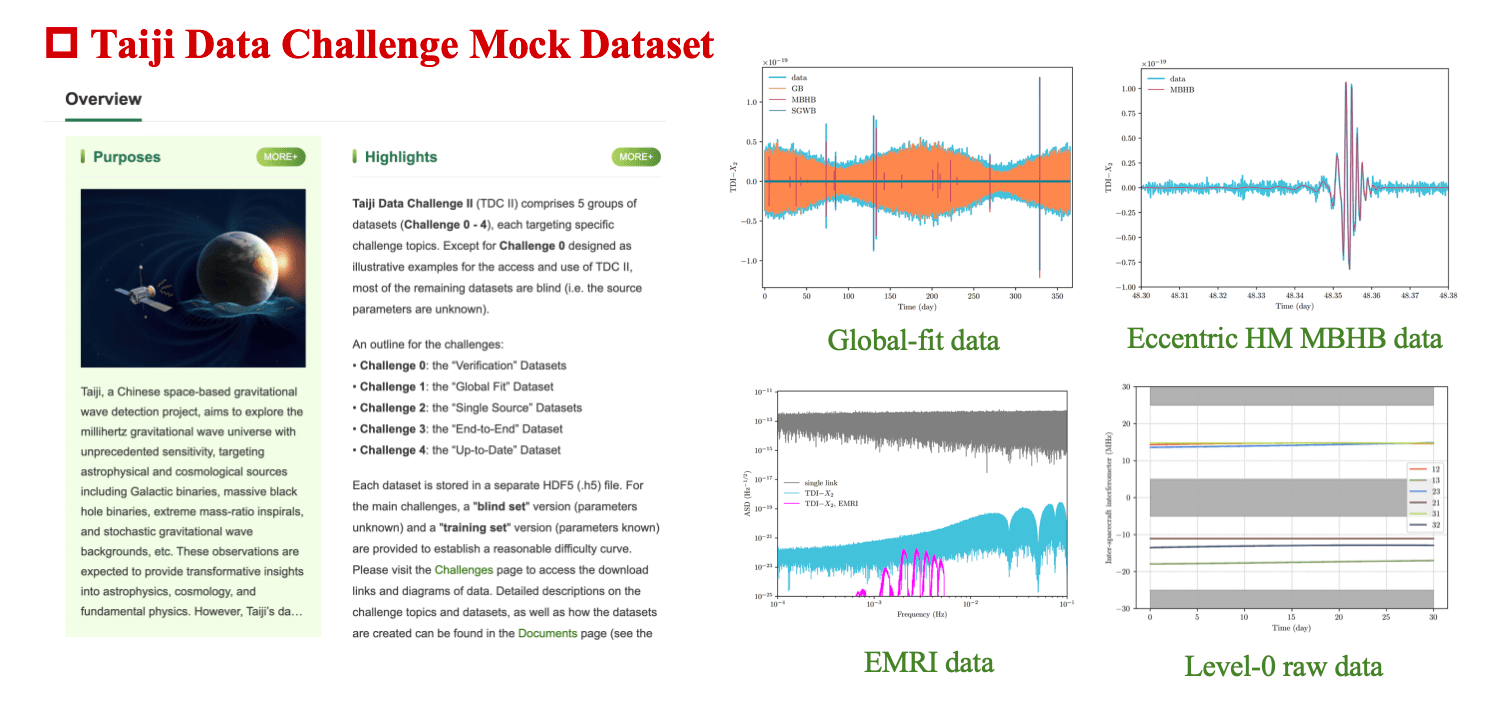
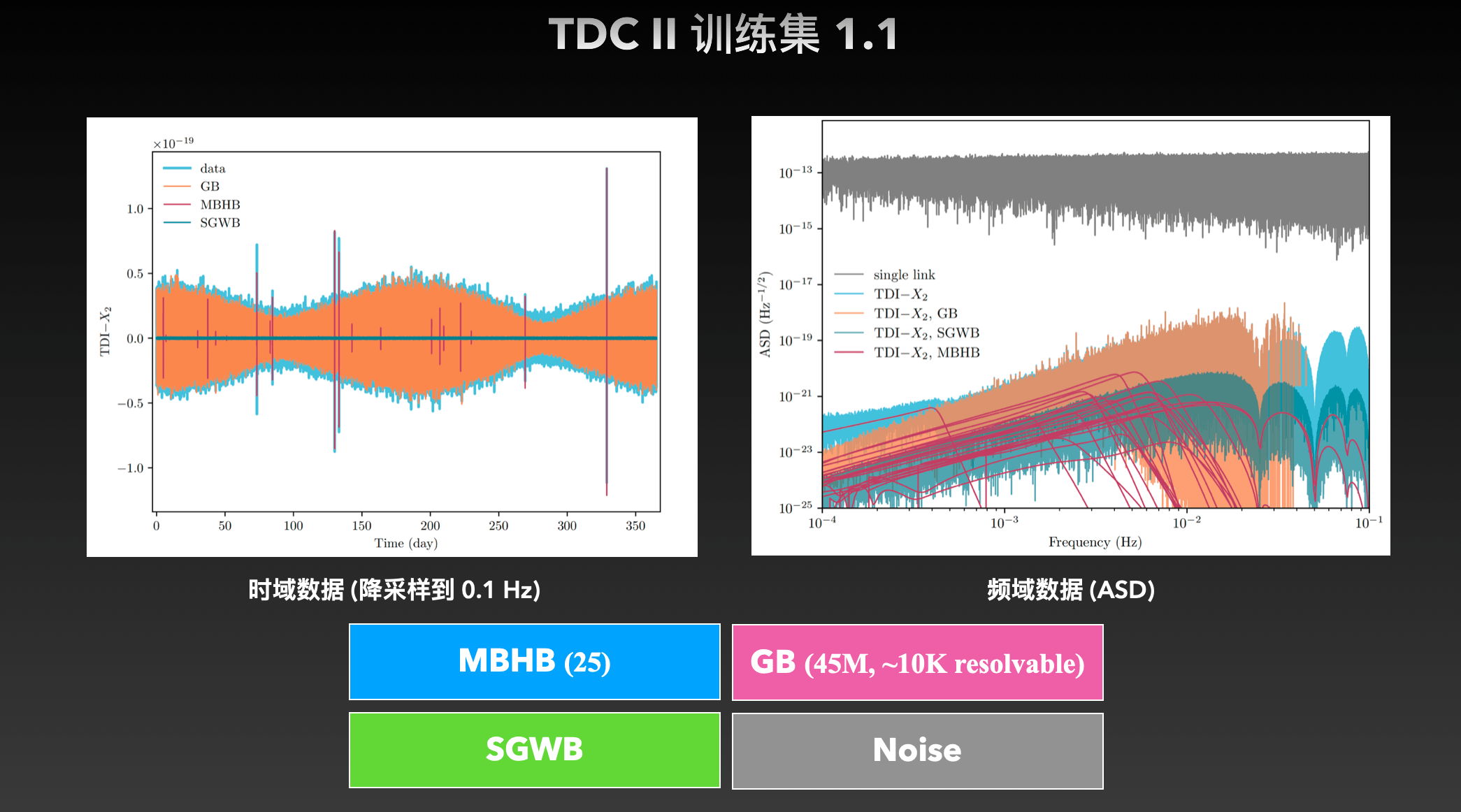
Example TDC II training data
Open datasets and selected analysis tools: https://github.com/TriangleDataCenter
Released datasets · documented injections · reproducible pipeline benchmarking
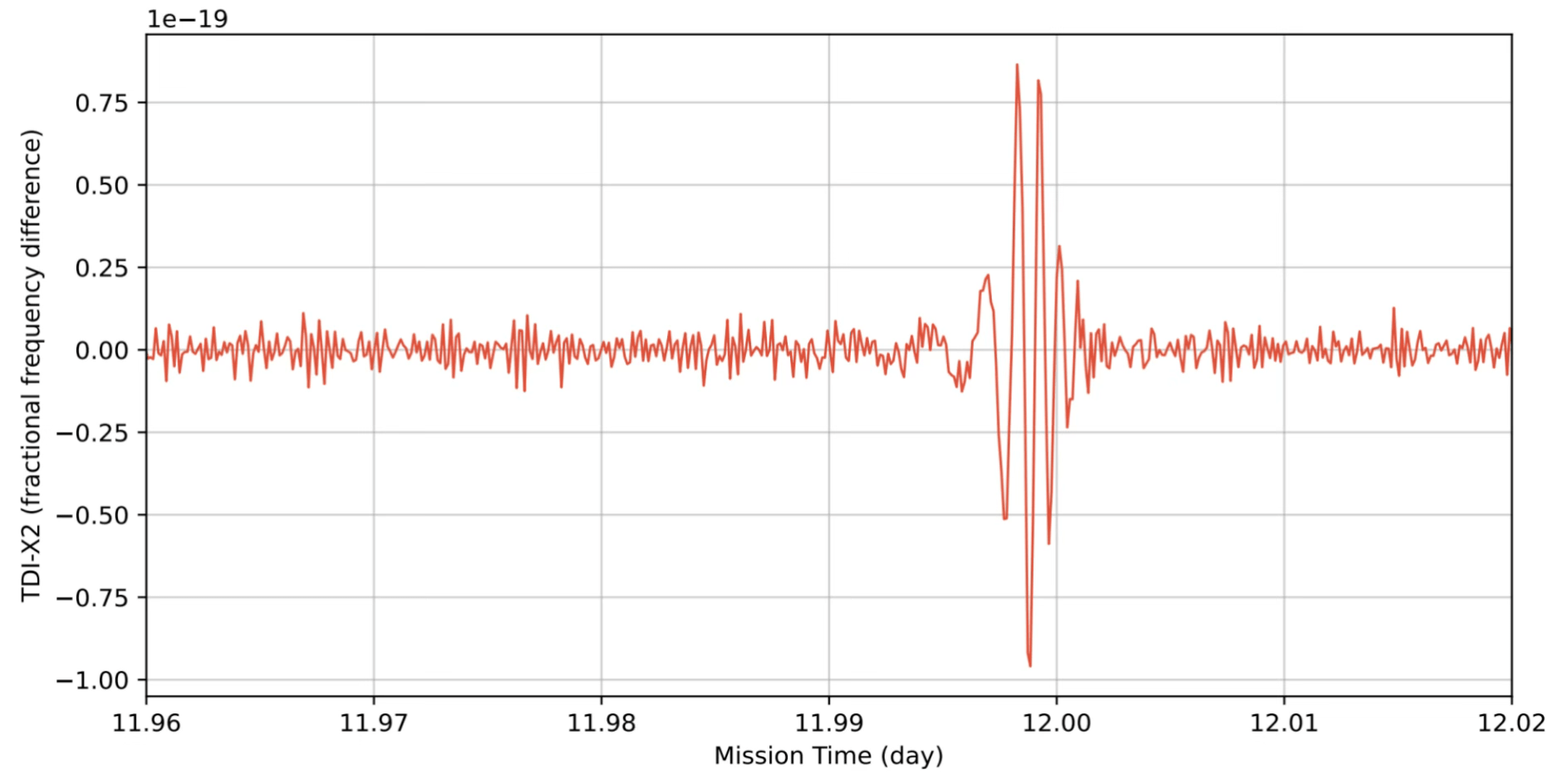
Massive black-hole binaries · Galactic binaries · extreme mass ratio inspiral · stochastic background · instrumental noise
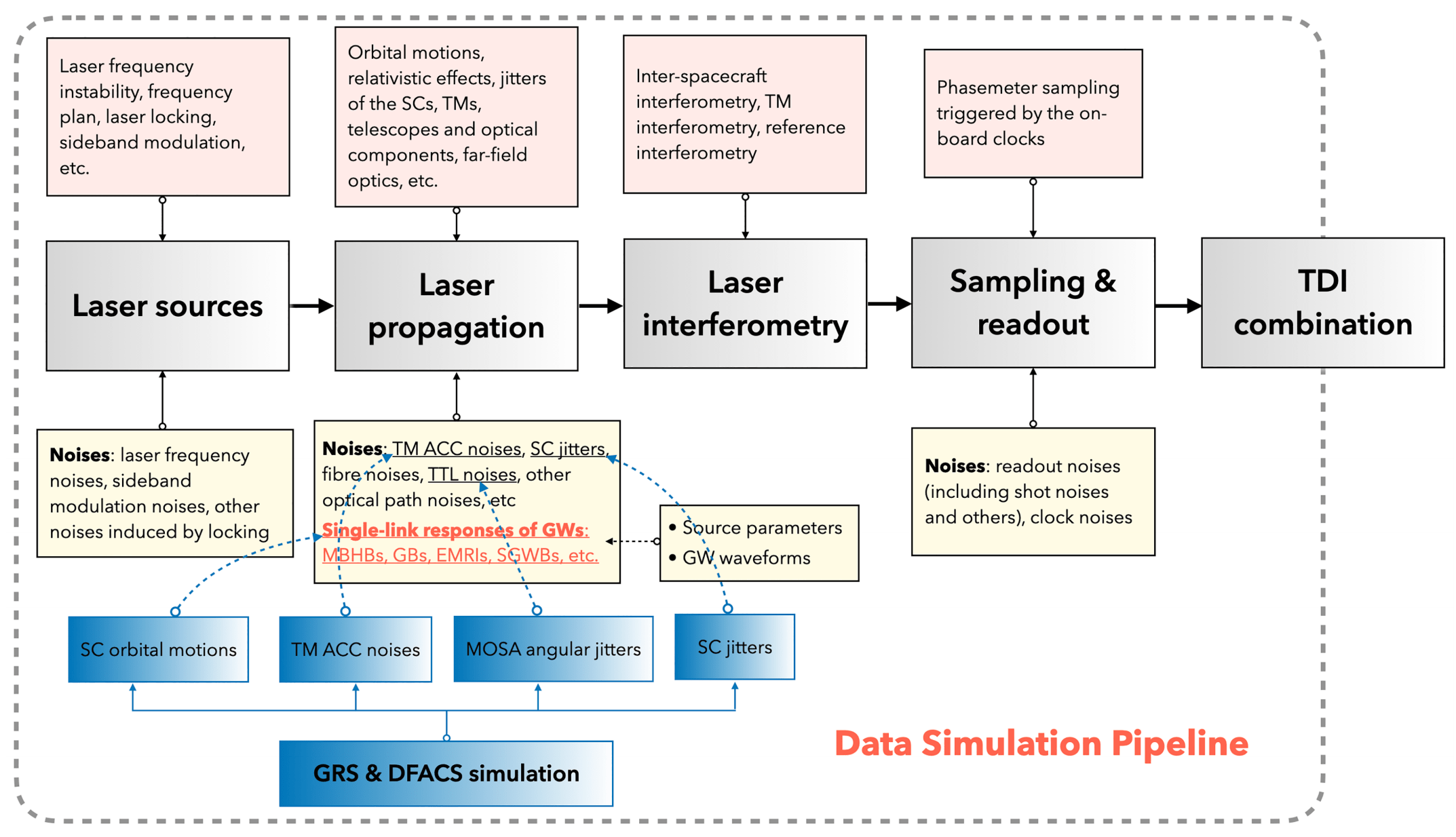
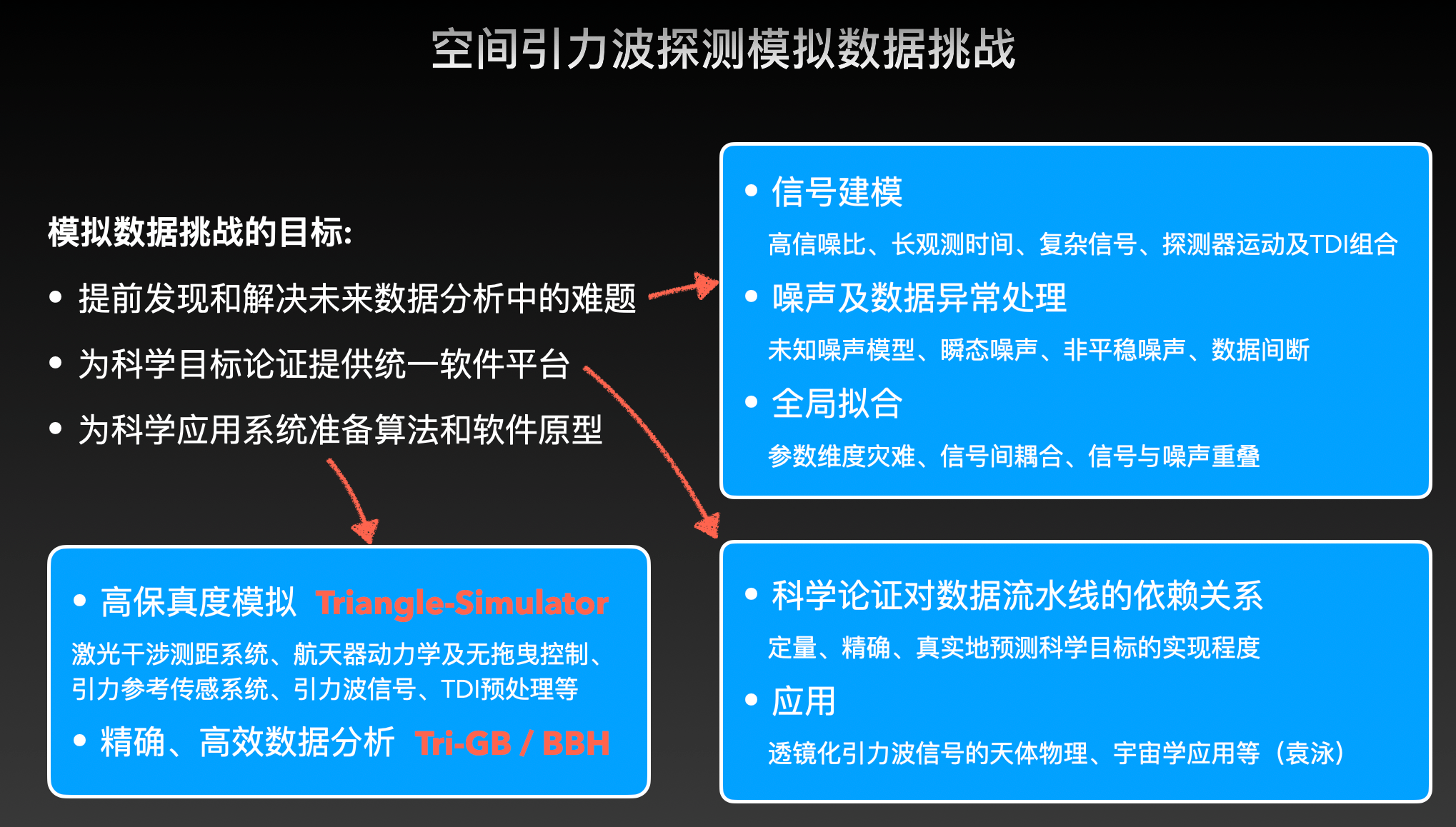
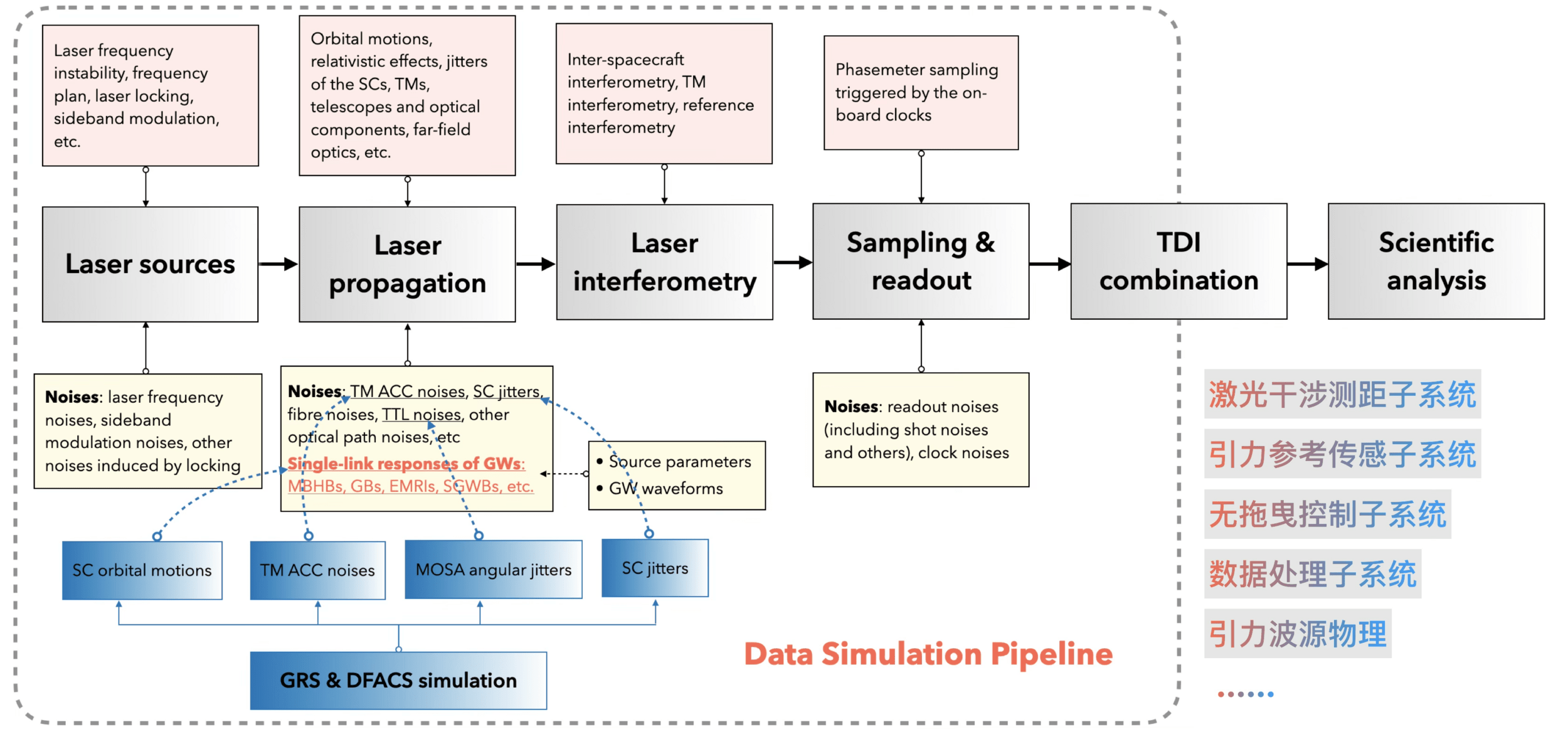
Numerical orbits · unequal arms · TDI 2.0 · spacecraft–payload couplings
Laser generation · propagation · interferometry · sampling/readout · TDI
Take-away: TDC connects realistic instrument simulation to reproducible end-to-end scientific validation.
POSTER
2.06
The goal is not only to inject astrophysical waveforms, but to simulate the measurement chain where signal, noise, orbit, TDI, and detector operation are coupled.
Space-GW analysis is an ecosystem problem
你可以从2502.03983, 2507.18397, 2602.06731取图并cite这几篇文章
Tang:XX
DU:https://doi.org/10.1364/OE.540561
用特殊TDI组合抑制测试质量glitch的
For Taiji/TJ, preprocessing is a scientific step: it defines how raw interferometric measurements become calibrated TDI science data.
Calibration determines what enters TDI; the next step is laser-frequency-noise suppression through time-delay interferometry.
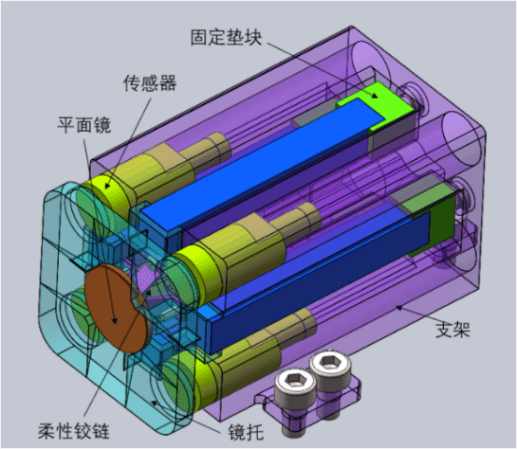
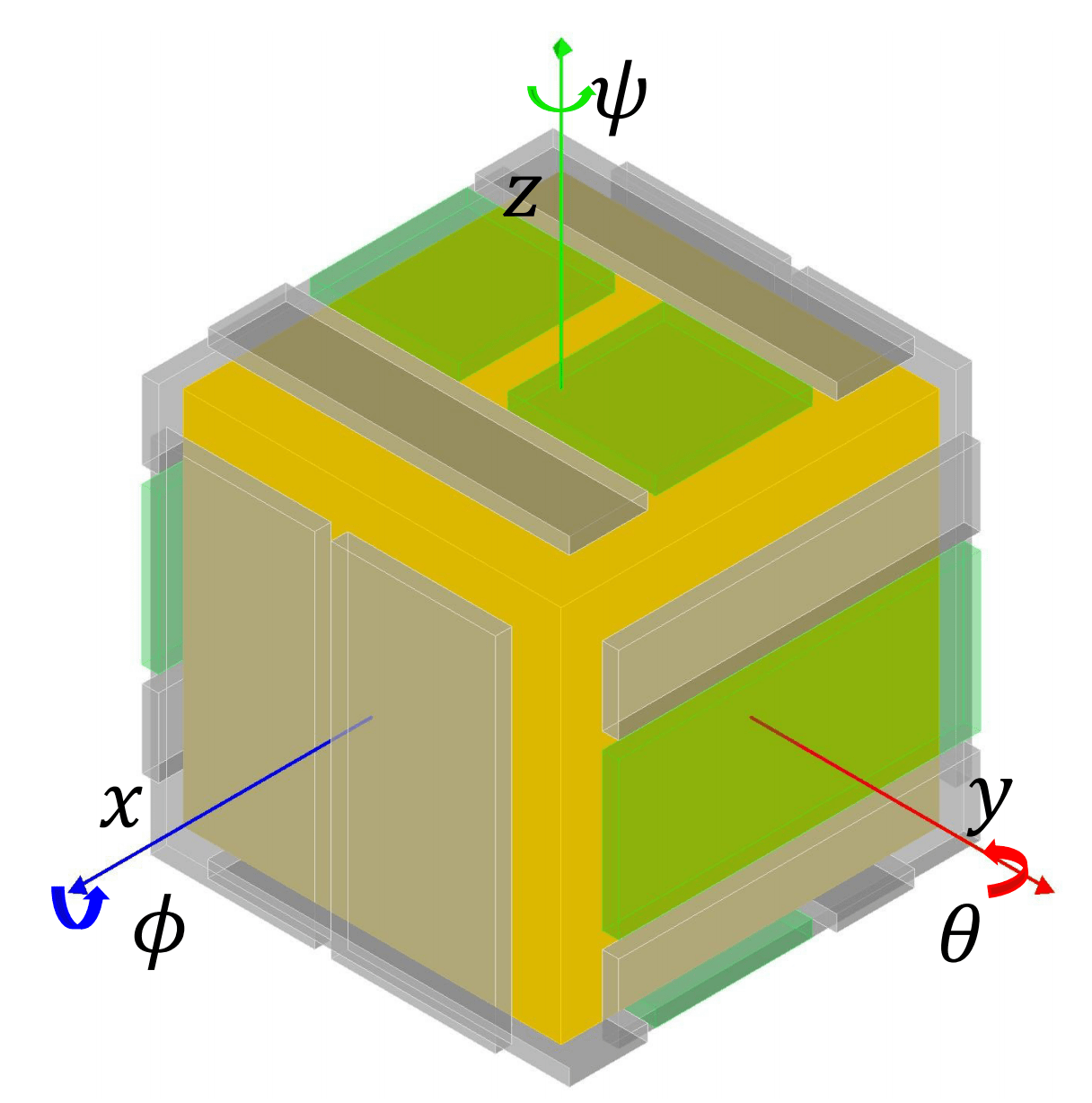
shematic Taiji GRS layout
GRS c.o.m calibration result
GRS key parameter calibration for Taiji-1 and Taiji missions
[X. Wei et al, Phys. Rev. D 108, 082001, 2023]
[H. Zhang et al, Remote Sens. 2023, 15, 3817]
[H. Zhang et al, Phys. Rev. Appl. 25, 044043 (2026)]
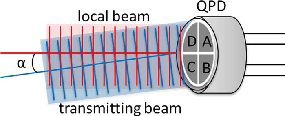
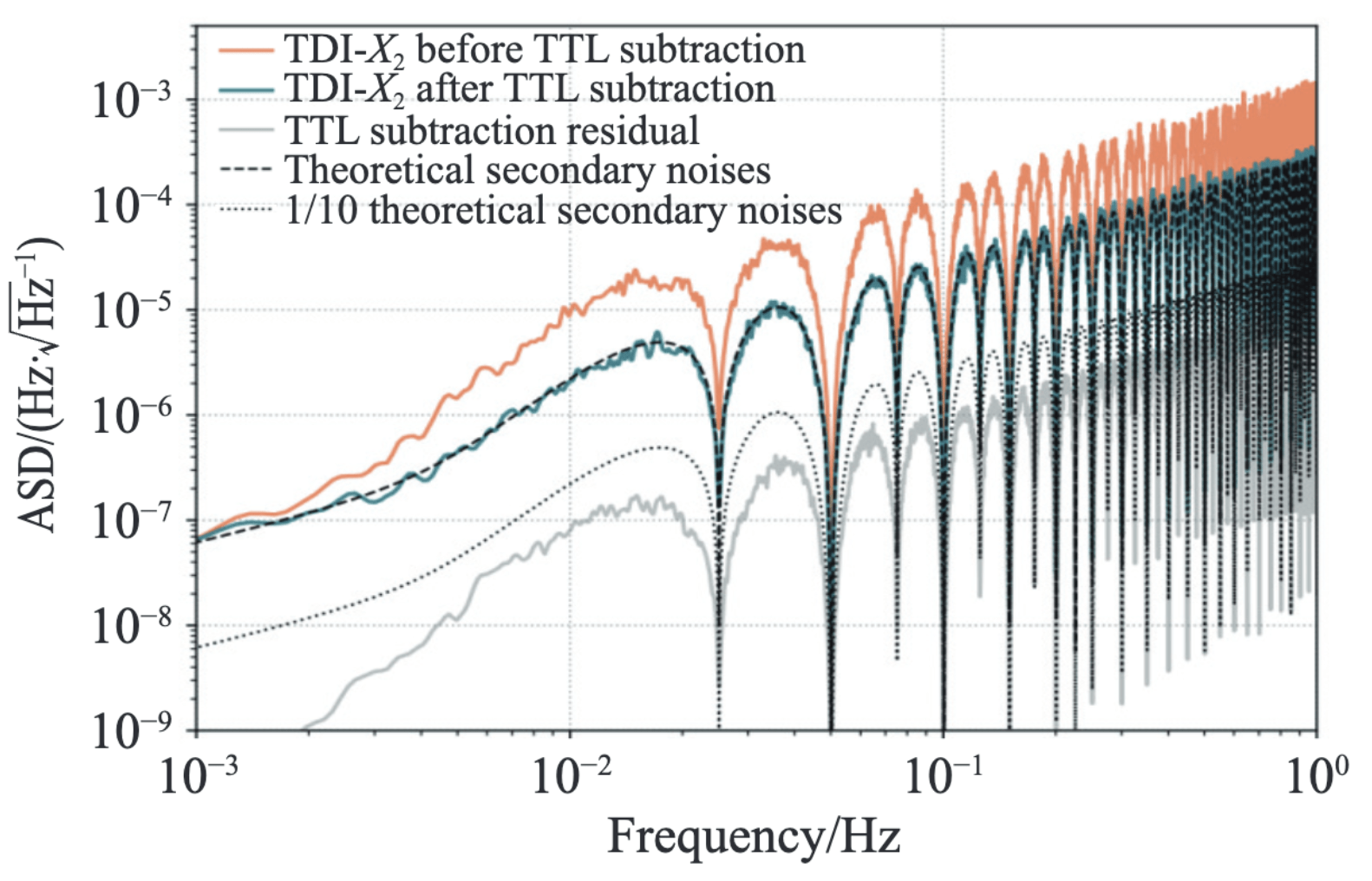
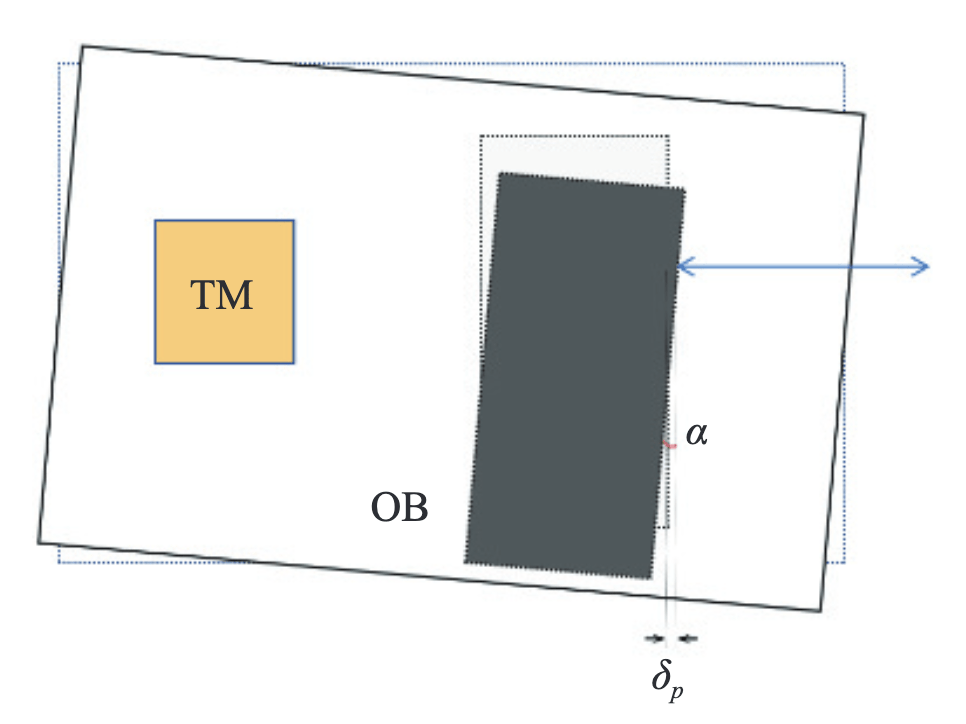
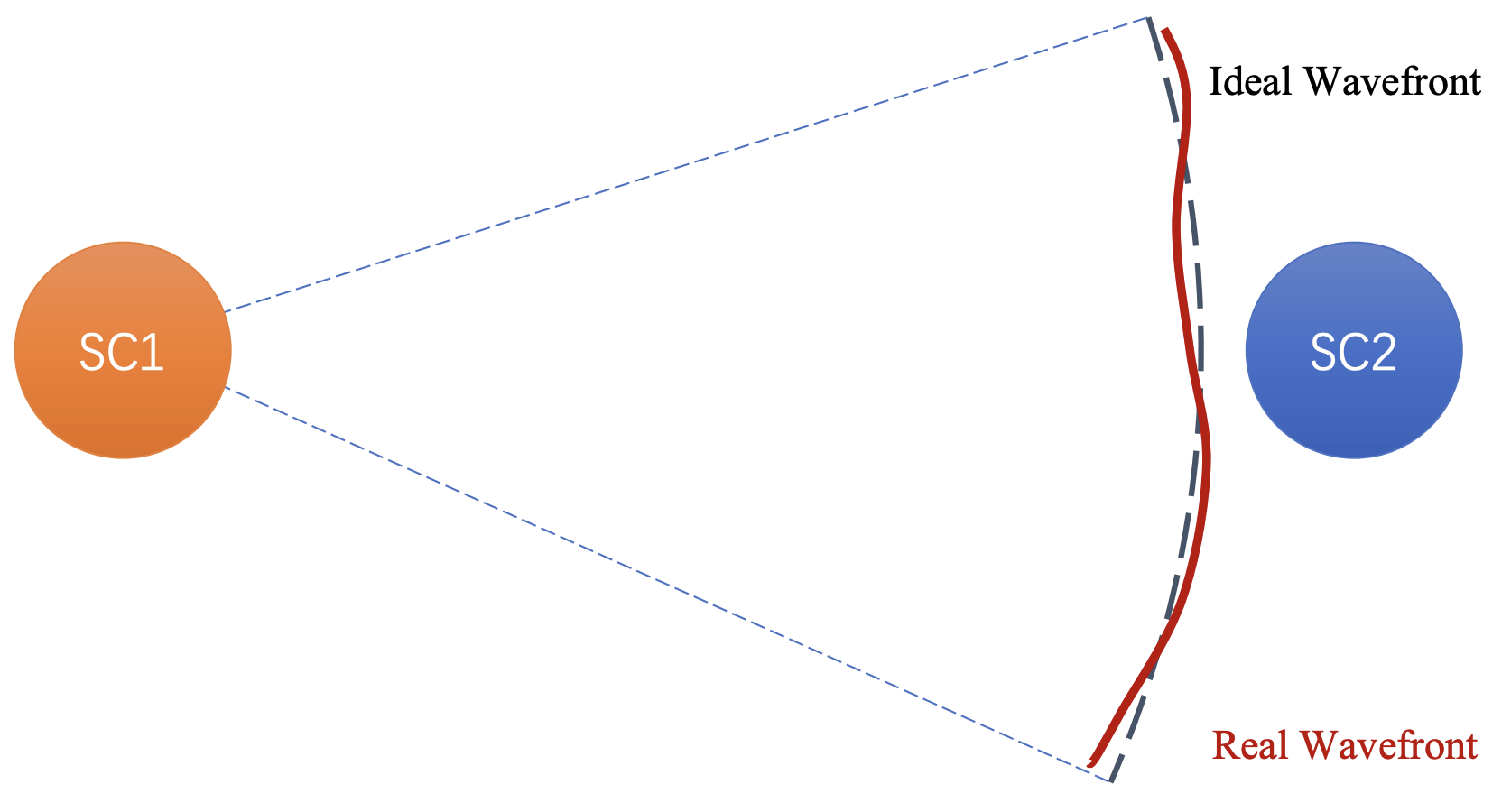
TTL mechanisms
TTL noise suppression result
TTL coupling coefficient calibration for Taiji
[L. Ye et al, Chinese Optics, 2025, 18(3): 583-595]
[X. Wang et al, 2602.06731]
He WANG · ICTP-AP / UCAS
Taiji: China's Space-based GW Program
From raw measurements to calibrated observables
GRS and center-of-mass calibration
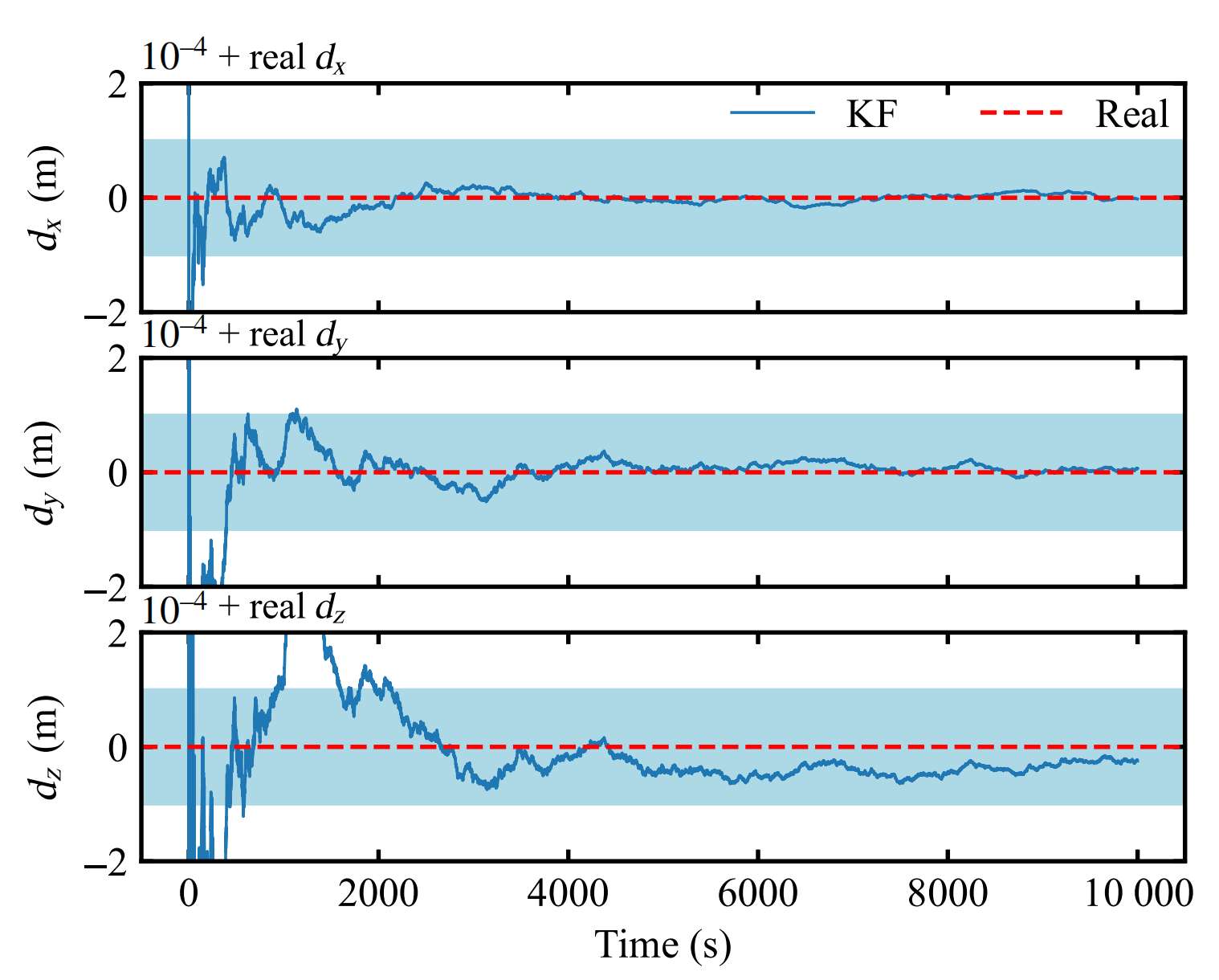
Center-of-mass offsets and readout-axis misalignment
He WANG · ICTP-AP / UCAS
Taiji: China's Space-based GW Program
From raw measurements to calibrated observables
GRS operation parameter calibration
GRS c.o.m calibration result
Tilt-to-length coupling calibration
Example residual after TTL-coefficient estimation and subtraction
TTL calibration: L. Ye et al., Chinese Optics (2025); X. Wang et al., arXiv:2602.06731.
L0 telemetry
Initial processing
CALIBRATION & Link-state estimation
TDI & noise reduction
L1 science observables
Target CoM-offset calibration accuracy: \(<75 \mu\mathrm{m}\)
GRS calibration: X. Wei et al., PRD (2023); H. Zhang et al., Remote Sens.(2023); PR Applied , (2026).
From unequal-arm measurements to L1 science observables
L0 telemetry
Initial processing
Calibration & Link-state estimation
TDI & NOISE REDUCTION
L1 science observables
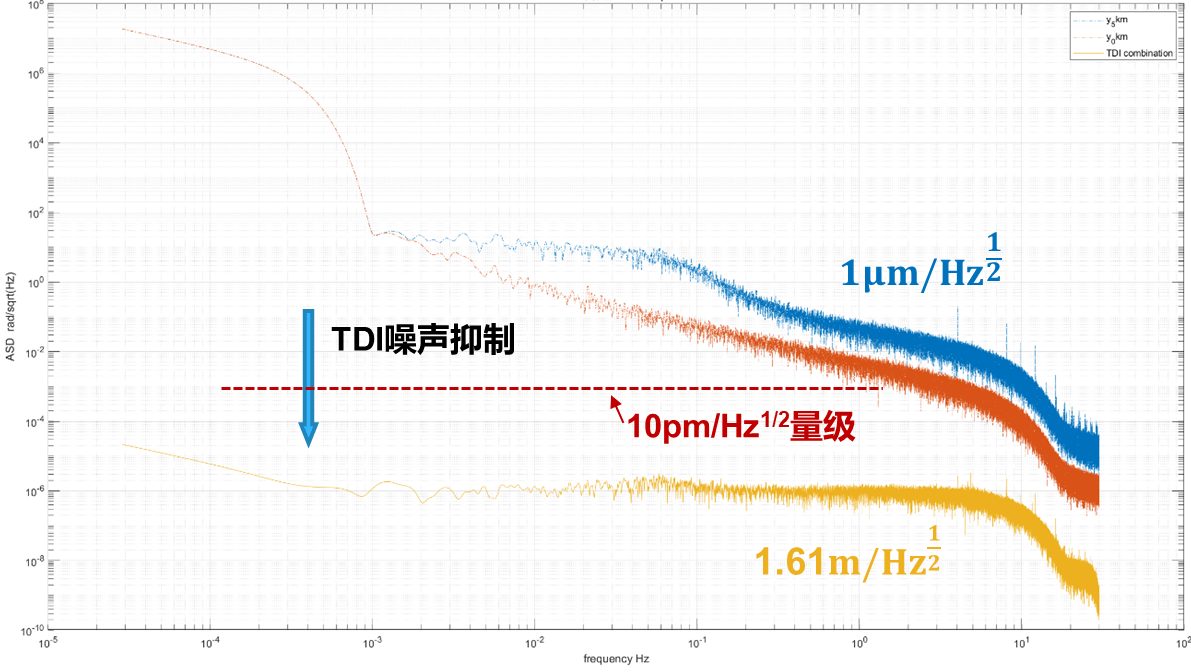
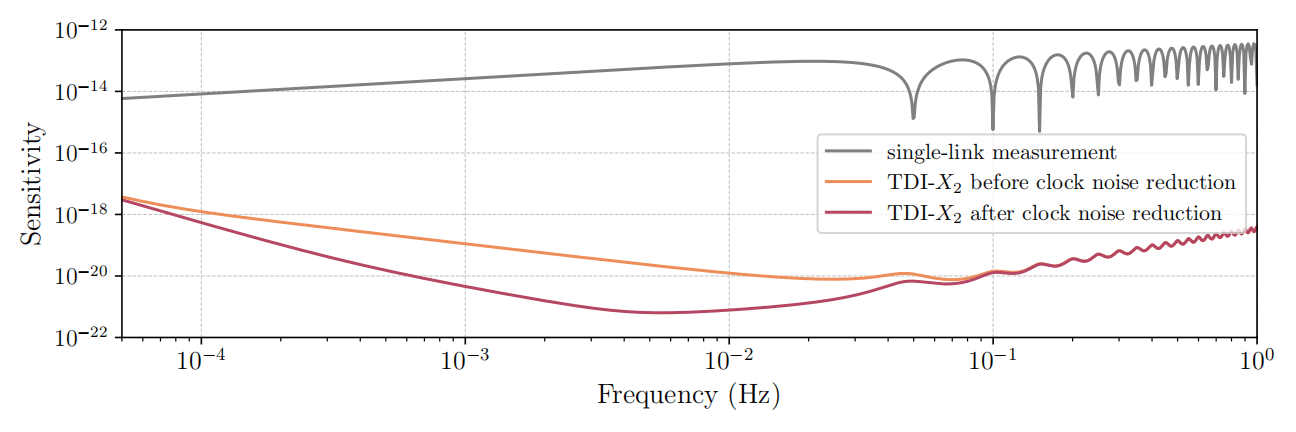
Why TDI?
Pre-stabilized laser noise: \(\sim30 \mathrm{Hz}/\sqrt{\mathrm{Hz}}\)
GW target at mHz is 8 orders below laser noise
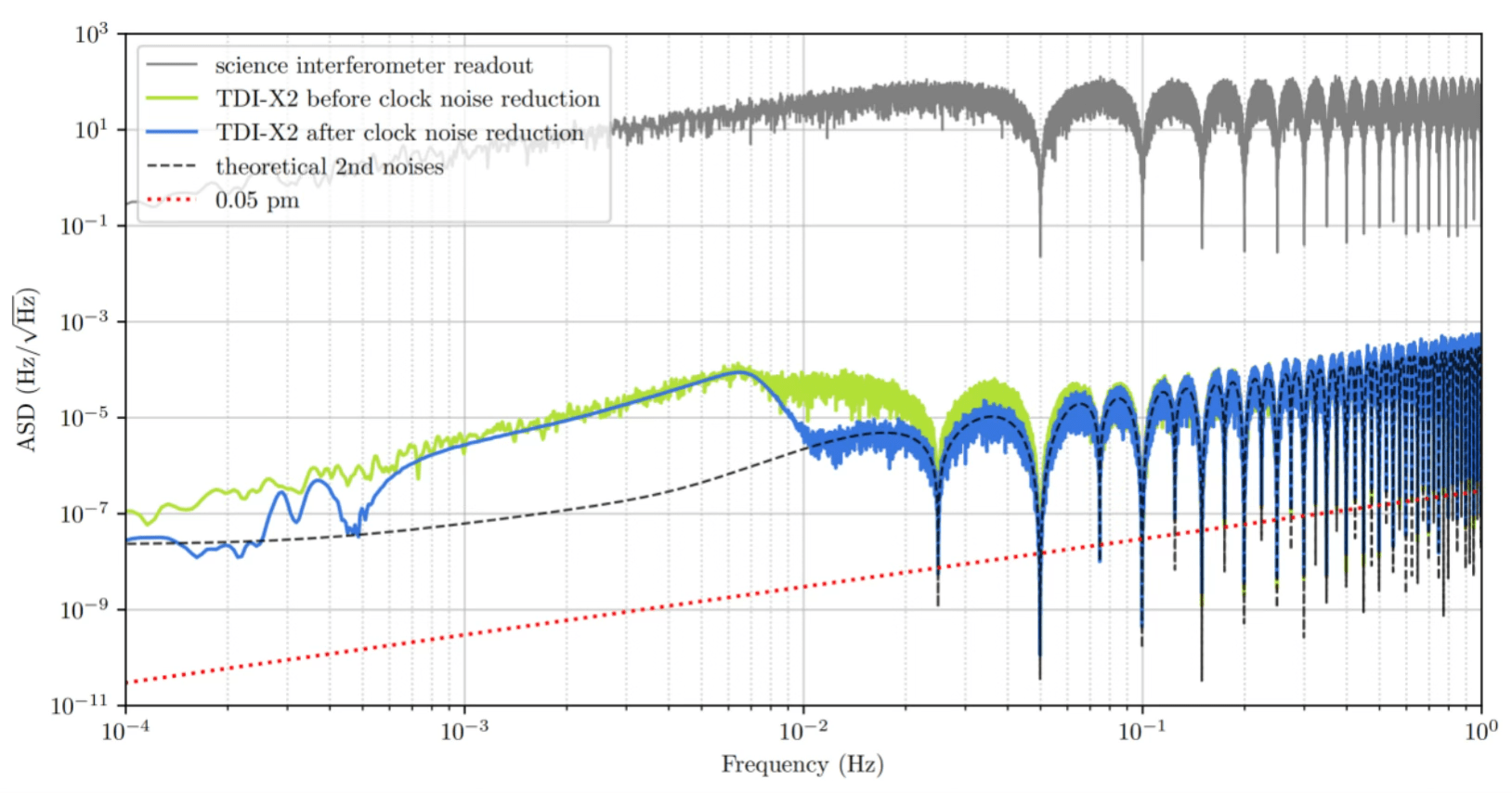
Noise suppression cascade: ISI / \(\xi\) / \(\eta\) \(\rightarrow\) second-generation TDI-X\(_2\) \(\rightarrow\) clock-noise-reduced X\(_2\)
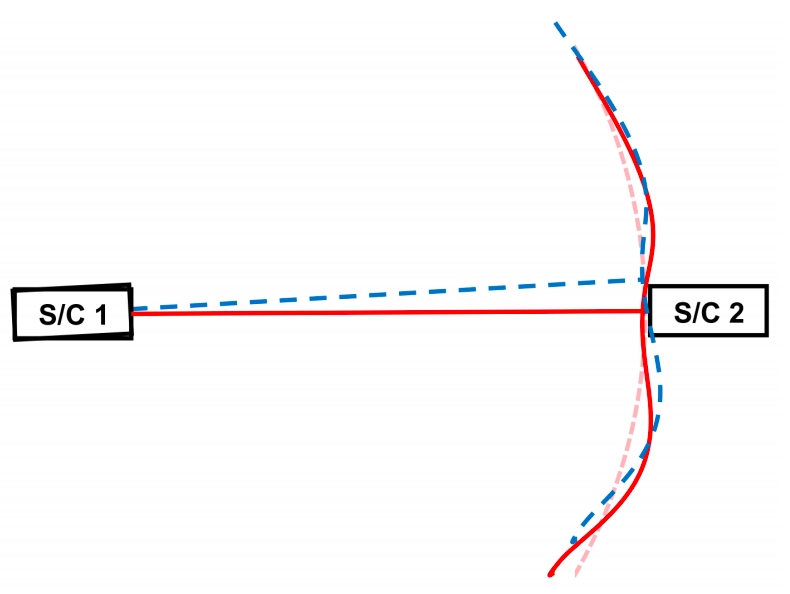
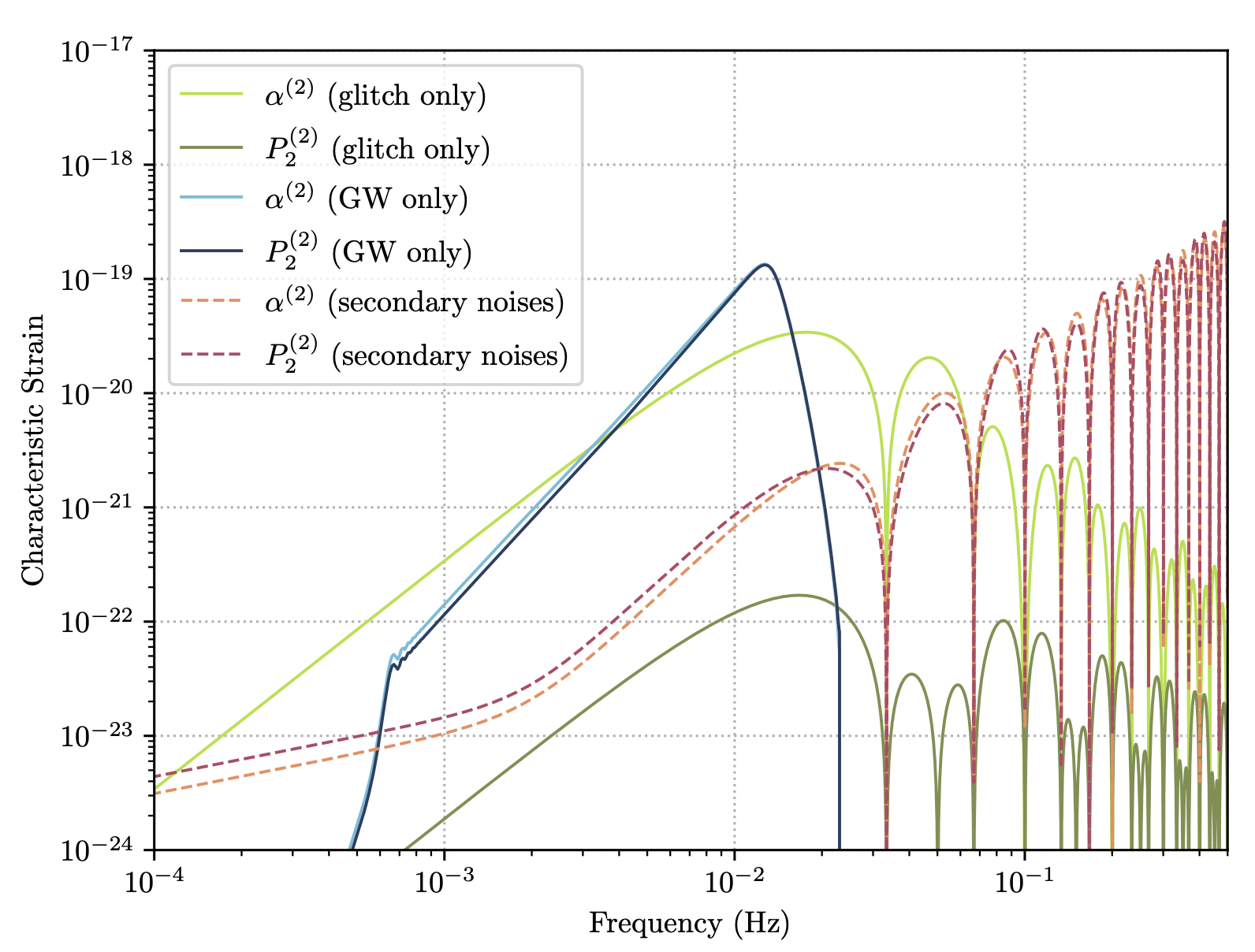
GRS-glitch propagation in TDI
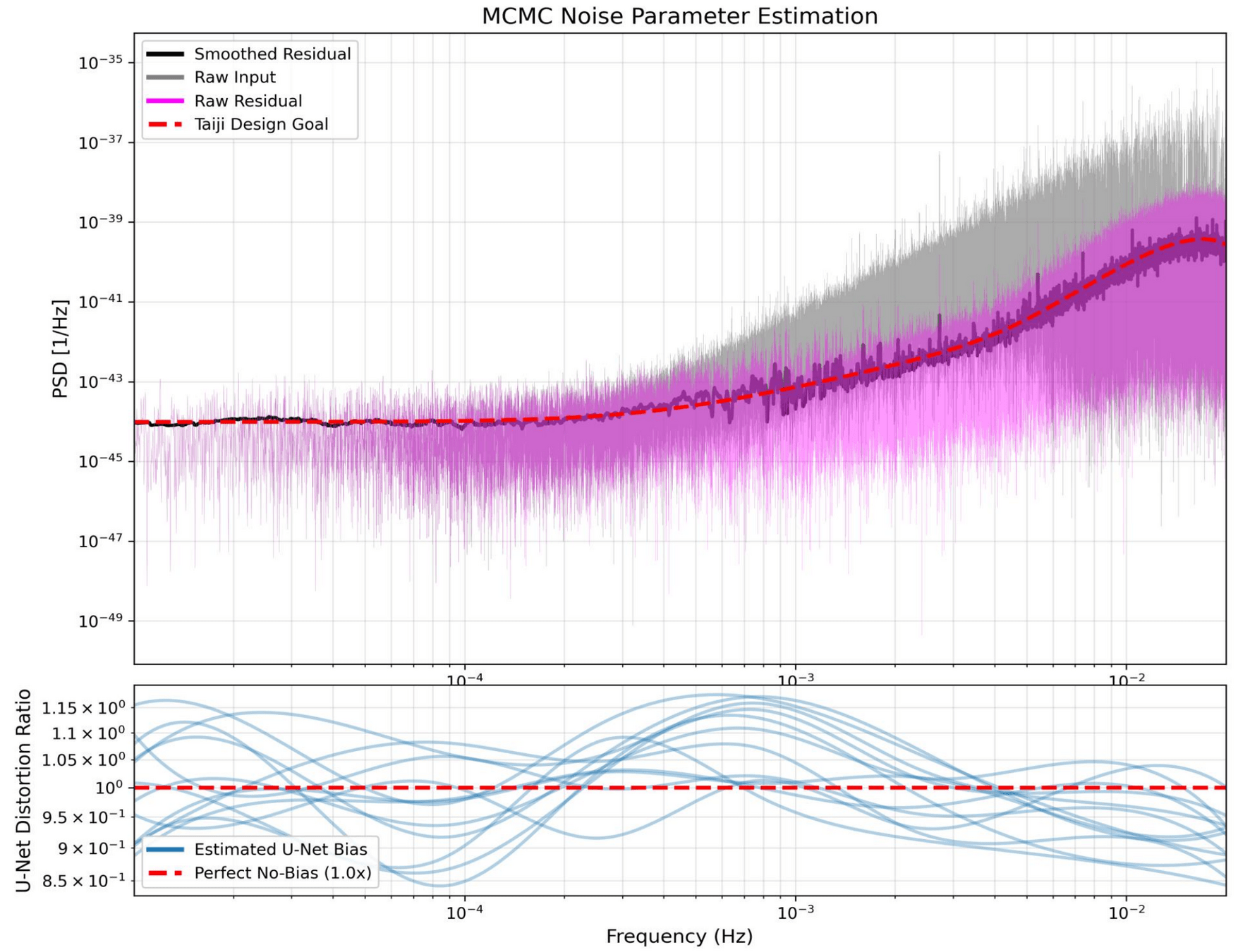
Instrumental-noise characterization
Science-optimized TDI configurations
TDI response to lacalized GRS glitches compared with secondary-noise levels
P. Wu et al., Opt. Express 32 (2024) 24
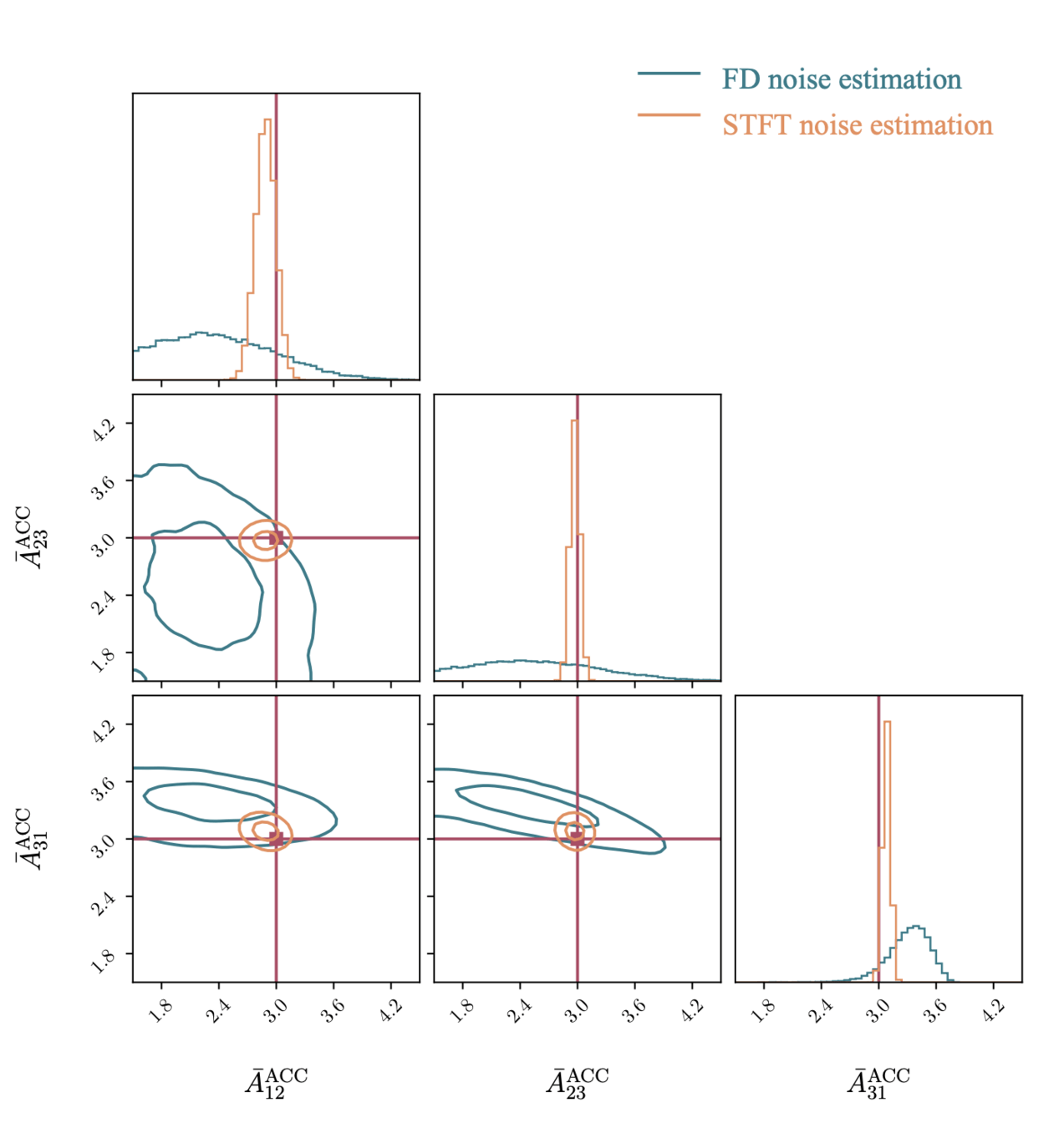
Frequency-domain and time-frequency noise inference from TDI observables
M. Du et al., PRD 112, 083036 (2025);
G. Wang, PRD 110, 064085 (2024)
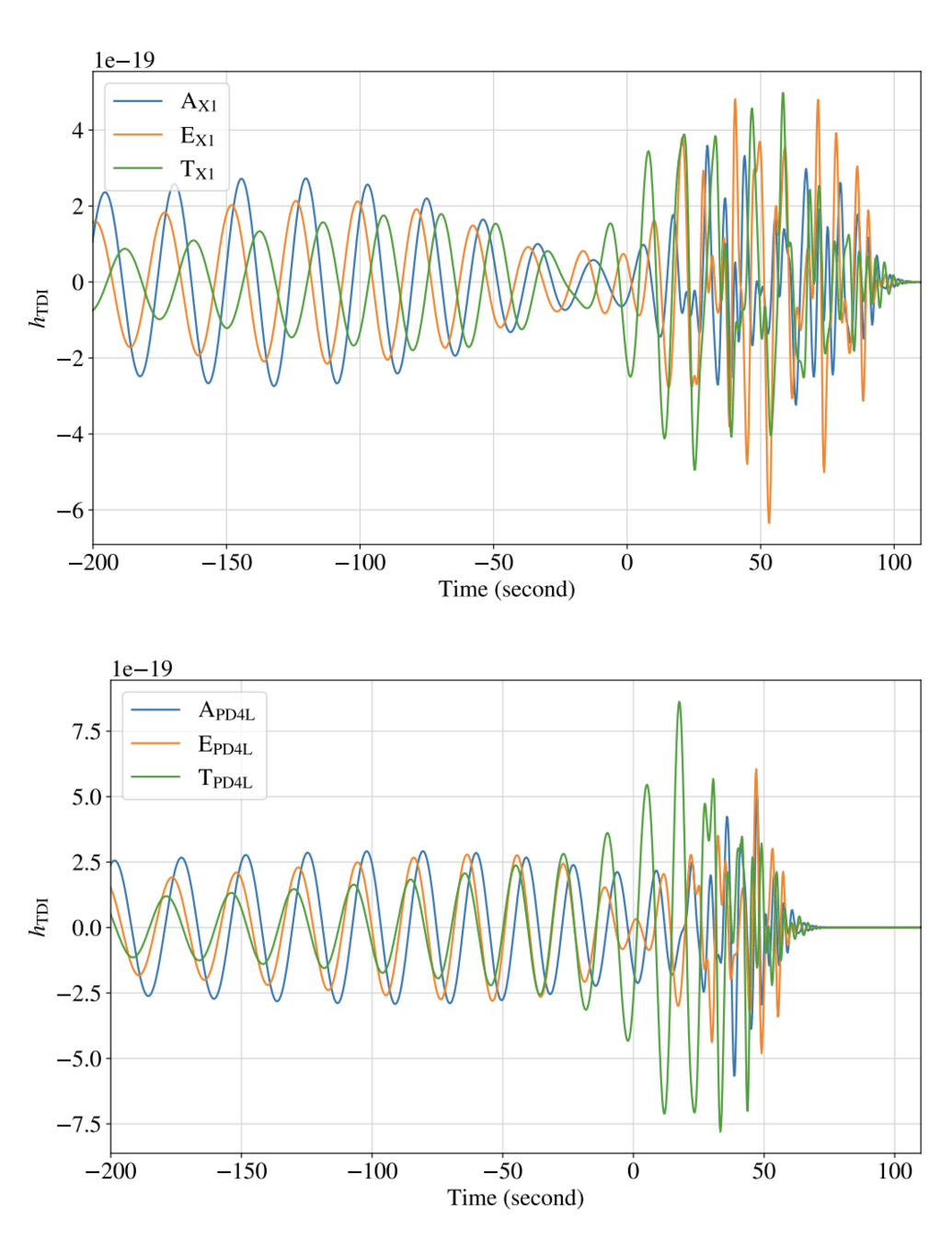
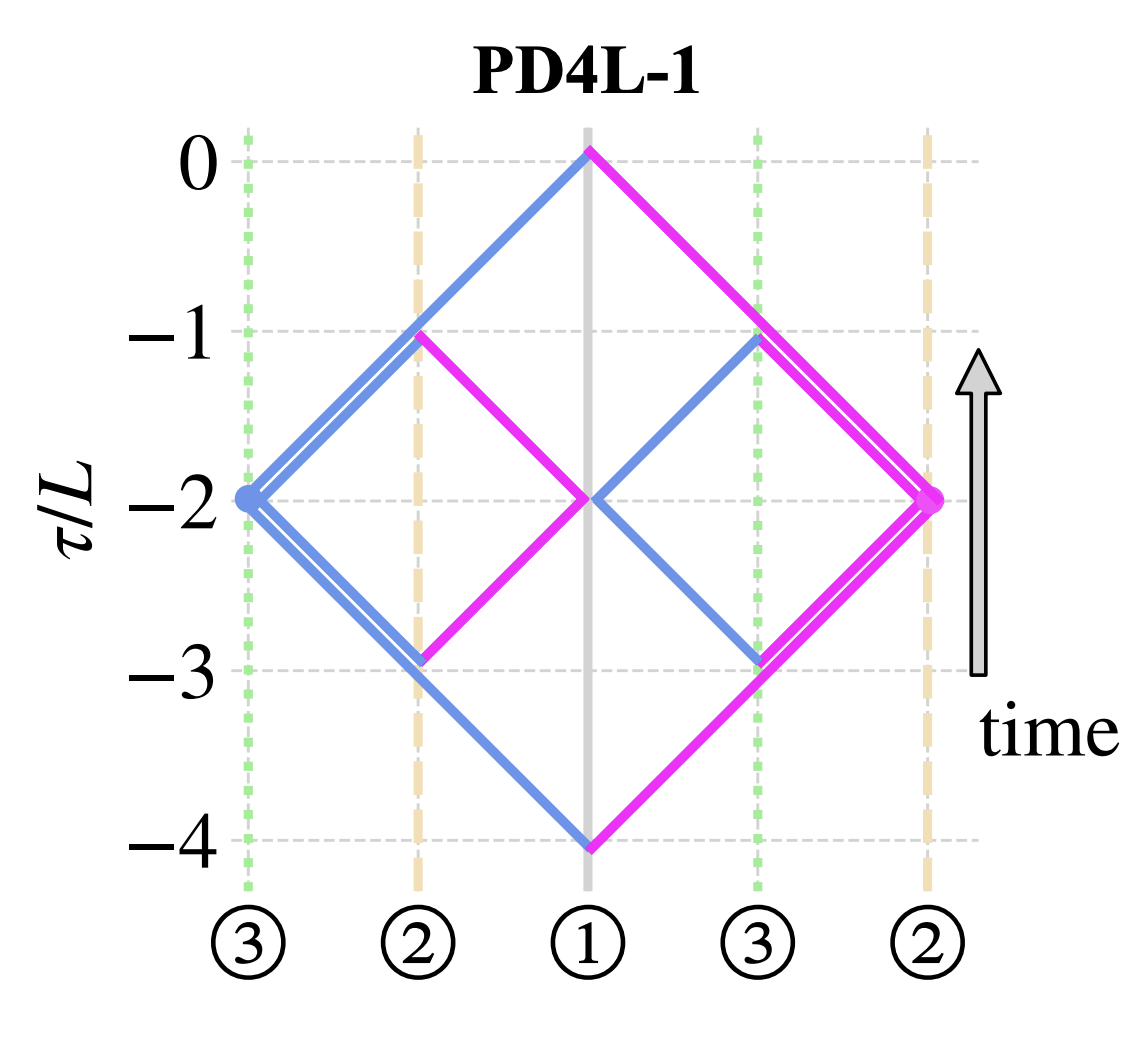
PD4L: alternative second-generation geometry for robust analysis
G. Wang, Sci. China PMA 69, 220411 (2026);
G. Wang, PRD 113, 124072 (2026)
PRELIMINARY
你可以从2502.03983, 2507.18397, 2602.06731取图并cite这几篇文章
Tang:XX
DU:https://doi.org/10.1364/OE.540561
用特殊TDI组合抑制测试质量glitch的
For Taiji/TJ, preprocessing is a scientific step: it defines how raw interferometric measurements become calibrated TDI science data.
GW Sources pipeline
Population studies / H0 pipeline
The final data-analysis goal is not only event detection, but a validated catalog and population-level science products.
Iterative source extraction and foreground reconstruction
He WANG · ICTP-AP / UCAS
Taiji: China's Space-based GW Program
Resolved catalog — Galactic populations and structure
Foreground reconstruction — effective sensitivity after subtraction
Downstream analyses — cleaner searches for MBHBs, EMRIs, and SGWB
Network preview: coherent LISA–Taiji recovery — revisited later
P. Gao et al., PRD (2023); X. Zhang et al., PRD (2022), PRD (2021)
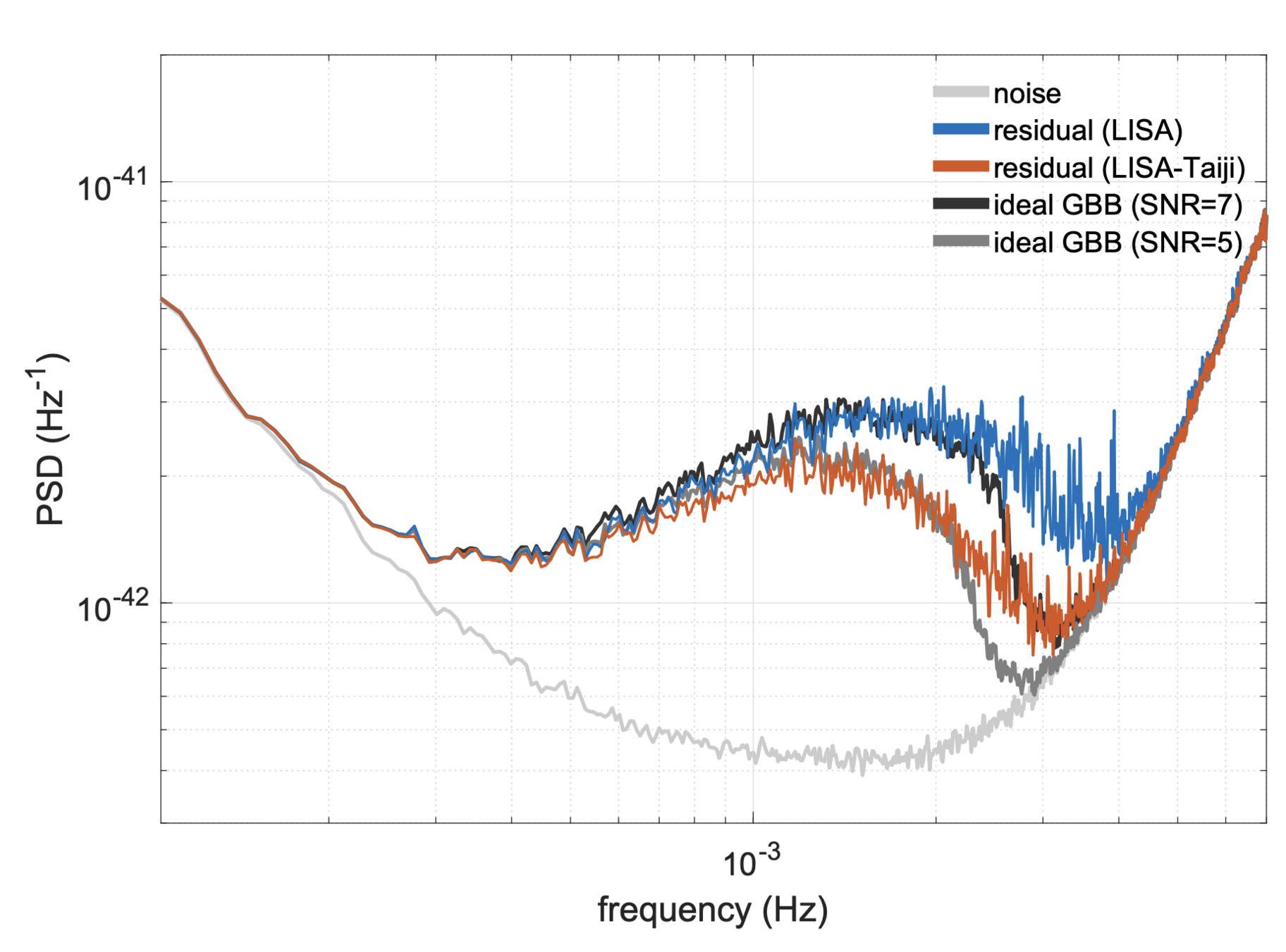
Residual TDI PSD after iterative GB subtraction
Challenge
A confusion-dominated millihertz sky
Approach
single-detector residual
network residual
POSTER
2.07
Take-away: GB subtraction determines both the source catalog and the foreground floor seen by downstream searches.
PRELIMINARY
Low-latency mergers and long-duration, multimodal signals
He WANG · ICTP-AP / UCAS
Taiji: China's Space-based GW Program
Challenge
M. Du et al., SCPMA (2024);
B. Liang et al., MLST (2024)
X. Zou et al., PRD (2025), in preparation (2026); B. Liang et al., CPL (2025), Research (2026)
Massive black-hole binaries
Extreme-mass-ratio inspirals
Approach
Evidence
Challenge
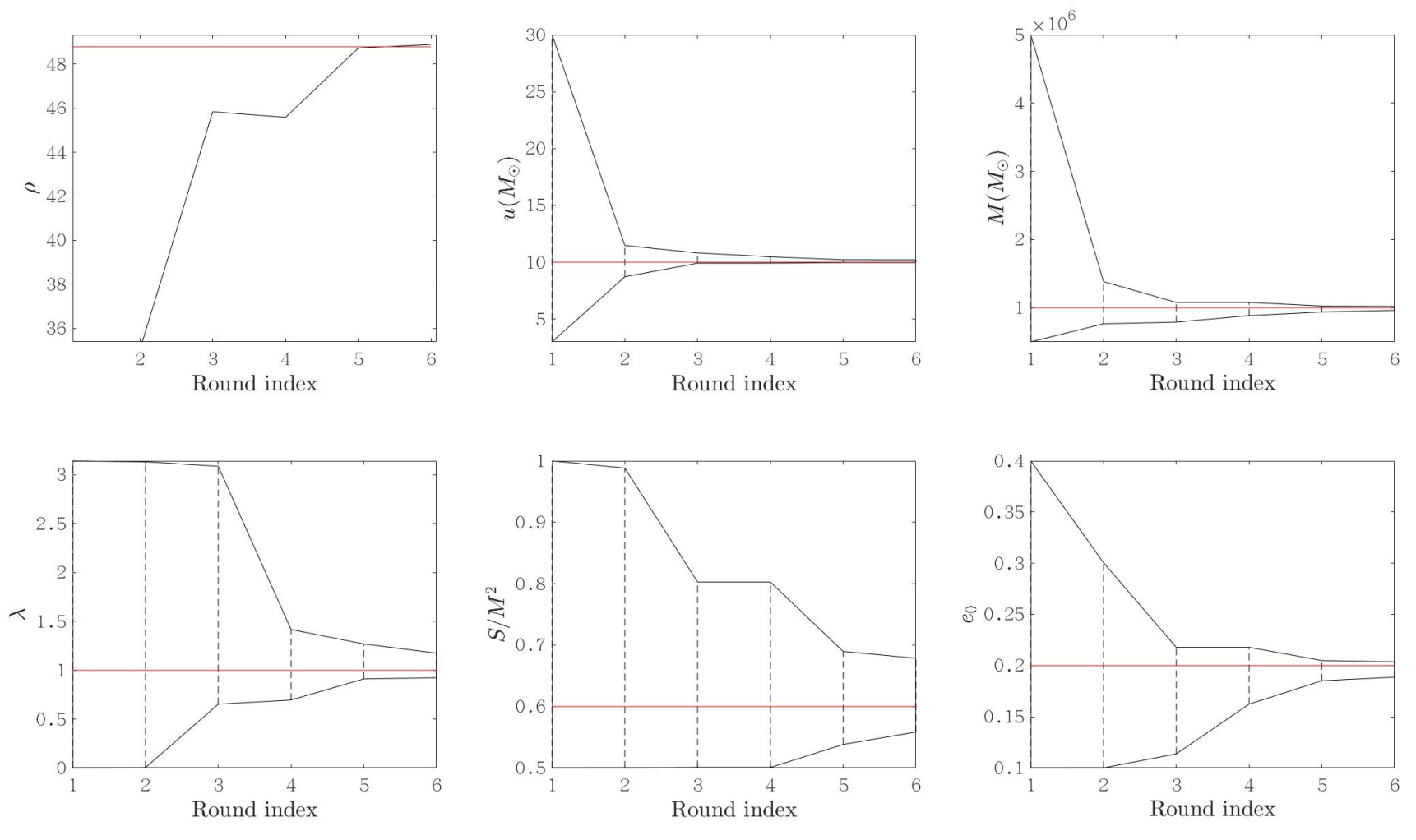
Optimization-based search
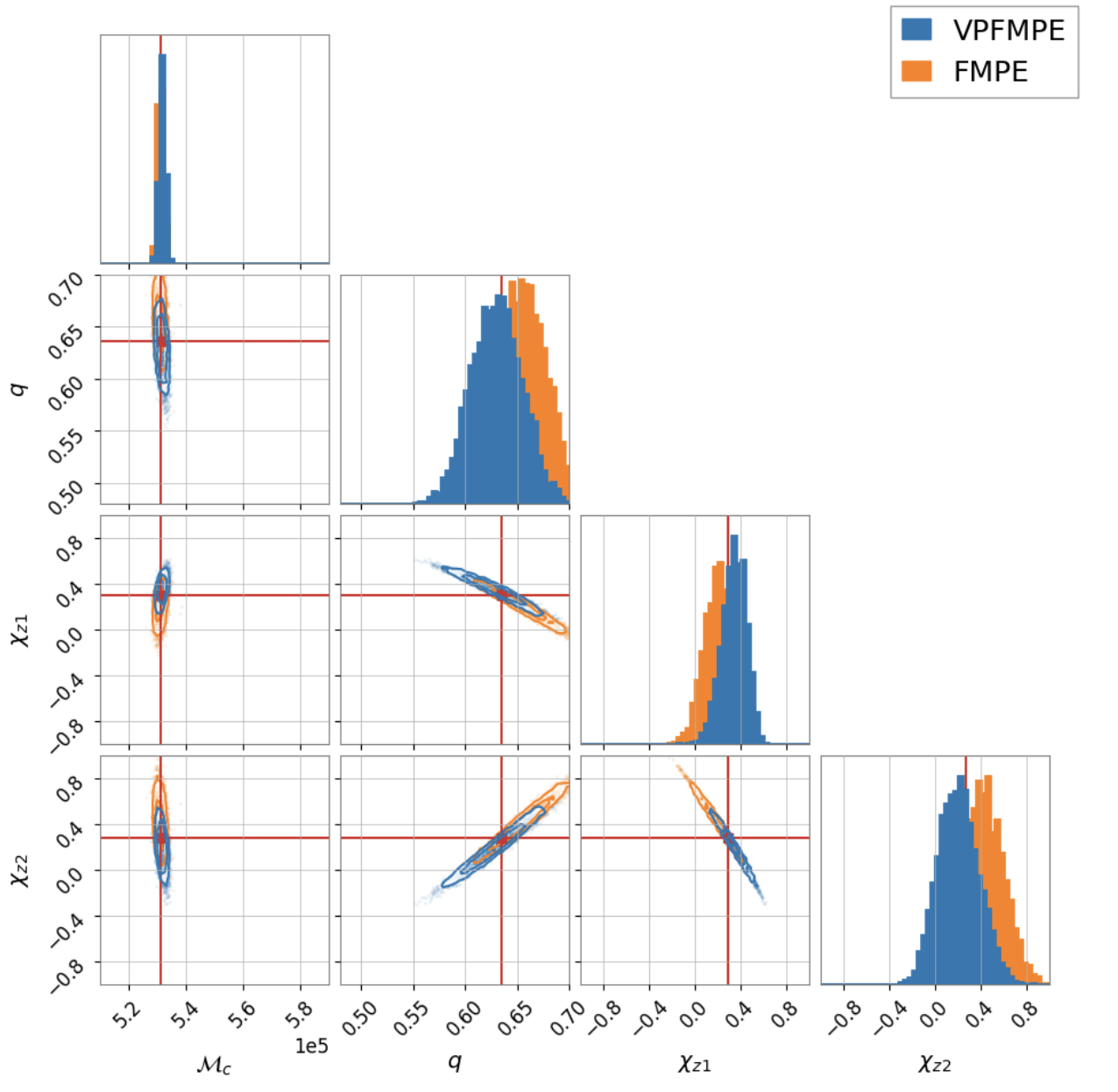
Amortized posterior inference
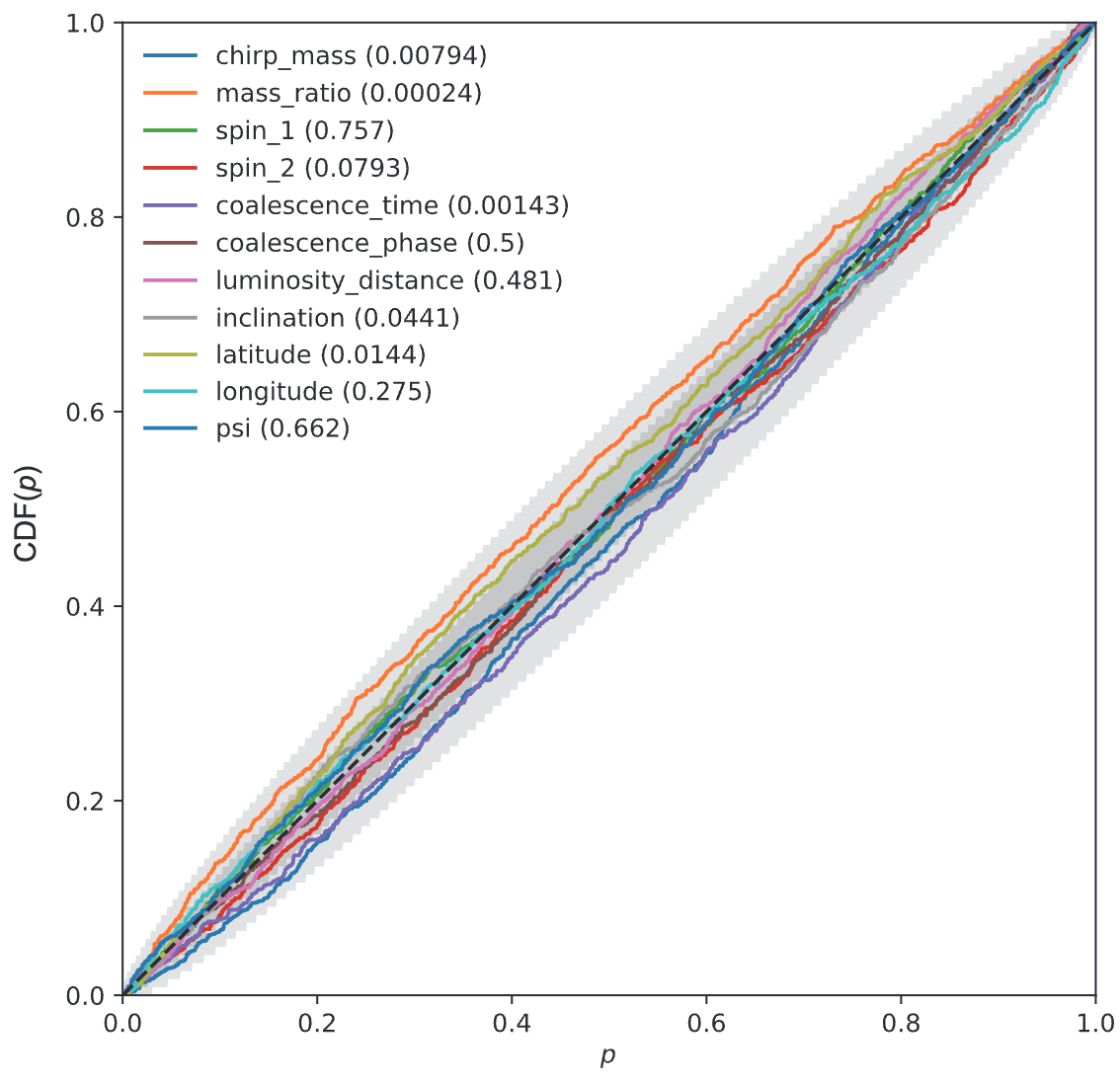
Take-away: MBHB and EMRI inference present different computational bottlenecks, and Taiji-related studies are exploring complementary acceleration strategies matched to each problem.
PSO search
Flow posterior
Flow posterior
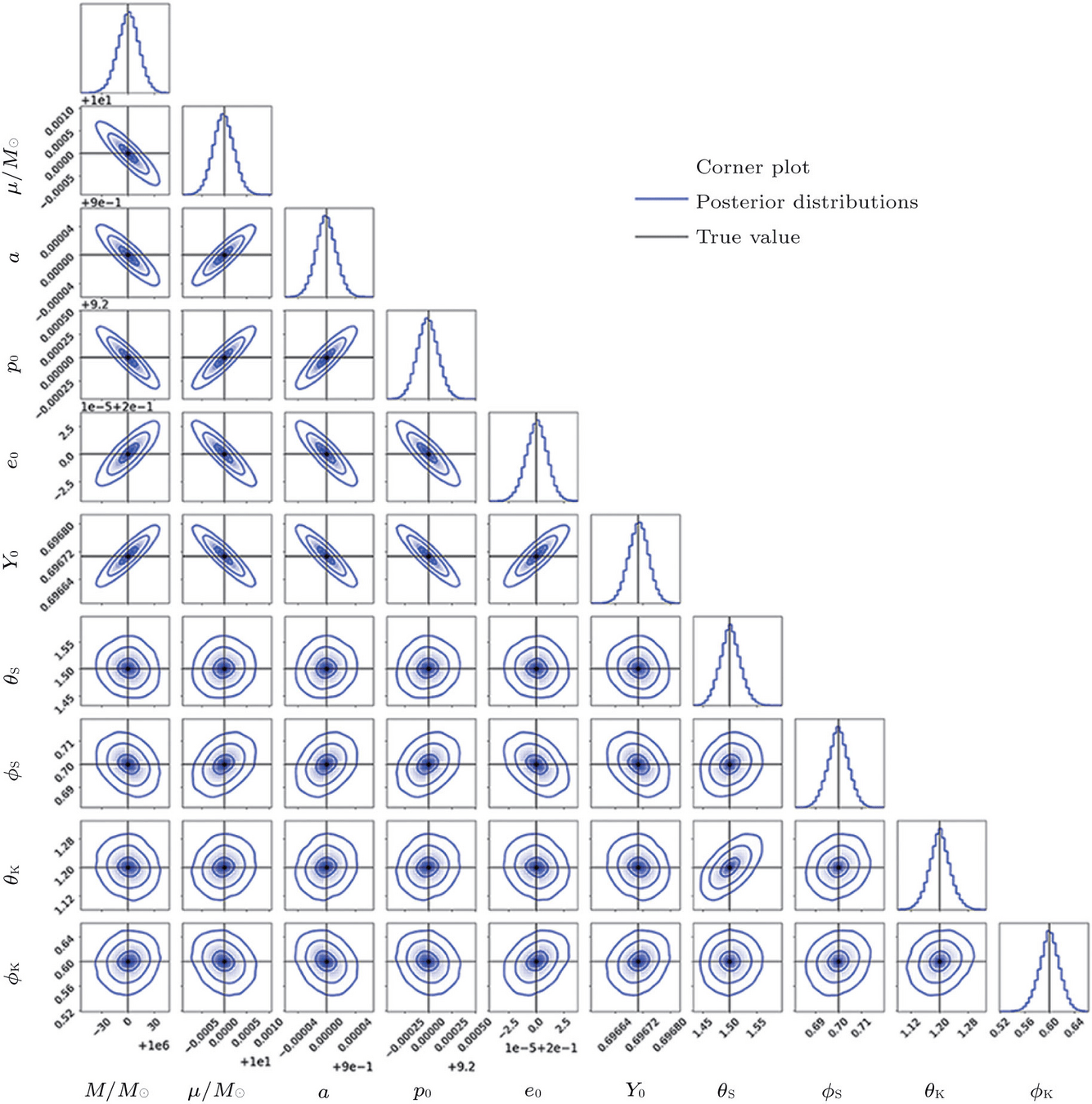
P-P plot
POSTER
5.06
PRELIMINARY
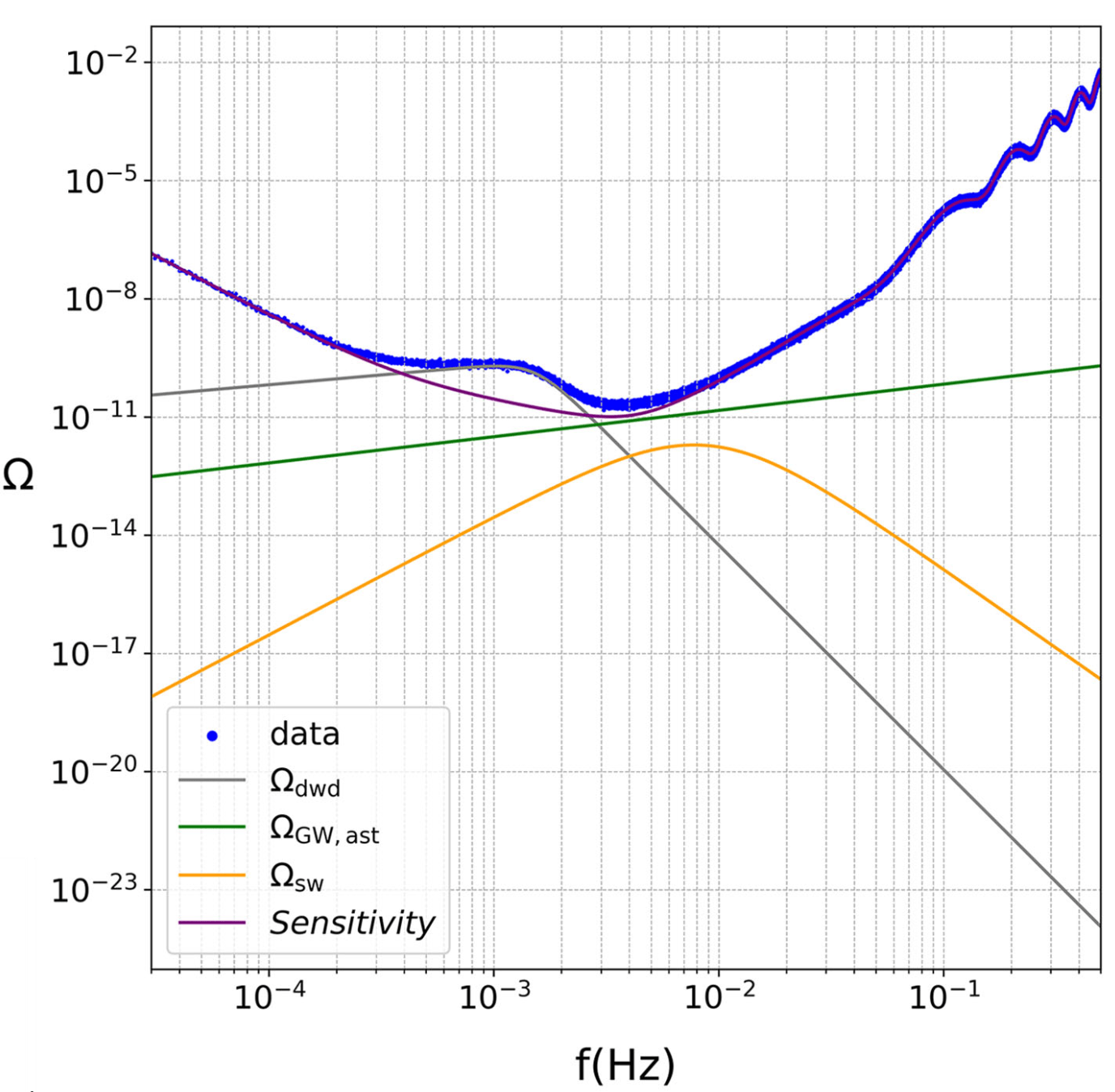
Detector response, astrophysical foregrounds, and instrumental noise
He WANG · ICTP-AP / UCAS
Taiji: China's Space-based GW Program
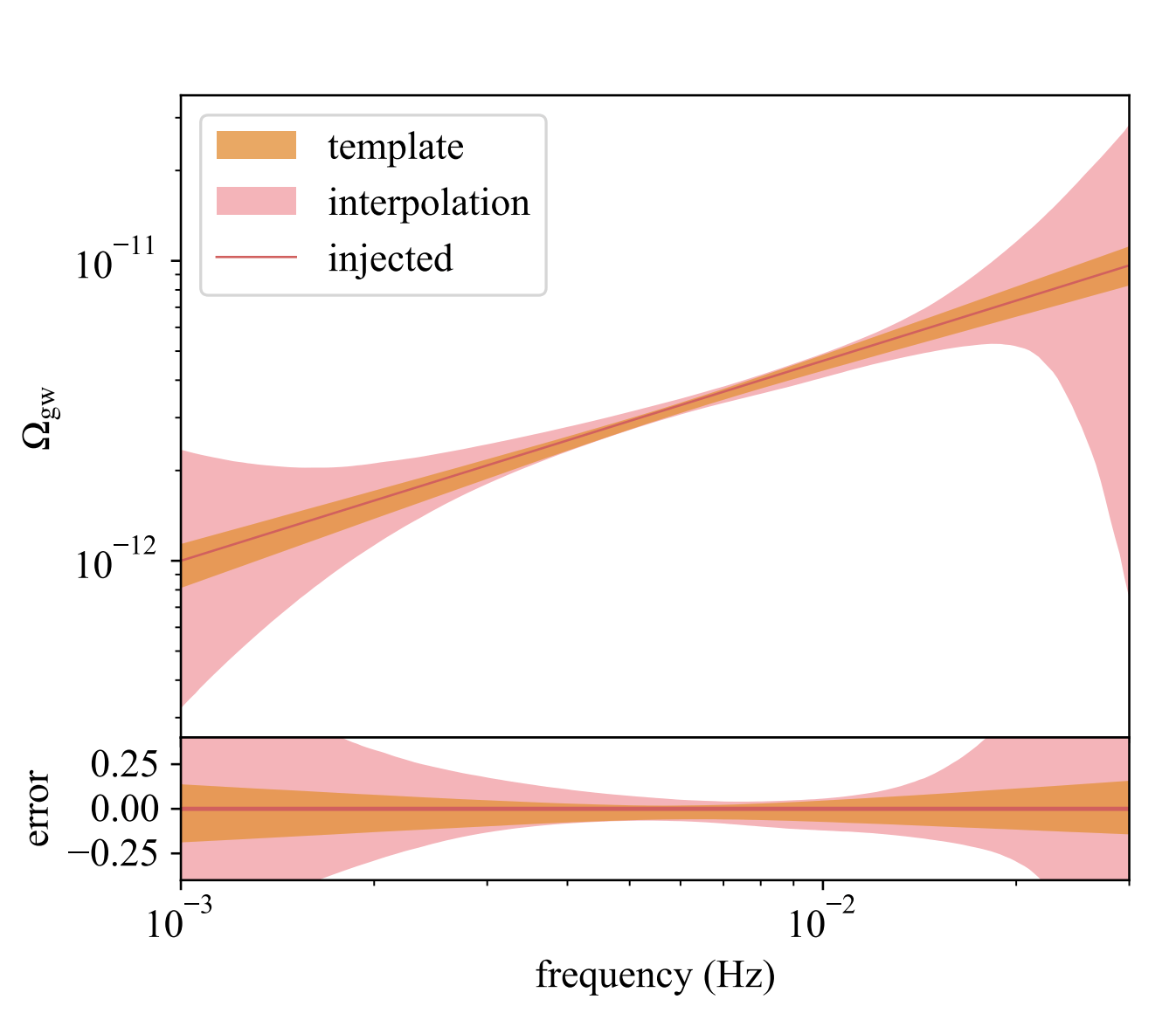
Take-away: Reliable SGWB inference requires joint modeling of backgrounds, foregrounds, and instrumental noise.
Y. Jiang et al., JCAP 06, 024 (2026); arXiv:2601.00169; Q. Liang et al., PRD 113, 083004 / 075014 (2026)
Current scope: reduced instrumental-noise and foreground parameterizations; full anisotropic/cyclostationary separation remains future work.
Realistic TDI response
Equal-arm or diagonal-covariance approximations can bias SGWB recovery.
Model-flexible spectral reconstruction
Avoids forcing an incorrect spectral template across the sensitive band.
template-based vs model-flexible SGWB reconstruction
Illustrative component mixture in Taiji data
Joint component separation
All component uncertainties must be propagated into the SGWB posterior.
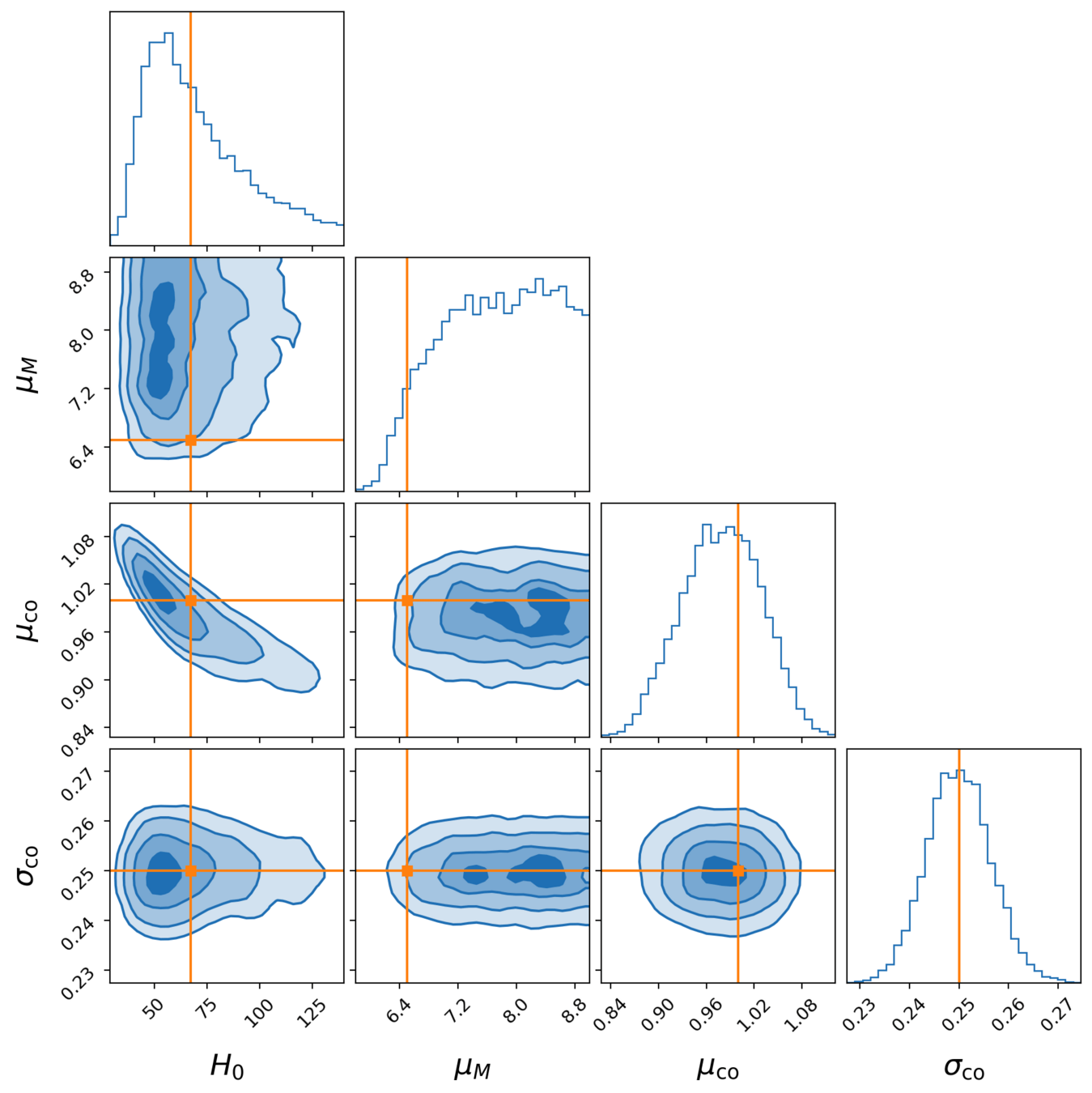
A preliminary spectral-siren demonstration with simulated Taiji EMRI populations
He WANG · ICTP-AP / UCAS
Taiji: China's Space-based GW Program
Preliminary: one simulated catalog realization; selection effects, population-model uncertainty, and catalog-to-catalog variance remain to be quantified.
STEP 1
STEP 2
STEP 3
Population features define intrinsic statistical rulers
Redshift is imprinted on the observable masses
\(H_0\) constraint from GW alone
The \(H_0\)–mass-scale correlations encode the residual mass–redshift degeneracy.
Detector networks can sharpen both individual-source measurements and the population features used for cosmological inference.
Ji-Yu Song et al. in preparation (2026)
PRELIMINARY
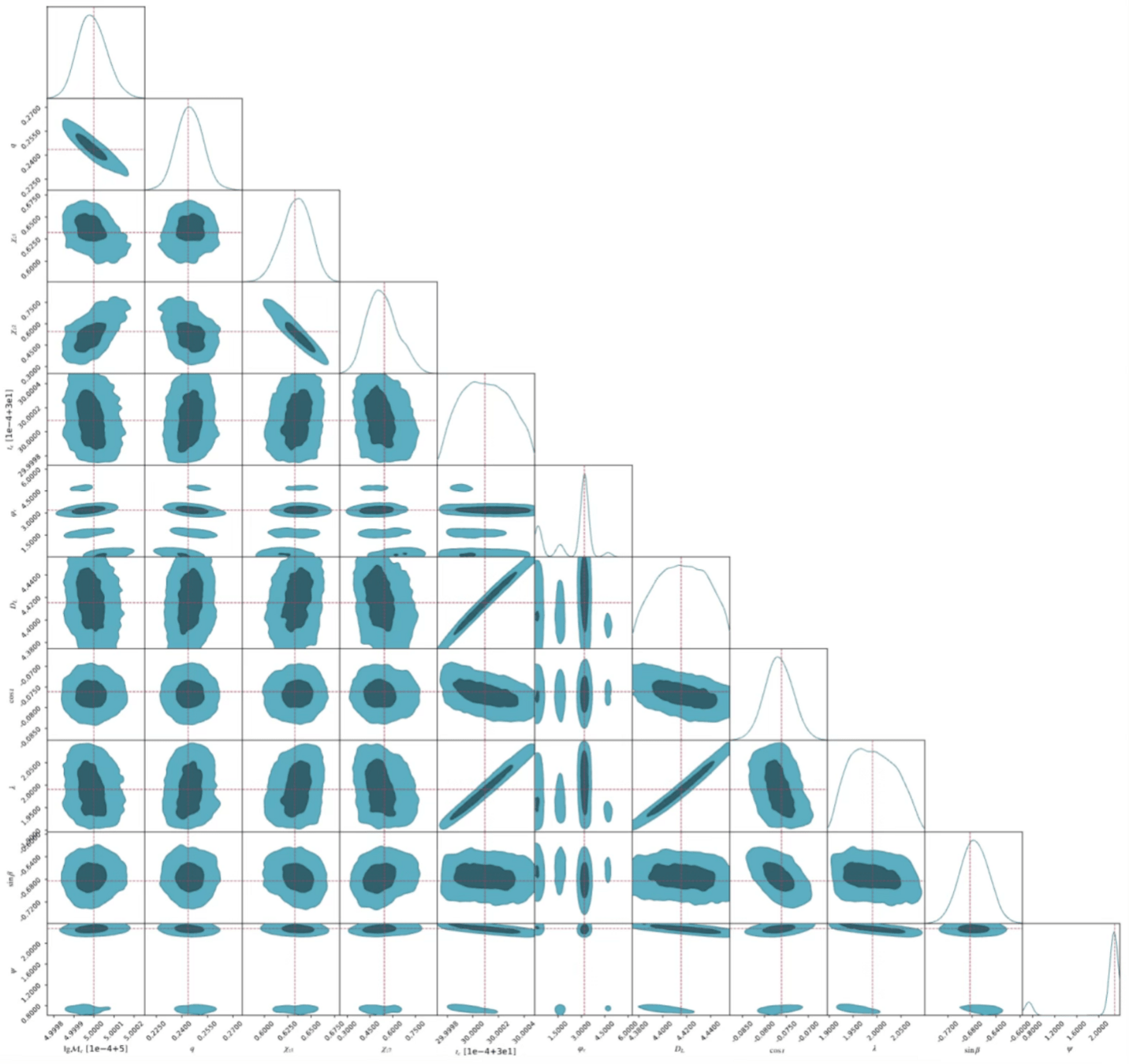
Overlapped GB resolution
The PSO-based GBSIEVER pipeline
[P. Gao et al, Phys. Rev. D 107, 123029 (2023)]
[X. Zhang et al, Phys. Rev. D 106, 102004 (2022)]
[X. Zhang et al, Phys. Rev. D 104, 024023 (2021)]
AI-based MBHB inference algorithm
[M. Du et al, SCPMA, Vol 67, Issue 3: 230412 (2024)]
[B. Liang et al, Mach.Learn.Sci.Tech. 5 (2024) 4, 045040]
Fast MBHB parameter estimation
Rapid posterior inference from TDI A, E data
Time-dependent Taiji response
Normalizing-flow inference
EMRI search
SGWB analysis
EMRI search with PSO, AI & MCMC
[X. Zou et al, Phys. Rev. D 112, 084075 (2026)]
[B. Liang et al, Research. 2026;9:1055]
[B. Liang et a., Chin. Phys. Lett., 2025, 42(8): 081101.]
Model-dependent and agnostic SGWB analysis
[Y. Jiang et al, JCAP 06 (2026) 024]
[Q. Liang et al, Phys. Rev. D 113, 083004 (2026)]
[Q. Liang et al, Phys. Rev. D 113, 075014 (2026)]
EMRI (model M6)
H0, mu_M, mu_co, sigma_co
含主标尺, mu_M 偏差被其余参数摊薄
【参数物理含义】
(所有 mu/sigma 定义在 log10 质量空间, 描述源族 source-frame 质量分布)
H0 哈勃常数 km/s/Mpc 真值 67.27
mu_m MBHB 质量谱峰位置 (不对称对数正态中心) log10 Msun 真值 3.3 -> ~2e3 Msun
sigma_R MBHB 质量谱峰右侧 (高质量侧) 宽度 dex 真值 1.20
mu_M EMRI 中心MBH特征质量 M* (Schechter 指数截断) log10 Msun 真值 6.5 -> ~3e6 Msun
mu_co EMRI 致密次星(CO)质量谱峰位置 (对数正态中心) log10 Msun 真值 1.0 -> 10 Msun
sigma_co EMRI CO 质量谱宽度 dex 真值 0.25
太极空间引力波源 谱汽笛 局部 corner
preliminary
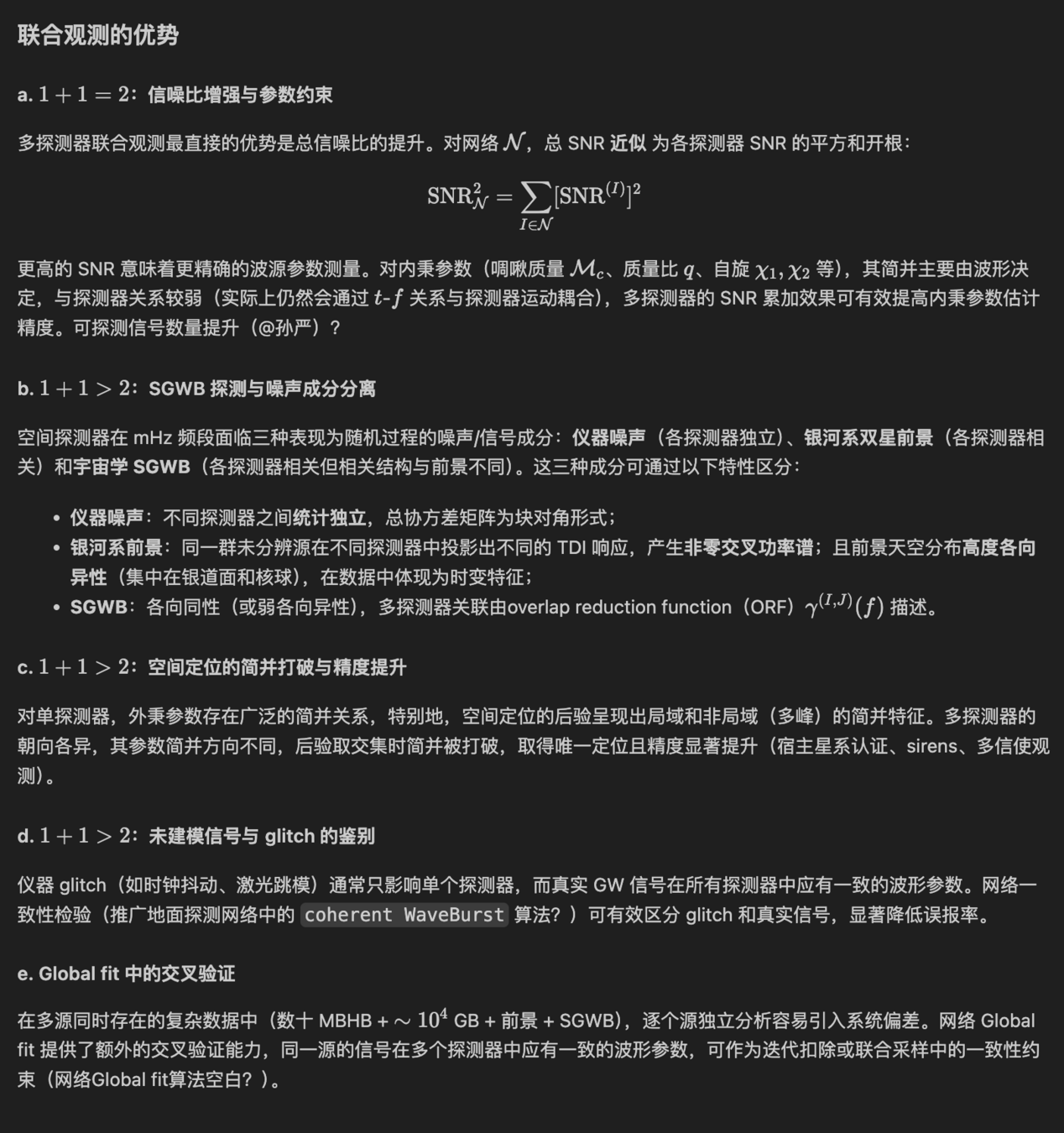
Coherent SNR, geometric complementarity, and cross-detector consistency
He WANG · ICTP-AP / UCAS
Taiji: China's Space-based GW Program
Take-away: Network gains combine SNR accumulation, geometric degeneracy breaking, and cross-detector consistency.
Guo, Luo & Wang, Nature Astronomy (2021)
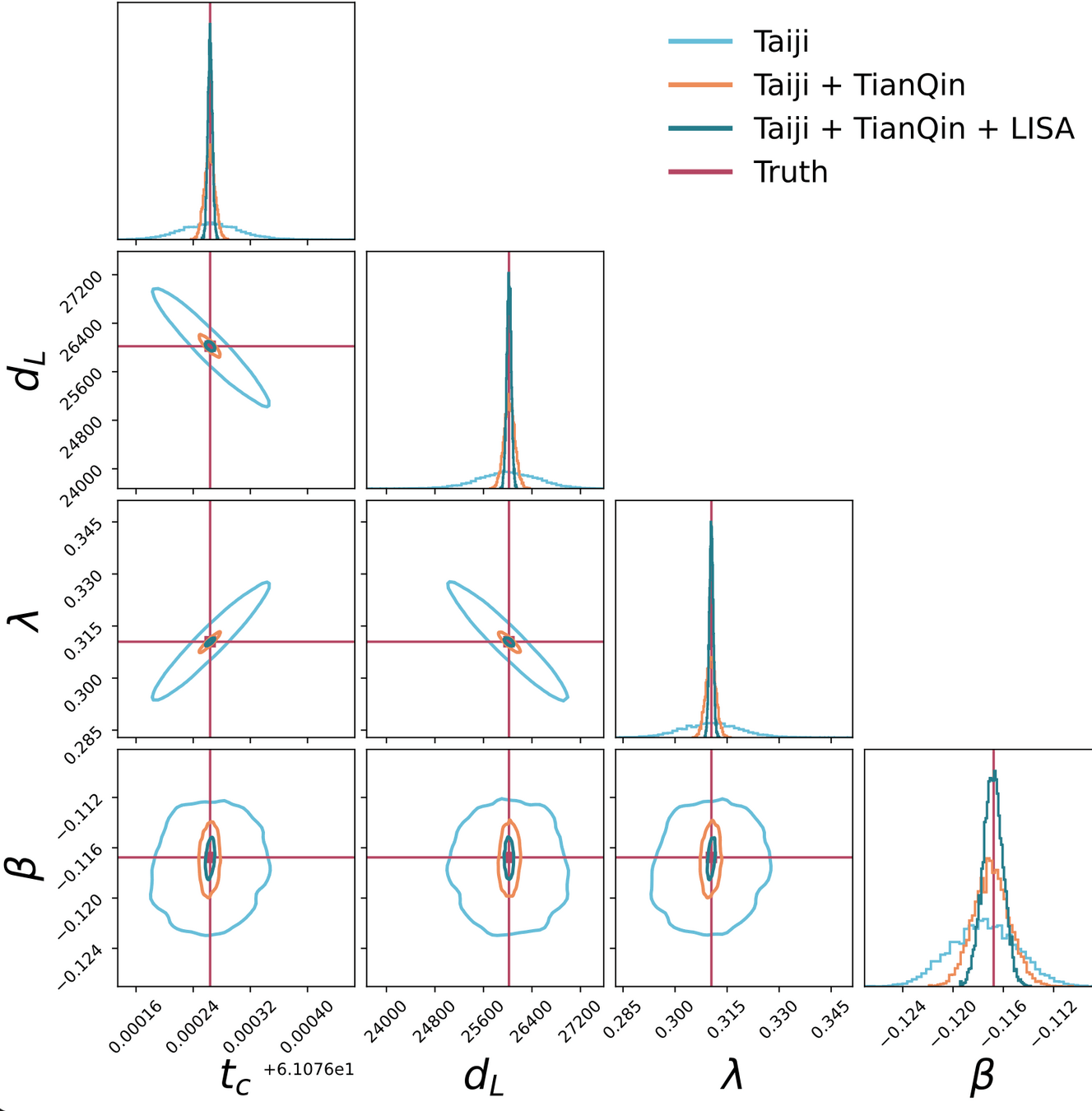
Illustrative MBHB posterior contraction
(Preliminary simulation by M. Du)
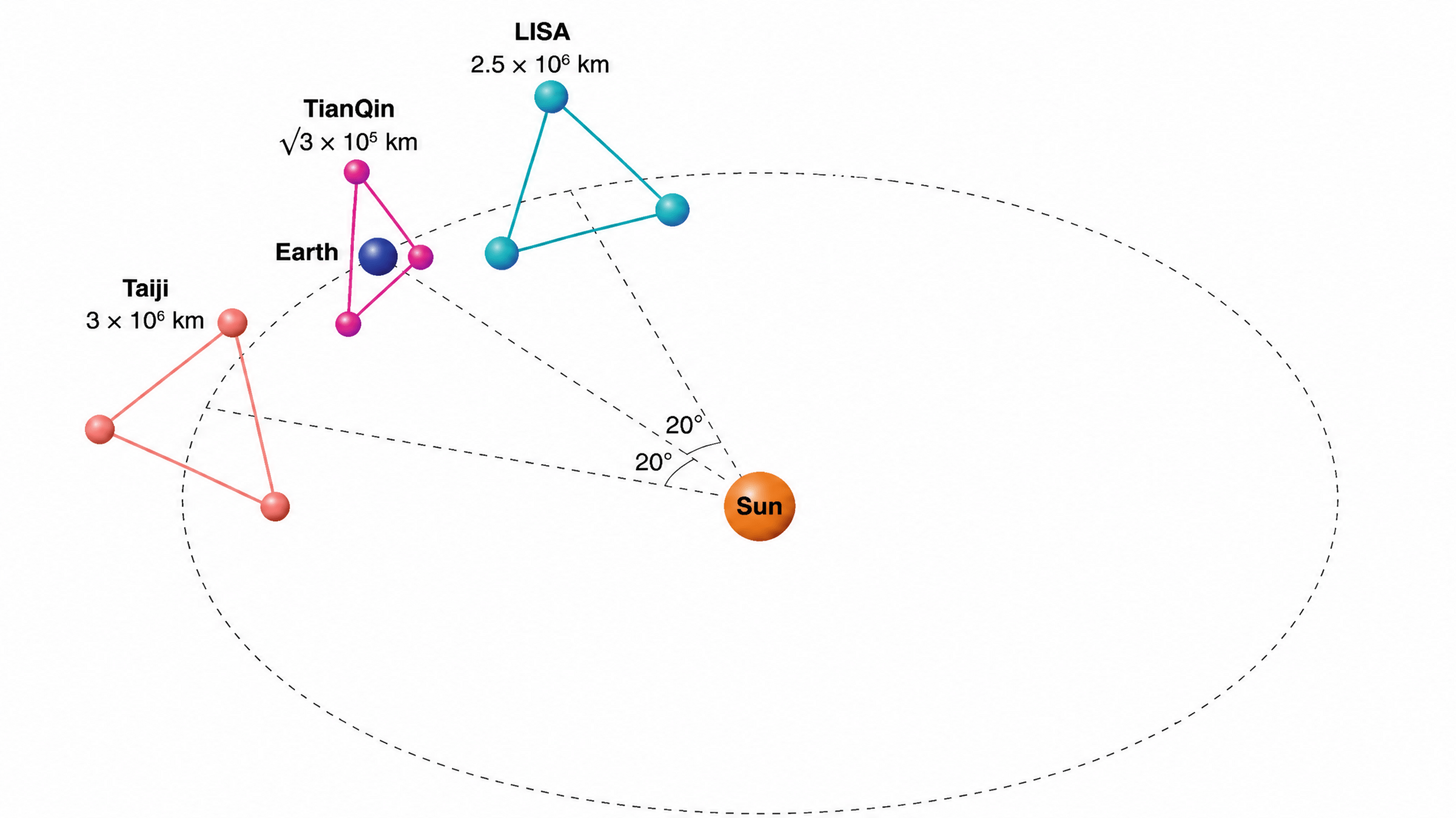
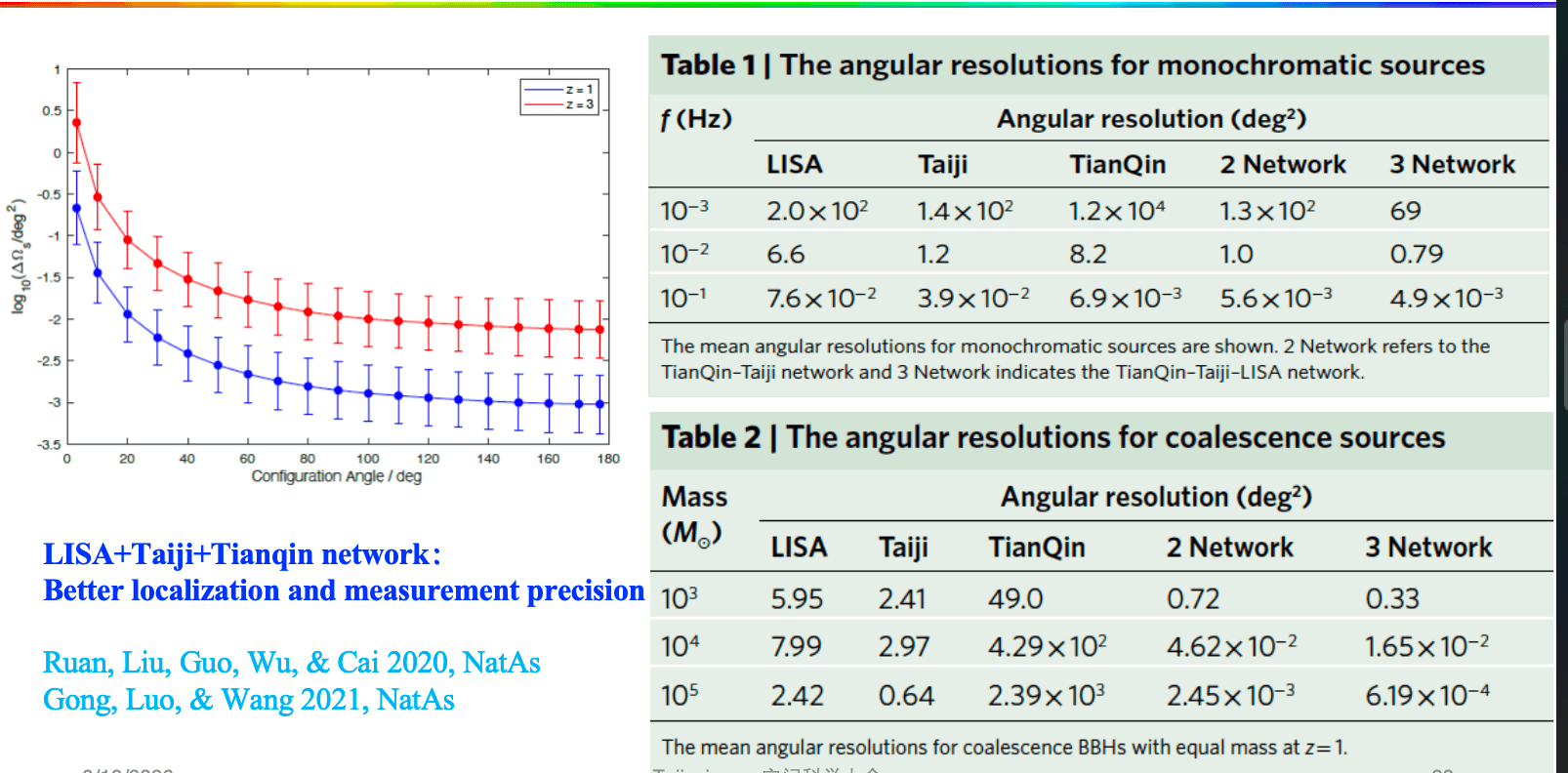
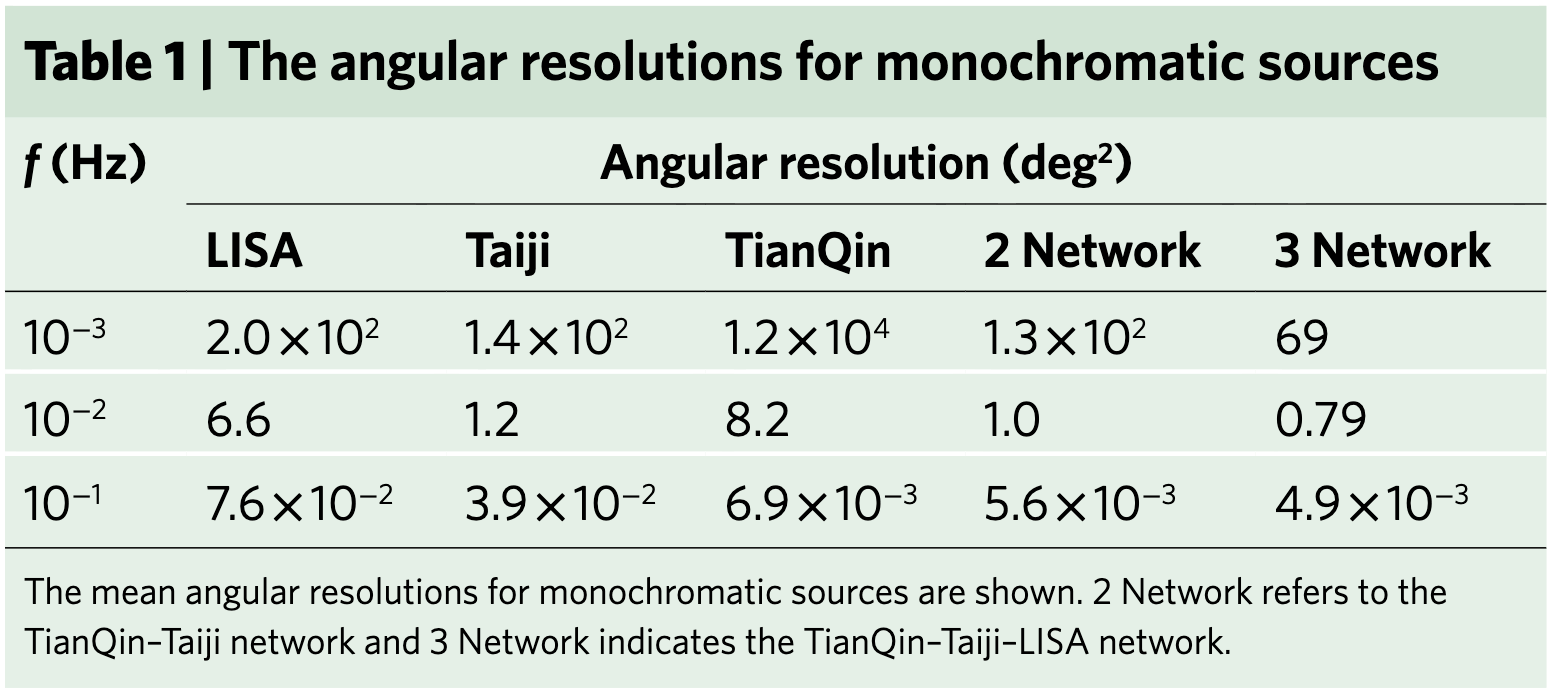
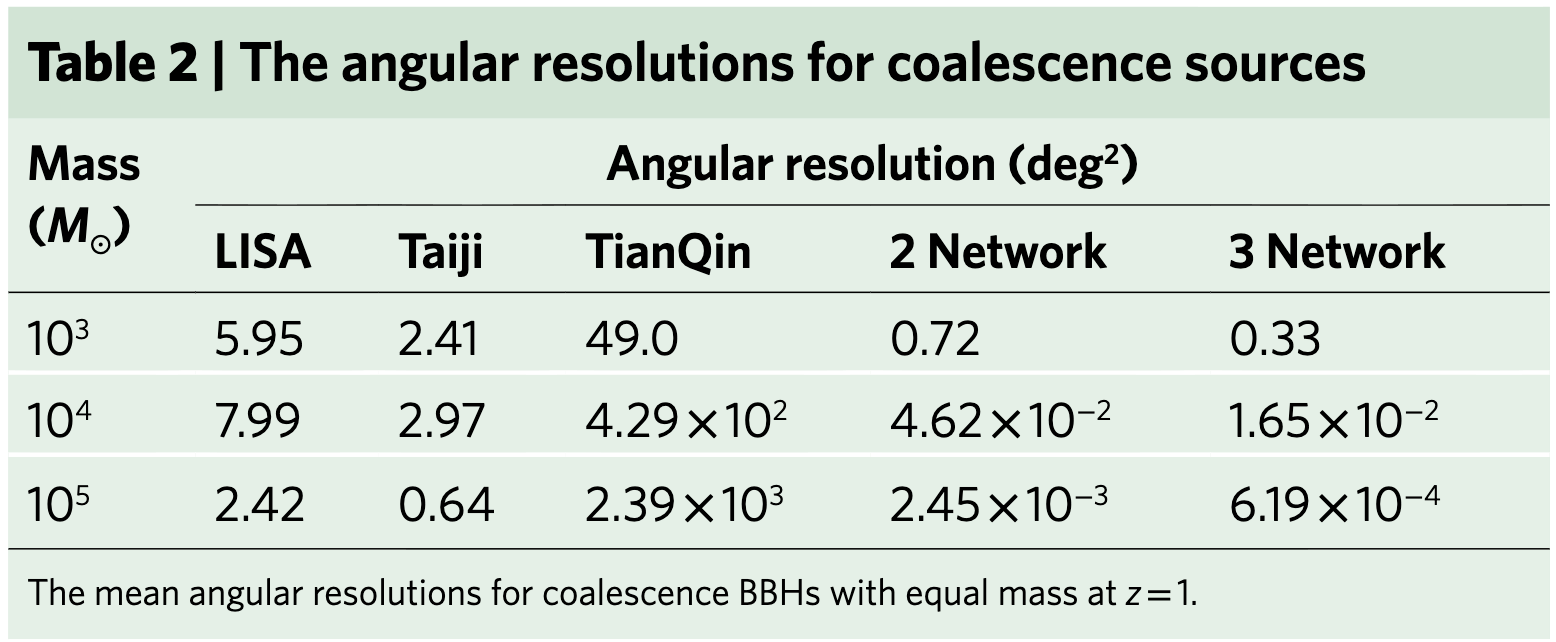
At \(10^{-2}\,\mathrm{Hz}\), the three-detector network improves the monochromatic-source angular resolution from \(6.6\,\mathrm{deg}^2\) for LISA alone to \(0.79\,\mathrm{deg}^2\).
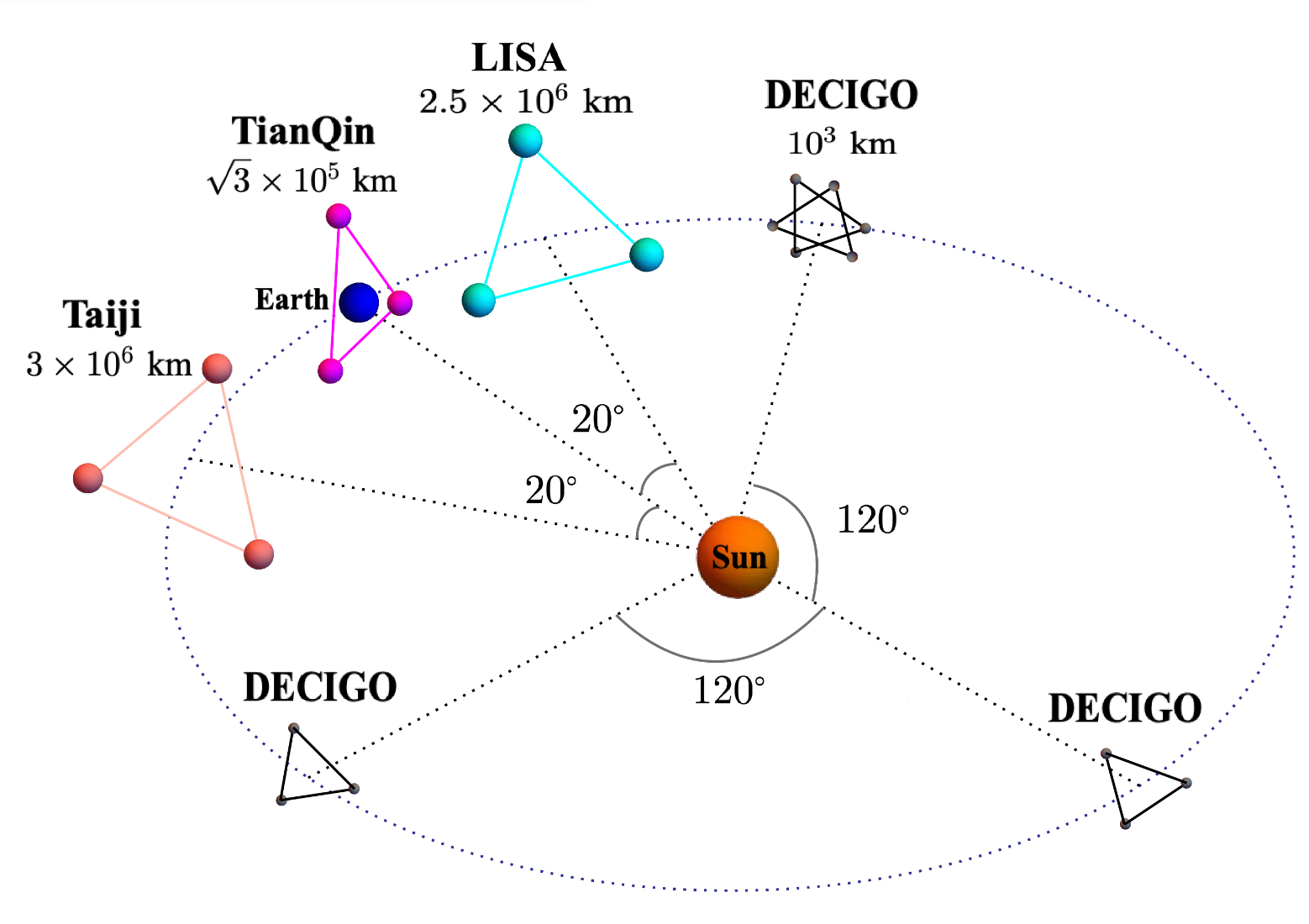
Complementary orbital configurations of Taiji, TianQin, and LISA
Adapted from Ruan et al., Nature Astronomy (2020).
Forecast for a monochromatic source at \(10^{-2}\,\mathrm{Hz}\)
LISA
Taiji–TianQin
LISA–Taiji–TianQin
\(6.6\,\mathrm{deg}^2\)
\(1.0\,\mathrm{deg}^2\)
\(0.79\,\mathrm{deg}^2\)
More sensitivity and tighter waveform-parameter constraints.
Coherent SNR accumulation
Different baselines and antenna patterns break sky-position, distance, inclination, and polarization degeneracies.
Geometric degeneracy breaking
Common source parameters across detectors distinguish astrophysical signals from detector-specific artifacts.
Coherent validation
Cross-spectra distinguish largely detector-specific noise from correlated Galactic foregrounds and SGWBs.
Component separation
Shared source parameters; detector-specific noise, calibration, and data-quality models.
Network global fit
— open challenge
PRELIMINARY
Coherent SNR, geometric complementarity, and cross-detector consistency
He WANG · ICTP-AP / UCAS
Taiji: China's Space-based GW Program
Take-away: Network gains combine SNR accumulation, geometric degeneracy breaking, and cross-detector consistency.
Guo, Luo & Wang, Nature Astronomy (2021)
Illustrative MBHB posterior contraction
(Preliminary simulation by M. Du)
At \(10^{-2}\,\mathrm{Hz}\), the three-detector network improves the monochromatic-source angular resolution from \(6.6\,\mathrm{deg}^2\) for LISA alone to \(0.79\,\mathrm{deg}^2\).
Complementary orbital configurations of Taiji, TianQin, and LISA
Adapted from Ruan et al., Nature Astronomy (2020).
Forecast for a monochromatic source at \(10^{-2}\,\mathrm{Hz}\)
LISA
Taiji–TianQin
LISA–Taiji–TianQin
\(6.6\,\mathrm{deg}^2\)
\(1.0\,\mathrm{deg}^2\)
\(0.79\,\mathrm{deg}^2\)
More sensitivity and tighter waveform-parameter constraints.
Coherent SNR accumulation
Different baselines and antenna patterns break sky-position, distance, inclination, and polarization degeneracies.
Geometric degeneracy breaking
Common source parameters across detectors distinguish astrophysical signals from detector-specific artifacts.
Coherent validation
Cross-spectra distinguish largely detector-specific noise from correlated Galactic foregrounds and SGWBs.
Component separation
Shared source parameters; detector-specific noise, calibration, and data-quality models.
Network global fit
— open challenge
PRELIMINARY
Component separation, catalog consistency, and formation-channel constraints
He WANG · ICTP-AP / UCAS
Taiji: China's Space-based GW Program
Formation-channel mixture inference
More sensitivity and tighter waveform-parameter constraints.
Coherent SNR accumulation
Different baselines and antenna patterns break sky-position, distance, inclination, and polarization degeneracies.
Geometric degeneracy breaking
Common source parameters across detectors distinguish astrophysical signals from detector-specific artifacts.
Coherent validation
Cross-spectra distinguish largely detector-specific noise from correlated Galactic foregrounds and SGWBs.
Component separation
Detection sensitivity
TianQin-alone SNR
\(2.2\text{–}3.0\times\)
Catalog gain
more light-seed detections than Taiji alone
\(2.2\text{–}3.0\times\)
Shared source parameters; detector-specific noise, calibration, and data-quality models.
Network global fit
— open challenge
P. Shen et al., Sci. China-Phys. Mech. Astron. March (2026)
Take-away: Event-level complementarity becomes additional structure for component separation, global fitting, and population inference.
Taiji-alone SNR
\(1.06\text{–}1.14\times \)
Taiji–TianQin network; simulated MBHBs at \(z\gtrsim10\)
heavy-seed detection is already near saturation, with \(>96\%\) recovered by the network.
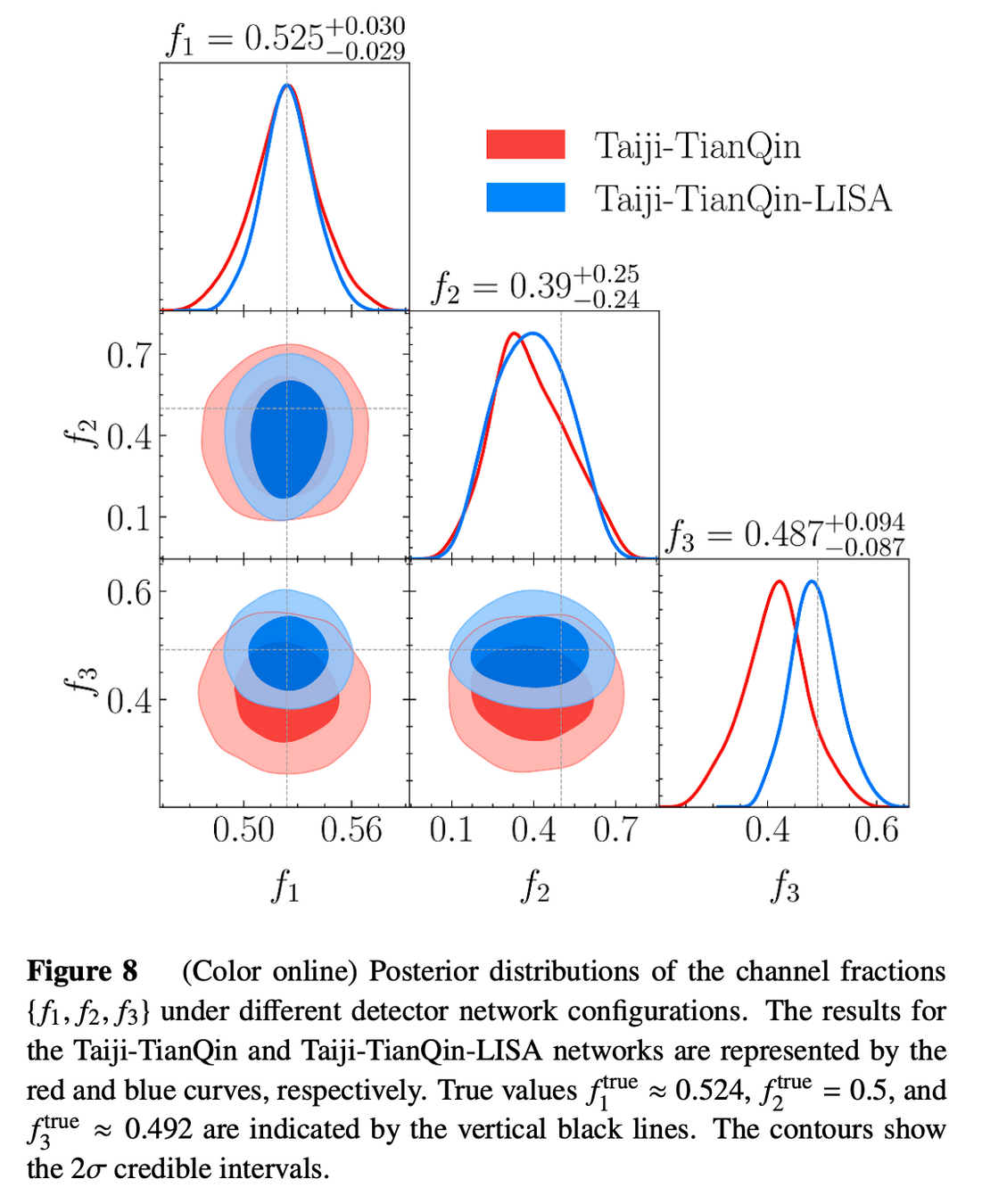
Formation-channel inference
Relative uncertainties at \(2\sigma\); adding LISA further contracts the channel-fraction posteriors.
light-seed fraction \(f_1\)
\(7.4\%\)
delayed fraction within HS, \(f_3\)
\(24\% \)
delayed fraction within LS, \(f_2\)
\(58\% \)
\(f_1\): LS fraction · \(f_2\): delayed fraction within LS · \(f_3\): delayed fraction within HS
Ping Shen: Sci. China-Phys. Mech. Astron. March (2026) Vol. 69 No. 3
Jun Chen: SGWB
Ruan, Liu, Guo, Wu, & Cai, Nature Astronomy (2020);
Guo, Luo & Wang, Nature Astronomy (2021)
(prelimitnary)
Ping Shen: Sci. China-Phys. Mech. Astron. March (2026) Vol. 69 No. 3
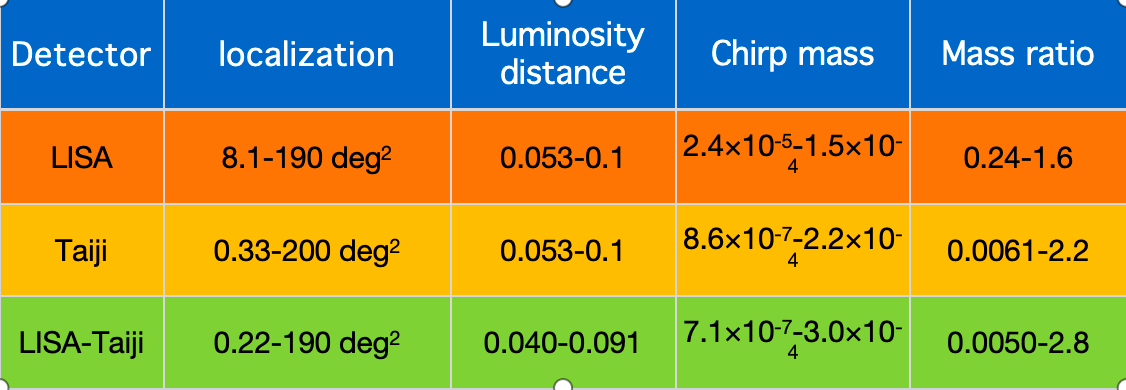
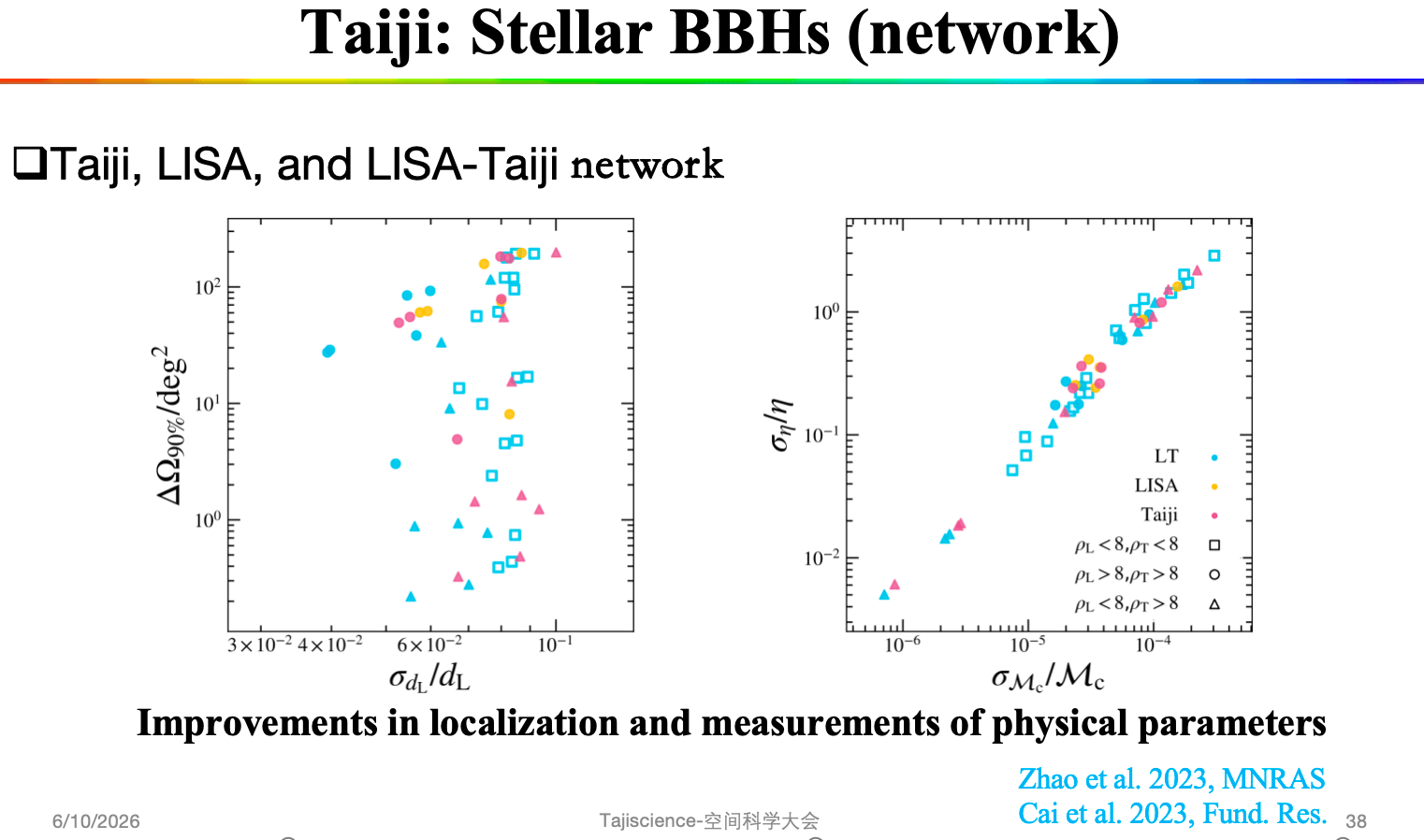
The purpose of network science is not only to increase SNR; it is to turn individual detections into robust population-level statements about black-hole formation, cosmology, and fundamental physics.
Separated constellations sample the same source with different baselines, antenna patterns, time delays, and orbital modulations.
Inference
Validation
Localization
The purpose of network science is not only to increase SNR; it is to turn individual detections into robust population-level statements about black-hole formation, cosmology, and fundamental physics.
Taiji/TJ as part of a shared millihertz gravitational-wave ecosystem
He WANG · ICTP-AP / UCAS
Taiji: China's Space-based GW Program
Open interfaces for collaboration
Simulation interoperability · calibration and TDI · data challenges · global fitting · source populations · detector-network science
Taiji/TJ welcomes international collaboration across the full chain—from mission simulation and data processing to joint scientific inference.
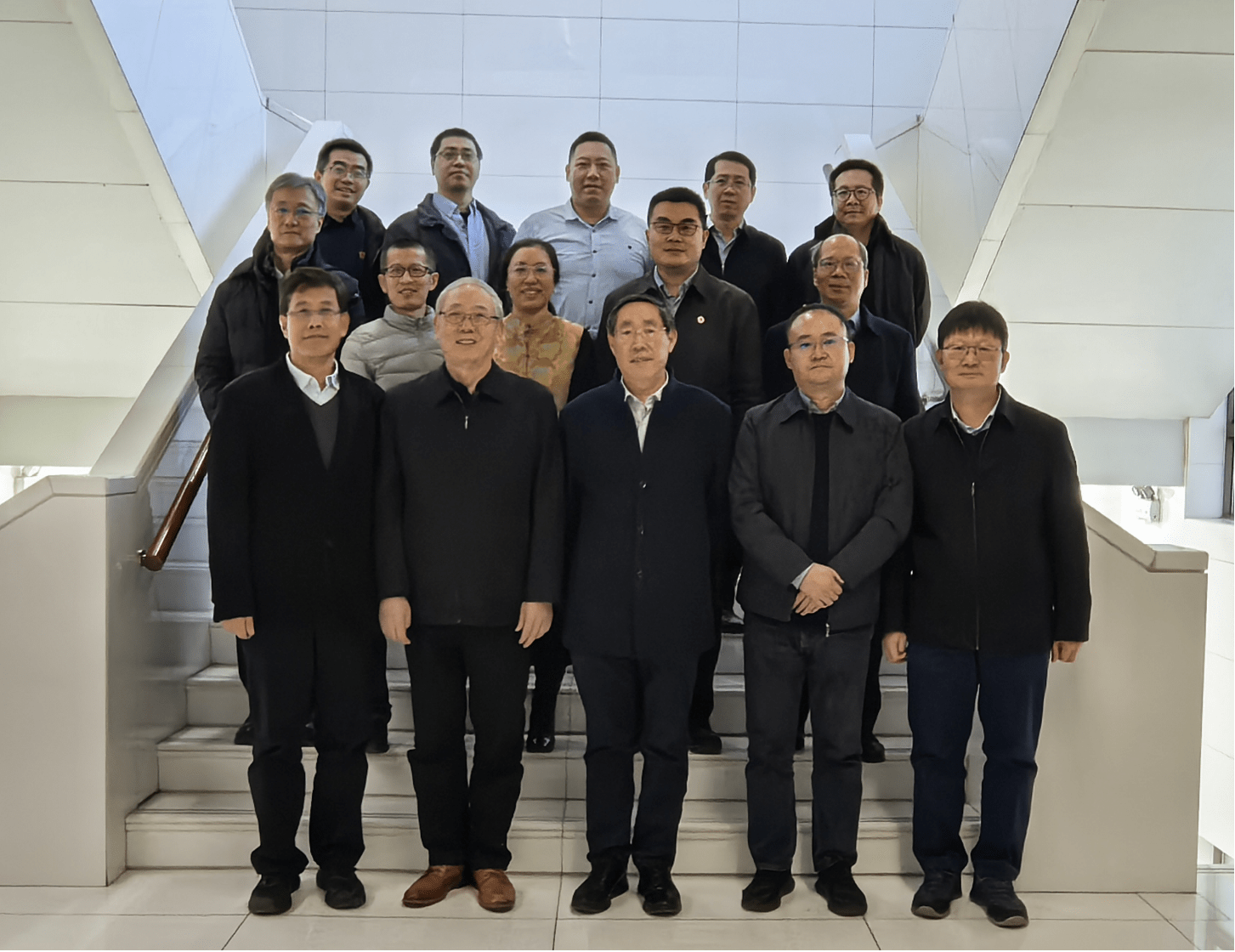
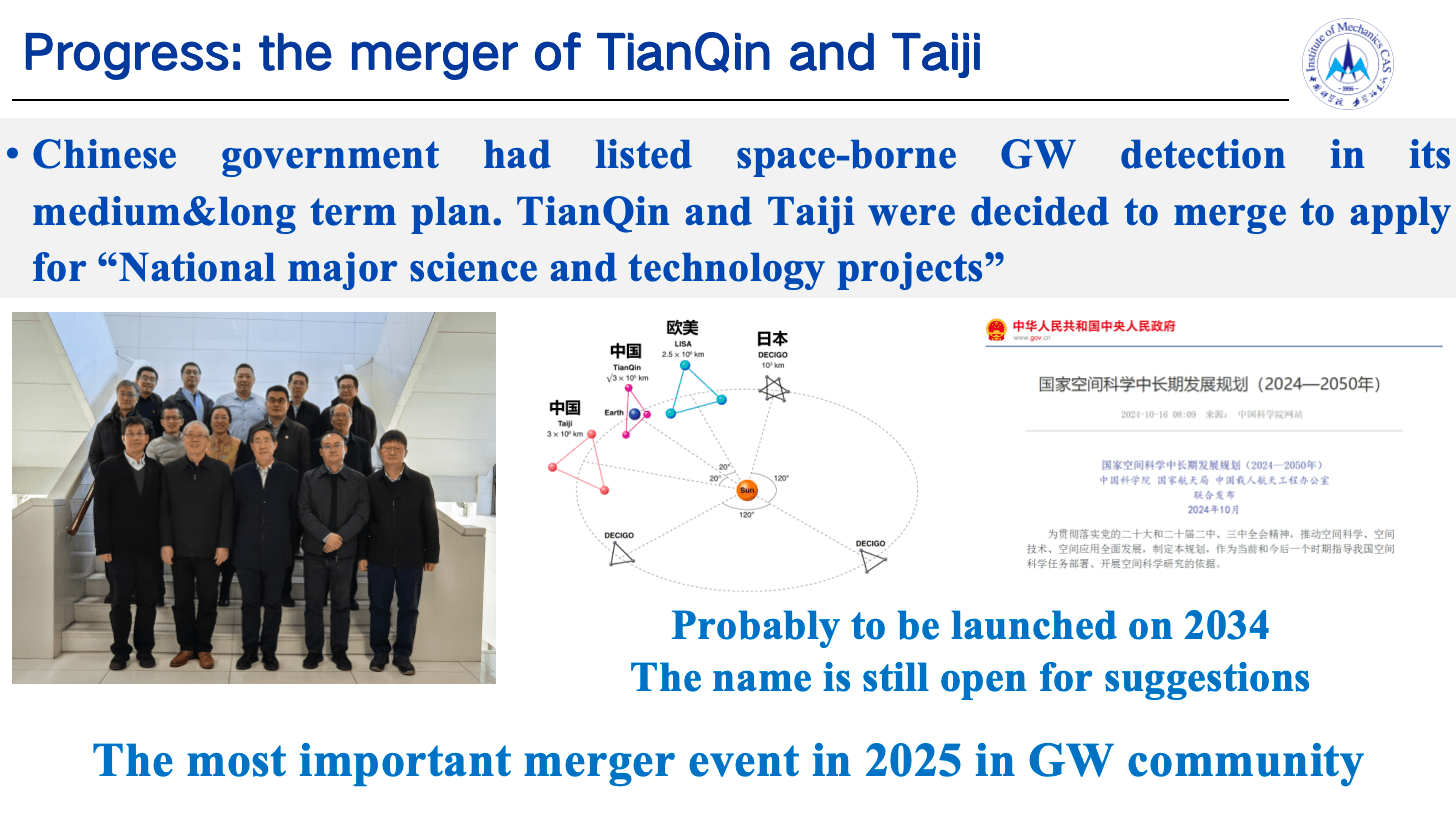
Leadership coordination within China’s space-based GW community · 2025
Prof. J. Luo
TianQin Chief Scientist
Prof. Y.-L. Wu
Taiji/TJ Chief Scientist
Taiji/TJ as part of a shared millihertz gravitational-wave ecosystem
He WANG · ICTP-AP / UCAS
Taiji: China's Space-based GW Program
Prof. J. Luo
TianQin Chief Scientist
Prof. Y.L. Wu
Taiji/TJ Chief Scientist
Open interfaces for collaboration
Simulation interoperability · calibration and TDI · data challenges · global fitting · source populations · detector-network science
Taiji/TJ welcomes international collaboration across the full chain—from mission simulation and data processing to joint scientific inference.
Leadership coordination across China’s space-based GW community (2025)
Leadership coordination within China’s space-based GW community · 2025
Prof. J. Luo
TianQin Chief Scientist
Prof. Y.-L. Wu
Taiji/TJ Chief Scientist
Take-home messages
Toward full-constellation verification
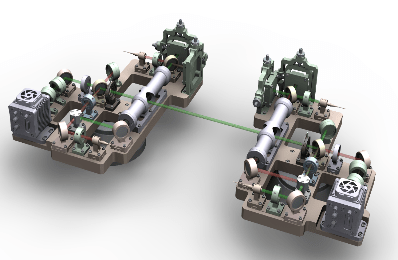
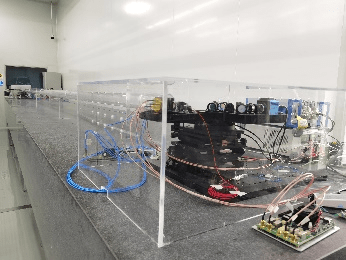
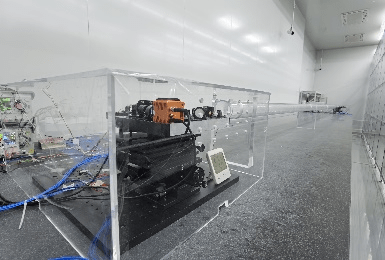
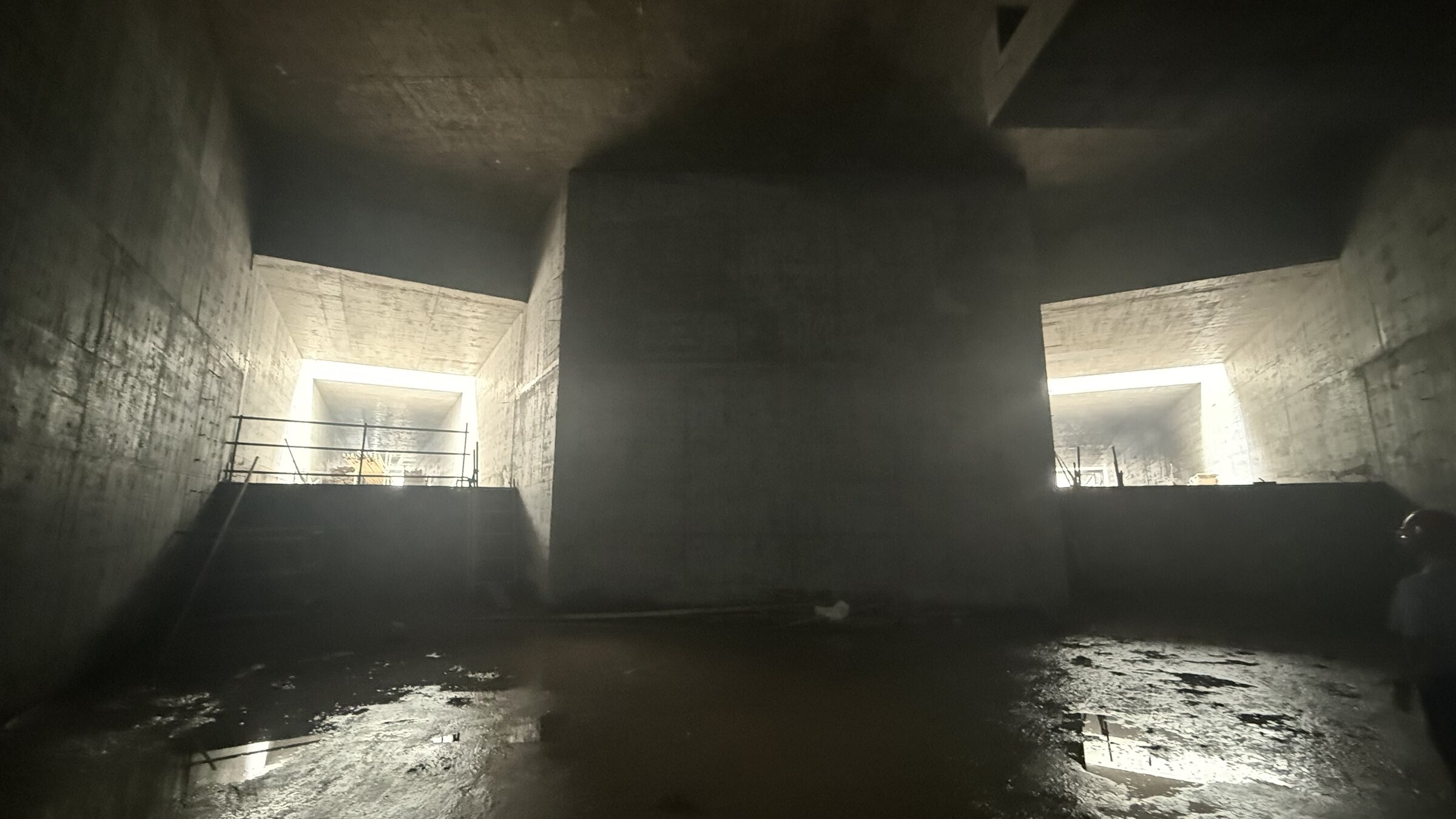
100-m-baseline facility under construction · Hangzhou, May 2026
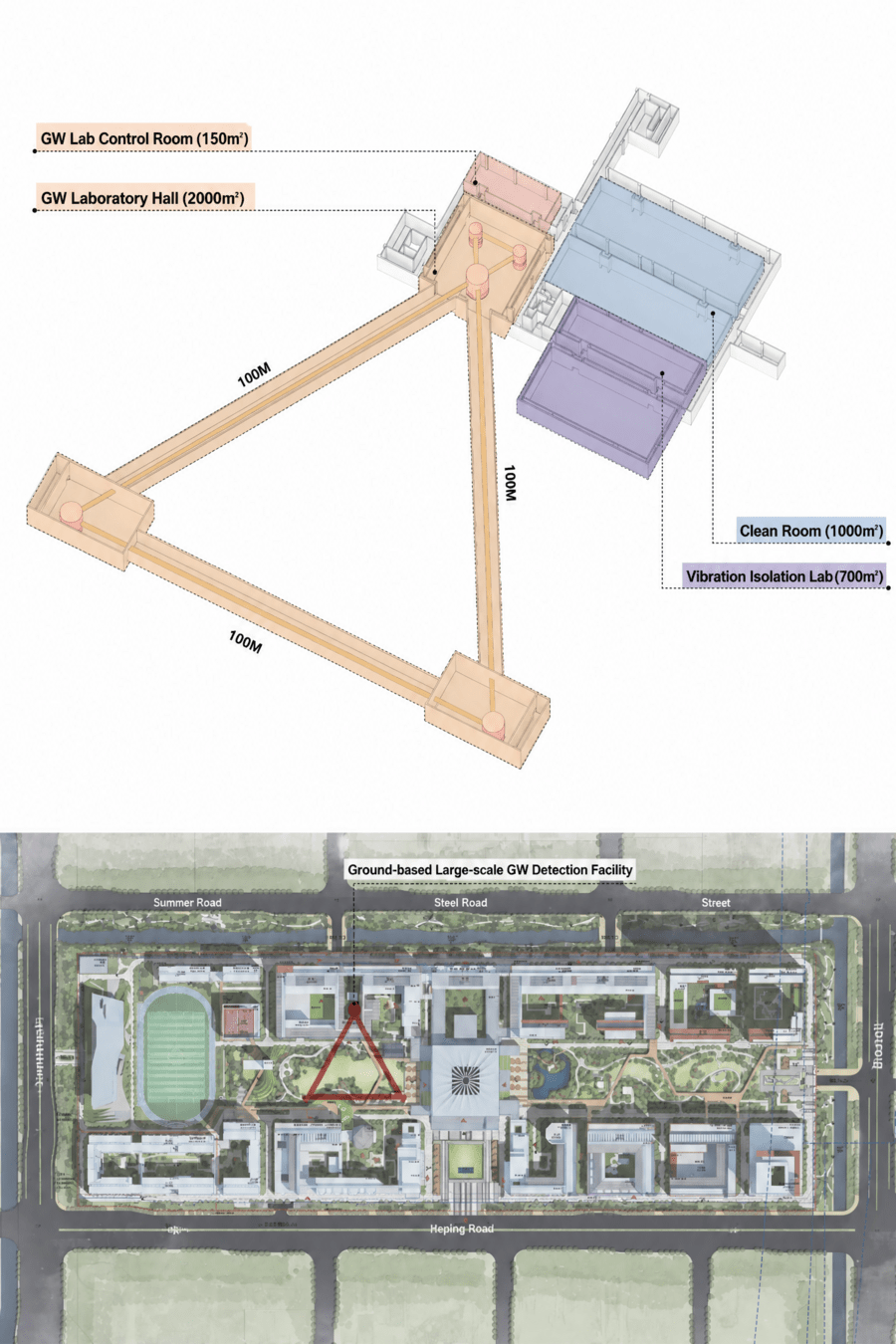
GROUND-TEST FACILITY CONCEPT
100-m triangular baseline
Ground-facility site layout
100-m-baseline triangular laser-interferometry test facility
By He Wang
He Wang | https://lisa-2026.astro.umd.edu/program.html#ThursdayP7 | https://www.youtube.com/watch?v=BNmrGkmhMSU