













He Wang PRO
Knowledge increases by sharing but not by saving.
Minghui DU
Institute of Mechanics, Chinese Academy of Sciences
On behave of Taiji Scientific Collaboration
@ICGAC16, Shenzhen
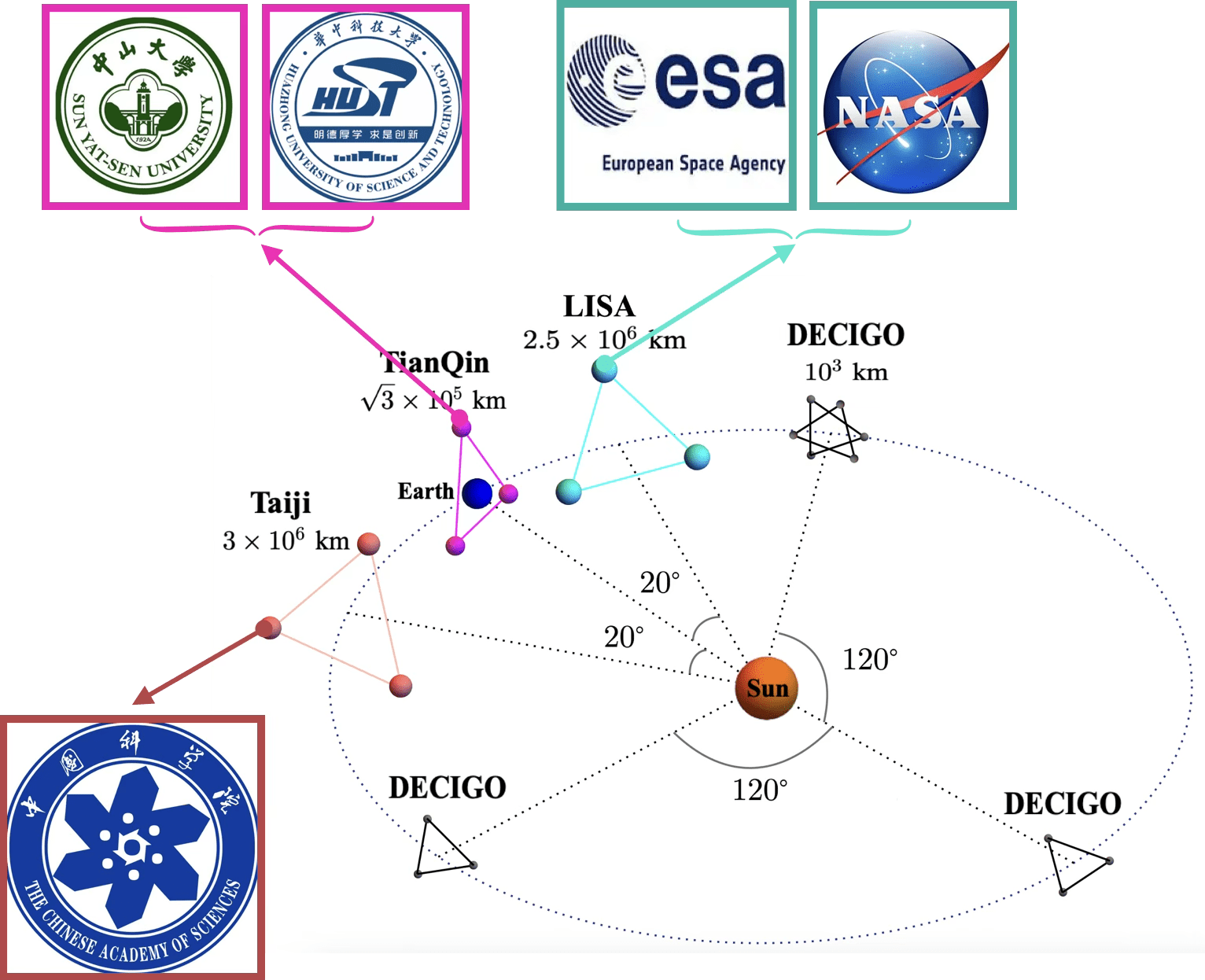
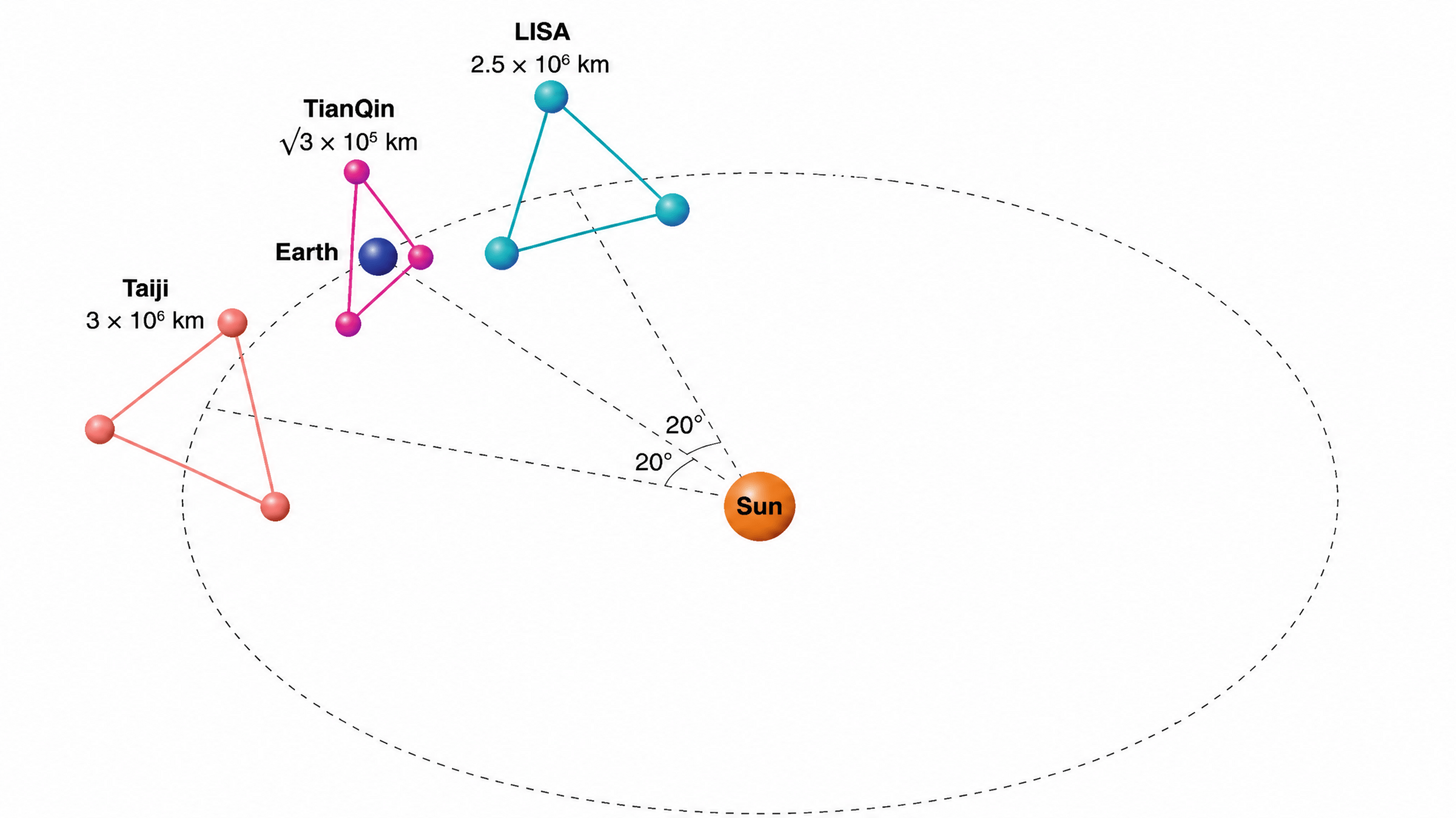
Proposed orbit configurations of Taiji, TianQin, and LISA
Adapted from Gong et al., Nature Astronomy (2021).
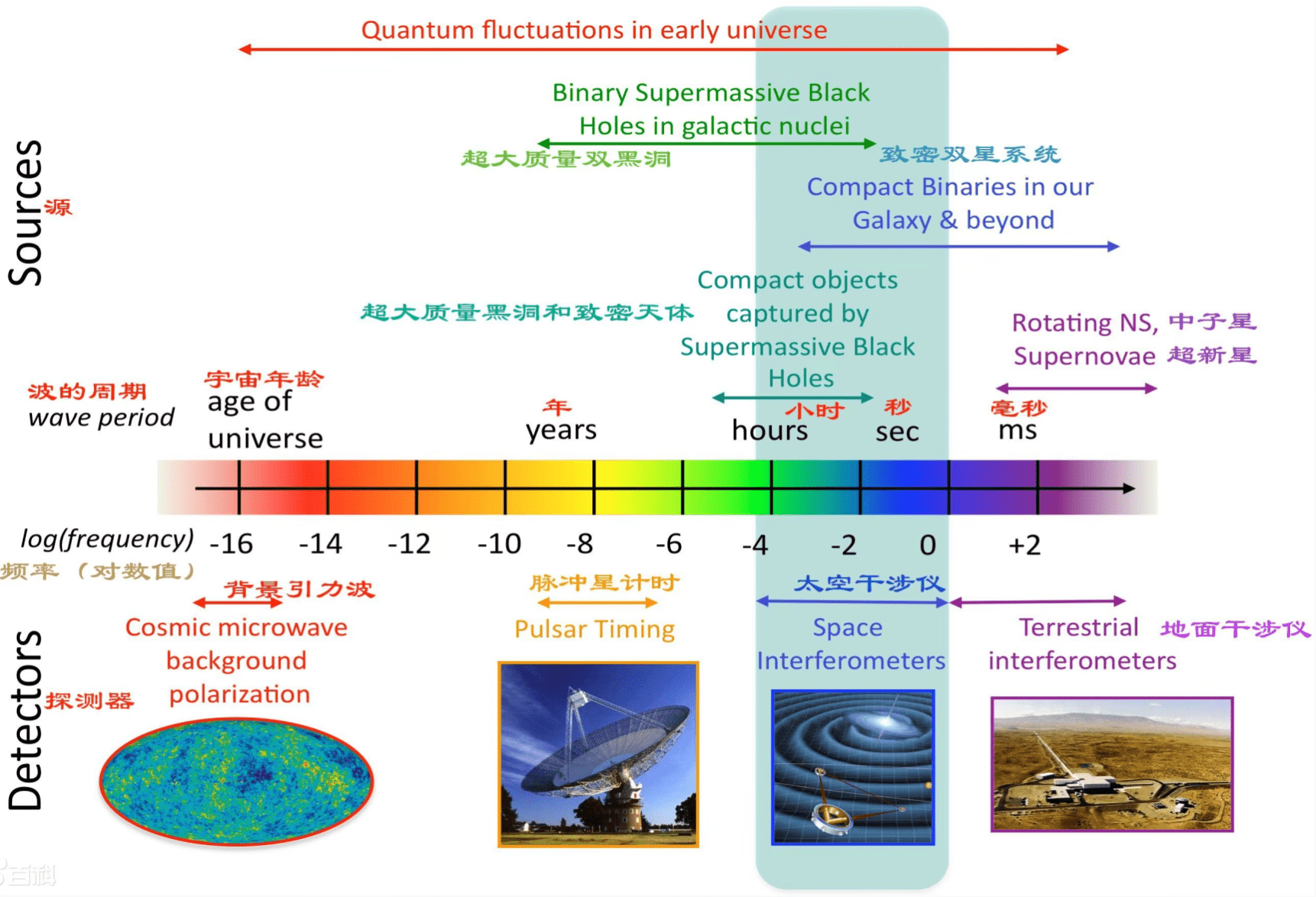
Spectrum of Gravitational Wave
Wen-Rui Hu , Yue-Liang Wu, Natl. Sci. Rev. Vol 4 (2017)
Yue-Liang Wu et al., Commun. Phys. 4, 34 (2021)
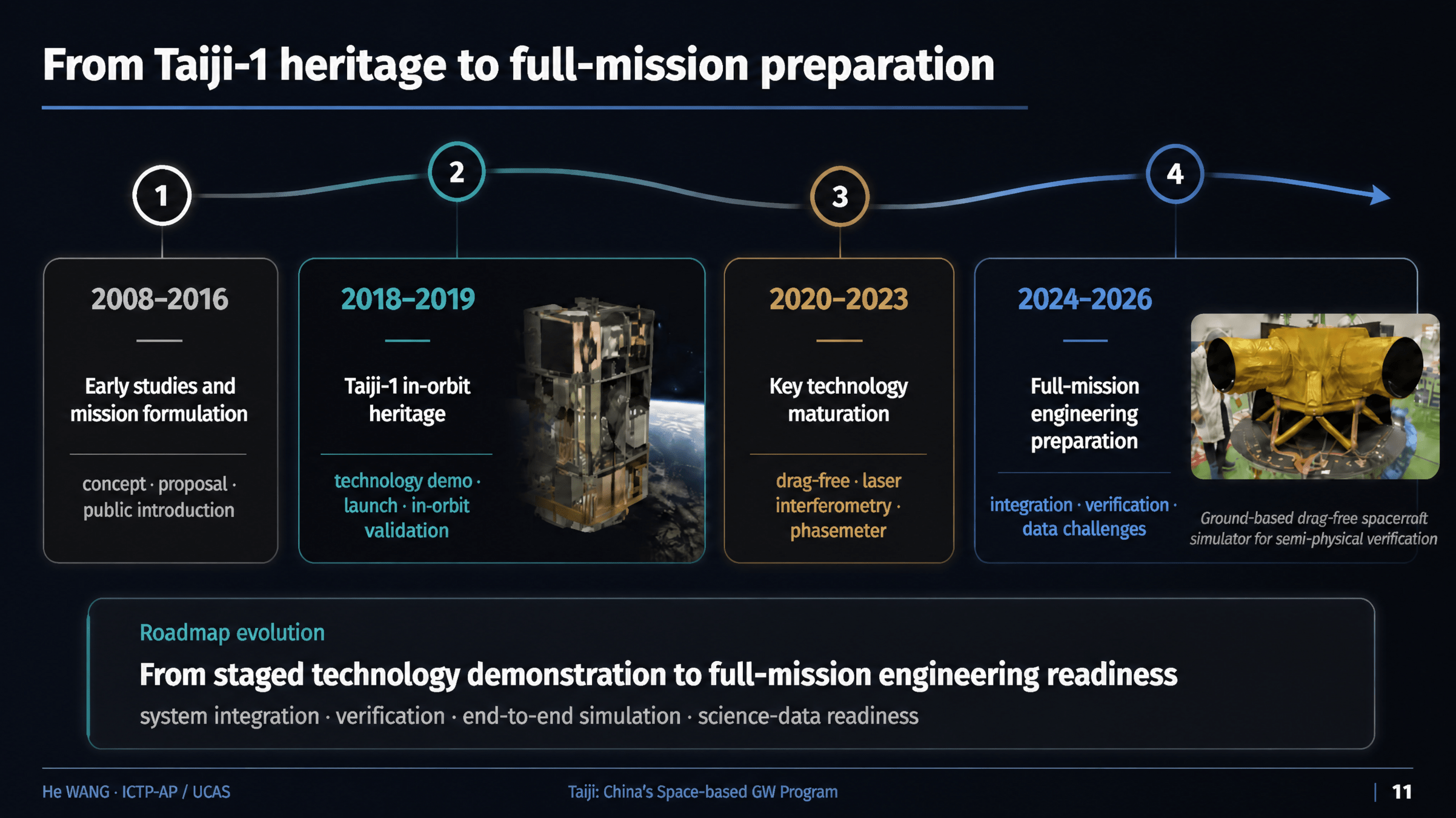
2008
— Early conceptual studies initialized by CAS on space-based gravitational-wave detection.
2010
— Early national proposal for space-based GW observation.
— Officially named Taiji, and publicly introduced to the international community.
2016
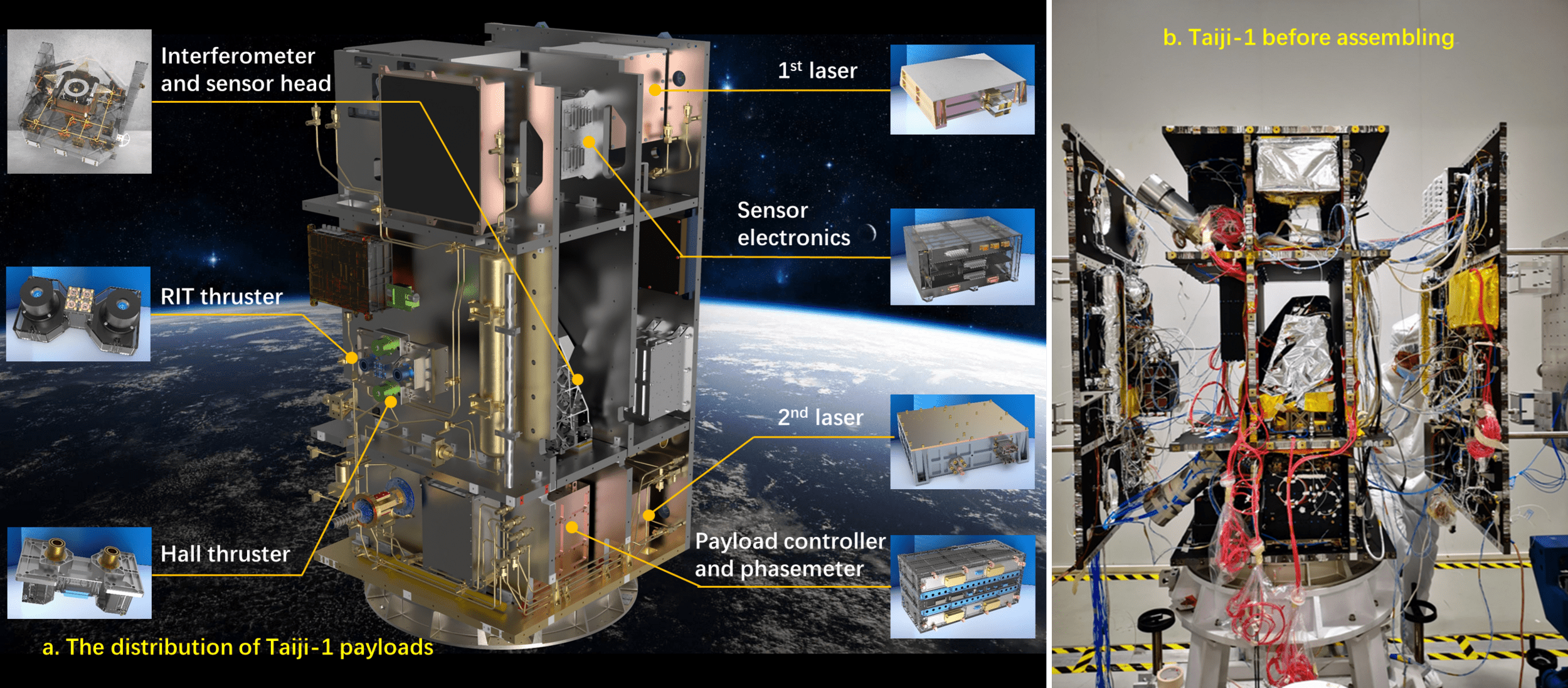
— A major milestone: the launch of Taiji-1 satellite as an in-orbit demonstrator for Taiji's technologies.
2018-2019
— Overall mission design and development roadmap were published.
2021
— Current focus: engineering preparation, system-level verification, data challenges, and data pipeline development.
Current
Taiji has evolved from early conceptual studies to in-orbit technology verification and is now moving toward full-mission engineering and science-data readiness.
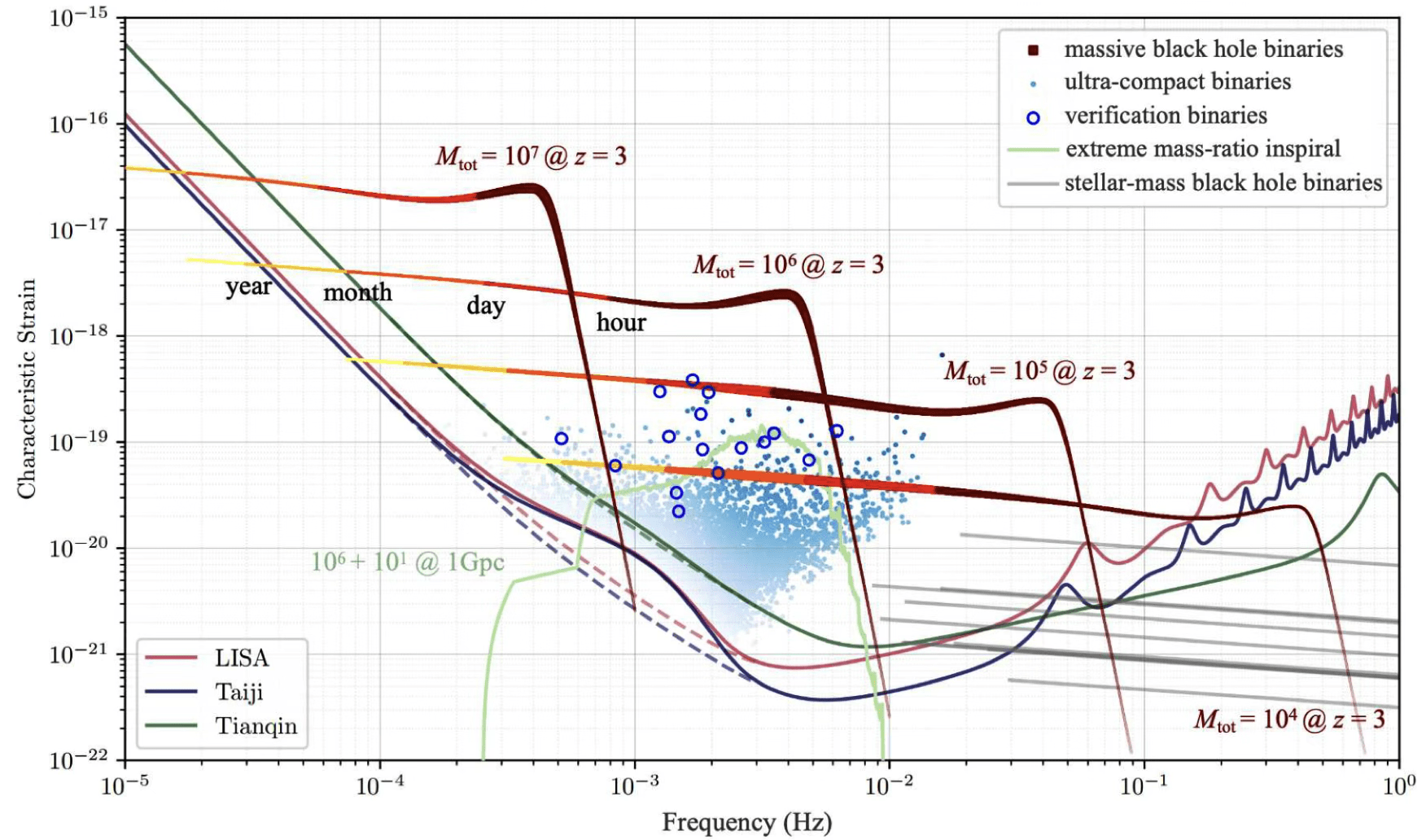
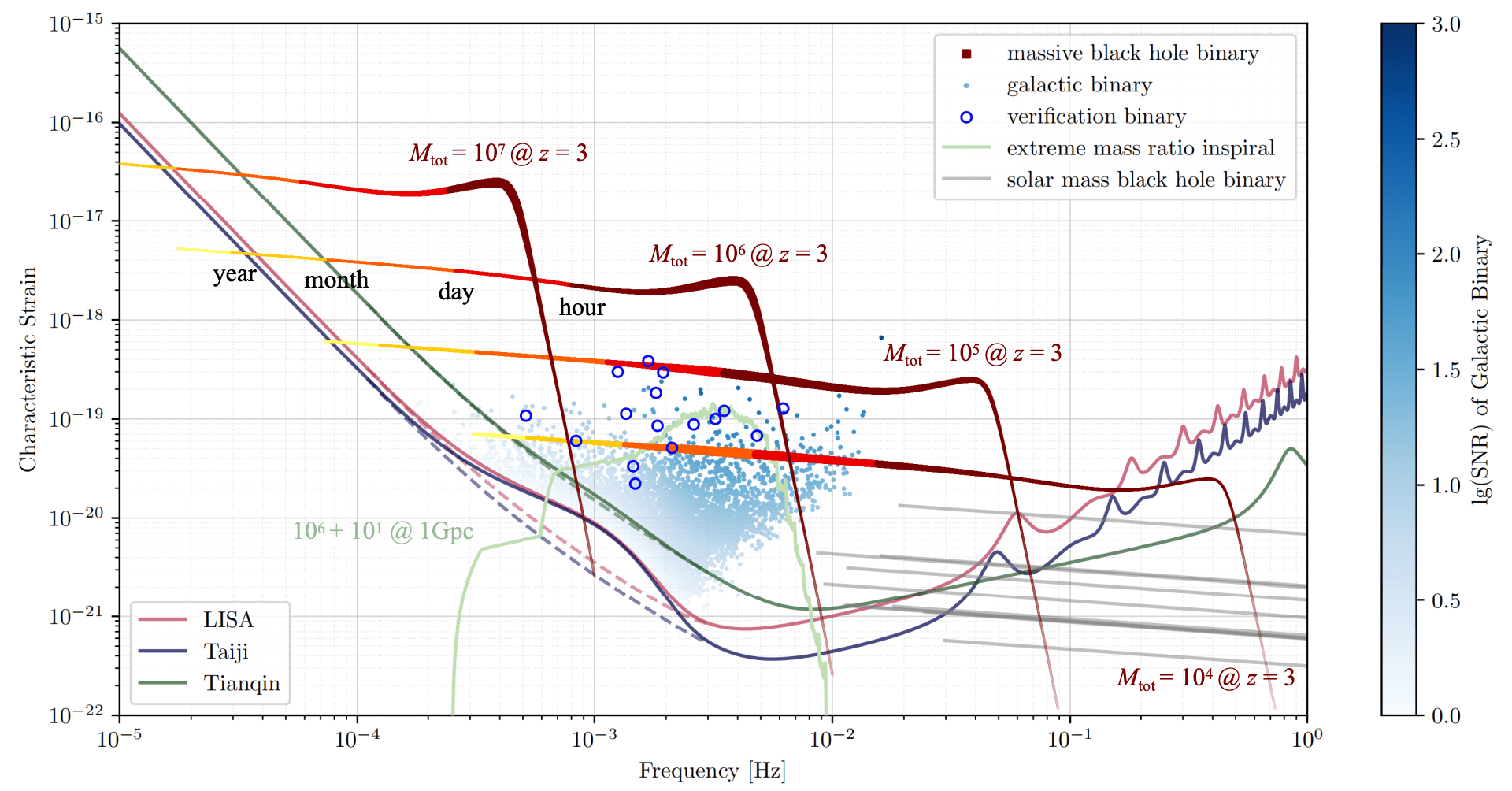
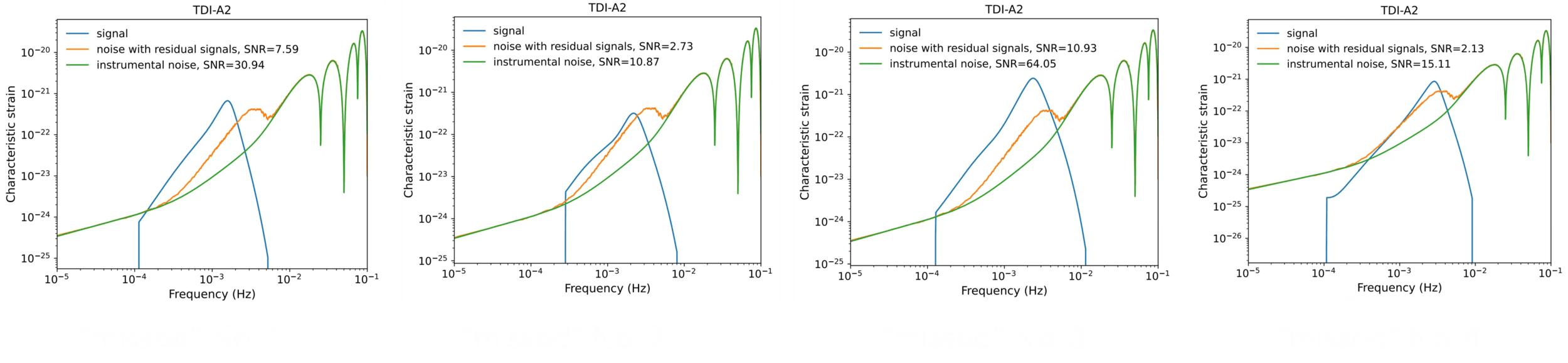
Designed sensitivities and target signals of LISA, Taiji and TianQin
HW, Minghui Du et al., Sci Sin-Phys Mech Astron 54, 270403 (2024)
We are targeting a broad range of mHz sources: MBHB/IMBH mergers, Galactic compact binaries, EMRIs/IMRIs, stellar-mass BBHs, stochastic backgrounds, and unknown sources.
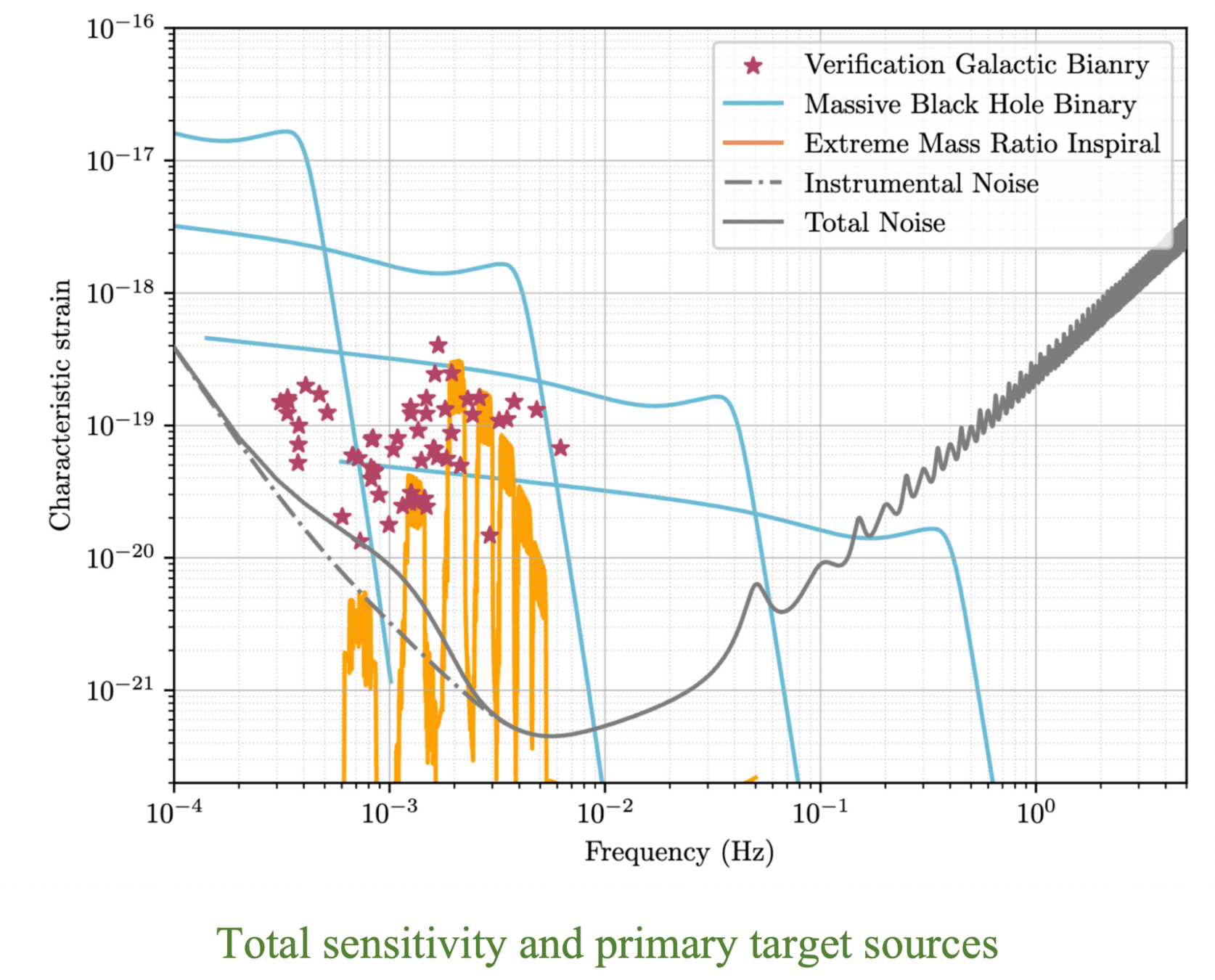
Designed sensitivities and target signals of LISA, Taiji and TianQin
HW, Minghui Du et al., Sci Sin-Phys Mech Astron 54, 270403 (2024)
We are targeting a broad range of mHz sources: MBHB/IMBH mergers, Galactic compact binaries, EMRIs/IMRIs, stellar-mass BBHs, stochastic backgrounds, and unknown sources.
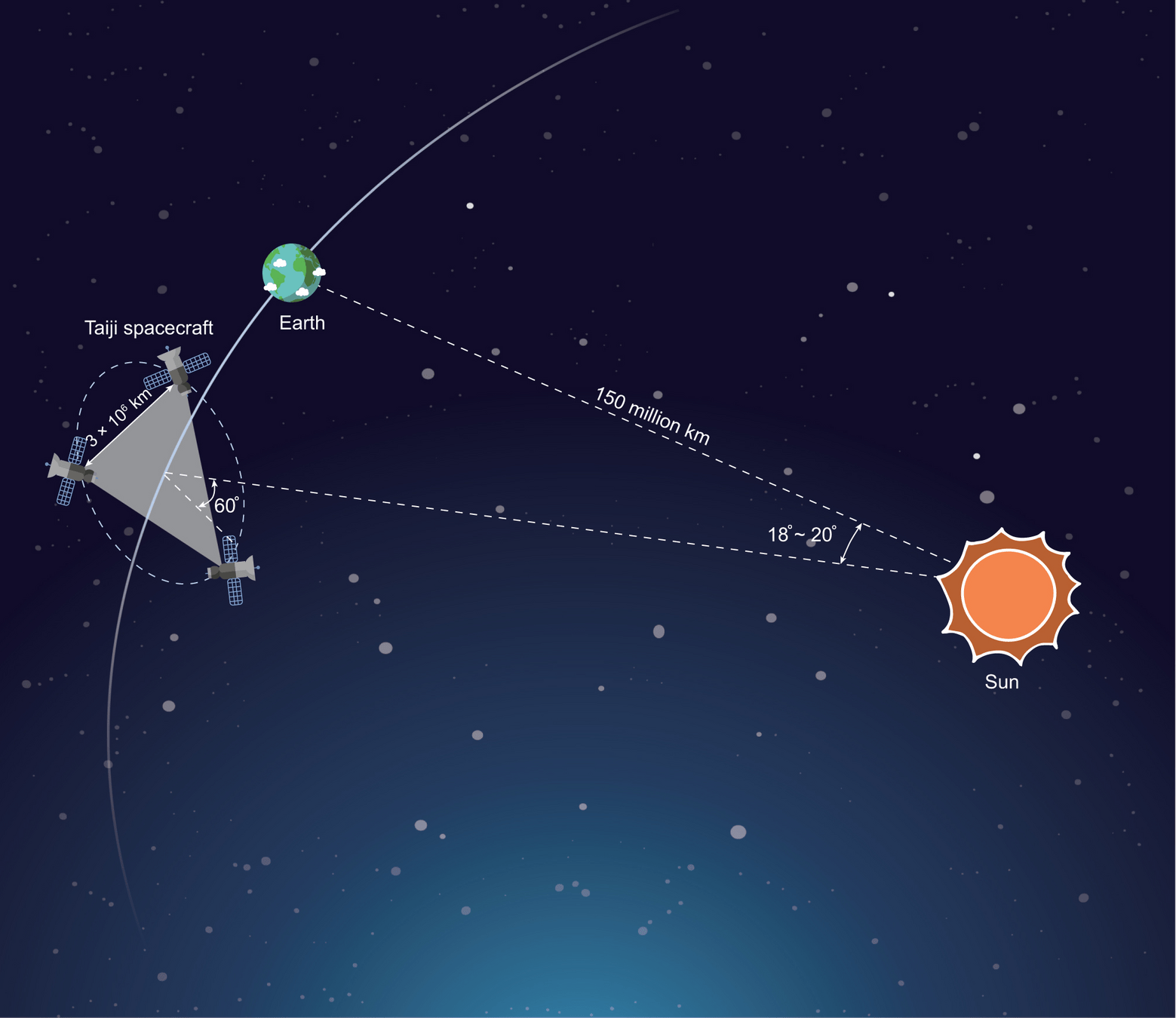
A heliocentric triangular constellation for mHz gravitational-wave astronomy
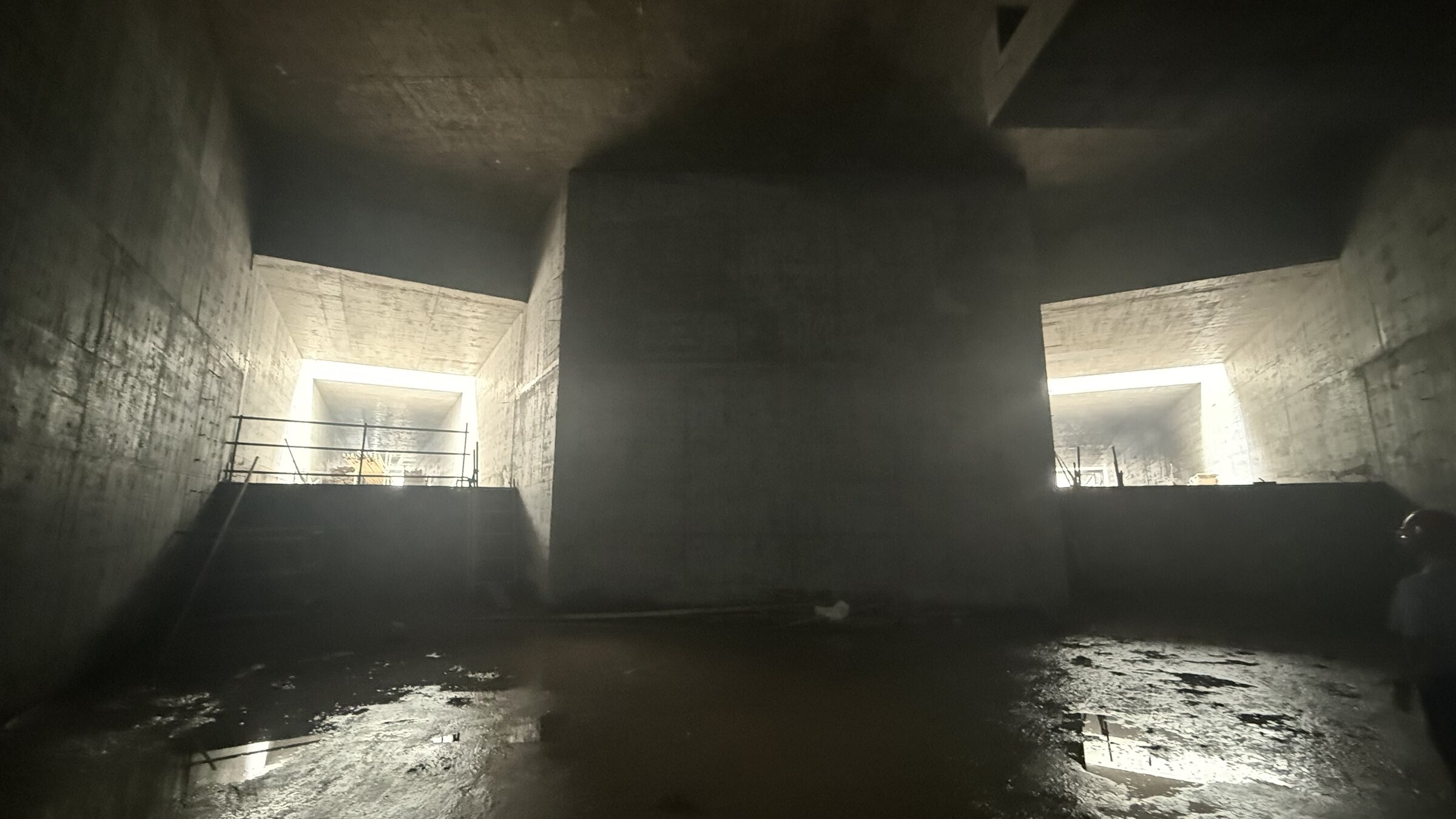
100-m underground interferometer
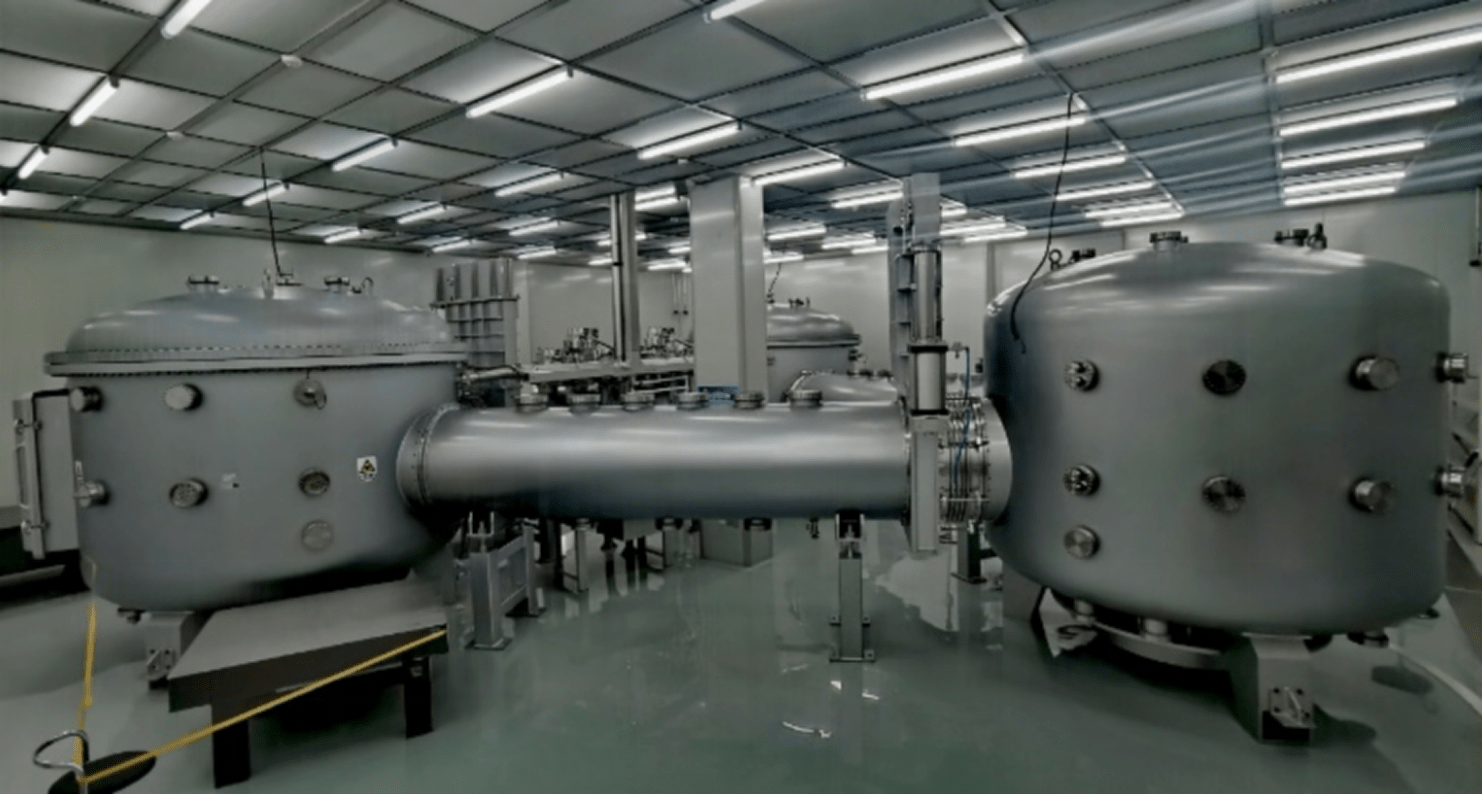
10-m ground interferometer
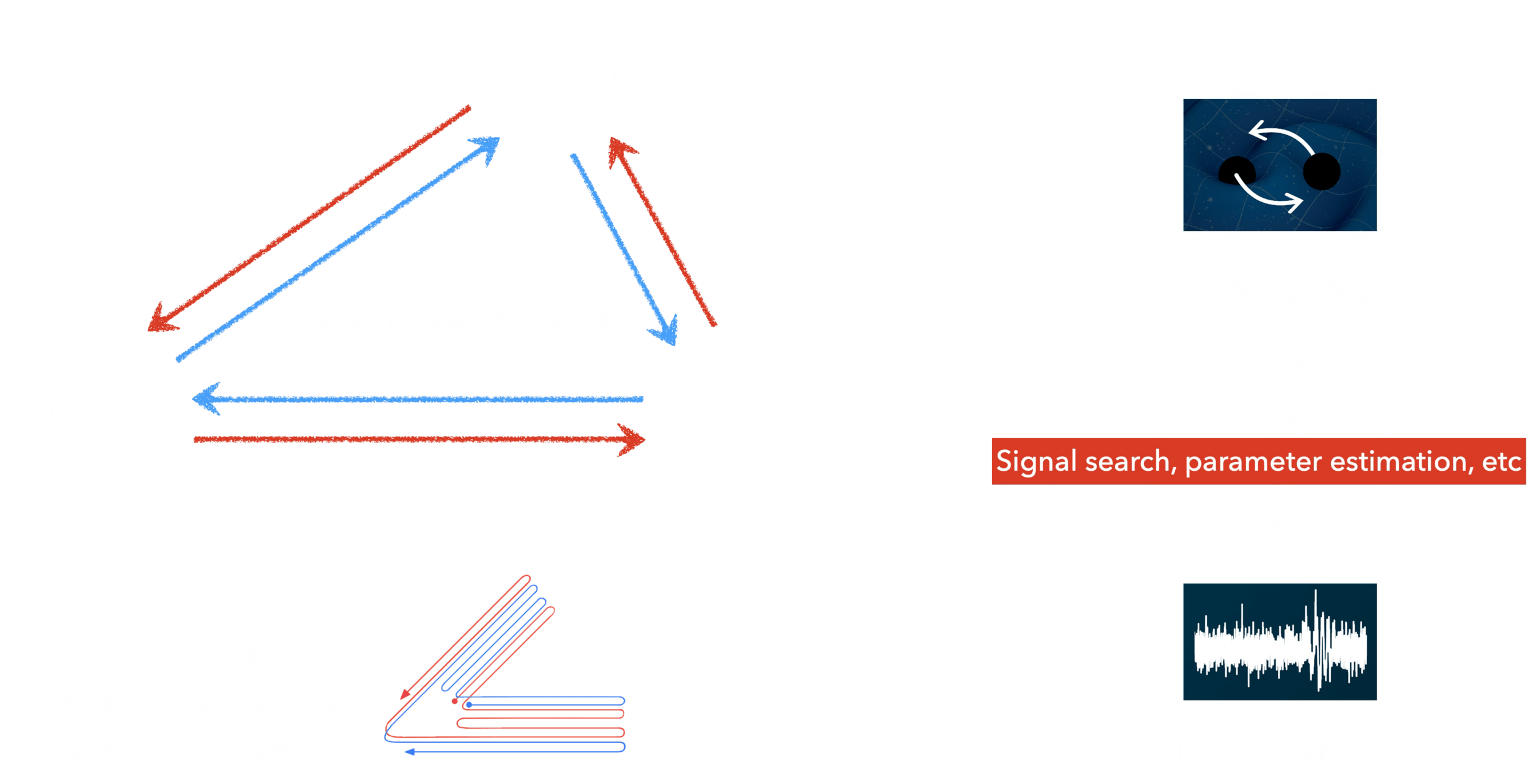
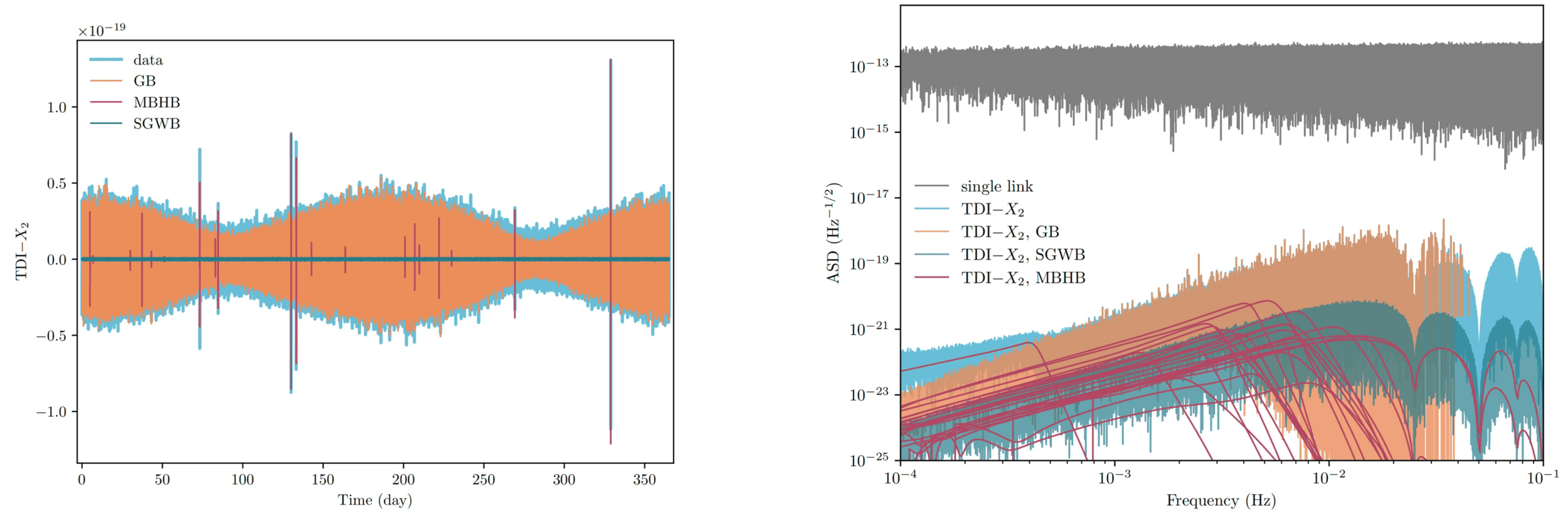
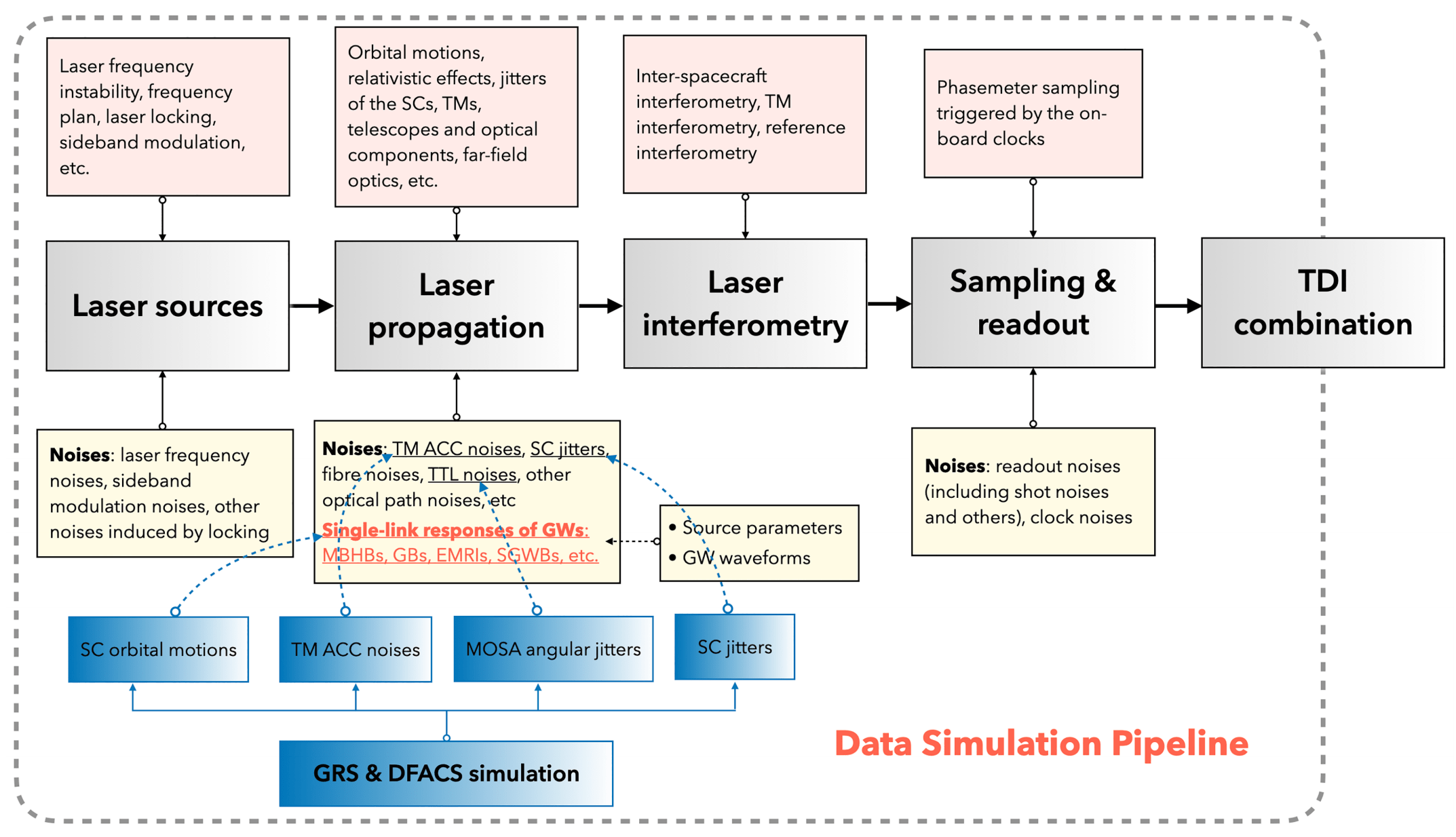
The analysis starts from raw telemetry and ends at scientific interpretations
Developing data processing pipeline is also a key part of mission design and preparation.
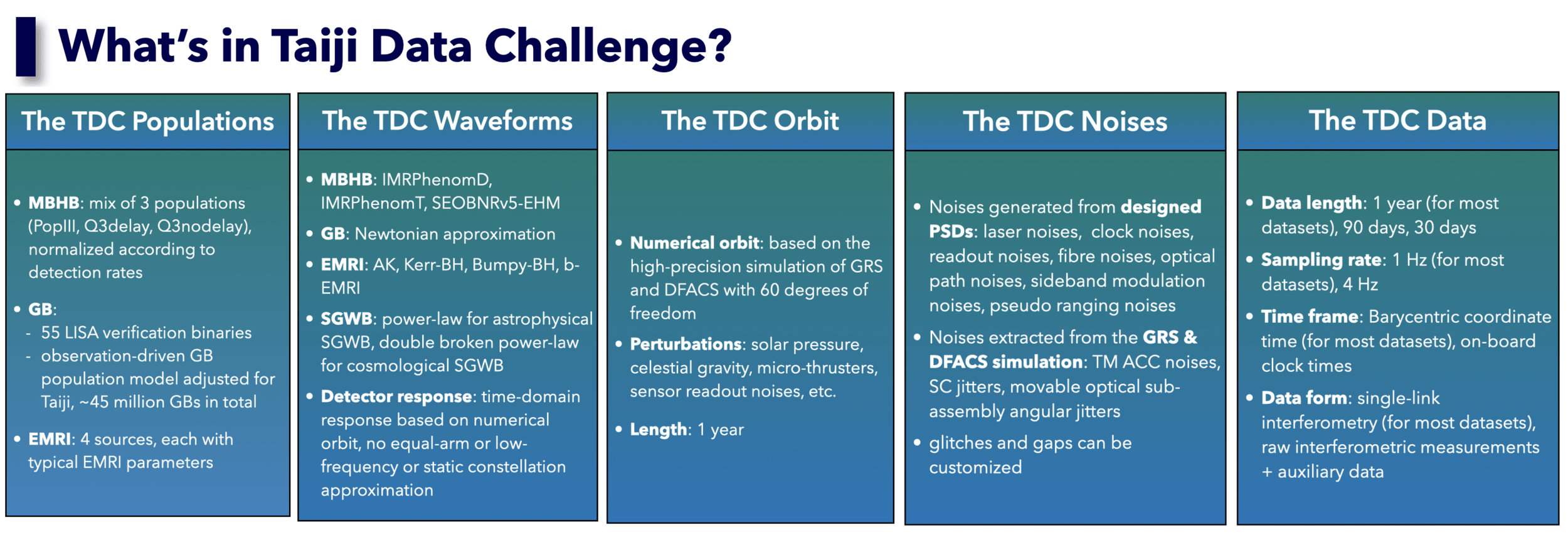
Mock Data Challenge serves as benchmark for reflecting and addressing the potential problems.
Schematic for the data processing pipeline:
pre-processing stage
scientific-analysis stage
Waveform:
A typical criterion for unbiased parameter estimation:
What are the challenges? These are what we found from the simulations:
Detector response:
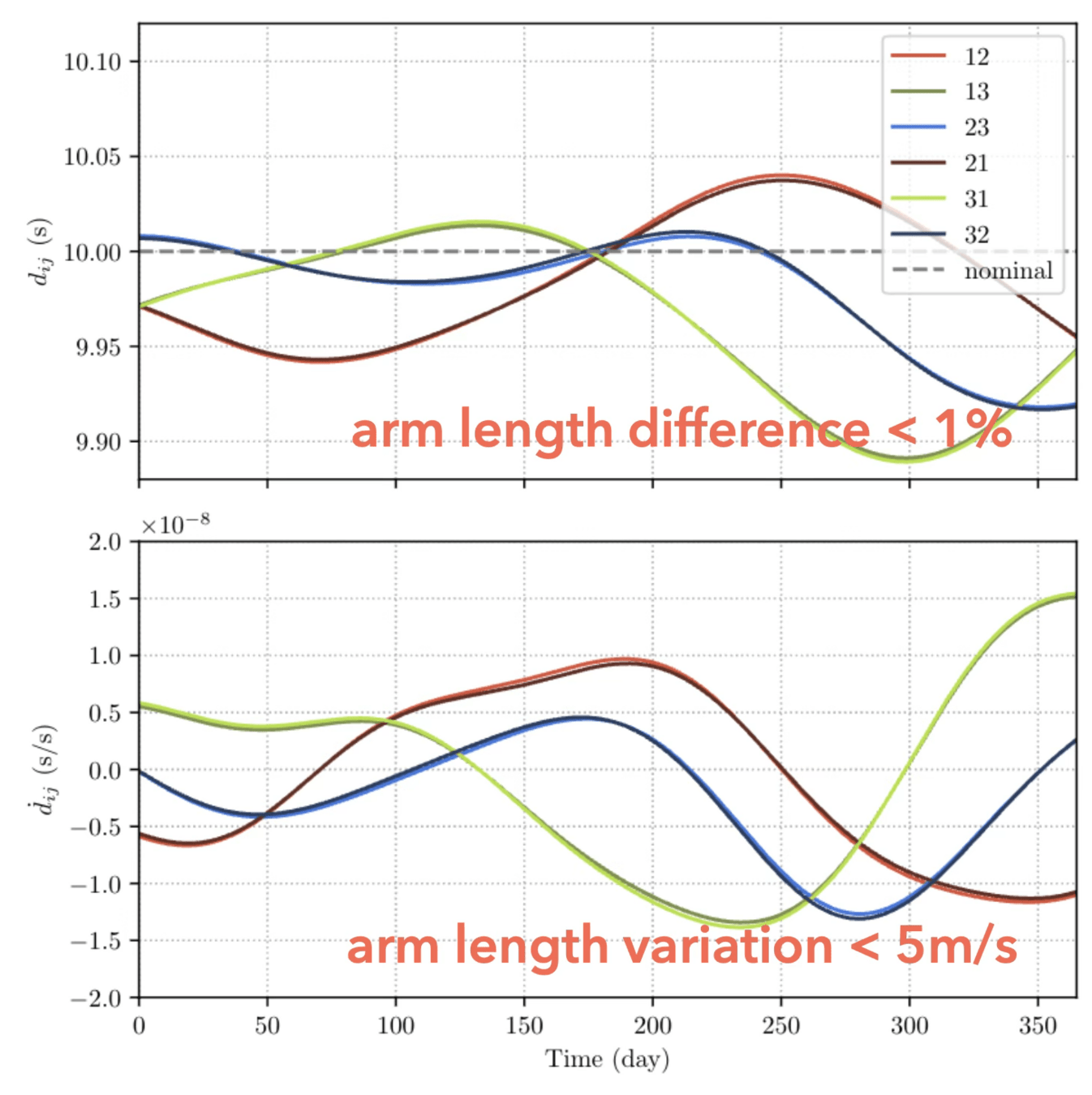
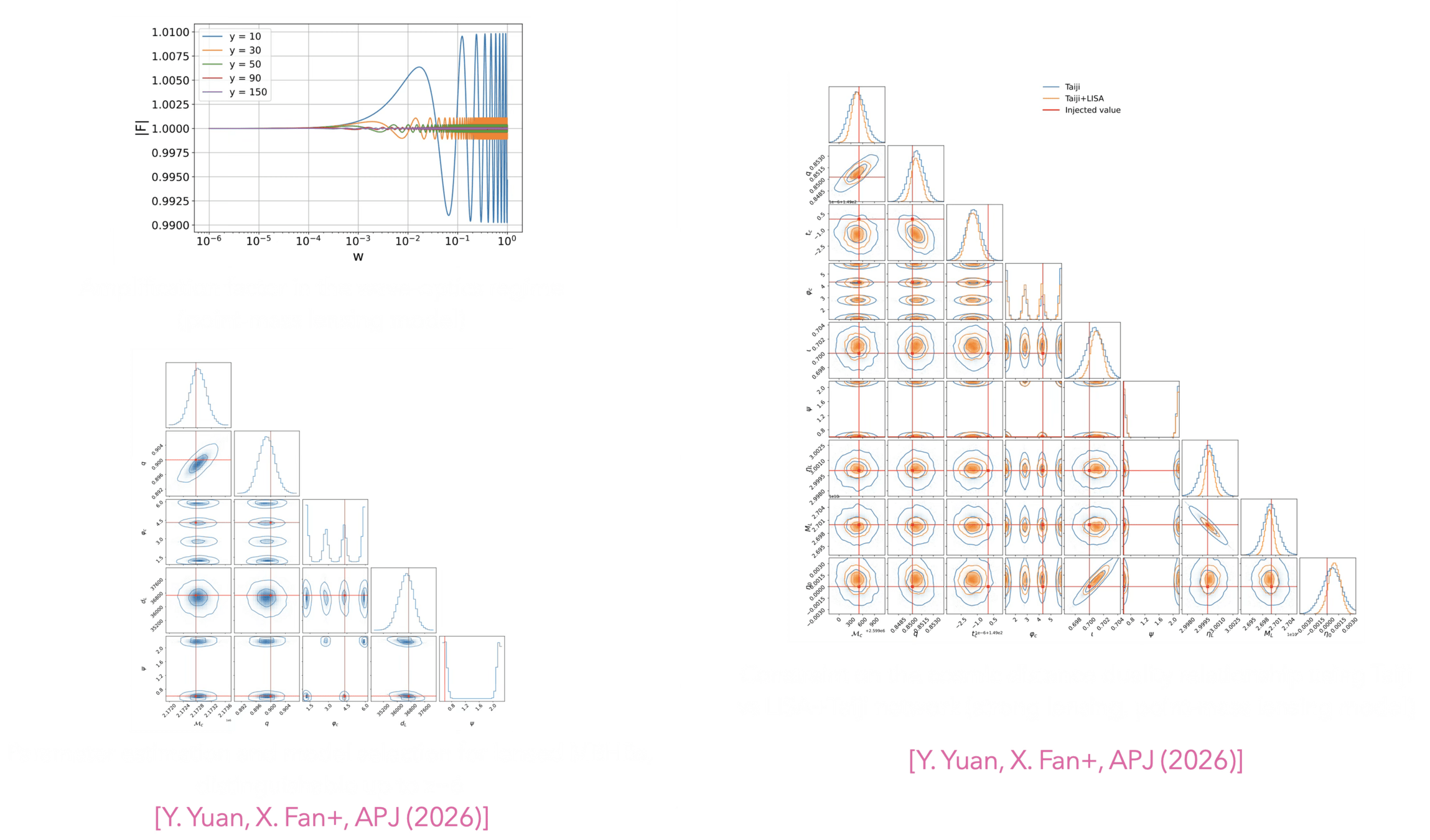
The effect of realistic orbital motion (especially armlength variation ) in response:
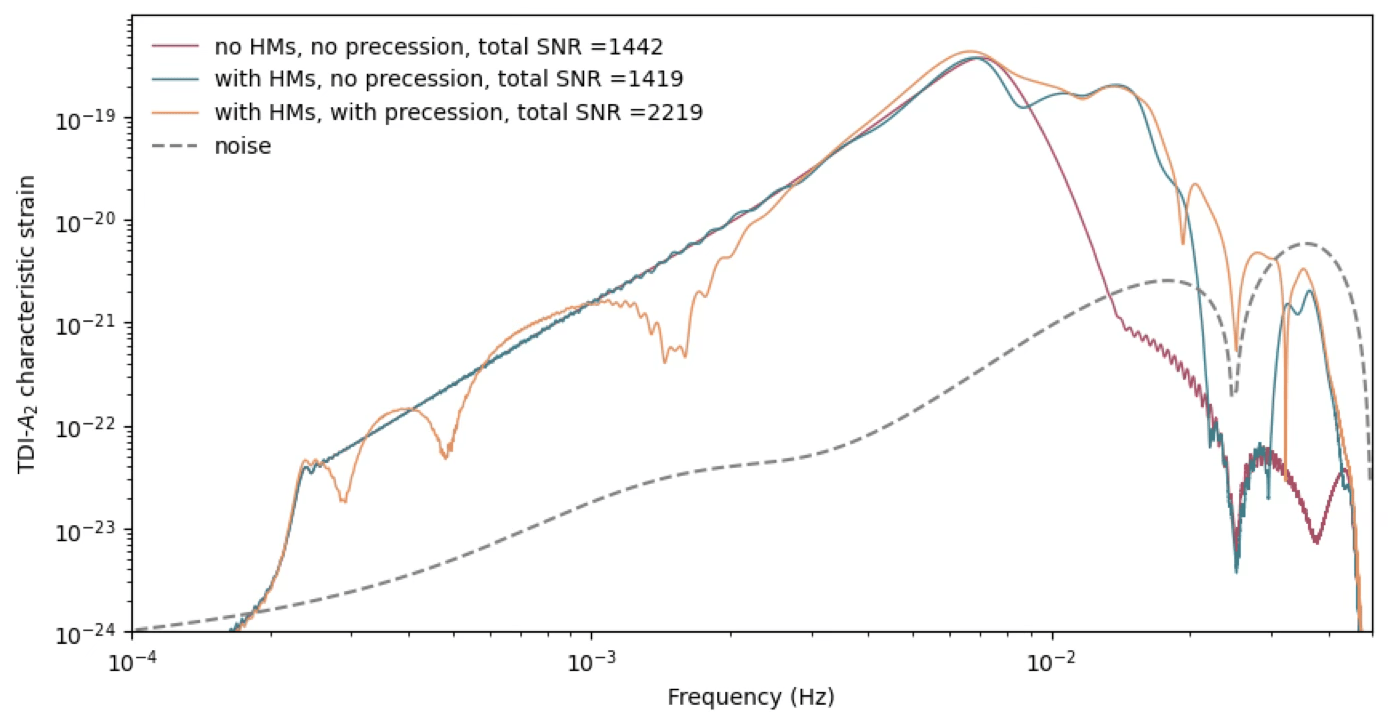
subdominant features such as HMs, precession of MBHBs can no longer be ignored
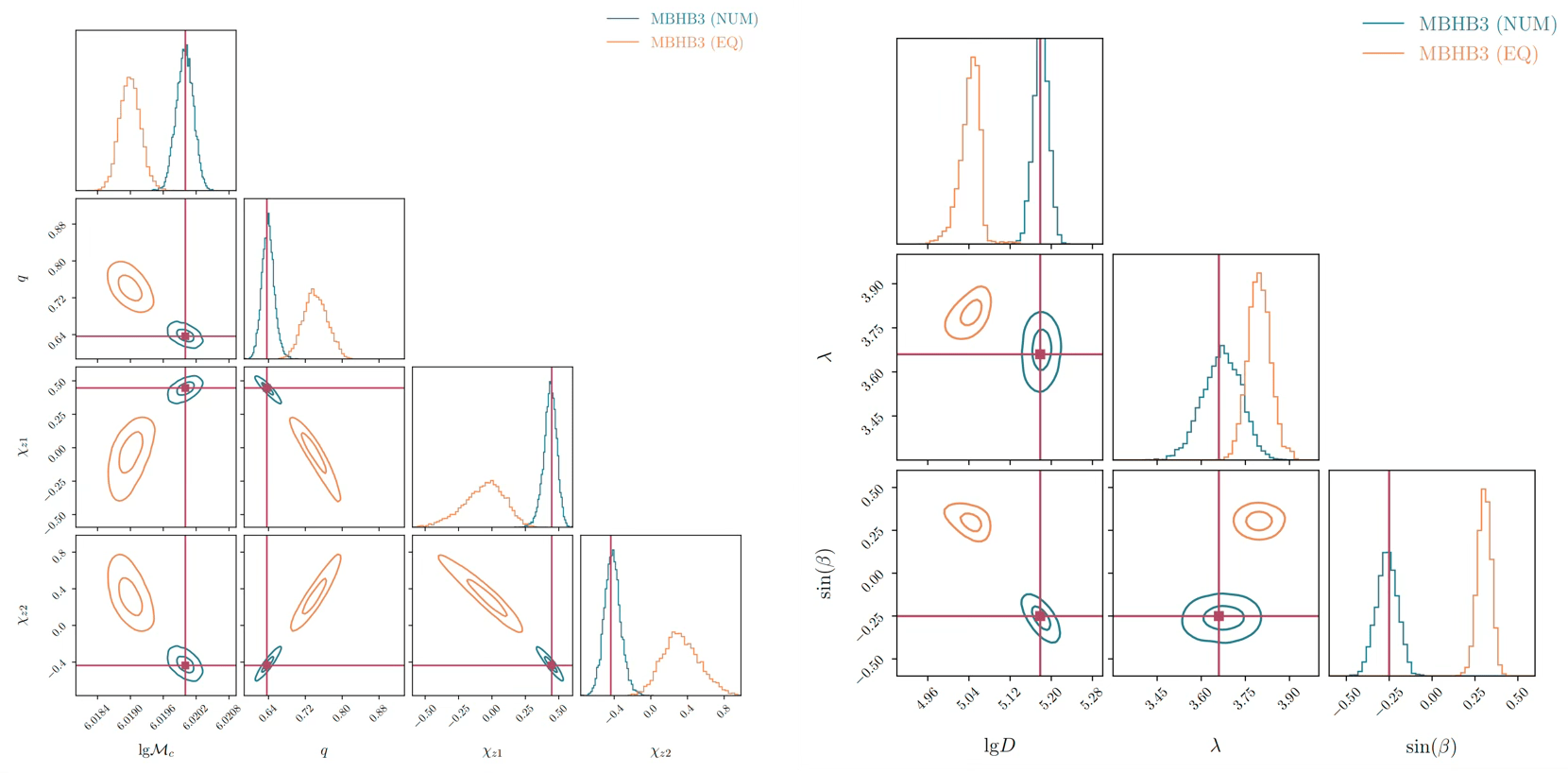
bias in MBHB parameter estimation due to over-simplified detector orbit model
A typical criterion for unbiased parameter estimation:
The effect of realistic orbital motion (especially armlength variation ) in response:
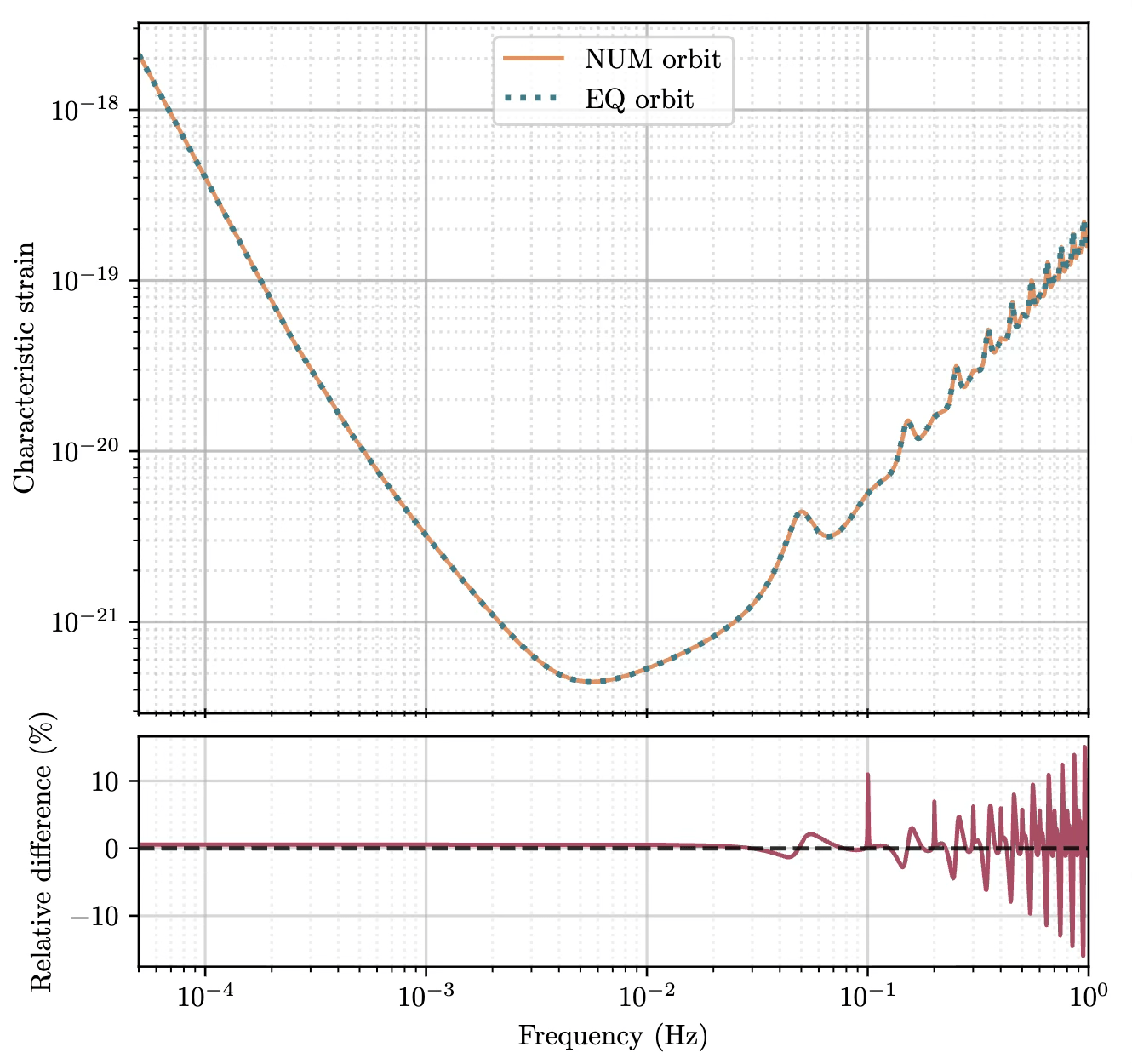
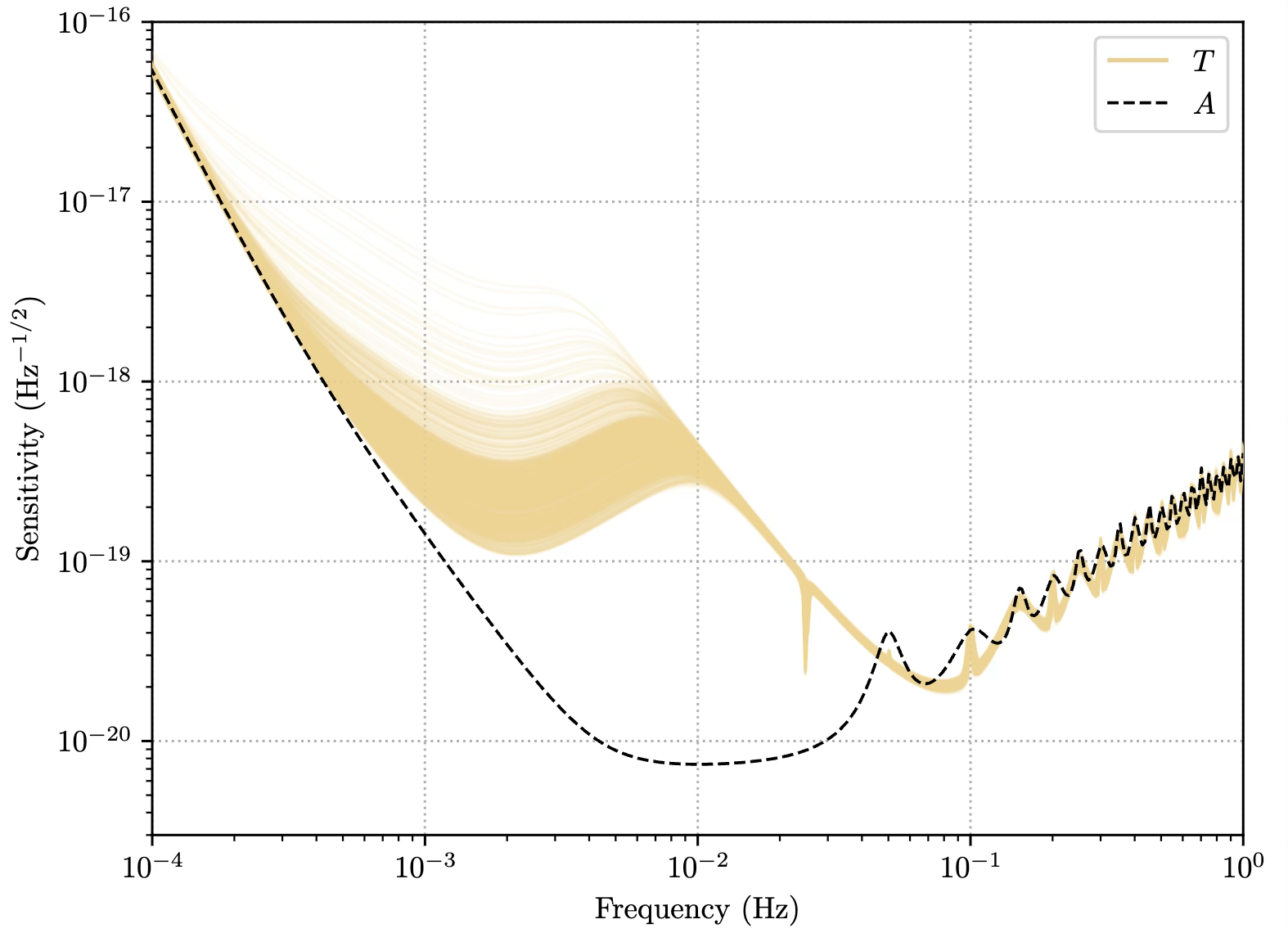
sensitivity averaged over a year, with all the covariance among TDI channels considered
What are the challenges? These are what we found from the simulations:
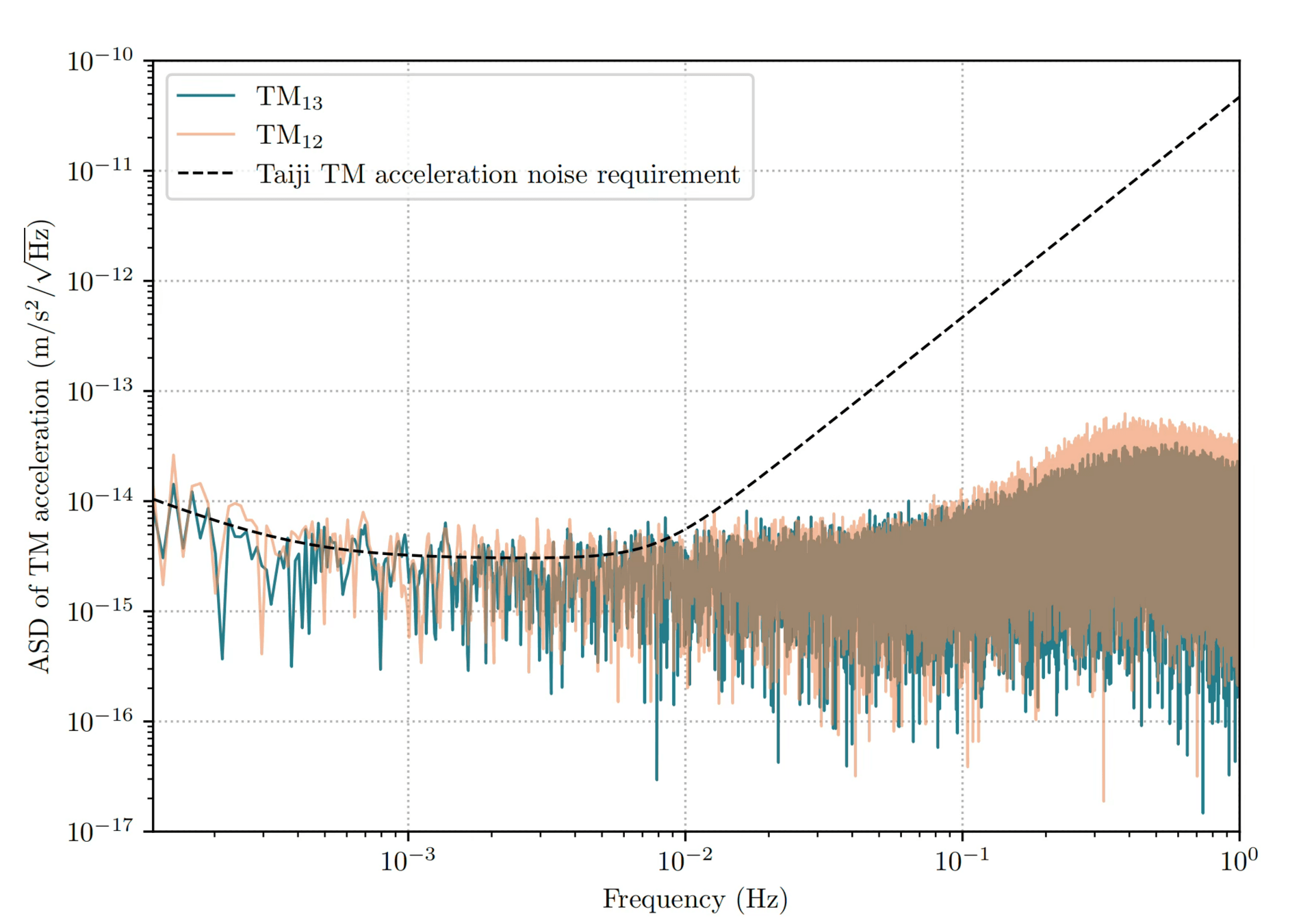
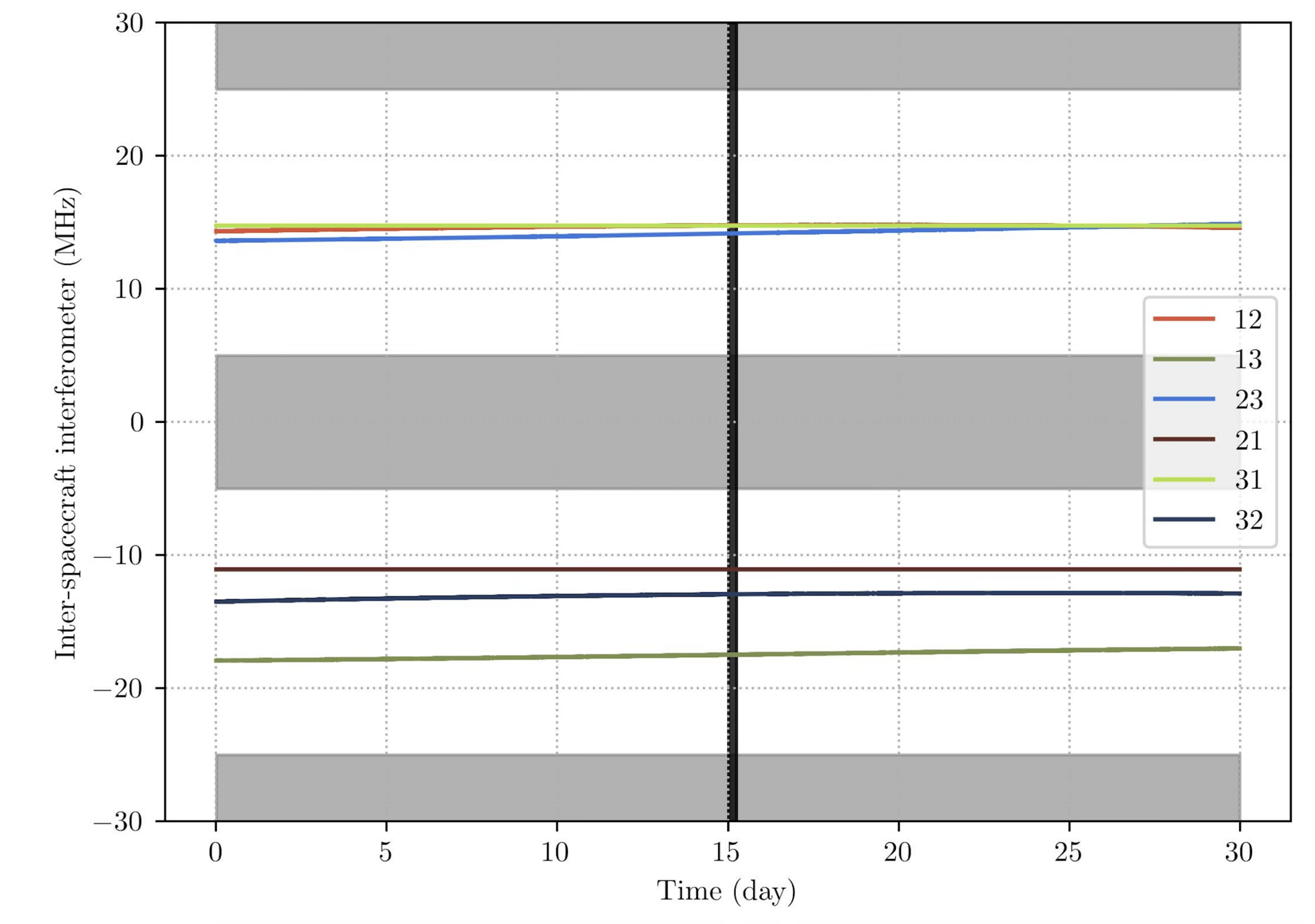
colored curves: ACC noise from multi-physical field & DFACS simulation
black dashed curve: requirement of Taiji's target sensitivity
What are the challenges? These are what we found from the simulations:
The non-stationarity of T channel's sensitivity introduced by arm variation. Also, It fails to serve as a null channel in the unequal-arm regime.
What are the challenges? These are what we found from the simulations:
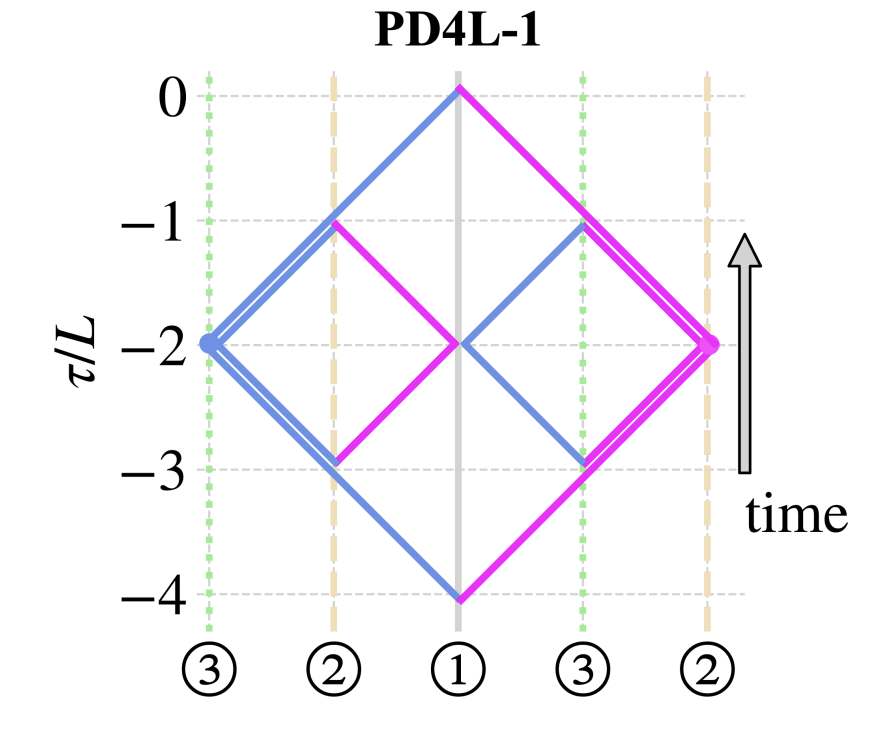
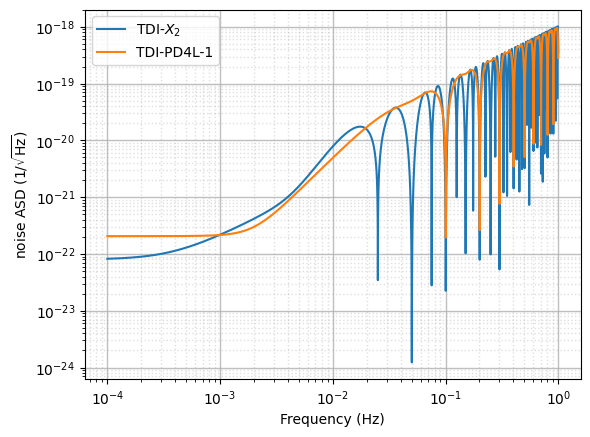
PD4L channel is more robust due to less zero points in the noise spectrum than Michelson channel (much less divergence in the evaluation of likelihood)
Discovered by Gang Wang in 2502.03983, verified via TDC simulation.
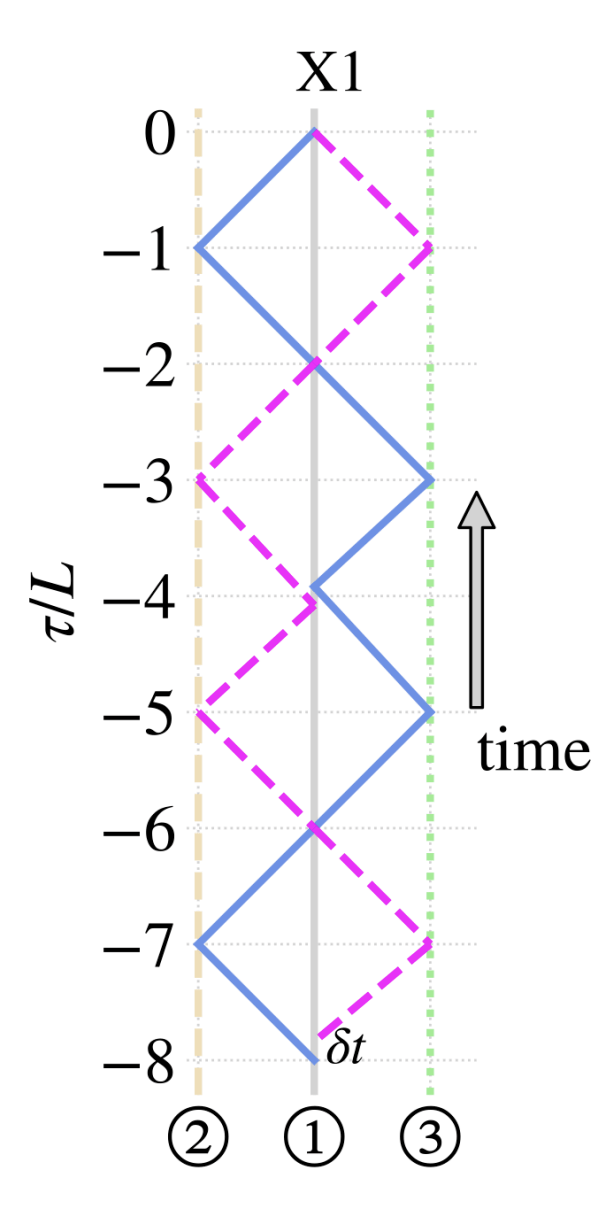
Michelson-X
PD4L-1
as a crucial step within pre-processing , TDI comes with various configurations
What are the challenges? These are what we found from the simulations:
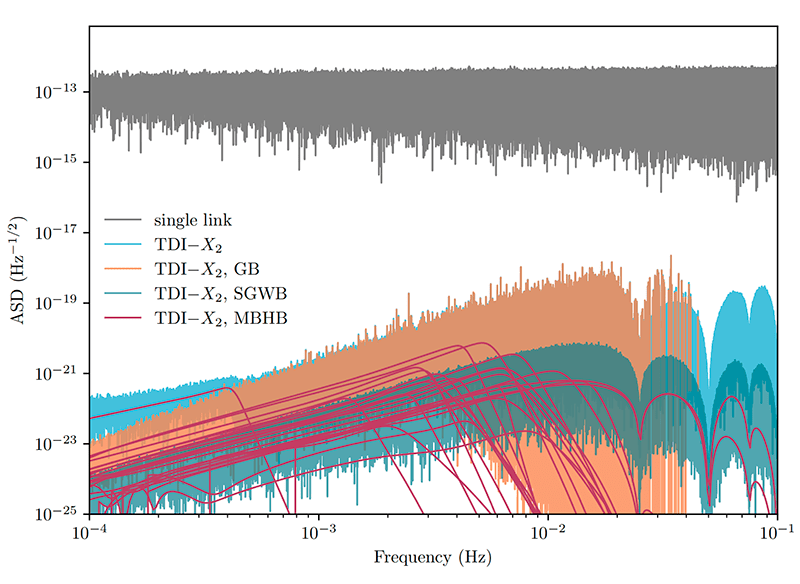
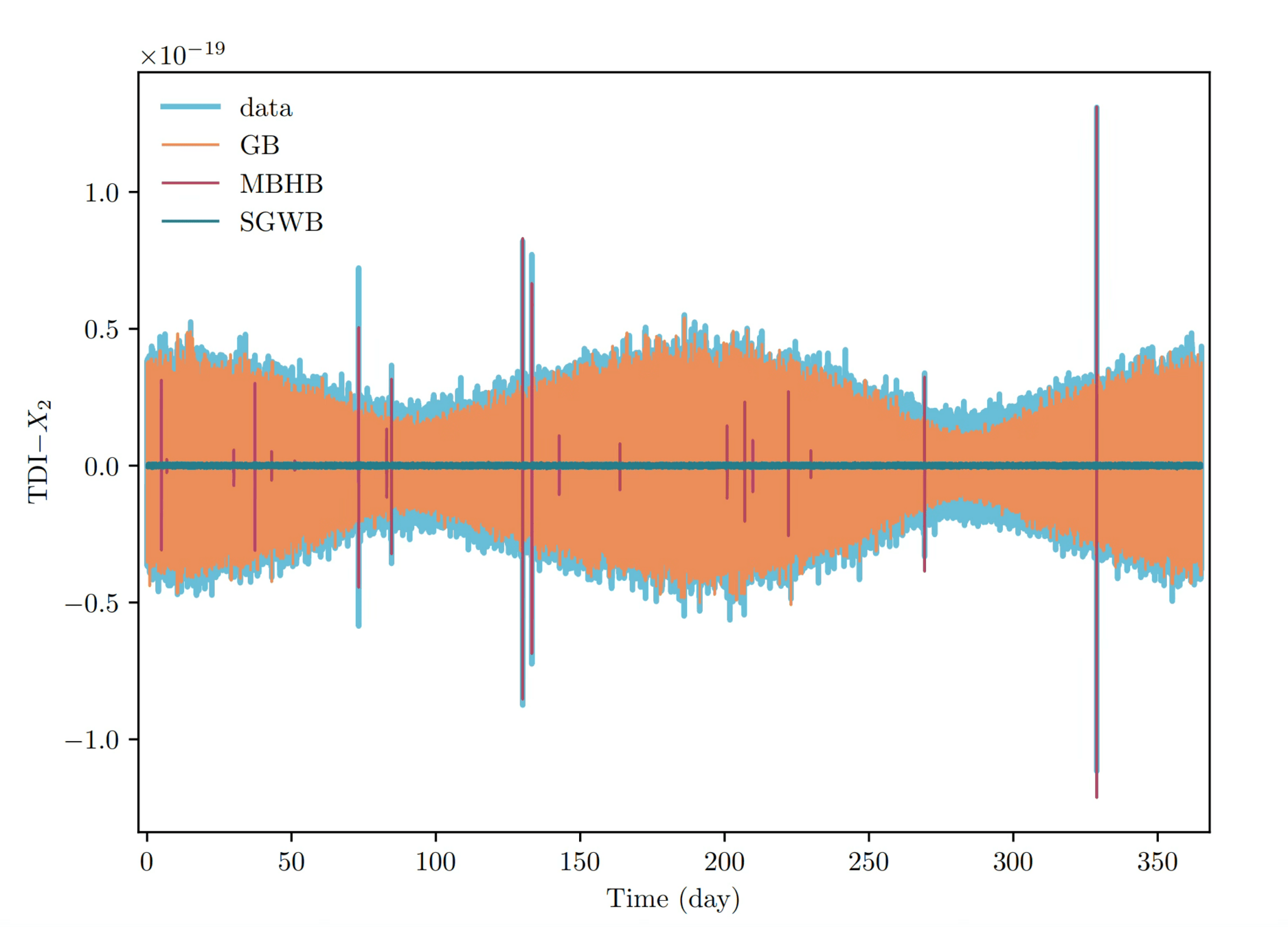
signal and noise overlap in both time and frequency domains, 10^4 resolvable signals, 10^5 undetermined parameters
[arxiv:2405.04690]
[arxiv:2301.03673]
[arxiv:2403.15318]
[arxiv:2501.10277]
Open datasets and codes: https://github.com/TriangleDataCenter
Triangle-Simulator
Time-domain prototype simulator for signals, raw measurements and TDI
Triangle-BBH
Fast frequency-domain MBHB modeling, search and parameter estimation
Triangle-GB
Fast frequency-domain GB modeling, search and parameter estimation
EMRI ?
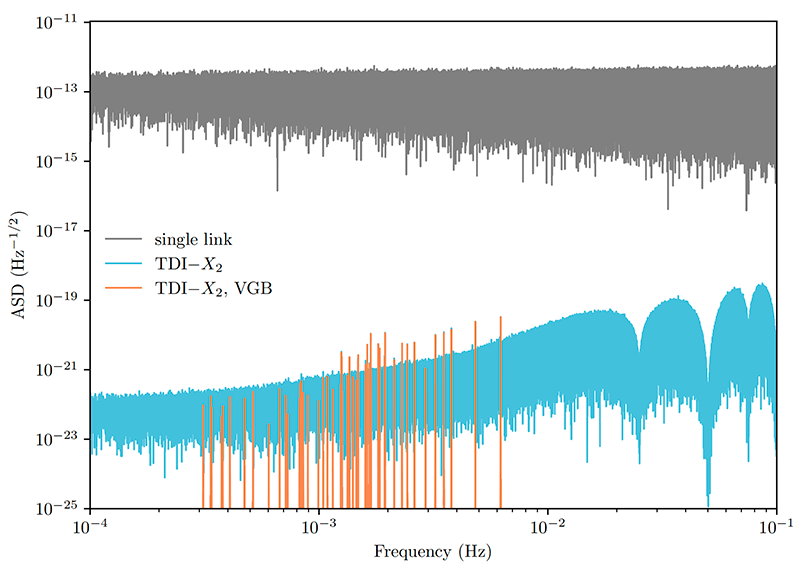
verification binary data: warm up
global-fit data
pre-processing data: not detrended, unsynchronized
Minghui Du et al., 2505.16500
Aug 10 14:20-14:40 A2 Hanlin Song
Example for test GR with Triangle
Triangle-Simulator
Triangle-BBH
The TDC global fit data
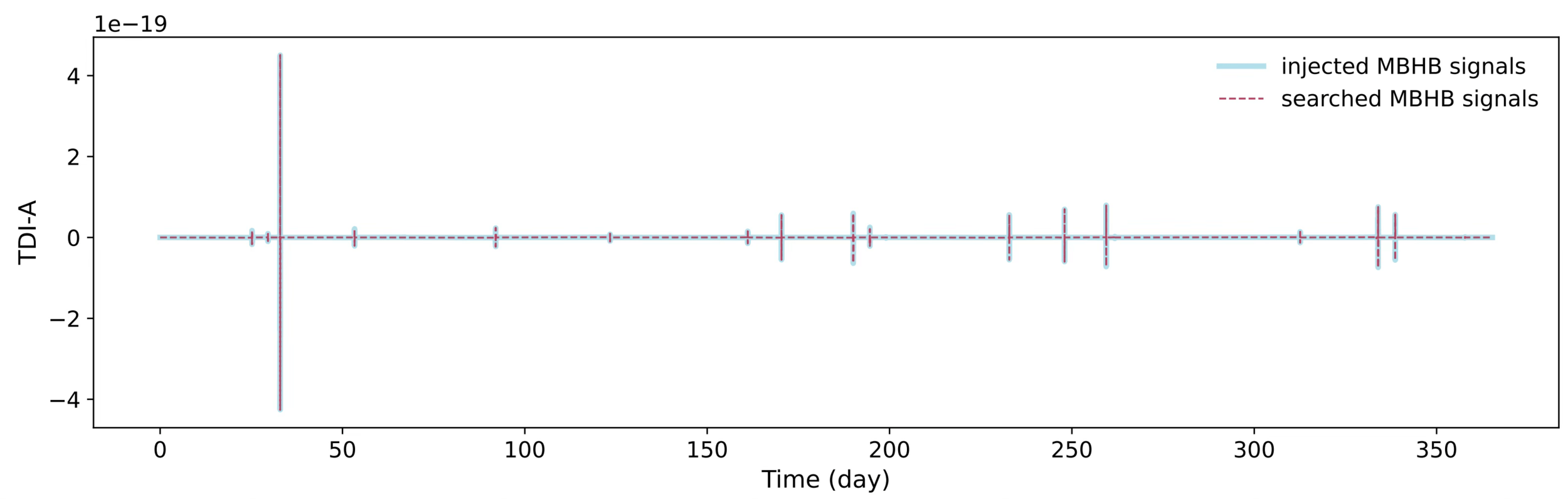
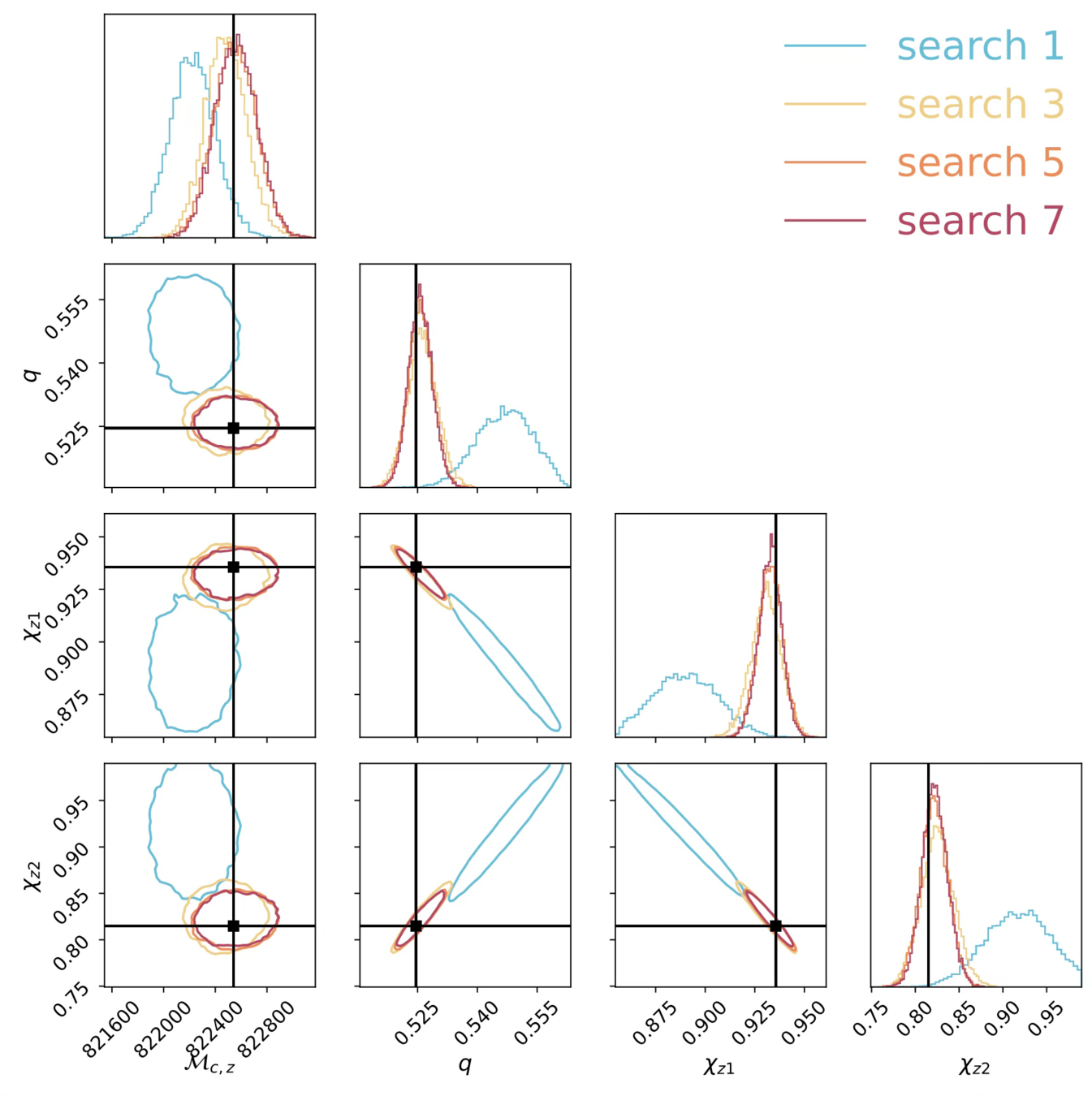
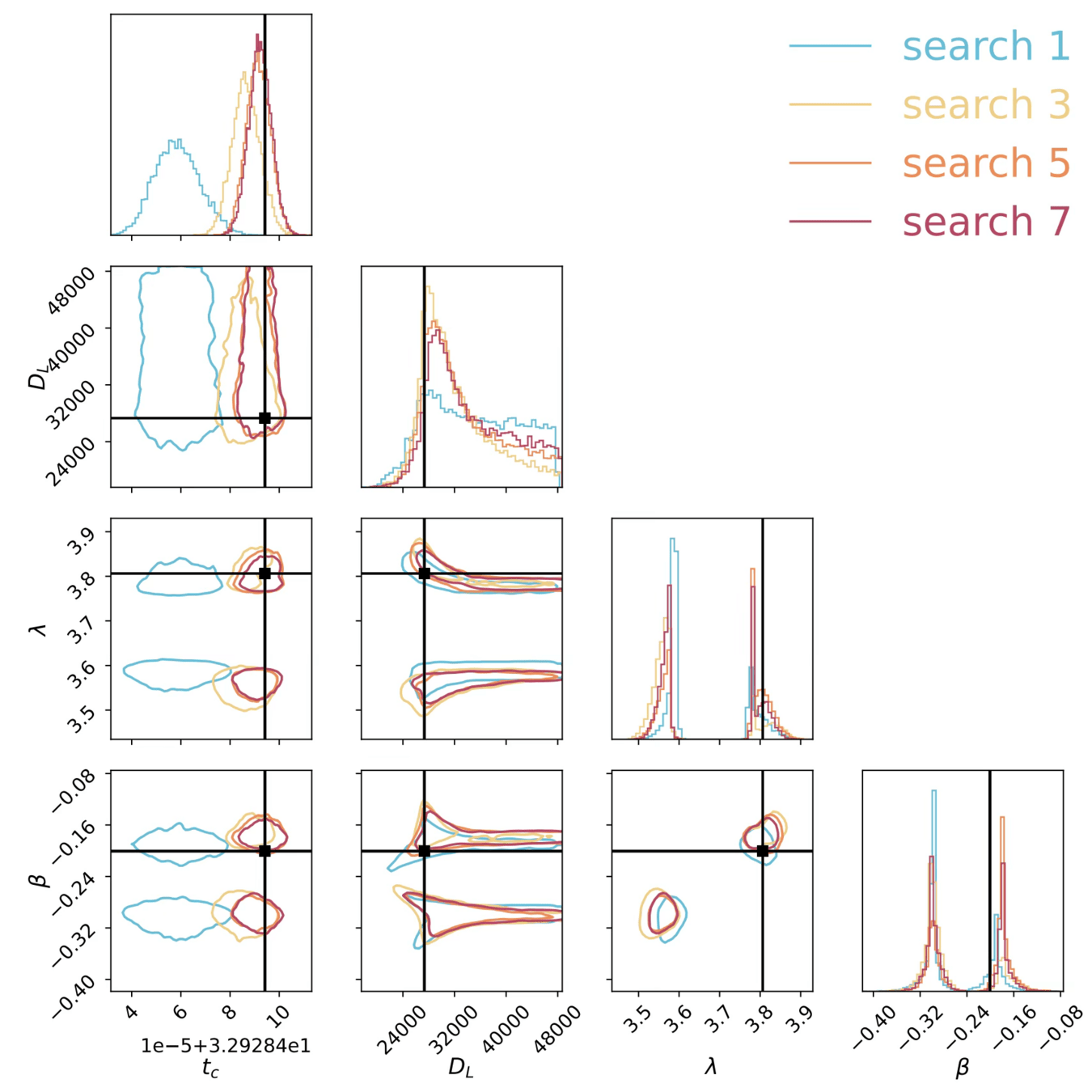
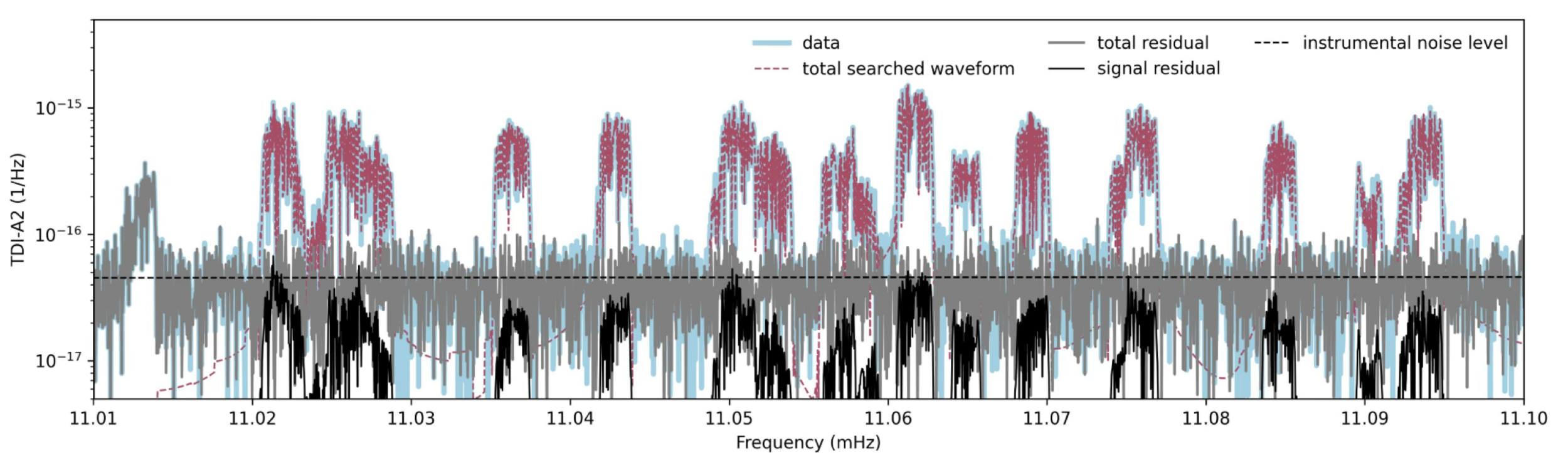
The collaboration is working on the multiple-source analysis of TDC: an iterative search-subtraction approach
PRELIMINARY
PRELIMINARY
Triangle-Simulator
Triangle-BBH
The reconstruction of searched MBHB waveforms
The TDC global fit data
The collaboration is working on the multiple-source analysis of TDC: an iterative search-subtraction approach
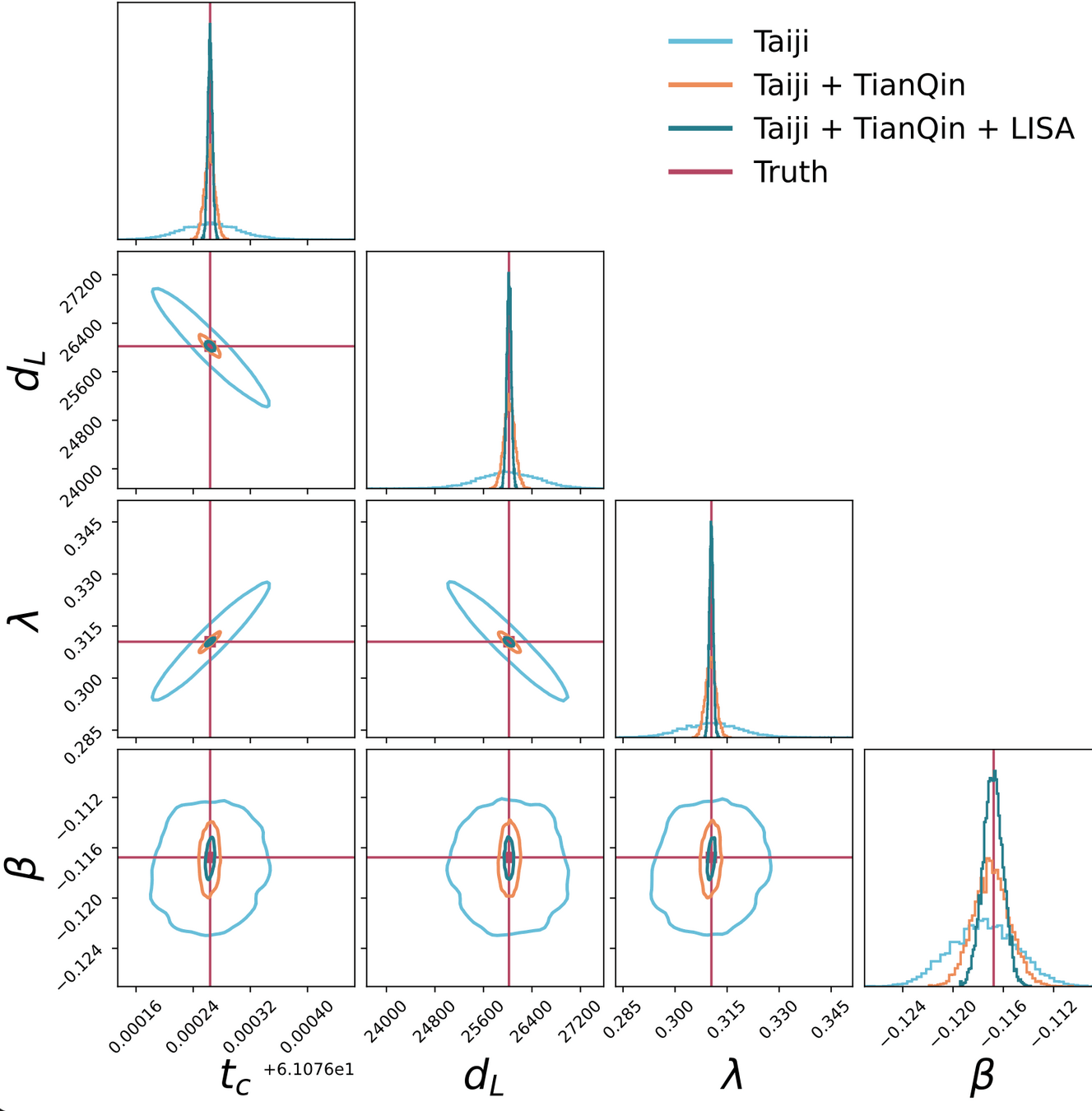
MBHB parameter posteriors in different stages
Triangle-Simulator
Triangle-BBH
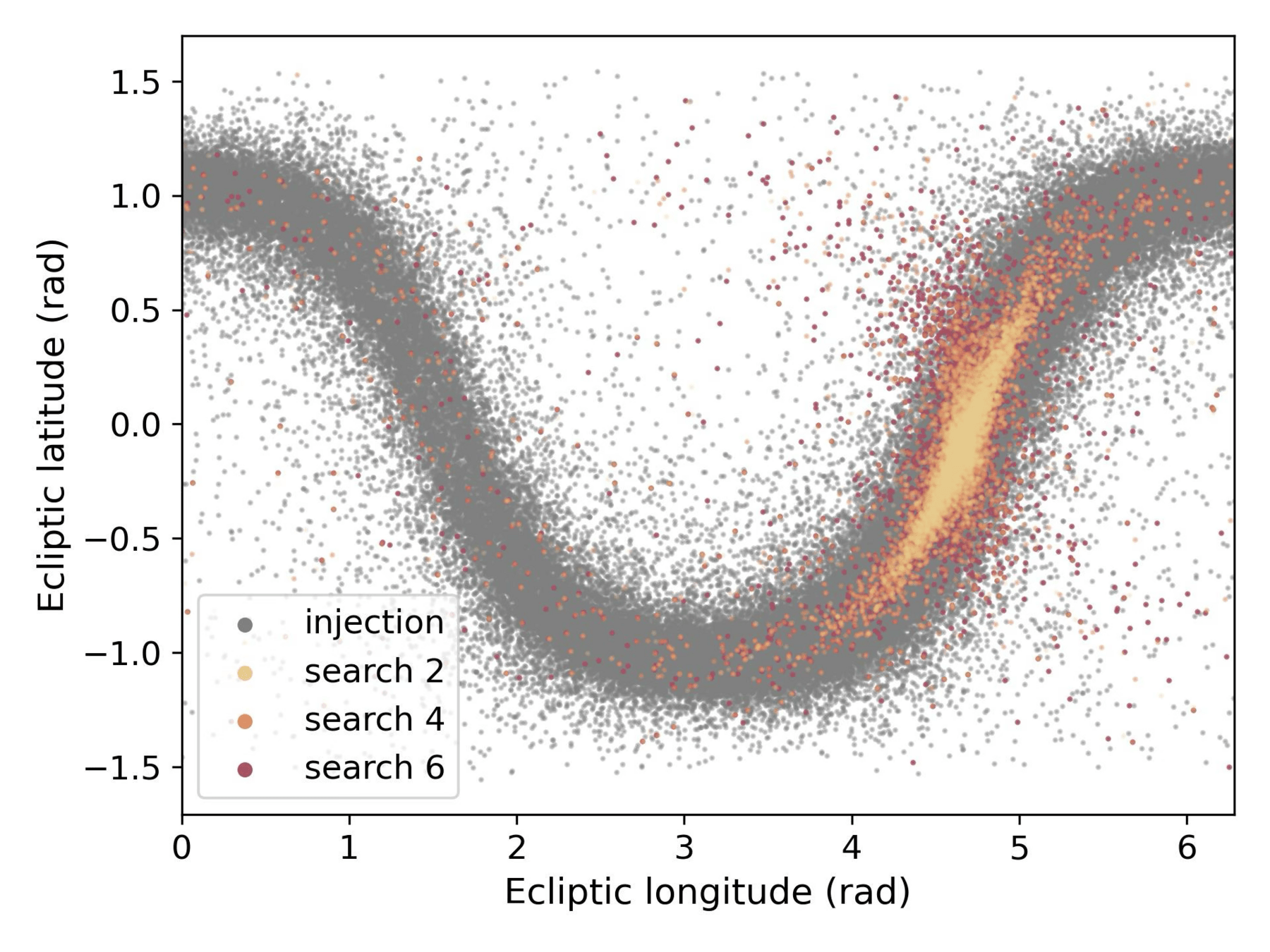
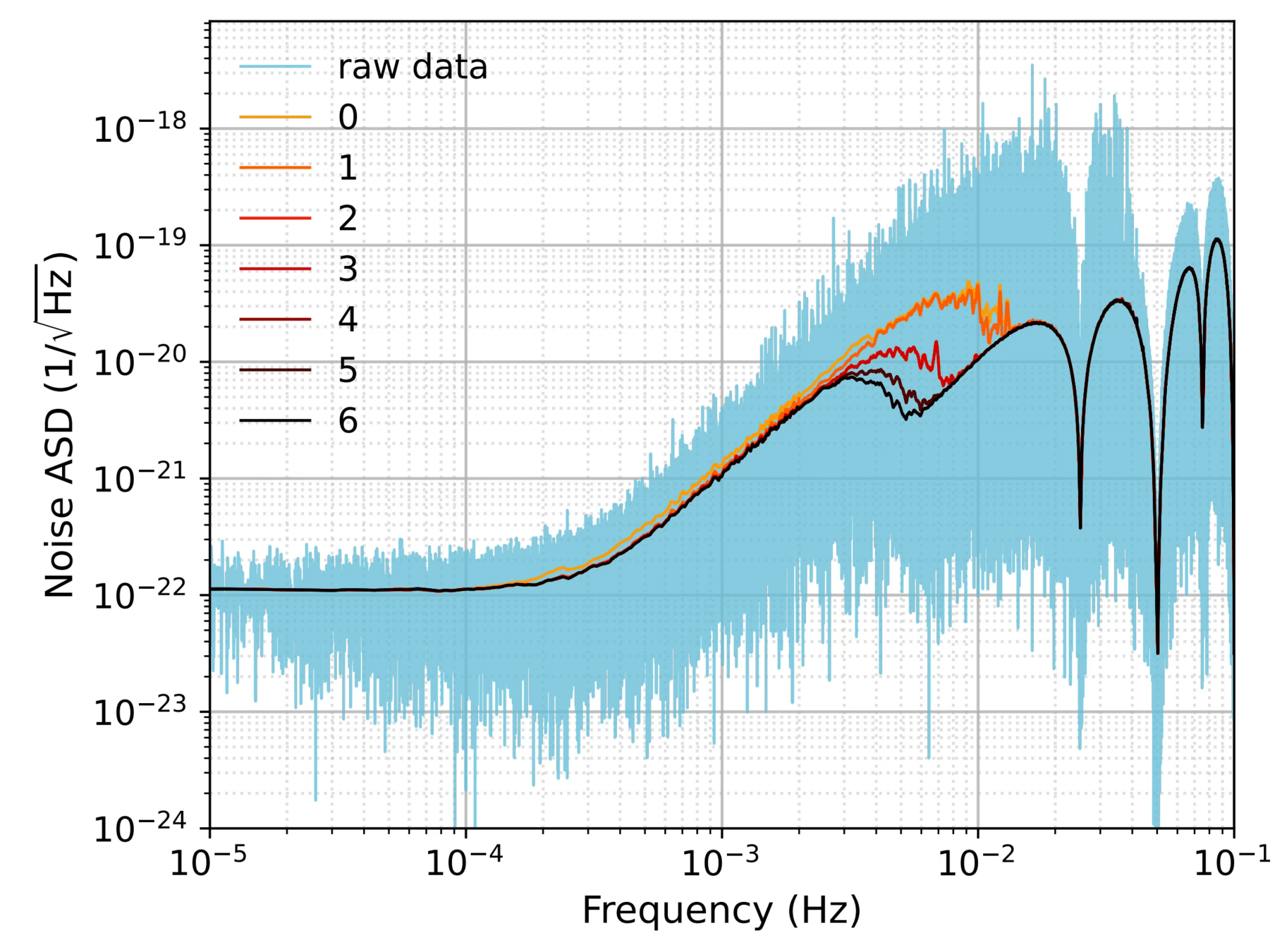
Decreased GB foreground noise
GB location in different stages
The TDC global fit data
The reconstruction of searched GB waveforms
Triangle for space detector network
Complementary orbital configurations of Taiji, TianQin, and LISA
Adapted from Ruan et al., Nature Astronomy (2020).
PRELIMINARY
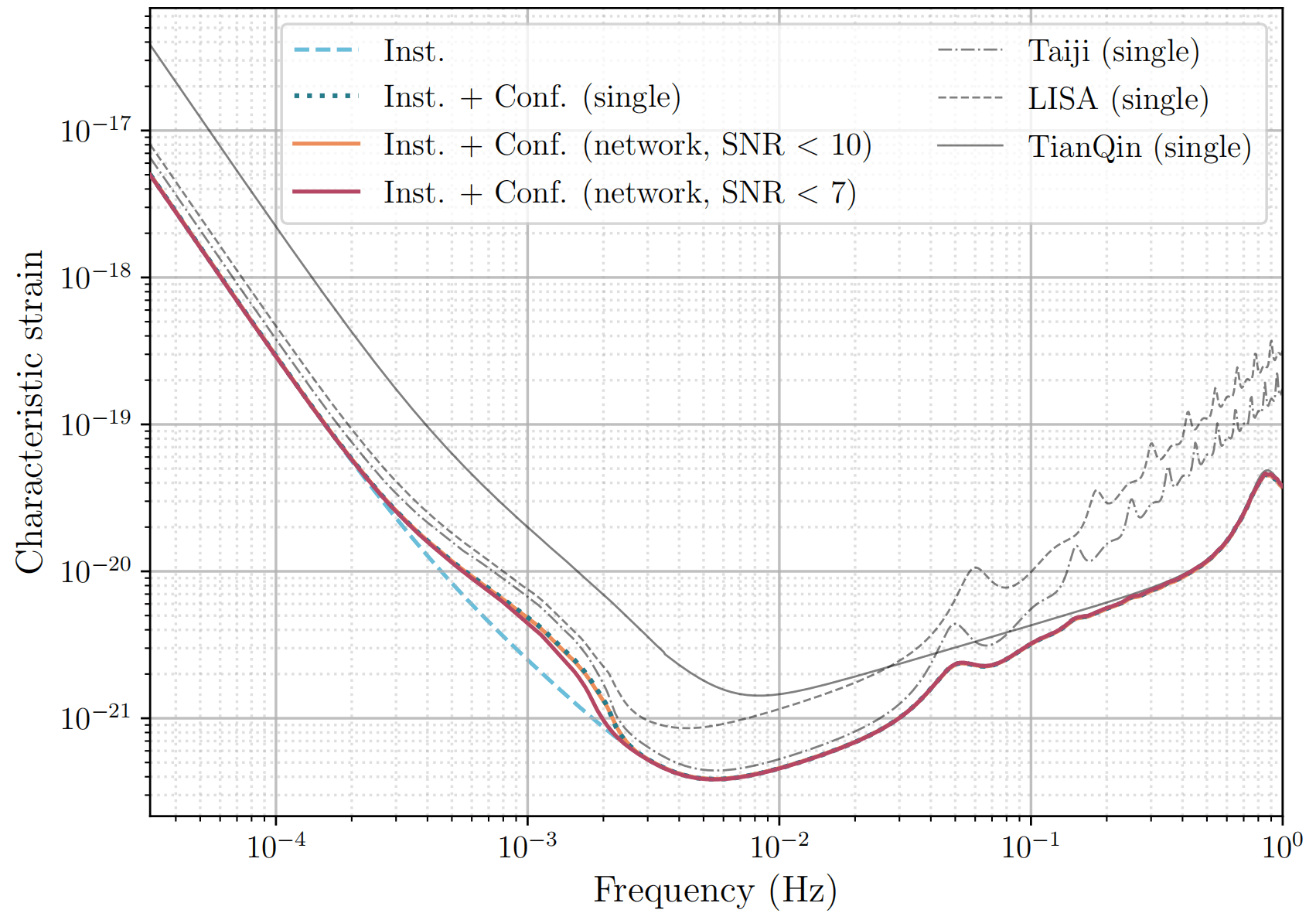
Network sensitivity
Network location of MBHB
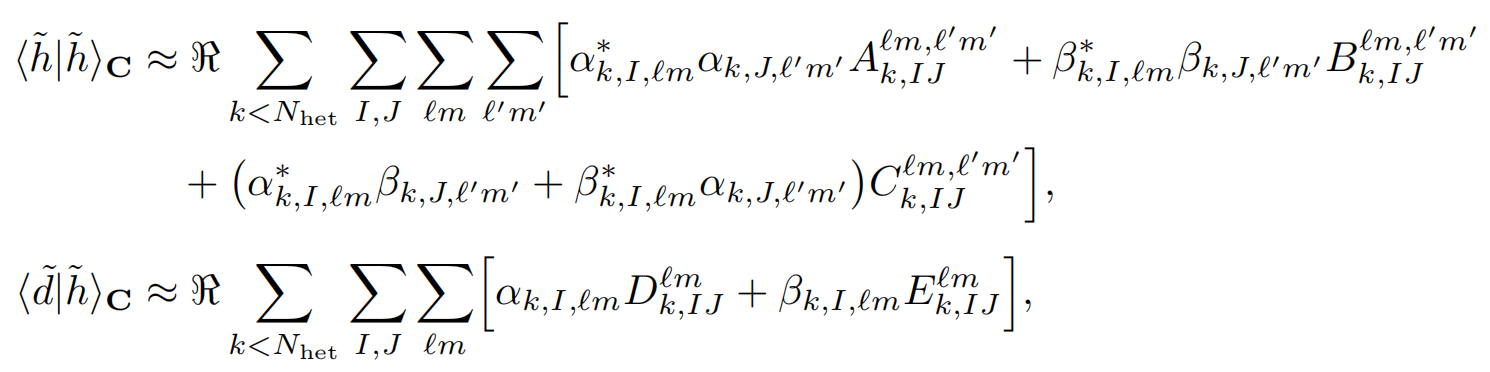
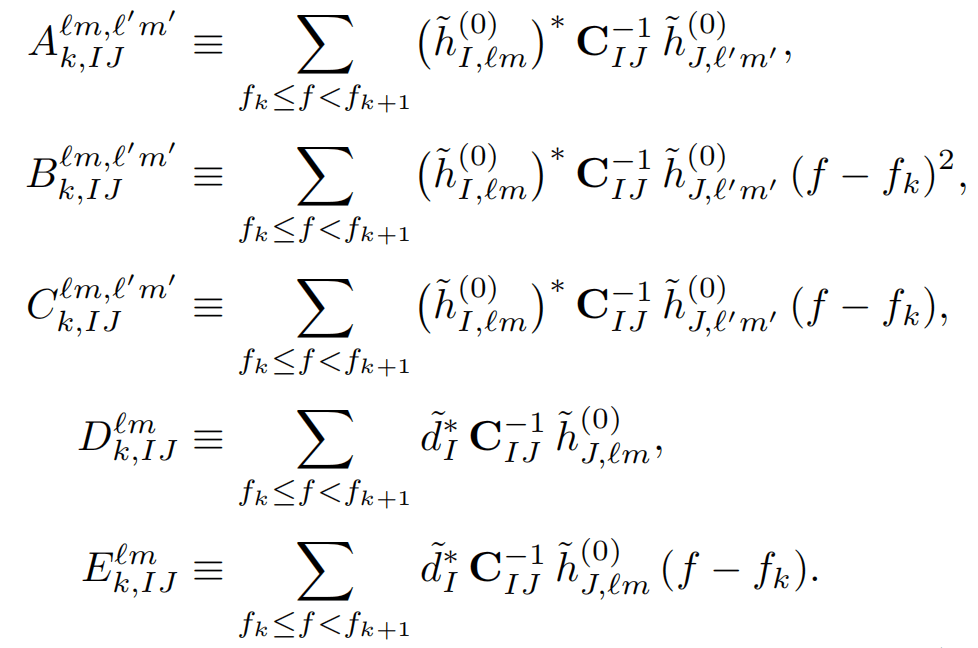
mode-by-mode heterodyned likelihood with network-covariance will be released in Triangle-BBH
PRELIMINARY
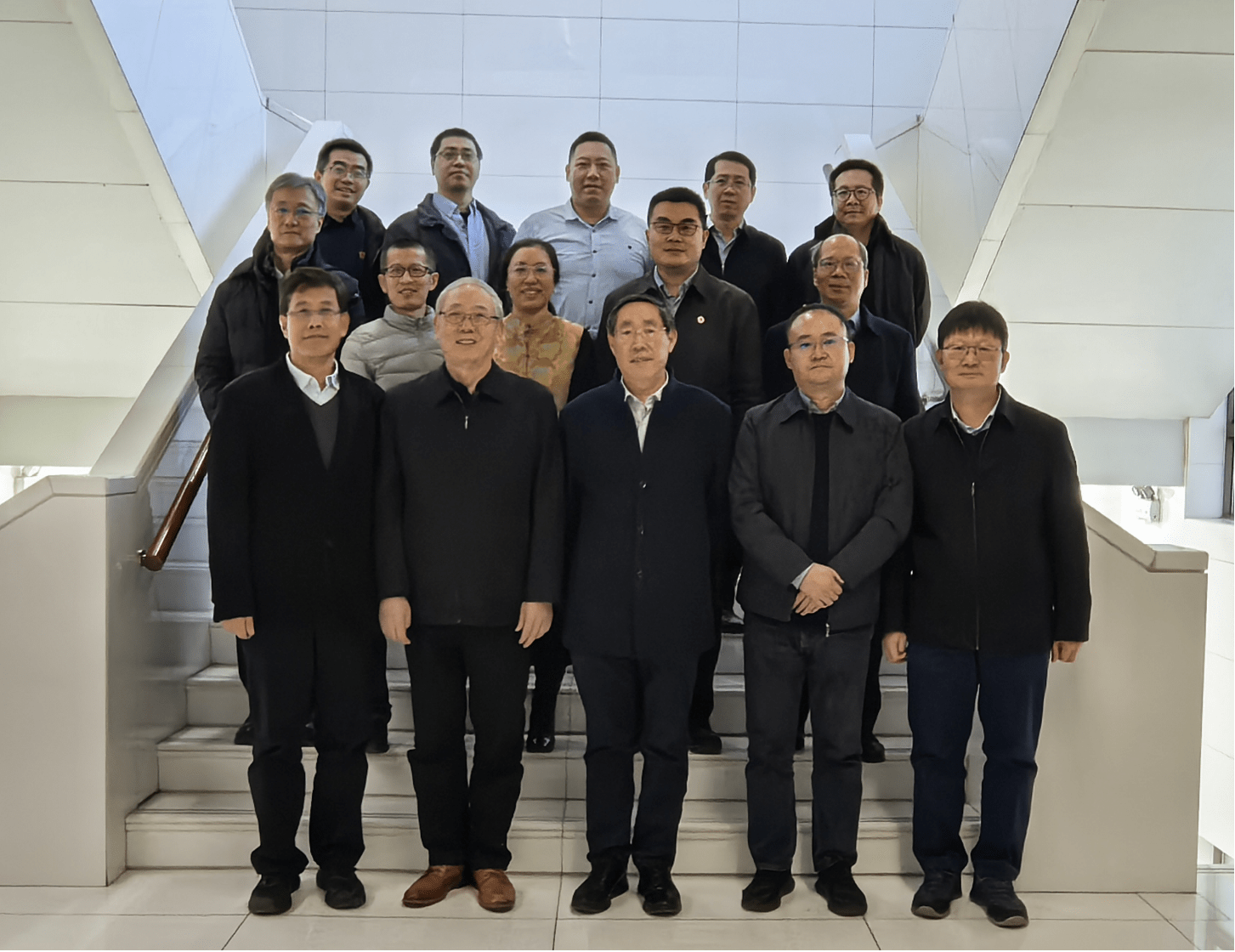
Leadership coordination within China’s space-based GW community · 2025
Prof. J. Luo
TianQin Chief Scientist
Prof. Y.-L. Wu
Taiji Chief Scientist
By He Wang
Minghui Du | https://indico.in2p3.fr/event/37627 @NUS