Homophily-Based Social Group Formation
in a Spin Glass Self-Assembly Framework



Jan Korbel
Simon Lindner
Tuan Pham Minh
Rudolf Hanel
Stefan Thurner
Phys. Rev. Lett. 130 (2023) 057401 (editors' suggestion)
Slides available at: www.slides.com/jankorbel

in collaboration with

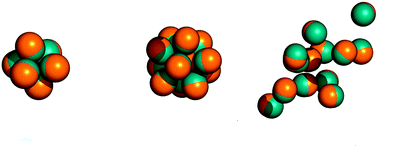
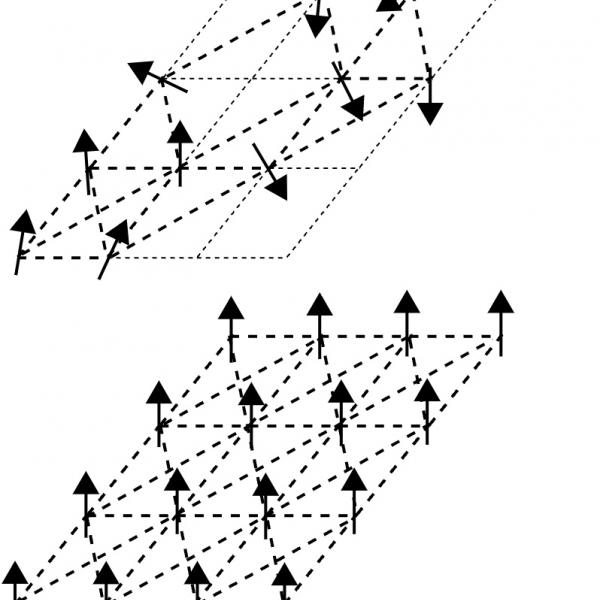

Graphical abstract
1. soft-matter self-assembly
2. condensed matter spin glasses
3. social group formation
1.
2.
3.
Graphical abstract
1. Thermodynamics of structure-forming systems
Entropy for systems with structures
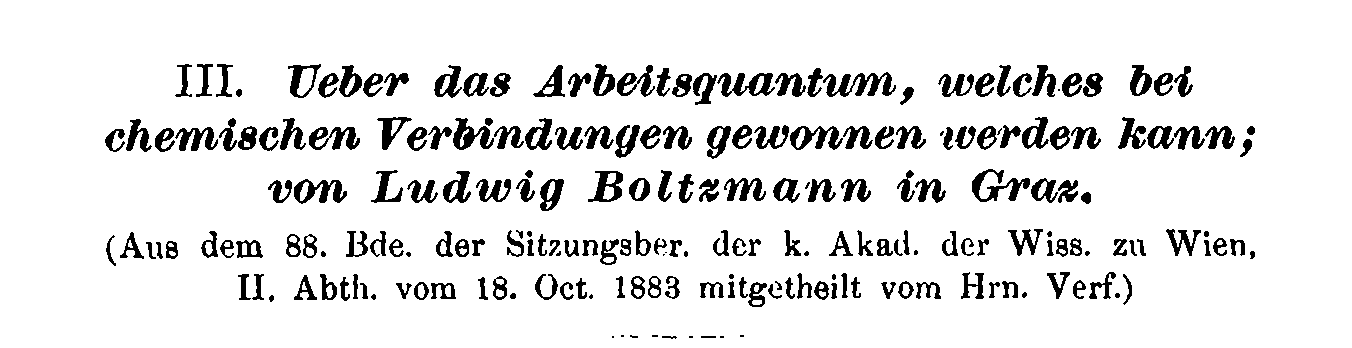
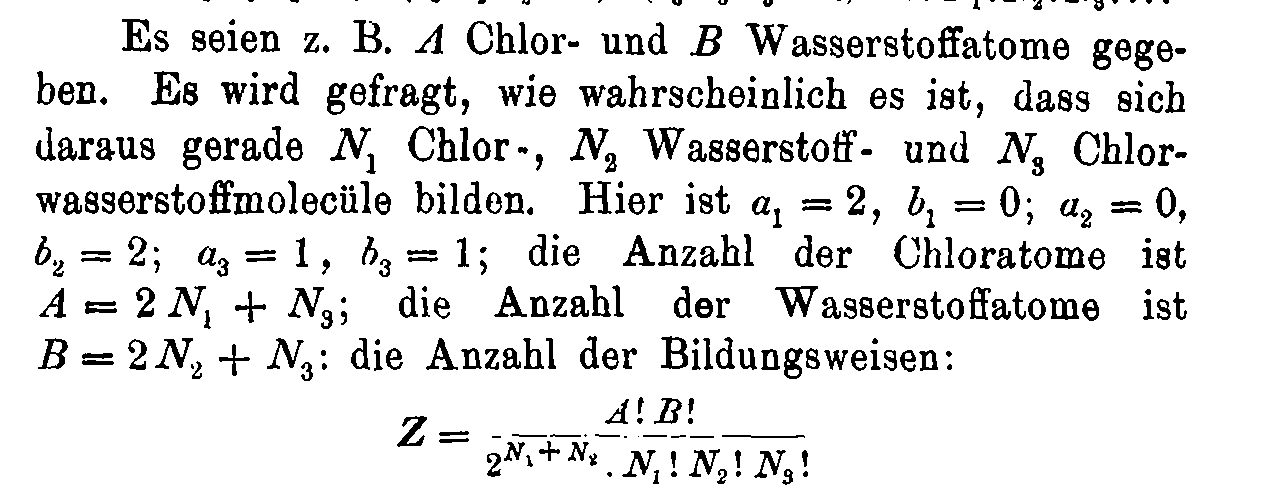
\(W(n_i^{(j)}) = \frac{n!}{\prod_{ij} n_i^{(j)}! (j!)^{n_i^{(j)}}}\)
$$\mathcal{S} = - \sum_{ij} \wp_i^{(j)} (\log \wp_i^{(j)} {\color{red}- 1}) {\color{red}- \sum_{ij} \wp_i^{(j)}\log \frac{j!}{n^{j-1}}}$$

\( S = k \cdot \log W\)
2. Spin-glass based opinion dynamics
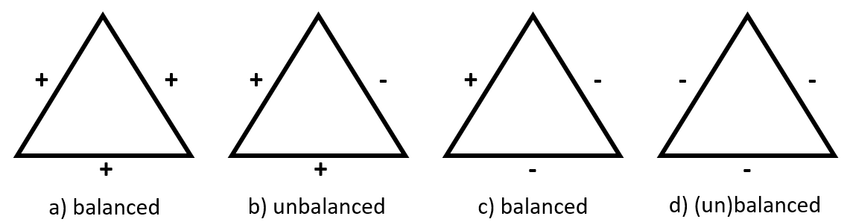
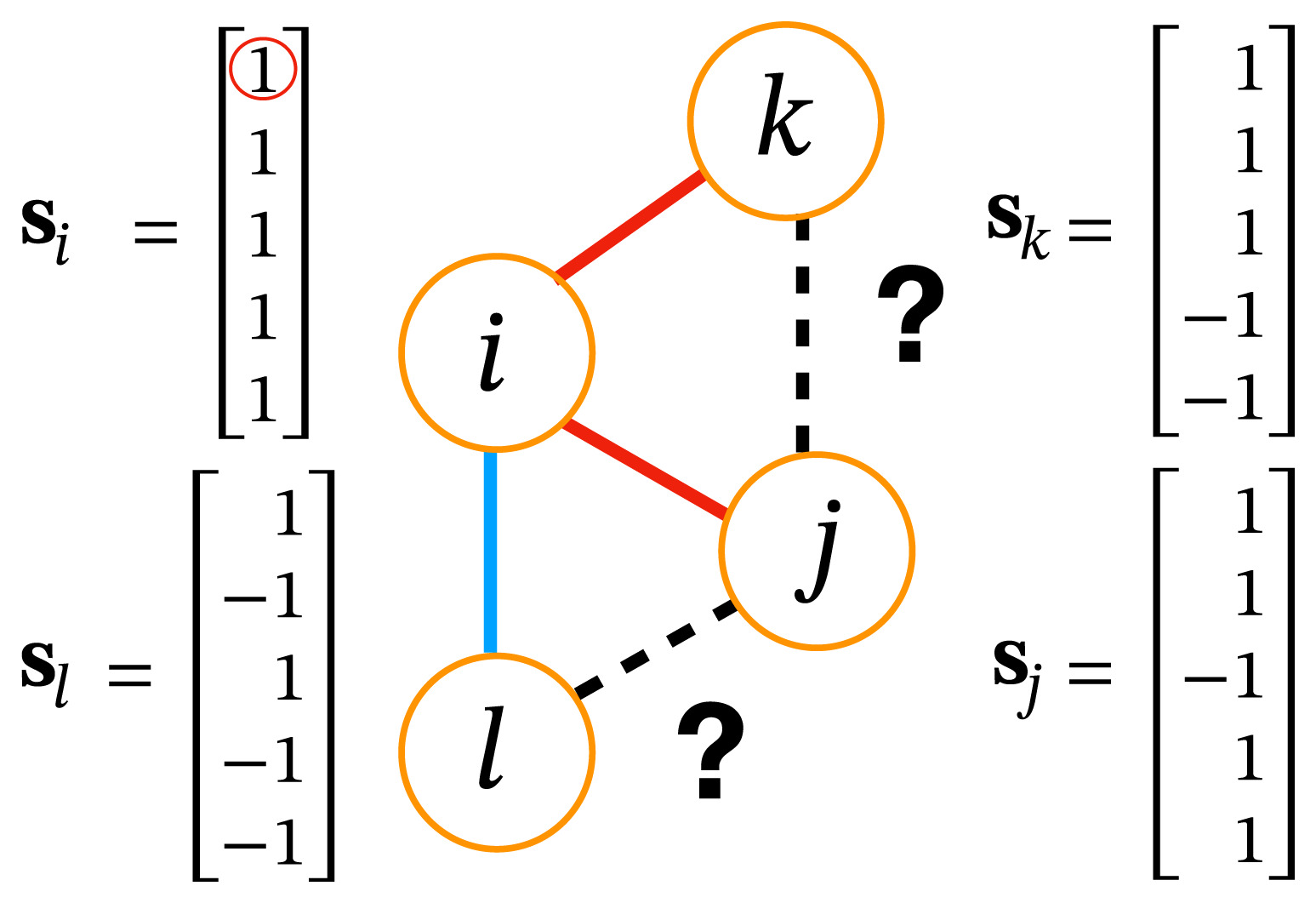
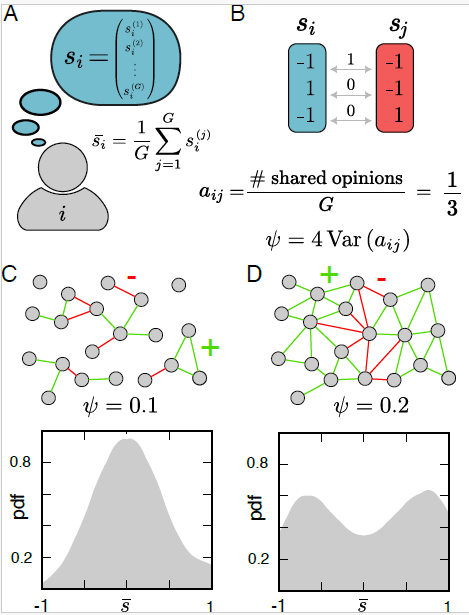
- Many opinion dynamics systems follow two basic concepts:
- Homophily - people tend to be friends with peers with similar opinions
- Social balance - a friend of my friend is my friend, enemy of my friend is my enemy
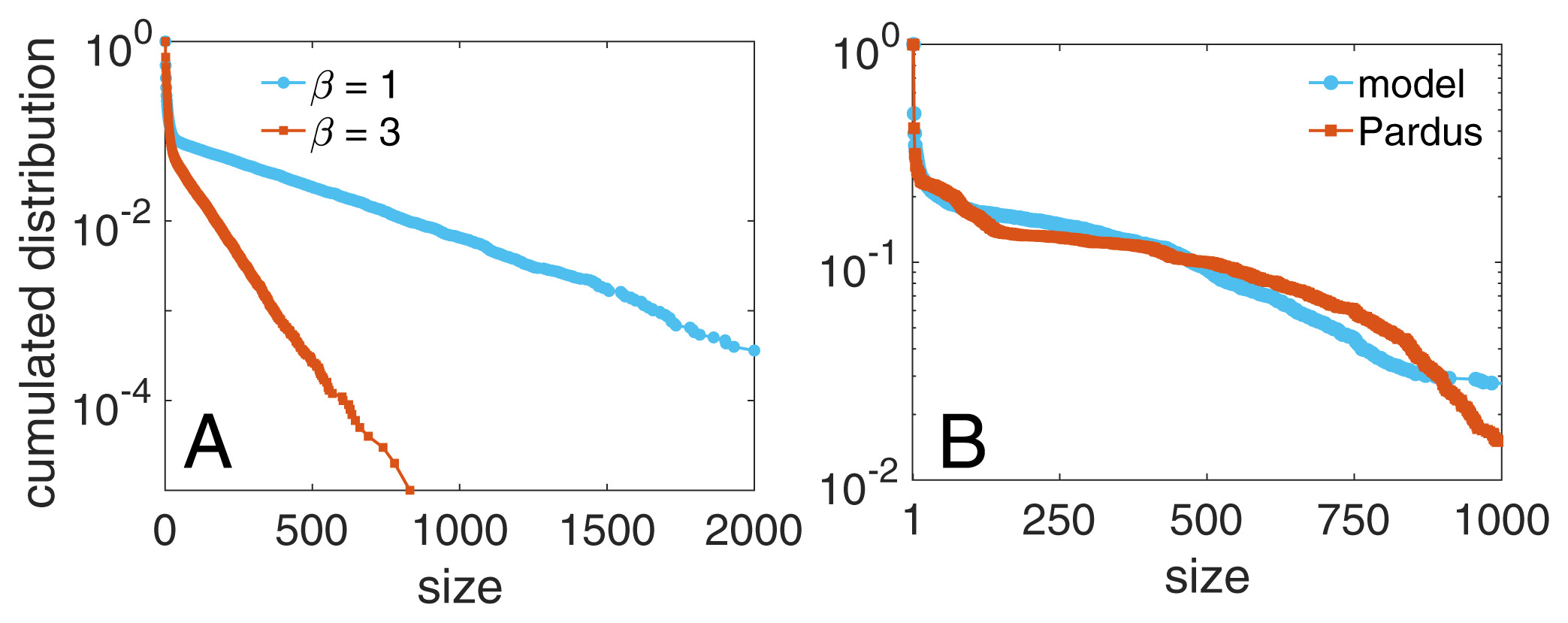
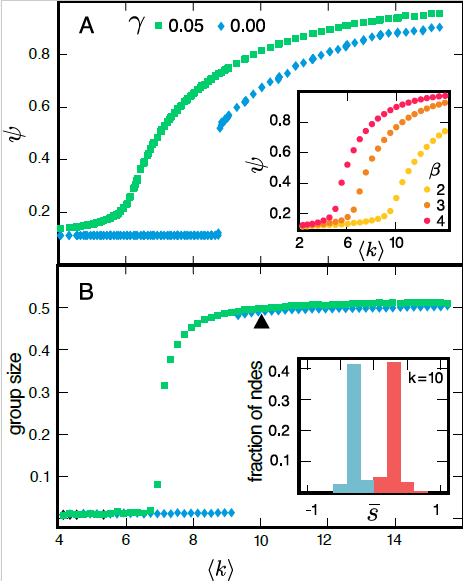
Group size distribution
Social balance emerges from homophily
3. Social group formation in the spin-glass self-assembly framework
Hamiltonian of a group \(\mathcal{G}\)
\(H(\mathbf{s}_{i_1},\dots,\mathbf{s}_{i_k}) = \textcolor{red}{\underbrace{- \phi \, \frac{J}{2} \sum_{ij \in \mathcal{G}} A_{ij} \mathbf{s}_i \cdot \mathbf{s}_j}_{intra-group \ social \ stress}} \textcolor{blue}{ + \underbrace{(1-\phi) \frac{J}{2} \sum_{i \in \mathcal{G}, j \notin \mathcal{G}} A_{ij} \mathbf{s}_{i} \cdot \mathbf{s}_j}_{inter-group \ social \ stress}} \\ \qquad \qquad \qquad \qquad - \underbrace{h \sum_{i \in \mathcal{G}} \mathbf{s}_i \cdot \mathbf{w}}_{external \ field}\)
Group formation based on opinion= self-assembly of spin glass
Group 1
Group 2
friends
enemies
Self-consistency equation
1. Simulated annealing
\(A_{ij} \propto k_i k_j\) is proportional to degree \(k_i\)
2. Mean-field approximation
\(m^{(k)} = \sum_{i \in group \ of \ size \ k} s_i\) - average opinion vector of a group of size \(k\)
These two approximations lead to the set of self-consistency equations:
$$m^{(k)} = k \sum_{q^{(k)} q^{(k,l)}} P(q^{(k)}) P(q^{(k,l)}) \tanh(\beta H^{(k)}(m^{(l)},q^{(k)},q^{(k,l)})) $$
where \(q^{(k)}\) is the intra-group degree, \(q^{(k,l)}\) is the inter-group degree and \(P\) is the degree distribution
Zero inter-group degree
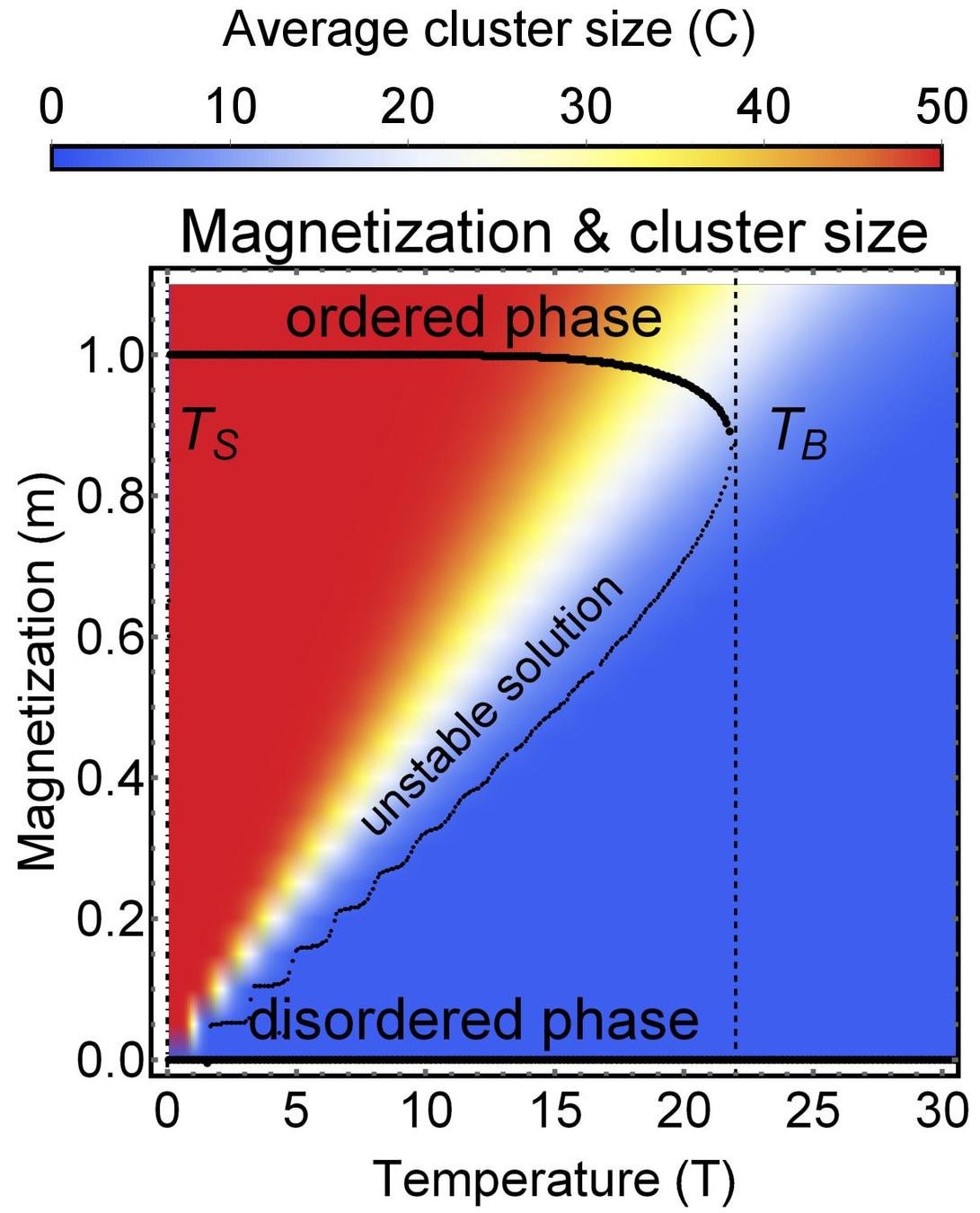
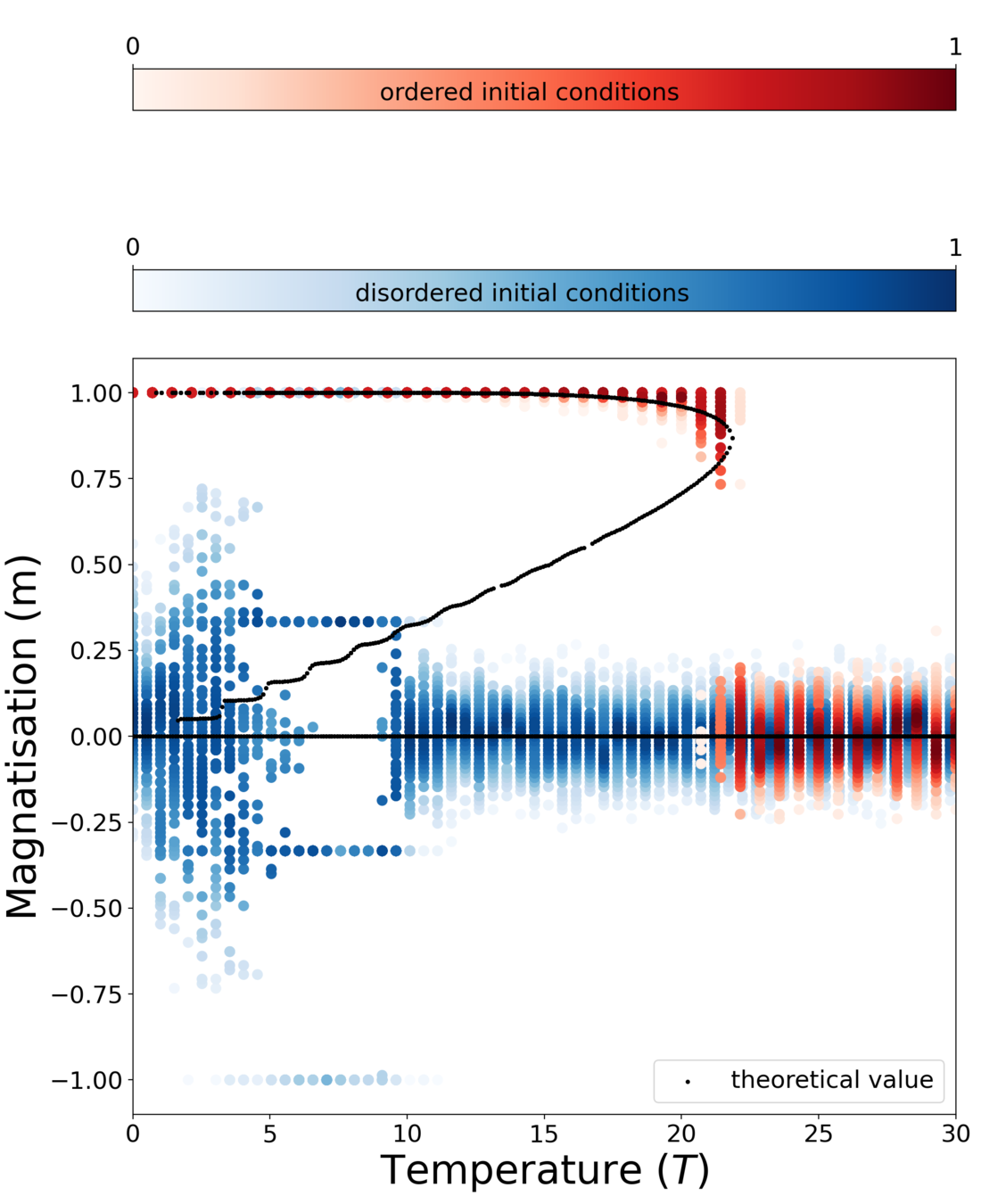
Theory
MC simulation

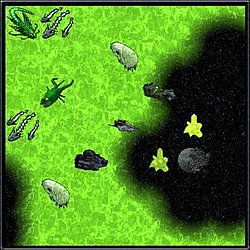
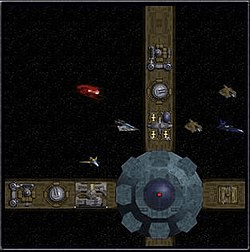
Application online multiplayer game PARDUS

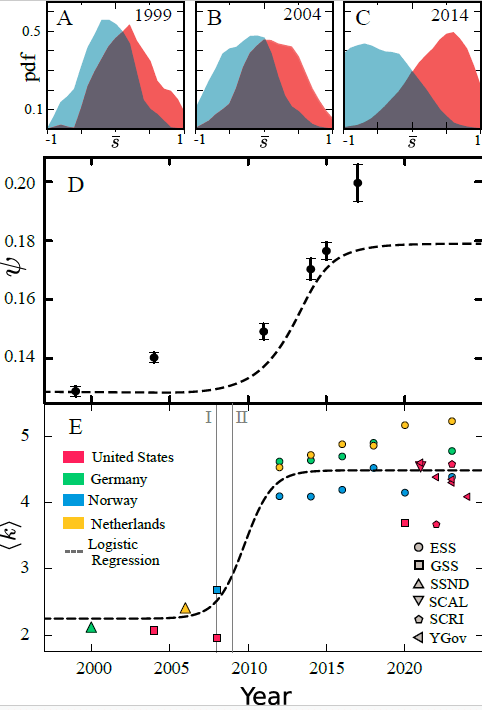
Two other recent results

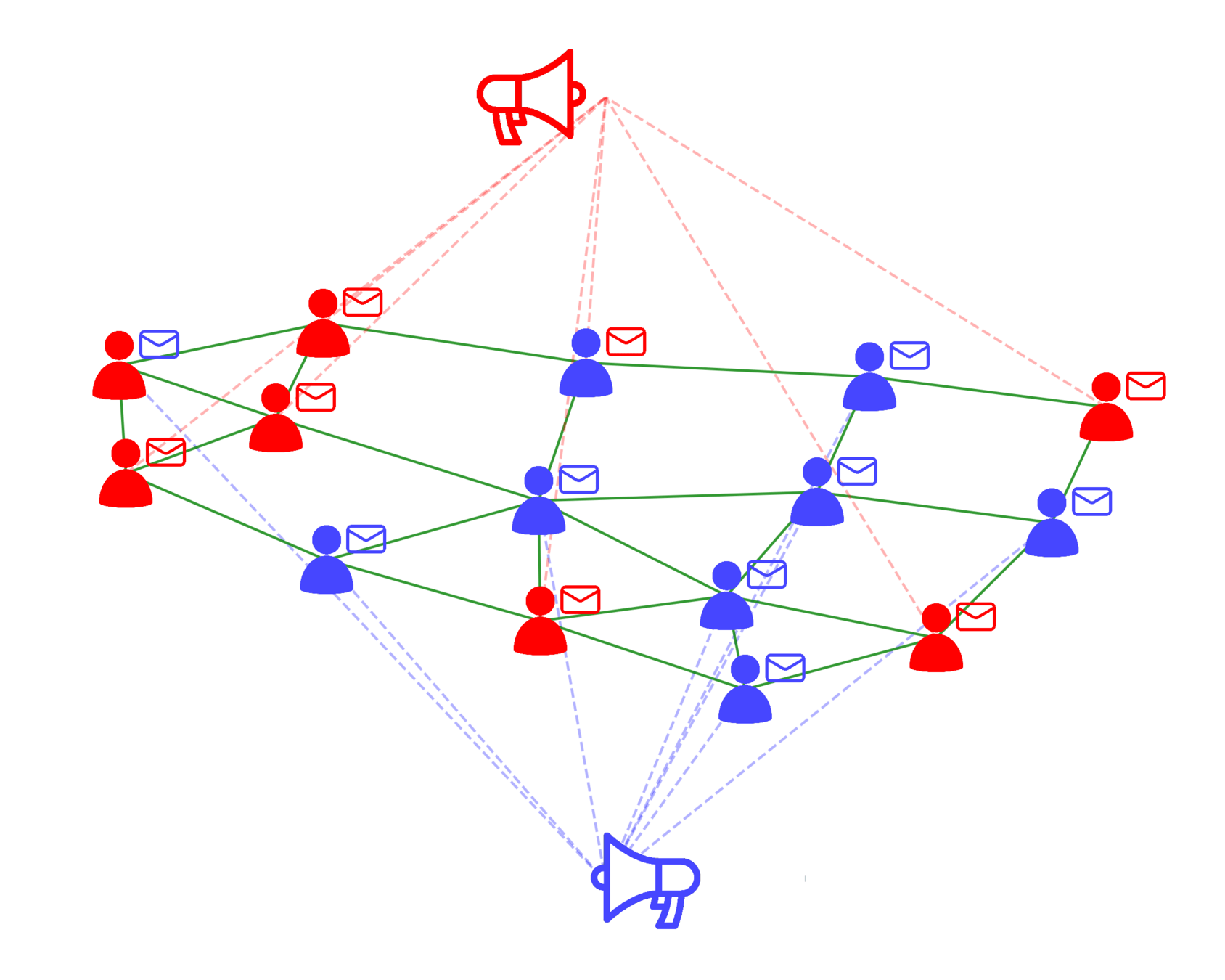
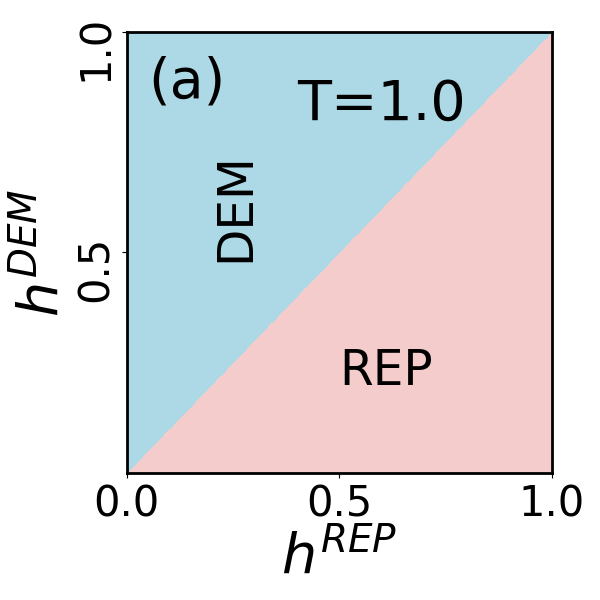
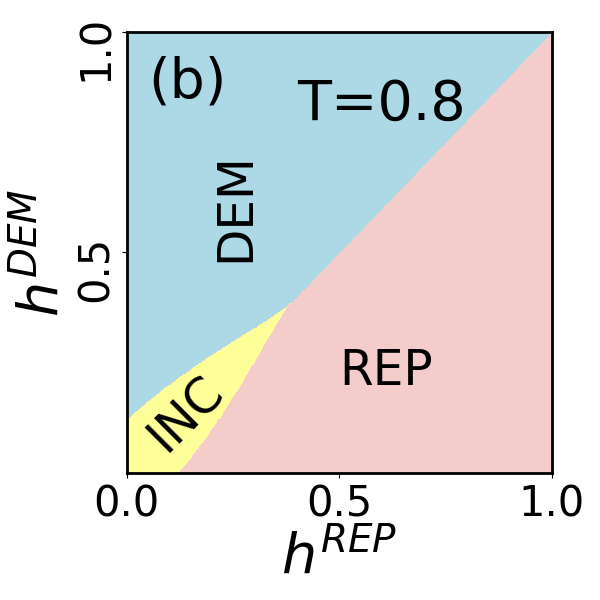
Incumbency
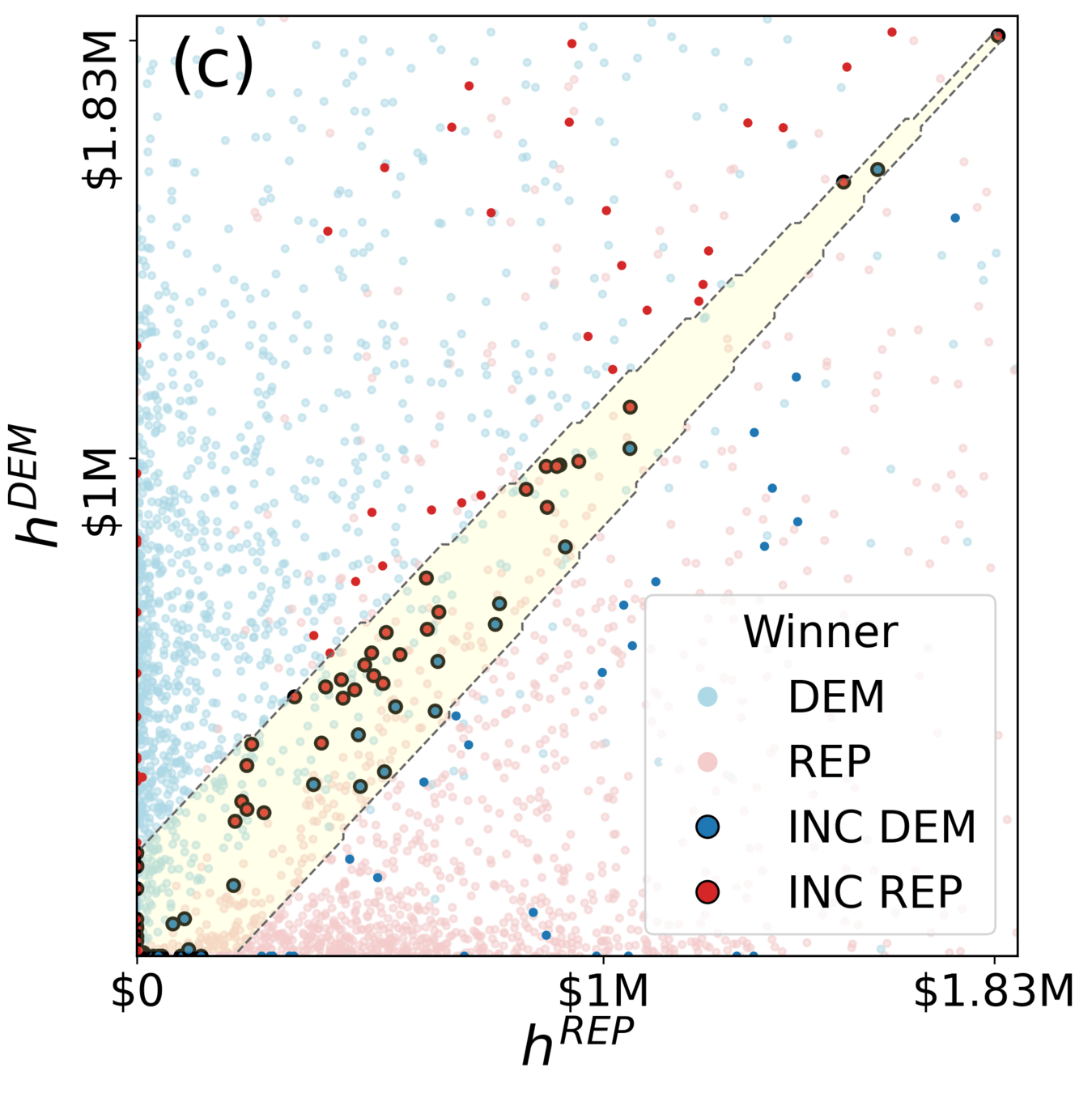
US House election
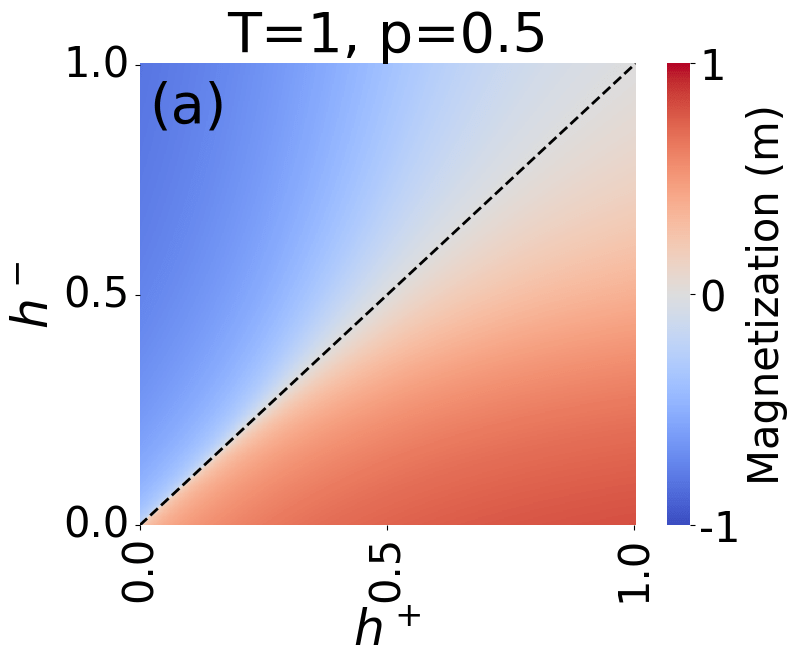
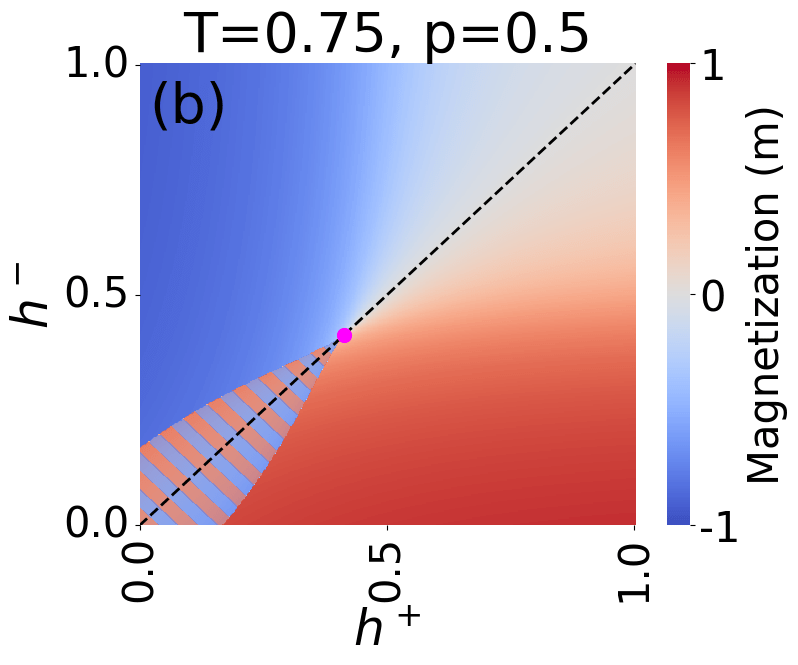
Magnetization
Random field Ising model
PRL 2023
csh.ac.at

PNAS 2025
PRL 2026
Thank you for your attention



Entropy2026
By Jan Korbel