







Jesse Bloom PRO
Scientist studying evolution of proteins and viruses.
Fred Hutch Cancer Center / HHMI
Gilead
September 18, 2026
Two parts to this talk:
1) Sequencing-based neutralization assays measure impact of strain-to-strain variation (example used: influenza virus hemagglutinin)
2) Deep mutational scanning to understand impact of all amino-acid mutations in a single strain background (example used: RSV F)
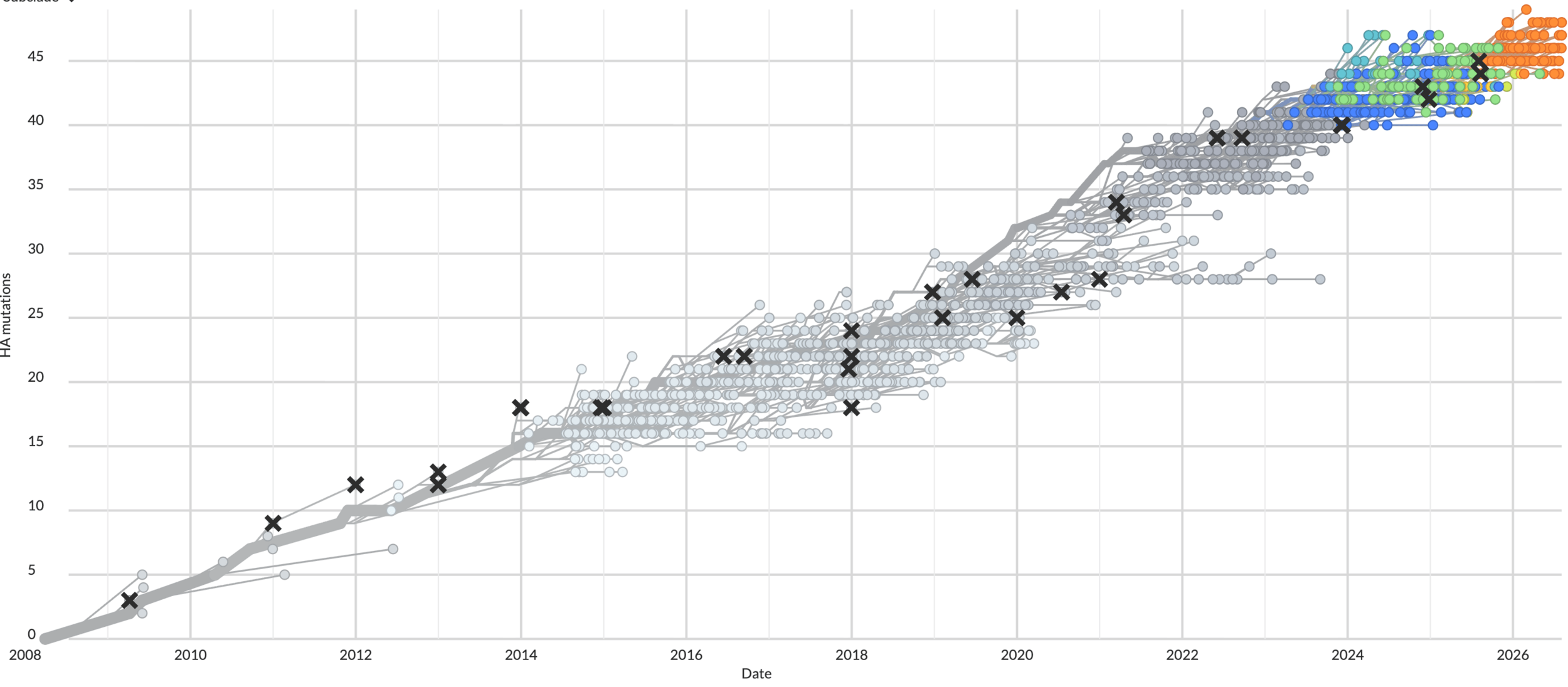
Year
HA amino-acid mutations
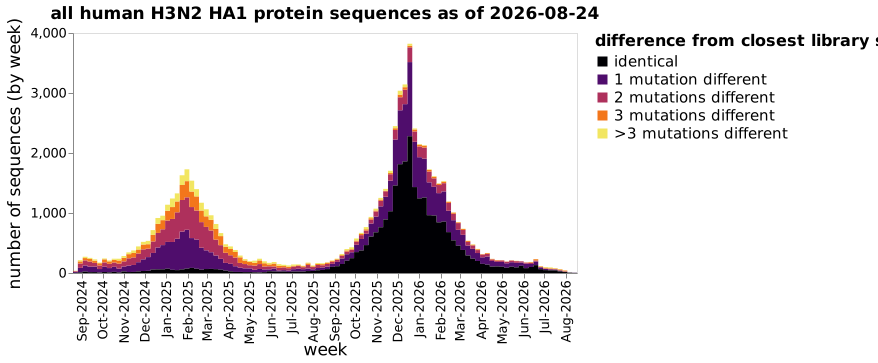
HA of human H3N2 influenza has accumulated >45 mutations over last 18 years. x indicates vaccine strains.
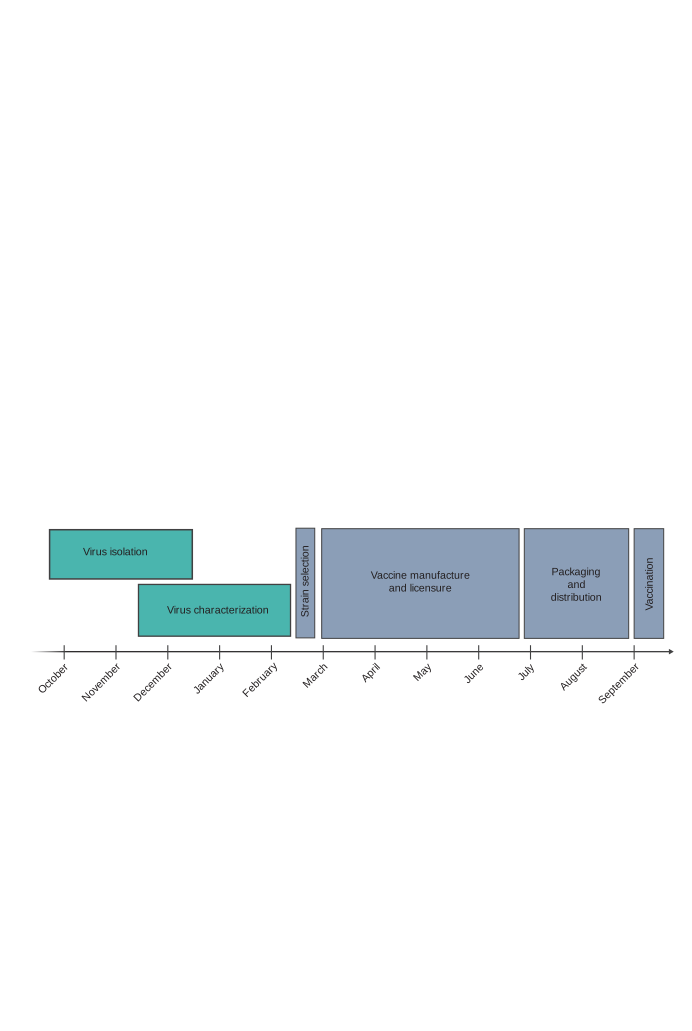
In February strains chosen for Northern Hemisphere vaccine administered ~October that year.
In September, strains chosen for Southern Hemisphere vaccine administered the next ~May.
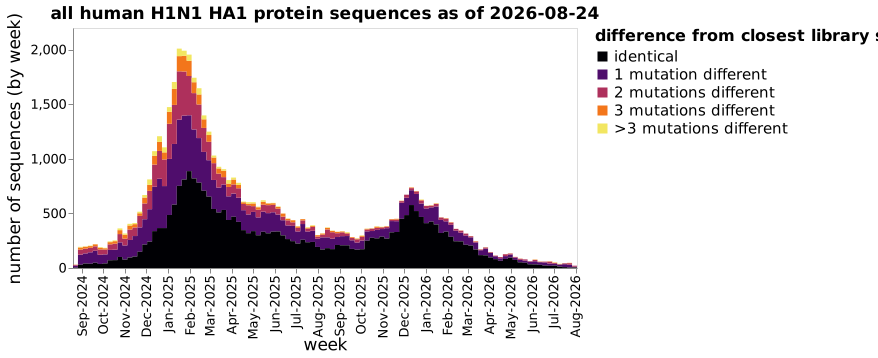
Separate update decisions for H3N2, H1N1, and B strains; not every component changed each time.
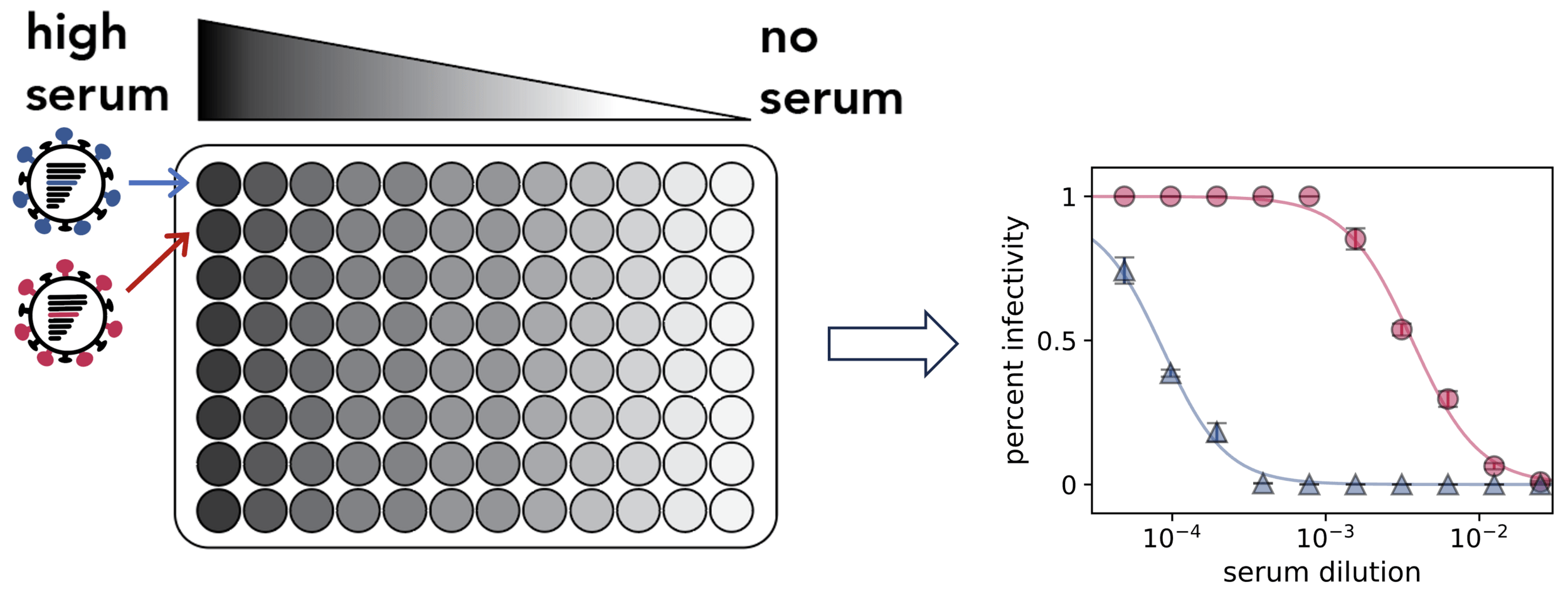
fraction infectivity
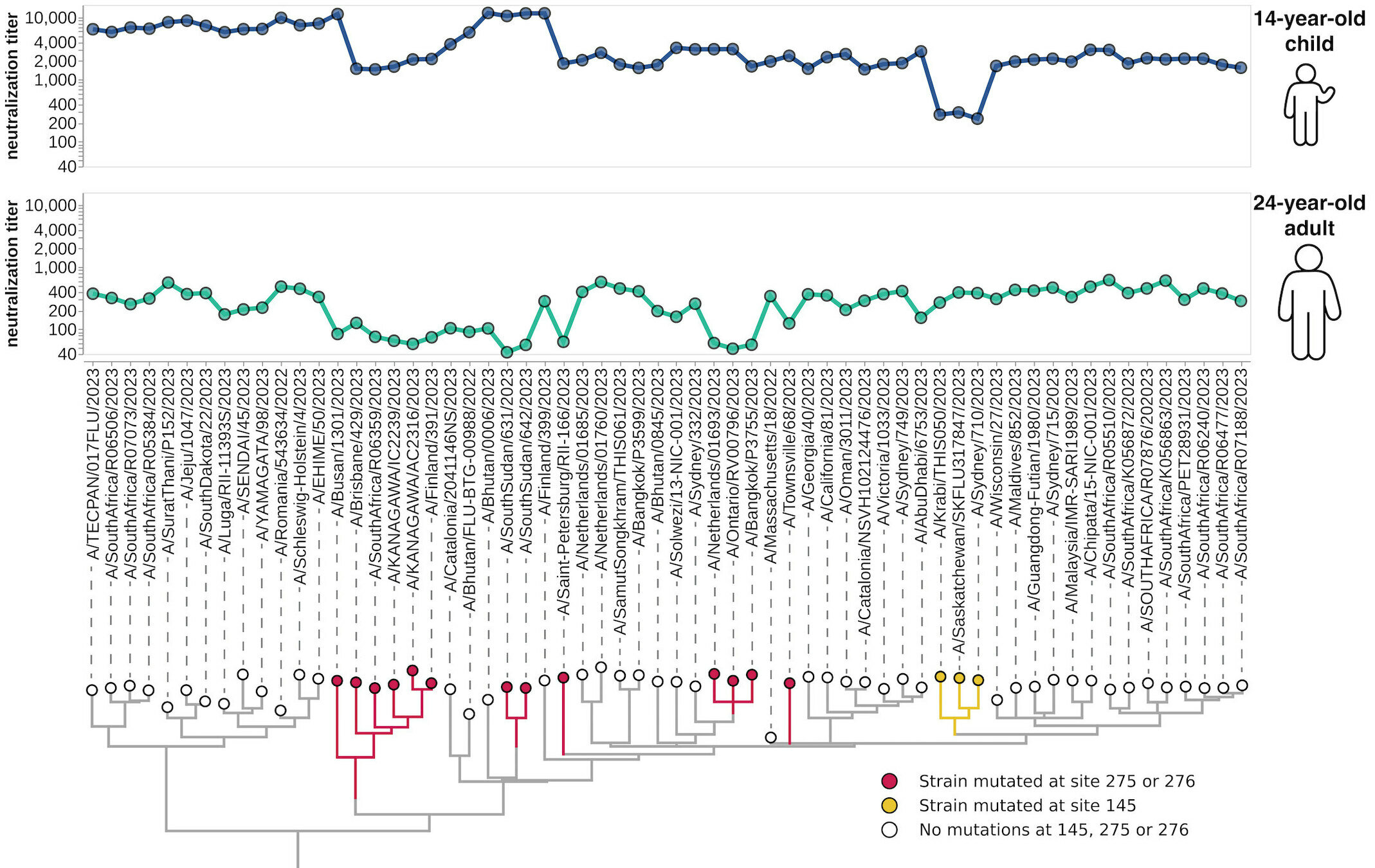
different recent H3N2 viral strains
child has low titers to these strains
different recent H3N2 viral strains
child has low titers to these strains
adult has low titers to these strains
All data openly shared as it is collected, so anyone can analyze it to inform vaccine-strain selection and advance public health.
Currently generating data for A/H3N2 and A/H1N1; hope to expand to influenza B.
Data shared so far:
Human sera assayed (all collected between April and June of 2026):
Lowest titers are to subclade K variants with mutation at sites 222 or 223.
See also:
Mutations at these sites likely erode residual antibodies not already escaped by earlier subclade K mutations; see Liu et al (2026).
Most D.3.1.1 strains have lower titers than current D.3.1 vaccine.
Titers lowest to strains with G155E.
See also:
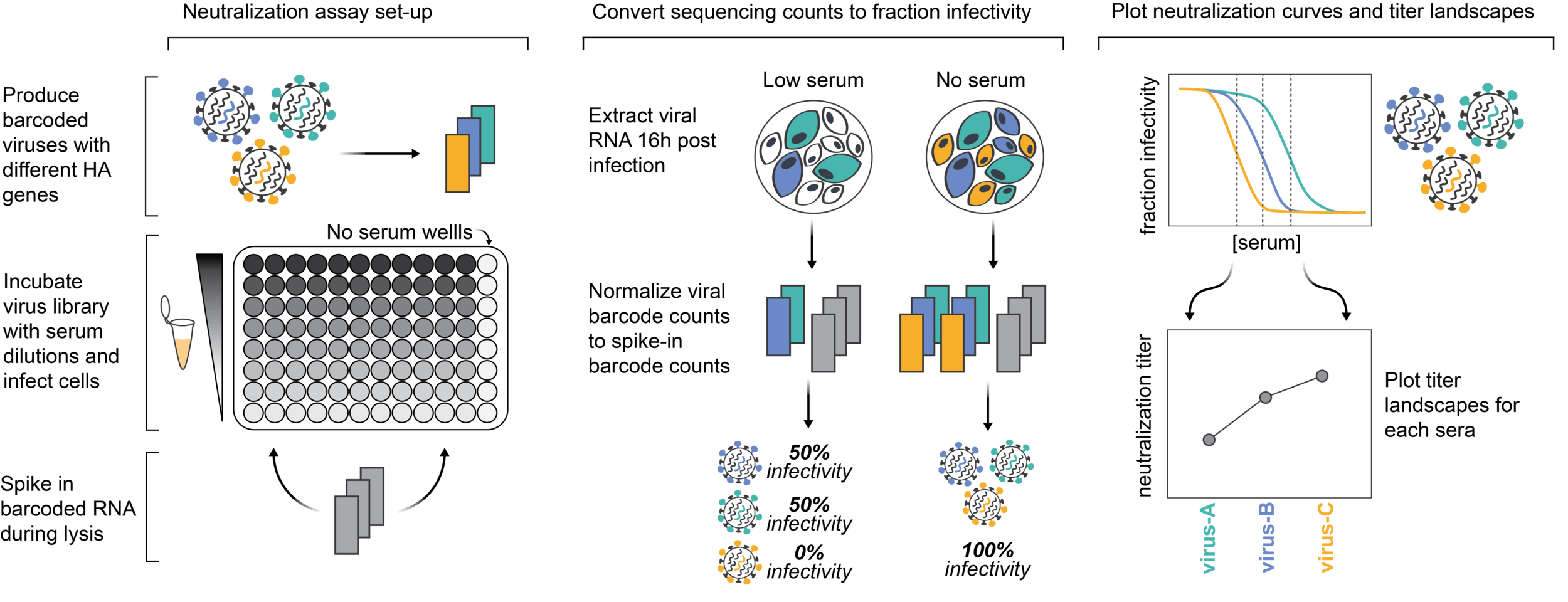
Sequencing-based neutralization assays can measure the neutralization of recent strains by current human antibodies in near real time.
These titer measurements are informative about influenza evolution.
We are generalizing sequencing-based neutralization assays to the entry proteins of other viruses.
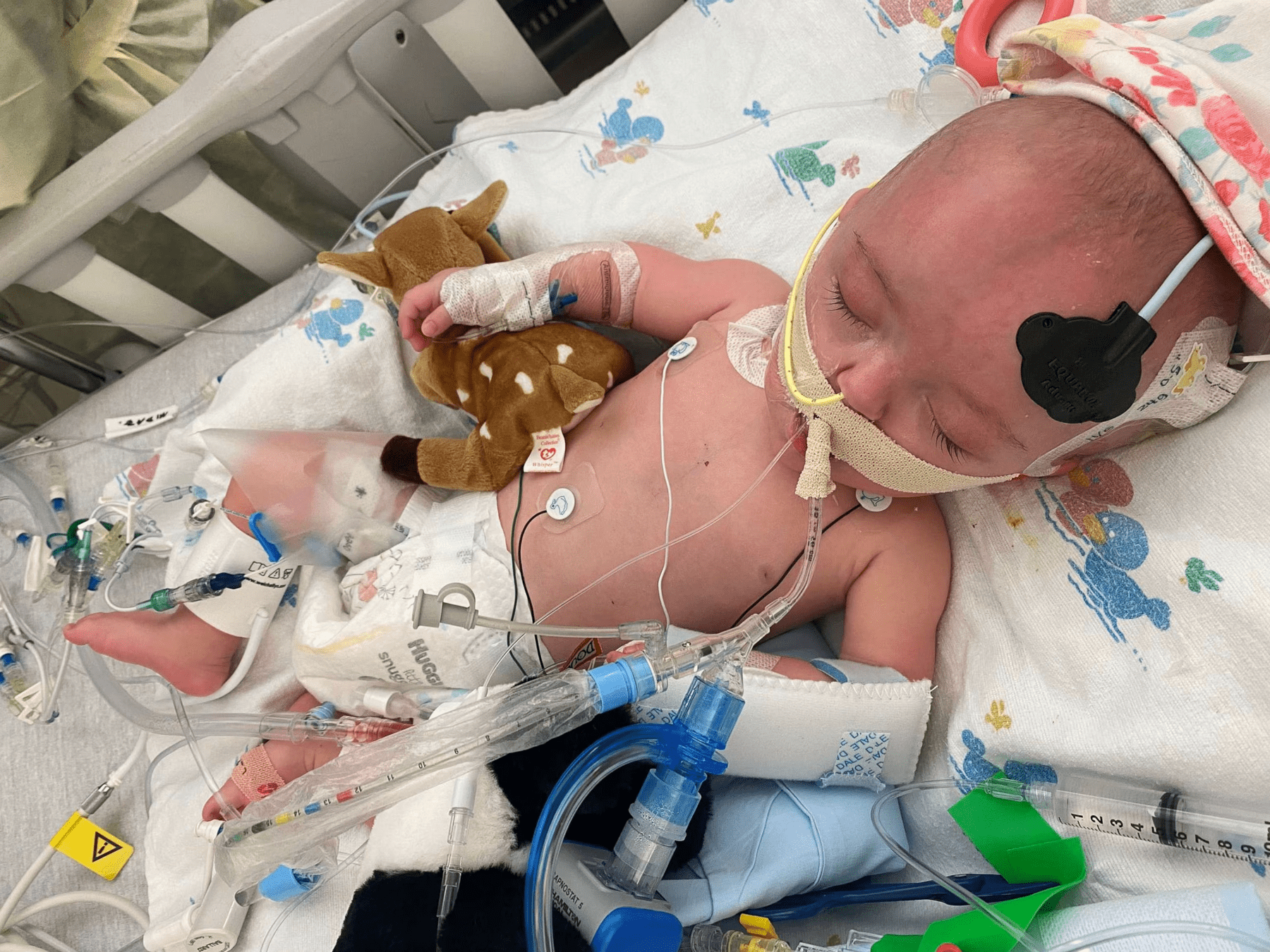
In developed world, infants hospitalized with RSV receive supportive care (eg, oxygen, ventilation, fluids) and usually recover (~0.1% in-hospital case-fatality rate)
In developing world where supportive care not available, RSV is a leading cause of infant mortality (~100,000 infant deaths per year)
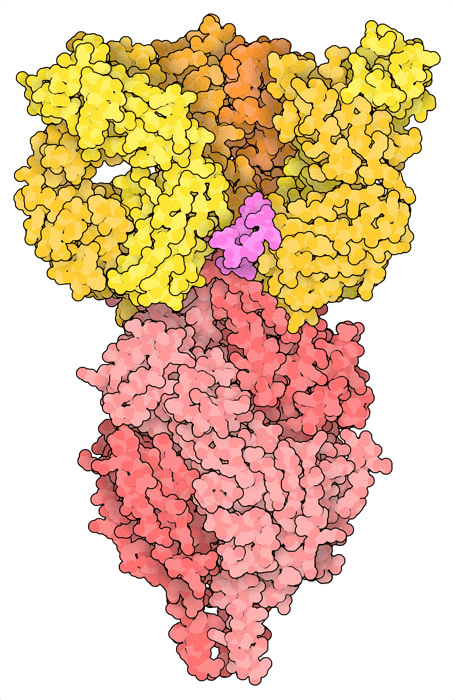
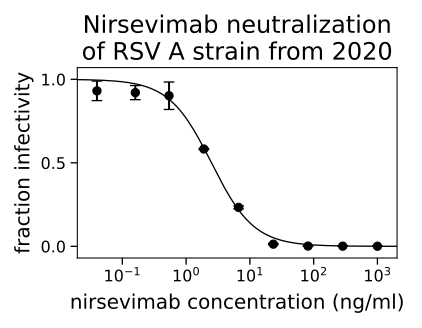
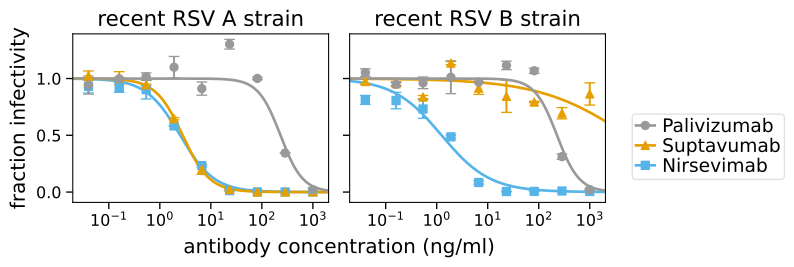
the antibody nirsevimab bound to prefusion F at epitope that includes glycan
Lower potency than subsequent antibodies.
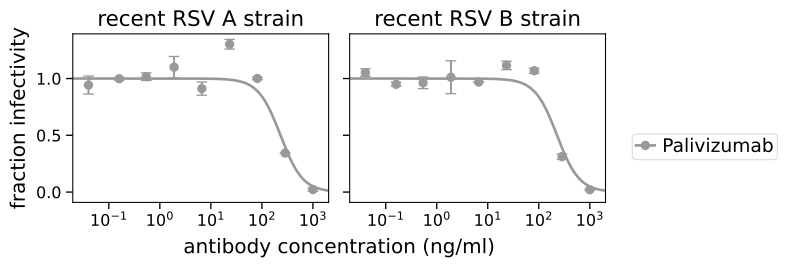
Due in part to cost, recommendation only for infants born <29 weeks gestational age or <32 weeks with chronic lung disease
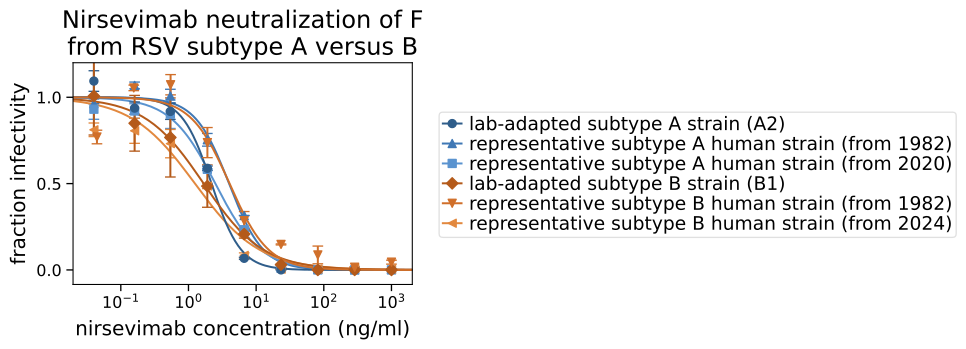
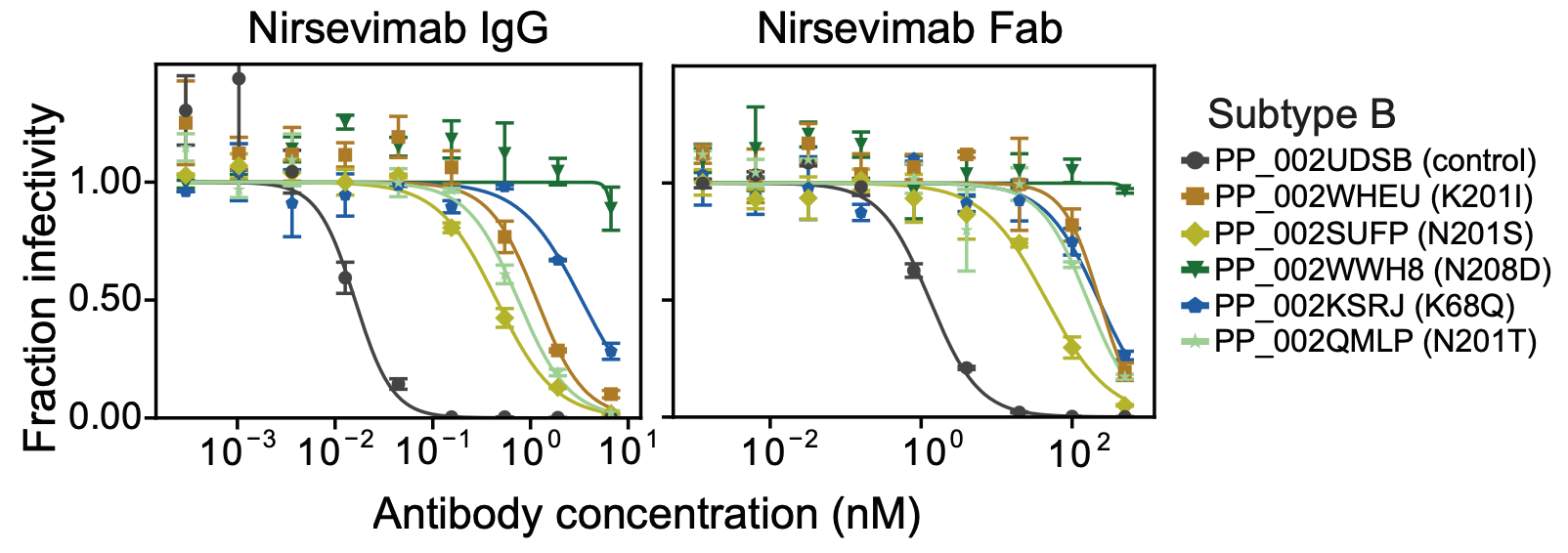
Neutralization curves from Simonich et al (2025)
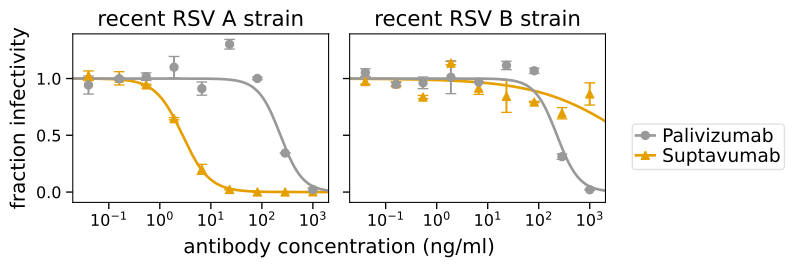
Much more potent against some strains than palivizumab.
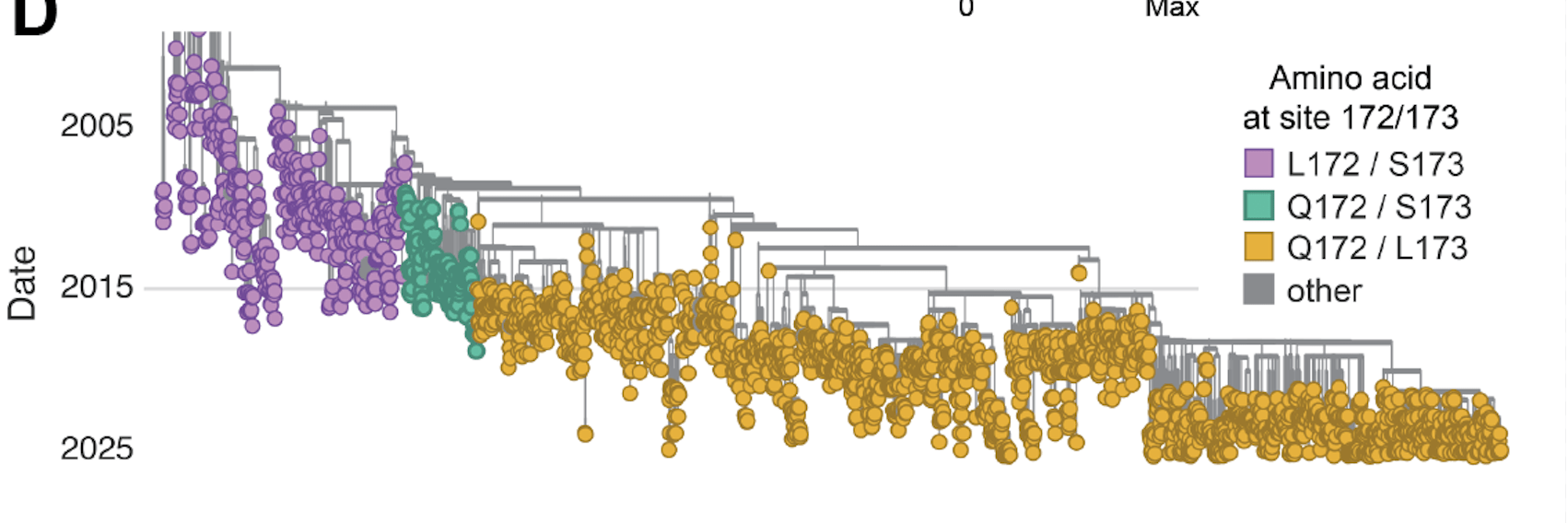
Failed Phase 3 clinical trial from 2015-2017 due to lack of efficacy against subtype B; coincided with evolution of new variants with mutations at F sites 172 and 173.
Neutralization curves from Simonich et al (2025)
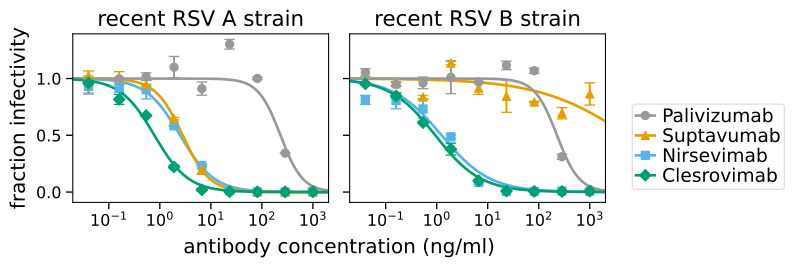
High potency and extended half life.
Recommended in United States in 2023 for all infants <8 months old entering their first RSV season.
~80% effectiveness in preventing RSV hospitalization.
Neutralization curves from Simonich et al (2025)
High potency and extended half life similar to nirsevimab but targets different region of F.
Approved in United States in 2025.
Neutralization curves from Simonich et al (2025)
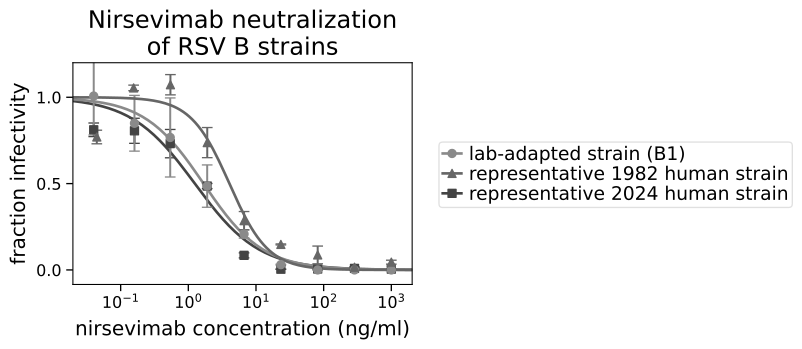
plotted data from Simonich et al (2025)
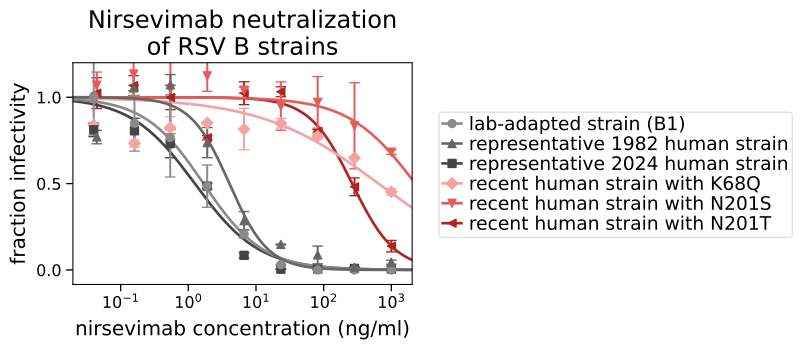
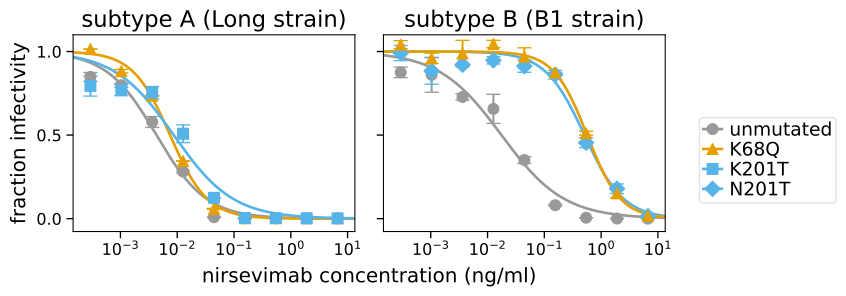
Resistant strains have been identified in clinical and lab-passaging studies, plotted data from Simonich et al (2025)
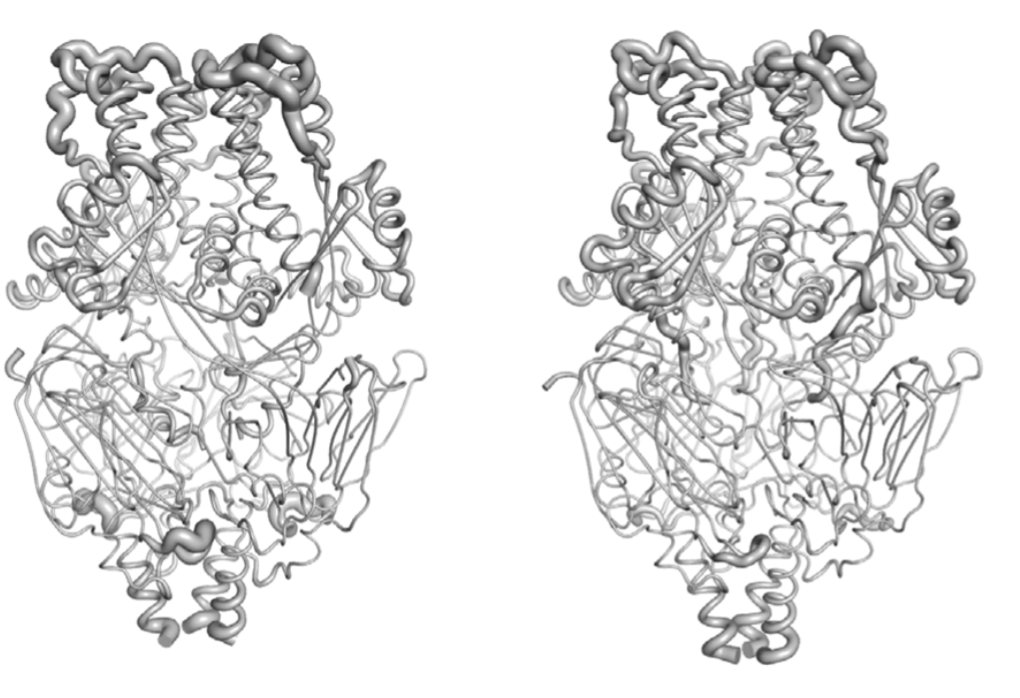
RSV B F structure
RSV A F structure
The structures have a RMSD deviation of only 1.8 angstroms.
plotted data from Simonich et al (2025)
| study | resistance in RSV-A | resistance in RSV-B |
|---|---|---|
| Fourati et al (2025a) | 2/195 = 1% | 23/184 = 13% |
| Fourati et al (2025b) | 0/236 = 0% | 2/24 = 8% |
| Ahani et al (2023) | 0/11 = 0% | 2/14 = 14% |
Rates of resistance to nirsevimab neutralization in RSV breakthrough infections of infants who received nirsevimab.
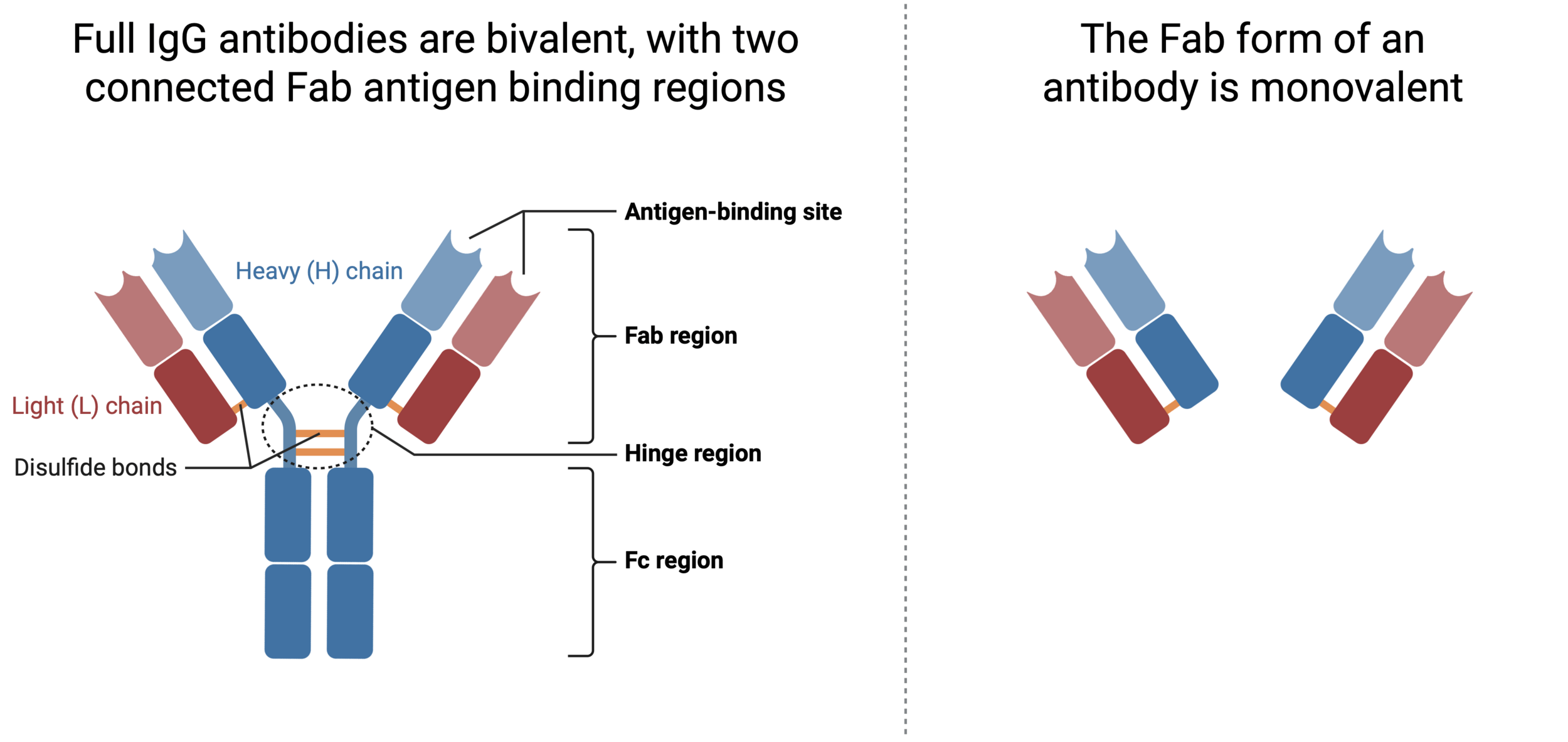
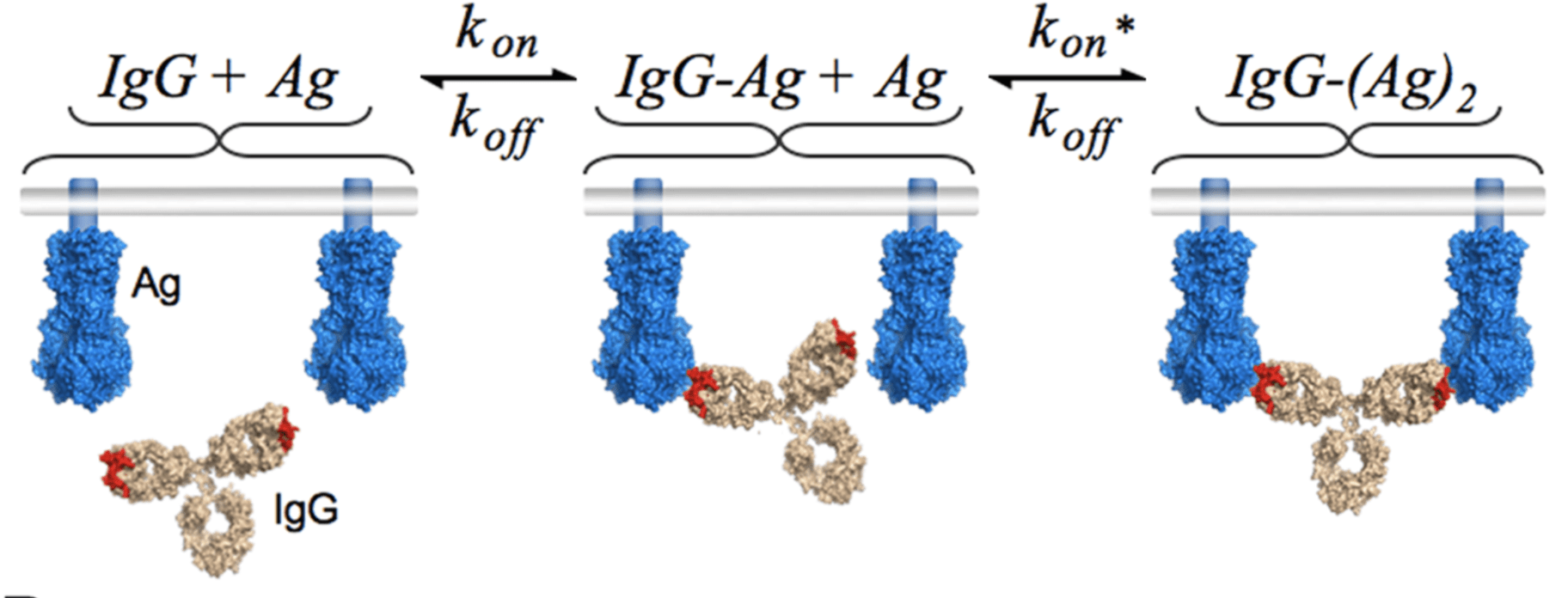
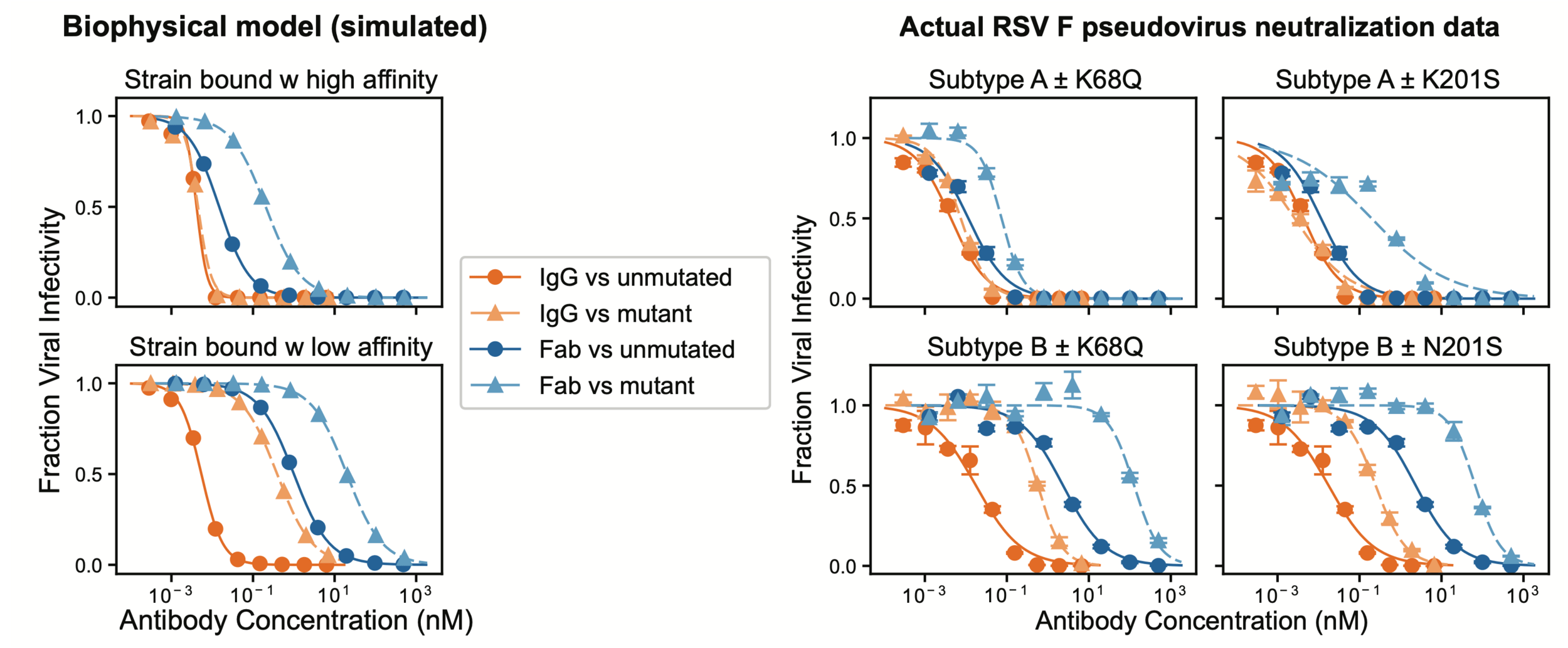
See https://jbloomlab.github.io/IgG-vs-Fab-neutralization/notebook.html for full mathematical model
Example studies serial passaging RSV in presence of antibodies:
Example studies identifying resistance mutations in clinical infections:
These approaches identify just a fraction of mutations that affect antibody neutralization, and do not distinguish causal and hitchhiking mutations.
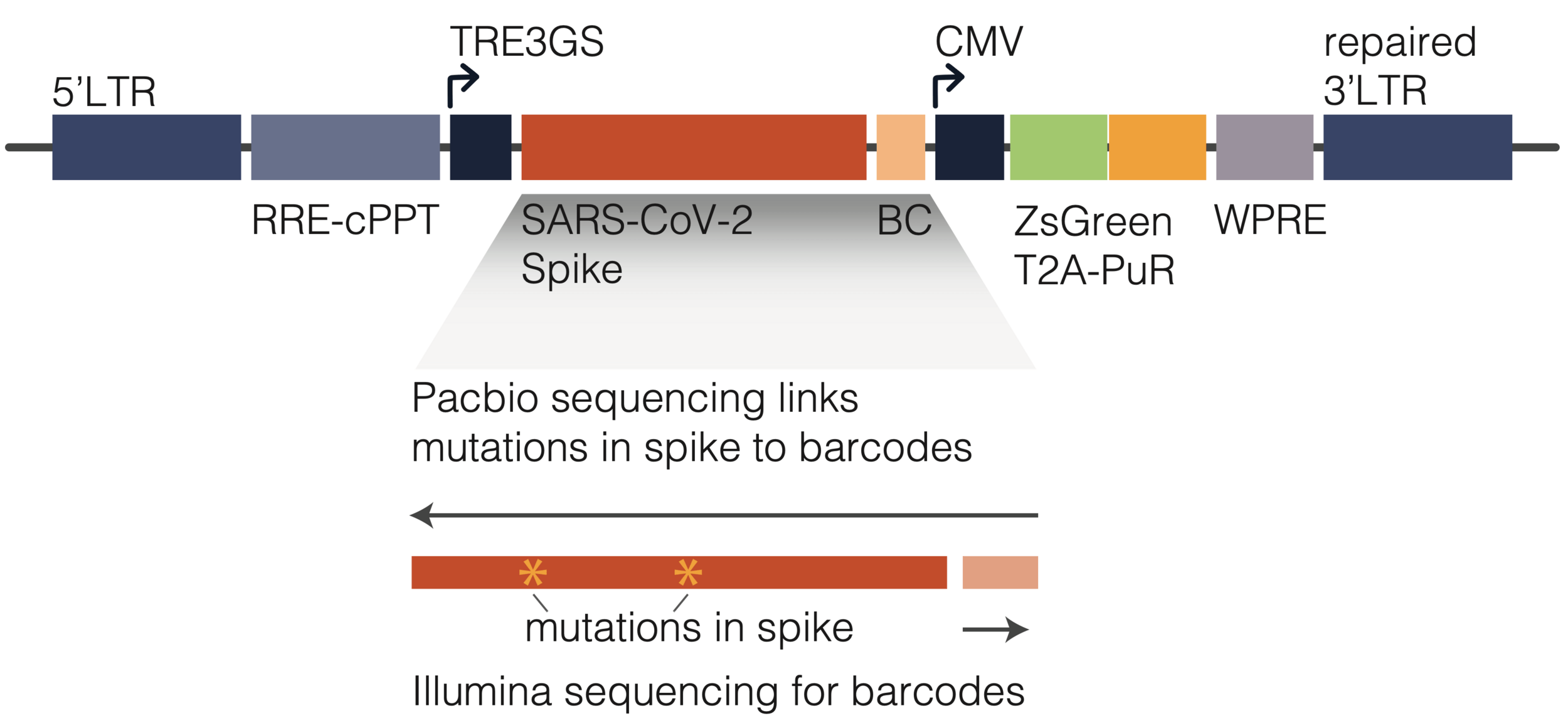
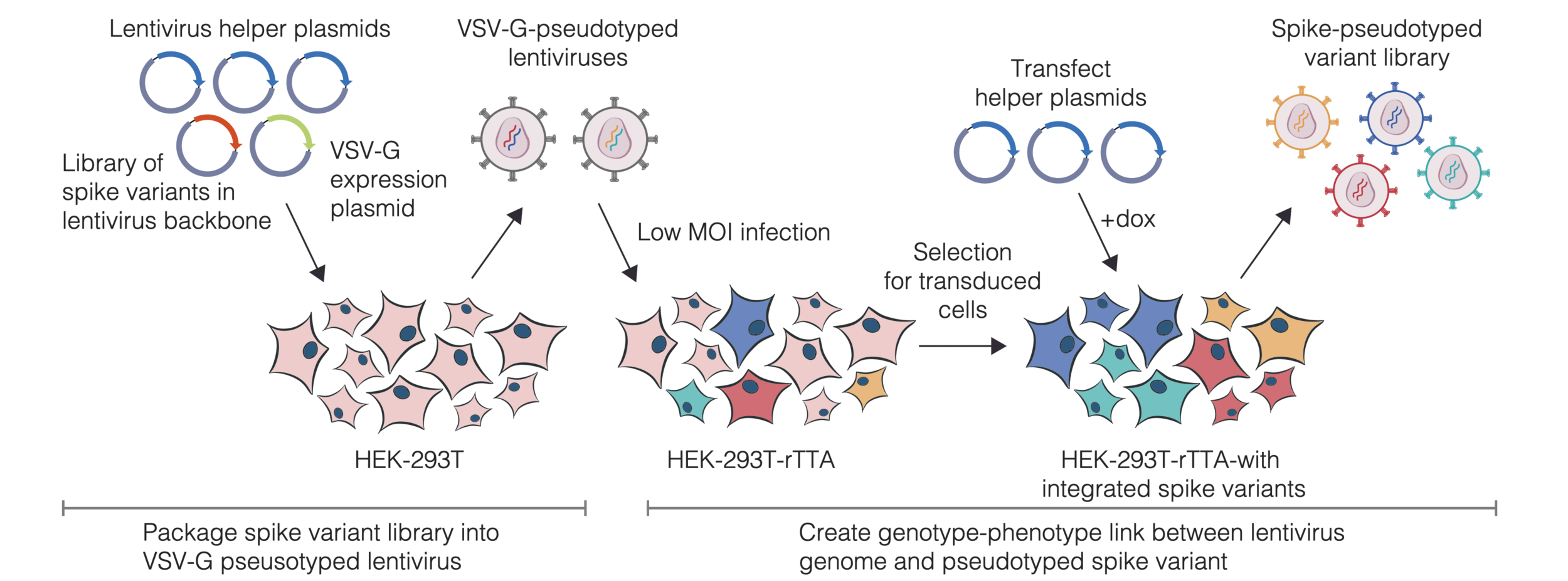
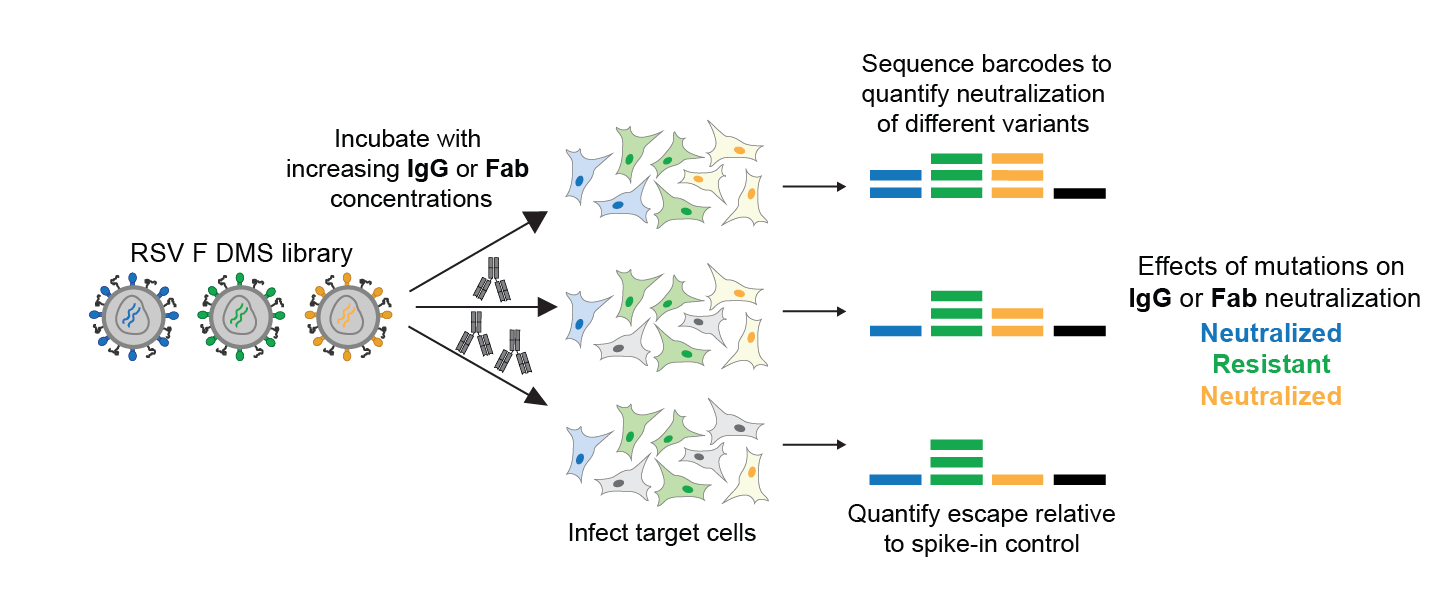
Library of pseudoviruses expressing all single amino-acid mutants of RSV F.
Pseudoviruses can only undergo single round of cell entry, and so provide safe way to study effect of F mutations.
We can also measure how all mutations affect pseudovirus cell entry in absence of antibody, providing a measure of functional constraint.
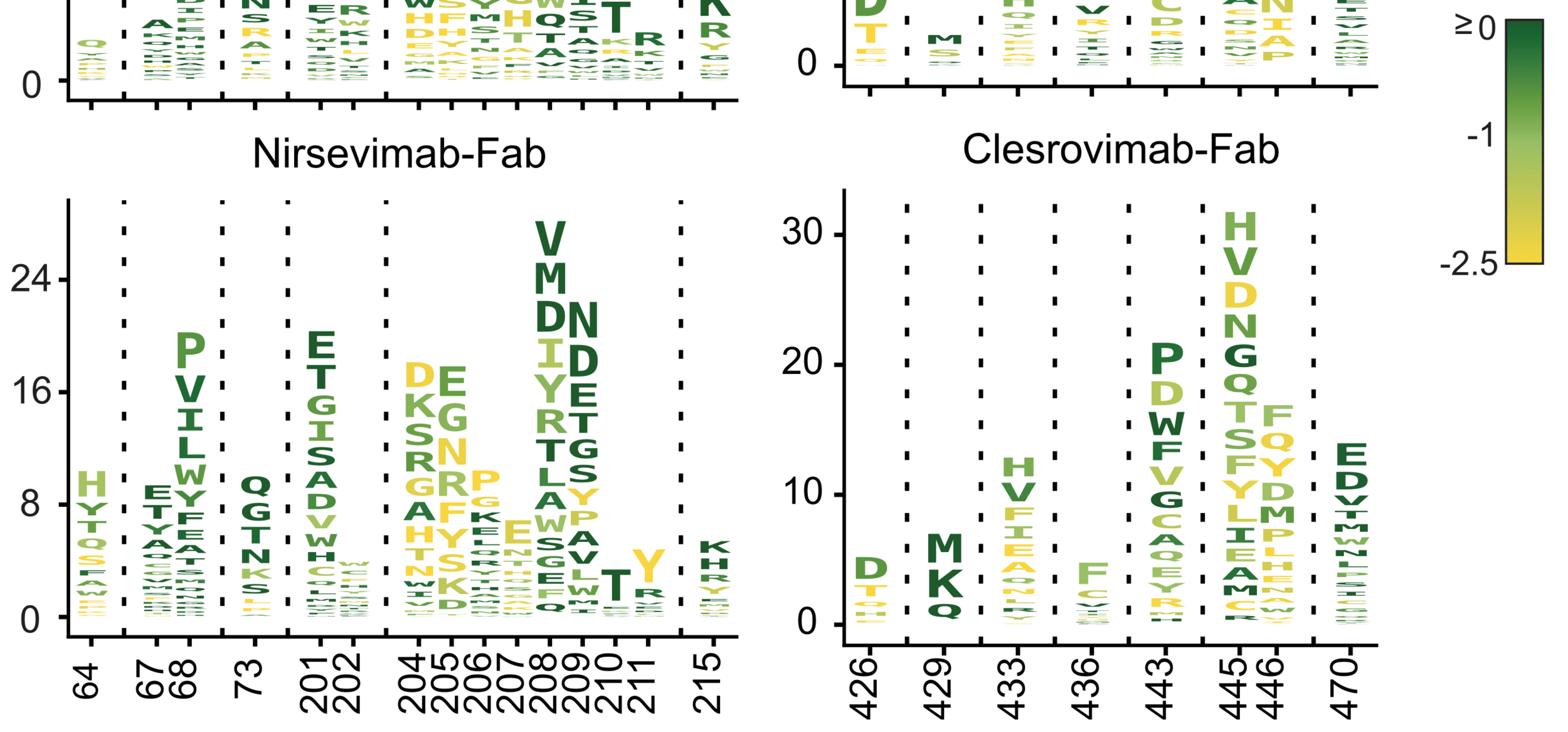
Letter heights indicate reduction in antibody neutralization, color indicates impact on F's cell entry function. These visualizations help quantify how constraint limits escape from different antibodies.
Nirsevimab
Clesrovimab
reduction in neutralization
site
cell entry function
Difference in nirsevimab IgG resistance between RSV subtypes is explained by a biophysical model that accounts for different Fab potencies.
We have completely measured how RSV F mutations affect neutralization by antibodies in clinical use.
These data enable real-time surveillance for natural strains with resistance mutations.
We have applied similar pseudovirus deep mutational scanning to HIV Env, influenza HA, Nipah RBP and F, Lassa GPC, CHIKV envelope proteins
Cassie Simonich
Pediatrics Medical Fellow
Seattle Childrens / Fred Hutch
By Jesse Bloom
Impact of viral genetic variation on polyclonal and monoclonal antibodies